Tag: Meta

  • Brands Navigating the Social Class Divide: Lessons in Sensitivity from Past Campaigns

    Photo source: Tweet by Neeraj Ghaywan (@ghaywan) at https://twitter.com/ghaywan/status/1666667224273403908?s=20


    By Hamsini Shivakumar & Prabhjot Singh Gambhir

     

    Hamsini Shivakumar
    Prabhjot Singh Gambhir

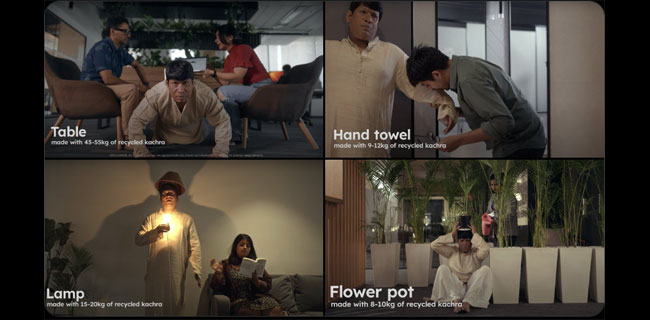
    Zomato’s recent campaign aimed to raise awareness about recycling waste on World Environment Day. However, the use of the character ‘Kachra’ from the movie Lagaan inadvertently reinforced stereotypes and perpetuates the devaluation of people from a specific class. Although the brand intended to employ wordplay in the video, the end-result appears culturally out of sync. The humour in the video appears to be mocking the already marginalised rather than challenging those in positions of power. The video received a lot of backlash on social media, which eventually led to Zomato deleting the video itself from all platforms.


    When faced with these social class divides, brands and their creative agencies are confronted with a unique challenge. Traditionally, marketing has approached class divisions as issues of affordability and accessibility for consumers. The solution typically involves offering products and services at various price points to cater to different segments of the market.


    Think of shampoo sachets, and phone recharges priced at Rs 10. Market segmentation based on affordability addresses the problem of access, ensuring that every consumer can afford and desire products within their price range, whether at the lower end or luxury segment of the market.


    However, addressing the social class divide as a brand in brand communication presents a distinct challenge, as it raises questions about portrayal and representation. It forces brands to examine their vantage point and ideological stance. If a brand aims to project itself as embracing progressive values, how should it navigate the complex issue of social class and class divides?


    This is particularly relevant when it comes to the portrayal of domestic help and their treatment in advertising, especially for brands selling household cleaning products and related items. How should they depict domestic help? Should they merely reflect reality as it is, or should they encourage consumers to adopt more progressive behaviours?


    To effectively navigate the intersection of brand communication and the social class divide, brands can draw valuable lessons from previous campaigns that approached similar subjects with sensitivity. Let’s take a look at some examples of how some brands have approached this issue in the past:


    Ghadi Detergent:


    In Indian popular culture, domestic help is often portrayed as solely responsible for the cleanliness and maintenance of households, perpetuating the notion that it is their sole duty while family members contribute little. Such stereotypes create a power imbalance between domestic help and the families they serve, with the latter holding all decision-making authority.


    Ghadi Detergent’s campaign, #SaareMaelDhoDaalo, deviates from this stereotype. Instead, it encourages individuals to recognise the importance of every task, no matter how small, and to treat domestic help with respect. The campaign depicts a young boy with a callous attitude towards the work performed by the house help. To rectify his behaviour, his mother decides to teach him a lesson by having him clean the house under the false pretence that the house help is on leave. In the end, he learns to appreciate the domestic help’s contribution and even pays him extra to celebrate the festivities.


    Women’s Day 2019 #YourSecondHome : An initiative by PregaNews


    Similarly, PregaNews launched its Women’s Day 2019 campaign, #YourSecondHome, which highlights the importance of domestic helpers and their contributions to households.

    The content begins with a woman scolding her domestic help and asking her not to perform her usual tasks. It appears that the domestic help’s job is at risk. However, as the narrative unfolds, we discover that the woman is actually reducing the workload of the domestic help due to her pregnancy and invites another domestic worker to assist. The campaign challenges initial perceptions by portraying the employer as caring and considerate, much like a family member would be.


    The messaging of the campaign promotes progressive ideals, advocating for empathy towards domestic workers and providing them with benefits such as maternity leave or reduced workload during pregnancy, similar to practices in the organised sector. The brand, PregaNews, seamlessly integrates into the narrative of the ad.


    Cadbury Dairy Milk – Driver


    The work features a boss driving his driver to his child’s school so that he could attend the parent-teacher meeting. While the content is only 45 seconds long, it is quite impactful. We immediately get to understand the dynamics between the employee and the employer and how this is a routine activity. We understand how his boss is being kind and patient towards him and goes out of his way to help him.


    The video shows how a small gesture of kindness towards one’s driver/staff can make a significant difference in their life. The brand integration of Cadbury Dairy Milk is also quite seamless, as it plays on the factor of the boss ‘being sweet’ and sweetness is associated with the chocolate in question.


    Oswal Refined Soyabean oil


    Oswal Refined Soyabean oil’s campaign portrays a positive image of domestic helpers by showcasing the relationship between the wife and her employee. While the husband is upset that the domestic help always leaves early to attend to her children, the wife, on the other hand, is accommodating as she knows that she works well and efficiently. One day, when the wife is out of the city, the maid bakes a cake for the husband and stays late at night just to celebrate his birthday so that he does not feel isolated on his special day.


    The video emphasises that domestic help is not just the staff of the house, but a part of the family, and employers should be accommodating to their requirements.


    However, while the ad’s story has a nice recall value, the brand takes a backseat here. The brand integration of Oswal is not quite as seamless because the story is not built around refined soybean oil. Even a slight mention of it in the narrative would’ve helped the brand integration.


    Facebook | More Together – Pooja Didi


    Facebook’s campaign, More Together – Pooja Didi, is a heart-warming portrayal of support staff. The content initiative can almost be categorised as a mini-short film, as it is about seven minutes long. It highlights the problem of unemployment during the pandemic and how the protagonist – Pooja, starts hiring people in large numbers to provide them with gainful employment solely out of her altruistic intentions.


    However, when she cannot pay the salaries and bills to the people she does business with, she is in a state of crisis. That is when the hired staff of her sweet shop utilises the power of social media to narrate the story of Pooja’s altruistic actions, which end up attracting customers to the shop, thus enabling her to pay all her bills.


    Conclusion

    All the brands seem to take the high power distance between employers and domestic help for granted as a given in Indian society and thus mirror existing realities. They don’t show the possibility of a different future for domestic help (except the Cadbury ad to some extent) in which they can be empowered and assertive of their rights vis-a-vis their employers.


    The convergence of brand communication and the social class divide poses both challenges and opportunities for brands. By being mindful of the implications of their messaging, brands can strive to create advertisements that promote empathy, understanding, and equality. Actively working to dismantle stereotypes and biases, brands can contribute to positive social change.


    Hamsini Shivakumar is a long-time culture-watcher, semiotician, brand consultant and co-founder of Leapfrog Strategy as well as Semiofest, the global unconference for applied semiotics. Prabhjot Singh Gambhir has done his Masters in Film Studies and is passionate about stand-up comedy. He has now turned his observant eye to cultural discourse and its intersection with brands. The views expressed here are their own.


  • WhatsApp connects citizens with MCs

    By Our Staff


    Internet major Meta is tying up with civic authorities for accessing essential services, getting birth and death certificates, door-to-door garbage collection to registering complaints, citizen services across several states are now available via WhatsApp. These include Pune, Mumbai, Kolkata, Patna and a few others.


    Talking about WhatsApp’s effort support getting digital governance solutions closer to citizens across the country, Ravi Garg, Director Business Messaging, India – Meta said: “We are excited about working together with administrations across the country to help them empower and enable citizens with digital access to easy governance solutions on WhatsApp, in turn, making governance more inclusive. Citizens can now access services from right within their WhatsApp, at their own convenience, instead of visiting local offices or waiting in long queues. This technology-led citizen engagement is tremendously helping administrations improve their response time and we are delighted with the ease and convenience this brings to our users’ lives.”


  • WhatsApp launches campaign for online safety

    By Our Staff


    WhatsApp has launched an integrated safety campaign ‘Stay Safe with WhatsApp’ highlighting product features that empower users to take control of their online safety and ensure a safer messaging experience.


    The campaign focuses on educating users about WhatsApp’s in-built product features and safety tools that equip people with the necessary safeguards to help protect them from online scams, frauds and account compromising threats. The three month long campaign will highlight simple yet effective ways to enable WhatsApp safety features that come together to offer layers of protection to users as they spend more and more time online in their daily lives. The campaign also focuses on the importance of safeguarding your WhatsApp account to ensure you remain safe and protected at all times.


    Shivnath Thukral, Director, Public Policy India, Meta, said: “User safety is at the core of everything we do at WhatsApp which is why we’re launching our safety campaign “Stay Safe with WhatsApp,” in an effort to drive user-awareness around WhastApp’s safety tools and product features that can help keep users safe from online scams and frauds. Over the years we have added layers of security and protection with innovative features that empower users to take control of their online safety. This campaign is an important reminder for people on how they can safeguard themselves in today’s digital first world and aims to reinforce consumer habits that ensure key safety features on WhatsApp become second nature to users so that they can stay safe from messaging scams and to protect their friends and family.”


    Being an industry leader among end-to-end encrypted messaging services in preventing abuse and promoting online security, WhatsApp is focusing on communicating its core safety principles that can help keep users stay safe from online scams and frauds. Key safety features highlighted in the campaign include:


    Two-step verification to add an extra layer of security to your account: WhatsApp allows users to add an extra layer of security to their account by enabling the Two-Step Verification feature, which requires a six-digit PIN when resetting and verifying your WhatsApp account. This is helpful in case a SIM card gets stolen or if the phone is compromised.


    Block and report accounts that are suspicious: WhatsApp is a private and safe space for people to communicate with their loved ones and people who have your phone number. However, at times when users receive problematic messages from unknown numbers, some of which may include suspicious links, request access to personal information, among others WhatsApp provides a simple way for users to ‘block and report’ the account to WhatsApp. Blocked contacts or numbers will no longer be able to call you or send you messages.


    Privacy settings to control who sees your personal details: Users can control their personal details such as – Profile Photo, Last Seen, Online status, About, Status, and who sees it –  everyone, contacts only, select contacts, or no one. You can also control your online presence by selecting who can and can’t see when you’re online, for the times you want to keep your online presence private. Keeping your personal details visible to only your contacts can help safeguard your account against bad actors.


    Group privacy settings to ensure a safe messaging experience: WhatsApp’s privacy setting and group invite system allow users to decide who can add them to groups, increasing user privacy and preventing people from adding you to groups you don’t want to be a part of. If you find yourself in a group chat that’s not for you, you can choose to exit a group privately without having to notify everyone.


  • Wavemaker India appoints Deepa Jatkar as Chief Growth Officer

    By Our Staff


    Wavemaker India has announced the appointment of Deepa Jatkar as its Chief Growth Officer. Jatkar joins Wavemaker from Meta India, where she was a part of the global sales and marketing team and a key member of the India sales leadership team.


    In her new role at Wavemaker, Jatkar will report to Ajay Gupte, CEO – South Asia and will be based out of the agency’s Mumbai office.


    Speaking on the appointment, Ajay Gupte, CEO – South Asia, Wavemaker  said, “We are delighted to welcome Deepa as part of the leadership team at Wavemaker. Deepa is a seasoned media professional with an exceptional understanding of the industry. As Chief Growth officer, she will help us fast track growth by driving new business and creating avenues for growth amongst our wide spectrum of clients.”


  • BCG-Meta come together to launch Report

    By Our Staff


    Boston Consulting Group (BCG) and Meta announced the launch of a new report around the increasing influence of digital in driving media and entertainment consumption in India across over-the-top (OTT), linear TV (LTV), and Movie Studios.


    With the meteoric growth in online content and on-demand streaming platforms in India, the media and entertainment landscape in the country has transformed dramatically over the last few years. The report unravels key consumer trends around how India is consuming content while busting prevailing myths and highlighting the growing digital influence that is increasingly driving people’s viewing preferences. Digital influence implies the role of digital in content discovery, sharing, and engagement both before and after viewing content.


    ‘Seeing the BIG Picture – Harnessing digital to drive M&E growth’ a Meta-commissioned report by BCG was done with over 2600 consumers across 15 towns and cities. The study also includes in-depth interviews with consumers and industry leaders from Linear TV (LTV), OTT platforms, and Movie Studios.


    Said Shaveen Garg, Managing Director and Partner BCG: “Consumers increasing time spent on digital video is well-known. But what was counter intuitive is how much digital is influencing their discovery of content, decision to watch and the engagement post watching. It is not limited to digital native mediums but across all content as category. It is clearer than before that many media companies haven’t embraced this power to unlock potential. Content is king, no doubt, but kings also need an army of soldiers to become and reign. This digital interventions by companies is the army behind the great content”


    The report aims to bust some myths and mindsets in the market around digital influence being limited to metros, men and English content viewers.


    Among the most significant findings of the report is that contrary to industry perception women, small-town residents, and people over 35 years of age have significant digital influence driving their content discovery and consumption choices. For instance, among OTT watchers, after consuming the content, 78% of the surveyed men said that they use digital to engage with the content. This number was equally high at 77% for women.


    Similarly, before watching something on OTT, more people from smaller towns (81%) use digital for content discovery than people from large towns (74%).  Moreover, contrary to popular belief, digital discovery is on the upswing, even for linear TV, with linear TV viewers increasingly seeking information and engagement online for the content they watch.


    Added Shweta Bajpai, Director and Vertical Head – Media, Finserv, Travel, Real Estate and Services for Meta in India: “The prevalent view presumes that consumer behaviour across small and large towns, across gender and age-groups is vastly distinct. While this may be true for some industries, when it comes to content consumption in India, there are more similarities than distinctions. The biggest similarity is that irrespective of where people consume content – OTT, TV or in movie theatres – they rely on digital to share, engage, and express themselves. 40%+ respondents discover content on digital via Word of mouth. This is a game changing insight for media companies and marketers in how they want to reach their customers.”


    The study also showed that 60% consumers seek information about the content before deciding to watch. Up to 80% of this research occurs online across OTT, LTV, and Movies. The findings further revealed that higher digital engagement is correlated with higher watch time on both LTV and OTT.


    Based on the insights, the study recommends that media and entertainment companies need to evolve.

    :: With boundaries blurring between different formats in the consumers’ minds, M&E companies should refrain from defining themselves as LTV/OTT/Movie Studios and reimagine themselves as content creators not chained to a delivery medium.

    :: Given the high digital influence, digital marketing could be effective across demographics, genres, and languages, and could be a crucial addition to the existing marketing efforts at every step of the consumption journey.

    :: The report also calls for diversifying digital activations including communities, influencers, personalized reach-outs and short videos to reach all kinds of consumers.

    :: Lastly, the report advises brands to develop in-house muscle, build a content factory, leverage the user engagement flywheel, develop a robust measurement strategy and impact attribution.


  • GroupM teams up with Optimum Television for new show

    By Our Staff


    GroupM’s Motion Content Group, in partnership with Google and Meta, announces the launch of a new show, “Jai Ho! Bharat Ki Anant Yatra,” in collaboration with Optimum Television. The show, a tribute to the contribution that the Indian Civilization has made to the world, takes viewers on a journey through India’s past, present, and future.


     

    The show which will be available on Zee Network and can also be streamed on Google and Meta’s platforms is narrated by Sharad Kelkar and scripted by Prasoon Joshi.


    Ashwin Padmanabhan, President – Investments, Trading, and Partnerships, GroupM – India, said: “We are thrilled to announce the launch of Jai Ho! Bharat Ki Anant Yatra. This show is a celebration of the stupendous journey of Indian Civilization and its contribution to the world. The show also looks into what the future holds for India as an economic and cultural world leader. We are proud to collaborate with Google Cloud and Meta to tell this inspiring story of India on the cusp of our Republic Day on Jan 26th.”


  • Meta releases annual report highlighting ‘Reels in Review’

    By Our Staff


    Meta today released its annual report highlighting the top trends on its platforms for the year, but this time primarily focused on Reels. Titled ‘Reels in Review’, the report shows the growing interest people have in cricketers like Surya Kumar Yadav and musicians like Shubh. It also captures the excitement that people have for films like ‘Bhediya’ and upcoming ones like ‘Pathaan,’ in addition to songs like ‘Kesariya’ and ‘Kacha Badam’.


    Since  launching in 2020, Reels has changed the way people consume and create content on Instagram and Facebook. Our report  highlights the topics, trends and moments that entertained India in 2022, and those that are keeping us excited for the upcoming year.


    Popular and Growing Interests on Reels

    Virat Kohli continues to be one of the most popular hashtags used on reels, but there is also a growing interest in Surya Kumar Yadav. Musician Shubh caught the attention of reel-ers too, as he has been one of the most growing hashtags compared to 2021 as well.

    Films and series content continued to make imprints on pop culture, as people shared their interest in ‘Bhediya’, ‘Family Guy’, ‘Ek Villain Returns’, ‘Naagin 6’, ‘Vikram’, ‘Mismatched Season 2’ and the upcoming ‘Pathaan’.

    Sports have been a big and growing area of interest, with the recently concluded ICC Men’s cricket #T20WorldCup and #QatarWorldCup. More than 1 million reels on Instagram related to the ICC T20 World Cup were created in India.


    Music on Reels

    Music, both from our music library and original audio, have been driving trends on reels across Instagram and Facebook. 15 of the top 20 most-used songs on Instagram reels globally came from Indian artists.

    Some of the top songs that are popular across reels on both Instagram and Facebook for all age groups are ‘Srivalli’ by Javed Ali and ‘Baarish Main Tum’ by Neha Kakkar. ‘Kesariya’ by Pritam, Arijit Singh and Amitabh Bhattacharya, ‘Gypsy’ by G.D. Kaur, the KGF 2 theme song and ‘Jhoom’ by Ali Zafar were also among the most popular. Retro music like ‘Tumsa Koi Pyaara’ and original audio like ‘Kacha Badam’ also made  the list.

    AR Effects On Reels

    While sharing their interests and using music, people extensively and interestingly used augmented reality (AR) effects in their  reels. Some of the top AR effects used were and Smoke Flare VR.

    Here’s the complete list of some of the top interests, music, effects and stickers on reels in 2022:


    Popular and Growing Interests

    •      Personalities – Surya Kumar Yadav,  Shubh
    •      Films and Series –  ‘Bhediya’, ‘Family Guy’, ‘Naagin 6’, ‘Vikram’, ‘Mismatched Season 2’, ‘Pathaan’
    •      Sports –  T20 World Cup, Qatar World Cup


    ICC T20 World Cup

    •      More than 1 million reels on Instagram related to the ICC T20 World Cup were created in India
    •      There were more than  2 billion  engagement (likes, comments and shares) on Instagram reels created in India
    •      Virat Kohli, Rohit Sharma and Hardik Pandya were the top three most mentioned Indian cricketers on reels in India


    Music

    •      ‘Srivalli’ by Javed Ali
    •      ‘Baarish Main Tum’ by Neha Kakkar
    •      ‘Kesariya’ by Pritam, Arijit Singh and Amitabh Bhattacharya
    •      ‘Gypsy’ by G.D. Kaur
    •      KGF 2 theme (Remake) by Kamal Eleven
  • Sandhya Devanathan to occupy Facebook hotseat in India, as Meta India boss

    By Our Staff


    Meta, formerly Facebook, has announced the appointment of Sandhya Devanathan as Vice President of Meta India. Devanathan will focus on business and revenue priorities as also supporting the “long-term growth of Meta’s business and commitment to India”. And perhaps also a watch on the socio/geo-political realities that concern Meta.


    She will report to Dan Neary, Vice President, Meta APAC and will be a part of the APAC leadership team. She will move back to India to lead the India org and strategy.


    On the appointment, Marne Levine, Chief Business Officer, Meta said: “India is at the forefront of digital adoption and Meta has launched many of our top products, such as Reels and Business Messaging, in India first. We are proud to have recently launched JioMart on WhatsApp, which is our first end-to-end shopping experience in India. I’m pleased to welcome Sandhya as our new leader for India. Sandhya has a proven track record of scaling businesses, building exceptional and inclusive teams, driving product innovation and building strong partnerships. We are thrilled to have her lead Meta’s continued growth in India.”


  • Meta holds ‘Creator Day’

    By Our Staff


    Meta (formerly Facebook) highlighted its commitment to creators in Delhi and across the country, by organising its first ‘Creator Day’.


    ‘Creator Day’ is Meta’s annual flagship event to celebrate creators, and provides an opportunity for them to create, collaborate and learn from each other. The 2022 version of the event took place across five cities – Mumbai, Hyderabad, Kolkata, Chennai and Delhi being the city for the event finale.


    Said Manish Chopra, Director & Head of Partnerships for Facebook India (Meta): “Young people across India, and what some call Bharat, are expressing themselves on Reels and being discovered by audiences across the country. They’re becoming the new generation of creators, with a national following, in the process shaping culture and influencing trends. For this reason, we believe a key pillar of India’s new economy is going to be built and fuelled by creators. And with Reels, everyone has a stage to be a global icon of tomorrow.”


    Actor Varun Dhawan added: “It’s impressive the way young people are showcasing their talent on reels, and how they’re breaking through everyday, every moment. Being authentic and keep experimenting – is the advice I can offer creators. From ‘Student of the Year’ to the upcoming ‘Bhediya’, these are two principles I’ve lived by and maybe that’s something you could follow too. I wish you the best in finding your own path, and being advocates for your collective success. I’m glad Meta’s providing you with opportunities like Creator Day, and I’m happy I got to be a part of it too.”


  • COMvergence launches new biz barometer for FY21

    By Our Staff


    COMvergence, an independent research and data consultancy, which analyses media spend investments and produces benchmark studies on new business performances, released its latest New Business Barometer for the FY 2021 for India.


    The Media Agency Groups were led by GroupM with a total new business value of +$1028M, followed by Publicis Media Group at +$188M new business value and dentsu International with a new business value of +$161M respectively.


    Mindshare from the GroupM umbrella led the media agencies’ ranking by a large margin followed by Wavemaker at the second rank, followed by Starcom, Initiative and Madison Media.


    In 2021, COMvergence assesed an overall of 332 account moves and retentions in India with media spends estimated to be around $2.3BN.  This figure (of around $2.3BN)  represents  about 25% of the Indian media agency billings ($9.2B), whilst the retention rate for India is 43% for 2021.


    Around $922M were from global and multi- country pitches and $1338M were local pitches in 2021.


    Unilever, Coca-Cola, L’Oréal and Meta ( formerly Facebook), PhonePe, CRED, Viacom, Perfetti, Tata Consumer Products, Rohit Surfactants Private Limited (RSPL),Oppo Electric Corp, Ola (Electric) were among some of the  account moves that dominated the Indian market in 2021.


  • Meta appoints Meghna Apparao as Director of E-commerce

    By Our Staff


    Meghna Apparao
    Meghna Apparao

    Meta has appointed Meghna Apparao as the Director of E-commerce in India to lead the strategy and solutioning that is focused on the company’s largest e-commerce advertisers. As a part of her role, Apparao will spearhead the company’s strategic relationship with the country’s leading brands in the e-commerce space, enabling a stronger partnership through Meta platform solutions. She will report to Arun Srinivas, Director and Head of Global Business Group at Meta in India.


    Said Srinivas: “We are committed to enabling and multiplying economic opportunities for businesses of all sizes in India. With many of them rapidly moving online and transitioning into an explosive phase of growth, it becomes more important than ever to find the right solutions and strategies that can help them scale quickly. I am thrilled to welcome Meghna as she joins our team to lead this mandate and to shape the role our apps can play in enabling the growth of some of India’s largest online and retail businesses.”


  • Indrani Sen: Monopolising the Metaverse

    Indrani SenBy Indrani Sen


    Seventeen years after he launched Facebook from his university dorm in 2004, Mark Zuckerberg announced in a virtual press conference on October 29, 2021, a change of the corporate name of the company from Facebook Inc. to Meta Platforms Inc. which is being referred in short as Meta.


    A recent Amul topical ad on the ‘Meta’ change

    As explained by Zuckerberg, internet technology has moved on and the corporate name Facebook no longer fits in with the future vision of the company which is being built around the metaverse. “Over time, I hope that we are seen as a metaverse company and I want to anchor our work and our identity on what we’re building towards,” Zuckerberg said.


    The rebranding of the company name would align better with the objectives of the company at this stage when it plans to broaden its reach beyond social media into areas like virtual reality (VR). The various social media platforms owned by the social media giant, i.e. Facebook, WhatsApp and Instagram would continue to retain their individual names and brand identities under the corporate branding of “Meta”.


    The metaverse a virtual-reality space in which users can interact, meet and play with a computer-generated environment and other users using virtual reality glasses, smartphone apps and other devices. The word “metaverse” has been coined from the two words “meta” and “universe”. Loosely defined, it is an extensive 3D online world where people interact via various “digital avatars.” The word meta is generally used as an adjective or as a prefix to a name, often indicating a change or a transformation or a great futuristic idea. Example of uses of metaverses, in some limited form, can already be found on platforms like VR Chat or video games like Second Life.


    Current development on use of metaverse is centred on addressing the technological limitations with modern virtual and augmented reality devices as well as expanding the use of metaverse spaces beyond business to retail applications, entertainment and education. Many digital technology organisations as well as entertainment and social media companies are investing in metaverse-related research and development for future usage.


    The metaverse in many ways is still a speculative future iteration of the Internet part of shared virtual reality, to be used in social media and other applications. The metaverse in a broader sense may not only refer to virtual worlds operated by social media companies but the entire spectrum of augmented reality across the world wide web.


    Critics of the metaverse are arguing that as a speculative concept it is overhyped. Same concept is being used as a part of public relation campaigns by organisations having vested interests. Privacy of user’s information and user’s addiction to platforms are concerns within the metaverse, as already found in the current challenges being faced by the social media and video game industries across the world.


    Mark Zuckerberg’s announcement to change Facebook’s name to Meta has caused a massive uproar in Israel as the word “meta” sounds like the Hebrew word for “dead”. There is also a news that a US-based Meta Company is contemplating to sue Facebook Inc. for Infringing on its it’s company name. Meta was founded by Menon Gribetz, then a student of Colombia University in 2013. Though the company met with some initial success, it had to declare itself as insolvent after its primary lender foreclosed in January 2019. It is doubtful if they have the financial strength to launch a legal battle against Zuckerberg’s company. A Berlin based migraine app developed by Newsenselab M-Sense Magazine has given a backhanded compliment to Facebook who seemingly has been inspired by the logo design of the e-magazine. It is unlikely that Facebook was aware about the existence of that app or its logo and the similarity id the logo design is most likely a creative coincidence which at times happen in the advertising industry.


    The change in the company name is an extremely clever move by Zuckerberg which can help his company to monopolise “the metaverse” space, though many other companies will be using such technologies and operating in the same space in near future. To a lay internet user, Meta Platforms inc. would appear as the original provider of metaverse technology and therefore would have an edge over many of their future competitors.  Meta Platforms Inc. would not be able to monopolise the metaverse, but the name of the company would surely create an illusion of a monopoly.