Tag: MEC

  • IPL ratings will look up: MEC forecast

    By A Correspondent


    Media buying and planning agency MEC, a founding partner of GroupM, has announced the findings of its IPL TV Rating Estimation Study, now in its fifth edition.


    A combination of primary research and high-end analytics, the study has achieved 100 percent accuracy in the past, including last year. The research was conducted in Mumbai, New Delhi, Kolkata, Chennai, Bengaluru, Hyderabad, Jaipur, Pune, Chandigarh and Ahmedabad. As in previous years, the study has been carried out in association with Meritus, WPP’s analytics company.


    Key findings of the study are:

    Average TV rating for the league stage is expected to go up from 3.8 last year to 3.9 – an increase of 2.6% (15+ years, Male/Female, SEC ABC)

    MI (4.5), KKR (4.2) and CSK (4.1) games to have the highest ratings

    Home team (84%), favorite team (79%) and Indian stars (64%) continue to be deciding factors to watch a match. Time of the match (49%) is also gaining importance.

    MI (23%), Chennai (19%) and KKR (14%) are the most popular teams. Support for Hyderabad has gone up by 200% (2% to 6%), Bangalore has dropped by 50% (12% to 8%)

    Sachin Tendulkar (80), MS Dhoni (79), Yuvraj Singh (76), Virat Kohli (74) and Virender Sehwag (73) are the most popular Indian players in the League; Chris Gayle (60), Ricky Ponting (55), Brett Lee (51) and Kevin Pietersen (50) are most popular foreign players


    T Gangadhar

    T Gangadhar, Managing Director, MEC India, said, “Our study suggests that IPL seems to have matured as a property. The study clearly establishes that ratings in the first phase (first 18 games) impact the fate of the entire league. With Pepsi activating their title sponsorship in a big way, the BCCI launching the IPL Fantasy League and India’s strong performance against Australia, the first stage of the league could get further momentum. We expect the IPL Fantasy League to become a key part of the live broadcast experience and as a result, social chatter around IPL could grow significantly,” he added.


    Sunder Muthuraman, Managing Partner, Meritus Analytics, also believes that the IPL brand is reflecting the behaviour of a typical mature consumer product. “Our proprietary survey, that is integral to the forecast, shows that there is a segment of audience who will watch more than last year (say, the loyalists) and another segment who will watch lesser (say, the rejecters). Given that the former segment is larger than the latter, the ratings are likely to be marginally higher than in 2012. Given our past successes, we hope our pioneering rating forecast methodology will be adopted by all broadcasters and advertisers,” Mr Sunder concluded.


  • Jaldi 5 with Geetha Shiv: Family content can add to Bigg Boss eyeballs

    Over the weeks, media agency MEC has been forecasting how key television properties would fare with ratings. Last weekend, MEC announced that Season 6 of Bigg Boss, the flagship reality show on Colors, would see a growth over last year. We asked Geetha Shiv, National Director, Analytics & Insight why and whether the forecast stays now that we know who is in the house.


    01. MEC has estimated the opening TVR for this season to be at 3.9 among All Adults, 15 years+, SEC ABC, All India which is 30 percent higher compared to the opening TVR of 3 in the last season. What are the main reasons for this? How do you think Bigg Boss’s opening episode will compare with other reality shows this season?

    Bigg Boss has moved into the peak of primetime with a 9-10 pm slot in this season compared to 1030-1130 pm slot last season. Also the fact is that KBC clashing in this timeslot has not had a negative impact on Colors channel share. Viewer sampling for the initial episodes of any new programme and particularly reality shows will be typically high and over period the viewership will stabilize.


    2. Now that the participants have been revealed, do you think the show will be able to grab enough eyeballs?

    While there are some popular celebrities like Navjot Singh Sidhu in this season, Bigg Boss’ participants have never been mainstream celebrities. It all depends on how the plot develops and what happens in the house. Additionally, the fact that the content this year will be more suitable for family viewing can add to eyeballs.


    3. What are your expectations from the Bigg Boss season 6?

    Overall it should deliver better than last season, it is a better time slot.


    4. With numerous reality shows on TV, what is the reason for them working?

    Reality as a format has seen success in India. It is all around talent or bites of reality as in the case of KBC or Bigg Boss. There is always some winning-losing that happens between real people which brings in viewer interest.


    5. How much of the Salman Khan factor will be a pull on television?

    Salman Khan’s popularity has not declined since the last season. We will have to see how much and how he is being used to trigger viewership.


  • VR Padmanabhan joins RK Swamy Media

    By A Correspondent


    VR Padmanabhan joins RK Swamy Media Group as General Manager, South. Mr Padmanabhan has previously worked with MEC Chennai, Mediacom (Group M Singapore), Motivator (Malaysia) and Euro RSCG (Bangalore/Chennai). His last assignment was as an entrepreneur and consultant at Linear Communications


    Speaking about this development, Sandeep Sharma, President RK Swamy Media Group said: “Padmanabhan joins our senior management team and has a clear mandate to manage and grow the south market. He has quality experience in the media domain and has worked on FMCG, IT, Telecom, Retail, Auto sectors in India,South East Asia and has considerable experience in managing the south market. His astute understanding of brand needs in the context of media will help offer superior solution to our clients. He will be based out of our Chennai office.”


    RK Swamy Media Group comprises of four units – Media Direction, Digital Direction, Hansa Media and Hansa Outdoor. It is part of RK Swamy Hansa, a leading marketing communications and services group, serving over 150 companies in India and the US. With around 1100+ professionals, the Group offers Creative and Media services, Market Research, Direct/CRM & Advanced Analytics, Events and Activation, Healthcare Communication, PR, Social & Rural Communication and more.


  • Digital adoption by Asian CEOs limited to device ubiquity: MEC-CNBC study

    By A Correspondent


    Top executives are taking up digital technology, but their extent appears to be tempered by their need to remain in control of their business ecosystem, according to new research by MEC and CNBC. The research surveyed 32 CEOs in multi-national companies across Singapore, Hong Kong, India and China.


    Adoption of digital technology is currently limited to new devices (smartphones, tablets, and so on), being used for information aggregation and synchronization.


    Attitudinally, CEOs in Asia acknowledge the positive benefits of using digital technology in the work place, citing upturns in growth and productivity, a levelling of the playing field and changing business formats. They believe that digital technology will change the way they work in the future. “We’ve only just started but digital technology will significantly change the way we deal with our peers, colleagues, clients and suppliers”, said a CEO from India.


    Behaviourally, Asian CEOs consider themselves “fast followers” and claim to be undaunted by the proliferation of new gadgets – they remain in control over how and when these devices are to be used. A CEO in Singapore said he does not “want to be controlled by anyone or a piece of machinery”. An example of this is how mobile phones are often switched off and handed over to secretaries during meetings, for undivided attention.


    These CEOs believe that digital technologies are not the “be all and end all” of everything. The same expectations in communications from the past applies in today’s digital age too, from “paying full attention when someone is talking” to having control of their time. As a CEO from a HK company said: “When I’m at home, it’s my time. Unless it’s very urgent, everything can wait till the next morning.”


    In essence, CEOs continue to and expect to remain in control of their time and schedules.


    CEOs tend to have well-established working behaviours, so technology and devices perform an efficiency or enhancing role, especially on a personal level. New technology has not intrinsically changed the way they behave; it is merely facilitating existing behaviours. “I want to be thoughtful, not just compelled to reply right away. I use these devices to add meaning,” explained a CEO from Singapore.


    However, it is clear that CEOs recognize the benefits of technology and how it can revolutionise their business, but also recognise that they have a long way to go.


    iPad – the game changer?

    Interestingly, the iPad is possibly the one gadget that has been observed to subtly alter the CEO behaviour. With the trend of consumerisation of technology and more companies embracing the BYOD (bring your own device) policy, the iPad has quickly become a business as well as a personal device.


    The iPad is a perfect fit for the needs of this niche target audience. CEOs have expressed a fondness for it, especially for browsing and presenting. A CEO from Singapore said: “When the opportunity arises, I take out my iPad and make a presentation, rather than use my laptop which makes me look like a salesman.”


    It is slowly replacing the laptop for short trips and they express a certain liberation that comes with doing that.


    “Given that they need to manage complexity, tablets satisfy a specific need from CEOs – simplicity. CEOs are highly selective with their content and only consume what they perceive will add real value to their work and personal lives.  Therefore, brands seeking to communicate with CEOs need to ensure that content is delivered in a concise manner and optimised to be viewed and interacted with on these devices,” said Junji Sumitani, Vice President, Advertising Sales, CNBC, Asia Pacific.


    Selective levels of engagement with social media

    Asian CEOs acknowledge that the social media bandwagon is a wave they have yet to, or are hesitant to ride on, either for themselves or for their companies. Personally, they cite valuing their privacy as the reason they are, at best, passive observers of social networks.


    Due to the inherent social nature of these networks, there seems to be a fear of opening up access to themselves and not having the bandwidth to deal with it. As a CEO from Hong Kong described it: “There are all these requests I need to accept and I just don’t want to get started on dialogues.”


    The innate need to remain in control would clearly be at risk.


    However, they do realise the potential of using it for their businesses. Internally, there is some but limited use of social networks for internal communications, stemming from a need to provide a platform for employees to air their opinions rather than as a way to connect and engage with them. “Clearly young people today feel they have a right to question and understand why something is working the way it is and if you don’t provide a mechanism for them to ask that questions and express themselves, they will go outside.  So it is better for us to provide that space within the organization,” said a CEO from India.


    Externally, CEOs are starting to explore the benefits of what these networks can do. “It becomes a very interesting B2B tool, so that’s something we are experimenting within the office – how to use social networking for marketing and promotion and positioning for the company.”


    “Social networks are not the way to best communicate with CEOs since they are reluctant to lose control of their communication structures. However, they seek recommendations as much as anyone else, often through respected media brands. Hence B2B brands have an opportunity to partner with these media brands to provide valuable, timely content,” commented Jon Wright, Head of Analytics and Insight, MEC Asia Pacific.


  • Games on, but GECs not worried


    By Meghna Sharma


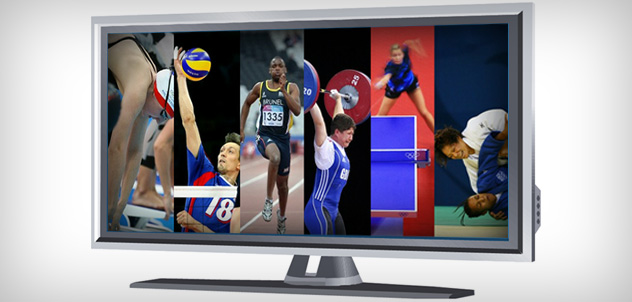
    The UEFA Euro Cup has made the Europeans forget all about the economic crisis; London, along with the whole world, is eagerly waiting for the world’s biggest sporting event – the Olympics – to begin. The world is buzzed about the various sporting events coming up in the next few months.


    Sports, around the globe, generate a major interest and channels – sports or otherwise – fight each other out for viewership and advertisements, and brands try to out-do each other through advertisements and activations to leave a mark on the public’s mind.


    The last event of such a stature in India was the recently concluded IPL which saw the entertainment channels fighting for eyeballs. With the next three-four months choc-o-bloc with sporting events, MxMIndia takes a look at how channels in the country are gearing up.


    Event Period Channel
    UEFA Euro Cup June 8- July 1 Neo Prime
    Wimbledon June 25-July 8 Star Sports
    India-SL series July 22- Aug 7 Ten Cricket
    Olympics July 27-Aug 12 DD/ESPN or Star Sports

    Time to worry?

    According to the media planners, for GECs and other channels, there is nothing to worry about. “Non-cricket fare is still appealing to a small niche segment and hence, its popularity is not reflected in ratings. India in the months of Jul-Aug has always been a moderate performer and not as high profile as some others and so this will also not have a major impact,” feels Shubha George, COO -South Asia, MEC.

     

    Suresh Balakrishnan

    And she is not alone. Suresh Balakrishnan, CEO, Brand Programming Network, agreed with her and added that though cricket is more than a sport in India, even IPL, which has both cricket as well as entertainment and was telecast at primetime, hasn’t been able to affect channels, especially the GECs in the recent past. “Lately, IPL has been able to get a rating of 2-3 which has hardly affected any GECs, so I’m sure other sports won’t matter to them at all. However, there is no denying the fact that viewership for other sports is increasing in the country. And major events might be able to at least reach the ratings which cricket gets, in the coming years.”


    Mr Balakrishnan, however, feels that sports channels don’t have much to worry about as there are many male-focussed brands which help them generate enough ad revenue. “Having said that, I also feel that channels showing sports other than cricket know that recovering money isn’t an easy task,” he added.


    The television behaviour showcases the interest of the masses which obviously tilts towards popular entertainment channels. However, most media planners agree that sports viewership is growing in the country and soon things might change but until then channels will have to make do with what they have/get.

     

    Amin Lakhani

    Amin Lakhani, principal partner, Mindshare said: “All leading newspapers and news channels have special coverage of important events, take Euro Cup for instance, but how much of it is being converted into viewership or readership? Even then, that hasn’t deferred them from covering the events because they know that, though tiny, there is a loyal following. Even brands are doing activations for sports which are gaining popularity in other sectors apart from Sec A&B – Pepsi is doing activations for football.”


    Business as usual

    Akash Chawla

    Entertainment channels continue to enjoy the largest share in the viewership pie. Although, they continue to compete with each other, when it comes to other genres, nothing has been able to write them off.


    Akash Chawla, Zee Entertainment Enterprise (ZEEL) marketing head – national channels, said: “Just like IPL, we are ready to combat any other sporting event. Our programming strategy does not depend on these events.”


    “For us, it will be business as usual. The channel is backed with strong and fresh content for its viewers, irrespective of the programming on competing genres,” said Hemal Jhaveri, general manager, Movies Ok.

     

    Hemal Jhaveri

    Other genres which focus on the same target audience as the sports channels are youth and news. But many in these genres believe that such sporting events don’t affect their viewership. Nikhil Gandhi, executive director, youth channels, media networks, Disney UTV claimed that most of the sporting events attract a majority viewership of urban youth, whereas they, as channels, focus on the HSM belt which includes 62 cities. Hence, such sporting events won’t affect their viewership.


    A broadcast veteran from a Delhi-based news channel too felt that news channels give enough coverage to the various sporting events, so there is no question that the events might eat into their viewership pie. He said that though both cater to the same TG, they are different genres and people might shift between the two, if needed.


    Nikhil Gandhi

    On the other hand, Neo Prime, the sports channel which is currently telecasting UEFA Euro Cup 2012, is aware of the competition within and between other genres and risk involved, but is still optimistic. “Sports is still a male-dominated genre, whereas other genres (read GECs) enjoy female viewership. But during big events, there are chances of a shift in the remote control. Sports do get eyeballs. And as for the advertisements, the brands which advertise on sports channels are different from the ones in GECs or other channels. Hence, nothing overlaps each other,” said Prasana Krishnan, COO, Neo Sports Broadcast.

     

    Prasana Krishnan

    Hopefully, as said by various media personalities, sports other than cricket in the coming years will be able to generate same interest among Indian citizens across sections and help sports channel to boom and enter the main TRP race as well.


     Imaging: Rafiq, Pictures courtesy: London2012.com



  • GroupM selects Buddy Media as preferred social ad partner globally

    By A Correspondent


    Buddy Media, the social enterprise software for eight of the world’s top ten global advertisers, announced that GroupM has selected the company’s BuyBuddy social ad product as its preferred social ad management partner.


    “We are proud that GroupM has chosen Buddy Media as its preferred social ad partner,” said Michael Lazerow, CEO and Founder, Buddy Media. “Our self-serve social ad buying technology will make it easy for any GroupM agency to effectively scale and measure social spend for their clients.”


    GroupM will roll out Buddy Media’s BuyBuddy to all of its agencies, including Maxus, MEC, MediaCom, Mindshare, M80 and other business units. It will also begin training on how to maximize the benefits of Buddy Media’s unified social marketing software solution across paid, owned and earned media.


    “After extensive evaluation of the marketplace, GroupM is excited to deploy Buddy Media’s social ad software to all of our agencies,” said Rob Norman, CEO, GroupM Interaction Worldwide. “Social media success is of critical importance to our clients, and Buddy Media is the proven self-serve solution in market that has a focus on empowering agencies and being a true partner. We will continue to work with other partners but believe this consolidation will offer our clients and teams the opportunity to develop consistent high performance in a rapidly developing market.”


    GroupM invested $200 million in Facebook advertising in 2011. Social network ad revenues will grow to nearly $10 billion in 2013, up from to $5.54 billion in 2011, according to eMarketer.


  • MEC turns 10!

    By A Correspondent


    Leading media agency MEC is completing a decade of existence. Created in 2002 from the first ever merger in ad conglomerate WPP’s history, two innovative independent businesses, The Media Edge in North America and CIA in Europe, came together to become MEC.


    Named by RECMA as the fastest growing global media network of the decade, MEC was the first media agency to create a specialist digital operation, Outrider, as early as in 1995 and by 2003, these services were fully integrated within the agency, enabling it to offer a seamless Paid Owned and Earned product to clients.


    As a founding partner of GroupM in 2003, MEC pioneered the concept of group trading and GroupM remains a unique and groundbreaking concept in the industry.


    In their very first decade, the agency has racked up some remarkable achievements.

    • The first media agency to win a Cannes Media Lion
    • The only agency to win Advertising Age’s Global Media Agency of the Year twice in consecutive years
    • The only agency to win Adweek’s Global Media Agency of the Year twice in consecutive years
    • 53 Media Agency of the Year awards in local markets around the world


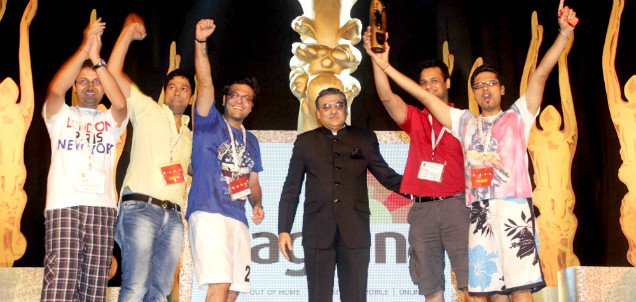
    Today, MEC has over 150 offices in 84 countries and employs over 4,000 people. In India, MEC was launched in 2004 and has full-service offices in Mumbai,Delhi, Chennai and Bengaluru. Both their specialist divisions – MEC Interaction (digital services) and MEC Access (entertainment, sports and partnerships) – were launched in 2008.  Interestingly, this anniversary year has brought much cheer for MEC India.  Not only did the agency win most golds at Goafest 2012, they were adjudged winner at Festival of Media Global for creative of media.


    Says Shubha George, Chief Operating Officer, South Asia MEC, “I am delighted to be part of MEC’s journey in India.  And, I am proud that the fledgling agency that we were has blossomed into a super successful organisation that brings on board the best mix of strategic thought, innovative action and analytical measurement. MEC’s culture is unique and infectious and I thank all my colleagues – current and those who have helped build the agency in the past – and wish us an even more successful decade to come.”


    Speaking on the occasion, T Gangadhar, Managing Director, MEC India says: “I am proud to be a part of MEC, a global network that is an exciting combination of strategic communications planning  and an idea-centric culture. While we will continue to take inspiration from our prolific past, this occasion is apt time to renew our vows to our clients, staff and associates.”


  • @Media Abby: Mindshare bags Grand Prix; MEC, Lodestar sparkle too

    The Grand Prix-winning Mindshare team with Jury Chair Ashish Bhasin


    By a Correspondent


    Having put an embargo on declaring the results of the Abby Awards before the event was to be staged, the Goafest Awards committee rewarded the patience of the media by calling in a press conference to declare the results much before it was made known to the audience at large. But the criterion to release it after 10pm remained -a diktat which was honoured wholeheartedly by all.


    In keeping with its attempt to play up the awards in as simple a way as possible, the committee was generous in stating that there was no big winner for the Media Abbys – a decision which was left for the media to decide. The reason was simple. For the first time the organisers had introduced a Grand Prix in the Media Abby awards and didn’t want that award to deter the attention from the other noteworthy winners. The points too were not awarded against individual metals, leaving it open for the media to decide the winner for the night.


    So if one went with Grand Prix as the criterion for the award, it was Mindshare that emerged as the No 1 agency having bagged the only single Grand Prix at the Media Abby. But then there were no points allotted for the individual metals leading to no clear winner at the top. The total count for Mindshare read: 1 GP, 1 Gold, 2 Silvers and 2 Bronzes (total metals 6).


    If one went by the gold count, it was MEC that emerged at the top, bagging 2 Golds, 1 Silver and 1 Bronze. Lodestar was next having bagged a total of 6 metals (the same as Mindshare) leading by 1 Gold, 2 Silvers, and 3 Bronzes. Madison Media Infinity was next as it bagged 1 Gold, 1 Silver and 1 Bronze followed by Starcom bagging just 1 Gold. Maxus follows with 2 Silvers and 3 Bronzes. (full table below)


    The Grand Prix was bagged by Mindshare for Surf Excel in the Best Use of Branded Content, which also won the gold in the same category. The GP was chosen from amongst the Gold winners. Other Gold winners include MEC that won two including one for Reliance 3G in Best Use of TV and the other for Best Use of Newspapers and Magazines. Lodestar UM won a Gold in Pro Bono Marketing for Bombay Psychiatric Society.


    Ashish Bhasin, chairperson of Media Abby said that the attempt this year was to reward the hard work put in by agencies, and therefore the Grand Prix. There were 16-17 per cent more entries from 31 agencies that were received this year, totalling 628 – last year the number was 530. It involved the efforts of more than 61 juries in putting this act together.


    Reacting on the agency’s win, Nandini Dias of Lodestar UM said: “I think we have performed very well this year. The total number of awards this year is only 27, which I guess is quite a small number. But within that we have won 6 awards, which is amongst the highest this year. So all in all, we are very pleased with our performance.”


    Also staged at the same night were awards from three verticals in the Creative Awards category including Design, Digital & Interactive and Direct. While the other categories would be announced on day 3, these three awards were awarded on day two itself. Ogilvy emerged the big winner as it won the Grand Prix for Fox Crime in the category – Online Integrated Campaign. DDB Mudra, BBDO, Leo Burnett were the other notable winners across the three categories.


    In all there are 101 awards that were given out in the Creative Abby awards on Friday night. An ecstatic Shashi Sinha said that the Creative Abbys were different this year as they received a record 4,250 entries as against 3,600-odd last year but what was remarkable was the participation of agencies from South Asia including Pakistan, Sri Lanka and Bangladesh. In fact the big winner tonight from South Asia was Grant McCann Erickson that won two Silvers across two separate categories.


    The awards were validated by research firm KPMG who have been doing it for two years now.


    Photograph: Shailesh Mule/Fotocorp


    Click here to view all Goafest 2012 stories