Tag: MEC

  • Business as usual for Maxus & MEC in India. For now…


    By A Correspondent


    That last bit of the headline is most critical. For now.

    Because the winds of change are blowing across the media agency world. There are huge pressures on operational efficiency – cutting costs and flab wherever necessary, combine forces whenever it’s possible and bracing oneself for a world where technology will drive business.


    And for WPP-owned GroupM, one of the world’s largest media agency and services conglomerates and clearly the numerouno in India, the situation is the same. And like for any smart strategy consultancy, the writing on the wall is clear. Only the fittest and smartest will survive.


    But the decision to maintain the status quo in India, while effecting changes across the world, means a lot.


    Although globally MEC is bigger, Maxus is huge in India. Sibling Mindshare may be way ahead, but Maxus has traditionally been very aggressive in the marketplace. Two years back in fact it beat Mindshare at the Emvies, the annual media agency award conducted by Advertising Club. Recently, it bagged the coveted ITC account which was earlier held by Madison and was fiercely contested that involved multiple agencies.


    MEC was founded in January 2002 with WPP buyingout CIA’s parent, Tempus. MEC was formed by the merger of The Media Edge and CIA. In 2010, the agency was rechristened MEC from Mediaedge:cia.


    In November last year (2016), MEC announced a new global CEO in Tim Castreereplacing Charles Courtier.


    Maxus, on the other hand was formed in 2008, though it did exist in some others before. Lindsay Pattison is Global CEO of Maxus, but last month she was also appointed Chief Transformaton Officer of GroupM. She currently holds both charges.


    This is what Pattison today after the announcement of last evenng:

    Transformational news from @Groupmworldwide today exciting for@Maxusglobal@MECideas and @Essencedigital Proud to be part of this

    — Lindsay Pattison (@lindsaymaxus) June 1, 2017


    Meanwhile, let’s revisit the story that MxMIndia carried on the site last evening:

    GroupM has announced a portfolio restructure which is essentially entails the merging if the global operations and teams of its agencies MEC and Maxus into a new, billion dollar revenue, media, content and technology agency under the leadership of MEC’s CEO Tim Castree.


    However, Maxus will continue to operate as an agency brand in India with the support of the newly formed global agency as well as the GroupM network. Ditto with MEC which will continue as is. In the near future, MEC will be rebranded to reflect the new global brand.


    GroupM’s portfolio will now comprise three successful global media agency networks — Mindshare, MediaCom, and the new company – each with more than one billion dollars in annual revenues, plus an innovative digital-first agency, Essence. GroupM also plans new investments across all of its agencies and its [m]PLATFORM data and technology capabilities.


    “We’re committed to improving our service to clients. These moves will give us greater focus, help us innovate, and improve our speed of delivery,” said Kelly Clark, Global CEO, GroupM in a statement.


    Since Clark became global CEO in October 2016, GroupM has made a number of organisational changes. Clark recently appointed Lindsay Pattison as GroupM’s Chief Transformation Officer to lead a range of transformation initiatives.


    Meanwhile, in a communique, GroupM said it is committed to the expansion of Essence, its digital-first agency, by adding traditional media capabilities and a larger geographic footprint to the agency’s existing media and creative credentials. In time, Essence will also lead several key GroupM client relationships as part of this restructure, the note added.


    GroupM acquired Essence in November 2015. “The leadership team at Essence is excited about the opportunities this creates for our clients and our people,” said Christian Juhl, CEO, Essence. “Our mission is to make advertising more valuable to the world; with this infusion of talent, capabilities and markets, we can do this now on a bigger stage.” Clark named Castree CEO of MEC in November 2016.


    “Maxus and MEC share common values and ambitions. Both networks have a strong local market presence and entrepreneurial drive. Together, we believe we can create an exciting new media, content and technology agency which we look forward to introducing soon,” said Castree.


    “We’ve clearly signaled our ambition to transform, and we mean business,” said Pattison. “This allows us to more meaningfully invest in each agency’s future – retaining and attracting the best talent with inspiring and rewarding workplaces, creating differentiated cultures and approaches, and sharing in a focus on helping clients win.”


    Bottomline:

    It’s business as usual for Maxus and MEC for now in India

    Clients of both agencies needn’t worry. Conflicts, if any, will be ironed out

    There will be rationalisation in teams, with movements from one grouping to the other. This will help populate the team of Essence


    The communication teams of GroupM, MEC and Maxus are tightlipped about giving out any more info, but there is indeed worry about what responsibilities some key folks in both agencies will be given once the merger happens fully.


    For now, Ajit Varghese, CEO APAC at Maxus will continue in his current role, but it will be interesting to see what his next role will be given that Maxus Indiia will continue as is, though for the rest of the world, things will change


     

  • GroupM merges Maxus & MEC globally. In India both to operate as is

    By A Correspondent

    GroupM has announced a portfolio restructure which is essentially entails the merging if the global operations and teams of its agencies MEC and Maxus into a new, billion dollar revenue, media, content and technology agency under the leadership of MEC’s CEO Tim Castree.

    However, Maxus will continue to operate as an agency brand in India with the support of the newly formed global agency as well as the GroupM network. Ditto with MEC which will continue as is. In the near future, MEC will be rebranded to reflect the new global brand.

    GroupM’s portfolio will now comprise three successful global media agency networks — Mindshare, MediaCom, and the new company – each with more than one billion dollars in annual revenues, plus an innovative digital-first agency, Essence. GroupM also plans new investments across all of its agencies and its [m]PLATFORM data and technology capabilities.

    “We’re committed to improving our service to clients. These moves will give us greater focus, help us innovate, and improve our speed of delivery,” said Kelly Clark, Global CEO, GroupM in a statement.

    Since Clark became global CEO in October 2016, GroupM has made a number of organisational changes. Clark recently appointed Lindsay Pattison as GroupM’s Chief Transformation Officer to lead a range of transformation initiatives.

    Meanwhile, in a communique, GroupM said it is committed to the expansion of Essence, its digital-first agency, by adding traditional media capabilities and a larger geographic footprint to the agency’s existing media and creative credentials. In time, Essence will also lead several key GroupM client relationships as part of this restructure, the note added.

    GroupM acquired Essence in November 2015. “The leadership team at Essence is excited about the opportunities this creates for our clients and our people,” said Christian Juhl, CEO, Essence. “Our mission is to make advertising more valuable to the world; with this infusion of talent, capabilities and markets, we can do this now on a bigger stage.” Clark named Castree CEO of MEC in November 2016.

    “Maxus and MEC share common values and ambitions. Both networks have a strong local market presence and entrepreneurial drive. Together, we believe we can create an exciting new media, content and technology agency which we look forward to introducing soon,” said Castree.

    “We’ve clearly signaled our ambition to transform, and we mean business,” said Pattison. “This allows us to more meaningfully invest in each agency’s future – retaining and attracting the best talent with inspiring and rewarding workplaces, creating differentiated cultures and approaches, and sharing in a focus on helping clients win.”

  • MEC appoints Debarghya Mitra as Head, Bangalore

    By A Correspondent


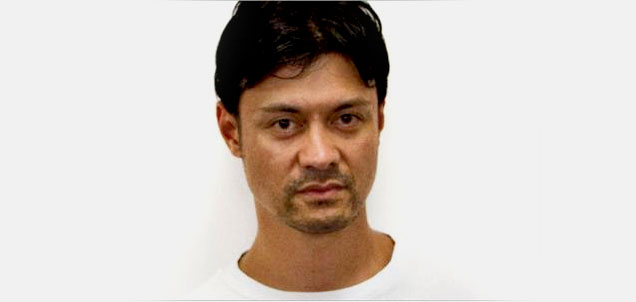
    Debarghya Mitra

    MEC has announced the appointment of Debarghya Mitra as head of their Bangalore office. Mitra will report to T Gangadhar, MD, MEC.


    Mitra has 16 years of experience and has worked at MAA Bozell, Euro RSCG, and Universal McCann. In his last stint, he was heading Madison’s Platinum Crest, the unit that manages ITC Foods and other ITC businesses based in South India. Mitra has also managed clients such as Tata Tea, TVS, Intel, Levi’s, to name a few.


    Speaking of the appointment, Gangadhar, said, “With his extensive experience of managing large advertisers, Deb’s track record is formidable. We are blessed with a fantastic roster of clients in Bangalore and there is no better candidate than Deb to take stewardship of them”.


    Mitra added, “Among the big agencies, MEC is the fastest growing and is now the largest agency in Bangalore. I am excited with the agency’s digital focus and integrated media approach. Hopefully, I will be able to use my experience to take things to the next level”.


  • Debt is OK for Millennial Rich Kids


    By A Correspondent


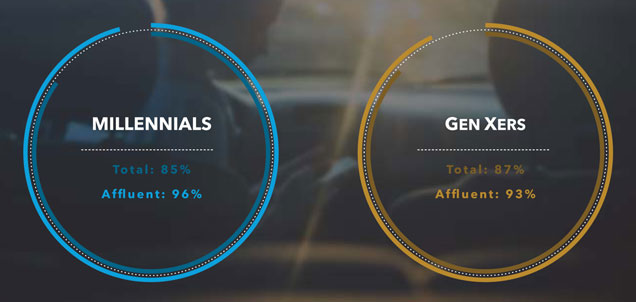
    Online professional network LinkedIn and leading media agency MEC have released ‘The Affluent Millennial Opportunity’ study in partnership with research firm Ipsos. The study reveals how the behaviour and attitudes of Affluent Millennials could reshape the future of the financial services industry.


    The study revealed that Affluent Millennials are more likely to facilitate their entrepreneurial and life goals by opting for debt related financial products. According to the survey, 68% of this group owns at least one credit card and 52% have a personal loan. Given their entrepreneurial spirit, it is not a surprise that 27% have a business loan.


    The dynamic, self-empowered and technologically advanced generation is a key driver of India’s economic growth. To help financial institutions nurture and deepen their relationships with the Affluent Millennials, here are some interesting insights from the study:

    Independent and hungry for information

    • 54% of Affluent Millennials said that they conduct their own research before making an investment, but consult with an advisor to validate before they take a decision
    • 68% Affluent Millennials expect to be successful and advance quickly in their career through their own hard work – not through their country’s prosperity
    • The study revealed that 86% of the Affluent Millennials use social media for obtaining financial information. They look for financial institution which offers a great degree of privacy and has a positive buzz online
    • Peer opinion (93%), thought leadership (92%) and informational resources (90%) is the content Affluent Millennials want from accompany on social networks


    Low dependence on salaries

    • The source of affluence for this group is changing.Salaries are losing prominence as the primary source of wealth ascompared to the GenX Affluents**. Affluent Millennialsare 1.8 times more likely to have gained their wealth from royalties, 1.6 times from self-employment and 1.4 times by way of grants and scholarships.


    High on loyalty

    • They are highly loyal and trust the financial institution they work with and more than three quarters of Affluent Millennials with multiple checking accounts hold all of them at the same financial institution.This is much higher compared to GenX (31%)
    • More than half of Affluent Millennials (51%) are more likely to say they are VERY loyal and plan to do more business with financial institutions they work with.


    “Millennials are an incredibly crucial audience for marketers and that makes this a very important study. For the very first time, we have deep insights about how this generation views financial matters”, says T. Gangadhar, MD, MEC India


    “Majority of the millennials consider themselves global citizens who are digitally savvy and constantly looking for information. Our study revealed that, 60% of this group consider social networks as a must have for making a financial decision. For financial services providers this translates into two key takeaways,building stronger relations with the Affluent Millennials and generating relevant content online,” said Ashutosh Gupta, Director of Marketing Solutions, LinkedIn India.


    Given the unique and dynamic behavior patterns of the Affluent Millennials, there are a number of opportunities available to financial services companies to alter their marketing strategies. They need to personalise and socialise their approach, provide expert advice in order to establish trust and enable independence and build a loyal customer base at an early stage.


  • Clients want media at the front-end…


    Pele Cortizo-Burgess, Global Director, Integrated Planning at leading media agency MEC isn’t from a typical media agency background. He was last at Grey North America as Chief Strategy Officer. Excerpts from an interview with Pradyuman Maheshwari when he was in Mumbai for Zee Melt 2015.


    With the kind of background you have, what are you doing in a media agency? Apart from the fact that both your last agency and the current one are WPP-owned?

    [I’m] still learning, growing, getting sharper, because there’s a level of creativity, media that I think a lot of clients and makers, if you will, people who are responsible for the advertising product… there’s a lot of creativity within media that they’ve not been exposed to.


    Before you came in to a media agency, you must’ve come in with certain expectations. Obviously, media agencies have changed dramatically from the last few years…

    I wouldn’t know because I’ve only been in one media agency, and it’s this one.


    What was the perception?

    The perception has been almost disposable. It is in the last 10 minutes of the meeting that the media guy stands up and gives a presentation, which is such a shame especially when you look at the resources, discipline and talent media companies have. It’s almost irresponsible to save that to the very end of a creative presentation, versus if you start the approach of understanding the opportunity, challenge, problem on the client’s behalf with inputs from media, I think that the idea actually ends up being more exciting.


    Would you say the clients expect a lot more from media agencies today than before?

    I think clients are incredibly open to media companies being [engaged in] more than just buying and planning. So I think what’s happening now is clients are recognising the value of media being at the front-end of the approach, versus the back-end.


    Are creative agencies okay with it?

    Yes, they are smart. There are agencies that are for this, but, I think that it’s not a hundred per cent. There are advertising agencies that, unfortunately, still look at media as a discipline that’s [revolves] around execution, versus looking at media as an essential ingredient in a creative process, to create an idea. And when that happens, it’s only to the positive benefit of the client.


    I’m not very sure what the scene is internationally, but in India, media agencies have always suffered from the fact that they’re unable to hire talent – especially at junior levels – because they don’t have the money, thanks to what they earn. Is that a problem elsewhere in the world?

    Not many people have enjoyed my saying this, but if I reflect on my own career, some people ended up doing media because they couldn’t become an account planner or couldn’t make it in the creative department.


    Like if I can’t become a doctor, I turn a dentist.

    There was always that stigma which led to a lot of people not choosing to go into media. Given the changes that are happening right now, when I look at the talent that’s coming in — mostly outside India in the markets that I’m more engaged with — it’s about retaining that talent, not just retaining them on the possibility that they’ll go to another advertising agency, but to Facebook, Google or Twitter. Today, there are so many different environments that are calling out for amazing talent. Media is one that deserves that amazing talent.


    Increasingly, media agencies are becoming full-service, because in digital they do creative and they also do buying and planning. This is happening in India too. Your views.

    I’ve heard a lot of people talk about it as a prediction. I myself don’t see that as a way of embracing or creating the most amazing ideas for a client. Because it’s fragmented. I’ve been asked if, in future, I see all disciplines coming together, and my response is that they may not all come together under one roof, but if you’re my client, [I have a] responsibility to connect all those different inputs to ensure that you have an idea that is as dynamic as the world that we’re about to unleash it into. Does that mean that I see media agencies becoming full-service? We’re not built that way at the moment. What we’re building ourselves is for transitioning that discipline from just being the backend more towards being an essential component…


    Could there be a conflict between media agencies and creative agencies, given the larger growing of those roles?

    I think there will always be conflict around territories, humans being humans, organisations being organisations. A lot of the companies that have started to create a discipline [do it to] create a holistic point of the view for the client. When you talk about better understanding a customer’s journey, you can’t do that without better understanding his/her behaviour and engagement with media. When that happens, a lot of people will say, may be there’s conflict. That happens because we’ve traditionally kept media separate — in terms of involvement in the creative process — which I think is a shame.


    For clients it’s a win-win because they’re getting ideas from everywhere…

    Yes, but be careful about ideas coming from everywhere. Despite what people say, every idea may be a good idea, but there are also a couple of bad ones. And I think bombarding a client with ideas from everywhere isn’t a role that partners need to play. I think partners need to engage in creating the most dynamic, most engaging, most relevant idea and then implementing that accordingly. Yes, it’s a win situation for the client, knowing that the idea put in front of him/her has been holistic in its creation.


    MEC, for instance, has this unit for Colgate. For large clients, composite units have been built.

    I can’t answer that question in too much detail other than to give you a general point of view. When that is being built, it’s being built in pure dedication to that client.


    How familiar are you with the Indian scenario in terms of the work that’s being done?

    Not as familiar as I should be, or would like to be. This is my third trip to India. When I think about the practice of media here, what’s exciting for me is it’s almost a proof point of the shift away from paid/owned/earned, to starting with owned first, when you look at media. It’s exciting. There’s still tons for me to learn from here, and to share, hopefully.


    First appeared in dna of brands dated July 6, 2015


  • MEC unveils its fifth annual Review Preview

    By A Correspondent


    MEC has released its fifth edition of Review Preview (RP No.5 – Transforming Marketing). This collection of global essays recaps the most significant takeaways from the past year and explores how digital transforms the way consumers explore, discover, buy, and engage with products and services as well as with each other, transcending traditional channel boundaries in 2015.


    The essays, written by MEC’s senior team from around its international network, offer a truly global perspective on marketing. Key articles include:

    1. The power of building stories: At the forefront of the massive shift in marketing, content has emerged as a major marketing disrupter, empowering brands to educate, entertain and mobilize the participation generation. As an example, the essay links to Netflix and MEC’s award-winning native advertising project for the Season 2 premier of Orange is the New Black.


    2. Escape the live room: In the 2000s we’ve built labs, in the 2010s we’ve built live rooms. But today, many of those live rooms have turned into sad, abandoned conference rooms with lots of expensive screens. The author argues that live is not a space, but a cultural transformation and a new way of working. As marketers, we must be ready to be always on, meeting the consumers in real time, whether from inside the live room or not.


    3. Data is changing how marketers plan: The data and technology advancements enable marketers to unlock and monetize consumer insights at an unprecedented rate, making way for real-time solutions, customizable audiences, endless creative iterations and opportunistic channel activations.


    4. Romancing the ecommerce shopper: There is much more to ecommerce than giving consumers a place to enter a credit card number. In 2015, the sheer volume of everyday consumer decisions that will be made ecommerce will necessitate brands to, as David Ogilvy said “charm the consumer into buying their product.” Brands should leverage consumer insights and technology to tell a cohesive, consistent and compelling story across all ecommerce touchpoints.


    5. The rise of digital video: As screen and content choices continue to proliferate, video will become an ever greater part of our lives. Marketers need to think more about how they can leverage digital’s unique capabilities to create immersive and relevant video experiences. To this end, there are three areas marketers need to keep top of mind: interactivity, native video advertising and social TV.


    Commenting on Review Preview, Carl Fremont, Chief Digital Officer, Global said, “This year’s articles from our global network of senior leaders provide a guide for implementing marketing brand initiatives in a digital enabled world. Digital has transformed the ways in which consumers explore, discover, buy, and engage with products and services as well as with each other, and staying ahead of technology and the consumer’s changing expectation is one of the biggest challenges of today’s marketers. Our best advice is to dive in and explore the new opportunities to change and grow the business: Open your data and your services. Fund disruptive innovation. Experiment, fail and learn.”


  • MEC, FreeCharge explore new smart messaging platform

    By A Correspondent


    MEC along with FreeCharge have harnessed a new ‘Smart Messaging Platform’ to reach out to consumer’s mobile phones with branded high quality, rich media such as videos, images, audio clips and more, directly, rather than having to push links.

     

    The smart messaging platform commonly known as MMS+ technology merely requires the consumer to have a data-enabled mobile phone. It works across all platforms - iOS, Android and Windows and does not require users to download any application to support it.


    For the very first time 1,00,000 consumers across, Mumbai, Bangalore & Pune will receive a message, which will play the FreeCharge video directly without requiring the consumer to click on a link.


    Sidhraj Shah, National Director Activation, MEC, said “The MMS+ technology offers hyper-personalisation opportunities including tracking consumer reaction to the call for action, which is not possible with the current SMS platform. At MEC, we are constantly scouting to offer new experiences and technologies for our clients, to engage with their customers. With ‘Smart Messaging platform’ we have only scratched the surface.”


  • Product fails when commercial imperatives get in way of editorial integrity: Proctor


    By Pradyuman Maheshwari


    Dominic Proctor took on the role of President of GroupM Global in January 2012. Prior to that, he spent a decade-and-a-half years as CEO of Mindshare Worldwide, the GroupM agency he had founded in 1997. With billings of over a 100 billion dollars that constitutes around 30 percent of all global media, GroupM is the holding company for all of WPP’s media agencies – notably Mindshare, Maxus, MEC and MediaCom amongst others.

    Excerpts from an interview with Dominic Proctor while he was in Mumbai around a fortnight back.


    This is your third visit this year. What brings the GroupM CEO to India so often?

    I think it’s rather patronizing to speak about India as a market for the future. It’s a massive market now, and for us it’s a very significant part of our global company. It’s obviously going to get bigger and better as the economy and the population develops but we come to the present as well as the future.


    You’ve been coming here for over a decade-and-a-half. What do you see as the significant difference between then and now?

    Much more open-minded. I think those days were characterized by fairly closed minds in the marketing services industry. The status quo was everybody’s friend and therefore it took longer than most countries to get business going here. The thing about a closed economy or a closed mind is that you don’t get the fresh oxygen of ideas as in other markets.


    The disadvantages of a closed economy is there isn’t much business, but when you have an open environment, the competition also gets stiffer, right?

    That’s capitalism… that’s cool, that’s fine.


    How do you see the digital business in India vis-à-vis the rest of the world?

    The rise of digital platforms has been of fundamental importance to media and marketing and our business in India. It may have started rather slowly, but the important thing is it’s changing in the same way as the global, digital economy is. Each country starts in a different place and has a different speed. The direction is more or less the same.


    But the spends here are not as much as in the rest of the world.

    That’s exactly my point. They will catch up.


    Is it because the best creative brains don’t work for digital here? They work for television commercials instead?

    That’s not the reason at all. The reason for varying speed is the differential uptake of digital media by consumers. In the end, rupees follow the eyeballs.


    Could the spend be getting distracted by the many offerings in digital- search, social media, conventional banner ads etc?

    It’s a sign of growing up. It’s a sign of a platform maturing and moving in different directions to its usual requirements.


    If you were to self-assess, what would be your own assessment of GroupM in digital given that Unilever, one of your biggest clients, is not with you?

    I’d give ourselves a 7 on 10 and wouldn’t give anybody else much more than that, because I think there’s a lot of headroom to grow. Some of our direct competitors have been rather quick to assume the way of solving the problem is primarily through acquisitions. We’ve made some acquisitions and we’ll make some more. Acquisitions alone aren’t the main driver. The main driver is the fact that the whole world is becoming digital and therefore our business needs to become digital.


    In digital, both media and creative agencies have turned full-service. Would you hence say your competition is not necessarily media agencies like yourselves but also an Ogilvy, JWT, Leo Burnett…

    I think it goes way beyond that. Our competition for client attention, demand and revenue is not just from other agencies and other types but also from consultants, specialists and clients themselves who do things inhouse. Our competitive set is very broad indeed. That’s a sign of our business growing up and fighting on a lot of fronts. That’s good.


    Is there a need to reinvent yourselves given the way businesses are growing? Is there any one thing you’d like to do in terms of reinventing?

    We reinvent ourselves constantly. The most challenging thing in reinventing is of course training and development of talent. I’m very happy to say that our talent retention record in India is very good compared to other markets.


    Are you able to attract the top talent given the very high remuneration levels at B-Schools? Especially since your clients have them…

    That’s a challenge for us. I’ve been on platforms talking about the fact that we need to continue to move up hierarchy of partners to clients, because we need to earn the revenue that will pay for the A-list talent. There’s no doubt that other competitors for talent, example, Google, can have deeper pockets than us. I think people join us not just for that reason. A lot of them join us for varied life and varied training. It’s the environment. This year, we won the Porter prize for best places to work. To me that’s just as important, if not more, than our ability to pay a few more dollars to a few more people. People come here not just for that. They come here for the working environment, training, grounding in business. It’s really important to not forget that when you’re working in a media agency, you have the privilege of looking at a lot of different clients across a lot of different marketing platforms in media. That gives you tremendously good grounding for a business career.


    What happens is people use your organisation as a jumping board to move elsewhere

    That’s fine. I don’t mind that. That’s why I’m pleased our people aren’t jumping ship.


    Talking of higher remuneration, if a GroupM can’t achieve that, who can? You are a market leader, and have a longstanding relationship with clients.

    We can and we do. Our income rate and clients are increasing. We’re of increasing value to our clients. The more value we are to clients, the more revenue we can make, the more we can attract talent. It’s a virtuous circle.


    GroupM today is a lot more than just a media agency in India and the rest of the world. How much of your focus is on businesses such as Dialogue Factory and your association with sporting events and other BTL activity?

    A lot of it. One thing common to all countries is that the bedrock of our business is media planning and buying. It’s always been clear to me that unless we can get that fundamental activity right and be efficient and effective for our clients, then we have no ability and no permission to expand our service offering. We absolutely have the ambition to broaden what we do in our agencies. Sports marketing, digital consultancy, data analysis, we could go on. It’s becoming more and more broad because the clients demand is for agencies to have more and more specialist insight into the opportunities, to make sure that the specialist insights are integrated.


    In the current scenario where digital has overtaken print media spends, what is your view of the future for spends in print versus the rest?

    If your print business stays fresh, relevant and interesting, that’s where the eyeballs will go. The challenge simply isn’t just to abandon all traditional media platforms and just follow the digital dollar, the strength of a print brand, the attractiveness of its editorial, the freshness of its presentation are critical. If you lose those things, you lose your audience not just from print, but digital as well. Your brand suffers.


    One of the peeves of print publishers is that the advertisers forever want innovations. Like in the papers you have these jackets, one or two or more pages of advertising over the front page, taking away the interest of the reader?

    It does if it’s boring and it irritates people. So, the balance between the editorial and marketing judgment has to be more even. You just look at any country in the world,  where commercial imperatives get in the way of editorial integrity, the product fails. Media entities are brands. If you mess around too much with the brand, it becomes confusing to the consumer.


    Over the last couple of years, GroupM in India has seen a fair amount of changes. One is the embracing of digital has leapfrogged. We’ve had the Y-Co, a kind-of youth ‘Shadow Board’. How many processes of GroupM India have you followed elsewhere in the world?

    Y-Co is an Indian idea born here. I was at the launch myself, a year ago, and it has now been taken up in other markets. So, India is both an exporter and importer of ideas. Y-Co is an Indian export idea, made in India. Your current Prime Minister has been talking about Brand India. It’s also an importer of ideas. So, a lot of the initiatives happening here were born elsewhere. It’s an import-export business.


    Anything you’d like to see here in GroupM in future?

    We encourage our teams to continue to be open-minded. We encourage them to be more focused around the digital developments. As brand or market leaders in India, we’d want to be at the forefront of these and rather than wait for a market to form and join in, we’d like to form a market.


    Over the last year, India has seen a lot happening in the field of audience and viewership measurements. We are all set to get a new measurement regime in television and we have had an uproar over a print survey. Since you are a key stakeholder in the business, how do you advise your clients when questions are raised about the veracity of data?

    We have specialists who are able to give very special advice in very important areas. Measurement is a very important part of what we do. Return on investment is a very acute measure of our performance and return can be linked to the performance of leadership or viewership. of course, it’s fundamentally important to get it right. To me, it’s symptomatic of change. As media landscapes change, the way we measure them changes too. We intend on being a very important part of stewarding that change so that it’s fair and accurate. If it isn’t, we’re going to be rejected.


    A variant of this interview first appeared in ‘dna of brands’ as part of the dna issue dated October 6, 2014


  • Marie-Claire Barker joins MEC as Global Chief Talent Officer

    By A Correspondent


    Marie-Claire Barker

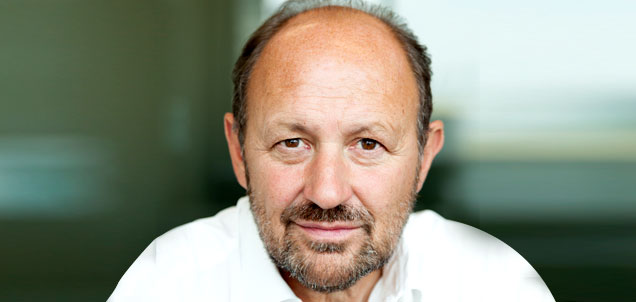
    MEC has announced the appointment of Marie-Claire Barker as their first Global Chief Talent Officer. Marie-Claire Barker joins from the Ogilvy Group, where for the past six years she has been Chief Talent Officer, responsible for driving and delivering talent strategy for their 22,000 staff, globally. She is one of the most senior and respected talent professionals in WPP and the industry.


    She will work with the agency’s global CEO Charles Courtier; the company’s global Executive Committee; discipline leaders and People and Culture teams around the world, to deliver a consistent talent strategy and approach to how MEC attracts, evaluates, motivates and grows their people.  The goal is for MEC to be the company of choice for talented individuals who want a challenging, rewarding and exciting career in the marketing industry.


    Marie-Claire Barker said, “I want to be in a business with a palpable culture.  MEC’s talent manifesto, which encourages each employee to thrive within the context of work, is something that really intrigues me.  I have a strong desire to change the face of talent management in our industry, so operating in an environment that encourages uniqueness and innovation in a culture where employees feel there are no barriers to reaching their potential is what has drawn me to MEC.”


    Commenting on the appointment Charles Courtier said, “Talent is the single most important ingredient to the future success of MEC. Marie-Claire has an absolute passion for the growth and development of people, and I know that she’s looking forward to working with MEC leaders to drive a culture where each employee is able to contribute in a meaningful way to improve business results, and reach their own personal potential.  This is why MEC appealed to her, and why under her leadership and experience we’ll be able to truly thrive as a company.”


  • RECMA declares MEC as most competitive agency in APAC

    By a correspondent


    MEC has been named the most competitive agency in APAC according to the latest annual Compitches Report from the Research Company Evaluating the Media Agency Industry (RECMA).


    The 2013 Compitches report evaluates the media agencies’ success in winning new business pitches taking into account client budgets, contenders and degree of involvement in global/regional pitches. Not only is MEC Asia Pacific ranked best overall performing agency in the region, but the media agency is also awarded A grades for competitiveness in Singapore, Australia and China.


    The ranking reflects MEC’s success in retaining key clients following competitive reviews; including among others Mitsubishi in Australia, as well as winning significant new business for the region; such as Sony Electronics, Tiger Airways and GE.


    Speaking on the announcement Chief Executive Officer of MEC Asia Pacific, Stephen Li said, “The days of price comparison only are gone, and clients today are looking for an agency that can help them embrace the digital possibilities of a changing marketplace. This is especially true of the fast growing Asia Pacific region. That MEC comes out as the region’s most competitive agency is a testimony to our amazing teams around the region and our ability to deliver genuine growth for our clients.”


  • MEC elevates Rahul Jadhav to National Trading Head

    By A Correspondent


    MEC has announced the promotion of Rahul Jadhav to National Trading Head. In his new role, he will be responsible for media investments across platforms and will report to T Gangadhar, Managing Director, MEC, Sidharth Parashar, Head – Pricing and Investments, GroupM and to Michael Beecroft, Trading Head – MEC Asia Pacific.


    In his previous role, Jadhav was head of media buying on Colgate Palmolive. He has been with MEC since 2010 and will continue to be based in Mumbai.


    Announcing the development, T. Gangadhar, MD, MEC India said, “Trading is a massive differentiator for us and Rahul has the smarts to lead this critical function. He has an astute understanding of the media landscape and enjoys excellent relationships with our business partners. I wish him the very best in his new role”.


    Jadhav is a Bachelor in Engineering and holds an MBA degree from the University of Pune. Prior to joining MEC, he was Product Manager at Tata Motors. His career also includes a stint at Bajaj Tempo. He is an avid car enthusiast and a cricket fanatic.


  • MEC India expands media agency mandate within Reliance ADAG

    By A Correspondent


    Leading media agency MEC India has announced expansion of its media mandate within Reliance Group.


    The agency has bagged the mandate for Reliance Capital (including Reliance General Insurance, Reliance Life Insurance, Reliance Mutual Fund and Reliance Commercial Finance), Reliance Infrastructure, Reliance Power and Reliance Energy.


    MEC India has already been managing the media mandate for Reliance Communications, Reliance Net Connect & Reliance Digital TV and is now enthusiastic about managing the media agency responsibility for more group companies.


    On this development, T. Gangadhar, Managing Director, MEC India said “The team at MEC India is eagerly looking forward to provide excellence in crafting and executing customized integrated solutions across its suite of services. MEC India has shared a long standing relationship with various companies in the Reliance Group and our objective will be to provide superior assistance with media, analytics, content, activation and digital media services, as we have been doing with the award winning RCOM mandate in the past.”