Tag: McDonalds

  • McDonald’s North & East retains DDB Mudra

    By A Correspondent


    Robert Hunghanfoo

    DDB Mudra Group has been assigned the integrated marketing communications mandate for McDonald’s India – North & East (Connaught Plaza Restaurants Pvt. Ltd.). The enhanced scope will include digital marketing by 22feet Tribal Worldwide and digital media planning by OMD Mudramax, in addition to the existing brand strategy and creative mandate.


    Commenting on the partnership, Robert Hunghanfoo, Head, CPRL said: “DDB Mudra brings a deep understanding of the brand philosophy and ethos. Their creative work and successful partnership with us makes them our preferred partner for the extended mandate in digital marketing.”


    Kriti Awasthi

    Added, Kriti Awasthi, DGM, Marketing at McDonald’s India – North & East: “Digital media has revolutionised the way brands connect, communicate and interact with their customers’ world over. Covid-19 has further accelerated the need for robust digital marketing for successful consumer outreach. With strong experience in the digital marketing space and in-depth understanding of brand McDonald’s, we are confident that DDB Mudra Group will enable us to reinforce our brand love and strengthen our consumer outreach on the digital platforms as well. We look forward to delivering a great McDonald’s experience through innovative and strategic interventions.”


    Ashutosh Sawhney

    Talking about the expanded partnership, Ashutosh Sawhney, Managing Partner, DDB Mudra Group, North said: “Brand McDonald’s needs no introduction anywhere in the world. We are thrilled to have secured the overall communications mandate for McDonald’s North & East India. This is a testimony of a progressive, consumer-first client who believes in DDB Mudra Group’s combined ability of creating media agnostic ideas and deploying them based on the deepest understanding of consumer journeys.”


  • McDonald’s North & East launches ‘The Big Hug’ campaign

    By A Correspondent


    McDonald’s India North & East has launched an all-new digital campaign ‘The Big Hug’ highlighting people’s emotional desire to hugging their loved ones in the current times of social distancing. As part of the campaign, the company has introduced double patty burgers.


    Conceptualised by DDB Mudra, the digital films center around two of the most prominent habits such as video calling your loved ones and twinning with them and sharing OTT subscription with your friend.


    Said Robert Hunghanfoo, Head, Connaught Plaza Restaurants which operates McDonald’s restaurants in North and East India: “Big Hug is a fun and light-hearted campaign in line with McDonald’s brand promise. With this campaign, we are offering our customers new ways to enjoy the burgers they love and engaging with them in a unique way, by offering double patty variants in their McDonald’s favourite menu items. We hope our customers feel the tight hugs with the Big Hug Burger, just like our patties squeezing each other tightly.”


    Added Ashutosh Sawhney, Managing Partner – DDB Mudra Group, North: “All of us are living through a time, where we don’t know when we will get to freely give someone a hug as a gesture of love, appreciation or greeting. While the whole world is going through this reality, McDonald’s has introduced burgers that are born out of this very unfulfilled desire of hugging for its teeming fans, a proposition that is as heartfelt as it is delicious.”


  • WARC unveils Effective 100 rankings

    By A Correspondent


    The WARC Effective 100, an annual ranking of the world’s most awarded campaigns and companies for marketing effectiveness, has been published by WARC.


    The Effective 100 Ranking is compiled by WARC, the international marketing information company, and is produced by combining the results of the industry’s most important global and regional award shows for effectiveness throughout 2019.


    The most effective campaign of 2019 is It’s A Tide Ad, by Saatchi & Saatchi New York / Hearts & Science New York / MKTG New York for laundry detergent brand Tide. Tide became the most loved brand of the Super Bowl and grew consumer loyalty in the US by hijacking other popular ads with the message that if there are clean clothes, it’s got to be a Tide ad. Within two weeks, sales of Tide products increased by 35% and within a year, sales increased to over $75m.


    Said Andrea Diquez – Chief Executive Officer, Saatchi & Saatchi New York: “We’re so incredibly proud that TideAd has ranked #1 for effectiveness. I can only attribute our success to an extraordinary partnership with a very brave client, an amazing and highly diverse agency team and a group of partners that helped us push boundaries and make this idea even bigger than we could have ever imagined. TideAd embodies everything we strive to achieve as an agency. It changed the way other brands behave in the Super Bowl, blurred the boundaries between media, entertainment and marketing and engaged the audience in a compelling and unprecedented way. In the end, this is just more great proof that powerful ideas drive business results.”


    In second place is Oyster Kanji Dictation for Hiroshima Tourism by I&S BBDO Tokyo / BBDO J West Hiroshima. The campaign increased oyster consumption by launching a workbook that educated citizens about the food. In third is National Safety Council’s Prescribed to Death, a campaign by Energy BBDO Chicago / PHD Chicago to raise awareness of prescription opioid overdose in the US.


    There are three agency rankings in the Effective 100: creative, media and digital/specialist. Ranked #1 creative agency is FP7 McCann Dubai, which climbed 13 places to first place after working on six of the Top 100 campaigns. AMV BBDO London is up from 11th place last year to second. CHE Proximity climbs from 9th to third.


    Last year’s 21st placed media agency, Hearts & Science New York, leaped up to the top spot this year through work with Procter & Gamble and AT&T, also contributing to the #1 campaign, It’s A Tide Ad. Two new entrants to the top 50 since last year take second and third place: Mindshare Mumbai and PHD Chicago.


    In top position of the digital/specialist agency ranking is Dentsu Aegis Network’s MKTG New York, having worked on top placed campaign, It’s A Tide Ad. MRM/McCann Shanghai takes second place and Ayzenberg Los Angeles third. All three agencies are in the rankings for the first time.


    McCann Worldgroup holds its position at the top of the networks ranking for effectiveness for a second year in a row, significantly ahead on points of BBDO Worldwide in second place. Ogilvy is in third.


    Suzanne Powers, Global Chief Strategy Officer, McCann Worldgroup, said: “Our mission of helping brands earn a meaningful role in people’s lives is not just mantra to us. It’s a methodology and approach that helps our teams around the world create amazingly impactful work. This top ranking recognizes that focus, and, of course, the great clients with whom we have the honor of working with every day to drive those results.”


    The top nine places in the holding companies ranking remain unchanged from last year,with WPP remaining at the top for a second year. Omnicom Group follows in second place and Interpublic Group is in third.


    Regularly top of the table, last year’s top two brands for effectiveness switched places with McDonald’s coming out on top, ahead of Coca-Cola. Ikea is in third. Despite McDonald’s having one campaign in the top 100 – The McDelivery Pin – a further 30 other campaigns from around the world earned points for the fast food retailer.


    Added Colin Mitchell – Senior Vice President, Global Marketing, McDonald’s: “We’re honoured to be recognised for the effectiveness of our marketing in this prestigious ranking. Effectiveness is what we strive for day in and day out. In an industry often fixated by the short-term, this gives a sense of the long-term value of what our marketers do.”


    For a third consecutive year, Unilever is the top advertiser in the Effective 100 Rankings by a significant margin over The Coca-Cola Company in 2nd place. Unilever’s Lifebuoy is ranked 11th in the brands’ table and a further 32 brands collected points contributing to its first place ranking.


    USA retains the top spot in the country table, but for the first time since the Effective 100 ranking began in 2014, the UK has dropped from second into third place, with India moving up to take its place. The UAE is the biggest mover in the top 10, rising from 29th last year to 5th this year. 71 different countries registered points.


    The most highly ranked campaigns and companies in the 2020 WARC Effective 100 are:

    Top 10 world’s most awarded campaigns for effectiveness

    Rank Campaign title Brand Agency Points
    1 It’s a Tide Ad Tide Saatchi & Saatchi New York / Hearts & Science New York / MKTG New York 75
    2 Oyster Kanji Dictation Hiroshima Tourism I&S BBDO Tokyo / BBDO J West Hiroshima 69.1
    3 Prescribed to Death National Safety Council Energy BBDO Chicago / PHD Chicago 65.9
    4 Vodafone Sakhi Vodafone Ogilvy Mumbai 62.6
    5 Unforgettable Bag Tesco Grey Kuala Lumpur 55.2
    6 The Adaptive Data Lighthouse Lifebuoy Mindshare Mumbai 52.8
    7 Project 84 CALM adam&eveDDB London 51.1
    8 Black Supermarket Carrefour Marcel Paris 50
    9 Everyone is an Amazing Book Amazon Prime McCann Shanghai / MRM//McCann Shanghai 41.1
    10 Faces of the City Coca-Cola McCann Shanghai 40.2


    Top 10 world’s most awarded creative agencies for effectiveness

    Rank Agency Location Points
    1 FP7 McCann Dubai, United Arab Emirates 138.7
    2 AMV BBDO London, UK 98.8
    3 CHE Proximity Melbourne, Australia 91.5
    4 DDB Auckland, New Zealand 80.3
    5 Ogilvy Mumbai, India 80
    6 adam&eveDDB London, UK 78
    7 Saatchi & Saatchi New York, USA 77.2
    8 McCann New York, USA 75.3
    9 Energy BBDO Chicago, USA 74.4
    10 I&S BBDO Tokyo, Japan 69.1


    Top 10 world’s most awarded media agencies for effectiveness

    Rank Agency Location Points
    1 Hearts & Science New York, USA 70.3
    2 Mindshare Mumbai, India 70.1
    3 PHD Chicago, USA 62.5
    4 Mindshare Istanbul, Turkey 62.3
    5 OMD New York, USA 47.7
    6 Starcom Chicago, USA 44.7
    7 Starcom Warsaw, Poland 40
    8 UM Toronto, Canada 39.7
    9 Reprise Petaling Jaya, Malaysia 39
    10 Wavemaker Warsaw, Poland 34.7


    Top 10 world’s most awarded digital/specialist agencies for effectiveness

    Rank Agency Location Points
    1 MKTG New York, USA 57.8
    2 MRM//McCann Shanghai, China 41.1
    3 Ayzenberg Los Angeles, USA 40
    4 R/GA New York, USA 25.9
    5 Arc Worldwide Chicago, USA 25
    6 Fullsix Lisbon, Portugal 24


  • This Burger is Moldy, but..


    By Sanjeev Kotnala


    Now, it is rare for a brand to come with two exceptional executions in succession. May be it is the rivalry between the two big brands; Burger King and McDonald’s that have made it possible. Personally, I wish for a hattrick.


    THE FIRST WIN FOR BURGER KING WITH THE LONELIEST PERSON ON EARTH.

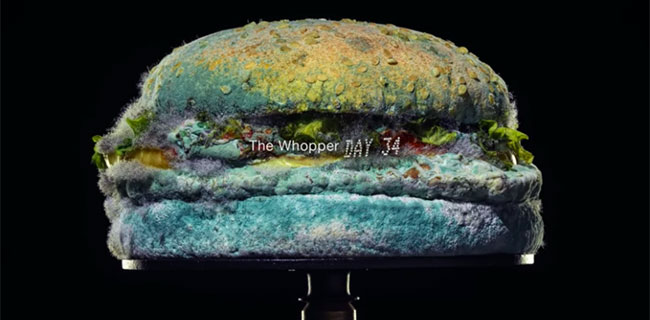
    Recently during the Valentine’s Day week, Burger King made one relook at Ronald, the McDonald’s mascot as the loneliest person on planet earth. One was still admiring the way they did the Valentine’s Day communication when one was rattled with the MOLDY BURGER- celebrating no preservatives.


    IMMORTAL MCDONALD’s BURGER.

    Before, the Burger King- Moldy Whooper, let’s talk of the immortal McDonalds burgers. Time to time reports of McDonald’s burgers that seem to defy time has been flooding the internet. There have been reports of people having 10-12-20-year-old McDonald’s Burgers  that have hardly shown any change. They seem to be fresh. The internet even offers the explanation for such a phenomenon- but then life is all about Perceptions adulterated with reality.

    A few of these immortal McDonald’s burgers were recently featured on the internet. One could presume that it may have something to do with the other brand. If it did, then Burger King’s Moldy Whooper campaign becomes that more exciting.


    So what is Burger King MoldY Whooper?

    Moldy Whooper is a simple demonstration. A Burger King’s Whooper deteriorating with time, because there are no preservatives added in any component of the Burger King’s Whooper. As per reports, this is Burger King’s way to move towards more natural ingredients and food. Currently No preservative is a claim across 400 outlets in the USA, soon to be the fact across all US outlets and then take on global sales.

    https://youtu.be/oSDC4C3_16Y

    Frankly, it is unappetising to look at. There would be debate among brand strategists and creative teams if this was the best way forward to make the point.

    We must remember, marketing is all about sacrificing and not merely choosing what to present. I frankly have huge respect for the Burger King’s team. They have taken a disruptive way forward to use such a powerful demonstration. Most of us would love to be a part of a Brand team that does such work.


    Moldy Whooper, a creative winner too!

    In India, some well-known creative heads have tweeted the possibility of Moldy Whooper winning big time at Cannes. The timing is just right, and most likely, the statements will come true. I, on the other side, am waiting for a hattrick.


  • Ogilvy takes up the Plagiarism Mantle


    By Prabhakar Mundkur


    I believe the etymology of the word plagiarism comes from the Latin ‘plagiarius’ which means ‘kidnapper, seducer, plunderer’.  And for any creative and ideas person who has been the subject of plagiarism, the meaning runs true.  It actually does feel like your idea was kidnapped. The immense hurt and insult it metes out to the originator of an idea is unparalleled. Plagiarism has a long history and perhaps the first time the word was used was in the context of literature in 80 AD and with reference to the Roman poet Martial. Not surprising. Poetry, literature, music, the other arts and the whole history of man’s ideation is plagued by plagiarism. Roman architects I believe would present elaborate plans for aqueducts and bridges but decline to give the angle of the keystone involved for the arches because they were afraid of plagiarism.


    It was high time someone took up the mantle of protecting the advertising industry, and I can’t help feeling that Ogilvy as the industry leader has taken up this important cause. Unfortunately, I think the court has taken a weak stand already by allowing Vivo to continue with the advertising and by asking Vivo to deposit a crore with the court – that is just 2% of the reported spend on the campaign. If we are convinced that there was a striking similarity between the storyboard presented by Ogilvy and the final version produced by Dentsu, we need not go any further. Guilt is already established. The defence of simultaneous creative outputs being similar is a weak one in this case, while it is known to happen both in art and science, purely on probabilistic terms.  While it is remotely possible that Dentsu arrived at the same idea with amazingly striking similarities, one can’t forget that there is a referee who is in this case the client, who was examining both pieces of creative and obviously in great detail.  So that makes at least the client culpable!


    After all, what would the fair and ethical client do?  He would tell Dentsu that they already have a similar idea from a pitch Ogilvy made and ask them to work on an alternative idea.  There is one more reason why this sounds like a client led plagiarism.  If Vivo rejected Ogilvy’s idea of the script which was developed over a period of many months, how is it they approved a script from Dentsu which had striking similarities?  If the idea had no merit, the Dentsu script should have been rejected as well.


    Is it the first time this kind of plagiarism is happening from unethical clients?  Not at all.


    Just last year, I pitched for a very reputable Indian bank.  We were told that the selection process would take about a month.  Then a week later, my creative director opens his Facebook page and he finds the ad he had presented at the pitch staring at him in the face.  Personally, I believe that plagiarism has gone on for too long, and that agencies have been too weak in wanting to do anything about it.  So, kudos to Ogilvy for standing up!   Remember, it is only someone who is proud of their work who will stand up.


    Other cases of Plagiarism

    A few years ago in Malaysia Dentsu Otama was accused of plagiarizing the artwork of British designer Tom Anders unfortunately for the World Wildlife Fund which is such a well known brand.


    Tom claimed copyright infringement. His work was published on 27th April 2014, and the WWF ad appeared on 22nd July 2015.


    Do clients admit to Plagiarism?

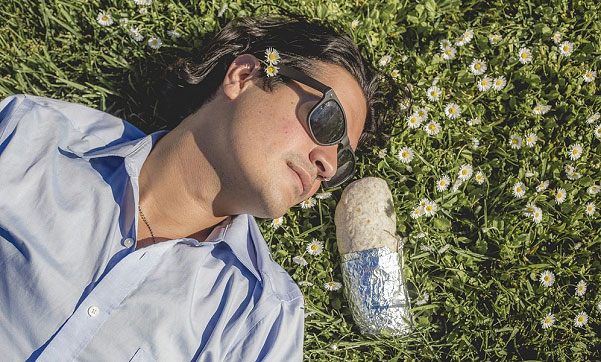
    Oh yes they do. If they are honest and have a moral compass. Mcdonalds for example pulled their ad out of the media when they are supposed to have copied photographer Kristina Bakrevski that captures pictures of her friend David Sikorski staring lovingly at a burrito.

    In fact, Mcdonalds accepted the mistake with grace when they told Adweek, “This shouldn’t have happened, and, with our agency partner, we’re working to find out how it did. We’re reaching out to David Sikorski and Kristina Bakrevski. We apologise to them, their fans and ours.


    What is the way forward for agencies?

    Typically because of the nature of the industry, plagiarism happens during pitches. Pitches are for free and the ideas then remain with the client.  Often clients share their own information with great caution by asking the ad agency to sign a NDA so that their information is held in great confidentiality.

    For some reason the ad industry takes a servile position by not asking the client to sign a similar NDA for the work that they are likely to present to the client. After all most confidentiality and NDA Agreements start with the following statement “For all purposes of this agreement, the term “Confidential Information” shall collectively refer to all non-public information or material information or material disclosed or provided by one party to the other, either orally or in writing….”.


    It is high time the ad industry plugged loopholes to protect their intellectual property.


    And what will happen to the Ogilvy-Vivo case and what will the courts decide?


    Will Vivo have the same grace as Mcdonalds to admit that the two pieces of work which Ogilvy and Dentsu provided to them were strikingly similar and only they had the knowledge of the similarities?


    Not if they don’t have a moral compass.


    Prabhakar Mundkur is a veteran adperson and now a prolific commentator. His views here are personal


  • Slice of Death Advertising


    By Sanjeev Kotnala

    The only sure thing in life is death. Rest is just a probability.

    We appreciated ‘Slice of life’ (SOL) advertising, however, we rarely see brands leveraging ‘Slice of Death’ (SOD) imagery and references.

    Death is all around us.

    Death is all around us. It is there in the newspapers, in the TV news and serials, in social media, and is an integral dominant theme in video games. However, the use of death in advertising remain taboo.

    Grief-exploitation is not my interest or focus of this piece. I am not referring to a few brands trying to get into a conversation during tragedy, calamities or death of a celebrity.

    Death Beyond Insurance And Social Messaging.

    Insurance brands flirt with death. Some social cause advertising like ‘drunk driving’, ‘Anti-smoking’ have  also explored the unchartered arena of death. But what about brand and services not directly liked with death. Do they leverage this certainty of life in their communication.

    Can death trigger the right context for brand/product/ service usage?

    Death is a simple phenomenon but a complex emotion. A certainty that we don’t want to acknowledge. Its relevance as a shock and clutter breaker cannot be disputed. Unfortunately, it evokes  strong negative emotions, and hence, brands fear to associate with it.

    Death is hardly aspirational. No one want’s to die. Even on our birthdays, we celebrate the end of another fruitful year on planet earth. But, we hate if someone reminds us we have walked another year closer to the end.

    Death Exploitation Can Be Misinterpreted By Audience.

    The ads by McDonald’s ( Child Grief- the kid being told of dead father’s liking for Filet-O-Fish ) and Nation-Wide ( Super Bowl-drowning kid- prevention of childhood accidents) in the US have faced adverse consumer reaction. If you carefully analyse, there was nothing wrong in them.


    We know the consumers’ purchase decision is more based on emotions than on information and features. We know death is a powerful stage and triggers extreme emotions. Yet, it remains an area of a no-go.

    Humour In Death.

    We have seen some of the brands cautiously using death to their advantage. Most of the time, it has been used as a scare but to make a point humorously. Remember the M-SEAL ad, where a drop of dripping water changes the will.

    Here I must share the fantastic ANTI-SMOKING communication featuring Sunny Leone and titled Eleven Minutes. A beautiful way of delivering the message to its TG.

    Even radio brand MIRCHI used the Ruddali concept and their engagement with death so powerfully.

    On the other hand, the Lifebuoy soap hinted at young under-five mortality rate and how death can be avoided in its communication. Here death is central to the theme but has a brief reference that does not raise high adverse reaction.

    Insurance Can’t Avoid Death

    On the insurance side, death is unavoidable. However, the way death can be used, dramatised and contextualised is the key to effective communication. Here are two examples.

    Max Life Insurance used the fear of death in its communication. My mother hated this communication as the protagonist name is my name. I am not sure if the brand used the most prevalent regional nicknames in their language dubs. But this one worked.


    Policy bazar has been flirting with death and eventuality of it, to push people to pick term insurance early. They have a dead man coming back to life for that short time and talk of term insurance or Yamraj getting angry at the person for not taking the term plan when he/she had the time.


    BEAUTIFUL DEATH

    There is no definitive answer to some of the basic questions. And as there is subjectivity and personal bias, there are no clear directions. Should a brand use death and its effect? Does shockvertising works? What is the right way to leverage death? Can death be the clutter-breaker?

    Here is an example of flirting with death. This short digital film was not produced by the brand and its agency but is highly associated with its theme ‘KEEP WALKING’. A simple story of two brothers visiting the places of common interest and togetherness for one last time.

    And maybe this is incomplete without sharing yet another communication developed by the same team that did the ‘Keep Walking’ film. ‘ABC of Death’ is about being alive. And the reference is death. Life and death- after all are two sides of the same coin.

    Metro Melbourne for their rail safety did what is now known as the most delightful horrible creation- a song telling people there are more similar almost as dumb ways to die as losing one’s life by being unsafe near train tracks. Any time I discuss this particular creative, I am reminded of daily deaths in Mumbai Local. I am not sure why such a beautiful message has not been localised or inspired some such release in India.

    DEATH IS NOT SO BAD.

    Few research reports do suggest that elderly people react more adversely to the use of death in communication than youth. However, none of them tells us as to what is an appropriate way to reflect and contextualise?

    And in this era of APP for everything, there is WeCroak. It is a simple app that reminds you of death five times a day. You download it from any of the play stores and make a payment to subscribe. Then it will message to remind you of death. And expect that such messages will help you to better contemplate life.

    In our Brand-I workshop, we take on exercises where we consciously focus on the possibility and certainty of death as an integral part of life. We talk of death as a motivator for the delegates to realise how much time you have to achieve the long list of wishes you may have.

    Death As Curative.

    Death is such a strong negative that even the terminally ill patients and their families don’t encourage discussion on the subject. As if ignoring it can push the inevitable. Last Laugh or Last Word for ‘Indian Association Of Palliative Care’ has taken death head-on and in the process raised awareness of Palliative care.

    And here is a wonderful example where the elderly person fakes his own death to get the family together. Here is a perfect example of using such a potentially negative emotion during the festive period but leverage it contextually for a beautiful, powerful emotional takeaway.

    So when you can and do celebrate life- why give death a step-brotherly treatment. It may give rise to strong emotions but rightly contextualised it can still be used by brands.


    PS: I would like to know of some brand communication (other than Insurance and social messages) where the brand has flirted with death and its vignettes. Most cases I have seen, its primarily the male who dies, has some Indian brand used the death of the female in its communication? Do share at Facebook sanjeevkotnala and twitter S_kotnala


  • Arvind RP joins McDonald’s as Director – Marketing & Comms

    By A Correspondent


    Hardcastle Restaurants Pvt. Ltd. announced the appointment of Arvind RP as Director- Marketing & Communications. In his new role, Arvind will lead the overall marketing and communications strategy for brand, to further strengthen its leadership in the QSR space.


    Arvind joins McDonald’s from Kaya Limited where he led marketing and analytics.  During his six-year tenure there, he spearheaded various brand-building initiatives, product & services innovations, digital and CRM initiatives.


    Commenting on his appointment, Seema Arora Nambiar, Senior Vice President – Strategy, Innovation & Capability, McDonald’s India (West & South) said: “We are delighted to welcome Arvind to the McDonald’s family.  Arvind has a proven track record of building strong brands, driving insightful product and service innovations and leading digital projects. I am confident that he will be instrumental in leading McDonald’s to its next phase of growth.”


    Speaking on his new assignment, Arvind RP said, “McDonald’s is one of the world’s most iconic brands that has always been at the cutting edge of food, service and technology. I look forward to working closely with the team to create new benchmarks for the industry.”


  • NBA and McDonald’s announce marketing partnership in India

    By A Correspondent


    The National Basketball Association (NBA) and McDonald’s announced a partnership to introduce NBA-themed promotions and interactive NBA Experience Zones in select McDonald’s locations in 39 cities across India.


    From today (Nov 13) till Dec 12, McDonald’s will give away an NBA-branded basketball with every family meal purchase at any McDonald’s restaurant in the West and South regions while stocks last.


    Said Seema Arora Nambiar, Senior Vice President of Strategy, Innovation and Capability, McDonald’s India: “We at McDonald’s believe that playing sport is crucial to the overall development of children. Globally, McDonald’s is associated with various sports and this Children’s Day we are partnering with the NBA to encourage children to step out and play to have fun and create happy childhood memories.”


    Added Yannick Colaco, NBA India Managing Director: “We are excited to partner with a global iconic brand like McDonald’s. This campaign with McDonald’s is a perfect way for us to deliver new and engaging NBA experiences to our fans.”


  • New McDonald’s campaign features real-life toy collectors

    By A Correspondent


    McDonald’s India has unveiled a new digital campaign titled ‘Toys are for kids of all ages’ featuring the story of 35-year-old Bengalurian Sunil Chawla, who has collected 300 Happy Meal toys over the years. The ad shows Sunil speaking fondly about how his obsession with the Happy Meal toys began.


    Speaking about the initiative and campaign, Seema Arora Nambiar, Senior Vice President – Strategy, Innovation & Capability –McDonalds India said, “Since the launch of the iconic Happy Meals in India in 1997, it has grown in popularity. The toys that our customers have collected bring back the happy memories created over food. We wanted to celebrate the emotional connect that our customers have with the brand through their Happy Meal toys, which is why we have featured a real life Happy Meal toy collector and his story in this ad film!”


    Added Rajdeepak Das, Chief Creative Officer, Leo Burnett, South Asia: “There is a child in all of us, and we keep indulging this child with its favourite treats however old we may be. McDonald’s has just made it easier for everyone to embrace this child. We don’t stop liking toys, for instance, just because we grow up, do we? The joy of collecting toys knows no age. This simple idea got us to the story of Sunil, and we knew it was a story that our consumers would instantly resonate with.”


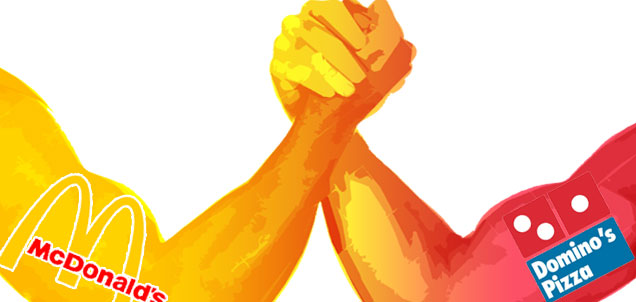
  • It’s Domino’s v/s McDonald’s in Dal-Roti-Chawal country


    By Rajiv Singh


    When Domino’s entered India in 1996, it identified three main rivals, all Indian. McDonald’s and KFC were not on the list. “Around that time, people only had a taste for dal, roti and chawal,” recalls Ajay Kaul, CEO of Jubilant FoodWorks, the master franchise holder of Domino’s and Dunkin’ Donuts.


    “Pizza was alien to them.” Things have changed after 18 years. Domino’s is the largest pizza brand in India with a 72 per cent market share. The country is set to become the biggest market for the American pizza maker outside the US. But Domino’s claims some things remain unchanged.


    “Our biggest rivals are still dal, roti and chawal,” reiterates Mr Kaul, underplaying the fact that Domino’s has overtaken Mc-Donald’s to become India’s largest QSR (quick service restaurant) brand in terms of revenue. “India is a chappati nation,” says Harish Bijoor, founder of an eponymous brand consultancy. And yet pizzas have made inroads and are now perceived to be more wholesome than burgers.


    “We never set a target to become No 1 in India,” says 50-year-old Mr Kaul, expressing admiration for McDonald’s. “It’s (McDonald’s) double our size in almost every country. So, it does give us some sort of kick and joy. Khushiyon ki home delivery ho gayi hai,” he says in an excited tone, riffing on Domino’s latest thematic campaign.


    However, while respect has its place, Domino’s is not relinquishing its No 1 slot. “That’s very clear,” says Mr Kaul. Where Domino’s posted revenue of Rs 16,222 million in 2013, Mc-Donald’s logged in Rs 14,259 million, according to the latest report by Euromonitor.


    In terms of store count, Domino’s is more than double the size of Big Mac-772 versus 350! And in market share, McDonald’s’ 14.2 per cent is less than Domino’s’ 16.2 per cent. Though Domino’s was always bigger in store count, it took the pizza brand more than a decade and a half to overtake its American rival in revenue. McDonald’s is of course not giving up without a fight.


    In fact, it believes the change in stacking is an aberration. Says Amit Jatia, vice chairman, Hardcastle Restaurants, the master franchise of McDonald’s in western and southern India, “It’s not about being No 1 or No 2. We serve over 320 million Indians annually, and this is what matters. When you wake up in the morning, do you think of ordering pizza? You don’t.” But you can hit McDonald’s for coffee along with breakfast. “Comparing pizzas and burgers is like comparing Chinese food with South Indian food,” he contends.


    McDonald’s for the longest time made the most of its start in India. While Domino’s revenue was Rs 303 million in 2001, McDonald’s was way ahead at Rs 946 million. In terms of number of outlets, there was not much difference between the two players in 2001 – McDonald’s 105 to Domino’s 128. However, over the subsequent years, the gap kept widening at an astonishing pace.


    By 2011, when McDonald’s was comfortably pacing its expansion and touched the 250 mark, Domino’s was galloping at 437. So, why did McDonald’s fail to capitalise on its initial success? Mr Jatia points out that McDonald’s spent the first 10 to 15 years growing the eating-out market, specifically creating products and habits which did not exist in the country. It forged partnerships and attracted consumers.


    All of this is available on a platter to new entrants which helps them ramp up their presence at a faster pace, he observes. However a trick that McDonald’s appears to have missed is one that’s as old as the Domino’s franchise. Back in 1959, Domino’s founder Tom Monaghan and his associates used his Volkswagen Beetle to deliver pizzas to customers who lived at a distance of 30 minutes or less.


    Home delivery continues to be the lynchpin of Domino’s strategy and has evidently served it well. It marks a shift in consumer perception of the QSR category from being aspirational to convenience driven. One would not drive down five km to hunt for a restaurant but look for closer options. This is where Domino’s scores a point. “It is at arm’s length of a consumer’s desire,” says Ashita Aggarwal Sharma, head marketing, SP Jain Institute of Management & Research.


    After making the brand synonymous with home delivery and the popular ‘Hungry Kya?’ campaign driving pizza as both a food and snacking option, Domino’s tweaked the other parts of the mix. In 2008, it brought down the price of pizza to Rs 35 from Rs 60. This increased acceptability, induced consumption and pushed home delivery.


    “The pizza came home first, and stayed an in-home consumption item. The burger remained for long an item consumed at a QSR outlet. This made a big difference,” says Mr Bijoor. “Mc-Donald’s failed to crack the home delivery code.”


    Another important factor that helped Domino’s was its positioning as a meal replacement as compared to McDonald’s. A family restaurant must have a meal for the family, says Mr Sharma of SP Jain Institute. Though young people still go to Mc-Donald’s, even for them it is not a substitute for a meal.


    However, McDonald’s Mr Jatia believes that being an all-day restaurant gives the brand an edge in terms of product offering. But he is quick to acknowledge the era of single-player dominance is over. There will be two or three players who will dominate the QSR space, he feels. “And McDonald’s definitely will be one of them.”


    Indeed, the space is huge, but the lines are getting increasingly blurred among the top players. The chains are already beginning to cannibalise on each other’s core offering with Domino’s serving up chicken wings a la KFC; McDonald’s pushing wraps and KFC dabbling with burgers. Mr Kaul of Domino’s, however believes in sticking to what his firm knows best. “70 per cent-80 per cent of our revenues come from pizza,” he says. The side dishes merely give consumers ample snacking options.


    Experts too agree that in spite of similar meal offerings, the focus should remain on core products. “All players want to stay relevant throughout the day,” says Saloni Nangia, president of Technopak, a management consulting firm. “All are trying to maximise revenues and that’s why identical offerings.”


    Domino’s might have taken the top slot for now, but the pizza versus burger fight has just started. As an increasingly health conscious west avoids fast food, the battlegrounds have clearly shifted to the wallets and waistlines of Indian consumers.


    Source:The Economic Times

    Copyright © 2014, Bennett, Coleman & Co. Ltd. All Rights Reserved

    Licensed to republish


  • McDonald’s becomes ‘Pakka Indian’

    By A Correspondent


    McDonald’s recently introduced two new ‘Pakka Indian’ burgers – Masala Grill Chicken and Masala Grill Veg. And to promote the two, it has has adopted a 360-degree approach to promote the products across all marketing platforms. The entire messaging in the communication reiterates the brand’s Indian-connect by ensuring that it caters to its customers tastes. Conceptualised by Leo Burnett, the new television commercial goes on air April 15, 2013, accentuating the ‘Pakka Indian’ ideology of an Indian customer in humorous manner. The commercial focuses on the typical Indian habits which are intrinsic to all of us – the gist being that no matter how contemporary we like to be in day-to-day life; our essential behavioural pattern still remains ‘Pakka Indian.’


    [youtube]http://www.youtube.com/watch?v=o-Mh6iAQdEU[/youtube]

    Speaking about the new product launch, Ruchin Khanduja, General Manager, Marketing (North & East), McDonald’s said, “We’re delighted to expand our menu and offer our customers a product that is unique in taste as well as  value. Indian consumers have a palate for Spicy/Masaledar/Chatpata products, this taste is well preferred across all age groups. We have tried to establish a connect between the product and consumers;  by emphasising on unique Indian traits like amazing bargaining skills, not eating non-veg on Tuesdays,   and many more such habits that make us Pakka Indian. In a similar way, the product also has a distinguished ‘Masaledar’ flavour with great value attached to it. The campaign has been designed keeping in mind the ‘Pakka India’ style.”


    The campaign is an integrated mass media campaign, which will leverage a mix of communication elements like outdoors, print and television. In addition to this, the in-store activation will be at par with efforts made on national and regional media.


    To further build excitement, McDonald’s has also stimulated some customers connect activities: running product offers to promote the trial of Masala Grill and also plans to organize Fun/Humorous activities on Pakka Indian concept, from May.


  • Debrief: McDonald’s: Jaasti spice mangta!

    By Anil Thakraney


    Good to see that McDonald’s has relied on consumer insight for their McSpicy burger advertising. Usually McDonald’s ads, at least in India, are pretty straight forward; they are either into price claims or general masti. It’s a simple insight: How people spread rumours in an office, so that by the time the fifth person has heard the gossip, it becomes utterly sensational.


    The TVC features an executive tendering his resignation. And this gets his colleagues buzzing. As the info spreads from one dude to another, each one layers it with his own spicy version, so that by the time the last guy gets to hear of the news, he’s told that the resigning exec had assaulted the boss! Haha. Must say it’s a powerful insight, this sort of spicy nonsense goes on in every single organisation.


    But most importantly, it’s a relevant insight; spicing up of news ties in naturally with the McSpicy burger. Therefore even if McDonald’s had chosen not to show the burger, the communication still works. That’s a clear sign of a good idea. Also, good to see office executives in a McDonald’s ad, usually they feature kids and college lads. After all, adults too dine at their outlets, and they are more likely to consume a McSpicy.


    Only one improvement needed: While the ad does make you smile, they can, and must, make the gossip stories really wild, the idea has a lot of potential. Layer on oodles of spice, guys… we are lovin’ it!


    [youtube width=”400″ height=”220″]http://www.youtube.com/watch?v=OzLaFeujvOQ[/youtube]

     Rating: (On a scale of 1-5): 3. Super insight. Needs more spice.