
Tag: M&C Saatchi

  • Introducing Data Stories by Kunal Sinha: So how Effective are Influencers?


    By Kunal Sinha


    Kunal SinhaWith Orhan Awatramani aka Orry taking over IG feeds during the past few weeks, announcing ‘I’m a liver’ and snagging a Black Friday endorsement deal from CRED (who else?), the question of influencer effectiveness begs to be answered.


    When Hubspot posed the question, 80% of marketers said that influencer marketing is effective; in fact, 89% say it works as well as, if not better than other marketing channels. They believe that it yields the highest ROI, along with blogging and social commerce.


    In its early days, the detractors against influencer marketing were many. With brands having little control over influencers’ output, some marketers believed that partnering with creators could result in damage to the relationship they have with their consumers if their endorsements are inappropriate or less than transparent.


    Recent experience with influencers suggests that sentiment to have changed. In a study by Kantar, some 59% of marketers said they invested in influencer content in 2022, and close to 60% of marketers globally said they are going to increase spend on influencers in 2023. Already, 23% of marketers globally are spending over 40% of their marketing budgets on influencers; and this year, they would end up spending $16.4 billion dollars on influencer marketing.


    Here in Indonesia, Dr Richard Lee, a doctor who promotes and sells skincare, is followed by 5.1 million folks on TikTok, 1.7 million on Instagram, and has 4.69 million subscribers to his YouTube channel, all reasonably large followings. He made $800,000 in less than three hours selling his skincare products in a live shopping stream on Shopee in August. A follow-up livestream shopping event in September raked in $500,000 in just one-and-a-half hours. Dr Lee’s conversion of his followers into shoppers suggests that the lines between influencer marketing and social commerce are getting blurred.


    Research published in Harvard Business Review analysed more than 5,800 influencer marketing posts on the popular Chinese social media platform Weibo.


    Posts in that dataset were written by 2,412 influencers for 861 brands across 29 product categories, at costs ranging from $200 to almost $100,000 per post. The study found that on average, a 1% increase in influencer marketing spend led to an increase in engagement of 0.46%, suggesting that the strategy can in fact yield positive ROI.


    The jury seems to be out when it comes to the impact of influencers on novelty. Kantar’s analysis of 30 different influencer campaigns in beauty, fintech, sports and retail revealed that compared to market averages in their database of almost 9,000 global ads, influencer creative executions are in the top third for delivering new information and being credible.


    Conversely, the study published in HBR found that ROI for influencer posts announcing new products was 30.5% lower than for equivalent posts that were not about new product launches.


    Having said that, there are some clear directions towards which factors and variables make an influencer campaign perform better.


    Number of followers: Influencers who have a large following not only deliver greater reach, but are also seen as more credible. They are able to generate higher engagement rates than brands would achieve by spending the same budget on partnering with a less-popular influencer. Posts from influencers whose follower bases are larger than average achieved 9.2% greater ROI.


    Posting frequency: Influencers who do not post often are not seen as up-to-date sources of information. They are also unable to establish presence on followers’ feeds to build trust and intimacy. On average, marketers can increase the ROI of their influencer marketing efforts by 53.8% simply by selecting influencers who engage in an optimal level of posting activity – five posts per week.


    Content originality: Influencers posting more original content tend to stand out. Their content attracts more attention, and they appear more knowledgeable and authentic. Brands that leverage such influencers typically achieved higher engagement rates for a given marketing spend. Specifically, influencer posts that were original content achieved 15.5% greater ROI than those that were not (such as re-shares).


    Links to the brand: Consistent with prior research on content marketing, the HBR study finds that posts that include links to a brand’s social media account or external webpages perform significantly better. Including links to a brand’s website or social media in an influencer post achieves 11.4% higher ROI.


    Putting these principles into practice for TikTok Indonesia

    In its quest for growth in Indonesia, TikTok was hampered by the perception that its content was mostly about dance and music.


    Increasing the user base by 50% required out-of-the-box thinking. Our strategy at M&C Saatchi was to make folks realize that there’s more to TikTok than met the eye. We would show them diverse content they weren’t aware of.


    How did we do that? By deploying Najwa Shihab, an extremely popular, intellectual persona to introduce the high quality of TikTok’s content. While she was extremely popular on Instagram, nobody expected her on TikTok. We were convinced that her positive, inspiring imagery that would galvanize users. And it did.


    Najwa’s first-ever TikTok video post achieved 51.2 million views in 5 days. She gathered 1 million followers within a week.


    The #serunyaditiktok campaign reached an astounding 8 billion views on TikTok; motivating 3960 creators to come on-board. The content racked up 1.8 billion views in a week. An online media event featuring Najwa was covered by 128 outlets, generating 5 billion impressions.


    As against the target of 33 million new users, TikTok gained almost 55 million users, who spent 67% more time on the platform. TikTok moved from #9 to #3 in the top social media app rankings in Indonesia.


    Why is influencer marketing effective?

    In its essence, what influencers do is create desire by assigning a value to the objects they promote. That value of those objects isn’t objective, it is subjective. That subjective value is based on our relationship with others: it is mimetic. We assign value to things, and thus desire them, based on what other people want. Mimetic desire means that our own choices are usually according to the desire of others.

    Influencers serve as models of desire. They are people who we look towards for guidance about what to want, usually unconsciously, as they transfigure objects before our eyes.

    Now, go figure, which of your hidden desires Orry has been able to transfix!


    References:

    Hubspot: What Will Influencer Marketing Look Like in 2024? https://blog.hubspot.com/marketing/how-to-work-with-influencers

    Leung, Zhang, et al, Does Influencer Marketing Really Pay Off, Harvard Business Review, November 2022

    Bubani, Gonca, Under the influence? How influencer marketing grew up, World Advertising Research Centre, 2022

    https://www.statista.com/statistics/268641/share-of-marketing-budgets-spent-on-digital-worldwide/


    Kunal Sinha is Group Chief Strategy Officer at M&C Saatchi Indonesia, and author of several books including The Future of India’s Rural Markets and Raw – Pervasive Creativity in Asia. He will write for MxMIndia every other Monday. His views here are personal.
     

  • Lessons learnt from 4th graders


    By Kunal Sinha


    Kunal SinhaOver the long years of my advertising career, I never passed up the opportunity to teach. To pass on my own rich and varied learnings to future generations of planners, researchers, creatives, account and brand managers is an elixir that I simply enjoying partaking ever so often.


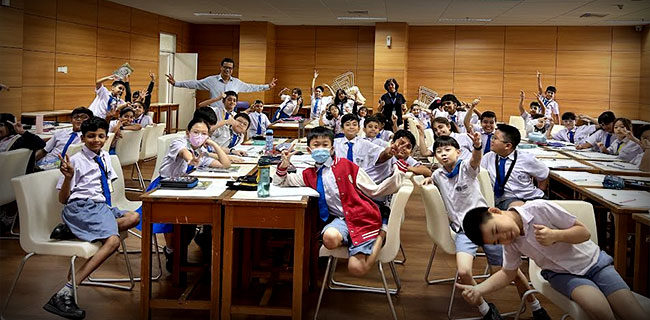
    Usually, I receive invitations to deliver a guest lecture, sometimes teach a full course, at the post-graduate level. So last week, when a request to teach popped up on a WhatsApp Indian execs group in Jakarta, I was quick to raise my hand. Like the front-benchers in the Grade Four class whom I was about to teach the basics of advertising.


    Having run a creative writing programme for primary school students during the pandemic, I had a sense of how I wanted to run the hour-long session. I needed to involve them from the very beginning. Having put two offspring through IB education, there was one principle that just had to be followed: stoke the spirit of inquiry and make the learners think on their feet. Hell ya! Don’t today’s 9-10-year-olds know how to do that?


    Within the first 10 minutes of the class, they had not only told me about their favourite brands but pretty much taken us all through their customer journeys. They pointed out that 90% of ads sucked, a lot of them were misleading, and yet they enjoyed watching and remembered ads that entertained them. They hated it when they could not skip ads on YouTube, or their Instagram scrolling was interrupted by real estate ads.


    I had deliberately chosen many ads that featured kids. The old Hutch Boy and Dog ad. A McDonalds Ramadan ad featuring a warm, fuzzy story about a father and son. A funny ad from a Nissan car dealership that showed a conversation between two kids and a car salesman. Truecaller ads which showed spammers/ scammers as wolves in sheep’s clothing. And the Volvo Trucks Epic Split featuring Van Damme, who no one recognized even as his split evoked gasps and they wanted to watch it again. You know the one I’m talking about right?


    I had the most enjoyable hour I could have with my pants on.


    Everyone in marketing and advertising and digital and branding and market research … must go out and pass on what you’ve learned to kids. There are plenty of reasons to teach, and I list five here.


    1. Primary school kids, high school kids, BFA and BA and BBA students, those doing their PG in business or data science – it is the only way to get future generations interested in a career in the creative arts, a career in smart selling. Go ahead and inspire them.

    2. Every class can be thought of as an ideation session, or a human lab. You will get instant, unfiltered responses to your concepts. The younger the students, the more they question you – if you design your class that way. Behave like a learner, not a guru (even if LinkedIn has anointed you as one).

    3. Each example you show should not be to prove your point. Rather it should get the classroom to relate it to their own life experience, their likes and hates and come up with their own examples. The shared experience becomes a valuable lesson, for the teacher as well as the student.

    4. Teaching is the best way to hone your presentation skills and your stage presence. It prepares you for the unexpected. It builds confidence – so the earlier in your career you get into it, the better it is. With agencies spending practically nothing anymore on building such skills, volunteer guest sessions at your alma mater.

    5. It opens windows to the future. You understand what the interests, priorities, dreams of the next generation are. Whether they want to change the world in middle-school, or join the rat race while doing their MBAs. Do they view tomorrow as full of opportunity or conflict?


    Wasn’t a song written by Graham Nash 53 years ago so prescient?


    Teach your children well
    Feed them on your dreams
    The one they pick’s the one you’ll know by

    Don’t you ever ask them why
    If they told you, you would cry
    So just look at them and sigh
    And know they love you.


    Kunal Sinha is Group Chief Strategy Officer at M&C Saatchi Indonesia, and the author of seven books on creativity, travel, rural marketing and China.


  • Scarecrow M&C Saatchi bags creative duties of 7 FMCG brands

    By A Correspondent


    Scarecrow M&C Saatchi has bagged the creative duties of seven FMCG brands, two of which are global. Of the seven, four belong to the Emami Group.
    The complete range of Boroplus (Face Wash, Fairness Cream, Body Lotion, Prickly Heat Powder and  Antiseptic Cream), Emami Kesh King Hair Oil & Shampoo, Emami 7 oils in one hair oil and Emami Diamond Shine Hair Colour are part of the Emami bouquet. Then there’s the Lactalis group’s Anik range (Ghee, Milk, Flavoured Milk, Buttermilk, Curd and Milk powder), the entire portfolio of German brand Baby Sebamed that is marketed in India by USV Pharma and Wagh Bakri’s Mili Tea brand.
    The accounts will be handled by Scarecrow M&C Saatchi’s Mumbai office.

    Said Vikas Srivastava, Sr. GM (Marketing), Emami Limited, confirmed the development by adding, “Scarecrow has been evolving over the years and now, with their tie-up with M&C Saatchi we expect our communication will become sharper with new ideas that will help break clutter.”DPS Advertising & Marketing, Kolkata, has been associated with Emami on the above brands for years, and the association will continue.

    Commenting on the decision to choose Scarecrow M&C Saatchi, Executive Director of Wagh Bakri Tea Group Parag Desai said: “Wagh Bakri Tea is the leader in Gujarat and very popular brand in Rajasthan and Madhya Pradesh wherein in Mili Tea is second choice for masses. We are now targeting newer territories such as North India, South India, Maharashtra and Goa. Scarecrow M&C Saatchi presented us a compelling creative strategy to gain significant market share in these regions.”

    On Sebamed, Farida Hussain, Director for Splendore Business, said: “We are very upbeat about taking Baby Sebamed to the next level. Its unique formulation with pH 5.5 makes it effective and extremely safe for the little ones, right from day one. We are sure the association with Scarecrow M&C Saatchi will support Sebamed to meet its aspirations.”

    And this is what Manish Bhatt, Founder-Director, Scarecrow M&C Saatchi said:

    On the Emami win: “Some of the brands like Boroplus are truly iconic brands that every Indian has grown up with. Creating memorable work for such a memorable brand is indeed a matter of great pride for us at Scarecrow M&C Saatchi. Raghu and me have already worked on beauty, skin care and hair care brands like Parachute, L’Oreal, Lakme Elle 18, Vaseline, Dabur Vatika and more in our earlier days, and would love to provide the necessary expertise to create some ground-breaking work for these brands as well.”

    On Wagh Bakri’s Mili Tea: “It’s a special feeling. Scarecrow M&C Saatchi has been handling Wagh Bakri for over three years now. The group has ambitious plans for Mili Tea and has always evolved with times and focused on expanding reach. We are thrilled to partner with them in this exciting journey.

    And on Sebamed: “It’s always a pleasure to work on a brand where you are one of its target audiences. The Group has shown faith in Scarecrow M&C Saatchi by giving us the mandates of its Baby skincare range. Baby skin care is a tough category and USV private limited has a very ambitious plan for it. Team Scarecrow is really excited to contribute to Sebamed’s growth.”


  • Scarecrow now a part of M&C Saatchi


    By A Correspondent


    We were all set to do the trek to Ballard Estate in South Mumbai. As also huff and puff up to the second floor office for a roundtable and a revelation. Except that the lure of an exclusive in a pink major killed the idea of the press meet-up.


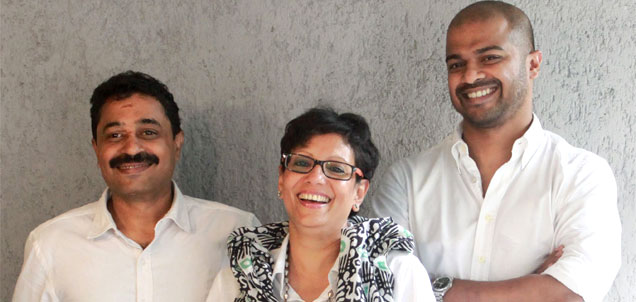
    L to R: Raghu Bhat, Arunava Sengupta and Manish Bhatt

    Guess at the lunch, the rest of the media were to be served the crumbs, while the meat was handed over to the bigger fish. Sigh.


    Scarecrow, the eight-plus-year-old independent agency owned by Vivek Suchanti and Manish Bhatt, Raghu Bhat and Arunava Sengupta, has sold majority stake to M&C Saatchi. A global ad network set up by the founders of Saatchi & Saatchi, M&C Saatchi, has had a failed existence in India thus far. It will use the Scarecrow buy as a means to exert its influence in India.


    Vivek Suchanti

    With this transaction – much below the Rs 100 crore tag that has reported in the paper in honour of which Scarecrow compromised its relations with the rest of the press, M&C Saatchi has bought the majority 51 per cent stake that Suchanti owned. According to the info we have, there will be a gradual buy over five-six years of the 16.33% stake that Sengupta, Bhat and Bhatt will own. For now, the trio do not get even the crumbs, but they’ll get it with time.


    Scarecrow, as an agency, has been doing reasonably well with an impressive clients roster. It has done reasonably well on the awards circuit, though it boycotted Goafest 2018 reportedly because (Manish) Bhatt was upset on not being invited to be part of the Master Jury for the Creative Awards.


    So will M&C Saatchi truck with Scarecrow work? Yes, it should, say observers. Even though the 23-year-old agency formed by Jeremy Sinclair (Chairman), Bill Muirhead, David Kershaw (Chief Executive) and the brothers Maurice and Charles Saatchi has floundered in the country. Its buy of Delhi-based February in 2014 and the setting of the mobile arm have not achieved much. In 2015, it sold its digital and direct business to Pi Communcations.


    The Scarecrow co-founders Bhat, Bhatt & Sengupta are known to have the drive and have produced advertising that has been memorable.


    We’ll wait to see what happens next. We can sure it’ll be handed over first to that pink paper.


  • M&C Saatchi February appoints N Ramesh as head of creative

    By A Correspondent


    N Ramesh, former executive creative director of agencies like Enterprise, Ambience, Ogilvy, Lowe, Meridian and The Thinking Machine has been appointed as president, Creative, at M&C Saatchi February.


    Said Gopal Krishnan, founding partner of M&C Saatchi February: “Ramesh’s passion for creativity and entrepreneurial thinking is inspiring to all who have known and worked with him in the past. He is the perfect fit for the kind of agency we are building at M&C Saatchi February.”


    Commenting on his appointment, Ramesh said: “Start-up culture is in my blood. Launching small enterprises and leading teams to become successful is the greatest joy I have had in my career. M&C Saatchi February is in a league of its own combining independent holding structure and its inspiring creative philosophy of ‘Brutal Simplicity of Thought’, I can’t wait to get started.”


    Ramesh replaces Nirmal Pulickal, one of the founding partners and creative head of the agency, who has decided to move on. The appointment is effective immediately.


  • M&C Saatchi Mobile debuts in India

    By A Correspondent


    Full-service mobile media agency M&C Saatchi Mobile has made its debut in India. It has set up offices in New Delhi and Bengaluru. The company begins operations with two flagship clients – Ola and Swiggy.


    The move to India has given the mobile media company a footprint into a market with enormous potential for growth. Said M&C Saatchi Mobile CEO James Hilton: “The inauguration of our offices in New Delhi and Bengaluru is a landmark moment in our history. We know there is huge opportunity in this market and being able to provide our existing client with support in their local market has always been our client servicing goal.”


    The agency has hired Harry Bajaj as Business Strategist to head its New Delhi operations and Gaurav Ahuja as Business Manager to head the office in Bengaluru. Both will report into Chris Steedman, APAC, Managing Director, M&C Saatchi Mobile.


    Commenting on the new hires, Steedman said: “As a forward-thinking, mobile first media agency, we believe in hiring the brightest minds in the industry. Since India presents us with unique opportunities, it was but natural for us to hire experts who understand the pulse of the country.”


  • @Cannes2016: Of Misfits and Madmen at Cannes Lions

    By A Correspondent


    “99% of advertising is bad work,” said Sam Ball, Creative Director , M&C Saatchi as he started the session ‘Misfits and Madmen’  hosted by M&C Saatchi, adding: “A bunch of like minded people in a room is the worst thing in the world for creativity but that is generally how advertising agencies like to operate.” But that is what happens in majority advertising agency. Most of the times, productivity is given more importance than creativity.

     

    Ball noticed that when a group of people work, everyone goes for the happy medium, the dissenters are shut down. The solution suggested by him is ‘Diversity of thought’. “Diversity of thought is bigger than people, we have to inject it in to clients, our processes and inside people,” he said. He gave some examples of diversity of thought from other creative industry which included the structure of the Pixar building, which was built to encourage people to collaborate and not be confined to their own space.


    The creative director conducted an experiment where he got 10 people, who would have never have thought of working in the advertising agency. He put them in the creative department and gave all of them the same creative brief. The purpose was to see how people from different background will come up with different ideas. The ‘misfits’ ranged from data manager to investment banker to cage fighter and even a poet. And, during the exercise different creative people will come and talk to them.


    The brief given to them was: How do we make a newly brought Converse more appealing to young men and how do we find a way to make them look the way they want quicker. Before showing some of the ideas that the people came up with, he showed a video that captured some of the moments from the experiment as well as a few interviews of the misfit that he took.


    He showcased some of the works that the misfits presented. Ball started getting emails from the misfits after the experiment was over. Most of them thanked him for the opportunity and some of them were ready to look at new career options. “That blew me away. 10 random people who never thought of working on the advertising industry, three of them asked for a job,” Ball said. And, the takeaways that from this experiment for Ball was as follows:

    :: Be open to ideas of those who know much less than you because they may really know much more.

    :: The future belongs to the agencies that inject diversity of thought in to their people and their process

    :: Your most extraordinary ideas are not in you, they are all around you.


  • The Birth of Pi


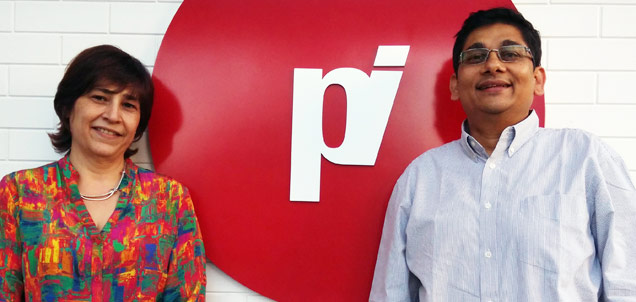
    As M&C Saatchi Direct & Digital becomes Pi Communications, following a change in ownership in its Mumbai operations, Rakhshin Patel and Sumantra Sengupta, managing director and CEO of the new company, give Pradyuman Maheshwari a lowdown on the changed set-up and their plans ahead.


    We’ve heard about big multinational media superpowers gobbling up homegrown enterprises. But now, two seasoned ad professionals have bought out the media superpowers. How come?

    You are turning this into a David and Goliath story, which it isn’t really. M&C Saatchi has always been steeped in entrepreneurial spirit, and supportive of entrepreneurs. In 2008, when we started out, they supported our fledgling ambitions, and partnered us as we grew. In fact, they have been supportive in such a way that their changed priorities didn’t ever limit our ambitions.


    M&C Saatchi is not a small agency. It’s a well-known, trans-national advertising powerhouse. And they are not known to invest in ventures quite so easily…

    As we mentioned earlier, M&C Saatchi is entrepreneur-centered. They have partnered with local professionals in many countries. It was the same here. We started with very little investment and managed to break even in the first year itself. Thereafter, our operations paid for themselves.


    We also started out with a much smaller stake in the company, and part of our terms with M&C Saatchi was a gradual increase in our stake over time. Our first increase was in 2012. The next one has taken place now, and we are extremely happy we could fast-track that.


    You’ve always had a stake, of course. But this is more than single-digit, loose change, isn’t it?

    Thank god for friends and family!We believe in what we’ve built, and we’ll certainly recover it over time. Cycling to work is an option perhaps.


    Digital agencies these days come with some fantastic valuations. And you are not doing just digital things, but also some big-data work. So can we assume that your stake runs into few hundred million dollars, ie in three-digit-figure crores?

    We had a 40 per cent stake in the company. Yes we’re digital and we do analytical consultancy, but we haven’t yet invested in data analytics. So a three-digit valuation is way off the mark.


    Didn’t M&C Saatchi also buy out February last year and ask them to control the company? Are they okay with this new situation? Also, another agency with Saatchi in its name, did a similar thing, not so long ago

    M&C Saatchi bought a minority stake in February; it did not buy them out. This followed a strategy similar to what they’ve adopted in China. Their focus and operations in India and China are a bit different from each other, probably given that the markets are different. I think the ability to think differently in different markets really means that all is, indeed, right with them. And globally, the brand in many countries is co-operated, if not co-owned.


    So how did it happen for you?

    As we mentioned earlier, our terms of agreement with M&C Saatchi allowed us to increase our stake over time. We just grabbed the opportunity when it presented itself


    Are your clients on-board with it?

    Our clients have not only been supportive, they have been actively encouraging and enthusiastic about this development. Many of them have said that since they know our work well, it doesn’t really matter what we choose to call ourselves.


    What about all the goodwill and global clients that the M&C Saatchi name would have attracted?

    M&C Saatchi did not really have globally-aligned clients here. Since there was no opportunity, in the past seven years, to work on globally-aligned businesses, it’s not something that we would miss. When for goodwill, it is garnered by both the name of the company as well as the people who build it. In this market, we have made a substantial contribution to the goodwill that M&C Saatchi enjoys. And while the name has changed we, the people, and our passion for the work, haven’t. So a part of that goodwill will continue to be with us.


    Digital and Direct shops in India are getting acquired. Will you take that route?

    Now you’ve got us thinking! Give us a few months and maybe we will look around to see whom to acquire…


    Ufff! One is obviously suggesting whether you would like to sell your equity to some large M&C Saatchi-like player in the future?

    Yes, of course, we understood it, so was a joke. But seriously we are just savouring this moment of being majority owners and our focus would only be to grow the business exponentially. That’s our goal.


    Does your buy out contract prevent you from doing that?

    The company has been taken over by us. We are free to pursue any path that is in our best interest. But right now, we are not planning to either acquire or be acquired.


    What’s next, in terms of growth?

    A lot of the distance we cover, will be through collaborations. Analytics is currently a gap in our offerings. We are in talks with people with whom we can collaborate on that. We need to take quick strides in that direction.  Besides, our business need not be limited by geography. We do have clients in Delhi whom we manage from Mumbai. But it would be great if we could create a presence in other cities as well.


    This interview first appeared in the dna of brands issue dated February 16, 2015


  • Rakhshin Patel & Sumantra Sengupta turn majority shareholders of M&C Saatchi Direct & Digital. Agency now called Pi Communications

    By A Correspondent


    The Indian arm of M&C Saatchi Direct & Digital has changed its name to pi communications. This move follows a change in ownership of the company’s operations based out of Mumbai. Rakhshin Patel and Sumantra Sengupta, erstwhile minority shareholders in the company have now increased their stake in the company as a step towards full ownership of the business.


    M&C Saatchi Direct & Digital has always been an independent operation, with just the prefix being common to this firm and the advertising agency. Hence the acquisition of Delhi-based February, the subsequent rechristening of the agency and the takeover of the parent firm by the Feb team didn’t have a consequence on the M&C Saatchi Direct & Digital team (and ownership).


    While the name and the ownership changes, the operations of the company will continue as before, with pi communications carrying forward the communication duties of a roster of clients such as Aditya Birla Financial Services Group, Future Group, IL&FS, Kotak, Mahindra Holidays and One Assist amongst others.


    Commenting on this development, Chris Jaques, CEO Asia, M&C Saatchi said, “We encourage entrepreneurs and are happy to partner in their success. Given Rakhshin and Sumantra’s efforts in building a formidable and reputable company we offered them a controlling stake in their own company. Over the years, they have built a solid foundation for the agency with long-term client relationships and over 25 awards in just the last three years. The company is now theirs to own, manage and steer to even greater success, leaving us to focus on our advertising business based out of Delhi.”


    Said Rakhshin Patel, Managing Director, pi communications: “Despite the change, what remains constant is our commitment, our passion and our ambition. Whether minority or majority shareholding, we always managed the company like it was our very own. Now is the time for us to reap the rewards of our hard work.”


    Sumantra Sengupta, CEO, pi communications explains the philosophy behind the name: “Pi stands for Profitable Interactions. Pi is also a constant. Pi communications is the constant when applied to client objectives, ignites a complete circle of solutions that delivers profitable interactions.”


  • M&C Saatchi acquires a minority stake in February


    By A Correspondent


    M&C Saatchi acquires a minority stake in February, the independent agency founded by Gopal Krishnan and Nirmal Pulickal in 2012.  The operations of the current M&C Saatchi agency in Delhi will be merged with the local operations of February to create M&C Saatchi February, with immediate effect.


    The new agency will be led by the February management team of Gopal Krishnan and Nirmal Pulickal, who will be supported by the current CEO of M&C Saatchi in Delhi – Anjali Nayar – who will take the role of President in the new company.


    Offering advertising, design, digital, social, mobile, events and activation, M&C Saatchi February’s founding portfolio of blue-chip clients will include Nando’s, Typhoo, Avis, Blossom Kochhar Aroma Magic, DLF retail, Ananda in the Himalayas, SBI Cards and Panasonic Mobility.


    Said M&C Saatchi’s Worldwide CEO, Moray MacLennan, while announcing the partnership: “India is a fundamental part of our global strategy, and we’re delighted to join forces with a brilliant team to help us create a global hub in this critical market.”


    The deal follows a strategic review of the agency’s Indian operations and will see M&C Saatchi’s new Indian agency – M&C Saatchi February – headquartered in February’s offices in Delhi. February’s founders Gopal Krishnan and Nirmal Pulickal will be taking over leadership of the combined operation. They will be supported by Anjali Nayar, the current CEO of M&C Saatchi Delhi, who is appointed President of the new venture.


    Added Mr Mac Lennan: “In Gopal, Nirmal and the team at February, we have found our perfect partners. They’ve built an agency producing world-class work for both local and international clients. They share our obsession with ‘Brutal Simplicity of Thought’, and our laser-like focus on building business results for our clients.”


    The partners of February will initially have a majority stake in the venture, with M&C Saatchi Worldwide becoming the majority shareholder over an agreed timescale. Said Gopal Krishnan, co-founder of February: “We’re delighted to be joining forces with M&C Saatchi as we embark on the next phase of February’s exciting journey. We’ve been doing some great work for some wonderful clients over the last couple of years, and this new partnership will help us play on an even bigger stage going forward.”


    Nirmal Pulickal, co-founder of February, added: “When we launched February two years ago we had a simple goal – to create great work that works for our clients’ business. It’s great to find a partner in M&C Saatchi who shares our vision entirely. We’re very excited about the future of M&C Saatchi February.”

    The launch of M&C Saatchi February follows the creation of M&C Saatchi aeiou in China last year, and the launch of the new M&C Saatchi Singapore in 2012.


  • AdStrat: Recurring Savings Plan by Birla Sun Life Asset Management Co Ltd

    Deepak Agarwal
    Ajay Kakar

    Lead Credits: Deepak Agarwal, Executive Creative Director, M&C Saatchi; Ajay Kakar, Chief Marketing Officer – Financial Services, Aditya Birla Group


    Name of the Campaign: Recurring Savings Plan (RSP) by Birla Sun Life Asset Management Co. Ltd.


    Brief:

    Saving via a Mutual Fund v/s other ways of saving!


    Everyone knows that it is important to save their earnings – but people go about saving in the manner that they are most used to. Very few people choose to evaluate newer methods of saving, other than the traditional avenues. It is not surprising, therefore, to see as low as 5 per cent of all people opting for a Mutual Fund as a means of saving.


    Since its introduction, the option of saving in a Mutual Fund has also been perceived as a riskier method of saving, because of the propagation of information about Mutual Funds. Namely, that Mutual Funds invest in the equity/ share market and that this market can be volatile – hence mutual funds are risky. But the other half of the story is that there are options in mutual fund that can cater to a variety of saving needs, with similar safety and flexibility as traditional avenues.


    Among those who are used to saving in other ways, there is also a growing sense of disappointment with traditional avenues of saving – as the rising price of fuel and other aspects of inflation eat away at everyone’s savings.


    Research insights: 

    A vast majority of Indians have grown up with traditional avenues of saving (bank accounts, post office etc …)

    A vast majority of Indians are not financially savvy about modern ways of saving (mutual funds, stock market etc …)

    The investors who choose avenues other than the traditional ones target for ‘increasing their income’ as opposed to ‘planning their savings’


    The thought process behind the creative:

    The campaign objective: Remind and inspire people with the knowledge of how to save their earnings, regularly and more smartly, via a “Recurring Savings Plan” – a regular savings method in select mutual fund schemes that offer relative safety when it comes to your hard earned money.


    The campaign idea: The secret to saving smarter lies in your childhood stories!


    As children, we have all heard fables and learnt the difference between right and wrong from their morals. The brand plays the role of a provocateur, reminding adults of the moral behind the fable of ‘The Crow & The Pitcher’ – that doing something different, regularly can actually help one to reach one’s goals.


    The message that the brand conveys, via its TVC, is that as adults we often use fables and morals to remind our children to approach issues in their lives in a smarter manner … but the second and more powerful message is to also remind adults to approach their savings habits in a similar, smarter manner.


    This creative route leverages the space that fables occupy in everyone’s life, as the morals behind fables are deep rooted and unquestionable. Additionally, morals always seek to educate the reader with valuable life learnings. Hence, the creative route uses a fable to open the minds of adults – in order to plant the thought that perhaps it is these very fables and morals that can also guide us when it comes to saving our money.


    Media vehicles chosen:

    The campaign uses a mix of online and mainline (TV, Print, OOH) media to bring alive ‘The Crow & The Pitcher’ fable – in order to inspire adults to try a smarter way to save regularly.


    The campaign is supported by a website www.recurringsavings.in where the audience can also play a game that replicates the actions behind the moral of ‘doing something regularly to reach your goal.’


    Does the treatment do justice to the brief?
    Commenting on the film, Ajay Kakar, Chief Marketing Officer – Financial Services, Aditya Birla Group said: “In a country that has deep rooted belief in savings and resultantly the highest savings rate (35 per cent of GDP contribution as compared to 20 per cent for the rest of the world), the challenge and opportunity is to bring a self realization among mass India, of the need to also save smartly, through Recurring Savings, through a mutual fund”.


    He added: “Being a Top 5 MF player, at BSLMF we were quick to recognize this opportunity and decided to remind mass India about the merits of regular savings through MFs by reminding them of the thirsty crow fable we all heard and grew to. The moral of this story is what we hope creates self realization among our target audience. And in execution, the fable route and the animation approach was chosen for its ease in understanding and to build an instant connect on our core messaging. We decided to rely on a fresh and non threatening approach, going away from what’s now expected as a typical predictable FS advertising look and feel.”
    What according to you is the differentiating factor about the ad?

    • Simple yet powerful concept of regular savings through fixed income instruments of MF- easy for investors to understand and comprehend
    • Inculcates the habit of regular and systematic savings and take advantage of power of compounding
    • Fresh look and feel using an animated approach and a fable, story – telling route, a first in Financial Services category


    Compiled by Shubhangi Mehta


  • M&C Saatchi bags creative mandate for W

    By A Correspondent


    The year has begun on an exciting note for W – the leading Indian contemporary ready-to-wear brand for women. The brand appointed M&C Saatchi to carry out their creative duties.


    Speaking on the creative association, Anant Daga, CEO, TCNS Clothing Company Pvt. Ltd. said: “We were impressed by M&C Saatchi’s in-depth understanding of the women’s apparel market and the target consumer. We found in M&C Saatchi a partner who has the strategy, market analysis, creative expression all figured out just right for W. Indian women’s wear market is large, unorganized and untapped. Being a leading women’s wear brand, W is well positioned to capitalize on this opportunity and with M&C Saatchi we look towards achieving greater successes for the brand.”


    The advancement was confirmed by Anjali Nayar, CEO, M&C Saatchi: “It was a great start to the year. And we are excited about having added W to our portfolio. With retail growing at this pace, we see a lot of scope to do some interesting work together.”


    Commenting on this advancement, Richa Sinha, Executive Creative Director, M&C Saatchi, said: “We are happy to have got W as it is a brand that’s close to our heart. What makes W so special is the fact that the brand truly embodies the true spirit of the modern Indian woman and doesn’t believe in slotting women in their clichéd roles.”


    Rupin Jayal, Head – Strategy & Planning, M& C Saatchi said: “W is a brand that is unique in representing the aspirations and identity of contemporary Indian women. With its blend of international influences framed within Indian silhouettes, W has the potential of becoming an iconic brand.”


    W, a part of TCNS Clothing Pvt. Ltd, designs, manufactures and retails fashionable garments for the Indian women. It is the pioneer in introducing the concept of ‘Mix-n-Match’ in retail and has long been known for its fits and exotic inspirations. W is present in 40 cities across the country with 100 exclusive stores.


    M&C Saatchi Communications is one of the world’s youngest and fastest growing global advertising agency networks, with offices in 22 cities across 15 countries. It is founded on the principle of Brutal Simplicity of Thought, with all offices grounded in an entrepreneurial spirit. With offices in Mumbai andDelhi, M&C SaatchiIndiais now an agency of choice for leading entrepreneurs.