Tag: Maxus

  • Stagnancy stages a comeback in IRS 2012Q1


    By A Correspondent


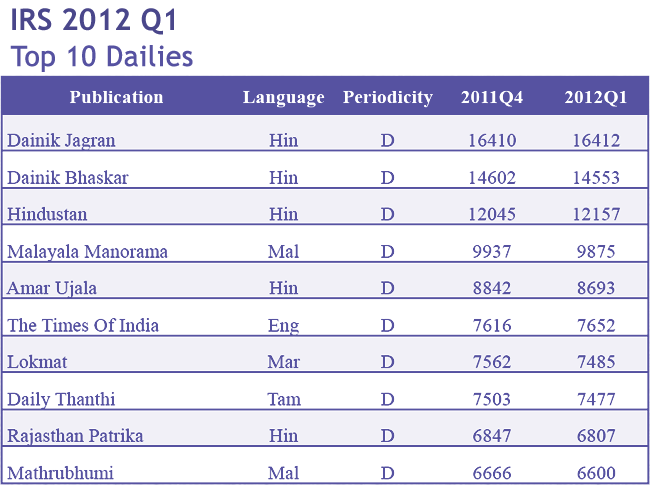
    The IRS 2012 Q1 readership results released by MRUC and Hansa has nothing new to tell but the obvious tale of the apparent rise in numbers of a few publications and the decline in readership of a majority of players. Going by the Average Issue Readership norm, in the Top 10 dailies there has been no change in the pecking order of the top performers but the readership of 7 out of 10 dailies has seen a marginal decline. Of the ten publications, five are Hindi in origin, two are in Malayalam, and one each in Tamil, English and Marathi.


    Emerging a frontrunner once again, Dainik Jagran manages to hold its forte showing slight readership growth with 16,412 in 2012Q1 as against 16,410 that it reported in 2011Q4. At No 2, Dainik Bhaskar has reported numbers totalling 14,553 a decline by 0.33 per cent from 2011Q4 figure of 14,602.Hindustansits comfortably at the third spot having reported a 1 per cent growth of 12,157 as against 12,045 reported in 2011Q4. Malayala Manorama is at the fourth spot with an AIR of 9,875 as against 9,937 in 2011Q4 – a drop of 0.6 per cent. Amar Ujala is next reporting an AIR of 8693 against an AIR of 8842 in 2011Q4 – a drop of 1.7 per cent. The Times of India English edition continues to see growth and comes in sixth with AIR of 7,652 as against 7,616 registered last quarter. Marathi daily Lokmat sees a marginal decline to end 2012Q1 at 7,485 compared to 2011Q4 AIR of 7,562. Tamil daily Daily Thanthi is next with AIR numbers of 7,477 as against 7,503 recorded in 2011Q4. Rajasthan Patrika with 6,807 and Mathrubhumi with 6,600 end the tally occupying the ninth and tenth spot respectively.


    Reacting to the overall trend, Dinesh Rathore, Vice President, MediaVest Worldwide said, “The study hasn’t thrown any new surprises. What is known is that the readership time spent on print is coming down these days, which is even lesser in case of magazines. Newspapers as a habit are not going to die soon but the time spent is surely on a decline. Also, if people were subscribing to more newspapers earlier, they are subscribing to one less now because of the options available on digital.”


    Highlighting her stance on the numbers, Anamika Mehta of Lodestar UM said: “What I infer is that the drop is very marginal. Print will continue to hold its ground in India. With literacy rates going up and the launch of several new products print will continue to drive growth in India . Also, what is seen is that there is a growth of consumption that is happening on the web and moreover, India is a very young country. Almost 60 per cent plus of the population are younger than 35 years. With these audiences the consumption is more on the web than on the physical newspaper. Also, we are seeing a lot of launches by players in the regional markets. So it’s not as bad as it seems.”


    Voicing a similar opinion as given by Mr Rathore, Priti Murthy, National Director – Insights, Maxus said, “I am not surprised by the overall trend that has been thrown up. Why do we read newspapers and magazines, for the sheer content that it provides and content is available faster in other mediums today – definitely digital and to a large extent even TV. I see this trend continuing in the next 3-4 years after which it will reach a saturation point. Also, how much ever tactical initiatives publications engage in to increase circulation, it clearly shows that readership is not going to increase. The time spent in reading newspapers and magazines will continue to see a decline. Also the new generation that is growing up may not grow up on a newspaper alone. They rely on mobile and other AV modes to receive their communication.”


    (AIR numbers; all figures in ‘000)


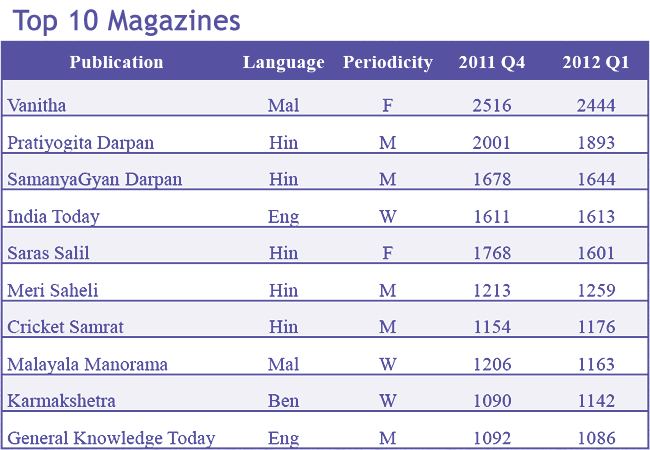
    The downfall story continues with magazines as well with leader Vanitha (Malayalam) reporting an AIR of 2,444 as against 2,516 in 2011Q4 – a decline by 3 per cent. Pratiyogita Darpan too sees a decline of 5.4 per cent having registered an AIR of 1,893 in 2012Q1 as against an AIR of 2001 in 2011Q4. SamanyaGyan Darpan sees a marginal decline with an AIR of 1,644 as against 1,678 reported last quarter. India Today is the topmost English magazine in this list and figures at the fourth spot with 1,613 as against an AIR of 1,611 reported last quarter. Saras Salil is next on the line-up and has reported a big drop of 9.5 per cent registering an AIR of 1601 as against an AIR of 1,768 reported in 2011Q4. Meri Saheli and Cricket Samrat have posted growth with an AIR of 1,259 and 1,176 respectively. Malayalam Manorama at 1,163 has seen a decline of 3.5 per cent while Bengali magazine Karmakshetra has seen a growth in its AIR at 1,142 as against 1,090 in 2011Q4. General Knowledge Today completes the list with an AIR of 1086.


    Throwing light on the trend spotted in magazines, Anamika Mehta said: “In the case of magazines, what we are seeing is that the time spent on magazines is going down but there are a lot of new and niche products being launched. A lot of international players too are coming into this market. So that should give it some scope for growth. But right now I think magazines are in a more worrying state than dailies in India but having said that I do not see the death of the medium coming here anytime soon.”


    (AIR numbers; all figures in ‘000)


  • Advertisers crib as TRPs fall for Satyamev Jayate

    By Ratna Bhushan


    The truth isn’t quite triumphing – not at least in the way some advertisers on Aamir Khan’s hyped debut television reality show Satyamev Jayate thought it would. Television rating points (TRPs) have fallen short of expectations, say at least two marketing heads of associate sponsors, although publicly most advertisers are making the right noises. That, however, hasn’t stopped media buying firms, on behalf of advertisers, from pushing for result and performance-based ad rates on reality shows. They say that TRPs should decide the ad rates of reality shows instead of the channels charging advertisers fixed rates even before the show goes live.


    As per rating agency TAM’s data released by Star on June 13, Satyamev Jayate – which is being aired on Sunday mornings across nine channels of the Star Network (as well as on the state-owned Doordarshan) delivered a national TVR of 3.9. That’s lower than the ratings of blockbuster shows of the past like Kaun Banega Crorepati (Sony Entertainment) and Bigg Boss’ debut show (Colors).


    Navin Khemka, managing partner of media buying firm ZenithOptimedia, which represents consumer goods major Reckitt Benckiser, one of the associate sponsors of Satyamev Jayate said: “All the risk cannot be passed on to the advertiser. With high entry-level costs on reality shows, it is critical that channels take more accountability on the returns on investment.”


    Increasingly, agencies and clients will ask for certain minimum guarantees on programme performance and viewership, he added: “It has to be a win-win for both the brand and the show.”


    While Bharti Airtel coughed up a chunky Rs17-20 crore for the presenting sponsor slot, associate sponsors like Axis Bank, Reckitt Benckiser, Skoda, Coca-Cola and Johnson & Johnson paid Rs6-7 crore each for the 13-week show.


    Star has charged Rs8-10 lakh per 10 seconds for spot rates for Satyamev Jayate while spot rates for KBC were Rs 3.5-4 lakh per 10 seconds.


    According to the marketing head of an associate sponsor who did not wish to be quoted, returns on investment on the show could have been higher. “The way the show was sold to us, we expected higher ratings. It’s disappointing and we hope the ratings increase as the show progresses.”


    However, Bharat Bambawale, global brand director at Bharti Airtel, defended the investment: “To view the success of a show based only on television ratings would limit its overall value. The success of a show has to be looked at collectively and in a holistic way… the content of a show will impact ratings.” On whether broadcasters should rationalise ad rates on reality shows, Bambawale said: “It’s a matter of individual judgement for every sponsor.”


    Basabdutta Chowdhury, CEO of Platinum Media, a division of media buying firm Madison World, which buys media for Bharti Airtel, said: “Advertisers do want accountability and minimum guarantees factored in for reality shows in general, although Satyamev Jayate was not meant to be a mass ratings show.”


    On reality shows, deals are structured in a way that they cannot be re-negotiated through the entire program. This is unlike cricket where broadcasters keep at least some ad inventory – like the semi-finals and finals – open to negotiations based on the ratings.


    Ajit Varghese, MD, South Asia of Maxus, which is owned by the country’s largest media buying house Group M, said: “While there’s no standardised way of looking at a deal, we all are pushing for deals with a minimum guarantee. Of course, the arrangement should factor in an upside too, but overall ad deals should be linked to a programme’s performance.”


    Veteran ad man Santosh Desai is of the view that Satyamev Jayate needs to be evaluated not just by viewership but also for the impact it has. “It’s a difficult show to watch…. Some subjects don’t have a mass audience at all so to be watched week after week by masses will be a challenge.” KBC’s most recent season had opened to a rating of 5.24, and Bigg Boss Season 5 had opened to a TRP of 4.25. The Amitabh Bachchan-hosted KBC had managed ratings of over 4 all through its run.


    A Star India spokesperson says the show has delivered a reach of Rs40 crore over the first five episodes (including repeats). The launch episode delivered a TVR of 4.9 in Hindi-speaking markets and a 4.1 TVR all-India. Subsequently, all episodes have consistently delivered a 4+ rating in HSM and 3.5+ ratings at the all-India level.


    Kevin Vaz, Star India president, ad sales said: “Satyamev has ranked amongst the top few every week on an all-India level.”


    Source: The Economic Times

    Copyright © 2012, Bennett, Coleman & Co. Ltd. All Rights Reserved


  • Creative agencies have allowed themselves to be dumbed down: Vikram Sakhuja


    By Anil Thakraney


    Vikram Sakhuja heads GroupM, India’s largest media buying conglomerate. In a long and animated discussion, the ace number cruncher shares with us insights from the Indian media industry. As well as his own organization’s approach to the various challenges staring at the media business.


    Fifty-year-old Sakhuja is an IIT/IIM grad, and he did a number of years in marketing before he shifted to the world of media in 2001, when he signed up as Managing Director of Mindshare Fulcrum. During our meet, I could see that the outspoken GroupM boss is extremely passionate about his work, and is someone who could get easily agitated over provocative questions. Thankfully, we had a smooth run. Guess it’s all thanks to Yoga which Sakhuja has recently taken up. 🙂


    You were a hard-core marketing man at one point. What prompted the switch to media?

    I believe in taking the career as it goes, and taking decisions at different points of time. Let me take you through my career graph to explain this. After IIM, Calcutta, I was pretty clear I wanted to get into the marketing side of things. So I joined P&G and did eight years there. When I joined them, Richardson Hindustan Limited (RHL) was becoming Procter & Gamble (P&G). So when I started out, the company had RHL values and very quickly the organization got Procterised.


    And you were not happy with that?

    I was happy with that, but Procter believed in the system of specialization. So the guy who gets into sales, stays in sales. The guy who gets into advertising, sticks to advertising. I was in research and they extended that to marketing services. I learnt a lot there, but later on I wanted to move to brand management and P&G wasn’t allowing me that. And I didn’t want my epitaph to read ‘Marketing Researcher’. So I moved to Coca-Cola which was more flexible in these areas. Out there I managed the entire brand portfolio. That worked very well for 5 years. I was reporting to Sanjeev Gupta in those days, and he was handling both, marketing and bottling. And later he went on to take up a bigger job. So they got Shripad (Nadkarni) to head marketing, and I felt my job would get undermined a little bit. And so I left to join Star TV.


    And you lasted there for just one year.

    It was a mistake. I call it jawaani ki bhool. Peter (Mukerjea) said they wanted to start a strategic marketing function there, and it would include marketing of the creative product as well as on-air marketing, which is where the bulk of the spending goes. But it didn’t pan out like that because the programming department had a territorial interest in the programming piece. So it became very clear to me this was going to be an off-air game, and that didn’t have too many legs. And I left Star without a job. Later, Ranjan Kapur introduced me to Andre Nair (this is year 2001) who was looking for people to start Mindshare in India. We had a drink and one thing led to another. I felt a little trepidation in the beginning because I perceived ad agencies to be a little unprofessional. But later I thought about it rationally and it made sense. And so here I am.


    There are large media shops under the GroupM umbrella. How do you manage to give personal attention to each one?

    I am running GroupM, I am not running Mindshare or Maxus. There are capable people running those. I am a management by objectives kind of a person. One aspect of my deliverable is Profit & Loss, there’s no getting away from it. I have told my guys we should get growth from our existing clients. We should have the source credibility to go to them and manage 100% of their marketing investments. That is the agenda I drive. Then, I have to create an eco system for technology, talent and on how to do things better. The scope of service has actually dumbed down, clients are paying peanuts and they are getting monkeys. So I go and tell my clients if they want the right kind of talent and want to get the value out of it, then this is how it works.


    I suppose you operate more as a coach than as a player.

    Do I meet clients? Yes, I do. Am I directly involved in the day to day plans? No, I am not. Unilever is our biggest client. So every year at least one or two deals I will sit in on. Also for other clients. I love to be there for the sheer passion of it.


    What is Sir Martin Sorrell’s brief to you?

    Martin is pretty hands-on in most of the businesses. I rely on him more for counsel. I whet my new plans with him. For example, I went to him with the idea of celeb endorsements. And he felt it wouldn’t work, but asked us to try it anyway. And it didn’t work. Then there was a time we were offered some sweat equity in the IPL Deccan Chargers team. I took it up to Martin and he didn’t think it was a good idea, because he didn’t know the nature of the animal. But he’s brilliant, he is one of the few guys who understands our business, he wants to get in deeper.


    What is your stand on the shift from the commission system to the fixed fee system for media agencies?

    I definitely support the fee system. Though I would prefer a balance of commission and fee. Because in a growing economy you win with commissions. But when spends are not looking good at all, as is the case this year, fee bails you out. In principle, however, I like the fee system.


    How are the clients reacting to it?

    The people who take their marketing seriously believe in the fee system in letter and spirit. The top notch companies like Unilever, Ford, Pepsi, etc, totally get this. I believe clients should pay us Cost + for service, and a factor of that for the value we are able to demonstrate.


    What qualities do you look for in a media buyer in today’s time?

    You must understand that in our organization we don’t just buy media. I would like to believe that our agencies are actually driving the marketing agenda, probably more than the creative agencies. Most of the creative agencies have allowed themselves to be dumbed down, most of them are only interpreting briefs in a TV commercial format. They are only driven by the tactical creative idea rather than a long term view of the brand. All these wonderful creative minds should spend a little time thinking brand stewardship. Out here, we want people who can think account planning and communications. People who can understand the brand, the consumer, and then have the ability to unlock all the media solutions. So the media person needs to understand content, activation, digital, conventional media, and then he has to see how all this comes together.


    Key challenges ahead for media agencies?

    The clichéd one of course is that the commissions we earn are not allowing us to invest in the best talent. But we have to all individually work ourselves, show value and then ask for stuff. The other challenge is in the digital space. The erstwhile DNA of the media companies excluded digital. I believe integrated media planning is the way to go. This is distinct from multimedia planning, which had the TV plan, print plan, radio plan, etc, all working in silos. But with the increasingly multi media environment, the key is integrated planning. And digital is allowing that seamlessness even more. We have embraced this some time back.


    And yet, the media buying business, after the unbundling, has got totally commoditized. Shashi Sinha said to me the media planner has become a zombie.

    I was the first guy to bring the AOR into the country. So you can blame me for the disintegration of the full service agency. (Laughs) I would say each of our agencies has its own planning way. Maxus has something called ‘Relationship Media’, MEC has got ‘Navigator’, and so on. Each of them talks the consumer journey. They talk much more about the communication challenge. I am actually finding the plans looking more different now than they were earlier. So I disagree with my dear friend Shashi Sinha. Maybe I am not cynical. The planner is alive and kicking. It’s in fact the most exciting time to be in the media because of the large amount of fragmentation and the large amount of media choices.


    You did a stint with television. Do you foresee threats to this medium in the near future?

    Yes. The problem with TV today is that it has become a media game of the value of the inventory. At the end of the day, there are only about four million commercial GRPs being broadcast every year at an all India level. And that’s growing at 2 or 3% per year. This is the market for TV eyeballs. So like it or not, you have to extract value out of this. Today, at last count, we have 500 or 600 channels, and it’s getting fragmented. If an Imagine TV dies, someone else will pick up ratings. And if someone else launches, there’s further fragmentation. So the problem is that the same money is chasing some eyeballs. Until the new ratings system comes up and there’s a tectonic shift, you are talking about a metastable equilibrium. Now if the value has to go up, either you have to deliver more reach, or you have to deliver some associated imagery or sponsorships or incremental value.


    When do you expect the shake-out to happen in television?

    We’ve been expecting a shake-out since 1996. I guess some people seem to be having deeper pockets. I am not a finance guy so I don’t know how it works. But I can’t imagine many of them are making money.


    Think the IPL is losing some of its sheen?

    No. The ratings this year were a tad higher than the last year. But for all practical purposes, have held on to last year’s levels. It has stabilized at about 5 rating points. In fact, this year was the best year primarily because of the games, which went down to the wire.


    And it’s a good investment for team owners?

    For them it’s going to be a slow burn. You have do it sensibly, like the KKR franchise does, and I think they make money. Whereas a large number of other people don’t make money. It’s about how you manage the entire franchise.


    There’s a perception that you guys are not passing on bulk rates you get from the media to your clients.

    We have something called the WPP Compliance. And we take it very, very seriously. So we are making sure that we do everything as per our contract with each client. In letter and spirit. We are definitely not holding back anything which is due to a client. We have a media owner invoice and it’s backed by an agency invoice. If the clients want to audit us, they are most welcome to do so. We are a global leader in this space doing global deals, we won’t mess around with something where there’s a breach of trust involved. We can’t afford that.


    Perhaps this was one of the reasons Reckitt Benckiser came up with the idea of agencies paying to pitch, and compensating them in case of a drop in ratings.

    They invited us to pitch and we asked them if they were being ridiculous. We turned them down. If somebody has an obscene point of view, I cannot subscribe to it.


    And yet, some agencies pitched for that account. Isn’t the industry united in these things?

    I thought we were united on that but obviously we weren’t. What do I say now?


    You’ve done many years in this business. Ever thought of starting out on your own?

    The thought has crossed my mind but I didn’t pursue it. I am not a very entrepreneurial guy. My philosophy is: Don’t fix it unless it’s broken.


    Does the lack of adequate talent in the media industry frustrate you? Is it a constant battle to find the right people?

    Yes, it is. But we have to be able to pay right to get the right talent. And for that we have to work our own internal financial structures. The level at which we work, there’s only so much we can afford to pay people at the entry level.


    Is there corruption in this business? There are allegations of planners taking money and other favours.

    One hears about these things from time to time. There is an opportunity for something like this, and clearly we have to plug it. This is where I believe organization culture is very important. If conversations in an organization involving integrity are strong, then the one or two people who entertain these thoughts will find themselves in a very uncomfortable situation.


    Have you ever fired people from your company because of this?

    Oh yes, I have.


    I saw a Youtube video of yours where you mention something about getting stressed out at work.

    I tend to be very animated and passionate, and I do get worked up. But I have been doing Yoga and stuff like that. And that’s helped. I have also started taking it a bit easier now, we have a good team. And at the end of the day, tension lene ka nahin, dene ka! (Laughs.)


  • Ten years on, is radio still an insignificant medium for advertisers? (Text & Video)


    By Robin Thomas (Videos by Insiyah Rangwala)


    Radio is said to be a medium that has been re-born. With the FM Phase III rollout anticipated this year, radio is expected to penetrate further into the country, as a result not only will there be an increase in revenues but, also the fact that newer revenue streams will open up. Multiple frequencies, allowing news and current affairs, sports broadcasting will also bring more innovations in radio, new genre radio stations and great amount of differentiation in content.


     

    Radio’s share of media spends, according to industry estimates, is expected to rise from 4 per cent to 5 per cent in two years. Among categories that advertise on Radio, Real Estate, Telecom, Retail, Education and TV channels are the ones advertise the most.


    What radio players say?

    Harshad Jain
    Joy Chakraborthy
    Joy Chakraborthy
    Apurva Purohit
    B Surender

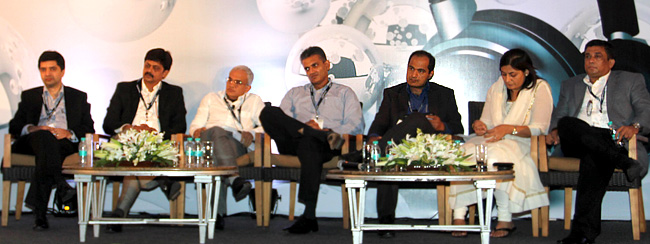
    So, does radio still need to be evangalised? Is radio still insignificant to for advertisers? The India Radio Forum (IRF) 2012 discussed these issues. According to Mr Harshad Jain, Business Head – Radio and Entertainment, HT Media: “From a client standpoint, radio is still an insignificant medium. It all boils down to value addition of the medium – how can radio, as a medium, ensure value addition to its advertisers? The entire orientation has to be more than just vanilla FTCs. Radio is still an under-penetrated medium and has still a long way to go.”


    Mr Joy Chakraborthy, CEO, TV Today Network (which includes Oye! FM) pointed out that the Indian radio industry needs to stand united, not only on issues related to government regulations, but also for business related issues. “There needs to be some amount of unity among the radio fraternity. For the industry to survive we must stand together, not just for regulatory issues but even for businesses. Today radio is the most underpriced medium and unity within the industry will help us drive our sales.”


    Ms Apurva Purohit. CEO, Radio City was of the view that radio is still at an infancy stage and like any other medium, it will also take some time to evolve. She was quick to point out that television took many years to be what it is today. “Today the ad pie of radio is 4 per cent, the geographical coverage of radio is merely 30 per cent but, with Phase III the geographical coverage will see tremendous increase. Every year the number of advertisers on radio has only been growing, what we need to do now is to encourage these advertisers to spend more on radio and reach out to newer advertisers.”


    Mr B Surender, Senior Vice President and National Sales Head, Red FM said: “In the last two years radio saw tremendous growth. With the launch of Phase III also expected soon, the future of radio is certainly bright. Even radio stations outside metros saw tremendous growth, innovations in smaller towns and cities were high and in the next two years radio’s advertising pie is expected to reach 6 to 7 per cent.”


    The client perspective:

    Few years ago, radio was seen as a supplementary medium for advertisers wherein they would spend only the left over media spends on radio. This is said to be changing, slowly and steadily as advertisers are beginning to take radio seriously. There has also been an increase in the number of on-ground activations which has more or less become complementary for radio stations as a value addition to their clients. However, digital media, which was at one point in time an even smaller medium than radio is today, said to have become an even larger and a more powerful medium than radio and a possible reason could be because Internet, unlike radio, is a highly measureable medium.


    Giving a critical view on radio as an effective local medium, Mr Vinay Bhatia, Customer Care Associate and Senior Vice President Marketing and Loyalty said that radio has a very low share of mind and share of value medium to advertisers today. Digital on the other hand, which started off from 2 per cent of advertising share has a much higher share of mind and share of value. “To maximize assets, radio has to deliver business. Radio needs to world closely with clients, it can also look at which area of a city or town works better for clients. It can also partner with retailers to play radio in stores while customers are shopping. Radio is a response medium, therefore it allows a lot of engagement and interaction with listeners. However, there needs to be more innovations for advertisers on radio because clients love innovation and as a result innovation will bring more money for the radio station.”


    Arpita Menon, Head-Media Planning & Buying, Star India Pvt Ltd
    Premjeet Sodhi, COO, Lintas Media Group
    Harshad Jain, Business Head- Radio & Entertainment, HT Media

    Mr Shubhranshu Singh, Marketing Director-India and South Asia, Visa explained: “As far as Visa is concerned, radio has delivered us handsome returns. Radio, I believe, is economical and one can expect higher returns, it is certainly a cost effective medium. However, radio must come to clients as an industry and not as one single radio channel – it should be bolder in its approach towards clients and thus stay on top of mind of clients.”


    Mr Kartik Sharma, Managing Partner, Maxus had a slightly different take on the medium. He was of the view that radio is the oldest form of social media platform, it allows great amount of interactivity and engagement with the listeners. “Radio is in the business of producing great contents and so are the brands, I believe that both radio and digital can depend on each other. Radio is in the business of providing great content, the power of radio is sound and creativity therefore the mindset to learn this medium is very different.”


    Ms Shubha George, COO, MEC noted that in order to maximize radio’s asset and gain share of market spends, it needs to market itself more. She stated that radio today is sold and not marketed, what it needs is more marketing. She also pointed out that the industry must find ways to monetize every single phone calls and SMSes it receives and market them extensively.


    The Indian radio industry still needs a lot of evangelizing or marketing of the medium. Radio needs more nurturing, it needs to probably find newer ways of achieving better ROIs and thus increase greater share of media spends. More innovations in radio will also bring in more money and help it stay on top of advertisers’ minds. Radio needs to partner their clients and find newer ways to generate better ROIs for their clients. Radio needs to vigorously market itself to the advertisers and explain the power of the medium so that it becomes a primary medium for marketers.


    Image: Clipart, Imaging: Rafiq


  • GroupM selects Buddy Media as preferred social ad partner globally

    By A Correspondent


    Buddy Media, the social enterprise software for eight of the world’s top ten global advertisers, announced that GroupM has selected the company’s BuyBuddy social ad product as its preferred social ad management partner.


    “We are proud that GroupM has chosen Buddy Media as its preferred social ad partner,” said Michael Lazerow, CEO and Founder, Buddy Media. “Our self-serve social ad buying technology will make it easy for any GroupM agency to effectively scale and measure social spend for their clients.”


    GroupM will roll out Buddy Media’s BuyBuddy to all of its agencies, including Maxus, MEC, MediaCom, Mindshare, M80 and other business units. It will also begin training on how to maximize the benefits of Buddy Media’s unified social marketing software solution across paid, owned and earned media.


    “After extensive evaluation of the marketplace, GroupM is excited to deploy Buddy Media’s social ad software to all of our agencies,” said Rob Norman, CEO, GroupM Interaction Worldwide. “Social media success is of critical importance to our clients, and Buddy Media is the proven self-serve solution in market that has a focus on empowering agencies and being a true partner. We will continue to work with other partners but believe this consolidation will offer our clients and teams the opportunity to develop consistent high performance in a rapidly developing market.”


    GroupM invested $200 million in Facebook advertising in 2011. Social network ad revenues will grow to nearly $10 billion in 2013, up from to $5.54 billion in 2011, according to eMarketer.


  • Maxus leads in RECMA qualitatives for April 2012; Mindshare, LMG follow


    By Johnson Napier


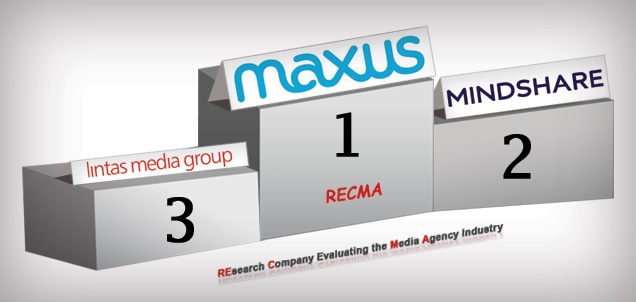
    Group M agency Maxus is on tops of the much-respected RECMA qualitative evaluation of Indian media agencies in April 2012. While Maxus has scored 17 points, Mindshare has 15 points, whereas Lintas Media has 13 points. Both Maxus and Mindshare have a ‘Dominant’ profile and LMG has a ‘Good profile’. These are cumulative points across four categories.


    In competitive pitches, Maxus and LMG are found to be ‘successful’ and Mindshare is ‘stable’.


    The RECMA study is done four times a year. In December 2011, the following were the standings: Maxus: 15 points (Dominant, successful), Lodestar UM 13 points (Good, successful) and Madison Media 13 points (Good variable).


    And in December 2010, it was as follows: Maxus 17 (Dominant, successful), LMG 15 (Dominant, successful), Madison 12 (Dominant, stable).


    When compared over three periods – April 2012 vs December 2011 vs December 2010 – the Benchmark points for the three leading agencies of April 2012 are: Maxus (0), Mindshare (+4) and and LMG (-2). Maxus has had the same points in December 2010 and April 2012, while Mindshare and LMG have seen a change of +4 and -2 respectively.


    Ajit Varghese

    “RECMA is an important achievement for our agency as it is the only study that is authentic and is backed by numbers. On a global level, it is the numbers that do the talking and we are happy to have been performing consistently well,” said Ajit Varghese, managing director, Maxus. “It gives us an edge over our competitors and shows that we are not just a flash in the pan; that we are a dominant and successful agency. Yes, competition is pushing us to perform harder but we have been successful each time and this can be seen by our consistent performance at the top.”


    “Recma is an important benchmark for us as it is considered seriously by most advertisers around the world, ” said Lynn de Souza, chairman and CEO, Lintas Media Group. “It is based on hard facts and data and not like the other studies that are based on perception. Also, the study cannot be manipulated and is therefore genuine to stand by.”


    Lynn de Souza

    As many as 19 media agencies were ranked in April 2012 with scores from +17 to -9; following a decreasing classification from ‘Dominant’ to ‘Good profile’, ‘Average profile’ and ‘Low profile’. This ranking is combined with a New Business qualification: ‘successful’, ‘stable’ or ‘underperforming’.


    This qualitative evaluation has been processed in 40 countries and gathers 14 criteria in four categories:

    1- Competitiveness: mainly measured by pitches results over the last three years (including a 2012 trend).

    2- Momentum measured by the activity growth, market shares growth over 3 years, new business activity and changes to the top management.

    3- Resources in Digital and Diversified Services (outdoor, branded content, entertainment, sponsoring/events, multi-cultural, retail, econometrics, etc.) as well as geographical coverage.

    4- Client Profile: number of big advertisers handled, number of local advertisers, share of the 1st client and the 3 biggest (exposure).


    “The factors that have led us to achieve such a ranking include our ability in growing in new segments and our ability to retain big clients. Vodafone, Nokia are a few examples where we have managed to retain them despite they belonging to different agencies worldwide,” Mr Varghese added.


    Said Ms de Souza: “We are pleased with our current performance at RECMA. We have topped the list of being the most ‘successful’ agency in the criterion of competitiveness,” This was largely due to our aggression in pitching for new clients and our ability to retain most accounts. There was a worry in 2011 when we lost one of our biggest clients in ITC but then we compensated for that loss by aggressively pitching for mid-sized clients and doing that specifically in Tier 2 and 3 towns and cities. Going by our strong performnace , I see ourselves becoming the No 1 or 2 agency at RECMA very soon.”


    Mindshare India Leader Ravi Rao was in meetings and not available for comment at the time of writing.


    The India Qualitative Evaluation report is the fifth edition, the first one having been released in October 2010. “The key benefit of this study is to provide advertisers a fresh picture of the competition throughout a qualitative assessment of the strengths and weaknesses of each player, ” said Eudes J. Delfaon, the Paris-based RECMA Founder and Director of Research and Michèle Le Bris, RECMA’s Regional Director APAC in Manila.


    “Revised and updated on a quarterly basis, the RECMA domestic reports stand as a powerful benchmark essential to all industry professionals in order to get a good and accurate understanding of the media agency landscape and deliver relevant credentials in their presentations,” he added.


    Imaging: Rafiq


  • Maxus names Madhvi Pahwa as first global talent director

    By A Correspondent


    Madhvi Pahwa, veteran media agency executive with extensive experience in talent development and marketing, has been named Global Talent Director for Maxus.


    The announcement was made by Maxus Global CEO Mr Kelly Clark, who said Ms Pahwa will be based in New Delhi where she currently works as Managing Partner for Learning and Culture at GroupM India.


    “This is a hugely important step for Maxus,” Mr Clark said. “Following our explosive growth over the past few years, we need to improve how we recruit, inspire and motivate our people. Madhvi can help us do this.”


    Mr Clark noted that locating the talent director’s role in India rather than New York or London signalled a break from tradition for media agencies, one that provides the agency with an important distinction from its competitors. “I’ve always believed there’s big opportunity for a media agency to take an exciting new direction in talent management, one that really differentiates the agency,” Mr Clark said in a communique. “Maxus can be that agency, and I think we can make that happen with Madhvi’s leadership, advice and partnership. Having Madhvi based in Asia also recognizes the importance of our fastest-growing region to the future of our talent agenda.”


    Before joining GroupM in India in 2006, Ms Pahwa has held several senior marketing and brand management roles with marketers including Procter & Gamble and Coca-Cola India, where she spent a decade in marketing roles ranging from managing brand portfolios to consumer insights to media planning and buying.