Tag: marketing

  • Radio stations (except AIR & BIG FM) can’t commercially exploit T20 World Cup: ICC

    By A Correspondent


    Radio stations and brands planning to commercially exploit the T20 World Cup that starts in Sri Lanka next week (Sept 18-Oct 7) need to beware.


    According to an official communication sent by the International Cricket Council (ICC) to the Association of Radio Operators for India, the exclusive rights holders for radio/audio stream services across all mediums, including the internet in India are BIG FM and All India Radio (AIR).


    The biggest rider is that “member agencies (of Association of Radio Operators) may not undertake any unlicensed commercial exploitation or selective commercialization of ICC Proprietary Content through third party sponsorship and presentation of the same”.


    A point in the statement reads, “Other than International Management Group (IMG) and its licensees, BIG FM and AIR, no entity operating or making available radio/audio stream services is entitled to use ICC Names, ICC Marks and ICC Proprietary Content, claim official association or commercially associate in any other way, either expressly or impliedly, including through marketing promotions, contests, advertising, score updates or other commercial activity (including by monetizing any of the ICC Proprietary Content), with the ICC or the ICC World Twenty20 Sri Lanka 2012.’


    It further states, ‘Should your member agencies fail to adhere to the above, the ICC will engage with them to bring to their attention the permissible parameters of activity and work with them to resolve the matter. However, should such activities persist, your member agencies will be deemed to have knowingly breached the exclusive rights granted by the ICC to IMG and its licensees, BIG FM and AIR, and the ICC will have no other option but to initiate further action, including legal recourse.’


    Lauding the initiative, Tarun Katial, CEO, Reliance Broadcast Network said, “In an extremely encouraging move, ICC has decided to come down on anyone misusing content to offer packages to advertisers. As radio partners, we look forward to offer consumers the best possible entertainment package with exclusive and highly engaging content, while offering marketers an approved and ethical platform by which they can reach out to their audiences.”


    Strict action against channels which do not adhere to the stipulations laid down by the governing body will be taken this year.


    A source close to the development said that the ICC diktat doesn’t mind score updates interspersed in the programming, but radio stations can’t get these get sponsored.


  • The Anchor: 5 benefits of loyalty marketing

    By Siddharth Reddy


    A loyalty programme is a long-term strategy to identify, retain and grow profitable customers. Every enterprise should understand this and must put in place a strategy to achieve these objectives. The benefits of a loyalty programme are many but these are five key benefits:


    #1 Know your customers better – The starting point of implementing a loyalty strategy starts with gathering knowledge about your customers; their purchase preferences, value potential, personal traits etc. Knowing your customers better allows you to communicate 1-to-1, set up a listening post, personalise your products and services and continue to be relevant to them.


    #2 Retain your best customers – Not all customers are made equal. Identifying your most valuable customers (MVCs) and retaining them drives long-term sustainable revenues.


    #3 Increase Lifetime Value (LTV) – The total potential spends from a customer over his lifetime is defined as LTV and maximising this potential through a loyalty programme drives increased revenues and higher ROI on customer acquisition costs.


    #4 Lower your costs – Loyal customers understand your processes and products better, are less costly to serve and less prone to competition lures, and try new products faster, thus ensuring lower costs in maintaining sustainable revenues.


    #5 Increase profits – According to Fred Reichheld of Bain & Company, it costs 6 to 7 times less to retain a customer than to acquire a new one. Reducing customer churn reduces overall costs and increases profits.


    Siddharth Reddy is the MD of BI Worldwide, India, a loyalty marketing, recognition and incentives service provider. He can be reached at Siddharth.reddy@biworldwide.com


  • The Anchor: Six Smart Screen marketing challenges in India

    By Anuj Kumar


    #1 Fragmentation across smart screens. There are too many devices. Varied screen sizes, running multiple operating systems, form factors and soon. Only the very top publishers and premium publishers have their content optimized for access across all smart screen – tablets, mobiles, PCs and Smart TVs. It requires awareness and investments to ensure smooth presence across all. Publishers, app developers will have to invest in smart screen presence, which comes with its share of increase in expenses. Solution can be the use of standard formats like html5, tools and products to enable publishing & curating content experiences across smart screens.


    #2 Monetization options on smart screens are limited. Smart screen ad spends is a small part of the total ad spends but this is one of the fastest growing segments. Monetization of contents thru ads on smart screens would enable more publishers to invest in smart screen contents and apps in India. Specialist advice is needed for smart screens; specialized smart screen ad networks for publishers and smart screen ad solutions for brands.


    #3 Lack of seamless & integrated experience across smart screens. Acceptability among consumers and greater off-take will drive pervasiveness of mobile content innovations. This does not exist now. Users want content they can share and access their apps, profiles and contents seamlessly across smart screens. This takes time for the industry to establish. This can be fixed by the use of cloud computing, user identities and use of standard OS platforms.


    #4 Mass adoption and affordability. Costs of buying devices with smart screens and the cost of connectivity is a very important factor. Consumer numbers have to reach high levels for marketers to start targeting consumers with smart screens. Rate of adoption is typically driven by telco plans for data connections, price of smart devices going down, plans for buying devices and so on. All these are going down but can certainly be made more affordable. At another level availability and awareness of apps drives mass adoption. Apps can entice consumer from productivity, engagement, entertainment and other perspective to drive adoption. Solutions come from the lowering cost of devices, consumer schemes and building awareness on the benefits of smart screens and their corresponding value.


    #5 Ad challenges. Most ad agencies are not ramped up or fully equipped to advice on smart screen media & creative plans. They are used to working on the conventional media. Large agencies running large businesses on conventional media treat mobile marketing as a poor secondary marketing platform. Primarily because of the volume of spends and lack of expertise. Specialized agencies will change that. They will create innovative engagement solutions to attract consumers, in turn attracting brands and growing the ‘smart media’ marketing and time spent pie.


    #6 Complex ecosystem and ad formats without independent media monitoring & performance metrics, which restricts ad spends.


    Anuj Kumar is Co-Founder and CEO of Affle.


  • Strong branding, high ad spends key to growth of consumer goods cos

    By Jwalit Vyas


    Consumer goods companies which have consistently invested in their brands in the past few years are likely to outperform their peers who curtailed their advertisement expenditure in a high inflationary environment.


    During the last fiscal, companies such as HUL, Dabur, Marico, Nestle and Jyothy Laboratories had significantly cut down their advertisement expenditure to protect their margins as high raw material prices were hurting. For instance, HUL brought down its advertisement to sales ratio in FY12 by 250 bps to 11.5 per cent, the lowest in the last three years. Similarly, Dabur India’s domestic advertisement to sales ratio was at 10.6 per cent, its lowest in the last four years. Jyothy Laboratories’ advertisement to sales ratio was only 6.5 per cent.


    Compared to this, companies such as GSK Consumer Healthcare and Colgate have a higher advertisement to sales ratio and have been consistent in their brand investments. While GSK Consumer Healthcare’s advertisement to sales ratio has been consistently over 15 per cent for the last few years, it has been around 13 per cent for Colgate. This will allow these companies to sustain their sales growth and enjoy higher pricing power. Also, these companies will have flexibility with their spending in the coming quarters.


    Strong branding also allows these companies to have a better pricing power and, hence, higher profit margins. The PBIDT (profit before interest, depreciation and tax) margins of GSK Consumer and Colgate are the highest among the lot. In FY12, PBIDT margins of GSK and Colgate were above 22 per cent and 24 per cent, respectively, while that of others were below 20 per cent. HUL, Dabur India and Marico’s PBIDT margins were 16 per cent, 17 per cent and 12 per cent, respectively.


    Interestingly, in the June 2012 quarter, companies which lagged behind have also started to increase their advertisement spends. Dabur, HUL, Marico and Jyothy Laboratories increased their advertisement spend by 51 per cent, 30 per cent, 60 per cent and 77 per cent, respectively. This is likely to continue in the coming quarters as advertisement spend is the key driver for sustainable growth.


    While the sales growth in the previous fiscal was mainly driven by price hikes, volume growth will be critical in the current year to sustain growth. As gross margins are likely to improve for all the consumer products companies due to stabilising raw material prices, the rise in advertisement spend will offset this and restrict the improvement in profitability. However, GSK Consumer and Colgate will have no such constraints. Also strong marketing activities in the earlier quarters will ensure strong volume growth for these companies.


    Source:The Economic Times

    Copyright © 2012, Bennett, Coleman & Co. Ltd. All Rights Reserved


  • The Anchor: Ajay Chandwani on 5 reasons why youngsters/MBAs should join advertising

    By Ajay Chandwani


    1. Brand Management

    For those who have studied MBA, marketing management is just one part of the spectrum, but one should realize that in advertising you also get to do brand management. This is a dynamic field to be a part with immense opportunity.


    2. Variety

    In advertising, you are not restricted to one industry, but you get to work on various categories. So if one time it is about selling a washing powder, next time it could be about selling biscuits and then about selling cars. One has to think different thus not getting stuck in stereotypes.


    3. You do it for a living

    Advertising promotes lateral thinking. It’s not that you can’t do out-of-box thinking in marketing, but in advertising that’s how you are making a living. You get to interact with creative minds and you need to be an ideas person to survive and succeed.


    4. Never a predictable moment

    You could get to work on a new product, marketing plans keep changing, new brands gets launched, so in short, there is no boredom. There is so much going around in advertising business that it promises to be one roller-coaster ride.


    5. Today advertising is at the helm of a marketing function

    The former has taken a 360 degree avatar which included advertising, PR, digital, BTL and the works. There is a desirable exposure to brands. Hence it provides a wider canvas to work on and promises to be an integral part of marketing.


    Ajay Chandwani is Director at Percept Ltd


  • Business Line launches ‘Weekend Life’

    By A Correspondent


    Does Horlicks sell more than Coca Cola in India? Why is the Amul girl suddenly pushing milk, instead of butter? What made a music channel stop airing music? Ever wondered why European kitchen equipment stores are popping up everywhere? Find out all this and more about the business of brands, in one handy, 8-page packet, Weekend Life, being brought out by Business Line from July 6.


    One of the sections, Brandline, brings you the stories and the stories behind the stories from the world of advertising and marketing. Along with insight and analysis from some of the leading lights of the industry.


    Whether it is food and wine and gyan from leading chefs of India, or an insight into gender issues and how women, including rural women, are changing the face of India, it is all included in the supplement.


    Even the tech-savvy will be satisfied with eWorld’s updates on the latest trends, fads and analysis from the world of information technology.


  • Viewers can name upcoming A&M show on Awaaz

    By A Correspondent


    Hindi business channel, CNBC Awaaz, plans to launch first-ever show on advertising and marketing. This is the first time a channel will be looking at the world of marketing and advertisement from the consumer’s perspective. The channel will attempt to engage and connect consumers with experts from advertising, marketing and media planning sector through the show.


    Aimed at decoding the world of advertising for the consumers, each episode will consist of various segments. The first segment will focus on the campaign of the week and the various teams behind its success – creative, marketing and media planning.


    The second session will be a ‘Marketing Classroom’, where some of the best case studies will be analysed to guide SMEs in building their brand. This would be followed by the news of the week with the latest reports from the M&A world and issues related to the ASCI and consumer courts.


    Keeping in mind the focal point of the show and its primary stakeholders, the channel has launched a unique contest Kya Hoga Iss Show Ka Naam. From July 9, consumers as well as experts from the A&M sector can suggest a suitable name for this upcoming show.


  • Introducing: Media Matrix, a new weekly column by Paritosh Joshi

    By Paritosh Joshi


    A young man who currently works in one of the Big Three television networks dropped by for some career advice last week. After graduating from business school, he has spent almost five years at the job, the first two in Ad Sales and the next three in Marketing. He feels like he is beginning to stagnate and has raised the issue with his boss. Boss suggested that he move back into Ad Sales.


    What would you advise him?


    If he planned to be in the broadcast industry for the long haul, say the next decade, I suggested that he stay in Marketing. If it was just the next two or three however, he was likely better off shifting back to Ad Sales.


    Seems cryptic? Hang on, we should soon see why.


    Marketing’s role at most Indian broadcasters only comes in when all aspects of the channel, show or event have already been finalized. All that remains is to build awareness of the impending launch to try and ensure the quickest possible pace of sampling among viewers. Talented creative agency is called in and briefed. Wit, emotion, action and drama are poured in and out pops a striking, often award winning, campaign. All that remains to be done is splashing out a large sum on a media plan and the job is done.


    If you learned your Marketing at one of the putative Universities of the discipline, P&G or Unilever or one of the beverage majors for instance, you would expect to lead, not follow the process and centre every decision at each stage on the consumer. It would probably offend you to be treated merely as a deliverer of advertising and media campaigns. Given the circumstances, you would want to shift closer to either the Content or the Ad Sales side of the business, where the action really was.


    Things are going to start changing. As soon as July 1, 2012 actually.


    For as long as we’ve had C&S TV inIndia, going on 20 years now, the biggest impediment in its expansion has been limited bandwidth due to analog delivery. With capacity of less than 70 channels delivered at indifferent resolution and scratchy audio, the biggest challenge before a channel is to get distribution at whatever cost. Once this hurdle has been negotiated, it enters a relatively limited range of options available in any given genre. The rest depends on casting as wide a content net as possible. Almost every channel tries to be all things to all viewers.


    Mandatory digitization arrives in the big metros on July 1. In a fell swoop, channel choice is set to grow three-fold or more. Costs of distribution should fall rather sharply, removing a significant entry barrier and opening doors for many more content providers. Inevitably, the days of every channel wanting to be ‘One size fits all’ must give way to specific consumer needs driving product design. International channels already show this precision in proposition and content. Comedy Central makes no bones about what it stands for and will stay close to the promise. Fox has a whole portfolio of well-designed channels that identify and then single mindedly go after a tightly defined benefit.


    And make no mistake. This is the direction where all of Indian television is headed; the era of the Marketing-led broadcasting business.


    Paritosh Joshi was until recently CEO, Star CJ. He has been a marketer, a mediaperson and been a key officebearer on industry bodies. He can reached via his Twitter handle @paritoshZero


  • A brand’s success does not guarantee anything: Kevin Lane Keller

    By A Correspondent


    Prof Kevin Lane Keller, brand management guru and the author of well known book Strategic Brand Management, believes that brand is the most important intangible asset that any corporate can have. He states, “The role and functions of brands are so fundamentally pervasive and valued by consumers, it is difficult to see their potential importance diminishing. Managing brands to achieve that potential, however, is as difficult as ever. The pace of change in the marketing environment has greatly accelerated in the last decade.”


    Three of the major changes he stresses upon are emerging markets, emerging media and social networks, and with them has emerged the need for the brands to remain valuable in the changing environment.


    As per him, a strong brand is key to enhancing marketing effectiveness and efficiency, and is therefore a promise to customers and means to set expectations and reduce risk. Heart of a great brand is a great product or service but every brand contact matters.


    A strong brand, according to him does not only work wonders with customers but also gives direction and purpose to employees by motivating them.


    In the changing market environment, challenges of branding too have changed. Some of the challenges, mentioned by Prof Keller are as follows:

    • Rapid technological developments all over the place
    • Great customer empowerment
    • Fragmentation of tradition media
    • Growth of the interactive and mobile marketing
    • Channel transformation
    • Increased competition and industry convergence
    • Globalisation and growth of developing markets
    • Heightened environmental and community welfare awareness
    • Social concerns
    • Recession

    And in the backdrop of these changes, he recommends six branding imperatives, for effective brand management.


    Fully and accurately factor the consumer into branding equation: As per Prof Keller it is important to ‘Engage in participation marketing by establishing what consumers know and don’t know, and what they want and don’t want from the brands.’ Permission marketing, in his view is not the right answer – many consumers don’t even know the questions they should be asking.


    Prof Keller explains the concept further by giving example of Nike. Nike’s brand mission is :’To bring inspiration and innovation to every athlete in the world’.


    And right under its mission statement Nike website states, ‘If you have a body you are an athlete.


    By making that statement, Nike clearly mentions that it is not just marketing to athletes, it is marketing to everyone. Nike has a trickle down target market – top of the pyramid are most evolved – athletes, next come the weekend warriors and the bottom of the pyramid are casual athletes.


    However, It is not only trickledown effect to other segments, but they also market directly to each segment. One of the reasons, the brand is so successful is because it realises the importance of establishes broad access points.


    Another important takeaway from Nike branding is that it is important to have a brand mantra – three words that are the essence of the brand, and in Nike’s case it is ‘authentic athletic performance.’


    2. Go beyond product performance and rational benefits: Well-designed products and services that provide a full set of rational and emotional benefits are key to successful brand management.


    Prof Keller brings home the point that developing better designed products and services requires ‘a comprehensive, up-to-date understanding of consumers, how they purchase and use products and services, and how they think and feel about the brand.‘


    A well deigned brand, as per him, offers advantages in product and service performance, and imagery that creates significant functional and psychological benefits. The strongest brands connect their emotional and functional benefits.


    He elucidates it with Apple’s example, which has a strong brand promise. Its Intrinsics are performance and design, while its extrinsic s are think different, personality and character.


    Apple has done sustained product innovation through feedback and expansion.


    Another brand Prof Keller refers to, in this context is Pampers, which has evolved from a functional to an emotional positioning.


    Based on the functional benefit of ‘Absorbency and dry baby’ , it created the emotional connect with mothers by emphasising that by being dry baby sleeps well at night and so is more active in the day. It established itself as a brand, caring for baby’s development.


    Pampers created emotional pay off for the functional benefit – and they worked well in a synergistic way. And to do it effectively, Pampers changed their marketing program – both advertising and online.


    3. Make the whole of the marketing programme greater than the sum of its parts: Prof Keller believes that it is imperative to ‘develop fully integrated channel and communication strategies that optimally blend their strengths and weaknesses.’


    He states, “Marketers can combine push and pull distribution strategies to maximise coverage and impact, selling directly via email, internet, telephones, cell phones and company stories while also selling indirectly via whole sellers and retailers.in devising communication styrategies marketers must address a number of market place developments – the fragmentation of TV viewership, the increasing use of mobile phones, the explosion of online blogs and social communities, and the greater importance of buzz marketing.” In his view,tTo develop successful communication programmes, marketers must combine online/interactive communications. Real world/experiential communication and traditional mass media communication.


    Here he gives the example of Red Bull – which has been successful for the longest time.


    The brand employs a full set of brand elements and marketing activities – from traditional media to digital to ground events.


    In traditional media – it largely uses cartoon ads and delivers brand promise in a very cost effective way. And hence has enough budgets to spend on digital and events among other things.

    Prof Keller insists that marketing will become more interactive, more digital, more social in times to come. It is important to establish a public voice and presence on the web for dialogue and monitoring consumer reaction and also because it compliments and reinforces other communication.

    Having said that, he also reminds that not everyone actively participates in social media – ‘only some consumers want to get involved with some of the brands some of the time’ – and hence integrated marketing communication is the key. Traditional mass media gives advantage of broader coverage and greater control.

    It is smart brand marketing, as per him to employ multiple touch points and appeal to multiple senses via special events, contests, promotions and sampling. “Make a splash, but pick your spots,” advises Prof Keller.

    Capitalising on real news is another factor brands need to integrate in their marketing.


    4. Understand where you can take a brand (and how): “Design and implement a new product development and brand architecture strategy to maximise long term growth across product offereings, customer segments and geographical markets” is Prof Keller’s advice on brand extensions.


    As per him, from a branding standpoint, growth requires a well-though-out and well-implemented brand strategy that clarifies three key issues:

    A. The potential of a brand in terms of the breadth of its ‘marketing footprint’
    B. The types of product and service extensions that would allow a brand to achieve that potential
    C. The brand elements, positioning and images that should be used to brand any new or existing products

    Crayola, the market leader in crayons in the USA, is his example of choice here. Crayola broke free from the thought process that it was about crayons to ‘Colouring is about imagination and not only crayons – and hence Crayola too has to be about imagination and not just crayons.’


    First right step in brand extension is thinking out of your box – and that is the most difficult step’ underlines Prof Keller.

    The other example he gives here is of Virgin mobile, whose brand strategy is to enter categories where customer needs are not well met and do different things, and do things differently.


    5. Do the right thing with brands – ‘embrace CSR’ is Prof Keller’s parting message to the brands. And this can be done by creating win-win marketing programmes and activities. He gives the example of British Airways, which has for years kept an envelope in the back pocket of the seat – where people can put in foreign currency coins of no use to them. And the proceeds are sent to Unicef.

    CSR, in his view, helps in creating a bond with customers and employees. If done right, it helps in increasing sales.

    Prof Keller also recommends doing the right thing with brands by avoiding over extending, over exposing, over modernising, avoid death by 100 cuts.’

    Says he, “The best and most widely admired marketers treat their brands with understanding and respect, as well as a clear sense of commercial and social purpose. They take out their brand on thought – out journeys that allow them to grow profitably, while preserving brands’ close bonds with consumers and benefits to society as a whole”.

    Multiple compromises and shortcuts, as per Prof Keller, add up and create big problems. A series of micro –decisions by Starbucks in recent years added up enough to transform the customer experience in adverse ways that loyalty suffered, forcing Howard Schultz, the CEO to take drastic actions


    6. Take a big picture view of branding effects. Know what is working and why: The last imperative that Prof Keller suggests is, ‘achieve a deeper understanding of the limits and powers of brands, and be able to qualitatively and quantitatively justify brand investments.’

    As per him, increasingly marketers have to do ‘more with less’ in their marketing budgets. “To help develop return on investment insights and interpretations, marketers must adopt comprehensive, cohesive and actionable branding models,” he advises. Three linked interlocking models, as per him, for brand planning, tracking and measurement can be:

    1. The brand positioning model describes how to establish competitive advantage via points of difference and points of parity
    2. The brand resonance model considers how to create intense, active loyalty relationships with customers. Brand resonance occurs when the consumers feel completely in sync with the brand.
    3. The brand value chain model describes how to trace the value creation process to better understand the financial impact ot marketing expenditures and investments.

    Prof Keller stresses that brand management is an ongoing process and just because you are successful today does not guarantee anything.


    MySpace, Yahoo and Barnes & Noble were the market leaders in their space at a point in time, but they have been replaced by successful challengers: Facebook, Google, Amazon. Another case in point is Samsung, which is competing with Sony across the globe today because it has an excellent value proposition.


    Prof Kevin Lane Keller was invited by Cogito Consulting, the brand consultancy division of FCB Ulka group, for an exclusive, informative and enlightening talk – and the above article is MXM India’s take away from the talk. The Indian edition of the book Strategic Brand Management is co-authored by MG Parameswaran (ED & CEO Draftfcb Ulka Mumbai) and Prof Isaac Jacob (Head of Marketing Faculty, SIMSR). The book has 40 informative examples from the world of branding and marketing in India.


  • ASCI, Goafest come together on self-regulation

    By A Correspondent


    The Advertising Standard Council of India (ASCI), in a bid to encourage self regulation in Advertising, has announced its unique association with Goafest 2012. As a part of this partnership, ASCI will be a conducting a one-of-a-kind contest to promote responsible creativity, under the theme “Creativity with a Conscience” during Goafest 2012.


    The ASCI Mobile Movie Challenge contest, which is open for advertising, marketing and media professionals, revolves around creating short films using a mobile phone.  As per the contest, teams of 3 young professionals, under the age of 30 years, will be asked to create a short film (between 30 and 60 seconds), using their mobile handsets.  Each team will be assigned a mentor film-maker who can guide the team members on the nuances of film making. The teams will create the art forms on one of the four briefs provided by ASCI.


    The teams will create the art forms on the four tenets of ASCI’s code of self-regulation: Honesty & truthfulness in advertising; Decency in advertising as per generally accepted societal norms; Safety & avoiding exploitation of vulnerable sections of society, especially children; Fairness in competition.


    To register, one has to log onto http://www.ascionline.org/goafest2012/ and last date for registration is March 22.


    According to, Subhash Kamath, ASCI Board Member: “The theme ‘Creativity with a Conscience’ goes hand-in-hand with ASCI’s objective of responsible advertising. Our aim is to inspire professionals to abide by the guidelines set by ASCI and to take up self regulation on an individual level as the only other alternative is governmental censorship, which is, not desirable for a creative industry like ours.”


    He added: “By reaching out to young professionals, we’re ensuring that our efforts towards self regulation are understood by the people who will be implementing the work. Through this initiative, we want to instill the message in the mind of young professionals to always remember that with great creative power, comes greater responsibility.”


    These films will then be showcased at Goafest 2012 and will be uploaded on youtube.com and select online portals to inspire professionals to understand the importance of self-regulation in advertising. The entries will be judged by a jury of top creative directors and film makes of the industry.


    Four winning teams, one per brief, will be selected and each team member will be awarded during the Creative Abbys. Alongside, there will be a ‘Popular Choice’ award for the winner of a shortlisted best 16 film, which will be voted via SMS by over 3,000 participants at Goafest.


    Advertising Standards Council of India is a self regulatory voluntary organization of the advertising industry. The role and functioning of the ASCI and its Consumer Complaints Council (CCC) is in dealing with complaints received from Consumers and Industry, against advertisements which are considered as false, misleading, indecent, illegal, leading to unsafe practices, or unfair to competition, and consequently in contravention of the ASCI Code for Self-Regulation in Advertising.

    Click here to view all Goafest 2012 stories


  • 10 takeaways from ad:tech 2012

    By Shruti Pushkarna


    ad:tech 2012 concluded in New Delhi on Feb 24, with the two-day conference witnessing invigorating keynote sessions and insightful panel discussions. MxMIndia takes a look at some of the major takeaways from the biggest digital marketing, media and advertising event.


    The world has gotten a lot more challenging for marketers- With 30 billion status updates published on Facebook every month, 250 million tweets published every day and 5.3 billion views in a 24-hour period on YouTube, marketers have a lot to compete against. With this kind of crazy amount of penetration, it’s a horrible time for marketers. Shiv Singh, Global Head of Digital, PepisoCo said, “From a marketer’s standpoint, from strategy and insight to execution takes a whole bunch of research, figuring out a creative, writing a script, it’s all a several months’ task. It’s so hard to compete with a tweet or a Facebook status update that is published in five seconds.” If Facebook were a country, it would be the 3rd largest in the world. With consumption patterns changing, it is important for marketers to take cognizance of where their customers are.


    Everyone’s a storyteller- In the changing digital world, the source of information has ceased to matter. Everyone is becoming a storyteller, a relevant owner of content. Marketers need to realise that consumers are also content creators for brands. Arun Tadanki, Managing Director, Yahoo India said, “The purchase cycle is far more complex because consumers are not simply recipients of your brand messages, they are curators of your brand message.” Anurag Mehrotra, Vice President, Marketing, Ford India said, “People want to co-create, the control of messaging is shifting and consumers are increasingly critical of manufacturer-speak.” Viral Oza, Marketing Director, Nokia said, “Give the people the tools and a message and they will tell your story.”


    Brands are now publishers– In a world where consumers are bombarded with messages, brands need to find a way of telling their message differently, they need to embrace the art of storytelling to engage users. Marketing needs to be inside the content. Nikhil Rungta, Country Marketing Head, Google India said, “Users will go and find you if they have a need. The user today is saying don’t come knocking at my door- users are beginning to ignore your message.” To fight this situation, marketers need to learn a new and better way of telling their message differently. They need to be content creators rather than just being content distributors. If they can create content, in a digital social world, the consumer will act as a vehicle to carry that content across. Therefore it is important for brands to understand the compelling need of enveloping their message in pure content form. Brands have to go beyond sponsorship, and become curators and creators of content.


    Growing influence of social media- Study says that 57 percent of people talk to people more online than they do in real life. 78 percent of people trust consumer opinions posted online. Gian Fulgoni, Executive Chairman and Co-Founder, comScore said, “Social networking has exploded globally. Nearly 1 in 5 minutes online is spent on social networking sites.” Brands need to take notice of the value of social in fundamental areas like connecting with people, finding long lost friends, sharing experiences. Personal connection on social can help brands connect and engage better with consumers. Digital is increasingly becoming a part of life and so marketers need to weave social media into everything they do.


    Listen, engage, transform- The new mode of communication is Dialogue. Brands need to first listen to their consumers and then engage them in a dialogue to transform and inspire their purchase intent. Viral Oza, Marketing Director, Nokia shared data stating, more than 30 percent of consumers refer to internet for accessing information on brands. 40 percent of those convert into referrals. 30 percent recommend products to their peers based on their experience. Therefore a marketer’s dilemma is really to adapt or die. With millions tweeting, it becomes important for the brands to listen in rather than throw out more messages at the increasingly bored consumer. Narasimha Jayakumar, COO, E-commerce, Homeshop18 shared that in their model of business, social media served more for listening to consumers and helping solve their issues. He said, “We use Facebook mainly to address consumer issues, problems with products etc. Once your consumer knows you are listening it is easier to start a dialogue.” Pete Blackshaw, Global Head of Digital Marketing and Social Media, Nestle said, “Three operating pillars of our roadmap at Nestle are “listening, engaging and transforming.”


    Technology matters less- An interesting point emerged from debates and discussion that it is the basics in the business that matter the most and technology should be looked at as a vehicle for delivering a powerful message. Technology enhances the message and the experience but marketers should not start with the technologies. They matter less, marketers need to focus more on user behaviours and the data they generate. Karthi Marshan, EVP & Head, Group Marketing, Kotak Mahindra Bank Ltd quoted Douglas Adams, “It’s technology if it was born after you.” The idea is to believe in the power of storytelling, believe that a strong narrative still helps engage and not be intimidated by technology.


    Shrink, Simplify, Serve- Small is the new Big. Marketers need to rethink digital in a world of smaller and smarter screens. Pete Blackshaw, Global Head of Digital Marketing and Social Media, Nestle said, “We need to think harder about simplifying our messaging and serving the consumer. We need to shrink, simplify and serve. Our screens are shrinking and so we need to simplify to serve better.” The future of shopping is small screens and the world is increasingly becoming contextual. Richard Dunmall, Vice President, Global Accounts & Agencies, Microsoft Advertising said, “Every surface can become a digital source of content in the future.” Marketers need to focus more on creating simpler messages that can reach consumers in any form.


    Youth driving internet consumption in India- Gian Fulgoni, Executive Chairman and Co-Founder, comScore shared data that indicates that young people drive internet consumption in India today which in turn suggests that future overall usage will rise dramatically. com Score’s extensive research on the state of global internet also indicates that Indian internet users are much younger than the global average. 75 percent of audience is under 35 years compared to 52 percent of the world and 55 percent of the region. India’s heaviest internet usage comes from people in the age group of 26 to 34 years.


    Move beyond the click- Gian Fulgoni shared some lessons learnt from online advertising in his presentation on the state of global internet. Research indicates that click is at best an ‘incomplete’ and at worst a ‘misleading’ metric. Clickers represent a small and declining segment of internet users. Global click ratio on individual campaigns are pitifully low. So, ad effectiveness needs to be measured beyond the click. Marketers need to go beyond the click and explore other ways of measurement. Mr Fulgoni said, “There are two other ways. One is that you measure the change in behaviour, so what we do in the case of comScore, we take the comScore panel, take the people who are exposed to the campaign and a group of people who weren’t exposed to the campaign and then measure how their behaviour changed. And that behaviour change could be, did they go and visit the brand website, did they conduct a search using the brand name, did they get information or did they buy the product, did they buy it online or offline. Those are all behavioural metrics. You can also see if you changed the attitudes. Did the awareness of the brand go up, did recall go up, did favourability go up, did purchase intent go up? But those are all kind of intervening attitudinal metrics and not hard behavioural ones. But both sets can be used and I think they are far better predictors of the effect of a campaign than a click.”


    ad:tech is here to stay: ad:tech has emerged as ‘the’ premier destination for digital media, advertising and marketing and the organisers announced that the next year’s congregation would also happen in New Delhi on Feb 20-23.


  • The New Big Boss of India’s Biggest Brand


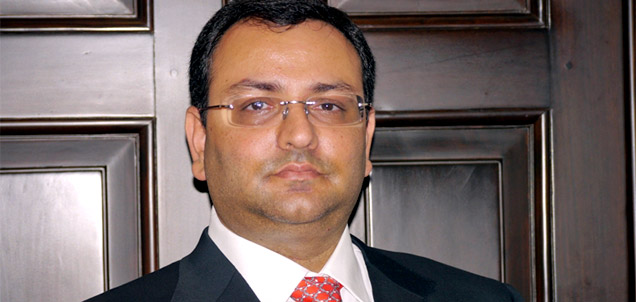
    The search for Ratan Tata’s successor of chairman of the Rs 4.3 lakh crore Tata group has ended with the appointment of Mr Cyrus P Mistry as deputy chairman of Tata Sons. But who’s this 43-year-old Mystery Man?


    Read on for:


    > The Main story on announcement with Mr Ratan Tata’s statement

    > Statement of Mr Cyrus Mistry

    > Profile 1: Avid golfer & foodie, avoids cocktail circuit

    > What Titans Of India Inc Have To Say

    > Profile 2: A reticent man with strategic vision, humility

    > Profile 3: Official profile from the Tata corporate website


    The Main Story


    The mystery over who would succeed Mr Ratan Tata as chairman of the Tata Group ended yesterday as the board of directors of Tata Sons met to appoint Mr Cyrus P Mistry as Deputy Chairman. He will work with Mr Tata over the next year and take over from him when Mr Tata retires in December 2012. This is as per the unanimous recommendation of the selection committee.


    Endorsing the appointment, Mr Tata, Chairman of Tata Sons, said: “The appointment of Mr Cyrus P Mistry as Deputy Chairman of Tata Sons is a good and far-sighted choice.


    “He has been on the board of Tata Sons since August 2006 and I have been impressed with the quality and calibre of his participation, his astute observations and his humility. He is intelligent and qualified to take on the responsibility being offered and I will be committed to working with him over the next year to give him the exposure, the involvement and the operating experience to equip him to undertake the full responsibility of the group on my retirement.”


    Mr Mistry, currently managing director, Shapoorji Pallonji Group, has been a director of Tata Sons since August 2006. He is a graduate of civil engineering from Imperial College, London, and has a master of science in management from the London Business School.


    And this is what Mr Mistry said in his statement:


    “I feel deeply honoured by this appointment. I am aware that an enormous responsibility, with a great legacy, has been entrusted to me. I look forward to Mr Tata’s guidance in the year ahead in meeting the expectations of the group.


    “I take this responsibility very seriously and in keeping with the values and ethics of the Tata group I will undertake to legally disassociate myself from the management of my family businesses to avoid any issue of conflict of interest.”

    But who’s this mystery man?


    Read on:


    Profile 1:

    Avid golfer & foodie, avoids cocktail circuit


    By Reeba Zachariah & Namrata Singh


    The man who will head a group synonymous with Indian industry is an Irish national and shares his birth date (July 4) with the US Independence Day. But in many ways, he resembles the business giant he has been handpicked to succeed. Like Mr Ratan Tata, Mr Cyrus Pallonji Mistry, 43, is described by close friends as soft-spoken , candid and down to earth.


    Again like Mr Tata, Mr Mistry is said to love cars – especially SUVs – and steers clear of the cocktail party circuit. But unlike lifelong bachelor Tata, Mr Mistry is said to be a devoted family man. He is married to Rohiqa, daughter of renowned lawyer Iqbal Chagla, and the couple have two school-going sons. An avid golfer, mr Mistry is known to be a foodie and his favourite holiday destination is Europe. Besides Mumbai , he owns houses in London and Pune.


    According to a Tata group insider, “Mistry is one person who can laugh at himself.” His sense of humour should come in handy in facing the challenges that lie ahead. A person who has shown a preference for the shadows , he will now have to put up with the arclights for years, perhaps decades.


    Tellingly, his Wikipedia profile was created within minutes of the announcement that he had been effectively chosen chairman-in-waiting of Tata Sons. The youngest son of construction baron Mr Pallonji Shapoorji Mistry, Cyrus hails from one of the richest Indian families with a net worth of $7.6 billion. But he will disassociate himself from the family business to avoid conflict of interest.

    Voracious reader with eye for detail


    Mr Cyrus Mistry has been managing director of Shapoorji Pallonji & Company, which is part of the Rs 15,000-crore Shapoorji Pallonji Group (SP Group). An avid golfer and prolific reader, Mistry got the chance to join Tata Sons’ board a year after his father retired as director in 2005. The family is the single largest shareholder in Tata Sons with a stake of 18%. Mistry is also on the board of Tata Elxsi and holds non-executive positions on the boards of several other companies. He is a trustee of the Breach Candy Hospital Trust as well.


    Although he does not have experience in heading a Tata group company , Mr Mistry, a graduate in civil engineering from London’s Imperial College, has been actively involved in the family business. His expertise includes formation of business plans, risk evaluation, business investment strategy and property and infrastructure development.


    Mr Khurshed Daruvala, MD, Sterling & Wilson, in which the SP Group holds 56%, describes Mistry as a “ hands-on leader” who is strategy oriented. “ Ever since Mistry started working with this partnership firm in 2003, the turnover has jumped from Rs 50 crore to Rs 2,000 crore.”


    If this is exemplary, consider what Mistry accomplished after he took charge at loss-making Afcons Infrastructure. SP Group acquired a 53.96% shareholding in Afcons in 2000. In March 2011, Afcons earned a total income of Rs 2,893 crore with a compounded annual growth rate of 21% over the past five years.


    He joined the SP Group in 1991 as a director and became its MD in 1994 in charge of the construction business. His brother, Mr Shapoor Mistry, is actively involved in the real estate and textile business.


    Conservative in his approach, Mr Mistry is said to have an eye for detail. “Once he takes decisions, he sticks with them,” said an insider. He can safely expect to take many crucial decisions in the years to come.


    What Titans Of India Inc Have To Say


    It is a historic and great moment


    -Krishna Kumar, director, Tata Sons


    A young leader means long-term stability for the Tata group


    -A M Naik, CMD, L&T


    There is strong chemistry between Mistry and Ratan Tata. He is very thorough and has good financial insight


    -J J Irani, former director, Tata Sons


    Good sign to have a young chairman -Ajay Piramal, chairman, Piramal group Cyrus symbolizes continuity, yet change


    -Harsh Goenka, chairman, RPG


    He’s mature beyond his years


    -Zia Mody, senior partner, AZB Partners


    Source:The Economic Times

    Copyright © 2011, Bennett, Coleman & Co. Ltd. All Rights Reserved


    And here’s a little more…


    Profile 2:

    Cyrus Mistry:  Tata Sons’ deputy chairman a reticent man with strategic vision, humility


    When senior advocate Mr Iqbal Chagla met Mr Cyrus P Mistry for the first time, he felt there was something special about the man. “He struck me as a young man who will make it big one day,” says Mr Chagla.


    Mr Chagla had good reason to ponder over Mistry’s future prosperity – the younger son of construction tycoon Mr Pallonji Shapoorji Mistry was keen to marry his daughter Rohika.


    On Wednesday, Mr Chagla’s prediction for his son-in-law couldn’t have come true in grander style. In the early evening, Mr Ratan Tata sent out an email to the top five-six executives of all Tata Group companies, informing them that Mr Cyrus P Mistry would succeed him as chairman after December 2012. In his message, the 74-year-old chairman hoped the Tata brass would lend the same support to Mistry as it did to him.


    Not all may choose to do so, but Mr Ratan Tata for his part surely will. Top officials in the group who have worked closely with Mr Mistry say he gets along famously with the Tata Group chairman and is very similar to Tata in nature and attitude.


    Cyrus was Ratan Tata’s First Choice


    They add that Cyrus was the chairman’s first choice right from the time the hunt began for a successor. But Mr Tata was also keen to follow a systematic process of selection, involving shortlisting of candidates – both external and internal.


    So who exactly is Mr Cyrus Mistry, and what makes him the best man to head the sprawling Tata empire? He’s low-profile, reticent and conservative, qualities he has inherited from his father. After graduating in engineering from Imperial College London, Cyrus plunged into the family-owned construction business.


    His father gave him a clear mandate: grow the engineering, procurement and construction activities. Cyrus focused on the Middle East and grew the business in Oman and the region.


    Cyrus’ big break came when the group acquired construction company Afcons Infrastructure Ltd, which undertakes large infrastructure projects in India and abroad.


    The company was acquired at a time India was witnessing a construction boom. As chairman of Afcons, Cyrus oversaw many important projects. The company was involved in the construction of Delhi Metro, and Cyrus often flew to the capital to supervise the work.


    Those who have worked with him say Cyrus possesses a near-perfect blend of hands-on involvement and the ability to give long-term strategic direction. “He has excellent leadership qualities, can think on his feet and combines all this with humility,” says former Unilever honcho Mr Keki Dadiseth, who was at one time believed to be in the reckoning to succeed Mr Tata. Another executive who has worked closely with Cyrus says he has the ability to operate both “as a telescope and a microscope”.


    Among those backing Tata’s choice is Mr Darius Pandole, who remembers Cyrus since their days in the Cathedral & John Connon School in Mumbai. “Cyrus’ is an inspired choice; he will provide long-term stability to the group,” says Mr Pandole, a partner in New Silk Route, a private equity investor. Cyrus is just 43, and even if the retirement age of chairmen in future is brought down to 65, he will still have a good two decades at the helm.


    Yet, there are those who point out that Cyrus has succeeded Tata purely on the strength of his father’s 18.5% holding in Tata Sons, which makes the senior Mistry the single largest shareholder in the holding company of the Tata Group. Others feel Cyrus lacks global exposure and may not be able to tackle the complexities of a diverse business house like the Tatas. But Pandole retorts: “People raised eyebrows when Mr Ratan Tata succeeded JRD. Look at what he’s achieved.”


    Meantime, officials at some of the front line Tata companies are baffled by the sudden announcement. Most have little or no exposure to Cyrus. A senior official in the group said on the condition of anonymity that the Tata Group will now be known more as Shapoorji Pallonji Group. “The Mistrys are known more as sharpshooters, which is in sharp contrast to the Tatas’ trusted brand image,” adds another old hand at a Tata company.


    Source:The Economic Times

    Copyright © 2011, Bennett, Coleman & Co. Ltd. All Rights Reserved


    Profile 3:

    Profile of Mr Cyrus P Mistry from the Tata corporate site:


    “Mr Cyrus P Mistry, 43, joined the board of Shapoorji  Pallonji & Co. as director in 1991 and was appointed managing director of the Shapoorji Pallonji Group in 1994.  He is a graduate of civil engineering from the Imperial College, London (1990) and has an M.Sc. in management from the London Business School (1997).


    Under Mr Mistry’s guidance, Shapoorji Pallonji’s  construction business has grown from a turnover of $20 million  to approximately $1.5 billion. The group’s companies have evolved from pure construction to executing projects under design and build and EPC delivery methodologies, implementing complex projects in the marine, oil and gas, and rail sectors. Under Mr Mistry’s stewardship, the group has registered many firsts in India — construction of the tallest residential towers, the longest rail bridge, the largest dry dock and the largest affordable housing project.  The group’s international construction business now extends to over 10 countries.


    Mr Mistry is responsible for launching the infrastructure development vertical in the Shapoorji  Pallonji Group in 1995 with a 106 MW power project in Tamil Nadu, followed by the development of India’s largest biotech park near Hyderabad in partnership with the Andhra Pradesh government. The infrastructure vertical has also developed two large road projects totalling an investment of USD 550 million.


    The Shapoorji Pallonji Group’s recent foray into agriculture and biofuels, with the leasing of 50,000 hectares in Ethiopia, was also overseen by Mr Mistry.


    Mr Mistry joined the board of Tata Sons in 2006. He has been a director of Tata Power and Tata Elxsi in the past.


    He is also on the board of the Construction Federation of India, the Imperial College Advisory Board, the board of governors of the National Institute of Construction Management and Research (NICMAR), and is a fellow of the Institute of Civil Engineers. ”


    Photograph: Tata.com