
Tag: Manyavar

  • Manyavar gets Ram Charan as brand ambassador

    By Our Staff


    Manyavar, men’s fashion wear brand, appoints Telugu films actor Konidela Ram Charan as brand ambassador. Manyavar is celebrating the appointment with the new campaign #TaiyaarHokarAiye marking the onset of the wedding and festive season.


    Said Vedant Modi, Chief Revenue Officer of Vedant Fashions Limited on the collaboration: “We are honored to welcome Ram Charan to the Manyavar family. His charisma, charm, and global appeal among a diverse audience align perfectly with Manyavar’s vision of dressing the modern Indian man. With Ram Charan, we are confident that he will have an impeccable connection with our audiences”


  • Ranveer Singh in Manyavar ad again

    By Our Staff


    Manyavar is back with their new film under the #TaiyaarHokarAaiye campaign with actor Ranveer Singh.


    Commenting on the association, Vedant Modi, Chief Marketing Officer, Vedant Fashions Limited  said, “ We are celebrating Diwali after two years of the pandemic and we hope people go all out to celebrate the occasion. Manyavar’s new digital film is a fun take on festivities by Ranveer Singh calling himself a ‘Patakha’ that can burst any time. With his spectacular timing and screen presence, this is an effort to emphasize on our messaging of  ‘Taiyaar Hokar Aaiye’ and we are confident our audience will enjoy watching it.”


  • Are Hindu rituals the favourite hunting ground of brands?


    By Sanjeev Kotnala


    Sanjeev KotnalaIt is festival time, and every brand is trying to make a difference. Some work with the functional advantage to create a preference and charge a premium. Many brands adapt to the new purpose-led communication to influence customers. And a few rare breeds of brands, in the name of change, question rituals and their understanding and relevance in today’s world. Invariably the questions are targeted at the majority – Hindu. To an unbiased observer, the need and scope for reconsideration and rethinking of customs, traditions and rituals that exist only for the Hindus and other predominantly minority religions are perfect. There is nothing to change or question.


    Recently, SC rejected a plea to ban firecrackers. It said you are an opportunity and are coming right before the festival and should have come early, asking why and what they were waiting for. And this is right. Festivals are for the celebration of tradition, culture and rituals; raising issues and objections and suggesting new ways to the concerned community is absolutely hitting below the belt. I do not appreciate any brand – service, or organisation raising issues with the traditions of any community. There are positive and negative ways to do things, and brands should consider what is better.


    Why just Hindu?

    Most likely, it is a result of four simple things.

    Every brand wants to connect with the largest possible base of customers. Hindus form the largest chunk of the population and hence the natural choice for the creative and brand team to deep dive into it whenever they have a brief about change or community.

    Second, the Hindus have repeatedly demonstrated their incapability of taking any such attack on their culture, ritual, religion, or mythology to its logical end. They just raise their voices in protest on social media, suggesting boycotting the brand, and that is where they stop.

    The Hindus are victims of their own brand imagery of being secular and tolerant. Sanatan Dharma, in existence from time immaterial, pushes for adapting and inclusiveness. It has survived repeated attacks through time and is expected to continue doing so.

    It is old with a rich tradition of oral continuity and learning. As a result, the people of today readily believe that many truths have become fictionalized or exaggerated through time. And everything is anecdotal mythology lacking historical evidence. And hence the revered gods and goddesses and their messengers are mere characters in a story, which makes them an easy pick for suggestions and remoulding as per the brand’s liking.


    Science v/s Belief?

    So, from time-to-time, brands stretch the boundaries taking potshots at Hindus. Not all such instances are bad or wrong, they are progressive, and the new generation would agree with the brand thinking. However, there is only one option against the regular onslaught by brands challenging Hindu religious practices and thinking – defend everything questioned. Don’t not critically re-examine them as an isolated case. The fear remains that if one did not object to any of these instances, it would open the floodgates of questioning. Hence, at every opportunity, the challenge must be defended.

    Unfortunately, Hindus get trapped and forget that the defence cannot be based on scientific reasoning. It should be based on belief. Belief kills every doubt and reason for questions. Belief is the tactic and the tool that the minority uses so effectively, making the argument short.

    At times, a regular counter-argument is raised by the so-called secular forces. Is the Hindu religion so weak that advertisements can threaten it? Well, the direct answer is NO. However, if the attempt is continuous and on multiple fronts, there is bound to be an increase in doubts and levels of questioning.


    Blame the Brand and the Creative Team

    It is futile for Hindus to question the actors and the celebrities enacting the stories of change in brand communication. It is a deep strategic initiative of the brand after considering possibilities and potential reactions. They are in the business and think through their strategy. And, If they cannot do this simple thing, some consultants and advisors can help them with the possible reaction with analysis like SMEAR.

    So, whatever brand communication is finally in the public domain, it is approved. It is the brand thinking; this is how the brand sees Sanatan dharma. Maybe the followers should forget what the religious leaders, facilitators and guardians tell them. The brand knows better how Hindu practices must be shaped to remain relevant in today’s world.

    This reminds me of a simple, strong line from the recent movie Goodbye, and the brands should think about it. Everything that you don’t understand is not wrong. Brands having differential self-regulation beyond the guidelines and legality is highly desirable.


    Every brand communication could not be wrong?

    The problem is simple: the majority and the minority cannot allow any brand to question religious practices. There is no room for error or negotiation. Hence, every communication should be evaluated in isolation. The brands often suggest a little rethinking and point-of-view without questioning the basics. They use elaborate storytelling to create a situation – while suggesting a change. Not everything is bad, but no single body can define what is good and bad, what is acceptable and what is a cause for concern. Everyone has to take their own call.


    AU Bank – Badlav Hum Se

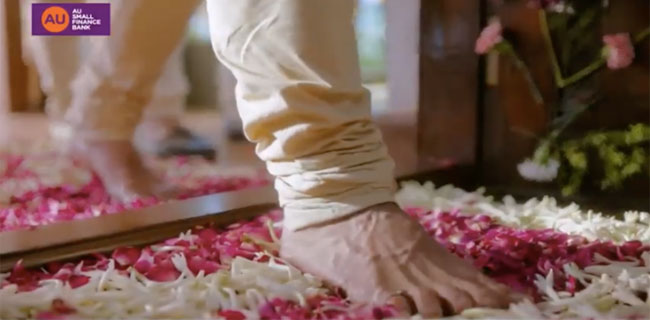
    The AU Bank advertisement is a case in point. It presents the flip side of the coin. Here the groom is coming to the bride’s home as a ‘Ghar Jawai’ for some reason, like the wheelchair-bound bride’s father. Usually, the bride stepping into the groom’s home would walk through the plate with Alta leaving her foot marks and kick a pot of rice. However, here it is playfully suggested that as it is the groom who is coming to the house, he should take the first step. What’s wrong with it? And if we allow our insecurities to raise such flippant questions, we will kill the art of storytelling. How come we understand that the breed of new authors in mythology space create contemporary fiction and not question the beliefs. Still, we forget when it comes to advertising.


    BharatMatrimony #BeChoosy

    This is a different case by Bharat Matrimony , a provocative thought. Breaking of Karva Chauth fast. No married woman will think breaking the fast is for her husband’s long life. This is a celebration of the thought. It is collective working towards what is good for the family and adapting to the situation. This is the celebration of culture with a strong positive statement- if I can fast for your life, I can also break my fast for you. This also shows that a negative portrayal is not the only way to question tradition or culture.

    In the past, the Stayfree communication – touch the pickle was the right suggestion with new solutions. And every year, we find new brands getting caught in this trap of questioning- where the celebration would be a far better option. Earlier brands like Tanishq and Manyavar did face the Hindu music.


    Net-Net

    The change will happen- it is a natural process. Questions will be raised- and they will be full of agenda. Suggestions will be made even by the least interested and knowledgeable in trying to hasten the process. However, suppose the brands think through the initiatives and stop poking fun only at Hindus. In that case, life could be much more straightforward. Conversely, Hindus may be better off by not questioning every brand communication that even remotely suggests a different perspective. However, personally, I think and reiterate that these brands under their purpose and change have no right to raise finger on the rituals and traditions of any community. And if they start raising issues with traditions of other communities, it does not solve the purpose or address es the issue. Such changes have to come from the communities and start at a group level. Brands taking on position and using mass media is not the way. The time is over and the brands may encounter harsh reality and retaliation in the place it matters- the market place.


    Sanjeev Kotnala is a senior marketing and business strategist. And an educator. He writes on MxMIndia every Wednesday. His views here are personal


  • Kartik Aaryan in Manyavar ad

    By Our Staff


    Celebration wear brand Manyavar has launched a new ad film under the ‘Naye Rishte Naye Vaade’ campaign featuring actor Kartik Aaryan. The


    Said Vedant Modi, CMO, Vedant Fashions Limited: “At Manyavar, we have always believed in progressive communication. Through this new film, our aim is to send across the message of embracing new relationships. With Kartik Aaryan, we are confident that he will have an impeccable connect with our audiences.”


    Added Shreyansh Baid, Director at Shreyansh Innovations: “This ad embodies the fresh new spirit of relationships in today’s times, which are based on an equal footing and unconditional support.  Portrayed through 4 different situations that one encounters in a wedding ceremony, here is the Manyavar groom taking care of his life partner in beautifully surprising ways and standing by her through thick and thin. Naye Rishte Naye Vaade- as the ad slogan sums up, is what our Manyavar groom is all about.”


  • Amitabh promotes Indian wear in new film of Manyavar

    By Our Staff


    Manyavar has launched its Pehno Apni Pehchaan campaign featuring actor Amitabh Bachchan with a strong messaging on wearing Indian wear on occasions. The film sheds light upon the feeling of Indianness after wearing Indian wear through a monologue narrated by the legend himself. The monologue is an ode to Indian tradition and culture, celebrating the pride of India, and how Indian wear is adding to the pride and culture.


    The film has been conceptualized and executed by Shreyansh Innovations.


    Speaking on the campaign launch, Vedant Modi, Chief Marketing Officer, Vedant Fashions Limited said: “Manyavar has been at the center-stage of promoting Indian culture and trends in Indian fashion since the beginning. With the film featuring Mr Bachchan narrating the poem in his voice, we are certain that our message will be positively echoed in the minds of our consumers.”


    Said Shreyansh Baid, Director at Shreyansh Innovations: “Manyavar’s campaigns have always been about standing up for the core cultural values of India. In sync with this, we have gone one step ahead in this latest ad and made a clear statement that treats Indianness and Indian traditional wear as inseparable. Evoking love and pride for our culture, it captures the very essence of what the brand stands and aspires for.”


  • Manyavar releases  a series of film campaign

    By Our Staff


    Manyavar is back with their new films under the campaign #Taiyaar Hokar Aaiye with actor Amitabh Bachchan.


    Commenting on the association, Vedant Modi, Chief Marketing Officer, Vedant Fashions Limited said: “Manyavar has always been a brand that showcases the nuances and beauty of the Indian culture. The new digital films are aimed at everyone who believes in the magic of celebration. Mr. Bachchan with his narrative and screen presence has put soul into the idea of #TaiyaarHokarAaiye and we are confident it will be a widely accepted and celebrated phenomena amongst our target groups.”

  • Ranveer kickstarts wedding season with Manyavar TVC

    By Our Staff


    After running into a controversy with its Mohey brand, Manyavar has launched a new campaign, #ManyavarAaGaya, with Ranveer Singh.


    Commenting on the association, Vedant Modi, Chief Marketing Officer, Vedant Fashions Limited said: “We at Manyavar, love how weddings bring the culture alive through Indian wear that are unique to every celebration. We aim to make it special for anyone who wants to make a statement on their D Day. Through the video, Ranveer is seen making a stylish entry and giving grooms a fun takes on how to make their wedding day extraordinary and memorable. The ‘Dulha’ who symbolises to ‘Manyavar’ has all the eyes on the wedding day and through this campaign we are delighted in giving the grooms a chance to dress up in the stylish and regal collection. We look forward to being every groom’s choice while promising them a memorable a day.”


  • Evolution, Revolution & Mutation of Kanyadaan by Manyavar


    By Sanjeev Kotnala


    Sanjeev KotnalaMatriarchy, patriarchy, new norms and rules, purposeful intent, a lot is happening worldwide on equal opportunities and an unbiased evaluation of women’s contribution to life. Advertising is not left untouched. Brands are seeking a say in it with their camouflaged purpose-led communication.


    They are trying to pick things that are now considered unquestionably questionable. However, they result from changes in life, society, expectation, experiences through the ages. In this evolution process, the new rituals with ignorance and misunderstanding of the original thinking and real purpose have crept in.


    The evolution of societal role assignment has polarised roles. One party took a dominant seat, and the other was pushed back to such an extent that it now demands a revolution. It is no longer satisfied with the slow-paced evolution. There is a vested interest in the well-intended commercial businesses fuelling the fire.


    There is a kneejerk reaction to a situation. What one understands is simple and somewhat controversial, might even be wrong. Revolution leads typically to mutation. And one mutation cannot be the answer to another.


    Men are in a crisis and victims of the same social setup and value systems. Women are no outsiders to the deteriorated situation and misaligned understanding. It is natural for them to want a share of the material powergame. In that sense, many things are not about reversing the power gap but evolution to the desired status. Equal say, equality of opportunities and consideration for the women contribution is a result of the process. As a result, a lot of process and affirmative actions for women has been rightly introduced. Some of them are actions like the custody laws, divorce laws, triple talaq, opening of new frontiers, breaking the glass ceiling, the reduced taboo around menstruation, and laws against objectifying women. But it might not be enough or not fast enough.


    Family and marriage should not necessarily be seen as patriarchal institutions invented to subjugate women. Behind the women’s demand for revolution is a demand for equality and respect. No one can find fault at it.


    Many women readers could object to current rituals and expectations. They may rightly say, ‘I wish it was always like that, but it isn’t’, and they might not be far from the truth. The new push against female foeticide, child marriage. Parental leave. Push for education and resulting financial strength are positive outcomes. But it may take ages to happen, and hence the need felt for revolution.


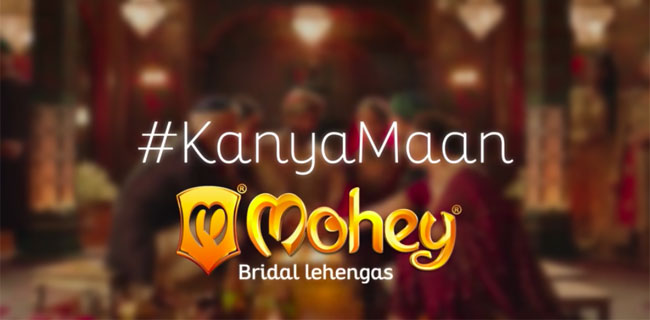
    However, society too follows a bell curve. There will always be a mix of bad and good, supportive and oppressive, facilitating and barrier creators, patriarchal and matriarchal POV. The right and wrong are contextual and much complex than a simple #Kanyadaan to #KanyaMaan.


    Women have lived a complex life. They are the pivot of the family in more ways than one, juggling relations, maintaining relationships, balancing the budget, and making the  house a home. In fact, they dominate the transfer of legacy, culture, and social values to the next generation. In many ways, these contributions are so hidden that they fail to be realised. As a result, the lives seen through the societal lens of experiences are not comparable across genders.


    However, does it not give brands a right to wrongly portray the situation and rituals of only one religion and suggest corrective measures? Why are brands blind to other religions traditions and practices? Do they lack a spine to do so? Or do they fear a violent backlash?


    Yes, I am totally irritated with this appalling situation. And when brands try to define society and start commenting on it, they better be willing to share the repercussions, however well-intended their actions be.


    ‘Real-life needs a more intelligent, holistic, nuanced and science-based intervention and not one driven by ideological antagonism and resentment against patriarchy or rituals of a religion. (Comment picked up from a discussion in a closed WhatsApp group)


    Patriarchy exists, however, it did not happen overnight. It is a social evolution based on circumstances. If the situations change, the rituals and their meanings are bound to change. But a revolution that mutates the mindset due to gross misrepresentation is not the solution.


    Yes, differences exist, and they are bound to exist. Roles are assigned based on social expectations and situations, which were driven by pure biological needs, property consolidation, physical attributes, and the ecosystem. Some experiences may not be exactly right by today’s standards, and one is right to question them. It is life.


    The truth: If you fight for women, you are a hero! If you fight for men, you are a misogynist! If you defend your religion, you are radicalised! And I am happy to be a hero, a misogynist and radicalised at the same time.


    The concept of paraya dhan seems to be easily understood and exists across religions. Giving away of the bride has been wrongly established as a Daan or giving away the responsibilities.


    The lives in the urban and rural world, the world of the haves and the have-nots’, the life in Bharat and India are different. The ecosystem is different. The lives are different, and the interpretation, naturally different. Somewhere female kids are seen as a burden and an asset for social alliances and growth in other places. And in a lot many places, the Maan of the family.


    I am not against change and a brand trying to make it their purpose. In such a case, few things are essential. Authenticity and Consistency. And more than that, a proper understanding of the rituals. No lazy armchair analysis and no polarised communication emerging from a lack of misguided understanding. It will only result in poisoning the mind of the generation and further alienate them from the real meaning.


    Brands can take the right way. Project the proper understanding and meaning. Remind and revise the culture and not just try pin-pointing the wrong, if any. The biggest problem is the freedom of making choices and decisions impacting their own lives. And most of these need to have a constitutional and law-based solution, not a one-film wonder. Till personal laws remain different, till a country is not governed under the same law and grant equality, equality of gender will remain a distant fantasy.


    Having said so, I have a question for these well-intending brands. Is there no way to be good without pointing to someone else as bad? Am I been too idealistic? Or is being politically, societally and religiously incorrect the new politically correctness for the brands?


    If someone really pursues the subject, they will understand that ancient Indian thinking, the progressive variety, has complete gender differentiation but much respect for women. And here I am, not even using the term Hindu.


    Much has been said and written about this #Kanyadaan and #KanyaMaan. But the best that I read and endorse seem to be captured in the tweeted thread by @MumukshuSavitri. It correctly identifies it not as an Alia Bhatt ad- but a brand Manyavar advertisement featuring Alia Bhatt. And here, the brand is to be questioned and not the endorser.


    Can Manyavar refute that Kanyadana and other rituals of the Vivaha ceremony in Hindu marriage are not patriarchal but show immense reverence and Mana for the bride? If not, they must apologise and withdraw this highly offensive ad and stop demeaning & demonising Hindu customs.


    Can brands stop half-baked attacks and false representation of the Hindu religion? And while saying it, I am not asking the brands to look and project rituals in any other faith as wrong. I ask them to detest from interfering and objectifying, downgrading Hindus, the tolerant ones.


    The tweet takes offence to the brand Manyavar claiming #KanyaDaan in Hindu Marriage objectifies women. And I #ignorantHindu share it for a wider reach.


    …………………………………………..


    THE TWEET TEXT . I have done minor correction in the text- and the original tweet can be read above. Few brackets in the below text are my addition.


    In reality, no other marriage ceremony in the world honours & reveres the bride as wholly as the Hindu Vivaha (marriage) ceremony.


    Marriage is seen as a means of spiritual growth; the husband and wife are co-partners in religious life and function. The wife is not a mere pleasure companion of her husband for the temporal life. Manu (9.26) states; The husband is said to be one with the wife. The wife is designated ARDHAGINI. i.e. the half part of the body of the husband as constituted by the wife. Women are created, by the Atman, as equal halves of man, thereby completing them, like halves of a shell complete the whole shell.


    Undoubtedly, patriarchal distortions crept into Hindu marriages due to the dark age of Islamic rule when women were raped, molested & killed relentlessly. Social evils like child marriage & dowry arose due to the desperation of Hindus to marry their daughters & protect them. (societal evolution and mutation).


    Authoritative Hindu texts, however, expressly forbid treating the bride as a material object to be exchanged. The Manu Smriti clearly warns that anyone selling their daughter for any price & treating her like property is assured a place in Hell.


    None of these later patriarchal distortions in the Vivah rituals were sanctioned by original Hindu sacred texts. The Hindu Vivah has always based its essential rituals on the famous cosmic marriage described in the most ancient Rig Veda (Mandala 10, Sukta 85).


    The Rig Vedic verses describe the cosmic union of the Sun with the Moon. Surya Savitri is the sun bride & Soma, the moon groom. The Vivah honours this celestial marriage by reciting the same Rig Vedic Mantras as a reminder of the sanctity & cosmic significance of Vivah.


    Surya and Soma are the prototypes for all Hindu couples as human marriages follow the pattern of the celestial union. The bride & groom re-enact it to unify & elevate their lives & walk together on the path to Moksha, as Hindus believe humanity is a reflection of divine life.


    The Nirukta provides the etymological basis of Vedic terms. It defines Kanya as derived from the root “Kan”, which means to illuminate. So the bride/Kanya symbolises the illumined Sun who fulfils creation & the groom symbolises the Moon who receives & reflects her light.


    This deliberate usage of the word “Kanya” reveals the real intent of Kanyadaan. If it was about giving away a daughter, Putri or Duhita would suffice. The specific usage of Kanya emphasises the Rig Vedic view of the bride as the illuminating Sun, Surya Savitri.


    Vedic rituals were later elaborated in many Grihya Sutras, like Apastambha, Bharadwaja, Baudhayana, etc., to understand the ceremony, rituals & local customs according to the Gotras. These rites demonstrate how the Hindu bride is revered & respected in every part of the Vivah.


    From the initial betrothal ceremony (Kanyavarana) itself, tradition requires the groom to appear in his best clothes to ask for the guardian’s consent to the marriage. Once consent is given, he must first worship the bride & pray to her for good luck, health & children.


    The bride’s guardians perform Kanyadana to bestow the luminous Surya (the sun bride) to be received by Soma (the moon groom). Ignorant people understood this to mean donation (dana) of an object when it actually refers to receiving her energy as Kanya-Adana.


    During the Kanyadana, the guardians recite Mantras bestowing the bride as Lakshmi, who unites with the groom representing Vishnu. This is a symbolic transformation of the cosmic Surya & Soma manifested in earthly forms to mimic the ideal divine pair Lakshmi & Vishnu.


    Kanyadana thus treats the bride as divine energy. It shows both mana (respect) & parigraha (reverence) for the bride, so for Manyavar to coin a new term, “Kanyamana”, is ridiculous. It indicates they know nothing about Hindu marriage & even less about the Sanskrit language.


    After Kanyadana, the groom asks the guardian, “Who gives this bride to me?” And the answer is “Kama” (The God of love). This clearly shows that Kanya was not given away as an object but symbolically bestowed by the God of love when she is ready to share her life energy.


    It is only after this that the Pani Grahana (holding hands) shown in the ad follows. The groom clasps the bride’s hand to receive prosperity & divine energy. In the Ramayana, Janaka tells Rama that he is accepting prosperity by grasping Sita’s hand during this ceremony.


    After essential ceremonies such as Agniparanayana, Lajahoma, Asmarohana, Saptapadi are all performed, the couple is blessed by everyone. Then the couple does Suryadikshana (homage to the Sun) during the day or Arundhati darshanam at night.


    Viewing Arundhati-Vasishta (Alcor-Mizar) indicates Hinduism’s profound knowledge. Most binary star systems have one-star stationery as the other rotates around it. Here both stars revolve around each other. Neither dominates; both support & travel in an ideal partnership.


    Post-wedding during the Grihya Pravesh, the bride is worshipped as Lakshmi. She tips over a pot of rice at the threshold to symbolise prosperity entering her new home. With feet dipped in red lac, she walks through the home to leave auspicious footprints & bless her new family.(Will an objectified item given as Daan be accorded this respect)


    In her role as Lakshmi, she also gives charity to Brahmanas & poor people on behalf of her new family. Dressed in the best garments & jewellery, she worships the family deities & temples. The Ramayana recounts how Sita & her sisters performed these rituals on reaching Ayodhya. (Was Sita a Daan to Rama?)


    To Hindus, Vivaha is not a contract. It is a sacred process to endow the couple with abilities to refine their moral & spiritual traits as householders (Grihastha). It transforms lower desires into higher spiritual goals to attain Moksha together.


    An analysis of the rituals practised in a traditional Hindu Vivah demonstrates that the bride is not just respected but worshipped as sacred illumined energy throughout the ceremony. No other tradition comes close to giving women such prominence & reverence.


    Sanjeev Kotnala is a senior marketing and business strategist and educator. He writes on MxMIndia every Wednesdays. The views here are personal.


  • Inox signs ad with Manyavar

    By Our Staff


    Inox announces a pan-India cinema advertising deal with Manyavar.  Manyavar would look to promote its entire range of men’s ethnic fashion wear.

    Said Anand Vishal, Chief Sales & Revenue Officer, Inox Leisure Ltd: “As a top national brand in the ethnic wear category, Manyavar, generates an awe in the audience with its exquisitely designed products. It is a matter of privilege for us to be a major part of their campaign and delivering every detail to our audience. The deal not only underlines our strong relationship with Manyavar, but also reflects the tremendous audience visibility we fetch for them from the right target groups. With seating guidelines relaxed, an enthralling line up of movies in sight and audience apprehensions settling down, FY22 will be a landmark year for cinema advertising. We are committed to provide the best ROIs to Manyavar and all our advertisers.”

    Added Ravi Modi, Managing Director, Vedant Fashion: “Manyavar is a brand which denotes celebrations, much like cinemas, where the environment is essentially of celebratory nature as family audiences turn up to celebrate special occasions. This unique and significant synergy excites us, and therefore we assign a very high priority to cinema as an advertising medium. Our association of more than 5 years with INOX has been one, which is underlined by reliability, transparency and quality of communications, and we are committed to strengthen it further. We strongly believe that we will start witnessing the same level of excitement and exuberance in the cinema lobbies across the country very soon.”


  • Manyavar appoints Ranveer Singh as brand ambassador

    By A Correspondent


    Manyavar has announced actor Ranveer Singh as its brand ambassador.  As a part of the association, Ranveer will be seen endorsing the brand’s latest festive collection through a slew of commercials spread across television, digital, and social-media.
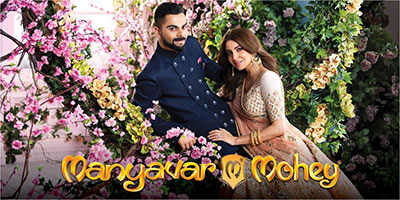
     

    Commenting on the association, Ravi Modi, MD of Vedant Fashions said: “At Manyavar, we are always in pursuit of excellence, and aim to set higher standards. So, it’s only fitting that we welcome to Manyavar the one man who has been setting new standards of excellence with every step he takes. We are delighted to have Ranveer Singh join the Manyavar family. He is an achiever, and every young Indian aspires to be like him. He is confident, proud, passionate and embodies the spirit of the modern Indian man. We are certain that, with his charm and ability to win over people, he will inspire his fans to celebrate the Indian in them more often. Manyavar looks forward to a beautiful, inspiring and exciting journey with Ranveer Singh.”


  • Manyavar unveils its GroomSquad ad film featuring Kartik Aaryan

    By A Correspondent


    https://www.facebook.com/Manyavar/videos/470695333498017/

    Manyavar has launched its first film featuring actor Kartik Aaryan. The film revolves around Manyavar’s new concept of coordinated dressing at weddings where close friends of the groom are dressed in similar attire.


    Said Avijit Dhar, AVP Marketing, Manyavar: “The concept is the hero in this film! Weddings are full of picture-perfect moments, and even more so if it’s a close friend’s wedding. The idea of the groom’s close friends coordinating their outfits is interesting because it helps people to know who all are really close to the groom. And of course, it makes for some really fun memories and some real selfie-worthy frames!”


    Added Shreyansh Baid, Creative Director, SIPL, the agency that worked on the film: “Yaar ki shaadi calls for yaari and masti – we married both with synchronized dressing and a song. The Groomsquad lead by Kartik Aryaan topped it off with their dulhe ke yaar attitude.”


  • Xaxis measures DOOH exposure among individuals for Manyavar

    By A Correspondent


    Xaxis announced the results of a recent campaign for retail brand Manyavar, that tracked individuals from digital outdoor exposure to retail store visits. Implemented on mobile and digital out of home (DOOH) advertising, the campaign was tracked attribution from individual OOH exposure against subsequent consumer behaviour.


    The campaign attribution study was designed to help Manyavar evaluate cross-media frequency management between DOOH and mobile. Xaxis used geo-fencing technology to measure DOOH exposure among individuals, then against mobile ads delivered to the same locations. Results revealed that store footfall increased by 198 per cent among groups exposed to both outdoor and mobile ads, meaning those who had been engaged by outdoor and mobile sequentially visited Manyavar stores three times as often as those who had not. In addition, users who had seen the OOH ads interacted more with the mobile ad compared to users who had not.


    Said Abhijeet Dhar, Marketing Gead, Manyavar: “The Xaxis and Kinetic team deserves high praise. Not only did their innovation and out-of-the-box thinking help us identify a new approach to measuring attribution, but the unique consumer insights we gained from this campaign were a game-changer. They truly understood our business goals and tailor-made a strategy that delivered results beyond our expectations.”


    Added Rachana Lokhande, Co-CEO, Kinetic India: “OOH has always been under the lens for not having measured results, but not anymore. Our client Manyavar was open to the idea of measuring the outcome of the campaign and analysing the audience using OOH + Mobile. Xaxis and Kinetic worked in collaboration to showcase the potential of driving incremental reach using mobile as an extension of OOH and then measuring audience behaviour. The data and insights are a clear indication of great synergies between both these medium.”