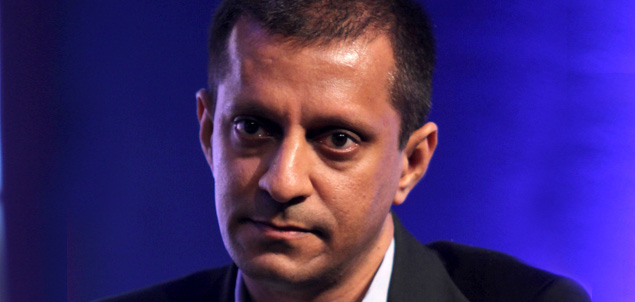
Tag: LV Krishnan

  • BARC issues statement on inadequate claims made by subscribers

    By A Correspondent


    It is fashionable for the world to throw stones at measurement agencies. It happened for years with LV Krishnan’s TAM, it happened with MRUC for IRS and now the knives are being chucked at Broadcast Audience Research Council India (BARC India). BARC has received feedback from its subscribers regarding certain malicious, baseless and inaccurate statements made in public regarding its operations and organisation structure. And hence the joint industry body has highlighted a few points that all and sundry (or the other way round) need to take note of.


    Here goes:

    “Being an industry body promoted by IBF, ISA and AAAI, BARC India Is neither owned by any broadcaster/advertiser/agency, nor controlled by any single company. Therefore, the question of undue influence of any single entity on BARC India’s operations does not arise. It has a strict governance structure as laid down in its Articles of Association, which ensures its arm’s length relationship with all stakeholders.


    IBF President, Punit Goenka said, “We take pride in saying that BARC India works in an extremely transparent and neutral environment. Its data adds immense value to industry, and we would encourage and support it to remain focused on the great work its team does, and not get detracted by false statements and unattributed innuendos. BARC India has established a measurement system at par with international standards, which should be a matter of pride for the industry.”


    BARC India’s systems and processes have been accepted by industry, and also lauded in global forums. The robustness and credibility of BARC India’s data is further testified by regular audit of its processes by reputed international firms like Ernst & Young and CESP. With a sample size of 135,000 individuals across the nation, BARC India operates the largest TV sample/panel in the world – much larger than the US TV sample of 90,000.


    Sunil Kataria, Chairman of the Indian Society of Advertisers added, “BARC India has provided industry with something it has been seeking – a robust and state-of-the-art measurement system that reports all India TV viewership with a high degree of fidelity. BARC India data helps advertisers reach and understand consumers even in the most remote and unexplored areas. It enables the Rs. 25000 crore advertising industry to take informed decisions since the data is truly representative of ground reality.”


    President of Advertising Agencies Association India (AAAI), and BARC India Chairman Nakul Chopra said, “I am dismayed to see these incorrect and baseless remarks that have been made with no facts to support them at all. That too against the sanctity of a body set up jointly by the industry in the best interest of all stakeholders. BARC India should in fact be applauded as a shining example of how an entire eco system has come together to create a world class measurement system that is one of its kind. It should be applauded as in these positive and progressive times it provides essential and reliable data that is powering many industries make better decisions towards economic growth.”


    Hmmm. Guess BARC should’ve also added a statement from the Bad Losers Society of India. Or the Nutcases Association of New Delhi.


  • Axis My India partners with TAM India to launch new consumer insight platform

    By A Correspondent


    Axis My India is partnering with TAM India to launch a one-stop consumer insights research platform, with one million+ respondents covering 670+ districts of India over a 12-month period that will answer the most preferred consumer brand(s) and most used consumed brand(s) across 40 product categories. It will also enable data users to micro-target segments of consumers geographically for effective localised marketing plan implementation, thus deriving higher ROI.


    Speaking on the occasion, Pradeep Gupta, Founder of Axis My India, said: “We have leveraged our inherent and historic strength of successfully executing electoral research across length and breadth of the country for building this new service. The extent to which culture, opinion, perception changes every 100 miles in our country has made me promise to myself to create a two way communication platform for marketers soon. Gradually, we endeavour to reach out to all the 250 million homes in India. Our past success in capturing the true voice of citizens about their preference and perceptions on governance parameters gives us great confidence in extending this expertise to provide similar insights to the brand owners in this country.”


    Commenting on Axis My India’s partnership with TAM, Gupta added, “Partnership with TAM is a significant milestone for us. TAM’s contribution towards the growth of Indian advertising andbroadcast industry since 1998 is well known and a documented fact not only in India but also globally. This partnership with TAM gives us access to advertising details of thousands of brands across media in India. These very brands are keen on making their presence felt in the minds & hearts of a diverse Indian market place.”


    Commenting on TAM India’s partnership with Axis My India, LV Krishnan, CEO, said, “It is equally exciting for us as data from Axis My India survey of onemillion+ respondents will be a single window for brand owners for addressing their quest to enable micro level marketing. This is making it a first of its kind research platform not only in India but across the globe. This will positively create a new set of expectations from Advertisers, Broadcasters & OTT players. Our in-house teams, S-Group & TAM Edge will work with Axis My India & Client teams closely to provide data insights for driving implementation of their marketing strategies at a granular level.”


    In November 2017, Axis My India is planning to come out with Phase I of the survey where the most preferred brand will be announced across 40 categories through its initiative of Trust Index.


  • LV Krishnan joins Zirca Board as an independent director

    By A Correspondent


    LV Krishnan

    Digital solutions firm Zirca has announced the appointment of TAM India CEO LV Krishnan as an Independent Board of Director while continuing his current responsibility with TAM India.


    LV, as he’s known in the fraternity, will work closely with the Zirca Board members, CEO Neena Dasgupta, Managing Director Karan Gupta and to support its aggressive plans.


    Said Ashok Kumar Gupta, Chairman, ZIRCA Digital Solutions: ”It is a matter of utmost pride for us to have LV Krishnan join Zirca’s independent director. In the past few years, we have become a rapidly growing organisation and are continually evaluating opportunities to bring in fresh thinking and new perspectives. We have long admired Mr Krishnan’s ability to disrupt the Indian media ecosystem with his passion and his visionary ideas. As Zirca’s board member, his leadership and strategic perspective will not only empower every individual to achieve more, but also will help chart the future of our company.”


    Added Krishnan: ”In the age of IOT, VR and AI, the importance of CI (Consumer Intelligence) is a need of the hour. My decision of joining the Zirca Board came from the sheer inspiration of amalgamating knowledge of years of video content consumption dissection and data powered with cutting-edge technology.”


    Earlier this month, Zirca launched ContentdB, billed as Asia’s first native advertising management platform. The platform is designed to help manage content campaigns across multiple discovery, social, search networks and publishers.


    Said Dasgupta: “Most marketers are fairly successful at putting out engaging content; the fact that they are not able to optimise across the different platforms reduces the value they can get from their campaigns. ContentdB provides them with a single window platform from which they can monitor their campaigns on a comprehensive dashboard. Marketers can, thus, get a unified view of multiple campaigns and platforms that will help them make an informed decision about the efficiency of their campaigns, thus saving them time, effort and money while managing their campaigns.”


    Said Karan Kumar Gupta at the launch: “ContentdB is uniquely poised to focus on right amplification and optimization to bring campaign efficiency, so that the marketer can evaluate how effective the brand’s content is, in building brand awareness. The platform evaluates how well the content resonates with the brand’s end consumer from one publisher to another, setting a new trend.”


  • Z-plus security for BARC boss

    By A Conespondent


    Measurement is a thankless job. TAM CEO LV Krishnan ensured he built his endurance to the vagaries of the business by following a punishing fitness regiment. Last heard he could do 56 push-ups at one go. Now we have heard of some people having 56-inch chests, these many crunches is a bit much.


    But in the case of the BARC, things are different. The industry-constituted body has been acting tough with broadcasters. Homes are being monitored to check if broadcasters are influencing them to only watch certain channels. Erring channels are also being warned to behave or else.


    Now, media in this country is controlled by all sorts of people. By gentlemen and ladies, and by the not-so-gentle people too. Reportedly at some of the meetings, the BARC CEO has been threatened of crazy consequences.


    And now with a minister also questioning the BARC measurement system regime, it was felt that a Z-plus security may be appropriate.


    Please follow this link for more

  • So what should one make of BARC’s TAM meter jv?


    By A Correspondent


    So you have already read about the BARC India-TAM jv being solemnised. Now let’s try and understand what it means for all stakeholders, and more importantly for BARC and TAM.


    Tears for TAM?

    Of course, it’s been in existence for over 15 years. Has done yeoman service to the industry. The adspends on television would’ve grown any which way, but the presence of a robust measuring system ensured the more discerning and price-sensitive advertisings looked at television (over print).


    What happens to LV Krishnan?

    Don’t know yet, But one has to acknowledge the great work put in. Take a bow, LV!


    So, effective March 1, BARC will be a monopoly?

    Ah, well, yes. TAM will cease to be in existence for television measurement.


    Monopolies are bad news. How does this new one help television?

    Yes, a monopolistic situation isn’t good news, but don’t underestimate Nielsen and Sir Martin Sorrell’s WPP. They could well enter the scene again – directly or indirectly. In the short run, it will help stabilise BARC.


    But TAM meters were bad na? Will the 12,000 meters really add up?

    Hmmm, in all probability a fair number of them won’t be mainstreamed into the BARC system eventually. They may be deployed on rural or not-so-significant areas.


    So are we thinking of what you are thinking?

    We are all thinking, but we don’t have an evil, cynical mind!

    No, that basically the gobbling up happened because they wanted to kill competition!

    The weather in Mumbai is so horrible these days. I really wish I was in Delhi


    Okay, okay, we got the answer. But, pssst, just between you and me only, and not for the entire world, how did it help doing that?

    Because ever since BARC started releasing data from April 29 last year (2015), some broadcasters – large networks and minor ones – have been fussing about the data. And always comparing the BARC data with that of TAM. So, that was a pain in the you-know-where


    So you have a created an unfair monopoly?

    Why do you such words. Keynes ka distant cousin, kya?


    What happens to TAM’s digital-television measurement system which it announced with IMRB last year?

    Most probably it will be killed too. BARC is coming up with something similar. Plus TAM can’t be doing TV, so finito for the TV measurement part of the service possibly!


    And what the other stuff… RAM?

    Other businesses continue. The press release clearly says that it will continue to serve AdEx services of TV, Print & Radio AdEx, Daily & Weekly Sales Index Reports, Bollywood & Music Monitoring Dashboards; Audience Measurement in Radio (RAM); Sports Sponsorship ROI Measurement (TAM Sports) and PR Measurement data & Audit services (Eikona) to its valuable clients.


    But?

    No buts. But, yes, the main horsepower would come from TV


    So why did Kantar and Nielsen do it?

    Because they had lost substantial business any way. While broadcasters have the propensity to pay for two currencies, their associations would frown upon them continuing to back a company it had opted against.


    What about GroupM? Isn’t it owned by WPP, the people who half-own TAM via Kantar?

    Sir Martin Sorrell is a smart businessman. And his people here are wise. They know what’s good for the industry


    And where the wind is blowing?

    Why don’t you change from kurtas to shirts?


    Any more questions we should be asking?

    Yes, so when will it start getting warmer in Delhi


  • It’s final: TAM India to exit TV viewership from Feb 29. BARC India & TAM complete jv


    By A Correspondent


    The much-awaited joint venture between BARC and TAM India has been announced with with the formation of the meter management company. This new entity which will be called Meterology Data Pvt Ltd. (MDL) will commence its operations in the next couple of weeks as TAM India exits TV viewership measurement business effective February 29, 2016. As a part of the new system, all TAM India meters will be re-deployed in panel homes selected by BARC India’s sample design. This JV will help BARC India in growing its sample size. It may be recalled that MxMIndia was the first media entity to report on the BARC TAM deal.


    In MDL, BARC India will have full management control with a 51% stake, while TAM India – which includes Nielsen and Kantar – will have a 49% stake.


    Up to this point, BARC and TAM India, both have been generating and reporting TV viewership data individually to the Industry. Now, with the completion of this JV, BARC India will be the single provider of TV Viewership data.


    MDL’s role will be to run and manage the meter operations and supplying raw data to BARC India. TV Viewership data will be computed and disseminated through BMW (BARC India Media Workstation). MDL will manage the panel households and will also be responsible for future TV panel expansions.


    The Spot Monitoring and Channel Monitoring data will be exclusively sold by BARC India to Broadcasters, Agencies, Advertisers and others.


    Meanwhile, TAM India will continue providing to the market the following services: AdEx services of TV, Print & Radio AdEx, Daily & Weekly Sales Index Reports, Bollywood & Music Monitoring Dashboards; Audience Measurement in Radio (RAM); Sports Sponsorship ROI Measurement (TAM Sports) and PR Measurement data & Audit services (Eikona) to its valuable clients.


    “The Industry was eagerly waiting for this merger to be completed from the time we announced it in August last year. We are happy to state that the Joint Venture Company is complete and all set to kick-off operations,” said BARC India CEO Partho Dasgupta.


    “We will work closely with BARC to ensure a good outcome for the industry and our joint clients. We have worked productively with BARC to get here and under the circumstances, have agreed a good way forward for everyone concerned” added Kantar CEO Eric Salama.


    “We are happy to collaborate with BARC India. The coming together of BARC India and TAM India has only strengthened the Indian broadcast industry, as they will now be getting viewership trends from a larger panel size,” informed Nielsen MD Prashant Singh.


    TAM Media Research CEO LV Krishnan said “I am very happy to see that the JV has finally taken shape. What is even more heartening is that TAM India’s current 12,000 meters, which was built and constructed tirelessly over the last fifteen years will get combined to give BARC India a larger and robust TV panel sample base for the Industry. We will do our best in providing our expertise to MDL. Meanwhile, TAM India will continue focusing its efforts towards value adding the Industry through constant enhancements of its existing businesses.”


  • Panel-based measurement is better: LV Krishnan


    Last week, the Kantar Media-Nielsen jv TAM Media and Kantar-owned IMRB announced the TeleWeb ratings for an integrated study of viewership on television screens and the internet – desktop/laptops as well as on devices. We caught up TAM CEO LV Krishnan to understand the finer details of the offering…


    You had spoken about the multiscreen measurement earlier. But do you think it could’ve come in a year or two earlier?

    Well, it required a lot of work to put it together because one is a non-linear medium and the is a linear one. To bring together both into the same database and be able to tell an advertiser that using a combined medium maybe better than using one medium etc requires work. We did a lot of groundwork. If only publishing numbers in terms of saying which sites were getting hits and which sites were getting what kind of profile of audiences. it could’ve been easy. It could’ve happened much before than now. Probably about 4-5 months back. But to integrate both, this is the earliest we could’ve got to.


    Given that there is an MoU with BARC on meters the merger move is work in progress, what happens after the merger happens?

    We’ll see it at that time.


    BARC is also doing something similar, it is also looking at multiple screen measurement.

    From our perspective we are looking at the present moment of time. We’ve done almost a year-and-a-half of work into this exercise. Obviously, since we are still running the television panel, the idea was to launch it and help the industry use it. What will happen a couple of months down the road is something we haven’t thought about at all. From our perspective, the work on TAM BARC integration is going well at a high speed level. That’ll continue.


    Since IMRB’s digital measurement exercise has been on for some five years now, couldn’t this have happened earlier?

    Two important things. Before we launched something like the integrated data we also needed to ensure the fact that the two panels are stable. TV was completely stable. The online one was a new one launched around 2011-2012. So it took time for that panel to settle down and get used on a regular basis because at that time if you look at it the advertising online was hardly around 2-3% of the advertising that was going over there. So, even if we had launched at that particular moment of time, the integrated quotient, the usage could’ve been very low. The demands coming in from the advertisers that we need do it the integrated way. Only in the last one year, in the beginning of 2014, when we were interacting with advertisers that there was a huge push going towards digital. Probably also because of the fact that most of the advertisers were MNCs were also being pushed by the global directors saying that let’s get starting investing on digital because globally digital was picking up strongly.


    What we previewed at the press conference last week was about English channels and the Hindi news channels. But I’m sure the difference is significant with English GECs.

    English GECs are basically international sites. So, we need to see what you want to track within that and how much of it is with the Indian audience largely. So, probably with time we’ll look at English entertainment also as a next step.


    Do you see a lot of viewing happening online in the case of all GECs?

    There is dailymotion.com, Hotstar, Sonyliv, Ditto, all of them are coming in the Top 50 sites. Platforms like Hotstar are among the Top 5.


    Now a channel like Colors has ‘Comedy Nights With Kapil’ which is among the most watched as per your numbers, but a channel like Colors which targets urban audiences is not in top channels list in tele-web, vis-à-vis Zee which is on the list?

    That’s because of Ditto TV. Ditto is the push for Zee. It has certainly got some audience in the metro markets. Colors is yet to have a platform that could be visible and for which audiences are walking in.


    So, will you say OTT is playing a big role?

    Yeah, certainly.


    What is the kind of response that you’ve seen from the advertising community, from the advertising agencies and media agencies?

    We don’t know yet the response because we just launched today but we’ve been working with the advertisers on this for almost a year now. We connected with them and we realised what they are looking for. So, therefore from that perspective this is exactly matching up to what their expectation was from a feasibility perspective of trying to alleviate a campaign on a multimedia level.


    There is no joint industry body to contend with the way you work. There is no industry association as such…

    No, there is no industry association involved in this. We are on our own and like any other research we are marketing it on our own for users to take their independent decisions whether they want to buy it or not or use it or not.


    There have been views on the entire element of panels. In the case of television, the cost of set-top boxes ensured that the sample size of panel homes couldn’t grow. But no such thing exists for the internet, so why only 6-8000 sample size? Do you think it can be browser-driven so that anyone can download and install?

    There are two different kinds of measurements that happen across all media. One is measurement based on universe and second one is measurement based on panels and specific sub-groups of profiles. The problem comes in when the universe study is when you don’t know who the individual is, who is responding to a particular viewing. So, most of the dynamics related to the universe measurement is already available with the publishers themselves like a Google or a Facebook knows about their customers largely and to that extent Facebook I could say knows it even better because age and gender is something they capture apart from the geographic location which is universally available to them. So, therefore, from a universe perspective, limitation is a fact that while you’ve a larger base you don’t know who that base is, who that individual is in terms of profile. So when you are targeting it, you are targeting more based on the behaviour pattern of the respondent rather than on the basis of demographics. In a panel0based exercise you are able to measure demographics as well as in terms of behaviour patterns together. So you know individually what the profile of the guy is, what profile of home he comes from, what are the numbers in the home, what are the platforms they have in the home that can be access point or a competitive perspective, a competitive touchpoint. So, all this kind of information is available on a panel-based exercise. Therefore, we are able to integrate between two mediums very effectively in this kind of a panel-based exercise. In a universe level it’ll be very difficult to integrate two measurement systems. So, largely speaking, for an understanding of a consumer behaviour and trying to monitor it on the basis of his behaviour, a panel makes sense actually. But in the longer run, we could actually do it the way it happens in television where the set top box data and the panel data work together. To therefore use a panel data is to optimize the set top box data. Similarly here too the panel-based data can be worked on to the universe data. You could mine better data at smaller discreet levels. These things will happen in future.


    How much of the TAM sample are you looking here?

    Six metros put together will be about 10,000 individuals actually, which is close to 2500 paneled homes.


    On a lighter note, had the news on NDTV scoring so high on TeleWeb come in earlier, things would’ve been much nicer for TAM?

    No, we take it as it comes. For us the most important thing is to indicate what is happening in the behaviour front. Business decisions are taken by users.


  • TAM fortifies its mobile App with Version 2.0

    By A Correspondent


    Highlights of TAM Mobile App Version 2.0 are:


    • GRP Numbers: The new version will have TV Viewership GRP data sets for all markets and all genres along with existing data points (GVT, Reach & Relative Shares)
    • TVR Data: Along with TVTs for the Programs, TAM India Mobile App 2.0 will provide TVR for Top Unique Programmes
    • Addition of Markets: As compared to the earlier version, TAM India Mobile App 2.0 will have data sets for Assam & Orissa along with existing 7 Markets (Maharashtra, Andhra Pradesh, Karnataka, Kerala, Tamil Nadu, West Bengal, PHCHP)
    • Modified TG: Every Genre and market will have a TG as per the requirements of each section
    • Modified Graphical Representation: TAM India Mobile App 2.0 will have Graphs representing weekly data instead of the earlier format of 4 weeks average.
    • New Pay Version: TAM India Mobile App 2.0 will be accessible even to the non-TAM subscribers at a minimal subscription cost.

    After a successful launch of its TV viewership mobile app last year, TAM Media Research has released an upgraded Version 2.0 of the same application. This new version is fortified with added data sets and customized user friendly features that will make the mobile consumption of TAM’s TV viewership data even more easier and enjoyable, notes a communiqué. It is available for Android and Apple devices.


    Some of the features this version boasts of are: TV Viewership data in GRPs, TVRs for unique TV programmes and data for new two markets – Assam & Orissa.


    Talking about the upgraded app, LV Krishnan, CEO, TAM Media Research, said, “We set a trend last year when we provided this mobile App facility to Industry users. We have received tremendous response during the last one year. Version 2.0 is a fortified version that will allow not only existing but even new users to enjoy the benefits. The purpose behind this Mobile App, very simply, is to enable users to access viewership information anytime, anywhere on the go so that they can take informed business decisions at the spur of the moment.”


  • As industry gets set for a new measurement regime, TAM gears for new innings!


    The new BARC television viewership measurement service is scheduled to kick off tomorrow (Wednesday, April 29). While there have been multiple measurement providers in the past, for over a decade, TAM, a joint venture of the WPP-owned Kantar Media and Nielsen has been in existence.


    There has been some resentment against TAM over the years. Not all the reasons though were well-founded. The sample size was one, but stakeholders were unwilling to pay more for increasing the sample size then. Part of the problem these imported and hence attracted a customs duty. The other peeve was the integrity of data. And another was the frequency in which data was disseminated, a cause of great concern to the news channels.


    However, what can’t be denied is the contribution of TAM and its team to the broadcast ecosystem over the years. L V Krishnan, CEO of TAM for the last 15 years, took time off to chat with Pradyuman Maheshwari about life after BARC data gets released… which is tomorrow.


    So what happens to TAM after BARC starts releasing its data?

    Whether BARC exists or not doesn’t really impact TAM. There are two databases allowing users to look at information and analyis for decision-making. It’s a measure of what one wants depending on business needs. I believe the market is large enough for a BARC and TAM to co-exist as long as we provide service or information that covers the essential needs of a consumer…


    But most of your key, high paying clients like Zee and Star have opted out and you obviously need monies to run a service like TV viewership measurement.

    Clients can move out of the business and come back again later if the service is crafted back to what their requirements are. There’s no permanency in the evolving, constantly changing marketplace. When you become the only provider of data, bringing in change may be a little slower because there’s a large constituency of users you need to take into consideration before you make changes on a continuous basis. Yet, I think the productiveness of time during the digitisation phase as well as during the-ever changing environmental space of homes moving from analogue to digital in a non-DAS market reflects the fact that as the market has changed, the system has evolved by itself. If a customer feels that there’s another system that provides a better value, they’re all free to go and subscribe to that system. That doesn’t mean that TAM has to close its offices and cannot deliver information that it’s designed to deliver. What TAM needs to do is to re-craft its business because as of today there are different scales of thought that come into play.


    One, the mass volume game where I measure every corner of the country and try to deliver that information back to the user’s homes which is what BARC’s mission is…. cover urban, rural, J&K to Kerala, North East to Gujarat. That’s not TAM’s endeavour, we don’t have those kind of funds to do that kind of an enlarged exercise. But, we also realise what’s happening in the environment today. From 2001-11, the number of towns with a one million population has almost doubled from 35 to 55 towns. And if you do the projection for 2015, you’re talking about 62-plus towns in the 1 million market. We believe that you don’t need to reach out to the population, the population is reaching out to markets and areas where there’s growth happening and sustained possibility exists and at the same time where they believe that fundamentally the growth prospects for them and family are much more stronger. Migration is one of the biggest elements here.


    So what you’re saying is that TAM will continue as an urban index?

    We believe that urbanisation is going to continue to progress which is what we see in the overall data. When you look at the census data of 2011, it talks about a 65-35% of urban to rural where rural has come down from 2001 from 72 to 65%. Either the population is migrating to big urban markets or more and more markets are becoming urban in nature. In that kind of a situation, given the diversity of the population existing in the 1 million plus markets, does that create an opportunity for segmenting of audiences & bringing in understanding of the behavior of audiences toward media?


    Will your ownership pattern (of being a Kantar-Nielsen 50:50 jv) change when you adopt this new approach?

    Yes, very much, the ownership continues the way it is actually. The service may undergo a sea change. The urban places will be the focus, not the small towns.


    So, will LC1 will go off your serice?

    Possibly. LC1 may not be in the radar, as also rural. It’ll be a permanent urban market. With the focus on the 1 million plus markets which is where we feel segmentation and targeting are becoming more and more easier


    Will GroupM subscribe to this urban-centric service… given that despite being a sibling (owned by WPP),  it unsubscribed to your service?

    We’ve always looked at GroupM as a customer as much as a Star and Zee. From our perspective if they want to try out a new service, they’re welcome to do so. At the same time, we believe that there are opportunities in the market where we can craft the service to the needs of a new customer and we continuously have a dialogue with the old customers too and as and when they feel the new crafted service is important for the old customers, we’ll make it useful for them too.


    When are you announcing the new service?

    There need not be an announcement. It’s a gradual evolution. It’s not like one day we announce this and next day stop it. The way we graduated from analog to digital… it’s a continuous process of evolution.


    You’re not going to be switching off…

    There’s no switching off.. we’re in the data providing area and there are enough customers in the market.


    We’ve had heard rumors of TAM selling its service to BARC… some talks initiated by Sir Martin Sorrell…

    I’m not aware of it. If that’s so, I’ll go with what the industry wants. If they seek a combination of services provided by TAM with an existing talent pool to assist  BARC, I don’t see any reason why we shouldn’t.


    Would you recommend that as…

    I don’t see a wall between us and BARC. There’s always a bridge that can be constructed between two service providers if it’s in the benefit of the industry. Ultimately the customer needs to decide.


    It’s not just the benefit of the industry, it’s the ego too.

    We don’t have any egos that rule. We think it’s the customer and his needs that rules.


    As you see the industry rallying around BARC and as you look back on your 15 years, do you think you should’ve also got the same amount of industry attention and monies?

    TAM is an industry-supported service.


    But it was a joint industry body that endorsed it, right?

    I mean price or spend supported. When it was created, it was a formulated idea. There was  no seed funding for the formation of TAM. It was primarily from subscription itself. When ownership doesn’t exist and it exists with two multinational research firms, then obviously one expects the fact that they will fund and push the services ahead. The difference between the TAM and the BARC system is that in the latter the industry has put money behind it to fund it, and that’s why they are standing behind it. It ultimately comes down to stakeholders. If they are two giant international research companies, they’d want to put the money behind it, make it run and they’ve done that. From where we were with 750 meter and five cities in 1999-00 to a 12,000 meter running the urban panel, it’s a huge milestone that’s being covered. If the subscription money was higher, we could’ve increased it to even higher levels, but frankly speaking there are no regrets to that now. At the end of the day, the stakeholders of BARC believe that they’ll be able to take it to a much more higher level. No regrets at all.


    Do you think that this wouldn’t have happened had the various stakeholders been more actively involved?

    There are two parts to involvement. One is from a technical perspective and the other is a price or a value perspective. When you involve yourself in a technical perspective, some recommendations help in making the measurement sharper. When it comes to price or value part of it, it becomes an investment yield question, in respect to sample size. In the case of TAM, the joint industry body took a call in late 1999 saying they won’t involve themselves in the price or value part of it at all. They only wanted to be the advisory technical perspective. There’s nothing TAM can do about it. It had to then depend on the two parent companies to see how much funding can be possible to keep expanding on a continuous basis. There has been all kind of involvement from a technical perspective into even as late as in 2012 when digitisation was around the corner when the AAAI, ISA and IBF appointed a three-member technical committee to work with TAM to work from analogue to digital. From a financial perspective, could there have been better involvement from them? I don’t think we could’ve rejected it if they wanted to come into it. At the same time, they took a call they didn’t want it. So, we couldn’t push them…


    Do you think they should’ve taken you as one of the components of BARC’s new measurement system.

    We welcomed BARC right from the time they announced it and we also participated in the RFI and then RFP. We’ve no biases on not wanting to be a part of BARC or any industry movement.


    There was no response to RFI or RFPs and we expected the fact that there’ll be a discussion on some of the proposals we put forward.


    Perhaps there was an issue that the then government had about the ownership of TAM, given that GroupM is owned by one of your co-owners?

    I don’t know where the government got involved because it had no role to play on an industry issue. If that’s so then today the way BARC stands, they shouldn’t have allowed that till the information was an all-India service.


    Do you think the industry should’ve continued with TAM and let the BARC system settle in?

    Well, some of the small and medium level users of data are not taking calls at this time. They believe that both systems have their merits or demerits and they want to look at it from their business perspective at what’s important and what’s not. Many of them are taking a call saying there is a new measurement system coming up which will provide the same measurement that TAM has but will have a larger sample and may have more number of markets to cover up in future.


    What could you’ve recommended?

    3 to 6 months is a good time frame.


    What about the dialogue with AAAI and IBF?

    I was never given an opportunity. I was surprised more with the letters even before I could ask for a meeting with the industry body.


    Moving on to one of the fears we’ve expressed in MxM, we’ve seen a joint industry body like MRUC which is populated by key newspapers and publications having a problem like IRS. Here you have an industry populated body and when the results came out the members were up in arms. Do you think that’s a fear for the numbers that are going to come up in BARC? You yourself in a sense faced it. Very recently after LC1 and digitization there were some very dramatic shifts of data. Given that and given the IRS example, do you think there’s a reason for fear?

    One needs to reflect back on the industry and where it stands. Media is a very peculiar category which isn’t an industry but actually a power centre. It’s close what a government or judiciary is. When you look at it in from that perspective, the key factor governing these sectors is power. If power is the centre, nothing else other than remaining at the top or growing continuously matters. And sometimes you tend to know what the ground reality looks like, but at the same time you don’t have anybody to tell you what that ground reality is. It’s in negativism, demoralizes people, runs into quite a few other conundrums that you don’t want to think about at that point of time. From that perspective, measurement is a harsh reality. Whether it’s for the government and the government doesn’t like it, whether it’s for a judiciary who at least gives it a thought and sees how it can overcome that with some way or the other and for media, definitely it’s not something they’d like to see again and again. The only reason why media needs measurement is fundamentally because 50% of the money in print or 75% of the money in television or 100% of the money in radio all runs through advertising. Or else, I don’t think measurement will exist at all in a public, common platform.


    Given the experience that you’ve had in the recent past, reactions to LC1 etc, is there some kind of piece of advice that you would like to give to the BARC folks, as to how they should possibly tackle the media/

    Frankly the fact that it’s a service that is funded by industry bodies should take care of things….


    But in the case IRS that didn’t happen?

    But I don’t think over there, the funding happen with everybody.  The stakeholders were only the publishers.


    Did it upset you at all that TAM has over the years become the favorite whipping boy of everybody, whether it is members of Parliament, industry folks etc. And the whole degradation of content and television, the sensationalism of news television, everything is blamed on TRPs?  

    No, it doesn’t bother me because it was expected, because you are the only one who are providing that particular data. What bothered me was the politicization of that particular exercise…


    Politicization by the politician or by the people in the industry?

    I could say anyone who is doing it.


    Who was a tougher evil, industry folks or the politician?

    The politicisation couldn’t have happened just because of the fact that the government was interested in the measurement exercise…


    So the industry folks…?

    Now one can’t easily draw a line, because at the end of the day some of the broadcasters, owners are also politicians and some of the politicians have also become broadcasters, specifically, if you look at the regional level. So, it’s a very difficult to say where the politicization happened.


    What are your sentiments like as the transition to the new service happens? TAM and you were after all a hugely influential factor in broadcasting over the last 15 years!

    I need to set the emotional aspect of this business aside and look at it very rationally. I can get carried away with emotions of the past but what needs to be look at is the present and the future.


    Well, the fact is that it’s about emotions. I have seen you over the last few years and your contribution to the ecosystem has been tremendous but and you have been the the lone and the sole voice of the rating business… in fact things couldn’t have progressed so far without you!?

    I’ve been lucky to be in this particular phase, of how the industry has taken shape, and I’m thankful to God for giving me a team that actually saw the same objective as me in driving the industry through a measurement exercise. The team has done a herculean task in the last fifteen years and we have worked very well with the industry for whatever misses that we might have had with them or missiles they might have fired at us, that’s part and parcel of the game. On May 1, I’ll still be in business and there is never an end-of-the-road for anything. There will be a new kind of a craft that we will create…


    Any personal high, you would like to look at? Would like to do go on a holiday now?

    There was a high point whenever we came out from a meeting, having heard the client, and we offering our perspectives with the client accepting and implementing it and seeing results getting delivered. Beyond that, I don’t think there is any other major high point. For us it’s always been the fact that there is a customer at the other end, we’ve got to listen to him/her and resolving issues. That’s what finally mattered and matters.


     

  • Jaldi 5 with L V Krishnan: Core viewers of genres is up

    By Ananya Saha


    Digitization is having multiple ramifications for all stakeholders: MSOs, LCOs, broadcasters and advertisers. On the sidelines of the ‘Digitization Begins’ conference convened by afaqs.com, MxMIndia spoke to LV Krishnan, CEO, TAM India to get upclose to the real picture after mandatory digitization was implemented in the three metros.


    01. What can broadcasters learn post DAS, given that the two metros (Delhi and Mumbai) have shown differential changes towards genre preference?

    There are two aspects to it. One, distribution is bringing order in the chaos post-DAS, where channels are getting in two metros. In a way, order that you now see will be much more systemised order and consist of core audience wanting to watch that genre than the trespass audience. This will go the long way in Phase II. The learning of Phase I is good enough to say what the next step should be. Step one is marketing: tell the consumers what the channel has and come and watch it. The second step would be much stronger content of engagement.


    02. So, do we have any surprises post-DAS?

    Overall, the core viewers of the genres have gone up. However, the overall reach of mass channels has gone down. Engagement levels have marginally increased with the genre and strong properties that are marketed are getting the audience. The core audience is still sticking to the preferred genre; it is the trespassing audience that are no longer accessing it. The broadcasters can create strong properties and communicate those properties to the audience so that the audience becomes loyal.


    03. How do you see the audience trend of Delhi and Mumbai replicating in other cities?

    Rollout of digitization will exhibit same phenomena in other markets as well. But the difference will be those markets already have strong penetration of digitization, eg MP and Gujarat. In metro markets, we see 50 percent penetration so such cities will see much smoother rollout of digitization than a Delhi or Mumbai.


    04. Many channels are claiming a spike in viewership. Have things shaken up much with digitization?

    These are the initial stages of digitization. The channels have worked hard to get their communication across to the audiences and have created better content and engagement.


    05. What is in it for the advertiser in the post-DAS scenario?

    They are getting targeted with audiences getting skewed to genres. Therefore, they can target their advertising more efficiently unlike the pre-DAS scenario. Secondly, geography is becoming clearer, especially for niche genre. Communication will be much easier in the digital era.


  • What next, now that digitization has begun?

    By Ananya Saha


    L V Krishnan

    The past two months, after the implementation Phase I of digitization, have been quite an incredible journey. From doubts about whether we would achieve 100 percent digitization at all to achieving it in Mumbai and Delhi. Of course the hiccups still remain. Probably Phase II will see less of these hiccups and more of successful implementation. This and many more issues about digitization were discussed at afaqs event in the capital titled ‘Digitization Begins’. The panellists not only discussed the ramifications of post-DAS scenario but also what the stakeholders should do to take advantage of digitization.


    Numbers game

    According to LV Krishnan, CEO, TAM India, the digitization onus is on marketing and programming. At the summit, ‘Digitization Begins’, culling facts from the data (based on eight weeks pre vs post DAS CS4+ in Delhi and Mumbai), Mr Krishnan said, “There has been 2.5 times growth in the availability of channels in the initial months but it does not match the viewing with 30 percent increase in incremental fragmentation.” He also noted how North and West markets in India are maturing faster than the Southern market when it comes to digitization. “Today channel-surfing behaviour is prolonged in digital homes, while direct landing is leading to increased reach for English entertainment, English movies, and the kids genre.” According to him, inter-genre surfing may also come down.


    Other findings that Mr Krishnan shared included: with sports channels becoming omnipresent, other sports will also get benchmarked; viewing is getting spread from primetime to other day parts, eg: youth music to the early morning band of 7-9am. However, he cautioned, “The biggest disadvantage is that DAS will hit single channels since the top seven channels garner almost 80 percent of audience in DAS-enabled Delhi and Mumbai.”


    Mr Krishnan, however, viewed digitization as a positive change and said, “The clear action step for the broadcaster to be present on distribution chain should choose between two cluster homes: home with kids, and home without kids. For the advertiser, they need to focus on cost of targeting, increase in co-creation of brands. Advertising will see a boost via paid media, and additional media budgets will get shifted from localized ground promotions to unique television content channels.”


    The next 6-8 months will also see a spike in free-to-air channels, according to Mr Krishnan, to cater to the bottom-end of the market.


    Chasing the momentum

    Roop Sharma

    Digitization was promised to bring in not only the set-top boxes (STBs) into the house of the consumer, but also digital services such as digital billing, services such as video-on-demand, broadband etc. Even though the seeding of STBs has been achieved, it is still a long way before we achieve digitization in the true sense.


    Vivek Takalkar, VP, Marketing and Business Development, MediaPro and Roop Sharma, President, Cable Operators Federation of India believe that post seeding of boxes, digitization has not achieved desired results while Ashok Mansukhani, Director, Hinduja Venture and President MSO Alliance asserted that the all the stakeholders of the digitization process should work together towards establish contact with the consumer.


    Sugato Banerji

    Sugato Banerji, COO, What’s-on-India, noted, “Content discovery will become important for operator to push channels. As digitization progresses, EPG in various languages will also be required.” While broadcasters and content creators might struggle with monetisation, the panelists were of the view that digitization will result in demand for more content.


    Giving the advertisers’ perspective, Anita Nayyar, CEO India and South Asia, Havas Media, initiated a discussion with Amit Tiwari, Country Head, Media and Digital, Philips India and Sunil Raina, Business Head, Lava International. Mr Raina emphasized content co-creation, while Mr Tiwari said, “Channels have to become brands. They have to think from a marketers’ perspective. Even though we have not changed our media plans, depending on digitization numbers, but I am sure that as digitization grows and sub-category of genres emerges, it will impact us directly. We will look at focused advertising.”


    Anita Nayyar

    Ms Nayyar noted, “When it comes to advertising, the brands prefer to go with what has been working in the past and their gut feeling. When the digitization process began close to Diwali, we did not have the numbers. But even then the brands advertised because it was the season and went with the gut feeling.”


    Even as marketers have not clearly changed their media strategy based on initial numbers, it is clear that as content becomes targeted, media preferences could change dramatically.


    Neeraj Sanan

    Neeraj Sanan, CMO and Head, Distribution, MCCS India said, “Good content will determine market share and role of distribution will reduce. Even as time spent on television has increased by 5 percent, the choice has also increased from 80 channels to 250 channels.”


    Even as business models will undergo huge changes, the panel believed that the future implications have not had any affect on their current strategies. And while DAS is believed to be a game-changer, the veterans think that more then the distribution equilibrium, it is the convergence that will have an effect on the consumption of content. As Mr Raina said, “It is important for us to integrate online and offline media to create impact. Plans are not going to change because of digitization but because of convergence. I would like to reach my consumer through the medium they prefer: it can be a television or a tablet. I have to be present where they are.”


    With competition rising, Mr Sanan noted, “There are going to be some wild implications of digitization including, local events can become content through MSOs; a good EPG search engine could take off; concept of broadcast UGC can happen; with triple play, MSOs can think of ad options with a clear-to-call action.” He also noted how MSOs will start competing with national channels for content rights.


    Though there is still a long way to go, digitization is throwing up interesting trends. How many of these will get converted, only time can tell.


  • MediaAsides: In which BARC is caught copying and pasting + LV ke endurance ka raaz!

    There are many reasons why I love and use Google. One of them is my ability to check for plagiarism in milliseconds. When I read a line or phrase that gives me a sense of déjà vu, I copy that particular line and search for it.


    Yesterday, I read all the comments on BARC, as anyone interested in media must have done. I stopped when I came to this line:

    “not exceeding 20 A4 pages in single spaced Verdana 10 point.”


    That’s extraordinarily specific. Number of pages. Size of paper. Spacing. Font. Font size.


    And where had I seen this before?


    So I copied and pasted not exceeding 20 A4 pages in single spaced Verdana 10 point into the Google searcgh box and, Bingo!


    Here are a few lines from the BARC press release: link


    “It is clear that the legacy architecture of the system that has evolved incrementally is now ready for seminal change. However, what is not clear are the contours of the new system, which BARC aims to define.


    The RFI seeks ideas, templates, experiences that will help BARC to blueprint the New Television Audience Measurement System. The annexure below lists a few questions that respondents may consider addressing as a part of their response to this RFI.


    As per RFI, respondents will be expected to provide their inputs in the form of a report not exceeding 20 A4 pages in single spaced Verdana 10 point. Respondents should be willing to do a presentation not exceeding 1 hour at a BARC specified location in Mumbai orNew Delhi.”


    And here are a few from an IRS release: link

    “It is clear that legacy architecture of the study that has evolved in stages, is now ready for seminal change. It is less clear, however, what the contours of the new IRS will be. Therefore, the RFI seeks ideas, templates and experiences that will help RSCI to prepare a blueprint for the new IRS. Respondents will be expected to provide their inputs in the form of a report not exceeding 20 A4 pages in single-spaced Verdana 10 point font size. Respondents will also be expected to be willing to do a presentation not exceeding one hour at RSCI’s secretariat in Mumbai.”


    Now you know why I love Google.


    (Contributed by Anant Rangaswami)


    LV ke endurance ka raaz!


    Speaking of BARC and measurement and Google chacha, reminds us of this unrelated bit we must tell you. Only a cop on a busy Mumbai street can boast of greater endurance. Being at the helm of TAM forever and ever is not a joke as we all know, but what’s it that keeps the affable CEO of TAM Media. A good workout and a run, we are told.


    So at a competition in this mid-Mumbai club, LV, as LV Krishnan is referred to by the world, won the push-ups contest with a record 56 uthak-baithaks. Yes, you read it right: fix and six fifty six push-ups.


    When we asked him if it was true, he just smiled. And then we asked with another nugget we had heard: 36 bottles of beer in one sitting. Yes, but this time with more than a smile. And, not pint-sized ones… ’coz these were in an era when they would only make them laaaarge.


    PS: Talking of LV’s 56, have you tried how many you can do at a go? Yours truly tried: couldn’t go beyond 14 and was limping for a week thereafter. LOL.


    (Contributed by A N Chorrea)


    As the title suggests, MediaAsides will carry asides, random notings and assorted two-bits. And may we add: all to be consumed in good spirit (and along with good spirits may be). How regularly will this be? We aren’t very sure. But, with the help of all your contributions, reasonably regularly. Inbox your inputs to editor@mxmindia.com. Our lips will be sealed… won’t reveal our source!