Tag: JWT

  • Wieden+Kennedy wins Levi’s India account

    By Neha Dewan


    After staying with JWT for nine years, denim brand Levi’s is moving its India advertising account to Wieden + Kennedy (W+K), as a part of a global realignment plan to have a single creative agency. W+K will operate as a full-service creative partner, responsible for all future campaigns. JWT had been the agency on record since 2003.


    “It is important that consumers receive a singular point of view across markets,” said Vishal Bhalla, director (marketing), Levi’s. In line with its core ‘youthful’ spirit, the brand plans to reach out to its core target group of 18-34 years. “We will continue to have a significant dialogue with consumers through digital and other mediums. Our aim is to target the youth with innovation being at the heart of all our campaigns,” he added.


    Last year, for the first time, consumers experienced the first global campaign by Levi’s in India-Go Forth. The campaign by W+K appeared in 24 countries and communicated bringing about a positive change in the world. The digital engagement plan recognised people around the globe who were coming forward to transform the world.


    However, continuing its relationship with US jeans maker Levi Strauss & Co, JWT will handle work on the dENiZEN brand in India, which is a part of the same group. dENiZEN is managed globally by JWT.


    Colvyn J Harris, CEO, JWT India, said: “The parting of ways has been due to the global realignment. But our partnership of nine years has yielded some great work, including the Levi’s Stick figure campaign at Cannes and the recent Curve ID campaign for women among others.”


    Source: The Economic Times
    Copyright © 2012, Bennett, Coleman & Co. Ltd. All Rights Reserved


  • 6 Reasons why tonight’s the Big Night @ Goafest

    By A N Chorrea


    Yes, Balki doesn’t care an eff about it and the folks at Cag have serious issues about the innumerable fakes that come in as entries, but the Abby is the Abby is the Abby. So why’s it the Badi Raat?


    1. Because the Creative Abbys will be presented tonight


    2. Because even as some of the Creative Abbys were given away last night (and the Media Abbys too!), the meaty, glamourous ones are happening tonight.


    3. Because it will be interesting to see how many metals Agnello Dias nets tonight. Yesterday, wifey Nandini Dias’s Lodestar UM bagged several honours. Tonight could well be Aggie’s. Total domination by the Diases!


    4. Remember Bobby quit Mudra half-way, just as Sonal quit Bates half-way… It will be interesting to see the mix of emotions as their ex and current agencies walk away with honours (If it was a television event, I am sure the camera would focus on Bobby every time Mudra gets an award or on Colvyn when Aggie gets it for Pepsi… quite like they do in the film awards where you see Rekha’s expressions on Amitabh, Vivek Oberoi on Salman. Etc etc etc)


    5. It’s the last day of Goafest. May as well live it up!


    Click here to view all Goafest 2012 stories


  • Brands focussed on men now wooing women customers

    By Amit Bapna


    Aiming iconic beauty brands at men may seem as unimaginable as Philip Morris, of Marlboro Man fame, wooing women consumers. But then Marlboro actually began life as a cigarette for women. By crossing over from one gender to another, marketers today are not looking to do a complete role reversal. Rather they’re just attempting to extend brands to a large untapped market – the other half of the species – without destroying the core proposition.


    Anglo-Dutch consumer products giant Unilever could seemingly be testing one of its most sharply positioned male brands, Axe, amongst women – a limited edition launch for now. Anarchy will be the first fragrance from the Axe brand that will have a female version packaged in a shimmering silver and glossy pink canister with floral and fruity notes – as against the men’s version with fresh and woody strains. With this new avatar, the quintessentially male deo brand that’s built recall largely on the back of its cheeky commercials extends the boldness theme to its brand extension strategy.


    This shift could mark the way forward for marketers in a world in which gender lines are merging.


    Brands across categories – from cars to personal care and from denims to alcohol – are on a gender-flirting mission. For some the affair could turn out to be a one nightstand and for others, it may lead to a happily-ever-after marriage. Michael Maedel, President, JWT Asia Pacific, feels that companies in every sector face a fundamental imperative to grow market share and sales. As lines that have traditionally separated male and female consumers – those of income, attitudes and expenditure – continue to blur, more companies that have created brands targeting one half of the species are starting to address the other half with variants, he adds.


    For instance, Bacardi has launched Bacardi +, a ready-to-drink mixer available in two variants – cola and lemonade – in the United Kingdom, some parts of Europe, China, Thailand, and now India. This marks a clear shift for the brand in reaching out to the male-drinking populace with its 8per cent alcohol content to entice the strong beer drinking segment. In contrast Bacardi’s Breezers that come in a variety of fruit flavors – and are widely consumed by women – have minimal alcohol content.


    Mahesh Madhavan, president and CEO South Asia, Bacardi India explains the logic of the new drink for men: “If you peg anything for men in this market, women will drink it, but the reverse doesn’t happen . Men will not consume a drink positioned for women for sure. It is unfortunate but that is the way it is the world over.”


    According to a JWT global research study, brands across different categories need to do more to reach out to women who are earning more, spending more and marrying later than ever before. Brands that have long focused on men – from banks to cars to property – could do a lot more to leverage this trend.


    Of course when they do, they need to think about how to make their proposition relevant and attractive to women without changing the essence of their core offering.


    Before Axe, there was Allen Solly that had made a sortie into gynic-territory. Allen Solly today is more of a unisex brand although the imagery has been predominantly male. The men’s range was launched in 1993 and the women’s range seven years later. Now, the brand is in the process of a re-branding; the new positioning will also push the gender envelope subtly.


    Says Sooraj Bhat, brand head, Allen Solly. “Our endeavour is to make the Friday Dressing concept, launched in the mid 90s, acceptable and relevant to women as well. After all nearly a fourth of the brand’s share is coming from the women’s market.”


    Conversely, skin care brands globally that were once the domain of women, says Maedel, have been successful in creating mannish lines, from a department store brand like Clarins to a drugstore brand like Nivea. Back home Garnier had been around for over 15 years as a beauty brand for women before it decided to launch a men’s range.


    India is the first market in which the L’Oreal company decided to address the male of the species. Reason: An insight that Indian consumers are less reluctant to use skincare products than in Europe, says Jacques Challes, MD, L’Oreal India. He adds that it was not very risky for Garnier to make the gender-based extension because the values that the brand stands for – efficiency and quality, in a no-nonsense manner – are easily transferable.


    Unilever brand Dove, which is present in categories like body wash, hair care, deos and lotions, has launched a Men+Care range in select markets (excluding India). Says Jennifer Bremner, global brand director, Dove Men+Care: “Our research found that many men were already using women’s skin care products, among them Dove. The range has been specifically created to deliver a range of superior products that give men the care they need without sacrificing effectiveness.” Bremner adds that for now there are no plans to launch in India.


    Over time, the definitions of what are the masculine or feminine dimensions of a society change, depending on the various factors that drive its culture. Explains Sourabh Mishra, chief strategy officer, Saatchi & Saatchi: “In terms of defining a brand’s ‘gender identity’ within that society, what is acceptable at one point in time may not be so at another time.” He cites the example of Levi Strauss that was once all about the tough all-American man exploring the wild spaces in search of his fortune. It is doubtful if it could at that time have stood for the ‘Levi’s Curve ID’ that addresses a range of feminine body shapes. But it is perfectly acceptable today because there has been a shift in culture since then.


    The decision to cross over is not without its dangers. Says Dick Maggiore, President & CEO, Innis Maggiore Group, a leading US-based positioning agency: “The greater the brand’s equity is established with one gender, the greater it should avoid brand androgyny. While a few new customers of the opposite sex could be gained, you would lose many more existing and potential customers while your brand position erodes.” He firmly believes that line extension is almost always a lousy strategy. “The key principle to a positioning strategy is that a brand can only stand for one ‘idea’ in the mind of its prospects and customers.”


    Small wonder then marketers burn plenty of midnight oil before deciding to target a new set of consumers. As Russell Taylor, global brand vice president, Axe, Unilever points out: “Even as a limited edition this is not a decision we took lightly. The one golden rule is: ‘do not break the contract you have with your core target’.”


    Rather than looking at the other sex as a vast untapped market that can set the cash registers ringing, marketers need to figure whether their brands actually meet a need of the new set of consumers. Consider Ranbaxy which recently extended Revital, a daily health supplement, to women. According to Brijesh Kapil, vice president, Ranbaxy Global Consumer Healthcare: “The product was developed to meet the special needs of women, and the product was extensively researched with consumers before launch.”


    In contrast beverage brand Thums Up, whilst claiming to have almost 30 per cent of women consumers, has for some time now been positioned as a ‘macho’ drink in all its imagery and communication. However, a new campaign, in a first of sorts, has a shapely model doing the same stunts as her male counterparts. But we’re still not sure whether that’s a gambit to woo more male drinkers – the model is ‘shapely’, remember – or to invite more women to taste the thunder.


    Source: The Economic Times

    Copyright © 2012, Bennett, Coleman & Co. Ltd. All Rights Reserved


  • How the WPP and Interpublic Group fared in 2011

    By A Correspondent


    WPP reported record profits of more than $1.45 billion for 2011, up a whopping 43 per cent from the year prior, and the holding company expects to see continued momentum in 2012 due to increased ad spending for the US presidential election and this summer’s Olympic games, according to Ad Age.


    Reported revenue for WPP, the biggest ad holding company in the world and home to creative agencies such as Ogilvy, JWT and media-buying behemoth Group M, was up 11.4 per cent year-over-year to $16.05 billion. However, WPP’s CEO-Executive Director Martin Sorrell is less optimistic about 2013, as there are no big events to bolster ad spend, and political ad dollars will drop off following the election.


    “We think 2012 looks similar to 2011, maybe at a slightly reduced level,” said Mr Sorrell. “But the one big cloud on the horizon we feel the need to address in 2013 is deficit reduction after the US election.”


    WPP said North America performed well, and in Europe the debt crisis is impacting growth, but overall the company said it still fared well in the region thanks to strong growth in the UK and acquisitions in Western Continental Europe.


    The company reported that Austria, Germany, Switzerland and Turkey, all showed strong like-for-like growth for the year, but France and especially Greece, Portugal and Spain remained affected by the Eurozone debt crisis. In 2011, nearly 30 per cent of WPP’s revenue came from Asia Pacific, Latin America, Africa and the Middle East and Central and Eastern Europe.


    The company said that emerging markets in Asia, Latin America, Africa and Eastern Europe represent the highest growth regions for WPP. The company plans to spend between $470 million and $630 million on acquisitions this year, Mr Sorrell said. The focus will remain on small and medium-sized agencies, particularly those in new markets or specialising in digital work, data analytics and technology.


    The past year saw a number digital agency acquisitions, including: F. biz and Gringo in Brazil; Rockfish and Lunchbox in the US; Who Digital in Vietnam; Promo in Russia and A4A in China. The company made a total of 38 acquisitions and 10 investments in 2011.


    The Interpublic Report-Card 2011

    US-based ad holding company Interpublic Group of Cos has reported that it nearly doubled its net income for 2011, up 96 per cent to $551.5 million, up from $281.2 in 2010, according to Ad Age. The company’s annual revenue was up 7.8 per cent, to about $7 billion.


    “Building on a very good 2010 result, we continue to show organic revenue growth that is at or near the top of our peer group,” said Interpublic CEO Michael Roth. “This performance keeps us on track to deliver on our goal of fully competitive profitability in 2014.” Mr Roth added all of the company’s regions grew in terms of organic growth in 2011, except for Europe, which is in the midst of a debt crisis.


    For the full year, continental Europe was down 0.1 per cent. The best region for organic growth last year was Latin America, which was up 17.8 per cent. For the fourth quarter, US organic growth was up 2.2 per cent, Latin American was up 30.4 per cent and Europe was down 3.2 per cent. Interpublic’s digital agencies, MRM, part of the McCann network, Huge and R/GA, significantly contributed to the company’s growth.


    In 2012, the company is targeting 3 per cent organic growth, noting “significant macro uncertainty on the global level.” Interpublic agency networks McCann Erickson and DraftFCB both saw major accounts defect in 2011. McCann Erickson lost Nescafe and other accounts, while DraftFCB lost SC Johnson and is now having to share Miller Lite with Publicis Groupe’s Saatchi & Saatchi.


    Source: The Economic Times

    Copyright © 2012, Bennett, Coleman & Co. Ltd. All Rights Reserved


  • Typically quirky, Mudra ‘welcomes’ Bobby Pawar to JWT

    By Shubhangi Mehta


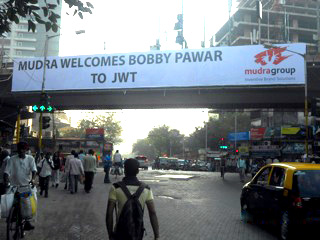
    Mudra showed that it is an agency with a big heart as well as an extraordinary creative bank, demonstrating both innovation and affection in its farewell to Bobby Pawar. In a billboard that has been put up right next to JWT, where Mr Pawar has taken charge of his new responsibilities, Mudra said “Mudra welcomes Bobby Pawar to JWT”.


    The billboard came as a shock to some and a pleasant surprise to some but it undoubtedly managed to catch everyone’s eyes.


    Pratap Bose
    Bobby Pawar

    Pratap Bose, COO, Mudra Communications, said, “Tuesday evening was Bobby’s farewell. The whole idea was to show Bobby how special he is for us. It’s a gesture to show that the fact that Bobby remains in advertising is good news for the creative industry.”


    A generous gesture like this makes one feel proud to be a part of an industry where relationships can be warm as well as professional.


    On the gesture by Mudra, Bobby Pawar, CCO and Managing Partner, JWT, said, “Both the agencies (Mudra and JWT) really touched me with the welcome I received. It feels great to get such a warm greet. My first day at JWT was spent knowing people and understanding the brands. Hope the fun and enthusiasm continues.”


    The way Mudra has wished luck to Bobby for his new innings will sure be remembered by the industry in a very special way. One hopes there are more such instances where people feel proud to be a part of such an industry.


  • Cadbury & O&M top Effies 2011 honours


    By A Correspondent


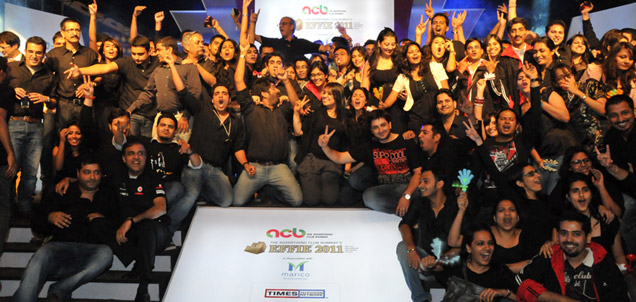
    On an exhilarating race day, at a place where horses would be galloping and competing their way for a finish to the top, yesterday it was the turn of the advertising fraternity to trot the turf and vie for their prized silverware. Mahalaxmi Racecourse in Mumbai was host to Effies 2011, the only awards show of its kind that recognizes effective advertising by creative agencies.


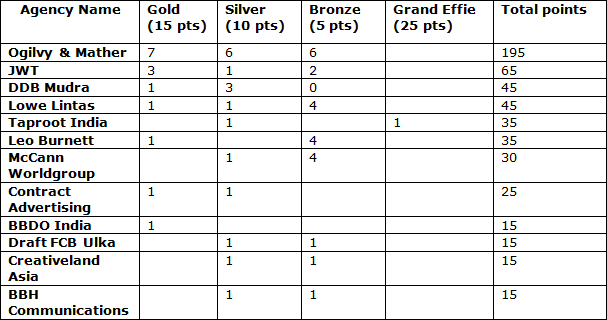
    Having finished as the agency with the highest number of shortlists, Ogilvy & Mather didn’t disappoint as it swooped a bagful of awards – 19 metals in all – leading it to be pronounced the Effie Agency of the Year for 2011. With a tally of 195 points – 7 Golds, 6 Silvers and 6 Bronzes, Ogilvy thumped its nearest rival JWT by almost thrice the number of metals, a milestone that has been a regular affair at the awards. JWT came a distant second with 65 points – 3 Golds, 1 Silver, 2 Bronzes, while DDB Mudra and Lowe Lintas were tied for the third spot with 45 points each.


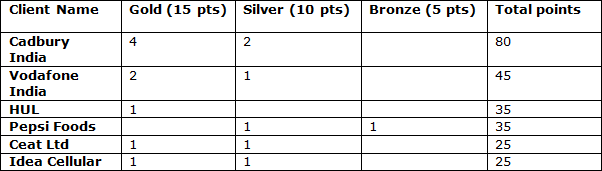
    The icing on the cake for O&M was when its coveted client Cadbury was declared the Effie Client of the Year. With 4 Golds and 2 Silvers, Cadbury edged out Vodafone India – an Ogilvy client as well – which occupied the second spot with 2 Golds, 1 Silver and 1 Bronze. HUL came third with a single Gold and 4 Bronzes.


    Flagging off the awards ceremony, Shashi Sinha, President of the Bombay Ad Club welcomed the gathering by stating that it had been a stellar an experience for the organising committee and the judges who managed to sieve and rummage through a bundle of noteworthy entries. Apart from the big number of entries and new additions the event managed to attract, Sinha said that the awards was different from the others, as it was run on international guidelines and was importantly, controversy-free.


    Lavishing praises on the event, Chairperson – Effie Committee and fellow-member, Ajay Kakar began by citing an anecdote. “During my early days as an executive in an ad agency, I used to often hear marketers say that half the money I spent on advertising is wasted and the trouble is, which half was wasted was not known. But with the instituting of the Effies, that perception has changed. In fact, it is the only awards show where both the client and the ad agency walk together to collect the awards.”


    According to Kakar, it was truly a remarkable experience for the organising committee this year as there were more categories – 12 in all, which saw around 300 entries and the 80 judges had the arduous task of shortlisting the best.


    Winning stance

    Elated with another super showing, Abhijit Avasthi, NCD, Ogilvy India remarked: “We are absolutely thrilled, given that Effies is a culmination of the year’s efforts and that it is the right balance between creativity and effectiveness in the marketplace. What’s more reassuring and satisfying is that the wins are across a lot of categories and clients.”


    When asked to comment on his client bagging the Client of the Year award Avasthi said: “Though we are happy that Cadbury has bagged the Client of the Year award, we have been supported phenomenally well by our other clients too.”


    Not disheartened by the performance of his agency, Colvyn Harris, CEO, JWT India, which came in second, said: “Every year, around this time, we review the works that we do for our clients and given our standing at the Effies this year, we hope to start 2012 with a brand new team so as to compete closely with the No 1.”


    On Effies being a great creative platform for agencies, Colvyn said: “I think Effies is a great platform for one to showcase their work, because finally, creativity may be everything but this is as important, if not more important, from a client’s point of view. If you are not successful in the marketplace, then nothing else matters. So my ambition is obviously to do well at the Effies and back that up with a good creative showing as well.”


    It was a night of thrilling proportions for Agnello Dias and Santosh Padhi from Taproot India as they bagged the envious Grand Effie award. Sharing his initial reaction on the win, Agnello Dias, co-founder, Taproot India said: “It keeps getting better. When I won for Lead India, I thought this is it; I won’t get another Grand Effie. Then Teach India happened and this year I won a Grand Effie again. So it keeps getting better. It’s even more satisfying that we are doing it outside of a large network agency and we are doing it on our own.” On the hopes for next year, Aggie said that he aimed to continue the feat with Airtel and maybe also Pepsi.


    Enumerating on their win, Santosh Padhi, co-founder of Taproot India said: “We had sent four entries, of which three were shortlisted, while two bagged awards. So I guess it was a pretty good showing. Considering the size of our agency – we have around 30 people, versus other big agencies that have 3,000 people, or more. Competing with them and coming fifth is an outstanding achievement for us. This shows that it is not numbers that matter but the power of an idea that is important.”


    Joseph George, CEO, Lowe Lintas, which tied for the third spot, said: “I think we could have done much better because Effies are the only awards that we seriously participate in. Actually, we were a bit disappointed with the shortlist itself considering we had sent more than 20 entries. But no worries, we will try harder and do better next year. What is important is that the No 1 tag is never to be taken for granted and the same goes for No 2 and 3. So we hope to be back next year, bigger and stronger.”


    The other commendable awards for the night included Marico Uncommon Sense Award that was bagged by O&M for Vodafone’s ‘Blackberry for Everyone’ and Brand Equity Bravery Award that was bagged by BBDO India for Gillette Mach3 Turbo – Shavesutra.


    Tally:


    Effie Client tally:

  • The world according to JWT, in 2012


    By A Correspondent


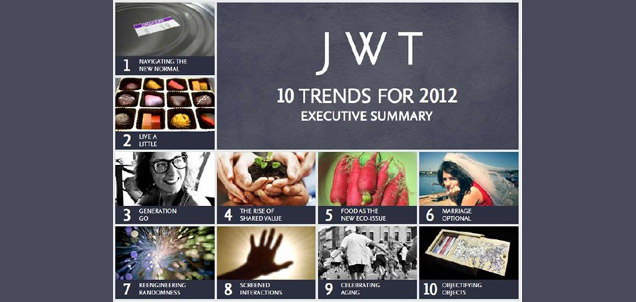
    Ad hotshop JWT feels that in 2012, the economy will push brands into opening up more entry points for cost-sensitive consumers as the “new normal” becomes a prolonged normal in the developed world while at the same time, tough times will generate an unprecedented entrepreneurialism, with the so-called Lost Generation of youth becoming a uniquely resourceful group that creates their own opportunity. The above findings and plenty more, are the result of their annual forecasting exercise – the seventh in the series – of key trends that will drive or significantly impact consumer mindset and behaviour in the year 2012.


    JWT’s ’10 Trends for 2012′ is the result of quantitative, qualitative and desk research conducted throughout the year for the report. It includes inputs from nearly 70 JWT planners across more than two dozen markets and interviews with experts and influencers across sectors including technology, luxury, social responsibility and academia.


    “With our annual trends forecast, we aim to bring the outside in-to help inspire ideas beyond brand, category and consumer conventions-and to identify emerging opportunities so they can be leveraged for business gain,” remarked Ann Mack, director of trendspotting for JWT. “Trends, like any complex and dynamic human phenomenon, are not preordained-once they are spotted, they can be shaped.”


    Previous trends that have been forecasted over the past years include: “De-Teching” in 2011 (more people logging off, at least temporarily, to get a break from technology); “Location-Based Everything” in 2010 (the explosion of location-based or -aware services that leverage data from mobile phones); The Small Movement” in 2009 (the shift away from “bigger is better” in everything from homes to cars to mobile technology); and “Radical Transparency” in 2008 (the “nothing to hide” ethos seen in some online behaviours).


    The top 10 trends that have been predicted for 2012 are as follows:


    1. Navigating the New Normal

    As the new normal becomes a prolonged normal in the hampered developed world, more brands in more categories will open up entry points for extremely cost-sensitive consumers. Marketers will find new opportunities in creating stripped-down offerings, smaller sizes and otherwise more accessible products and services.


    Example: In the US, Heinz is introducing several reduced sizes at a suggested retail price of 99 cents, including a 10-ounce ketchup pouch and a 9-ounce yellow mustard, as well as mini Worcestershire and Heinz 57 sauces.


    2. Live a Little

    Faced with constant reminders about what to do (exercise more, eat better) and what not to do (smoke, overspend), and fatigued from several years of austerity, consumers will look for ways to live a little without giving up a lot. People have been exercising more self-control, and increasingly they are looking to let loose once in a while: indulging in sinful things, splurging on treats and escaping from today’s many worries.


    Example: Whiskey in South Africa, premium beer in the U.K and cheap eclairs in India are small indulgences that consumers with little to spend are enjoying.


    3. Generation Go

    While twenty-somethings in the developed world feel they’ve been dealt an unfair deck, many are finding opportunity in economic adversity. Out of continued joblessness or discontent with the status quo will spring an unprecedented entrepreneurial mindset, enabled by technology that obliterates traditional barriers to entry. A so-called Lost Generation will transform itself into a uniquely resourceful cohort.


    Example: More than half of Millenials in the US agreed that if they lose or have trouble finding a job, they’ll start their own business, according to a JWT survey, up from 25 percent in 2009.


    4. The Rise of Shared Value

    Rather than simply doling out checks to good causes, some corporations are starting to shift their business models, integrating social issues into their core strategies. The aim is to create shared value, a concept that reflects the growing belief that generating a profit and achieving social progress are not mutually exclusive goals.


    Example: Philips is partnering with the Dutch government in a bid to provide affordable, sustainable energy solutions to some 10 million people across 10 sub-Saharan African nations by 2015.


    5. Food as the New Eco-Issue

    The environmental impact of our food choices will become a more prominent concern as stakeholders-brands, governments and activist organizations-drive awareness around the issue and rethink what food is sold and how it’s made. As more regions battle with food shortages and/or spiking costs, smarter practices around food will join the stable of green “best practices”.


    Example: U.K. supermarket Sainsbury’s featured a summer promotion in 2011 offering customers who asked for cod, haddock, salmon, tuna and prawns an alternative, more sustainable species such as herring or mackerel for free.


    6. Marriage Optional

    A growing cohort of women is taking an alternate life route, one that doesn’t include marriage as an essential checkpoint. Both in the West, where this trend is building, and in the East, where it’s gaining momentum, “happily ever after” is being redefined as a household of one, cohabiting or single motherhood.


    Example: In 2010, a third of Japanese women entering their 30s were single, while 37 percent of all Taiwanese women 30-34 were single.


    7. Reengineering Randomness

    As our individual worlds become more personalized and niche-and the types of content, experiences and people we are exposed to become narrower-greater emphasis will be placed on reintroducing randomness, discovery, inspiration and different points of view into our worlds.


    Example: Airtime, due to launch at the end of 2011, is being touted as a random real-time video chat platform where strangers will be “smashed together”.


    8. Screened Interactions

    More flat surfaces are becoming screens, and more screens are becoming interactive. Increasingly, we’ll be touching them, gesturing at them and talking to them – and becoming accustomed to doing so as part of our everyday behaviours. This is opening up novel opportunities to inform, engage and motivate consumers.


    Example: In New York, a restaurant at high-end department store Barney’s features 30 individual screens in a large communal table that’s covered in glass; diners can digitally order their meal, then browse the store’s catalogue while eating.


    9. Celebrating Ageing

    Popular perceptions of ageing are changing, with people of all ages taking a more positive view of growing older. And as demographic and cultural changes, along with medical advances, help to shift attitudes, we’ll redefine when “old age” occurs and what the term means.


    Example: To appeal to Gen Xers and Boomers, Polish beer brand Zywiec launched a campaign with the tagline “The best is ahead of you”. Commercials showed older male celebrities including actors, a boxer and a cartoonist, speaking about their lives, offering insights and advice.


    10. Objectifying Objects

    As objects get replaced by digital/virtual counterparts, people are fetishiZing the physical and the tactile. As a result, we will see more “motivational objects”, items that accompany digital property to increase perceived value, and digital tools that enable creation of physical things.


    Example: Sincerely’s Postagram app allows vacationers and others to turn snapshots into snail-mailed postcards. Similarly, Postcard on the Run reminds potential users that for recipients, a physical card is “a real keepsake they can hold close to their heart, put up on the fridge or display at work”.
  • Need to focus on consistency: Tom Doctoroff, JWT

    [youtube width=”300″ height=”250″]http://www.youtube.com/watch?v=6qvtd5T__QI[/youtube]

    By Tuhina Anand

    Video by Shruti Pushkarna

    Tom Doctoroff is a JWT man who has worked with the agency across geography. Having started his advertising career at Leo Burnett in Chicago he later moved to JWT. In 1994, he moved to Hong Kong as Regional Business Director for clients such as Pepsi, Philip Morris/Kraft and Citibank and then in ’98 to China as the Managing Director of JWT Shanghai. In 2002, he was appointed Northeast Asia Area Director (China, Taiwan, Hong Kong and Korea) and Greater China CEO. In 2008, he also assumed leadership of JWT Japan. Mr Doctoroff has played a key role in the growth of JWT in North Asia.


    Q: How do you see JWT based in the scheme of things in Asia today?

    I think that we have a lot to be proud of. JWT has an extremely cohesive management structure where all our goals and values are aligned, and I’m particularly proud of our creative community which is probably one of the jewels of our global network out here in Asia Pacific. I think we’ve got people who are proud of their own output in their own countries. One thing that I’ve always liked about JWT is that we are not cultural imperialists. I’ve never felt for example that because I’m in China, even 13 years ago, that I am on the other side of the world. We have a company culture that does respect individual idiosyncrasies and that’s very important to avoid this hegemonistic-macho advertising ethos. So, I am proud of JWT. We’ve certain things that we could do better, like digital where we’ve been a little bit slow, but I think we are catching up now. We are trying to bring into the agency an ethos of the need for digital to reinforce brand ideas. As for India, JWT in India is a powerhouse and it has a lot to be proud of. And I’m sure that it will overcome some of the frustrations of the past year because everybody knows it needs to be done.


    Q: How do you see JWT China in terms of creativity, going ahead?

    If this doesn’t get broadcast in China I’d be happy because I don’t want to appear arrogant where I live, but I think we set the standards of creativity in China. Honestly, we have a very stable management team and a very stable creative leadership team, and what that means is that we create an environment of safe self-expression within the agency as a whole. So we usually are the ones that are doing the firsts, we won the first Cannes Grand Prix, yes it was for print but it still didn’t happen by chance; it’s because we have a belief of what creativity is and how people work together in the agency and in collaboration with people outside the agency, even outside of China to develop engagement platforms. So I am very proud of our creative leadership. People call us the ‘temple of advertising’ and I think that’s because we’ve been so stable for such a long time. I’m not saying we don’t have weaknesses but creatively speaking, I think if you ask around, we tend to define a high ground to a certain extent.


    Q: What are the two things that you would advise to people in the industry which they could follow to get more ROIs?

    As soon as you bring in the ROIs, you bring in a different question altogether. So before we get to ROI, I think that one needs to always focus on consistency. A consistent brand idea, a consistent engagement idea that is genuinely media-neutral. I think the danger is that as we experiment with new forms of technologically-enabled engagement, we forget about the primacy of an idea. And if you start your media plan without having that idea clearly understood by all, then you have chaos. One thing that is critical in new markets is order, in consistency, in clarity of ideas or else people will tune you out. Nobody wants to figure out how the internet or how the digital app or the landing environment connects to the TV ad. So consistency is always key, and that will always require a high degree of conceptual craftsmanship. And the second thing about digital is that all digital is not the same. There is certain digital that is relevant to campaigns, there is certain digital that is relevant for customer relationship marketing, there is certain digital that is more transactional at the point of purchase; some of those belong inside the agency and then the big question is how you make sure that the entire agency is digital, but having a digital core centre of expertise as a heartbeat within the agency with some of that for outside the agency. So agencies need to know who they are first and then build their digital strategy based on that.


    Q: Talent is an issue; how much of an issue is it and how do you tackle it?

    It’s an issue at the most senior level. I find that the biggest issue for talent is that many senior people – and this is in China, I don’t think it’s the same in India – there is an abstract nature of advertising which makes people feel insecure. Chinese people want to have a sense of control over their destiny and they revere the concrete, and so what we often find happening is that people in their desire for control either start leading dysfunctional agencies, their own small agencies or they leave the industry altogether. So what we need to do is find ways to make a long-term career in advertising seem safe. Part of that is financial and frankly in China it’s not a problem, because once you get to be senior in China as a local person, the pay is quite respectable. But the real issue is making sure that you are providing a platform for senior management to stand up and feel confident on, and that requires a lot of persuasion and a lot of coaching as people come up to the ranks. On the junior level or the mid-level, it’s really a question of liberating their creative potential and making them feel that when they will open their mouth, they will be saying something that’ll be appreciated; and that gets into corporate culture and how you have an environment of dangerous silence, safe self-expression where proactivity is truly rewarded in a meritocratic sense. So advertising has to be very meritocratic and that’s something that’s not always compatible with traditional Chinese culture. But we make it quite meritocratic, so our attrition rate is much lower than the industry average is.


    Q: What do you think of Indian advertising in recent times; how do you think it has improved?

    I have been working with India tangentially for 17 years so there’s been huge progress. I think the progress first came on the production level. The change started around 10 or 12 years ago. I just noticed the ads didn’t look that cheap, the production values were pretty high. And now when I take a look at Indian advertising, I think that it is strong. It is very culturally rooted which is fine, as long as that culture is not gimmicky and it comes from cultural insight as opposed to just a celebration of anything Indian. So I personally think that strategically Indian advertising is very strong, execution has become better. I just think that the unfortunate thing is because of its proud confidence in the Indian identity, it’s not as accessible to many people around the world but it’s good, it’s made much progress.

  • JWT restructures to bring in 3 NCDs


    By Tuhina Anand & Shubhangi Mehta


    After roping in Bobby Pawar as its Chief Creative Officer and Managing Partner, JWT is now bringing in more changes in its team structure which Colvyn Harris its CEO dubs it as `transformational changes’.  It is learnt that JWT has brought in a three National Creative Director structure which includes Swati Bhattacharyya in Delhi, Tista Sen in Mumbai and Senthil Kumar down South. All three NCDs will have a team of ECDs under them and when Bobby Pawar joins which will probably be in March 2012 as the CCO , he will spearhead this structure.

    Ms Bhattacharya has been heading the GSK business at JWT while Ms Sen and Mr Kumar have been Executive Creative Directors at the agency.

    On the restructuring, Mr Harris said, “I cannot think of 3 more deserving and talented people who have imbibed the best of JWT values and who believe in the JWT Company. It has taken us some time to recognize that their current roles and responsibilities far exceed what national creative directors in other agencies are responsible for. Given the sheer scale of our operations, and our most admired line-up of India’s finest and the world’s most admired brands, it was imperative to recognize the creative leadership team with a designation based on their role.”

    “Given the exigencies of the market and the pressure which is being brought to bear on us to improve our creative work – especially from clients who are in the more competitive categories – we believe that the combined skills and talents of Swati,Tista and Senthil will be able to provide the best solutions for our clients, our brands, and our people, added Mr Harris.

    Talking to MxM India on the creative pillars that JWT is creating, Mr Harris said, “The roadmap that JWT has drawn of being a creative powerhouse and being creative led and creative driven organisation will be achieved by these changes. Bobby along with the team will help us in realizing this vision. In fact, people who are saying that the CCO position at JWT has been unstable should know that Adrian came as the Delhi office head so we didn’t really have anyone take the CCO position for long. Bobby’s position in that sense is of true CCO who will lead a team of around 300 creative people at JWT along with the newly restructured team.”

    It may be recalled that when Josy Paul had joined JWT as its NCD, Agnello Dias had also been promoted as NCD and the agency followed the dual NCD structure at the helm but no CCO. It was only later when Mr Paul quit that Mr Dias was made CCO, though he too quit soon after to start Taproot India.

    Mr Harris also said  that one should gear up to hear of some more announcements at JWT very soon. The agency has also recently roped in Max Hegerman as Senior VP and its Head to look after JWT’s Digital strategy.

    On his mandate at JWT, Mr Bobby Pawar said, “My job at JWT will be ensure we change our benchmarks and set new standards. Critical would be in setting a vision and then delivering on it. JWT will be the magnet for the best talent in the industry and offer the most creative solutions ever seen.”


    INTERVIEW

    Bobby Pawar, the guy who is taking over as Chief Creative Officer and Managing Partner of JWT, has been responsible for turning around the agencies which he has worked for. When he was at BBDO in Chicago he weaved his magic to make one of the hottest shop in the region. In India too, with Mudra as its Chief Creative Officer he has been instrumental in the agency winning awards and accolades on many international and desi platforms. The agency has done some high decibel advertising like the ones for Volkswagen launch in India and there after its variants that had caught eyes of many. With Mr Pawar’s next destination being JWT which has  seen causalities in quick succession including Bruce Matchett, Josy Paul, Agnello Dias and Adrian Miller. Looks like JWT is gearing up for combat and shut the wagging tongues of the industry. Here’s an interview with Bobby Pawar who sportingly answered our questions though he steered away from some specifics.


    Q: Omnicom as a parent, so many awards in the kitty all with your leadership… why then did someone like Bobby Pawar leave?

    I guess I am addicted to challenges and the task of polishing JWT’s creative luster and raising the game there was just too seductive to pass up.


    Q: What is the mandate at JWT, also we have seen the creative head at JWT being an unsteady wicket in last few years, should we expect a change now?

    Colvyn didn’t asked me to partner him on the mission of maintaining status quo. I would hardly be the right guy for that. Both of us want JWT to evolve, to build on the past, but look firmly at the future. The focus will be on the work and the people who do it. And that means the entire agency. We don’t just want a highly creative creative department, but a highly creative company. Everybody has a role to play in making sure the solutions we think up, sell, and execute are as great as the brands need them to be.


    Q: Was the Omnicom deal anything to do with your moving out?

    If anything the Omnicom deal almost kept me back. That is a great company and I have the highest regard for John Wren, Chuck Brymer, John Zeigler et all. They made me feel very welcome, but as they say a man’s got to do what a man’s got to do.


    Q: How would you sum up your stint at Mudra?

    I loved it. See, I’m not leaving because I am unhappy. When I started nobody gave us a chance. Four long and hard years later, our creative reputation is the opposite of what it was. We did pathbreaking work for Volkswagen, Big Cinemas (Silent National Anthem), 7-Up, Union bank Of India, Emirates, Philips, Economic Times, McDowell’s No. 1, etc. We were the winningest DDB agency at Cannes this year along with DDB Paris, 3rd in the agency of the year standings at Spikes and we had the most metals Abbys. Not too shabby, right?


    Q: What should we expect from Bobby Pawar in his JWT avatar?

    I believe that agencies don’t just need to create, they also need to invent. Why can’t we invent a whole new medium while we thinking of a campaign that runs on it? The future will be invented by those who ask the most interesting and unexpected questions.


    Photograph of JWT Mumbai courtesy JWT website. Images of Messrs Harris and Pawar from the JWT and Mudra sites respectively

  • Bindu Sethi to be National Head Planning @ JWT

    By Shubhangi Mehta


    Post putting in her papers at Grey, Bindu Sethi is now joining JWT India as the National head planning. Industry sources close to the development have confirmed the news to MxM India. She will be based out of Delhi.

    It was reported yesterday that Ms Sethi has called it a day at Grey. Since then there have been a lot of speculations as to where will she be moving now.

    Ms Sethi has spent nearly more than two decades in the advertising and marketing industry. She joined Grey India in 2009 as the national planning director. In May 2010, she was promoted as the chief strategy planning officer for Asia Pacific. However, she continued to handle India responsibilities as well.

    Joining JWT can also be regarded as a homecoming for Ms Sethi, as she began her career at the Indian Market Research Bureau (IMRB). She then moved to JWT where she developed and headed the strategic planning department for eight years. She was instrumental in building JWT’s reputation for deep consumer sensitivity and brand building. At JWT she got the opportunity to work on brands such as Horlicks and Maggi.

    She was instrumental in creation of JWT’s social communications division Thompson Social, which redefined the role of communications in the adoption of new health practices amongst rural and suburban populations. Furthermore, her experience extends to the marketing side of the business, where she partnered Hindustan Lever Limited as General Marketing Manager – Personal & Hair Care. There, she formulated the brand vision, strategy and proposition for Unilever’s family health portfolio comprising three brands across seven South Asia and South East Asian markets.

    With experience as diverse and rich as hers, it comes as no surprise that she won WPP’s prestigious Atticus Award for original thinking for her piece entitled Understanding India through Advertising.