Tag: JWT

  • Thompson, with a ‘p’


    By Avik Chattopadhyay

     

    Avik ChattopadhyayHere I am, on a blue-blooded advertising and marketing platform, taking a chance at expressing my opinion on WPP finally doing away with the famed “J. Walter Thompson” name. I am not an advertising professional, so do I have the very credibility to write on this subject? I think I do as I have been a ‘client’ for almost two decades dealing with various advertising agencies, including the one with a ‘p’.


    Since WPP decided to give the agency a new name, or impose a name of an existing much smaller agency on the bigger one, many advertising professionals have lamented and lambasted the decision. “How can you take away such a venerable name?” has been the common refrain. “Who on earth knows the new name? No one!” has been the second most popular one. Most of these people have had careers in HTA / JWT / WT and have moved on in life.


    So, will the name change see a change in business? Will it see a change in the ethos and culture? Will clients leave as they do not like the new name? Will employees leave as clients are leaving? Will the entire business come crashing down?


    As someone had told me early in my career, “An agency is as good as the client.” This adage has had a 100% success rate in my professional career till now across eight organisations, six as a client and two as an agency. At every stage, whatever the context or occasion, the communication output has been as effective, efficient and enriching as the quality of the brief, the level of the involvement and most importantly, the depth of the understanding. Right across conventional advertising to media planning to digital marketing to out-of-home to on-ground activation and event management.


    Just like brands have grown being with the right communications partner, so have the partners grown continuing with the right brands. The relationship is mutually impactful. If HTA / JWT / WP is the intellectual behemoth that it is today, it is because its relationships with certain brand behemoths have endured over decades. And these relationships have built its reputation. Just like any superstar, more than 50% of its work would be mediocre or pedestrian but it is that balance that has created the magic for it.


    Over the years I have realised that using “partner” in place of agency and “brand” in place of client works better if you keep repeating them a thousand times in your head as then you start respecting the agency more as a partner and a client more as a brand. That makes a huge difference in the relationship and the quality of the communication.


    Fiat became FCA. Peugeot became PSA. Then Fiat and Peugeot became Stellantis. One may argue that only the corporation names have changed while the customer-facing brands have remained the same. Okay. Ciba-Geigy and Sandoz became Novartis. ICI became Akzo Nobel. Sakura became Konika. Vam Organics became Jubilant. Phoenix became Firefox. Danone’s Bio became Activia. Bombay became Mumbai. The legacy brands wore new clothes and went about their work. The earth did not part consuming them for this act of blasphemy.


    In fact, most of them benefited from donning a new name. it gave a new sense of purpose and direction. And the customer was the biggest gainer. In the enthusiasm of the new name, new ways of customer delivery, product innovation and delight were conjured up by the same team, almost like saying, “We have not only changed, we have gotten better!”


    Advertising has evolved into communication. Communication is going through a tectonic change with the AI interface now rubbing shoulders with the creative human being. Mediums and methods are changing as rapidly as you can say “James Walter Thompson”. The new name VML has been consciously chosen to denote a fresh look at the world of communication. The consumer is changing. The brands needs to change. Should not the communication partner change too? As long as the people are the same and the intellectual capital only increases, the lamenters can rest easy. The clients will not run away. Neither will the employees. Nor will the operating standards fall.


    As long as the ‘p’ of Thompson remains intact.

    ‘P’ for partner.

    Cheers.

     

  • Rajesh Gangwani: Can’t make sense of VML

    Rajesh GangwaniBy Rajesh Gangwani


    I would  consider JWT ( yes it always was that for me ) my second home. Not surprising, if you have spent close to three decades in the organisation and been a Thompsonian all your working life in advertising!


    I left JWT just before the letter J fell off  and it morphed into WT (Wunderman Thompson). It was disturbing news but the spirit behind the Thompson name still offered hope of a new beginning where the present and future came together. The baby was still in the bathtub, even as the business waters were getting turbulent.


    I can’t make sense of VML. There are heavy numbers being thrown behind it to herald its creation but I don’t even recognise it. I hear words like scale, technology platforms,  deep expertise , massive  transformation etc. But one thing doesn’t change even as the world changes dramatically – people still value trust and relationships. Built in no small measure by powerful brands like JWT and Y&R that have weathered many a storm during their illustrious existence.  And that remains an  issue to be resolved at the core of the new behemoth unleashed. Can VML forge the same level of trust and build the same quality of relationships (both external and internal) in future, freed from the valuable legacy of its pedigree constituents.


    JWT will always conjure for me the endurance of timeless values – integrity, respect, humility, warmth, passion for learning and committed brand ownership. When you call your company your second home, it also shapes your persona and mirrors your own personal values. It’s a bittersweet moment for me as I put words to my feelings.


    This is all that I can say with both pride and a heavy heart: Goodbye JWT. It was a privilege serving you.


    In gratitude, Rajesh Gangwani


    Rajesh Gangwani is an Executive and Leadership Communication Coach based in Mumbai. He worked with J Walter Thompson for over 27 years (1991 to 2018). He can be reached at https://www.linkedin.com/in/rajesh-gangwani-executivecoach-communication/. His views here are personal


  • WPP fells two great brands in one stroke

    Courtesy Pexels, under Creative Commons Licence


    Prabhakar MundkurBy Prabhakar Mundkur


    Is this the final death of advertising as we know it? The last nail on the coffin? Or is it that the communications conglomerate that started it all has forgotten what is branding in their quest for “interconnectivity of brand experience, commerce and customer experiences” words that Jon Cook, Global CEO of VML used to the announce the death of Thomspon, previously J Walter Thompson and Y & R, previously Young & Rubicam.

    Not to speak of Wunderman.  

    Although I don’t think Wunderman was nearly as great a brand as either J Walter Thompson or Y & R, it had certainly gained a reputation starting from its origins as a direct marketing agency.  Somehow I am unable to shed tears for Wunderman but to think that both J Walter Thompson and Y & R do not exist even as the initials depresses me. To me, it is the death of creativity and strategy more than the death of advertising. The fact that they had been reduced to initials itself was depressing but I had just begun to accept it.

    Strangely, the erstwhile JWT which was named after its founder J Walter Thompson had sold the business at the turn of the early twentieth century because he thought that advertising had no future.  While it did well in the intervening 100 years or so it is strange that his spooky prediction about the future of JWT should finally turn out to be true. 


    So what is VML?

    Do those 3 letters conjure up any images in my mind? I am afraid not. Who do those initials belong to and what do they mean to the rest of us? To me, I am sorry to say, it sounds like a company producing scooters at best. Maybe that classifies me as an advertising dinosaur. But even dinosaurs must have their say on history.

    John Valentine, Scott McCormick and Craig Legible started VML in 1992 in Kansas City.  I never thought that a great communications company would emerge out of Kansas City. Kansas city is known only for BBQ and a mighty good time!


    The Challenge for WPP

    The question really is how WPP is going to transfer the legacy of JWT and Y & R into a Johnny-come-lately company such as VML. What happens to 100 years of thinking about advertising and branding that made JWT famous?  Thanks to stalwarts like Stephen King, Jeremy Bullmore and many others.  People who laid down the foundation of the advertising business and built interesting theories about how communication worked. Or the creativity of Y & R who is known to have produced the first colour television commercial in advertising history? Or the theory of Archetypes and how that could be brought to hear on advertising which first emerged from writers that worked at Y & R?

    What happens to the legacy of proprietary knowledge, analytical rigour and creative solutions  these two great advertising agencies brought to bear on the rest of the communications industry?

    Or are 100 years of history and knowledge going to dissolve in the vacuous nothingness of AI, technology, customer experience and commerce? That is a lot of words that somehow  don’t convey much to me but are found in the press releases of the new age communications companies.

    In retrospect, Wunderman-Thompson was a good example of bad branding from the world’s largest communications conglomerate. Why would they have  delegated Thompson to second place in the first instance? More people surely knew Thompson rather than Wunderman. And in process kill an over 130 year old brand with much higher equity. 

    Wunderman was a small entity. Thompson was a big entity.  Wunderman-Thompson was a non-entity. So I am not even sure I  should be shedding any tears now that both of them are dead. 

    I am sure  “Commodore”  J Walter Thompson as he was lovingly called must have flipped a few times sadly in his grave last evening when he saw the VML press release.

    Goodbye, J Walter Thompson, Young & Rubicam and Wunderman.  

    Hello, VML, whoever you are!

    And Sir Martin what do you think of what your successor is doing?


    PS: Meanwhile, Sir Martin’s successor has just got himself another five-year contract from the Board. Share price is trending at a third of its 2015 peak and lagging behind Publicis and Omnicom to No 3.


  • Sunil Lulla is Chairman of Ashwani Singla’s Astrum

    By Our Staff

    Sunil Lulla
    Sunil Lulla

    On his first day as CEO of MTV India, he walked in with colour on his finger nails. Each one different, and bright. A former friend once told this writer that he wanted to buy the man some printed socks from Kuala Lumpur, given the man’s love for all things stylish. At the press conference for an entertainment channel – yes, a real one – that didn’t quite take off, he stood up the podium with the hair on the back of his painted red.

    And now Sunil Lulla is all set to add colour and style to Astrum, a PR and advocacy firm based in New Delhi NCR. Better known as its founder and Managing Partner Ashwani Singla’s agency, Astrum fashions itself as “India’s first science-based specialist Reputation Management advisory”. We don’t know that what means, but Astrum sure has had a fair good set of clients over the years.

    Ashwani Singla
    Ashwani Singla

    Lulla, a communique said, will play a vital role in strengthening Astrum’s capability as a trusted advisor to the C Suite and adding fuel to its growth engine. Said Singla: “For over two decades that I have known and worked with Sunil, I have admired how he combines strategic clarity with execution excellence to achieve extraordinary outcomes. Our clients and colleagues will benefit from his sage counsel and proven acumen.”

    “The impact of reputation, risk and regulation on business is a major pre-occupation of the C Suite and more so today; I am delighted to be a part of a team that has an enviable track record of helping CXOs successfully negotiate this landscape,” added Lulla.

    Lulla should know, having spent a lifetime in the media ecosystem. Eons at Wunderman Thompson’s earlier avatar of JWT, MTV (where he effected a turnaround), Sony Entertainment Television (not yet Sony-Zee), Times Network (yes, with Arnab Goswami), Indya.com (remember the Sunday Times of India roadblock?) for Pradeep Kar’s Microland, HMV (now SaReGaMa), Grey, Balaji Telefilms (yes, with Ekta Kapoor) and television audience measurement body BARC India, where he was tasked by the Board to undertake some cleansing operations.

    The role doesn’t appear to be a full-time one, and will be in addition to a slew of other projects Lulla is involved in as part of his firm Linus Adventures. Linus, btw, is Sunil spelt ulta.

    Lulla is an active runner (yes, a marathoner), loves swimming, working out in the gym, enjoys his movies, music and books, and if you are on his friend’s list, perhaps the first to greet you on your Big Days. And, yes, he is also good in mixology. 

    We don’t know how he is with mixing liquids. But the number of engagements and bosses he’s worked surely indicates he can mix things well. And Astrum is, as the communique claims, a “science-based” firm. 

    There is some history to the chemistry between Lulla and Singla (they known each and worked with each other for over two decades). Science, mixology… fireworks?!

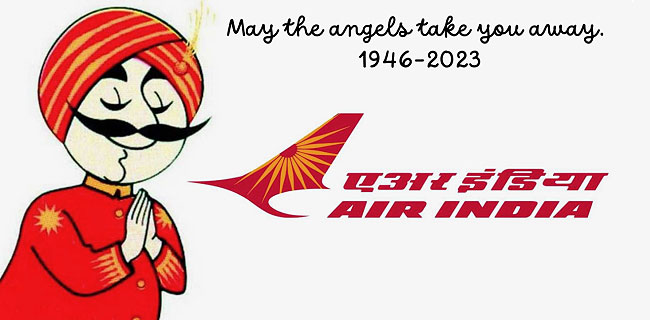
  • Air India Maharajah 1946-2023


    Prabhakar Mundkur

    By Prabhakar Mundkur

     

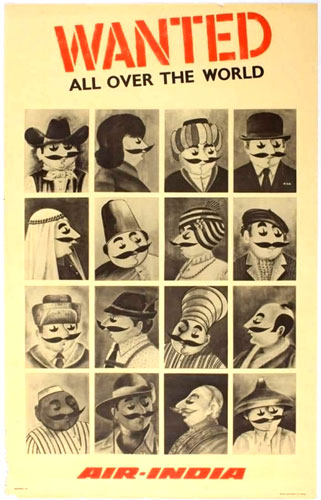
    When I read the obituary of the Air-India Maharajah this morning, I couldn’t but shed a tear. After all, he was mortal like the rest of us. Ailing for the last 20 years, and in and out of hospital, many of his detractors were not able to overcome his strong will. And in spite of the many attempts on his life, he just kept coming back like the strong royal Maharajah he was. In fact he just laughed it off in his inimitable style.


    While plenty has been written about him and his escapades through the decades through various lands, the end was solemn and brief. Just an unemotional announcement that his life had finally ended. There were no flowers. No prayers. No tears. No celebration of a life well-lived.


    Which makes me wonder whether all mascots have a life of their own and like us mere mortals have to finally bid a goodbye.


    Remember Gattu of Asian Paints? And the Murphy baby? Gattu, the mischievous Asian Paints mascot, was created by none other than the famous RK Laxman and enthralled us for a good 50 years. Murphy, another Indian favourite, was a brand born in Britain and founded in 1929 by Frank Murphy and EJ Power. The Murphy brand now belongs to the Shirodkar Group of companies but they don’t sell radios any more.


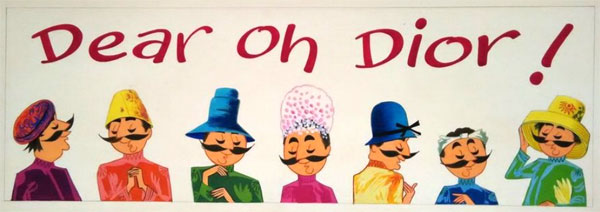
    It is interesting to examine why the Maharajah was so successful. For one his commentary was on our day to day lives and the life of the nation. He became the social mirror of Indian society. He reflected our happy and unhappy moments with a touch of philosophy and wit.


    Ivan Arthur, earlier National Creative Director of JWT, and now educator and author, when asked about the Air India advertising, said: “Conceived as a letterhead design, the Maharajah broke the fetters of the line drawing and became flesh with a personality and DNA of his own: the double helix of gracious exotica. That DNA did not permit him to stand in the street corners of conventional media and tout his destinations like a cheap ticket salesman. His famous romps on those hoardings were not advertising. They were non-advertising: parlour talk, one-liner points of view, camaraderie, provocation and good humour, all of which did not ask you to buy an Air India ticket. In fact, in many of the hoardings, he refused to have the Air India logo as sign-off. He was the sign-off. He was no commercial mascot. He became a national figure. Much loved and respected.


    The Maharajah was always accompanied by another symbol that belonged to Air-India and that was the Centaur. Equally old, it has played an equally significant role in the branding of Air-India.


    The Centaur had its own life as an alternative Air -India mascot. It flew around the world as the airline’s insignia, appeared on the inflight livery and even cutlery, was embroidered on some of its crew’s uniform, stood proudly on the top of the company’s impressive headquarters and became a brand name for its hospitality subsidiary!


    Hopefully the Centaur carries on, unless the new adopted parents of Air-India have another strategy in mind.


    In the meantime, let us mourn the loss of our favourite Maharajah once more. As the Byzantine Empress Theodora said “ For a King death is better than dethronement and exile”


  • Up, close & personal with Shams Jasani


    When in November 2018 advertising and marketing services conglomerate WPP merged the 1896-born J Walter Thompson with Wunderman to form Wunderman Thompson, there were many advertising purists who were upset that the new name was not Thompson Wunderman, but the other way around. They feared that creative would possibly take a backseat in the new dispensation.


    But folks in India were happy that a JWT senior Tarun Rai was at the helm to head the South Asia division. There were mixed reports about the health of the agency, and the lockdown ensured that the business model of the creative agency domain was under question.


    In October 2021, Wunderman Thompson announced the appointment of Shamsuddin Jasani, a digital advertising specialist, as the CEO. Jasani took charge on November 1, and has charted an all-new direction for the agency with the confluence of creative, data, commerce and technology.


    In a freewheeling chat with Pradyuman Maheshwari, founder and editor-in-chief, MxMIndia, Shamsuddin ‘Shams’ Jasani speaks about his plans for Wunderman Thompson, the foray in healthcare and his focus on technology and commerce. But, as he says, WT will always be creative-first.


    Watch. Enjoy. Like


  • Wunderman Thompson: Pinning the tail on the donkey


    By Prabhakar Mundkur


    Prabhakar MundkurSir Martin Sorrell when asked what he thought of the Wunderman-JWT merger had once used a euphemism in his characteristic style when he said: “So in a way, and I will probably be chastised for saying that, but Wunderman would be like pinning the tail on the donkey here.” Of course his comment was on the Indian market, where JWT was a giant and Wunderman a little, fledging marketing services agency. Unfortunately, many other markets faced the same situation.


    Thompsonites, which normally refers to JWT employees and alummi who are still very much in love with the agency, shed a few silent tears to mourn the merger three years ago. After all, JWT left a huge impression on the world – in fact often known as the University of Advertising.


    First established in 1864, no doubt old Commodore J Walter Thompson must have done a few backward flips in pain in his grave. It was not just the merger but the ignominy of it. I have always wondered if the Thompson employees in the merger felt like losers?


    Everyone knows that there are possibly only three alternatives to a post-merger branding situation.


    :: Adopt the name of the stronger brand for the merger. When US Airways merged with America West, its executives decided to retire America West. Made sense since US Airways was the stronger brand. Or when DHL acquired Airborne Express. Incidentally, I think JWT was the stronger brand in this particular case.

    :: Using the best of both brands. Wunderman Thompson falls in this category. But the first name of the double barrelled name, normally means that the first name is the horse they are backing. Considering the relative fame of JWT and Wunderman and their relative sizes it was a bit of a surprise to the Thompsonite. While using both the names is a good strategy, usually which names comes first also signifies that there is a winner and a loser. In the Wunderman Thompson case clearly JWT was the loser.

    :: The merger creates a new brand name and identity for the merged companies. Bell Atlantic’s merger with Nynex 2000 created Verizon for example.


    I think what irked most Thompsonites was the backbench given to their favourite agency.


    The redeeming feature of course was that given the relative sizes of JWT and Wunderman in India, the man incharge of the combined entity was Tarun Rai, earlier CEO of JWT, a deviation actually from the global formula where the merger was largely headed by the Wunderman chief. Thompsonites in India took some solace from that. But this fate has affected all the other great brand names in the WPP group as well. Y&R, Grey unfortunately have also had the short end of the stick. As a global rule, Mark Reed of WPP seems to have made the digital head the CEO of the merger. Has this preference or bias to do with the fact that Mark Reed himself was a Wunderman chief? Maybe.


    A number of marketers do claim that while digital is growing by leaps and bounds, it is having a detrimental impact on creativity. A study by Simzek in 2018 which surveyed more than 500 marketers around the world suggests that the industry is still struggling to nail the marriage of digital advertising and powerful creative work. I can’t help feeling that the Wunderman-JWT merger is likely to have impacted the overall creative quality of the new agency. In the larger quest for digital to deliver on measurability, the quality of creative has often been suspect.


    I have often also wondered how clients have reacted to the change over the last few years. My favourite clients Unilever, Kelloggs, to name a few, have always put good strategy and creative quality in the front. As an industry outsider now, I wonder how they are adjusting to the change.


    With Tarun Rai taking up another assignment within the network, the last vestiges of a Thompson company in India blur into the distance. I of course wish Wunderman Thompson and its new leader the very best for the future. But clearly all the remnants of my Thompson memory have been as brutally deleted as when you reformat a hard disk. And all the wonderful JWT memorabilia of yesteryears that I carried with me perhaps now has no real heir.


    I will give them a decent burial in my memory.


  • Air India Maharajah: An Anachronism or Timeless?


    By Prabhakar Mundkur


    Prabhakar MundkurThe tirade against the Maharajah is almost as old as that against the airline itself. The Air India top management, the aviation ministry and their new advertising agencies have been wanting to do away with the Maharajah for almost 30 years now. The agency HTA* that created him and nurtured him, even lost the Air India business after handling it for over half a century, maybe because they were the creators of the Maharajah.


    It is really a wonder he has survived this long. He doesn’t look the same, he doesn’t speak the same language that he spoke years ago when I handled the business, he has lost his unique sense of humour and wit, he is completely out of touch with current affairs, in fact he is a mere shadow of his former self and he might as well have been executed than allowed to linger like this on a ventilator. He was born on the corner of a letterhead, and he has gone back to being there, making me wonder if he might also be buried there.


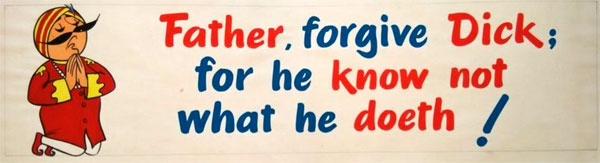
    On Richard Nixon during Watergate


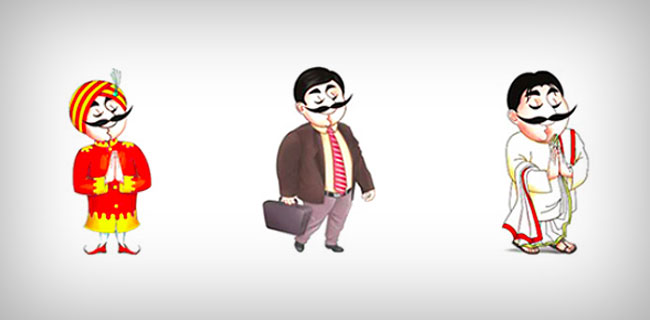
    Most people who have this point of view don’t understand that he is not just a Maharajah. He is a mascot who embodies the soul of Air India. Only his garb is that of an Indian prince. When he was conceived, he was meant to stand for everything that Air India stood for. Just like well-travelled Indian royalty that could speak authoritatively to both India and the world. Also, the Maharajah was not just the Maharajah. He took many shapes and forms disguised for the country he was meant to represent.


    Sawant, one of the Creative Directors at HTA who could draw the Maharajah in 15 seconds. was so inspiring that HTA once created a film, by making Sawant draw the Maharajah in real time, with a camera following his talented hands.


    K ‘Bobby’ Kooka, the Commercial Director of Air India, is once known to have said: “We call him a Maharajah for want of a better description. But his blood isn’t blue. He may look like royalty, but he isn’t royal.” Famous for having conceived the Maharajah along with Umesh Murdeshwar Rao of JWT in 1946, the Maharajah is one of the oldest mascots in the world. Kooka was later Chairman of Hindustan Thomspon Associates*) and watched the Maharajah and Air India advertising grow in stature and popularity.


    Ivan Arthur, earlier National Creative Director of JWT, and now educator and author, when asked about the Air India advertising, said: “Conceived as a letterhead design, the Maharajah broke the fetters of the line drawing and became flesh with a personality and DNA of his own: the double helix of gracious exotica. That DNA did not permit him to stand in the street corners of conventional media and tout his destinations like a cheap ticket salesman. His famous romps on those hoardings were not advertising. They were non-advertising: parlour talk, one-liner points of view, camaraderie, provocation and good humour, all of which did not ask you to buy an Air India ticket. In fact, in many of the hoardings, he refused to have the Air India logo as sign-off. He was the sign-off. He was no commercial mascot. He became a national figure. Much loved and respected.


    The Maharajah dies a 100 deaths


    Come the ’80s, however, frequent changes to the Chairman of Air India position resulted in the Maharajah dying a 100 deaths. Air India chiefs were keen to kill the Maharajah in lieu of something new and more contemporary. One such case was when in the late ’80s one Air India chief hired Landor, the well-known design firm, to redesign the logo of Air India in 1989. An airline identity change is one of the most expensive identity changes for any industry because it involves repainting all the aircraft, the livery, the ground vehicles and every signage in every country. But Air India went through all that bravely, eager to dump both the Centaur, which was their logo for the longest time and the Maharajah who was accused of not being in tune with the times. Rajan Jetley, then Managing Director of Air India, had said in defence of the new logo: “It is a public statement of change and a product exercise in the classic marketing sense.”


    Air India’s new identity created by Landor


    This was painted on the tail of the aircraft and the Boeing 747 Rajendra Chola became the first aircraft to carry the new logo and the livery. This facelift is known to have cost Air India $35 million back in 1989. But the public started questioning the change, immediately missing their familiar brand Air India. Questions were also raised in Parliament about the change of identity. But in spite of the identity change, the Maharajah seemed reluctant to leave the brand and its advertising. For every one person who didn’t want him, there was a loyal fan who wanted him back.


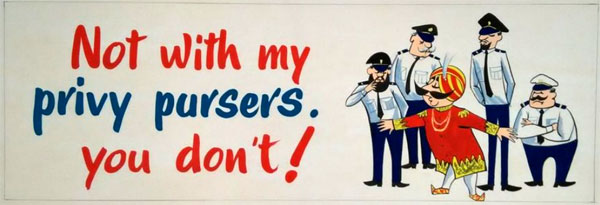
    Abolition of privy purses 1971


    Changing a brand’s identity is not an easy task. It is easy to say the Maharajah is an anachronism for those who don’t understand the Maharajah and the brand. Colonel Sanders who died in 1980 is still a part of the KFC logo. The Marlboro cowboy first made his appearance in 1954 while the cowboy era ended in 1885 at the end of the American Civil Revolution. They are not anachronisms. They are timeless just like the Maharajah. As Piyush Pandey, Chairman of Ogilvy is known to have said to Economic Times last week: “The Air India Maharaja stands for India. For any brand, any mascot, any logo, any identity is as meaningful as what they do with it.”


    With the Air India brand firmly with the Tatas, one wonders what the future of the Maharajah might be? Considering that the Maharajah is a crucial part of Air India’s brand equity and having worked on the brand, I can only hope that he will be re-incarnated.


    *now Wunderman Thompson

  • Post-BARC, it’s Linus and more for Sunil Lulla

    By Our Staff


    As CEO Sunil Lulla said his final goodbyes at the BARC India headquarters in Central Mumbai, he was all set to make a switch from an ‘Employee Life’ to a ‘Portfolio Career’.
     

    The entrepreneurial journey includes:

    • The Linus Adventures which will assist Promoters and CXOs scale their business and become leader brands.

    • Being co-founder of a UAE-based EdTech start-up focussed on India and the MENA region

    • An active angel investor in early-stage start-ups across multiple domains.


    In addition, he will continue his support to the Children’s Movement for Civic Awareness (CMCA and hopes to learn a new way of running (known as Maximum Aerobic Function / Low Heart Rate whereby he can breathe smarter to successfully complete many a marathon and staying more refreshed).


    An MBA from SP Jain Institute, Lulla has spent long and successful years in advertising, broadcast and digital before he took charge at BARC in October 2019. He spent 11 years in JWT in India, China and Taiwan, three years at HMV (now Saregama), three years at MTV India which he turned around, a year at Diageo, two years at Indya.com, three years at Sony Entertainment and then eight years as CEO and MD of the Times Television Network. Later he spent nearly four years as CMD of Grey Group India before making the switch to Balaji where he was there for a year-and-a-half.


    It may be recalled that Lulla had announced his decision to move on from BARC last week. Fellow advertising agency captain Nakul Chopra took charge at the television audience measurement company today (August 25).


  • JWT campaigns for Britannia Good Day

    By Our Staff


    Britannia Good Day has launched a ‘Surprise Cookie pack’ with a high voltage campaign.
    Commenting on the launch, Vinay Subramaniam, Vice President, Marketing, Britannia Industries Limited, said: “Good Day is Britannia’s largest brands. Ask any consumer about Britannia Good Day and they will immediately describe the wonderful butter and cashew cookies. Now Britannia Good Day has launched a mouthwatering Chocochip cookie. To create intrigue and interest, we have launched a few special edition packs called the “Surprise Cookie”. Now that the surprise has been revealed, we are launching our brand new Britannia Good Day Chocochip Cookies in the country. The campaign was a fun and engaging way to launch our new Chocolate Chip cookies from Britannia Good Day and the response has been overwhelming (no surprises there)”.


    Bringing in her creative perspective Priya Shivkumar, National Creative Director, JWT added: “Well, we all like our surprises, don’t we? We wanted communication to deliver one as unique as the Good Day Surprise Pack, so we decided to switch things around and make it interesting with our Influencer Swap. Popular Celebrities switched personalities to delight their audiences with a generous dose of humour and wit. Song, rap, stand-up comedy or commentary, the routes were many, but the result was audiences seeing and enjoying their much adored idols in a delightful new role thanks to the fun, quirky, full-of-flavour surprise delivered in true ‘Good Day” style.”


  • The Death of Advertising As We Know It

    Image courtesy : Suzy Hazelwood at Pexels.com


    By Prabhakar Mundkur


    Prediction on the death of advertising started at the turn of the millennium.  Perhaps the first stirrings on the death of advertising almost started with the birth of the internet. Pooh-poohed for most of the time, most advertising folk refused to accept the death of their industry and were filled with a strong sense of self-denial.  The way that people consume media has probably dealt the final blow on the advertising industry.

    When I joined advertising in 1977, advertising was considered an art form. And like most art there was an air of gay abandon about it, that went well with its brand of creativity.


    The Big Bang 

    In 1987, WPP which swooped down on poor old J Walter Thompson who was ripe for an acquisition attack. Poor old ‘Commodore’ Thompson might have flipped in his grave. Ogilvy was acquired two years later. David Ogilvy is known to have called Sorrell an ‘odious little shit’ later softened to ‘odious little jerk’ by the media.

    I call this the first Big Bang in the advertising industry. The culture of ad agencies was to start to change forever. They would become so bottom line oriented that all other lines in the agencies including strategy planning and creativity would start to become affected. You can imagine the shock – a math man running a bunch of mad men.  I was at JWT at that time and the first effect I saw was suddenly the exit of the best minds in JWT.

    The second Big Bang was the painful extraction of the media business from the main agency to create stand-up independent media agencies. In 1998, I was in JWT Shanghai at the time, and we were the second JWT office in the world to create an independent media agency and tear it away brutally from the creative agency. The 15% media commission which was beginning to break down any way suddenly became the norm rather than the exception.  The net effect of this Big Bang was that the media plus creative function was being paid much less than ever before. This resulted in less training, lower salaries, less interest from business school graduates to join advertising, less travel, and less talented people finally willing to join advertising.  In a way it was the beginning of the slow downfall of advertising.


    Famous ads written by Sir David Ogilvy


    Enter the New Millennium

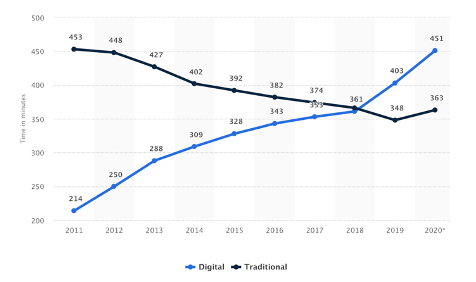
    The new millennium brought with it some profound changes.  The internet was beginning to change the way people live, read, do business, buy, and connect with other people.  In 2004, Mark Zuckerberg launched Facebook.  We learnt a new term called ‘social media’ with its advent. LinkedIn was launched earlier in 2003 and Twitter later in 2006. A host of other social media would completely change the way we live.  So would advertising unfortunately. Because people were spending much less time watching television and reading the newspapers and listening to radio.  In 2019 people spent more time with digital media than with traditional media in the US.


    Time spent per day


    Source: statistica.com


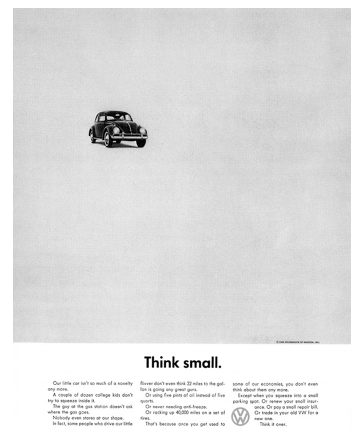
    The world of digital and social media meant new ways of talking to consumers.  This gave rise to new techniques in communicating. It meant that the skill needed to produce the famous Volkswagen Beetle ad by Bill Bernbach that made it a cultural icon that sold millions of cars were no longer needed. One can’t forget of course the degree of difficulty posed to sell an ugly German small car soon after World War II, to Americans used to the luxury of large cars, something the Volkswagen ads achieved admirably.

    1959


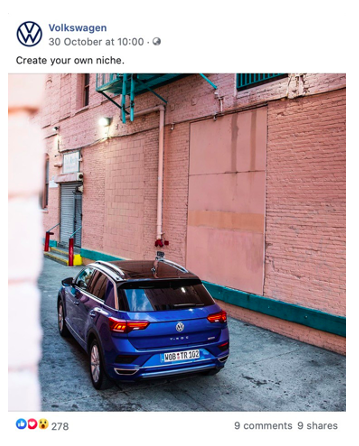
    2019


    In fact, the brilliance of the written word employed by master craftsmen like Bill Bernbach and David Ogilvy or the keen visual eye of Helmut Krone was perhaps no longer needed.  In the new millennium creativity had played hide and seek behind a much-abused word called ‘content’. Content was very forgiving of real creativity and happy to make friends with mediocrity.  In contrast to the Think Small ad, the Facebook ad of today for Volkswagen will be judged by the number of likes, comments and shares.  And not purely by how much the ad moves you like the Thing Small ad.  In fact, there seems to be no particular skill this Facebook ad might need either in terms of word or visual craftsmanship.  Suddenly communication had become the domain of data scientists and engineers whose province was machines, algorithms, big data and artificial intelligence. And perhaps creativity was reluctantly but surely taking a back seat.


    How Advertising finally died


    While many predicted the death of advertising no one quite predicted how it would go.


    In the last year, it certainly seems that advertising agencies will get gobbled up by digital agencies in the same group. Grey Advertising is the most recent example which merged with AKQA to form AKQA Group.  Last year similarly JWT merged with Wunderman to form Wunderman Thompson.  And Y&R merged with VML to form VMLY&R. I wonder who is next?


    Suddenly the heritage of a 100 years seems to have gone into the dust. And with the merger goes their history and great creativity of several decades.  When a brand dies, everything it meant to people dies along with it. It is ironic that WPP the group that bought over JWT, Ogilvy, Y & R and Grey is also the company that killed those very iconic advertising agency brands.


    It’s a pity that advertising had to die so suddenly and just get obliterated from the face of this earth.


    Prabhakar Mundkur is a veteran advertising professional and now a prolific commentator. He spent 17 of his 42 years in advertising with the agency once known as J Walter Thompson working with them across three continents. He has also worked with Havas and Hakuhodo. He has been voted Top Voice on LinkedIn, one of the Top Emerging Voices in yourstory.com and has written nearly 400 articles in the last four years. He was once an HMV and Polydor recording artist playing both the guitar and piano and still joins the occasional gig for friends. You will find him on Spotify and Apple Music with his recent compositions. He can be reached via Twitter at @wisecowboy. His views here are personal.


  • Grey to merge with Akqa. WPP creates AKQA Group

    By A Correspondent


    It should’ve been a no-brainer. JWT and Y&R both lost their age-old identities thanks to mergers with other group entities. Communications agencies Burson-Marsteller and Cohn & Wolfe also merged to form BCW. Now WPP has announced that’ AKQA and Grey are uniting to form a new network model, AKQA Group. Grey is the well-known creative-led agency and AKQA is accomplished for its innovationand experience design skills. “With heightened demand for digital transformation and technology-driven capabilities, the combination will create a powerful new proposition for clients as a leading creative solutions company with a worldwide footprint,” notes a communique, adding: “The AKQA Group will have 6,000 people in more than 50 countries and a blue-chip client roster that includes more than half of the Fortune 500’s top 20. It will provide a full range of brand experience capabilities across all communications platforms, strengthening the skills and services of both companies for clients.”


    AKQA founder Ajaz Ahmed and Grey Worldwide CEO Michael Houston will partner to lead the new Group. Ahmed will become Chief Executive Officer and Houston will become Global President and Chief Operating Officer of AKQA Group. The AKQA Group will launch with the AKQA and Grey brands, which will be integrated over time into a single company based on client and market needs. The management team and creative leadership will be announced in the coming weeks, comprising leaders from AKQA and Grey.


    Said Ajaz Ahmed: “Our goal is to expand horizons, combining the curiosity, ambition, imagination and pioneering spirit of a startup with the reach of a global enterprise. This is an unparalleled opportunity for AKQA and Grey to bring our shared assets to life into a modern, creatively-led company, building upon our inspiring and useful work to create value for our clients, people and communities.”


    Added Michael Houston: “This exciting new partnership begins with what consumers expect, clients value, and brands need. Forming a new company that can deliver culture-driving ideas through technology at speed and scale is a potent proposition for our clients, large and small, and will allow us to offer the most powerful creative solutions in the industry.”


    Said Mark Read, CEO of WPP: “Our clients want outstanding creativity, powered by technology expertise and delivered at a global scale. This new company is designed precisely to meet those needs and is another important step forward in building our future-facing offer for clients.”