Tag: Josy Paul

  • What ad veterans have learnt from the younger lot


    By Delshad Irani


    At work, like in any human tribe, there are two kinds of people – the Elders and the Young. The latter, of course, are eager to conquer the world. The elders, who have been there and done it all (or so they’d like to think) remind the impatient youth, Rome wasn’t built in a day.


    ‘No schnitzel, Sherlock!’ is the response, generally. While it’s not the elders’ job to shatter the young’s exaggerated sense of self-belief, it is however their duty to voluntarily impart pearls of wisdom and teach a lesson or twelve. That is if the children aren’t of the know-all variety with brains like sieves.


    However, at no other point in history has there been such a high premium on youth and the mad dash to make everything from buttocks to board rooms look younger is testimony to that fact.


    Yet, rarely are inhabitants of corner offices conscious of the learnings they’ve gathered from the younger tribe. It might not seem so but there are some important lessons to learn. And we’re not talking about teaching grandma to text and abbreviate every word known to man here.


    In advertising agencies, there are endless corridors of hormone-fields. It’s one of the youngest industries, where millennial minions slave day and night to create ads for unrelenting and often unreasonable clients so their award-winning bosses can scale the Palais in June, every year.


    So whoever said the millennial is fickle or needs constant validation and expects “Look maa, I drew within the line!” to be followed by a treat and a cuddle or that they are as loyal as a mercenary is nucking futs.


    Well, there are exceptions. But amid the myriad of contradictions, millennials have come to represent quite effectively, the new generation of adwallahs. They too have priceless wisdom to share with the generations that preceded them, even if they aren’t quite aware of this yet.


    In an attempt to bring these to light, Brand Equity asked advertising’s “seniors” about the valuable lessons they’ve learnt from their juniors.


    Striking the right work life balance, not being averse to risk and cultivating a very low embarrassment threshold, are just some of the beautiful learnings but let’s not get ahead of ourselves.


    Read on to see the lessons advertising’s heads have learnt from the legs that prop them up.

     

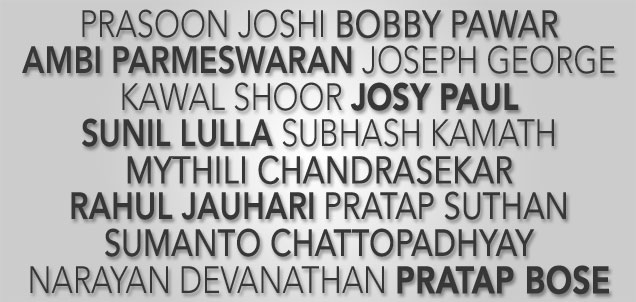
    Prasoon Joshi, Chairman Asia Pacific & CEO of McCann Worldgroup India

    What I have learned from the younger generation, is the work life balance. My generation (or at least speaking for myself) were very extremist, single minded and did too much work. We’d go to Cannes and it was like a project: go and return.


    The younger lot tie it up with travel and exploration. With youngsters, right from the start, there’s a more holistic approach to life. They believe it’s good to take breaks, even short ones. And so to someone like me, with a crusader mentality, I’ve learned a lot.

    Moral of the story: Take as many breaks as HR will allow.



    Bobby Pawar, Director and Chief Creative Officer, South Asia, Publicis

    The lessons I’ve gathered from my youngest colleagues? Holy-moly, where do I begin? Tenacity. Irrational passion. Being curious of the changing world. Trusting my instincts as much as my experience. Experiment. When to step in. When to sit on the sidelines and applaud. Rediscovering that this business is supposed to be fun. Patience. The list grows almost every day.


    I believe, if you aren’t learning from the people you are with, you have the wrong people, or more likely you have the wrong attitude. One day at work we were discussing ideas. It was a big brand, big brief, big budget, big stakes. This kid had an idea that sounded cool, but it was pretty much out there. And I said, I don’t think we can take a chance like this on a billion dollar brand. The kid looked bummed. He remained quiet for a bit, while we chatted.


    Then he said, “Bobby, failure is temporary, success is permanent.” I said, “Getting fired is temporary too, but it stings.” Everybody laughed. What he said haunted me. The next day I caught up with him and we spent time trying to make his idea work. Let go of your professional prejudices. A new marketing order is coming and it will be shaped by those willing to shape it and be shaped by it.

    Moral of the story: Don’t save your precious aphorisms for Twitter, try it in conference. Even if it sounds dumb. Never stop being bold and curious. Christopher Columbus wouldn’t have gotten far if he weren’t a nosy fella.



    Ambi Parmeswaran, Executive Director and CEO, FCB Ulka

    The youngsters taught me how use technology to solve problems. Sometimes what looks difficult is really a piece of cake.


    The younger lot have innovative skills that they bring to the table. It’s great interacting with trainees from management and creative. They are supposed to make a 20 minute presentation to us at the end of their stint, and I remember a boy making a video presentation in the form of a daily diary to his mom. It was great because of the ‘We haven’t seen this before’ feeling.


    Their approach to work is very different, which we often criticise, but there are plenty of takeaways. I remember the time when an employee was moving on from our agency, and I asked him to give me a call in case he wasn’t happy at the new place. I told him there was nothing to be embarrassed about and we could definitely work something out for him if he decided to return. “Why would I be embarrassed?” he asked me. And he was back in six months.

    Moral of the story: Never criticise before thinking. And if one is ever in need of a smashing presentation, commission the millennials in your employ.


    Joseph George, CEO, Lowe Lintas

    Their belief in the spirit of “moving on”, it allows you to not get stuck with any issue (good or bad) for too long. It allows you to accomplish a lot more. And it makes you a lot less emotional and more objective. It also allows you to stay focussed in meetings and conversations instead of the hangovers of an earlier issue or a previous meeting still clouding your head.


    Many times, we seem to dismiss and brand this trait of the youth as being fickle and superficial. Or even accuse them of being disinterested. It took me a long time to realise that those were erroneous and lazy conclusions. I was interviewing this young planner ( I personally interview all planners coming into Lowe Lintas ), and as we concluded with me saying that HR will get back to him, he said in a matter of fact way “to not let his youth come in the way of his salary or indeed his designation!” There are three brand lines that sum them up “Move on”, “Impossible is nothing” and “Poochne mein kya jaata hai”?

    Moral of the story: Life’s too short to cry over yesterday’s headlines, delusion of grandeur is a millennial condition and there is no such thing as a stupid question



    Josy Paul, Chairman, BBDO India

    One of the greatest things that my youngest colleagues have taught me is to be more authentic. They value that in themselves and they seek that from me. It helps me relax in their company and be who I am. It brings out the best in all of us. I feel the younger generation is a reminder medium of who we once were. They remind me of the strengths that I had, and have now forgotten. They revive and rejuvenate my authentic side. They point out things I once told them when I was a visiting faculty in their colleges. And they don’t let me forget. It’s a great source of energy.


    “We work differently from how you work. You guys work really hard and are obsessed with excellence about work. But excellence for us is how we manage both work and life. We need more breaks, more away-time. That’s how we create excellence at work. For you work is everything. We work for life” – Hemant Shringy, senior creative director, BBDO Ashram, age 29. It’s an insightful jolt and a beautiful truth, and I have accepted it. It is important to me. Which is why I remember it. Reverse internship, osmosis and learning are part of my world. I spend at least two hours a week speaking at colleges. The best thing that an experienced generation of marketers can learn from millennial marketers is to let go! The best way to contribute is to get out of the way.

    Moral of the story: Be real and weekends are not just Saturday to Sunday.


    Kawal Shoor, National Planning Director, Ogilvy & Mather

    I like their naivete and candour the most. I especially love their language, as yet un-corrupted by the dreaded ad lingo. And fresh language is often a window to new thoughts. No ‘target audience’, no ‘strategy’, no ‘360 degrees’ no bullshit. When they talk formally, they are pretty predictable and ordinary ; maybe they say what they think they’re expected to say, but when they let go, when they just chat with you, when they talk about how people are, and why they are the way they are, is when they can really say interesting things.


    The biggest life lesson is that there are no rules. Yes, there are a few rules on how you anchor a thought f o r clients to feel comfortable with them, but for creation of new thoughts and ideas, there are absolutely no rules. I also think today’s young are a lot more confident, sometimes even before they’re able.


    Exactly the opposite of how I was, or still am. And then I have a 14 year old at home who’s my anti-aging insurance. There’s a daily crash course I get on staying young. There are times I fail, times I pass, but I can’t say life’s boring.

    Moral of the story: Speak without thinking.



    Sunil Lulla, Chairman and Managing Director, Grey Worldwide India

    “I work harder.” It was a simple statement made to me by a fresher at JWT in the late 80s. It expressed the strength of the individual and the difference one can make to one’s success. i.e. Work Harder, than anyone else, until success is yours. He was working really late hours and was undertaking very simple and humble tasks. It was late and I asked him to stop working and go home and complete it the next day. This response, “I work harder”, got me to agree, smile and adopt this attitude.

    Moral of the story: Forget what was said about frequent getaways, work your backside off.



    Subhash Kamath, Managing Partner, BBH

    There are many lessons I’ve learnt from some of my young colleagues. Most importantly, I’ve realised that their youth is very different from how mine was. They’re growing up in a very different society, they’re far more optimistic and daring, far more capable of taking risks and exploring newer things than I was. And thanks to the digital age, they seem far more connected and have much better access to information than I did.


    Sure, it’s much more competitive now than it was in the 80s, but I think today’s youngsters are upto it. Our generation was taught to play safe, hold on to our jobs, save for a rainy day etc. Today’s youngsters have grown up in a more plentiful society. They have many more options to choose from, more entrepreneurial opportunities.


    Talent and ideas get rewarded more easily today than it did in my time. So the same values and priorities that I had don’t necessarily work for them. The one anecdote I remember very vividly that would perhaps illustrate this change was when, some years ago, I was doing an exit interview of a young star who’d decided to leave the agency. She had been doing extremely well, her colleagues and clients loved her, and she’d just been promoted with a hefty increment. But a month later, she put in her papers. I was completely taken aback. When I asked why, she said the job was keeping her too busy and that she was not getting any chance to spend time with her family and friends.


    Trying to give her some sagely advice, I explained that even I had to go through this phase in life. That it was important to give it one’s all at this early learning stage to build a long term career. That one day she’ll be able to balance it having come on top of this service business.


    To which she coolly looked me in the eye and said “But what makes you think I want to lead the same life as you did? I want to do it differently and enjoy both work and play now, not later.” I honestly had no answer to that. Just the strong realisation that things have indeed changed. This generation looks at things very differently. And the worst thing a senior person like me could do was to think of my own upbringing and youth in evaluating today’s generation.

    Moral of the story: Don’t evaluate the world through the prism of your life. It’s not that great a life, after all, if a millennial doesn’t want it.



    Rahul Jauhari, National Creative Director, Everest Brand Solutions

    I guess the number one lesson is that these kids don’t take shit for too long. They are not as tied down by stuff like loyalty to boss/agency as we used to be. So if they don’t get a good deal (monetary or opportunity) they move on. They have innumerable options – advertising copywriting is not bigger or smaller than content writing or opening a wedding ideas shop with friends or something else.


    I guess fundamentally, they are experimenting more than we did, they take less load than we did/do. Long ago, after I finished seeing a complete fresher kid’s folio, he asked to see mine. I kicked his butt for not doing his homework, but loved the attitude. We are in a people’s business.

    Moral of the story: You can’t take designations and dignity to the bank.


    Mythili Chandrasekar, SVP & National Planning Director, JWT India

    The youngsters absorb so much from the world around at a blistering pace, and are intuitive culture and technology experts. They challenge conventional wisdom and it is good to be constantly tested. Free flowing and lateral thinking is something we can learn. Some very young colleagues have stunned me with their depth of work and speed of learning.


    While one cannot generalise, I do find disrespect for dress codes, time and casualness in tonality ends up working against youngsters being taken seriously. They certainly seem to have better work life balance, and are able to switch off far more easily – too late to learn that! After a point it’s not about age, but character. Those who are tenacious, unrelenting, passionate, bold, and thorough are those who stun you and teach you every time.

    Moral of the story: Study hard, study fast. Dress for comfort, but save the ‘Frankie Says Relax’ t-shirt for under the comforter.


    Pratap Suthan, Managing Partner and Chief Creative Officer, Bang In The Middle

    This was when I was a CD in Grey Delhi in about 1999. I had a trainee for about six months – he was really good at his job and had a lot of spunk. I wanted to hire him as a junior writer, but apparently we didn’t have the budgets. I kept delaying telling him because I wanted him on board, till the time he asked me what the status was.


    When he realised that the branch head couldn’t bring him on board, he walked into his office, gave him a piece of his mind and got out, only to start his own agency. That boy is Sidharth Rao of Webchutney. That day I learned that if you are convinced about something, you should stand by it no matter what anyone says. All it takes is belief and some spine.

    Moral of the story: Never listen to your branch head. And go with the gut every time. (At your own risk.)



    Sumanto Chattopadhyay, ECD – South Asia, Ogilvy India

    The most obvious fact is that the young colleagues are digital natives and we are digital dinosaurs. That is one area I have learnt everything from my juniors; I harass them and pick up a lot of internet and socialmedia related things from them. I can now ideate on digital campaigns today, and the only reason I can is because I had juniors who were complete whizzes at this. They’re born into it and have been using technology since the time they were in school.


    Another thing that is amazing is their comfort level with all kinds of apps and software to get things done. They find ways to easily put together a little film for a presentation, for instance. These little things seemed so difficult but they’re not; they helped me break that barrier. We belong to the doctor-lawyer-professor-bano generation, where we were told to pursue our passions only after first securing an academic degree and a steady job.


    Our mentality was to stick it out whether or not you’re enjoying your job. While there are good and bad sides to this way of thinking, I am going to say that the changes in the world and economy give youngsters the option to not waste their time at a place they aren’t having fun. The flipside is that they decide in three months that they don’t like advertising and quit. Three months! At least give it a year?


    Sure, go ahead and explore if you like something or not, but three months is too short a time. Some people are too hasty in deciding if something is working for them. They just need to find their happy medium. I like that they explore and have the confidence, but just take your time.

    Moral of the story: It’s never too late to learn.



    Narayan Devanathan, Executive Vice President and National Planning Director, Dentsu India Group

    The natural ease with which they carry themselves, knowing their place in the world (at the centre). Their ability to keep me grounded with an “Ae, kidhar ja raha hai, pehle good morning toh bol de.” Knowing how to be wrong with complete confidence, and most of the times, with a good idea of what failure looks like. Being completely comfortable with uncertainty, with “maybe” as a valid life choice.


    Work hard, party harder (I haven’t been able to apply this as effectively as them though.) But time and again, the young ones have taught and reinforced to me the idea of embracing uncertainty. “We’re dating currently, but he’s at IIM Ahmedabad and I’m here in Delhi, and I’m not sure if we’ll be in the same city after he finishes. I might find somebody else by the time he comes back. Or he might. Ya, I know we’ve been together for five years, but who knows what will happen tomorrow? I’d like to marry him, but that’s too far away.”


    This was a 20-year-old intern who worked with me several years back. I have no idea who she is with right now, but I don’t think she’s worrying about it. The value of persistence: A girl applied for a position in a previous job of mine, and after I met her, I was pretty sure I wanted to be on the same team. Except we didn’t have the budget to hire her then. So I told her, “Listen, I’m pretty bad at keeping in touch. But call me regularly. And if I don’t answer, message me. And if I don’t respond even then, email me.” She did all three for three weeks continuously.


    I managed to wrangle a budget out of the management to get her on board after that. I hope I apply these lessons regularly. But those who work with me will probably be able to better speak about the impact. In life, I definitely am more actively trying to embrace the uncomfortable, the uncertain. As I said elsewhere sometime back, I’m discovering the joys of confusion. Clarity is overrated, if you ask me.

    Moral of the story: Don’t date anyone at IIM-A. Embrace uncertainty and confusion every morning and there’s no shame in being stalkerishly persistent. However, try and stop short of a restraining order.



    Pratap Bose, former COO, DDB Mudra Group

    I remember once going through my worst crisis ever on the IBM account, and by the end of the evening it looked like we would lose the account through a horrible mishandling which had the worldwide IBM CEO and CMO threatening hell and high water.


    At 9 o’clock in the evening, when I was in the depths of despair and totally at my wits’ end, a young colleague came over and said to me, “Sir, why don’t you go home and sleep on it? It never seems so bad in the morning after you wake up.” To this day, I follow that advice I learnt from my younger colleague. In life, no matter how disastrous or how enormous the problem, it always seems smaller after you have slept on it.

    Moral of the story: Snoozes, not weekend getaways are the pillars of success.


    (With Inputs from Ravi Balakrishnan, Amit Bapna, Shephali Bhatt, Mukta Lad & Priyanka Nair.)


    Source:The Economic Times

    Copyright © 2015, Bennett, Coleman & Co. Ltd.

    All Rights Reserved, Licensed to republish


  • New Visa campaign seeks to empower Tier 2, 3 consumers

    By A Correspondent


    Visa, the global leader in payments, has launched a new marketing campaign to give consumers the confidence to make purchases online with their Visa Debit card. The new campaign has been created by BBDO and is targeted towards Visa Debit cardholders in Tier 2 and 3 cities, who are helping to drive the significant growth of e-commerce in India – as they now have access to goods and services that earlier were not available in their town.


    Uttam Nayak, Global Head of Emerging Markets Digital and Group Country Manager India & South Asia, Visa said, Over the last few years there has been a positive change in consumer perception, approach and purchasing behaviour towards online shopping. More and more people are now shopping online, which has resulted in offering equal opportunity to everybody, irrespective of where they belong. Visa works with millions of merchants both within and outside the country, to ensure that shopping with a Visa Debit card, is safe and secure.”


    The campaign demonstrates the “initial hesitation or nervousness” of doing something for the first time and shopping online; each payoff as being the joy of accomplishment in new unfamiliar situations, thanks to the reliability of a trusted, innovative brand such as Visa. In each story, the protagonist is shown accomplishing an activity out of their comfort zone paired with using their Visa Debit to make an online transaction. The films also highlights the Verified by Visa process, one of many Visa’s advanced security features that keep consumers online transactions safe and secure. In line with our target audience’s sensibilities, the creative is light-hearted, humorous and showcases real people.


    Josy Paul

    Elaborating on the campaign, Josy Paul, Chairman and Chief Creative Officer BBDO India commented: “Through this campaign we are trying to empower more and more Indians to be where they want to be by using the power of the internet and their Visa Debit cards. As new towns and corners of India embrace eCommerce with first time purchases, it creates fresh enjoyable moments that are filled with innocence and joy. The possibilities are endless.”


    The new campaign will be showcased across TV, digital and social media channels to target consumers along their online path to purchase. The first commercial in the series, “Surprise Gift”, has received more than two million YouTube views within the first 10 days of its release.


  • Josy & Aggie to present Ad Club Creative Review, event kicks off Club’s Diamond Jubilee

    By A Correspondent


    Josy Paul
    Agnello Dias

    The Advertising Club will revive its popular Creative Review with a  tweak in format. To be held at the Taj Vivanta in Gurgaon on February 28, it will be jointly presented by Josy Paul (Chairman and CCO, BBDO India) and Agnello Dias (CCO and co-founder, Taproot India).


    Colors is presenting sponsor of the Creative Review with Bharti Airtel and Pepsi being Associate Sponsors.


    Pratap Bose

    Meanwhile, a communique signed by President Pratap Bose notes that the Club which completes 60 years of existence has planned a series of new activities.


    For details: www.theadvertisingclub.net

  • D&AD enters India with Kyoorius Ad Awards


    By A Correspondent


    Ridden by charges of plagiarism, scam ads and boycotts, the Creative Abby conducted by the Advertising Club now has another force to contend with: the D&AD-backed Kyoorius Advertising Awards.


    The awards gain respectability even as they are announced as they are backed by none other than D&AD. Kyoorius, a not-for-profit initiative by Transasia Fine Papers, has been organizing the Designyatra, a design conclave since 2006. Last year, it revived the design awards with a D&AD-supervised jury process (*See Disclosure).


    The alliance between Kyoorius and D&AD continues with the Advertising Awards that are scheduled to be held in late May 2014. The Call for Entry will start on March 20.


    “Ethically and with the highest standards – the Kyoorius Advertising Awards recognise, honour and award the most outstanding creative work in the Indian visual communications sphere,” notes a communiqué, adding: “The foremost creative awards for advertising and marketing communication in India have been conceptualized by Kyoorius in Association with D&AD. “Together Kyoorius and D&AD have created a truly principled and neutral platform by setting the highest standard in judging criteria. The Kyoorius Advertising Awards will be unlike any other advertising awards in India – and will have no winning tier structure of golds or silvers – only the best is awarded. The jury too will be a mix of Indian and international icons that have been selected by D&AD and Kyoorius together. And as the only format of its kind in India – all jury members will gather in India for the jury session – to review, discuss and elect the best of the best over three intensive days. All voting is private, never by a show of hands.”


    Rajesh Kejriwal

    Said Rajesh Kejriwal, Founder-CEO, Kyoorius: “The Blue Elephant aims to be the most aspired trophy to be won nationally and will enhance the winners credentials globally and the Black Elephant will be the epitome of achievement for any creative person. Kyoorius’ mission, vision and most critically – our passion has been to provide a platform for the communicators. Everything we do is fuelled by this passion.”


    Tim Lindsay, CEO of D&AD added, “D&AD are proud to be partnering with Kyooriuis in India. We share a lot of aims and values – the main one being to stimulate, enable and award creative excellence in advertising and design and to inspire and support the creative community particular in the area of creative education. D&AD is famous for the integrity and quality of its judging process and its jurors – qualities we will bring the same to the Kyoorius Advertising Awards as we advise and collaborate on categories, jury composition, judging and event management. Both organisations are neutral, and the awards will be decided entirely on merit against the three D&AD criteria; is it a great idea? Is it beautifully executed? Is it relevant to its context?”


    Tim Lindsay

    Meanwhile, although a meeting was held with various stakeholders last fortnight, no date has been announced for either the Goafest or the Abby awards at the time of writing this report. There are unconfirmed rumours that some leading creative agencies may stay away if some conditions are not addressed.


    *Disclosure: MxMIndia is a Media Partner of Kyoorius


    We will go the critic route rather than the popular route: Kejriwal


    By Ravi Balakrishnan


    R Balakrishnan

    For D&AD, it’s a chance to raise its profile in India. In an interview in December 2012, Tim Lindsay, its CEO was aware that the award had lost traction particularly with the younger lot. Indian entries have been on a decline. And so, this is the first time the D&AD is backing an award in a different country. Given Lindsay’s agenda for revival, it’s not likely to be the last. What nobody intends changing though is the notoriously tough - some would say almost frustrating - standards that the work is measured against. The D&AD is globally reckoned to be among the stingiest award bodies. It’s gunning for a similar exclusivity in India. “We will go the critic route rather than the popular route,” Mr Kejriwal admits. “I’d rather not have an award in a category than reward something that’s not up to scratch.” The awards will be run by the D&AD using its judging formats and backend. For the first time, Indian work will face an 18-member jury with a 60:40 split in favour of international judges. While subject to tweaking, the main categories include print/print craft, outdoor, film/film craft, radio, direct marketing and activation, integrated and art direction.


    More importantly for an industry where scam has become the filthiest four letter word in some circles, it will include D&AD’s stringent policies to whet entries. As well as additional ruses to throw off persistent scammers. Kyoorius is toying with the idea of showcasing the shortlisted work in galleries across Mumbai, Delhi or Bengaluru, which could help weed out scams. It’s also considering an online gallery. Elephants are standing in for the pencils, D&AD’s much sought after trophy. The best of show gets a black elephant, the rest of the winners get blue and students stand to bag a red. Such an enterprise doesn’t come cheap. Entries are to be priced between Rs 7,000 and Rs 10,000. As long as all the criteria are fulfilled with approvals in place, anyone from individuals to marketers and agencies can submit work.


    Rajesh Kejriwal is certain the entries won’t touch the numbers seen by the Abby, but believes more is not necessarily good. He says, “If quality means a lesser number, so be it. I’d be happy to get around 1,500 to 2,000.” In keeping with the mission of the D&AD which is involved in industry training and coaching sessions in the UK, Mr Kejriwal says money from the awards will be ploughed back into talent development programmes, seminars and workshops.


    The Kyoorius advertising awards are timed to grab an industry that’s at least for the moment, severely disillusioned with its longest running show, the Abby, as well as its festival Goafest. Mr Kejriwal believes, “There’s space for a popular award and a critic award. Every country needs a festival and if it has an award, so much the better. But what is the purpose? How do you make it relevant and content rich? How can it go beyond beaches and beer?”


    Josy Paul
    Sajan Raj Kurup

    Most creatives we spoke to are optimistic about the Kyoorius advertising awards. Josy Paul, chairman and creative chief BBDO India says, “Whether we will participate in Abby is still up for discussion. But I would like to enter an award from D&AD. They have evolved into a show that’s looking at substantial market changing work.” Adds Sajjan Raj Kurup, founder, Creativeland Asia, “I haven’t taken an anti awards stand but an anti not-so-reputed awards stand. As long as jury members are credible, it doesn’t matter where they are from. It’s better than mandatory judges from every agency even if they are not qualified.”


    Mr Balki whose disdain for awards is well known remains contrarian. Asked if he will participate, he says, “I am not enthusiastic about D&AD in London why would I be about it in India? It’s not the name or the institution. What are the judging criteria? If D&AD cracks this, it will be successful. But I’d first want to know what they’ve cracked. It could be the Tibetan advertising festival; if they figure this out first, we’d sign up.”


    Source:The Economic Times

    Copyright © 2014, Bennett, Coleman & Co. Ltd. All Rights Reserved

    Licensed to republish



  • Josy Paul, Sanjiv Sharma and Sudhir Sharma also in Spikes Asia jury

    By A Correspondent


    Josy Paul
    Sanjiv Sharma
    Sudhir Sharma

    The Spikes Asia Festival of Creativity, to be held this from September 15-17 in Singapore, has announced its final jury line-up. The names of judges for Branded Content and Entertainment, Craft, Design, Film, Print, Radio and Outdoor; Integrated and PR were announced by the organizers in a communique. The names of jury members for Creative Effectiveness, Digital and Mobile, Direct and Promo & Activation and Media categories have been released.


    Josy Paul, Chief Creative Officer and Chairman, BBDO, Sanjiv Sharma, Chairman, Optimystix Entertainment  and Sudhir Sharma, Creative Chairman & CEO, Indi Design are among the Indian jury members. There is no jury member from India in the Craft, Integrated and PR categories. This makes a total of five of the 16 categories with no Indian jury member (digital and mobile categories announced earlier had no Indian jurors). There are a total of six Indian jurors in the 78 members name for the Spikes Asia categories (in the earlier list Chandrasekar Radhakrishnan, Pratap Bose and Ajit Varghese were named).


    Branded Content & Entertainment Jury

    Anthony Freedman, Group Chief Executive Officer, Host, Australia – Jury President

    Angus Gordon, Head of Creative Content, The Well, Singapore
    Ean Hwa Huang, Creative Director/Partner, Merdeka LHS, Malaysia
    Jeremy Paul, Managing Partner, Fuse APAC, Asia Pacific
    Kentaro Ichiki, Creative Director, Hakuhodo Inc., Japan
    Christopher Harrison, Head of Invention, APAC, Mindshare, Asia Pacific
    Nancy Lan, Head of Newcast China, ZenithOptimedia, China
    Sanjiv Sharma, Chairman, Optimystix Entertainment, India


    Craft Jury

    Sheungyan Lo, Chairman, Asia Pacific Creative Council, JWT, China – Jury President
    Andrew Hook, Creative Director, DDB Singapore
    Badong Abesamis, Chief Creative Officer, Y&R Philippines, The Philippines
    Peter Grasse, General Manager, Curious Film, Regional, Australia & New Zealand
    Rob Galluzzo, Executive Producer, Managing Director, Finch, Australia
    Russell Miranda, Executive Creative Director, Grant McCann Erickson, Sri Lanka
    Thananuj Ebrahim, Executive Producer, Hay Day Films, Thailand


    Design Jury

    Derek Lockwood, Worldwide Director of Design, Saatchi & Saatchi, New Zealand – Jury President
    Christine Pong, Founder & Partner, Twohundred Limited, Hong Kong
    David Smail, Chairman & Executive Creative Director, BBDO, Vietnam
    Hsintzu Wang, Director of Visual Development, The eslite Spectrum Corporation, Taiwan
    Jung A Kim, Creative Director, Innocean Worldwide, South Korea
    Richard Westendorf, Executive Creative Director, Landor, Singapore
    Stone Lei, President, 180 China, China
    Sudhir Sharma, Creative Chairman & CEO, Indi Design, India
    Yagi Hideto, Creative Director, Art Director, Dentsu, Japan


    Film, Print, Outdoor and Radio Jury

    Tham Khai Meng, Worldwide Chief Creative Officer & Chairman, Worldwide Creative Council, Ogilvy & Mather, Global – Jury President
    Andrew Petch, Executive Creative Director, Ace Saatchi & Saatchi, The Philippines
    Andy Fackrell, Executive Creative Director, DDB Group, New Zealand
    Chris Chiu, Founder / Chief Creative Officer, Ren Partnership, Regional, Singapore
    Giap How Tan, Head of Art, Grey Group, Singapore
    Gigi Lee, Executive Creative Director, Y&R, Malaysia
    Hisashi Hayashi, Creative Director, Dentsu Inc., Japan
    Josy Paul, Chief Creative Officer and Chairman, BBDO, India
    Norman Tan, Vice-Chairman & Executive Chief Creative Director, Lowe Worldgroup, China
    Steve Coll, Executive Creative Director, Havas Worldwide, Australia
    Surachai Puthikulangkura, Managing Director, Illusion Co., Ltd., Thailand
    Tim Green, Executive Creative Director, Leo Burnett, Singapore
    Yehoon Lee, Creative Director, Cheil Worldwide, South Korea


    Integrated Jury

    Tham Khai Meng, Worldwide Chief Creative Officer & Chairman, Worldwide Creative Council, Ogilvy & Mather, Global – Jury President
    Anthony Freedman, Group Chief Executive Officer, Host, Australia
    Chris Chiu, Founder/Chief Creative Officer, Ren Partnership, Singapore
    Derek Lockwood, Worldwide Director of Design, Saatchi & Saatchi, New Zealand
    Gigi Lee, Executive Creative Director, Y&R, Malaysia
    Jose Miguel Sokoloff, Chairman Lowe SSP3, President Creative Council Lowe Worldwide, Lowe SSP3, Global
    Lynne Anne Davis, President & Senior Partner, Asia Pacific, Fleishmann Hillard, Asia Pacific
    Masaru Kitakaze, Executive Creative Director, Corporate Officer, Hakuhodo, Japan
    Mike Cooper, Worldwide Chief Executive Officer, PHD, Global
    Steve Coll, Executive Creative Director, Havas Worldwide, Australia


    PR Jury

    Lynne Anne Davis, President & Senior Partner, Asia Pacific, Fleishmann Hillard, Asia Pacific – Jury President
    Angela Spain, General Manager, PR & Activation, Draftfcb PR & Activation, New Zealand
    Eduardo Fuentes, President, Fuentes Publicity Network Inc., The Philippines
    Danny Phan, Managing Director, Burson Marsteller, Singapore
    Kelvin Yeo, Managing Director, MSLGROUP, Singapore
    Marion McDonald, Managing Director, Strategy & Measurement, APAC, Ogilvy PR, China
    Masato Mitsudera, Executive Creative Director, Beacon Communications/Leo Burnett Tokyo, Japan
    Rob Lowe, PR Director, Eleven PR, Australia
    T. Marlene Danusutedjo, Director of Public Relations, Four Seasons Hotels Jakarta, Indonesia


    Said Terry Savage, Chairman of Lions Festivals, on the announcement: “With so much inspiring and forward-thinking work coming from the region, we’re delighted to have such a great team confirmed to judge this year’s entries. We look forward to seeing these talented individuals come together in Singapore to collectively judge and ultimately decide on the winners of the 2013 Spikes Asia awards.”


  • When Deepika Warrier and Lloyd Mathias took on Josy Paul and Pratap Bose

    By Ananya Saha


    The third in the series of the International Advertising Association (IAA) India Chapter’s debates was hosted in Gurgaon on Monday, presented by the Dainik Bhaskar Group and powered by Campaign India. The topic for the IAA Debate was ‘Creative awards can also be given for differentiated one-off expressions’. Speaking ‘for’ the topic were Josy Paul, Chairman and Chief Creative Officer, BBDO India, and Pratap Bose, Chief Operating Officer, DDB Mudra Group. Speaking ‘against’ the topic were Deepika Warrier, Vice-President – Beverage Marketing, Pepsico India, and Lloyd Mathias, Director, Green Bean Ventures. The debate was moderated by Shafalika Saxena, CMO, Microsoft India.


    Ms Saxena opened the debate asking the panellists about how often is advertising aimed at greater good and how often is it the necessary evil; and how often the two can come together to combine market share and art. Mr Bose responded, “That is a no-brainer to me. When I think about it, the subject (of the debate) itself is condescending for creative folks like us. The subject says to me, ‘please re-consider 10 of 14 Grand Prix’. If you had this debate in 1927, it was ok but not today. If I have a creative idea, I will forward it to my friends, post it on social media, I would share and broadcast it. For a one-off expression like the Kumbh mela chapatis (a Lifebuoy creative) would spark something like two million conversations.”


    Pratap Bose

    Mr Bose opined that creative people just create ideas, and as a creative person one thinks of creative expressions all the times. “Gangnam style and Kolaveri Di are differentiated one-off expressions. The Silent Anthem three years ago was a one-off expression. And so was Volkwagen’s Talking Paper initiative. Creativity or grand idea is not defined by media budgets or scale or motives alone. That said, creative idea once conceived cannot possibly be curbed, and should be respected.”


    Lloyd Mathias

    Mr Mathias, speaking against the motion, pointed out that the core proposition of advertising is to build brands. “It cannot be art for art’s sake. Why brands advertise is to sell their products. The concept of one-off ads has also given rise to scam ads.” According to him, there is an increased need for creative awards as it helps them to showcase agency’s work. “Once you start getting one-off ideas, it becomes a short cut to getting awards. Advertising is purely a commercial proposition. It is important to strike a balance between building brands and art,” he said.


    Josy Paul

    Mr Paul said that though he was a non-believer in the concept, “one-offs have started springing surprises”. He gave the example of Apple’s 1984 campaign, Dove’s Real Beauty to insist that one-offs have potential. He said, “We may award or not award the one-off differentiated campaigns but we should not ignore them.” He also mentioned that he would treat every one-off as an R&D.


    Taking the debate to the next level, Ms Warrier said, “While it is important to recognise great work and so are the awards. The question is what exactly should be recognised. We, as advertising and marketing fraternity, need to understand that we need to recognise work that delivers sustainable value. Advertising in not only supposed to create one-offs to shock and awe the consumer or deliver passive message.”


    While maintaining that brands are not against creative ideas, Mr Mathias insisted that the creatives and creative agencies need to deliver long-term value. He said, “The need to fill up showcases and work towards bonuses is encouraging shortcuts.” Concurring, Ms Warrier said that creating art for the sole purpose of winning award is self-indulgent. Responding, Mr Bose said, “Nobody comes to work to win awards. At the end of the day, creative people come to work to create something.” However, on being questioned about the role of young creative people in the agency who think of an award as a stepping stone, Mr Bose said, “There are two types of young people in the agency: one that believes that awards are a step to success, and results in controversy that occurred at Goafest (referring to the Ford Figo ad), and then there is the other lot that is inspired by Piyush Pandeys of the world.”


    Mr Mathias also cautioned that the big guns and agency gods also need to change their mindset “even as we see mid-and-junior-creative guys running after the awards.” He also said that he is not pushing for all rationality in advertising, since he did not think that rationality and creativity were mutually exclusive. Ms Warrier quipped, “If it is an on-off ad, it cannot be driving long-term equity for the brand. And while they deliver short-term benefits, there are a several other things that can be done to deliver short-term benefits. If the client is investing, it needs results that stay on for a long time.”


    The debate was interspersed with quips and comments from the very participating audience and the moderator. However, the debate ended without announcing the winning team!


  • Old tunes, new TVCs: Good, bad, or…?


    By Meghna Sharma


    What do Bharti AXA, Hero Pleasure and Slice have in common? In their latest commercials, all have used old songs, remixed or tweaked, to sell their products.


    Yes, the old melodious songs are once again back in vogue as advertisement industry jazz them up to attract audiences. Chala jaata hoon (from the film Mere Jeevan Saathi) and Chakke mein chakka (Brahmachari) for the Nissan Micra ads, Aap yahaan aaye kis liye (Kal Aaj Aur Kal) for Bharti AXA, Tum jo mil gaye ho (Hanste Zakhm) and the earlier Aaj ki raat (Anamika) for Coca Cola, Aaj kal tere mere pyaar ke charche (Brahmachari) for Raymond and Mud mud ke na dekh (Shri 420) for TVS Scooty are some of the new-old tunes on the block. Even Bombay Times got into the act, using Style mara toh darna kya, an edgy takeoff on Pyaar kiya toh darna kya from Mughal-e-Azam, with the words changed to suit the brand.


    Why is there such an epidemic of remix fever in TVC land? Are creatives running out of ideas, or have they just hit upon the fact that old is, well, gold?


    New, or an old trend?

    Prathap Suthan

    History repeats itself and the advertising industry knows that they cannot do without the old classics. “It’s not for the first time that you’ll see advertising agency using old songs, it’s been going on since a very old time, It was there even when I joined the profession,” recalls Prathap Suthan, Managing Partner/Chief Creative Officer at BangInTheMiddle and Chief Creative Officer at iYogi Inc.


    He isn’t alone; many from the industry feel that the old classics are evergreen and anyone can relate to them. But what’s more important is, how does one use them? “If an old song works for one brand, you’ll see many others copying the trend. But that doesn’t mean or guarantee it will work for all of them. If a song fits the situation and helps the brand tell their story in 30 seconds is when an agency has done a good job with it,” feels Manish Bhatt, founder director, Scarecrow.


    Manish Bhatt

    The Indian Railways advertisement which used Ashok Kumar’s song Rail gaadi is a perfect example of using an old film song for a current situation. The advertisement not only became an instant rage among youngsters but also got many awards at national and international level. “Encashing on an old tune is what matters here more,” adds Mr Bhatt.


    Narendra Kusnur

    Narendra Kusnur, music columnist and critic, feels that since Hindi film songs have always been popular in India and the older ones have a high recall value, so naturally they can act as an effective tool in advertising as longed as they are used intelligently and go along with the brand positioning. “Why only old Hindi songs? Titan watches used the western classical piece Mozart’s 25th Symphony. People remember the tune and the ad, though many don’t know it’s Mozart. However, it’s always more satisfying to create a completely original jingle line. Something like Lifebuoy or Vicco Vajradanti or Vicks. So that should be the first effort,” he adds.


    Josy Paul

    “Making one nostalgic has worked in the past, does even today and will continue to do so even in the future,” asserts Mr Suthan.


    However, Josy Paul, Chairman and National Creative Director, BBDO India, feels that a trend is not an idea but a bunch of guys following each other. And the guy who started it may have already left the room.


    Shortcut or creativity?

    There is no dearth of songs because of the Indian film industry and one can find a song to fit any situation – but does using them mean that the advertising industry being lazy? Or is this creativity too?


    “Using an old song alone won’t do the trick; one needs to add new value to the song or force people to look at it again because of the unusual nature of the idea. Else, it’s just an old song which one might hear on the radio,” says Mr Paul.


    “There is nothing wrong in using an old track, but one should not treat it as a shortcut. Finding an appropriate song which fits the bill is difficult and needs creativity too. It’s an art form as well,” adds Mr Suthan.


    Citing the example of Parle’s campaign Roko mat, Mr Bhatt explains, “If an original jingle/song is catchy or works wonder for a brand then originality shouldn’t never be ignored. The main aim is to stand out of the clutter and help a brand reach its TG.”


    Hemant Kenkre

    Hemant Kenkre, a former music channel professional and a corporate and brand communications veteran, explains, “The old songs are remixed to suit the younger lot whereas the older generation too recalls the retro numbers. However, the brand managers need to understand that the song should suit their brand rather than overpower it. But it wouldn’t be right to say that there is any negative impact in using old songs for a brand.”


    “Using the power of music to one’s benefit is the deal breaker here – old or new doesn’t matter,” Mr Bhatt adds.


  • My FIRST JOB… By Josy Paul

    Every Friday, we run a ‘Personally Speaking’ space on MxMIndia where we invite senior industry captains and practitioners to reminsce… about their first accomplishment, the relationship with a sibling in the same profession, some unforgettable sermons or simply how they unwind. On the second Friday of the month, we carry ‘My First…’ and this time we have Josy Paul on his first job…


    By Josy Paul


    I lost my first job in two months.

    It was just after college and I was working for the branch office in Mumbai of a large agency that was headquartered in Delhi.


    I was hired as an account executive, not as a copywriter. But I was doing all the creative writing for the agency. My local boss was a big-talking happy-go-lucky chap. (He is now the well-known head of one of India’s biggest independent agencies.) Any way, the Chairman of the big agency where I began my career was also the owner of the company. I had never met him but I had heard he was a bit of a tyrant. He rarely visited Mumbai, but everybody in our tiny branch office near the Old Custom House, was scared of him. I was told he was a big influential man in Delhi.


    One day, after a couple of months of random writing and creative work, I received a call from the Chairman on the landline. He asked me about the outstanding payment of an important Mumbai client. I didn’t have a clue. This bothered him a lot and he began to yell at me. I forgot my position and began to shout back at him on the phone. He lost control and started to abuse me like crazy. I lost it too and I let loose a volley of ‘gaalis’ at him, loudly. There was chaos in the entire office. People got so frightened they ran out of the place. They did not want to be an eyewitness to this abusive exchange. The elderly Chairman was dumbfounded by my words. He slammed the phone on me. I remember I stood there all alone wondering what happened. This wasn’t me. I left the building unable to look at any one. Just a couple of months into my first job, and I was already on the run.


    I called up my immediate boss (the guy who is now the head of India’s biggest independent agencies) from a street phone and told him what had happened. We decided it was best that I disappear. A few days later I got a call at home, at my parent’s place. It was from the sons of the Chairman. They wanted to meet me. I thought they had come down to Mumbai to beat me up for screaming at their father. I decided to meet them. Because I wanted to apologize for what I had done. To my surprise they brushed aside the incident and invited me to join them for drinks at the rooftop of the Taj Mahal Hotel near the Gateway. It was a longish drinking session. Totally drunk we attended an award show – the Ad Club awards – where the brothers asked me to go up on stage with them to collect a trophy. They were being so good to me. They wanted me back. I wondered why? But I was ashamed. I didn’t deserve such forgiveness and generosity. Sometimes a man’s got to do what a man’s got to do. You’ve got to work your own crap out in your head. So I thanked the brothers and decided to move on. My first job taught me so many powerful lessons, and I am grateful to all these wonderful people who believed in me so early in my career.


  • Sonal Dabral & Josy Paul on London Intnl Awards jury

    By A Correspondent


    Sonal Dabral

    Sonal Dabral, Chairman and Chief Creative Officer of DDB Mudra Group India will be judging the 2012 Non-traditional – Print, Poster, Billboard. The president of this Jury is Steve Back, Chief Creative Officer, Ogilvy and Mather, Singapore. Josy Paul, Chairman and Chief Creative Officer of BBDO India, who is also on the Jury of the London International Awards 2012 will judge the Integrated Category. The President of this Jury is Amir Kassaei, Chief Creative Officer, DDB Worldwide.


    The London International Awards has many prominent names who will lead the jury. Creative leaders like Mark Tutssel, Steve Back, Colleen DeCourcy, Nick Law, Deborah Adler, Ralph van Dijk, Anna Fawcett and Andy Bloch.


    Josy Paul

    This elite group, along with some of the most talented, recognized and awarded individuals from around the globe, will assemble in Las Vegas over the next week to select the 2012 winners.


    As an awards show, LIA has established itself throughout its 26-year history as a revolutionary global leader honouring creativity and new ideas in Advertising, Design and Digital media.


  • Video: Good effort to evangelize print: Vikram Sakhuja, Shashi Sinha & Josy Paul. Sequel planned: Rajan Bhalla

    By Robin Thomas


    On the sidelines of the HT Media event to unveil the book – ‘The Magic of Print’, MxMIndia caught up with some industry players for their views on the evolution of print advertising, the road ahead for the medium and of course their reactions to ‘The Magic of Print’ and whether such initiatives really help the industry?


    1. Vikram Sakhuja, Global CEO, Maxus

    [youtube width=”400″ height=”220″]http://www.youtube.com/watch?v=gleSCF4K05A[/youtube]

    Your reactions on the book – ‘The Magic of Print’…?

    It’s a great book, it’s a beautiful production, it’s got some very good tips. There are some twelve tips to re-create the magic of print and an absolutely mind blowing compilation of ads. I think Rajan Bhalla has done a brilliant job.


    Does the industry need more such initiatives?

    Yes, absolutely. The good thing about these kind of initiatives that it makes you stop back and think, reflect and when you are tuning with some great minds and if something comes out of it, is always nice.


    2. Shashi Sinha, CEO, Lodestar UM

    [youtube width=”400″ height=”220″]http://www.youtube.com/watch?v=9vILEEM6PeQ[/youtube]

    Your  reactions to the book (‘The Magic of Print’)…?

    It’s a lovely book, and it’s got a combination of some great ads, and there are some simple tips. Copywriting is one area which is very difficult for a beginner in advertising to enter into and the ones that have managed to enter into this field can also learn quite a lot from this book.


    On whether the industry needs more such endeavours?

    There are so many business schools, but no one teaches you the craft of advertising. So I believe this is a great endeavour and for a publisher in-house to do this initiative and to inculcate the spirit, I think it’s a great opportunity.


    Does the industry need more innovation for better growth?

    I won’t be worried if innovations happen or not because ultimately if there are a lot many ads on print, innovation will automatically happen. Innovation is something you do for the long term, so I won’t be worried if innovation happens or not. The fact is that advertising in print will continue to grow and as television rates go up, automatically people will come back to print. Whether it takes two years or five years, I won’t be able to predict, but, this will happen.


    A word of advice for print media…?

    Keep providing great content, contents which are engaging and the rest will follow.


    3. Josy Paul, Chairman and National Creative Director, BBDO India


    [youtube width=”400″ height=”220″]http://www.youtube.com/watch?v=h83bzcVtlck[/youtube]

    Your reactions on the book – ‘The Magic of Print’…?

    It’s a good book, well printed, it’s got some nice images and makes me want to spend more time with it and share it with my team and may be even have some discussions on which of those are fantastic work.


    And does the industry need more such endeavours?

    I think more discussions are good because a discussion makes you think about the medium a little more. Basically it is about focusing on the medium and what makes the medium a little more interesting and exciting. So I think that conversations are good, always.


    Does the print industry need more innovations for better growth?

    I am not sure about the word innovation in print because as a reader if I find people coming in the way of my news, I do get irritated. I believe true innovation is when within the context of the page and with respect to the page you can still create magic and still have a point of view that will make people think again or get excited or share things or put it up on their board, then that’s great. However this whole thing of irritation to the reader is not innovation, in fact is suddenly makes the news a nuisance.


    Where do you see creativity in Print media, five years from now?

    Creativity can never die, it’s forever. I expect newer things to happen, more beautiful things, and younger people will bring in more filters to print and we will see beautiful things that we never thought about. So one cannot really predict, creativity in fact evolves.


    What about print as a medium five years from now?

    I think print will take a new avatar. We all know that education is a big necessity in this Country and newspapers will become an integral part of education and it will start finding new audiences and I think it will further penetrate into the different strata of the society. So, newspapers or print media is like a river that will grow very deep and I don’t think it will just die like that.


    4. Rajan Bhalla, Head, Corporate Marketing and Magazines, HT Media

    [youtube width=”400″ height=”220″]http://www.youtube.com/watch?v=1P8utJgX-EA[/youtube]

    On the idea behind initiating- ‘The Magic of Print’?

    Well, I think the magic of Print is our contribution, our effort to help everybody in the industry associated with print advertising to understand how to create the magic in print advertising. I think it is absolutely clear that print is an absolutely great media vehicle from the point of view of showcasing brands and above all lending a lot of credibility to the message. It is time that we all started looking at how great print advertising can be created and this is our effort in that direction.


    On the process that went behind creating this initiative?

    It was a tedious process that lasted us almost a year. We first identified the content of what we wanted to present in the book. Once we had the content right, we then started scanning for the best examples we could find across the globe to fit into that category. We were not so concerned about picking brands from India, we just looked at global advertising as a market place and we looked at just the best in class advertising that was created under every single theme that you will see.


    How have the advertisers responded to the book?

    The book has just launched, so I am very positive that both the media fraternity as well as the creative fraternity is going to view this as a great initiative, which is also going to help clear a lot of thinking that they put into creating great advertising that works for them. So, it is just the beginning and we would like to probably move on this path as we go forward, year on year.


    So, will there be a sequel to this book – ‘The Magic of Print’?

    Absolutely yes; so we would be looking at various genres in which we can actually help impact the print industry, impact print advertising and help our advertisers in different ways. So you can look forward to another such initiative one year from now.


  • Can Brand Mumbai be revamped?


    By Rahul Sachitanand


    Rahul da Cunha

    The raid by the social service branch of the Mumbai police dominated dinner chatter at Cafe Zoe, a hip restaurant in Lower Parel a few days ago. Affluent diners whispered about the people who were stuck in the restaurant on the day of the raid, how rudely the police behaved and even made bad jokes about what to do if they should turn up again mid-meal.


    All this was a bit much for Rahul Da Cunha, ad man and theatre person who was having dinner at the joint recently. “Mumbai’s brand has taken a bad beating,” he complained.


    “The spirit and hustle that defined the city is ebbing away.” Over-reaching law enforcement tangling repeatedly with the city’s commercial capital is hardly the sole factor battering its brand. Living in a city of 15 million people – give or take a couple of million hapless immigrants – has become increasingly impossible.


    Narinder Nayar, chairman, of NGO Bombay First, has worked with four chief ministers and five chief secretaries, and a raft of other politicians and bureaucrats to try to rejuvenate India’s commercial capital, but has rarely seen his forum’s ideas get beyond the stage of conceptualisation. “Everyone is receptive to ideas and suggestions,” said Mr Nayar in his office in the commercial district of Nariman Point. “There are lots of ideas but the thought behind them is poor and their execution tardy.”


    He points to the Bandra-Worli Sea Link, initially planned as a Rs400 crore proposal to connect the suburb of Bandra to Haji Ali towards the southern tip of the city. While the sea link up to Worli in central Mumbai helps decongest some of this north-south traffic, commuters will have to slog through jams for some time more, since the second leg of this sea link has been scrapped.


    “Mumbai has 15 different agencies responsible for its upkeep …some are based in the city and some like the railways in Delhi and they rarely talk to each other,” said Mr Nayar. The city’s infrastructure as a result has struggled to keep pace – no new railway lines have been added to the existing network in over four decades and monorail and metro plans are behind schedule.


    Mumbai’s perception only takes a further beating when you look at other factors that influence a city’s brand image. For example, it has few open spaces and gardens for its inhabitants to relax in, antiquated laws, exorbitant rentals for matchbox housing and once a year during the monsoons they prepare for the worst as clogged insufficient drains usually bring India’s capital of commerce to a standstill.


    “We are a city living with 19th century infrastructure and 21st century population,” said Mr Nayar. While the administrators of Mumbai may seek to position it as a global business nerve centre, the likes of Shanghai, Dubai, Hong Kong and Singapore have stolen a giant march on it.


    Sanjay Nayar, who returned to India a decade ago – after stints in the US and Europe – to run Citibank’s India unit and then moved to private equity giant KKR, is incensed at the state of affairs.


    “As a city to live in, Mumbai’s reputation has crumbled,” he said. “There is little governance and the city is in total neglect.” Hobbled by two different parties controlling Mumbai and the state administration, few sweeping civic reforms have been possible and the patience of corporates is beginning to wear thin. “There is a lack of direction and conviction with the people running this city and that’s adversely affecting its perception,” he added.


    Some corporates have even begun to work out of Singapore and Hong Kong, even though they live in India, he claims. It is these over-the-top solutions that are hurting Mumbai’s reputation and its brand on the global stage the most.


    Luis Miranda, a veteran investor who lived in south Mumbai before moving to the tony suburb of Bandra, said overall the city’s no longer the same.


    “There is a sense of lawlessness in this city and a breakdown in civic sense everywhere,” he said. The result is that characteristics that defined Mumbai – like lifestyle and diversity have vanished. For instance, the city was always one that welcomed outsiders and despite the odds, gave them a fair opportunity to start from scratch.


    “This is no longer the can-do city where you can get your job done and then relax without being worried that you’ll be thrown in jail,” said Rahul Akerkar, managing director and director, cuisine of de-Gustibus, a hospitality business which runs the popular Indigo chain of fine-dining restaurants.


    Jacques Challes spent four years in India as managing director of cosmetics and personal care giant L’Oreal’s country operations and has seen the city evolve in that time. While he lived a cushy life in south Mumbai, he began to increasingly look forward to heading out on an Enfield motorbike to take in the Indian countryside.


    “I was happy as an expat, although I could understand the desperation of my Indian friends with a city that is evolving so slowly and maybe in the wrong direction,” said Mr Challes who returned to France in May this year to take up a bigger role at L’Oreal. For a multinational, the opportunity for growth in India may outweigh valid concerns pertaining to quality of life. “As long as there is growth and potential in India, people will live with these conditions,” Mr Challes admitted.


    Agnello Dias

    Agnello Dias, co-founder of Taproot, says the city may be paying a price for its commercial success. “Mumbai’s economic rise has resulted in its spirit being taken away,” said the long-time resident who has seen the character of the city transform over the past decade or so to a point where people have little ownership of it and therefore, take little interest in its upkeep.


    “Mumbai has become a cash cow for the country,” he added. “Bombay has been broken up into many Mumbais.” Mumbai is doubtless a struggling brand, and ad folk have a few suggestions on how to renew its jaded brand.


    Josy Paul

    According to Josy Paul, chairman & chief creative officer of BBDO, Mumbai should focus on its people, arts, culture and heritage. “Mumbai is a melting pot of talent,” he said. “People can make cities great.”


    Mr Paul also says that as part of a re-branding exercise, the city’s administrators can use existing natural resources to brighten brand Mumbai. At the end of the day, Mr Paul says, Mumbai is like the world’s largest piece of blotting paper, willing to absorb an astonishing amount of people. “The key to fixing Mumbai’s brand is building a sense of belonging among everyone who call the city home.”


    Source: The Economic Times

    Copyright © 2012, Bennett, Coleman & Co. Ltd. All Rights Reserved

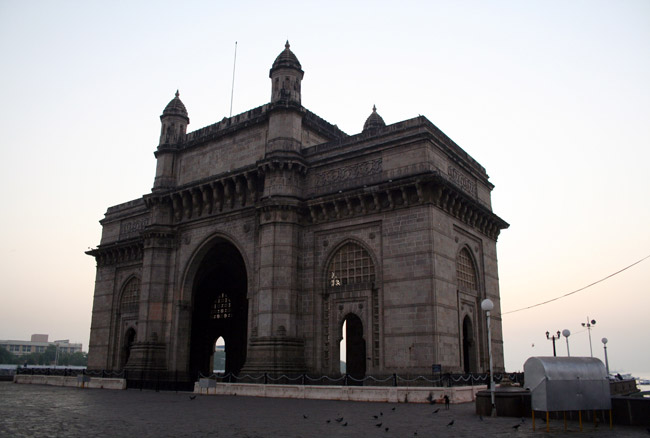
    Photograph of Gate way of India: Fotocorp


  • Jury meets to select winners of the 9th Mirchi KAAN Awards

    By A Correspondent


    The ninth edition of the Mirchi Kaan Awards had an unprecedented response when the Ad gurus met to select the best radio ads of 2011. There were a record 300 entries, a 50 per cent jump over last year. The number of participating agencies doubled to 33 agencies. And the number of entries for the Best Use of Radio as a Medium saw a tripling of entries to a record 31. Entries were spread across 15 categories, ranging from food to cosmetics.


    The winners will be felicitated at a gala event hosted by Cyrus Broacha on April 17 at Comedy Store, Phoenix Mills. The Mirchi KAAN Awards was introduced in 2004 to celebrate creativity in the challenging and evolving field of radio advertising. Over the years it has recognised and honoured ground-breaking and original radio campaigns.


    Speaking about the ninth Mirchi KAAN Awards, GG Jayanta, National Marketing Head, Radio Mirchi, said: “Every year the stakes get higher. In our 9th edition, the entries and the number of participating agencies have doubled. This is a testament to the prestige that winning a KAAN award gives. I thank the jury for having taken the time out of their busy schedule and selecting the winning entries.”


    The eminent jury included stalwarts like Pratap Suthan, Priti Nair, Amit Akali, Malvika Mehra, Manohar Nayak, Josy Paul, Rekha Nigam, Deepa Krishnan, Ramanuj Shastry, Tista Sen, Sonal Dabral and Ravi Deshpande.


    Sharing his thoughts about the quality of entries received this year, Josy Paul, Chairman and National Creative Director- BBDO India, said:  “Radio is a very personal and one to one medium. Hence good execution is of utmost importance. There has been resurgence in lot of fresh ideas this year which has lead to more freshness in programming.”


    Sonal Dabral, Chairman and Chief Creative Officer, DDB Mudra Group, said: “I am on the Mirchi KAAN Jury for the very first time this year and I am quite excited to be a part of this process. Radio as a medium has a lot of potential. Unlike earlier, a lot of brands have now started including and demanding for Radio advertisements to be included in the overall marketing campaign.”


    Ravi Deshpande, Chairman and Chief Creative Officer, Contract Advertising, said: “Advertising is always evolving, and especially radio advertising has seen tremendous amount of growth. Interesting trends of conversations are always happening and it’s nice to see them getting adapted to the medium of radio”.


    Ramanuj Shastry, Chief Creative Officer, Saatchi & Saatchi, said: “It’s fun to be a part of the Mirchi KAAN Awards. New writers are coming in, innovative projects are being showcased. As a jury member it is a pleasant experience to watch this fantastic trend”.


    Amit Akali, National Creative Director, Grey Worldwide, said: “The Tony Hertz workshop for these aspirants as a run-up to the main KAAN Awards is a commendable initiative by Radio Mirchi. The workshop will help the listeners to learn the nuances of radio advertising and improve the quality”.


    This year the theme of the Mirchi KAAN Awards’ ‘Listen, Learn, Shine’ focuses solely on the quality of work in the developing industry of radio advertising. Celebrated and renowned ad guru, Tony Hertz, will conduct a seminar on the art and craft of radio advertising for the aspirants from various ad agencies on April 17 as a build up to the Awards night. ET Now is the television partner and Afaqs.com is the digital partner of the ninth Mirchi KAAN Awards.