

Tag: IPL

  • Thoughts on IPL Media Rights, a week after


    By Indrani Sen


    Indrani SenLast week, on June 14, 2022, the final results of the e-auction conducted by the Board of Control for Cricket in India (BCCI) were declared with the Board earning a whopping Rs 48,390 crore for all the packages offered by them for auction. The amount is almost three times of Rs 16,376.5 crore, the money which Star India paid for TV and Digital media rights for the 2017-2022 cycle. This has made IPL the second most valued sports league in the world, next to America’s National Football League pushing English Premier League to the third position.


    By now everyone knows that this time Disney Star India has won only Package A containing telecast rights (India sub-continent) for next five years 2023-27 by bidding Rs. 23,575 crore. Viacom18 has bagged Package B containing digital rights (India subcontinent), Package C containing digital rights of 18 matches per season and part of Package D containing media rights (both TV and digital) for three global regions, Australia + New Zealand, the UK and South Africa, the main cricket playing countries whose players have been regularly participating in the IPL tournament. There is some confusion in the market related to the total payment of Rs.23,758 crores made by Viacom 18 to BCCI as lot of people have concluded that the amount has only been paid for the domestic digital rights whereas Viacom18 actually paid Rs 20,500 crore for the domestic digital rights. The media rights for the balance global regions have been won by Times Internet.


    Lalit Modi has been getting lot of coverage related to IPL media rights auction this time as cricket historian and author Boria Majumdar timed the release of his book on Lalit Modi “Maverick Commissioner” last week right after the announcement of the winners of IPL’s e-auction for media rights for 2023- 2027. Majumdar also announced that his book will soon be made into a film. Suddenly. media channels are busy interviewing Lalit Modi who is having a field day. At the time of writing, I read his interview on www.mykhel.com where he has said that BCCI should make it mandatory for all IPL franchises to own a women’s team in order to start a Women’s IPL in India. Last week, in an interview to NDTV Sports, he said that value of media rights will double again in next cycle as IPL viewership is probably the highest in the world in terms of people watching the matches (https://sports.ndtv.com/ipl-2022/ipl-viewership-probably-highest-in-the-world-lalit-modi-to-ndtv-3079226 ).


    While the Indian M&E industry is still struggling with its overall growth after the pandemic, one wonders from where the growth in the value of IPL media rights will happen? According to the EY FICCI report 2022, digital advertising grew by 29% in 2021 and TV advertising grew by 25% in 2021 which was still slightly short of the pre-Covid 2019 level. TV subscriptions continued to fall in 2021 for the second consecutive year. In the last few weeks of IPL, there was a sharp fall in the TV viewership which had raised doubts about the base rates fixed by BCCI for the e-auction. If any particular media property grows at a much higher rate than the market average for a certain period, it does so at the cost of other media properties in the same media bucket which cannot be sustained in the long run. Only time will tell if the value of IPL media rights based on the current e-auction will be actually attained.


    Back in 2016, when Star India won the TV and Digital rights for IPL (2017-2023), a lot of doubts were raised about the possibility of their success in achieving the targets. This time, industry people are speculating more about the winning bid of Rs 20,500 made by Viacom 18 for the digital rights and the implications of TV and digital rights going to two different organisations.  The Reliance-backed Viacom18 seems to have played its cards well based most likely on a deep-routed strategy for increasing their market share in online video viewing backed by the huge share of Jio in the telecom market. The introduction of 5G is expected to change consumers’ choice for live viewership of sports events from TV to mobile during this 2023-2027 cycle.


    According to an article by Javed Farooqui on Exchange4media on May 7, 2022, London-based Omdia’s recently published report on online video viewing trends shows that in India Disney+Hotstar leads the chart with 41% share. The article also shared the following graphic from the research.


    Source: https://www.exchange4media.com/digital-news/disney-hotstar-has-41-share-of-indian-online-video-subscription-market-omdia-112817.html


    Disney+ Hotstar’s subscription base tripled during pandemic years from 8 million to around 25 million by the end-2020, thanks mostly to IPL’s coverage and the competitive pricing of its annual plan. Omdia believes Disney+ Hotstar will continue to lead the standalone subscription online video market. The same report estimated that online video-on-demand (VOD) subscription market in India reached a value of $639 million in 2020, up by 142% from 2019. Disney+ Hotstar and Netflix together accounted for 78% of the total online video subscription market.


    ViacomI8 may be planning to revive Voot with this bid for digital media rights of IPL and may be also ready to write off losses, if any, as part of marketing cost for promoting Voot. With 41% marketshare, Disney+Hotstar was not required to invest proportionately high amount in winning the digital rights of the IPL. On the other hand, Disney Star India has a greater need to protect its turfs in the various TV genres where competition is much stronger.


  • IPL Media Rights: Indian Streaming’s Watershed Moment is Here!


    By Shailesh Kapoor


    Shailesh KapoorIPL media rights went under the hammer this week, and the results are out. The overall value of rights has gone up by almost 200%, though the growth is a notch lesser if one looks at the per-match average, as there are more matches lined up in the coming years because of the addition of new franchises.


     

    The growing stature and commercial value of IPL is not surprising. It’s literally the only TV property in India that has “event value” today. Gone are the days when big-ticket reality shows rated 4%+. Gone are the days when a single TV show worked across the audience spectrum, amassing event-like numbers every night. In times of highly-fragmented viewership, IPL is the only TV property that has any sense of audience aggregation at all.


    What surprised me, albeit mildly, is the massive growth in the price of the digital rights. In September 2017, when the last auction was held (for IPL 2018-22), Star India won on a consolidated TV + Digital bid. But if you look at the highest bids for the TV and digital packages individually, they stood at INR 11,050 Cr for TV (Sony Pictures) and INR 3,900 for digital (Facebook). That’s a ratio of 2.83.


    This time, the main domestic rights (Package A & B) have gone for INR 23,575 Cr (TV) and INR 20,500 Cr (digital), i.e., a ratio of only 1.15. While TV rights have gone up significantly too (even if you look at the per-match average), it’s the change in the ratio that’s a sign of things to come: Digital is no longer niche. It’s as mainstream as TV. Even if the viewership numbers are still higher on TV, digital has the momentum, and the advertiser sentiment, on its side.


    If you also consider Package C, which is another digital package for non-exclusive rights (eventually taken by Viacom 18 itself, who also took Package B), the ratio of TV to digital is 0.99. In simple terms, from being almost a third of TV rights five years ago, digital rights of IPL have gone for a notch higher than the TV rights this time.


    The absence of an integrated measurement system will be felt more than ever before. Advertisers now have two equally-sizeable media to put their IPL moneys on. But they won’t have an integrated currency measurement to help them plan it well. This was a lesser issue so far, not only because digital was the smaller piece all these years, but also because the last five years had both rights under the same network, and the selling was often bundled. Both those factors have now changed, and we are in for some eventful times. Both Star India, who continue to hold the TV rights, and Viacom 18 will have to innovate out of their skins to monetise their prized grabs.


    IPL digital rights crossing TV rights in value is a watershed moment in the Indian entertainment business. Linear TV has lost its pole position this week. And streaming is a worthy successor.


  • It’s raining monies at the IPL 2023-07 media rights auction


    By Our Staff


    There’s a popular reality show on general entertainment channel Colors called Khatron ke Khiladi. It requires contestants to perform daredevil acts, including tasks with snakes and scorpions, jumping off helicopters. And walking the tightrope. Literally.


    Now, veteran media professional Uday Shankar who has invested a fair deal in Viacom18 is now set to do a Khatron ke Khiladi act himself (lest it’s missed, the ‘fair deal’ pun was intended). The word ‘khatron’ should of course not be construed in the negative sense, but it’s just that what Shankar has bet really big on with the digital IPL win making him a ‘khiladi’ of the really big stage.


    Every summer, at the beginning and end of the cricketing extravaganza when the revenues will be aggregated, there will be an intense sweating, like it’s on the reality show. We should add the word ‘perhaps’ after ‘there will be’. Coz surely this is more than just playing fear factor. Unlike 2018 where he was an employee of Star, now he’s an investor in the project. So we can be sure there’s a method to the bidding.


    So, let’s get past the foreplay. Disney Star India and Viacom18 have bagged the TV and digital rights for the five-year 2023-2027 period of the Indian Premier League (IPL).


    The Board of Control for Cricket in India (BCCI)’s media rights for IPL 2023-27 will – as of now – generate Rs 44,075 crore, up from the Rs 16,347 crore paid by Disney Star for 2018-2022. An official statement from BCCI is awaited.


    Package A (television rights for Indian sub-continent) has netted it Rs 23,575 crore


    Package B (digital rights for Indian sub-continent) has got it Rs 20,500 crore


    Package C sundry digital rights have already touched Rs 1800 crore. The final outcome is awaited


    Package D rights results are also awaited


    It may be remembered that the entire television and digital rights were owned by Disney Star India until this year. In fact after bagging TV rights for 2023-27, Disney Star challenged Viacom18 in a fresh round of the e-auctions. Finally, Viacom18 took the big leap and closed the bidding with Rs 50 crore per match as its fee. Disney Star will need to pay Rs 57.5 crore per match for television. Overall, as of now, BCCI will earn Rs 107.5 crore per IPL encounter.


    During the media rights auctions that were held on June 12 and 13, TV rights fetched Rs 23,575 crore for broadcast rights and Rs 20,500 crore for digital, said people tracking the media rights auction.


    What’s balance is Package C and Package D rights, the results of which will be known later today (June 14).


    According to industry sources, ad rates will go north by 20-30 per cent on both digital and television. Industry commentators say the IPL 2023-27 dynamics will see a structural change happening in the media landscape. Linear television is going south in terms of viewership, and digital consumption is going to leapfrog. However, even though digital can allow micro-targeting, ad revenues are still found wanting. The play will surely be in the case of subscription-led revenues, and given that Viacom18 is part of the Reliance Industries stable which owns the Jio telecom network, there will be synergies.


  • #AdsOnIPL: And the award goes to…


    By Vikas Mehta


    Vikas MehtaSince this was the last week of IPL, my editor suggested that maybe I should decide on the Top 4 ads of the season. Like the Top 4 play-off teams. But with IPL being unusual in so many respects, I decided to do something unusual too. What if we had an IPL ads awards? Not just the best four, but look at many more. So, here is a list of the categories and the winners.
     

    Oh, before I forget, these awards are sponsored by MF, as yeh bilkul sahi nahin hai.


    The Paisa Vasool Entertainment Award is a toss-up between the Ravi Shastri Cred ad and the Swiggy Instamart Dolly Aa Rahi Hai ad.


    While at Swiggy Instamart we cannot forget Dunzo. It gets the award in the Prophet of Doom category for announcing the demise of refrigerators in the midst of summer.


    Spotify gets the award in the Saannu Ki category for using music to blank out all the worldly debates.


    The Hum Nahin Sudherenge Award goes to Jio for its song and dance routine by cricket stars season after season.


    Jio also wins the Can’t Act for Nuts, Can’t Dance for Nuts Award for forcing cricketers to dance and act year after year.


    The undisputed winner of the Cooked Up Nostalgia Award goes to Dream 11 Ashwin ad.


    Pepsi Salman Khan double role ad is the winner of the Faulty Time Machine category.


    Pepsi is the winner again, in the Tag Line with an Asterisk category. It was the sole entry but the 7 point, 50 word explanation of the asterisk in the last three seconds of the ad made it a clear winner.


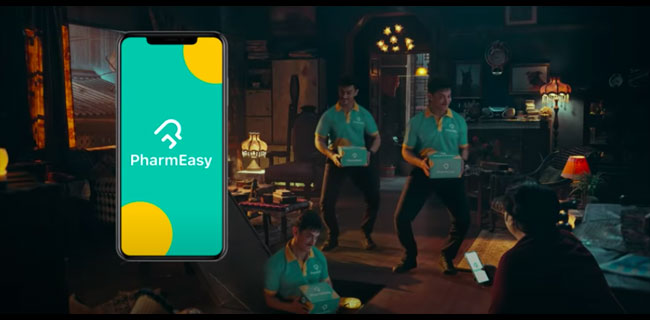
    The Good from Far but Far from Good Award is again a toss-up. This time between the Kareena Kapoor MedNet and Aamir Khan PharmEasy ads.


    The MedNet ad also won the Jab We Net category award, courtesy the Railways.


    The Indigo paint ad featuring Dhoni was the clear winner in the No Animal was Harmed while Shooting an Ad category, as the only people who suffered were human beings like us.


    Bas Naam hi Kaafi Hai Award goes to all ads featuring Dhoni.


    PhonePe Aamir and Aalia ads get Police Story Indian version award.


    Meesho ads are the recipient of the Wah, Kya Scene Hai award.


    Tata Neu is the winner of the It Happens Only in India award for raising hopes of spending on a honeymoon by buying a sui (needle).


    The Study, Study, More Study Award goes to Byju’s + Aakash classes and the Money, Money, More Money Award goes to all fintech companies except PayTM.


    PayTM gets the Neend Se Jaago Award for explaining the concept of UPI five years after its launch.


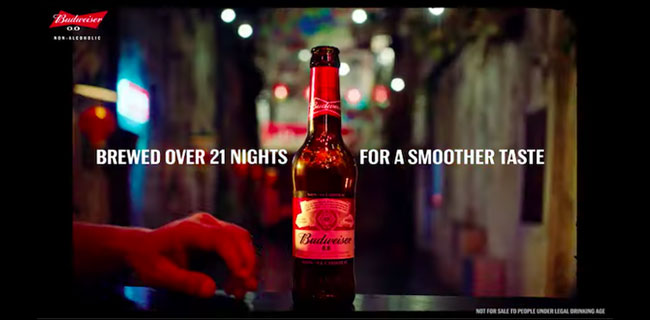
    Vimal, Kamla Pasand and Budweiser get the Cock a Snook Award for neatly bypassing rules and regulatory bodies.


    Jiomart gets the impossible is nothing award for letting Ranveer Singh be a normal person.


    A special award to Aamir Khan in the category, Any Publicity is Good Publicity, for asking Rashid Khan about the Eid spread that Rashid made for his teammates. Not an ad? You are wrong. Am sure his next release is round the corner. And as I write this, I see a trailer for his new film releasing in August. The interview was a quid pro quo for screening the trailer. Self-promotion.


    And finally, if you do see this last award below being mentioned, then it means my editor does not read my columns.


    The biggest award of the season, the KLPD Award goes to Tata Neu for having a great set of teasers but then the revelation being like a hole in the sui.


    Do you have any more categories to suggest?


    Disclaimer: Tsk Tsk Tsk. All of you with dirty minds….KLPD stands for Kaise Log Proposition Dubate hain


    Vikas Mehta is a senior strategic advisor and educator based in Dehradun. This is the second season that he’s been reviewing ads around the IPL coverage. His views here are personal.


  • The curious case of self-regulation


    By Vikas Mehta


    Vikas MehtaThe Budweiser ad aired on the IPL last week is symptomatic of the hypocrisy that is so evident in the industry. On the face of it, there is a blanket ban on alcohol and gutkha products. Yet, both the categories find enough loopholes to beat the ban. Both get away with surrogate advertising. ‘We are not about guthka but about silver coated elaichi.’ ‘ We are not about alcohol but about playing cards or water.’ And to add insult to the injury, stars like Akshay Kumar and Amitabh Bachchan, who at the drop of a hat shout about nationalism and patriotism, find nothing morally wrong in promoting such products. When they are criticised and trolled, they profess ignorance about such surrogate advertising, apologise, make some grand gestures about cancelling contract or donating the earnings to a social cause and life continues as before. The ads continue unashamedly.


    But the Budweiser ad tops it all. It does not even pretend to be a surrogate. It shows what definitely looks like a beer bottle. It talks about being brewed over nights. And then to make sure there is no confusion that the product is a beer, it talks about brewed over 21 nights for a smoother taste. How brazen can one get? It’s almost like teasing the regulatory bodies. And what will they do?


    ASCI will wait for someone to complain. Then issue a showcause notice. If the advertiser does not respond within a few weeks, it will write to the advertiser that the ad violates its code of conduct and they should desist from airing the ad. In the meanwhile, IPL would have not only finished but the advertiser would have anyways stopped airing the ads. Come to think of it, Budweiser has already stopped the ads. It was a neat ambush. All are happy. The advertiser has got exposure in IPL. ASCI will have done everything by the book and can claim that they stopped the ad.


    But soon enough this will become inspiration for another advertiser and the whole story will be repeated. This self-regulation is a joke. We need fines, bans. Some tough measures. But what can one expect from a body whose rules do not allow it to rule on government or political ads. Mind you, these are the largest source of revenue for press media. But ASCI constitution does not allow it to question political ads or government ads. So, how can we expect anything tough from ASCI? The self-regulation is a hypocrisy so that no law-enforcing body need interfere. The industry continues to make merry. This charade, hypocrisy has to be stopped. Either ASCI gets a mandate to take tough measures, or remove the loopholes or let an outside body with enough powers step in.


    The silver lining this week was the first decent Jio ad I have seen. And it was for Jiomart. A very homely and not over-the-top, Ranveer showcases the simple features of Jiomart along with Deepika. Everyday sasta, no minimum order. The two ads make two simple points. One, is the power of storytelling. Single-minded benefit in each ad makes it episodic and entertaining. Two, how star power can be harnessed in an effective way. Ranveer, has a screen persona which is outlandish and over the top. But as a husband one can expect him to be a normal, doting husband. And that’s exactly how he comes across.

    For me, the ad of the week was Cred. There have been lot of stories and tales about Ravi Shastri and his extracurricular habits. Cred used these brilliantly to build a narrative about Shastri. What I particularly like was that they could convince Shastri to portray his oft-debated, but never openly discussed persona in the ad. It was hugely entertaining and did the job for the brand also very well.

    https://youtu.be/vLHpfulLcUE

    So, as we have the four surprise play-off teams in competition, we have had some surprising ads this week. Which were your Top 4 ads of IPL 2022? Compare your notes with me. Next week.


    Vikas Mehta is a senior marketing and business strategist and educator. This is the second IPL season where he has been reviewing for MxMIndia. His views here are personal.

  • Brooke Bond 3 Roses collaborates with CSK for new TVC

    By Our Staff


    Brooke Bond 3 Roses tea brand launched its new TVC Idhu Namma Tea(m), where it has partnered with the IPL team ‘Chennai Super Kings’ for its 15th edition. The campaign highlights the message of ‘Idhu Namma Tea, Idhu Namma Team’ (It’s our Tea, It’s our Team) to connect with the audience by accepting and trusting the new members of CSK.


    Said Shiva Krishnamurthy, Vice President, Tea & Foods (HUL): “Brooke Bond 3 Roses is South India’s most loved tea brand and an icon of Tamil Nadu. Being Tamil Nadu’s favourite tea, we are happy to partner with Tamil Nadu’s favourite tea(m), Chennai Super Kings, during this year’s IPL. Our Idhu Namma tea(m) campaign celebrates Tamilians’ love for 3 Roses tea and for CSK with lots of warmth and affection.”


    Added Ajay Mehta, Senior Vice President, Mindshare: “With the IPL season, we took this golden opportunity to associate with Chennai Super Kings, a team that unifies entire Tamil Nadu and resonates well with the brand’s philosophy of togetherness. The films capture this in a light-hearted manner and that too over a cup of tea.”


  • Medicines: Quick delivery? Naah!


    By Vikas Mehta


    Vikas MehtaI have been constantly writing about this year’s IPL being unusual. In many ways. And now when we are reaching the business end of the league, it’s getting obvious that the three most unfancied teams are set to qualify for the playoffs. Paying an ode to the unusual season, this column is also going to be unusual. This time I am taking up one category campaign and talking about it extensively.


    In the midst of edutech, fintech, transport aggregators, there is also the medicine aggregators. And some brands like Pharmeasy and Pharmeasy have advertised heavily on IPL. Both have used celebrities. Both have done multiple ads. Both promise multiple benefits. And both, over-promise.


    When anyone needs a medicine, usually it’s because there is an urgent need. The delivery needs to be in minutes. But my experience with both the apps show that the usual delivery time is anything between one to four days. Maybe because I am in a small town therefore the medicine logistics is still to be sorted out. But isn’t that an irony. A small town should be able to deliver much faster. Netmeds, I have walked into Reliance Smart stores with prescription, which have a small Netmeds dedicated pharmacy area, and the standard answer is that they will check and call me back. And call back is after a few hours which confirms that the medicine will take another 12-24 hours. Both times that I tried Netmeds, by the time the call came, I had already bought the medicines from an offline pharmacy. And of course the app showed at least two to three days to deliver.


    Therefore, when I see the Kareena Kapoor ads which talk about quick delivery, the brand loses all credibility. Ditto with Pharmeasy as they clearly say same day delivery. Maybe they deliver cosmetics and other non-medicine products fast. But then are they just a Swiggy Instamart or Dunzo? They need to be Swiggy Instamart and Dunzo in medicines or else stop making these claims.


    The Kareena Kapoor train ads go on to show other benefits like quality or range. Again, I am not sure if one needs to highlight these benefits for medicines. The app claims to sell medicines against prescriptions. So, do we assume that quality of the prescribed medicines is a suspect? Range is more confusing. Yes, generic drugs can be available but how many of us actually know about it or are willing to even order a generic and ignore the doctor’s prescribed brand? I suspect they are pushing more of the cosmetics or supplements or tonics rather than the prescribed medicines.


    Pharmeasy with Aamir Khan on the other hand has chosen some relevant benefits. Ordering medical equipment like sugar meter or even organising for home medical tests. These definitely are relevant and benefits that matter to the category. And I quite liked the exaggeration execution of three Khans belabouring each point.


    Ultimately, both these brands cannot overcome the lure of discounts. Medicines, by Indian standards are definitely expensive. So double digit discounts work. And the lure of a minimum discount always is music to ears. Specially, when one is on long-term medication for ailments like diabetes, cholesterol, arthritis etc. These medicines are expensive, they are required on a regular basis and most importantly can be ordered in advance, keeping two-three days delivery time in mind. So discounts do play an important role in both the brand communication.


    As a marketer, I have always wondered at multi0benefit communication. Does it really help? Do the consumer remember all benefits? The classical theory says that let one benefit be emphasised so that it sticks. And can be owned. My thinking is that well executed multi benefits work if they are relevant. The target consumer picks out the benefit that he needs or that matters to him and that sticks. So, if we take Pharmeasy, someone who needs to buy a medical equipment or needs to do tests will remember the brand. But the irrelevancy of quality or range for medicines, makes me doubtful about Netmeds communication. And discount is almost like a must. It is a category given without which no brand will survive. In fact, discount is like a blind spot. Its presence is almost like a reassurance but its absence will be most glaring. As for speed of delivery, the brands need to either improve their delivery or not talk about it.


    Episodical ads, which seem to be like a continuing story narrative, always create interest. And using a celebrity to anchor it is a good idea if the celebrity becomes an integral part of the narrative. The Netmeds ads with Kareena Kapoor reprise her role in Jab We Met. So all the episodes have good empathy. Pharmeasy, on the other hand is not episodical but Aamir lends it a nice ethereal quality which again piques our interest.


    As I sign off this week’s column, I am aghast at seeing the new Budweiser ad. But in the spirit of being unusual, let me leave it at that. More about it, next week.


  • Brooke Bond 3 Roses collaborates with CSK for new TVC

    By Our Staff


    Brooke Bond 3 Roses tea brand launched its new TVC Idhu Namma Tea(m), where it has partnered with the IPL team ‘Chennai Super Kings’ for its 15th edition. The campaign highlights the message of ‘Idhu Namma Tea, Idhu Namma Team’ (It’s our Tea, It’s our Team) to connect with the audience by accepting and trusting the new members of CSK.


    Said Shiva Krishnamurthy, Vice President, Tea & Foods (HUL): “Brooke Bond 3 Roses is South India’s most loved tea brand and an icon of Tamil Nadu. Being Tamil Nadu’s favourite tea, we are happy to partner with Tamil Nadu’s favourite tea(m), Chennai Super Kings, during this year’s IPL. Our Idhu Namma tea(m) campaign celebrates Tamilians’ love for 3 Roses tea and for CSK with lots of warmth and affection.”


    Added Ajay Mehta, Sr. Vice President, Mindshare: “With the IPL season, we took this golden opportunity to associate with Chennai Super Kings, a team that unifies entire Tamil Nadu and resonates well with the brand’s philosophy of togetherness. The films capture this in a light-hearted manner and that too over a cup of tea.”


  • DDB Mudra campaign for McDowell’s No. 1

    By Our Staff


    McDowell’s No. 1 has launched a new campaign for IPL season. The campaign, conceptualised by DDB Mudra, features IPL players such as Virat Kohli from Royal Challengers Bangalore, Yuzvendra Chahal from Rajasthan Royals, Kieron Pollard from Mumbai Indians and many more, to bring alive the stadium action on the screen.


    Speaking about this association, Ruchira Jaitly, Executive Vice President and Portfolio Head, Marketing, Diageo India, said: “Cricket is a sporting extravaganza that brings the entire country together with inspiring sporting action that’s a feast for Indians across the length and breadth of the country. So naturally, we are delighted to be associated with these six iconic teams. Moreover, this cricket season is the perfect platform to bring alive the special moments when yaars connect and make magic happen, whether while playing or while watching this tournament. To further add to the fun and entertainment, we are excited to give fans a chance to cheer for their teams with inspiring and playful language like never before. McDowell’s No.1 Soda is proud to share the spirit of Yaari with these amazing teams and build a meaningful new partnership.”


    Added Neeraj Kanitkar, Executive Creative Director – West, DDB Mudra: “No.1 Yaari, six of the biggest IPL teams and 18 superstars deserve a grand platform. #No1YaariCheers is just that. A new language of Yaari that fuses what yaars do – from showing support to inspiring to teasing to provoking to badgering and everything in between – support, inspire, tease, provoke, badger – with the language of cricket. With the cricketers not having to so much act but simply express their Yaari for each other, they brought their own style to the cheering/ chanting. Making for entertaining shoots and an exuberant bunch of films.”


  • Hindware new TVC with IPL squad

    By Our Staff


    Bathware brand Hindware has announced the launch of its new campaign ‘Swag Se Refresh’. The campaign features cricketers Shikhar Dhawan, Mayank Agarwal and Liam Livingstone, all part of the Punjab Kings squad 2022.


    Said Sudhanshu Pokhriyal, Chief Executive Officer, Bath and Tiles Business, Brilloca: “Cricket transcends all boundaries and brings India together. Over the years, IPL has emerged as a celebration of the sport and one of the biggest cultural moments for cricket fans in the country. To further our marketing strategies, we are excited to launch the new campaign, ‘#SwagSeRefresh’ along with Punjab Kings to build an engaging connect with our audience during the IPL season 2022.”


  • Octa to launch Second Income campaign on Hotstar

    By Our Staff


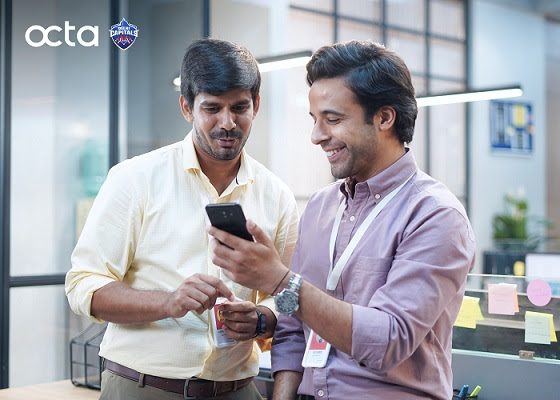
    Octa, a global brand of investment services, has announced the launch of a new campaign on the streaming platform Hotstar, which helps cricket enthusiasts watch their favourite teams play live. All through the IPL season, Hotstar will be streaming Octa’s Second Income campaign video clips during the matches.


    Said an unnamed Octa spokesperson: “At Octa, it is our deep conviction that everyone should be able to diversify their income streams. With the Second Income campaign, we want to show that the world of investments is not something beyond the reach of the general public. On the contrary, anyone willing to put their time and effort into financial education can discover the benefits of investing online and generating additional income.”


  • Looking consumer, talking trade


    By Shailesh Kapoor


    Shailesh KapoorWe are four months into 2022, and the year has not been short of action on the Indian M&E front. The month of April itself has been full of big announcements, of new companies being formed, of big companies getting new owners, and of new collaborations on the creative front. It’s also been a month where a film that has delivered some astonishing box office numbers, i.e., K.G.F: Chapter 2. Bollywood is facing an identity crisis, of its own making, as cinema from the South of India makes heavy inroads into the Hindi market. Some streaming platforms are finding it hard to grow subscribers in a post-pandemic scenario, but others continue to scale up their offering. News television ratings are back. All this while the IPL goes on, and we begin to build up to the suspense around the renewal of IPL’s broadcast rights.


    Can you spot a pattern in these key events? They are all trade developments. They are B2B events or announcements that the average consumer, who’s not invested in a media business, has no interest in. An IPL fan will watch IPL wherever it is available. Streamers will choose their content and subscriptions according to their taste. The viewing of news does not depend on whether it is being measured or not. The box office of a film does not make it any less or more likeable for someone who chooses to watch it. Most audience of television and streaming content do not care about who the owners or shareholders of the channel or the platform they are watching are.


    The B2C narrative has been marginalised. This has been a growing trend over the last few years. Why should this happen, I often wonder. In the older days too, there was always enough action on the B2B front. But the general narrative was always about content and marketing. There will be articles and interviews around shows, films, ad campaigns, the works. You would want to know more about a series you follow, or about the making of a movie that you loved. But these topics are not easy to find even on social media, forget the mainstream. Everyone wants to talk trade. Box office, ratings and subscriber bases have seeped into B2C terminology.


    My hypothesis is that this is an outcome of a paid media economy created over the years. The Times of India introduced its ‘advertorial’ service Medianet more two decades ago. Since then, the term ‘Medianet’ has become a generic for all paid plug-ins across publications, including those online, and those not owned by BCCL. For some curious reason, a large share of such ‘advertorials’ comes from M&E companies, who possibly see paid PR as a good way to reach their target audience. For some reason, such communication tends to be business-centric at times, talking box-office and viewership, to lure audience to watch a particular show or film.


    Over two decades of doing this, the lines have blurred. B2B PR is the new B2C PR. The consumer did not care initially, but now, it’s so mainstream that they have learnt to embrace it all… with the jargon and the half knowledge.


    I miss the old days, when you could read a meandering, long-form piece on a film you had liked. Today, one looks for blogs and vlogs that still try and keep that culture intact, with little or no funding backing them. But it’s never the same as reading or watching on linear television.