Tag: Instagram

  • Instagram launches Creator Lab in India

    Instagram has launched a Creator Lab in India. This initiative aims to provide support to young people across India who are interested in content creation.

    As many as 14 content creators feature in the content on Creator Lab, who represent diverse geographies, genres and growth journeys. Some of them are Aabir Vyas, Govind Kaushal, Meethika Dwivedi, Raghav Sachhar, and The Vixens Crew. The creators will share takeaways around three themes that are essential to achieving sustained success:

    The content is available in English and Hindi, depending on the comfort of the creators who’re part of the videos. Going forward, more content will be added to the Lab, and the content will also be captioned in 6 Indian languages – Tamil, Telugu, Malayalam, Kannada, Bengali, Hindi. Here’s the link to the Lab.

    Said Paras Sharma, Director, Global Partnerships, Meta, India: “We are dedicated to empowering creators to express themselves freely and succeed in their own unique way. We recognize that success means different things to different people, and we are constantly seeking ways to add value through product features, programs, collaborations, and economic opportunities. To support aspiring creators, we are now launching Creator Lab, a resource that provides content by creators, for creators. Our goal is to help creators across the country take advantage of this opportunity and achieve their goals.”

  • Instagram’s Creator Marketplace to make things easier

    Instagram has announced that it is taking its creator marketplace to eight new markets. Over the next few weeks, we plan to invite creators and brands based in India, Canada, Australia, New Zealand, UK, Japan and Brazil to join Instagram’s creator marketplace. Chinese export brands will also be invited to connect with onboarded creators in countries outside of China.

    Notes a communique: “Brands have told us it can be challenging to source creators for partnership ads. That’s why we’re excited to begin testing in the US our brand new, machine learning-based recommendations that use Instagram data to help brands more easily discover creators who are the best fit for their campaigns. Eligible brands can access these recommendations over the coming months on Instagram’s creator marketplace in Meta Business Suite,” adding: “Instagram’s creator marketplace can help brands easily find relevant creators for any kind of collaboration, but one of the most powerful is partnership ads. Partnership ads (formerly known as branded content ads) allow advertisers to amplify content with a creator or other partner’s handle to scale their collaborations. Partnership ads are the most performant and transparent way for advertisers and creators to run ads together and Instagram’s creator marketplace helps brands discover creators to partner with.”

  • Is 13 too young to have an Instagram account?


    By Catherine Page Jeffery


    The surgeon general is the “nation’s doctor” in the United States. They are tasked with giving Americans the “best scientific information” about their health.

    Late last month, the current US surgeon general, Vivek Murthy, warned 13 is too young to join social media. He said it poses a risk to young people’s “self-worth and their relationships”, adding:

    I, personally, based on the data I’ve seen, believe that 13 is too early […] the skewed and often distorted environment of social media often does a disservice to many of those children.


    Is 13 too young? What should parents think about when it comes to their kids and social media accounts?


    Why are we talking about 13?

    Major social media platforms, including Twitter, Instagram, Facebook and TikTok, require users to be at least 13. This includes those in Australia and New Zealand.

    This minimum age requirement stems from 1998 US legislation which banned the collection of children’s personal data without parental consent.

    For many parents, schools and cybersafety experts, this minimum age has become something of a benchmark. Many assume it comes with the implicit assurance social media platforms are appropriate and safe for children once they turn 13. Conversely, they also assume they are unsafe for children under 13.

    But this is not necessarily the case.


    What does the evidence say?

    Social media platforms do present some risks for young people. These include online bullying and harassment, exposure to misinformation and inappropriate content, grooming, privacy breaches and excessive use.

    Stories documenting the potentially harmful effects of social media are rarely out of the news. Studies claim links between social media and poor mental health and low self-esteem.

    These findings are concerning, and there is no doubt social media may negatively affect some young people’s wellbeing. However, it is not a straightforward question.

    While these studies might find a correlation or link between excessive social media use and poor self-esteem, for example, they rarely point to direct causation. Young people already experiencing low self-esteem and depression may use social media significantly more than others.


    So why don’t we just increase the age?

    Murthy acknowledges it is difficult to keep kids off their devices and social media. But he suggests parents band together, and say you know, as a group, we’re not going to allow our kids to use social media until 16 or 17 or 18.

    But any increase in the age – whether formal or informal – will not necessarily keep children safer online. Children can easily falsify their ages (many already do). And young people are good at finding creative and secretive ways of doing what they want regardless.


    Why can’t parents just say no?

    It is often suggested – by cyber safety experts – that parents just say no. This message has been reinforced by celebrity commentators such as British actress Kate Winslet, who recently told the BBC:

    My children don’t have social media and haven’t had social media.

    While these approaches may work with younger kids, older children are unlikely to simply comply. Blanket bans and restrictions not only lead to family conflict, but are also more likely to lead to children using social media without parental consent or knowledge.

    This is a problem because parents play an important role in helping children navigate online spaces, including the sometimes fraught nature of peer relationships on social media.

    If a child has a social media account without parental permission, they are much less likely to seek out their parents for help if they have a problem online, for fear of getting into trouble or having their device taken away.


    Children also have a right to be online

    Discussion about risks also tends to ignore the potential benefits of being online.

    Social media is incredibly important for many young people. It keeps them connected with friends and extended family, provides a platform for creativity and self-expression, and enables civic participation and activism.

    Social media also provides access to like-minded individuals and communities who may provide solidarity and support, especially for marginalised teens.

    Children, particularly teenagers, also have a right to participate in online spaces, including use of social media.

    The United Nations’ Committee on the Rights of the Child notes children have the right to “meaningful access to digital technologies” as a way of realising the full range of their civil, political, cultural, economic and social rights.


    So, when should my child get a TikTok account?

    There is no one-size-fits-all approach here. Children vary tremendously in terms of their maturity, skills, life experience and judgement.

    On top of this, online risk is not equally distributed, as children who are more vulnerable offline are more vulnerable online. For example, children with mental health problems, learning difficulties, a disability or who have problems at home are more likely to experience high-risk situations online.

    In deciding whether your child is ready for a social media account, parents might consider:

    Is my child especially vulnerable to online harms?
    Does my child have the required maturity and resilience to manage potentially negative online social interactions?

    Does my child listen to advice and follow rules?
    Is my child aware of the risks, and do they have strategies for managing them?
    Will my child come to me with any problems they encounter online?

    Parents might also consider their children’s offline lives, as these often carry over into online spaces. This includes what their friendships are like, their propensity for taking risks, and their ability to consider the consequences of their actions.


    Start talking early

    The best thing that parents can do is initiate conversations about social media and the internet early and often.

    Many issues that play out on social media are extensions of young people’s existing peer relationships. Parents can talk to their children about their friends and peers, show an interest in their child’s online activities, and openly discuss their child’s rights and responsibilities online.

    Some parents may wish to set reasonable expectations and rules about appropriate use of social media. Documenting these expectations through a “family technology agreement” that is negotiated democratically as a family, rather than through top-down rules, is more likely to succeed.


    Catherine Page Jeffery is Lecturer in media and communications, University of Sydney. This article is republished from The Conversation under a Creative Commons license. Read the original article.


  • Kurkure snacks launches Instagram filter

    By Our Staff


    Kurkure snacks has launched an interactive Instagram filter in two languages – Hindi and Telugu – that engages users to guess quirky literal translations of commonly known English idioms, songs and movie titles. The filter is a seamless extension of Kurkure’s ‘Videsi Mein Desi Chatpatapan’ campaign for its latest fusion flavour, Kurkure Chatpata Cheese.
     

    Commenting on the new filter, Neha Prasad, Associate Director and Brand Lead, Kurkure said: “After delighting our consumers with the all-new Kurkure Chatpata Cheese flavour, we are excited to extend the new proposition to an interactive social media campaign on Instagram. As part of our stratgy, we have customised our campaign to build strong regional connect and visibility in important markets. We hope consumers across the country enjoy this innovative filter that lets them express the quirky fusion between languages.”


  • Instagram launches new edition of youth program

    By Our Staff


    Instagram, in association with the Young Leaders for Active Citizenship (YLAC), has announced a new edition of their flagship youth program – the Counter Speech Fellowship. In its sixth year now, the program will engage young people on topics that matter to them, and encourage them to lead conversations about them online.


    Natasha Jog, Public Policy Manager, Instagram, Facebook India, said: “Instagram is a place where people express themselves creatively. The catalyst for such creativity is a positive environment and that’s the reason why we’re investing in the fellowship for the sixth year now. Young people across India have been part of this fellowship and have gone on to create communities that voice youth opinions and advocate for societal change. We’re thankful for the continued partnership with YLAC, and the ecosystem consisting of parents and young people, who invest their time and energy to make this fellowship a critical part of a young person’s digital upbringing.”


    Rohit Kumar, Co-Founder, YLAC, added: “Since we first launched the Counter Speech Fellowship, nearly 1,100 very talented and passionate fellows have leveraged the power of social media to create a world that embraces differences and provides support to those who need it the most. Many fellows have also taken it upon themselves to take the learnings from the fellowship outside the program, by initiating conversations in their family, their schools and community through their writing, webinars, outreach to influencers and policymakers, and collaboration with prominent civil society organizations. We are very excited about the continued partnership with Instagram to take this very important initiative to more young changemakers in India.”


  • Ashoke Agarrwal: Big Brands, The Digital World and The Promise of Brand Platforms

    Ashoke Agarrwal
    Ashoke Agarrwal

    By Ashoke Agarrwal

    Time was when all a brand manager had to do was decide on the season’s marketing mix (summer and winter), get the agency to produce a new mass media campaign (or refurbish the existing one), and kickback.

    It all changed with the emergence of digital marketing. Managing brands is now a daily grind. Digital campaigns have shelf lives measured in days and, many times, hours. Pricing and price promotions are a flux controlled by rising e-commerce. Competition now stretches beyond the cosy, almost collegiate set of yesteryears to, driven by the phenomenon of contract manufacturing, e-commerce and D2C, into a kaleidoscope of threats.

    How have the older big brands in traditional FMCG (personal care, home and garment care, packaged foods etc.), durables (white and brown appliances, electronics, auto etc) and services (banks, credit cards, insurance, hotels, restaurants, travel, movies, broadcast/ cable TV etc) met the challenges of the digital age? To my thinking, their performance, by and large, has been poor and, at the core, indolent.

    Old habits die hard. The old brands are still stuck trying to run an AIDA (Awareness, Interest, Desire, Action) based on what is essentially mass marketing.

    At the cognitive level, everyone in the marketing team of old brands will enthusiastically endorse the notion that the digital world allows for one-on-one interactive communication with the individual. However, dig into their marketing communication plans, and one will discern the same laziness of yore when message targeting was left to the vagaries of communication channels. The difference is that now they have added Google, Facebook and Instagram to the mix. And of course, the lexicon of performance marketing – likes, shares and clickthroughs – to the mass media metrics of reach, OTS and GRPs.

    How many brands today are anchored in the essential promise of the digital marketing age? This fundamental promise is the ability to carry out cost-effectively and efficiently one-on-conversations with not just thousands but millions of individuals. And in the process generating not just sales but loyalty, increased lifetime value of each consumer and even passionate brand advocates.

    This is a model of marketing I call EIDA – Engagement, Interaction, Delivery, Advocacy.

    If there are brands keyed into this essential promise of digital marketing, they are most likely the disrupters who are upending existing categories. Even among them, going by my personal experience in India, these disrupters, spoiled by VC burn money, soon fall into the big-spending lazy AIDA framework of broad-spectrum targeting, consigning the EIDA framework to discarded business plans.

    Let’s get back to where we started this article – the big, successful brands in traditional FMCG, durables and services. It is, to my mind, a shame that nearly all of them have botched the promise of the digital age. With the resources, ecosystem and talent at their disposal, they could have been at the forefront of a new marketing era. Instead, primarily due to their failure, we have a marketing paradigm that is ever more dysfunctional than the pre-digital one, with marketing dollars now funding tribalism, conspiracy and hate-mongering through increasingly influential social media platforms. Unfortunately, the Arab Spring was not the only promise of social media that has been so severely belied.

    When I ponder the many ways successful brands could better use the digital world – the one idea that strikes me as robust and viable is positioning the brand not just as a product or service but as a platform for something larger than itself. Only a successful, well-resourced brand with high credibility could create a good platform with broader social acceptability. To my mind, this is a unique, as yet non-utilised, competitive advantage that big brands have in the digital age.

    Can a big brand in any category have the opportunity to build a platform larger than itself or its category that has wide social acceptability?

    To my mind, yes. In some categories, the platform idea might stare one in the face. In others, it might require brainstorming and creative thinking.

    As an example, let’s take Ariel in the fabric care category. I admired the Ariel campaign that promoted the idea of more equitable burden-sharing between genders. Can Ariel go beyond and promote a platform that a) enables the community to share ideas and experiences in this area b) enables individuals and others to offer workshops, tracking tools and other enabling services and products. Incidentally, when it comes to equitable burden-sharing, the flow is multilateral – woman-to-man and man-to-woman. In fact, it can go beyond gender to age – young-to-old, old-to-young, work – organisation-to-worker, worker-to-organisation. In other words, the platform could be about two-way responsibility sharing. Creative ideation and careful build-up could evolve the platform into a brand asset and a societal asset.

    How can such a platform be used as a brand asset? In myriad ways. I am sure the many marketing minds reading this already are brimming with ideas on ways to kickstart the EIDA cycle. I will be glad to take a conversation in this regard offline.

    So if Ariel built the responsibility-sharing platform, what is Surf – an equally large fabric care brand – to do? Well, the ladder up from fabric care can go in many directions. For example, fabrics and garments are how an individual signals her mood, character, class and ethnicity. So Surf could build a platform where people discuss clothes are and can be used as social signals. The platform can then expand to all forms of social signalling other than clothes.

    It must be kept in mind that the theoretical possibility of brand platform existed in the pre-digital era. However, it is only the cost-efficient reach of digital media, the burgeoning fields of data mining and analytics, and AI that makes it possible for brands to build platforms with viable levels of ROI. Furthermore, the likely emergence of the metaverse over the coming decade will add further dimensions and depth.

    I have deliberately chosen the rather mundane category of fabric care to illustrate the potential of brand platforms. Making the point that almost any product category offers exciting brand platform possibilities provided that the brand is thriving and has the resources and credibility. And that more than one such brand in the same product category can build effective platforms.

  • DDB Mudra partners Instagram on brand campaign

    By Our Staff


    Instagram has announced a new consumer marketing campaign aimed at encouraging young people to express and explore their personal stories, on the platform. The campaign, ‘We Are In the Making’, is Instagram’s first brand campaign in India, and will air on TV during the IPL and the upcoming T20 cricket World Cup, in addition to other broadcasters. the campaign has been visualised in partnership with DDB Mudra.


    Said Avinash Pant, Director – Marketing, Facebook India: “With Reels, we’ve seen the rise of a new cohort of short form video creators who’ve discovered their interests and found their voice, and attained national popularity in the process. The new campaign from Instagram brings these local insights together, with our global platform, and celebrates the multi-dimensional generation. While the young continue to shape their identity, we wanted to highlight the power of self-discovery for them through relatable and inspirational stories. We hope the campaign encourages young Indians to express and shape themselves on Instagram.”


    Added Pallavi Chakravarti, Creative Head – DDB Mudra West: “Experimentation is the name of the game. Or at least it was, an hour ago. That’s how quickly the world is changing in the Instaverse. A platform where a storm of creation is constantly brewing, self-expression is being permanently redefined and identities are being shaped and reshaped with every passing day. Nothing is set in stone here, it is culture-in-progress. To bring this reality to life through a campaign, we decided to keep it real. Hence the articulation: We Are In The Making.”


  • Gen Z over-index for digital sports consumption


    By Our Staff

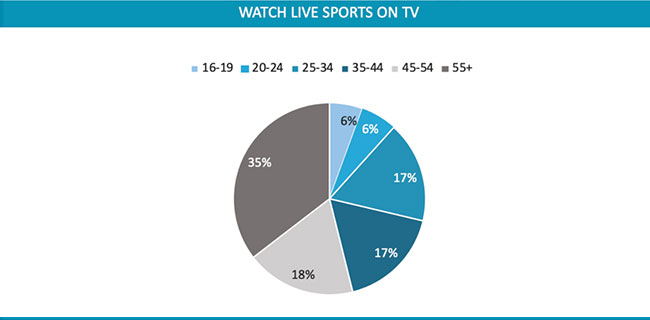
    According to MIDiA’s latest report, Sports audiences – The Gen-Z Opportunity, in Q4 2020 17% of 16-19-year-olds watched sports highlights on social media platforms, four times more than over-55-year-olds. This, notes the report, demonstrates both the growing generational divide in sports consumption and the monetisation opportunity that digital highlights now offer rights holders. It offers rights holders insight into how they can innovate and tweak their distribution strategies to provide the highest probability of penetrating this hard-to-reach audience

    According to the report, in the same quarter, 71% of traditional consumers of live sports on TV were over 35 years old, while 16-24 year olds were approximately 20 percentage points less likely to consume live sports on TV. This highlights the risk of rights holders underserving this digitally-geared audience and the importance of diversifying broadcast rights strategy. Engaging younger audiences is a way to future proof the product.


    Here’s some more from the report:

    Digital natives are more likely to consume non-live sports than older, traditional sports fans, which presents rights holders and broadcasters with untapped potential for monetisation by harnessing and actioning this insight.

    While the most valuable sports audience currently remains among pay-TV subscribers, planning for meaningful non-broadcast revenues through digital-native engagement is now crucial for pandemic mitigation, as well as addressing the needs of the underserved fans of the future. Catering to and developing a medium to connect with future fans in the Gen Z cohort and beyond, must become a strategic prerogative, to ensure long-term brand sustainability while simultaneously unearthing supplemental revenue streams.

    Crucial to this is understanding where sports fit in their media attention and diversifying broadcast strategy to reach them. For example, 16-19 year olds are over twice as likely as general consumers to watch gaming content, engage with Spotify, use Twitch, play multiplayer online games and consume video content on gaming consoles. 16-19 year olds report a significantly higher propensity for using TikTok (50%), Snapchat (67%) and Instagram (73%) than the consumer average.

    This highlights the opportunity for digital partnerships and generating organic engagement through official and affiliate accounts through which to deliver content. Understanding that 75% of this demographic engage with Netflix weekly compared to just 24% for Amazon Prime Video provides rights holders with ammunition for why they should opt for licensing original content to Netflix, should reaching Gen Z become a priority for its non-live video content strategists.

    Notes MIDiA in the report: “It is crucial to understand where sport fits into Gen Z’s attention ahead of striking distribution partnerships. Sports still has an opportunity to connect with the next-generation sports fan, allowing them to discover something they are able to personalise – but it will require adapting the current format to cater to this audience.”

  • Instagram highlights influencer marketing impact

    By A Correspondent


    Instagram celebrated its 10th birthday this week and has launche a new campaign called ‘Love Runs Deep’ to redefine the way brands can authentically tell their stories while engaging with influencers.


     

    As part of the campaign, brands are invited to submit their briefs in the ‘Love Runs Deep challenge’, and five of them will be chosen to have exclusive access to 25 creators to work with them free of cost, in addition to support of USD25,000 worth of ad credits to run their campaigns. The brands could be from all over India and could be big or small businesses. The jury making the selection would include Prabha Narasimhan, Executive Director – Home Care for Hindustan Unilever and Vice President – Home Care, Unilever South Asia; Asim Warsi, Senior Vice President & Head E-commerce, Samsung India; Harish Narayanan, CMO, Myntra; Prasanth Kumar, CEO – GroupM, South Asia; Rajdeepak Das, CCO and MD, Leo Burnett, South Asia; and Neha Markanda, Head of Business Marketing, Facebook India.. The selection will be done on the basis of originality, creativity, suitability for mobile and expected business outcome.


    Said Sandeep Bhushan, Director and Head of Global Marketing Solutions, Facebook India: “Instagram is the place where people express themselves creatively, and there’s a natural affinity to interact with public figures, creators and brands. We want to spur this interaction between creators and brands, in a way that redefines the ecosystem, and allows stories to be told with greater business impact.”


    While entries close on November 13, the campaign will continue for a duration of four months. Brands can submit their briefs on the campaign website (www.igloverunsdeep.com).


  • What ‘The Social Dilemma’ gets right, and what it misses by a mile


    By Bhuvi Gupta


    Bhuvi GuptaUnless you have been living under a rock the past month, you have probably watched, heard and discussed the Netflix documentary ‘The Social Dilemma’, which denounces the power that advertising-powered digital media today holds over connected audiences. That you may have read about the documentary’s impact on Facebook or/ and have watched it on Netflix is of course the irony that escapes none of the documentary’s proponents.


    The documentary covers how the objective of social media networks is to maximise the time spent by users on them so that they can better profile their users and serve their customers, i.e. advertisers with better audience targeting solutions, which are for sale to the highest bidder, irrespective of whether it is fake news or diet pills that is being advertised.


    The Internet and social media have dramatically changed our lives in the last decade. There is no denying how much positive change the internet has brought with it – reuniting families, facilitating blood transfusions and donations, and currently enabling a robust WFH culture which is allowing the global economy to function during a pandemic. However, the same connectivity that has been used to bring about positive impact has been exploited to bully individuals, spread propaganda, and win elections.


    The documentary does not make any big revelations. Since the 2016 US Elections, we have consistently heard how political parties have misused social media, specifically Facebook across the world to sway public opinion.  All ‘The Social Dilemma’ does is piece together much of what we already knew, in way that it created impact and will hopefully institute change.


    The Disruptive Power of digital advertising – pro for a marketer, con for humanity

    As a marketer, who has run too many Facebook and Google ad campaigns, my favourite tool to ensure a low CPM and high CTR are the LookAlike Audiences.  For the uninitiated, Facebook and Google allow you to target people similar to an audience that you share with them. All you have to do is list some demographic and interest based qualifiers or share a database of people who have visited your website to create a ‘Custom Audience’ and the platforms generate a Look Alike audience, which behaves just like your ‘Custom Audience’. The first time you use it and see your CPMs go down, it seems like magic. It is not.  It is the power of tracking audience behavior over long periods of time, which has helped classify audiences and behaviour patterns.


    As a marketer, the ability to find such audiences, and to be able remarket to them is a dream. Digital advertising has been a gamechanger for many businesses because of its measurability. Unlike traditional advertising, where you target the masses on Print or TV media and hence have massive spillage, digital ads are shown only to potential consumers, bettering the ROI.


    The flipside is that the ease in targeting audiences, which depict a certain behavior, is the same whether the intent is noble or malicious.  As the documentary explains, incendiary elements actually exploited Facebook’s algorithm to create a hoax scare called ‘PizzaGate’ amongst gullible audiences to successfully link the 2016 Democratic party Presidential candidate, Hillary Clinton with child trafficking, and hence, sway crucial vote banks.


    It has never been easier or cheaper to sway impressionable minds. Even those not so impressionable can get swayed when served fake news dressed-up to sound authentic.


    What The Social Dilemma missed – it’s not only Social Media

    The documentary solely focused on the power of social media networks driven by algorithms which work on a trifecta of engagement of users, growth of the network & increase in advertising revenues, it missed how other platforms which are not reliant on algorithms & ads such as WhatsApp, Reddit, 4Chan have also been leveraged to spread harm via fake news and doctored content.


    This problem is gargantuan, because it has transcended the level of doctored news whose veracity can be easily verified by a simple Google search to include Deepfakes. Deepfakes are synthetic videos in which the face of a pre-existing person is replaced by someone with a high likeness to them. The quality of Deepfakes is so advanced; today that it is very difficult to make out authentic videos from doctored ones.


    Reddit and WhatsApp have both facilitated the spread of fake news and deep fakes, which have been incendiary enough to incite rioting and lynch mobs in India.


    The Monopolistic Power of the FAANG

    FAANG or Facebook, Amazon, Apple, Netflix and Google together are synonymous with the Internet for most of the 4.5 billion people online today.  These companies own complementary parts of the ecosystem and often take advantage of this monopolistic ownership to prohibit competition. While countries in the EU and Australia are instituting regulations to protect their citizens, most countries, including India do not yet have strict regulations or competition laws to prohibit monopolies for digital companies like they do for other industries. As a result, FAANG continues to control what users see on the Internet to benefit their profit objectives. Last weekend, Google banned PayTM from the Google PlayStore claiming Paytm’s IPL promotion, which was offering scratch cards and cash backs was a form of ‘sports gambling’. 95% of India’s smartphones run on the Google owned Android operating system, and hence were shut out from Paytm.  It is ironic that such a ban was instituted when similar promotions have been used by Google Pay (a direct competitor of Paytm). While Paytm was reinstated after it removed the cash back feature, given that the ban was instituted without any warning sets a dangerous precedent for the monopolistic power wielded by Google.


    Hence, adequate regulations and competition laws are crucial to protect the online marketplace.


    Content Regulation

    Unlike rigorous procedures, which govern the licensing of traditional media companies i.e. Print TV and Radio, and industry bodies such as ASCI which monitor the veracity of ads shown in Indian media, digital media has no such eligibility criteria or monitoring to check the credentials of media owners or ‘content creators’.


    While many petitions are currently running against hate speech and defamation on TV news channels, the incendiary content on digital media is going ignored. Content posted online requires stringent checks including both govt. regulations and human monitoring to manage it. Currently, YouTube employs both Artificial Intelligence and human resources to protect copyrighted content. Similar checks and balances are required before any content is posted, as systems driven without human intervention cannot differentiate between fake news, sarcasm, exaggeration etc.


    Last week, former Facebook employee, Sophie Zhang who was employed as a Data scientist released a explosive memo (link – https://www.buzzfeednews.com/article/craigsilverman/facebook-ignore-political-manipulation-whistleblower-memo) on how Facebook did not attempt to stop coordinated campaigns by political parties to sway public opinions and incite civil unrest in countries ranging from Azerbaijan to Myanmar, because their attention was focused on markets which yielded higher revenues for them. The memo brought to the fore many of the problems highlighted by ‘The Social Dilemma’.


    While I do agree with ‘The Social Dilemma’ about individuals taking ownership and governments making regulations to monitor these platforms, I believe that the platforms themselves need to step up to regulate the content allowed on their platforms to both stem their misuse and ensure their long term survival.


    Bhuvi Gupta is a marketer with over 10 years across industries, of which the last six have been in Media & Entertainment. She has been a part of many launch marketing campaigns – specifically at the Times of India group, Republic TV and the latest in marketing a Bollywood film. She will write on A&M (mostly marketing, but often on advertising too) every other Tuesday. Her views here are personal. She tweets at @bhuvigupta3


  • Time spent on Instagram & Facebook leapfrogs: Kantar

    By A Correspondent


    In the wake of the Government of India banning 59 popular Chinese apps, Kantar has released insights on the impact of this ban on consumers’ digital behaviour. The ban as we know, came into effect from June 29, 2020.


    Summarising the learnings, Akhil Almeida, Vice President (Insights), Kantar, said: “Although consumers lost access to some of their favourite short-form video sharing apps, the bulk of consumers switched over to alternate platforms in an almost seamless manner. We saw that overall time-spent online was not as strongly impacted as one might have expected, given the size and scale of the affected platforms.”


    Key Learnings:

    A. No significant impact on Engagement

    The app-ban impacted platforms with a sizeable following. Given that users were spending hours every week across these platforms, one would have expected to see a dip in the overall time spent online once these platforms were no longer accessible. However, the avg. time-spent dropped only marginally (-6%), indicating that consumers were switching over to rival platforms much faster than anticipated.


    B. Big wins for rival platforms

    :: Instagram and Facebook saw an immediate increase in engagement.

    > Avg. Time/Day on Instagram more than doubled (2.3X), and Facebook too saw a significant 35% jump in time-spent on the platform with the bulk of this additional engagement being driven by smaller town consumers.

    > Among the youth audience aged below 24 yrs., Avg. Time/Day on Instagram grew by 35%


    :: Sharechat, India’s very own video sharing platform which focuses content around regional languages also witnessed a 2.5X increase in time spent.

    > This has primarily been driven by the younger faction of internet audience (aged below 24 yrs.). They have more than tripled (3.4X) their Avg. Time/Day on Sharechat since the ban came into effect.


    C. YouTube is still King

    The most impressive gain was seen on YouTube. Already the most popular digital video platform in the country, it saw a further 25% increase in time-spent!


    D. OTT also gets a boost

    Other players also enjoyed their fair share of rise in engagement levels. Hotstar, India’s leading Video OTT player saw their daily time spent grow by over 25%. Time spent in the video OTT space grew by 40% overall once the ban was imposed.


  • Instagram’s ‘Unlabel India’ urges youth to express safely

    By A Correspondent


    https://www.instagram.com/tv/B7c00x9p-ZN/?utm_source=ig_web_copy_link


    In the run up to Safer Internet Day (which fell yesterday – Feb 11), Instagram has announced a campaign to nurture a safe and supportive community online. In partnership with Yuvaa, a youth media and insights company, the app launched an ‘Unlabel India’ campaign, to inspire conversations among youth all across India and initiate positive online dialogue.


    Said Tara Bedi, Public Policy and Community Outreach Manager at Instagram: “Instagram is a place for safe self-expression and the safety and well-being of our community is our top priority. With ‘Unlabel India’, we’re hoping to lead a country wide conversation with students and spark a movement of kindness, empathy and respect, that is core to our platform and percolates to the entire community.”


    Added Nikhil Taneja, Co-founder and CEO of Yuvaa: “There’s more that brings people together than tears them apart. We aim to have critical conversations with today’s Gen Z, on topics that usually don’t get discussed like loneliness and body shaming, in an environment that is safe, diverse and inclusive. We’re proud to have partnered with Instagram on this journey, as it’s the first place where a new generation of young people express themselves. Together we hope to ‘Unlabel’ the stereotypes that constrain today’s youth.”