
Tag: India@75

  • India@75: Non-Violence – Relevant or Retarded?


    By Avik Chattopadhyay

     

    Avik ChattopadhyayThis is the fifth [and last] in my series on India@75 where I have tried to explore some indelible brands associated with the journey of our young nation. Having discussed brands like Democracy, Congress, Secularism and Doordarshan, I felt it most appropriate to bid goodbye to an eventful year with a discussion on brand ‘Non-Violence’.


    As a nation, this is one brand value we are most associated with given our freedom struggle since the early 1900s that was led by the principle of ‘Non-violence’. History describes the Indian ‘freedom struggle’ as the world’s first and largest ever at this scale. Its success against a particularly repressive colonialist became an inspiration to many others since then like the Civil Rights movement in the US, the freedom movement in South Africa, the Velvet Revolution in Czechoslovakia, the Mass Action for Peace in Liberia, and the February Revolution in the Philippines. Petra Kelly formed the Green Party in Germany based on non-violence. The Semai tribe in Malaysia have adopted non-violence as an active form of socio-political life. Morihei Ueshiba founded the martial art Aikido based on non-violence!


    US theologian and activist Walter Wink had said that in 1989 alone, 1.6 billion people across 16 nations had used non-violence as the means of demonstrations and protest. If one were to add the populations of India and South Africa, by then close to 65% of the world’s population would have attained freedom through non-violence.


    Twenty twenty-one will be a watershed year in Indian history as yet another non-violent movement succeeded when the central government decided to roll back the three Farm Laws. The Farmers’ Protest of 11 months was another demonstration that the route of non-violence still works, as long as one can be patient enough. While vested interests vilified the campaign and tried all tricks to destabilise it, the world actually saw it in positive light, not so much for the cause but more so for the means. Farmer protests typically end up being violent and ugly as seen in Europe and US where both protestors and enforcers use physical force. India, on her 75th birthday, once again told the world how it is to be done!


    Brand ‘Non-violence’ is beyond books of faith and the way of life of certain religious communities like the Buddhists and Jains. It is a greater purpose of how to subsist and sustain as a people and a nation. Like all enduring brands, it has a clear purpose, promise and personality. Over centuries it has kept evolving itself in its application and manifestation as well as adoption by an increasing number of people across nations.


    Interestingly, authoritarian governments have always been at loggerheads with non-violent protests for the latter neutralises the former’s ability to mete out physical harm. The autocrat is looking for a physical fight and some blood-spilling as a natural expression of power and hegemony. That is his / her comfort zone. The moment the protestor shifts the game to another playground, the autocrat is confounded. Revenge and retribution in the traditional sense make no sense here. And due to the inherent intellectual deficiency of the autocrat, mental torture is never a primary mode of offense.


    This is precisely why non-violence has become the most popular and powerful route of activism and protest. The tool-down and sit-down strike at a factory is far more effective than the days of the Luddites. The core operating principle that nothing should be harmed be it an object, a structure, a human being, or society’s interest is just too powerful to counter. And this makes non-violence so sustainable and adaptive as a brand ethic.


    The authoritarian state always builds a narrative against the non-violent protest by propping up ‘nationalist’ symbols of order, discipline, and masculinity like the army and law enforcing bodies. The soldier is typically positioned against the protestor as being the true nationalist while the latter is a renegade. Protecting land and borders is always more important than protecting rights and social sanity.


    There are some misgivings and myths about non-violence as a brand that I wish to dismantle here.


    Not peaceful or pacifist

    A non-violent movement need not be peaceful at all. Actions like non-cooperation, sit-down strikes, public addresses, marches, civil disobedience, economic boycotts, public assemblies, and petitions are all forms of non-violent protests.


    Non-violent interventions are some of the more incisive and powerful methods of protest using tools like public scrutiny, hunger strikes, occupation, blockades, and parallel governments. Since its coinage by Gandhi, ‘Satyagraha’ has become one of the most powerful ever. The Total Revolution of 1974 led by Jayprakash Narayan and the India Against Corruption movement of 2010 are telling examples of how interventions were used to weaken a government finally making it collapse.


    Hence, non-violence is neither peaceful nor pacifist, like any successful brand cannot.


    Not only reactionary

    Non-violence as a way of life is fundamentally proactive. In fact, it has brought disruptions in society that has led to far-reaching reforms. The Vedic revisionism around 500 BC was an outcome of the birth and rise of Buddhism and Jainism.


    Similarly, as a form of protest, non-violence can be institutionalised in civil society and tools put in place that ensure a totally proactive role in keeping the state in check and under constant vigil. The emergence of non-violent bodies like Greenpeace, Amnesty and Albert Einstein Institution makes up a unique eco-system of checks and measures that transcend borders to neutralise the ability of power-centres to harm.


    Not unidimensional

    Political scientist Gene Sharp, also called the ‘Machiavelli of Non-violence’, described 198 ways of non-violent action in his seminal 1973 book “Waging Nonviolent Struggle”. This is a handbook used by movements across the world right from the Estonian, Latvian and Lithuanian governments gaining independence from USSR in 1991 to Iranians protesting election fraud in 2009.


    There is no single route nor any straight-line solution for a non-violent protest. Multiple actions have to be deployed concurrently to make a non-violent movement successful. Just like the stakeholder engagement strategies for any product or corporate brand, this brand too follows the same blueprint.


    Not only political

    The Chipko Andolan, the Narmada Bachao Andolan and the Anti AFSPA Movement are examples of non-political non-violent struggles. Non-violence as a means can be applied to any subject and any context. School children marching across streets of Gurgaon or Bengaluru holding placards and singing songs to protect the Aravalis or the Ulsoor Lake have no political agenda. For them this non-violent form of protest is demonstrative of the life they wish to live, challenging the wrongs and protecting the right without causing any harm to anyone.


    Non-violence has to be accepted as the means of life for the maximum good of maximum people.


    Not only on charity

    Like all good brands, non-violence cannot be invoked only during the bad days or when the chips are down. It needs to be ‘invested in’ and nurtured at all times. In fact, the role that non-violence plays in the good times has a positive bearing on overall governance as it helps keep a constant eye on the state. This allows for lesser instances of mis-governance or mal-governance ensuring lower friction levels even during bad days.


    Every mature democratic nation needs to have a non-violent apolitical parallel governance mechanism operating 24×7 as a moral shadow of the political system in power. This mechanism needs to be owned by the man and woman on the street while its leaders ensure collaboration and co-creation. And this means that proper financial funding is needed to allow specific movements to sustain. There is nothing unethical about the same whatever the state might try to make one believe.


    Accepting the Nobel Prize for Peace on December 11, 1964, Martin Luther King Jr. had said: “Nonviolence is a powerful and just weapon. Indeed, it is a weapon unique in history, which cuts without wounding and ennobles the man who wields it.” Countering him, George Jackson of the Black Panther movement commented, “The concept of nonviolence is a false ideal. It presupposes the existence of compassion and a sense of justice on the part of one’s adversary. When this adversary has everything to lose and nothing to gain by exercising justice and compassion, his reaction can only be negative.”


    To me, non-violence is a unifying concept and holds huge relevance in a country like India with our diversity of opinion and multiplicity of issues. We won our freedom not merely by non-violent means as is made out by mainstream historians, but by use of multiple means with non-violence playing the lead role. The struggles of a Gandhi would never have worked without the sacrifice of a Surya Sen. They co-existed and tactically collaborated to stretch the colonial administrator to the point it finally snapped.


    The last 18 months have seen India go through two large non-violent movements – the Anti CAA and Anti Farm Laws. Both were successful in their own ways, the former forcing the state into inaction while the latter led to a reversal by the state.


    Brands India and Non-violence will always enjoy a symbiotic relationship.

    Whenever one mentions India, non-violence will be associated with her.

    Whenever one studies non-violence, India shall always find a prominent mention.

    As we look forward to the nation’s next 75 years, this will be one illuminating moment!


    Jai Hind!


    Avik Chattopadhyay is a senior brand strategist based in Gurugram. He writes on MxMIndia every other Tuesday and sometimes on other days as well. His views here are personal


  • India@75: Brand Secularism

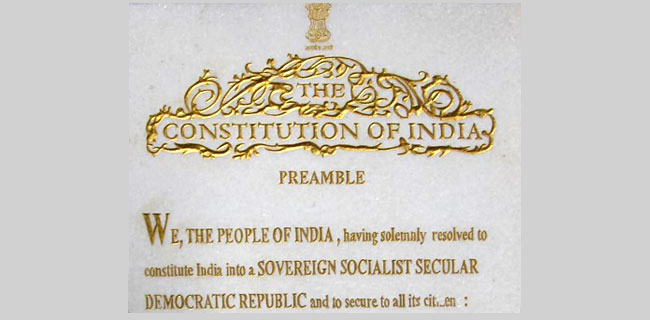
    Preamble to The Constitution of India. Source – internet


    By Avik Chattopadhyay


    Avik ChattopadhyayIn the fourth of my series on India@75, I deal with one more brand that we have grown up with that has now subsumed a significant portion of our coffee table conversations, social media activism and newsroom studios – Secularism.


    Secularism as a brand is a bit like ‘Kumbhakarna’ from the Ramayana – a humongous sleeping giant that needs huge coaxing to be stirred into action. In slumber since 1947, it was rudely woken up in May 2014. An integral ingredient in the concept called India that happened at the stroke of the midnight hour, the brand was a silent performer. It was woven into the fabric of a new nation just as freedom and justice were in the Constitution we gave ourselves. Given the complexity of the fabric, provisions were created by Dr Ambedkar and his team to define what “secularism” implies in the Indian context. This was crucial as the very nation was born out of a division on religious lines.


    Secularism is a foreign concept to the subcontinent. It is closely intertwined with another concept called ‘Socialism’. It was an outcome of a conscious effort in certain European countries like France to formally delink the state or polity from any religion or faith for the early socialists believed that only then would a true people’s government be established that worked for the greater good of all people, irrespective of colour, caste or faith.


    Our subcontinent was only a geographical entity which housed close to 500 odd kingdoms and principalities till the British called it a day. Each individual king or nawab or begum ruled with their specific faith as the official one. Most of their royal standards, flags and coins would carry elements of their faith. The outsider would easily identify whether the kingdom was Hindu or Muslim or Sikh or Christian with just one look at the flag!


    The state was never delinked from religion. The progressive ones patronised other religions too to allow a multicultural citizenry that enriched the arts, food, music, science, and architecture of the times. Rulers like Ashoka, Harsha and Akbar were exceptions to the rule. While Ashoka changed his faith, Ashoka dabbled with creating a new one and also had his sons convert to Christianity for some time. It is such broadness of their minds that make us address each of them as “the Great”. The subcontinent was a milieu of kingdoms and states each ruled by a family and a faith.


    With independence in 1947 and the trauma of the Partition, India could not afford to encourage any open patronage of any faith or even a bunch of faiths. And we had to be different from the part we lost that was born out of a single faith. Patronage was also a relic of the monarchies. Therefore, the new brand of ‘Secularism’ was introduced through the Constitution. It was well accepted in principle by most of us as we had higher priorities than building places of worship. The growing popularity of socialism as a post-war and post-colonial governing system also played a critical role in establishing the need for secularism to ensure success.


    Thirty years later the government, facing severe criticism of moral corruption all over the country, needed to divert attention of the common people and change the narrative of the media. Hence, both operating principles of ‘socialism’ and ‘secularism’ were used as political tools to be incorporated in the Preamble through the 42nd amendment to the Constitution in 1976. The rulers wanted to demonstrate their commitment to removing poverty [“Garibi hatao.”] before the electorate to ensure they stay in power. This one act of rashness brought the concept of ‘secularism’ into the limelight. People now started questioning what it really meant. And since then, it has been degraded into becoming a political tool rather than an underlying operating value.


    Appeasement of specific faiths, castes, clans and tribes became rampant under the garb of being secular. They were seen as vote-banks and nothing more. The rulers were never interested in actual alleviation but only appeasement in the aspiration of a better life. The rotten quality of life of these vote banks has further decayed over the decades of this deployment of secularism at the ground level. Otherwise, we would have at least seen the quality of life of certain communities having improved over time


    We still expect a Hindu election candidate from a Hindu area and a Muslim from a Muslim one. Political parties use the excuse of understanding the needs of the specific community better to justify such open “divide and rule” practices. This is one of the key legacies of the British that we have adopted very well.


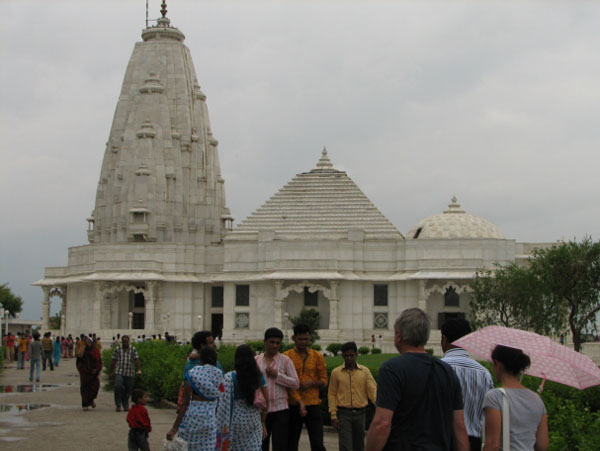
    The Birla Mandir in Jaipur – unique architecture incorporating the tower of Hinduism, pyramid of Buddhism and dome of Islam in one structure. Source – Wikimedia


    Since 2014, secularism has become a bad word. While it has been correctly described as a tool used to divide through selective appeasement, the new narrative denounces the very principle rather than question its misuse since 1976. Those who are truly secular in their individual lives are addressed as “Sickular”. It is a dirty word, bordering on being anti-national and disrespectful of our cultural heritage. The brand had been sullied with the 42nd amendment and has now assumed pariah status.


    So where have been the key shortcomings in managing brand ‘Secularism’?


    Mere ad-speak!

    Incorporating the term in the Preamble is not equal to actually believing in it and living by the principle. It’s like adding the term “corruption-free” to the Preamble through another amendment. Operating principles need not be openly advertised for they then remain only as advertising taglines. Across the world we have seen that the nations having the term ‘Socialist’ in their names have been the least so. You need to behave as socialist and secular and not merely talk about it.


    Lack of purpose

    True secularism totally delinks polity from religion. Not only does the state not have any religion but none of its constituents have anything to do with any activity or promotion of any faith. This is to ensure universal laws, rights and duties for every citizen, irrespective of faith.


    India is a classic case where we have adopted the word but operated just as before. As a culture we follow the tenet of “Sarva Dharma Sambhava” [Confluence of faiths] rather than the principle of “Dharma Nirpekshata” [Neutrality of faith]. We have eulogised Ashoka and Akbar who have patronised various faiths rather than a ruler who decided not to have any state religion.


    From patronising, we have moved to “peaceful co-existence” and not adopted the principle of secularism in its entirety. One may counter by saying we have adapted it to our conditions and requirements, but then, before 1947 we did not have democracy either! Hence, instead of choosing equi-distance from all faiths and have a set of universal social laws, we have deliberately chosen equi-proximity. That allows us to divide and rule and be selective towards one set of target segment / customer segment over others as market forces demand. This cannot be a sustainable proposition for any brand as word gets out and other segments either rise in defiance or shun you.


    Personality conflict?

    The current narrative tends to club the ‘sickular’ with the ‘communists’ and the ‘liberals’. This is dangerous for the current rulers as you will alienate more than you will accept. The communists abhor the concept of ‘secularism’ as they do not accept any religion at all. The socialists choose to delink while the communists choose to destroy. Therefore, calling communists as secular makes a laughing stock of the caller as you do not understand the fundamental differences. The liberals are again different from being secular. Theirs is a vastly open system of acceptance and allowance that follows the ethos of universal tolerance. And the true liberal will tell you that there is nothing called ‘religious tolerance’ as every faith teaches its believer to be tolerant towards others.


    Any promising showcase?

    The application of secularism in India really does not have any showcases to be proud of. According to data from the National Human Rights Commission, since 2005 an average of 100 lives have been lost and 2000 people have been injured due to inter-faith riots every year. More than 700 cases of rioting are reported every year. The Anti-Sikh Riots of 1984, the Kashmiri Pandit Exodus of 1990, the Christian-led separatist movement in the Northeast in 2000, the Gujarat Riots of 2002 and the Delhi Riots of 2020 are glaring examples where the stated value of secularism has been trampled with the powers that be being mute spectators.


    The underlying tensions can be easily brought to the surface for political benefit and the law-and-order machinery sadly falls prey to adherences to individual faiths from time to time.


    Just like the Shah Bano Case in 1986 and the Babri Masjid Demolition of 1992. Both were to undermine the Constitution and pander to specific electorates. The deliberate deprivation of basic rights to women of a faith while allowing them for others especially when the Supreme Court had passed a judgment against the same was a sure low point in our secular journey. Couple with the decadent destruction of an unused place of worship to drive home a divisive agenda for political momentum. The aftereffects of both incidents are being faced by the entire nation till date.


    So, secularism as a brand has not had a good journey in a 75-year young nation like ours. Its purpose is unclear, its personality is a bundle of contradictions, its promise totally shredded to bits by various pockets of powerbrokers. It has been used as a tool by some and a target by the others. All in all, a terrible situation for any brand. Especially when a ‘monk’ becomes a member of the polity and runs a religious administrative agenda.


    Appeasement gives way to aggrandisement!

    And that is the last nail in the proverbial coffin.

    Or piece of sandalwood in the pyre.

    Or fistful of soil in the grave.


    I finish my eulogy to brand ‘Secularism’ with a quote of Swami Vivekananda, one of the truest of seculars that ever walked this land. “A ‘sanyassin’ cannot belong to any religion, for his is a life of independent thought which draws from all religions; his is a life of realisation, not merely of theory or belief, much less of dogma.”


    Avik Chattopadhyay is a senior brand strategist based in Gurugram. He writes on MxMIndia every other Tuesday. His views here are personal


  • India@75: Doordarshan


    By Avik Chattopadhyay


    Avik ChattopadhyayWelcome to the third piece in the series on my thoughts about some of the country’s most enduring brands called “India@75”. The first two were on the journeys of ‘Democracy’ and ‘Indian National Congress’ as brands.


    The battle of Kurushetra in the Mahabharata, one of the world’s biggest epics, starts with the words “Sanjaya uvaacha…”. The style of the narration was unique in the format of Dhritarashtra’s advisor and charioteer Sanjaya giving him a ‘live telecast’ of each nanosecond of the 18-day battle. Sanjaya had the divine gift of being able to see and hear everything in person without being at the actual location of incident. He narrates each incident to the king including the killing of his hundred sons at the hands of Bhima without ever flinching. He also describes the entire “Bhoomandal” [universe /galactic system] and entire Bharatavarsha to Dhritarashtra to build the context of all that is to follow in the battle!


    Many equate the direct telecast of Sanjaya to the concept of television, just that it was described somewhere around 1000 BC.


    On September 15, 1959, Sanjaya was reborn as what later got to be called as ‘Doordarshan’. Or DD as the nation prefers to call it. Though not yet 75 years old, but since we attained Independence, it has been one Indian brand that has endured all these years and continues to serve its core purpose.


    From the days of Pratima Puri and Gopal Kaul reading out the short news bulletins, DD grew from a mere part of All India Radio with a five-minute news bulletin to a virtual tour de force in the 1980s. For my generation it was our “Sanjaya”!


    Stamps issued to commemorate the 60th anniversary of DD in 2019


    Since 1982 when colour transmission were launched it was our friend, philosopher and guide on all things proudly Indian while being our eye to the entire world. The 70s and 80s were creatively the best decades for India in terms of exploration and expression. While we were an economically backward nation, when it came to intellectual prowess we were at par with the best. Some of the best institutions of education, research and healthcare had been built. Some of the biggest infrastructure projects on this side of the world had been undertaken. The biggest democratic cooperative movements were here. The 50s and 60s had built the platform to allow creativity take flight, collectively as a nation.


    The country’s biggest cultural movements in terms of art, cinema, theatre, music, and scientific temper started then and what we admire today about our current situation is an outcome of the same. And there was nothing ‘political’ about it, for there was enough upheaval in that field too to add to the magical Samudramanthan that we experienced. And DD was right in the middle of it all, including us all in this journey. It demonstrated the ethos of our Constitution and the values of the democratic system that we had decided to live with.


    The twin principles of DD that made it such a brilliant vehicle of the new Indian ethos were, as I call them, “Door ka Darshan” and “Doordarshita”.


    Door ka Darshan

    Literally meaning viewing far away things, DD helped reduce the distance of knowledge through enjoyment for millions of us who aspired to be one with the rest of the country and the world.


    I was exposed to Fellini, Aravindan, Gopalakrishnan, Ray, Ghatak, Patwardhan, Kurosawa and many more on DD. I gorged tales of Tenali Rama along with Byomkesh Bakshi and Panchatantra. I waited for Spiderman as well as The Old Fox with equal eagerness. I saw movies of all possible languages with subtitles as they were nationally and globally acclaimed. I never learnt to differentiate on language, subject or provenance as I wanted to absorb it all.


    Doordarshita

    Literally meaning vision, DD was carefully crafted by the early leadership of the country as a vehicle that would unite the young nation and equip us with the knowledge and wide perspective to step into the global arena.


    DD was not seen merely as a tool for government propaganda, which all state-owned media platforms are across the world. it was seen as the Indian’s peep into the menagerie that is India and the world.


    A generation of evolved Indians, with a greater sense of empathy and enquiry was built by DD. We were exposed to Chandra Prakash Dwivedi’s ‘Chanakya’ as well as Shyam Benegal’s ‘Bharat Ek Khoj’. We were enthralled by ‘Yes Minister’ as well as ‘Kakkaji Kaheen’. The world was brought onto the screen for us. We watched, consumed, debated and crafted ourselves as evolved Indians with a worldview without even having a passport!


    The Great Indian Thali

    That is what DD was curated as. Right from ‘Krishi Darshan’ [the longest running television programme in the world], to ‘Chitrahaar’ to the Sunday afternoon National Award-winning film, DD had it all.


    It had something for everybody. The sports lover got all the key global events as highlights or direct telecasts. The curious got shows like Quest, Quiz Time and The World This Week. The culturally leaning got Surabhi and Mirza Ghalib. The religious-minded got Ramayan and Mahabharat. The comedy seeking got Yes Minister and Yeh Jo Hai Zindagi. The curious got Sherlock Holmes and Karamchand. The kids got He-Man and Malgudi Days.


    Nobody was left out in DD’s mission to bring the entire nation together. It was a symbol of our unity in diversity!


    Common Conversations

    The nation had similar subjects to deliberate upon. Everybody from Mumbai to Madhyamgram was on the same platform of exposure, entertainment, and knowledge. Every part of the country felt proud to have been amply represented and amplified to the rest of the nation. Indians got to know more about India.


    If an incident disturbed Assam, it disturbed Andhra too, and vice versa. When Adoor Gopalakrishnan received the Swarna Kamal nobody asked “Adoor who?”. When ‘Manthan’ was telecast, the entire nation new of a tiny place called Anand and a man named Kurien. The entire nation debated Salma Sultan’s red rose tucked behind her left ear. We all admired the new reading skills of Tejeshwar Singh. It was inclusive.


    Deliberate Deprivation

    With liberalisation in 1991 came commercialism and private enterprise. With private enterprise came the need to ‘protect and neglect’. To protect the fledgling private television channels, the government neglected DD. Like most government initiatives, this was relegated to being just a mouthpiece of the policy-makers and those in power.


    DD was deliberately deprived of funds to ensure the private channels took over. Equipment was not upgraded, technicians were not paid enough, producers were short-changed, studios were not upgraded, and new technology was not brought in.


    The best talent from DD went over to the private channels and termites had taken over in no time. Management after management had submitted plans of autonomy and revival but to no effect. It was to become a propaganda tool not too different from the likes in China and Russia. Viewership reduced year on year, creating a case of financial unviability and hence no serious infusion of funds.


    The treatment meted out to DD was similar to that towards Air India. To encourage private enterprise the government deprived the shining public enterprises who were qualitatively at par with the best in the world. The intensity of this move was almost to undo the ills of the ‘socialist’ past. And as if all that was public was sub-par.


    Division and Disunity

    DD today is once again symbolic of India today, divided and disunited. We have become more insular while posing as being more global. The broadness of our mind and ability to accept has constricted to all that makes us feel comfortable and ‘superior’.


    The quality of what is consumed today across the country is in direct correlation with the respect towards education and enquiry. The former is totally transactional while the latter is the exclusive domain of a few. Escapism has substituted inquisitiveness. Proliferation has led to dismemberment of issues of national interest and debate. We prefer to escape into a world of ‘reality’ shows and celebrity scandals rather than discuss issues like education and environment. And we don’t care a damn about diversity as we have media that restrict us to our own little worlds of wells.


    As a collective, we are back to being what we were in the early 1900s… some 500-odd kingdoms and principalities busy with ourselves lacking a common identity. Having brought ourselves to such a state over the last 75 years, can DD rise from its ashes and unite us again? While the policy-makers would have none of it and wish to retain it as a political mouthpiece, Prasar Bharati can surely take a long hard look at its child and give it a serious makeover.


    We did hear a statement from the Prasar Bharati CEO a few months back pointing to same, commenting it would be inspired by how the BBC has evolved. For that, one needs both intent and independence. Hope the ministry has the “doordarshita” for the same at the earliest. As we celebrate ‘Azaadi Ka Amrit Mahotsav” we would not like to see one of the country’s biggest brands be finally consigned to the flames. Sanjaya needs to be reborn…