Tag: India

  • Quiz test post –The name “Taj Mahal” is of Urdu origin, and believed to be derived from Arabic and Persian,

    Quiz test post –The name “Taj Mahal” is of Urdu origin, and believed to be derived from Arabic and Persian,

    The Taj Mahal (/ˌtɑːdʒ məˈhɑːl, ˌtɑːʒ -/ TAHJ mə-HAHL, TAHZH -⁠; Hindustani: [taːdʒ ˈmɛɦ(ɛ)l]; lit. 'Crown of the Palace') is an ivory-white marble mausoleum on the right bank of the river Yamuna in Agra, Uttar Pradesh, India. It was commissioned in 1631 by the fifth Mughal emperor, Shah Jahan (r. 1628–1658) to house the tomb of his beloved wife, Mumtaz Mahal; it also houses the tomb of Shah Jahan himself. The tomb is the centrepiece of a 17-hectare (42-acre) complex, which includes a mosque and a guest house, and is set in formal gardens bounded on three sides by a crenellated wall.

    Construction of the mausoleum was completed in 1648, but work continued on other phases of the project for another five years. The first ceremony held at the mausoleum was an observance by Shah Jahan, on 6 February 1643, of the 12th anniversary of the death of Mumtaz Mahal. The Taj Mahal complex is believed to have been completed in its entirety in 1653 at a cost estimated at the time to be around ₹32 million, which in 2015 would be approximately ₹52.8 billion (US$827 million).[4]

    The building complex incorporates the design traditions of Indo-Islamic and Mughal architecture. It employs symmetrical constructions with the usage of various shapes and symbols. While the mausoleum is constructed of white marble inlaid with semi-precious stones, red sandstone was used for other buildings in the complex similar to the Mughal era buildings of the time. The construction project employed more than 20,000 workers and artisans under the guidance of a board of architects led by Ustad Ahmad Lahori, the emperor's court architect.

    The Taj Mahal was designated as a UNESCO World Heritage Site in 1983 for being "the jewel of Islamic art in India and one of the universally admired masterpieces of the world's heritage". It is regarded as one of the best examples of Mughal architecture and a symbol of Indian history. The Taj Mahal is a major tourist attraction and attracts more than five million visitors a year. In 2007, it was declared a winner of the New 7 Wonders of the World initiative. The Taj Mahal and its setting, surrounding grounds, and structures are a Monument of National Importance, administered by the Archaeological Survey of India.[5]

    Etymology
    The name "Taj Mahal" is of Urdu origin, and believed to be derived from Arabic and Persian, with the words tāj mahall meaning "crown" (tāj) "palace" (mahall).[6][7][8] An alternative derivation of "taj" is that it was a corruption of the second syllable of "Mumtaz".[9][10] Abdul Hamid Lahori, in his 1636 book Padshahnama, refers to the Taj Mahal as rauza-i munawwara (Perso-Arabic: روضه منواره, rawdah-i munawwarah), meaning the illumined or illustrious tomb.[11]

    The building complex incorporates the design traditions of Indo-Islamic and Mughal architecture. It employs symmetrical constructions with the usage of various shapes and symbols. While the mausoleum is constructed of white marble inlaid with semi-precious stones, red sandstone was used for other buildings in the complex similar to the Mughal era buildings of the time. The construction project employed more than 20,000 workers and artisans under the guidance of a board of architects led by Ustad Ahmad Lahori, the emperor's court architect.

    The Taj Mahal was designated as a UNESCO World Heritage Site in 1983 for being "the jewel of Islamic art in India and one of the universally admired masterpieces of the world's heritage". It is regarded as one of the best examples of Mughal architecture and a symbol of Indian history. The Taj Mahal is a major tourist attraction and attracts more than five million visitors a year. In 2007, it was declared a winner of the New 7 Wonders of the World initiative. The Taj Mahal and its setting, surrounding grounds, and structures are a Monument of National Importance, administered by the Archaeological Survey of India.[5]

    Etymology
    The name "Taj Mahal" is of Urdu origin, and believed to be derived from Arabic and Persian, with the words tāj mahall meaning "crown" (tāj) "palace" (mahall).[6][7][8] An alternative derivation of "taj" is that it was a corruption of the second syllable of "Mumtaz".[9][10] Abdul Hamid Lahori, in his 1636 book Padshahnama, refers to the Taj Mahal as rauza-i munawwara (Perso-Arabic: روضه منواره, rawdah-i munawwarah), meaning the illumined or illustrious tomb.[11]

    Inspiration

    Shah Jahan, 17th century painting

    Artistic depiction of Mumtaz Mahal
    The Taj Mahal was commissioned by Shah Jahan in 1631, to be built in the memory of his wife Mumtaz Mahal, who died on 17 June that year while giving birth to their 14th child, Gauhara Begum.[12][13] Construction started in 1632, and the mausoleum was completed in 1648, while the surrounding buildings and garden were finished five years later.[14][15]

    The imperial court documenting Shah Jahan's grief after the death of Mumtaz Mahal illustrates the love story held as the inspiration for the Taj Mahal.[16] According to contemporary historians Muhammad Amin Qazvini, Abdul Hamid Lahori and Muhammad Saleh Kamboh, Shah Jahan did not show the same level of affection for others as he had shown Mumtaz while she was alive. After her death, he avoided royal affairs for a week due to his grief and gave up listening to music and lavish dressing for two years. Shah Jahan was enamoured by the beauty of the land at the south side of Agra on which a mansion belonging to Raja Jai Singh I stood. He chose the place for the construction of Mumtaz's tomb after which Jai Singh agreed to give it to emperor Shah Jahan in exchange for a large palace in the centre of Agra.[17][18]

    Architecture and design
    Main article: Origins and architecture of the Taj Mahal

    The Taj Mahal complex is situated on a platform on the banks of the Yamuna River.
    The Taj Mahal incorporates and expands on design traditions of Indo-Islamic and Mughal architecture.[19] Inspirations for the building came from Timurid and Mughal buildings including the Gur-e Amir in Samarkand (the tomb of Timur, progenitor of the Mughal dynasty) and Humayun's Tomb in Delhi which inspired the Charbagh gardens and hasht-behesht plan of the site.[20][21] The building complex employs symmetrical constructions with the usage of various shapes and symbols.[19] While the mausoleum is constructed of white marble inlaid with semi-precious stones, red sandstone was used for other buildings in the complex similar to the Mughal era buildings of the time.[22] The entire complex sits on a platform measuring 300 metres (980 ft) in length and 8.7 metres (28.5 ft) in height on the banks of the Yamuna river. The platform is built with varying patterns of dark and light colored sandstone.[23]

    Exterior

    The eight sided main structure with large arched doorways and minarets on a square plinth
    The mausoleum building is the central structure of the entire complex. It is a white marble structure standing on a 6-metre (20 ft) high square plinth with sides measuring 95.5 metres (313 ft) in length. The base structure is a large multi-chambered cube with chamfered corners forming an eight-sided structure that is approximately 57.3 metres (188 ft) long on each of the four long sides.[24]

    The building has four identical sides with iwans (arch-shaped doorways), topped by a large dome and finial. Each side of the iwan is framed with a 33-metre (108 ft) high pishtaq (vaulted archway) with two similarly shaped arched balconies stacked on either side. This motif of archways is replicated on a smaller scale on the chamfered corner areas, making the design completely symmetrical.[25] At the southern side of the platform, facing the garden, there are two flights of stairs on either side which are partly covered and provide the only access from ground level up to the mausoleum building.[23]

    The large onion dome topped by a finial

    Finial, tamga of the Mughal Empire
    The predominant feature of the mausoleum is the 23-metre (75 ft) high marble dome that surmounts the tomb. The onion shaped dome sits on a 12-metre (39 ft) high cylindrical drum with an inner diameter of 18.4 metres (60 ft).[26] The dome is slightly asymmetrical and is topped by a 9.6-metre (31 ft) high gilded finial.[19][27] The intermediate zone between the drum and the dome is supplanted by an ornamental moulding with a twisted rope design.[23]

  • The Taj Mahal is an ivory-white marble mausoleum on the right bank of the river Yamuna in Agra, Uttar Pradesh, India. It was commissioned in 1631 by the fifth Mughal emperor, Shah Jahan to house the tomb of his beloved wife, Mumtaz Mahal; it also houses the tomb of Shah Jahan himself.

  • Avik Chattopadhyay: India or Bharat?

    Avik ChattopadhyayBy Avik Chattopadhyay

    While the President of Bhārat has graciously invited G20 guests from across the world to an exposition of Indian [oops Bhāratiya] hospitality, cuisine and music, Salman is being taught by his colleague that when travelling by Delhi Metro, his name is Mukesh, has to know the Gayatri Mantra by heart, never carry any kababs to office even if from Tunday in Lucknow and, get his ‘new’ Aadhar Card pronto. Skills to save himself from getting lynched! 


    Welcome to Bhārat.

    Land of riches and home of the faithful.

    A land that knew answers to all the problems a human being would have in millennia to come much before you can ever fathom. We had all the answers for astronomy, medicine, governance, metallurgy, warfare, architecture and anything else one can think of before any other race. Our scriptures contain all measurements, predictions and remedies to alleviate human existence, right from the galactic system to the gastric system.


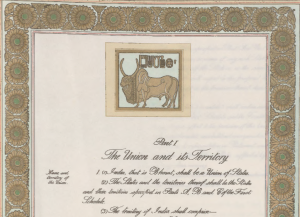
    Source: Cropped image of Page 9 from https://www.loc.gov/resource/llscd.57026883/?sp=9&r=0.262%2C0.146%2C0.258%2C0.132%2C0&st=pdf

    So what if a Meghnad Saha or a Jayant Narlikar questioned the narrative that we were the fountainhead of all knowledge, spread by the marauding Arabs to the rest of the world. We are the living centre of civilisation, unbroken for centuries. Sadly, we cannot claim the same for the birth of mankind, though we would have loved to. In fact, if the Homo Sapiens had actually originated from Jambudwipa, humanity would have been in a better state of being, already having spread to Mars and engaging in interplanetary travel over weekends. And our omnipresent faith would have ensured the galaxy wakes up to the reverberations of Om every solar day. That is the essence of Bhārat.


    Or is it Bhārath?

    Should it not be Bhārath instead of Bhārat?

    My friends from the southern part of the peninsula must insist it is spelt that way.

    Otherwise, the entire exercise will just not be inclusive enough. How can the ‘cow belt’ always have its say on everything of grave national interest? In fact, those in the south are the earliest settlers on this landmass and they have gone beyond their call of duty to preserve the core faith while the north has been soiled by outsiders. They adopted the caste system and implemented it to the hilt, so much so that the Brahmins are purer than the meat eating ones from Bengal, Bihar and Kashmir. They have let go their own languages to adopt Sanskrit and help it evolve over centuries. They have risen beyond the cause of the ‘lesser’ inhabitants in their lands to take up the cause of the pure Aryan civilisation. In fact, they are the original Aryans and not someone up north pretending to be one just by colour of eyes and skin. So, India must become Bharath, and nothing less, for that will be impure.


    Or is it Bhārata?

    Should it not be Bhārata instead of Bhārat or Bhārath?

    For those that want either of the latter two are an insult to the oldest living civilisation on earth and its language. It is not Ram but Rama. And it is not pronounced “Raamaa”… just simply “Raama”. Just like it is neither Mahabharat nor Mahabharataa, but simply Mahabharata. Similarly, it should be pronounced “Bhaarata” and neither Bhaarat nor Bhaarataa. And definitely not Bhaarath. As most of us are experts on the Vedas, Upanishadas and Puranas, we should have known at least how to pronounce the rightful name of our nation.


    For those who lament that India is a colonial name need to know that the word was first used by Herodotus in the 5th century BC in Koine Greek. And I do not think the Greeks really ended up colonising us. Even Megasthenes later used the name in his book “Indica”. The root of the word is “Indus”, the Greek name for the “Sindhu” river. If we are comfortable with the Indus Valley Civilisation, we should be pretty comfortable with India too. Someone needs to drill it down their hard heads that “India” is not a name given by the British, or the French, or the Portuguese, or the Dutch, or even the Danish. Least of all the Mughals, who preferred to call it “Hindūstān”.


    Also, to set the record straight, Bhārata or Bhāratavarṣa refers to the kingdom of the Bharata clan, starting with a king called Bharata. There are various versions of who really Bharata was, whether the son of Dasharatha or that of Dushyanta or Rishabhanatha. Even if we were to dismiss this triviality of historical accuracy, the region Bhāratavarṣa refers to the western part of the Gangetic plain, then recorded as the extent of Bharata’s kingdom. It does not even refer to the entire subcontinent and physical entity that we have known as India for the last 200 odd years. Hence, even considering such a name will be disrespecting the entire geophysical entity that we are today. And we cannot deny the simple fact that this entity was put together by the English East India Company in the first place.


    Article 1 of the Indian Constitution starts as “India, that is Bharat, shall be a union of states…” clearly giving priority to the name India over Bharat. The decision was taken after lots of deliberations in the Constituent Assembly in 1948 and 1949. Three names were shortlisted from the various proposals which included ones like ‘Hind’ and ‘Union of Indian Socialist Republics’ – India, Bharat and Hindustan. Hindustan was dropped as it referred to a larger landmass which had been partitioned in 1947 and also the association with the word ‘Hindu’. Between India and Bharat, the former was given priority as the name the world has known us by for centuries. Bharat was included as the second name, hence the structure of the opening sentence in Article 1.


    At the end of the day, India shall be as our holiest book, the Constitution: states, a union of states, minds, thoughts, beliefs, isms and convictions… all uniting the country more than ever before.


    Jai Hind!


    Avik Chattopadhyay is a senior brand and business strategy consultant based in Gurugram. He writes on MxMIndia every other Thursday. The views here are personal

  • Das ka Dum with Dr Bhaskar Das | If you were a marketer, would you look at signing on Virat Kohli given his decidedly best possible performance the other day at the India-Pak match?

    Bhaskar DasIt was an innings that you witness only once in a blue moon. And it was played against arch rival Pakistan. We asked Dr Bhaskar Das a question on what the performance would mean for Virat Kohli’s brand endorsement quotient for the October 27 edition of Das ka Dum. Read on…

     

    If you wish to access the archives, please go to the Das Ka Dum tab on the website’s top navigation bar.


    Q. If you were a marketer, would you look at signing on Virat Kohli given his decidedly best possible performance the other day at the India-Pak match?


    A. We need to first step back a little and pause to think if Virat Kohli played a scintillating innings for more brands to sign him for endorsement. I doubt. He is anyway endorsing 28-30 brands already. It’s not about another landmark innings. It’s about Virat who appeared as a normal human being and not just a run machine or brand endorser. His post-match interview showed his humane side and it’s not easy to admit one’s frailties in public and how he came out of it. That’s the biggest outcome, to my mind, of the Indo-Pakistan match. Virat has a few more years to contribute to the craftsmanship/ artistry of the game. Let him enjoy that and then only Indian cricket would be enriched and he would become an epitome of how legends leave their trail to make future cricketers inspired.


  • Sony rejigs film biz top deck

    By Our Staff


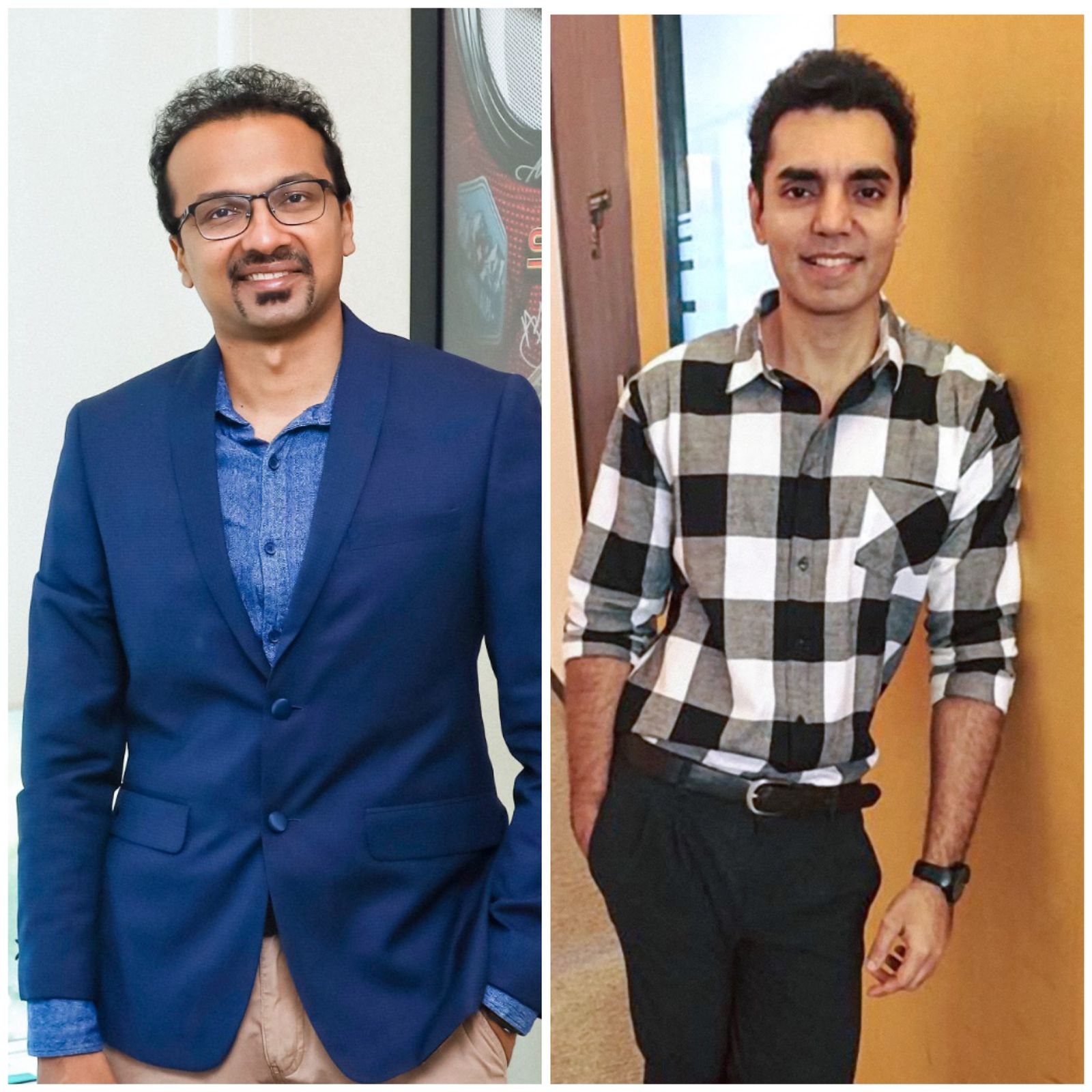
    (L-R) Shony Panjikaran, Lada Guruden Singh

    Entertainment conglomerate Sony Pictures Entertainment has appointed Shony Panjikaran and Lada Guruden Singh to take over the reins of its distribution and production business in India.


    Singh has been appointed General Manager and Head of Sony Pictures International Productions (SPIP), India. He will be overseeing SPIP India’s local film development and production slate as well as its expansion in regional cinema. Singhwill report to Michael Rifkin and Shebnem Askin, Co-Heads of SPIP.


    Panjikaran has been appointed General Manager and Head of Sony Pictures Releasing International, India. He will manage Sony Pictures’ theatrical releasing business across the Hollywood and local cinematic slate in India, including all distribution, sales, and marketing efforts. Panjikaran will report to Adam Herr, Senior Vice President, Distribution, Asia, Sony Pictures Entertainment.


    Said Panjikaran: “Sony Pictures is a global force that creates imaginative and engaging content for audiences across the world. It is an absolute privilege to oversee SPE’s theatrical business in India and bring an incredible slate of Hollywood and Indian cinema to Indian audiences. For both Lada and I, it will be hugely rewarding to lead Sony Pictures Entertainment, India into a new era. Today, the film market in India is virtually borderless, and I am looking forward to pioneering new initiatives and partnerships in this dynamic distribution space and to satisfy the demand for brilliant global and local stories in India.”


    Added Singh: “As India leads the world in entertainment, creating content in volume and quality that ranks right at the top, we are excited to give it our all to become one of the top players in the country. From tentpole hits to clutter break-through content, from stories unfolding at the margins to the celebration of Indian mythology; we want to push the boundaries and synergies with leading talent as well as with fresh new voices. Shony and I are committed to making this dream come true, breaking all language barriers, and turning Sony Pictures Entertainment, India into the most sought-after creative studio in India!”


  • Trust grows in news…


    The tenth edition of the Digital News Report by the Reuters Institute for the Study of Journalism has just been released. It is based on data from six continents and 46 markets including India.


    Here’s a summary of some of the most important findings from the 2021 research:

    • Trust in the news has grown, on average, by six percentage points in the wake of the Coronavirus pandemic – with 44% of our total sample saying they trust most news most of the time. This reverses, to some extent, recent falls in average trust – bringing levels back to those of 2018. Finland remains the country with the highest levels of overall trust (65%), and the USA now has the lowest levels (29%) in our survey.

    • At the same time, trust in news from search and social has remained broadly stable. This means that the trust gap between the news in general and that found in aggregated environments has grown – with audiences seemingly placing a greater premium on accurate and reliable news sources.

    • In a number of countries, especially those with strong and independent public service media, we have seen greater consumption of trusted news brands. The pattern is less clear outside Western Europe, in countries where the Coronavirus crisis has dominated the media agenda less, or where other political and social issues have played a bigger role.

    • Television news has continued to perform strongly in some countries, but print newspapers have seen a further sharp decline almost everywhere as lockdowns impacted physical distribution, accelerating the shift towards mostly digital future.

    • While many remain very engaged, we find signs that others are turning away from the news media and in some cases avoiding news altogether. Interest in news has fallen sharply in the United States following the election of President Biden – especially with right-leaning groups.

    • Elsewhere, we find that the media are seen to be representing young people (especially young women), political partisans, and – at least in the US – people from minority ethnic groups less fairly. These findings will give added urgency to those who are arguing for more diverse and inclusive newsrooms.

    • Despite more options to read and watch partisan news, the majority of our respondents (74%) say they still prefer news that reflects a range of views and lets them decide what to think. Most also think that news outlets should try to be neutral on every issue (66%), though some younger groups think that ‘impartiality’ may not be appropriate or desirable in some cases – for example, on social justice issues.

    • The use of social media for news remains strong, especially with younger people and those with lower levels of education. Messaging apps like WhatsApp and Telegram have become especially popular in the Global South, creating most concern when it comes to spreading misinformation about Coronavirus.

    • Global concerns about false and misleading information have edged slightly higher, this year, ranging from 82% in Brazil to just 37% in Germany. Those who use social media are more likely to say they have been exposed to misinformation about Coronavirus than non-users. Facebook is seen as the main channel for spreading false information almost everywhere but messaging apps like WhatsApp are seen as a bigger problem in parts of the Global South such as Brazil and Indonesia.

    • Our data suggest that mainstream news brands and journalists attract most attention around news in both Facebook and Twitter but are eclipsed by influencers and alternative sources in networks like TikTok, Snapchat, and Instagram. TikTok now reaches a quarter (24%) of under-35s, with 7% using the platform for news – and a higher penetration in parts of Latin America and Asia.

    • We have seen significant increases in payment for online news in a small number of richer Western countries, but the overall percentage of people paying for online news remains low. Across 20 countries where publishers have been pushing for more online payment, 17% have paid for any online news in the last year – up two percentage points. Norway continues to lead the way with 45% (+3) followed by Sweden (30%), the United States (21%), Finland (20%), the Netherlands (17%), and Switzerland (17%). There has been less progress in France (11%), Germany (9%), and the United Kingdom (8%).

    • In most countries a large proportion of digital subscriptions go to just a few big national brands – reinforcing the winner takes most dynamics that we have reported in the past. But in the United States and Norway we do find that up to half of those paying are now taking out additional subscriptions – often to local or regional newspaper brands.

    • More widely, though, we find that the value of traditional local and regional news media is increasingly confined to a small number of subjects such as local politics and crime. Other internet sites and search engines are considered best for a range of other local information including weather, housing, jobs, and ‘things to do’ that used to be part of what local news media bundled together.

    • Access to news continues to become more distributed. Across all markets, just a quarter (25%) prefer to start their news journeys with a website or app. Those aged 18-24 (so-called Generation Z) have an even weaker connection with websites and apps and are almost twice as likely to prefer to access news via social media, aggregators, or mobile alerts.

    • While mobile aggregators play a relatively small part in the media eco-system of Western countries, they have a powerful position in many Asian markets. In India, Indonesia, South Korea, and Thailand a range of human- and AI-powered apps like Daily Hunt, Smart News, Naver, and Line Today are playing an important new role in news discovery.

    • More widely, the use of smartphone for news (73%) has grown at its fastest rate for many years, with dependence also growing through Coronavirus lockdowns. Use of laptop and desktop computers and tablets for news is stable or falling, while the penetration of smart speakers remains limited in most countries – especially for news.

    • Growth in podcasts has slowed, in part due to the impact of restrictions on movement. This is despite some high-profile news launches and more investment via tech platforms. Our data show Spotify continuing to gain ground over Apple and Google podcasts in a number of countries and YouTube also benefiting from the popularity of video-based and hybrid podcasts.


    Specifically, this is what the India report, written by Anjana Krishnan, Research Associate, Asian College of Journalism, Chennai notes:

    Indian media are extremely diverse, with thousands of outlets operating in multiple languages. Much of the media is controlled by large, for-profit corporations, many of them privately held, and mainly funded by advertising. But these business models are being disrupted by a rapid shift to online consumption – and the impact of Covid-19.


    Legacy print news brands, including the most popular in the survey – Times of India, Hindustan Times, and The Hindu – and newspapers in general, have borne the brunt of the slowdown. The pandemic has hit print circulation and decreased advertisements, leading companies to slash salaries, cut jobs, and close editions across the country due to the drastic decline in economic activity in one of the world’s strictest lockdowns. The industry has also had to cope with reduced government and commercial advertisement spending,107 which fell by more than half since the start of the pandemic. Leading news channel NDTV announced salary cuts for a time, while digital born-operator The Quint furloughed staff and was forced to close its planned TV division after three years’ unsuccessful attempts to get a broadcasting licence.


    Despite the growing popularity of digital media with our surveyed audience, which tends to lean towards an urban and educated population, television remains the most popular source overall. India has altogether 392 news channels, dominated by regional language channels and private players. Broadcast television channels, like print media in India, are self-regulated and often have strong political affiliations and corporate ownership, with no regulations on cross-media ownership. A culture of 24×7 news channels operating on ‘breaking news’ models and polarised debates often distort and sensationalise news.


    In October last year, news channels faced a credibility crisis as their Television Rating Points (TRPs) published by the Broadcast Audience Research Council (BARC) came under scrutiny. Republic TV and two Marathi entertainment channels were accused by the Mumbai police of tampering with metering devices installed in selected sample households to boost their ratings. Despite these accusations, the considerable popularity enjoyed by Republic TV’s online and offline platforms – which have both increased considerably since our last survey in 2019 – perhaps indicate the growing popularity of right-wing ideology propagated by the ruling party in India.


    India is one of the strongest mobile focused markets in our global survey, with 73% accessing news through smartphones and just 37% via computer. India has more than 600 million active internet users, many of whom access the internet only through mobile phones – aided by low data charges and cheap devices.


    Among our respondents, WhatsApp, YouTube, and Facebook are widely used for news and there have been serious problems with misinformation and hate speech. Individual members of the ruling BJP and groups aligned with the party are alleged to systematically spread false and misleading information via social media and other platforms.108 In late 2020, Facebook India’s policy head resigned after accusations that the company deliberately took a lenient line on ruling party supporters who allegedly violated hate speech rules with anti-Muslim posts.109 In response, the number of independent fact-checking organisations has grown in recent years, with support from international tech companies and foundations, while mainstream media organisations have formed dedicated fact-checking and debunking teams.


    With the growing popularity of online platforms, the Indian government has come up with controversial new proposals to expand the scope of existing legislation to social platforms, news websites, and Over the Top (OTT) content providers. In an apparent step to limit false and objectionable information on social media platforms, new guidelines expect platforms to trace the origin of information that can be misleading or objectionable based on an order from a court or competent authority. Authorities have on several occasions asked platform companies to block posts, including those by activists, journalists, and opposition politicians. DigiPub, a group of digital news organisations formed in 2020, says these rules go against the ‘fundamental principles of news’, giving control to the government to remove news content online. India has consistently slipped in the Press Freedom Index of Reporters Without Borders in the last few years, occupying 142nd position out of 180 countries.110 RSF’s 2021 report notes journalists in India face increasing violence, trolling, and threats of rape and death on social media, along with excessive use of sedition laws for criticism of the government or its policies. Freedom House changed India’s status from ‘free’ to a ‘partly free’ country earlier this year.


  • UN Women launches Unstereotype Alliance’s India Chapter

    By Our Staff

    The Unstereotype Alliance has aunched the India national chapter with a coalition formed to tackle harmful stereotypes advertising with support from EU funded WeEmpowerAsia Programme. The Alliance will centre its work in India on broadening the representation of women and girls in non-traditional roles in advertising with a focus on women returning to the workforce.

    Convened by UN Women, the United Nations Entity for Gender Equality and Women’s Empowerment, the Unstereotype Alliance is a thought and action platform that seeks to eradicate harmful stereotypes from advertising and media. India is the ninth national chapter to launch worldwide, and the second in Asia.

    The Unstereotype Alliance’s India National Chapter Founding Members include: Hindustan Unilever (Champion), Diageo, WPP, Publicis Groupe, Havas Group, Advertising Standards Council of India (ASCI), Advertising Agencies Association of India (AAAI), The Advertising Club and Samhita Social Ventures.

    Said Phumzile Mlambo-Ngcuka, Executive Director of UN Women: “The launch of the India national chapter is a significant milestone for the Unstereotype Alliance. It shows that the India advertising and media industry is coming together in all its strength and diversity to tackle the harmful stereotypes that hinder progress towards gender equality. This is critical to addressing the drivers of inequality such as violence against women and girls, intergenerational poverty and the lack of women in leadership and decision-making roles. We hope that you will join us in making unstereotyped advertising and content the norm rather than the exception.

    Stereotypes in advertising perpetuate negative social norms and hinder progress of gender equality. Harmful social norms contribute to increased acceptance of gender-based violence, lack of economic decision-making for women and constricted opportunities in the job market. The chapter has defined strategic priorities to address gender stereotypes with a focus on harmful patriarchal traditions and norms to broaden the representation of empowered and autonomous women in private and public life, including in business leadership; and to ensure progressive representation in media and advertising.

    Unstereotype Alliance research into gender equality attitudes shows that there is a clear role not only to remove stereotypes in advertising and media, but to challenge widely-held beliefs and norms in society. Data from the Gender Equality Attitudes study, conducted across 10 countries including India, shows that whilst many Indians recognize the importance of women’s rights, outdated beliefs persist. Specifically:


    Here’s what a host of spokespersons have said:

    Susan Ferguson, Country Representative, UN Women India: “UN Women India is excited to launch the India chapter of the Unstereotype Alliance. I am confident with the support of such committed partners, we will generate a positive and enduring impact in the advertising and media industry and contribute to shaping a gender-equal world.”

    Priya Nair, Executive Director,-Beauty & Personal Care, Hindustan Unilever: “Across the globe, consumers are increasingly expecting brands to take a stand on the issues they care most about – gender stereotype has been one such issue. At HUL, we are committed to driving gender equity, including stepping up of brand programmes, advocacy to challenge the status quo and #unstereotyping advertising. With one billion people using our products every day and even more seeing our advertising, we know we have the power to make a real difference. Various organisations need to come together to bring about this systematic change and set new standards of empowerment and equality. As a founding member of the Unstereotype Alliance, we look forward to supporting UN Women, to drive social change, encourage action, and put an end to gender stereotypes and discrimination”

    CVL Srinivas, Country Head, WPP, India: “WPP is delighted to be a founding member of the Unstereotype Alliance – India Chapter. We look forward to working with the Alliance to bring about positive change to the issue of Gender Equality through the creative use of our skills and the passion of our people in this area.”

    Deepika Warrier, CMO, Diageo India: “Diageo India is proud to be associated with The Unstereotype Alliance – India Chapter, which will work to  accelerate progressive gender portrayal in advertising. Together, we will lead the creation of a framework that encourages increasingly progressive codes with themes ranging from empowerment to celebrating the power and imperfections of womanhood to challenging stereotypes to ultimately moving beyond gender codes. We hope our efforts would contribute to empowering women regardless of their race, class, age, ability, religion, sexuality, language, education etc.”

    Anupriya Acharya, CEO, Publicis Groupe South Asia:  “Publicis Groupe through Viva la difference is a company that celebrates talent, inclusivity and diversity. Our core values and people-first culture synergise seamlessly with the Unstereotype Alliance’s larger mission and objectives and we are pleased to be a part of its India Chapter. Publicis Groupe India looks forward to collaborating with other future-facing companies in building narratives that are progressive, purposeful, gender-equal, human and authentic.”

    Rana Barua, Group CEO, Havas Group India: “We are delighted to be coming on board at a crucial time as a member of the UN Women Unstereotype Alliance as they begin their chapter in India. At Havas Group, we are clear on driving gender diversity and want to bring about a cultural transformation and mindset shift that will encourage many more women leaders in the group. Our alliance with UN Women Unstereotype Alliance will surely help us in this journey.”

    Manish Kapoor, Secretary General, Advertising Standard Council of India: “Positive gender portrayals and depictions in advertising are high on ASCI’s agenda, and we aim to shape this narrative in the coming months through different initiatives. Partnering with the Unstereotype alliance is an important step in this journey. Working together helps synchronise voices of different stakeholders and we are very pleased to be a part of the alliance.”

    Sudhesh Kapoor, Secretary General, AAAI: “We are sure that this Alliance will go a long way in taking down some popularly held myths about genders which are consciously or sub-consciously propagated by popular media and advertising.”

    Namrata Tata, The Advertising Club: “While many organizations are taking initiatives to drive gender diversity & equality, collaboration at an industry level is needed to see the needle movement. As an integral part of the advertising industry ,The Advertising Club believes in driving real change when it comes to the portrayal of gender norms. We are delighted to join The Unstereotype alliance convened by UN women , which aims at removing negative gender stereotypes in Advertising and Media”

    Priya Naik, Founder and CEO, Samhita Social Ventures: “Companies, media and content companies, advertisers, and creative agencies have a social and ethical responsibility to break gender stereotype, as well as the capability to do so on a large scale. I am proud to be a part of the Unstereotype Alliance movement to dismantle traditional gender roles and their related”


  • Kurkure campaign for masala moments

    By A Correspondent


    Snack brand Kurkure has unveiled a new campaign, along with brand ambassador and actor Akshay Kumar. The new campaign ‘Ab Laga Masala’ is based on the insight that there is a sense of monotony has set-in in people’s lives – with everyday activities seeming dull and boring.
     

    Said Dilen Gandhi, Senior Director and Category Head – Foods, PepsiCo India: “Through our latest campaign, we aim to inspire our fans and consumers across India to break the monotony and humdrum of life by adding a touch of ‘masala’. Through this campaign, we want to showcase how consumers can infuse fun and humour into their routines with Kurkure, making everyday moments ‘memorable’ and not ‘mundane’.”


    Speaking about the campaign, Senthil Kumar, Chief Creative Officer, Wunderman Thompson, India said, “Kurkure has always been an integral part of the Indian family. Whether it’s celebrating each other’s quirks together or saving each other from boredom.  The team came up with this interesting idea to use Kurkure as a device that unlocks full family entertainment. Extremely relevant in these times when we tend to get bored so easily. Akshay’s superb comic timing and the use of Kurkure as the remote makes the ad memorable and fun to watch.”


  • Purplle appoints Essence as integrated media AOR

    By A Correspondent


    Essence, GroupM’s data and measurement-driven media agency, announced that it has been awarded integrated media agency of record duties for beauty and personal care ecommerce platform Purplle in India. Led out of Mumbai, Essence’s mandate will include strategy, analytics, media planning, media activation and content innovation for Purplle’s brand marketing campaigns offline and online.


    Said Manish Taneja, Co-Founder and CEO, Purplle: “As a key player in the online beauty and wellness segment, it is essential to connect effectively with the burgeoning consumer base in the ever-evolving beauty landscape. Essence’s expertise in the media ecosystem will help us reach the right set of audiences, and engage with them through both new age and traditional mediums. This strategic partnership will help drive the next phase of transformation and growth for Purplle,”


    Added Atrayee Chakraborty, Vice President, Media Planning, India, Essence: “The team at Purplle has been building an impressive online space and shopping destination for beauty and wellness needs. With our new partnership, we are looking forward to helping Purplle further scale its efforts and accelerate its business growth. Leveraging Essence’s expertise in data, analytics and measurement, as well as experience with fast-growing, technology-driven direct-to-consumer brands, we are excited to create even more valuable experiences for Purplle’s existing and future customers,”


  • Vedantu’s new ad stars Aamir Khan

    By A Correspondent


    Vedantu, India’s second most valued EdTech startup and a pioneer in the live online tutoring platform has named Bollywood actor, director and filmmaker Aamir Khan for its new ad campaign.


    With the tagline, “Samaj Aayega Maza Ayega, Maza Ayega Samajh Ayega” the six-film series conceptualised by The Script Room conveys the effortlessness of live online learning offered by Vedantu. The films are directed by Prasoon Pandey.


    Said Shivani Suri, Chief Marketing Officer, Vedantu: “We aim to establish Vedantu synonymous to LIVE learning and revolutionize the online education in India through holistic experiences that foster effective learning. Our campaign is focused on reaching out to parents to address their valid concerns with respect to online learning through a series of very relatable films, which will resonate with them. Aamir Khan as a brand ambassador perfectly embodies the role of an involved parent while bringing his own charm to the character. The tagline itself is well thought of articulation of our brand promise and the learning experience.”


    According to Rajesh Ramaswamy (Ramsam), Co-founder, The Script Room: “This was a great opportunity for us. This category is new and exciting. Almost every parent is coping and curious about this new way of education. It was important at this stage to highlight a lot of aspects on online education. So, we had to find an interesting way of using Aamir. Our idea was to convert all the fantastic features and benefits of Vedantu into interesting slice-of-life stories, rooted in some fundamental, easy-to-relate contexts. In fact, everyone including the Vedantu team, Prasoon and Aamir too were more like partners and collaborators on this project. We had a blast making this. It’s a joy to see Prasoon and Aamir together. So enthusiastic and full of ideas.”


  • Pratap Pawar is MRUC chairman for 2019-21, Shashi Sinha is vice-chair

    By A Correspondent


    Shashi Sinha

    It may have been raining cats and dogs in the rest of the city, but Media Research Users Council (MRUC) held its Annual General Meeting and unanimously elected Pratap Pawar, Chairman of Sakal Media Group as its new Chairman, and Shashi Sinha, CEO, IPG Mediabrands as its Vice Chairman. The announcement was made at the MRUC’s Board meeting following the 25th Annual General Meeting. Pawar took over from from Ashish Bhasin, CEO – Greater South and Chairman & CEO – India, Dentsu Aegis Network.


    Pratap Pawar

    Said Pawar while thanking the MRUC Board: “I thank Ashish Bhasin for his immense contribution to the growth of the Council and the IRS in particular. I assure the stakeholders of MRUC that together we will indeed take IRS to new heights and provide the industry with a more robust, reliable and accurate study. We will continue with our all-inclusive and democratic approach to address industry concerns and provide acceptable solutions which will help the industry make effective business decisions.”


    Ashish Bhasin

    Added Bhasin: “It was indeed an honour and privilege to helm such an august body of industry stalwarts over the past couple of years. There were challenges MRUC was faced with when I took over, with the existence of the IRS study itself being questioned, having been out of the market for almost four years. From there to today – where, not only is the IRS back on track with quarterly updates, butis now universally accepted as the currency for print – it has been an incredible journey.I truly appreciate the support of the MRUC Board as well as key industry stakeholders who helped us restore the IRS to its past glory. I am confident that Pratap Pawar will take the IRS and MRUC to even greater heights. My best wishes to him and the new Board members.”


  • Dentsu and iProspect bring Female Foundry to India

    By A Correspondent


    As part of One@DentsuAegis, a programme developed to support diversity and innovation across the business, Dentsu Aegis Network, and its digital agency iProspect, have formalised an initiative to mentor female start-ups in India.


    The initiative – Female Foundry – will launch in the country after its successful run in Singapore.


    Female Foundry aims to drive diversity and inclusion in business.  It provides access to tools, training, connections and resources, empowering female entrepreneurs to thrive in today’s complex digital economy.


    In India, Rubeena Singh, CEO, iProspect India will be running the initiative with an extended leadership team from across Dentsu Aegis Network and strategic business partners which include clients and other third parties.


    Talking about the initiative, Singh said: “As you know, iProspect has women leaders across its offices in the world. Internally, we run various programmes to help women reach the leadership programmes. Take Women@iprospect, for instance, which caters to junior and mid-level women who have a capability to be a leader tomorrow. Female Foundry is more than just an initiative for us. We are leading the programme in India, along with the help of DAN leadership and resources as well as our partners who have volunteered, to help build a more cohesive ecosystem for women entrepreneurs.”


    Added Ashish Bhasin, CEO Greater South, Dentsu Aegis Network and Chairman & CEO India: “DAN as a network has been at the forefront of encouraging and supporting entrepreneurs. Women play an important role in every aspect of business today – from leading companies to building new ventures. We are proud to bring Female Foundry to India as we believe that getting the right mentorship is necessary for anyone to grow especially in today’s competitive world. To succeed in what ones believes in needs constant learning. And I believe that the day one does that, it is the day we stop growing – personally or professionally.”