Vivek Khanna, who successfully spearheaded the Mint and ‘Ad for Equity’ businesses for the past few years, will now take on the leadership role of Head, Hindi Business at Hindustan Times.
K Venkataramani has joined as the new Business Head of Mint, moving from Bharti Walmart where he was Vice President Hardlines and Home Entertainment.
Mr Khanna will be reporting to Benoy Roychowdhury, Executive Director, HT Media Ltd, and Mr Venkataramani will be reporting to Rajiv Verma, CEO, HT Media Ltd.
HT Media business daily Mint’s Singapore-based edition Mint Asia presented the first India Dialogues at the Marina Mandarin in Singapore recently, bringing together on one platform U K Sinha, Chairman of capital market regulator Securities Exchange Board of India, K V Kamath, Non-Executive Chairman of ICICI Bank and Diwakar Gupta, Managing Director of the State Bank of India. They discussed the future of the Indian economy with Tamal Bandyopadhyay, Mint’s Deputy Managing editor. In attendance were luminaries of the global investment community based in the island-nation.
This session was preceded by a panel discussion on ‘Where is Media in Asia headed?’ Panelists Norman Pearlstine, Chief Content Officer, Bloomberg LP, and Marcus W. Brauchli, Vice President, The Washington Post Co, engaged in a free-wheeling exchange of ideas with moderator, Mint Asia Editor R Sukumar
Said Mr Brauchli: “From the point of view of media companies, those who are agile and adapt (will succeed). HT (Media Ltd) has done a terrific job. What has happened with HT is Mint has produced a very specialised string of contents that happens to coincide with the mood and interest of the country at the time. The competition is going global.” Normal Pearlstine said, “It is dangerous to generalize about countries in Asia, but particularly given the differences in internet penetration, you will see areas where there will be continued growth in short and medium term in terms of print in India, in Indonesia and perhaps a couple of other places but for the most part in Japan and (South) Korea you will see real fall rather quickly in terms of print.”
Rajiv Verma
Earlier, Rajiv Verma, CEO of HT Media (and publisher of Mint Asia), said in his keynote address that “Mint Asia will cater to the information needs of Singapore’s significant market of Indian influentials. It will provide insights and perspectives on the Indian economic and business environment.”
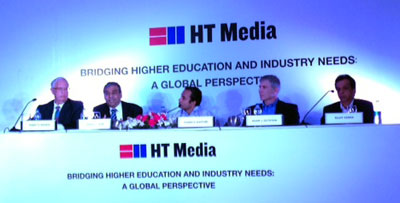
(L-R) Professor Henry Bienen, Professor Dipak Jain, Charu Sudan Kasturi, Adam Gutstein and Rajiv Verma
By Ananya Saha
After launching Studymate tuition centre for Class IX-XII in association with MT Educare in the year 2010, HT Media has announced another JV in the education sector. India Education Services Pvt Ltd is a JV between HT Media Ltd and Apollo Global, Inc. (USA).
To address the skills gaps in India, IESPL is planning to enter Higher Education with the Bridge School of Management. Bridge School of Management has been conceived to address the ’employability’ gap to help India’s rapidly growing Service and Manufacturing Industry educate and empower employees for a 21st century global workplace. Leveraging the best-in-class knowledge, experience, expertise and technology from Apollo Global, Inc. (USA), Bridge will aim to provide an innovative learning environment and industry focused management programs for working adults to boost their career.
To announce the launch, IESPL held a panel discussion on ‘Bridging higher education and industry needs: A Global Perspective’ recently in Delhi. The panelists in the discussion included experts from the academic and corporate world – Professor Henry S. Bienen, former President of Northwestern University, Professor Dipak Jain, Chaired professor of Marketing and former Dean, INSEAD, Adam J. Gutstein, Principal and Management Consultant Leader PwC, USA, and Rajiv Verma, CEO, HT Media Ltd.
Mr Verma said, “I strongly believe that it is possible for an enterprise to ‘do well’ and ‘do good’ and these are not mutually exclusive goals. Thus for HT as a company we realised that there is an opportunity, since there are many young adults looking to improve their skill sets in accordance with the needs of the industry, we decided to enter this space where we can’t only ‘do well’ but also ‘do good’. ”
The panel discussed how most management institutes today focus only on theoretical learning with outdated content irrelevant in today’s competitive world, which results in an ‘education-employment mismatch’. As high as 44% of recruiters find it difficult to find the right talent in the 4- to 8-year-experience bracket. On the other hand, there are millions of working adults who are unable to fulfill their need for career enhancement and higher income due a mismatch in the skills and competencies that they have and what industry needs. Forty percent try and upgrade their qualifications while making a career shift.
Speaking to MxMIndia, Mr Verma informed, “There is a lot of intricacies involved in this project. We are working with academicians and corporate industry to gauge the scene, We are also mapping the kind of courses we should offer. However, we do plan to open the institute in a year. Delhi is definitely one of the markets we will be present in.”
Talking about education needs and India in particular, Professor Henry S. Bienen said, “The world keeps changing, so what becomes important is to provide people with continuous learning and in a heterogeneous country like India, a lot of different institutional forms need to be developed to meet the needs of a highly differentiated population.”
Said Professor Dipak Jain, “When students graduate from American institutions they feel a need to ‘give-back’. This is the kind of culture we need to develop in India, where the students feel that the school made a difference to them. The most important aspect of an MBA education is the sharing of knowledge between teachers and students. It is equally important for teachers to learn from their students as we, in the education profession, are in the business of lifelong learning.”
According to Mr Gutstein, what is really required in management curriculums is the “focus on developing these sector specific skills”. “Additionally, there is a big need to take advantage of today’s technology and educational institutions need to remain abreast with technology as much as the corporate,” he said
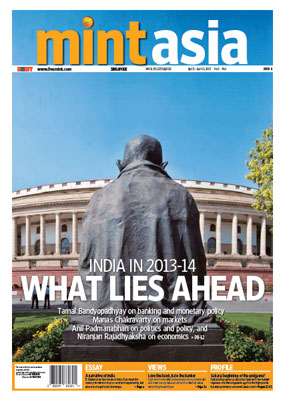
HT Media’s business daily – Mint has forayed into the global market with the launch of MintAsia, a weekly business paper, in Singapore. To be retailed at 6SGD, the newspaper will hit stands every Friday. The first edition was unveiled on April 6 at the IIMPact alumni event in Singapore by Dr. Raghuram Rajan, Chief Economic Advisor to the Government of India and R Sukumar, Editor, MintAsia.
“Our readers are not only highly affluent but also of a global outlook and have gone beyond the shores of India. Singapore is home to a large Indian diaspora, belonging to the Mint reader mindset, actively seeking insights into the Indian business market,” said Vivek Khanna, Business Head, Mint and Head- Strategic Partnerships, HT Media told MxM India. Targeting over 10 percent population of NRIs in Singapore, Mint Asia’s in-depth analysis and sharp insights will keep the global audience abreast of developments shaping the Indian economy and markets, according to Mr Khanna. The content of the paper will be distributed into various sections including banking and finance, policy and corporate affairs, opinions and views of experts across industries and a lifestyle section, offering insights into the Indian business market.
In an official communique, Rajiv Verma, CEO, HT Media Ltd, said, “When we conceptualized Mint, we were always very clear that it would be a regional media brand and I am delighted that, with this launch in Singapore of MintAsia, we have started on that journey. This is amongst the first for an Indian media company.”
Said Mr Sukumar, “Singapore is one of the world’s foremost financial centres and many decisions regarding investments in India happen here. With our unique Web First approach and a weekly print offering, both backed by an integrated newsroom we will try and cater to the India-specific information needs of the discerning Singapore reader.”
While MintAsia would be editorially managed from India, it will be printed in Singapore. The initial circulation would be around 3,000 copies. The first edition has 40 pages, and has a healthy mix of content and advertisements. “We have had a very encouraging response from the readers and advertisers for the very first issue,” remarked Mr Khanna. On the rationale behind launching a weekly, he said, “Mint is more about the analysis of how a financial event can impact you, which cannot be done for a 10-15 minute read. And since all information is now globally available, the monthly would have been too dated. Hence, we decided on a weekly based on our research.”
Currently, the Singapore print market is robust and is dominated by The Strait Times. The business weekly The Edge also has a good hold on the market. “We are sure that with our content and right proposition for our target group, we will become a good vehicle for advertisers and a great product for readers,” Mr Khanna asserted. The only challenge MintAsia might face would be to address the audience present in another market from here. “Yes, it is a challenge. Every new market is the same challenge. But to address Singapore readers, and since you are not sitting in the same market will be challenging.”
MintAsia will be unveiling a multiple-media campaign soon, but Mr Khanna refuses to divulge details. For the record, Mint started its journey on February 1, 2007 in India with the premise of bringing ‘Clarity in Business News’.
The 6th edition of the Mint Luxury Conference brought together the stalwarts of the international luxury market to deliberate on the future of luxury in India. In view of the growing importance of the country in the global luxury industry, Mint, the business daily from the house of HT Media, initiated the conference to bring together stakeholders on a common platform to discuss the business of luxury. The theme of the conference was ‘Luxury in India: The Next Decade’.
The two-day conference took a hard look at the new world order of all things luxurious. The panelists debated, ideated and proffered solutions for the fast growing luxury market in Asia.
Fulvia Visconti Ferragamo, Vice President, Salvatore Ferragamo, shared her definitions of luxury. She said, “Luxury helps us feel special in every moment of our lives and helps us dream. High quality is the essential element of luxury products. High quality is the result of creativity, colours, shapes, craftsmanship and attention to detail.”
All luxury brands have made their way to India and luxury is finding a new home in Tier II cities. According to a recent AT Kearney Luxury in India Report, luxury products have grown the fastest at 29% to reach a size of $2.05 billion, well above expectations of 23%. Jewelry, electronics, cars and fine dining have grown exponentially, while apparel, accessories, wines and spirits have continued their strong growth.
Joydeep Bhattacharya, head of consumer products and retail practice for India at Bain and Co. spoke about the luxury retail environment in India – “At a minimum, there’s got to be a more favourable regulatory environment than one that is there right now. Secondly, there has to be far more availability of the right kind of infrastructure, but that’s more like a necessary and not a sufficient condition. What’s going to help realize the potential of the market is making sure the right luxury brands make the appropriate investments in retail, in awareness, in brand-building in order to generate demand.”
Sanjay Kapoor, CEO, Genesis Luxury, part of a panel debating the topic ‘The Luxury Market in India is Set to Explode’, expressed his views on FDI in multi-brand retail recently approved by Parliament. He said, “It is a positive development. It doesn’t really worry us whether a brand of ours will go single. It is good for the economy and the market. It is important for brands to do well in India. There has been so much negative PR around India and that needs to change.”
From left to right: Josy Paul, Shashi Sinha, Alyque Padamsee, Vikram Sakhuja and Rajiv Verma at the unveiling of ‘The Magic of Print’
We live in an era where technology is at the core of everything that we do. Whether it is about updating ourselves about new product launches or being abreast of the developments that transpire around the world, technology has enabled us to consume news at the quickest time possible – and without burning a hole in our pockets. Amidst this reality, it is the traditional mediums that seem to be taking the brunt of this newfound liking between consumers. From television to out-of-home and even print, mediums today are being threatened to put up a fight and adapt to this new truth or end up being relegated as the medium of yesteryears.
Celebrating the creativity of print advertising, HT Media on Friday, September 14, 2012 launched a coffee table book on print advertising – ‘The Magic of Print’. The hardbound volume features contribution from prominent Indian advertising expert Mr Alyque Padamsee. The book comes complete with a treasure trove of outstanding print advertisements of the last few decades from around the world as well as tips on how to create great print ads. The content is put together by Rajan Bhalla, Head Corporate Marketing and Magazines, HT Media and Mr John Thangaraj, Vice President, Planning, LOWE Lintas.
Addressing a packed audience in Mumbai’s Taj Lands End, Rajiv Verma, CEO, HT Media Limited said that the best ads to remember are all print ads. In the earlier days, there was a certain charm to the print ads which you don’t find today. “I realise news and entertainment will be increasingly consumed on digital media, but print is nevertheless here to stay as long as the content is engaging, good and relevant.”
A panel discussion was also held which delved on the various aspects of print, the impact of innovations, and the future of print advertising and so on. Print is one of the best reach building medium, and while television basically relies on emotions, print requires more brain power. With the literacy rate growing, newspapers will not decline in a hurry, reading newspaper has become a habit and to break this habit will take a really long time. These were some of the points made at the panel discussion. The panelists included veteran adperson Alyque Padamsee; Vikram Sakhuja, Global CEO, Maxus (and CEO, Group M India and South Asia); Josy Paul, Chairman and National Creative Director, BBDO India; and Shashi Sinha, CEO, Lodestar UM. The session was moderated by Sitaraman Shankar, Deputy Managing Editor, Hindustan Times.
According to Mr Paul, the magic of print is a sudden impact; it is the Usain Bolt of the media industry.
Mr Sakhuja pointed out that print is one of the best reach building medium and the top reason why most advertisers use print is for response, reach and editorial credibility.
Mr Padamsee observed, “Television is basically reliable to emotions whereas print which also relies on emotions at the same time requires brain power. Print is a medium which remains with you and it has a mandate, and the mandate is that it is a very reliable medium. If print is going down today, it is because it is not responding to today’s needs. I don’t think print media even realises, it is an excellent medium for knowledge and education. Once it realises this, the swing will automatically go back to print.”
So is there a success mantra for the growth of print? Will print die in the long run?
Mr Josy Paul was of the view that print must not be isolated but integrated and its impact must be maximized. Today innovations is almost a loose word, it has become a bad word, in fact there is a lack of idea today. “Print is in your DNA, so it cannot die, it has been alive for over 800 years, it can only evolve.”
Mr Vikram Sakhuja explained, “Print won’t die in a hurry, it may be threatened by television or digital, but it won’t die in a hurry. There will a downward trend, starting with the metros, trickling down to smaller towns and villages, but it will certainly take some generations. In the long run however print will no longer be a mass medium as not many people will be consuming print.”
Mr Alyque Padamsee was of the view that newspapers have a big advantage of analysing news which is not the case with television as television is a surface medium. “Innovation I believe is great, but some innovations are memorable, and some are clever. However innovations alone won’t sell anything, there is a lack of thinking today as far as print ads are concerned.” He further said, “Any medium will die until they reinvent. Radio would have died a long time ago had they continued the way they were. Yes, even print will die, but they must re-invent to survive and to thrive. Cinema was expected to die after television came in, but they re-invented. As long as print is desirable, it will be buyable.”
While the panelists were of the view that print advertising needs to regain the charm it once had, there was a near unanimity among the panelists that print media is here to stay. However they were also of the view that if the medium was to die in the future, especially with the advent of digital, the death of the medium will be slow. The impact would first be witnessed in the metros which will trickle down to smaller towns and cities and in the long run, print will no longer remain a mass medium. Nonetheless as of today, the panelists were of the view that print advertising must not depend solely on innovation, that the medium must re-invent and make itself a desirable medium.
Shortly after the panel discussion, the book -‘The Magic of Print’ was unveiled.
With one of the key issues for India being how to integrate its citizens into an increasingly digital economy, Hindustan Times brought together a panel of experts from the government, private sector and non-profits at Digital Literacy conclave to discuss the topic ‘Digital Literacy – Keeping India Ahead in the Information Age’.
Moderating the discussion at the conclave, Gautam Chikermane, Executive Editor (Business), Hindustan Times said, “Digital literacy is an essential but unexplored component of economic development and citizen empowerment in the 21st century. With this conclave, we hope to build the foundations upon which this idea can be built.”
Shantanu Bhanja, Vice President Marketing, HT Media Ltd, on the objective of the conclave said, “The need of the hour is to make our country and its people abreast with the digitization that the world is undergoing today. As a newspaper working in the field of education and literary, this conclave is a great platform to bring all influencers and players in the ICT ecosystem together to drive the urgency of making India Digitally Literate and to overcome the digital divide.”
Speaking at the conclave, Debjani Ghosh, Managing Director, Sales & Marketing Group, Intel South Asia said, “One of the biggest concerns facing us today is the lack of user awareness about what technology can do to help their lives. If used effectively, technology can play a huge role in driving personal growth, be it in developing job skills or providing easy access to quality education, healthcare and critical government services. Unfortunately a lot of Indian consumers are still not aware of how they can benefit from technology. Not only does this limit growth, but will significantly increase the problem of haves and have-nots in India. Digital literacy is essential along with technology access, broadband and local content for improving national competitiveness. We are happy that the entire ecosystem is coming together to put in place a Digital Literacy mission. The sustained focus by all of us on digital literacy awareness, education and training will help India take a lead in the global digital economy and help us maintain our competitiveness and also shape a technologically empowered society.”
Panelists on the forum included Sachin Pilot, Minister of State Communications & Information Technology, Govt. of India, Debjani Ghosh, Managing Director, Sales & Marketing Group, Intel South Asia, Sanjay Kapoor, CEO, Airtel India & South Asia, Osama Manzar, Founder & Director, Digital Empowerment Foundation and Rajendra S Pawar, Chairman & Co-Founder, NIIT Group.
Initiative India has announced the appointments of ‘RÂ Venkatasubramanian and Vishnu Sharma as Senior Vice Presidents in the company.
While Mr Venkatasubramanian or Venkat, as he is universally known, will oversee investments and sports, Mr Sharma will be in charge of strategy and insights for all clients of the agency in Delhi.
Mr Venkatasubramanian is returning to Initiative, where he worked for almost a decade, after two shorts stints at Maxus and MPG. Mr Sharma is presently national head of Sales Strategy and Business Analytics at HT Media. He has experience of more than a decade working with national brands such as Airtel, Hero Honda, LG and others at Group M and Madison before.
“These key appointments will help take Initiative to a superior level of delivering business and media solutions for clients. I look foward to welcoming Venkat and Vishnu as part of my leadership team for this agency,” said , newly appointed President of the agency.
Prateek Chandra has been appointed as CFO, Fever 104 FM. Mr Chandra has spent more than 4 years with HT Media and in his last role as Senior Financial Strategist, he has been instrumental in adding value on various strategic initiatives and successfully driving several projects including IPO of HMVL. Mr Chandra will be replacing Ritesh Handa who, after 18 months of tenure as CFO, Fever, has decided to move on to pursue other opportunities.
Prior to joining HT, Mr Chandra had spent almost 6 years with KPMG and EXL handling different aspects of Finance function. In his new role, Mr Chandra will report to Harshad Jain, Business Head, Radio with a functional reporting to Piyush Gupta, Group CFO. He will be a part of the Leadership Team of Radio Business, and have end-to-end responsibility of finance and related operational aspects of Radio business.
Social media has, more or less, become a necessity for every organization today because the consumers are out there and no brand can afford to not be interacting with them. Moreover, social media can also help brands know their consumers’ thoughts, behaviour, likes and dislikes. It also allows brands to have a two-way communication with their consumers, and thus provides high level of interaction and engagement. And it is not just brands but other media like radio stations which are coming out with innovative ways to connect with their listeners through social media.
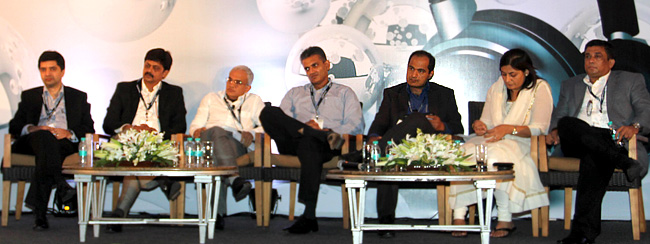
At the sidelines of the India Radio Forum (IRF) 2012 industry veterans from the advertising fraternity discussed the importance of social media for radio.
Mr Premjeet Sodhi, COO, Lintas Media Group said: “Social media is certainly important for not only the radio industry today, but also for every other medium. In the long run we will see more integration taking place between social media and radio.”
Mr Raj Nayak, CEO, Colors- Viacom 18 explained: “Social media is growing by the day. Today almost 65 per cent of the people in India are below the age of 35 and 50 per cent are below 25 years of age. I believe this is the fastest growing medium, therefore, it is a very important medium and those that have not got onto social media, must get on before it is too late.”
Mr Suman Srivastava, Founder and Innovation Artist, Marketing Unplugged said: “Social media is important for radio at two levels. One is to connect with the listeners and therefore, get much larger engagement which might even result in an increase in the reach. On the other hand, it is a fantastic medium for radio channels to build their own brands as well as the brands of their advertisers. In the future, I believe, we will see a lot more advertisers using radio and social media together along with, perhaps, ground activations to create events which could have a multiplier effect for those advertisers.”
Speaking on the need for radio to partner with clients, Mr Vinay Bhatia, Customer Care Associate and Senior VP- Marketing, Shoppers Stop said: “The real big partnership for radio and their clients is in the digital space. Digital and radio have to come together and ally in such a way that they deliver joint value to the client, and I don’t think any of this is happening today. Radio is an out of home medium and we are increasingly seeing out of home consumption for digital. I think these two medium can go very well together and brands like ours which have large Facebook pages need content, we need engagement and I think radio channels that provide us that.”
Mr Harshad Jain, Business Head – Radio and Entertainment, HT Media said: “Radio is a medium which is free of cost, it is the cheapest form of entertainment in the country, and if there are issues that can be interlinked with social media, it could call for a good integration. Having said that, it is still early days because radio as a medium still has to catch up big time before it starts integrating with social media.”
While there are calls for integration between radio and social media, the radio industry must also find ways to monetize the radio-social media connect. Mr Sodhi pointed out that while social media can make radio activations richer, it is vital for radio stations to find newer ways to monetize this activation.
Agreeing with Mr Sodhi, Mr Raj Nayak said that no business will work if there is no monetization. He added: “One of the biggest disservice broadcasters have done is that they have not woken up to the digital media.”
So while radio and social media will see more integration in the long run, there is also another school of thought that believes that radio is still at a nascent stage and has a long way to go before it can get into integration with social media. However, monetization is the key for survival of any business and radio stations must find ways to monetize its social media activations.
Radio is said to be a medium that has been re-born. With the FM Phase III rollout anticipated this year, radio is expected to penetrate further into the country, as a result not only will there be an increase in revenues but, also the fact that newer revenue streams will open up. Multiple frequencies, allowing news and current affairs, sports broadcasting will also bring more innovations in radio, new genre radio stations and great amount of differentiation in content.
Radio’s share of media spends, according to industry estimates, is expected to rise from 4 per cent to 5 per cent in two years. Among categories that advertise on Radio, Real Estate, Telecom, Retail, Education and TV channels are the ones advertise the most.
What radio players say?
Harshad Jain
Joy Chakraborthy
Apurva Purohit
B Surender
So, does radio still need to be evangalised? Is radio still insignificant to for advertisers? The India Radio Forum (IRF) 2012 discussed these issues. According to Mr Harshad Jain, Business Head – Radio and Entertainment, HT Media: “From a client standpoint, radio is still an insignificant medium. It all boils down to value addition of the medium – how can radio, as a medium, ensure value addition to its advertisers? The entire orientation has to be more than just vanilla FTCs. Radio is still an under-penetrated medium and has still a long way to go.”
Mr Joy Chakraborthy, CEO, TV Today Network (which includes Oye! FM) pointed out that the Indian radio industry needs to stand united, not only on issues related to government regulations, but also for business related issues. “There needs to be some amount of unity among the radio fraternity. For the industry to survive we must stand together, not just for regulatory issues but even for businesses. Today radio is the most underpriced medium and unity within the industry will help us drive our sales.”
Ms Apurva Purohit. CEO, Radio City was of the view that radio is still at an infancy stage and like any other medium, it will also take some time to evolve. She was quick to point out that television took many years to be what it is today. “Today the ad pie of radio is 4 per cent, the geographical coverage of radio is merely 30 per cent but, with Phase III the geographical coverage will see tremendous increase. Every year the number of advertisers on radio has only been growing, what we need to do now is to encourage these advertisers to spend more on radio and reach out to newer advertisers.”
Mr B Surender, Senior Vice President and National Sales Head, Red FM said: “In the last two years radio saw tremendous growth. With the launch of Phase III also expected soon, the future of radio is certainly bright. Even radio stations outside metros saw tremendous growth, innovations in smaller towns and cities were high and in the next two years radio’s advertising pie is expected to reach 6 to 7 per cent.”
The client perspective:
Few years ago, radio was seen as a supplementary medium for advertisers wherein they would spend only the left over media spends on radio. This is said to be changing, slowly and steadily as advertisers are beginning to take radio seriously. There has also been an increase in the number of on-ground activations which has more or less become complementary for radio stations as a value addition to their clients. However, digital media, which was at one point in time an even smaller medium than radio is today, said to have become an even larger and a more powerful medium than radio and a possible reason could be because Internet, unlike radio, is a highly measureable medium.
Giving a critical view on radio as an effective local medium, Mr Vinay Bhatia, Customer Care Associate and Senior Vice President Marketing and Loyalty said that radio has a very low share of mind and share of value medium to advertisers today. Digital on the other hand, which started off from 2 per cent of advertising share has a much higher share of mind and share of value. “To maximize assets, radio has to deliver business. Radio needs to world closely with clients, it can also look at which area of a city or town works better for clients. It can also partner with retailers to play radio in stores while customers are shopping. Radio is a response medium, therefore it allows a lot of engagement and interaction with listeners. However, there needs to be more innovations for advertisers on radio because clients love innovation and as a result innovation will bring more money for the radio station.”
Arpita Menon, Head-Media Planning & Buying, Star India Pvt Ltd
Premjeet Sodhi, COO, Lintas Media Group
Harshad Jain, Business Head- Radio & Entertainment, HT Media
Mr Shubhranshu Singh, Marketing Director-India and South Asia, Visa explained: “As far as Visa is concerned, radio has delivered us handsome returns. Radio, I believe, is economical and one can expect higher returns, it is certainly a cost effective medium. However, radio must come to clients as an industry and not as one single radio channel – it should be bolder in its approach towards clients and thus stay on top of mind of clients.”
Mr Kartik Sharma, Managing Partner, Maxus had a slightly different take on the medium. He was of the view that radio is the oldest form of social media platform, it allows great amount of interactivity and engagement with the listeners. “Radio is in the business of producing great contents and so are the brands, I believe that both radio and digital can depend on each other. Radio is in the business of providing great content, the power of radio is sound and creativity therefore the mindset to learn this medium is very different.”
Ms Shubha George, COO, MEC noted that in order to maximize radio’s asset and gain share of market spends, it needs to market itself more. She stated that radio today is sold and not marketed, what it needs is more marketing. She also pointed out that the industry must find ways to monetize every single phone calls and SMSes it receives and market them extensively.
The Indian radio industry still needs a lot of evangelizing or marketing of the medium. Radio needs more nurturing, it needs to probably find newer ways of achieving better ROIs and thus increase greater share of media spends. More innovations in radio will also bring in more money and help it stay on top of advertisers’ minds. Radio needs to partner their clients and find newer ways to generate better ROIs for their clients. Radio needs to vigorously market itself to the advertisers and explain the power of the medium so that it becomes a primary medium for marketers.
Given the continual struggle of advertisers to grab attention of consumers, Hindustan Times has launched an initiative to engage its readers with the advertisements appearing in the newspaper daily.
Called ‘Spot the Dot”, Readers have to find a mnemonic dot that appears in two advertisements in the Hindustan Times every day and message the brand names to a shortcode. Respondents stand to win attractive daily and weekly prizes such as watches and laptops.
“As leaders in our field, we have always strived to innovate and set new benchmarks. We believe the advertisements are an important part of the newspaper, and a reader looks forward to the combined package every morning. This contest further increases engagement with the ads, and the response has been quite remarkable,” said Shantanu Bhanja, VP Marketing, HT Media.
Dinesh Jain, CEO, Hover Automotive India, an advertiser with HT, added: “Spot the Dot is a unique initiative undertaken by HT, which helps in building brand recall and creating buzz around the brand. We applaud HT for this initiative.” Promoted every day in the paper through innovative ads, the promo has generated buzz amongst the readers as well as the advertiser fraternity.
HT Media Limited is one of India’s foremost media companies, and home to three leading newspapers in the country in the English, Hindi and Business news segments – ‘Hindustan Times’ (English daily), ‘Hindustan’ (Hindi daily, through a subsidiary)Â and ‘Mint’ (business daily). ‘Hindustan Times’ was started in 1924 and has a more than an 85-year history as one of India’s leading newspapers. The Company also has four FM radio stations – Fever 104 FM inDelhi, Mumbai, Bengaluru and Kolkata.
The Company has also made a foray into the Internet space through its subsidiary Firefly e-Ventures Limited and has launched successful portals, www.Shine.com, www.HTCampus.com, www.Desimartini.com. These are in addition to the existing websites livemint.com, livehindustan.com and hindustantimes.com.

 By Ananya Saha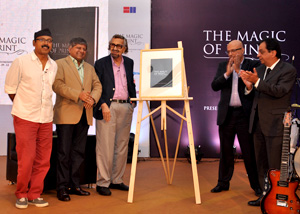




 Radio is said to be a medium that has been re-born. With the FM Phase III rollout anticipated this year, radio is expected to penetrate further into the country, as a result not only will there be an increase in revenues but, also the fact that newer revenue streams will open up. Multiple frequencies, allowing news and current affairs, sports broadcasting will also bring more innovations in radio, new genre radio stations and great amount of differentiation in content.