
At Hindustan Unilever Limited’s 81st Annual General Meeting yesterday (June 30), Chairman Harish Manwani addressed shareholders and spoke about how change is ‘the new normal’ and the need for companies to constantly reinvent themselves in order to thrive.
In the speech titled ‘Building a future ready organisation’, Mr Manwani spoke about Unilever’s five-pronged approach to remain future ready – first, embracing technology and inclusive innovation that meets the needs of consumers across the socio-economic pyramid; second, committing to sustainable and responsible growth; third, building future ready talent and capabilities; fourth, values-led and purpose-driven leadership; fifth, creating an agile and inclusive work culture.
Mr Manwani underlined that to succeed in this world businesses have to develop a high capacity for responsiveness. Organisations will have toadapt to rapidly changing situations and priorities, tolerate ambiguity, and develop new ways of working in order to succeed. He said, “While technology and innovation will be the hardware that drives future ready organisations, it is a values-led and purpose-driven leadership that is the software that must drive sustainable and responsible growth. It is this combination of hardware and software that will shape the corporate winners of tomorrow.â€
We reproduce here the text of Mr Harish Manwani’s speech, as taken from the HUL website (url: http://www.hul.co.in/Images/AGM-booklet-2014_tcm114-393426.pdf):
Building a future ready organisation
Section One: Introduction
We live in an increasingly interconnected world that is changing faster than ever before. In fact, change is ‘the new normal’ and ifanything the pace of change in future will be even faster than itis today.
Take connectivity for instance. It took almost 50 years after theinvention of the telegraph before the first telephone wasinvented. It was another 50 years before we saw the television.But in less than half the time it took to move from the telegraphto the television, we witnessed the rise of computers, the invention of the mobile phone and the advent of the Internet.Now we have the power of the telegraph, telephone, radio,television, computer and Internet all in one device that can fit inour palm.
The pace at which these technologies have been adopted inIndia is unprecedented. The spread of mobile connections is atelling example. The first mobile phone call was made in 1995.In less than 20 years, mobile connections are now all pervasiveand have in fact far surpassed landline connections, a servicethat started more than a century earlier.
Last year, I had spoken about the volatile, uncertain, complexand ambiguous, or VUCA world, we operate in. This VUCA environment marked by continuous and dramatic changeposes opportunities and challenges for businesses. It requirescompanies to change the way they operate and constantly reinvent themselves.
The list of those who failed to reinvent themselves and succumbed to the VUCA environment is long and instructive. TheEastman Kodak Company is just one on that list. The iconic brandthat was synonymous with photography in the era of darkroomsand films actually invented the first digital camera, but later filedfor bankruptcy after failing to fully respond to the sweeping changes of the digital era.
On the other hand, there have been companies that havecontinuously innovated to meet the requirements of our fast changing times and thrived. For example, Apple and Google havegrown and cemented their leadership positions on a wave ofinnovations. Innovations like Google Glass, a wearablecomputing device and Google Fiber, an Internet service with aspeed of 1Gbps are already looking ahead to meet consumerneeds of the future. Apple’s latest offering of the iBeacon allows a phone to direct a driver to the nearest open spot in a parking garage or the shortest line at a food counter in a crowded theatre.
Section Two: India at the forefront of change
In developing countries like India, the last couple of decades have been marked by momentous change. Over the last 20 years, GDP per capita in India has nearly tripled from USD 517 to USD 1415. Poverty levels have halved from 45% in 1994 to 22% in 2012. In spite of recent economic challenges, India is poised to becomethe third largest economy in the world by 2030. About 25 yearsago, only 3% of India’s 600,000 villages enjoyed telephoneservices. For urgent communication, people would rely on whatwas commonly known as the ‘taar’, the telegraph service. Today,there are over 875 million mobile phone subscribers in India and the ‘taar’ is history, with the telegraph service shuttered last year.
In fact, today the penetration of mobile phone is higher than anytraditional media in many rural areas.This connectivity is allowing India to leapfrog. It is increasing theproductivity of our farmers by providing easy access toagriculture-related information, eliminating intermediary nonvalueadding players and opening opportunities for microenterprises, thus fundamentally improving everyday life formillions of people. It is therefore not surprising that the country’sdigital and e-commerce market is booming. In fact, in 2013, theIndian e-commerce market grew at a staggering 88% accordingto a survey by The Associated Chambers of Commerce and Industry of India. With the growing penetration, accessibility andaffordability of smartphones, over 25% of the total Internet transactions in India are done via mobile devices.
Companies that have tapped into this evolving class of Internet savvy consumers experienced unprecedented growth. Case inpoint: five years ago, Bengaluru based e-commerce website, Flipkart, began as a start-up with an investment of justINR four lakh and today, reportedly generates USD one billion inannual sales. The success of such e-commerce portals isspawning an online retail revolution in India.
Technology and easier access to information and knowledgehave opened up employment opportunities resulting in a newwave of people entering the consumption cycle. We arewitnessing a significant increase in the earning power ofconsumers at the bottom-of-the-pyramid as they join theincreasing middle class population in India. The traditional socio-economic pyramid is rapidly transforming itself into adiamond with a burgeoning middle class and a decreasingnumber of low-income consumers. This is increasingly true ofIndia and many other developing economies and offers hugeopportunities for business.
A company that is future ready will not only be able to seize theopportunities these changes present, but also protect itself fromthe challenges of the VUCA world.
Section Three: Building a future ready organisation
Being future ready means having the vision and the capabilitiesto compete in the world of tomorrow, and having a largerpurpose to remain relevant to society.
At Unilever, we have a five-pronged approach to remain futureready – first, embracing technology and inclusive innovation thatmeets the needs of consumers across the socio-economicpyramid; second, committing to sustainable and responsiblegrowth; third, building future ready talent and capabilities; fourth,values-led and purpose-driven leadership; fifth, creating an agile and inclusive work culture.
a) Technology and inclusive innovation
India is a vast nation with widespread socio-economic diversity.Technology and innovation allow us to anticipate and better servethe needs of the many different Indias. There are hugeopportunities in meeting the needs of the rising middle class aswell as the aspiring low-income consumers.
The urban middle class consumers are changing the way theyshop and buy. These consumers are researching brands andproducts, comparing prices across multiple locations and areopen to ordering from anywhere, anytime. These consumers areready to try new products and services and are willing to spend onbrands that match their aspirations.
In India, to be truly future ready, one has to leverage technology tocater not only to the rising middle class but also to consumers at the bottom-of-the-pyramid. As the late Prof C K Prahalad and Dr R A Mashelkar put it, the way forward for companies is inclusive innovation. An enlightening example would be that of Aravind EyeCare, an organisation that has dramatically altered eye care in India by bringing the price of intraocular lenses down to a tenth ofinternational prices and making cataract surgeries affordable for low-income consumers. Today, the company markets its productsin more than 130 countries. Similarly, Arunachalam Muruganantham, a social entrepreneur from a village near Coimbatore, has invented a low cost sanitary pad making machine which can manufacture sanitary pads for less than a third of thecost of conventional commercial pads. Low-cost business modelsare thus changing the way we serve millions of consumers.
At Unilever, the approach of developing innovations with consumerprice as the starting point is at the heart of our inclusive innovationstrategy. In Hindustan Unilever Limited (HUL), we have institutionalised a ‘challenge cost’ mindset where the target price for consumers drives innovation in each segment and category.
This has helped us to develop several new market segments inHome Care, Personal Care and Foods. Pureit is a more recentexample of this approach.
Pureit addresses one of the biggest technological challenges ofthe century – that of making safe water accessible and affordablefor millions. It provides one litre of ‘as safe as boiled’™ water at arunning cost of just 28 paise without the hassles of boiling, the need for electricity or continuous tap water supply. Pureit has emerged as the largest selling water purifier brand in India andhas now been introduced in several other countries, protecting 58million lives globally.
Reaching up and reaching wide
We continue to leverage advancements in technology andconnectivity to strengthen our collaboration with customers in modern trade and simultaneously expand our distribution reach indeep rural areas. We call this reaching up and reaching wide.06
We identified modern trade as a key growth driver over a decadeago when the channel was still at a nascent stage in India andinvested in technology and capabilities to strengthen our partnerships with customers.
We launched a state-of-the-art Customer Insight and InnovationCentre that provides us with a platform to collaborate with ourcustomers and co-create marketplace ideas to win withshoppers. We have improved upon our service delivery standardsby leveraging technology for demand sensing. We have deployeda collaboration tool with most of our large modern tradecustomers which has helped us achieve an all-time high on-shelfavailability in these stores. The Best Supplier of the Year awardbestowed upon us by key modern trade customers is arecognition of our partnership and the value that these initiativeshave added to their business.
In 2013, we used technology to expand our direct distributionreach in both urban and rural markets. By GPS tagging retailoutlets, we were able to identify and prioritise the geographiesthat presented an opportunity for direct distribution expansion.We now service over three million retail outlets directly helping tofurther improve availability and access to our products.
We developed new low-cost distribution models that usetechnology to leverage the increasing penetration of mobilephones among small retailers. Taking orders through telecallingsaved time and cost, and enabled us to reach outletswhich were outside the purview of our traditional distributionmodel. Through Project iQ, a technology-based analytics capability, we enabled sales people to make shorter and more effective sales calls.
Similarly, to strengthen our reach in deep rural areas, wedeployed a low-cost mobile IT solution that enables thousands of our Shakti Ammas (rural women entrepreneurs) to take andbill orders, and manage inventory in real time. This has madethe Shakti Ammas more productive and helped them to furtherenhance their incomes.
Digital marketing
The Internet is changing the way brands engage withconsumers. There is a blurring of lines between advertising andeditorial; between ‘paid’ media in conventional channels and‘owned’ and ’earned’ media in emerging digital channels.
Mobile, social media and big data are transforming the very nature of marketing.We were early in recognising this trend as a game changer. Wehave not just significantly increased our investment in digitalmedia but are also innovating to increase our impact in thisspace. Last year, we launched the ‘Media Lab’ which helps ourbrands deliver engaging brand experiences in an effective manner across Internet enabled mobile devices and platforms.
Drawing on the insight that Bollywood-related searches areamong the highest online content sought by users in India, HULhas launched Bollywood Buzz on YouTube. Our brands are able to effectively deliver brand messages to consumers by creativelyweaving in brand content with exclusive pre-release film content.
Another example of our brands leveraging digital to effectivelyengage with consumers is the ‘BeBeautiful’ initiative. HUL beauty brands have come together to develop and launch ‘BeBeautiful’ as an online beauty expert platform. The recent vlogging (videoblogging) campaign by ‘BeBeautiful’ has been a tremendoussuccess achieving 20 million video views in just six months.
Perhaps the most exciting initiative has been the launch of ‘Kan Khajura Tesan’, a mobile marketing initiative aimed to help ourbrands engage with low-income rural consumers in media dark areas. ‘KanKhajuraTesan’ has been globally recognised with theprestigious Lions Gold awards at Cannes Lions InternationalFestival of Creativity this year.
b) Sustainable and responsible growth
As the less developed economies grow, demand will risedramatically; but we live in a world with finite resources. Largenumbers of people still remain out of the modern day economicsystem — we still have one billion people going to bed hungryevery night, 2.8 billion people short of water and 2.3 billion peopleliving without access to basic sanitation.
We are convinced that businesses that address the needs andaspirations of consumers as well as social and environmentalchallenges will thrive in the long term. This is the foundation ofwhat it means to be future ready.09
Unilever’s journey towards building a future ready organisationgained momentum and direction in November 2010 when welaunched our ambitious Unilever Sustainable Living Plan(USLP). The Plan aims to double the size of our business whiledecoupling our growth from our environmental impact andincreasing our positive social impact. This thinking lies at the heart of our business and is now being firmly embedded acrossevery part of the organisation.
i) Brands at the forefront of social change
We believe that every brand should serve a purpose in the life ofthe person who buys it. This belief has been at the forefront ofhow we build purpose-driven brands and we continue to leverage them to create positive social impact. For instance, Lifebuoy nowruns one of the largest handwashing programmes in India.
Last year, we launched the ‘Help a Child Reach 5’ campaign in Thesgora, a village in Madhya Pradesh, known for having one ofthe highest rates of diarrhoea in India. The campaign aims to eradicate preventable deaths from diseases like diarrhoea byteaching lifesaving handwashing habits, one village at a time.
The results have been tremendous, with a staggering 86% dropin the incidence of diarrhoea in Thesgora. The campaign is nowbeing rolled out to villages across 14 countries. Another example is Domex, our leading toilet cleaner brand,which launched the Domex Toilet Academy last year with an aimto assist in eradicating open defecation by providing access to improved sanitation. Our water purifier brand, Pureit in partnership with Population Services International has been working towards providing safe drinking water at a minimal costto families in rural areas.
ii) Enhancing livelihoods — sustainable agriculture
Being future ready also means caring for your environment andinvesting in sustainable supply chains. We are working withsmallholder farmers to help them implement sustainablemethods while significantly improving their crop yields. We helpthem adopt good agricultural practices like drip irrigation,nutrient management, pest and disease management. In 2013, 80% of the tomatoes used in Kissan ketchup were from sustainable sources. We already source 100% of our palm oil from sustainable sources backed by Green Palm certificates.
In fact, we have integrated our sustainable sourcing initiativesinto the business through our ‘Partner to Win’ programme. Thisnot only enables our supplier partners to ensure sustainable sourcing across their value chain but also secures our sourcingneeds for the long term. As Unilever, we are already sourcing 48%of our global raw materials sustainably and are committed tomake this 100% by 2020.
To address the impact of depleting water resources on food, energy and livelihoods, we set up the Hindustan Unilever Foundation (HUF) in 2010. HUF partners with NGOs, government agencies and members of the local community. It currently runsprojects that have a cumulative and collective water conservationpotential of 100 billion litres by the end of 2015. We expect to generate more than two lakh person days of employment in morethan 180 villages across India. Furthermore, we expect that theincreased water conservation would help lead to a 10% rise in crop production in some of the project areas.
iii) Project Sunlight
To renew and reconnect our brands to the larger corporatepurpose of making sustainable living commonplace, welaunched Project Sunlight in November 2013 to motivate millions of people to live sustainably. We hope to create a movement forsustainable living among consumers and thus help to create abrighter future for children.
India was one of the five key markets where Unilever launched Project Sunlight on Universal Children’s Day last year. Thecampaign got an overwhelming response in India with over four million people joining the Project Sunlight movement. This year,we will reach out to more people and inspire them to adopt sustainable living practices in their daily life. The first campaign launched this year aims to encourage families to conserve water.
We are hopeful that through such campaigns we can continue to increase awareness among people and contribute to our purposeof making sustainable living commonplace.
c) Future ready talent and capabilities
To create a business that addresses the needs of the futurethrough technology and sustainable models for growth, we needto nurture a continuous learning environment that builds talentand new organisational capabilities.
We have a holistic approach towards honing our talent pipelineand building leadership capabilities in our people. We encourageour people to define their individual purpose in theorganisational context and help them realise it throughmeaningful actions. The Unilever Future Leaders Programmeprovides us a strong foundation to groom and develop talentfrom the entry level itself. Large responsibilities early on in thecareer, open and honest career development discussions, crossfunctionaland international exposure coupled with coaching and mentoring helps develop a strong leadership pipeline.
We are harnessing technology to prepare our employees tosucceed in tomorrow’s world. For example, we have createddigital passports that are licenses for our marketers to operate in the future. As a part of building awareness and knowledge ofour managers on business, managerial and professional areas,we use online e-learning solutions. In 2013 alone our employees completed nearly 50,000 online courses.
Our initiatives such as ‘Incite’ and ‘Food’s College’ help to build marketing capabilities required for the business to win in thefuture. These initiatives have also resulted in several successful marketing campaigns such as the Foods experiential marketingprogramme.
We also believe that learning must be embedded in theorganisation at all levels. We have undertaken a host ofprogrammes in the space of capability building on the shopfloor.For example, our Shopfloor Skill Upgrading Programme,‘Sparkle’, assesses training needs, skills and the performance of our shopfloor employees. ‘Stepping into One’ is another programme that develops technical and leadership skills among shopfloor employees, providing them with career advancementopportunities into supervisory roles.
d) Values-led and purpose-driven leadership
Ultimately, the most important asset of any organisation is itsreputation. For future ready organisations, we need leaders whowill not only build the organisational capabilities to harness technology and new ways of working, but also instil the values tobuild sustainable and responsible models of growth. These arethe leadership principles that we have embedded in our company and they will continue to shape our future as an organisation.
More than ever before we need leaders who are values-led andpurpose-driven. These are leaders who recognise that there are some non-negotiables in business and that building organisational character is essential to future success. In Unilever, we have a common code of business principles andleadership values of integrity, respect, pioneering and responsibility that have to be embraced by every leader in everypart of the world.
e) Agile and inclusive work culture
In a world with easy access to information and rapid changes,companies need to move fast to keep up. Speed is the new currency for future ready organisations. At Unilever, we have ingrained agility and speed in our workculture through initiatives such as ‘Project Sunset’. This initiative was pioneered by HUL to facilitate quick decision-making in theorganisation. It has been rolled out globally to build a moredynamic and agile culture.
In 2013, we launched a new campaign, ‘Winning Together’, to reduce complexity across the organisation and empower peopleto maximise their potential through simplified ways of working, cutting inefficiency and promoting a bias for action. For example, we are driving more effective collaboration in cross-functional teams by using project classification tools and driving behavioural changes amongst employees. This is helping us to increase the pace of innovation by delivering cross-functionalprojects on time.
Equally, diversity and inclusion is an important aspect of our sustainable business growth agenda and a key to building a futureready organisation. In HUL, we refer to this as ‘Winning Balance’. Over the last three years, we have seen a considerable shift in thisarea through greater leadership involvement and engagement. For instance, we have been able to recruit women on careerbreaks through our ‘Career by Choice’ Programme that balances personal and professional needs of talent on their return to theworkforce. In 2013, we established a Winning Balance Council comprising male and female leaders across functions who champion the diversity agenda in the business. Last year, Unilever’s progress on diversity was recognised with the prestigious global Catalyst Award. We are on the path towards creating the ‘ideal’ work culture of a simpler, agile and inclusive organisation.
Section Four: Conclusion
We live in an extremely volatile world that is changing faster thanever. Products and services are becoming more accessible withincreasing connectivity and improved infrastructure. To succeedin this world we have to develop a high capacity for responsiveness. Organisations will have to adapt to rapidlychanging situations and priorities, tolerate ambiguity, and develop new ways of working in order to succeed.While technology and innovation will be the hardware that drivesfuture ready organisations, it is a values-led and purpose-drivenleadership that is the software that must drive sustainable andresponsible growth. It is this combination of hardware and software that will shape the corporate winners of tomorrow.


 L’Oréal India has announced the appointment of ShaliniRaghavan as Chief Marketing Officer for its Consumer Products Division (CPD). Raghavan will be responsible for driving overall marketing capability and strengthening digital initiatives to build a strong strategy for L’Oréal’s CPD brands – L’Oréal Paris, Garnier, Maybelline New York and NYX Professional Make up.
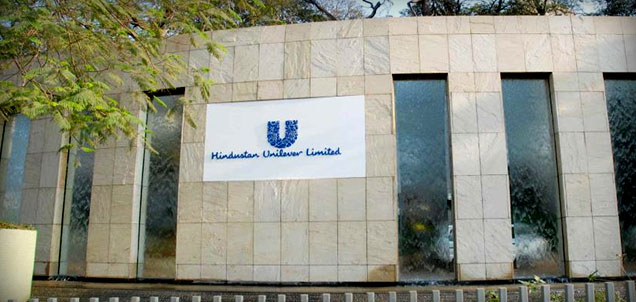
 Hemant Bakshi, Executive Director, Home and Personal Care, Hindustan Unilever Limited, was elected Chairman of the Indian Society of Advertisers (ISA). He takes over from Kurush N Grant. The newly elected Executive Council of the Indian Society of Advertisers (ISA) met on September 11.