Tag: Hard Knocks

  • Anil Thakraney: Reportage must be free of bias

    By Anil Thakraney


    For the benefit of young journalists reading this post, I want to discuss the importance of the play of a story, and I shall illustrate this with a report that the TOI fronted a few days back. This is not to fault the newspaper, undoubtedly they carried the said story with noble intentions, but it’s an interesting example to highlight how the story gets played out is often as important as the story itself. It’s about this lady executive who wears an artificial limb, and the torturous time she had passing through airport security. Here’s the link: http://timesofindia.indiatimes.com/india/Airport-check-of-artificial-leg-leaves-marketing-executive-in-tears/articleshow/21027950.cms


    Now, we have to feel sorry for Suranjana, indeed, our heart goes out to the lady. You suffer from a serious disability, and then you are made to undergo high stress at the airport. Clearly this is not on. However, the problem is this: Because it’s a news report, you expect the story to be objective in nature, after all, this is not an opinion column. The play by the journalist is biased in this case, and the report doesn’t bother to give us an adequate version from the airport security staff. As a result, the reader is left with the impression that the security personnel at airports are heartless, insensitive souls, and this could be far from the truth.


    For example, even as I feel sorry for differently abled passengers, and understand their plight and want them to travel in comfort, I have to say this story actually reassures me. Because this means our airport security personnel are going about their work as per the book and minus any emotion. In short, they are doing their job. We live in terrible times, and canny terrorist can and will look for innovative methods to create trouble. And therefore we need kickass security. When you look at the situation from this angle, your view gets changed. And this particular play of the story would also be incorrect, because this too is a subjective opinion, and has no place in a news report.


    The other concern is, such a biased story in a powerful newspaper would put unnecessary pressure on the security staffers, compelling them to be lenient with those who are differently abled. Is that such a good thing? You know the answer to that one. I know that the Indian media is getting increasingly subjective in its reportage, and television anchors do it every single evening, but I do hope the TOI, a paper that I have read and respected from childhood, doesn’t fall prey to this practice.


    So then what should ideally have happened? In my opinion, report neutrally. And then run a campaign on how the government can help evolve sensitive security procedures for the differently abled, but without compromising safety.


    PS: Brilliant commercial from Land Rover. This is the magic that happens when a talented filmmaker, cinematographer and the agency art director work together to create a sparkling ad. You can watch this one again and again and not get bored.

    [vimeo width=”400″ height=”220″]http://vimeo.com/65104233[/vimeo]


    Anil Thakraney is a senior journalist and commentator. He is also Editor-at-Large, MxMIndia. The views expressed here are his own. He can be reached via Twitter at @anilthakraney


     

  • Anil Thakraney: Saas-Bahu soaps will never die

    By Anil Thakraney


    Last week, we discussed why there’s sameness in the desi soaps, why the channels and producers aren’t able to brush off household fights. I also mentioned that things may finally be looking up, what with bada Bollywood stars and directors wanting to take part in television fictional shows, to produce offbeat content. But can their stuff match up to the best of American television, will they be able to raise the bar? No way, and I will explain why.


    In the last one year, I have watched some truly stunning TV serials from the US. Spartacus, Homeland, House of Cards, Scandal, Prison Break, just to name a few. The budgets are lavish and therefore the quality of production is extremely high. The soaps out there don’t just match the best of Hollywood, they often surpass it. In terms of stories, direction, editing, stunts, special effects, the works. This is what makes the serials magnetic… as a viewer you don’t feel shortchanged, you know you are being rewarded for the time you spend on the serials. This is where Indian producers will take a bad hit, because they simply won’t have access to that sort of funding. So even if the story is interesting, the production quality will make you cringe. Watch Ekta Kapoor’s Jodha Akbar, for example. It’s got tacky written all over it. The sets and the costumes look comical, the acting is third rate and the serious dialogues make you laugh out loud. Am afraid the same fate awaits Anil Kapoor’s copy of 24.


    Monies aside, there’s another grave problem. Almost all the American serials take on the White House, and not in a flattering way. The US Prez gets routinely depicted as a conniving, cheating, diabolical, unfaithful man, and the junta loves the no-holds-barred approach. Try doing this in India, you will get into serious trouble with our insecure politicians. Also, out there, they honestly deal with the issue of terrorism; they don’t shy away from singling out the community whose young men usually take to militancy. This will be impossible in our ‘vote bank’ politics ruled nation. And once you water the content down, you have already killed the excitement. Add to that: No foul language and absolutely no steamy sex, you are taking about utterly boring fare.


    And so that’s why I am not very bullish on the Indian GECs. They will experiment, get poor returns, and return to family dramas with a vengeance. Yes, we are stuck with the saas and the bahu, whether we like it or not.


    PS: How do you promote a cafe that was once a urinal? Well, you have fun with it. And sit back and watch as your act goes viral, resulting in oodles of free publicity. Smart thinking.

    [vimeo width=”400″ height=”220″]http://vimeo.com/68843232[/vimeo]


    Anil Thakraney is a senior journalist and commentator. He is also Editor-at-Large, MxMIndia. The views expressed here are his own. He can be reached via Twitter at @anilthakraney


  • Anil Thakraney: The Great Desi Soap Factory

    By Anil Thakraney


    In a two-part series, I shall examine the key challenges confronting the Hindi GECs, as well as the road map for the future. Today, let’s examine the current scenario.


    As I mindlessly surf the channels, I realize that not much has changed in the last decade plus. For years together so many critics and viewers have been carping about it, but it all seems to have fallen on deaf years. Almost all of the Indian television soaps are still stuck with the same old family dramas, the same old kitchen politics. Each year one channel or another launches a new serial that comes with the promise of freshness, it even starts nicely, but by the tenth episode the story regresses into a family natak, laced with plenty of cat fights.


    To understand this situation, let’s assume for a minute that the channel chiefs know what they are doing, that they aren’t stupid. The easy explanation is that audiences for television soaps essentially constitute housewives, and that these ladies like to watch gharelu khitpit. Well, this could be true to an extent. But then, housewives in America also like to watch Homeland and Prison Break, and by that logic, surely bored housewives out here would like to consume high octane stories. So to blame the viewer, as in ‘we are only dishing out what she wants’, is unfair. Think about this: The same housewife, when she goes to watch movies, prefers zippy, edgy, offbeat content… family dramas are a thing of the distant past in Bollywood. So why would she not want novelty in her soaps? The real problem is that so far, the Hindi entertainment channels have refused to take chances, they have played safe, and this has led to photocopy content across board. So it’s a problem of lack of courage.


    However, in the recent past, winds of change seem to have started blowing. Anil Kapoor is busy doing the desi version of 24. Amitabh Bachchan has begun shooting for a fictional TV show. Anurag Basu wants to create a new TV serial. Ekta Kapoor, the queen of family dramas, has launched the historical Jodha Akbar (though the family squabbles continue here too, not surprising that, Ektaji can’t avoid those!). Soon, other big stars, movie producers and directors will join the party, and that can only be great news for the Hindi GEC audiences.


    So can we look forward to an entertainment revolution on TV? Er, not really. Because the change, even if it happens on a large scale, will present its own set of problems and challenges. On Monday, we’ll discuss these, so have patience. When the subject is soaps, even I must be allowed to serialize the article. 🙂


    PS: Nice press ad from Apple. Good body copy, something that’s now extinct in India. I like how Apple has distilled its entire philosophy into simple words, so that the aam aadmi can connect with it. Another example why Apple is such a loved brand.


    Anil Thakraney is a senior journalist and commentator. He is also Editor-at-Large, MxMIndia. The views expressed here are his own. He can be reached via Twitter at @anilthakraney


  • Anil Thakraney: Need fresh gas on TV

    By Anil Thakraney


    All the Indian news channels have turned into clones of each other. It’s a pat formula on primetime: Run a quick snippet on a story with a reporter, this lasts for only a few minutes. Cut to the anchor who takes a clear, biased position on the subject. This follows a marathon session involving a ‘debate’ with many faces (always the same set), and the anchor’s key result area is to create friction and sit back and enjoy the gas blast. And hope for a pay rise.


    Why and when did news television become so moronically formulaic? And why are they all doing the same thing? Lack of imagination? Competitive pressures? I suspect it’s both, and also lack of respect for good journalism. I was talking to BBC’s Nick Gowing (for GQ), this is what he said: “Whenever I am invited to participate in a discussion on an Indian news channel, I make it clear that I will not shout at anybody. I think there’s a tendency to jump to a polarized view on air, as opposed to finding a more nuanced middle ground. And I find it interesting how opinionated the presenters can be. I wonder how long that may last. They do certain things which I wouldn’t and can’t do.”


    Mind you, Gowing, being a pucca gentleman that he is, presented a nuanced opinion. Am sure secretly he must be appalled at the way we are going about things. So is there any chance that sanity will happen on our news programmes any time soon? I seriously doubt it. This is because the ‘star’ anchors have grabbed the slots, and they will be reluctant to make way for new blood. There’s too much power and pelf being a TV anchor in India, not easy to delegate. So then what is the least they should do within the existing system? The answer is: Always invite fresh faces in the debates. We must get to hear new voices, and this should be easy, India is a vast country bustling with argumentative people. News production teams have to cut their sloth and find ways to inject new energies into the studios. And I use the word sloth because this is what typically happens: ‘Guys, we need to discuss the depreciating rupee, who can we quickly get as an expert?’ ‘Prahlad Kakar is available, should I call him? Also, Shobhaa De is free.’


    Point being, if we have to be stuck in a gas chamber each evening, can we at least be subjected to fresh gas?


    PS: Haha. So much for all those comments by ‘judges’ on reality shows. I can imagine Lata auditioning for ‘Aye mere watan ke logon’ and receiving this sort of feedback: ‘Energy level thoda kam tha.’ ‘Jyada mushy ho gaya, you need to tone down the emotion’. ‘Rocking performance! Lekin beech mein sur miss ho gaya, aap nervous ho gayeein.’


    Anil Thakraney is a senior journalist and commentator. He is also Editor-at-Large, MxMIndia. The views expressed here are his own. He can be reached via Twitter at @anilthakraney


  • Anil Thakraney: PR kiya toh bhi darne ka!

    By Anil Thakraney


    So I was dining with a few senior journalists on the weekend. The issue of Charudatta Deshpande came up, and somebody mentioned how stressful PR has become due to the intense pressure these professionals face from both, the clients and/or their own bosses. Since I have never worked in PR (in fact, my key result area is to undo all the good work they do, hehe), so I have no first-hand experience of this function. But yes, one can easily imagine life must be very difficult for these guys in the world of cut-throat media, I don’t envy them at all.


    Some journalists prefer to move to corporate communications after they’ve done their bit in the media. This could be either because they couldn’t cut it in journalism, or they desire a cool, well paying job before they walk into the sunset. The corporates like to hire journalists because of their ‘expertise’ in communications, and because of the belief that having been a part of the media, they will bring with them powerful ‘connections’. This is where the trouble lies. The moment a journalist becomes a PR professional, he/she turns into a pariah in the media world. (Unless that person is a foxy operator like Ms Niira Radia, but that’s another story.) Therefore these so-called connections are of little or no use. A good editor will characteristically keep PR professionals miles away. And when the corporate communications head isn’t able to bring in ‘favourable’ press, it gets the senior executives very disappointed, even angry.


    Then there’s a flip side to it. When the PR person promises interesting, inside information to journalists, in order to get them interested in the organization, he/she ends up playing with fire. Because one can never be sure which information is kosher to share and which needs to be concealed. This tight rope walk can be very stressful, one can never be sure where this very thin line lies.


    In short, PR nahin kiya toh trouble. And PR kiya toh bhi trouble. No wonder there’s so much anxiety. I think I’ll stick to journalism even though it doesn’t pay as much as corporate communications. I don’t get invited to glitzy parties, I don’t get the perks, I don’t get to hobnob with the rich and the powerful. Chalta hai. At least I get to sleep like a baby.


    PS: The TOI has introduced an app called ‘ALIVE’, which helps you download photos and share them with your pals. All very nice. But when they used ‘ALIVE’ on this particular image, it gave me the shivers. The positioning of ‘ALIVE’ makes you think poor Ishrat Jahan is still around. Gasp!


    Anil Thakraney is a senior journalist and commentator. He is also Editor-at-Large, MxMIndia. The views expressed here are his own. He can be reached via Twitter at @anilthakraney


  • Anil Thakraney: Deshpande: The truth died with him

    By Anil Thakraney


    Let me state upfront that whatever we journalists/columnists write on Charudatta Deshpande’s suicide is speculative in nature, and I don’t do speculation, not even in the stockmarket, leave alone journalism. This is because Tata Steel’s former Head of Communications killed himself without leaving a suicide note, therefore no one can be certain of the real reason behind his death.


    What is instead being bandied around is, yes, speculation. There are theories floating about the alleged leak of confidential information about the company to a trade press journal, and the subsequent persecution of Deshpande by his colleagues at Tata. There are allegations of phone tapping, the executive being ‘bullied’ into signing bonds/ documents, etc. All hearsay stuff. The Tata group has launched an internal enquiry, so we’ll have to wait for the findings. Though if the enquiry is being conducted by the group itself, one has to wonder how objective it shall be. An independent enquiry would have been befitting.


    That said, let’s assume for a moment that Deshpande was indeed being harassed, and that indeed was the reason behind the suicide. One thing bothers me about this situation: Deshpande was a tough journalist before he shifted to corporate communications. His former colleague at The Indian Post, Salil Tripathi, has this to say about the man (courtesy: Mint): “We knew Charu was a tough man, a reporter who had covered crime, politics, and business, and was not one to get intimidated easily. Those of us who knew him-for years or months-knew that beneath his calmness, there was a cool mind which figured out what was going on.” For someone of such a background and temperament to wilt under organizational pressure does sound a bit strange to me. And for a person who’s been a professional journalist to not leave behind a revealing note? Had age and PR mellowed the man? Like I said, we don’t know and we’ll never know.


    I have only one clear opinion in this matter: Politics and power play happens in the corporate world all the time, and it can sometimes get very dirty. If you are at the receiving end of it, you have just two choices: Deal with it. Or hand in your resignation letter. And if the organization has crossed the line of politics and has begun illegally tormenting you, then blow the whistle. File a police complaint. Or call a press conference. But self-murder? Ermm, that doesn’t make any sense to me in this case. And the sad truth is, Deshpande’s death will always remain a mystery. Alas.


    PS: Speaking of suicide at workplace, Misery Bear’s predicament reminds me of my own terrible days in the ad agency client servicing department. No, my phone wasn’t tapped nor was I being forced to sign dodgy documents. I was simply unable to suck up to the clients. And yes, the nearest watering hole proved to be a life saver. 🙂


    Anil Thakraney is a senior journalist and commentator. He is also Editor-at-Large, MxMIndia. The views expressed here are his own. He can be reached via Twitter at @anilthakraney


  • Anil Thakraney: Media must go after the RTOs

    By Anil Thakraney


    And, yet again, over the weekend, two licensed drivers, in panic, ‘forgot’ the difference between the brake and the accelerator. And two more innocent lives abruptly ended on the streets of Mumbai. This has been happening in the past, and will continue to happen again and again. Why so? Because the RTOs give away driving licences as if they were distributing Cadbury Éclairs to children inside a mall. In exchange for some ‘goodwill’, of course.


    Now, we all know that almost all the public sector organizations in India run on corruption money. The regular scams that get reported will tell you that. So there’s no reason why the driving licence issuing authorities would want to be left behind. The problem is this: Corruption in telecom spectrum allocation, in coal mining allocation, in arms purchase, in the Commonwealth Games, etc, doesn’t kill anyone, not directly at least. But corrupt RTOs literally gift people the licence to kill, this is akin to culpable homicide. This does not happen in any civilized nation in the world, it’s easy to get laid on the first date in London and New York, but you have to work really hard to get hold of the driving licence.


    Which is why I have always wondered why the Indian media hasn’t taken this up in a big way. I have personally alerted a couple of newspaper editors in the last few years, but they seem to have ignored this problem. What is urgently needed is a 360-degree journalistic campaign on the (mal)functioning of the RTOs in India. Starting with massive, nationwide sting operations to expose these buggers. And then going after the big fish with hammers and shovels. Followed by continuous checks, right till the time these guys get their act together, till the processes are cleaned up. And till the time obtaining a driving licence becomes as tough in India as it is in the US and the European nations.


    I must also add that I find it odd when the first thing the traffic cops check is if the killer driver was drunk. That should be the second step. They should instead first check if the person is capable of driving at all. And they’ll discover the real culprits are chilling in their own backyard.


    PS: Absolutely brilliant car ad. It’s not a new commercial, but it’s worth watching again and again. Not a single shot of the car, and the point of cars being made for human beings beautifully made. It’s another matter, of course, that in India cars often kill human beings.


    Anil Thakraney is a senior journalist and commentator. He is also Editor-at-Large, MxMIndia. The views expressed here are his own. He can be reached via Twitter at @anilthakraney


  • Comment: News media must black out netas at Uttarakhand

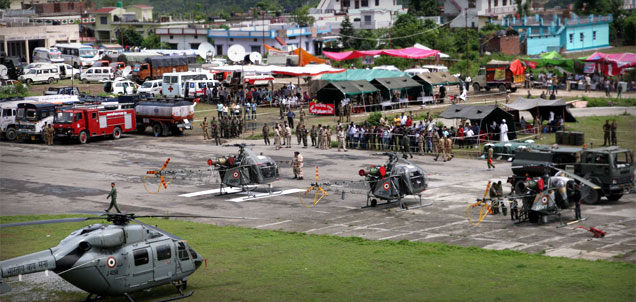
    Representative picture courtesy PIB of the IAF rescue helicopters at Gauchar airport, in flood-hit Uttarakhand on Wednesday, June 26


    It is indeed sad to see several dead and many injured as rescue operations are still on in Uttarakhand. What rages us is the game of one-upmanship between political leaders in grabbing camera time and the importance our news vehicles give to these visits. We present the comment by our Editor-at-Large and senior journalist Anil Thakraney on the issue which would normally appear as Hard Knocks on a Friday. – Editor


    By Anil Thakraney


    In the entire television din over the role of politicians on the Uttarakhand disaster, Prasoon Joshi made the most valid point. (Prasoon, if you are reading this post, I would urge you to take part in the tube debates regularly, we need a few sensible voices out there.) While the others were heatedly accusing the netas of seeking photo-ops during the tragedy, Joshi said the media must consider WHO is providing them with these photo-ops. Very true. If the media stopped covering these opportunistic politicians, they will immediately vanish from the scene.


    The defining neta moment so far was the two Andhra politicians exchanging fisticuffs at the Dehra Dun airport, as they fought over who would fly with the ‘cargo’. And no, the cargo in this case wasn’t medical supplies for the victims, but those people who had been rescued, and were anxiously waiting to be flown back home. Absolutely pathetic. And then there is Pheku and Pappu busy scoring brownie points over each other, and the many chamchas defending their actions. At least half of the media time and space gets spent on these jokers. What a bloody waste!


    My humble request to colleagues in the media is this: For the Uttarakhand news, take a firm decision not to provide any coverage whatsoever to the visiting politicians. Not only are they unable to help in any way, with their shenanigans, they come in the way of rescue and relief operations. And there’s no keeping these hyenas away, they will come to feed on the dead, it’s in their nature. Emotional situations like these give politicians a cool opportunity to win more fans, or so they believe. Let’s deprive them of it. And let the entire media effort be focused on the victims, the rescue and rehab. And on the jawans who are doing all the hard work, these brave souls who are putting their own lives on the line so that maximum number of people can be saved. I want to see their faces, I want to hear their voices, I want to know their stories. And this is what the media must provide us.


    Net net: Let’s make Uttarakhand a template for future disasters. No spotlight on any neta. Let it only be about those who matter, and those who do the real work. That done, no politician will ever arrive to disturb rescue operations. Once the oxygen supply (cameras) is cut off, they won’t see any point of jet-setting in. Good riddance.


    Anil Thakraney is a senior journalist and commentator. He is also Editor-at-Large, MxMIndia. The views expressed here are his own. He can be reached via Twitter at @anilthakraney


  • Anil Thakraney: ICC Champions Trophy Diary

    By Anil Thakraney


    Nope, I did not follow the just concluded championship trophy, though I made it a point to watch the final match, as am sure most Indians did (aside from those in Uttarakhand, sadly). Droopy eyes at work on Monday was a clear tell-tale sign. The reason I did not care much for the ICC Champions Trophy is cricket fatigue, post the IPL. Even though I like the game, there’s only that much of it I can take. Anyway, here are some notes.


    Totally enjoyed the final between England and India, not just because it was a tight game but because it was good to see Kohli, Raina, Rohit, Dhawan, etc, play alongside each other, and not against each other. Every year I yearn to see this soon after the IPL ends. Don’t like the image of our cricketers snarling at one other, that should be left to our esteemed netas.


    I had written in a previous post that we in the media need to go easy on Maahi over the ‘conflict of interest’ allegations. And I still maintain that. However, I suspect our fickle-minded media, now soaking in the victory, will completely forget all about it. That too is not correct. If the man has done wrong, he should be investigated; the idea is to be fair to him. To all those speculative TV anchors now singing hosannas in the captain’s honour, here’s what I have to say: I may write a Booker winner, but if I have been accused of evading income tax, that victory doesn’t absolve me of the charges.


    It was great to see our young cricketers perform courageously. They appeared neither intimidated by the opponents nor by the bigness of the event. I like this spirit of Young India. Despite Sachin, Saurav and Rahul’s greatness, this is one quality I seldom noticed in them. The oldies would get nervous while reaching a milestone, and their faces showed tension during crunch moments. But these young chaps seem to give two hoots for pressure. I think the retirement of the old stars has done a lot to improve the can-do-will-do spirit in the team. I see brilliant times for Indian cricket in the coming years. Provided, of course, the boys manage to keep the bookies at bay. The problem with today’s kids is while courage is on the rise, so is greed.


    Lastly, Sunil Gavaskar’s contradictory comments left me a bit befuddled. During the tournament, when asked if the team is out to prove a point following the recent scandals, Sunnybhai denied any such thing. He said the boys had left all that behind in India, and were focused on the match at hand. However, after the final win, he seemed to have changed his mind. He said Dhoni was hurt by all the scandals, and that’s why the animated reactions after the England match. Hmm. Guess the cricket legend got over-awed by the victory. Hota hai, cricket does this to many in India.


    ***


    PS: Nothing brilliant about this ad, but it’s a cool idea. What I like most are the breathtaking car shots. They make you want to own this machine.


    Anil Thakraney is a senior journalist and commentator. He is also Editor-at-Large, MxMIndia. The views expressed here are his own. He can be reached via Twitter at @anilthakraney


  • Anil Thakraney: Cannes winners, release your media plan

    By Anil Thakraney


    Congratulations to the Indian ad world, it was a very satisfying show at Cannes; 33 trophies is really wow when you consider that till only a decade back we used to win zilch.


    However, the rumour mill is buzzing. Again. Gossip suggests that some of the winners at Cannes are ‘scam’ ads, because ‘nobody’ has seen the winning entries in the media. The PR winnings sound dodgier, the work appears to have been designed to please an international jury. For example, that bit about adopting a pothole. Wouldn’t firangi judges just lurve stuff like this from Incredible India? Everyone out here is wondering exactly how may potholes got sorted.


    Now, it’s quite possible that the gossip is unfair to the winners, it’s very likely that none of them are scams. But to know that, we need access to the media plans of the winning entries, and that’s impossible. One could have filed an RTI application, but sadly, the ad world doesn’t come under its purview, not yet at least. So then what’s the way out? I would urge the winners to publish their media plans in the trade media. With details of the number of insertions for press ads, number of hoardings used, etc. And the PR winners should publish full details of the operations and the effectiveness of their campaigns. I think this is important for it shall help kill the gossip. In any case, if you have done genuine work, why not proudly publish the facts?


    On another note, must say our continuing disappointing run in the digital category is a cause for concern. I can only think of one reason why we aren’t winning anything: Our old world creative directors who are obsessed with the traditional media, and have failed to evolve. Well, they better change this fast. By finding people who can help them understand the digital space. (By the way, many of these giants haven’t even tried out social media, I kid you not.)


    Lastly, a pat on the back to the TOI group. Despite being a huge, huge organization, they consistently find a way to inspire their ad agencies into doing scintillating work. Marketing directors and brand managers of other large companies should borrow a leaf from them. On why bigness should never come in the way of good creative work.


    ***


    PS: Cool idea from the makers of Homeland, the hugely popular US TV serial. They are looking for ‘extras’ for the next season, and are inviting members of the janata to come forward and apply. Great way to promote a soap, Indian TV serial makers should try it too.


    Link: http://www.wired.com/dangerroom/2013/05/homeland-casting-call/


    Anil Thakraney is a senior journalist and commentator. He is also Editor-at-Large, MxMIndia. The views expressed here are his own. He can be reached via Twitter at @anilthakraney


  • Anil Thakraney: Uttarakhand disaster: TV anchors screw-up yet again

    By Anil Thakraney


    You know who’s the biggest moron in this world? The man who reaches a building on fire, stands outside and wants to discuss in detail with those trying to douse the flames exactly what was the cause of the inferno, and who screwed up.


    Don’t know if this occurs to them, but some of the news channel wallahs have been doing exactly this on the Uttarakhand calamity. My friends in television must understand that their job differs from the newspaper editors when it comes to covering natural disasters or terror attacks. As the disaster strikes and the aftermath plays out, television journos must do one and only one thing: Focus on the 3Rs… rescue, relief and rehabilitation operations. And only discuss the whodunit and the whydunit after some amount of normalcy has been restored, after the victims have limped back to safety. This is because television is a live medium, it carries immediacy of news. But instead of doing this, on prime time, some news channels got those usual crappy, noisy debates going, to pin responsibility on who was behind this ‘man-made’ disaster.


    Just think about this: What if one of my friends or relatives is marooned in Kedarnath right now? Frantic, I would be madly surfing the news channels to see how folks are being rescued, and would hope get some details of the persons stuck out there. Or, god forbid, discover if the individual dear to me is gone. In fact, this is how a BBC would go about things. Instead, I see star anchors in a free-for-all with netas and the usual studio guests. Can you blame me then if my blood goes on the boil?


    While newspapers and magazines can and must cover a natural disaster with a 360-degree view, television has to cover the story step by step, and only shift gears at the right time. The question is: Why aren’t the idiot box runners doing the obvious thing? I can think of two reasons. One, perhaps because they are idiots. Or two, the anchors are convinced that shouting and screaming inside studios is the only way to gain ratings, whatever be the subject. You are free to pick the right reason.


    ***


    PS: An eerie anti drink driving campaign from the UK, one that might give you a heart attack in the pub itself. If they try this out in the Indian pubs, I suggest using only male mannequins. Else the BMC lady will object.


    Link: http://www.dailymail.co.uk/news/article-2338000/Shocking-anti-drink-driving-campaign-scares-pub-goers-simulating-car-crash-complete-fake-blood-toilet-mirror.html


    Anil Thakraney is a senior journalist and commentator. He is also Editor-at-Large, MxMIndia. The views expressed here are his own. He can be reached via Twitter at @anilthakraney


  • Anil Thakraney: Tehelka’s award for courage is a good idea

    By Anil Thakraney


    Tehelka has announced the ‘Tarun Sehrawat Award For Journalism Of Courage And Conscience’. The award is named in the memory a young journo who died on duty last year, at the age of 23, in the Naxal heartland. I think such an award is needed, and it’s a timely idea.


    Because, with the massive media explosion in India and the resultant cut-throat competition, real journalism seems to have been relegated to the back seat. Proprietors and marketing directors are calling the shots in most organizations; the editor’s role has become secondary. Profitability is now the name of the game, and this is what leads to ugly, completely unethical practices like paid news. Naturally, this is terrible news for India. For the nation’s good health, we have to encourage journalists to push the boundaries, and within the restrictions they find themselves in today, find a way to unearth the hard truths. There are plenty of awards given away to the members of the media each year, but I find them meaningless. Because they appear to reward style more than substance. Tehelka’s effort therefore is very welcome.


    And what I find most interesting is that the award is meant only for young journos, those under the age of 30 years. Terrific. We need to motivate the youngsters, we need to remind them why are journalists, we need to make sure they don’t get lost in the world of materialism and puffery. And if these dudes taste blood at a young age, chances are high they will retain the same passion for journalism throughout their careers.


    Of course, Tehelka is trying to build its own brand, and that’s fine. The important thing is this: Such an award will help shift the focus back to real journalism. The reason why many of us opted for this profession in the first place. But got disillusioned along the way when we discovered that a healthy financial bottom-line seems to matter more than a healthy nation in the corporatized Indian media.


    ***


    PS: Crazy. A totally harmless commercial has invited a dirty backlash on the YouTube video. All because it features a mixed-race family. As a matter of fact, I think such ads should be encouraged, they are important for the plural societies we live in. And a pat on the back to the advertiser for refusing to pull the commercial. Cheers to Cheerios!


    Anil Thakraney is a senior journalist and commentator. He is also Editor-at-Large, MxMIndia. The views expressed here are his own. He can be reached via Twitter at @anilthakraney