Tag: Grey

  • Tic Tac unveils latest campaign targeted towards youth

    By A Correspondent


    Tic Tac is a youth brand that believes in sparking little refreshing moments of life and helps to break the monotony and boredom. It is positioned as a brand that stands for friendship, caring and fun. All its communication has successfully strengthened the core proposition of ‘Refreshment to be shared’.


    Ferrero India spokesperson said,”As a brand it’s important for us to be an integral part of the youth’s life across platforms – they are an audience that gets bored easily – always looking for inventive ways to have fun.  We have aimed to present this truth to our consumers through the new dance and music TVC. The TVC also brings to life the brand values of fun, friendship and sharing and reinforces our core brand proposition of Refreshment to be shared”.


    Commenting on the campaign, Sujala Martis – VP at GREY said, “Tic Tac is not a serious mint – its semiotics and associated rituals define its role. With this film, the attempt is to continue on the journey of Tic Tac being the fun starter, while also making the brand far more aspirational. What becomes a unique property is the ability to create music using the Tic Tac pack, thus adding another fun ritual apart from sharing.”


    Working on the same positioning platform, the brand has introduced the latest TVC. It is an attempt to drive the idea of creating little fun moments and how in a moment of daily nuisances, Tic Tac comes to the rescue.


    The brand believes that the TVC, driven through dance and music, is a pragmatic way to reach out to college students and young adults who are the core consumers of Tic Tac.


  • ‘Jugaad is responsible for where India is today’


    Dheeraj Sinha, Chief Strategy Officer, South & South East Asia with the Grey Group and author of the recently-released ‘India Reloaded: Inside India’s Resurgent Consumer Market’ tells Pradyuman Maheshwari that the very things we are proud of –- India’s jugaad mentality, or the fact that the country is a great, big billion-plus market place – are likely to be their undoing if companies start believing only these things to be true. Innovation and adapting to rapidly-changing tastes and conditions might provide businesses with a better chance of success.


    We’ve always celebrated India’s ‘jugaad’ mindset, but you call it a handicap in your book. Isn’t it this ability that has got India where it is today?

    When I see the potential of India and where we could be, versus where India is, it isn’t an encouraging story. Jugaad has meant that in manufacturing, we either imported critical machinery or copied them. We never invested in R&D. In service, jugaad means that we have little regard for standard operating procedures. Jugaad will never let us achieve excellence; it promotes shortcuts and fixing, by hook or by crook. The potholes on our roads which keep coming back; the fire accidents owing to electrical shot-circuits; the incidents of ward boys stitching people’s wounds in the Bulandshahr hospital, are a few examples of jugaad in our everyday lives. Jugaad may have been our answer to desperate situations – your vehicle breaks down on the road because of some electrical failure and some mechanic puts it back in motion by bypassing the fuse — but long-term growth is not about getting out of tricky situations with yet another trick. Unfortunately, the lines between jugaad and sab chalta hai (everything goes, as far as the job gets done in the interim) are blurry. And that’s the reason I hold jugaad responsible for where India is today.


    You’ve pooh-poohed the craze for reaching out to a billion-plus Indians. And how many products are blinded by mass-market thinking. Our Prime Minister paints a rosy picture of ‘demand’ in his speeches. Do you see a rise in this mindless chase of the billions?

    I think from a socio-political perspective, the Prime Minister has indeed to care for the 1.25-billion population. This is imminent when you realise that almost 600 million (Census 2011) of this population doesn’t even have access to clean drinking water and toilets. But the business and marketing community needs to realise that there isn’t a consuming class out there which amounts to 1.25 billion. According to the Census of 2011, not more than 56 million people own four wheelers, while around 198 million claim ownership of two-wheelers. The projected size of the middle class at 300 million then, is a big question mark.


    My sense is that businesses are beginning to realise this. Many businesses in sectors such as telecom, retail and auto — that went on the mass-market chase — are under huge debts and haven’t tasted profitability even now. Meanwhile, those who have played an upgrade game, have fared much better. Brands such as Mahindra & Mahindra in utility vehicles, Zara in retail and Micromax in mobile phones are a few examples of businesses doing well on the back of upgrade-market-thinking.


    In the book, you have written on the contrasts and contradictions which exist in the various regions in the country. Does it make it exceedingly difficult to develop a strategy for reaching out to consumers?

    I think we have made too much of a deal about the diversity in India. It doesn’t take more than a second to prove that India is a diverse country. The oft-repeated refrain is that India changes every 100 kilometres. This diversity view of India defeats the idea of India as one big market. How do you devise products and services that change every 100 kilometres?


    The good news is that the diversity of India is powering a unified, national, popular culture. Dosa is now a national snack and Karva Chauth is a national festival. India has witnessed a huge amount of cultural mobility in the last few decades. Looks like what divided us in the past is now uniting us – our cultural influences. Marketers now have a national pop culture where influences such as YoYo Honey Singh, Rajnikant, Chettinad and Mughlai, all sit at the same table. This textured national culture can be of great use to brands and businesses.


    A recent [PwC] research report says that as countries like India grow, aspirations of the Indian consumer, too, are growing. Due to this, the Indian consumer expects more from product and service providers. Your comments?

    I agree fully with that. Many companies have been busy building cheap, stripped-down products and services for the so-called poor Indian consumer. Consumers, on the other hand, are now on an upgrade cycle. Even the bottom-of-the pyramid consumer wants to be top-in-status. This is apparent in the demand of products such as smartphones in the smaller towns of India. We need to look at the Indian consumer through the window of aspiration, not affordability. That’s a major shift required in the way businesses have traditionally approached mass markets.


    This is your second book and you have a day-job that possibly requires you to give 500 per cent of your time. How do you manage the time to write a book… and your advice to those who want to, but can’t get around to it?

    It’s certainly not easy to write with all the work and family commitments. When I am on a book project, I am writing in any free time that I get – in the morning, after work, on flights, over weekends. My reason to write is that I really want to put these debates out there, on the centrestage. I think to be able to write 65,000 words that make sense, the purpose must come from within. If you have that, you’ll definitely write your book.


  • Scotch-Brite unveils campaign to promote Scrub Pad

    By A Correspondent


    Scotch-Brite has unveiled a new campaign to re-launch its, a unique wave shapedscrubber with the power of stain cutters.


    In a low involvement category with very little perceived differentiation, where many small players with similar looking green pads exist, it was important to communicate the superiority of Scotch-Brite scrub pad. Hence the agency’s starting point was to identify the one singular benefit and elevate it. An enormous amount of research, showed us that this key benefitis its long life.


    The TVC is an exaggerated and humorous twist to how Scotch-Brite acquired its quality of long life. ‘The Legend of Scotch-Brite’ depicts a woman washing utensils when an old man comes and asks her for some water. The old man then transforms into a divine beingand pleased with the woman’s generosity of spirit, asks her what boon she’d like. The woman wishes for long life. But while granting the boon,the divine being gets distracted and the ray of light from his palm instead hits the scrub pad near her, the scrub pad turning into Scotch-Brite scrub pad – with really long life.


    Ram Jayaraman, Executive Creative Director, GREY group Bangalore says:“Scotch-Brite Scrub Pad is not just the category leader, but is the category itself. It’s the only scrub pad with Stain Cutters – innovative Alox particles that treat dirt like dirt. This pad lasts so much longer than other me-too green pads that it feels like a divine miracle. The film is a respectful – albeit entertaining – attempt to demystify the legend.”


    Sanjit Satapathy, Country Business Leader, Consumer Business Group, 3M says: “We have a superior product. Scotch-Brite Scrub Pad, with stain cutters and unique s-shape has a really long life. We needed an interesting way to communicate this benefit and our agency, GREY, brought this out quite beautifully with their funny, quirky script that all of us liked.  The result – a very interesting TVC communicating the product benefit in a way that is unique to this category.”


  • The Most Annoying Buzzwords of 2014


    We asked the industry’s finest for buzzwords they grew heartily sick off in 2014. Big Data and Viral were the big losers. Read on for the rest:


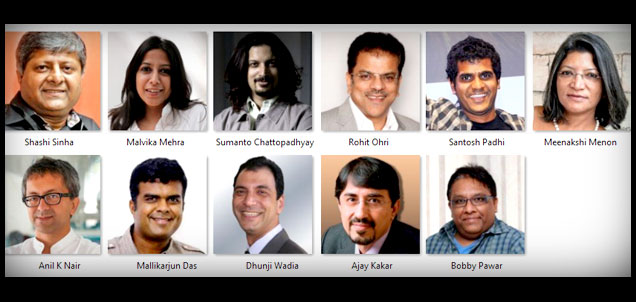
    Shashi Sinha, CEO, IPG Mediabrands

    1. Talent

    2. Compensation

    3. Digital

    4. Television measurement and

    5. Analytics were annoying as the more people spoke, the less they did anything about these things.


    For 2015, for starters, I have high hopes from the new TV measurement which Barc will put out, media agencies getting into content production, collaboration between all constituents of the ad ecosystem, budgets which will hopefully be at landmark levels and the World Cup which we should win again.


    HALL OF SHAME 

    Viral – Most of the time it is just an ad that runs way too long. Get some scissors, people


    Big Data – The ultimate Brahma Astra for the advertising charlatan


    The only viral I know of is the one that requires the intervention of a doctor

    Perhaps the most, abused & misused terminology in the year. Runs the danger of being called ‘Pig Data’.

    It’s just analytics. People have been doing this ever since humankind stepped on this planet.


    Malvika Mehra, National Creative Director and Executive Vice President, Grey

    The 5 most oft used words in 2014 were 1. Guys 2. Let’s 3. Make 4. A 5. Viral.


    Also ‘Take your time (4-5 minutes is great), but please don’t take my money. No budgets this year. And while you are at it, make it so stunning that it is ‘organic’ (unpaid distribution)’. Ji Sirji. ‘But ultimately make me a TVC. And I want a ‘BIG, LAUNCHY’ feel for our product in 30 seconds or less. Chal, paanch second aur le lo’. Ji sirji.


    The Pitch Bitch: ‘Of course we love you guys! We are just opening it up to 10 other agencies to inject some freshness into the brand (and test how much lower will they drop their price vis a vis yours for the same or more amount of work)’. Par Sirji?


    Femvertising: From soap brands, to makers of shampoos, sanitary towels, watches to home appliances and mobile network providers, everybody suddenly wanted to ’empower the woman’. I get the noble intent, but wish the brands would really ‘walk the talk’. Else it’s just a ‘token’ gesture. And consumers see through that inauthenticity.


    Interactive Pre-rolls: With stern warnings of ‘If you skip this ad, I will have to kill not only Jack and Jill and Mary and her little lamb, but also Old MacDonald along with all the cute animals on his farm’.


    Research: Gut instinct is officially dead. It got replaced by the R word. Heard about ‘No guts. No glory’? Not lately.


    Sumanto Chattopadhyay, Executive Creative Director, South Asia, Ogilvy & Mather

    Native Advertising: I imagine people wearing grass skirts and clapper boards singing jingles.


    Vlog: At times we Bengalis mix up our Vs and Bs. That’s what I thought this was all about!


    Content: As in, ads vs. content, content marketing. Like ‘traditional’ advertising has no content? I’m content to pass on this one.


    Social: Yeah, why not? Let’s party. And get paid for it! That’s what I say.


    Seamless: Every element has to seamlessly work with everything else. Imagine if our clothes were like that too! Now that would be some fashion trend.


    Santosh Padhi, Co-founder and Chief Creative Officer, Taproot India

    Pitch: If you do not respect yourself nobody will.


    Research: Like sex determination, it should be banned


    Low Budget: Instead of 300 insertions can we do 280 and improve the quality of the creative?


    Urgent: Premature babies forcefully welcomed will always run a risk


    Celebrity: They are the super highly paid creative directors, why do you need one more creative agency?


    Rohit Ohri, Executive Chairman, Dentsu India and CEO, Dentsu Asia Pacific (South)

    Integrated: Integration is the process, co-creation is the magic.


    360: 360 degree campaigns are consumer conversations in bursts, 365 is everyday relevance.


    Alignment: Alignment is passionless, belief runs deep.


    Structure: Structure constrains, open source liberates.


    Procurement: Vegetables are procured, ideas are partnered.


    Meenakshi Menon, Chairman, Spatial Access

    Big Data: That has to be on the top of my list. It’s just analytics. People have been doing this ever since humankind stepped on this planet.


    Twitterati: Everybody has become an instant expert on Twitter. I’d replace the term with ‘scum.’


    ISIS: ‘Isis’ is supposed to be the goddess worshipped as ideal mother and wife. Our vocabulary keeps evolving, sometimes not in the right direction. I’d call the group as a distortion than assigning them the name of a goddess.


    Homechef: Where mothers cooking for their families had some dignity to it, now we have a whole new concept of women cooking for complete strangers that they invite at home. The food is charged, of course. It’s just a little pretentious a term. Just call them plain old cook, maybe?


    Climate Change: It only gets talked about. Never acted upon. Perhaps replace it with – learn to breathe under water? Or ‘Grow gills?’


    Anil Nair, CEO and Managing Partner, L&K Saatchi & Saatchi

    Integration: The term liberally used when you don’t have a clue of what to do with your brand. It’s been institutionalised now. We will have Chief Integration Officers everywhere in no time. Put an end to this painful word. Replace it with ‘We need to have an idea,’ Sirjee.


    Social Listening: It’s something that our good old researchers have been doing for ages. It’s nothing more than trend analytics, only instead of taking a dictaphone out to record voices, you’re recording them off Facebook and Twitter. Just call it ‘consumer understanding’ and do not make an unnecessary tool out of it, please?


    Viral: The only viral I know of is the one that requires the intervention of a doctor and loads of medicine to go away. I don’t care where this term came from, it needs to disappear. It’s an epidemic that needs an antidote.


    SEO, SEM: Why are we making a mountain out of a molehill? Can we not get caught up in the process and its terminology and revert to a simple non-jargonised world?


    Big Data: For God’s sake, the database just got bigger. But it always existed. The most successful political campaign of this year was based on pure emotional advertising and not big data. Let’s stop jargonising information. Call it what it is (read: information).


    Mallikarjun Das, CEO, Starcom MediaVest Group (India)

    Big Data: A phrase bandied too easily and too much, especially by those who pay scant regard to rationality. The ultimate Brahma Astra for the advertising charlatan.


    Programmatics: A term used in context with media buying, especially on digital, when what they are doing is just using the optimiser.


    Fragmentation: The only problem with using the said buzzword is that it’s often used in a wrong way to strike some sort of terror in a client.


    Storytelling: Need I say more?


    360 degree: This term is like that sugarcane that’s passed through the machine 300 times. There’s no juice left in it and yet it’s being rolled one last time.


    Dhunji Wadia, President, Rediffusion Y&R

    Big Data: Perhaps the most, used, abused and misused terminology of the year. It runs the danger of being called ‘Pig Data’. There are questions regarding the implications of the approach and also the way it is currently done. It needs to look at data holistically – Total Information.


    Digital Evangelists: Don’t need them as you cannot preach to the converted.


    The ‘Selfie’ Contest/Promotion: Replace it with better imagination.


    E-commerce ‘Discount for the Day’: That runs for years together.


    Free App Download: With more and more retailers and brands reaching for e- and m-commerce, there is an explosion of apps to be downloaded. Begs the question, ‘Why would anyone pay to download such an app?’


    Ajay Kakar, CMO, Aditya Birla Group – Financial Services

    “Isse viral kar do!”: Which is what every client says. It’s content, not viral, please.


    “Facebook has 50 million visitors!”: So what? VT station has more people visiting, does that mean we put all our ads there?


    New media: Let’s just say ‘customer’ as opposed to new, old, traditional, or any other kind of media. Creative awards: Awards should be for creatives that work.


    Pitches: Here a pitch, there a pitch, everywhere clients flirting. Serial pitching must end. Let’s call them ‘Brand Custodians’ and not pitchers, shall we? Clients and agencies must stop playing the blame game. If one is the crutch to your success there’s no way one should let go.


    Bobby Pawar, Director and Chief Creative Officer, Publicis Worldwide

    Viral: For the love of likes, it’s just a video until lots of people see and share it. Most of the time it is just an ad that runs way too long. Get some scissors, people.


    ATL/BTL: It implies a caste system of ideas. The good ones go above, the so-called ‘hard working’ ones slide under. It shouldn’t matter where the idea lives, it must be good enough to move your audience. People don’t care, therefore you must.


    But: This is phaasi ka phanda for ideas. It is crueler that a blunt ‘no’. Why? Because it is preceded by some waffling words that give hope to the creative, then ‘but’ shows up and yanks the handle.


    Deadline: Nothing induces a creative butt-clenching moment like this word. Yes sir, three bags full sir, our work is time bound, but does it have to sound so, erm, deadly?


    Purchase: It’s the leading cause of hair-loss among agency CEOs.


    Source:The Economic Times

    Copyright © 2015, Bennett, Coleman & Co. Ltd. All Rights Reserved

    Licensed to republish


  • It’s official. Sunil Lulla to join Grey as CMD

    By A Correspondent


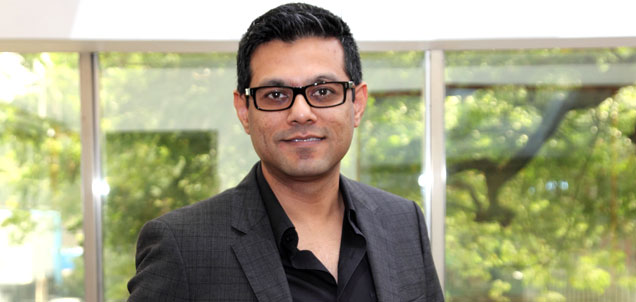
    Sunil Lulla

    Senior mediaperson Sunil Lulla will join leading advertising agency network Grey Group India as Chairman & Managing Director for Grey Group India. He will report to Nirvik Singh, Chairman & CEO of Grey Group Asia Pacific.  Meanwhile, Jishnu Sen, currently CEO of Grey Group India is leaving the network for personal reasons.


    Mr Lulla’s move to Grey is a return to advertising and the WPP group. WPP owns Grey as well as JWT, where he worked till 1996. He joins Grey from Bennett Coleman & Co. Ltd where he was President, Corporate Development. Prior to that, he was Managing Director & Chief Executive Officer of Times Television Network.


    On his joining of Grey Group India, Mr Lulla said, “The creative and communication landscape in India is undergoing a huge transformation now and there’s no better time for me to join Grey Group, which has been doing wonderful work for leading brands in India and across the world..”

    Said Nirvik Singh: “Sunil Lulla will be the keystone to our growth strategy in India as we build a stronger network to provide truly holistic communication solutions to our clients.”


    Said Jishnu Sen: “Grey Group has been great to me and I am truly happy to have worked with some of the best people in the industry. We had a great run together. It is time for me now to move on to different and more exciting challenges. I wish the Grey family all the very best and I am sure they will continue to grow to greater success.”


  • Grey’s Goral Ajmera to judge at NY Festivals 2014

    By a correspondent


    Goral Ajmera, Senior Executive Creative Director, Grey has been invited to be on the Grand Jury of the New York Festivals 2014.


    The Grand Jury judging will take place in two stages during March and April. In the first stage, Ajmera will join a 10-person panel to judge a portion of the entries. During the second stage, the entire panel will review all the entries that made the cut and advanced from the first round, and will determine which entries advance to the Shortlist.


    On being invited to the Grand Jury, Goral said “NYF is clearly an award show that has evolved with the changing times. New categories, new judging process and now, newly designed trophies created by Sagmeister & Walsh. I am truly excited and honoured to be a part of an eclectic jury from across 70 countries.”


    Ajmera has been in the advertising industry for 14 years. After successful stints with Enterprise Nexus, Leo Burnett, Ogilvy and JWT, she is now leading the team in Mumbai as Senior Executive Creative Director, along with her partner Vishnu Srivatsav. Over the years, she has created forward-looking campaigns on a wide portfolio of brands like Reliance, Killer, Lux, Sunsilk, Dove, Ponds, Timespro, Ferrero, Bajaj Allianz, Femina, Vimal, Set Max and Parle.


  • Grey promotes Vishnu Srivatsav & Goral Ajmera to Sr Exec CDs & Creative Heads, Mumbai

    By A Correspondent


    Grey’s National Creative Directors Malvika Mehra and Amit Akali have announced the promotion of Vishnu Srivatsav and Goral Ajmera to Senior Executive Creative Directors. Together, Goral and Vishnu will be heading the creative team in Grey Mumbai and report to them directly.


    Said Malvika Mehra: “It’s always feels great to be able to promote talent from within. And both Vishnu and Goral are as ‘homegrown’ as you can get. Vishnu’s been with Grey for over 10 years, while Goral was probably one of the first people we hired when we joined Grey. Their relentless pursuit to do better work, their hunger to shoulder responsibility, their ‘can do’ attitude and their immense talent made them an obvious choice for the job.”


    Between them, at Grey, the two have helped build many brands; Reliance Mobile, IndianOil, Honda Brio, DHL, Duracell, Britannia, Bajaj Allianz Insurance, Bharti AXA Insurance, Suzlon, Vimal, Muthoot Finance, Killer, Kinderjoy, 3M, Dell and Times Pro. And their work has won awards including, The One Show, London International Awards, World Press Awards, Young Guns, Spikes Asia, Adfest, Abby, Emvies and 1 Gold and 2 Bronze Lions at Cannes, this year.


    Added Amit Akali: “Goral and Vishnu have their task cut out. Last year was a good year for Grey Mumbai, with the office accounting for a lot of our awards; The Goa Fest Grand Prix for Killer and our 3 metal haul at Cannes. Businesswise too it’s been great; we won Times Pro and Tea Board, amongst others. Now, all they need to do is better it. No pressure!”


  • The Best of Print Ads – 2011


    By A Correspondent


    You may have seen only a few of them and probably even forgotten the underlying message that the campaigns had to tell. But now you could make a dash to have a hard copy of MOSAIC, a compilation of the Best in Print (campaigns) to have hit India n shores in 2011. The compilation has been put together by 23 creative agencies who have submitted their best pieces of work for the category in 2011. Conceptualised by Sanjeev Kotnala and team from the Dainik Bhaskar Group, the initiative has been made special through the “insights” and “personal favourite” sections that have been provided by Media agency bosses. These include Lynn de Souza of Lintas Media Group, Mallikarjun CR, CEO, Starcom MediaVest Group, PM Balakrishna, Chief Operating Ofiicer, Allied Media and Punitha Arumugam, Director – Agency Business, Google India.


    Lynn de Souza, Chairman and CEO, Lintas Media Group, Chairman, Aaren Initiative and Director, Karishma Initiative

    “An excellent idea to recreate interest and remind all about the power and impact of the print medium. My only reservation is that there were too many submissions of ‘pretty pictures-pithy headlines’ work that may or may not have been published and did not appear to fully grasp how the medium must be used effectively.”


    TOP 5 Choices:


    Click on the picture for larger view

    1) DNA – ISKCON (Scarecrow India)

    Reasons for choosing: The intelligent use of the cigarette-turned-food visual immediately targets the smoker and invites him/her to contribute in a very simple way to a cause that benefits both beneficiary and the giver – something not easy to achieve. I like the simple, clean look of the ad and the directness of the headline and copy.


    Click on the picture for larger view

    2) Flying machine “What an Ass” (Lowe)

    Reasons for choosing: This is my idea of perfect ad! One that has used all the elements of the print medium – headline, visual, copy to present a bold, modern attitude through a perfectly harmonised contribution of all three. It’s an unmissable ad whether you are a guy or a gal.


    Click on the picture for larger view

    3) Parker – Ramnath Goenka Excellence in Journalism Awards (Lowe)

    Reasons for choosing: A stark headline supported by the simple bottle of ink that says it all. An attention grabbing reminder of the power of the pen to influence the world. Perfect synergy for the subject – Journalism awards and the ‘always memorable’ image of a gold Parker fountain pen.


    Click on the picture for larger view

    4) The Times of India – A day in the Life of India (Taproot India)

    Reasons for choosing: Fantastic art direction – great visual appeal that hooks you into reading the whole ad. The contemporary feel, using India n kitsch, with attention to detail, is riveting. (Check out the dog lifting his leg to pee on the bed of nails!) Bright, colourful, crowded yet not messy. I could read it again and again!


    Click on the picture for larger view

    5) Vaseline ‘Dear Mr. Vaughan’ (BBH India)

    Reasons for choosing: The kind of ad that every Creative Director who woke up to it that morning would have said: “I wish I had written this”. There are some things you can do impactfully in a topical yet ‘permanent’ medium like print that you can’t do anywhere else, and this ad fits the bill. Nose-thumbingly outstanding!


    Mallikarjun CR, CEO, Starcom MediaVest Group

    “This is a fantastic initiative. As media agency professionals, our lenses to view the world are different. However, what comes across is that great creative work is universal. Really enjoyed it.”


    TOP 5 Choices:


    Click on the picture for larger view

    1) Audi – World Cup (Creativeland Asia)

    Reasons for choosing: Great connect with the Champion’s Trophy ’85 win. Most of the target audience that can buy an Audi will connect immediately with that moment. For a lot of us India ns, that was the first moment of connect with Audi.


    Click on the picture for larger view

    2) DNA ISKCON Food Relief Foundation (Scarecrow)

    Reasons for choosing: A nice calculus linking smoking to food relief. Very innovative, eye catching visuals.


    Click on the picture for larger view

    3) Indigo Campaign (Weiden+Kennedy)

    Reasons for choosing: Stark, consistent visuals. The colours, space everything reflects the qualities of the airlines. Nice word play that grabs your attention and makes you read the copy. The reference to price is as value and not cheap.


    Click on the picture for larger view

    4) Nissan Micra (TBWA\ India)

    Reasons for choosing: Simple stark visuals. Driving home the relevance of a small car without talking price, affordability etc. Great, understated use of a celebrity.


    Click on the picture for larger view

    Reasons for choosing: Great expedient use of Michael Vaughan’s comment. Superb cut through and great visuals.


    PM Balakrishna, Chief Operating Ofiicer, Allied Media

    “I think this is a wonderful initiative and exposes the fantastic creativity. It is a very different platform as it is more an appreciation of great work rather than a competition as I believe each creative is great on its own.”


    TOP 5 Choices:


    Click on the picture for larger view

    1) Bajaj Fans (Leo Burnett)

    Reasons for choosing: The best part of this creative is the way it has integrated everyday common issues and weaved them into the core communication of the product. The creative is also very well crafted visually using the very cause of the product making it very effective.


    Click on the picture for larger view

    2) Birla Cellulose (Salt Brand Solutions)

    Reasons for choosing: The sheer aesthetic treatment to the communication draws you and I like the beautiful and colourful way the creative has used nature and the human body (woman). It brings out the environmental friendly nature of the product in a very soft and appealing manner.


    Click on the picture for larger view

    3)Fuji(Grey)

    Reasons for choosing: Colour and background are intrinsic material for any great creative and nothing better than drawing inspiration from Mother Nature and wildlife. The beautiful use of the animals brings the message home effectively and creatively and connects with any photographer or photo enthusiast.


    Click on the picture for larger view

    4)NipponPaints (JWT)

    Reasons for choosing: They say a great picture is worth a thousand words and the effect is breathtaking when it is beautifully woven into the message making the communication very compelling and effective. In this case the product USP, a central factor in the category has been brought home very beautifully for correct impact.


    Click on the picture for larger view

    5) Zee 24 Taas (Draftfcb Ulka)

    Reasons for choosing: Ganpati Bappa has a significant connect with the India n diaspora and especially with Maharashtrians who revere the elephant God. I like the way the creative has beautifully engaged the viewers in an innovative and personal manner and makes it unique and different.


    Punitha Arumugam, Director – Agency Business, Google India


    “This initiative continues the long tradition of Dainik Bhaskar – breaking boundaries and setting new trends in the industry.”


    TOP 5 Choices:


    Click on the picture for larger view

    1) DNA Mumbai Marathon (Scarecrow)

    Reasons for choosing: The power of long copy. It brings back memories of the old era, which was marked by a great headline and the power of long copy. It inspires and bonds with its audience.


    Click on the picture for larger view

    2) Murphy Richards epilators (Contract)

    Reasons for choosing: The power of a picture. The visual intrigues, makes you pause, demonstrates the benefit and brings a smile – all this without a single word.


    Click on the picture for larger view

    3) MTR Spicy Pickle (Ogilvy)

    Reasons for choosing: The power of insight. A true South India n like me will see this ad and can only say “How true!” Equating spicy with ‘tears’, the way the ad captures the cultural nuances – awesome!


    Click on the picture for larger view

    4) Parker – Ramnath Goenka Excellence in Journalism Awards (Lowe)

    Reasons for choosing: The power of words. While most entries used the power of the picture, this ad stands out because it uses print for what it does best – leverage the power of words and intriguing headlines.


    Click on the picture for larger view

    5) Saffola Healthy Heart (McCann)

    Reasons for choosing: The power of an innovation. A great collaboration between the creative agency, the brand team, the media agency and the publication to convey the brand message interestingly and inclusively so as to trigger an action from the reader.

    Best of Print in Dainik Bhaskar Group’s MOSAIC
     

    Some may see India’s performance of bagging just four Press Lions at Cannes out of the 30 that were shortlisted as a drab effort, but then there are some who would like to think of it as being otherwise. After all, Press Lions as a category managed to get India its largest tally of four metals versus any other category at the awards – a valiant effort considering that India finished 2012 with just 14 metals in its kitty.


    While the category may have received its fair share of fame at the pinnacle of creative awards, many would agree that Indian adland has failed to laud the finesse that stems out from Print creatives over the years. While such is not the case in some large international markets where creative works across categories gets noticed and rewarded that gesture seems to be missing when it comes to India. Luckily for the creative frat in India, an opportunity to showcase their best works – besides the awards shows – were given a fillip by the Dainik Bhaskar Group that released the first of its kind creative compilation of the finest works produced in Print in the form of MOSAIC 2011.


    Elaborating on the initiative, Sanjeev Kotnala, VP & National Head, Dainik Bhaskar Group said, “This has been a first year for MOSAIC, which is a rich collection of 150 creative units part of 77 campaigns that have been submitted by 23 agencies.” The creative showcase has been made special through some individual comments and insights that have been posted by creative leaders of individual agencies.


    Elaborating on the thought process behind the compilation, Mr Kotnala said: “As a group, we believe that the Indian creative across mediums and media is of international standards, in its thinking, relevance and in its execution. Unfortunately there has been no single reference point for the same. MOSAIC bridges this gap and we would want it to be referred by the creative, clients, media and trade.”


    As for the method that was adopted in getting the agencies to submit their campaigns, Mr Kotnala said that it began with Dainik Bhaskar requesting the creative heads at the agency to send their best Print work. “They know better than us – as by placing it in MOSAIC affirms it to be their best work. Though we did have constraints on the number of campaigns we could place in Mosaic from a single agency. This has all been a by-invitation. On the other side, there were few agencies that sent lesser number of creative units as they felt others were not up to the standard to feature in such a compilation. So it was created and evaluated by the creative teams themselves.”


    On how print has evolved over the years as a medium, Mr Kotnala said: “Today print ads are working on all fronts of communication. They are not just for the purpose of awareness building or as a source of providing tactical information; they engage and involve the readers and are very result-oriented in their approach. We always held that the idea is more important than the medium. And it will automatically find its right medium for better efficiencies and effectively delivery of the message.”


    In fact, the compilation has been made special with the involvement of four media agency heads who’ve provided their assessment of the campaigns. They include Lynn De Souza, Chairman and CEO, Lintas Media Group, Chairman, Aaaren Inititative and Director, Karshma Initiative; Mallikarjun CR, CEO, Starcom Mediavest Group; PM Balkrishna, Chief Operating Officer, Allied Media and Punitha Arumugam, Director- Agency Business, Google India.


    With the first edition already finding appreciation within the industry, the Dainik Bhaskar group have their task cut out for the next year too. On his plans for a sequel, Mr Kotnala said, “We would want to see more regional and language work in the collection – and they still should meet the standards set. We would and could try getting clients and media owners also picking their favourites and definitely may wish to incorporate a section on media innovations. Though we have taken the task and brought out the book, in our mind it is an industry level initiative and we would want to keep it that way.”


    Mosaic 2011 can be accessed and downloaded at http://i10.dainikbhaskar.com /dainikbhaskar2010/books/ Final_Book.PDF


  • Grey wins Network18’s creative biz

    By A Correspondent


    Grey has won the creative mandate for the entire Network18 Group; a media and entertainment company with interests in television, internet, films, e-commerce, magazines, mobile content and allied businesses.


    The agency’s Mumbai branch will handle this account. The win is the result of a multi-agency pitch that saw the participation of several prominent agencies.


    The campaign will be primarily television-based and is expected to go on air in August.


  • Global ad biggies like Omnicom, Publicis & Dentsu in hectic parleys to buy Taproot

    By Neha Dewan & Ravi Balakrishnan


    In 2011, when Taproot snatched two big-ticket assignments, PepsiCo and Airtel – both JWT clients – the joke was that JWTstood for Just Went to Taproot.


    Now JWT may just have to be shuffled around to become TJW – or Taproot Just Went – now that a clutch of global ad networks are in hectic parleys with the founders of the five-year-old independent Indian agency. Those in the fray, said a person familiar with the negotiations, include the Omnicom group, Publicis and Dentsu.


    Agnello Dias, chairman and co-founder, Taproot India, said: “There are three or four groups talking to us and Dentsu is one of them. It doesn’t have any head start and we are no closer to signing a dotted line (with Dentsu than with any other network).”


    A Dentsu spokesperson was unavailable for comment. Nakul Chopra, CEO, Publicis South Asia, said: “We don’t comment on acquisitions of any nature.”


    Taproot’s co-founders Dias and Santosh Padhi are clearly testing the market and checking out valuations, said an agency insider. But this may not tantamount to an immediate sale.


    “The global groups are speaking not just to Taproot but also to other independent agencies like Creativeland Asia. We are open to talking to anybody but at the end of the day it may not be Dentsu, Omnicom or anybody. We would just like to get an idea of how much we are worth and valued at,” is how the insider who requested anonymity put it.


    The agency, which had a slow beginning in 2007, eventually moved on to big clients. Campaigns such as ‘Har Ek Friend Zaroori Hota Hai’ (HFZ) and ‘Change the Game’ for Pepsi got popular acclaim as well as industry  accolades with HFZ winning seven medals at Goafest this year.


    At Goafest, considered the premier local ad festival in India, Taproot was runner-up to Ogilvy India, clinching 34 metals and beating top agencies such as Leo Burnett, DDB Mudra, Grey and JWT. Besides this, the agency had won the Grand Effie award last year for the ‘Change the Game’ campaign.


    In its fifth year, the agency runs a tight ship with 35 people on board. A senior official at a leading ad agency says that Taproot has had to turn down a lot of projects in the past year.


    “Funding via a sale of equity will help them increase their capabilities,” he said. For now though, a more interesting game is afoot with Dias and Padhi playing their cards very close to their chest.


    Source: The Economic Times
    Copyright © 2012, Bennett, Coleman & Co. Ltd. All Rights Reserved


  • @Goafest, Taproot emerges tall. And how!


    By Tuhina Anand (with inputs from Robin Thomas)

    Photographs by Shailesh Mule/Fotocorp


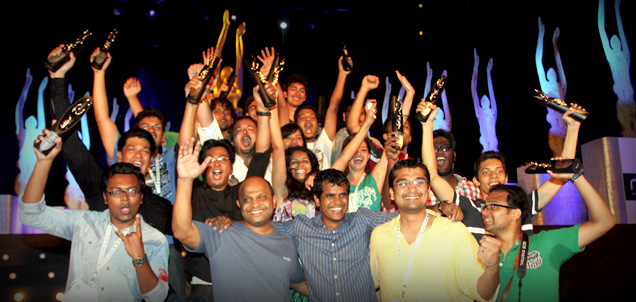
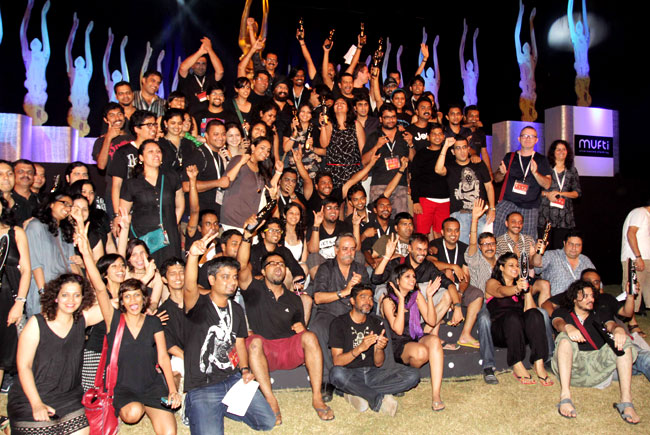
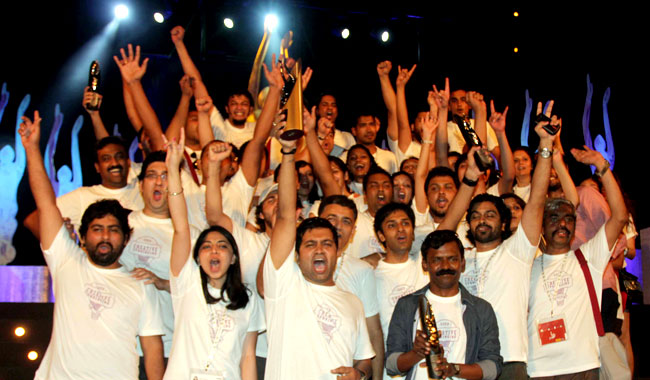
    When Big Dad of Indian advertising Ogilvy pockets 51 metals at Creative Abbys at the Goafest 2012, it is something that one expects, so no surprise here really. But when a three-year-old agency goes on to become the runner-up, leaving behind the much settled Leo Burnett, DDB Mudra, Grey and JWT, it is indeed a proud moment for Indian advertising. It says that all is not lost and what still matters in the advertising business is creativity and if you have the ingredients right then there’s no one to stop you from writing your success story. Taproot India and its founders Agnello Dias and Santosh Padhi have shown the industry the might of small and given hope to many aspirants on the same path.


    Talking about Taproot’s success, Agnello Dias said: “It’s been great, a satisfying feeling, but it is also slightly scary because we have got to do even better than last year as expectations have gone up, but as of now, we are just happy that we have performed well at the awards.”


    On Taproot missing out on the Grand Prix as there were huge expectations from Airtel campaign, Santosh Padhi said: “Yes, a lot of people said that our Airtel or Pepsi campaign would win us a Grand Prix, so I think that itself is a Grand Prix for us. Therefore, we have no grudge and we are happy with the way things have turned out for us. And definitely there were two strong competitors against us for the Grand Prix.”


    The victorious Ogilvy team


    The most awarded work at the Goafest was for  brands, including The Times of India, Volkswagen India and Airtel. Even for Ogilvy India, the work that fetched them maximum awards was for Fox Crime. Also the work that got CreativeLand Asia its Grand Prix in the Integrated category was for Audi 8L 3D.


    TOI’s ‘Wake Up Chennai’ (that fetched accolades at Goafest) has been embroiled in controversy as it spoofed its rival, The Hindu. the ad showed how reading the old player (read The Hindu) puts people to sleep and the readers should wake up to something more exciting – The Times of India. The ad was crafted by Taproot which also created Airtel’s Har Friend Zaroori Hai that fetched many awards for the agency across various categories. In fact, Har Friend… can be dubbed among the most popular campaigns of the year.


    A happy Creativeland Asia team


    Ogilvy’s work for Fox Crime titled The Photographs case, made by Good Morning, is in keeping with the genre of the channel and creates a mini thriller for its audience, building anticipation for what to expect on the channel. Talking about the wins, Abhijit Avasthi, NCD, O&M said: “It’s been a great year as always and I think the best part is that we have done well in every category, from design to direct to digital to integrated. Obviously there are some works where one wishes we had got more recognition, like the Cadbury in home campaign, but, overall, we are very happy. I think we have got the best clients who allow us to do really some very interesting work.”


    “It’s very reassuring that we have managed to win the Grand Prix back to back and this year I hold the digital grand prix to a greater importance, simply because it demolishes the myth of lots of clients that digital is something big network agencies cannot do,” he added.


    Volkswagen, which brought awards to DDB Mudra, Grey India and Nomad Films, is a brand that has caught attention because of its innovative use of media since its launch inIndia. While the fraternity may not have lauded all the innovations that Volkswagen did, but it cannot be disputed that the work did catch the attention of the people and fraternity.


    However, if one were to look at the Creative Abbys 2012, it will be remembered for Taproot India, which carved a name for itself among the behemoths, only because of its creative supremacy. More power to all those who want to chart their own path and keep in mind that great ideas zaroori hai and the rest will follow. Right, sirji?


    Click here to view all Goafest 2012 stories


  • Turkish Airlines looks at India as a booming market

    By A Correspondent


    Turkish Airlines has been doing exceptionally well globally and has witnessed remarkable growth, especially in the last year. With Grey as their creative agency inIndiaand Perfect Relations handling their media relations, they are looking atIndiaas a booming market and have various marketing initiatives lined up.


    Turkish Airlines has played a vital role in increasing the ratio of the aviation industry ofTurkey. One of their key achievements in 2011 was being awarded ‘Best Airline Europe’, ‘Best Premium Economy Seats’ and ‘Best Airline Southern Europe’ by Skytrax. Their load factor has been as high as 75 per cent in 2011, even on the Indian routes.


    They have also acquired brand new aircrafts like B777-300ER equipped with GCS system and A330-300, with the latter being currently operational on the Indian routes. Turkish Airlines flew around 300,000 travellers on the Indian routes in 2011 and are expecting an even higher number in 2012.


    The TAAI Convention, being hosted byTurkeythis year, will be one of the biggest B2B initiatives undertaken by Turkish Airlines as they are among the main partners for the event.


    Apart from that, Turkish Airlines has engaged in several interesting marketing initiatives inIndiato reach out to its customers and familiarize them with both, Turkish Airlines and its multiple international destinations.


    Adnan Aykac, General Manager- Northern & Eastern India, Turkish Airlines, said: “We received great feedback from our previous promotional campaigns and would like to continue with such engagement programs and capitalize on them in the best way possible. This will ensure maximum visibility for Turkish Airlines among its target audience, thereby helping them discover our refined offers and services.”


    “Turkish Airlines believes in providing the best offers and facilities to its passengers and maintaining high standards of service. This has always been our prime focus and we believe that the brand and its services speak for itself. We also believe that competitions are healthy as they give you the zeal to further improve and enhance your quality. Hence, our superior and extraordinary services set us apart and help us maintain our top position,” he added.


    Also Turkish Airlines have now signed a Free Sale Codeshare Agreement with Air India (AI) after their previous blocked space codeshare agreement. The new agreement will allow both the airlines to market each other’s flights by their own code and flight numbers on a free sale basis.


    With effect from March 1, the revised agreement will allow TK passengers a seamless connection to AI-operated flights onHyderabad, Chennai, Ahmedabad, Bangalore, Kolkata and Amritsar routes.


    Turkish Airlines witnessed a 15 per cent growth in revenues last year and with the airlines doing so well in the Indian and international markets, sky is the limit for us.