Tag: Google India

  • Pepsi uses Google’s Director Mix to push latest digital campaign

    By A Correspondent


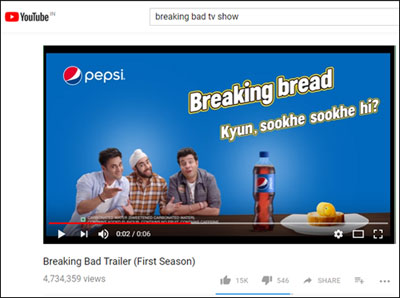
    Pepsi is reaching out to consumers with its message of ‘Kyun Sookhe Sookhe Hi’ by giving a twist to typical YouTube advertising with Google’s advertising tool Director Mix. This tool creates custom video ads from one core creative, turning consumer’s attention into action.


    Speaking about the Director Mix and success of the campaign, Raj Rishi Singh, Director Marketing, Pepsi, PepsiCo India said: “Pepsi has always created campaigns and experiences which resonate strongly with consumers. In fact, we are constantly experimenting with different marketing tools and techniques and Director Mix, with its customized creatives, has helped us strike a chord with our consumers better. We have been able to reach our audiences with content which is most relevant for them. By leveraging Director Mix, Pepsi has been able to cut through the clutter in the digital space.”


    Elaborating on Director Mix, Vikas Agnihotri, Industry Director, Google India said: “People are drawn to the contextual creatives as they’re highly engaging and they drive higher awareness for the brands. It’s great to see Pepsi take the approach of personalizing their campaign at scale on YouTube with our latest tool called Director Mix.  Using the tool, Pepsi has turned its video campaign, into many highly relevant and shareable video’s that genuinely connects with their consumers at scale without having to worry about producing multiple video campaigns.”


  • Google announces support for Bengali content creators and advertisers

    By A Correspondent


    Google India has announced support for Bengali for both Google AdWords and Google AdSense. Bengali being the sixth most spoken language around the world, publishers and advertisers can now reach a large audience globally and target them with Bengali-language search and display ads, notes a communique.


    Said Shalini Girish, Director – Google Marketing Solutions, Google India: “With the availability of Hindi, and today’s launch of Bengali language capabilities, we are working hard to ensure that digital advertising is keeping up with the needs of an evolving Internet audience. Over the coming months, we will share more about our efforts to further build on this.”

  • India’s domestic travel market to be US$48 billion by 2020, notes study

    By A Correspondent


    Google India, along with Boston Consulting Group (BCG), has released a comprehensive report on the growth opportunities in the Indian hospitality market over the next four years. The report titled, ‘Demystifying the Indian Online Traveler’ charts the decision making journey of the Indian traveler and provides insights on the potential growth opportunities for travel businesses till 2020.


    As per the report, Indian travel market is projected to grow at 11-11.5% to $48 billion by 2020 with the biggest contributor, air travel expected to grow at 15 per cent to $30 billion. Hotels will grow at 13 per cent to $13 billion by 2020 while railways will remain largely stagnant at $5 billion. Additionally, as more people come online, smartphone penetration improves and use of digital payments goes up, the report estimates that India’s online hotel market will grow to US$4 billion with 31 per cent penetration at a CAGR of 25 per cent.


    Speaking about the key findings of the report, Vikas Agnihotri, Industry Director, Google India said; “India’s domestic travel market is on an acceleration path. One of the key findings of the report is that by 2020, one in three hotel rooms will be booked online – a clear indicator of  the growing importance of digital in travel research, planning and booking. There are several actionable insights for domestic online travel players including the role of mobile and the level of curation and personalization that Indian travelers are looking for.”


    Demystifying the travel planning journey of the typical Indian consumer, the report shows that for a majority of Indian consumers a vacation is a well thought through event, the planning for which starts several weeks in advance. On average, travel consumers spend 49 minutes spread over 46 days, visiting as many as 17 different online touchpoints to plan, research and make a booking. However, it is interesting to note that the length of each online session is less than 3 minutes, due to the ubiquity of mobile. Through their journey, Indian travelers tend to flip back and forth across different online destinations, checking availability and comparing prices across different providers and connectivity.


    Talking about the opportunities for the online travel players, Abheek Singhi, Senior Partner and Asia Pacific Head of Consumer Practice, BCG said, “Travel is a high investment – both monetary and emotional – category. Technology has led to democratization of travel through better information and price discovery – and shall lead to 11-11.5% growth in years ahead. The question is “ how to address the 17 different touchpoints of three minutes each over 49 days!”


    Highlighting the purchase drivers, the report finds that there are several touch points in the consumer journey, including OTA (64 per cent reach), search engines (33 per cent reach) and Maps (26 per cent reach). Advocacy and word of mouth form an important input into the travel booking journey with 76 per cent of people gaining inspiration to travel from family and friends. Further, reviews and ratings from other users is the single most important criteria to select a certain booking channel. Finally, the research finds that consumers use a mix of online and offline sources of information during their booking journeys. However, only 12 per cent of the consumers prefer to use offline sources for research. 57 per cent of the consumers believe that online channels give them better deals while 41 per cent find it more convenient for them to book online.


    The consumer research for the report is based on consumer travel journeys across omnichannel pathway. GfK recruited consumers who were planning to book an accommodation for a domestic trip. An integrated methodology was used to capture both online and offline search behaviour. Online behaviour captured via Passive meter tracking app (GfK Leotrace (TM)) installed in the smartphones of 18-45 year olds who were travelling for domestic leisure/ business travel in  a two month period. These respondents were Android users spread across three cities – Delhi, Hyderabad & Ahmedabad and were regular internet users who had booked at least one flight past one year, online. The offline behaviour was captured through bi-weekly diaries and a face to face interview towards the end of the tracking period. The data of eight weeks of usage was captured for 256 intending travellers between Nov’16 – Jan’17.


  • Google launches new ad campaign by Lowe Lintas Delhi

    By A Correspondent


    With the excitement around the much anticipated ICC T20 World Cup, Google unveiled its latest Ad campaign highlighting a range of cricket Search features on its Google app.


    From a range of power packed features such as score updates to match schedules in English and Hindi these features offer a front row seat to all the games. The new Search experience also includes news articles related to games, teams and players, as well as score boxes with in-depth game stats.


    Further creating awareness around these new features, the two ad films highlight the benefits of the app. Conceptualized by Lowe Lintas Delhi, the new campaign helps communicate that cricket lovers can easily get answers to any questions about cricket through the Google App from score updates  to schedules, from cricket gear to trivia.


    Commenting on the new campaign, Sapna Chadha, Head of Marketing, Google India, said: “Being away from the action can be frustrating, but from today you’ll never have to miss another moment with the launch of new cricket experiences on the Google app.”


    Sharing his views on the creative approach behind the campaign, Arun Iyer, Chief Creative officer, Lowe Lintas said, “Die-hard fans of cricket will stop at nothing to get the updates on scores or any information related to cricket. This element has been captured beautifully through the two films that goes on to show that no matter what you cannot take cricket out of a fan, and it’s only through relevant and timely information that you can go one-up with them.”


    Adding to this, Naveen Gaur, President, Lowe Lintas said, “Cricket is the biggest passion of this country where every Indian is a bigger cricket lover than the next one. And as one of the leader brands creating a digital world, it’s only natural that Google becomes the most preferred platform for any cricket related queries”.


    The campaign will be aired during the upcoming T20 Cricket World Cup and also IPL 2016 and will span essential on and offline mediums.


  • Kotak partners Google to unveil Querimetrix

    By A Correspondent


    Kotak Institutional Equities, a division of Kotak Securities Limited, in collaboration with Google launched Consumer Querimetrix — a tool that demystifies and predicts near-term Indian consumer behaviour by analyzing Google Trends data.


    Using machine learning techniques and merging big data from Google Trends, the first edition of Consumer Querimetrix provides consumer insights into India’s evolving car buying journey. Using Google Trends data, the tool enables ‘nowcasting’ (near-term predictions) on consumer activity, capturing inflection points earlier than traditional forecasting tools to give a complete picture — on car launches, last mile hiccups, cannibals and competition.


    Each edition of the Consumer Querimetrix series will focus on consumer behaviour in a different industry.


    Launching the report, C Jayaram, Joint Managing Director, Kotak Mahindra Bank said, “The digital wave is challenging conventional business practices across industries. Ground rules are evolving rapidly along with the consumer and those in the business of business intelligence need new tools to keep up with the changing landscape. Consumer Querimetrix is our step in that direction. Today, the sheer volume of consumer-centric search data available presents a tremendous opportunity to analyze and throw up actionable insights. These takeaways would be useful to both companies and investors. KIE research is highly valued by our clients and the launch of Querimetrix will further strengthen our ability to cover the Indian markets in a holistic manner.”


    The first edition of Consumer Querimetrix which focuses on the passenger car segment highlights the extent to which the Internet is altering the ground rules for vendors of cars and allied products/services. With growing access to easy information online, the Indian car buyer’s journey from a whim to final purchase has changed dramatically. More than 75 per cent of car buyers are researching online for reviews, comparative specifications, financial products and used car markets before making a purchase. The first edition of Consumer Querimetrix also explains how the traditional ‘funnel’ model is giving way to a more complex purchasing path where ‘initial consideration’ may not always guarantee sales.  Although higher auto-related searches correspond to higher demand for cars, this does not hold true on a brand-wise basis.


    Speaking about the trends for the passenger cars industry captured by analyzing Google Trends, Vikas Agnihotri, Industry Director, Google India said, “With over 300 million Internet users online and growing, India today has a sizeable population which accesses the Internet on a daily basis, making search queries as the most dynamic data input to arrive at consumer insights through machine learning as illustrated by Kotak’s research. If we look at the search trends related to car finance and car purchases, we’re seeing a 40% year on year growth in car purchase queries on Google in India. Over half of the people who evaluate car purchases change their consideration set during their research phase – adding two to three new car models in their consideration, the only non-negotiables are price and color of the car. This alone proves the growing complexity for car OEMs in the country. With this report we’re attempting to demystify this changing consumer behavior into actionable insights for the industry.”


    Saifullah Rais, Quantitative Analyst at Kotak Institutional Equities and the architect of Consumer Querimetrix said, “In the absence of conventional rules, traditional decision-support systems are not very effective. They fall short on scalability and adaptability. Machine learning algorithms learn from data and do not rely on explicit rules, making them the most effective method of dealing with data explosion.”


    The Consumer Querimetrix report outlines the influence of digital marketplaces and calls for carmakers to reassess conventional business practices. The effect is visible as car loans are increasingly being sourced outside dealerships. This trend can eat into financing margins earned by dealers and hurt profitability. On the other hand, carmakers with captive finance arms can use this opportunity to innovate and differentiate themselves during the evaluation process.


    The first issue of Consumer Querimetrix establishes that Google search volumes can be used as a gauge for assessing new car launches. The report underscores the linear relationship between search interest and advance bookings during a car launch. Interestingly, higher traditional media spends do not always guarantee higher search interest.
     

  • iProspectropes in Niti Beri to lead team Paid Media

    By A Correspondent


    iProspect India has roped in Niti Beri to lead the Paid Media strategists who are based out of the agency’s Gurgaon office. Prior to this, Niti was in-charge of the digital marketing accounts under Google India for a span of five years.

     

    “Paid Search is all about being there with the right message at the right time, at the right price. iProspect India has been providing value and business insights through bought media at an extremely efficient cost. Niti has come in with immense experience from Google – the biggest Search engine giant in the world. We are blessed with an efficient team of SEM professionals across all the three branches of iProspect. Niti will be guiding our paid media experts from the Gurgaon branch to deliver best in class campaigns for our clients based out of the Delhi circle. I wish her all the very best and welcome her warmly to the iProspect India family,” said Vivek Bhargava, Managing Director, iProspect India.


    NitiBeri has been a digital marketer for more than seven years. She began her career as a Management trainee at Satyam Computers (now Tech Mahindra) before moving to Google. During her 5 1/2 years at Google she took up various roles. She has extensive experience in working on accounts ranging from the biggest Fortune 500 companies in the US like AT&T, Citigroup, Johnson & Johnson and Abbott Labs to budding start-ups and new entrants into the Indian market.


    In her new role at iProspect, Niti Beri hopes to build and sustain an even stronger team of Paid Media strategists to ensure client delight.


    Niti said, “It’s been a long seven years in the digital industry and each day has been a new challenge pertaining to the changing ways of digital approach. I am extremely excited to join one of the pioneers of digital marketing industry in the country. I have understood that iProspect has very strong paid media strategists. I look forward to working with them closely and contribute towards building a stronger and more agile team with laser sharp understanding of the clients’ objectives and goals.”


  • With YouTube Offline, ‘buffering’ will no longer be a suffering

    By A Correspondent


    In it’s endeavor to improve user experience, YouTube has announced the launch of ‘YouTube Offline’ feature on their mobile app. This new feature allows users to offline their favorite videos on YouTube mobile app and enjoy their favorite videos, whenever they like, on the go without having to worry about poor data connection or data cost and enjoy a buffering free life.


    Buffering can actually ruin the whole experience for an online video watcher as it drives the fun out of watching videos. This was the starting point of the campaign conceived by Lowe Lintas Delhi.


    Commenting on the campaign, Sandeep Menon – Director, Marketing, Google India said, “Indians love watching videos online, and YouTube is the go-to destination for any video content online in India. We wanted to offer our users a great new way to enjoy their favorite content without having to worry about poor data connections and high cost of data. That’s where YouTube Offline feature plays an integral role and allows users to access content at their own pace. We are excited with the way our new film has turned out and hope that the audiences’ will relate to the common issue we all face on our mobile phones and embrace the offline way to enjoy YouTube.


    The TVC is a quirky take on buffering and how it can get people to react in a strange manner while they wait for their videos to download. The reaction from people across the country was captured in the communication, just to re-emphasize how buffering can drive the fun out of you and get you to do strange things.


    Commenting on the creative thought process, Shriram Iyer, Executive Director, Lowe Lintas commented, “YouTube, with its Offline feature, has made the experience even richer. Watching videos online comes with a glitch called ‘buffering’. The stalling of a video spoils the experience. The idea really stems from there‎. Our team explored the idea of visually exploring the ‘buffering’ graphic, in a symbolic manner. Human heads rolling in circles, in a way, aping the buffering sign going round and round, was our comic tribute to the problem all of us face every day while watching videos online. The commercial takes a potshot at the problem and then presents YouTube Offline as the solution to this daily grievance.”


    The TVC has been launched on popular social platform YouTube. It will be followed by a high decibel promotional drive on TV and social media as well.


  • Google unveils #TogetherOnline for first-time women users

    By A Correspondent


    Reports show that only 1/3rd of the total Internet population in India are women and this gap is expected to grow with growth in Internet users. In Nov 2013, Google India launched Helping Women Get Online with the objective of reducing the Internet population gender gap in India. Earlier this year, Google India launched the digital leg of the HWGO campaign to encourage Internet users to step up and help a women get on the Internet and understand how she can use the web to get ahead in life.


    The Internet has completely transformed the way we live our lives. Everyday people are discovering new opportunities and finding newer and better ways of doing things on the web to get ahead in life. #TogetherOnline is an effort to empower women in India with the knowledge of Internet and how they can use it do different things in their daily lives. To take this concept further, Google India along with Lowe Lintas Delhi conceptualized a film to inspire young, Internet-savvy people to help their mothers explore a whole new world – that of the Internet. The film highlights the innocent fear of the first day of stepping into a new world.


    Commenting on the new campaign, Sandeep Menon – Director, Marketing, Google India said, “While there is low awareness about the benefits of Internet amongst women in India, but there are many who want to get online to succeed in life. We’re working with various partners to help spread awareness about the benefits of being online amongst women. And today, we’ve launched a new film to inspire young digital natives to bring their mothers online. There are large number of educated women in India with internet access in their households, but they still do not use the internet. We are making an appeal to their children to hold their mom’s hand as she discovers a new world online.”


    The film is based on a relationship between a mother and a daughter and captures the moment of realization of how at times our parents really need our support to learn and discover new things. Busy youngsters don’t have the time or energy to teach or guide their mothers when it comes to something as alien as the digital world. The only way to connect to them was to tap into an idea that could move them. The task was to capture the correct emotion that would drive young people to give back whatever they could to their mothers. This insight was used as the key trigger. A kid’s first days at school has an emotional similarity with mother’s first days on the Internet – the nervousness, the hesitation, the alien environment, it’s the same. This realisation forms the basic premise of the script.


    Sharing his perspective on the thought process, Amer Jaleel, National Creative Director, Lowe Lintas + Partners said, “We wanted to encourage hand-holding. Our target is the internet-savvy young, who often get easily discouraged when they have to take someone through the basics of online. The barrier is this thought that runs through our heads – ‘Mom don’t worry, tumse nahi hoga, I’ll come and do it’. We wanted to present the reward of not giving up, going through with the teaching and converting them into independent onliners.”


    Commenting on the campaign, Naveen Gaur, President, Lowe Lintas said, “#TogetherOnline is the first campaign from our association with Google and soon you will see a lot more work in the coming months on various other projects. This campaign gave us a unique opportunity to present mother-daughter relationship in a really different way. It’s beautiful to see how roles are reversed as we grow up and as our parents grow old. They need as much support and patience from us as we demanded out of them when we were young. I hope that we manage to motivate the younger generation to spend some time with their mothers and help them break the barrier of initiation into this somewhat intimidating world of Internet.”


  • IPG Mediabrands to launch online travel fest in India

    By Pritha Dasgupta


    Media agency conglomerate Interpublic Group (IPG) Mediabrands India has joined hands with the travel industry to launch a festival to boost online holiday bookings in the country. The Great Indian Travel Festival, the first such event in India, will start on April 18 and end on April 26. GITF will offer deals and discounts on travel and stay packages for more than 50 holiday destinations within and outside India.


    “Indian consumers will find great value and deals to enjoy their summer holidays. We expect to reach over 3 million users over the course of the nine-day festival,” said Shashi Sinha, CEO of IPG Mediabrands.


    The participants include Google, travel websites Cleartrip, MakeMyTrip, Goibibo, Yatra and Via, and carriers Jet Airways, Indigo, British Airways and Spice-Jet. Tour companies Cox & Kings and Thomas Cook and startups such as Oyo Rooms and Doorstepforex have committed their participation. “While the industry has seen a major uptake in online hotel bookings, there is significant headroom for growth, and initiatives like these can contribute immensely in promoting the sector and contribute to domestic tourism,” said Vikas Agnihotri, industry director, Google India.


    IPG is building and designing the GITF website in-house and will host the participants on the site. Both Google and IPG are selling sponsorships and the proceeds will be spent on marketing the event and promoting the sponsors on the site.


    Source:The Economic Times

    Copyright © 2015, Bennett, Coleman & Co. Ltd. All Rights Reserved

    Licensed to republish


  • Google partners with brands to launch #TogetherOnline initiative

    By A Correspondent


    In its efforts to gather support for more women to get on the Internet, Google India announced an initiative #TogetherOnline in association with Snapdeal, Axis Bank, HUL and GSK to encourage Internet users to step up and help a women get on the Internet and understand how she can use the web to get ahead in life.


    The nine week along initiative, will see a number of activities across India, starting with a concert with Farhan Akhtar to raise awareness amongst the youth in metro cities. Axis Bank, will host special digital literacy workshops for women customers in their branches across India. And Snapdeal will run awareness campaigns amongst its shoppers and educate women on the entrepreneurial opportunities on their platform. To take the initiative to interiors of India, Google will also launch custom designed 500 Internet carts that will reach out to 5000 locations to engage women in towns and villages across India.


    On the launch of this initiative, Sandeep Menon, Director Marketing, Google India said “Internet has completely transformed the way we live our lives. Everyday people are discovering new opportunities and finding newer and better ways of doing things on the web to get ahead in life. We want to encourage all these users to extend this power of the web to women in India. #togetheronline is an effort to empower women in India with the knowledge of Internet and how they can use it to do different things in their daily lives. We along with our partners will host a number of initiatives to play our part and we invite all Internet users to play their part and help get more women online.”


    In addition, to this Google has partnered with PopXo to cover easy to know & follow steps for day to day living for various categories. The aim of this partnership is to promote digital literacy amongst women.


    Rajiv Anand, Group Executive & Head – Retail Banking, Axis Bank said, “As Axis Bank, progress is a part of our identity, our DNA. And we believe that empowering women is integral to the progress of our society.With the Indian woman today transforming from being a key influencer to a decision maker, it is important for her to be empowered with information. We are proud to be championing this cause in association with Google, to bring knowledge at the click of a button and help get more and more Indian women online.”


    Prashant Pandey, Marketing Head, GSK Consumer Healthcare India said, “The bond between mothers and daughters has always been a unique and everlasting one. From 1896, Horlicks has been helping mothers make their daughters tall, strong and sharp. Today we are delighted to partner Google for their ‘Helping Women Get Online’ – an initiative that encourages daughters to help their mothers go online to stay aware and connected. This is yet another way of saying #LoveYouMaa like our recent digital film celebrating the universal truth that ‘only mothers can give what they don’t have.”


    Google has already introduced a number of initiatives to help get more women online through partnerships with various state governments and outreach efforts in the states of Madhya Pradesh, Tamil Nadu, Maharashtra, Uttar Pradesh and more recently in Andhra Pradesh. Under the initiative, Google has imparted basic Internet training across 950 educational institutes training over 45000 girl students and over 5000 teachers who can continue to educate and inform more girl students across India.


  • Google & Bain study predicts interesting digital trends

    By A Correspondent


    A joint report released by Google and Bain & Co. to understand the influence of digital on the FMCG sector revealed that the Internet would influence a third of total sales in the FMCG sector over the next five years. The influence of Internet will impact $35bn worth of FMCG sales in India, as more and more users get online to research for FMCG products.


    Projecting the growth of online user population in India, the report revealed that India would have over 650 million Internet users by 2020. Online shopping will continue to see rapid growth and over 250 million users will shop online by 2020. This dramatic rise in the online shopper base in India, will contribute $ 5bn worth of FMCG product sales through online channel, growing 50 times from current level contributing 5 per cent of total sales from current 0.3 per cent share by 2020.


    The study notes that Internet influence will be the most for high engagement categories like male grooming, infant care products and beauty products, as more and more users will research online for information related to these products. For male grooming products, 25 to 30 per cent purchases will happen online, 20 to 25 per cent for infant care products and around 8 to 10 per cent of all beauty products will be bought online by 2020.


    These findings were derived by studying various factors including research conducted for Bain and Google by Millward Brown by selecting a sample of an evolved 1600 Internet users (male and female) from across 13 cities in India including metros and non-metros – across eight FMCG categories – Skin care, hair care, oral care, home care, infant care, male grooming, beverages and food.


    Findings from the study further revealed that 35 per cent men and 22 per cent women are strongly influenced by digital for their purchases. Internet influence differed by category of products, with maximum influence on purchase decisions noticed in male grooming (39 per cent), skin care (26 per cent), infant care products (24 per cent) and hair care (24 per cent) products.


    Speaking about the key findings of the report, Vikas Agnihotri, Industry Director, Google India said, “By studying the behavior of the lead consumers from an FMCG standpoint, it is clear that FMCG companies in India need to start thinking of digital as a more strategic medium and chart out a digital growth path for their products. In terms of key target audience from FMCG perspective as made clear in the report, 200 million digital natives will be online, 30 percent of women population in India will be online by 2020 reaching 200 million and 100 million women will shop online. 200 million plus users will be from rural India, whose disposable income will continue to grow. With these three key consumer segments moving to digital and spending more time online, FMCG companies will need to prepare themselves for this digital future.”


    Speaking about the current engagement levels of FMCG companies with the digital medium, Nikhil Prasad Ojha, Partner, Bain & Co., said, “Most FMCG companies in India have underestimated the impact of Internet and are struggling to ascertain a clear digital roadmap for their products. Companies need to uncover the digital potential for different categories, and align their growth trajectory with the changing consumer behavior. This report will serve as a useful reference point to start thinking and engaging consumers.”


  • O&M unveils campaign for Android One

    By A Correspondent


    As part of a larger initiative to bring high-quality smartphones to as many people as possible, Google launched the first family of Android One phones in India on September 15, 2014 in New Delhi. The Android One phones offer a high-quality experience, running the latest version of Android (4.4 KitKat). They will be some of the first phones to get the new Android L release – an update that will offer Google’s new material design, improved battery life, enhanced security features, and smarter notifications. The Android One devices will launch across the world with the initiative starting in India with Micromax, Spice and Karbonn phones.


    Sandeep Menon – Director, Marketing, Google India said, “We are very happy to partner with Ogilvy for this initiative. The anthem film for Android One is an integral part of our campaign as it showcases our key message for this initiative. Through this anthem we want to highlight that the Android One is meant for Indians from all walks of life. The team at Ogilvy has developed a great concept and we are very excited to see how people react to the anthem film.”


    Android One phones will have access to over one million apps that allow people to message friends, make video calls, socialize, check news and weather, and play games. Google apps such as Gmail, Google Maps, YouTube, Google Search, and Google Translate will come pre-loaded on the phones. The Android One platform will empower people to access information and get to a high quality smartphone with an affordable price.


    Abhijit Avasthi

    Abhijit Avasthi – National Creative Director, Ogilvy India said, “While working on the campaign our endeavour was to translate this powerful platform philosophy into a message that everyone could connect with. The campaign drives the message that everyone now has equal opportunity and access to experience the best in the world.”