Tag: Godrej

  • Lowe Lintas unveils new campaign for ‘Lal Hit’

    By A Correspondent


    Following on with its brand messaging of cockroaches spread diseases, Lowe Lintas Mumbai has unveiled a new campaign for its product LAL HIT. Taking a different approach this time around, the brand seeks to target women who depend on chalk and home remedies to solve the “roach” issue.


    Women today, are extremely particular about their housekeeping etiquettes. There is a serious and conscious effort to make sure that their family is protected from disease. While they are aware that the presence of cockroaches at home is not a healthy sign, their belief is that their current solution, i.e., chalk, boric powder, etc. is good enough to keep cockroaches at bay and hence she has no reason to opt for a change. However, cockroaches have their own hideouts and these solutions are ineffective in killing these cockroaches that often cause various illnesses.


    With this as the driving point, the new campaign gives the women a compelling reason for adopting LAL HIT, which with its unique seek-and-kill applicator reaches even the difficult and hard-to-reach corners and kills the hidden cockroaches.


    Sharing his thoughts on the new campaign, Ajay Dang, Head Marketing – Home Care, Godrej Consumer Products Limited said, “A mother always does her best to keep her family and child healthy. Through her regimen and choice of solutions she achieves this goal every day. Poor solutions and lack of information at times gives her a false sense of security.  And her effort fails despite her trying her best.


    The communication is simple and straight forward highlighting the fact that cockroaches spread diseases like food poisoning, diarrhea and dysentery. The key idea was to inform the mother on how solutions like chalks and home remedies are ineffective in killing hidden cockroaches and therefore put her family health at risk.”


    Elaborating on the creative approach that was followed for the campaign, Arun Iyer – National Creative Director, Lowe Lintas + Partners said, “While the brief was very direct and clear, the task to make people change their current regimen is always difficult, especially in a low involvement category. With our target group (mothers), we realized that it’s not just the kid’s health and wellbeing that is entrusted to her, but even the ill health of the child is something she is held responsible for. So our creative idea puts the mother at the center of the film and amplifies how she gets blamed for the child falling ill, whereas the real reason is not her but her reliance on ineffective cockroach solutions.”


    The campaign has just gone live and will be played across major entertainment, news and sports channels in India. The on-air campaign will be ably supported by a plethora of activities on other media platforms like print, radio, digital, etc soon.


  • Building Trust via Masterbrand 2.0


    Eight commercials, Rs 25 crore adspend, and the dropping of megastar Aamir Khan from the next phase a high profile advertising blitz. The Godrej group unveiled its Masterbrand 2.0 consumer connect initiative last week showcasing a slew of innovative products. From a new-age bed equipped with electronic hydraulics, a video door phone allowing continuous surveillance of two entrances of home with a storing capacity of upto 100 photographs, effective mosquito repellant solutions to authentic street food experience at home, these products will be highlighted through a series of eight television commercials that are being aired from November 14 onwards. Aamir Khan, who starred in the first phase of the activity, has moved out though the old protagonists Sam and Meera have stayed on.


    Commenting on the Masterbrand 2.0 campaign strategy and the new customer interface system, Shireesh Mukund Joshi, Head-Strategic Marketing said the total spend by Godrej on Masterbrand in Phase 2 is Rs 25 crore, the same as what it was in the first phase. Individual businesses though could use the commercials in addition for pushing their sales.  “Companies aired the TV ads with their budget, reposted Masterbrand digital posts on their channels, and used Aamir, Sam and Meera in their creative last time. This time too is same. Plus they are promoting the FreeG number and channelising their appropriate marketing activity through the FreeG menu,” Joshi told ‘dna of brands’.


    Excerpts from an interview with Shireesh Mukund Joshi with Pradyuman Maheshwari:


    As you embark on the second phase of MasterBrand, tell us what has been the experience of the first phase?

    I think the campaign has been delightfully successful. People have seen the impact it has had on the business, seeing the impact on the brand. The impact on the brand dimension, revenues, on the pride of the employees, qualitative connect between categories and the Godrej brand. In general, the group feels it’s been a very successful campaign.


    You embarked on the build-up for the Godrej brand in 2008. As you look back at the six-year journey, was it really necessary to undertake it? The Godrej brand has always been a household name?

    The first need that was felt was that the brand had a hundred years of uncontrolled growth. Divisions were doing things on their own and there was no mastermind shepherding this journey. One stream of thought then was that there needs to be a unified presence for the brand, you can’t represent it in a fragmented fashion. The second thought was that it wasn’t just about how the brand looks but also what people think of the brand. What should you think when you think of Godrej? We spoke to stakeholders inside and outside and arrived at the brand position. After that got done, three other things took off from there. The moment you have a positioning and a set of communication, you need to track it. Tracking, became one stream of work. Next, if it’s a strategic asset, then an asset has value. And the third part was the stream of communication. The team recognized that there were several things that were important and strong about Brand Godrej that needed to be communicated, but they couldn’t all be done at once. After the initial signaling of the change, we took on each one at a time. First was around technology – the aerospace campaign. The second was around lifestyle – the Khelo, Jeeto campaign. The third was around youthfulness and GenNext – the GoJio campaign. Each year was about a new dimension and we did what we could do in 2013 because the seeds had been sowed by other campaigns.


    When do you think this journey would have achieved its desired impact?

    We are a respected brand, but it’s not the ranking that’s important to us anymore. It is, but it’s not the stronger driver. The average home will have about four to five Godrej products. We make hundreds. How do we drive a much broader penetration? There is a fair bit of growth still to be achieved.


    India has several such large brands as Godrej. Do you think there is a need for an exercise like this for other brands as well?

    I do. In the end every brand is a promise and it plays itself out in business decisions. No brand was created for the purpose of creating a brand. It was created for a product or service. If you think about the conglomerate brands we have in India, they span multiple categories. Ours, Tata, Birla, Reliance, Dabur…. It helps to do it scientifically, measure it, understand the interplay and do more things that reinforce each other and do less of things that are a counter to each other.


    You mentioned four or five products in each household and you have a 100 of them in your portfolio. Have you felt the need to get into more youth-appealing products like mobile phones? Would you advise the management to get into such product areas?

    We aren’t looking at product categories we aren’t already in. We’re looking to strengthen and capitalise the categories we’re  already in. We might be a 30-40 per cent market leader. There is tremendous headroom for growth. The focus is on capturing the headroom for growth we have now, which is based on our strengths. If you look at the brand history, you’ll see that every year we have touched upon or entered a category or segment…


    How has the brand campaign helped in terms of revenues?

    Exponentially and I think our volumes have increased significantly. We’ve seen at least over 25% year-on-year growth on both topline and bottomline.


    Has it helped in terms of attracting topflight talent. Are you hiring from the premium B-schools like the IIMs?

    It has. This year we went to XLRI and IIM Ahmedabad, which we hadn’t gone to for a few years. The growth of the consumer and employer brand allow us entry and access into more and more campuses.


    You mentioned the spends on the advertising campaign have been in the region of 25 crore and it has had a positive rub off on the sales of brands. Would you say that the sales have increased beyond spends?

    I think, first of all, all the spend isn’t going into sales. We started with the objective of long-term sales which eventually translates into sales. What we saw was a much stronger short-term impact. There are certain divisions where we’ve seen a dramatic increase in sales in a few months. We’re continuing this campaign, which we’ll see grow with the multiplier effect.


    The fact that you’ve got into the second phase obviously indicates the first phase was successful. You have to justify the cost, right?

    Certainly, not just to ourselves because the funding comes from the divisions. They also see it of value given that they still support it in Year 2. Businesses are seeing its impact on their own revenue and sales, directly.


    You’ve had Hrithik Roshan, Virat Kohli, Aamir Khan and now you’ve moved way from celebrity endorsers. In fact Godrej has traditionally had people like Imran Khan endorsing the brand.

    Yes, we’ve had historically… mostly in the soap business. Preity Zinta did appliances. No other business has consistently used celebrities thought. Even the Godrej Masterbrand has used a celebrity only for one year. There was a specific reason why we chose Aamir Khan more than anybody else. Now we’ve moved on to the next stage. Traditionally, we don’t use celebrities, leaving soaps aside.


    If you have to look at one word where you would have the Godrej name to be described, would it be ‘trust’ or ‘cool’?

    One word is difficult. Everything is multi-dimensional. When we grew up, I had only two shoes – black and PT shoes. Now you have work, party, for sports… everything is fragmented. It’s hard to develop brands in developed categories to work with a single dimension. You have to be more complete than one dimensional. An idea that makes life brighter is just one thought.


    The making life brighter would be more cool than trust, isn’t it?

    It’s not at the cost of trust. Products have a much shorter life cycle now. My dad had his first car for 20-odd years before he sold it. I’ve never kept a car for more than five years. It’s not that trust and durability aren’t factors anymore. People have the economic ability to make more choices. We know we’re able to offer services without having to give up on the already good parts. People trust us.


    A shorter version of a story package on the Godrej Masterbrand 2.0 appeared in dna of brands on November 24


  • Godrej undertakes consumer connect initiative – Masterbrand 2.0

    By A Correspondent


    The Godrej Group has embarked on ‘Masterbrand 2.0’, a consumer connect initiative, aimed at providing ideas that make life brighter. As part of this initiative, the company also launched ‘FreeG’: India’s first non-web based mobile browsing experience.


    Celebrated for offering innovative brighter living ideas for over 100 years, Godrej reiterates its commitment of creating pathbreaking products with the launch of Masterbrand phase 2.0. The campaign showcases a slew of innovative products offered by Godrej to delight its customers. From a new age bed enabled with electronic hydraulics, a video door phone allowing continuous surveillance of two entrances of home with storing capacity of upto 100 photographs, state of the art properties, effective mosquito repellent solutions to authentic street food experience at home, these products were showcased through a series of eight television commercials that were aired on prime national channels from November 14vonwards. The commercials continue to feature Sam and Meera, the protagonists from the 2013 Masterbrand campaign.


    Tanya Dubash

    Speaking at the launch, Tanya Dubash, Executive Director and Chief Brand Officer, Godrej Group stated, “In this next phase of the Godrej Masterbrand journey, we continue to showcase designful and innovative products with ideas that truly make our consumers’ lives brighter, from across our diverse set of businesses. We believe that when seen collectively, this leads to a reassessment of the image of brand Godrej which in turn leads to greater consideration and sales.”


    In a breakthrough move, Godrej also launched, on this occasion, a first of its kind customer interface, ‘FreeG’-India’s first non-web based mobile browsing experience. FreeG is an innovative consumer interface, in the form of a mobile number- 09980899808, that allows every mobile user in the country the opportunity to experience the entire portfolio of Godrej offerings completely free of cost. It has a potential reach of 866 million consumers and is the Group’s vision of a long-term property that will straddle across all Godrej brands.


    Taking this forward, the launch of Masterbrand will be followed by various interactive consumer initiatives that will further communicate the idea of brighter living. With an effort to bring these ideas closer to their patrons, Godrej will also launch a number of digital films. A unique initiative in the pipeline is ‘Tweet a Tune’- a pioneering consumer engagement initiative that will witness the group in partnership with professional musicians on the song dew platform create songs inspired by tweets posted by Godrej patrons. And this is not it! Known to create brighter living offerings for not just India but across the world, Godrej leaves no stone unturned in connecting with their patrons as they attribute the songs to each patron and thereafter dedicate the same across multiple media platforms like radio and social media.


    Commenting on the Masterbrand 2.0 campaign strategy and the new customer interface system, Shireesh Joshi, Head-Strategic Marketing, Godrej Group said, “The next leg of our iconic Masterbrand 2.0 campaign has taken a giant leap. We are proud to showcase an entirely new set of Godrej’s ideas that make life brighter. Creatively our new campaign with Sam and Meera strikes fresh ground – insightful products in charming stories with characters that feel real; so real that they have their own social pages. And as an execution this campaign leaves behind 360 marketing to a level of cross media seamless-ness never seen before. The awareness to purchase journey is now a smooth experience that’s as rewarding as the products.”

    “The campaign revolves around a young modern couple who discover a new idea from Godrej and a new aspect to their relationship. This is a sequel to celebrating ideas that make life better that made its debut last year. The Godrej products are interwoven in this very charming episodic campaign that showcases young couples in India who are home proud, gadget proud and relationship proud. Godrej ka naya idea is the bedrock of each film where viewers discover the simplicity and joy of owning a Godrej”, says Tista Sen, National Creative Director, JWT India.

    “Driving an image that is contemporary, friendly, relevant and young this campaign re-positions the brand to a friend you cannot do without. Supported on digital and online with twitter and Facebook this seamless communication celebrates the innovation at the heart of each Godrej product and thereby celebrates life”, she adds.

  • Godrej rolls out innovation-led contest with Talenthouse

    By a correspondent


    Godrej in association with SEA’s leading creative crowdsourcing platform, Talenthouse India, has recreated the magic of innovative thinking via ‘Symbol Of Innovation’ contest. The contest invites designers, artists, students and anyone with a flair for design to come up with a logo or symbol that represents innovation. The key challenge would be to intuitively convey innovation and should be universally applicable on all mediums including print, on-product stickers, television, digital platforms etc. The last date for entry is July 08 while the winners will be announced on July 31, 2014.


    The winner will receive a grand prize of Rs Rs 1 lakh and an exposure for their entry across the host’s social media channels. The winner will also get an opportunity to be featured on future communication by Godrej on multiple mediums.


    Announcing the collaboration, Shireesh Joshi, Head-Strategic Marketing, Godrej Group said, “Continuing with our commitment to foresee and develop innovation in sync to our masterbrand campaign – Ideas that makes life brighter, we have introduced this campaign to provide a unique platform to promote, showcase and cultivate innovative thinking. It’s also a good opportunity to create recognition of the unique and innovative ideas behind our products that make life brighter for our consumers.”


    Elaborating on this association, Arun Mehra, CEO, Talenthouse India said, “Talenthouse is fast becoming a prominent platform that collaborates with leading brands to ensure maximum consumer engagement. We are very happy with our association with Godrej and are certain that this initiative will generate a lot of interest from participants. Brands need to be a part of the consumer’s mind space rather than just plugged from the outside and this innovative initiative is reaching its consumers in a creative way.”


  • The Great CEO Churn: 16 CEOs from FMCG, auto & telcos switched jobs in 2013!

    By Kala Vijayaraghavan, Lijee Philip & Deepali Gupta


    At least 16 high profile CEOs from three consumer facing industries – FMCG, automotive and telecom – switched jobs in 2013. Volatile market conditions, demanding stakeholders and in some cases, poor performance, led to the unprecedented churn at the top, say industry leaders and top officials at executive search firms. “Companies doing badly tend to rope in a new CEO hoping for a turnaround from somebody with a fresh perspective,” says RC Bhargava, chairman of Maruti Suzuki. A few changes though were also routine rotations made by multinational companies.


    Many other changes in the FMCG sector, executive search firms say, have been almost incestuous, with companies tapping a very limited pool of tried and tested CEO talent. For instance, when Anand Kripalu moved from Mondelez India to Diageo, former Pepsi CEO Manu Anand moved in as Mondelez CEO and former Nokia India MD D Shivakumar filled the vacancy Anand left at Pepsi.


    “Three CEO changes can lead to CEO changes in 10 other companies,” says Navnit Singh, Managing Director-India Korn/Ferry International. “Usually, only a few known faces are part of this merry go round. We have been advising companies to ensure that there is a strong succession pipeline within.” The same trend was also partly visible in the automotive sector, where Maruti Suzuki, Volkswagen, Toyota Kirloskar, Ford, Skoda and Fiat and Chrysler all saw new CEOs this year.


    A shallow talent pool, particularly of senior managers, is providing top executives opportunities to move across companies. These external CEO replacements are a reflection of the senior-level gaps in organisations, says RR Nair, ex-HR head of HUL and a CEO coach and advisor. “Organisations also opted for talent with an outsider perspective to drive change at a faster rate,” he adds.


    Several other consumer-facing companies also had new CEOs – Sanjiv Mehta at HUL, Gopal Vittal at Bharti Airtel, Varun Berry at Britannia, and Vivek Gambhir at Godrej Consumer Products. Nestle India predictably placed another expat Etienne Benet as the MD. He took over from Antonio Helio Waszyk, another expat.


    Britannia CEO Berry attributes the big changes to “very tough economic conditions and intense competition that have forced consumer goods companies to fight for a share of meagre growth”. For example, Indian subsidiaries of Volkswagen and Toyota Kirloskar have initiated major reshuffles in the top management as the two car makers take fresh guard to tackle the slowdown.


    Uncertainty and slow growth which marred the business environment during the past six months to a year could be one reason behind the churn, adds Sunil Goel, MD, GlobalHunt. Mahesh Kodumudi, president and MD of Volkswagen India, has just taken on additional responsibilities at Volkswagen Group after Gerasimos Dorizas, the chief representative of Volkswagen Group India, left citing personal reasons. The changes are coming when the group’s mass market brands have seen a decline in sales. “There is a lot of pressure to generate and sustain revenues. Organisations expect leadership to be innovative,” says Global-Hunt’s Mr Goel.


    Toyota Kirloskar MD Hiroshi Nakagawa is moving back to Japan and is expected to be replaced by Yoshimasa Ishii. And at Maruti Suzuki, the country’s largest car maker, Kenichi Ayukawa succeeded Shinzo Nakanishi as the new MD this May. At Ford India, Joginder Singh succeeded Michael Boneham about a year ago. Fiat and Chrysler appointed Nagesh A Basavanhalli as president and managing director.


    2013 was a forgettable year for consumer-facing companies, says Sunil K Alagh, chairman of SK Advisors. “There were arrogant innovations and a lack of communication with consumers. New CEOs have to quickly understand consumer needs and work out a refreshing growth strategy,” he says.


    In the telecom sector, a different set of dynamics was at play, causing CEO-level churn. Except for Airtel and Jio Infocomm, all other CEO changes in this sector have been through internal promotions as companies deal with regulatory uncertainties and an urgent need to arrest losses.


    Russia’s Sistema, which operates under the MTS brand, replaced CEO Vsevolod Rozanov with Dmitry Shukov. The change of guard was on account of Rozanov being promoted to group CFO. In Rozanov’s words: “I came here because I wanted a challenge. Now, I need a new challenge and Dmitry is here.” Yogesh Malik, the India head of Norway-based Telenor’s Indian arm, quit only five months after taking charge. Asia head Sigve Brekke is stand-in chief for now.


    Most of Aircel’s top management quit over the last two years, and stand in chief Kaizad Heerjee, was promoted from COO to CEO after a year’s trial and achieving operational breakeven.


    Source:The Economic Times

    Copyright © 2013, Bennett, Coleman & Co. Ltd. All Rights Reserved

    Licensed to republish
     

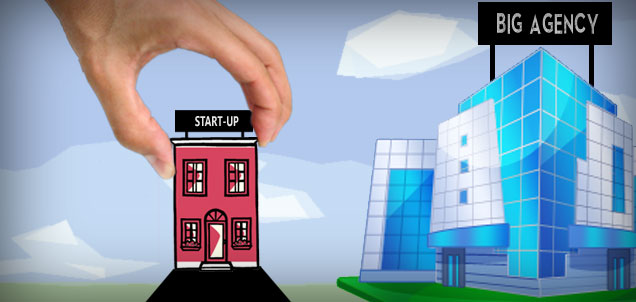
  • Big spenders advertisers prefer start-ups for digital


    By Kala Vijayraghavan & Lijee Philip


    In September 2012, when Mahindra & Mahindra was preparing to launch its compact SUV Quanto, it overlooked its mainstream advertising agencies Interface and Lodestar, and went to Hungama, a boutique agency, for a digital ad campaign screened in malls. Hungama developed a technology where a consumer’s electronic car key started a Quanto ad on a computer screen, which went on to simulate a feel of the vehicle in typical weekend settings. The idea was to create a digital experience of the SUV and help the brand break out of the clutter in a competitive segment.


    “The response time for social media activities should be next to nothing,” says PN Shah, CEO, automotive, Mahindra & Mahindra, explaining why he preferred a specialised digital agency over tried-and-tested partners.


    “We need tailormade, online, onsite and on-time solutions that help us react and respond quickly.” Like M&M, top consumer companies, including HUL, Godrej Consumer, Ford and Honda, are now cold-shouldering their traditional ad agencies such as JWT, Dentsu, Mindshare, Interface, Lowe Lintas and Mudra to tap social media marketing agencies such as WATConsult, BCWebWise, Bloggers’ Mind, Blogworks, Digit9.0 and other such startups for their digital requirements.


    “Traditional agencies are not thinking digital adequately,” says Hemant Bakshi, executive director, home and personal care business, HUL. “They are creating digital as separate divisions. Digital has to be at the heart of the communication and not peripheral to it.”


    Counters Suman Srivastava, ex-CEO, Euro RSCG and founder of Marketing Unplugged, a marketing consulting company: “It is fashionable to blame agencies or say they tend to think in silos. But the fact is the traditional marketers themselves do not understand the medium.”


    HUL has worked with BCWebWise quite a bit ever since Chaaya Baradhwaaj, its founder and CEO, launched HUL’s Sunsilk Gang of Girls, an online social networking website built around its leading beauty shampoo brand in 2006.


    Youngsters, who embody the credo of the internet age of being ‘digital natives’, are now guiding companies in digital, which is emerging as a disruptive force in consumer marketing. “Our roots are in digital. We come with no baggage of other media,” says BCWebWise’s Ms Baradhwaaj. “The dynamics of the technology-driven medium, the interactivity it offers, and the fact that consumer pull by far supersedes brand push can be inherently understood if you have been eating, breathing, and living digital in your advertising/communication life.” Adds Sunil Kataria, chief marketing officer of Godrej Consumer Products: “Twenty-something youngsters are able to understand digital better as a disruptive force in consumer marketing. We are tapping such specialised agencies and startups.”


    Mainstream advertising agencies counter this, saying there’s no great work happening. “These are college kids charging a low fee from these companies to earn extra money,” says Partha Sinha, director Asia, Publicis, a large advertising agency.


    “None of our digital ads have even been shortlisted at Cannes.” According to Mr Sinha, companies have created a perception barrier, and themselves do not have the systems and skills to understand digital.


    “They are only doing basic maintenance work on social media,” he says. “The fact is, companies are not desperate on digital. They are still hung up on outdoor and television. The day companies get serious about social media internally is when they will find similar change in their advertising agencies.”


    HUL is integrating social media and mobile into the marketing of its brands at the planning stage itself. These were premium brands that have a high online audience such as Tresemme, Sunsilk, Lakme, Closeup and Surf. In the next two years, it expects to treble ad spends in online and digital, taking it to 10% of its overall ad spends.


    Similarly, Godrej Consumer opted to tap an integrated design company, Creativeland Asia, for its digital campaigns to relaunch its Cinthol brand (MakesMeAlive) and launch its air purifier brand, Aer (colouryourfriendsapp). “Social media cannot be just an appendage to your traditional medium,” says Mr Kataria. “We are a new breed of organisation that thinks from the society aspect and then fashions our campaigns, and not vice versa,” says Sajan Raj Kurup, founder and CEO, Creativeland Asia.


    Sourav Jain, a social media marketing specialist, feels traditional advertisers have a lot of catching up to do. “They do not understand the technicality of the process in social media,” he says. “Social media is not only effective, but is also relatively inexpensive. Here, one gets a chance to interact, and build relationship and reputation for their brands.” Admitting that big agencies took to digital with a lag, Arun Iyer, creative director at Lowe Lintas, says they are up to the task today. Like Mr Sinha of Publicis, even he sees it as a perception problem at the end of the companies.


    “Even when we make our presentation in the digital space, clients do take a look at it, but then chose a smaller specialist,” says Iyer. In the current context, smaller players are packing more punch. “They are far more specialised and are able to build expertise faster,” says Rajesh Lalwani, founder and principal of Blogworks, a Delhi-based social media agency. Its team of 28-30 people has worked for Harley Davidson and Ford Fiesta AT model.


    Mr Lalwani says that, for most auto companies, social media accounts for 10-20% of their marketing spends. “Bigger agencies seem indifferent to social media at this point of time since it is too small to interest them,” adds Jnaneswar Sen, senior vice-president (marketing and sales), Honda Cars India.


    Despite working with Soho Square (part of Ogilvy), Dentsu and Grey Worldwide, when it came to leveraging social media to launch Amaze, Honda selected Blazar, a small boutique advertiser. “They are managed largely by a younger team,” says Sen. “They clearly know what the young generation wants.” Adds Rajiv Dingra, CEO of Mumbaibased social media agency Wat Consult, which ran the social media campaign for the Mahindra two-wheeler Centuro and Ford: “Car buying is a high involvement purchase and social media helps to keep the buzz alive.” Dhingra feels this does not come naturally to large agencies. “They are unable to specialise and build depth. We were able to quickly foresee what the consumer wanted. ” Understanding feedback/data, and modifying plans quickly, is a challenge best handled by smaller players, according to Carlton D’silva, chief creative officer of Hungama Digital. “Most likely, larger ad agencies will acquire boutique agencies rather than developing capabilities from scratch.”


    Source:The Economic Times

    Copyright © 2013, Bennett, Coleman & Co. Ltd. All Rights Reserved

    Licensed to republish

     

  • Debrief: Godrej: Good TV soap

    By Anil Thakraney


    The Godrej group has released a product range campaign on television, and just for that novelty, they should be patted on the back. Usually, range ads stick to the print medium, and they are almost always very boring. But Godrej’s TVCs are anything but boring because they feature Aamir Khan in drag, which means full-on masti.


    There is a series of ads conceptualised as a continuing soap opera. Khan is researching for a movie role, and he arrives at his pal’s house dressed as a woman. The pal is a little edgy because his missus assumes Khan to be a woman, and he’s worried about the two ‘bonding’. Anyway, fun interactions happen between the trio (just as in a TV serial), and each ‘episode’ deals with a particular Godrej product. Air conditioners, hot plates, mosquito repellents, etc.


    I must say this is a very refreshing advertising approach from a conservative group. Aamir in drag will get the junta interested. I also like the characterisation; the couple used is an up-market one (the kind you’ll meet at Cuffe Parade), and this gives the brand a premium image, even when they discuss mundane stuff like eradicating machchars. The dialogues are crafted well, they are a bit funny, and I won’t be surprised if some have been written (re-written) by Aamir bhai. 🙂


    So all very fine and dandy. And yet, I shall raise a red flag, the advertiser and the agency should keep a look-out for this as the series continues to play out. The product’s entry into the conversation is just a wee bit forced. I know this is a tricky one, which is why a lot of polishing needs to be done while writing these scripts, so that the brand merges seamlessly with the human interactions. Right now, the product arrives like a minor irritant. In addition, Aamir in drag would naturally vampire the proceedings, all eyes would be on him. All the more reason the product story must shine, or it risks getting lost.


    Rating: (On a scale of 1-5): 3. Brave effort, should give the brand a premium ticket.


    Anil Thakraney is a senior journalist and commentator. He is also Editor-at-Large, MxMIndia. The views of the writer are his own.


  • EEMA-E&Y report predicts 25% growth for Event & Activations in 2 years

    By A Correspondent


    The Indian event and activation industry in the organized sector is expected to grow at an average rate of 25 per cent from its current size of Rs2,800 crore to Rs4,375 crore in 2013-14. Out of Home (OOH) and radio segments are said to be one of the key growth drivers of the event industry over the last three years. The next phase of growth in activations is expected to come from ruralIndiaas the metros are said to have reached a saturation point; hence the need to tap the large consumer base in the rural belt. These are some of the findings from the EEMA (Event & Entertainment Management Association) and E&Y (Ernst & Young) white paper on the ‘The Business of Experience – The Indian Events and Activations Industry’.


    In addition to these findings, 57 per cent of the surveyed respondents are of the opinion that the share of the total marketing spends attributed to BTL (Below the Line) activities (including events and activation) is expected to grow around 10 per cent over the next two to three years to reach nearly 20 per cent of the total marketing spends. The respondents also believe that on the road ahead, profit margins of the events and activation companies will grow at an average of around 15 per cent.


    The respondents were also asked to list five most critical issues they expect to face over the next few years. Inadequate event infrastructure; Talent acquisition and retention; Poor image/ Lack of transparency; High competition levels and Inability to demonstrate ROI’s were the top five issues that were a cause of concern for the respondents.


    In conversation with MxMIndia, Brian Tellis, President, EEMA talked about the two areas of growth for the event and activation industry in the near future. According to Mr Tellis, the unorganized part of the industry is estimated to be as large as the organised sector, if not larger: “The industry will grow from two areas. First, the industry will start getting a larger share of the existing marketing pie. The existing marketing budget of the brand is estimated to grow by 10 per cent as far as experiential marketing is concerned. The second area of growth will come from the bits of the unorganized sector which will become organized. So yes, it is time for high growth.”


    On the takeaways for the industry from the white paper, Mr Tellis said that the industry should first start developing its own Intellectual Properties (IP’s) because the ROI on Intellectual Properties is very high. He also pointed out the need to develop a calculation matrix and ROI matrix as this would enable marketers to confidently spend more money on BTL or experiential marketing.


    Talking about the challenges and opportunities for events and activation industry in the long run, Mr Tellis said: “There is a need to convert the unorganized sector into organized sector and the to develop Intellectual Properties (IP) because that will ensure sustainable revenues in the long run.”


    MxMIndia also spoke to other industry players and marketer for their views on the challenges and opportunities facing the event and activation industry and its effectiveness in brand building.


    According to Mr Girish KJ, vice president-Wizcraft International, over the years as the economy expanded rapidly, so did the need for brand activation, and experiential marketing has become a key value driver in the marketing mix: “In certain sectors, we find that  experiential marketing is what delivers high value to brands. We find a lot of first time clients simply being overwhelmed by the value they derive from investing in brand activation. Eventually, brands that invest in creating meaningful experiences will have a much better reason to be in the customers’ consideration set. In terms of engagement with communities, branded experiences deliver the best return on investment. We have seen that branded events and activation delivers among the highest return with a carefully thought out strategy and a well planned and executed branded experience.”


    On the challenges and opportunities facing the events and activation industry, Mr Girish KJ said that investing in and creating experiential marketing professionals for tomorrow; and attracting and retaining the best and the brightest talent will always be a challenge. “To today’s digitized, desensitised, over-communicated customer, the power of the brands experience cannot be over-emphasised. Globally, customers are shunning main stream, talk-down communications and clamouring to be involved with their brands. That is the opportunity for our industry to embrace.”


    Yogesh Nambiar, Head, Events Operations, TransStadia felt that events and activations industry is expected to grow in the future, but the real growth is however expected only post January 2013: “Currently we are witnessing a downslide from the event management side of the business, because most of the marketers are more or less looking at the Intellectual Property (IP) side of the business and not the event management companies or agency. Today marketers are looking at events and activations as an extension of their marketing arm, so you have to have good ideas to increase ROI’s for brands. From an ROI basis, I believe activation or BTL plays a large role for marketer or brands.”


    Kamal Nandi, Executive Vice President (Marketing and Sales), Godrej Appliances observed: “With more and more brands give experiential experience to consumers, I believe events and activations are only going to increase because that allows consumers to experience the products. Yes, marketers are spending more on activations. But, if you compare ATL and BTL spends, you will find that BTL spends have been constantly increasing over the years, and more money is being spent on experiential marketing. In our industry, events and activations are gaining momentum; however more and more spends are increasingly shifting towards BTL activities. So we definitely see this as an effective way of connecting with consumers and therefore as an industry we are spending more in this area.”


  • Creativeland Asia to revamp Cinthol

    From the MxM Infodesk


    Creativeland Asia has bagged the creative mandate to revamp Cinthol, one of legendary personal care brands in India. As part of the mandate, Creativeland is required to approach Cinthol with their fresh new thinking while making it relevant for today’s consumer and their needs.


    Commenting on this development, Sajan RaJ Kurup, Founder and Creative Chairman, Creativeland Asia said, “Godrej has shown immense faith in Creativeland Asia. Working on Godrej Expert was an interesting challenge and the response from our client-partners has been very encouraging. Taking this partnership ahead, I am excited to work on Cinthol. Right from the 1980s, Cinthol has been an iconic brand. We all remember the days when popular celebrities such as Vinod Khanna endorsed the brand. We need to simply recreate the magic and the stature Cinthol enjoyed in the past.”


    Commenting on this development, Sunil Kataria, Head Sales and Marketing Godrej Consumer Products Ltd. said “Creativeland Asia has a fresh and creatively unique approach to brands. Cinthol is an iconic brand with a huge potential. We look forward to a strong association with Creativeland Asia as we work towards unlocking Cinthol’s immense potential.”


  • No (or low) ads on HD. Anybody complaining?


    By Meghna Sharma


    While there is no denying the importance of advertisements in a world where subscribers are unwilling to pay subscription fee for channels, there exist many viewers who are tired of innumerable ads interrupting their favourite soaps or sporting. The good news for them is that their ordeal has been put to an end through HD channels. At least for the moment


    With various broadcasters launching HD variations of their channels, many upper-end subscribers are shifting to HD set-up boxes or subscribing to an HD channel. However, as there are no free lunches in the world, these channels come at a premium.


    What media planners think?

    Most media planners feel that since HD channels come with a certain cost attached to them, it is but obvious that they cater to a limited audience.  So, most channels are aware of it and their target group.


    Anita Nayyar

    Talking about the HD channels’ reach, Anita Nayyar, director (customer strategy), BCCL, agrees that not many avail of the facility. However, with digitization being made compulsory, especially in the four metros things might change. “Unlike the West, inIndia a broadcasters make most of their money through advertisements, and not distribution. So, if HD channels reach only a certain section, then how will a channel make its revenue?”


    Ms Nayyar added: “Today, one might pay a premium cost to watch an ad-free telecast, but in the near future, if availability doesn’t increase then channels won’t have an option but to make exception to the rule. They will be forced to show advertisements; however, they might charge a higher cost or have a limited time slot.


    On the other hand, Hiren Pandit, managing partner of Group M, felt that broadcasters with HD channels aren’t feeling the pinch, since they want to cater to a different audience: “Apart from the top-notch TG, most broadcasters have non-HD channels as well, so they capitalize through them. And over a certain period of time, they’ll be able to cut losses.”


    Agreeing with Ms Nayyar and Mr Pandit, Janardhan Pandey added: “It’s not just about reach or money, there is another reason which plays an important part in making HD channels a hit and that’s viewers’ psyche.  A person who might be able to afford HD package might still go for cheaper option because he/she might feel why pay more when the same can be watched at a lesser cost. For them, a few advertisements don’t matter.”


    Marketers’ foresight

    A brand reaches its target audience through advertisements and in today’s time one can reach a cross-section of society through television. Hence, most marketers spend their most of their ad-revenue on TV.


    Karthi Marshan

    Karthi Marshan, EVP & Head Group Marketing, Kotak Mahindra Bank said: “Our estimate is that of the 136mn cable and satellite homes in India, 44mn are DTH. Of these, about 8 lakh are currently HD subscribers. That is less than 2% of DTH homes and a tad over 0.5% of all C&S homes. Now whether this affects a marketer or not depends on who is her core TG. For the average brand with SEC A & B as their TG this probably does not matter much, but yes, premium and super premium brands do stand to miss out on what could be core TG due to the fact that some of the HD channels still don’t run advertising.”


    He added: “The next question that marketers will have to contend with is broadcasters expecting to be paid separately or additionally for these audiences. While brands will make the argument that we have bought programs or channel presences and hence our ads should carry seamlessly to HD as well, broadcasters may well have a tenable argument to the effect that they are in the audience delivery business, and a premium audience can and should command a premium for access.”


    Similarly, Ashutosh Tiwary, EVP- Strategic Marketing, Godrej, feels that one needs to observe the situation over a period of time to know what will happen next: “If the ratings and numbers of non-HD channels on which the media deals are based, get affected due to HD feeds, then HD channels will probably will have to air the ads to make up. However, if HD numbers prove to be totally incremental, then the converse might hold true. Overall, if viewer retention and engagement goes up due to higher quality and reduced clutter, HD might require specific treatment.”


    While Simeran Bhasin, marketing head, Fastrack and new brands at Titan said that as a consumer she loves to watch her favourite programmes on ad-free HD channels, but as marketer she’ll have to look for other methods to reach the TG. “HD is here to stay and marketers will have to figure out ways to reach out their consumers. Because with technology available everywhere, one can easily switch-off their TV sets to watch something online which is accessible without any interruptions. So, marketers will have to sooner or later adapt to survive.”


    Vipin Mehra, former sales head, Pidilite, said: “It’s very important for any brand to send constant reminders to its TG about its existence, especially in today’s competitive market. So, brands will prefer a channel which will help them in doing so.”


    Keeping their fingers crossed

    Creative people on the other hand aren’t very happy with HD channels as they affect their work/business, but feel that things will change for good.


    KS Chakravarthy, director, DraftFCB Ulka, felt that though one might want to enjoy an ad-free telecast, it’s just a passing phase because channels have to make revenue which comes from advertisements. KV Sridhar, National Creative Director at Leo Burnett, too agreed with Mr Chakravarthy, adding: “When and as HD channels availability increases, broadcasters might be forced to start showcasing advertisements as well.”


    Who’ll be the ‘real’ beneficiary?

    Advertisements or not advertisements, broadcasters have to follow a business plan and many feel that they’ll have to succumb to it. “One or two networks have begun taking a smattering of ads, and this will only grow, I am guessing,” said Mr Marshan. A business is run on revenue and if it cannot be generated, then changes have to be made. However, for the time being, the viewer can enjoy an ad-free programme.

    One will just have to wait and watch.


  • Big retailers offer discounts as growth slows

    By Dipti Jain


    Just like an unusual April in Delhi when temperatures remained below 40 degress, retailers are dishing out discounts and special offers to attract buyers in early summer. From Future Group’s Big Bazaar to Lifestyle and Marks & Spencer, almost all retailers are courting buyers through special offers as growth remained muted in March and April. With the overall economy looking weak, customers are tightening their purse strings amid low increments.


    Big Bazaar just concluded its first-ever public holiday sales, while Marks & Spencer is offering 30 per cent discount to liquidate stocks. Ditto for FMCG major Godrej that has announced offers for its furniture brand. Woodland says it has intensified its promotional activities, Lifestyle Retail is offering discounts and freebies and Shoppers Stop is offering higher rewards.


    Although retailers are choosing not to talk at the moment, numbers point to slower offtake. For instance, Shoppers Stop, which reported an 87 per cent decline in fourth quarter net profit, has seen a 3 per cent rise in transaction size, despite the average selling price going up 9 per cent. Even conversion rate is down 5 per cent despite footfalls rising 29 per cent during the fourth quarter.


    Spencer’s Retail says its same store sales growth has moderated from 12-13 per cent during 2011 to around 8 per cent during January-March 2012. Same store sales is a measure used to gauge how sales have been in stores that were operational in the previous year.


    While brands are aiming to revive buying sentiments, for some the offers are intended to make up for the backlog from the last season. A store manager at a Pantaloon Retail outlet in Delhi said while it had increased prices by 12 per cent last year, in some cases the company has been forced to slash prices by around 20 per cent to boost sales.


    “Buyers are waiting for the sale period to make purchases as things have become more expensive. We have to offer some incentives to retain customers even though our profit margins have reduced,” said the Pantaloon store manager.


    “It has become more challenging for a retailer to keep his customers engaged. Buyers are now more demanding and are always looking for offers and discounts,” said Harkirat Singh, MD, Woodland.


    Godrej Interio associate VP Subodh Mehta said offers tend to get customers to purchase. With sales growth around 25 per cent, compared to the 30 per cent target, the company is not just offering discounts of up to 20 per cent on furniture but is jacking up ad spend by close to 20 per cent. Godrejs’ same store sales grew 15 per cent (3 per cent below target).


    “Buying sentiments will remain choppy due to the uncertain economic scenario. Customers need to get back disposable income to start spending again,” said Ankur Bisen, associate director (retail) at Technopak.


    Source: The Economic Times

    Copyright © 2012, Bennett, Coleman & Co. Ltd. All Rights Reserved


  • Shahs to drop Anchor’s oral care portfolio; Emami close to buying toothpaste brand

    By Kala Vijayraghavan & Sagar Malviya


    Mumbai-based consumer products Anchor Healthcare has had several rounds of discussions with the Kolkata-headquartered Emami to sell its oral care business, top officials close to the development said.


    Kotak Mahindra, the investment banker to the deal had also approached other personal care companies such as Godrej, Dabur and Marico for a potential transaction, added the officials.


    However, interest in Anchor’s only other brand outside of oral care, Dyna soap, was lacklustre, with buyers more interested in Anchor White toothpaste, Anchor Gel as well as a toothpowder and toothbrushes. When contacted, Atul Shah, promoter of Anchor, denied any sale plans. However, a senior executive at a domestic investment bank confirmed that the company has been sounding off various buyers.


    In early 2011, Business Standard had reported that the Shahs had plans to sell the entire consumer products business, lock, stock and Dyna. However, a banker privy to the proceedings pointed out that valuations of the business may have deterred the promoter family from selling in single transaction.


    The Shahs are expecting over Rs1,000 crore for the consumer business, added the banker. The company is estimated to have closed the year ended March 2012 with sales of Rs450-500 crore, said a research analyst covering the fast-moving consumer goods sector.


    Emami, for its part, has created a war-chest to fund acquisitions. In 2010, the board of the cosmetics and toiletries marketer had approved plans to raise long-term resources up to Rs2,000 crore through the issue of securities as well as to double the borrowing limit to Rs3,000 crore primarily to fund potential buys.


    In 2008, Emami had acquired Zandu Pharmaceuticals, but subsequently hasn’t had much luck with buyout attempts. Last year it lost out to Reckitt Benckiser in the race to buy Paras’ personal care business that includes brands such as Livon, Borosoft and SetWet. Early this year, Reckitt sold some of Paras’ personal brands to Marico in a deal that Emami too was keen on.


    “Emami will continue to explore avenues for inorganic growth, but we do not wish to comment on any speculations,” said NH Bhansali, CEO, finance, strategy & business development, Emami.


    In 1997, Anchor challenged multinational giants like Colgate and Hindustan Unilever by finding a unique proposition in a tough-to-differentiate category by launching a ‘vegetarian’ toothpaste. In the initial years, Anchor managed to grab a market share of close to 10 per cent in a highly-competitive market.


    In 2007, the Anchor group had sold an 80 per cent stake in the business of electricals to Japan’s Matsushita Electric Works – owners of the National and Panasonic brands – for Rs2,000 crore. Personal care became the family’s focus area. Soon after the sale of Anchor Electricals, the group bought Forhans, one of the country’s oldest toothpaste brands, from John Oak Remedies. However, the Shahs didn’t make much headway with Forhans, which does not figure amongst Anchor Healthcare’s brands on its website.


    Source: The Economic Times

    Copyright © 2012, Bennett, Coleman & Co. Ltd. All Rights Reserved