Tag: General Motors

  • Personal Branding – Much Ado about Nothing?

    Source: Keegan Everitt/Pexels.com


    By Prabhakar Mundkur


    Prabhakar MundkurIt’s not only fashion that is about trends. Trends is an affliction that affects management thinking as well.  And the latest trend is to talk about personal branding. The well-known management magazines are writing long articles about it. Other general gurus on branding are writing books on it. Why even the Harvard Business Review made it their cover story for the May-June issue of 2023. And here is the surprise. The article is written by a Jill Avery, a branding thought leader, and Racheal Greenwald a dating coach and a professional matchmaker author of the book ‘Find a husband after 35’.  So if that doesn’t prove it is trending what does?  After all, the HBR is considered the mother of all management journals.  And their definition of purpose is what we were taught in the marketing kindergarten class for branding.


    For a particular target person or group of people, I will make a difference by offering the unique, memorable, and meaningful value you want to provide…


    • HBR May-June 2023 issue


    But isn’t this just a another extension of the branding?  Have the personal coaches and marketing gurus  just discovered a new revenue stream?  I certainly think so.  After all it is quite easy to do. Transfer all you know about branding to people, especially people in positions of importance.  And everyone is jumping into it, not just marketing gurus but personal coaches as well.


    The question I would like to ask is whether great CEOs don’t become great brands automatically.  After all I would hate to think that Steve Jobs was focussing his entire life on creating a personal brand. I think he was focussing on following his passion, making great products and leading Apple into becoming a great company.

    The brand Steve Jobs just happened as a result of what he was doing.


    Or take Jack Welch for example. Welch was Chair and CEO of General Motors from 1981 to 2001.  He closed factories, laid off workers and pursued the vision of a fast growing company in a slow growth economy. Of course he wrote books and did a lot of public speaking.  And became one of the greatest management thinkers and leaders of the last century. Jack Welch, the brand, became what it is because of what he did.  Not because he was focussing on becoming a brand.


    Jeff Bezos said: “Your brand is what people are saying when you are not in the room”.  Well said. But I really wonder if Jeff Bezos was planning his entire personal branding strategy to achieve that. He was focussing on creating a great brand called Amazon that the world would acknowledge as a great brand. The rest just happened automatically.


    In conclusion, I would like to submit that becoming a great leader and creating a great company or product will make you a great personal brand without much thinking or effort or trying to create your own personal brand proposition. It is hard to believe that the great leaders of our time were writing out by writing personal value propositions, auditing their personal brand equity or constructing their personal brand narrative.


    Do your best. The brand will follow.


  • Blond-haired blue-eyed brands!


    By Avik Chattopadhyay


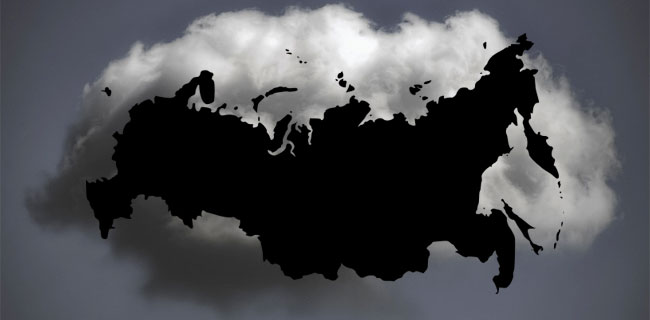
    Avik ChattopadhyayAs we read this, over 300 brands from across the world have taken a stand against Russia since it invaded Ukraine. Some real big names like Apple, General Motors, Volkswagen, Levi’s and MasterCard have decided to halt/ suspend operations and shipments. Consultancy firms like BCG, McKinsey and Deloitte have taken a call. Even some Chinese brands like Bank of China and Tik Tok have joined the list. All non-Russian energy companies have moved away either like BP and Shell divesting their shareholding in Rosneft or ExxonMobil walking away from the Sakhalin 1 project.


    While tracking the updated status on the internet, I came across an interesting Twitter feed that I cannot help but share here.


    While such economic ‘sanctions’ are very much expected, it is interesting to note that equally big brands like Coca-Cola, Unilever, Bridgestone, Pirelli, Pepsi, Philip Morris, Nestle, McDonald’s, Mondelez, Kellogg, Citi, Marriott, and Caterpillar still continue to do business in Russia.


    But the situation is very fluid. In fact, as I write I have an update that Coca-Cola and McDonald’s have also decided to suspend operations.


    Yale School of Management is keeping a real-time track of the status. Over 300 Companies Have Withdrawn from Russia – But Some Remain | Yale School of Management


    So, what makes some take one stand while others take another, or do not take the same one? Does this mean that McKinsey does not support Russia while Mondelez does? Or does BP denounce war while Bridgestone does not?


    While the ones who have taken a call against Russia are obviously being lauded for calling out an “imperialist” like Putin, are the ones who consciously have not, being subjected to criticism and pressure to fall in line? Will they experience serious fallouts on brand image and reputation in the long run?


    During my internet studies on the rise of Vladimir Putin and his oligarchs over the last two decades, I came across a term called “The Moscow Rules”. Bing! I remembered reading about this in ‘Tinker, Tailor, Soldier, Spy’.


    The Moscow Rules is a collection of 10 one-liners supposedly used by the Soviet secret service. They are also displayed at the International Spy Museum in the US. Post-Cold War, the rules remain as per the grapevine, now being used by the oligarchs to spread their presence across the world. They go as follows…


    1. Assume nothing.

    2. Never go against your gut.

    3. Everyone is potentially under opposition control.

    4. Do not look back; you are never completely alone.

    5. Go with the flow, blend in.

    6. Vary your pattern and stay within your cover.

    7. Lull them into a sense of complacency.

    8. Do not harass the opposition.

    9. Pick the time and place for action.

    10. Keep your options open.


    The stark simplicity hits you right away. There is no fancy business school jargon. Just plain common sense. Reminds me of Confucian precepts. Or Murphy’s Laws.


    Each is very much applicable to the world of brands. Each is fundamental to brand strategy and nourishment. Each feels more honest and powerful over the previous one. And the obvious paradoxes are simply brilliant! Just read 7, 8 and 9 together and you will get the drift. The sequence is intuitive, clinical, and utterly brutal. It’s like Machiavelli, Sun Tzu and Kautilya rolled into a Karpov move on the chessboard. Cold, calculated and thoroughly revised and rehearsed. Yet, #10 tells you that it could all go wrong, and you need to go back to #1.


    In the context of the Rules, I asked myself a few questions about the strategic decisions taken by brands in the context of the invasion of Ukraine.


    Pulled the plug or switched off power?

    Have the brands who have shown empathy with Ukraine pulled the plug altogether or merely switched off the power supply for the time being? The list by Yale uses terms like suspended and halted. These are all temporary measures and not finite ones. Once the invasion is brought to an end, whatever the outcome, they will be back for sure. Russia may be seen as a villain today but tomorrow it will all boil down to Putin, even if he wins this round. After all, a huge market of 145 million cannot be left alone to the Chinese and locals, can it? This is just like al Chinese brands, except for Tik Tok, were back in business in India just weeks after Galwan. The pressures of the marketplace and the shareholders are just too strong to pull the plug.


    Out of fear or fervour?

    With no disrespect to any brand that has suspended / halted operations in Russia, the action was taken more out of fear of political reprisal at home and other key markets rather than a foundational abhorrence of all war and military aggression. If it were so, similar stands could have been taken in cases of Iraq, Syria, Yemen, Palestine, or Tibet. It is all a matter of convenience. Most brands believe in #10 when it comes to morals. They take the high ground as the situation suits them.


    Hypothesis or hypocrisy?

    There are brands and then there are… brands. While a lot of posturing goes around about being led by and aligned with greater purpose[s], at the end of the day it just boils down to market share and share value. Most brands will not bat an eyelid to see their weaker competition die. Most would not hold themselves back from steamrolling a market. Most would love to enjoy ‘command and control’ in the markets they operate in, at the cost of unsafe working conditions, unethical influencing tactics, use of child labour and paying off officials and systems for staying a step ahead.  And they would not mind preaching to the ‘lesser’ ones, typically local / domestic. While constantly conspiring on how to gobble them up or bleed them to capitulation.


    These brands have blond hair and blue eyes.

    No harm can befall them.


    I end my tirade with a cartoon by the Russian cartoonist Aleksey Merinov that speaks about the harsh reality and futility of war. Either with tanks or tweets!

  • Chevrolet launches ‘Drive with Care’ initiative

    By A Correspondent


    For creating awareness and promote road safety during monsoon amongst motorists, Chevrolet India has launched the ‘Drive with Care’ initiative. As a part of this campaign, Chevrolet has released a video showing the innovative road signs using hydrophobic paint (that can only be seen when wet) at work on YouTube, Facebook and other mediums to help make road safety a priority for everyone, especially during this time of the year.


    A campaign page on the Chevrolet website has been created to educate the public with insights on traffic accidents and tips on what pedestrians and drivers can do to be safer on the road during rainy days.


    Speaking about the initiative Jack Uppal, VP Marketing and Customer Care, General Motors said, “At Chevrolet, one of our key value is to keep the customers at the centre of everything and the monsoon season is just one of the several opportunities to connect, engage and educate them on the importance of being careful on road. As a global brand that considers safety as one its highest priorities, Chevrolet takes a comprehensive and innovative approach to road safety, aimed at keeping everyone on the road – drivers, passengers and pedestrians, ‘Safe’. With the ‘Drive with Care’ film, which hits hard at the road safety issue, we aim to create awareness amongst the people and bring about the attitudinal change to be safe on the road and to care for others at the same time. The campaign gives on-road insights and urges you to think and ponder over your approach towards road safety.”


    The company carried out a study on road accidents in Mumbai, conducted by Nielsen and ValueNotes to learn more about road accidents during the monsoon season. It helped to create awareness by identifying major accident prone zones/areas in the city during monsoon, reason behind these accidents and other statistics on the number of accidents, particularly during monsoon months.


    Safety messages saying ‘Drive with Care’ with wet paints and stencils are being painted in select residential areas that appear whenever it rains to promote the campaign. This will help in reaching all the families around and educating them to be more careful while driving during the monsoons.


    The campaign’s objective is to raise awareness amongst motorists to maintain their cars during the rains. Chevrolet India had also launched Monsoon Service Camps that offered services to ensure safe driving in the monsoon season. The services provided included a special quick free check-up of items such as brakes, light bulbs, electrical, battery and tyres. In addition to the free front wiper blades distributed, there were discounts on parts and labour charges to ensure their vehicles are well maintained and safe to drive.


  • Can Facebook, the marketer’s online best friend ever become its ace salesman?

    By Delshad Irani & Ravi Balakrishnan


    In 2009, Facebook terminated the ‘Whopper Sacrifice’, Burger King’s social experiment cum marketing activation. Created by Crispin Porter Bogusky, the campaign’s premise was the more ties you sever the closer you get to your BK Whopper. The application as it turned out was a whopping success.


    Within a week 200,000 ‘friends’ were virtually burned out of existence from various lists. Facebook couldn’t handle the loss of those hard-earned friendships. Burger King, on the other hand, proved the point it set out to make – Americans sure do love their burgers. That same year, Swedish furniture giant Ikea spent practically nothing to create a campaign to promote its newest store.


    The agency Forsman & Bodenfors created a new Facebook account for the manager at the store in the city of Malmo and posted catalogue pictures of furnished rooms.


    Users could win furniture and other items in the photos if they beat their friends to the punch. All they needed to do was tag the pieces with their names first. Needless to say the prospect of first-to-tag-wins drove Facebookians crazy. The campaign was hassle-free, cheap and effective, just like the Scandinavian furniture it was advertising.


    Fast-forward to a few weeks ago. General Motors, the world’s fourth-largest advertiser and spender of $3.9 billion globally on advertising in 2010, haunted by questions related to effectiveness and ROI, pulled out its pretty penny, all $10 million of it, from Facebook’s paid-ad kitty just days before the social network’s stock went public.


    In addition to that sum, the automaker spends a reported $30 million on content creation for social media. These examples make Baccarat-crystal clear what we know already – you don’t have to pay big to make an impact via social media.


    In India, most marketers love talking about the worth of a campaign by the number of fans, or likes received on the most recent post. But even they are starting to ask a tricky question: what’s the real worth of their campaigns on Facebook? Worth more than a burger, eh?


    The site itself has been trying to tell advertisers that no longer will mere presence and innovative social media campaigns cut it. If they want scale, they’ll have to shell out the hard cash for offerings like “sponsored stories”, not to be confused with “sponsored ads”.


    For instance, products like Reach Generator guarantee that posts by a brand stand to be seen by 75 per cent of its fans every month or an estimated 50 per cent every week. Non users of the tool will have to settle for an average of only 16 per cent of fans viewing posts on a weekly basis. Not everyone’s buying though, believing that compelling content will win any day of the week.


    Anuradha Aggarwal, senior VP, brand communication and insights, Vodafone India said: “Since having high engagement scores is our goal, we focus on creating content on our Facebook page rather than on advertising. We focus on creating posts and apps to enable our 3.2 million fans to create conversations and experiences around the brand.”


    PepsiCo’s approach is to use a combination of both, posts/promotions on brand pages and display advertising. One of the cola maker’s prominent campaigns on the site was ‘Meet Messi in Miami’ where fans had to complete a series of tasks to win a chance to meet The Atomic Flea.


    During the 2011 ICC Cricket World Cup, Pepsi launched an online progamme as part of the ‘Change the Game’ campaign where fans could win a dream trip across the country for all India matches. The latter initiative was listed as one of the 19 best campaigns in the world by Facebook on their success stories blog, the only Indian effort to feature on the page.


    According to Homi Battiwalla, category director – colas, hydration and mango based beverages, PepsiCo India, it is too early to give a conclusive opinion on new advertising properties like sponsored stories and other offers. So the bottom line when it comes to the marketing on the social network is the game hasn’t quite changed. “The primary focus remains on organic content as we believe it results in better consumer connect,” said Mr Battiwalla.


    For automakers like Mahindra & Mahindra, Facebook is good for what it was born to do in the first place. Well, that and to spy on “old acquaintances”. According to Vivek Nayer, senior VP, marketing, automotive division, Mahindra & Mahindra: “Rather than looking at Facebook for advertising reach, we’ve leveraged it for what the platform is inherently good at; building communities. Today at 5 million, we are the largest automotive community on Facebook in India”


    In the case of Unilever, the company moved from almost accidentally stumbling on the power of the site – after noting a lot of action on its first Cornetto Luv Reels page long after the promotion was over – to it being a key pillar to the launch of Fruttare, its new range for the summer. Sapan Sharma, general manager – ice creams, Hindustan Unilever, said: “There’s an advertiser login where you get all the details. In the first 10 days of launch, 1.2 lakh fans signed up and there were 1.2 to 1.5 lakh conversations.”


    Arch-rival P&G is not lagging either. According to a company spokesperson: “In just less than two months, we have over 690,000 fans for our Thank You, Mom campaign. This makes it the largest, most engaged-with Thank You, Mom community globally.” For the launch of Olay’s premium skin care range, Olay Regenerist, a Facebook waiting list was created, with both fashion journalists and consumers signing up for an exclusive trial on the site; in less than three weeks, over 11,400 people had registered.


    But as the eight-year-old Facebook enters a new league as a listed company, it needs to, and rather urgently, scale its revenues to sync with its audience. Minute, often ineffective, right-rail ads aren’t exactly a juicy bone to dangle in front of existing and potential advertisers; thus the introduction of premium ads and better placement.


    According to Siddhart Rao, CEO of digital agency Webchutney, the sweet spot between organic and paid promotion is the one that will yield maximum benefit to brands looking to extract value from social media marketing platforms like Facebook. “One cannot work without the other,” he said.


    S Yesudas, managing director – Indian subcontinent, Vizeum, said: “I do not think all marketers know what to expect from the medium. The hurry to be on to the bandwagon gets them there. The fact that Facebook offers free advertising inventory for brands to test the medium gets overlooked. In my opinion, the medium can be successfully used to build relationships with the consumers.


    Targeting can be done based on profile information, relationship status, interest or based on certain words in profiles or status messages. But the truth is the brand communication will always compete with the updates, videos, etc from friends.”


    Indeed, it’s complicated; the relationship between advertisers and Facebook. Especially when one moves from the fluffy world of engagement to hard sales. Many retailers in the West like JC Penney, Gamestop and Gap pulled the shutters on their stores on Facebook this February.


    Chhaya Balachandran Aiyer – founder – MD, BC Web Wise said: “Ironically Wade

    Gerten, the founder of 8thBridge – the flower store that was responsible for the coinage of the term F-commerce as it was the first to open shop on Facebook for 1,800 Flowers – has admitted that sales never really materialised for their first or other F-outlets, adding that F-commerce deserved an F. Given the fact that F-commerce (Facebook commerce) has failed in the west for retailers, it appears that Facebook would be an engagement vehicle. Peer recommendation and product ratings are not integrated. Should it launch a brand intelligence tool which can be used by consumers – which exposes peer comments and recommendations that can be accessed by the FB community – then the ball game will change.”


    Venkat Mallik – president, Tribal DDB & Rapp India says Facebook’s ability to deliver sales impact has been a bit of a mixed bag: “There need to be more strong case studies demonstrating the sales or brand impact from the use of Facebook led engagement.”


    However while Facebook may not itself be a platform to sell it can impact sales according to some of its satisfied customers. Unilever’s Mr Sharma for instance believes there’s a definite co-relation between high levels of engagement and products sold.


    According to Carlton D’Silva, chief creative officer, Hungama Digital Media, “Opinions of family and friends matter when making purchase decisions decisions and Facebook activity will provide a lot of data to consumers, which can be leveraged in places where they make these decisions, causing a significant, if not direct impact on purchase behaviour.”


    “GM is slashing its advertising budgets by $ 2 billion, of this only $10 million or 0.5 per cent was on Facebook. They have also announced they won’t advertise on Super Bowl, either. Further, what should be noted is that GM has 8 million fans already. I am sure that they are going to continue with the engagement plans for acquired fans. It would be foolish to assume anything beyond, or assume Facebook has failed for GM, it would be just that advertising further is currently not the best bet in its media plan,” said Ms Aiyer


    The users of Facebook both on the agency and the marketer side each have their wishlist ready.


    “The analytics are available at a lag of 7 to 15 days; I’m sure it can come earlier. I’m sure there will be a time when we can talk to people from a specific city or market,” said Mr Sharma


    “They are hugely data rich. If in some way they get to using some of the data millions of people put in their hands on a minute to minute basis, sky will be the limit for them.This will surely come in with resistance from the users, unless they persuade them. They have to walk this path very carefully,” added Mr Yesudas.


    Most brands have a clear agenda from marketing spends on social media platforms like Facebook – greater outreach among target audiences through personalised interaction and engagement, leading to higher impact on conversions and sales.


    “It’s a perfectly reasonable expectation from a social communication platform with 900 million members,” said Mr Rao of Webchutney, “but whether brands invest enough thought, time, resources and action to engage audiences meaningfully is another question.” And one helluva question it is. Because for every whopper of a Scandinavian success story, there are at least a dozen marketing campaigns that have fallen flat on their face. So, ask not what you can do on Facebook but what Facebook can do for you.


    Source: The Economic Times
    Copyright © 2012, Bennett, Coleman & Co. Ltd. All Rights Reserved

  • A night filled with stars and entertainment at the7th Apsara awards

    By A Correspondent


    The 7th Chevrolet Apsara Awards 2012 powered by Venus Soap saw a glittering, star-studded event held at Mumbai’s plush Yashraj Studios. The Film & Television Producers Guild of India and Wizcraft International Entertainment announced the much awaited winners for the finest talents in film and television for 2011. The 7th Chevrolet Apsara Awards 2012 ceremony saw the who’s who of the industry.


    Ranbir Kapoor, on winning the Best Actor Award for Rockstar, said: “This is my 3rd Apsara Award and actually, I don’t feel humbled because I worked really hard for this role, so I’m very happy that I got the award for it. I express my deepest gratitude to the Guild for giving me this honour; it is very special to me.”


    Commenting on the ceremony, Mr. Sumit Sawhney, VP Marketing, Sales & Service, General Motors India said: “Chevrolet Apsara Awards is an endeavour to honour excellence in cinema and television by the stalwarts of the industry itself. This is our third straight year of association with the Chevrolet Apsara awards, a partnership that has really given us a wide reach acrossIndia. It is one of many initiatives that has served to increase the awareness and purchase consideration of Chevrolet vehicles inIndia.”


    Mr. Rahul Gyanchandani, Director, RSPL Ltd said: “We take pride in associating with Apsara Award which is the official award event of Television and Film Producer’s Guild and is an important event for the industry. We are proud to be associated with this award and feel that our brand, Venus Coconut Soap, would definitely reap rich dividends out of this association. We hope this partnership to continue for many years to come.”


    Speaking on the list of celebrity performers, Sabbas Joseph, Director, Wizcraft Entertainment International Ltd. said: “We have always been pleased to partner with the Guild for the Chevrolet Apsara Awards and strive every year to recognize talent in the Indian entertainment industry. The 7th edition of the Awards was a grand success and the night was one of winners.”


    Speaking about Colors’ association with Apsara Film and Television Producers Guild Awards TM, Mr. Raj Nayak, CEO – Colors, said: “Colors has been associated with the Apsara Awards for two years now. It is a perfect platform for Bollywood and Television stars to come together and celebrate the excellence that they have put forth through their efforts during the course of the past year.”


    On stage, the director duo Farah Khan and Karan Johar were the masters of ceremony. They entertained the audience with their wit and humor and camaraderie.


    Highlights of the evening were the enthralling performances by the stars themselves. The most exciting act was the soon-to-be-wed Riteish Deshmukh and Genelia D’Souza enacting their love story. Along with many other spell-binding performances and other stars joining in the baarat, this was truly a prelude to their wedding celebrations.


    King of Bollywood, Shah Rukh Khan set the stage ablaze as he grooved to the tunes of his latest movie Don 2. Svelte Kareena Kapoor put up a sizzling performance as she danced to some of the most popular South Indian hit songs like Nakka Mukka, Ringa Ringa and the recently popularized Kolaveri Di.


    The 7th Chevrolet Apsara Awards also dedicated a special segment to the legends of Indian cinema and their glorious years in Bollywood. This act marked the beginning of ‘100 years of Indian Cinema’ celebrations.


    A special act designed by Shiamak Davar and his troupe paid tribute to iconic stars like Dilip Kumar, Saira Banu, Shashi Kapoor, Dr. Vyjanthimala Bali, Waheeda Rehman, Asha Parekh, Manoj Kumar, Jaya Bachchan, Shabana Azmi, Vinod Khanna, Zeenat Aman, Rajesh Khanna, Hema Malini to name a few. Shahrukh Khan hosted the segment and spoke to the legends about the centenary celebrations.


    Amisha Patel mesmerized the audiences with a scintillating performance on hit item numbers ‘Chikni Chameli’, ‘Ooh La La’ and ‘Madhubala’. ‘Band Baaja Baarat’ star Anushka Sharma shook a leg with popular TV stars – Nandish Sandhu of Uttran, Sushant Singh of Pavitra Rishta and Shabbir Ahluwalia, winner of ‘Khatron ke Khiladi 3’ to three different styles of dance including Lezim, Hip-Hop and Bollywood.


    Of course, in the midst of all this entertainment, the envelopes were opened to reveal the winners for 2012 who accepted their Award amidst excitement and fervour, as the air was filled with thunderous applause and cheers.


    Watch the magic of the 7th Chevrolet Apsara Awards 2012 exclusively on Colors.