Tag: Gen Z

  • Kia undertakes brand relaunch

    By Our Staff


    Automotive maker Kia India has announced the relaunch of its brand in India, the first country outside South Korea – the home of Kia – where the brand has been relaunched. Kia India, which is wholly owned by Kia Corporation, has introduced the company’s refashioned logo and brand slogan, “Movement that inspires”.


    Said Kookhyun Shim, Managing Director and Chief Executive Officer, Kia India: “This is a proud and historic moment for us as India becomes the first country to transition to the new brand identity after our headquarters in South Korea. Our decision to increase the production capacity stems from our deep customer understanding where a faster delivery of our products can enhance their buying experience tremendously. We are confident that this transformation will accelerate our growth by not only strengthening our premium positioning in the market but also making us one of the most aspirational brands for consumers.”


    Added Tae-Jin Park, Executive Director and Chief Sales and Business Strategy Officer, Kia India: “Under the new brand slogan, Kia will focus on offering meaningful experiences to the customers, especially focused on the millennials and Gen-Z – the future of the country. With Kia’s new brand identity and our refreshed portfolio, we are extremely elated to have a purpose-driven business that will elevate the customer experience not just in terms of the features and connectivity inside the cars, but the overall engagement experience with our brand.”


    Said Hardeep Singh Brar, Vice President & Head of Sales and Marketing, Kia India: “Kia is a futuristic brand and always on the move to be as close as possible to our consumers. We feel that regular product interventions and increasing brand accessibility are some of the key areas, which will help us in meeting this objective. Hence, we are taking a conscious decision to regularly refresh our existing product portfolio, launch new products at regular intervals and foray into newer markets to provide an aspirational experience to consumers who are keen on becoming proud Kia owners.”



  • AdsOnIPL21: Akal Badi ki Ads?


    Since there are enough and more new ads around IPL 2021, Vikas Mehta comes up with a bonus add-on to his weekly column


    By Vikas Mehta

    Vikas MehtaTrust my Gen Z single sample to ask me a pointed question during the IPL. How do the Indian  cricketers get to shoot ads? Aren’t they in some bubble and get transferred from one bubble to another? We hear them moaning about the mental agony of the bubble, but every few months, they do manage to somehow augment their incomes with new ad campaigns. Bubbles notwithstanding.

    This re-view is dedicated to the new ads during the IPL featuring our cricketers. Past and present.  Last weekend the match between Delhi Capitals and Chennai Super Kings was touted as the match between guru and shishya. Dhoni vs Pant. I carried this imaginary rivalry into the ad world while watching the ad for Indigo Paint with Dhoni and then the one with JSW Steel bars (boring, uninvolved, irrelevant category) with neither me nor my Gen Z sample being the intended target. Frankly, the brand decision in both categories, paints and steel bars, is heavily dependent on the middle men and of course our budget, but paints has come a long way and why can’t steel bars hope to go the paint way. Specially when JSW is one of the main sponsors of DC.

    For me, this battle was won by the shishya. The two JSW ads have managed to not only exploit Pant’s personality but have also communicated the brand benefit woven into an involved storyline. The guruji’s ad unfortunately was a damp squib which was content with the typical celebrity formula. Show Dhoni in the ad and the rest will follow. And this in an ad for floor paints. Usually all paint ads are about walls. I think so much more could have been done with Dhoni and floor paint. My Gen Z sample  made another pertinent comment. So many Dhoni ads, he is an old man now (I guess I am vintage for her) shouldn’t the brand make his ads about his experience or his knowledge. Clearly the Gen Z sample is totally influenced by the Gen Z shishya.

    I did re-view Dream 11 last time but as has been the case always, I am now swamped with more fantasy team ads. So, I turned to my Gen Z sample for help. Let it be known that she is an expert on fantasy team contests having participated and won in some EPL contests. For her Dream 11 was the Indian cricket team, My Circle 11 was Dada, MPL was Virat Kohli and Howzatt.com was Yuvraj. Phew! Some clarity.

    MPL though have not used Kohli this time. They have done a literal interpretation of the Hindi proverb “Akal badi ki bhains” (is the brain better or a buffalo! No disrespect to both, please!) and it seems that currently the bhains is winning. I liked the ad because it clearly implies that making your fantasy team is so easy that you do not need to use your brains  to make the team. And it in its own way does take a dig at those short ads for Dream 11 which have Dhoni asking people to use their brains not on buttering your boss or your father but on choosing a fantasy team on Dream 11. Nicely done. My Gen Z sample though did not agree with me. Because she had never heard of the Hindi proverb. You cannot win them all, I say.

    My Circle 11 has roped in Ranveer Kapoor. Maybe Dada did not have enough time with his health issues, so Ranveer is now the co-anchor. And I do think I saw Rahane in one ad too. And me thinks that the ads have been done in a rush. Looked tacky and depended on Ranveer to announce a new promotion. But I do think that in the next few weeks we shall have more ads from My circle 11. I do hope so. Cannot re-view the current ones. What a waste of Ranveer, is the only comment from my Gen Z sample.

    The Yuvraj led Howzatt.com ads sounded familiar. Trust Gen Z sample to come to my rescue. She gently reminded me that the promotion was similar to My Circle 11 ads of beating the teams chosen by Dada, Watson, Rashid etc to win more money. Guess somebody has got me in plumb. Howzatt?

    And before I sign off I thought I saw another fantasy team ad for a new brand which was being endorsed by K Rahul. My head is now totally spinning with so many fantasy team ads, all around cricket. All using cricketers, ex and present. But my Gen Z sample had the last word, better than watching phone ads or ecommerce ads or those perpetually smiling Dhoni ads.

  • Review of AdsOnIPL21: Week 1

    IPL 2021's Television Broadcast Sponsors
    IPL 2021’s Television Broadcast Sponsors. Image from Star Sports Twitter handle


    By Vikas Mehta


    Vikas MehtaWhen the IPL season is on, my evenings are booked. For two events. The match and the new commercials that accompany every new season. Actually, when I was asked to re-view them, I did a double-take as I would be re-viewing them anyways right through the season.


    But first some disclaimers. For those who do not agree with my re-view, I am not the target audience, as hardly any ad is targeted at 50-plus Tier 2 city resident! But those who agree with it must give the credit to my Gen Z daughter (my advisor for such re-views) as many ads nowadays seem to be targeted to them.


    Ok, forget the second disclaimer for this re-view. The new series of Dream 11 ads. I think they are actually targeted at the nostalgic millennium generation and even 50-plus like me. To me, Dream 11 has always captured the essence of gully cricket. And so does this new series. It’s about the fun of working in a team. And what has really worked for me is how this time all the star cricketers have seamlessly blend in as gully cricketers. The cricketers are so natural and so unstarry. And such skilled performances. Usually, the cricket stars cannot spare much time for such shoots, so they come across as uncomfortable or unprepared. But here, Messrs Dhawan, Dhoni, Sharma, Pandya appear so natural and part of the script. Plus, the choice of the background songs: nostalgic and so apt. I can review these ads just for the songs.


    And then you watch the same people, Messrs, Sharma, Hardik etc in the ad for Jio Fiber and you hope that this one should not be re-viewed. But I suspect many more such avatars with more stars will be reviewed before the season is over. I have always felt that Jio is a great product which has thrived inspite of its advertising. And, yes, my total sample size one, of Gen Z, also washes its hands off this ad.


    Now this is a new one. I had never heard of this brand before Upstock, no, Upstork, no, no… Upstox… no, yes, my Gen Z sample says yes. So, is this ad targeted to them? Irrespective, it’s a cliched one. So difficult, so easy routine (must be very difficult to do such ads). But I did like the escalator one. Three decades ago, when I first one to Heathrow, I faced a similar dilemma, albeit on a horizontal walkway. I did get my Gen Z audience giggling when she heard my travail. But the ad??


    The last IPL had ads from a new brand, Cred and they were noticed and created waves (Upstox, are you listening?) They used film stars whom Gen Z has hardly heard about and it reminded me of a term that I always associated with porn. Self-flagellation. I mean why would Messrs Bappi Lahiri, Anil Kapoor or Madhuri Dixit enjoy being portrayed as caricatures of themselves? But the brand was noticed. As was the message. Forget all song and dance, just remember a good product. Much was written about the ads and soon the brand and its purpose were well-recalled. Also, they did a nice tie-up of actually showcasing people who received 100% cashback on credit card bill by using Cred, across the matches. Jargon-speak: it was believable testimonials (another disclaimer: I did try Cred and paid a whopping bill through them… but guess I am destined only for GPay Rs 3-Rs 5 cashback). So, I deduced that the Cred strategy (sounds important) is free publicity and going viral (tip: going viral can never be strategy).


    I therefore did a double-take when I saw an ad with the cool Mr Rahul Dravid becoming the Monster Man. But what is the message? Our product is as unbelievable as Mr Dravid’s anger? And when I opened the local Hindi daily on Saturday morning (reminder: I live in a Tier-2 town in the Hindi belt), it had an article on Mr Dravid losing his cool. Guess viral as a strategy does work.


    If you liked this re-view, do share and like the article so that the editor allows me to do another review next week.


    Vikas Mehta is a former marketing communications professional who has worked in India and abroad on many local and MNC brands. Currently, based in Dehradoon, he has his own consultancy and is also associated with some B-schools. His views here are personal

  • LG campaign features Kunal Kapoor

    By A Correspondent


    LG Electronics has released its new brand film featuring actor Kunal Kapoor.


    Speaking about the new brand film, Young Lak Kim- MD LG Electronics India said: “As a consumer focused brand, LG has always strived to provide the latest technology that provides young generation and families with the most superior and enhanced experience and our new brand film reinstates our commitment to innovate and provide a better quality of life for our customers each day,” adding: “With this brand film, we aim to foster our connection and engage with the emerging Gen Z by touching upon the role that brands like LG play in their lives to fulfil their dreams by setting new benchmarks for themselves. We are certain that our new initiative will receive a heartening response and inspire today’s youth to be unstoppable and always strive for perfection beyond imagination.” he added


  • How India’s Gen Z is addicted to Streaming


    By Indrani Sen


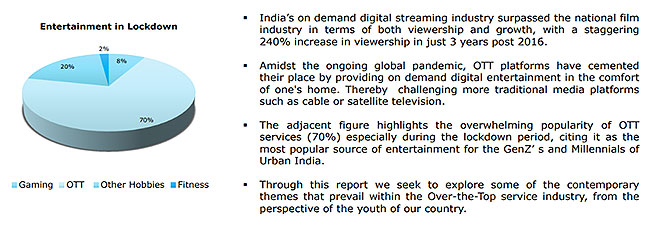
    Covid-19 has transformed the media consumption trends in India. Globally, streaming platforms gained in a big way since the pandemic struck and India is no exception. The report published by Dentsu Agies Network – “Now Streaming: The Indian Youth OTT Story” – is a study conducted among urban India’s Gen Z & Millennial reconfirms this trend. These trends could be reflecting behavioural changes of the two younger generations which are likely to last even after the cloud of pandemic shifts from the Indian sky. The highlights of the findings from the report are shown below:

    Source: https://dentsumarketing.cloud/dmcinsights.php


    As many as 74% of the respondents came from the Top 8 metros with 26% coming from rest of urban India. 47% of the respondents were male and 52.2% were female. 78.5% came from Gen Z (5 to 25 years) and 21.5% came from Millennials (25 to 39 years).  The report therefore cannot be taken as uniform trends across urban youths across India but trends which are visible among youths residing in the top 8 metros and mostly below 25 years of age. They are, however, the future targets of marketing and advertising in India.


    Average daily time spent in hours

    Gen Z Millennials
    On line Gaming 1.97 1.11
    Binge Watching 4.45 3.66


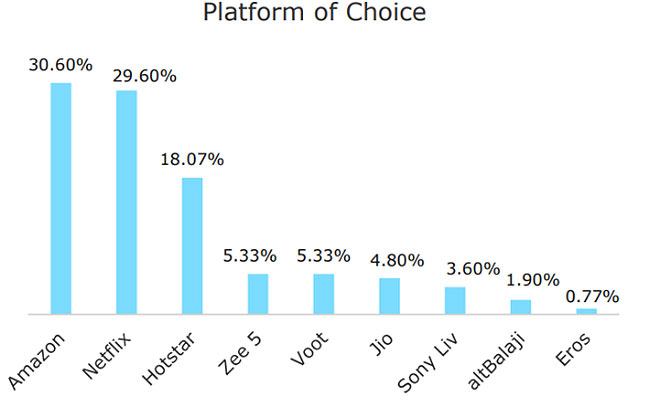
    Among the various OTT platforms, Amazon Prime and Netflix lead the pack, followed by Hotstar. The other OTT platforms are yet to build up significant presence among the Indian youths. Gen Z spends more time than Millennials both on gaming and binge watching on OTT platforms.


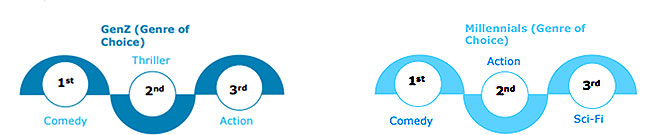
    The choice of genres by the two sections of youth explains the popularity of the top three platforms which offer more content as per their preference. Zee 5, Voot, Jio, Sony Liv, etc have less content to offer in the Comedy, Action, Thriller and Science Fiction genres. Amazon Prime, Netflix and Hotstar have also invested more in production of original content. However, the report has also shown that both in North and South India across different demographics the primary usage of OTT platforms were for viewing TV shows and movies.


    During the lockdown north Indian youths invested on an average in three OTT subscriptions than their counterparts in south India who invested on an average in two OTT subscriptions. The Gen Z invested on an average in 3 OTT subscriptions while Millennials invested in 2 OTT subscriptions during the same period. The report does not give details of the demographic profile of the sample, but we can safely assume that the sample was skewed towards higher SECs as indicated by higher spends on OTT subscription by Gen Z, most of whom would not have been financially independent and had to ask their parents for the subscription money. Obviously their parents were not financially affected due to the economic slowdown during the lockdown and could afford to indulge their children. The report therefore captures mainly the trends of OTT consumption of urban youths from 5 to 25 years age belonging mostly to NCCS A and the top 8 metros.


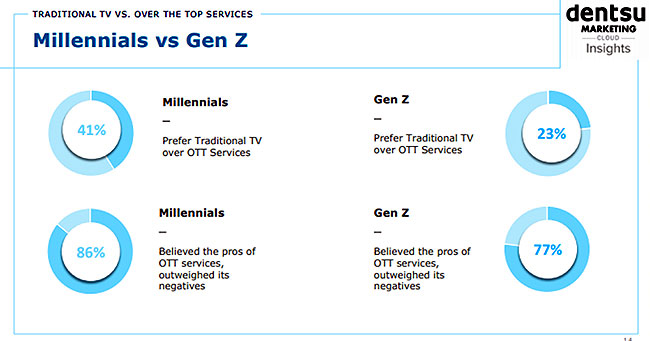
    The report has also captured that 73% have no concern about the content of the OTT platforms. The other 27% have stated obscene content, anti-national content, strong and bold language of the content as well as content hurting sentiments of religion/ caste as causes of concern related to OTT platforms. On the other hand all respondents had concerns about internet connections, pop-up ads and buffering related to steaming of the contents. Both Millennials and Gen Z have shown a clear preference for OTT services and believes that the positives factors outweigh the negatives.


    The report concludes that content distribution, attractive marketing, transitioning the gaming industry and personalisation are the key factors which is helping consumption of OTT platforms to dominate over consumption of traditional TV viewing. The analysis does not mention about the tie ups between OTT platforms and Telecom giants like Airtel, VI and Jio, a practice which began in 2017/ 2018 and has been continuing since then.


    As per the range of packages offered by the three telecom companies, it appears the leading OTT platforms do not believe in exclusive tie ups with any single telecom company and have created a level playing field for all the service providers by having tie ups with all of them. It seems this survey did not probe into this aspect of free subscription with mobile connection among the Gen Z and Millennials, most of whom would have been enjoying some such free benefits through a single sign in. The findings of the reports outweigh the apparent skewing of the sample and a few gaps and have provided all of us a crystal globe for gazing into the future of media consumption.


  • 65% of millennials & Gen Z prefer OTT over TV: DAN report


    By A Correspondent


    The Data Sciences Division of Dentsu Aegis Network (DAN) India has unveiled an OTT Insights report, ‘Now Streaming: The Indian Youth OTT Story’ under its specialist consumer insights wing Dentsu Marketing Cloud (DMC) Insights. The report covers deep findings of OTT content and gaming habits of the Gen Z and Millennial audiences from Urban India.


    India’s on demand digital streaming industry surpassed the national film industry in terms of both viewership and growth. With entertainment gone online coupled with a surge in online gamers, the pandemic has proven to be a fillip to the sector with consumers confined to their homes. With the Indian OTT base being pegged to triple this year, the OTT sector presents a huge opportunity for investment into video content and mobile gaming services.


    Here are the key highlights of the report:

    :: 49% of India’s youth spend 2-3 hours a day binge watching content.

    :: 4 hours is the average time spent in consuming OTT video content in a day by millennials and Gen Z.

    :: On average, people signed on to 3 new OTT platforms during lockdown.

    :: 65% of millennials and Gen Z Prefer consuming video content on an OTT platform over TV.


    Gautam Mehra

    Commenting on the launch, Gautam Mehra, CEO, DAN Programmatic & Chief Data Officer, DAN – South Asia said: “While a large chunk of India is a single TV household, affordable data and advancements in mobile technology has been a huge boost to the country’s growing online content and gaming consumer base. This, coupled with the effects of the lockdown has led to the dramatic growth of online video content consumers and gamers with a high increment of audiences coming from a very young segment of the population. The report reveals trends of platforms of choice as well as a growing subscriber base and supports our investments into our recently launched OTT Planner – DMC Video+ as well as the world’s first gaming DSP – Dentsu Play to support advertisers navigate their investments in this ecosystem.”


    The report has been unveiled under the unit’s specialist research wing – Dentsu Marketing Cloud (DMC) Insights. The DMC Insights offers an expertise-led model to assist Dentsu Data Sciences’ research & insights, consulting and practice teams in delivering differentiated values to our clients.


    Abhinay Bhasin

    Added Abhinay Bhasin, Vice President (South Asia) – Data Sciences and Head of DMC Insights, Dentsu Aegis Network: “With online video and gaming seeing the maximum growth of time spent during the lockdown, we recognize the need for an industry level research report to give a direction towards which this segment of the economy is moving. Moreover, with or sans crisis, understanding Gen Z and millennials will form a cornerstone of new age marketing given their growing spending power coupled by their ability to influence older generations. This report is but the first step from DMC Insights to deliver industry level insights on this audience covering their impact on various aspects of consumption and growth.”


    Link to the report: https://dentsumarketing.cloud/dmcinsights.php


  • 6 out of 10 Indian shoppers have downloaded streaming video apps: Criteo

    By A Correspondent


    Criteo, the global technology company powering the world’s marketers with trusted and impactful advertising, has released a survey on the results of the impact of Covid-19 on downloads and usage on apps. The report is titled as ‘App User Behaviour in 2020: India’. Criteo’s research saw that apps are now indispensable for users to shop, connect with their loved ones and entertain themselves.


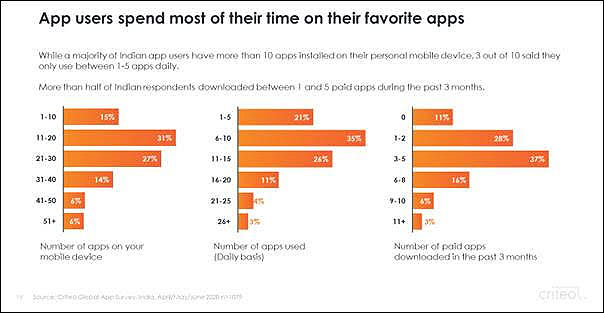
    According to the survey, two-thirds of Indian app users have downloaded a streaming video app to entertain themselves. The report highlights a change in online shopping trends as well. 45% of respondents downloaded a new retail shopping app in the last few weeks. 4 out of 10 respondents also said that they downloaded new apps for grocery/alcohol/food delivery in recent weeks.


    Key Insights:

    # 45% of respondents downloaded a new retail shopping app

    # 65% of Gen Z and millennials downloaded at least one video streaming app

    # 65% increase in downloads for social networking apps

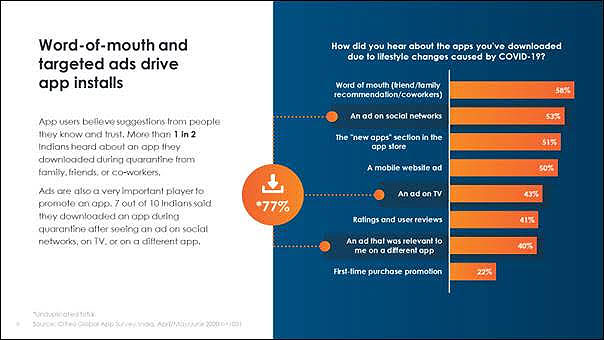
    # 7 out of 10 Indians said they downloaded an app during quarantine after seeing an ad on social networks, on TV, or a different app


    The report highlights that Gen Z and millennials prefer to use mobile applications much more than the older generations. They have a higher preference and convenience for using apps, and this is true across most product categories. They are seeking out more streaming entertainment apps and gaming apps. 65% of Gen Z and millennials downloaded at least one video streaming app whereas, only 56% of boomers downloaded the same. However, boomers downloaded the news related apps 3% more than the millennials.


    With people spending most of their time at home, 4 in 10 Indians have also increased their app usage by spending more time shopping. Social networking apps have seen the most heightened download number, 65%. Video streaming and video conferencing apps have seen a high number of downloads as well, 63% and 52%, respectively.


    Said Taranjeet Singh, Managing Director of South East Asia and India, Criteo: “From buying groceries and meals to home entertainment and workouts, apps have shown their versality to cater to varying audience segments to meet their needs and wants. Covid-19 has fundamentally changed the relationship between mobile users and their apps, elevating their importance to users due to their convenience during these times. We see that this could continue to be the trend even in the recovery stages after lockdowns as consumers have experienced and enjoyed the benefits of using apps. Brands and retailers will have to build up their presence in this area to stay competitive in the long term.”


    Advertising is an extremely important player to promote an app. 7 out of 10 Indians said they downloaded an app during quarantine after seeing an ad on social networks, on TV, or a different app. 58% of respondents downloaded an app because of ‘Word of mouth’ and recommendations of family and friends.


    50% of millennials and 49% of boomers said that they were most likely to delete the apps they have downloaded due to the lockdown. Whereas 79% of millennials and 83% of boomers said that they plan to make an in-app purchase they downloaded during the lockdown.

    The survey also revealed that in the last 6 months, the highest share of respondents downloaded a streaming video app (85%), music app (81%), and/or retail shopping app (79%). It also highlighted that younger generations are slightly more likely than older ones to download a paid app.

  • Fastrack’s new campaign showcases how Gen-Z is living the Q-time

    By A Correspondent


    To connect with its young TG, Fastrack Reflex has come up with a new video that showcases everything that Gen-Z is doing to keep up with their friends, family and followers in the Lockdown. Fastrack has taken it up a notch by documenting the significant change in their TG’s behaviour with the “What You Heart Now” video.


    Ayushman Chiranewala

    Said Ayushman Chiranewala, Marketing Head, Fastrack: “With the campaign “What you Heart Now” the brand laurels the attitude of never letting any situation inhibit the spirits of the youth. The young, outgoing, adventurous souls have made staying indoors happening and fun. Within the four walls of home, they continue doing what they are passionate about, be it socializing over group video calls, acing their coffee-making skills or making TikTok videos. To ensure we connect further to our audience, we have been encouraging them to share their in-house stories with us and tell us what their heart calls out for.”


    Puneet Kapoor

    Added Puneet Kapoor, Regional Creative Officer at Lowe Lintas: “The youth is the fastest to adapt and accept the new-normal of how our lives have changed through these lockdown times. The tsunami of fabulous content created in the last 40 days stands testimony to this. What one’s heart desires and how we’ve adapted in these times, has found such numerous expressions and that’s exactly where a Fastrack idea property of #WhatYouHeartNow sits. Kudos to the Shiv-Deepesh team at Lowe to have pulled this quirky content piece amidst the lockdown.”


  • Tinder celebrates Gen Z via #TogetherisEpic video

    By A Correspondent


    By looking at data from March to April, Tinder evaluated which cities and country members are virtually traveling to using Tinder’s Passport feature, and which cities are frequently interacting with each other.


    Said a spokesperson: “The pandemic has blurred the lines between digital and physical lives, and Gen Z is finding new ways to connect despite the odds. There is something to say about the power of digital connection and shared social solidarity while facing uncertainty. Our members have found virtual ways to replicate all the human interactions missing from our daily lives; cooking dinner together, Passporting to other cities to check in on each other, having a virtual date-night, it shows us how #Togetheris Epic.”


  • Wrogn Active says, #GetoffyourAss

    By A Correspondent


    AB de Villiers and Virat Kohli recently engaged in a Twitter banter announcing the launch of Wrogn Active. The campaign focuses on one simple message – #Getoffyourass and has been targeted towards millennials and Gen Z. The South African cricketer is the face of the brand and he launched the initiative recently.


    Notes a communique: “The campaign focuses on spreading the message that physical activity is needed to be fit and active. Wrogn’s signature non-conformist has approached to create a look that blends fitness and fashion in a way no other active wear brand can.”


  • Kantar’s #PlanetY provides actionable insights on engaging with Gen Z

    By A Correspondent


    Kantar has launched #PlanetY, a study providing an nderstanding of the attitudes, values and behaviour of today’s youth. The study uncovers insights of two generations – Centennials and Millennials; based on interviews with over 7500 upmarket youngsters (15-29-year-olds) across metros and mini metros.


    Talking about the study, Hemant Mehta, MD, Insights Division, South Asia, Kantar, said,:“Centennials and GenZ are increasingly becoming key consumer segments for the marketers. Selling to the youth is a challenge faced by every brand today. With youth leading their lives online and through their smart phones, it is imperative that marketers understand the various touch points in their target consumers’ lives as well as decode the distinct roles that different digital properties play.  This led us to design a comprehensive study like #PlanetY which tries to decode this consumer segment in a never before seen level of granularity. We are confident that this will help marketers understand their young consumers better and connect with them innovatively.”


  • Centennials at 21


    By A Correspondent


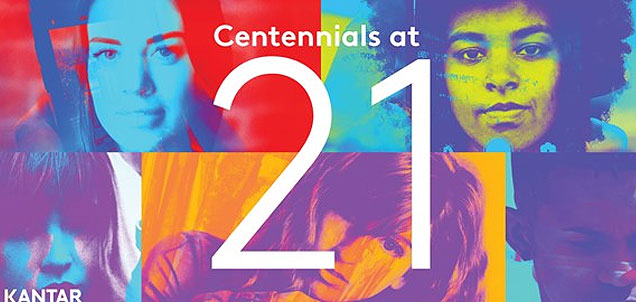
    Centennials, aka Gen Z, have already eclipsed Millennials as the global cohort driving trends and pushing industries forward, and they’ll soon be a core consumer group across a variety of categories. As the oldest of the generation turns 21 this year, Kantar’s latest report shows how critical it is for brands to keep pace with their values, beliefs and expectations to avoid being left behind.

    While Millennials are loosely defined as those born between 1980 and 1996, Centennials are those born after 1997 (to present).

    There are no special numbers available for India, but we are sure that the insights wouldn’t be dramatically different for the urban set. It will be data on the rural, not very highly educated that would be interesting to read.

    Representing 35% of the global population, Centennials have become an economic powerhouse with a growing influence on spending and brand loyalty. Kantar reveals a generation that are:

    Digitally dependent, yet conscious users of technology

    :: Centennials pick up their smartphones up to 30% more than over 21s and spend up to 35% longer on their devices during the day. Yet just over a third of global Centennials believe they use their phone too much.

    :: Centennials across France, UK and US are even more tied to their smartphones than the millennial cohort: on average Centennials spend 2.40 hours daily on their mobile device compared to an average of 2.12 hours by Millennials.

    :: Centennials are quick to move on if a brand experience doesn’t provide what they want or need; 62% will not use an app or website that is hard to navigate, and 63% say they’ve installed an ad blocker on their mobile phone or desktop.


    Increasingly influential on family purchasing decisions

    :: Families are looking to their youngest members to gather product information, compare reviews and advise on the purchase process; up to three quarters of Centennials report influencing major family spending decisions.

    :: This trend is most prevalent when looking at purchasing decisions made across the food and beverage (77%), furniture (76%) and household goods sectors (73%).


    Using social media differently from previous generations

    :: The way they use social sites differs from previous generations, with Facebook used by Centennials for on an average of 11 minutes per day, compared to Snapchat (30 minutes), Facebook Messenger (28 minutes) and Twitter (22 minutes).

    :: Online, Centennials are more likely to identify with their social media personas than other generations, with 61% admitting that the things they post say a lot/something about them, compared to 56% of Millennials.


    As Centennials age into young adulthood, they will reshape categories and upend industries. Understanding this generation’s values and motivations is key for brands as Centennials take the reins and drive global markets.


    The report summary can be downloaded at http://www2.kantar.com/l/208642/ials-at-21—Kantar-Report-pdf/821dx