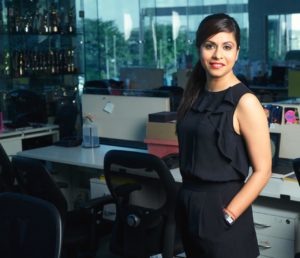
Sonia Huria, Head of Corporate Marketing, Communications and Sustainability for Viacom18, will move to Amazon Prime Video to lead all communication efforts for its India business. Huria will be a part of the global communications team – leading PR and Communications for Amazon Prime Video in India. She will report to Tobias Tringali – Head of Amazon Prime Video PR Asia Pacific & Canada who is based in Seattle.
Widely regarded as one of the most influential PR heads in the M&E space, Huria has moved up the ladder at Viacom18 from heading PR for Colors in 2008 to the entire Viacom18 brand portfolio including corporate and then the key roles of corporate marketing and sustainability.
In the areas of sustainability, Huria successfully created a model of multi-partner-funded behaviour change communication content at Viacom18… from the Navrangi Re! series to the more recent MTV Nishedh. In addition to managing internal and external communication, she also spearheaded trade marketing and digital media for the organisation.
Huria serves as a managing committee member at The Advertising Club. Under her leadership, Viacom18 has won several awards on the global and India stage. She has been featured in Impact magazine’s Top 50 Women Leaders in Advertising, Media & Marketing for four years in a row.
 At 9pm primetime today (November 19), when you otherwise tune into your favourite soap or reality show or news, well, hour, there’s a new channel going to be born. Epic. What has set a lot of attention on the channel is the nature of its content and the people backing the initiative.
Spearheaded by Mahesh Samat, Managing Director, Epic Television Networks Pvt. Ltd., this is the first genre specific Hindi entertainment channel that will showcase content based on Indian history, mythology and folklore in a uniquely contemporary format. Industrialists Mukesh Ambani and Anand Mahindra and impresario and restaurateur Rohit Khattar are co-promoters of the venture company.  The programming line-up has a mix of fiction and narrative non-fiction shows, short-form content as well as films at launch.
Excerpts from an interview with Mahesh Samat by Shivani Jain for MxMIndia…
There is already a glut of channels in the market telecasting a wide gamut of programmes in the general entertainment and infotainment space. Do you think there is still room for a channel dedicated exclusively to Indian history and mythology?
Yes, we found that the few mythological and historical programmes being telecast currently have a huge following. This, in fact, was the genesis of Epic. Our relationship with our history and mythology is in our DNA. We are emotionally connected with it, more than any other country. So this opportunity was waiting to happen.
It has taken you’ll a long time to launch the channel. The announcement was made a year back. Was this due to issues on clearances from the government, or…
The issues with the previous government and approvals have been well-documented. I don’t want to spend too much time discussing that. The new government has been really helpful. We have got our approvals. And we are moving on.
… or was it the programming. Did that delay the launch?
There is no doubt that programming does take time. But the delay was due to some unavoidable extraneous circumstances. The main thing is Digitization has improved and viewers have become more attuned to different kinds of content.
All TV channels needs deep pockets, but a channel like Epic needs super deep ones given the nature of your content. How has the journey been for you so far?
I think we are trying a whole different model of television. We have to remove the current, existing models and get into new age. We had a business plan and we are with the business plan. We’ve had promoters who are very supportive.
And some very high-profile promoters indeed. How has it been working with Messrs Ambani and Mahindra?
There are actually three promoters. Mr Rohit Khattar is the person who is involved more directly with the business. He is the chairman of Epic. Mr Anand Mahindra and Mr Mukesh Ambani are relatively less involved. So we work with all three. Rohit being the chairman is more involved.
And how participative are the three?
It is varying degrees of involvement. Obviously, they are very busy people. Their involvement is limited to that extent. By the way, both Rohit and Anand are old film buffs. Rohit has the largest collection of film memorabilia which had gone to Venice and a couple of other places. And Anand himself is an undergraduate in films. His subject in Harvard was films, if I am not mistaken. They all have a passion for it. But operationally, Rohit was the one most involved.
When do you see the channel breaking even?
Sorry, we don’t disclose those figures. I think we are on track with the business plan.
What about viewership? Given the emphasis on getting the right ratings, what are your expectations on viewership?
I am very clear that we are not a general entertainment channel. So we should not be subjected to the standards and discussions that GECs have. Our reach will be lower, our ratings will be lower because it is a certain genre, a certain…
A certain niche…
No, it is not niche. I don’t like the word ‘niche’ because niche makes it too small. Let’s start looking at a third word which is ‘segmented’ which looks at a chunk of the market, but not the whole market.
What has been the feedback from advertisers thus far?
I think they are all very interested. Given that it’s a new concept, they understand the positioning, the story of differentiation, the story of segmentation.
You have come from Walt Disney, which is a totally different world?
Really, is it? So if you step back and see…Disney is a brand, a brand for kids. What we are trying to do here is become a brand in history and mythology entertainment. I think all my experiences of building brands over the last few years are proving to be useful here.
So did it require a lot of reorientation on your part?
I don’t think so. It’s an area I am familiar with – media and entertainment. Hopefully, our programmes succeed and become brands. If you look at global examples of channels like Discovery, Disney, even AXN, Comedy Central, you see examples of brands being set which are by genre type of content. And that’s what we are doing here.
Tell us a little about your flagship programmes or driver shows?
They are all flagship programmes. We have Siyasat, DharamKshetra, Daanav Hunters, Adrishya, Ekaant, Raja Rasoi aur Anya Kahaniyaan. We also have a couple of comedies. For instance, we have Javed Jafri taking a light look at the films of the 1970s and ’80s. Watch them all on Epic.
Star India has announced the launch of its second Kannada general entertainment channel to be called “Suvarna Plus”. Suvarna Plus will go on air from Sunday, July 14.
The idea behind Suvarna Plus is to create content which acts as a stress-buster and the content offering will be movies, comedy fiction shows, reality shows, chat shows, film-based shows and Music. The channel will also offer shows like Campus Connect which target the youth.
Said K Madhavan, MD, Asianet Communications Ltd,” With the launch of Suvarna Plus, we intend to increase our dominance in Kannada GEC market. Karnataka has been a key market for us, we are buoyant and see huge potential in the Kannada television space. Suvarna has been offering wholesome family entertainment to Kannada homes and is the leader in prime time. Suvarna Plus is our new offering which will have a new perspective in terms of entertainment. Both these channels will have distinctive content offering.”
‘Masthi Swalpa Jaasthi’ is the tagline of Suvarna Plus capturing the basic tendency of humans to get ‘A abit more’ in everything as it promises the viewer the ‘something extra’ in terms of entertainment.
Suvarna Plus comes six years after the launch of Suvarna which has women as its core audience. The GEC offers popular shows like Amrutavarshini, Kannadada Kotyadhipathi (the Kannada version of KBC), etc.
Star Plus has maintained its lead as the top Hindi GEC in Week 35 in the weekly ratings made available to MxMIndia from an industry source. Star Plus scored 264 (265), whereas Colors secured 245 (258) and Zee was at 227 (237). Sony was a distant fourth at 210 (211). Sab and Life OK were tied at 132 (126 and 125 respectively). A highlight of the week was Balika Vadhu’s special episode on Thursday which generated 6.4 TVRs, the highest on HGECs in the week.
Please note that the information has not supplied and verified by TAM Media. However our source is reasonably reliable. The figures in brackets indicate ratings of the previous week.
In a cluttered TV environment with increasing content sameness and fatigue, factual entertainment channels are a refreshing “window to the world”, with unpredictable, spectacular, high end productions. But with the number of infotainment channels on the rise, it’s important, we feel, to re-look at factual entertainment as an alternative experience to general entertainment.
Production Style
Factual channels need to change the production style to make the content more entertaining, interactive and accessible. History TV 18 has broken the documentary “all-knowing voice of God” format with shows like Pawn Stars, Ice Road Truckers and a competition show like Top Shot. Where the content is not shying away from information, but presenting it in viewer friendly, character-driven reality format.
Characters
Television across the world is driven by iconic characters. For the longest time animals took centre-stage. There is already a move towards characters becoming the defining face of channels like Bear Grylls on Discovery. But it’s important for these characters to evolve further and break away from repetitive formats.
Unlike other channels, factual channels need to create identifiable characters out of everyday people, doing extraordinary things. And it’s not enough to just build these characters but to use them creatively to convey information to the viewers.
Drama
Why should drama only be the forte of a GEC? Factual entertainment channels should take the lead in creating high quality drama that is not there just for drama sake but to bring alive themes from history, science and survival. History TV18 is taking its first step towards that with an Emmy award winning drama series called The Kennedys. The series is very well-researched, hasHollywoodgreats like Katie Holmes and is a big budget production.
Dubbing in regional languages has been the primary means of reaching out to larger viewership inIndia. It’s important now to review the kind of experience this dubbing provides for its viewers. Languaging that creates a context for the aspirational regional Indian viewer is important. It is also important to go beyond dubbing to also use short formats, promo styling and other creative TV devices to make international content relevant and “belong” to the Indian viewer.
Ritu Kapur is the Programming head at A+E Network, TV18
What is it about the dark side that attracts us? A glance over any newspaper or news channel will tell us the increased attention being given to the gruesome incidents.
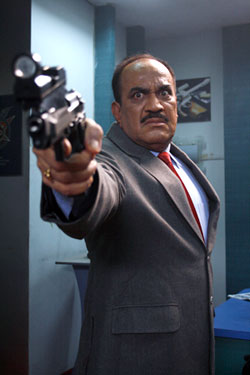
The media, especially the television which is a reflection of the society, has reflected this growing interest with the increasing popularity in the number of the unglamorous, and sometimes, gory crime shows. From Karamchand in the 80s on DD to the latest Gumraah on Channel V, most crime shows have done well and have been able to garner an interest that other genres might not be able to. The longest running show on the Indian television, CID, is a crime show which was started in 1998 and recently turned tri-weekly.
Speaking about the show’s success, Sneha Rajani, senior EVP and business head, Sony Television, said: “CID has been doing well for years now; it’s not a recent phenomenon. On an average, the show gets TVR of 3.3-3.5, and sometimes even goes up to 4.5. So, it’s no surprise that show has its share of viewers, as week after week people switch on their TV sets to get inspired by the bravery and the relentless passion of CID against crime.”
Popular Crime Shows
Karamchand – 1980 – DD
CID – 1998 – Sony
India’s Most Wanted – 1999 – Zee
Aadalat – 2010 – Sony
Gumrah – 2012 – Channel V
According to industry experts, most GEC experiments with crime shows have been successful – some have garnered a little interest and others have gone on to become national hits like Adaalat and India’s Most Wanted.
Such crime shows consist of an economically viable format – no huge sets, no major actors, no glamorous outfits or expensive judges are required – hence, the channels don’t mind investing in them.
Janardhan Pandey
Janardhan Pandey, associate vice president, DDB Mudra Max feels that apart from reality shows, only crime shows have the ability to create sensationalism and that’s the main reason people are attracted towards the format. “People want to know what’s happening around them. And these shows are able to portray facts through dramatization, without costing too much for the channel.”
‘Curiosity killed the cat’ is the apt reason why crime shows work on television according to Anand Chakravarthy, executive vice president, Marketing, RBNL and business head, Big Magic. “Crime, as a genre, has an extremely wide appeal, irrespective of the country. In a developing nation likeIndiawhere crime and corruption are a part of the societal fabric, the audience is most likely to appreciate televised content in the genre.”
Anand Chakravarthy
He added: “The fascination with the morbid and intrigue that the genre provides work across a cross section of audience, regardless of age and gender, making it acceptable to a larger and diverse audience base.”
However, the question which still arises is – aren’t such shows the figment of the writers’ imagination? The writers of such shows may choose to disagree about the authenticity. “Though some might say they are a writer’s figment of imagination, but in reality, newspaper reports, sometimes even FIRs and investigations done by channels help us gather facts and details about various cases,” said a writer with a national GEC.
According to Priti Murthy, national director – Insights, Maxus, crime shows attract not only the middle-aged, but a large number of youth too. “Crime cuts across genres and finds a large number of youngsters hooked on to the genre like action, thriller, and crime. One could say it gives them adrenaline rush.”
Prem Kamath
Channel V recently launched a teen crime show, Gumraah, which has became popular for its disruptive format and unique viewpoint of understanding the psyche of young criminals. “V’s Gumrah, in its second season now, details the ecosystem in which a teen crime is conceived and the extraordinary circumstances that lead to it. The show has had an immense impact on us, in terms of viewership as well as vindicating our research and understanding of the youth. We have seen a tremendous response in terms of feedback and appreciation on social media and other consumer responses. It has also further encouraged us to try bolder formats and continue on our chosen content strategy,” said Prem Kamath, Executive VP and GM, Channel V.
Most crime shows do attract a large number of eyeballs, but most GECs also claim that it’s not about entertainment alone; they are helping the society as well. “As for adults, and specifically parents, this show is an eye-opener: if one neglects their child’s need for attention or dismiss it as juvenile behaviour, it can have serious repercussions and lead to moment of madness, eternally irreversible,” added Mr Kamath.
“Shows such as Police Files (aired on Big Magic), while showcasing crimes from the region, also attempt to educate and empower the viewer. The depiction of the crimes help the viewers to understand and accept the need to be vigilant in safeguarding themselves and their loved ones. The information imparted by way of applicable laws of the Indian Penal Code, safety tips by experts and NGOs help empower the viewer,” said Mr Chakravarthy.
So, if one has to go by what industry experts have to say: it’s entertainment with awareness that makes one switch on their television sets to watch crime shows. Â Whatever be the reason, the channels can surely say that ‘crime pays’!
Launched 16 years ago as a music channel, Star India’s Channel V is now turning into a full-fledged youth entertainment channel. Starting July 1, V will stop airing music programmes in India and focus on fiction and non-fiction shows. The reason: “Over the last two years, there has been an explosion of ‘music only’ channels, but everyone’s playing identical playlists,” says Prem Kamath, executive vice-president and general manager at Channel V. “In order to grow as a channel and as a brand, it has always been critical to have an offering that is unique in our competitive space,” he adds on being quizzed on the decision.
Many experts feel that it was bound to happen as more and more channels try to mould themselves to stay connected with what their target audience wants. But there many questions arise: could this mean the beginning of the end of music on TV? What is the future of music genre? Where is it headed?
The beginning
The scene for Indian music channels was set with the launch of MTV in the early 90s. Soon after, Channel V was launched in 1994, and since then there has been no looking back.
The launch of these music channels also led to a boom in international as well as Indie pop culture. However, it was shortlived and Bollywood music took over, and the two channels, along with many other launched afterwards, started playing popular filmi songs. But over a period of time, these two channels moved beyond playing only music with shows like Roadies, Splitsvilla and Dare 2 Date.
Hemant Kenkre
According to music columnist Narendra Kusnur, somewhere down the line for these channels, music took a backseat: “I’m sure any channel would do thorough research while trying to change their gameplan. So, if a music channel shifting towards being a youth entertainment channel is proved beneficial – for viewership as well as revenue – then it wouldn’t harm them to take such a step.”
He’s not alone in voicing this. Even Hemant Kenkre, a former music channel professional and a corporate and brand communications veteran, feels that channels are now branding themselves differently to reach out to their TG. He, however, does blame the availability of music on various platforms – radio, cellphones, laptops, iPods – as the reason for this shift. “Today, the youth is moving towards reality shows and they want it from the channels meant for them. As for music, they get their share of it from other mediums too.”
Luke Kenny
Former VJ, musician, actor and 9XO programming head Luke Kenny, on the other hand, feels that the channel (Channel V) decided to shift long back and has been moving slowly towards it, but there are still many who want music on television. “If music was dead on TV, then how would you explain other new music channels cropping up and doing well too?”
He added: “Having said that, I do believe that with more channels showcasing Bollywood songs, music channels have lost their niche and have just became promotional channels. Therefore, if a channel decides to change colours, it might work. And you never know, Star India might come up with a new music channel called Music OK.”
Industry talk
If one takes a look at various channels, be it music or a GEC, they will find that, there is a great deal of music in some or the other. We have music trailers/songs aired across all channels. Award shows, too, have musical performances and talent shows like Saregama, Indian Idol, DID and even celeb dance show Jhalak Dikhla Jaa are high on ratings.
Mohit Joshi
Therefore, according to media planners, the existence of specialised music channels is a difficult game. “Today, unfortunately for the masses in India, music equals to Bollywood. This is the challenge. This was not the case in the ’90s when there were a lot of private music albums that were launched -Silk Route et al, and the music channels were used for their amplification. So, there was something more than Bollywood, which is not the case today. In the current scenario, if music channels do not experiment with music or the content, then there is a fear that they will dilute their relevance over a period of time,” says Mohit Joshi, managing director, MPG India.
Adds Carat Media India’s senior VP Himanka Das: “Channel V’s decision to discontinue music is a welcome change and would offer interesting opportunities to build engagement content with the youth, considering the very little content that is available to them in entertainment beyond music. Music as a genre gets 6-7 per cent share in the youth segment of viewers with Channel V contributing 24 per cent to this share amongst 20+ channels. Channel V vacating this space is someone else’s gain!”
Punit Pandey
Meanwhile, other music channels aren’t perturbed and are waiting to see how the channel is accepted in its new avatar. As per TAM (CS4+, All India market), there has been a consistent growth in the music genre. In 2007, the genre share of music channels was 2.02 per cent whereas in 2012 (till week 24) the share has grown to 3.62 per cent.
Punit Pandey, senior VP and business head, 9X Media Group, agreed with Mr Das and added: “Music has, and will continue to, work on television. It is close to a Rs360-370 crore industry (in the HSM belt) and growing. More and more people are ‘watching’ music, so there is nothing to worry about for music channels at large.”
Nikhil Gandhi
Similarly, the view from UTV Bindass which started out as a Youth Entertainment Channel (YEC) and has been a pioneer in the segment is that though in the recent past music channels, especially MTV and Channel V, have started shifting focus from music to fictional and non-fictional shows, there is no reason for sleepless nights. “We have an advantage over other channels entering the YEC genre as we have already created a connect with the TG,” says Nikhil Gandhi, Disney UTV Executive Director – Youth Channels, Media Networks. And adds an alert: “So, I would like to tell other channels entering the YEC genre to work on their strategies well.”
Apprehensive marketers?
The change in positioning is due to the feeling that youngsters now have a strong spending power. And, hence, are targeted by various brands more than ever before. TV forms a core part of advertisement for these brands as youngsters also spend a lot of time in front of the television sets.
Simeran Bhasin
But what happens to youth brands if a channel changes its content strategy? According to the various marketing heads, the apprehensions will emerge if the channel isn’t clear about the shift and isn’t able to help a brand reach its TG.
“If the TG of a brand matches that of the channel, it won’t matter if they decide to change over a period of time. However, if there is a shift in TG then a brand would think twice before advertising on that channel,” says Simeran Bhasin, head – Marketing and Retail, Fastrack.
Harkirat Singh
MTV’s latest show Sound Trippin was partnered by Woodland because the brand feels that youth oriented channels helps them reach their TG. However, the brand is clear that it get associated with channels or shows only if it feels there is a connect between the brand and the viewers. “Like any other brand, while media planning, the TG of a certain channel is important for us. We look for shows which are able to reach and connect with our TG. So, if a channel changes its content plan, we will want to go through their new strategy to figure out where do we figure and how it can benefit us,” says Harkirat Singh, MD, Woodland.
Will the shift work?
According to the industry professionals, the change in content plan by a channel is done after a lot of research and only time can decide if it will work in its favour or not. However, they believe that a channel should remain true to its philosophy because otherwise it will lose its identify as well.
Samyak Chakrabarty
Expanding on it, Samyak Chakrabarty, MD, Electronic Youth Media Group and Chief Youth Marketer, DDB Mudra Group believes that ‘youth’ is a very misunderstood word and youngsters cannot be defined in one category as all depends on the exposure and the background one comes from. “In their perception to become ‘youth’ channels, they are getting muddled up and don’t know where they are headed. Today, a youngster cannot associate MTV or Channel V with anything like they do for other brands. For instance, technology means iPad, connectivity means Blackberry etc. I think music channels should have remained with what they started as, instead of losing their identify to gain more TRPs. Such moves will only lead to their downfall, in the long term.”
From being largely optimistic to one predicting a downfall, we received mixed reactions to the proposed change in Channel V’s identity. However, one thing is clear, no matter what Star India decides, there will be many who will wait to see what this mean for them and the genre, at large.
In India there is no dearth of television channels. The competition is only growing and the race to lead in the TRP race is heating up. In the past few weeks, the two channels which seen an increase in their TRPs are Life OK and SAB TV which have been fighting for the fifth spot in the TRPs race.
Life OK, the newest entrance in the GEC genre from the Star India stable, was launched in December last year. The network renamed and re-launched their youth-oriented channel Star One with new tagline ‘cherishing what you have’.
On the contrary, SAB TV has been around for over a decade now but has gone through various transformations. In March 2005, SAB TV was acquired by Sony Entertainment Television and was transformed into a youth-centric channel. In June 2008, the channel announced that it would return to its roots by being repositioned as a comedy-centric channel.
So what does the race for TRPs mean for the two channels and do they pose a threat to other GECs? MxMIndia spoke to a few media planners to see what is the future of the GECs and what shape will this ‘war’ take.
According to the latest TAM data, in week 24, SAB TV has toppled Life OK and regained No 5 position. Whereas, last week (week 23), Life OK was the fifth most watched GEC.
Sundeep Nagpal
Sundeep Nagpal, founder director, Stratagem Media feels that these are momentary fluctuations and cannot be contributed to anything per se. “These channels have a small base; therefore, even a single factor can affect the ratings of the show – positively or negatively – depending on how it did on a particular week. Hence, I don’t think we should be alarmed by such fluctuations. And they won’t be able to impact the top 4 slots.”
The two channels have positioned themselves differently, too. SAB TV is a comedy-centric channel which portrays itself has a family channel, whereas Life OK has shows full of melodrama like other GECs.
Janardhan Pandey, associate vice-president, DDB Mudra Max feels that the two cannot impact each other drastically. “SAB has its own set of audience which won’t get influenced by other GECs and vice-versa. They will continue to do well in their own categories; the fluctuation between the two is possible but they don’t have the same hold as other GECs do. They still have a long way to go.”
Jai Lala
On the other hand, Priti Murthy, national director – Insights, Maxus, feels that though these channels might be still small fish, they cannot be ignored entirely. “Like these two channels, even number two and three slots have been fluctuating for a while now. So, slot five and six can create an impact too. One cannot rule out the possibility of them gaining to higher positions in the future if they come up with new and better content.”
On the channels growth, Mindshare’s principal partner, Jai Lala feels that the two channels have grown since Imagine TV, a Turner International India Pvt Ltd entity, was shut down earlier this year. “The shutdown of Imagine TV has benefited these two who are now turning out to be competitors. However, they still have a small base compared to others and unless and until they cross the 200+ threshold, I don’t think that they can or will affect the channels like Star or Zee or Sony which have been ruling the top slots in the TRP race for a long period of time.”
Uday Mohan
“While these channels are doing well they have a long way to go in terms of reaching the numbers of the mainline GECs. They still don’t have the kind of appointment viewing that the mainline GECs generate….they might eat into the shares of other frequency channels but will not threaten GECs, at least not immediately,” added Uday Mohan, executive director – North, MPG.
Most experts believe that there is nothing to be alarmed about the two channels see-sawing. What they do feel is that both the incumbent SAB and challenger Life OK will have to work harder if they want to reach the top slots.
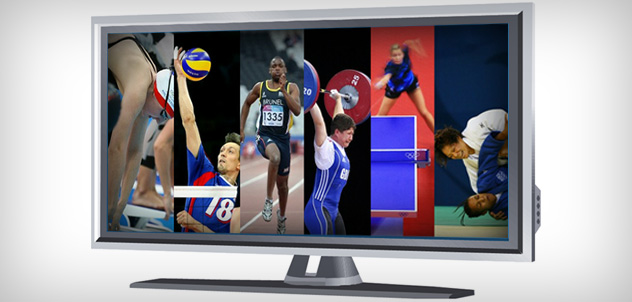
The UEFA Euro Cup has made the Europeans forget all about the economic crisis; London, along with the whole world, is eagerly waiting for the world’s biggest sporting event – the Olympics – to begin. The world is buzzed about the various sporting events coming up in the next few months.
Sports, around the globe, generate a major interest and channels – sports or otherwise – fight each other out for viewership and advertisements, and brands try to out-do each other through advertisements and activations to leave a mark on the public’s mind.
The last event of such a stature in India was the recently concluded IPL which saw the entertainment channels fighting for eyeballs. With the next three-four months choc-o-bloc with sporting events, MxMIndia takes a look at how channels in the country are gearing up.
Event
Period
Channel
UEFA Euro Cup
June 8- July 1
Neo Prime
Wimbledon
June 25-July 8
Star Sports
India-SL series
July 22- Aug 7
Ten Cricket
Olympics
July 27-Aug 12
DD/ESPN or Star Sports
Time to worry?
According to the media planners, for GECs and other channels, there is nothing to worry about. “Non-cricket fare is still appealing to a small niche segment and hence, its popularity is not reflected in ratings. India in the months of Jul-Aug has always been a moderate performer and not as high profile as some others and so this will also not have a major impact,” feels Shubha George, COO -South Asia, MEC.
Suresh Balakrishnan
And she is not alone. Suresh Balakrishnan, CEO, Brand Programming Network, agreed with her and added that though cricket is more than a sport in India, even IPL, which has both cricket as well as entertainment and was telecast at primetime, hasn’t been able to affect channels, especially the GECs in the recent past. “Lately, IPL has been able to get a rating of 2-3 which has hardly affected any GECs, so I’m sure other sports won’t matter to them at all. However, there is no denying the fact that viewership for other sports is increasing in the country. And major events might be able to at least reach the ratings which cricket gets, in the coming years.”
Mr Balakrishnan, however, feels that sports channels don’t have much to worry about as there are many male-focussed brands which help them generate enough ad revenue. “Having said that, I also feel that channels showing sports other than cricket know that recovering money isn’t an easy task,” he added.
The television behaviour showcases the interest of the masses which obviously tilts towards popular entertainment channels. However, most media planners agree that sports viewership is growing in the country and soon things might change but until then channels will have to make do with what they have/get.
Amin Lakhani
Amin Lakhani, principal partner, Mindshare said: “All leading newspapers and news channels have special coverage of important events, take Euro Cup for instance, but how much of it is being converted into viewership or readership? Even then, that hasn’t deferred them from covering the events because they know that, though tiny, there is a loyal following. Even brands are doing activations for sports which are gaining popularity in other sectors apart from Sec A&B – Pepsi is doing activations for football.”
Business as usual
Akash Chawla
Entertainment channels continue to enjoy the largest share in the viewership pie. Although, they continue to compete with each other, when it comes to other genres, nothing has been able to write them off.
Akash Chawla, Zee Entertainment Enterprise (ZEEL) marketing head – national channels, said: “Just like IPL, we are ready to combat any other sporting event. Our programming strategy does not depend on these events.”
“For us, it will be business as usual. The channel is backed with strong and fresh content for its viewers, irrespective of the programming on competing genres,” said Hemal Jhaveri, general manager, Movies Ok.
Hemal Jhaveri
Other genres which focus on the same target audience as the sports channels are youth and news. But many in these genres believe that such sporting events don’t affect their viewership. Nikhil Gandhi, executive director, youth channels, media networks, Disney UTV claimed that most of the sporting events attract a majority viewership of urban youth, whereas they, as channels, focus on the HSM belt which includes 62 cities. Hence, such sporting events won’t affect their viewership.
A broadcast veteran from a Delhi-based news channel too felt that news channels give enough coverage to the various sporting events, so there is no question that the events might eat into their viewership pie. He said that though both cater to the same TG, they are different genres and people might shift between the two, if needed.
Nikhil Gandhi
On the other hand, Neo Prime, the sports channel which is currently telecasting UEFA Euro Cup 2012, is aware of the competition within and between other genres and risk involved, but is still optimistic. “Sports is still a male-dominated genre, whereas other genres (read GECs) enjoy female viewership. But during big events, there are chances of a shift in the remote control. Sports do get eyeballs. And as for the advertisements, the brands which advertise on sports channels are different from the ones in GECs or other channels. Hence, nothing overlaps each other,” said Prasana Krishnan, COO, Neo Sports Broadcast.
Prasana Krishnan
Hopefully, as said by various media personalities, sports other than cricket in the coming years will be able to generate same interest among Indian citizens across sections and help sports channel to boom and enter the main TRP race as well.
 Imaging: Rafiq, Pictures courtesy: London2012.com
1. Historicity – General Entertainment Channels (or GECs) were the first and the main channels which started the TV culture in our country – Doordarshan (DD), then Zee, then Star. In fact, all other channel genres – news, sports, kids, music, etc. – started off as sections within main GECs before being spun off separately. However, GECs have remained the main draws, the big brothers and the bouquet-drivers in the TV business.
2. Mainstream Entertainment Quotient – In an entertainment-crazy nation fed on Bollywood and other escapist fare, GECs provide the most broad-based mass-appeal entertainment platter (think ‘Thali’!) that aims to please most, if not all, of the TV audiences, unlike more niche options targeting smaller audience groups.
3. Targeting Remote Controllers – Among various TV audiences, GECs have traditionally targeted the middle-class, middle-aged women the most, who form the largest and most loyal TV viewing group. Long-running soaps and popular well-tested formats ensured repeat viewing of this core audience. And the fact that most Indian households are single TV homes ensured that GECs won over other channels during primetime by targeting the folks who controlled the TV remote at those hours. The creation of the afternoon slot also resulted from targeting this audience group, further consolidating the lead of GECs.
4. Resource Prioritization – As GECs were historically the bigger TV channels, media owners as well as advertisers put greater focus and energy on continuing their success, hence dominance. The biggest production budgets, the slickest marketing campaigns and the biggest stars (think Amitabh Bachchan, Shah Rukh Khan, Salman Khan, Aamir Khan…) all were marshaled to make GECs bigger and stronger. Success perpetuated more success.
5. Biggest Innovations / Breakthroughs – While a number of GECs continued to play safe and repeat successful formulas (remember the Saas Bahu serials?!), the high stakes game in the GEC genre also ensured that the biggest innovations and introduction of breakthrough formats also happened on GECs (think KBC and Satyamev Jayate). This ensured that more often than not, it was a GEC that benefited from a positive discontinuity in Indian television (IPL is perhaps one exception).
In 2008, when general entertainment channel Colors, was launched by Viacom18 – a joint venture between Viacom Inc and the Network18 Group, there was much promise of a new spectrum of emotions and entertainment. While there were high profile reality shows on offer, the one serial that caught everyone’s attention was Balika Vadhu, a story of Anandi, married off in a rich family as a child. The show will complete 1,000 episodes today (May 14), a feat not many shows have accomplished in the Indian television industry.
Ashwini Yardi
Balika Vadhu show caught everyone’s attention because of its simple story and real emotions. Anandi captured the hearts of millions, making it the No 1 show at that time slot. Talking about Balika Vadhu, former programming head of the channel, Ashwini Yardi recollects: “It is the only show I said yes to in 30 seconds. Balika Vadhu is a cult show that portrays the journey of a child bride into womanhood. Even when the channel was launched, the show wasn’t promoted or marketed as much as the other shows. So, it has achieved everything on its own.”
Child marriage isn’t something new, many young girls and boys are forced into it even today and the government and activists have tried to curb this social evil. Through the show, the writer and the channel wanted to convey the side-effects a child marriage can have on one’s life.
Purnendu Shekhar
“The realism in the characters and storyline is what made the show connect with its audience. We have never compromised of the plot and concept of the story to gain TRPs. Balika Vadhu is the first show which raised a social issue as its main plot on a primetime. And we wanted to educate people as well as entertain them,” says Purnendu Shekhar, the writer of the show.
Agreeing with Mr Shekhar, Prashant Bhatt, fiction head, Colors says: “The story is the hero. The concept of the show decides how the look and treatment of the show will progress. So much so that the cast, the sites, the look, the makeup, even the language is completely tied to the concept. Balika Vadhu brought about authenticity, consistency and meaningfulness and that has worked. Today, Anandi, Sumitra, Dadisa, Bhairon and many others are household names solely because of the way the characters have been portrayed; the actors literally live their roles. The dialogues and its delivery has raised the bar completely. In totality, the show is an honest effort from our end to highlight issues to a mass audience and its acceptance is a great high for us.”
Monaz K Todywalla
Of the 197 weeks of being on-air, it’s been the No 1 show in the slot for 172 weeks. According to Monaz K Todywalla, general manager, Madison Media, the reason why the show has worked well for so long is: “The simple storyline of Balika Vadhu, in its early days was a refreshing change from the high drama soaps that existed. The show started off a new trend of addressing social problems that exist within the fabric of the country; people empathize with the story of a young girl who was married at a young age – the twists in her life deal with problems that women in India face. More importantly, because Anandi doesn’t play a victim, but fights odds to emerge a winner.”
Deepak Netram, vice president, Lodestar UM, reasons why Balika Vadhu has been able to cut across masses. “The show was a milestone in the GEC space. It redefined a lot of trends and was a winner for the channel for a long time in many aspects. The show targeted a certain TG and that’s the audience many advertisers want too,” he said.
OTHERS IN THE 1000+ EPISODES CLUB
Kyunki Saas Bhi Kabhi Bahu Thi – April 2005
Kahaani Ghar Ghar Ki – Aug 2005
Kasauti Zindagi Ki – May 2006
Kumkum – April 2007
Woh Rehne Wali Mehlon Ki – June 2009
At 1,000 not out, Mr Shekhar shared that it wasn’t easy to keep freshness alive in a daily soap: “When I had written the show for Doordarshan in 1992, the show was supposed to have only 25 episodes. I feel till the time the viewers continue watching and enjoying the show, we’ll continue to write.” For the DD version, the young couple were supposed to grow-up in the fourth episode itself, whereas on Colors the show took a time-leap in the 517th episode.
Jaahnavi P Paal
But not everyone believes that the show must be allowed to continue till the ratings become negligible. TV analyst and columnist, Jaahnavi P Paal rues that Indian soap operas tend to lose the plot and drag. I guess the same has happened with Balika Vadhu too. Today, many avid viewers of the show have lost interest in it. Maybe that’s why it has lost its  number 1 spot. I’m a firm believer that a show must end at a proper time instead of being dragged.
However, there’s no denying the fact that as a serial Balika Vadhu changed the trend with its interesting and unusual concept. Social awareness through primetime benefitted the show as well as the channel.
It wasn’t an easy day at office for Siddharth Jain, Managing Director- South Asia at Turner International India Private Limited. Mr Jain, who had assumed his current role in November last year, took time off to respond to MxMIndia’s questions in an emailed interaction.
What exactly happened… there were promos running for forthcoming shows and then this announcement of pulling down curtains?
This is a carefully considered business decision based on performance of the channel. We invested substantially and put all possible resources behind Imagine TV throughout. As in any other business, the investments were directly linked to reaching a certain performance benchmark. However, in the two years, Imagine did not grow or perform as per expectations and as a result, Turner made the carefully-considered decision to cease operations of the channel.
Did you consider selling the channel (a la 9X)?
We worked incredibly hard to exhaust all options to avoid cessation of business operations.
This is the second GEC from the Turner stable that has failed. But your other channels are doing well, with Pogo hitting an all-time high recently. Will Turner try its hand at another GEC or is it quits for now?
Absolutely. Turner remains fully committed to future investments and long-term participation in India. Having been pioneers in the Indian M&E space in international news and kids’ entertainment, Turner currently operates some of the strongest media brands in India. POGO is indeed doing very well, being the Number one channel in the kids’ TV genre for the last six months (as per TAM). Turner will continue to be leaders in the media and entertainment industry and to explore expansion opportunities in this key priority market for Turner.
What happens to the team and staff of Imagine? Anyone being retained or moved to other businesses?
Turner will retain some employees for a transition period and some others are being offered permanent roles within other Turner channels to fill current vacancies.
For the other Imagine employees getting impacted, Turner has set up an HR outplacement service which will provide advice on how to write a better CV, interviewing techniques and other job hunting skills. We will also introduce the employees to recruitment consultants, HR professionals from other media organizations and facilitate their new job search. Our focus is to ensure the closure is executed in a fair and appropriate manner for all of them and in full compliance with all legal requirements, employment terms and company policies. We will use our best endeavours to make this as smooth a transition as possible for them.
The integration exercise that Turner carried out in May 2011 didn’t seem go down well with a few key personnel exiting the company eventually. In hindsight, was that what triggered the channel’s downfall?
The two are not related in any way. Integration really helped in getting better operational efficiencies between Imagine and our other networks. While exits happened in the last one year, if you look across the industry it is in the normal course of any GEC. There is not one person or one department that was responsible but a number of factors that led to the channel not delivering consistent ratings that were required to sustain the business and continued investment.
Why wasn’t there a suitable replacement to Sameer Nair post his exit?
We are not in a position to comment on Mr Nair.
Are there any plans for your library of programming? And what happens to the programmes signed up?
As of today, we cease all business operations of Imagine TV. The closure is a complicated process as we are ensuring fulfillment of all our business commitments to advertisers, distributors, production houses and other partners.
As you look back, do you think it was an unwise decision to buy Imagine from NDTV? And would it have been better for you to have launched an all-new channel so that it doesn’t come with the baggage of an unsuccessful channel?
The acquisition of Imagine was a wholly appropriate, strategic and extensively-considered decision.

 Star India has announced the launch of its second Kannada general entertainment channel to be called “Suvarna Plus”. Suvarna Plus will go on air from Sunday, July 14.
 By Ritu Kapur
 By Meghna Sharma








 In India there is no dearth of television channels. The competition is only growing and the race to lead in the TRP race is heating up. In the past few weeks, the two channels which seen an increase in their TRPs are Life OK and SAB TV which have been fighting for the fifth spot in the TRPs race.







 By Chandradeep Mitra





 It wasn’t an easy day at office for Siddharth Jain, Managing Director- South Asia at Turner International India Private Limited. Mr Jain, who had assumed his current role in November last year, took time off to respond to MxMIndia’s questions in an emailed interaction.