Tag: e-commerce

  • IAMAI Internet Economy Watch: Online visits for designer labels & restaurant grows significantly

    By A Correspondent


    According to IAMAI’s (Internet & Mobile Association of India) Internet Economy Watch Report for the month of August 2012, the e-tailing category namely designer labels and spa/restaurant segment received a growth of 18 per cent y-o-y respectively when compared with the numbers of the corresponding month last year. Designer labels category registered 2.60 million visits in August 2012 as compared to 2.20 million visits in August 2011. The spa/restaurant segment witnessed 0.84 million user visits in August 2012 as compared to 0.71 million in the corresponding month last year.


    Data captured from e-tailing sites reveals a significant growth in online user visit to mobile phone segment with 5.05 million hits in August 2012 as compared to 4.92 million in August 2011.  Online user visit for books on the other hand recorded 57 per cent growth in July 2012, and witnessed 1.60 million user visits in August 2012 as compared to 1.39 million in August 2011, a 14 per cent y-o-y growth.


    E-Commerce Sites:


    Source: IAMAI/e-Commerce sites


    Online Travel Portals:

    While irctc.com registered 48 per cent growth in the e-ticketing segment, air tickets booked online in August 2012 were 1.49 million as compared to 1.19 million in August 2011, a 26 per cent y-o-y growth.


    Source: IAMAI/ Online Travel Portals

    Vertical Classified:

    The monthly tracker reveals that the number of resume uploads has gone down to 1.99 million in August 2012 from 2.60 million in August 2011, whereas, the number of profile uploads on matrimonial websites has witnessed a marginal growth of six per cent in August 2012. Profile uploads on matrimonial sites is 2.18 million in August 2012 as compared to 2.05 million in the corresponding month last year.


    Source: IAMAI/ Vertical Classifieds

    The monthly internet tracker by IAMAI is based on absolute numbers captured from various relevant sites, and encapsulates online usage for E-tailing, Online Travel and Vertical Classifieds.


  • Aegis launches global single-source consumer behaviour study

    By A Correspondent


    Global media network Aegis Media has launched its proprietary research based tools Consumer Connections System (CCS)  & OCS in India, today. Originally launched 12 years ago in the UK, CCS has now expanded globally and is available in 40+ countries covering over 250,000 respondents accounting for over 90 percent of global advertising expenditure.  In APAC, CCS is currently active in China, Australia, New Zealand, Japan, South Korea, Thailand, Malaysia, Singapore and now India.


    CCS will provide India and Aegis Media clients actionable insight into communication usage and engagement across bought, owned and earned digital, experiential and media channels. The investment in the tool stems from a belief that digital is changing everything, and, crucially, contributes to the way advertisers put an understanding of how consumers think and behave at the heart of everything they do.


    With a focus on digital, this is the first study to have a significant focus on the digital touchpoints and e-commerce which is on a growth spurt in India. In-depth information is available for the first time in India through CCS which is capable of evaluating the comfort of the consumer with e-commerce.


    CCS is owned by Aegis Media and gives the agency and their clients a valuable insight into how today’s consumers choose and use media in our rapidly changing world. In the new era of media, CCS and OCS help to create powerful connections between our client’s brands and their most valuable consumers.


    Specifically on the digital space and e-commerce which has been an area of added focus, the research shows a growing role for e-commerce in the market, and early studies suggest:

    Of the 18 percent of the population (amongst SEC ABC) who have accessed internet, 40 percent of them have bought something in the last 12 months

    48 percent regularly research / look for products online.

    Top categories being:

    Books – 14.78 percent

    Clothes/Shoes/Accessories/Jewellery – 12.83 percent

    Insurance – 12.5 percent

    10 percent have bought groceries and other household items online.


  • Myntra, clicking faster

    By A Correspondent


    Myntra.com, an online retailer of fashion and lifestyle brands, has expanded its range of apparel to sarees this month. The online retailer of fashion offers 12 brands of sarees namely, FabIndia, Satya Paul, Satyavee Designs, Ambica Bridal Sarees to name a few. Myntra which is said to be witnessing consumer interest and traction in this category also expects to register daily sales average close to 1000 units within the next 30-45 days. In addition to these brands more brands and designs are expected to be added soon. While 65 per cent of its shoppers are males and 35 per cent are females, Myntra eyes an increase in female shoppers with its introduction to apparels like cosmetics and sarees.


    Myntra will be promoting these new categories across online platforms including Google ads, affiliates and social media platforms. On basis of its research findings, Myntra found that there is a huge demand for categories like sarees and cosmetics especially from tier 2 and 3 markets because of lack of choice and availability. Myntra aims to further strengthen is leadership position through its strong connect and high reach.


    Ashutosh Lawania

    In an email interaction with MxMIndia, Ashutosh Lawania, Co-Founder and Head – Sales and Marketing, Myntra.com said that Myntra is working on launching private labels in a few months time. These private labels will be Myntra’s own brand of clothing line. More details were however not available at the time of filing the report. “We are working towards launching our private labels which would go live in a couple of months,” said Mr Lawania.


    Footwear continues to be the most popular category on Myntra which is said to contribute approximately 45 to 50 per cent of its daily sales. Footwear is then closely followed by clothing for men, women and children, along with accessories such as jewelry, watches, glares, handbags, and so on.


    In addition to these developments, Mr Lawania also spoke about his mobile plans in the coming few months. “We believe that mobile will be the next big thing and that today it is only at a tipping point. We are working towards enabling our interface to make it ready to deliver the full Myntra experience across a plethora of handheld devices.”


    Speaking about the scope of e-commerce business in India and whether online buyers would increase their trust in online transactions, Mr Lawania said, “With the internet penetration currently at 120 million and expected to touch 300 million by 2015, we believe that ecommerce has a huge potential to grow over the years. We believe that CoD will play a huge role in the success of ecommerce in India. CoD is here to stay as we (India) are a huge cash economy and people are comfortable transacting in cash. Online retailers need to make this process of handling cash more efficient and cost effective.”


  • Digitas India launches integrated e-commerce

    By A Correspondent


    Digital marketing agency Digitas has announced the launch of its integrated e-commerce offering in India, an end-to-end e-commerce solution for brands seeking to launch and maintain a professional and effective retail presence on the internet.


    This e-commerce solution has a vast selection of technology capabilities; it can be used to build every store conceivable, from a small boutique to an entire online mall. Digitas’ offering not only builds the online store but helps the store owner achieve their desired ROI, ensuring traffic and motivation to buy by romancing the customer throughout the consumer’s online journey.


    Kanika Mathur, President, Digitas India said, “We romance the customer using insights, visual presentation and technology to give them a unique experience leading to enhanced ROI and business results.”


  • MxM Mondays: Why do marketers not spend enough on digital media?


    By Ananya Saha and Robin Thomas


    According to the latest IAMAI-IMRB report on Digital Advertising, as of March 2012, the total advertising spends, including classifieds, was valued at Rs2,850 crore. It is expected that by FY2013 the digital advertisement spends will be Rs4,391 crore.


    Search advertising constitutes about 20 per cent of the total online advertising spend or about Rs570 crore. Display advertisement, which has many components, forms a sizeable portion of advertising spends. Advertisements on portals and vortals form 13 per cent of the overall pie (Rs369 Crores). Advertisements on Social Media, Email and Videos over the Internet form 3 per cent (Rs94 Crores), 5 per cent (Rs144 Crores) and 2 per cent (Rs59 Crores) respectively. Mobile ads form nearly 4 per cent (Rs90 Crores). A major proportion – around 53 per cent of the overall digital advertising spends – are classifieds listings (Rs1,496 Crores).


    These numbers seem impressive, but there has been some concern that marketers are not spending enough on Digital Media. The theme for this week’s MxM Mondays is ‘Why do marketers still not spend enough on digital?’ While marketing spends may be shifting to the digital media globally, in India, television and print still rule. Is it because digital still doesn’t reach the masses, and homemakers, in particular? Or is that the bucks (hence commissions) are still big in TVCs? MxM spoke to some players in the industry to find out:

     

    Ambika Sharma

    Ambika Sharma, MD and CEO, Pulp Strategy

    The shift to digital media is not happening as fast as the industry would like it to be. However, we are witnessing an increase in aptitude and attitude with regards to usage of digital media. Marketers are not using the media aggressively as they prefer to wait-and-watch. Even then, they are aggressive on ‘search marketing’, but not other aspects of digital media.


    There is hardly any youth brand which is currently not on digital platform. Education is one prominent category that has been using digital media. The cents for digital, however, remain restricted. But as the impact of digital media grows, the impact of mobile advertising has seen a decrease as most people now do not prefer to click on banner ads on mobile screens. Some studies show that in the past one-and-a-half-year, the user has been ignoring banner ads.


    The digital spends depend on ROI, search and impressions, which needs robust backend engine. E-commerce websites have been the heavy users of digital advertising to create impressions. But there is little or no response mechanism on impressions and the visibility is highly fragmented. The numbers, like there is TAM for television, are not available for digital media. If a marketer advertisers on three digital platforms, every platform gives their own numbers. So, there is no comprehensive measurable strategy.


    Going forward, digital media will grow, but it will be a long while before it catches up with other media vehicles. Lotof factors such as measurability, reach, people not preferring to buy online are affecting the growth.

     

    Gyan Gupta

    Gyan Gupta, CEO, I Media Corp Limited (IMCL), Dainik Bhaskar

    In the US, the online spend is 29 per cent of the total advertising pie; in UK, it is 26 per cent. Now if you see the figures in India, it is not even 5 per cent. The trend shows that there will be 50 per cent increase.


    But I will not say that marketers in India are spending enough yet. The typical spender (who spends on television) is yet not on-board. Till the main spenders come on-board, the growth will be limited. FMCG’s have a deep share of the pocket, and it is necessary that they spend on digital media. Auto companies, e-commerce companies, financial companies have been heavy spenders on this medium.


    What are the marketers spending on, and how they spend also becomes important. What needs to be analysed is if the cost of acquisition is happening, if the leads are getting generated, how much a brand is spending on digital activation vis-a-vis on brand promotion. Trending is happening. This year will actually showcase the brands spending on digital media.

     

    Harneet Singh Rajpal

    Harneet Singh Rajpal, Vice President-Marketing, Domino’s Pizza India

    The use of digital media is picking up in India. For any marketer present in India, the digital media is beginning to become a part of their media plan. It is on radar for everyone, especially in the categories where youth is the target.


    For Domino’s, digital media has been important ever since we began our online ordering platform. Currently, it helps us drive traction. Hence, our media spends for digital medium have increased over the last two years. For us the return-on-investment is visible for every buck we spend on this media, since it results from direct conversion from inventory to revenue generation.


    We now spend close to 4-5 per cent of our total advertising budget on digital marketing, from almost nothing in the last two years. We work with leading publishers in the domain to create applications for Google search, Facebook and social media. I must say that on Facebook, we have the largest number of fans in the food category, and also followers on Twitter.


    Social Media management needs time and investment. It is important that the brand keeps the target in mind when planning the digital activations. Going forward, marketers will have to evaluate the prospects digital media brings. Of course, that depends on category to category. Digital media is still limited because of its reach, whereas traditional media garners higher reach. Also, the confidence about using the media is not too high among the marketers since there are no hard numbers to prove its success. The penetration of internet and the efficacy of the media will be tested over time.


    Jonathan Bill, Senior Vice President and Business Development, Vodafone India

    Digital Advertising is a growing medium in India. It will be everything we are hoping it to be and that too quicker than we think, so I think the business is starting to get in a healthy shape. The advertisers are starting to embrace digital more openly and they should do so, because India has the third largest internet population on the planet.


    On TV and Print bagging bigger ad share, I think that is a legacy issue among advertisers, but I do get a sense that it is fast changing. In the West, however, TV and Print advertising have declined in favour of online advertising. Print, therefore, has very less revenue share from advertisers as compared to online advertising and now online is beginning to even threaten television as a medium.


    I think we just need to continue on the path we are going. The quality of sales and, to a certain extent, the market needs to be made. The West took nearly two or three years to be made as far as the start of digital advertising market is concerned and in India we are only about a year ready. So, I am very bullish on digital advertising in India, particularly on mobile on three to five years timeline.


    Narayanan SP

    Narayanan SP, Senior Vice President, and Head VAS Mobile Commerce and Long Distance, Idea Cellular

    Compared to the global benchmark, certainly advertisers in India are not spending as much money on digital or mobile, but this is something which will change over a period of time. Marketers are experimenting to see if it makes sense for them to connect digitally for certain set of products/features and whether digital is the right medium to communicate or engage their brands. Thus, lot of experiments are happening.


    On the internet front, we are already seeing a significant traction which may not be as big as the international market because of the low internet penetration in India. So if you are looking at a certain type of product wherein the target audience are already digitally connected, then it makes immense sense to go digital. Digital, I believe, will evolve as more and more customer profiling is done and advertisers are able to target their customers precisely. When advertisers are able to measure the ROI (Return on Investment), then we definitely believe that a lot more investment will come into digital.


    The fact that TV and Print still bag more advertising share will definitely change over a period of time in terms of mobile being one of the vibrant channels. This does not mean print and television advertising disappear but, you will see an increase in spends on digital advertising and mobile advertising in particular over a period of time. This is because mobile is able to give the advertiser not only a more precise profile of the customer which makes it a lot easier for the advertiser to reach out to its consumers effectively, but it also allows the advertiser to interact with customers and measure the results of their campaigns effectively.


    Mobile industry, for instance, has a wealth of data in terms of customer usage, but there has not been much mining of the data which can be heavily leveraged by the advertisers. However over a period of time, you will see a lot more advertisers leveraging this data.

     

    Rakesh Rao

    Rakesh Rao, National Sales Head, Zapak Digital Entertainment

    The digital media has been growing exponentially. The year-on-year growth of this media vehicle is close to Rs2,800 crore, and is supposed to reach close to Rs4,000 crore in a year. So to say that it is not a preferred media would not be the right statement. Of course, it is not a dramatic growth, but given the growth of internet and smart phones, digital media is becoming a part of our daily life. The marketers are also following the trend.


    The ROI, when compared to TV and radio, is much more measurable. Cost per lead and cost per click measure actual conversions. This is the only interactive platform too, while rest of the media only give reach.


    Education, travel, finance are becoming the biggest spenders on digital because of conversion aspect. E-commerce, and categories like travel that look at selling inventory believe in digital media.


    The challenges that this media is encountering is getting TV-centric brands such as FMCG onboard because of reach. It is a given that while TV is cost-effective when it comes to reach, digital media will catch up in some years. About 60 per cent of these brands are on digital, but 40 per cent need coaxing. There is no hindrance apart from the fact that broadband numbers need to grow. Digital media is here to stay and grow.

     

    Sandip Tarkas

    Sandip Tarkas, President (Customer Strategy) and CEO, Future Media and T24

    As far as Future Media is concerned, our advertising spends on digital have been increasing year-on-year. Despite a lot of digital activities done by marketers specifically on social media, it does not reflect in spends. The problem with digital is not a lack of a credible or universal measurement system, but the fact that it is too measurable as people try to measure every little thing. Although there are so many metrics which evaluate the digital medium, I don’t think it is a lack of measurability at all, as in digital we are clearly able to measure our CPM’s (Cost per Thousands) and so on. Digital is something we use for more engagement rather than reach because it does not offer reach.


    We look at advertising based on two things – reach and cost efficiency. And then you look at everything else – whether the medium is interactive and so on. So, it is primarily about reach and cost efficiency. Digital media spend in India is a reflective of India’s internet penetration, whereas in a lot of markets digital penetration is very high. In those markets both print and television advertising have declined and digital advertising has been growing.


    In India too, digital is growing much faster than the traditional media, and the growth of the media certainly shows the growing importance of digital. The current size of the digital advertising pie is reflective of the kind of inroads it has made in the country.


    On digital being a 360-degree medium in itself and the role of online video and social media advertising, the biggest gain happening in digital at present is the fact that it is changing quite rapidly. Since the late 90s when we first started using digital advertising until now, the role of the medium has changed quite drastically.


    Digital today not only offers more opportunities for engaging the consumers, but the vehicles used in digital have also been changing with time. For instance, in the early days television ads would continue for quite a lot of time, but today with more options, even the television channels have begun to announce that the programme will be back in say a minute or two. So as consumers have more choices, the way the medium gets utilized also changes. Digital, I believe, be it in any form – video, social, mobile – if it is not going to be interactive, it will not be very successful.


    For anybody targeting the youth, digital is an inescapable medium. I believe the biggest change in digital advertising will take place through mobile, particularly mobile VAS and the data cost. Growth spurt in digital advertising will also come through the increase in smart phone usage and the lowering of data cost will revolutionize digital advertising.


    This is because India has a very high tele-density and today mobile phones have reached the lower-most strata. I believe digital advertising in India will explode once mobile advertising comes of age but, right now it is still in its infancy.


    Eventually digital advertising will impact television and print ads as marketers will have to allocate their budgets for digital advertising, once it comes of age. It may probably hit print advertising first and then television but for that to happen there is still some time.

     

    Sanjay Tripathi

    Sanjay Tripathy, Executive Vice President – Head Marketing and Direct Channels at HDFC Life

    There is still limited spend on digital due to lack of knowledge about the medium and utilizing it effectively as a part of marketing plan; reach/penetration of the medium; and its ability to create impact in the short term. Digital still reaches about 10 per cent of the Indian population and there hasn’t been much of a development in building infrastructure to support the growth of internet. TV continues to be the mass medium which gets the maximum eyeballs and reach.


    While the ROI variables will drive spends to digital, marketing needs a serious mind shift to look at the additional advantages which digital brings along –  a medium which allows two-way dialogue  and measurability to the last mile.


    Thirty per cent of our budgets are dedicated to digital this year – a big move from the fact that we spent a negligible amount last year. As BFSI marketing and advertising becomes more ROI focused, digital media will play an important role. Digital budgets will have a healthy growth each year and will also account for a significant part of the marketing budget.


    While marketing spends may be shifting to the digital media globally, in India, television and print still rule. This is because reach plays an important role. Penetration of Internet in India is still low compared to international markets. The consumption of non-traditional online media is still low and 360 degree integrated communication planning in India has not evolved to have online as an integral part of marketing plans. Also, online medium do not works in sync with other media.


    While there has been a tremendous amount of growth in the usage of internet among SEC A, SEC B audience, internet is yet to gain as big an audience in tier 2 or tier 3 cities. TV continues to be the mass medium due to lack of digital infrastructure. It is the reach and channel affinity which mainly drives the spending and this is where a traditional channel like TV gets one up over digital. There is also a problem of lack of content on digital. Either the content has not been customized to cater to the audience or often the language becomes a hindrance in consuming the content.


    But digital media will make a huge impact. Level of engagement, interactivity and ROI afforded by the medium means it has big role to play. For brands which don’t engage their users online will tend to lose their relevance. As reach increases, the importance and level of competition will also increase –  YouTube already affords a higher reach compared to most of the TV channels and is increasingly becoming an important part of the traditional media mix.


    Digital offers tremendous potential for business – whether it’s about spreading awareness or generating business even in the face of a slowdown. In fact, as people tighten up their purse strings, they will want to do more research before they arrive at a purchase making decision and internet remains the primary medium of product research.


    I see the spends going up because the whole media pie has been asymmetric- if you look at the reach-frequency formula and compare it to TV, print, radio and then digital. There are more people spending time on digital in comparison to other traditional media touchpoints. I see the digital percentage increasing in the overall pie.


    Youtube and pre-roll videos have become a mainstay when it comes to hosting TVCs on digital and these unique ad formats are as effective in reaching out to audience as a TVC. For print QR codes help bridge the gap between offline and online world.

     

    Saugata Bagchi

    Saugata Bagchi, Senior VP, Tribal DDB India

    The primary challenge is the need of cracking an ROI metric, which is acceptable by advertisers across the board.  The media spends are happening, but is it delivering enough clickthrough rate goes unanswered. Digital media cannot ensure high reach like television, but with 12 per cent penetration among various categories it can definitely give high frequency. Currently, only 25-30 per cent of population is online; hence, the spending on this medium will remain lower than other mediums.


    The point of advantage is that there is a big influx of youth, and they are ready to spend. While the marketers would want to catch the youth online, they (marketers) get no justification in form of numbers to spend much on media. Hence, they prefer doing mall activation to spending on digital platform. The agency and publishing community need to be more forthcoming to speak to the marketers, and in their language.


    Digital media is currently registering 15-18 per cent year-on-year growth, but it is important to note the gap between digital and television media.


    Since the offices of MxMIndia are closed on Monday, August 20, there will be no MxM Mondays next week. We will announce the theme for the next edition on Tuesday, August 21.




  • Happy route to success


    By Tuhina Anand


    When they are not playing successful admen, Kartik Iyer and Praveen Das, are dutiful husbands and loving fathers. Five years back, the duo joined hands to launch Happy Creative Services and there’s been no looking back since. Interestingly, the duo had never partnered before and their first work together was at Happy. What makes Happy an interesting story is that these men were no celebrities before they started their venture unlike many on the entrepreneurial road who have reached at the helm of an agency and then decide to go on their own. So pretty much a risk that Iyer and Das took but a risk definitely worth taken.


    L to R: Praveen Das, Kartik Iyer

    Happy was first noticed for its work on Lee which came to them when they set shop. Since then they have gone on to do many notable work. Their association with the e-commerce behemoth Flipkart has won them both awards and accolades. In fact, Flipkart works have catapulted Happy if one may say in a ‘Happy state’ as these works have been noticed by many. Besides, the works have helped Flipkart in debunking many myths related to online shopping and the biggest achievement being that it helped in creating the brand Flipkart. If people know of Flipkart today the credit to a large extent also goes to Happy for helping in creating the brand.


    Mr Iyer in fact pointed that with changing economies and new age companies being launched, there has emerged a need for new age agencies. He said, “The world is changing at a rapid pace.  While there are old school companies that are married to their agencies and the creative team might come and go or the quality may differ but it would not impact their relationships as they are pretty much set in stone. But in an era when new businesses are being born not from HUL and Tata, there also is a need for new age people and new age thinking.”


    “In any market one is willing to try anything that is new but the key is that you should be good to succeed. Initially when we launched, I think we were like a new packet of juice in the market, every client wanted to meet us especially after the Lee campaign but the challenge is to take new businesses and delivering quality work which is superior and consistent.”


    The Bengaluru-based agency has recently expanded its footprint to Mumbai. However, the decision to be in Mumbai has to purely do with the fact that it helps them in servicing their clients better who are based in the city. The base camp very much remains Bengaluru. In fact, their inspiration to set shop and be successful in the laidback city of Bengaluru which is known more for its IT than its creative prowess comes from the city’s other success story- Nirvana Films. Nirvana has done several successful big brands films even though they are based in Bengaluru  so pretty much a good example to follow for Happy.


    When Messrs Iyer and Das who were both at Ogilvy decided to start on their own, they pretty much didn’t have a plan in place but oodles of energy and enthusiasm. They chatted and discussed for almost 30 days and from there emerged Happy. Mr Iyer said, “That’s the secret of our story that we didn’t have any plan. But yes as we talked, we became clear how we will be different, what will be our offering, what will be special about us and that’s how a broad framework emerged. Even today we are totally open to learn and adapt. I think the uninformed choice is much better which we followed when we started.”


    Mr Das, the quieter of the duo however added, “It’s definitely not been an easy run but both of us are ambitious as well as driven to make Happy happening. If we were to start all over again today and knowing what all we had to do in the process, I don’t know if we could do it.”


    The agency takes pride in the fact that almost 80 percent of their clients have come back to them for more work in future. As any business, there have been hits and few misses but the key has been to move away as quickly as possible once realizing that it’s a bad deal they have got into.


    On the Happy edge, Mr Iyer pointed, “We try and work on big ideas. We are good at building brands and that’s our forte.”


    Mr Das too added, “There is no bigger joy than creating a brand from scratch. We can always do campaigns for existing brands but to create something new is where we excel and that is our difference. We bring enthusiasm and new energy to brands we work on.”


    The agency has 35 people on board and that’s been a conscious decision on their part to not grow mindlessly but be small and be involved personally with their clients brands. Focus being to deliver work that is result-oriented after all that is what matters – creativity that is geared towards achieving results for the brand.


    As for the duo and their equation with each other, as Mr Iyer puts, “There are no arguments or fights, that’s not a culture we endorse in our agency. We listen to each other but there are no ego clashes. If there were any, we wouldn’t be Happy people!”


  • Is there money to be made in e-commerce?


    By Tuhina Anand


    There has been a lot of buzz surrounding e-commerce, what with new sites being launched every other day, investment galore and customers finally warming up to buying more than air or train tickets online, one would think that the category come of age.


    However, if the front-end gives an impression that everything is hunky dory, a closer look will throw up a completely different picture. There are several reports doing rounds on how Flipkart, the site which is largely responsible for rewriting the game of e-comm is bleeding profusely and unofficial estimates put the losses to around Rs6-7 crores monthly. One does wonder if this is the scenario, then how it is with other e-comm sites and what lies ahead for the players.


    Kashyap Vadapalli

    Kashyap Vadapalli, Chief Marketing Officer, eBay India said: “There is a lot of buzz around e-commerce – new funding, new player announcements, consolidations and closures, expansions into new areas of business – all making news and hitting the consumer consciousness. However, it is certain that e-commerce is here to stay. Reputed players in the e-commerce industry are focusing on building consumer trust by evangelising online shopping’s benefits to them. This is probably of as much importance as it is to convert internet users to online shopping.”


    “There is a significant increase in supply side dynamism, especially over the last 2-3 years, where we have seen large brands, manufacturers and offline retail chains increasingly showing interest in the e-commerce opportunity. Once brands with offline recognition participate in e-commerce, comfort levels for end users will also increase. The fundamental characteristic of building a successful e-commerce business is one that provides consumers with ‘selection’ or ‘variety’ and not just ‘deals or value for money’,” he added.


    An interesting facet is that for the many outside the few cities where modern retail has penetrated, online shopping provides access to brands which are not available in their city or town, bridging distribution inefficiencies. eBay India Census 2011 identified buyers from 3,311 Indian cities which are shopping online covering all 28 states & 7 union territories of India.


    The Internet & Mobile Association of India (IAMAI) has estimated Indian eCommerce market to be worth Rs46,520 crore or $10 billion in 2011, with a user base estimated at around 10 million people.


    Ravi Vora, VP – Marketing, Flipkart said: “The e-commerce story in India is still to reach its full potential. 2011 was the year when this industry finally started to come of age. Today, increased attention from serious players and investors has given this ecosystem a much needed boost. Consumers too are slowly buying into the concept of online shopping – and as online companies continue to improve on their service experience, we see this trend continuing. It’s true that we are seeing the entry of lots of players in the current scenario – and going forward we do expect to see some consolidation in this space. However, the India n e-commerce story is far from over. In fact, in the near future we expect to see it become as robust a model as offline retail is in the country today.”


    Mr Vora of Flipkart elaborates that the domestic market has a lot of potential: “The company is scaling up business in order to be able to make the most of it. Our initial customers were the urban, net-savvy youth. However, with our current campaign we have started focusing on offline shoppers, especially in tier 2 and 3 cities. We believe this is where the growth will come from in the coming months – and our aim is to convert these offline shoppers to the online mode. Additionally, we are betting big on the digital business. We think it will expand a lot in the near future and have already made our debut with our online music download service – Flyte.”


    K Vaitheeswaran

    While the players talk about potential, and the largely untapped, market in tier II and III towns, there is another side of the story. K Vaitheeswaran, Founder & CEO, India plaza.com, one of the pioneers in online shopping in India, having founded www.fabmart.com in 1999 and later acquired and rebranded as Indiaplaza.com, has been through two cycles of boom and bust in the dotcom. He is of the opinion that the category has already begun to see some correction: “Unlike the first time when most e-comm companies had to shut shop, I think now the scenario will be different. Now the customers have experienced online shopping and know its merits so what one would see is consolidation in this category.”


    For him the mantra for success has been by “keeping a ruthless focus on cost management”. So no snazzy address and definitely no stocking inventory or having a warehouse, but focus is on great selection of products, good pricing and timely delivery. It’s a simple market place structure where they have vendors who provide goods and they manage the backend. Mr Vaitheeswaran said: “If you look at our ROCE (return on capital employed), I think we will top in profitability. Today most players are burning money; I mean how can a business be profitable if you are losing money faster than you are making and you are mindlessly growing operations cost? I think its high time people look at e-comm as a business and not merely as hobby.”


    The estimated size of the e-commerce industry is Rs2,000 crore (that is if one is looking at margins) minus the travel. This has been growing at 50 per cent, especially last year.


    In this growth, Flipkart has played a role which cannot be undermined. With its superfast delivery mechanism and COD (cash on delivery) option, it has revolutionized the e-comm market in India. Its high decibel campaign addressing deterrents in e-comm has also helped in making e-comm amenable to Indians, besides helping the company create a brand name for itself, which has a high recall. However, this has come at a cost for the company. Its investors – Tiger Global Management and Accel Partners (the latter did not revert on our query) – it seems are not keen on investing any further. Hence, now for Flipkart, which has recently acquired Letsbuy.com, the option is to be either open to acquisition by a global giant or look for a larger PE investor.


    Mahendra Swarup

    Giving his take, Mahendra Swarup, Partner, Avigo Capital, said: “In the long run, e-commerce will grow, given that internet penetration in India will only rise and more number of population will become comfortable with the medium.”


    He believes what has gone wrong is the way e-comm companies have been structured. What the companies have been selling on the net is a value proposition, while at the same time, the cost of customer acquisition remains high. In fact, in many categories like the books there is hardly any margin. He said: “The VC’s have taken the e-comm business to scale, but after a point there is a need for large PEs to come to rescue as in the case of Flipkart.”


    Mr Swarup’s company Avigo Capital has not invested in any e-comm sites as he said: “we are not interested in that game”. He makes a relevant point when he says that most e-comm sites have failed to create a mature management and have been stuck at the entrepreneur level, unlike in other parts of the world where entrepreneurs take back seat and hand over the reins in able managers while still remaining the face of the company, fine example being Google and Facebook.


    Also their supply-chain management is not that mature, so in reality, they haven’t created anything that will be attractive for a PE to invest: “I think many small e-comm companies who are non-funded have a better chance to survive than the funded ones.”


    Mr Swarup said that the whole talk of Amazon buying Flipkart holds no value as the latter has created no value or attractive proposition for the former to buy and as far as customer loyalty on the web is concerned, none exists. He feels niche players providing specialized merchandise like bikes, mountaineering equipments or kids clothing and accessories have a better chance of survival.


    However, the whole e-comm buzz has helped players who remained dormant after creating e-comm platforms on their sites. A large player has seen 100 per cent growth in last year by just tweaking its website and catalogue changes with no additional cost. In fact, most players follow no inventory, no warehouse model, unlike Flipkart whose losses is attributed to its business model of stocking products, which has helped it in delivering fast but cost a dent to the company.


    Also, the COD model, which has lured many customers to order from the net, is seen as a complete ‘con game’, as one doesn’t get cash immediately and margins gets reduced immensely plus products get returned, thus creating additional cost burden. In fact, this problem could be solved by creating a database which can be shared by the e-comm players with suspect customers similar to banking sector.


    Ashutosh Lawania

    However, all is not lost, Ashutosh Lawania, Co-Founder & Head of Sales, Myntra.com, said: “We have been doubling every six months and it has gone as per the plan. Currently there are 120 million internet users in India which is estimated to grow to 300-400 million users. Out of the 120 mn internet users today, only 10 per cent are transacting online. This number will only grow as more and more people will have trust on online shopping. Overall, this is a big market and there is enough for all the players. In the next 12-24 months, I do see some kind of consolidation happening.”


    Myntra, which started with offering personalized merchandise, now sees almost 55 per cent demand from the footwear category. There is potential and there are ready customers so the e-comm story which began as a roller-coaster ride will see some correction to pave way for future growth.


    However, one should pay caution to the business model as speedy growth comes at a cost and for running a business what one must always remember is the basic – be profitable and do whatever it takes to achieve that. However, e-comm in India right now has become nothing less than a soap opera.


  • Phew! Over a billion online in APAC

    By A Correspondent


    The Asia Digital Marketing Association (ADMA), in co-operation with leading digital marketing companies and research houses, has published the sixth annual Asia Pacific Digital Marketing Yearbook. Among the thousands of facts and data points, readers will learn that 46 per cent of the world’s online population – 1.016 billion people – is now in Asia Pacific, of whom 623 million access the web via mobile.


    Although this enormous and growing addressable market seems to hold boundless business potential for marketers, the reality is more complicated – and more interesting.


    The Yearbook is compiled for marketers, advertisers, and their agencies, to help them understand and maximise the digital potential of their business in the region. The 2012 Yearbook has more information than ever before on online demographics, user behaviour, online advertising, mobile, e-commerce and social media.


    “The billion people online in Asia Pacific are spread across more than 14 countries, with a wide range of languages, cultures and online habits. More than half of them (513 million) are in China, which has its own media properties and consumer dynamics. In fact, seven of the top eleven sites in the region are in China,” said David Ketchum, ADMA Chairman.


    “Across the rest of Asia Pacific there is remarkable diversity; the way people use the web and interact with content and with one another differs significantly from Australia, to Korea, to Indonesia, to India. The Yearbook helps marketers make sense of what works where in Asia’s increasingly social, local and mobile web environments,” he added.


    The one billion user number is made up of hundreds of thousands of communities of users, spread across a wide variety of devices and platforms, languages and cultures, and who use the web in a profusion of different ways.


    The data in the ADMA Yearbook send a clear message: it’s time for marketers to get local and get personal.  The implications and opportunities are far-reaching:

    • Social media continues to gain in importance, but brands have to proceed with caution. Although 60 per cent of social networkers say that social networks are a good place to learn about brands, 50 per cent also say they don’t want to be bothered by brands.
    • As in past years, people still put the most trust in recommendations from friends and family over all other media channels (with 52 per cent of users in Asia Pacific trusting friends and family completely as compared with newspaper and magazine ads at 14 per cent).
    • Social commerce is on the rise, and marketers can deploy sophisticated, personalised approaches, depending on where they are in the sales funnel, to build brand awareness and understanding, create brand preference, make sales, and do CRM.
    • Search remains vital to helping customers find your brand and for you to find your audience. With crowd-sourced curation of content, natural search rises in importance and complexity, and paid search is still effective for driving “last click” results.  Search/navigation properties in the region have 84.7 per cent reach.
    • Despite the rise of social media and user-generated content, paid, owned and earned media all continue to play important roles in achieving marketing goals.
    • Although in this fragmented environment marketers must work harder to understand and find their target customers, analytics, behavioural targeting and big data are providing more and more powerful tools for marketers to reach and engage with internet users in personalised ways.


    The Yearbook, compiled by editor Rachel Oliver from government, industry, company and research data, is the single most comprehensive source available for the Asia Pacific region.


  • We’ll continue focus on customer delight, says Myntra’s Bansal

    E-tailing in India has seen some brisk business being conducted by a few players in the recent past. While some may brand the space as crowded, there are a few players who have created a niche and are gaining handsome dividends too. Like Myntra.com, that has been consistently doubling its revenues every 5-6 months for the past 15 months and is currently doing over 8,000 transactions daily. According to Mukesh Bansal, Founder and CEO, Myntra.com, the opportunity to offer the widest catalogue across national and international brands, 24/7 shopping, 30 day returns and Cash on Delivery are some of the features unique to online shopping and have helped grow the market.

     

    In an interaction with MxMIndia, Mr Bansal talks about the growth story of Myntra in a crowded marketplace, on the USP that sets it apart from its peers and what are its plans to derive next phase of growth in India. Excerpts:


    What according to you are the factors that are driving the growth of the e-commerce marketplace in India?

    Some factors that are enabling the growth of the e-commerce in India:


    > Internet penetration:India, currently at 120 million users, is one of the fastest growing internet markets in the world and is expected to touch 300 million by 2015. This has led to opportunities for a vast number of businesses to mushroom online. E-commerce is the largest and the fastest growing segments online.

    > Success of online travel sites & ticket bookings: This has led to increased confidence among consumers to venture into online shopping.

    > Convenience: Widest catalogue across the best national and international brands, 24/7 shopping, 30 day returns and Cash on Delivery are some of the features unique to online shopping and have helped grow the market.

    > Investment from VCs and private players: Investors are looking at e-commerce as a long term investment portfolio as the space has shown tremendous potential to become a multi-billion dollar business.


    How would you analyse Myntra’s growth story in India over 2011-12?

    Myntra has been consistently doubling its revenues every 5-6 months for the past 15 months and is currently doing over 8,000 transactions daily. Our daily traffic has grown to over 4,00,000 visits and our network has grown to cover 1,200 towns and cities across the country. With over 350 of the best national and international brands, Myntra is, today, the largest online retailer in the fashion and lifestyle segment.


    We are also one of the well-funded companies in the space and at the current growth rate, we are confident of achieving our target of Rs500 crore by the end of this financial year.


    The e-tailing space is flooded with players offering the same set of user services, what is the USP that Myntra brings to the table? 

    Back in 2010, Myntra took a bold decision to enter the full catalogue, current season segment to retail merchandise on MRP. Along with the largest catalogue of marquee brands, Myntra was able to target untapped markets across the country coupled with on-time delivery and flexible policies.


    Cash on Delivery as a payment option became an instant hit among our shoppers and today constitute about 65 per cent of our overall business.


    Could you summarize what your core TG of online shoppers looks like?

    Our typical shoppers fall in the age bracket of 20-35 years (SECAB) with about 70 per cent of our shoppers being male. About 55 per cent of our shoppers are from tier 2 & 3 cities with the rest in top 10 cities.


    What is the emphasis you lay on the distribution/delivery across India?

    One of the biggest challenges for any e-commerce player is to effectively manage its supply chain and logistics. At Myntra, we are constantly upgrading our processes to provide a hassle free shopping experience while strengthening our in-house logistic network. We are currently operational in over 12 cities across the country and plan to reach as much as 70 per cent of our customers directly via our own logistic network by the end of this year.


    What is the impetus that you are laying on the marketing/communication plans for Myntra?

    Our latest TVC hit the networks in June 2012 across major national channels. We are now entering regional markets in the south with language specific ads in Tamil, Kannada and Malayalam.


    We are also partnering with various other properties that enhance our fashion quotient.


    Do you think e-tailing is gaining ground in India at the expense of other modes of shopping?

    The overall lifestyle category in India is pegged at approximately $50 billion, growing at 16 per cent CAGR. This is one of the largest categories, not considering travel & tourism. The industry is expected to cross $100 billion in 2015 with approximately 5-8 per cent of this being online. This clearly indicates that the market is big enough for both to co-exist.


    What are the challenges in running a successful e-tailing network in India?

    The biggest challenge for any e-commerce player is to effectively manage its supply chain (inventory, logistics etc) and customer experience. Delivery team and customer support being the two main touch point for an online retailer, utmost importance needs to be given to both these aspects.


    At Myntra, we are constantly upgrading our processes to provide a hassle free shopping experience while strengthening our in-house logistic network. We are also constantly training and motivating our CC teams to imbibe the Myntra core values and pass them on to our customers.


    What are your plans for the next phase of growth in India?

    According to recent reports, online apparel will be a $2 billion market by 2015 and we see great potential to grow in this environment. Our investments in technology, brand and supply chain is already paying dividends and we will continue to focus on delighting our customers.


    We are also adding new features on our interface to aid our customers in their buying process and helping them make the right fashion choice with our fashion blog called Style Mynt.


    Social media is a very important platform for us and we are making steady progress with over 6.5 lakh fans on our Facebook page while Twitter, Google and Pinterest are gaining momentum.


  • The Anchor: 5 reasons why advertisers don’t get desired ROI from Digital Media plans

    By Siddharth Puri


    1. Advertisers inability to identify right metrics to evaluate media plan performance

    Digital Media advertisers end up creating metrics which are not 100 per cent aligned to the business goals, which they wish to achieve, with campaigns being driven via digital media planned. For example, e-commerce advertiser looks to advertise and drive more transactions, but instead deploys money on media and optimizing media plan for a metric such as number of visits received on the e-commerce store front, instead of owning up to all metrics in the funnel till business objective of transaction. Lot of advertisers end up treating metric like on-site conversion ratio as black box instead of demystifying up to product searches, carts created, number of users reaching closer to end metric of transaction and optimizing media plan on deeper in sales funnel metrics.


    2. Cross Digital Media Channel Attribution Management

    Digital Channels have evolved from being a single channel to a medium with multiple media channels like social, search, display, mobile, affiliate among many others. With advent of multiple channels and ability to measure via technology, it is important that the advertiser doesn’t make a mistake in establishing, not only channel which leads to last content before conversion of customer in campaign, but the medias which lead user down the funnel.


    Performance channels like Search and affiliate networks sit lower in funnel and closer to conversion, but study of users’ path before conversion reflects strong display activities with correct frequency and media placement on media plan reflected as high as 50-60 per cent work done to influence conversion.


    3. Digital Media plan created with over-dependency on single creative format type

    To create 360 degree impact, it’s important that all formats, including Mailers and Text Ads, beyond Display should be used effectively to capture the user intent created. What’s required is the ability to synchronize communication across formats to deliver higher ROI than single creative format type plans.


    4. Measuring of Google as single property/channel on media plan

    Google is made up of multiple line items for an advertiser for instance:-

    1. Brand Keywords – Users search for your branded products and are captured via Google text ad words advertisers at the cheapest cost. The ROI should compete with your SEO/organic traffic metrics as there is no effect of advertising but ability for technology to funnel direct demand for you. 30 per cent is the ideal spend for a brand advertiser.

    2. Non Brand Keywords – Spend done on this bucket is for placing your ads in front of category specific searches happening and trying to influence or win SOV – 40 per cent spend for an advertiser

    3. Google Content Network – Spend done on this bucket is to place your ad in contextually relevant environment basis audience targeting driven from content on page taken as input or measurement of relevance. This category constitutes approximately 30 per cent of an advertisers spend


    From a ROI cost perspective, the above channels have been listed in order of their cost to return ratio, indicating clearly that the average ROI delivered by Google is lesser than ROI metric achieved on non brand keyword due to averages from brand keywords making other channels on digital media plan look ineffective in meeting goals. If, as an advertiser you treat all the three as different channels, you will be able to increase ROI efficiency on your media investments by 30-40 per cent.


    5. Ad Network buys which constitute 20 per cent of the media plans are bought on price with comparison of channel against Search than Display Properties

    Ad Networks are fundamentally Display Format Publishers and hence inherit strengths and weaknesses of Display. Their performance and optimization which can be achieved is similar to display properties. One uses Ad Networks over display properties due to the technology which brings along additional optimization capability beyond creative and placement optimization. Digital Media plans are being developed as operations plan rather than strategy plans. If brands marketers/advertisers change their approach to Digital Media plans, they will be able to generate desired ROI since the Demand being less than Supply scenario still exists on digital media.


    Siddharth Puri is the Business Head, Tyroo Direct


  • Nanhi Kali: Story of the triumph of communication

    By Tuhina Anand


    Project Nanhi Kali along with StrawberryFrog has set a fine example of what an evocative communication can do for a cause. When KC Mahindra Education Trust, a registered public charitable trust in India and Mahindra Foundation USA, both not-for-profit arms of the Mahindra Group commissioned StrawberryFrog NYC (known for being the world’s first cultural movement agency), it had an inkling of the path ahead. The task for the agency was to help create awareness and support for its Project Nanhi Kali globally, especially through digital and new media campaigns.


    For decades, Project Nanhi Kali relied on paid advertising to generate awareness and support. Seeing the immense potential of the world wide web and the recent social media boom, the management decided to focus all its resources towards the cause and completely reinvent its marketing strategy to harness the potential of the digital media and online space.


    The collaboration between Project Nanhi Kali & StrawberryFrog has witnessed the design and launch of some unique and successful digital campaigns like the ‘A Girl Story’ (http://www.agirlstory.org/), ‘Girl Store’ (http://www.the-girl-store.org/) and the more recent ‘Girl Epidemic’ (http://thegirlepidemic.com/).


    Through these innovative campaigns Nanhi Kali has not only been able to successfully create mass awareness globally and raise sponsorships amounting to $44,218 for the project as well as drive traffic to the official Nanhi Kali website and generate a buzz on online communities such as Facebook and Twitter.


    The StrawberryFrog-Project Nanhi Kali collaboration has witnessed the launch of some innovative and hard-hitting campaigns that have created a buzz online. StrawberryFrog has purposefully designed these campaigns to be provocative to create an initial shock and awe response to the campaigns, and thereby create awareness and break through the wall of indifference.


    The websites individually and collectively not only put the issue of uneducated girls being most vulnerable to exploitation upfront, but also provides the viewer with a solution to join the fight against it by sponsoring the education of young girls. The idea is to bring about a shift in the “culture of silence” in our societies and bring critical issues to the forefront and seek global support to bring about effective change.


    Sheetal Mehta, Executive Director Project Nanhi Kali, on the Girl Epidemic (the recently launched campaign) said: “The Girl Epidemic must be seen and shared, there’s never been anything like it.”


    She added, “The work for Nanhi Kali could convert those who think that creativity in advertising is on the wane. The sheer volume of first-rate award winning work being produced is impressive. From the simple brilliance of “A Girl Story” which is the world’s first donation-based online film series to another standout – The Girl Store an opportunity to bring e-commerce and creativity together in an innovative campaign and where you can buy a girl her life back before someone else takes it.


    The creative excellence, strategic smarts and work ethic of StrawberryFrog working on Nanhi Kali has helped spark something special for brand Nanhi Kali. Further, StrawberryFrog has always understood that a nonprofit has limited resources, and therefore the message being sent needs to be strong and powerful enough to start a movement. The momentum, being slowly built over the past four years, has created a body of work that is outstanding. We are seeing Nanhi Kali at its best.”


    Scott Goodson, Chairman of StrawberryFrog said: “Our goal with this work is to generate more money to educate girl children through Project Nanhi Kali. Period! And we wanted to do this with the greatest weapon we have at our disposal: creativity and innovation.”


    Here’s a look at what StrawberryFrog has created for Nanhi Kali Project


    The Girl Epidemic

    StrawberryFrog & Nanhi Kali recently launched the Girl Epidemic. It shows how girls in some parts of the world are treated as an infectious disease. It highlights the centuries-old absurdity that would value the life and potential of a young girl less than a boy, the result of which is the disappearance of girls, the selling of young girls as young as 8-years-old into sex slavery or marriage. The extremely powerful campaign brings home the message that this is wrong, that it must stop, and that education is the cure. In fact, it is the cure to solving the most important challenge we face as human beings. If you educate a girl, you educate a family, and as a result you reduce overpopulation, environmental impact, hunger, disease and a host of other world problems. The Girl Epidemic shows how educating a girl can save the world.


    The multiplatform Girl Epidemic campaign features an innovative e-commerce site. The main spark to ignite the Girl Epidemic is a major film production for YouTube and the Girl Epidemic ecommerce site where you can make donations. It is a unique trailer-style film that dramatizes an already disturbing societal norm. Young girls are often sold into sex slavery, child labor, and are frequently killed at birth because they are not of the desirable sex: male.


    The cure for The Girl Epidemic is education. Donating to www.TheGirlEpidemic.org can help change deep-seated social norms by allowing girls to receive an education, therefore transforming young girls to become valuable members of society – making them indispensable.


    The Girl Store

    In 2010 KCMET & StrawberryFrog together launched www.the-girl-store.org. ‘The Girl Store’ is an innovative website which allows the viewer to sponsor the supplies that allow an underprivileged girl in India to go to school and get an education. The Girl Store operates like an e-commerce site. The site asks visitors to a buy a girl her life back by donating school materials to underprivileged girls in India. Visitors can buy specific items, such as a backpack, workbooks, or school shoes for a girl pictured on the site.


    The core idea reiterated throughout the site is that the life of an underprivileged girl is not a condemned fait accompli. It is up to the viewers to change her destiny by ‘buying’ her life back – empowering her through education.  Funds raised through the site are used to provide holistic educational support (not only academic support through classes, but also material support in the form of a comprehensive material kit) to underprivileged girls in India. This website has raised $40,000 through online donations on the store, from 1115 donors globally till date providing educational support to 500 underprivileged girls in India.


    The site has received over 3 million hits till date, raising enough funds to send hundreds of girls to school, and has also received global media coverage. The ‘Girl Store’ has earned critical acclaim to its credit, including the ‘Bronze Pencil’ at the prestigious One Club Annual at One Show Awards held in New Yorkin 2011. It also received a ‘Bronze Cyber Lion’ at the Cannes Lions International Advertising Festival 2011.


    A Girl Story

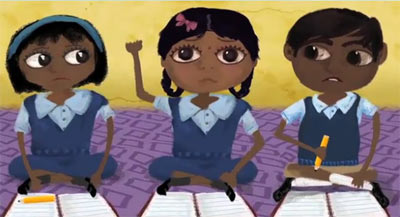
    Launched in 2010, A Girl Story is a unique, donation-based film series that combines technology, film, and storytelling to shed light on the global challenge of educating young girls. The animated, emotional story follows the path of a young Indian girl named Tarla who wants to go to school to better her life. Whether she succeeds, however, is completely up to you, because Tarla’s story progresses only by audience donations that unlock new chapters within the film series. This website raised approximately $4,000 from 182 donors globally.


  • Make way for the men. Basics Life goes National

    By A Correspondent


    After having enjoyed great success in the men’s fashion segment inSouth Indiawith over 90 stores, Hasbro Clothing has decided to launch its Basics Life brand in a nationwide campaign to promote their newly launched online shopping portal, Basicslife.com.


    Hasbro Clothing was founded by brothers, Hanif and Suhail Sattar in 1992. Their rebranded retail experience store, Basics Life, was launched in 2008 and in 4 years, it has spread across 90 exclusive outlets and has presence in over 600 multi-brand outlets across Indiaand the world, apart from being available on the lifestyle and fashion portals like myntra, Jabong and others. The brand houses clothing, footwear and accessories from their three private labels Basics 029, Genesis and Probase.


    After their e-commerce store, www.basicslife.com opened, they feel the time is right to push for a national presence. “Our dream of being the one of a kind lifestyle retail fashion destination for men is finally showing signs of coming of age, the range in the store, and the store itself, was testimony to that fact, now the communication and the reach with this new creative will put us on the map,” said Hanif Sattar.


    The campaign, ‘Shop like a Man’, speaks to and for the men, and has been conceived and created by Happy, Bangalore. The agency has been handling the account from 2008, right from creation of the Basics Life brand.


    “The central idea was to promote shopping for men like never before. We latched onto the idea ‘Shop like a man’ (working out of the insight that online shopping could only have been invented by man),” said Kartik Iyer, Chief Executive Officer and creative lead on the project.


    The campaign starts off with ‘The ‘Man’tra”, a signature anthem created specifically to celebrate all the basic things that make men, men. Kartik Iyer had himself penned the song in collaboration with Mikey McCleary. In addition to the TVCs, The ‘Man’tra will also be released as a standalone 3minute song supported by a 2 minute video on YouTube.


    “The project has been brewing for a while now. So when we decided to create a song, the order of process was all very different. Not to mention loads of fun. But I must confess being true to mankind was truly a pleasure,” said Mr Iyer.


    In addition, the campaign also comprises of spots, activation, digital/social and viral engagement programmes.


    Campaign Credits

    Brand: Basics Life

    Client: Hanif Sattar, Suhail Sattar

    Agency: Happy,Bangalore

    CEO & ECD: Kartik Iyer

    CCO: Praveen Das

    Lyricis: Kartik Iyer / Mikey Mccleary

    Copywriter – Athul C

    Art Director – Viduthlai Raj M

    Account Management:  Neelima K, Ajaykumar


    Production House: Hello Robot

    Producer: Kitisha Gaglani

    Director: Barney Howells

    Director of Photography: Edward Goldner

    Music Director: Mikey McCleary

    Art Director: Sid