Tag: Disney

  • Disney+ to launch in India on March 29. Hotstar Premium to be renamed Disney+Hotstar

    By A Correspondent

    Disney+, the OTT service from the Walt Disney Company will launch in India on March 29, Bob Iger, Chairman and Chief Executive Officer Bog Iger said on Tuesday in his quarterly earnings call.

    Disney, which owns, Star India, already owns and runs Hotstar in India, is likely to rechristen Hotstar VIP and premium service as Disney+Hotstar.

    Given that VIVO IPL 2020 is scheduled to be held between March 23 and May 12, 2020 and Hotstar is a critical part of the live coverage gambit for Star India, one can expect the Disney+Hotstar launch to happen as part of the IPL 2020 blitz.

    Hotstar’s VIP/Premium service which is the subscription based video on demand service from the platform, is likely to be rebranded and called Disney+Hotstar.

    Disney+ has reported 28.6 million subscribers as on Monday.

  • The Great Digital Displace


    By A Correspondent


    Digital streaming brands have turned the latest industry ranking by Brand Finance, the world’s leading independent brand valuation consultancy, on its head. Testament to their power to disrupt status quo, digital platforms have claimed five out of 25 spots in the league table, with two brands – YouTube and Netflix – jumping straight onto the podium behind Disney – the industry’s unchallenged leader. As a result of the rise in popularity of on-demand streaming, enjoyed by viewers who no longer need to rely on fixed cable television schedules, most traditional network and studios brands have felt the pinch, sliding down the ranks.


    Online heavyweights YouTube and Netflix have claimed second and third position in the ranking respectively. The last year has seen YouTube’s brand value swell to US$37.9 billion, up 46% from 2018. Meanwhile, Netflix more than doubled its brand valuation reaching US$21.2 billion this year, with its record 105% growth unmatched by any other Western media brand. Alibaba’s Youku (11th) and Baidu’s iQiyi (17th) as well as the Swedish audio-streaming app – Spotify (20th) – have also joined the Brand Finance Media 25 ranking for the first time.


    Competition from online providers has had a marked effect on traditional broadcasting outlets, as one in two of the ranking’s incumbents have either lost brand value or seen meagre growth in the past year. The digital revolution has taken its toll on both sides of the Atlantic, with UK-based BBC (brand value down 9%), Sky (up 2%), and ITV (up 5%), as well as ABC (down 41%), Fox (down 6%), and NBC (down 3%) in the US struggling with the challenge posed by new players in the sector.


    Commented David Haigh, CEO of Brand Finance: “Digital streaming platforms have revolutionised home entertainment, as they are better able to adapt to the needs of modern consumers seeking on-demand and advertising-free content. As customer preferences evolve at a faster pace than ever, the new platforms will need to continue to build relationships with consumers to stay ahead of the curve”.


    Disney’s dreams come true: Unchallenged by newcomers, Disney maintains its position as the world’s most valuable media brand, following an impressive 40% rise in brand value to US$45.8 billion.


    Over the last year, Disney has undertaken several strategic acquisitions in a bid to stay ahead of its competitors. Disney’s acquisition of Star India was an integral move to gain a foothold in the Subcontinent, which is currently the second-largest subscription TV market in Asia. The brand, which already owns a 60% stake in Hulu, is due to take full control of the service imminently, further demonstrating Disney’s pursuit of greater international exposure and dominance within the sector.


    In March 2019, Disney acquired 21st Century Fox for an eye-watering US$71 billion, in preparation for the launch of its own streaming service, Disney+, later this year. Disney now holds the rights to Deadpool and the Fox-owned Marvel characters, to add to its ownership of Pixar’s intellectual property and the Star Wars franchise.


    These purchases have placed Disney in a strong position within the digital streaming media landscape. At US$7 a month, its Disney+ subscription fee is going to be half the price of HBO Now and cheaper than Netflix, which raised its fee by US$2 in January 2019. These factors are set to place the brand as Netflix’s strongest competitor even before the official launch of Disney+.


    US brands dominate ranking: US brands account for 9 out of the top 10 and claim an impressive 18 spots in the Brand Finance Media 25 2019 ranking. Traditionally reliant on the Hollywood powerhouse and the reach of the network giants, the US is now staying ahead of the game thanks to digital players from Silicon Valley.

    However, the nature of the technology behind the digital disruption of the media market makes it easier for brands from other countries to break into the market. As the examples of Youku and iQiyi demonstrate, Chinese media brands may give the US monopoly a run for its money in the coming years. A further challenge can come from European start-ups such as Spotify.


    iQiyi is fastest-growing: With a whopping brand value growth of 326% to US$4.3 billion, iQiyiis not only the fastest-growing brand in the media sector, but across all categories in the Brand Finance Global 500 2019 report. As China’s answer to Netflix, iQiyi hosts over 500 million monthly active users. Recent reports of the brand setting its sights on China’s US$9 billion box office, suggests further rapid expansion over the next year.


    Disney-owned ESPN is strongest: Aside from calculating overall brand value, Brand Finance also determines the relative strength of brands through a balanced scorecard of metrics evaluating marketing investment, stakeholder equity, and business performance. Alongside revenue forecasts, brand strength is a crucial driver of brand value. According to these criteria, Disney-owned sports channel ESPN is the world’s strongest media brand with a Brand Strength Index (BSI) score of 88.9 out of 100 and a corresponding AAA brand strength rating.

    Following some instability over the past couple of years, resulting in the brand’s previous President, John Skipper’s, resignation, ESPN’s strength on the global media landscape has once again resurged. The appointment of new President, Jimmy Pitaro, in March 2018 was a clear sign of the brand’s intent to modernise and marked a shift in its operations. Most notably, the brand launched ESPN+, its streaming service, which hit the one million subscribers mark in under six months. More recently, the network has partnered with the National Women’s Soccer League for the FIFA Women’s World Cup, streaming 14 games live on the ESPN app, exposing the network to 25.4 million domestic viewers.


  • Disney announces APAC top deck


    By A Correspondent


    On April 1, Star India – part of 21st Century Fox and now the larger Walt Disney Company – employees received a mail from Uday Shankar, Chairman, Star and Disney India, and President, The Walt Disney Company Asia Pacific.


    It was much anticipated given an announcement earlier that the APAC leadership team would be unveiled. All of this was necessitated thanks to the late 2017 acquisition of the Rupert Murdoch family-owned 21st Century Fox by the Walt Disney Company.


    Said Shankar: “It is a momentous opportunity to be able to chart the course of The Walt Disney Company in Asia Pacific and Middle East. While our region is experiencing tremendous change, the common thread that binds it together is the exciting opportunity it presents to build on the great businesses that we have today and create transformational businesses of tomorrow. My endeavour is to build an organisation that enables us to take full advantage of this unique opportunity and capitalise on the potential of the great leadership talent that we have in the region.”


    Although Walt Disney is the leader in many parts of the world, competition is getting stiffer with OTT platforms aided by cheaper mobile data, the rules of the game are indeed changing.


    “We recognise the need for a sharp focus on building deeply local businesses,” Shankar continued. “To achieve this, we are making some changes to the current market structure. This will allow us to serve the strategic agenda in each market and enable our exceptional leaders to build even greater and more successful businesses. Above all, this will facilitate our transformation into a direct-to-consumer company that rests on deep local foundations.”


    So here is the leadership of the APAC team of The Walt Disney Company’s Direct-to-Consumer & International (DTCI) segment:


    Business Leads and Country Managers:

    :: North Asia: Luke Kang will continue to lead the North Asia (Greater China, Japan and Korea) business including direct country management of Mainland China and Japan

    :: India: Sanjay Gupta will be Country Manager of India and will also have direct responsibility for the studio business in the country

    :: Star Regional Media Networks: K Madhavan will lead Star India’s regional language Media Networks

    :: Southeast Asia: Zubin Gandevia, after a long and distinguished career with Fox, has decided to leave the company but has agreed to remain for a period of time to help transition the leadership of media networks in Southeast Asia

    :: Emerging Markets & Content Sales: Amit Malhotra will lead Emerging Markets. He will also lead Content Sales for APAC (except North Asia), with a dual reporting to Janice Marinelli who heads DTCI’s Global Content Sales and Distribution

    :: Middle East: Chafic Najia will be Country Manager of Middle East Media cluster

    :: Australia/New Zealand (ANZ): Kylie Watson-Wheeler will continue to serve as Country Manager of Australian and New Zealand business with direct responsibility for Media Networks and Direct-to-Consumer

    :: Studios APAC: Kurt Rieder will lead the Studio business for APAC (except India). He will work closely with the regional business leaders to drive this business


    Functional Leads:

    :: Sanjay Jain will lead Finance

    :: Amita Maheshwari will lead Human Resources

    :: Anju Jain Kumar will be the Chief Regional Counsel for North Asia and ANZ

    :: Deepak Jacob will be the Chief Regional Counsel for India, South East Asia and Middle East

    :: Prateek Garg will manage my office as head of Corporate Development and will work closely with me and all business and functional heads

    :: Jessica Pouleur will lead Strategy and Business Development. She will also take interim responsibility of leading strategy for Southeast Asia

    :: Jannie Poon will head Corporate Communications


    Added Shankar: “Our true strength comes from the quality and diversity of our talent, which combines the best of both Disney and 21st Century Fox. I am privileged to lead a team of such exceptional leaders and congratulate all of them on getting this exciting opportunity to lead this great company to an even greater destiny.”


  • Disney launches new reality-based content to target kids and young parents

    By Deepali Gupta


    It’s not just kids. When Disney launches new reality-based content on its kids channel shortly in India, it is targeting young parents as well.


    Every weekend, the flagship Disney children’s channel will air three hours of fresh content, created in association with production houses Optimystix, Cinevistas and The Troublemakers. The company is targeting people in the age group of 4-34, with an eye on expanding advertisers’ base and revenue. “We are now evolving to appeal to the progressive Indian family of today,” said Siddharth Roy Kapur, MD of Disney India.


    Disney has eight channels in India, including the Disney Channel that will soon complete 10 years. Of these, four cater specifically to the children’s segment: Disney Junior, Disney XD, Hungama TV and Disney Channel. Fresh content at the moment is for just the last one. “The channel enjoys high parental approval.


    We are now trying to turn it into parent engagement,” said Vijay Subramaniam, vice president for content-communications. The first new show – ‘Maan Na Maan Mein Tera Mehman’ – is about a family that finds a photo frame that brings to life the departed souls, who return with a task to complete.


    The second is a family drama and third of a 40-year-old school dropout who must pass to inherit wealth left behind by his uncle. Reach expansion is part of Disney’s global strategy to engage audience for 360-degree buying, such as Mickey merchandise that ranges from lunch boxes to neck ties for adults.


    The children’s segment in India generates annual advertising revenue of  Rs 300-350 crore and Disney India has a 36-42% market share, said a person familiar with market details.


    Source:The Economic Times

    Copyright © 2014, Bennett, Coleman & Co. Ltd. All Rights Reserved

    Licensed to republish


  • Abhishek Maheshwari to lead Disney Consumer Products in India

    By A Correspondent


    The Walt Disney Company India has announced the appointment of Mr. Abhishek Maheshwari as Vice President and Head, Disney Consumer Products. Mr. Maheshwari takes over from Roshini Bakshi who has resigned from the company to pursue other interests.


    “Abhishek has been a key member of our management team since 2012. Over this time, he has worked closely on the integration of Disney and UTV, on identifying local growth initiatives for the company and on formulating our long-term strategy in India,” said Mr. Siddharth Roy Kapur, Managing Director, The Walt Disney Company India. “Abhishek brings to this role a deep understanding of our businesses along with a diverse set of leadership skills, and he is well placed to help us continue to grow our consumer products business in India.”


    In addition to focusing his energies on leading Disney’s Consumer Products business, Mr. Maheshwari will continue to oversee Corporate Strategy and Business Development for the Company in India.


    Before joining Disney, Mr. Maheshwari worked in various management roles for Kubera and prior to that with McKinsey & Company at their Mumbai and Stamford, Connecticut offices. Abhishek received a Master of Business Administration (MBA) with distinction from Columbia Business School and a Bachelor of Science (BS) in Electrical Engineering from the Indian Institute of Technology, New Delhi.


  • Life after UTV for Ronnie Screwvala

    Life after UTV for Ronnie Screwvala


    By Malini Goyal


    What would you have done if you started off with a few thousands of rupees and turned them into a couple of thousand crore over roughly three decades? Ronnie Screwvala, 57, reckons it’s the time to do “something entirely new”. A smalltime cable operator in Mumbai in the early 1980s, Mr Screwvala went on to build a $1.4-billion media empire straddling movies, gaming and new media, TV content and broadcasting.


    After selling his entire stake of 70% in UTV Software to Disney by 2011 for a cool Rs 2,000 crore, last month Mr Screwvala exited the company he had founded – and in the process exited the media and entertainment (M&E) sector, too. “I came into this industry with Rs 37,500. Today, I have lots of money but that’s all notional. The struggle [going forward] for me will be of a different kind. I am at a crossroads, looking at incredible opportunities,” says Mr Screwvala.


    The opportunities involve parting with parts of the stash he’s sitting on in two ways – one, with a profit motive, by turning investor-mentor for start-ups; and the other with a philanthropic objective. And they promise to keep him busy – and away from the M&E world for some time to come.


    A non-compete clause signed with Disney bars Mr Screwvala from starting a conflicting business. But his new calling may ensure he never returns to the business he knows best. “If I know Ronnie well, he will never come back to the media industry. The sense that I get from him is that he has totally moved on,” says Star India CEO Uday Shankar. Globally, successful entrepreneurs like Marc Andreessen, founder of Netscape, have followed non-linear paths by exiting successful ventures to turn both investor and serial entrepreneurs. Back home, Ajay Piramal is one prominent investor who is looking for avenues to park the proceeds from the sale of a pharma venture.


    Elsewhere, Infosys’ NR Narayana Murthy and Wipro’s Azim Premji have set up funds to invest their personal wealth. But they both remain deeply entrenched in and committed to the businesses they co-founded or founded. Screwvala, for his part, belongs to a rarer breed that is starting all over again from scratch on a totally fresh canvas.


    Entrepreneurial Dream

    Sitting relaxed in his spacious fifth floor penthouse in the tony Breach Candy area of south Mumbai, Mr Screwvala is applying the finishing touches to the blueprint for his second innings. While his plans are still evolving, there are few ground rules he has set for himself. One of them: politics is a strict no-no as a career alternative. He also broadly wants to spend half his time in business and half pro bono. “I want to evangelize entrepreneurship,” declares Mr Screwvala. He wants to use 10% of his time figuring ways to build a platform to boost entrepreneurship.


    “I want to do this for myself. I have to do one or two very disruptive things so that people can look at entrepreneurship more positively in India.” He is vague, he admits. But his mind is running wild doing some blue-sky thinking. His options: either become a catalyst in building an ecosystem; or help figure out new ways to make crowdfunding possible in India; or even write a book. “That’s a massive passion for me. I want to build communication tools and platform to enable that ecosystem. This could be the touchpoint to my past.”


    Currently at the heart of his strategy for investing – both money and his leadership bandwidth – in start-ups is Unilazer Ventures. And here too he’s doing it his way: He won’t settle for less than 35% in a firm; unlike private equity investors, he will not have a time horizon; and he’s extremely selective about sectors, reluctant to look beyond e-commerce, health, education and agriculture.


    “This [Unilazer Ventures] is for profit. Agri is so unglamourized. Nobody is looking at it. But it offers great margins,” he says. While most of his investments will be in start-ups seeded by others, Mr Screwvala plans to build at least one or two businesses ground up.


    His optimism and passion notwithstanding, sections of the PE industry have their reservations about the start-up fervour in the country. “The track records of investments made by many entrepreneurs have been mixed so far,” warns Rahul Bhasin, managing partner at Baring Private Equity Partners India, adding that in India managing the external environment is a huge challenge for greenhorn entrepreneurs.


    Swades and Philanthropy

    By contrast, Screwvala’s other plan on the drawing board appears infinitely less risky although he will be as demanding in making every penny count. He’s set aside Rs 350 crore of his personal wealth and will raise a similar amount from others for Swades, the philanthropy arm. “India does not have a problem of resources. Government spends massive amounts of money but the impact is low. Execution is the key,” Mr Screwvala explains.


    Most corporate philanthropic outfits focus on a specific issue – Bharti and Premji foundations focus on education, for example. Swades, though, has a geographic approach – for starters it plans to look at all major issues faced by Maharashtra’s villages in a 360-degree manner. “I want to create a model that is scaleable, efficient and has measurable impact – like any company,” says Mr Screwvala.


    Swades is already working in 1,000 villages impacting a lakh villagers. Deval Sanghavi, cofounder, Dasra Foundation, a philanthropic organization, points out that Swades does not want to reinvent the wheel. It prefers to get the right expert partners in a range of areas like education, farming, water, health and sanitation, and turn into a catalyst.


    Take for example its work with the farmers. In villages you realize men between 20 and 45 have migrated to cities and are living in terrible conditions, Screwvala says. He wants to reverse the tide and figure ways to improve incomes and standards for farmers. Swades has collaborated with Jain Irrigation to introduce drip irrigation for small farmers. A year back it began working with agricultural bank Nabard. “The best thing about Swades is that they first do a pilot on their own to demonstrate the benefits and then seek government support for farmers,” says Nanda Survase, district development manager (Raigad), Nabard.


    One such villager to benefit is Jeeteshbhai, 22, who was in Mumbai since 2010 working at a retail shop on a monthly salary of Rs 5,000. Last year he returned to his village in the Raigad district. His farm is small – under three acres. But using drip irrigation, vermin compost and some smart management of crops like water melon and a few vegetables, he has earned Rs 25,000 in the past four months. He is looking at a net income of Rs 1 lakh a year – far more than what he was earning in the city.


    Praveen Jain, COO, Swades says there are a few things they keep in mind before starting work in a village. “We measure everything so that we know the progress. We only look at projects that are self-sustainable in 3-5 years. And our exit is built in.” Also to ensure villagers’ commitment, nothing is offered free. Villagers need to co-contribute, even if a small amount. Take for example, the water supply to each home. Villagers co-contributed 10-15% of the cost of the project. And they also put together a small committee and a mechanism to build a corpus for regular maintenance of the pipes. Today, six gram panchayats – 20 villages and 6,000 people – are getting drinking water right inside their homes.


    Understanding the Disney Exit

    It’s difficult for many – including his peers in the M&E sector – to figure why Mr Screwvala chose to quit the game he was so good at. “When I sold off, they [other entrepreneurs] were shocked. Most couldn’t believe it,” he admits. But he’s convinced it’s the right reason. For a couple of reasons.


    First, UTV may be well diversified within M&E, but lacks size and scale in most of them. In broadcast, for instance, the absence of a general entertainment channel (GEC) is stark. “Their presence was through niche channels where getting advertisements and franchises becomes difficult if you are not No. 1,” says Nikhil Vohra, an M&E analyst who recently founded Sixth Sense, a consumption-centric venture fund.


    The second reason for exiting is the challenging and uncertain nature of the content-driven business. One, while the industry is secular in consumer demand, its heavy dependence on advertising makes its financial performance asecular. Second, the entire industry is undergoing a massive churn as technology, ubiquitous smartphones and an anytime-anywhere audience are disrupting old business models. “Competition, choice and globalization of content mean that it’s game over for a lot of M&E companies. Many will disappear and there will be consolidation. Only those who have the resources to invest in high quality content and strong brands will survive,” says Mr Shankar.


    That Mr Screwvala is remarkably detached from the business he built with his blood, sweat and passion made the exit easier. “I don’t think you can expand and build scale if ownership and control is what you are obsessed with,” he says. Star India’s Mr Shankar explains that Mr Screwvala is “passionate but not emotional about his decisions”.


    Disney began its association with UTV first as a customer, then as an investor, partner and, eventually, owner. After picking up a minority 14.99% stake UTV in 2006, by 2010, both partners were asking the same question: “Now what?” “A buyout seemed the most logical step,” says the founder.


    The Disney Ride

    In 2012 after completing the buyout of UTV, Screwvala was appointed managing director with the mandate to steer the integration of the two companies. It wasn’t a smooth ride. “There were cultural differences although value systems were similar,” says Mr Screwvala.


    Like all integrations, this one too had its own share of issues. Some redundancies were inevitable. With the far bigger (in India) UTV dominating the merged entity and Mr Screwvala at the helm, it meant most key positions were helmed by UTV executives. Siddharth Roy Kapur, from the UTV stable, took over as managing director. Unsurprisingly, many Disney executives put in their papers.


    Disney’s MNC culture with a thrust on structures and processes is a polar opposite of Mr Screwvala’s entrepreneurial style of functioning. His informal style – epitomized by the round-neck T-shirts he often sported at meetings and important events – was in stark contrast to the formal suit-and-tie culture of Disney.


    By the fag end of his stint as Disney India MD, Mr Screwvala’s patience was running out. “He was completely stressed,” says an ex-Disney executive. For an entrepreneur who was used to taking quick decisions, working in an MNC where decisions were being taken far away in Burbank, California wasn’t proving easy. Take, for instance, a simple thing like finalizing office space – the process took an entire year. “I could see the frustration and suffocation building inside him,” adds the former Disney executive. Starting afresh is clearly proving to be liberating.


    Source:The Economic Times

    Copyright © 2014, Bennett, Coleman & Co. Ltd. All Rights Reserved

    Licensed to republish


  • Sacrificing 5 GRPs is fine, carriage fees to DTH isn’t: Anuj Gandhi & Gaurav Gandhi


    A few weeks after Diwali 2013, Dish TV burst what was decidedly a firecracker of sorts announcing carriage fees. The announcement was followed by a major spat with leading distribution platform IndiaCast that finally went to the TDSAT. The TV18 and Viacom18 venture which also has a partnership with Disney UTV drives all domestic and international channel distribution, placement services and content syndication for TV18, Viacom18, A+E Networks, TV18 and ETV channels as well as those of the Disney UTV stable. Following the reference to TDSAT, an agreement was hammered out on providing IndiaCast channels to Dish TV on Reference Interconnect Offer (RIO) terms and with no carriage fee charged. But while the dust may have settled, there is still much anger and angst at the IndiaCast headquarters. MxMIndia met CEO Anuj Gandhi and COO Gaurav Gandhi, both veterans of the business. Excerpts from an interview.


    So is all well on the Dish TV front?

    Anuj Gandhi: All well for sure. We don’t have a deal with Dish TV. They are carrying our channels a la carte, which are being offered on Reference Interconnect Offer (RIO) terms.


    Are your channel’s business heads happy with it?

    AG: We’ve now seen a few weeks of data post this development. There has been little or no impact of Dish TV on the ratings. We are very clear that we are not going to pay any carriage, come what may.  If there’s a marginal drop in the ratings because of Dish, we will live with it. We believe we can live without them. I sincerely doubt whether they can live without us, keep growing and compete with cable and other DTH players. So to answer your question: we are very happy and we can live without them.


    But won’t there be an impact in the hinterland and key LC1 markets where Dish is strong?

    Gaurav Gandhi (GG): At the overall level, while they claim the number to be 12 million, our estimate is that Dish has some 7 million homes. Now Zee was there in every single pack. We were almost there in every single pack sometime back, so we know the numbers right? At the overall level, you are talking about 130 million cable TV homes within the country and within DTH homes combined. If you not available in 2-3 million homes theoretically, first of all, it is a marginal impact. Secondly, Dish’s contributions towards the current TAM rating amounts to not more than two-and-a-half percent. And it is a tested number. We obviously have a sense that Dish has a very high skew of rural homes compared to urban homes. Realistically speaking, at the worst case, the impact can’t be more than 2%. And that is if everything is off and if the channels are off Dish. That’s not the case right now.  Also that is a universe number, each channel is viewed differently. So for example, the kind of customers who’re there on a platform like Tata Sky or on Seven Star, Hathway or Den in Mumbai; they would have consumed niche channels far more compared to somebody sitting in LC1 market. Therefore, niche channels anyway have a very low impact in terms of ratings from Dish. If you see data for two weeks, there’s no impact…


    Is there a worry that right now its Dish, the other DTH operators could also do the same?

    AG: I look at the other way round. If we had panicked, gone ahead and paid the carriage which is what the demand is, it would have opened a Pandora’s Box and we would have taken the industry back by a decade-and-a-half. Everybody would have paid and every platform would have asked. Unlike in an analogue environment where carriage is a necessity and there was a demand-supply gap, carriage had to be paid to be carried.


    We looked at it not only from our perspective but also from the industry perspective that we cannot start something which is regressive and not good for the industry.


    Have you had discussions with the IBF on this?

    Not formally, but informally we have been in touch.


    Is the IBF doing something about it?

    We have gone and met TRAI and other regulatory ministry, told them this is what is happening. Obviously, they are watching what is happening.


    But you do pay carriage fees to cable companies, right?

    AG: Two years back, we started reducing carriage to cable too. Every one has started reducing it and it will see a further decline over the next two years. We couldn’t cut the chord immediately.


    If you are not averse to cable, so why not pay Dish?

    AG: Because I am not going to start something which has been happening historically on analogue cable. It was a mistake then. Digital platforms have to grow. They have to look at ARPU growth. They have to work with content to increase customer service, quality of service, value added services. They have to go in that direction rather than going in another.


    GG: Are they selling capacity or boxes or content? The day DTH companies address this question, you will get the answer on whether carriage should be paid or not paid. If somebody is selling content, his or her job is to maximize ARPU and create more customers and make sure the content is monetized. The reality was that in the analogue world, you were short of bandwidth; you were paying for scarce capacity. The moment the billing comes to him, the money comes to him, he doesn’t need the carriage money and all the top MSOs are very clear about it. We meet them day in and day out. It is a phenomenon which will disappear. Should I start another monster who doesn’t need it, just because his business plan has gone awry? Just because you are not able to sort out your life, why should I pay carriage fee to you? Earn it.


    AG: Like you said, it’s a question of precedents. If I pay one, I will have to pay everybody.


    GG: Informally, we have got calls saying don’t do this else we’ve all had it.


    So what led to it?

    Well, our deal was up for renewal but they didn’t realize that our resilience will be so strong that we will go the other way round.


    What next now? You said IBF is not doing anything about it?

    GG: It is not an IBF issue.


    AG: It is a deal between two parties -Platform and Content Provider.  Clearly, I’ll not pay carriage. Yet, I am willing to do a deal which is reasonable. We will come across as mature adults and discuss it. But I will not pay carriage.


    And even though ratings haven’t been affected, at some point they could?

    GG: They can’t at 2% weightage


    Voice 1: Why does everyone keep threatening that channels can’t survive without platforms and ratings will fall?


    GG: 2% is 5 GRP. We will live without 5 GRPs.  Let me see whether Dish lives without Colors. I challenge.


    AG: It is simple. I will live without and I cannot budge under every threat as a content aggregator. Everyone will get on and say you do this or I will switch off. I will not buckle under and pay.


    As a network, Dish has a very large presence in the Hindi-speaking market

    GG: In the cable dark areas which are not measured.


    The a la carte data will of course come to you

    Yes, by February sometime, hopefully it is transparent and clear. We will see.


  • Jaldi 5 with Anuj Gandhi, CEO, IndiaCast: No dramatic, but fundamental change


    Anuj Gandhi, CEO of IndiaCast and the yet unnamed proposed jv of IndiaCast and DisneyUTV and a veteran in the distribution space, on what the new entity means for the broadcast business


    Anuj Gandhi

    01.         IndiaCast was already distributing Disney channels in India though UTV wasn’t being distributed by you… so there will be no dramatic change on the ground. Right?

    No dramatic but fundamental change in the way we are perceived in the market.

    02.         As someone who has been a participant and watcher of the Indian broadcast space, would you see any more consolidation in the space?

    Some small pieces are still to be sorted but no major change at the national level – next phase may focus in the regional space

    Will IndiaCast be ‘game’ for more partners from independent clusters of channels?

    We will look for quality rather than quantity and also brands/products which add value to the overall bouquet

    03.         Much done, yet Mediapro with 70+ channels is still far ahead of IndiaCast. What will narrow the gap in the weeks/months/years to come?

    I don’t think we need to narrow any gaps – will like to focus on what we have and how to ensure that we get our fair share in the market.

    With distribution companies such as IndiaCast playing a critical role for monetization of channels in a digitized world, do you see such a consolidation move helping achieve that?

    Yes, it does. Also, it gives us a much wider reach and helps in better negotiations.

    04.         Your international and new media distribution and syndication will not be part of the jv. Would you see independent JVs/consolidation happening towards that too?

    These streams are still growing for us and traditionally there hasn’t been much consolidation, so not sure. We would like to build on what we have rather than aggregation.

    05.         It’s interesting that the world’s largest media conglomerate (Disney) ties up with a jv of the fourth-largest media conglomerate (Viacom) for distribution. Was it just the ground realities in India that brought you’ll together or was it a lot more?

    I think it is the way distribution business in India works where aggregation happens at the content level. So, it is just ground realities in this market.


  • Walt Disney India sets up DisneyUTV Digital

    By A Correspondent


    The Walt Disney Company India has decided to strengthen its digital business. On August 02, the company announced a restructuring of its digital assets with an aim to increase its growth in games, video and audio services for mobile, online and interactive TV.  The new division, DisneyUTV Digital will combine the businesses and talent from Disney, UTV and Indiagames. All content and brands from Disney, Marvel, UTV, Bindass, as well as original content and games will now be developed and managed by DisneyUTV Digital.


    DisneyUTV Digital will be headed by Vishal Gondal, who will be its Managing Director. Samir Bangara, also Managing Director, will be working in collaboration to drive DisneyUTV’s future growth. While Mr Gondal was the founder and CEO of Indiagames, Mr Bangara was the COO, Indiagames. Together they are said to have built Indiagames into India’s premier gaming company, earning close to 50 per cent market share in the country.


    The DisneyUTV Digital team will manage all mobile, video, audio, broadband, ITV, games and virtual world’s initiatives, with a combined audience reach of over 300 million in India. Some of the previous works from the Disney and UTV teams in India include products like “Audio Cinema” (a movie-on-your-phone service), “Divya Kathayein” (devotional content on mobile in 7 languages), “Digital Studio” (series of original content developed for the web and mobile), “Sponsored Tweets” ( the Twitter advertising platform ), mobile games such as “Aladdin” (India’s leading paid mobile game with over 8.2 million downloads), “DLF IPL Cricket” (the official mobile game for the DLF IPL Franchise), “Cricket Fever” with over 20 million downloads, “Ra.One Genesis” (which saw over 1 million downloads within a week of its launch) and others.


    DisneyUTV’s Digital team aims to innovate and deliver unique cross platform and cross media digital experiences focused on entertaining the Indian digital audiences across age groups.


    Disney UTV’s digital division will be structured as follows:

    Cyril Ferry – Executive Director -Mobile; Sameer Pitalwalla – Director – Video and Celebrity; Lavina Tauro – Director – Audio and Music; Deepak Ail – Director -Mobile;

    Hrishi Oberoi – Director – Games Publishing; Saishree Ashwin – Manager – Virtual Worlds; Tejraj Parab – Business Head – Games on Demand; Dushyant Saraswat – Director – Broadband & 4G initiatives; Sachin Janghel – Director – ITV; Aji Joseph – Director – Ad Sales


    The digital media in India is evolving rapidly with mobile leading the way. The country has the world’s third largest mobile Internet user base with over 121 million users (of whom 59 per cent are monthly active users) as of December 2011 in addition to the 85 million PCs and growing number of tablets. With the launch of 3G and onset of 4G services, digital consumption of entertainment is at an all time high and is exhibiting strong growth with new monetization models emerging around Freemium and Ad-funded content.


  • Is internet killing viewership of English GECs?


    By Meghna Sharma


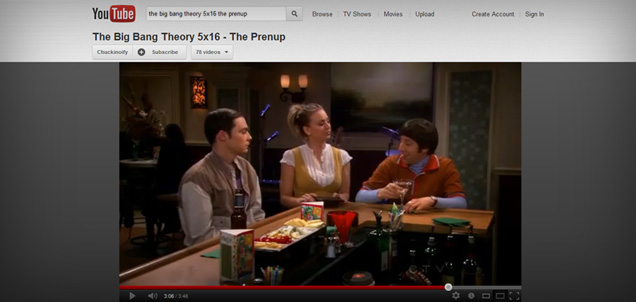
    Dying to watch the latest season of Big Bang Theory or want to know who’s going to win the current MasterChef Australia series? Then, you have two options: either download it or wait for a channel to telecast it here.


    Of course, many of us opt for the first option as Indian channels still lag in getting the latest seasons of these international shows to India . MxM India explores if the internet is indeed posing a threat to the genre.


    Internet, a menace?

    Anurag Bedi

    Consumer trends have changed over the past few years; and if one gets his dose of entertainment, it doesn’t matter it’s on which platform. “The viewer is platform-neutral. So, as far as one gets certain amount of entertainment quotient, it doesn’t matter even if he’s doing it illegally i.e. by downloading. And with the internet reaching out to every nook and corner of the country, it won’t be wrong to say that internet poses a threat to content owners or channels,” explains Karthik Sharma, managing partner, Maxus.


    The internet remains the biggest threat to the English general entertainment channels. Most of these channels are not able to telecast various popular international shows like Games of Throne, Weeds, Sherlock and others, hence viewers log online.


    Saurabh Yagnik

    “Today, the television audience is experimenting with content. They are quite receptive to exploring new, innovative and unconventional content. Considering the change in lifestyles and the impact of globalization, our audience is more aware than ever. Viewers have the knowledge of the scope of entertainment available on various platforms,” said Anurag Bedi, Business Head, Zee Cafe.


    Saurabh Yagnik, GM & senior VP, English Channels, STAR India Pvt. Ltd added: “STAR World’s constant endeavour has been to bring international shows to India , at the same time as their broadcast in US. We, in fact, had the World Television Premier of shows such as Missing, Touch on our channel. Even for Masterchef Australia Season 4, we are broadcasting the show very close to its telecast in Australia this time. This also becomes possible due to our strong and exclusive associations with international production houses such as Disney, Fox, and others.”


    Ricky Ow

    On an optimistic note, Ricky Ow, executive VP, Networks, Asia, Sony Pictures Television feels that though the internet adds to the competition, it helps one realize what the market is looking for: “If one studies the internet, then it can definitely turn out to be an asset as it gives us an opportunity to look at what the audience is interested in. For example, it helps us know what the India n audiences’ interests are outside AXN.”


    However, the newest entry on the block, Comedy Central’s Ferzad Palia, senior VP and GM – English Entertainment, Viacom 18 Media Pvt Ltd feels that internet should be seen as a complimentary asset rather than just as competition. “With technology, the social mindsets of people are changing too. And now people have become more accepting towards western culture. Thus, it’s good for us as more and more people identify with the content.”


    Ferzad Palia

    The buying game

    There is no doubt that the English-language general entertainment market is developing. Almost every channel is trying its level-best to keep the audience hooked on by getting more and more international shows to the living rooms. One question still remains: why are channels not able to show what their TG wants?


    “It is difficult to bring popular international shows to India , especially at the same time as their release in other markets. However, we have been driving our efforts to realize this for a long time with our property titled Torrentz, wherein we brought international shows very close to their release in other markets,” said Mr Yagnik.


    New channels coming up are giving a tough competition to the likes of Star World, Zee Cafe and AXN. Media professionals feel that, though the competition is good, it can become a burden on English channels as they have a limited TG. This has lead to rise in the cost of procuring rights. So, if a channel is paying more for an acquisition of shows which are popular abroad, they might not be able to recover money as mass channels do.


    Mr Ow added that though it cannot be categorized as easy or difficult, the onset of more channels has definitely risen the costs: “If we want a show, we try our level best to get it. AXN’s programming formula is simple – we are an action-adventure destination. Therefore, it narrows down the competition as we look for series, movies or reality shows which cater to that genre.”


    On the other hand, Mr Palia feels that though procuring rights is a complicated process, nothing is easy when it comes to running a channel. “It’s a part and parcel of starting a channel. What is more important is the selection process of the shows which will interest the India n audience. Demand for international shows has increased in the country of late and people have become choosy about what they want to watch.”


    Hence, many channels are now associating with production houses or producing their own shows as they feel it will help them grow their market without too much of a trouble.


    Vishal Rally

    “There could be 100 popular international shows, but we cannot telecast them all. So, a channel needs to choose what their TG wants. Thankfully, we are backed up with a studio and a JV which allows us to telecast shows simultaneously in India as well. We telecast shows like Survivors, NCIS at par with their international seasons. That’s our USP,” said Vishal Rally, business head, BIG CBS Network.


    Nevertheless, most channels agree that it isn’t an easy task to get good international shows to India , but to keep the competition at bay, they have to try to out-do internet but also each other by bringing the latest shows to their audience’s living rooms ASAP.


    Many broadcasters are also aware that the internet viewership of popular shows is small, and the public still prefers a bigger screen experience. As one broadcaster said, high speed broadband connections exist, but not with everyone. And the buffering is a pain. It’s a huge negative for the viewers who watch English GECs.


    But low broadband speeds and poor connectivity will soon be a thing of the past, right? Yes and so will dated soaps and old seasons be, says the broadcaster, requesting anonymity. “Right now, we are catching up with old seasons since most people haven’t watched them… For instance, how many people have watched The Newsroom, which has been receiving rave reviews?” There’s also an issue of copyright and picture quality. “Some of what you see on YouTube is pirated and is being yanked off the site when caught in the act. And if it is available somewhere, it appears to have been recorded on the microwave oven… Who wants to view Masterchef where a tomato looks like a potato!!!”


    Hmmm. Surely reason for us to wait and watch. Or in this case, watch and wait.


  • We want to be in the forefront when new media merges with traditional: Anuj Gandhi


    The writing was on the wall the day Anuj Gandhi joined Network 18 in March this year to oversee the group’s distribution and new business development. And the reason for this was the all-new relationship between Network 18-TV 18 and Reliance Industries forged a few months before his joining.


    Other than the providing of the much-needed funds and the consequent stake in one of India’s largest (and more powerful) media conglomerates, Reliance was also looking at making full use of the content produced and owned by the various Network18 and Television18 arms, especially for the Reliance 4G services.


    Also, in the post-digitization era, distribution becomes a key driver in the revenues of a broadcaster, especially for niche channels. And with various mobile devices becoming popular and wireless technology progressing rapidly from 2G to 4G even in India, the monetization potential for multimedia content leapfrogs.


    Enter IndiaCast, a joint venture of TV18 and Viacom18 to create India’s first multi-platform ‘Content Asset Monetization’ entity.


    IndiaCast Group CEO Anuj Gandhi is a veteran in the distribution and the affiliate sales front. An MBA from the SP Jain Insitute of Management, he has worked with Discovery Communications as Director – Affiliate Sales (1997-2002),  as President of SET Discovery (2002-07) and CEO of DEN Networks (2007-2010) and worked as an independent consultant for a little over a year. He has also worked with IndusInd Media in distribution (way back in 1994) and prior to that with Ranbaxy. Clearly, being an early leader in every aspect of the distribution business, Mr Gandhi is well-poised to monetize the wide variety of content that IndiaCast has in its basket.


    Hours after announcing IndiaCast, Anuj Gandhi spoke with MxMIndia, his first and until the time of publishing only detailed interview on the shape of things to come.


    So we see the the birth of a laaarge distribution company…

    IndiaCast is much larger than other traditional distribution companies because it entails monetizing content assets of all the groups – right now TV18 and Viacom18, and post-acquisition of Eenadu, but for all rights. It’s effectively all non ad-sales kind of monetization businesses. It will be online, traditional brick-and-mortar distribution businesses at a global level. So it is pretty huge.


    It’s just the beginning. My sense is that most people will do it because the lines are diffusing between various rights that people use in the market. It has already happened in the international market where a DTH guy blocks Over The Top (OTT) or IPTV rights from you and vice versa. So you will have technologies where OTT rights will sit on a box so the cable guy will come and tell you that I not only want to do cable rights but I also want OTT rights. Thus, with the passage of time, new media will get merged with traditional media and we want to be at the forefront of the revolution which will happen in the next few months/years.


    Any international tie-ups in the offing?

    We already have international updations in the US, UK and Dubai. Colors is being distributed there and going forward, we want to expand our portfolio. We plan to distribute more and more channels internationally. So it’s work-in-progress on that front.


    So what happens to Sun18 now that IndiaCast has been formed?

    Sun18 was an alliance that worked very well and will continue to do well. The deal at Sun18 was that we will distribute Sun and Disney channels in Hindi-Speaking Markets  (HSM) and they will distribute us in the South. So, the only change in the whole alliance is that instead of distributing in the whole of South, they will only do Tamil Nadu now. Otherwise everything stays the same, we still distribute them in the North and also Disney which is part of their network. With this, Sun18 North has kind of folded into IndiaCast.


    Is it a coincidence that IndiaCast happened days before the scheduled digitization in the metros or was it on the cards for a while?

    No it was in the pipeline and we were talking about it for a while now and we knew that we needed to get all our pieces in order.


    Any major challenges you see coming up in the future?

    I think the major challenge would be to get the deal right for digitization. Whether it happens in 25 or 90 days (as digitization in the four metros is likely to get delayed by a few months), this is a chance where the industry needs to correct itself; we all need to work in getting the ARPU situation right in this country. So the challenges are basically at the industry level. Also, on the global front, the challenge is to be able to do more channel launches in international markets and be seen as a serious player. Also, one more challenge will be about how new media unfolds in the country.


    With viewers being able to subscribe to channels a la carte, do you anticipate reach/visibility of channels to take a beating… for instance, what if a person just takes one or two channels a la carte?

    While there will be some percentage of the market that will opt for it because by law you have to offer it. Like when CAS started, everyone talked about a la carte and people taking only one or two channels, but it just doesn’t happen. It doesn’t happen anywhere in the world and it won’t happen inIndiatoo. There may be a few people who would want that but that would be a single-digit percentage for me. So I am not too worried about it. But what will happen is, as they say, the time spent on niche channels will go up with digitization as everybody will be getting the same quality of channels. But if you start picking and chasing packages, some channels will start suffering. Not everybody is going to take all Hindi news channels, for example. So if they are in the same package, then people may pick them but if they are placed differently then it may not be the case. So some impact will happen, but not in the short term.


    We see that IndiaCast will also represent Sun and Disney in HSMs. Any others on the anvil? Since UTV channels are now part of Disney, will they move too?

    Nothing right now, I think we already have too much on our table right now. If something happens tomorrow, we do not know but we are not looking at adding anything new as yet.


    As part of Network 18/Television 18 agreement with the Reliance Industries Ltd’s Independent Media Trust stake, there was also a plan of all Network 18/Television 18 content being syndicated to Reliance 4G? Will it be done via IndiaCast?

    I won’t be able to comment on this but as is known, all content monetization businesses lies with IndiaCast so the same businesses will be done with any 4G networks whether it is from Reliance or any other telco from the business.


    So going back to the earlier discussion, the arrangement with Sun18 stays…

    Yes, we have just changed the definition in terms of the three states in the south. Otherwise it remains where it was. So Sun18 continues to exist and holds up in IndiaCast. It won’t be called Sun18 anymore. There is no shareholding changing – Sun18 North is just folding up into IndiaCast.


    Do you see consolidation gaining prominence as we move ahead?

    I think it will happen for some time. What way and form – will now change as technology is becoming a critical part of our business. The traditional mergers may not happen as much but there has been a lot of M&A happening on the platform side which will also have an impact on broadcasting.


    With digitization happening, do you anticipate the revenue from non-advertising sources will actually be more than what comes from advertising?

    I cannot generalise it and will depend on channel to channel. But will certainly grow; I feel that it could be 50-50 at the network level. So niche channels will benefit more from subscription than ad sales but mass channels will still earn revenues from ad sales.


    So just as it holds true for the sales folk these days, do you see the distribution team also have much say in content in the future?

    I wish my bosses here say that distribution guy must have a say in content (laughs). But it’s not that now. Until now the interaction with the consumer was through various means and the stakeholders were too many in the value chain. Going forward, because it will be a box and be kind of a direct deal – so if I am going to an MSO, he can probably tell me area specific complaints – it will reach back to the content owners much faster and in much clearer terms than what is happening today. That is what is happening in international markets and it will start happening inIndiatoo. But we are a couple of years away from that.


    So we’ll soon have distribution heads becoming CEOs of networks…

    Touche.


  • Brands focus on toon channels as viewership changes

    By Ameya Chumbhale


    If you thought Cartoon Network, Pogo, Disney, and Hungama TV were kids’ channels, look who’s watching them – nearly a fifth of those watching these channels are between 25 and 44 years. And nearly four out of ten viewers of these channels are more than 14 years.


    Most children, on the other hand, either prefer or are forced to watch what adults are watching on general entertainment channels – soppy serials or reality shows. According to TV viewership data shared by TAM Media Research, only 15 per cent of all children viewing TV, watch kids’ channels. The rest – 85 per cent — watch general entertainment channels (GEC).


    Needless to say, this has become a big opportunity for advertisers, especially those who try and reach out to parents through their children. “Parents are increasingly looking at children as representatives of the new world and latest technology. Consequently, children between 10-14 have a considerable say while buying a car or a gadget,” said Santosh Desai, chief executive officer at Futurebrands.


    In fact, for Turner International India, which runs Cartoon Network and Pogo, nearly 35-40 per cent of their advertisers last year came from what would seem like “non-traditional categories such as auto, consumer electronics, finance and telecom,” said Monica Tata, general manager for entertainment networks at Turner in India.


    Chairman and chief creative officer at ad agency BBDO India Josy Paul, while explaining the rationale behind these channels attracting non-traditonal categories of ads, says that brands don’t want to miss out on any opportunity of talking to the mother who is the anchor of the house. Traditionally, one would expect kids’ channels to air ads by ice creams, chocolates, F&B, and toy companies.


    Insurance major Aviva India is a case in point. Aviva spent 5 per cent of its advertising budget on kids genre in 2011 and had run the ‘Aviva Young Scholar Hunt’ contest between July and October 2011 on Pogo. The impact was telling. “Of all the insurance plans sold by Aviva, the share of child plans went up from 2-3 per cent in 2010 to 11-12 per cent in 2011,” said Gaurav Rajput, director of marketing at Aviva India.


    Sony tablet computers and Hewlett-Packard printers too are advertising across all kids channels these days. In fact HP, which launched its printer campaign across kids channels two weeks ago, is something they have done after several years.


    “My target group for the campaign is parents of school-going children, so the kids channels were a natural fit,” said Ayesha Durante, country manager for marketing HP India. For Anuradha Aggrawal, senior VP for consumer insights at Vodafone India, whose team spends a lot of time researching the dual viewership (kids and adults), says it helps in choosing their icons — the pug and the ZooZoos, which connect with children, actually help to build an early brand association with these young consumers.


    Mr Desai cautions that this could be a long-term strategy which only sectors like telecom can afford as they have “cash to burn”. He further added that in a one-TV system, everybody has his/her time slot to watch TV. Therefore, if a child is watching a kids channel, the parent has no option but to watch it.


    For the genre, this means big business. The Disney channel has more than doubled its ad revenues last year while Hungama TV’s revenues rose by 35 per cent, said Vijay Subramaniam, business head at Disney Kids Network India which runs the Disney channel, Disney XD and Hungama TV in India. Disney enjoying highest share of viewership at 22 per cent among kids aged between 4-14, according to TAM.


    Subramaniam says that the return on investment is not proportional to the viewership as kids genre corners just over 1.6 per cent of total revenue of the television industry against the over 6 per cent share of viewership.


    According to the 2011 FICCI-KPMG report, the TV industry is projected to grow to 33,700 crore by 2015 from the current 14,400 crore (2010) at a CAGR of 17 per cent. And the kids genre gets the maximum in terms of viewership after GECs and movie channels, which lead currently.


    Source: The Economic Times

    Copyright © 2012, Bennett, Coleman & Co. Ltd. All Rights Reserved