Tag: digital

  • Speaking in tongues, good for TV channels


    By Rishi Vora


    TV channels are gung-ho about the digital revolution India is witnessing. New launches and the ones in the pipeline – all are preparing to be on DTH or Digital Cable. Well, what this brings to viewers and for the industry is a  novel trend: the rise of language feeds. For the consumer, it is now a chance to view a particular channel in his mother tongue. For channels, it is about expanding viewership base and accumulating additional revenues via local advertisers.


    The trend is visibly on the rising side. Big CBS launched Spark Punjabi. Sonic has extended its offering to Marathi and Bengali. History, the factual entertainment channel from the A+E Networks recently launched the Gujarati feed, making it the only channel to be available in seven languages (Gujarati, Bengali, Tamil, Telugu, Marathi, Hindi and English). Discovery serves in English, Telugu, Bengali, Hindi, while National Geographic is present in five feeds: English, Hindi, Bengali, Telugu and Tamil. The trend, quite noticeably is seen in the kids and the factual entertainment genre.


    For these international channels, the opportunity is way too big to be missed. The cost of launching a new feed vis-a-vis the return it brings to the table in terms of reach, viewership and revenue, is negligible. All it accounts for is an additional cost on dubbing, which on most occasions, for all channels would be an incremental cost since English and Hindi languages are by most channels, already operational. Sangeetha Aiyer, General Manager – Marketing A+E Networks and TV 18 JV informs that the cost of dubbing varies between 7 to 15 per cent of a programming budget.


    “The trend has been around for a while,” says Nina Elavia Jaipuria, Executive VP and General Manager, Sonic and Nick India. She further adds, “For us, since we cater to the kids and the young adults of India, it is important that the characters kids have an affinity towards speak to them in their mother tongue – the language they speak at home. That is the best way you can engage and entertain them.” Aiyer agrees that it brings in more revenue and viewership for the channel, but also calls for a lot of co-ordination with studios which at times can be painstaking. Ensuring quality control, scripts, technicians etc is one part of the challenge, while lack of experts in languages like Marathi or Bengali is another challenge.


    Most channels outsource the dubbing work to studios, except UTV Action which contracts its sister company UTV Software on the same. UTV Action, as is known was one of the early movers in the movies segment to offer Hollywood films dubbed in Hindi. The channel later launched its Telugu feed. Manasi Sapre, Programming Head, UTV Action says that Telugu feed opens up a big market for the channel. “We’re seeing a lot of traction from the Telugu market, where the appetite for Hollywood movie watching is constantly increasing. Telugu market is one market where you can be rest assured of a good response, given the fact that the southern belt likes to view content in their own language rather than English or Hindi.”


    A separate P&L company within the UTV group – UTV Software, has been in the business of dubbing for more than 15 years now. The company is seen as a pioneer, currently handling projects like Walt Disney, Hungama, Fox Traveller, National Geeographic Wild, NDTV Good Times and UTV Action. The company dubs 40-50 hours of content every month, so considering that content is offered in a minimum of  four languages, it means 200 hours of content being dubbed every month.


    According to Rahul Bhatia, Senior VP – Dubbing, UTV Software, the dubbing industry has grown leaps and bounds in the past five to seven years in terms of the number of players. The market still remains majorly unorganised with UTV as a major player as against many small studios that do one-off projects. “Price-points for dubbing have gone down drastically. From what it used to be Rs 1 lakh for an hour 10 years back, it is now come down to Rs 25,000. But, on the brighter side, volumes have increased. Three years back it was only Hindi, Tamil and Telugu, but now if you see, the market is growing to other languages like Gujarati, Marathi, Bengali and Punjabi.”


    Quite interestingly, for many channels that bring in international content from countries like Japan, Korea or even China, content is translated to English and then dubbed to various other languages, which is a lot of effort on the part of the studios. Part of the reason for this tedious procedure is the fact that channels are extra careful to ensure that  international standards are maintained.


    Given the kind of growth dubbing has seen and that many channels have launched multiple feeds, there are chances that a few broadcast majors would want to set up their own studios. Maybe it is too early to say, or the existing outsourcing practice could well be effective enough as one may not want to get into the business, which could well mean diverting the attention from three major functions: Content, Distribution, Sales. Even for now, Dubbing seems to come later in the priority list of the channels.


  • Jaldi 5 with Archana Vohra: itimes is philosophically different

    01. How will the property be marketed?

    We are excited about the launch and right now want to learn how our users are interacting with the new product. Once we get a better understanding we will think about how to grow the audience base.


    02. FB Groups/Yahoo Groups also offers same proposition. How do you plan to make it tick?

    The new Itimes.com is philosophically different from Facebook groups and Yahoo groups.


    03. Is it invitation-only?

    Itimes.com is a open interest network where anyone can create and share interests. It’s not invite or friends led hence relationships are based purely on content.


    04. How scalable is the property?

    From a business model perspective, the focus is engagement and not monetization currently. On the application side, we are scalable to manage large volumes of data and interactions.


    05. What are the challenges that this proposition might face in India?

    Right now we’re trying to build something that gives users a new way to engage with things they care about. So our real challenge is to see if we can develop an experience that makes that happen.


    As told to Ananya Saha


  • The Anchor: 5 wishes for Santa to augment Digital growth in the country

    By Sameer Pitalwalla


    #1 Cheap android tablets taking off
    The first generation of Android 2.3+ tablets between $35 – $100, that feature 3G + Wifi and hopefully LTE radio’s by the end of the year. If that happens, the market will open like the way it has for smart-phones.


    #2 3G to mature and the first leg of LTE to roll out across major metros

    3G has plenty of issues, including price and connectivity, but hopefully it will grab more share from the current Edge/GPRS data market as it matures. The much awaited rollout of LTE services should begin in metros later in the year.


    #3 YouTube to continue its dominance

    With three media companies working on their own hulu’esque product intended to rival Youtube, Youtube itself will continue to grow in traffic and revenue as it gobbles up more premium content, Live TV and events.


    #4 Facebook to emerge as a platform for premium content

    Facebook has already done this with music (Spotify) and being the second largest destination in the world for video after Youtube, one would expect they will begin pushing towards leveraging their platform for content owners to distribute and monetize their content. They certainly have the reach and the ecosystem to pull of what could be an incredible media experience.


    #5 More Ad Money

    With 120 million internet users, it’s about time we breach the 1-2% of all ad money being allocated to digital. Even if the ad industry grows 50% on its current base in this market scenario, it will open up a lot more innovation in the digital media landscape.


    Sameer Pitalwalla is Senior Vice President, UTV Interactive and Business Head, Celebrity and Video

  • Digital is the future, not competition to radio

    By Robin Thomas


    While digital was and probably is still seen as a threat to the growth of print and television, for radio, on the other hand, the digital medium is said to be a complement and not competition.


    Some examples of digital successfully complementing radio to provide good content are Radio Mirchi’s VAS application – ‘Mirchi Mobile’, which allows mobile users to listen to any Radio Mirchi station from any city by just dialling a particular number across any telecom operator. Radio City’s music portal, PlanetRadiocity, in addition to its extensive music content, offers web radio, said to be India’s first and only multi-genre, live and interactive ‘Web Radio’ station that plays a variety of content 24×7. Radio Netherlands Worldwide (RNW), the Dutch international public broadcaster recently launched a website on sex education. Radio Maska is another internet radio portal available inIndia.


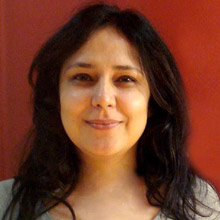
    Rachna Kanwar

    The one common factor among FM radio stations is that they want to stay connected with their listeners even when they are not tuned in. Hence most of them are finding new and innovative ways to engage their listeners online.


    Radio jockeys are going online by putting up blogs, videos and audio clips of their programmes on their FM station websites. Almost all FM stations today have made their presence felt on social networking sites like Facebook and Twitter.


    MxMIndia spoke to couple of FM stations to find out the significance of digital media to FM radio today.


    Rachna Kanwar, Vice President and Business Head, Digital Media and New Business, Radio City feels that digital medium has helped them connect with their audiences not only in India but even those settled abroad. “With the astounding rate at which the medium is growing, it is obvious that nobody can ignore digital media today.RadioCityhas used the medium effectively to reach out to our listeners. Digital media has also enhanced our engagement with listeners and has helped us in promoting our offerings to a larger audience base,” she said.


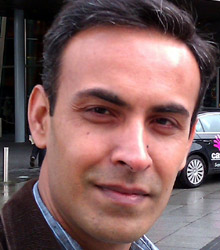
    Rahul Balyan
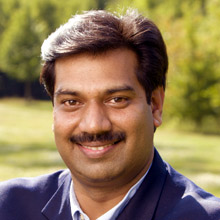
    Amitabh Srivastava

    In order to engage the listeners and ensure that they tune in to the radio station, the traditional FM stations will have to continue re-inventing themselves a lot more around what the listeners want and how they want, especially since the choice for a listener will be infinite on digital platforms.


    Rahul Balyan, Senior Vice President and Head of Digital Initiatives, Radio Mirchi said, “We have realised that at least 20 per cent of Radio Mirchi listeners are online, and have a lot to say; the digital platforms allow us to connect them on a one-on-one basis. We have got a tremendous response on Facebook, Youtube, Mobile VAS and our website. All of it is driven by the equity that Radio Mirchi has created with the listeners.”


    Convergence of traditional broadcasting platforms with digital platforms is perhaps inevitable as digital media has become significant, not only for radio but for all media.


    Amitabh Srivastava, Country Manager – South Asia, Radio Netherlands Worldwide pointed out: “Digital is the future and not competition to radio and I see a lot of potential for internet or digital radio inIndia.Mobilehas also become very important today as most people listen to radio on their mobile phones and as technology will progress and internet usage grows inIndia, internet radio will also see growth.”

  • Anchor: 5 reasons why Digital is the next big thing in OOH

    By Anirban Ghosh


    #1 Reach (The Last Mile Syndrome):

    There is no doubt that digital media is growing fast in India and also getting accepted among the clients. According to me, the only challenge right now is to position it aptly in the minds of the consumer through proper placement of the media. The last mile positioning of these media at the point of sale would be one of the key factors to get response and hence would be easy to measure also. This would definitely excite the clients to experiment with this medium to get a quick response within a short span of time.


    #2 Interactivity:

    This is probably one of the media which can interact with the consumer directly and effectively, and one of the major influential factors in buying any particular product. There are various ways to interact with the consumer, which can be controlled and impactful at different touch points to create the brand recall, perception and even to clear doubts at the points of sale.


    #3 Customization:

    Another uniqueness of this medium is that it can be used either in static or dynamic mode. It’s got the flexibility to customize the content exactly as per the need of the target group of any particular product, which would make the medium more interesting, exciting and engage the consumer to get better results.


    #4 Experimental:

    Out of the box innovative ideas experimented through this medium can be a lifetime experience for any consumer and the brand will be remembered for a long time. Touch screen technology can be used very effectively, so that consumers can converse with the brand and hence make the consumer compulsive about using this medium every time.


    #5 Measurability:

    If this medium is used effectively with strategy and at specific locations, then of course it can be measurable. I am sure it makes all the difference as to how do we perceive and position and compel the consumption of this medium at various situations. Although there is no industry currency in place, surely it can be done through some bold steps taken in future for the betterment of Digital OOH, which according to me will be one of the strongest media to reach out to consumers.


    Anirban Ghosh is the Senior Vice President, Adz Edge.

  • Rocky road for Digital OOH?

    By Robin Thomas


    The ‘Global Digital Out-of-Home Media Forecast 2011-2015’ revealed Digital Out-Of-Home media as the fastest growing media in the world with the US as the largest global market and China, the fastest growing.


    However, in India, the medium is yet to make a huge impact. Advertisers are said to be sceptical about investing in the medium due to the lack of an effective measurement system, which is seen as the single biggest challenge. In fact, the effectiveness of digital out-of-home, as per experts, is not evangelized to advertisers and media planners, and as a result, India has not been able to catch up with some other markets.


    Ishan Raina, MD and CEO, OOH Media observed, “The OOH TV medium in India is still in its growth phase. India provides tremendous opportunities to advertisers to reach out to their target group. This has also resulted in the development of various new media formats, and digital OOH being one of them. In general, digital OOH space is expected to see a tremendous growth in the future, given the expected infrastructural growth, increased amount of time spent outside home, and the general economy boom in the coming years.”


    According to industry estimates, the OOH industry, estimated to be around Rs 1,500 crore, commands around 15 to 20 percent of the total advertising share, of which digital Out-of-Home commands 1 to 2 percent and is expected to further grow to 4 to 5 percent in the next two years. It has telecom, banking and finance as its top spenders, among other categories such as retail, FMCG, consumer durables, education and media.


    OOH media players are very optimistic about its future in India, and feel that as infrastructure develops, the economy grows and consumers spend more time out of home, there is high possibility for the medium to grow tremendously.


    Gourav Tandon, Managing Partner, Apex Integrated Marketing said, “India is still at a very nascent stage; however I strongly believe that digital OOH has immense potential in the Indian OOH scenario. The transition has already begun and we do have very large format digital media in places like Gurgaon. Clients today are immensely demanding and the onus is on the agencies to provide high quality mediums.”


    For Digital OOH to grow, there has to be significant number of innovations in the medium, the effectiveness of the medium also has to be evangelised to the advertisers and the media planners, and most of all the industry must come together for an effective measurement tool for digital out-of-home.


    R Venkata Subramanian, Senior Director-Investments, MPG India said, “Advertisers are still sceptical about Digital OOH as there is no effective measurement in place. It is a very good medium and its future is bright, the only draw is the lack of effective measurement to showcase the effectiveness of the medium. However Digital OOH is growing and one of the reasons is because consumers are increasingly spending most of their time out of home.”


    But not all are so positive about the potential of the Digital OOH industry. Ashish Pherwani, Associate Director, Advisory Services Ernst & Young said, “I currently don’xt see Digital OOH crossing 4 to 6 percent of the total OOH segment in the next two years. It requires a different mindset to create ads for Digital OOH, as well as a separate sales technique.”


    Harish Bijoor, CEO, Harish Bijoor Consults Inc, underlined the need for a scientific exploration of the Digital OOH space. “Digital OOH is a medium with potential, but I do not believe the potential has been exploited. What is needed is a scientific exploration of this space. It is time for digital OOH companies to do pressure tests in limited number of cities to prove the efficacy and true value of the medium. As of today, there is a gap in terms of acceptance and faith in this medium, and in the bargain, the medium writes a self-fulfilling prophesy of stagnation in terms of value and use,” he said.

  • Ketchum Sampark goes Digital

    By A Correspondent


    Ketchum Sampark, the Indian Affiliate of global communications network Ketchum Inc, has announced the launch of its digital media business Ketchum Sampark Digital. Aimed at garnering substantial market share in the emerging digital media business, Ketchum Sampark Digital will offer full-service interactive strategy, web design, video production and multimedia development to help companies tell their stories and build engagement with their audiences on digital media (internet and mobile).


    Commenting on the launch of Ketchum Sampark Digital, N S Rajan, Managing Director, Ketchum Sampark said, “The launch of Ketchum Sampark Digital reflects the emerging significance of engaging with consumers through prolific use of digital domains. There has been a distinct shift in usage patterns wherein consumers look beyond email and casual surfing to complete engagement and internet as the media of choice for information. We are initially launching our Digital business with a team of young social media experts and progressively build a bandwidth of skills and digital capabilities including a team of interactive strategists, digital designers and producers.”


    According to Jonathan Kopp, Partner & Global Director, Ketchum Digital, “Globally, Ketchum Digital has created innovative digital media solutions for clients including FedEx, Kodak, ConAgra, Absolut amongst many other industry-leading companies. With the launch of Ketchum Sampark Digital India joins other Ketchum Offices and digital experts around the globe in the Ketchum Global Digital Network bringing digital social media solutions from around the world for our clients everywhere.”


    As part of its foray into the digital media business, Ketchum Sampark is concluding a detailed study of 200 Indian corporates and nearly 150 brands in the Indian marketplace to track their digital footprint as well as user engagements. The study covers Corporates from across 20 different industries including Aviation, BFSI, Consulting, Diversified Large Indian Corporates, Healthcare & Pharmaceutical, Oil & energy, Software Services and FMCG. The Brands covered in the survey are from across 14 categories including Apparel, Automobile, Media & Entertainment, Personal Care and Retail.


    “Our study has tracked engagement of these corporations & brands with their target audiences using social media channels like Facebook, YouTube, Twitter and LinkedIn,” said Ajay Sharma, Managing Partner, Ketchum Sampark.


    Key Findings of Ketchum Sampark Digital’s Indian Social Media Engagement Study 2011


    > Initial findings indicate that while most Indian companies (82 %) have registered a presence on at least one of the four social media channels that were surveyed, the activity is largely focused around consumer communication for their products and services.

    > LinkedIn seems to be the most preferred channel on social media with 72 % of the companies surveyed having a dedicated page on LinkedIn.
    Though Facebook is the largest social media platform in India with over 38 million followers, it lags behind LinkedIn with only 55% of Indian corporates registering a presence on it.

    > Using video and multimedia to create engagement with consumers, investors, potential employees and other audiences is still not an avenue explored by Indian corporates with barely 6% being Very Active on YouTube.

    > More than 50% of corporates despite opening up a channel or registering a page on social media are Inactive. Some Inactive corporates also tend to use the presence on a channel opportunistically during launches and other significant company initiatives.

    > We feel that with the explosion in social media users this will change in 2012.

    > Out of the 150 brands surveyed, 23% did not have any presence on social media platforms while 30% had a presence on only one channel. Only 22% of brands were present on all three social media platforms.

    > Unlike corporates, Facebook is the clear favourite for brands with 75% of these brands registering a presence on it. YouTube and Twitter followed with 42% and 28% respectively.


    79% of brands with a presence on Twitter were Very Active / Active on the platform as compared to 69% on YouTube and 63% on Facebook.

  • Rio to host first digital journalism fair

    By A Correspondent

    The first exhibition dedicated to showcase digital journalism related products and solutions will take place in Rio de Janeiro, Brazil in December. Digital News Show (DNS) will be attended by an audience of students, news executives, online media professionals and people interested in new media.

    Stands of media groups – as well solution development companies for the digital journalism industry – will take part in the event to display the latest innovations in this environment. Augmented reality, mobile applications, interactive infographics, QR codes, digital editions and publishing systems are some of the attractions that will be exhibited at the fair.

    In the two-day event, visitors will have the opportunity to interact with the technologies shown by exhibitors, and to purchase gadgets like tablet computers, smartphones, e-readers and digital cameras at attractive prices. Digital News Show will also realize discussion panels with online journalism related topics, such as ‘Interactive Infographics and Data Journalism’, ‘Investigative Journalism in the Digital Age’, ‘Newsgames’ and ‘News Content for Smartphones and Tablets’.

    Digital News Show is a production by Jornalistas da Web, an 11-year-old Brazilian website that covers the relationship between journalism and new media. The event will take place on December 10 and 11, at the SulAmérica Convention Center, in downtown Rio de Janeiro. The stands can be booked by exhibitors now. Tickets go on sale soon at www.digitalnewsshow.com.

  • Malls are great for Digital: Ishan Raina

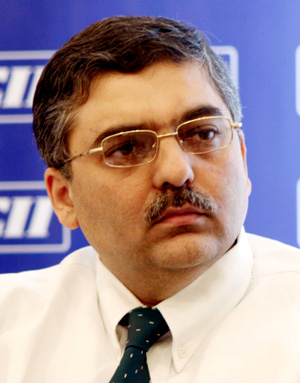
    Ishan Raina, CEO & MD, OOH Media India Pvt Ltd is an advertising veteran. An IIM Calcutta Alumni, Raina was one of the first industry experts to stress that it was important to engage consumer at various touch points.  The changing lifestyle today has proved his conviction true. In a conversation with Ritu Midha of MXM India, elaborates on the evolving OOH medium, advent of digital OOH and measurement. Excerpts:
    Q: How do you see Digital OOH growing in India vis-à-vis other media?

    The Out of home TV medium in India is about four years old and still in its growth phase. But the medium has grown a lot as compared to what it was four years ago. It was a conceptual selling at that point of time where the challenge was not only in growing the company but also growing the industry as a whole. Today people understand this medium and the future prospect of this medium. The change in the lifestyle trends of the consumers and media fragmentation has led to the growth of this industry. Time spent for consuming traditional mediums is also getting shorter. OOH TV being an SEC ‘A’ focused medium adds dynamism to the existing media plan of the clients for their brands.

    Today OOH industry commands 15-20 percent of the total advertising share.  Digital OOH TV has 15 percent of this share ie 1-2 percent of the overall advertising budget. The biggest challenge is to grow the size of the market which is still at a growth stage. We need to grow this to 4-5 percent in the next two years.

    Today we have over 300 clients from across categories from Automobiles, Finance, Telecom, Retail (Luxury, Apparels etc), Media, FMCG, Consumer Durables, Travel & Tourism, Education etc. using us for various reasons /campaigns. In brief, since the industry is still emerging and not yet mainstream media, there is immense scope for new clients, categories and growth. While starting new clients & categories has been difficult, repeat clients have been relatively easier, due to good formal (research) & informal (word of mouth) feedback.

    Q: In terms of new types of Digital OOH advertising, how does India compare with US, China and Europe?

    In India there is certainly a considerable change in the lifestyle of consumers today. People spend more and more time out of home whether it is in their offices, malls, multiplexes, restaurants, gymnasiums, bookstores etc. This change in the lifestyle trends of the consumers and media fragmentation has led to the growth of this industry. OOH television networks adds a great value as it follows these consumers wherever they are thus becoming the only medium present in a day of the life of a consumer.

    India is a growing market and thus provides tremendous opportunities to advertisers to reach out to their target group. This has also resulted in the development of various new media formats with digital OOH being one of them. In general, Digital OOH space is expected to see a tremendous growth in the future, given the expected infrastructural growth, increased amount of time spent outside home, and the general economy boom in the coming years.

    China is the largest market in the world for digital OOH TV, and our strategic partner Focus Media, is the global leader. In Europe as in the US this medium has become more of a point of sale medium and not a “day in the life of an SEC A consumer” as it is in emerging markets, such as India and China.


    Q: What part of media spends goes into Digital OOH?

    Digital OOH TV commands 1-2 percent of the overall 24,000 cr advertising industry. This will grow to 4-5 percent in the next 2 years. About 80 per cent of this would belong to 2-3 national players and we hope to continue being the revenue leaders of digital OOH TV industry. Digital OOH advertising is emerging as an integral part of the media mix for advertisers, and is being used by them for various companies and launches.

    Q: Is measurement still an issue with Digital OOH advertising and promotions? What kind of research is now being done to measure?

    In Digital OOH format, we understood the gap of measurement in traditional OOH and thus initiated OOH Metrics, which is today India’s first ever large scale digital Out-Of-Home TV research. Out-of-Home media conducted this research in association with Nielsen – world’s leading provider of marketing information and audience measurement.

    OOH Metrics is the only Metrics available in Outdoor Audio Visual space as of now conducted to understand the Demographic profile of the people and the audience behaviour. It is the study done across 8 cities, conducted by Neilsen, with a sample size of almost 15,000. OOH Media also does campaign research for the brand advertisers on OOH screens to quantify and qualify the viewership.

    We have done over 100 Campaign Evaluation Studies across categories like Auto, Telecom, Finance, FMCG, IT and many more to find the recall of ads through this medium. The results have been encouraging which have resulted in long term relations with clients.

    Q: If we look at geographical segmentation – do some parts of the country respond better to Digital OOH than others? Similarly would the trends vary in metros and non-metros?

    Digital OOH is value for money in metros but as you go down the chain that is tier 2 and tier 3 cities, it becomes an expensive option because of the availability of the regional formats. So Digital OOH is actually a medium for major 8 metros with good density & quality of audience or locations.  This will change over time.

    Q: To what extent has the advent of mall culture and modern retail helped the cause of Digital OOH. And how do you see it contributing five years from now?

    The OOH TV format has actually evolved tremendously in Offices / Commercial Bldgs and Tech Parks / Residential complexes, Gymnasiums as well as large format malls / multiplexes / Modern Trade. There is a constant evolution of infrastructure (malls and hypermarkets) which is bringing the radical change in lifestyle and spending patterns of consumers. These In-stores facilities offer a wonderful opportunity for Branding of various products at the “point of purchase”. Thus greater the increase in number of In-store networks more is the opportunity to utilize these networks as a medium of advertising and creating a top of mind recall. Digital OOH media is strategically present in In-store locations with more than 2000 screens in Malls, lifestyle stores, Supermarkets. Digital OOH adds a lot to the communication by being the only audio- visual medium and thus we can say the medium is increasingly becoming effective and is here to stay for a long time.

    Q: What as per you are emerging trends in Digital OOH advertising?

    Audience, not screens, is the Mantra:  The quality and quantity of audiences that the screens provide, is what is the ultimate driver for this medium and the differentiator between different brands in the medium.

    Localisation / Customisation of Messages: OOH Media has been the most flexible medium today and gives a chance to slice and dice the message of the campaign as per the kind of audience an advertiser would like to reach. The client can select the locations, cities, frequency and language as per their requirements. Flexicasting provides an advantage of getting as local as possible just like an outdoor but with the power and capability of Audio-Visual.

    Relevance is the new king: The role of content is thus becoming very important in this medium and OOH Media continuously experiments with content to make it more relevant for the audiences and thus attracting more eyeballs. Content Integration helps in creating a contextual connect for the brands. OOH Media customizes in-house content as per the client’s requirement and offering to make it contextual.

    Connect with consumer: The medium offers an advantage of Flexicreation i.e. creating customized ads and content according to the kind of audience the client wants to reach and also the kind of locations they want to advertise in. Flexicreation for the same medium is impossible in any other audio visual medium. The future will be and has to be the contextualization of the content and advertising messages.

    Q: How effective are touch screen kiosks and how best can they be utilized by the advertisers?

    It is still early  days – not currently scalable. Our model is ‘Push’ to the consumers, where as Kiosks rely on consumers to take some action.

    Q: A lot of money is being spent on airport advertising? Is it just the premium customer that lures the advertisers there – or is the recall value much higher of airport ads?

    Airports are a very effective locations –and of course brands advertise there to target a specific target group.

    Q: How powerful is OOH as part of experiential marketing?

    Its part of the experience currently, not really experiential marketing or interactive marketing. What OOH TV ensures is great recall across Sec ‘A’ and increasing also reach in select locations where due to media fragmentation and audience habits, OOH TV is actually the first time the audience is exposed to the advertising.

  • Clients want specialization but without siloization: Ashish Bhasin

    By A Correspondent

    Non-traditional media is picking up, and even at a time when ad spend projections are being corrected downwards, digital is being looked upon favourably. Little surprise then, that Aegis Media India, in its pursuit of a creative agency opted for Doosra, agency gaining ground in non-traditional brand communication area. Net result: creation of Doosra Brand Communications.

    The surprise element in this deal, however, is that it is perhaps for the first time in India that a true blue media network has brought a creative agency into its fold. Does one hear the returning footfalls of an integrated communication agency here? Not quite the same, explains Mr Ashish Bhasin, Chairman India & CEO South East Asia Aegis Media. “Integrated communication as we knew it earlier is neither feasible nor practical in today’s world. Clients do require and demand specialization – for instance, one needs a specialized digital agency to meet the clients’ specific needs in that area. The same is true of every specialized field. However, clients no longer want to deal with 20 people. Our ‘One country – one Aegis’ policy gives them all the benefits of specialization, without the disadvantages of silos.”

    The creative agency’s role, he says, cannot be undermined, as no media plan can be effective without an effective message. He elaborates, “We need to understand and value the creative agency’s role in achieving clients’ communication objectives. In each of Aegis’ specialized areas, we require creative expertise – be it activation, digital or tradition media.”

    The buzz has been on for some time that Aegis is looking for a creative agency. Why the decision to get into equity partnership with Doosra? “Doosra is an excellent fit for us – Zahir Mirza and his team’s creative excellence spans beyond traditional – they are about much more than TV commercials, and they would definitely bring a new dimension to Aegis Media’s holistic ‘integrated marketing’ approach,” explains Mr Bhasin.

    Doosra Brand Communications will operate out of Aegis Media’s office at Poonam Chambers, Mumbai, and in fact have already moved in.

    Picture: Fotocorp