Tag: digital

  • Don’t ignore TV & print: Joy Chakraborthy

    Joy Chakraborthy, CEO, TV Today gets candid as he talks with MxM India about the quality of sessions that were held at Goafest 2012 and what the committee needs to consider for 2013.


    How would you rate the several sessions that were held this year at Goafest?

    It’s good to see some good speakers at the sessions this year, but I would still suggest that they should have had some sessions on media because we are talking about future technologies while we are also talking about existing technologies like television and print – that is what I found missing. It’s always good to come back to Goafest because you get to meet all your friends, interact and network with them and partake of the nostalgia. So it’s great place to network, party and go back.


    Is digital receiving too much of a prominence at Goafest?

    Digital is getting prominence everywhere but people should not forget that all existing mediums are going to coexist; nothing is going to replace anything. The focus should also be on television and print and they should have got some speakers from these mediums too, as they need to be told what are they doing to sustain in these mediums because they are also growing. I have already put forth these recommendations to the committee. If you see, all sponsors are from print and broadcast, so they need to make these mediums inclusive in their plans.


    What are your views on the awards that were held this year?

    I think the awards got a little boring towards the end. Till Media Abbys were given it was good, but once it got to digital and other verticals it became boring. A few moments at the awards were interesting like the laser presentation made by Google.


    What are your travel plans for Goafest 2013?

    I think it’s always good to come here but I hope they accept our recommendations. I felt a bit let down this year, as you are setting standards of Cannes, you cannot afford to have technological glitches (as it happened on the first day at the Conclave); it reflects badly on us Indians. Such issues need to be addressed better.


  • Mobile is medium not just to connect, but to engage & inform: N Rajaram

    How would you rate the outcome of your session with You Tube’s Lucas Watson? What is the future you foresee for the medium of digital?

    What came through, very interestingly, was the role of video in digital. Traditionally, we have all been talking about search and text-based online marketing but what we have now seen is the power of video, as video is all about sight, sound and motion. It has been found to be a compelling medium for people to stay connected and be persuaded.


    What is the role that mobile will essay as we move forward?

    Clearly for us mobile is going to be one of the key drivers for adoption of internet in the country. I don’t think fixed line is going to expand its base in the country, and this actually happens everywhere. With the advent of smartphones and with the kind of mobile technology available we will soon see a lot of people across the country accessing internet for the first time on the phone and that’s an opportunity for us to explore. So we must look at the phone not just as a medium to connect but also as a medium to engage and a medium for information.


    Do you think advertising on mobile lacks creativity?

    I think a large challenge is the availability of devices, as less than 10 per cent of the people in this country own smartphones, and therefore the capability that exists today are not rich. The kind of creativity that you see on mobile tends to be more text and base level media stuff and is not as rich as you would expect. But as we begin to look at more advanced smartphones coming in, the opportunity will increase.


    With the coming of 4G, what is Airtel’s gameplan for the medium?

    I wouldn’t like to comment anything on that at this point in time.


    Click here to view all Goafest 2012 stories


  • Digital is the way forward for Zee

    By Rishi Vora


    The future is definitely Digital, and Zee Group has its sights set firmly on it. In addition to its recent launch of Ditto TV, the broadcast major has been fairly active in the digital space to promote properties such as Dance India Dance 3 (DID) and Punar Vivah.


    The channel has also taken a new and different step to enhance consumer interaction. It has introduced ‘free voting’ for contestants (where the viewer is asked to give a ‘missed call’ to his favourite contestant) as against the industry norm of pay-per-message.


    To further intensify its focus on Digital, Zee has now unveiled a WAP site and a mobile application that connect with DID fans on the go.


    The WAP site has interactive features which enable fans to interact with the contestants and judges and allows them to vote by a click of a button apart from a few other interactive features.


    MxM India spoke to Marketing Head Akash Chawla about these and other digital initiatives.


    Q: This whole focus on Digital… is this something that will take Zee a step ahead of competition?

    That is what we expect to do. We hope to be ahead of the competition with regard to this particular thing. From our perspective we’re not looking at how competition is doing on this front, because our entire objective is to be very close to the consumer. There are times when we do it by being on the ground and there are times when we do it by actually going to their homes. In the age of interactivity it is apt that we use digital media to the best. And that is exactly what we’re looking to do.


    Q: Does this take away anything from the way you use traditional media?

    The one mantra which we’re going after is driving conversations with the customers. So, even when we’re using the traditional media – a print ad for example – the attempt is to make it more interactive. Any my belief is that you can also use traditional media to drive a lot of audience on your social network.

    I’m not saying that traditional media is something we won’t do, but our attempt will be to drive more conversations through our communication.


    Q: You’ve been fairly active on social media and that seems to be a big thrust going forward as well. But there is a saying that social media is a double-edge sword and that it could well turn out to be harmful to a brand like yours.

    It is too soon to say that. In the case of iconic brands or sectors such as automobiles you can see a sizeable community. In the GEC space we’re just beginning to do that. So our first objective is to build a sizeable community. Once you get a sizeable community then how to use that is the second objective. Traditional media will irrespectively be required as social media in India is growing.


    Q: This missed-call concept which you’ve introduced for DID is something very different altogether. How did you come up with a concept like that?

    At Zee, we’ve been doing talent hunts such as Sa Re Ga Ma and DID. When we started this interactivity thing in 2005 with Sa Re Ga Ma Pa Challenge, we used to get a lot of votes. If we sit down and draw a trend, votes have actually gone down over a period of five to seven years. Most of the formats today are interactive in terms of asking for votes. Second, the credibility aspect. Consumers have come up to us and said that it is just a revenue making mechanism because the SMSes are charged higher than the normal SMSes. Frankly, as a broadcaster, for us, at this particular time, it is more about building the brand salience than the small amount of revenue that’ gets generated through votes.


    Q: That revenue – is it that small enough to be left out?

    It’s a tradeoff. Tomorrow we may not be able to do it for all our reality shows, but at the end of the day if it is about a brand like DID – from the consumer’s perspective, credibility is of primary essence. And whatever brings us that credibility is something we would want to go in for.


    Q: Is this a beginning of a new trend in broadcast?

    You cannot do this for everything. It is not a model that can be followed by all brands. There are certain attributes of DID in terms of how many people were connecting with it, in terms of it being a brand which is already known and the kind of credibility it has at this juncture…


    So I don’t think it’s a concept that’ll fit all brands. How many more people will start following us on that? We don’t know. But we did try this again for another show, Punar Vivah. We decided to apply that to the show because as a concept it applies to a segment where we could afford to be more interactive and it gave us phenomenal results.


    Q: Does a show like Punar Vivah attract a lot of traction on social media?

    Actually if you go to our Facebook fanpage, Punar Vivah is one of the topics that is heavily discussed. You’re right that you cannot do things on social media blindly. And I’m worried about that. If something is successful people will start using it as a formula. The aspect we’re following for Punar Vivah is very different. We’re doing Punar Vivah symposiums across 18 cities of India, where every week we have a couple of symposiums which includes a psychotherapist, a marriage counsellor and one reputed NGO of that particular city or state. We also have people on the panel who have gone through the remarriage process, our viewers and media.


    Our attempt is to bring this so-called taboo topic out of the closet. You may do with social media with a particular level. But, we feel for Punar Vivah that is the one that is actually more relevant than just social media. So yes, you’re right. Social media has to be used keeping the segment that you’re chasing in mind.


    Q: You’re at No 3. Neck-and-neck with your nearest competitor. Where next?

    No 1 next. It was a matter of 1 GRP with Sony last week.


    How long for No 1?

    (Smiles) I told you three months ago that we will be No 2 in three months. We’ve become No 2 in three months.


  • Continuing the WorldSpace legacy @ Timbre

    By A Correspondent


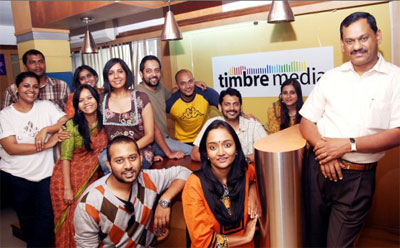
    The year 2012 has already begun with a series of announcements of radio on the web and other digital platforms. PlanetRadiocity.com for instance has launched a new genre – IndiPop Radio on their Web Radio station in March, 2012, and a Bengaluru based internet radio company- Venturenet Partners will be launching a premium model internet audio service- Radiowalla in April 2012. Formed in 2010 by former employees of WorldSpace India, Timbre Media is also slated to announce its internet radio station – Timbre Radio. All these players not only aim to provide innovative but, differentiated content and world class radio programming to their listeners, all through the power of audio.


    Besides the internet, Timbre Media plans to exploit the potential of the audio medium across digital platforms including mobile and DTH Television. On the mobile front, the Bengaluru based Timbre Media has already aligned with Vodafone India to offer listeners multiple music genre radio stations across the country. Listeners will have to pay Rs. 30 per month for 300 minutes of free usage. However this mobile radio service is not available in Andra Pradesh, Gujarat, Himachal Pradesh and Kolkata. Saregama India Pvt Ltd. which has acquired 10 per cent stake in Timbre Media provides the company (Timbre Media) with access to their music database.


    Timbre Media offers customised radio content for multiple broadcast platforms. It has four studios in Bengaluru and two studios in Mumbai among other studios in different parts of the country. In conversation with MxMIndia, M Sebastian, Co- founder and CEO, Timbre Media spoke about business model of Timbre Media, his break-even plan, the trends to watch out for, on traditional FM radio and much more.


    Q: Can you share with us how Timbre Media was formed? And what was the thought process behind the launch?

    Timbre Media was formed in 2010 by the erstwhile employees of WorldSpace India, to continue the legacy of world class radio programming that we provided through WorldSpace to our listeners.


    Q: What is the team size? Timbre Media is currently headquartered in Bangalore… Will you be setting up offices in other parts of the country too? When?

    We are a team of around 80 people, spread across different Indian cities.


    Q: Timbre Media specializes in programming radio contents for corporate entities, FM stations etc… Can you throw some light on the USP of Timbre Media? Also are you in talks with any FM station for radio content?

    Timbre Media has the unique advantage of a talent pool that introduced subscription based radio service in India and popularized the concept of genre based radio programming in our country. Our content is different, rich and compelling. We have learnt a lot about the expectations and aspirations of our target customers in the last 10 years of our association with WorldSpace Satellite Radio and its elite customers who valued quality and variety.

    We are in discussions with potential customers in every vertical that we are operating in.


    Q: What is the business model of Timbre Media? Is it advertising-led or a subscription model?

    Our business model is based on our philosophy that is to provide customized content that is different, rich and compelling and monetize the same in the best possible manner. It could be advertisement- or subscription-based depending on the vertical and the ecosystem we are operating in.


    Q: How many channels are in the offing? Which genres will you be offering? Will news also be part of it?

    We can’t say at this moment how many and what types of channels we will be offering. As I said, it is a function of the vertical and the prevailing ecosystem. We are focusing on providing customized content solutions to various customers and it could vary from one to the other. We are not averse to a particular type of programming or platform.


    Q: When are these channels scheduled to launch? Will it be only through mobile or will one be able to access them on the internet and DTH as well?

    We are not averse to any programming or platform. We are interested in utilizing our experience and expertise to meet the aspirations of the end user by using every available opportunity and monetizing the same to ensure the growth of Timbre Media.


    Q: Whom do you consider as competition?

    As such I do not think there is anyone who has the same experience and expertise that we have, and provide the same products and services that we offer.


    Q: How has 2012 welcomed Timbre Media? What are your growth plans?

    We have made considerable progress in the last two years. Thank God and the committed and passionate team that Timbre have, we have done extremely well compared to most of the start-up enterprises. We want to be a unique media enterprise that touches every customer who values quality audio content through all possible platforms and devices in the next 5 years.


    Q: Any specific trends you see in the Indian radio industry, particularly in the internet and mobile space?

    Radio industry is growing, and listeners are appreciating quality content for which they are willing to pay. The technology and platforms are enhancing the ecosystem every day and enabling the consumer to get what he wants, in the way he wants at the time he wants.


    Q: Also, should traditional radio begin to worry with your entry?

    There is sufficient space for everyone to co-exist and grow. Rather than worrying, we need to identify areas of partnerships that lead to mutual benefit and faster growth and work towards realizing the full potential of the audio medium.


  • @FF12: Day 2: Seamless blending with traditional mediums – a big want!

    By A Correspondent


    After an invigorating day where suggestions and formulas surrounding digital came flying thick and fast, it was time for the mediums of television, advertising, radio, films etc to do some soul-searching and look for solutions to tackle the imminent challenges that digital is bound to bring. The day began with a keynote address by Hernan Lopez, CEO, Fox International, who began by praising the dominance that India had cast on several countries around the world. But he regretted the fact that despite ideas and innovations gaining prominence, one area that sadly lacked innovative ideas and content was television. According to Mr Lopez, the reason for India’s lack of show was due to the fact that Indian talent “operates under price control which equals creative shackles”.


    Mr Lopez continued saying that the Indian television industry is almost totally dependent on advertising revenues – almost $2.6 billion per year – which, coupled with the fact that there is an overabundance of channels and less number of affiliates, meant that broadcasters are in a bind. The way forward according to Mr Lopez was if the price control was done away with. He said that this would make it possible to pay the talent in the industry what it deserves and then it can operate without any constraints to produce the best possible content. Mr Lopez lauded the move to digitisation which would reduce the carriage fees being paid and increase the revenues for the industry.


    In a session moderated by Neeraj Roy of Hungama, Sanket Akerkar, MD of Microsoft India talked about “The converged future – Multiple platforms, technologies & transforming applications for media and entertainment”. The theme of his keynote address was significance and emergence of digitisation. Citing the example of ‘Occupy Wall Street’, Mr. Akerkar said that the consumer lifestyles today are controlling the way conversations happen. The industry has to takes its cues from what the consumers want. According to him, even ads will now be consumed as per the consumers’ choice and the advertisers can’t dictate the place and time for the consumption. Now the people are going to become the content creator and content consumer. The main challenge for the industry is now to seamlessly blend and enable technology to become user-friendly, he said.


    Mr Roy added by saying that technological progress has enabled applications that recognise the customer preferences, be it the Internet or the phone. All the speakers were in agreement that once the digitisation bill comes into effect, the choice of content available to the user will be limitless. As Mr Akerkar said, “the challenge will be to separate content, be it mainstream or user generated into what is relevant and what is not.”


    In another session titled “Innovations in the advertising industry in the digital world”, the panellists focused on why the much sought after medium of digital was rather ignored by advertisers who preferred to seek refuge elsewhere. The panellists comprised Rajan Anandan of Google India, Olivier Fleurot of MSL, Frederic Josue of Havas Media, Vikram Sakhuja of Group M, Kapil Agarwal of UFO Moviez and Varun Gupta of KPMG India. The session was moderated by Rajiv Makhni, Managing Editor, Technology, NDTV.


    Mr Anandan began by stating that India is still an emerging market where web advertising is concerned and it still constitutes just 3 per cent of the overall advertising spends in India – estimated to be around Rs 33,000 crore. The biggest driver of growth in advertising on the web would be through the rise in the number of users of smartphones, which is estimated to touch 100 million users in 4-5 years time. Smartphones alone could boost the growth of web advertising to about 8-10 per cent, he said.


    Mr Josue of Havas was of the view that it would be content that will drive the growth of the medium in the years to come. But the medium will face its share of issues which include multi-tasking across various platforms as an attempt will be have to be made to offer content seamlessly across various mediums, he said. Mr Fleurot began by stating how the marketing and communications industry was witnessing a profound disruption due to the invasion of technology and social media. This, he said, has led to an increased level of competition in the marketplace. The challenge, according to Mr Fleurot, is that clients today are not yet organised for the 21st century as they still prefer to work in silos. But in the case of online, the model of working in silos will disappear as all the other mediums work as a single unit on the internet. Going forward, the two key factors that will determine the growth of this medium, he said, include the speed with which marketers communicate with their users through the digital medium and the transparency with which they operate on the medium.


    Vikram Sakhuja was at his jingoistic best as he began by questioning what the term innovation in advertising actually stood for. “Innovation is a term that is broader than creativity. It is a new way of doing something better,” he said. He outlined the current scenario by stating that technology today is an overestimated medium in the short term but is underestimated for the long term. The problem according to him is that the medium has been underestimated for a long time now and that it was about time the medium leapfrogged ahead of the others – go from the current 3 to 15 percent in the shortest possible timeframe.


    In the session titled “Building sustainable models for niche content” honchos from the broadcast industry such as Paritosh Joshi of Star CJ (session moderator), Smeeta Chakrabarti of NDTV Lifestyle, Monica Tata of Turner International India, Ajay Chacko of A+E Networks I TV 18 JV, Atul Pande of Zee – Sports and Rasika Tyagi of Star India discussed on revenue models to sustain TV content catering to niche audiences and its long-term sustainability. Atul Pande stressed on the need to charge premium to audiences who really are on the lookout for speciality content. Smeeta Chakrabarti said that as a speciality channel one cannot talk about TRPs, rather it is the brand connect that needs to be spoken about as far as ad sales was concerned. Rasika Tyagi on the other hand remarked that the whole idea of measuring a speciality interest channel should be relooked at. “It’s not about how many people are watching you; it’s more about what kind of people are watching you.” She also said that the audiences of niche channels are of such quality that they do not mind paying, and that broadcast companies should look to tap into that opportunity.


    On whether the industry requires a different approach as far as measurement for these channels was concerned, Paritosh Joshi said, “The big challenge with respect to measurement is that we need to find a way to measure both quantity as well as quality. The quality aspect is very critical for a speciality channel.” Monica Tata added, “We need to have a different measurement system to evaluate special interest channels.”


    In the post-lunch session titled “Radio: Innovations in content”, industry veterans discussed at length the innovations that radio was witnessing with regards to content and the enormous innovation opportunities that FM Phase III would allow. The session was moderated by Apurva Purohit, CEO of Radio City and the panellists included Rabe Iyer of Big FM, Abhijit Avasthi of O&M, Bhavna Somaaya, Columnist and Writer and Charles Falzon of Ryerson University.


    Ms Purohit kick-started the session stating that radio currently is in a schizophrenic stage wherein on one hand the medium is witnessing immense growth, it has a huge reach in the country and the FM listenership has also further increased with higher number of mobile phones, while on the other hand the overall ad pie of the medium is at a dismal 4 per cent. She pointed out that in the next two years the industry anticipates another phase of growth which will bring news, sports commentary, multiple frequencies, besides further expansion into towns and cities.


    Speaking about the strengths of radio as a medium to advertise, Mr Avasthi first admitted that out of all the media, it is the toughest to write radio spots. He explained, “The strength of radio I believe is one can conjure up a world in the minds of the listeners. What you hear on radio today is mainly restricted to Bollywood music. There are so many kinds of music still to be explored and so many types of content that can be experimented, and I believe the industry requires some amount of courage to break this format.”


    According to Mr Iyer, although 80 per cent of content on radio is music and 20 per cent on the packaging of music, there has been some innovation in the medium and with the launch of phase III it will bring with it immense opportunities especially on the innovation and differentiation front.


    Key takeaways:

    – Need for television to do away with price control

    – Niche channels to broaden content choice for consumers

    – Post digitisation, consumers will dictate place and time of content consumption

    – Need for significant hike in digital adspends by clients

    – Phase III to steer growth of radio significantly


  • @FF12: Adapt to the digital tide or be left out

    By A Correspondent


    In keeping with the theme, ‘Embracing the Digital World’, FICCI Frames 2012 got off to a wishful start at Hotel Renaissance, Mumbai on March 14 with a welcome address by the Co-Chair of FICCI Entertainment Committee, Karan Johar. After Mr Johar’s welcome address, Uday Shankar, CEO, Star India & Chairman, FICCI Broadcast Forum, proceeded to present his perspective on the Event and the broadcast industry in general. Making a dash for the core topic of digital, Mr Shankar began by stating, “Digitization is a big reality which will revolutionise the way content (creation and distribution) is offered.” Even though he said that digitisation will create a level playing field for the broadcasters and the cable operators, he had a word of caution to add when he said that his biggest concern was “the chaos which will be caused by the broadcast industry’s inaction”.


    Prithviraj Chavan, Chief Minister of Maharashtra was next and began by assuring how the current era was an “exciting time to be living in”. He said that the challenge would be to adopt the regulatory framework to new technology and ensure that over regulation doesn’t kill a good thing. He also said that the move towards digitization will create a huge employment opportunity but there is a need to explore how technology can empower the field of education. The Chief Minister also touched upon the need for regulation and suggested that instead of the state regulating the media, the medium should look at regulating itself.


    Following the CM’s speech, the event witnessed the release of the FICCI-KPMG Indian Media and Entertainment Industry Report 2012; FICCI-Amarchand Lawbook and ‘Positivity: The impact of television on India’ by The Indian Broadcasting Foundation.


    Uday K Varma, Secretary, Ministry of I&B, opened his address next by stating that the concerns that the industry had over digitization and the Phase 3 of FM radio have been addressed by the move to allow 839 new FM stations and 500 community radio stations. He stressed that the government is committed to ensuring time bound digitization and said that come July 1, the four metros will switch over to the digital format and the plan is to ensure that the move to digitization is completed by December 31, 2014. He agreed that the challenge was mammoth – to convert 80 million analog connections to digital format, but added that it will ensure faster and deeper penetration. “This will address a plethora of issues facing the television industry, such as addressability, carriage fees, audience measurement and consumer preferences,” he said.


    Punit Goenka, CEO & MD, ZEEL too spoke about the pros and cons of digitization, how the ratings are inadequate and how self regulation was the need of the hour for the broadcast industry. Carolyn Everson, VP, Global Marketing Solutions, Facebook elaborated on how Facebook can benefit the media and entertainment industry and cited examples from music, gaming and films to drive home her point.


    Session highlights:

    Post the promises and pleasantries doled out by committee members and authorities, it was time for some serious discussion which began with a panel debate on ‘Addressable Digitization – The way forward’. Sanjay Gupta, COO – Star India, Sunil Lulla, CEO and MD Times Global Broadcasting, Sameer Manchanda, Founder – DEN Networks and Punit Goenka, MD and CEO, ZEEL comprised the panellists. The panellists agreed that digitization is the way forward and will soon be a reality. Uday K Varma, Secretary – I&B, put the ball in the industry’s court as he said that there were no political opposition to digitization and the parliament too passed the law in December 2011, therefore it is now incumbent upon the industry to make digitization a reality. Sunil Lulla pointed out that the there is greater good in digitization, but the industry has to do a lot of work over the next few years. Sameer Manchanda was of the view that digitization is a reality and that it will bring more number of channels. The session also discussed opportunities and challenges that digitization has to offer and how the industry was gearing for digitization – whether they are ready or not?


    A session on ‘Maximising the power of digital distribution’ saw industry leaders speak about the challenges that come along as the country is experiencing the much talked about shift – from analog to digital cable – the investments that goes into and many such challenges. Industry honchos such as K Jayraman of Hathway Cable and Datacom Ltd, SN Sharma of DEN, Anshuman Misra of Turner, Asia Pacific, Vikram Chandra of NDTV, Jagi Mangat Panda of Ortel, Prof Jonathan Askin, and Anita Wallgren, Government Attorney, US Department of Commerce made up for the panel.


    The panel agreed that while digitization comes in as a relief for broadcasters who will be benefitted from additional subscription revenue the relaxation on paying heavy carriage fees, and of course providing viewers with a superior content experience – MSOs and cable operators have to quickly respond to the digitization mandate by investing in set-top boxes – the cost that is only possible to recover after four years.


    Vikram Chandra talked about the difference digitization makes to the news industry. “Digitisation is important for news players. It is leading players in the news industry into areas they don’t want to be in. In the race of chasing TRPs, people are forgetting that digital has great potential that has to be tapped, a business model which needs to be looked at.” Mr Chandra also mentioned the role of tablets and high-end devices as new distribution platforms.


    Next was a session titled “Financing the Media and Entertainment Business” where the panellists comprised eminent personalities such as Prashant Jain of HDFC Mutual Fund, Mathew Cyriac of Blackstone, Soumo Ganguly of Moxie Entertainment Pvt Ltd and Daniel Dubiecki, Founder and Partner, The Allegiance Theatre, Hollywood.


    Mathew Cyriac started off the session by pointing out that majority of the investments within the media and entertainment industry were made in television and print as they represent a fairly large share  in terms of sheer numbers as against Internet and Radio. The Hindi GECs in TV is typically where a lot of money goes to, followed by regional GECs and sports channel. For print media, it was the regional publications that command a lot of attention as regional advertising is very robust and extracts a lot of profit.


    Prashant Jain pointed out that a lot of companies in India have managed to get good funding and that it is not reflective of the supposedly very, very sorry picture that was being talked about. “It’s not that all of India in the media entertainment space are not attracting funds. Companies like UTV and a few others have attracted investors.”


    In the session on ‘Protecting Copyrights, Infringements & New Trends i.e. Remake’, the panellists chose to rummage over the impediments surrounding copyright issues in the film and music industry in India. The panellists included Sai Krishna from Sai Krishna Associates, Deborah Benattar from the French Embassy, Jagdish Rajpurohit from RCL Motion Pictures, Bertrand Mouiller, former DG IFFPA and Amar Butala from UTV Motion Pictures.


    Sai Krishna provided a hopeful insight as he said, “The industry should take heart in knowing that the Copyright Amendment Bill is currently being debated in the parliament and is expected to be passed after the current Budget Session. There are provisions that can alter the way the entertainment industry functions in India.” But he cautioned that the Bill has its setbacks too, as there are no clear guidelines when it comes to copyright issues between the writer, music composer and the producer of a film.


    Mr Butala added, “We have made huge leaps in terms of legal paperwork with actors and performers where copyright issues are concerned. But it is just the start and the challenge will be to sort out legal issues and take the offenders to Court with the hope of finding a favourable outcome from the judiciary.” The panel proceeded to discuss the trend of moviemakers bagging rights for remaking movies and that there was a need for a law that would streamline procedures for the industry at large.


    Key takeaways:

    – Complete digitization makeover scheduled for December 31, 2014

    – Copyright Amendment Bill to be passed in Parliament soon

    – Digitization will encourage niche and differentiated content

    – Need for media to self-regulate self then wait for a nodal authority to do it

    – Digitization to create more employment opportunities

     

  • Budget shows the finger to digitization


    By A Correspondent


    In the end, one hopes that the angel is in the details. On Day 3 of the annual Frames jamboree put up by industry body FICCI, one hoped that Finance Minister Pranab Mukherjee will announce sops for digitization. The broad proposals didn’t. And for once, one hopes that rather than find the devil, there’s an angel hidden out there.


    Okay, there are some nice things in there. Like sops early stage funding from Venture Capital companies to media companies. But the IBF director-finance Naresh Chahal’s outrage was understandable. The government – and infobroad secretary Uday Varma re-iterated it – is firm on the June 30 deadline for the four metros. “If India has to grow, digitization will be a vital ingredient for its growth and thus it is important that we be technologically updated. Digitization is here to stay and we need to embrace this change.” While set-top boxes may not have found favour, LED and LCD television panels and parts of mobile phone memory cards have been looked at favourably by Mr Mukherjee.


    So while the FM hasn’t made life tough by adding taxes, the fact that he didn’t cut or even totally drop duties on set-top boxes was a huge dampner. Doubtless, the economically weaker sections in the four metros of Kolkata, Chennai, Mumbai and New Delhi will be forced to cough up monies if they want to catch non-terrestrial entertainment.


    Meanwhile, Mr Rakesh Jariwala, Partner & Tax Expert, Media and Entertainment at leading consulting firm Ernst & Young said:  “The key takeaway from the Union Budget 2012 for the Media and Entertainment Sector (‘M&E’) is the exemption to be provided from service tax on Copyrights in Cinematographic films with the introduction of the negative list concept under the service tax legislation.”


    The non-inclusion of advertising in television and print in the negative list for service tax is also a dampner given that the levy has been increase from 10 to 12 per cent. This means that there will be a tighter squeeze on adspend budgets. While advertising on big ticket shows will not suffer, the small monies spent on digital, outdoor, radio and other experimental/BTL activities may take a hit given the 2 per cent additional squeeze.


    And then there’s an increase in excise duty too which will increase the burden on M&E professionals and corporates and with the easing of Income Tax slabs not quite balancing the increase in expenses elsewhere.


    However, the film industry and entertainment event organisers may find some benefit with the recommendations.”The proposed negative list legislation seeks to specifically exclude admission to entertainment events and access to amusement facilities, thereby granting a much needed relief to the entertainment industry,” Mr Jariwalla added. “For film industry, it is proposed that service tax will not apply on transactions between producer to distributor, distributor to exhibitor (by exempting copyrights in cinematographic films) and between exhibitor to cinema goer (by including admission to entertainment events in negative list),” he said.


    For entrepreneurs just getting into media and entertainment who were cold-shouldered by venture cap companies given the restrictions, the easing up of restrictions on funding should be a welcome move.


    Please refer to Microsite on Budget 2012 for the following stories which were uploaded on Saturday, March 17:

    Budget 2012: Ernst & Young Analysis of Direct & Indirect Tax proposals in M&E

    Budget 2012: What it means for India Inc

    Budget 2012: Reactions from Stakeholders

    Budget 2012: Video reactions from trade

    Budget 2012: Entrepreneurs may find fund-raising easy with removal of restrictions for VCs

    Budget 2012: Ranjona Banerji on how TV Channels fared with their Budget specials

    Budget 2012 Anchor: 5 M&E ways in which the govt can make monies on the Budget


  • The Anchor: 6 reasons why brands can’t ignore digital

    By Vineet Gupta


    #1 Digital is no more youth-centric or an urban phenomenon. It cuts across various age groups and touches a cross-section of society. For a brand it becomes imperative to be present in a medium that cut across geographies and age groups.


    #2 Digital is not an advertising medium but a medium of engagement. If earlier, it was brands that were sending out information to the consumers, now it’s a reversal of that game. Consumers seek information and are proactively engaging with brands on the digital platform, thus giving brands immense opportunity to engage with their consumers in a much more meaningful way.


    #3 Today, it is about mobility and being connected on the move. The consumer is engaging on a real-time basis with brands while being on the move. Access is via multiple screens and it doesn’t really matter where and how the consumer is connecting – but it’s important that he or she wants to be connected at all times with the brand.


    #4 The early adopters of the digital medium were brands that were looking for lead generation. Now many brands have gone beyond that and built an entire eco-system around the digital platform, including building communities or developing e-commerce platforms. This is the way forward for brands.


    #5 The future belongs to brands that have understood this medium and are using it not just for a brand building exercise. One has to realize that digital plays an important role in the purchase decision. Therefore there is a need to understand that it is much more than a marketing medium and all aspects like information, consumer feedback, sales and distribution should be built on this medium.


    #6 Lastly, digital is an important medium in the purchase funnel. Whether it is seeking information, desire to purchase or the action of purchasing, all can be done on this medium. Brands have to look at digital beyond just advertising.


    Vineet Gupta is the Managing Partner of 22feet.


  • 5 reasons why Digital makes OOH even more relevant

    By Noomi Mehta


    #1 Digital helps provide instant displays on giant LED screens without any time loss for printing.


    #2 Digital offers an incredible array of colours to give brands a considerable boost in image, making them widely recognised as using cutting edge technology and helping to build the brand in the minds of the younger generation.


    #3 Digital gives huge options for interaction with viewers, through technology such as Bluetooth, WiFi etc. For example a display could lead you to a website merely by clicking on it and give news, views, offers, free downloads etc.


    #4 Digital LED screens when used in large sizes can create a sensation. It’s like having a combination of flexible neon signs and giant outdoor TV screens.


    #5 It provides instant messaging with the added advantage of full colour imagery. It’s great for giving important local news in case of emergencies. It’s great for making special offers to local markets.


    Noomi Mehta is the Chairman and Managing Director of Selvel One Group.


  • Chinese Madhouse looks to wow India


    By Johnson Napier


    Countless comparisons could be drawn on how two of the biggest and most admired economies are driving brands from all across the world to be a part of a growth story that is unparelled. Or how the APAC region is all about just these two economies today, putting the other developed nations in the region in a state of oblivion. Having wowed the world with growth stories that defy market odds, China and India today command attention from business stalwarts and entrepreneurs like no other, especially entrepreneurs from emerging mediums like Digital and Mobile that are shaping the way the world goes about doing its business. But despite the huge buzz around these two economies, there is very little that transpires when it comes to the two economies trying to venture into each other’s territory to gain mileage and expand base – especially in the digital space.


    But all that could change with the advent of the largest mobile solutions and advertising network firm from China- Madhouse. Launched in 2006, the company enjoys the reputation of being tagged as the most intellectual and largest mobile ad solutions company in China. In India, Madhouse will work towards providing brands, advertising and media agencies and marketers with a host of comprehensive mobile marketing solutions. It has already tied up with a host of strategic partners including WPP, Vivaki, Omnicom, Aegis and so on from the media agency side of the business and would work towards providing them holistic mobile marketing and advertising network solutions.


    The Madhouse India team would be headed by Vinod Thadani, who until now was handling mobile responsibilities for Group M India andSouth Asia. Given that the two countries share market complexities that are similar in nature and have a population base that is very high, it seemed like a natural extension for Madhouse to step in to India, making it the first such venture into foreign territory in APAC.


    Throwing light on how the APAC market compares to the other regions and reacting on his choice of targeting India as the hub for launching the venture, Joshua Maa, Founder & CEO, Madhouse Inc. said: “Today APAC occupies ad spends growth to the tune of 32 per cent, making it the largest in the world. These are led by the economies of China , India and Indonesia that are the key drivers of this growth in APAC. To gain success in a market like India requires the ability to manage complexity, and this is an area where we excel.”


    Hoping to leverage the opportunity of using mobile as a mass media device, Maa went on to elaborate the business module by stating: “If you compare the mobile markets of India and China, they are almost identical. While China has a mobile user base of 960 million, India’s number stands at 894 million. But where mobile internet users are concerned, China has 356 million users while India’s number stands at 150 million. Therefore, we foresee a huge growth in India and decided to make this our first market to launch in APAC.”


    In India, the agency’s focus would be centred around disciplines of mobile ad serving, mobile ad network and mobile marketing solutions. Having wowed clients in China like HP, KFC, Unilever, Intel, Coke, and others, Maa hopes to emulate a similar example here by getting important brands to align with the network: “Being the only full-service provider in the market and having a skilled and experienced team in place, we hope to attract a lot of clients in the days to come.”


    Emphasising on the partnership, Vinod Thadani, COO, Madhouse said: “Madhouse will offer mobile marketing solutions created and carried out for advertisers by a team of experienced media professionals that understand this medium. On a technical level, mobile advertising can now achieve accurate intelligent targeting and provide real-time reporting – a very convincing proposition for advertisers.” According to Thadani, the need of the hour is to unlock the potential of the mobile medium and they are therefore determined to grow the Indian Digital Media market from Rs125 crores to Rs1,000 crores in the next 3 years. “The need of the hour is to understand the medium thoroughly and this would be possible by partnering with the right partners and going back with the right solutions to clients.”


    Perhaps the best reason for elation among mobile clients in India was provided by Ranjan Kapur, Country Manager, WPP, who began by discussing how India, as an advertising market, was highly undervalued. “Despite India boasting such a good growth in economy, the advertising spends in China stand at US $55 billion while for India it is at US $6 billion, this shows that we are still an under-advertised and under-branded market.” Citing the reason for China leapfrogging ahead of India, Kapur said that the single biggest factor for India’s dismal record in getting more ad spends was because it jumped on to the services bandwagon and chose to ignore the manufacturing sector. “While the Services sector contributes about 55 per cent to the GDP growth, it is still very shy on spending on marketing and promotional activities. And this is an area where Manufacturing excels. But all that is changing and the Services industry is opening up and spending more.”


    On the ad spends growth in India, Kapur said that while there is a 15-20 per cent growth, it is digital that is intriguing the advertisers the most. “Digital ad spends recorded a growth of 30 per cent.Mobile, specifically, is a Rs125 crore industry today and given that there are 300 million internet users predicted by 2015, mobile advertising is expected to account for about one-fourth of conventional traditional advertising. So it can be said that a revolution in digital in India is beginning to happen now.” This growth will be boosted further by the Government’s efforts to spread mobile and internet usage in rural areas for which it has promised 2,50,000 nodes for broadband in the next four years. “So mobile marketing in the rural areas will be a mass phenomenon, once this plan gains momentum.”


    Another interesting addition to the venture would be Rovio Entertainment that is more popular for its Angry Birds concept around the world. “Madhouse is a valuable partner for us in China , and we are excited about the opportunity to extend our collaboration to India as well,” said Bijay Gurung, Key Account Director, Rovio Entertainment Ltd. “With India being the second largest Facebook market, it opens the door for us to entertain even more fans as we are aiming for one billion downloads by the end of the year.” The current number stands at 700 million. Apart from that, Rovio would also focus on pushing itself as a publishing firm, a large-scale animations firm and further look to enhance its merchandise business.


    In an era where it is becoming difficult to lead lives without smartphones, iPads and other such mobile gizmos and with a lot left to be accomplished in the Data, Voice and Text domain and lack of established tools and systems that makes it difficult to answer the question of how this medium can be leveraged by advertisers to reach out to their consumers, probably an established Chinese mobile dragon could well show Indian mobile companies the way this medium could be harnessed to its full potential.


  • Volkswagen & Mudra Max go 360 on OOH for Think Blue

    By A Correspondent


    Volkswagen is not just a brand but a proud bearer of automotive heritage. ‘Think Blue’ is a philosophy of the brand’s ecological and sustainable activities that has been designed to promote it’s key corporate objective of sustainability and environmental protection.


    The current initiative aims at strengthening the brand’s ‘Think blue’ philosophy using the opportunity provided by the Delhi Auto expo.


    Mudra Max has exclusively implemented a high decibel campaign in Mumbai and Delhithrough a mix of digital, experiential, on ground and OOH execution. The campaign is based on the international template which tells the story of the Volkswagen brand’s evolution as a responsible brand leveraging the ‘Think Blue’ philosophy.


    Mudra Max and Volkswagen installed an exceptional art-piece of the iconic Beetle created wholly out of scrap collected from various Think Blue clean-up drives undertaken by Volkswagen at different locations.


    The concept has given life to lifeless objects that have been discarded. The team took 15 days to put together a real-sized Beetle, made entirely of scrap ranging from discarded mother boards, keyboards, disposed machinery parts, mobile phones, cans, plastic bottles, cassettes, wires and other such scrap.


    To maximize impact and reach, the Delhi T3 terminal served as the venue to exhibit the Beetle art-piece along with a holistic mix of media elements, ranging from a constant running AV on the Think Blue philosophy and the making of the Beetle, a digital set up which connected the location live to Volkswagen’s micro-site and pages on Facebook, cameramen to capture pictures of passersby and giving them away in custom made ‘Think Blue’ photo jackets as mementos, with promoters engaging people to a classic steel-plated information kiosk on the heritage of Volkswagen and Think blue.


    At the same time garbage collection drives were initiated where the trash collected were mounted in cases and put on billboards to spread awareness and to have a more responsible behaviour towards the environment.


    Taking the display of the art-piece forward, the Beetle was brought back to Mumbai and is now exhibited at Mahim causeway, one of the most significant junctions in the city catering to high decibel traffic and footfalls all day long.


    This would further heighten the impact and buzz created by the art-piece and would create talking points around the brand’s philosophy of Think blue and achieving sustainability while creating something beautiful.


    A concept of ‘Fence branding’ preceded the entire ‘Think blue’ activity. A global template campaign of Volkswagen was rolled out worldwide on December 15, 2011. The primary requisite was continuous running space which would complement the ‘story telling’ creative of Volkswagen.


    Huge fences at Inorbit mall, Travelators at Delhi T3 airport, Fence branding at the T1 Delhi Airport were taken up. The size of the media was enormous running up to 700 square feet at one go.


    In addition, an entire Delhi Metro train was wrapped with the ‘Think Blue’ story to create higher impact and interest. This was coupled with a block-out media presence across significant stations of theDelhi metro & DAME.


    Speaking on the execution, Vikas Nowal, Vice President, Mudra Max-OOH on behalf of the Mudra Max team said: “We wanted to ensure that the Volkswagen campaign receives equal prominence in the communication across media. Therefore, the need of the hour was to create disruptive opportunities for the message to hit home. The Earth Hour activity was probably the simplest yet most relevant introduction to the brand’s commitment to taking care of the environment. The Beetle installation is something we are all extremely proud of achieving, and is the best embodiment of the iconic brand, and the worthy cause it champions. We continue to look at how we can help spread the brand’s message to a wider audience.”


    Bishwajeet Samal, Head of Marketing Communication at Volkswagen India said: “Our aim was to create buzz and drive home the message of ‘Think Blue. Drive Blue.’ With Out of Home activations like the Beetle art piece constructed purely out of scrap, branding of a Delhi Metro with the ‘Think Blue.’ message, creating the ugliest billboard in New Delhi from garbage collected from cleanliness drives in New Delhi; our outdoor agency effectively positioned Brand Volkswagen as a responsible automobile manufacturer.”


  • Coming soon: Milestone Digital and Milestone Rural

    By Robin Thomas


    In a bid to extend its services, out-of-home media agency, Milestone Brandcom has big plans and is all set to enter the rural communication and digital space and set up a creative agency, all within the next one year.


    Milestone Brandcom is slated to venture into the rural communication space with Milestone Rural in the next three to six months. The next six to twelve months will see Milestone Brandcom entering the digital space as well with Milestone Digital. In addition to these developments, in a year’s time, Milestone Brandcom aims to set up a creative agency under the brand name Milestone Brandcom. It will be a mainstream creative agency which will handle the entire creative communication programme, be it TVC, print or radio.


    Through Milestone Digital, brands will be able to explore social media campaigns, digital OOH innovations and various other digital initiatives and campaigns. Milestone Brandcom, therefore, is aiming to provide enormous opportunities for brands to extend their communication ambit in the digital space.


    “Digital and Out- of- Home works hand-in-hand and therefore it increases enormous possibilities for brands. Since the digital and social media space is unique and real time, it just scales up the opportunities. You will see us in the digital space in the next 6-12 months time,” said Mr Nabendu Bhattacharyya, Managing Director, Milestone Brandcom.


    Milestone Rural, on the other hand, aims to reach out to the rural consumers, particularly in those areas where television and print have limited or no access at all. “Milestone Rural is about communication in ruralIndiawhere television and press don’t reach all marketers and brands looking at next destination for their growth story. We would be launching Milestone Rural in next 3-6 months time” shared Mr Bhattacharyya.


    Today, Milestone Brandcom has an Out of Home media division – Milestone Out of Home, a retail division – Milestone Last Mile and an event promotion division – Milestone Connect. With the soon to be launched digital and rural communication initiatives, Milestone Brandcom aims to build an entire vertical which will provide complete integrated solutions to their clients.


    Milestone Brandcom is said to have over 70 established brands in its kitty. Tata Docomo, Colors, McDonalds, Binani Cement, Axis Bank, HDFC Mutual Fund, Dish TV and Franklyn Templeton to name a few. The recent additions to its client list are L’Oreal Paris and Garnier.


    Speaking about Milestone Brandcom in 2012, Mr Bhattacharyya observed: “In just two years we have reached a stage where we are one of the leading agencies in the country. We have already touched the Rs200 crore plus mark in turnover. In 2012, we will try and offer our existing clients more solutions and we will continue to expand our services. We have been growing 100 per cent since the last two years, and this year is going to be no different.”


    In the next three years Milestone Brandcom aims to plough back the profitability into the business with more investment on quality talent, manpower, on production set up, and technology.