Tag: Deepa Gahlot

  • Reviewing the Reviews: Heroine

    Heroine

    Key Cast: Kareena Kapoor, Arjun Rampal

    Written & Directed By: Madhur Bhandarkar

    Produced By: Ronnie Screwvala


    People finally caught on – that Madhur Bhandarkar tells the same story again and again and that he is also very misogynistic. Films about films seldom do well. Either star-struck people don’t want to see their idols toppled from their pedestals, or that filmmakers are hardly ever able to tell the truth about a complex world and resort to cliches and banalities.


    His latest, Heroine, bored almost all critics, annoyed quite a few and got written off by all but Taran Adarsh as fake and superficial. It got a 2 to 2.5 star rating, with just the Times of India and Bollywoodhungama going over the standard. The word the cyberworld coined for this film –Zeroine.


    Shubhra Gupta of the Indian Express wrote, “The only reason to watch Madhur Bhandarkar’s films is for the way they go behind the headlines and show us the dirt and the hurt that’s usually brushed under frayed rags and burnished carpets. In his better moments, Bhandarkar has let us see the stuff that’s crawled out from underneath clearly, and we’ve overlooked the tackiness because it has added to the understanding of the subject. Heroine, Bhandarkar’s pass at Bollywood, does none of this. It remains a string of drab cliches, despite a strong performance from leading lady Kareena Kapoor.”


    Anupama Chopra of The Hindustan Times sneered, “It’s supposed to be our window into the muck, the Machiavellian politics and the Faustian bargains that a life in the limelight necessarily entails. This seemed, to me at least, like a perfect fit of maker and material. After all, what better subject for steamy scandal than the life of an actress? But sadly, Heroine never rises to the occasion. Bhandarkar and his team of co-writers – Anuradha Tiwari, Manoj Tyagi and Niranjan Iyengar – bung in every possible element of masala. There’s alcohol, affairs, a sex tape and even – gasp – a lesbian one-night stand. But Heroine doesn’t even deliver the frisson of a good Stardust story. It’s limp and, more incredibly, boring.”


    Baradwaj Rangan of The Hindu commented, “Madhur Bhandarkar’s latest thesis mounted on the points that fame is a terrible thing that slowly eats up your soul, journalists are unprincipled scum, privileged people smoke non-stop and drink non-stop and have casual sex non-stop, city people are generally evil, and gay men have the limpest wrists. Acknowledging the positive dimensions of fame would leave Bhandarkar with nothing to expend his moral outrage on. (And I have to wonder if that well isn’t running dry. After all these films, all these fulminations against the seedier side-streets of our society, how much more moral outrage can one man still possibly have?) ”


    Rajeev Masand of IBNLive wrote, “Heroine, directed by Madhur Bhandarkar opens with genuine promise, but very quickly collapses into a heap of lazy stereotypes. Sadly, the film offers no original insight into the minds of movie stars or the inner workings of the Mumbai film industry – this is a movie that might well have been made by an avid reader of gossip rags; it hardly feels like the work of an experienced filmmaker. At least with Page 3, Corporate and Fashion, Bhandarkar cast an outsider’s eye on different worlds. What’s his excuse for doing such a sloppy job on an industry he belongs to?”


    Sukanya Verma writing in rediff.com quipped, “As always Bhandarkar intersperses the frames with backbiting industry types holding a drink in hand and fake smile on lips, philandering actors, haughty star wives, catty co-stars, snooping journalists, shrewd politicians and ruthless agents. Same old jibes, insecurities, conflicts, threats and scandals. Not to forget his constant obsession with homosexuals as objects of ridicule, be it in Heroine’s visibly effeminate fashion designer, gossip-hunting reporter or a multi-purpose sex toy. The latter even remarks, ‘Is industry mein zip aur zubaan dono sambhal ke kholni chahiye (One should open their mouth and zips with equal care).’ I am not sure if this is Bhandakar’s idea of comic relief but the hall roared with laughter.”


    Aniruddha Guha of DNA ranted, “Heroine, though, is not just like Fashion, but resembles every film Bhandarkar has ever made before, and in the most terrible way. In other words, if you take every bad moment in every Bhandarkar film ever made, put them together in a two-and-a-half-hour long loop, the result will be a lot less distressing and a lot more entertaining than Heroine. All stock Bhandarkar characters return: overtly feminine male hairstylists / fashion designers, loud cops, bitchy rumour-mongers, vengeful mediapersons. Many of these are played by actors who make up the background crowd for one scene, only to be re-arranged and repeated again in others.”


    Saibal Chatterjee of NDTV wrote, “This is a glossy picture postcard that has seen better days – still good to look at but frayed at the edges and utterly lifeless. The foremost problem with Madhur Bhandarkar’s Heroine is that behind its gossamer exterior, it is weighed down by banalities that don’t quite add up. In conveying the ebbs and tides of the life of a self-obsessed, impulsive and troubled Bollywood diva, the film taps into the tropes that constitute the Bhandarkar formula. The novelty has worn off. So, all that the audience is left with is an overwhelming sense of deja vu.”


    Meena Iyer, writing in the Times of India was kinder than most. “Heroine would have been crisper had it not digressed to cover every Bollywood insider account. When the maker attempts to show mainstream cinema’s condescending attitude towards art-house films, precious screen time is lost. Mahi’s attempt to play a prostitute and say scandalous lines are clearly attempted to woo the front-benchers but the gig lacks conviction. The music is a complete letdown and even the item song Halkat Jaawani fails to give the required ‘rise’ to proceedings. Of course the saving grace of the film is Kareena who not only looks drop-dead gorgeous but is also adept as the girl interrupted.”


    Taran Adarsh of Bollywoodhungama.com was the only rave. “On the whole, Heroine is yet another hard-hitting motion picture from Madhur Bhandarkar. For persistently choosing women-centric themes, for consistently winning national acclaim and most significantly, magnetizing moviegoers in large numbers to view his cinema, the efforts of the maverick film-maker deserve to be lauded. Watch Heroine for Madhur’s imposing direction, for Kareena’s superlative performance, watch it also for its fearless, inspiring and enlightening storyline divulging the scandalous realities of the movie industry. Try not to miss it! ”


  • Reviewing the Reviews: Barfi!

    Barfi!

    Key Cast: Ranbir Kapoor, Priyanka Chopra, Ileana D’Cruz

    Written and Directed By: Anurag Basu

    Produced By: Ronnie Screwvala, Siddharth Roy Kapoor


    Anurag Basu’s last film was the disastrous Kites, so he really needed to prove his credentials again. The charming, though often oversweet story of a deaf-mute man and the two loves of his life is so far ahead of the regular Bollywood mainstream tripe, that hardly any critic had the heart to give it less than 3 stars, and gently point some of its flaws. Everyone agreed, however, that Ranbir Kapoor is brilliant and his two leading ladies, Priyanka Chopra and Ileana D’Cruz, were excellent too.


    Rajeev Masand of Ibnlive wrote, “That rare film that puts a smile on your face even before a single frame of the story is revealed, Anurag Basu’s Barfi envelopes you like a warm blanket from the moment you settle into your seat. Even as routine acknowledgements appear on a black screen, you’re charmed by the accompanying ditty, Picture shuru, whose chorus instructs you to switch off your phones and submit yourself to the experience that follows.” Still he stuck with 3 stars.


    Anupama Chopra of Hindustan Times offered reluctant praise and 3 stars. “In Barfi, writer-director Anurag Basu creates a gossamer, fairy-tale world. Sometime in the 1970s, somewhere in the misty hills of Darjeeling, a penniless but irresistibly charming deaf-mute boy named Barfi gets the prettiest girl in town to kiss him. But their sweetly awkward love affair comes undone, after which Barfi embarks on an adventure with an autistic girl. Somehow these two, on their own, manage to survive the city of Kolkata – Barfi gets a job and even a ramshackle house with a spectacular view of Howrah Bridge. To point out that this is unlikely seems churlish. Because Barfi is designed to be a bittersweet, tender fable.”


    Shubra Gupta of the Indian Express also gave it three and commented. “Just the fact that this film’s chief focus is on two people who cannot communicate the way you and I do, makes it automatically different. Barfi!’ comes out of mainstream Bollywood, whose standard idea of creating difference is to shuffle one step forward, two steps back : given that context, and its subject, Barfi! does take several brave strides. It’s good in many ways; what stops it from being a great film is a degree of fuzziness, and an insistence on prettiness.”


    Raja Sen called it flawed but still had good things to say. “Romance is never easy. Neither is bringing it to the big screen, though Anurag Basu – a filmmaker inherently gifted when it comes to visual imagery and metaphor – is a fine man for the job. He can roll up his sleeves and whip out one peachy moment after another, keeping things wonderfully endearing while poking the audience ever so forcefully in the gut with a monkey-wrench. He is then to be commended for his latest, Barfi!, a film that admirably refuses to yank the sympathy cord. Instead, it creates genuine characters and a truly charming relationship before, alas, one of his lead characters chooses not to follow the director’s example and instead mistakes sympathy for love, making for a lesser film than it deserved to be.”


    Madhureeta Mukherjee of the Times of India, expectedly went with 4.5 stars – the highest it received. “He was born to a song playing on a Murphy radio, but this ‘Murphy’ baby (Ranbir) aka Barfi has a different law. Everything that has to go wrong will go wrong, but not if you brave it with a broad smiley. So ‘mute’ the high-decibel chaos and deafening melodrama around and tune into Barfi ki duniya; which is simple, sweet and SILENT! Yet, extreme emotions of love, joy and pain resound – at different ‘frequencies’.”


    The always-enthusiastic Taran Adarsh of bollywoodhungama.com gave it a relatively mingy 4 stars, going by the rave. “On the whole, Barfi! is unusual for Bollywood. You don’t formulate movies like Barfii! targeting its box-office potential or its commercial prospects. You create such films for the passion of cinema. Barfi! is akin to a whiff of fresh air. Its foremost triumph is that it leaves you with a powerful emotion: Happiness! I sincerely believe no Hindi movie buff should deprive himself/herself of watching this brilliant motion picture. Also, the viewer needs to savour Ranbir, Priyanka and Ileana’s paramount performances, one of the strengths of this movie. Strongly recommended!”


    Aniruddha Guha of DNA gushed, “A movie like Barfi! comes along rarely. It’s a film that engages you at a personal level, playfully nudging you to experience various emotions without really resorting to overt manipulation, one that makes you laugh and cry at the same time, and reminds you of what Roberto Benigni told us some time ago: Life is beautiful.”


    Kunal Guha of yahoo.com who is usually acerbic softened enough to write, “When a movie begins by revealing the grim end, no matter how cheerful the following flashback journey may be, you’re left dreading the inevitable. But Barfi! manages to make you forget just that by narrating a lighthearted tragedy that wins particularly for what it doesn’t do: It doesn’t draw a pitiful picture of the deaf-mute lead. It doesn’t attempt to do anything that would suggest that it has been made to attract foreign festival ferns on the DVD cover. It doesn’t make the lead character overcome his disability to do something no man, woman or dog (without that disability) would ever think of attempting.”


    So the one rant by Karan Bali from upperstall.com went, “No doubt, it’s commendable that Barfi! tries to treat its plot and characters in an endearing Chaplinesque sort of way by mixing light and slapstick humour with a tug or two at the heart-strings – and I’ll even say that you so want it to work, and not just box-office wise, for more better, sensible films to be made in Bollywood – but sadly, the film is unable to quite pull it off. Yes, it has its charming moments, it boasts of some great visual quality in places, even has good performances but still ends up finally as being curiously uninvolving and, dare I say it, boring, its length really telling in the second half.”


  • By Invitation: Peter Mukerjea, Jaisurya Das, Sundeep Nagpal, Deepa Gahlot, Paritosh Joshi, Shailesh Kapoor & Sorbojeet Chatterjee

    Our galaxy of weekly and other regular columnists and contributors to write and/or reminisce:


    Peter Mukerjea: Where have the last 12 months gone?

    With MxM, I was happy that it was a real honest-to-God startup. The honesty with which I was approached was quite endearing but it is what I really liked and was moved by.

    http://www.mxmindia.com/?p=30684


    Jaisurya Das: Way to go…

    ‘Dear MxM’ – our little column has connected with students, professionals and media aspirants week after week.

    http://www.mxmindia.com/?p=30675


    Sundeep Nagpal: Striking that delicate balance

    The composure with which MxM has gone about its business in the last one year has only been a reminder that in the ultimate analysis, the aspect that matters most in any race is how it’s run!

    http://www.mxmindia.com/?p=30693


    Deepa Gahlot: Critiquing the critics

    Reviewing The Reviews gave me a chance to examine a cross-section of critical responses to a film and see if there was any consensus.

    http://www.mxmindia.com/?p=30672


    Paritosh Joshi: From the far side

    The start-up has revealed the opportunity that lay at the ‘x’ roads of ‘m’edia and ‘m’arketing. ‘Obvious’, did I hear someone say? Great ideas always are, in retrospect.

    http://www.mxmindia.com/?p=30677


    Shailesh Kapoor: An interesting, satisfying challenge

    There are many things to write about, but with most broadcasters as clients, one needs to strike a fine balance. With time, I may upset a few people. But stating facts the way they are should remain paramount.

    http://www.mxmindia.com/?p=30688


    Sorbojeet Chatterjee: Emerging super successful

    I sincerely hope this weekly quiz is doing its bit of spreading some useful media ‘gyaan’ (and increasing the page views of Google!).

    http://www.mxmindia.com/?p=30682


  • Deepa Gahlot: Critiquing the critics

    By Deepa Gahlot


    It happened over a casual visit to the MxM office, where the conversation eventually veered to one of my peeves – the stupidity of so many of today’s film reviews. Even at a time of instant tweet reviews by any viewer who had spent money on a film and considered it a birthright to vent online, for many, newspaper reviews were still sacrosanct.


    I had grown up reading informed criticism by writers who were not just cine-literate but also incorruptible. They judged the films they saw purely on merit, and did not care about which Bollywood badshah they offended.


    Then times changed, commercial cinema entered the media mainstream, major producers and stars started wielding umimaginable power and wanted to control every aspect of their films – including the critical responses. This was complicated, because they held the disdainful view that reviews didn’t matter, only box-office did, yet they craved the approval of the ‘intellectuals’ too.


    Reviewing The Reviews gave me a chance to examine a cross-section of critical responses to a film and see if there was any consensus.

    By the time the rise of Bollywood started, most of the old school critics had retired; besides new media took over and in exchange for favours – kind more than cash-the newer critics, who were not all that clued in into cinema history, were pronouncing half-baked verdicts and labelling as masterpieces the most derivative or pedestrian films. It suited everyone to keep the major stars happy- when was the last time an A-list star got panned?


    The reader was confused, however, when the same film got 4 stars in one publication and 1 in another. Soon, even lay readers with no inside tracks into the media started saying “All critics are paid”.


    It was in this context that the idea for Reviewing The Reviews came about. And it gave me a chance to examine a cross-section of critical responses to a film and see if there was any consensus.


    Interestingly, though not surprisingly, the time when all critics agree and go at their work with relish is when a film like Joker comes along … and in their derision they forget all differences of opinion and stand united. But there is also a certain pleasure in discovering films from which not much was expected and help in their success. Paan Singh Tomar and Vicky Donor come to mind. Then a Housefull 3 comes along to make critics feel collectively redundant.


    Deepa Gahlot is an award-winning film critic and is one of India’s seniormost journalists tracking the arts – especially theatre and cinema. She writes ‘Reviewing the Reviews’ every week, except when there are no releases or the movies aren’t worthy enough J


  • Reviewing the Reviews: Joker

    Joker

    Key Cast: Akshay Kumar, Sonakshi Sinha

    Written and Directed By: Shirish Kunder

    Produced By: Farah Khan, Akshay Kumar


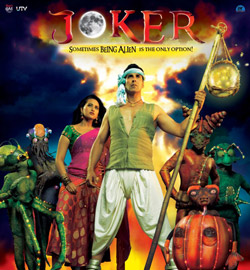
    Joker jokes had started making the rounds on the net when the first promos came out. By then Shirish Kunder’s stock had already hit a low in Bollywood (for reasons other than his filmmaking) and it was as if people wanted to hate the film… and to make it easier, Kunder delivered a custom-made dud of epic proportions. No wonder everybody connected with the film deserted the sinking (space)ship. It’s an embarrassment the makers won’t be allowed to forget in a hurry.


    It got panned universally with one or 1.5 star ratings. Karan Anshuman of Mumbai Mirror was one of the few relatively kind ones with 2.5 stars. He wrote, with uncharacteristic generosity . “I’ll give credit to Kunder for attempting to execute new (strictly relative to a mass Indian audience) ideas in a commercial set up. I found his last directorial venture Jaan-e-Mann good fun as well for its experiment in the mainstream. Unfortunately it didn’t work at the BO, and now I wonder about Joker. Let’s be perfectly clear that Joker is not for you if you’re over 12. This is a kids’ film and must be considered, ie reviewed, as one. That it has not been promoted as a children’s movie is confounding because surely the producers did not mean for it to be seen and enjoyed by thinking adults. Once you accept this, at a breezy 105 minutes, some sense can be made of this Joker.”


    Anupama Chopra of Hindustan Times wrote, “Joker testifies to the power of the star in Bollywood. It is staggeringly inept. I can’t imagine that it was persuasive even as a concept. Yet it got made, in all likelihood because Akshay Kumar said yes. (Curiously, after making it, he disengaged from the project and didn’t do any promotion)….. The humour is so lame that it physically hurts and, by the second half, the film loses all semblance of coherence. The White House, the FBI, the Indian Army and aliens who look like vegetables with limbs make appearances.”


    Rajeev Masand of IBN Live commented, “It’s easy to write off Joker as a complete failure, but to give credit where it’s due, the film is less offensive than many Akshay Kumar films we’ve seen recently. Devoid of double-meaning dialogues and sexist jokes, there is stuff here that might have made for an engaging children’s film, had Kunder not fallen prey to that oldest mistake – of treating his audience like fools…. Joker unfolds briskly and predictably. Alas, just as you’re confronted with an unpredictable twist in the tale, the film comes to a screeching halt. Once again, an opportunity wasted. ”


    Shubhra Gupta of the Indian Express was left aghast. “At one point, a character in Joker says : sweet mother of god, what the hell is going on? In my humble opinion, he leaves it too late. I tried saying much the same as soon as the film opens, but I couldn’t get it passed my dropped jaw. Within a couple of minutes, the films establishes that it will connect the dots between a NASA scientist in search of aliens, and a village that fell off the map somewhere in the middle of India, and a bunch of ‘mad’ people. A NASA man in search of aliens? A village populated by ‘maniacs’ that fell off the map somewhere in the middle of India? Seriously? Could this be the film that would really be completely and entertainingly out of the box? I was all set to be regaled. But it was not to be, not once in its mercifully short run time of less than two hours.”


    Raja Sen of rediff.com scoffed, “So what happens if a film — one ostensibly in the guise of a comedy — doesn’t try too hard? The humour here isn’t grating, overdone, outrageous, offensive, excruciating, unwatchable. This, then, may just be an approach that could be called a step forward in an Akshay Kumar comedy if only the aforementioned humour wasn’t also nonexistent. There isn’t a single line in Kunder’s film that actually works, leaving us with a film that, while commendably brisk in a 100-minute package, refuses to get going at all.”


    Saibal Chatterjee of NDTV ranted, “Joker is a crude joke of a film that will leave you in tears unless you have a stomach strong enough to digest such unmitigated junk. Occasionally, trash does have its uses in the domain of entertainment. But when it decomposes and turns into putrid garbage, it stinks. Yes, Joker is a load of rubbish that belongs in the dump yard.


    The single star that the film gets is for the fact that Joker is probably the first mainstream comic fantasy made in Mumbai. That apart, it has nothing that remotely resembles a redeeming routine. Pity, even Chitrangada Singh’s Kaafirana dil can make no dent. What Joker delivers in the garbled guise of the genre plumbs such depths of vapidity that it stands no chance of ever coming up for air. The run time of the film is an hour and forty-five minutes. Thank God for small mercies. But even at that length, Joker is difficult to deal with.”


    Even Taran Adarsh of bollywoodhungama threw up his hands and called it a disaster. “Although the title may give an impression that it’s all about a funny guy trying to make people laugh, the fact is that this one’s about guys pretending to be aliens and how, eventually, they face an actual alien in the end. On the brighter side, the setting and structures look magical and to build an entire story around a desolate village must have been enchanting. But interesting concepts don’t necessarily translate into interesting films. Joker runs out of gas as soon as director Shirish Kunder establishes the plot, because neither does the comic quotient work, nor do the aliens [fake and actual] salvage the show. In fact, the film makes a mockery of everything you may have seen or heard of UFOs and aliens.”


    There’s always the TOI’s 2.5 to salvage egos. Srijana Mitra Das write, “Straight up - Joker arouses extreme passions. You’ll love it or hate it. It’s a totally off-the-wall entertainer powered by corny jokes, OTT filmi characters and tongue-in-cheek sequences. If you like that sort of thing, you’ll laugh out loud. If you don’t, it’s not for you.”


    The question then is: who is it for?


  • Reviewing the Reviews: Ek Tha Tiger

    Ek Tha Tiger

    Key Cast: Salman Khan, Katrina Kaif

    Directed By: Kabir Khan

    Written By: Kabir Khan, Neelesh Misra

    Produced By: Aditya Chopra


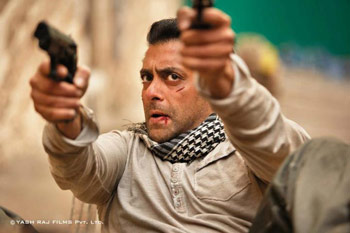
    Kabir Khan’s Ek Tha Tiger foxed critics because it wasn’t as brainless as Salman Khan’s other ‘100 Crore’ films. It sort of foxed the public for the same reason. You want to see Salman be silly, you want him to go some belt-jerking kind of Dhinka Chika dance, you want him to maaro quotable dialogue.


    Still, the film had the gloss Yash Raj Films’ money can buy, a Bond and Bourne kind of action in exotic places — Ek Tha Tiger delivered what Agent Vinod could not.


    The film got mosty 3 stars and up, with grudging praise.


    Wrote Indian Express’s Shubhra Gupta, “There is only so much Serious Salman you can handle without wanting to burst out into giggles, so don’t go looking for a grim spy story. Grimness is best dealt with by the Bournes. Salman is much more in packaged-by-Yashraj-Bond mode, bashing ’em up, and lovin’ her for ever, essentially Bhai doing his stuff, but restricted from being all over the place, which is not such a bad thing. I had fun while it lasted.”


    Anupama Chopra of Hindustan Times commented, “But the screenplay by Kabir and Neelesh Misra requires Salman to emote and play a character. Thankfully, he makes an effort. Of course, he is always in invincible hulk mode — yes, there is a brief shot of him taking his shirt off — but there is also sweetness and a touch of vulnerability, especially when he first meets Zoya. He seems almost perplexed as he falls in love. Katrina doesn’t have enough to work with but she works hard to give Zoya some weight. Their romance seems effortless. In places, Ek Tha Tiger becomes downright silly. So the modus operandi might be to think of it as a fairy tale with spies and guns. And enjoy the ride.”


    Sukanya Verma of rediff.com wrote, “With Wanted, Ready and Bodyguard, Salman Khan did cheesy with such marvellous flair that even though these films are nowhere near quality line, ‘stupidity sells’ became the new mantra at the box office. No, I am not a Bhaihater or a Bhaitard, colourful expressions recently invented to describe one’s derision or devotion to the actor, addressed so with alarming familiarity, whether in affection or sarcasm. (Please note how I’ve NOT mentioned Dabanng along with the afore-mentioned poppycock because it was genuinely entertaining. Heck, it was one of my favourite films of the year.) My point is that we’ve gotten so habituated to the commitments and ehsaans, the raggedy humour and the implausible heroics written specifically to reinforce the larger-than-life presence of the superstar that we have started to expect JUST that. So here’s the good news. Ek Tha Tiger demolishes this mindset with such unhurried relish it will take me one more viewing to believe it’s actually happening.”


    Aniruddha Guha of DNA went with 3.5, “Ek Tha Tiger (ETT) is probably Hindi cinema’s best action film yet. Conrad Palmisano, who’s been stunt co-ordinator on films like the Rush Hour series, the Robocop series, Batman Forever and Romeo Must Die, directs four brilliantly put together action set-pieces. They are all lavishly mounted, shot at breathtaking locales, and executed with skilled precision. In the midst of it all is Salman Khan, Hindi cinema’s poster boy for escapist entertainment. Thankfully, ETT is the rare Khan film that has a plot too, thin as it may be.”


    Taran Adarsh of Bollywoodhungama.com did his usual 4.5 rave, “On the whole, Ek Tha Tiger is a high-octane thriller that works big time. This one has style and substance, both, besides dazzling action, stunning international locales and stylish execution. Most importantly, it has Salman Khan, the trump card of this enterprise. There’s no denying that Salman’s charisma has resulted in a mind-blowing, astounding, never-seen-before start at the ticket window, but the film’s content will sustain it thereafter. The film has long legs to prolong its splendid run. This is, without doubt, Salman’s best. Sure shot Blockbuster!”


    Then the 2.5s Rajeev Masand of IBN and Karan Anshuman of Mumbai Mirror. The former wrote, “To be fair, Ek Tha Tiger is a very different beast from recent Salman Khan starrers, particularly his last two releases, Ready and Bodyguard. Now that could be construed either as good news or bad news depending on what you thought of those films. For those like me, who weren’t fans of those blockbusters, it’s refreshing to note that Ek Tha Tiger’isn’t an over-indulgent one-man showreel. Hallelujah, this film has a plot. Unfortunately, however, it’s a one-line, threadbare plot around which director Kabir Khan constructs the entire movie.”


    And the latter ranted, “Stylistically, Ek Tha Tiger attempts to marry the grittiness of, say, Hollywood’s Bourne series with the gloss of a Yash Raj film. The result is an inconsistent look and feel. For instance, the cinematography in the action sequences work with a healthy mix of handheld, tracking, and steadicam shots, all in realistic, incidental lighting. While on the other hand you have a night scene about a picnic date in a park with swans and a lake that actually reflects a meteor shower. The artificiality and overdone lighting (so that you can see every inch of the frame) is totally outdated and old-school.”


    Kunal Guha of yahoo.com quipped, “Ek Tha Jackie Shroff. And then he had a son. But this one belongs to the genre mastered by Jackie Chan and plastered with superhuman stunts by Salman Khan: action comedy mashed up with a spy thriller. If you thought Agent Vinod made a Ronald McDonald out of the genre, Ek Tha Tiger (ETT) takes a mousey tail and sticks it up his nose for Salman to swing from ear to ear. Regardless, if you’ve followed Salman’s recent films, you know that they’re in a genre of their own and cannot be graded for the story, screenplay, performances or any other metric used to evaluate other films. They can just be enjoyed or suffered, depending upon the elasticity of your tolerance.”


  • Gangs of Wasseypur 2: Too long, too violent!

    Gangs of Wasseypur 2


    Directed by: Anurag Kashyap

    Produced by: Anurag Kashyap, Sunil Bohra

    Written by: Zeishan Quadri, Akhilesh, Sachin Ladia, Anurag Kashyap

    Starring: Richa Chadda, Nawazuddin Siddiqui, Jameel Khan, Syed Zeeshan Quadri, Aditya Kumar, Reemma Sen


    Anurag Kashyap’s films usually get the kind of reviews that praise his craft and pan his indulgence. So even though Gangs of Wasseypur 2 got the expected 3 and 4 star ratings, almost all critics seemed to agree that it was too long, too violent and not quite necessary.


    The ones who got the most out of the films are Nawazuddin Siddiqui and Richa Chadda, for whom it turned out to be a career launcher.


    Rajeev Masand of IBN wrote: “It’s hard to deny that Wasseypur II is lacking. In plot for one… Despite the cinematic flair, this film weighs down on you, seeming like an endless series of killings without a narrative to string it all together. Where is the method to this madness? Unlike the earlier film that took its time (too much time, to be fair) to set up the chapters, this sequel hits the ground running with relentless gun battles and daylight murders. Yet it feels curiously empty, as if the characters are just moving around in impressive set pieces.”


    Shubhra Gupta of the Indian Express, who had loved Part One is less effusive this time: “There shouldn’t have been a Part 2. This should have been the post-interval section of Gangs of Wasseypur, carrying over, instantly, the charge of the first half. Yes, one continuous flow would have made Gangs Inc. a very long film, closing at nearly six hours. It would have challenged our notions of how long we can fill seats, without squirming or fidgeting, or thinking of escape. But it would have given us the story’s arc from beginning to end, smoothly maintaining the integrity of the plot, action and thought. For me, GOW2 is a follow-through that is shot through with flashes of brilliance, and some wonderful comic verve, but that doesn’t have the enthralling power and spread of the first film.”


    Madhureeta Mukherjee of the Times of India gave it a cagey 4 stars, writing: “For those who like their celluloid hard and bloody and full of machismo, with an overdose of bodies, butchering and bloody-bravado, welcome to blood-fest – Round Two! This time it’s double the dollops of gore; two much. Booming guns and metal-shredded innards spilling gut onto the streets. More revenge and rage. More gangs and more bangs (some pistols firing from lungi covered groins) and more man-power. With every shade of red, black and grey – deeper and bolder.”


    Aniruddha Guha of DNA also toned down his rah-rahs for Part 2: “Unfortunately, Gangs of Wasseypur – 1 and 2 together – falls slightly short of a truly satisfying experience. There’s so much to take back – mood, flavour, character, attitude – yet it leaves you slightly vexed, and wanting more. Not more in terms of duration, but in content. Given the investment it demands – 2 hours and 40 minutes of your time, twice over, and loads of patience – the takeaway is just not as rewarding. It was so in the first one because it was incomplete, and it is so in the second because it stutters on its way to a stunning finale.”


    Raja Sen of rediff.com commented: “Kashyap’s visual flair has just grown with each film, and this one is not just cinematically self-assured but also highly nuanced: some of the touches – like Mohsina’s choice of paperback – border almost on a Dibakarian immaculateness. Perpendicular Khan, meanwhile, like the Bob Biswas we met in Kahaani a few months ago, deserves his own graphic novel, pronto. Like one of those unending strings of ladis, this is, then, a proper firecracker, even if far too long. Had Ramadhir Singh broken his coda and watched it, he’d have doubtless been gunned down mid-film, the length (and volume) allowing his foes more than enough celluloid cover to set up sniper-rifles, grenades and knifemen for the job. Sheer murder, surely. Yet, like the inevitably doomed characters in this Kashyapverse, he’d have gotten to grin a few times before biting the dust.”


    Kunal Guha of in.yahoo quipped: “Phuchchak! A stab in the eye. Krreeeech! A human head severed from the rest. Swish! Swoosh! Perpendicular and tangent blades inserted into flesh. And then, a semi-automatic is used to poke intestines swinging from a carcass that has been polka-dotted with gun fire. Now you know, when director Anurag Kashyap says dark, he means 99 per cent cocoa.”


    Janhavi Samant of Mid-day, perhaps the only 2.5 star rater is left cold: “OMG! This one’s such a long film it should have been made into a TV series. They could have easily pulled off an hourly 13-episode show. Definite and Perpendicular could have become household names and our children could have learnt some choice gaalis sitting right at home. Not that one has anything against gaalis, especially since one bit back a few ‘Whathefa…’s while watching the film. Really, towards the end of the film, protagonist Faisal Khan (Nawazuddin Siddiqui) cries defeatedly over the mire of revenge and crime he’s been sucked into. “It shouldn’t have gone this far,” he says. We agree.”


  • Reviewing the Reviews: Critics snigger at Jism 2

    By Deepa Gahlot


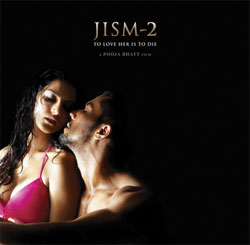
    The Bhatt camp got a whole lot of mileage– equal amounts of outrage and admiration– for signing up porn star Sunny Leone for Jism 2.  Right from the erotic poster (that so offended Mumbai’s mayor) to sizzling stills, the film – directed by Pooja Bhatt – offered viewers sex on toast… and then delivered a tepid, tedious love triangle.


    A few years ago, Sunny Leone’s skimpy clothes might have attracted male audiences at least, but now every A-list actress has a bikini body and every male star six-pack abs. So what is the big deal, a ticket buyer might ask.


    As can be expected the film got no higher than 2 stars, except of course, the Times of India’s 3.5. Almost every critic decried the lack of a sufficiently high heat quotient and sniggered at the cheesy dialogue. Indian Express’ Shubhra Gupta rightly headlined her review, Bare All Dare Nothing.


    Anupama Chopra of Hindustan Times wrote, “Neither a feminine nor masculine gaze can combine intense passion with such a ridiculous story. For an erotic film, everyone talks way too much. Of course, we get love-making, Leone’s bare back and ample cleavage. But the Bhatts – Mahesh and Pooja – also want to unveil some deeper truth about men, women and their obsessions with each other. So Jism 2 plays out like an unintentionally funny fever dream. Kabir is a sort of artist-assassin. He plays the cello and sings mournfully. He quotes Faiz to Izna and says lines like, Mausam guzar jaate hain, yaad nahin guzarti. Hooda is a fine actor but here he seems to be emoting for all three of them. Leone, who is very pretty, clearly wasn’t cast for her acting skills, but honestly, she’s not bad. She wisely finds a sort of half-bewildered, half-heavy breathing expression and then stays with it. When the emotion becomes too complex for her to handle, Pooja cuts to the back of her head.”


    Sukanya Verma of rediff.com commented, “In most movies of this genre, sex is employed as a sly tool to arouse psychological intrigue and suspicion, where lack of inhibition works as a disturbing element (Eyes Wide Shut, Sleeping Beauty, anyone?) instead of shabby titillation. But what can one say about a film so paranoid that characters react with such emotional exaggeration and neuroticism as if a nuclear holocaust is upon us? Things get irreversibly dreary after a while. I mean, how many times can one watch two people with zero chemistry going at it, again and again and, well, you get the drift. The one good thing about Jism 2 is the lush green resort it has been shot in — Galle, Sri Lanka. At one point, the possibility of getting a detailed tour of the resort or even its unoccupied rooms seems more exciting than yet another glimpse of Leone’s undressed torso.”


    Shubhra Gupta cribbed, “You sit back and wait for some hot action which is what porn stars are meant to show us, right? Or what are they porn stars, avowedly and loudly, for? I am here to tell you that on that count alone, Jism 2 is a crashing disappointment. Yes, there are several flashes of bare backs. There are several flashes of bare everythings, actually, especially in the chest department whose musculature, as they say these days, is awesome. You can see why Ms Leone would be a smash hit in movies which wouldn’t stretch her beyond the requirements of standard X-rated flicks: she’s really pretty, she’s got tumbling locks that tease her shapely shoulders, a constructed bust that proceeds into the room before the rest of her, legs that go on, and so on. But what the makers of Jism 2 didn’t see that for a two hour-and-some film where the leading lady would have to do a little more than moaning and groaning and heating up the bed clothes, Ms Leone would run into trouble. She is made to teeter about in stilettos while delivering dialogues about patriotism and true love. Yes, that’s right.”


    Srijana Mitra Das of the Times of India wrote, “Without such plot absurdities, Jism-2 could have been tighter. Slicker. And hotter. Instead, with unexplained turns (how does Izna go from good girl to porn star?) and over-acting, it’s often limp, salvaged by its last 20 minutes of suspense when Izna learns new facts about the IB. Still, Jism-2 offers one more surprise, earning it a couple more points. It’s pleasingly aesthetic, all its sensuousness clad in spa-like serenity, its lighting – golden gossamer, dusty hazes, cool, pale moonlight – actually its sexiest asset. Thank heavens for foreplay.”


    The usually effusive Taran Adarsh of bollywoodhungama.com couldn’t find ways to praise this film. “On the whole, Jism 2 has Sunny Leone as its USP, but the lacklustre screenplay and the sluggish pace act as deterrents. However, Sunny Leone in the driver’s seat, coupled with a generous dose of skin show and erotica, besides an attention-grabbing title, should act as a honey-trap to lure the audiences. But how one wishes this jism had soul as well!”


    Rajeev Masand of IBN wrote, “Unlike the earlier Jism that Pooja Bhatt produced but didn’t direct, this sequel has little of consequence to say about relationships based on lust. The previous film was a well-acted, adult thriller that had rare sexual frankness. In comparison, Jism 2 feels hollow and exploitative…a film in search of a story. Despite some terrific music and Pooja Bhatt’s neat production design, it’s let down by laughable dialogue and a pace slower than my 90-year-old grandmother on a race track.”


    Vinayak Chakravorty  of India Today panned it too. “After all the hoopla, what you get is a two-hour condom ad shot in Sri Lanka. Pooja Bhatt’s Jism 2 roughly divides itself into two moods: Sunny Leone striking sultry half-nude poses with Randeep Hooda/Arunoday Singh (which is what you will pay to watch), and Sunny giving a wide-eyed, clueless look as Randeep/Arunoday blabber, blather and yell. Classy, metaphorical, dramatic, gross, dirty, sad, funny – sex on the screen has been all these and more over the years. Pooja just gave sex a new twist: boring.”


    Aniruddha Guha of DNA wrote, “Jism 2 is hybrid cinema. A sort of B-grade sex thriller meets patriotic drama meets intense love story meets spoof. The film is all of the above and none of them. It also falls under a category much cherished by film lovers – the So Bad It’s Good variety. In the past few years, Prince, Haunted 3D and Players have made it to the illustrious list of films that are terrible, yet terribly entertaining. Jism 2 is a fitting addition.”


    The usually acerbic Kunal Guha of yahoo.in commented, “Why this film is more erratic than erotic is because it only borders on extremes. Neither of the actors can tread the line between screaming their heads off and being so subtle that they resemble the contents of a washing machine in action. Also, there seems to be some confusion about the role of a porn star as Izna admits to being one but functions as a prostitute. It’s like saying oranges and lemons are both citrus fruits, so oranges are lemons.”


    Quite… this one’s did turn out to be a lemon!


  • Reviewing the Reviews: Super un-cool sex gags in KSKHH

    Kya Super Kool Hain Hum

    Directed by Sachin Yardi

    Produced by Ekta Kapoor, Shobha Kapoor

    Story by Sachin Yardi

    Starring: Tusshar Kapoor, Ritesh Deshmukh, Neha Sharma, Sarah Jane Dias, Anupam Kher


    This is not the kind of film that critics would recommend anyway, but most of them have said that Sachin Yardi’s smutfest’s content is not what they mind so much as the bad quality of the sex gags.


    Kya Super Kool Hain Hum is a sequel to the Kya Kool Hain Hum, which had reportedly done well enough for producer Ektaa Kaoor to attempt a sequel.


    Most critics went for 1 or 2 stars if they were feeling generous, except, of course, TOI’s standard 3 and Taran Adarsh’s 3.5.


    Wrote Raja Sen of rediff.com: “There’s nothing wrong with bawdy sex comedies. The burlesque entertainer has been a part of storytelling from its very origins, from sultans being soothed by tellers of tall tales to cavemen sniggering at sideward-8s on their stick figures. It’s a grand, colourful, enjoyable tradition, and making something you can nudge, nudge, wink, wink at is as fine an ambition as any. Except – and herein lies the lack of rub – there’s really no point to a sexless sex comedy.”


    Aniruddha Guha of DNA commented: “Director Sachin Yardi’s KSKHH revels in its ability to present one stereotype after another in a long orgy of sex jokes, private parts’ references and general stupidity. It’s funny initially, and you feel like you may be in for a laugh riot. But KSKHH is like a party that starts to get boring in the first hour, one you keep looking for ways to get out of. And if you do stay till the end, a headache-inducing hangover is a certainty.”


    Saibal Chatterjee of NDTV grit his teeth and wrote: “Some films are aimed at the eye, some at the head, and still others at the heart. It takes an outrageous degree of audacity to fix the focus of an entire two-hour-plus movie a few inches above the solar plexus, or thereabouts. But for all its unabashed flirtation with tawdry humour, Kyaa Super Kool Hain Hum is about as scintillating as the drone of a dying bumble-bee. A bunch of bawdy blokes who have clearly taken leave of their brains and turned into sex-obsessed ‘loin’ kings run amok with a license to spill in this defiantly tasteless caper movie. Even the dogs aren’t spared.”


    Rajeev Masand rightly called it a cringe worthy: “If I had a penny for every time I laughed during ‘Kyaa Super Kool Hain Hum’, I’d be able to afford an Asprin, I so badly needed at the end of this roughly two-and-a-half-hour cringe-fest. The problem with this film isn’t that it’s so unapologetically vulgar, but that it’s just not very funny. And that’s a shame, because leading men Tusshar Kapoor and Ritesh Deshmukh have a winning chemistry and sharp comic timing…now if only they were required to do a little more than stripping down to their boxers and repeatedly making crude gay jokes.”


    Anupama Chopra slammed the lack of a plot: “I enjoy vulgarity, cheap lines and jokes with double meanings as much as the next person, but really, is this the best we can do? Writer-director Sachin Yardi is too lazy to create a plot, so the film is just a series of gags that allow him to bung in as many puerile sexual innuendos as possible. Kyaa Super Kool Hain Hum becomes a drag within the first twenty minutes and then continues for another two hours or so. Before you are done, you will have to suffer Chunky Pandey in a hideous wig, playing a fake godman named Baba 3G, and Tusshar Kapoor in drag wearing eyeliner, lipstick and a gown with a plunging neckline. Yes, that’s seriously scary. Only the brave need venture in.”


    Madhureeta Mukherjee of the TOI quipped: “Director, Sachin Yardi’s film will appeal to an audience who trips over ‘hard-core’ sex comedies. There are scenes that ‘vibrate’ with humour, and squeeze ample laughs (some forced), but it’s mostly a bleak story-line with random scenes which are padded with pun-fulls of adult humour, sexual innuendo, and expletive one-liners. For a sex-comedy, the film is a tad long (size really matters, can’t help it!) and songs like ‘Dil Garden Garden Ho Gaya’ slow the pace. If you were sex (comedy) starved after Kyaa Kool Hai Hum, this sequel force-feeds you a double dose. This one’s for teens who get a ‘boner’ out of bad jokes, but it may get a rise out of some adults too. Watch at your own ‘risque’.”


    Taran Adarsh raved: “On the whole, Kyaa Super Kool Hain Hum is sure to get the affirmation nod by its target audience – the youth. Despite the sexual tone, adult jokes, impish humor, the movie, at no juncture, gets offensive, distasteful or objectionable. In fact, it’s one big joyride from commencement to conclusion. This one is for the masses, for youngsters, for those who loved part one and enjoyed its crazy hilarity. Kyaa Super Kool Hain Hum offers entertainment, entertainment and only entertainment in large doses!”


    Sudhish Kamath of The Hindu nailed it, “The problem is of excess and repetition.  What’s the point of making a sequel if the idea is just to put the same jokes back in? Poppat is back with his tooths (suits). If the first one was let down by its length and lack of plot, here it’s just the lack of plot. The only movement or the ups and downs here are in the innuendo and physical comedy involving a pug who lives a Vicky Donor life. The pug performs every time its owner (Riteish) turns on the music. If you find that funny, go for it.”


  • Reviewing the Reviews: Reluctant praise for ‘Cocktail’

    Cocktail

    Directed by Homi Adajania

    Produced by Saif Ali Khan, Dinesh Vijan

    Written by Imtiaz Ali, Sajid Ali

    Starring: Saif Ali Khan, Deepika Padukone, Diana Penty


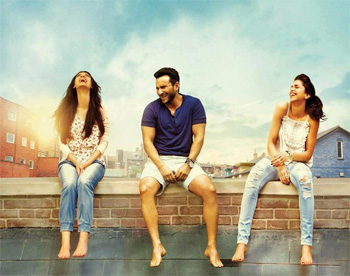
    Saif Ali Khan playing his umpteeth cool, flirty dude role, can’t carry it off now, at 40 plus. Which is one of the things Homi Adajania’s Cocktail got panned for, the other being its regressive stance towards women, while posing as a youth flick. The cheerful first half is absolutely at odds with the embarrassingly melodramatic and cliched second half.  What’s really sad is that in an urban story, set in London, the subservient girl gets the lechy guy, the wild girl was not thought worthy of even a jerk.


    The film got 2 to 3.5 stars, and a good opening, but reluctant praise, mainly for it’s breezy first half.


    Shubhra Gupta of the Indian Express wrote: “There’s this guy, he’s too cool, ya. Lives and works in London, chases girls, gets em, beds em, moves on. There’s this girl, she’s wild. Has this nice pad in a tony part of London, which she uses as a stop-over to change clothes in between all the partying. And, of course, there’s this other girl, who’s the ‘seedhi-saadhi’ type, you know, covered from top to toe, sweet, shy. Place these characters in a shiny glass jar, shake with a swizzle stick, and you get ‘Cocktail’. Which is just another name to call a one guy-two girls shtick, which is, as you and I know, one of the oldest in the book. ‘Cocktail’ starts off headily enough, and bubbles along till half time; post that, the sips get diluted, and the swallows take much longer.”


    Rajeev Masand of IBN Live cribbed: “Alas, Cocktail, directed by Homi Adajania, is no saucy menage a trois, although it does involve three friends living together in London, a little too close for comfort. No, Cocktail falls firmly in the rom-com space. But even as the tone shifts uncomfortably from breezy, light-hearted fun, to heavy drama in the second half, you’re never in danger of actually caring for the cardboard characters in this empty souffle of a film.”


    Raja Sen of rediff.com commented how spectacularly the film crashed and burned. “Adajania starts off breezily enough, all effortless-flirting and shotglasses and dramatically teary mascara, but the threadbare and increasingly inane plot unspools halfway through, leaving us with a shoddy, frustratingly random sequence of events. The last one-third of the film features the kind of emotional melee that can only be rightfully resolved by handing one of the girls a samurai sword. Alas, no such bloody respite is offered.”


    Karan Anshuman of Mumbai Mirror was disappointed by the writer Imtiaz Ali’s cop  out: “(He) goes on to self-censor, Indianize, romanticize, emotionalize, ergo commercialize the experience and give us a 1 part alcohol and 10 part water cocktail, an exercise in pointlessness. We now have abla nari, the Indian mother pushing marriage, and a… you get the point. All of this is well disguised of course with cutting edge club eveningwear on Deepika Padukone and luscious London.”


    Saibal Chatterjee was generous: “The heart has its reasons, the mind its methods. When the two are sought to be yoked together on Bollywood’s big romcom canvas, the result can be touch-and-go. One misstep either way could mean a hopeless nosedive either into mushy drivel or pretentious claptrap.  But no such worries here. For the most part, Cocktail, directed by Homi Adajania and scripted by Imtiaz Ali (a sort of high priest of the genre), steers clear of the pitfalls and delivers an eminently watchable love story that breaks the mould.”


    Taran Adarsh wrote: “On the whole, Cocktail has a fascinating first half, charismatic performances, harmonious music and the trendy look and styling as its aces, but the second half is not as tempting or intoxicating as the first hour. It pales when compared to the attention-grabbing first hour. Yet, all said and done, this one’s primarily targeted at the Gen Next, especially those in metros, who might identify with the on-screen characters.”


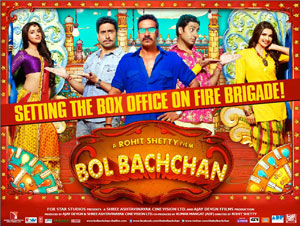
  • Critics don’t get generous with Bol Bachchan

    Bol Bachchan

    Directed by Rohit Shetty

    Produced by Ajay Devgn, Dhillin Mehta

    Screenplay by-Yunus Sajawal

    Starring-Ajay Devgn, Abhishek Bachchan, Asin Thottumkal, Prachi Desai, Krushna Abhishek


    Nobody in their right mind, except, of course those involved in the making and trade media could have anything good to say about Bol Bachchan.  It is loud, crude, garish and braindead. Rohit Shetty obviously wants box-office success, which such films seem to achieve, even if a majority of the audiences don’t actually like them, but with source material as rich as Hrishikesh Mukherjee’s Golmaal, there is no excuse for a film like Bol Bachchan. Except for The Times of India’s standard 3.5 stars, no critic could go over 2.5 stars, if they were feeling generous.


    It actually got 0.25 stars from Yahoo’s acerbic Kunal Guha. “Just after a cameo jig in the title song, Big B offers a disclaimer: he isn’t a part of this film, even though his name is. And that is hint enough for the wise. But for those who don’t know, Bol Bachchan (BB) jams chopsticks up the nose of Hrishikesh Mukherjee’s comic classic Golmaal and digs itself six feet under with it. While the story is same in theory, being a Rohit Shetty film only adds some cars nailing somersaults, trucks attempting a ballet, baddies playing mid-air Garba after being biffed and Ajay Devgn drawing his eyebrows close enough to show that he means business.”


    Sudhish Kamath of The Hindu savaged it too. “Sitting through Bol Bachchan is like sitting through multiple car wrecks. No, seriously. There is enough car-on-car action all through this unwarranted Rohit Shetty remake of Golmaal.   Well, it’s made by stuntmen, you see. Something they don’t want you to miss….There’s enough bad English in this film under the pretext of humour to make even Rowdy Rathore go: Don’t angry me. If you liked Hrishikesh Mukherjee’s Golmaal, which you sure did, you would want to protest this assault on one of the effortlessly funny films of all time.”


    Anupama Chopra of Hindustan Times gave it two stars and wrote, “Bol Bachchan, like most of Shetty’s earlier films, including the Golmaal series and All the Best: Fun Begins, isn’t so much a film as a series of gags strung together with songs and the requisite car-bashing action. There is no attempt at plotting, storytelling, delineating a character, building coherence or following logic. Shetty’s only agenda is to give you a good time.”


    Rajeev Masand of IBN went with 2 stars as well and commented, “‘Bol Bachchan directed by Rohit Shetty, revels gleefully in its silliness. This is a film whose pedestrian humor requires neither taste nor common sense to appreciate, and anyone seeking wit, a clever screenplay, or inspired performances might want to revisit Hrishikesh Mukherjee’s Golmaal, which Shetty plunders in the name of inspiration for this lazy film.”


    Karan Anshuman of Mumbai Mirror also gave it 2 stars and wrote, “The main problem with Bol Bachchan is that it unfolds like a play. There are literally a couple of sets where an overwhelming part of the action (and songs and dialogue exchanges) takes place. If you’ve experienced mainstream Hindi or Gujarati comedy theater (loud and forced comic situations devoid of experiment) you know precisely what to expect in BB. Even the genuinely funny bits are lost in a deluge of recycled jokes, preposterous situations, over the top ‘drama’ (you only know it’s drama because the background score suddenly spikes up to deafening levels), and – of course, how could a have a comic hit film without – offensive gay jokes.”


    Sukanya Varma of rediff.com raised it to 2.5 and ranted, “Shetty picks up all the major plot points of the original only to alter it with his boisterous, cheesy, slapstick and visually flashy sensibilities, known to work hugely in his favour given the success of the propitiously titled Golmaal franchise. Unlike the Utpal Dutt-Amol Palekar starrer, however, Bol Bachchan isn’t an out-and-out comedy throwing in large-scale action and irksome melodrama.”


    Shubhra Gupta of The Indian Express must have been in a good mood since she gives it 2.5 stars too and writes, “This is a Rohit Shetty film. Which means it is full of primary colours. I counted a red-blue-green-yellow palette more than a couple of times, all in the same frame. It is full of cars and jeeps hurtling down roads and crashing and smashing. It is full of Ajay Devgn, which is a given because Shetty and Devgn are long-time collaborators; plus, the star is the producer of the film. But this time around, there’s a slight difference. It’s also got Abhishek Bachchan, and that makes ‘Bol Bachchan’ not as much a Rohit Shetty film as his previous ones, which is not such a bad thing : I laughed more in this one than I have in his previous loud comedies.”


    Which brings one to Times of India’s Srijana Mitra Das of the 3.5 stars. “BB’s a dialogue-lover’s delight – lines like ‘fish and chips without water’, Devgn conveying the situation of a ‘jal bin machli’ – sparkle across the plot and you can feel the love as the actors reprise bits and bobs of vintage Bollywood. On the downside, it exceeds by about 30 minutes and has that odd, uneven heart-chart quality accompanying the film. But that aside, BB showcases Shetty as the maharaja of madness, Devgn clearly his crown prince. And Abhishek? His judwa bhai, of course. Tip-Off: Don’t strain your brain applying reason to this laugh-riot – but do buy more popcorn for that extra half-hour.”


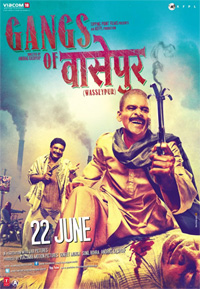
  • Mostly 3.5 *s for Anurag Kashyap’s Gangs of Wasseypur

    Gangs of Wasseypur


    Directed by: Anurag Kashyap

    Produced by: Anurag Kashyap, Sunil Bohra

    Written by: Zeishan Quadri, Akhilesh, Sachin Ladia, Anurag Kashyap

    Starring: Jaideep Ahlawat, Manoj Bajpai, Richa Chadda, Nawazuddin Siddiqui, Jameel Khan, Syed Zeeshan Quadri, Aditya Kumar, Reemma Sen


    Anurag Kashyap has annexed the role of rebel against Bollywood and by making dark, violent films, has got himself a following in the indie and festival circuit. But after the excessive Gangs of Wasseypur (Part 2 is coming up), one can only hope he has exorcised the ghost of The Godfather, and can now truly become a chronicler of the times; he has the style, he has the cinematic sensibility, he has to grow beyond a laddish fascination for violence and men who indulge in crude power games.


    Critics feel duty bound to praise his films, because he dares to go against the rules of Bollywood and thrives; he has edged out Ram Gopal Varma from his prince of darkness pedestal. He also drums up a serious amount of hype. But is there more to him than machismo?


    The film got mostly 3.5 star ratings, as if critics were shying to give it that extra half star and bring it to the excellent category- so despite the praise, it’s technically just a little above good in the ratings.


    Raja Sen of rediff.com found it boring, gave it 2.5 and wrote: “It must here be remembered that mob bosses, at least the ones Hindi cinema have accustomed us to over the years, have hardly been an efficient lot. They growl orders, surround themselves by those applauding their every maniacal move, and, intoxicated by their own bluster, proceed to boast about their convoluted plot to the protagonist, resulting in their climactic downfall. It is this look-what-I-did windbaggery that constantly weighs down Wasseypur, a highly competent and occasionally enjoyable product, and keeps it from soaring like it should have.”


    Anupama Chopra gave it 3 and commented: “Kashyap’s material is strong, but there’s just too much of it. There is so much plot squeezed into the two-hour-forty-five-minute running time that your head swims. We hardly ever stay with a character long enough to get emotionally invested, and a voice-over clumsily interrupts the story to connect the dots. At one point, I was so confused that I longed for a master key booklet to the film that outlined the various factions, relationships and rivalries. The narrative also moves constantly between the personal and professional (murder, revenge and thuggery being the main professions). So the film moves from the enmity track to Sardar’s mistress and at one point even segues into Sardar’s son’s Bollywood-inspired romance-over-Ray-Bans fantasy. It’s indulgent and much too long.”


    The 3.5 club included Rajeev Masand of IBN: “Filmed crisply, without any gimmicks by Rajeev Ravi, Gangs is both steeped in cinematic tradition, yet modern in its treatment. You’re especially seduced by the way Kashyap blends the songs into his narrative, often using them against the film’s most visceral, violent scenes. A big thumbs-up for composer Sneha Khanwalkar who goes all guns blazing to deliver a marvellous mixed-bag of a soundtrack that contains such irresistible gems as I am a hunter and Keh ke loonga. Bolstered by its riveting performances and its thrilling plot dynamics, this is a gripping film that seizes your full attention.”


    Karan Anshuman of Mumbai Mirror (3.5) wrote: “Gangs of Wasseypur is the kind of film you will have to watch in a theatre. You absolutely need to be sitting in the dark with no volume control to enjoy what Kashyap throws at you without a care of turning down the noise of gunshots and explosions, without exposing your expressions of guilty pleasures to others as a crude seduction scene plays out. The digressions – though merited – are one too many and this greatly affects length. Its lack of coherence may not work for everybody. Its runtime didn’t even work for me. That’s the only flaw here: it’s just too long.”


    Vinayak Chakravorty, Today (3.5), raved: “Anurag’s new film, first of a two-part saga, repositions The Godfather lore with a hardy Bihari twist. You spot tribute nods to Tarantino, Scorsese and Sergio Leone all along, as the film leaves you dizzy with its wanton celebration of the gory and the immoral. But Anurag isn’t aping the western masters. He wholly turns every inspiration into an original cinematic statement as the reels roll. In that sense, GOW comes across as a crossover film in the truest spirit of the term – juxtaposing global influences onto a desi gangland canvas, and setting off masala basics within a believable premise.”


    Madhureeta Mukherjee of the Times of India (3.5) gushed: “This one’s a gang bang. Sorry, make that a gang bang-bang; because that’s how this story explodes – with bullets, blasts and bust-ups. Throw in gallons of blood, body-counts and ‘boom-boom’, true Bihari ishtyle. It doesn’t need coal to fuel this revenge drama. It fires on Anurag Kashyap’s penchant for the dark, dubious, deadly and daring.”


    Blessy Chettiar of DNA (3.5) commented: “There are times the self-indulgent ghost of That Girl in Yellow Boots wanders around Wasseypur, with seemingly pointless gore and montages eating into precious screen time. Many a time the camera wanders aimlessly, on severed heads and pretty faces. The changing history of Dhanbad at its centre, over a dozen important characters, a web of plots and subplots moving deftly to a to-be-continued finale, can leave you exhausted and confused.”


    Saibal Chatterjee of NDTV (3.5) wrote: “The saga tosses and turns convulsively from one shootout to another as a bunch of amoral human bloodhounds sniff around for their next kill in a volatile, lawless landscape. The unbridled violence and fetid language – the expletives fly as thick and fast as the bullets – are, however, only one facet of this cinematically layered shot at a time-honoured and popular genre. The spirit of no-holds-barred derring-do embedded in the narrative sinews of Gangs of Wasseypur is so pronounced that there is little in the film that goes along expected lines. Gangs of Wasseypur is part Sergio Leone, part Sam Peckinpah on the one hand. On the other, it embraces elements from Quentin Tarantino and Johnnie To. But the manner in which Kashyap stamps his own home-grown style and sensibility on the manic melange makes it an exhilaratingly edgy movie experience.”


    Shubhra Gupta of Indian Express gave it a surprising 4 stars: “‘Gangs Of Wasseypur’ is a sprawling, exuberant, ferociously ambitious piece of film making, which hits most of its marks. It reunites Anurag Kashyap with exactly the kind of style he is most comfortable with: hyper masculine, hyper real, going for the jugular. It’s not so much about gangs, as about men who are pushed into ‘gangstergiri’ as a thing to live by; as you go along, you see that Wasseypur is not just a place, but a state of mind, which roars and strikes after each deceptively quiet patch. I liked most of ‘Gangs’, Part One, enormously.”