Tag: Deepa Gahlot

  • Reviewing the Reviews: Barely two stars for Gulaab Gang

    By Deepa Gahlot


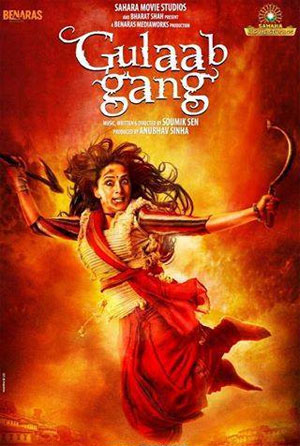
    Gulab Gang

    Directed by: Soumik Sen

    Starring: Madhuri Dixit, Juhi Chawla, others


    Much was expected from the inspired by real life story of a female vigilante. Madhuri Dixit and Juhi Chawla together for the first time, a lot of promotion, some controversy (Sampat Pal of Gulabi Gang trying to stall the film) and at the end of it a damp squib of a film.


    The week’s other release Queen opened to universal acclaim but Gulaab Gang could barely manage two star ratings.


    Shubhra Gupta of the Indian Express ripped it apart. “So fine , maybe Madhuri Dixit’s ‘Gulaab Gang’ has nothing to do with Sampat Pal’s real-life ‘Gulaabi Gang’, even if both wear pink saris, and fight for women’s rights in a rural North Indian outpost. The difference between the two films ( and ‘Gulaabi Gang’ did the smart thing by releasing just ahead of the Bollywood take) is stark : the first, featuring the plain-faced Sampat, is a hard-hitting documentary ; Madhuri Dixi’s gang, on the other hand, is as make-believe as make-believe can get. ‘Gulaab Gang’ is faking it.”


    Nandini Ramnath of Mint commented, “For all its feminist fakery, Gulaab Gang‘s villains are women. First off is Rajjo’s evil step-mother, plucked straight out of a ’50s movie. The bigger threat is posed by Chawla’s all-powerful politician Sumitra, modelled onSonia Gandhi, Mayawati, Sheila Dixit, and every other woman who has ever dared to storm the male bastion of Indian politics. Sumitra’s villainy is straight out of a Telugu mass movie…”


    Rajeev Masand of CNN-IBN called it muddled and forgettable. “Madhuri makes the most of her stunt scenes, but appears trapped under the weight of this predictable script, which in the guise of a feminist film offers no more than your standard good vs evil story. It’s particularly hard to take Rajjo seriously when she breaks into choreographed dance sequences each time the women are taking a break from beating up some offender.”


    Anupama Chopra of Hindustan Times called it messy and illogical. “In Gulaab Gang, writer-director Soumik Sen brings together a slew of talented women – Madhuri Dixit-Nene, Juhi Chawla, Divya Jagdale, Tannishtha Chatterjee. He lifts liberally from the inspiring story of Sampat Pal, an illiterate villager who formed a group of women vigilantes called Gulabi Gang in Bundelkhand. But Sen is unable to embed the actresses into his fictionalised version in a coherent way. The result is an ineffectual and messy ode to women empowerment in which women, with nicely styled hair and handloom saris, maim, kill, fight elections and in between find the time to sing and dance.”


    Suhani Singh of India Today commented, “It doesn’t take long to realise that Gulaab Gang has adopted a familiar route. A wrong is committed. There’s the search for justice. It is achieved with fierce fighting. And then there’s a song to celebrate the good times. Just when it ends, you are back to the hardship in the form of death of a gang member or oppression/crime. The screenplay is stuffed with lines written to draw whistles. We don’t know if rhyming declarations like “Rod is God” work with the audiences, but the effort is more than apparent when Dixit says, “Sangathan ki chalti hai, akele mein aapki phatti hai.”


    Shubha Shetty Saha of mid-day found is as fake as a pink elephant.”The best thing about cinema as a medium is that you get to know the filmmaker’s intention and mindset, no matter what garb the film is presented in or what the filmmaker wants you to believe. Gulaab Gang might look like a feminist film but unfortunately, it is anything but one. For one, a film made with even an ounce of sensitivity towards women would never feature a cringe-inducing scene of a man crawling between the legs of a woman. Or a scene where Rajjo seethes with anger at an injustice being committed and soon after, shakes her graceful hip to a random song. Well, all this and more happen in Gulaab Gang.”


  • Reviewing the Reviews: Critics divided on Shaadi Ke Side Effects

    By Deepa Gahlot


    Shaadi Ke Side Effects

    Directed by: Saket Chaudhary

    Starring: Farhan Akhtar, Vidya Balan, Vir Das, etc


    About Saket Chaudhary’s Shaadi Ki Side Effects, most critics were divided. They were also disappointed that an idea with potential was frittered in a plot that is so callously misogynistic and most unfair to the woman. Farhan Akhtar’s performance as the reluctant dad was appreciated by most; Vidya Balan seems to have been given a dead-end part with hardly any redeeming features.


    The ratings went from two to three, but mostly hovered at 2.5, and that too because the subject of an urban marriage coming apart by parenthood is relatively novel for Hindi films.


    Shubra Gupta of the Indian Express rued, “Till the half-way mark, Saket Chaudhary hits things right on the mark. Post-interval, the film is all over the place. Sid’s mentor ( Kapoor) takes him down a dodgy path which involves ‘me time’ carved out of a bunch of white lies. Out comes the tired homily : for a happy marriage, a few untruths are necessary. To stay consistent to this very guy thing, Sid is made to experiment with a change of image. The film, which was moseying along with sure-footed lightness, even if it was from an exclusionary male point of view, starts becoming forced.”


    Saibal Chatterjee of NDTV.com commented, “White lies, some harmless subterfuge and an occasional return to the joys of a “carefree single life” are offered as a way out of marital drudgery.  Sure enough, the side effects of that formula are far too many for comfort and they boomerang many times over on Sid. Shaadi Ke Side Effects isn’t exceptionally engaging fare. It is essentially a single idea stretched to the very end of its tether. Yet, the sheer ordinariness of the circumstances that the story hinges on helps the film retain its amusing core.”


    Rediff.com’s Prasanna D. Zore ranted, “Shaadi Ke Side Effects (SKSE), written and directed by Saket Chaudhary, who also helmed Rahul Bose-Mallika Sherawat starrer Pyaar Ke Side Effects, opens on this contrived note and meanders for an over-stretched 145 minutes, full of twists and turns, that one has come to so famously associate with soaps produced by Balaji.  Chaudhary has, at times, over-simplified the complex issues married couples face (sharing of parental responsibilities) and, at times, over-amplified the way these strange creatures (read married couples) react to facts of married-life, like pregnancies.


    Anupama Chopra of Hindustan Times had fun in the first half, “But post-interval, another film begins,” she wrote. “One that is curdled and contrived. New characters are introduced but instead of being organic to the narrative, they seem like an afterthought – tacked on simply to keep a movement going.


    Saket creates flashes of genuine insight into marriage and parenting – toward the end, Trisha finally gets a moment to articulate how overwhelming motherhood can be for a woman – but these get lost in the clumsy, overstretched plot.”


    Rajeev Masand of CNN-IBN had the same opinion. “Unfortunately, the steady stream of laughs from the first half more or less dries up post intermission, when the writers struggle to come up with dramatic plot-points for a film that frankly has no story. Sid’s mid-life crisis – he buys a motorbike, and begins partying with his new “bro” Vir Das – feels far-fetched and contrived, as does a subplot involving a helpful maid (Ila Arun) who subsequently oversteps her boundaries. Even a half-baked attempt at a twist in the film’s final act can be guessed from a mile away.”


    Deepanjana Pal of Firstpost commented, “If you’ve seen Chaudhary’s first film, Pyaar Ke Side Effects, and the trailer to Shaadi…, which shows a cool husband and his nagging wife, then the expectations would be different. It turns out that Shaadi… falls smack in the middle. It has some genuinely quirky moments, but it’s also half-baked, juvenile and completely lacking in insight.”


    Nandini Ramnath of Mint wrote, “Chaudhary’s debut, released in 2006, had endearing characters, several nicely executed gags, a consistently comic tone and empathy for the female lead even though the story played out entirely from a male point of view. Shaadi Ke Side Effects continues with the male POV, has the same exasperated voice-over and similar sense of shock at the responsibilities foisted by marriage on the male gender. The second film has gained gloss and glamorous leads but at the expense of variety and tonal consistency. Early-reel wackiness is jettisoned for heavy-handed sermonizing, Sid’s suffering enters masochistic territory, Trisha begins to look less like a misunderstood mother and more like an uncaring hausfrau.”


    Anuj Kumar of The Hindu quite liked it. “Apart from conjuring up funny moments around seemingly serious issues, Saket’s storytelling keeps you engaged even when you know the obstacles on the way are not entirely novel. The arrival of the child, the presence of a handsome neighbour, the emergence of a marriage guru in the family, we know the basic tropes but still Saket manages to keep us in good humour with witty lines and a couple of foot-tapping party numbers. He has a knack for making you feel complacent and then surprising you with a little twist in the treatment.”


    Sarita Tanwar of DNA was also kind. “Shaadi Ke Side Effects is a romcom that begins with a married couple indulging in some role play on a night out. Right off you know, this is the kind of Hindi film that you haven’t seen before. It deals with the situations - comical and ironical - that follow once Trisha (Vidya Balan) and Sid (Farhan Akhtar) realize they are expecting a baby. The arrival of the tot brings with it challenges that neither anticipated. Sid grapples with how to be a good husband and father while being financially and emotionally supportive. Trisha worries constantly about her baby, her weight gain and giving up a career. It is an unknown territory for both and it throws up new situations and complicates their life to the point they don’t recognize it, or each other. Lies and deceit follow.”


  • Reviewing the Reviews: Mostly 2.5 stars as Highway disappoints critics

    By Deepa Gahlot


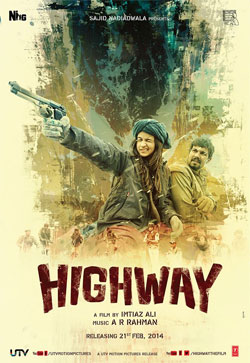
    Highway

    Directed by: Imtiaz Ali

    Starring: Alia Bhatt, Randeep Hooda, Durgesh Kumar, etc


    Imtiaz Ali carries on his penchant for journeys in his latest Highway, that has earned more accolades for young Alia Bhatt than for the director who has made a meandering movie on stunning locations.


    A cliché-ridden story of a girl who falls in love with her kidnapper—the classic Stockholm syndrome— tries to be profound but only ends up being boringly pretentious and quite predictable.


    Most critics were disappointed and stayed with 2.5 stars, the highest being four by Mumbai Mirror’s Rahul Desai who was more impressed by the film that any other mainstream reviewer.


    Rajeev Masand of CNN-IBN made a very valid point about the plot at a time when the country is concerned about women’s safety.  He wrote, “The film – a brave experiment on Ali’s part, who uses long stretches of silence, improv dialogues, and characters over plot to drive the narrative – doesn’t necessarily work. It’s meandering and indulgent in many parts, tiring you out well before it’s over… A beautiful mess, but a mess nonetheless.


    Anupama Chopra of Hindustan Times made a similar comment. “The film posits kidnapping as therapy. It tells us: So what if you’ve been abducted, heal yourself as you travel the undiscovered countryside. Given the horror inherent in the situation, this just feels false and fundamentally wrong. Imtiaz skillfully creates moments that are at once, tender, funny and fragile. But my problem was that I simply didn’t buy into the story.And yet, both Veera and Mahabir stayed with me. They are compelling, intriguing characters. Randeep is extremely effective as the brutalised and brutal Mahabir. I just wish they had met under different circumstances.”


    Sanjukta Sharma of Mint commented, “Imtiaz Ali’s Highway is about escape. It is a dreamlike film, complete with achingly beautiful Himalayan landscapes and vast, unpopulated, dusty expanses. At the centre is a pair of utterly unlikely soulmates—a spunky, rosy-cheeked girl of wealth from South Delhi and her captor, a Haryanvi rogue extortionist. What is this utopia? What are they running from? Torment that they have nursed from childhood. Finally, life has opened up, and the promise of happy-ever-after in the upper Himalayas is in sight. It is a sort of meta-love that cynicism and intellect alienate. This is spectacular fluff. But what really rankles about Highway is the central message—and the message is loud and clear—that for a young girl, the escape from abuse in her ivory tower is through another kind of captivity which she begins to love because at least the captor is honest. It’s a disturbing message.”


    Shubhra Gupta of Indian Express found it disappointing too. “A couple of damaged strangers seeking redemption via a road journey is the premise of Imtiaz Ali’s latest ‘Highway’. The director’s attempt to move away from his trademark candyfloss-ness has mixed results: this is perhaps the most picturesque road movie I have seen coming out of Bollywood, but the story struggles with its twin threads and uneven tone. ‘Highway’ is a patchy ride, with the occasional high spot.”


    Aniruddha Guha of Time Out was kinder. “Escaping the first half-second half quandary of most Hindi films, Imtiaz Ali marks his return to theatres with a solemn, clearly-demarcated-in-three-acts film. Highway gets off to a good start, finds itself grappling in the middle, before striking a punch in the gut with a moving finale. The last 40 minutes of the film, in many ways, is the film itself, where Ali steps out of the comfort zone of his earlier movies and makes his point about an issue most filmmakers would shy away from addressing in a film with a similar canvas. Yet, this isn’t a film driven by a social message. Instead, Ali crafts a sensual film-watching experience to make a strong, informed statement.”


    Saibal Chatterjee of NDTV.com was complimentary. “Writer-director Imtiaz Ali has hit a road less taken. The result is a stylish two-hander that is defiantly unconventional, if not entirely satisfying.  Shot on stunning locations spread from Delhi all the way up to the slopes of Himachal Pradesh and Kashmir, via the plains of Rajasthan and Punjab, the film yields bewitchingly beautiful images. But it isn’t just the visual and auditory delights on offer that make Highway a sensitive, understated entertainer. Its two exceptional characters sway to the kind of subtle emotional riffs that usually elude mainstream Hindi cinema.”


    Rahul Desai of Mumbai Mirror raved, “Highway is Imtiaz Ali’s fifth film and, I suspect, his first film too. His previous efforts seem like milestones on a modern highway, designed to bring him closer to the movie he really wanted to make. The signs were visible: road trips, eloping couples, destructive alpha males, epiphanies around snowcapped Kashmiri peaks, meditative montage sequences. As exemplary as his filmography has been, the focus has always been on a couple, on relationships, hence making it easier for his work to be flawed. In cinema, there is no right way to portray fictional characters; there are only good or bad ways.”


    Sukanya Verma of Rediff.com wrote in a similarly laudatory vein, “In Highway, he uses travel like artistry, a narrative form to unfold the adventures of its two leading protagonists learning (and unlearning) a few precious lessons about the capricious course life follows when tackled head-on.


    Though he doesn’t dwell upon the scenery enough to extract an allegory, there’s both warm familiarity and exotic wonderment to the visual delights he paints before us through Anil Mehta’s majestic cinematography. One seldom acknowledges, forget applaud, the merits of recce after watching a film. Courtesy Ali and Mehta, Highway is a worthy exception.”


    Vinayak Chakavorthy of India Today sneered, “Is it a love story? Suspense drama? Pop philosophy? Or simply an exquisite showreel for Discovery Travel mounted on a fiction set-up? Imtiaz Ali’s new film looks like all of the above by turns as the reels roll, and in the end of it all you are not quite sure which one it definitely wanted to be.”


  • Reviewing the Reviews: Mostly 2.5-3 stars for ‘Hasee Toh Phasee’

    By Deepa Gahlot

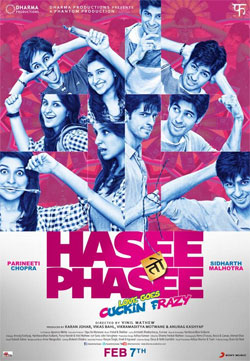
    Hasee Toh Phasee

    Directed by: Vinil Matthew

    Starring: Sidharth Malhotra, Parineeti Chopra, Manoj Joshi, etc


    Adman Vinil Mathew’s debut feature Hasee Toh Phasee has enviable backing—Karan Johar and Anurag Kashyap.  The romantic dramedy got mixed reviews, mostly 2.5 and 3 star ratings, slight disappointment at not reaching its potential, unreserved raves for its lead actress Parineeti Chopra and just a little less appreciation for Sidharth Malhotra and Manoj Joshi.


    It’s not very often that the female lead in a film is an eccentric scientist, so the film scores some points there. The love triangle set amidst a wedding (oh no!) is otherwise standard issue, down to the armies of overdressed relatives and the airport pre-climax, but with some deviations.


    Shubhra Gupta of The Indian Express wrote, “Batty girl meets sweet fellow. Is it cute? Yes, that first ‘mulaqaat’ is. And then? Then ‘Hasee Toh Phasee’ wanders about figuring out whether it wants to be a contemporary rom com, or a Gujju soap, or a 60s melodrama, or all of the above. This confusion confounds the film, fronted by the most talented female lead working in Bollywood right now, and makes her much less fun than she can be. And that holds true for the film, too. It is most exasperating, because ‘Hasee Toh Phasee’ seems to have everything going for it. The smart, varying sensibilities of co-producers Karan Johar and Anurag Kashyap, a likeable leading man, and a crackerjack heroine. What it doesn’t have is a coherent story, and that’s why none of the refreshing bits add up.”


    Saibal Chatterjee of Ndtv.com was more impressed. “Mercifully, Hasee Toh Phasee, notwithstanding its rather unimaginative title and its muddled core, is a mildly diverting, if somewhat woolly-headed, entertainer held together by its unapologetically absurdist spirit.  The film works primarily because the lead pair is in fine fettle, flowing along with the unstoppable tide of fluffiness while adding their own angularities to the proceedings. The multiple cross-connections that occur as the film meanders to its predictable climax are bizarre. After a sluggish first half that is expended largely on setting the stage for the eventual scramble to unravel the tangle, the second half springs to some semblance of life, and in pleasantly surprising ways.”


    Sukanya Verma of Rediff.com liked it more than others. “Directed by Vinil Mathew and based on Harshavardhan Kulkarni’s story/screenplay, Hasee Toh Phasee takes a familiar premise — two people on the brink of tying the knot and introduces a third party to cause expected stir. Only it doesn’t happen like it used to. Instead how everything transpires is Hasee Toh Phasee in a nutshell. Even though there’s a brief backstory to brief us about the temperament of sensitive Nikhil (Siddharth Malhotra) and peculiar Meeta (Parineeti Chopra), Hasee Toh Phasee doesn’t move cut to cut, it progresses gradually without letting us feel how time flies by. Like it usually happens when you’re in fascinating company.”


    Rajeev Masand  of  CNN-IBN commented: “A young man finds himself drawn to his fiancee’s sister in the days leading up to his wedding. That ghisa pita formula gets a fresh coat of paint in ad-filmmaker Vinil Matthew’s feature debut, ‘Hasee Toh Phasee’, a not-always-convincing but seldom boring romantic comedy. For the most part, Matthew and writer Harshvardhan Kulkarni stay away from standard tropes of Bollywood love triangles, choosing quirky humor over sappy sentimentality to endear their protagonists to us.”


    Sanjukta Sharma of Mint found merit in it. “No genre of cinema is as prolific and palliative as the Hollywood romcom—an index of our appetite for the quickie fairy tale. When the milieu is urban and somewhat damaged, it’s more abiding on the multiplex screen. Hindi cinema has produced a few successful attempts at building on this template of urban romance set in quirky families, where emotional dysfunction is malleable enough to make happy endings believable. Director Vinil Mathew’s debut feature film, Hasee Toh Phasee, is a smart and winning feint of that formula. It is an extremely likable balance between light and shade, the sadness in his beautiful lead woman sitting happily alongside her smiles. The sugar is pleasingly granular.”


    Shubha Shetty-Saha raved, “A sparkling fresh love story, well-written script and dialogues, and competent performances make this film a fun watch. The film’s laugh-out-loud moments make it worth the ticket price. But here comes the irony: even when Vinil is dealing with characters and a storyline that has never been thought of before, he breaks the flow to include some done-to-death song sequences that are typical of big budget love stories, as if he is afraid to venture too far with his approach. Perhaps a more confident and braver approach would have bettered this already lovely film.”


    Mihir Fadnavis of Firstpost.com was also positive. “For a first time filmmaker, it must be a staggeringly difficult task to balance the commercial elements of Dharma Productions’ target audience and with one’s own inclination to topple them over. Everything about Hasee Toh Phasee’s script is formulaic, but Matthew manages to find a new way to tell his story, finding a uniquely humorous tone in the formula. As demos go, Hasee Toh Phasee is a superb one for Matthew, who can now join the tribe of directors who have made seamless shifts from advertising to Bollywood.”


    Sudhish Kamath of The Hindu was more guarded. “It’s all about chemistry. What happens when you take all-about-loving-your-parents from the Karan Johar brand of cinema and try to blend it with rebellion-against-the-system from the Kashyap school? What happens when you take a generous dose of sanskaar and Shaadi rituals and add drugs and dysfunction to it? What happens when you reverse the gender types? When you make the girl an explorer, a restless geek with a drug problem and make the boy rooted to family values and commitment? What happens when the boy needs to pay the bride money to marry and the girl comes to rescue him from his routine? What happens when you take a feisty Parineeti Chopra and pair her with Sidharth Malhotra?And like most chemistry exercises, Vinil Mathew’s Hasee Toh Phasee is an experiment but a fun one at that. There’s a lot that explodes but also a little that fizzles out. Love it or hate it, you have to give it points for trying.”


  • Reviewing the Reviews: Half to two stars for One by Two

    By Deepa Gahlot


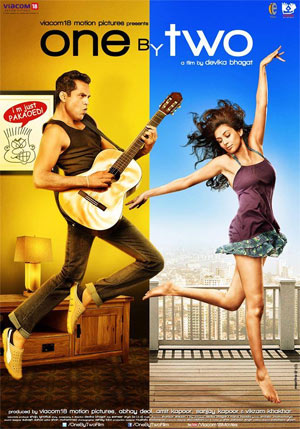
    One by Two

    Director: Devika Bhagat

    Starring: Abhay Deol, Preeti Desai, Lillete Dubey, etc


    It has already made it to some critics’ list of one of the worst films of 2014, and it’s just January. Doubly disappointing because it has been produced by Abhay Deol, who is known to have picked interesting characters so far. Devika Bhagat’s debut film uses the offbeat (though used before in international cinema) device of having the two lead characters not meet till the end; their stories run parallel, and both they are crashingly boring.


    Most critics found the toilet humour repellent and gave it half to 2 stars.


    Raja Sen of Rediff.com rightly commented, “True to its name, this is half a film. It’s half-written, half-digested, half-witted. The reasoning — that ordering half a portion of soup gets you more bang for your buck — might be a sound one for the neighbourhood vinegar-lovin’ chowmein joint, but when both performers and characters are as insipid as the ones in One By Two, you’d be best advised to call for the check instead.  This is one dish best served unserved.”


    Shubhra Gupta of The Indian Express was critical but kind. “That a rom-com makes us wait for the meet-cute moment is unusual. ‘One By Two’ does this with almost geometric zeal, giving us man and his doings, and the woman and hers, in a parallel track. When will the twain meet? This Devika Bhagat-written and direct romantic comedy should have been much better than it is, given its attempt at adding a couple of its own tics to the territory. The trouble begins with it not being able to find the right rhythm.”


    Deepanjana Pal, writing on Firstpost.com commented, “Perhaps as a reference to Schrodinger’s cat, things happen even as nothing happens in One By Two. The film waffles along, showing various moments where Amit and Samara’s lives intersect but don’t give them a chance to actually meet. This would seem a shame if it wasn’t for the fact that the basis of their emotional connection eventually turns out to be tissue paper, farts and fecal metaphors. That’s not the beginning of a happy relationship. One By Two offers one of the least insightful and most shallow portraits of India’s urban youth. If the upcoming generation of Indian men is really like the ones in the film, I predict a sharp and dramatic rise in the country’s lesbian population in the next census survey.”


    Rajeev Masand of CNN-IBN found nothing refreshingly original about it. “One of the problems with this film is that it plays out like a sitcom. There’s enough chick-lit philosophizing to make you barf, and supposedly adult characters who behave like overgrown teens. So Amit is comfortable enough around his buddies to break wind when his tummy rumbles. But when the same gag is repeated thrice over, you know they’ve run out of ideas.”


    Like many others, Anupama Chopra of Hindustan Times was bored by the film. “”Mid-way through One by Two, an exasperated ex-girlfriend screams at her still-besotted boyfriend, whom she dumped recently, “You are so boring. Aur toh aur tumhara naam bhi boring hai.” I felt her pain. Boredom weighed me down too as I watched this film. One by Two is one of those determinedly contemporary romantic dramas that are entirely played out in the world of stylish offices, coffee shops, malls, multiplexes and nightclubs. Here the beautiful, affluent, lonely young folk of Mumbai work out their angst.”


    Shubha Shetty Saha of Mid-Day grumbled, “The film might have been less disappointing if Abhay Deol, who is admired for the kind of roles he has hitherto picked in his career, hadn’t chosen to act and produce it. There are some fleeting touching emotional moments which could have lingered longer if they were handled more deftly. The music is good, but then that is obviously not enough to pull this movie through. At one point in the film, one of the characters tells another, “Don’t let me lose the plot.” I wish real-life partners Abhay and Preeti, had done that for each other. We could have been saved from two hours of being torn between yawns and longingly looking at the exit door.”


    Nandini Ramnath of Mint, used the words that were on everybody’s mind –gross out. “The classic rom-com premise-the perfect couple from the same social bubble travels halfway around the world before eventually being united-is stretched beyond permissible limits in Devika Bhagat’s debut feature. Amit (Abhay Deol) refuses to get over his girlfriend, while Samara (Preeti Desai) is trying to forget a failed relationship and make it as a dancer. The two meet, finally, over an upset stomach-yes, you read right. Of all the genres that Bhagat dips into for the mish-mash that is One By Two, the gross-out American comedy was an ill-advised choice.”


  • Reviewing the Reviews: 1.5 to 3.5 stars for Jai Ho

    By Deepa Gahlot

    Jai Ho
    Director: Sohail Khan
    Starring: Salman Khan, Tabu, Sana Khan, others

    It’s a Salman Khan film, what can you expect but nonsense seemed to be the tone of every review; all critics well aware that Jai Ho is  the kind of film that exists in its own intellect-proof universe. If Salman Khan fights, dances, and takes his shirt off in the end, his fans are happy. They wouldn’t care about the story, director or leading lady.

    Salman Khan goes through the motions with a kind of sneering brazenness, that comes with big profit– does he care about cinema as an art form?  Naaah!

    Believe that a smooth, well-muscled dude who can beat up 200 guys is a common man, and everything else goes down easy.

    Jai Ho got ratings from 1.5 to 3.5 and an overgenerous 4.5 from trade writer Taran Adarsh, that must have surprised even the Khan Brothers who made this film.

    Baradwaj Rangan of The Hindu commented, “There’s no effort evident anywhere. Then there are the action scenes where Jai bites an opponent’s arm and roars and slashes his fingers across a cheek, leaving behind marks like those by a claw. Finally, we get the line, this film’s conceit: Aam aadmi sota hua sher hai. The common man is a sleeping tiger. I can’t vouch for the tiger bit, but as the film went on, this common man was definitely close to sleeping.”

    Shubhra Gupta of the Indian Express wrote, “The usual cautionary warning in the opening credits should have been replaced by this : in the making of this film, no Salman Khan fan was hurt. Because that’s all ‘Jai Ho’, like all Bhai vehicles, aspires to. But even for those that adore the man with agate bracelet, I’d say his new flick is little more than a damp squib. The faithful who had gathered to have themselves a time on the first day first show could only be roused on two counts : one when he is wading into the baddies, and the other when he is at the centre of a running joke involving the size of a young fellow’s goolies, and the colour of a girl’s underwear. Yes, that’s right.”

    Aniruddha Guha of Time Out ranted, “Over the years, Sohail’s made one dud after another, among them Auzaar, Hello Brother and Maine Dil Tujhko Diya. After a 12-year hiatus, he returns to direct this remake of Telugu hit, Stalin, which itself was a rehash of the Hollywood film, Pay It Forward. Sohail lacks any sense of storytelling and finesse, but gets to direct an event film that is expected to set the box office on fire, and features his superstar sibling Salman Khan.”

    Anupama Chopra rightly asked if it was even a film. “In all honesty, I’m confused about how to evaluate Jai Ho. Because it’s not a film. It’s a cartoon. So, to point out that the story is laughably ridiculous or that the characterisation has no depth seems churlish. After all, you can’t go to see a cartoon and then complain about its disconnect with reality.”

    Rajeev Masand of CNN-IBN was left cold by the film. “To be honest, very little stays with you when you leave the cinema, aside from the unpleasant aftertaste that comes from being shamelessly manipulated. From exploiting limbless little girls, to showing us beggar children being assaulted, the film stops at nothing in its attempt to move you to tears. If your heart does go out, it’s to the few good actors who’re wasted by being made to stand around and participate in this silliness.”

    Sukanya Verma of Rediff.com wrote, “What could have been a relevant crowd-pleaser with a little effort from Sohail Khan and his writers is mostly a tedious and overcrowded drivel that shamelessly depends on Salman’s strapping charisma to tide them over.

    Nandini Ramnath of Mint commented that Jai Ho delivers just what it promises, which isn’t much. “What we get from Jai Ho the movie: Salman Khan saves his family honour and, by extension, the honour of the nation, in slow motion, single-handedly dispenses a battalion of baddies, rattles off repeat-value dialogue, romances a freshly excavated young female whom we might never see on screen again, divests himself of his upper garment and wriggles his bottom.”

    Karan Anshuman of Mumbai Mirror wrote, “Purely as a superhero film, Jai Ho works on far greater levels than, say, a Krrish 3. Petty powers like flying, web-spitting palms or acting aren’t required, because the man has hands. And they’re not the 2.5-kilo version. He even has legs that can kickstart an ambulance.  In one partially believable adrenalin-pumping sequence, Jai even uses a ballpoint pen to stab three vile villains. Not sure if there’s a subtle message for film critics in there somewhere…”

    Vinayak Chakravorty of India Today joked, “Jai Ho! Here comes the common man. Watch him snub gravity like Spider-Man and power punch the goons like Iron Man, and then declare he is aam aadmi. You realise it’s only Salman. In planet Bollywood the superstar will always be superhero and he doesn’t need to wear a cape to prove as much, or the chaddi outside his pants.”

    And then the usual praise from Times of India’s Madhureeta Mukherjee. “The film has the heart and the haath (read: fist) in the right place.”  Indeed…in the gullible viewer’s pockets!


  • Reviewing the Reviews: Mostly raves for Dedh Ishqiya

    By Deepa Gahlot


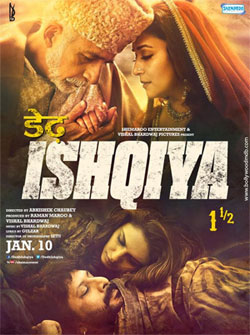
    Dedh Ishqiya

    Director: Abhishek Chaubey

    Starring: Naseeruddin Shah, Madhuri Dixit, Arshad Warsi, others


    The first major release of the year, Abhishek Chaubey’s Dedh Ishqiya, wins mostly raves and ratings that range from 2.5 to apt, probably leaving readers befuddled.


    The film got its media hook in the form of a comeback for Madhuri Dixit, and she seems to have got a mixed welcome. The language, milieu, style of the film belongs to a bygone era, though it is set in the present, and has an ending that would please the LGBT activists, especially when they need support.


    Aniruddha Guha of Time Out Mumbai commented, “Right from when the first trailer of the film released – the one about the seven stages of love - Dedh Ishqiya has been a movie to feverishly look forward to, and it more than meets expectations. After Rajkumar Hirani’s two Munnabhai films, each of which stood out for their individual brilliance, it’s the two Ishqiya films that achieve the feat (incidentally, Warsi has acted in all four). It’s dark, sardonic and funny. Don’t miss 2014’s first great Hindi film.”


    Shubhra Gupta of Indian Express was not all that impressed. “‘Ishqiya’ gave us a couple of lovable rogues with a lilting Bhopali brogue, and a tricky leading lady in the wickedest ‘cheent ka blouse’ and a startling line in ‘gaalis’. Director Abhishek Choubey’s debut film had an arresting swagger and a distinct voice, and characters—full-blooded, full-bodied- that stayed with you much after the film was over. The sequel has the same two losers, a little worn and weathered, trying their luck in another town, and two new ladies, holding out the promise of one-and-half-times the fun. Fun it is for some time, and then it starts to slide. This one should have been a humdinger, but it falls short.”


    Saibal Chatterjee of NDTV.com gave it a glowing review too, “In fact,Dedh Ishqiya is in many respects appreciably more enthralling than Ishqiya. Thematically, the follow-up casts its net far wider and comes up with striking insights into the flaws and foibles of people who haven’t lost their flair for the flashy despite their lives having hitting the skids. The screenplay is laced with acidic wit, the comic touches are subtly sly, and the on-screen performances are marvellously modulated. Dedh Ishqiya entertains, but does so in a manner that does not trifle with the intelligence of the audience. In other words, here is an exceptional film that does not have to negotiate the kind of facile crowd-pleasing narrative formulations that most Bollywood flicks must necessarily wade through in order to get to the Rs 200-crore mark. Dedh Ishqiya might not get there, but it is a triumph of measured craftsmanship and storytelling finesse.”


    Vinayak Chakravorthy of India Today wrote, “Ishqiya started off with an advantage this sequel will not get. Like all first films, it had concept novelty on its side. You had a couple of brazen rustic conmen with hearts that flutter at the tiniest tease, thrown into a mix of dark wit, crime and amoral amour. In a broad sense, Dedh Ishqiya is basically reloading that winning formula, if only at a royal scale its decadent Nawaabi backdrop allows. In a finer sense, the film is not blindly peddling what worked once. You spot a thought process that tries taking the existing formula to a new level. The effect is alluring.”


    Sanjukta Sharma of Mint heartily commended the film. “Writer and director Abhishek Chaubey follows up his rompy revenge caper Ishqiya (2010) with a sequel, Dedh Ishqiya, a terrific entertainer about friendships and the ways in which human beings form bonds for solace and dreams. When I am m by the crassly sexist ethos that governs Hindi films today, Ishqiya is one of the films I like to think of. Here too, like in the first, Chaubey keeps his light, humorous touch intact without failing to smuggle in the class and gender politics crucial to the story.”


    But the five-star rave comes from Rediff’s Raja Sen. “Rarely is a Hindi film as mischievously besotted with wordplay, but one look at Chaubey’s co-conspirators confirms that no syllable has been picked accidentally. In this sleight-of-hand tale where gangsters point with iambic-meter before pointing with guns, Chaubey has master wordsmiths Vishal Bhardwaj and Gulzar alongside him, making for a script that balances words as deftly — and, crucially, with as much nervous energy — as a knife-juggler with a case of the hiccups. It’s a marvel.”


  • Reviewing the Reviews: Mostly two, some three stars for Dhoom: 3

    By Deepa Gahlot


    Dhoom: 3

    Director: Vijay Krishna Acharya

    Starring: Aamir Khan, Katrina Kaif, Abhishek Bachchan


    You can almost hear the collective grinding of teeth along with the ringing of notional box-office registers everywhere, as a film almost universally panned by critics, takes the expected huge opening. And the usual cheeky Dhoom jokes are making the rounds of the internet.


    Vijay Krishna Acharya, the original writer of Dhoom, takes over as director with the third film in the franchise and gets a huge budget plus Aamir Khan– so mostly you see big bucks spent and lot of Aamir Khan…might as well get the paisa paid to him vasool-ed.


    Mostly two stars, some three, and most reviewers disappointed by the lifting of ideas and scenes in such a big film, and not enough bang for the buck.


    Aniruddha Guha of Time Out writes: “Keeping that in mind, and going by everything the industry has produced with mega stars in the recent past, Dhoom: 3 is a small step up for mainstream Hindi cinema. It’s as devoid of depth and sensibility as other films made with the sole intention of belling the box-office cat, but Dhoom: 3– to its credit – is not a lazily-made film. As writer, Vijay Krishna Acharya sticks to the tried-and-tested, but the franchise gets its most sturdy film under his directorship, and he ensures the film never really strays from what it promises to be – a big-ticket entertainer that’s meant to provide instant gratification and little recall value.”


    Pratim D Gupta of The Telegraph grumbled: “You can hire the biggest movie stars, you can copy the biggest blockbusters and you can have the biggest budgets but if you don’t know how to tell a story, tashan is all you’ll be left with. Vijay Krishna Acharya, who made his directorial debut with Tashan, lives up to his first film. The Dhoom franchise has never been high on logic. The earlier two films have had preposterous plots and cheesy lines but under director Sanjay Gadhvi they have been a whole lot of fun… The threequel wants to retain the signature Dhoom punches and punchlines and yet take a real route to the fireworks. Maybe because Yash Raj Films wanted to sign on Aamir Khan as the adversary. So in comes a backstory coated with angst and anguish…”


    Shubhra Gupta of Indian Express did not stint on criticism, “Somewhere in the build-up to the film, a character tells another: just make sure my eyes do not move from you for five whole minutes. Dhoom: 3 is nearly three hours long, and I am here to tell you that my eyes strayed from the screen many, many times. My attention shouldn’t have wavered. Because the third installment of ‘Dhoom’ has the kind of tech specs the slickest Hollywood flicks do: superb cinematography, great-looking sets, expansive foreign locations. And the promise that leading man Aamir Khan is meant to bring to his act. But very soon into the film, you are overcome with the feeling that engulfs you when you encounter stuff you’ve seen too many times before. Dhoom: 3 is a victim of both a crying lack of imagination, and franchise fatigue.”


    Raja Sen of rediff.com was scathing: “Twenty minutes into Dhoom: 3, reeling from the assault of cinema so amateurish it’s hard to believe it was put together by grown men, I began to ask myself precisely what this film was trying to be. There was an annoying kid borrowed from the melodrama of Subhash Ghai movies, complete with a moist-eyed Jackie Shroff. There were the cheesiest of dialogues, Kader Khan in Dickensian mode. There were stunts seemingly executed in slow-motion and shown to us even slower, resulting in yawnworthy chase scenes. There was Aamir Khan running down the side of a building for no apparent reason. Everything — repeat, everything — looked too goofy to be either thrilling or realistic or compelling or even plain fun. And then it hit me. Dhoom: 3 is a children’s film made for children who’ve never seen a film.”


    Saibal Chatterjee of NDTV.com was kinder: “When the writer of the first two films of a successful franchise takes the director’s chair for a third shot at more of the same that is exactly what one gets: more of the same. This time around, the bikes, babes and brawls formula is dished out even more liberally than before. So, for the most part, Dhoom: 3 is a high-voltage action flick that relies squarely on known methods of the genre. Actually, familiarity of this kind isn’t such a bad thing. Since the audience knows what is coming and does not have too many unsettling surprises sprung at them, acceptability is that much easier.


    Srijana Mitra Das of the Times of  India dished out the mandatory rave, “Straight up, Dhoom: 3 makes you laugh, gasp – even sniffle. The most emotional of the Dhoom series yet, this is Aamir Khan’s show all the way. As revengeful circus star Sahir, whose father Iqbal (Shroff) dies after losing his beloved Great Indian Circus to a stony-hearted Chicago bank, Khan is terrific. The Dhoom series usually showcases brawn on bikes but in this one, mind meets machinery, Khan’s brain almost visibly ticking behind his eyes, calculating every second before he vrroooms off on a bike – across a wire stretched high between buildings, beneath a mega-truck, even underwater.”


    Vinayak Chakravorty of India Today nailed it.”The barely-there plotline lets you understand the true intention of this film. Dhoom: 3, unlike the prequels, is not about antiheroes driven by sheer lust for money. There is old-fangled revenge drama at work here. Baap ka maut and bete ka badla have been integral to Bollywood themes forever. Dhoom: 3 is just about reimagining that hackneyed plot on a spectacular scale.”


  • Reviewing the Reviews: Ratings ranged from 0 to 2 for R…Rajkumar

    By Deepa Gahlot


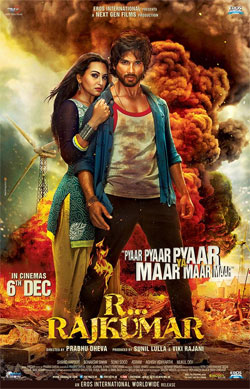
    R… Rajkumar

    Director: Prabhudheva

    Starring: Shahid Kapoor, Sonakshi Sinha, Sonu Sood


    It’s the kind of masala film that opens well (according to trade experts), sometimes does great business, but has critics curling up their noses in disgust.


    Shahid Kapoor tries very hard to follow in Salman Khan and Akshay Kumar’s ‘rowdy’ footsteps, but can’t match their insouciance when doing mindless action. Prabhu Deva could make Shahid dance, but the rest is lacking.


    Ratings ranged from 0 (yes!) to 2, except for the quotable critics who have to give 3 stars and above to every film to get their names in the ads. But everyone know what their credibility is like, so their raves hardly matter


    Shubhra Gupta of the Indian Express called it the worst film of the years. “It has not one redeeming feature. Nothing. Zero. Shahid Kapoor plays R…Rajkumar. The R.. was meant to be Rambo. The name was axed because of copyright issues. It is now Romeo. It makes no difference. This is a role that will, and should, haunt Shahid Kapoor: it is empty of all sense and sensibility. Shahid Kapoor presents a head full of carefully streaked hair, cultivated stubble, puckered lips, and swinging fists. He mouths crass dialogue. He thrusts his pelvis. His idea of romance is to stalk and harass and bludgeon his girl into submission, and his idea of vengeance is to batter bodies till blood spurts.”


    Mihir Fadnavis writing in Firstpost.com hated it too. “In one excruciatingly long scene of R…Rajkumar, Sonu Sood sits with a bunch of his goonda cronies and jovially sings, “I am your Bull. You are my sh*t. Together we are Bullsh*t.” Never before in the history of Hindi cinema has a film so astutely relayed its intentions from the makers of the film to the viewers. Which is why I need to take a leaf from a song in R…Rajkumar to elucidate the film’s overall quality: gandi film, Gandi gandi gandi gandi gandi film.”


    Vinayak Chakravorty of India Today wrote, “With R… Rajkumar, Prabhu Dheva commits his second blunder this year after Ramaiya Vastavaiya. He needn’t have made this film. The film does not leave you with a single memorable scene despite its loud effort to impress. Prabhu Dheva clearly loses track of his own film early on. The first half is a jumble and the second seems too long. R… Rajkumar will not break Shahid’s wretched run at the box-office, coming after Mausam, Teri Meri Kahaani and Phata Poster Nikhla Hero. He has chosen too hackneyed a project to get back in business.”


    Saibal Chatterjee of ndtv.com ranted, “Prabhu Deva tends to direct a film pretty much like he choreographs a song. He packs both, from end to end, with a frenzied flurry of brisk hand and feet movements and a surfeit of high-decibel musical clatter. The astoundingly lithe dance steps that he conjures up tend to flummox the eyes; the attendant sounds unleash a non-stop assault on the eardrums. The two together (and singly as well), have clearly outlived their utility. R… Rajkumar is incontrovertible proof that Prabhu Dheva has been hit by the law of diminishing returns.”


    Karan Anshuman of Mumbai Mirror wrote. “If you think about it, Rajkumar’s catchphrase ‘Pyaar pyaar pyaar ya maar maar maar maar’ is very much in theme with the film because that’s all there is. Certainly if you like the idea of your girl whipped by a belt and then the idea of the hero whipping the whipper in a comedy scene, then R… Rajkumar will be on your all time list of favorites. For minor humor, there is major offense to be taken here.


    And who doesn’t like a hero who can break every rule, maim every person, and match dance steps with Prabhu Dheva? The smiling, joking protagonist turns underdog and faces minor difficulties (multiple stabbings, buried alive) for only about ten minutes in movie that is just short of three hours. Too little, too late, utterly unconvincing. Why even bother.”


    The three stars Madhureeta Mukherjee of the Times of India accorded to the film are puzzling, because she wrote, “While ‘R…Rajkumar’ entertains at some levels, it suffers from utter plainness and predictability. The raw action is impressive (Ravi Varma), the songs (Pritam) and the choreography are routine attractions. The second half seems like a sari too long and the comedy is often forced. It has some ‘Must Haves’ of a pot-boiler, but misses the real thing – a SOLID STORY!”


  • Reviewing the Reviews: Critics say Bullett Raja lacks the plot

    By Deepa Gahlot


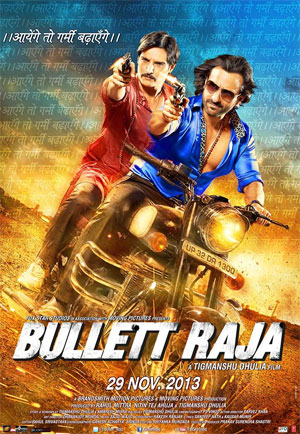
    Bullett Raja

    Director: Tigmanshu Dhulia

    Starring: Saif Ali Khan, Sonakshi Sinha, Vidyut Jamwal etc


    If it was just some random filmmaker trying to put together a potboiler, Bullett Raja would not have been such a disappointment, but there were hopes from Tigmanshu Dhulia post Paan Singh Tomar.


    To begin with, Saif Ali Khan is miscast as a middle class UP goon. He looks even more out of place when every other actor seems comfortable in the rugged milieu.


    Most critics derided the lack of a plot and proper characterization, and gave it 2 or 2.5 stars… and one half-star from rediff.com.


    Aniruddh Guha of Time Out commented, “Bullett Raja, in spite of the “big budget” tag, is Dhulia’s shoddiest film since Shagird. The acting is inconsistent, the screenplay patchy, the background score jarring and the editing jumpy. Some things remain consistent – Dhulia’s regular collaborator Dhananjay Mondal gets the art direction spot-on again, while the dialogues, written by the director himself and which he seems to have better control over than most of his contemporaries, have verve. The intention is clear: to make a no-holds-barred action entertainer, with the director’s trademark humour and style intact. Yet, the result is a bit of a botched effort, the body of the film resembling the Saheb Biwi Aur Gangster films, but the soul screaming Dabangg. (Filmmakers need to realise that Dabangg was a fun throwback to the masala films of the ’70s, sorely missed at that time, while everything else that followed – including Dabangg 2 - seems like a poor Dabangg clone.)”


    Deepanjana Pal writing in Firstpost.com ranted, “It’s difficult to decide what is the most disappointing aspect of Bullett Raja. Is it that Dhulia, who won such acclaim for his small-budget films, has botched up so comprehensively with this wannabe blockbuster? Could it be the soundtrack that is a thumping, tuneless cacophony? Or is it the lazy writing that can’t be bothered with either building characters or a coherent storyline? With its emphasis on machismo and male bonding, Bullett Raja is clearly targeted at the manly men puffing up the country’s male population as Khan does his chest and biceps. What does it say about that audience that Bullett Raja is Dhulia at his silliest and most inept?”


    Paloma Sharma of Rediff.com was bored to death. “Bullett Raja is rife with predictable scenes, bad editing and a lack of control over the script, which spirals into an unending loop of absurdity. The pseudo-patriotism blends into personal enmity with the corrupt without much warning, leaving the viewers confused.


    While no two people can like the same kind of films or even agree on the definition of a good film, it is difficult to judge if even hardcore Saif Ali Khan fans should go for this one.”


    Sanjukta Sharma of Mint wrote, “His new film Bullett Raja strays far from the work he has built so far. It is a wishy-washy mix of two brazen hinterland heroes’ misadventures, a revenge drama, and a soap-opera style, hackneyed depiction of Uttar Pradesh politics. Dhulia’s dialogues (he has co-written the screenplay and written the dialogues) are insipid, and the humour, perhaps intended to be madcap, borders on the imbecile. The lead characters, Raja (Saif Ali Khan) and Rudra (Jimmy Shergill) are mere vehicles to keep a muddled narrative afloat. They have no signature quirk, as pulp heroes would demand.”


    Rajeev Masand of CNN-IBN wrote, “What’s disappointing then is that Bullett Raja isn’t consistently engaging. Aside from the rather choppy editing, there are also random scenes strewn about carelessly. Sonakshi Sinha plays an aspiring actress who comes in contact with Raja and Rudra.  We’re never sure why this sweet middle-class Bengali girl insists she wants to tag along with two gangsters for the ride. She falls all-too-easily in love with Raja, even though they appear as far removed as chalk and cheese. The flabby, unnecessary portions in this film include the hiatus these three take to Mumbai, a plot diversion that serves no purpose other than to fit in a silly nightclub number.”


    Anupama Chopra of Hindustan Times commented, “Tigmanshu, who also co-wrote the story, gives Saif a full-bodied character to inhabit but he fails to provide the character a compelling story to work with. Bullett Raja is a standard issue revenge story with the usual array of corrupt ministers, cops, criminals and their machinations as elections loom large. The screenplay is half-baked and strangely disjointed so, at one point, randomly we end up in Mumbai, where we get the item song Tamanche Pe Disco.”


    The surprise rave came from Vinayak Chakravorty of India Today. “Quite a gunfest of goons actually, the stock dialoguebaazi, love-shuv, a villain’s pack, even an item number thrown in. There is a standard Jai-Veeru type buddy bonding track in place, too. If Tigmanshu Dhulia wanted to go mainstream this time, he has literally piled the jingbang.  Be sure there is a context to all of it. Even masala madness acquires the subtext of socio-politics if Dhulia sets out imagining it. Bullett Raja turns the murky caste-infested politics of Uttar Pradesh into pop spectacle. The outcome is solid bang for your bucks.”


  • Reviewing the Reviews: Gori Tere Pyaar Mein leaves most critics yawning

    By Deepa Gahlot


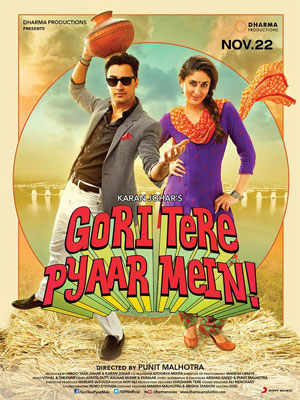
    Gori Tere Pyaar Mein

    Director: Punit Malhotra

    Starring: Imran Khan, Kareena Kapoor, Anupam Kher etc


    Gori Tere Pyaar Mein, a typical romcom from the Dharma Productions banner, directed by Punit Malhotra,  left most critics yawning with boredom. Superficiality was the biggest flaw, as ratings went from 1/2 (half) in Indian Express to the expectedly generous 3.5 in the Times of India. Other went by 2 or 3.


    The film about two opposites falling in love is marred by the non-linear storytelling, stereotyped characters and total ignorance of ground realities in India, plus the dumbest lead characters ever– attractive looking but not too likable. He is self-absorbed, she has an NGO heart that bleeds all over the place. But in Bollywood, the twain can and often does meet, and that’s no spoiler.


    Shubhra Gupta of the Indian Express grumbled, “Let’s just say you should be grateful Karan Johar doesn’t see an India beyond the metros more often. For when a Johar production heads to a village, as Gori Tere Pyaar Mein! does, it is the sort of village where people dressed in tie-and-dyes hang around in the fringes to fawn over the city slicks who will deliver them from a Collector.  Yes, in this fake Gujarat village with its charmingly innocent and clueless people, the Collector is an offshoot of the Bollywood moneylenders of yore, with nary a concession for the fact that he is after all a government official, bound by some rules if not many. Here he operates from presumably his home, with lackeys doing padicures and messaging him as he slaps people around.”


    Nandini Ramnath Live Mint sneered, “Malhotra’s desire to engage with the issues that matter seems to be a response to criticism that Bollywood needs to move out of la-la land and in the direction of realistic cinema, but Gori Tere Pyaar Mein! is proof that this journey is not for everybody.”


    Vinayak Chakravorty of India Today commented, “Director Punit Malhotra and his co-writer Arshad Syed operate with minimum script that barely holds any surprise. The idea would still click if there were the magic moments to trigger off chemistry between the lead pair. You hardly spot any. For a rom-com, Gori Tere Pyaar Mein! runs low on the ‘rom’ quotient, still lower on the ‘com’ factor.”


    Paloma Sharma of rediff.com ranted, “Gori Tere Pyaar Mein is two hours and 28 minutes long and follows a non-linear narrative. This was absolutely unneeded. Despite all the flashbacks, the story was predictable and the first half could have been cut down significantly. This film is a case of shoddy editing, writing and direction. Gori Tere Pyaar Mein‘s saving grace is that it is a love story and the second half will manage to melt your heart, if only slightly. It’s the classic opposites attract story and hey, if you’re into that kind of thing, this might be your kind of film.”


    Rajeev Masand of CNN-IBN seemed to hate the film too. “Opposites attract, but it’s hard to figure out what draws this pair to each other. Then snotty Sriram’s love is tested when he follows Diya to a remote village in Gujarat, and volunteers to build a bridge that will help the lives of the locals.You expect rom-coms to be frothy, escapist fluff, but Gori Teri Pyaar Mein specializes in a brand of emptiness that struggles to hold your attention. In one scene, Diya tells Sriram, “Don’t be so shallow” and that sentiment sums up this film in a nutshell.”


    Sarita Tanwar of DNA was much kinder,”Gori Tere Pyaar Mein belongs to the rom-com genre, so really you know the kind of film you have come to watch. You know the path it will follow. Girl meets boy, love happens, they separate and they come back together. But other than that, it is different. For starters this one isn’t set in a college nor is it an office romance. Neither the characters nor the situations are the usual cliches. A romantic film is nothing without moments and this one has really sweet ones.”


    Shubha Shetty Saha of Mid-day didn’t seem to have problems with it either and saw merits that passed everyone else by. “First of all, the intention of the film seems right. The story refreshingly and subtly talks about how consumerism is eating away our souls and how each of are becoming more and more self-centred. How take is more acceptable than give in this fast-paced world where each lives for his or her own. In a rather casual manner, befitting a romantic comedy, the film touches upon certain sensitive issues and taboos. For starters, the girl being many years senior to the boy she is in love with is casually mentioned in the passing and not made a big deal out of. That speaks of the maturity of the thought behind this film.”


    What can you say about Madhureeta Mukherjee’s rave, except that the TOI seldom goes under 3 stars. “ Punit’s ‘GTPM’, is a sweet, breezy romcom with likeable characters presented in glossy, lavish, true Karan Johar (producer) style. In the second half, the ‘the bridge over troubled waters’ project is a bit stretched, and you wish thegaonwallahs would leave the pair to romance instead. Music (Vishal-Shekhar) is peppy and pleasing. This isn’t the most rousing romance (second-half lacks ‘rom’), but has its feel-good moments. Chew it up with some ‘Chingam’ and a cute date.”


  • Reviewing the Reviews: Critics praise quality & performances in Ram-Leela, pan over-the-topness

    By Deepa Gaholot


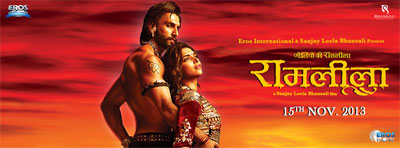
    Goliyon Ki Rasleela Ram-Leela

    Director: Sanjay Leela Bhansali

    Starring: Ranveer Singh, Deepika Padukone, Krishna Singh Bisht, others


    This is a rare film that gets crazily mixed reviews from 1 star by rediff.com to 5 stars by Times of India and every combination in between.


    Most critics praised the visual quality and performances, but also panned the excessive ‘over-the-topness’ of everything.


    Raja Sen of rediff.com ripped it apart, calling in an over-plotted bloody mess. “Goliyon Ki Rasleela Ram-Leela — an acronym of which unfailingly reminds me of Greater Kailash Residential associations — is a monstrously excessive film with a riot of colours, a girl who looks very pretty indeed and a daft hero, but despite that being the warning on the tin whenever you attempt (foolhardily) to buy into a Bhansali product, this can’t be what you bargained for. GKRR is an overplotted, bloody mess.”


    Meena Iyer’s review didn’t match its 5 star rave. “What new can a filmmaker do with William Shakespeare’s classic love story Romeo and Juliet? The answer is, if you are Sanjay Leela Bhansali, who is technically sound and artistically astute as far as art and craft go, you just become impudent, set the story in Gujarat, sign Bollywood’s currently best actress Deepika Padukone (Leela), team her up with `I’ve-got-fire-in-my-loins’ actor Ranveer Singh (Ram) and then let them loose on one another.”


    Rajeev Masand of CNN-IBN was mostly rave. “Bhansali brings all his tropes to the table – unabashed melodrama, stunning visuals, elaborately choreographed dance numbers. Yet, it’s the firecracker chemistry between his leads, and the genuine feeling he infuses into the film that separates Ram Leela from previously disappointing outings, particularly Saawariya and Guzaarish, that were weighed down by shameless manipulation and pretentious, heavy-handed filmmaking.”


    Shubhra Gupta of Indian Express was mostly rant “Bhansali’s ‘Ram-Leela’ is mounted as pure spectacle, no surprises there, because that is his style. The setting is the Rann, in Gujarat. The warring clans, the Gujju versions of the Montagues and Capulets, are attired in costumes where not one thread is out of place. Each scene is meticulously designed: the desert, the havelis, the swirling ghagras, the spurting of the blood. It gets to the point where you start feeling breathless, and that is exactly what Bhansali intends, for you to get encircled by his universe. And in that he succeeds. I was swept up by the way he builds up the love story, between Ram (Ranveer Singh) and Leela (Deepika Padukone). Where he fails– his old failing– is in the insistence on every little thing being perfectly choreographed: a messy love story requires messy emotions, and Bhansali doesn’t ever let his gorgeous Leela’s tears streak down her cheeks. No leaky nose, no hiccups, just back-lit loveliness, which becomes too perfect to be real.”


    Sudhish Kamath of The Hindu wrote, “Bhansali has figured out that he does not need to look far West for inspiration. Okay, it might have loosely borrowed a few things from Shakespeare’s Romeo and Juliet but diegetically, it’s Indian in form.


    So yes, the havelis from Hum Dil De Chuke Sanam are back. So are the chandeliers from Devdas and the folksy refrains from the former. In fact, the backdrop is not only picture perfect, the production design is so rich that you can rarely tell where location ends and set design begins. This is home turf and Bhansali knows the world in and out. While he has always had an eye for aesthetics and sensual shot taking, the director had also kept it contained. In Goliyon Ki Raasleela Ram-Leela, he lets it loose. This is certainly his most uninhibited film with raw sexual energy and explosive chemistry between the two of the best looking people in the country.”


    Saibal Chatterjee of NDTV.com was scathing. “The film doles out super large helpings of everything under its grandiose narrative canopy – be it the oft-repeated story of star-crossed lovers, the garish sets, the musical score, the choreography, the costumes, the pitch of the acting, the delineation of the principal characters or the saturated colour palette. Even on the rare occasion where he gives minimalism an attempted shot, as when he lets the characters articulate themselves only through physical gestures and facial expressions, SLB does not pipe down one bit. He goes for broke every which way. It all adds up to a somewhat disorienting sensory assault mounted by a filmmaker who believes that excess makes excellent sense. Goliyon ki Raasleela Ram-Leela is composed of such a riot of colours that the hues often bleed into each other, leaving behind blobs and blurs. ”


    Finally, seeing it from the point of view of an outsider, unaffected by the hype. David Chute of Variety summed it up well. “”Ram-Leela,” a gorgeous, boisterous, ultimately ineffective new Bollywood adaptation of “Romeo and Juliet,” does accomplish one thing that is quite unusual: it manages to keep you in suspense about the outcome almost to the last frame. Not a bad trick for a re-telling of one of the most familiar narratives in world literature. In fact, this points to a central weakness of writer-director Sanjay Leela Bhansali’s film, which for much of its length is such a brightly-colored song-and-dance entertainment that auds may wonder if it’s working towards a revised, happy Bollywood ending. (Some may even hope as much, as the movie doesn’t seem serious enough to merit a tragic one).”