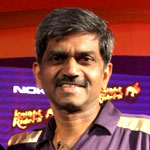
Tag: D Shivakumar

  • Mumbai leg of IAA Retrospect & Prospects with D Shivakumar on Feb 12

    D Shivakumar

    By A Correspondent


    PepsiCo India Chairman and CEO D Shivakumar will present a 60-minute review of the highs and lows in media, advertising and marketing in 2013 and a forecast of what will happen in 2014 Colors is presenting partner of the event which will be held at Hotel Sahara Star. Last month, Mr Shivakumar had presented a similar session in Delhi NCR.


    Srinivasan Swamy

    Said Srinivasan Swamy, President, IAA India Chapter and VP-Development, IAA Asia Pacific: “This would be infotainment at its best. In sixty minutes, we will have the wisdom and insights of a leader of our fraternity encapsulating the immediate past and the near-future in an absorbing audio-visual format. It will be a must-see for all members of our industry. The Delhi audience loved it. We, along with our partner Colors, felt there was a need to present this in both Mumbai and Delhi.”


  • Ex-Nokia MD D Shivakumar is Pepsi’s India region CEO

    By A Correspondent


    D Shivakumar

    US food and beverage maker PepsiCo on Monday named former Nokia executive D Shivakumar as its chairman and CEO for India region, a position lying vacant since Manu Anand quit in June.


    Mr Shivakumar – who was managing director at Nokia India before taking over as the handset maker’s senior vice-president for India, Middle East and Africa in 2011 – is PepsiCo India’s first outsider CEO since Rajeev Bakshi, who led the firm from 2001 to 2006.


    “Shiv has a proven ability to take billion-dollar businesses to the next level by maximising innovation, execution and collaboration,” Ms Indra Nooyi, chairman and CEO at PepsiCo, said in a statement. He takes charge with immediate effect. ET NOW business channel broke the news before the official announcement.


    PepsiCo on Monday also announced promotion of Gautham Mukkavilli, currently general manager of its beverages business in India, as senior vice-president, business transformation, for the Asia-Middle East-Africa (AMEA) region. He will oversee strategic initiatives in foods and beverages across the region with effect from March 1, 2014.


    Both Messrs Shivakumar and Mukkavilli will report to Sanjeev Chadha, CEO of PepsiCo AMEA. “Shiv and Gautham will be playing key roles in driving PepsiCo’s business forward in the region,” Mr Chadha said.


    PepsiCo India has been operating without a country head since Manu Anand quit dramatically in June to join foods company Cadbury Kraft. Since then, Mukkavilli and foods division head Praveen Someshwar have been reporting to Mr Chadha.


    An engineer from IIT Chennai and an MBA from IIM Calcutta, Mr Shivakumar’s appointment has come as a surprise to many as his immediate predecessors Manu Anand (India head from 2010 to 2013) and Mr Chadha (2006 to 2010) were chosen from PepsiCo’s internal talent pool.


    Mr Bakshi was the last outsider CEO of PepsiCo India, brought in from Cadbury. Mr Shivakumar’s immediate mandate at the firm will be to accelerate consumption of colas and snacks in an environment when growth has slowed down significantly.


    Growth of soft drinks has slowed down to single digits as early rains cut short last summer on top of weakening consumer sentiment. PepsiCo’s snacks business is facing increasing competition from national rivals, such as ITC and Parle, as well as local players.


    “PepsiCo is in a challenging phase and will test Shiv’s abilities to the hilt,” said Vibhav Dhawan, managing partner at search firm Positive Moves Consulting, said.


    Mr Dhawan, who knows Mr Shivakumar well and has tracked his career, said he is a good choice to lead PepsiCo in India. “Shiv is a rare marketer who has worked both in traditional consumer and new generation mobile consumer sectors. His marketing prowess makes him a great choice for a brand like PepsiCo which targets the youth,” he said.


    Mr Shivakumar, who spent eight years at Nokia, quit the firm in June this year. Before joining Nokia, he worked with consumer electronics maker Philips and top consumer goods firm Hindustan Unilever.


    During his tenure, Nokia’s user base jumped from 80 million to about 900 million but its market share declined from over 70% to about 25% as Chinese manufacturers and some homegrown brands like Micromax and Karbonn eroded its market share in the entry level segment, while Samsung and Apple ate into its share in the smartphone segment.


    Nokia’s biggest failure under Mr Shivakumar was missing out the dual-SIM revolution, which accounted for as much as 50% of handset sales in India between 2009 and 2010.


    Source:The Economic Times

    Copyright © 2013, Bennett, Coleman & Co. Ltd. All Rights Reserved

    Licensed to republish
     

  • No kiya! Tired of telecom, D Shivakumar wants to move on

    By Shelley Singh


    After eight years in the sector that showered him with both stirring recognition and stinging criticism, D Shivakumar is done with telecom.


    Talking to a week before he calls time on an eight-year stint in the sector that saw him catapult handset maker Nokia into a leadership position in India only to find it fall steeply from grace, 56-year-old Mr Shivakumar says while he hasn’t firmed up his plans, he will not be involved with telecom, a sector he painted as brutal and unforgiving.


    “It’s an industry with possibly the highest rate of innovation -  lifecycles are very short,” says the senior vice-president, Nokia, India, Middle East & Africa. “In other categories, you have six innovations in 100 years; in telecom, you will have that many in months. One thing telecom teaches you is to be extremely fit, mentally and physically, as a company and as a brand. Otherwise, telecom can punish you.”


    Nokia, both in India and globally, found that the hard way. When Mr Shivakumar switched from Philips, where he headed consumer electronics, to Nokia India in 2005, the Finnish handset marker was in the midst of a strong run. According to figures from IDC, it had 49% share of the Indian handset market in 2006, which peaked under Mr Shivakumar at 56% in 2008, amid a significant expansion in the overall market size.


    But then, the company was slow to change, first in the dual-Sim space and then in the touchscreen space, and saw its share dip to 33% in 2010. In 2011, Mr Shivakumar moved to a global role in Nokia and relocated to Dubai.


    Mr Shivakumar leaves Nokia at a time when it is trying to claw back globally, which he feels it will accomplish on the back of its Asha and Lumia ranges of phones, and transition from Symbian-based platform to Windows-based platform. “Turnaround is defining strategy, aligning resources and capability, and correcting the wrongs of the past,” he says. “When you are in a turnaround phase, people expect it to happen tomorrow morning.”


    In 2012 (January to December), Nokia posted revenues of €30.1 billion globally, down 22% over 2011. Its operating loss stood at €2.3 billion compared to loss of €1.1 billion in 2011. “It’s (a Nokia turnaround) an uphill task,” says a telecom analyst with a multinational consultancy firm, on the condition of anonymity. “Rivals aren’t going to give room to Nokia to bounce back.”


    Mr Shivakumar’s resignation, announced in March, has led some to believe that he is leaving a sinking ship. “How long do you stay in a company that is going down?” asks the country head of a global hardware major, not wanting to be named.


    Calling telecom a “brutal” market, consultant Mahesh Uppal says the challenge in the sector is to manage expectations. “A leader in telecom needs a hawk’s eye on marketing, applications and services, to get the pulse right and not lose sight of the market,” says the director of Com First, a telecom consultancy firm, without referring to a specific individual. “Hardly a day passes without something new. It can be nerve-racking and exhausting.”


    But Mr Shivakumar, who is relocating from Dubai to Delhi, says telecom has been a “wonderful journey”, and though he is not tired off it, he now wants to go beyond. “Good leaders cross boundaries of categories as what they bring to the table is clarity, strategy and leadership,” he says. “I’m not a one industry person.”


    Areas that attract Mr Shivakumar include retail, education, skills development, health and wellness. “I haven’t thought what I’ll do next, but the few things that I really value are institution building, growth and brand,” he says. “Any industry that has a combination of this will attract me. But it won’t be telecom again. I’m done with it.”


    Back in India, its Indian arm was hit with a 2,000-crore demand from the income tax department for violation of transfer pricing norms. Mr Shivakumar asserts the company has complied with tax rules and denies this was a factor in his leaving. “Nokia followed every single rule in filing its returns. The issue is of interpretation,” he says. “It’s completely incorrect to associate my leaving to the tax case.”


    Source:The Economic Times

    Copyright © 2013, Bennett, Coleman & Co. Ltd. All Rights Reserved

    Licensed to republish


  • It’s an era of brand experience, not of product branding: D Shivakumar

    By A Correspondent


    All India Management Association (AIMA) kickstarted its two-day 3rd World Marketing Congress in the capital. The congress, themed Marketing Myopia 2.0, aimed to explore the future of marketing and to identify the challenges that marketers face due to the changing market scenario.


    Srinivasan K Swamy

    Inaugurating the event, the congress chairman and R K Swamy BBDO Chairman & Managing Director Srinivasan K Swamy said, “The consumer today wants more for less and quickly, which is making product lifecycle progressively shorter. Also, there is a lot of media today but not enough consumer engagement. The marketers face significant challenges in this age of digital media.”


    The congress took up several marketing issues for discussions, including the new age customers and grabbing their attention, extending product lifecycles, defining business based on customers and not products, using the internet to gain competitive advantage and the rising importance of earned media.


    Making a presentation on the occasion, D Shivakumar, President, AIMA and Senior Vice President, IMEA, Nokia Ltd, said, “Marketing has changed fundamentally. It’s an era of brand experience and not of product branding. Also, today, space is no longer only the physical location of business but any space where consumers can access it.” He also stressed that marketers could no longer treat the digital media as a niche. “In fact, digital media is becoming the main media to reach out to the youth,” he added.


    Mick Gordon, CEO, Ipsos highlighted that with digital platforms converging, it is important that brands start dreaming in digital. Anisha Motwani, Director and CMO, Max Life Insurance was of the view that brands need to connect with consumers every day. Concurring with Ms Motwani’s view BCCL President Arunabh Das Sharma said, “In the digital age, the concept of product life is dead and thus, one should focus on brand life cycle and values.”


    Gyan Gupta, CEO, Dainik Bhaskar, Digital Business, IMCL said, “The need for news has not changed, only the way people access the content has changed. Paper is not the mainstay, it is the content.” He further added  brands need to adapt themselves according to how the consumer wants to see the brand.


    Talking about earned media and paid media, Bhaskar Sharma, Director and GM, Red Bull India said, “Earned media for any brand remains distinct and credible, it is cool to share on all platforms. It results in high level of reach and engagement. The only issue being there is no control on how, and where it would appear.” Suhel Seth, Managing Partner, Counselage India said, “Earned media is about hinging on credibility of the brand. Earned media adds as a short buffer. What is more important for brands is that they remain relevant to their brand promise.”


    More than 250 marketers attended the Congress on its first day. The highlight of the event was the presentation of the AIMA’s R K Swamy High Performance Brand of the year Award, which was bagged by Apollo Tyres this year. Rajesh Dahiya, National Head, Sales & Marketing, Apollo Tyres received the award. Speaking on the occasion, Rekha Sethi, Director General AIMA, said “It is perfect time to debate marketers’ response to the revolutionary changes in the technologies and consumer behaviour.”