The rapid escalation of the Covid-19 crisis in India has dominated headlines over the last week in particular. The ‘second wave’ has pushed the health infrastructure to its limits, and beyond. Mixed messaging from the governments, both at the Centre and in the various states, is not helping the cause. Instead of talking about vaccination and masking, our leaders are busy managing elections and overseeing religious events. It doesn’t make any sense. But that’s how it is.
A medical emergency, when combined with political apathy, can make for a grim picture. And lockdowns and economic disruptions don’t help either. In this atmosphere, a very unlikely candidate that emerged as a mood-uplifter: The Indian Premier League!
IPL has been ridden with endless controversies over the years. The league has been badgered, often justifiably so, for being obscenely commercial. Fixing, corruption, legal battles… IPL has seen it all. It’s hugely popular, but not unblemished by any stretch of anyone’s imagination.
Last year, BCCI managed to pull off a season in the UAE about six months after the scheduled season was canceled, which led us to a unique scenario of two IPL seasons within six months. Earlier this year, when England toured India and the Narendra Modi Stadium in Ahmedabad was inaugurated with much fanfare, spectators were allowed in. Images of 65,000 spectators packed in that stadium in a T20 International, with no social distancing at all, became a huge talking point on social media, even at a time when our Covid situation didn’t seem like a crisis.
The decision to hold matches to empty stadia may have come in too late in that series, but there has been no such indiscretion with IPL 2021. Well before the current Covid wave came in, BCCI was clear that this IPL season will be held without in-stadia spectators, and with minimal team travel.
Absence of in-stadia spectators makes the IPL come across as highly Covid-appropriate. Coming from a league not always known to be mature and sensible in the past, this has turned out a mightily wise move. Home stadia and gate money are key components of the sports franchise model, and any compromise on them is hard on the league and the franchise owners. Thankfully, such commercial temptations have not coloured sound judgment this time.
So, we are in the middle of the most controversy-free IPL season of all time, it seems. With more people at home and the possibility of disruption in prime-time content on GECs because of shooting restrictions, it is likely to be one of the most-watched seasons too. Now let’s hope BCCI does not do something silly between now and the end of the IPL.
India’s series victory in Australia led by the youth brigade! – (Jan 2021)
By Our Staff
We love the Amul topicals. They capture the mood of the nation more than the headlines in the newspapers. So we here are at it again – the Amul Butter topical ads from November 2020 to January 19, 2021 that captured the highs (and that big low) of the just-concluded India-Australia cricket series.
Indian hang on with grit and determination in Sydney Test! – (Jan’ 21)
Racist abuse from Australian spectators! – (Jan’ 21)
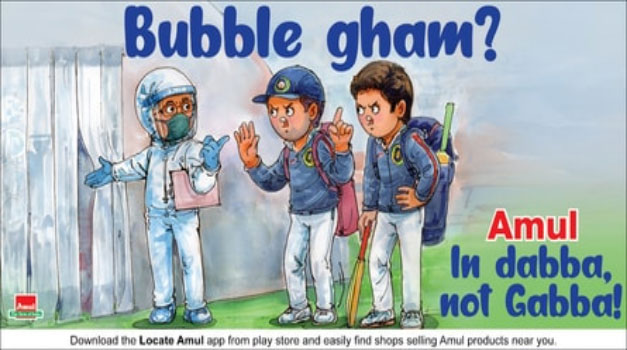
Indian team’s issues with quarantine Down Under! – (Jan’ 21)
India wins second test match in Australia! – (Dec’ 20)
India collapses to lowest ever test score! – (Dec’ 20)
Left arm pacer makes brilliant debut for India in both ODI and T20! – (Dec’ 20)
An update: BCCI has announced the postponement of IPL 2020 to April 15, 2020. This column was written much before the announcement was made.
By Shailesh Kapoor
The twelfth edition of IPL is scheduled for kick off 10 days from today, i.e., on March 23, 2020. In the wake of the escalating Covid-19 situation across the world, ‘non-essential’ travel and community gatherings are being restricted, both by the administration and the private sector. Sporting events tick both these boxes. They are non-essential, and they involve community gatherings in stadia. And it’s only natural that they should be considered for postponement.
While several sporting events have been canceled or postponed over the last two weeks, the big news came in yesterday with the suspension of NBA, after player Rudy Gobert tested positive. Gobert incidentally mocked the Covid-19 situation by touching the mikes at a presser, just two days before he was diagnosed.
Should IPL go on, then? Till about a week ago, BCCI was cautious, but keen on going ahead with the league anyway. But much has changed since then. The ‘best-case’ scenario of BCCI today stands at an IPL played in empty stadia, to eliminate the community-gathering risk. Television and digital media are the revenue drivers for IPL, and while empty stadia may take some of the zing away, the economics of the big-ticket event will be impacted only marginally.
However, one could question the desperation to go ahead with the tournament at any cost. IPL is clearly non-essential, and the marathon length of the event would mean that players and officials are exposed to multiple people during the course of the league. Over the last few days, high-profile cases ranging from heads of state to ministers to actors have emerged from across the globe. In no uncertain measure, it tells us that public life puts you to more risk than an average citizen. Sportspersons fall in this category, and there’s the additional complication of overseas players, who may have traveled to different countries in the lead up to IPL.
But a lot of cricket is going on worldwide. Among that, India is playing South Africa at home, where the remaining two matches will be held to empty stadia. The Ranji Trophy final is being played too, even as I write this. The veterans’ tournament, promoting road safety, was called off yesterday after five days of cricket. But in general, cricket across the world seems somewhat immune to the hazard at hand. Then why should IPL take all the blame?
But that’s how IPL’s imagery is. There’s an intrinsic association between IPL and greed, built as a public perception over the years. Because there’s so much money involved, all IPL-related decisions can come across as material and insensitive.
The players, especially the young talent, would really want to play. They may not get this once-in-a-lifetime opportunity again. But this should not be a decision governed by advertisers, franchises or players. It should be based on larger considerations of a situation that’s evolving rapidly with each passing day.
IPL can surely wait another year (it’s impossible to reschedule it later in the year given the cricket calendar). And BCCI could be fighting many perception battles, with the media and the administration, if they decide to stick to the schedule.
File Picture of the Indian cricket team in a cricket match. Representative Picture only. Courtesy BCCI.TV
By George Abraham
I have been following Indian cricket since 1969. I debuted as a cricket fan during the India vs New Zealand series when the Graham Dowling-led side locked horns with Tiger Pataudi and his team. India won the first Test at Mumbai, New Zealand levelled the score at Nagpur while the third Test at Hyderabad was drawn thanks to rain. Next, the Indian cricket fan was treated to a five Test feast when Bill Lawry’s Australian team visited India. Every match was covered on radio, every ball was described in detail, updated scorecards were read out at regular intervals. Listening to the radio commentary was accelerating and we, the listeners, were literally made to feel that we were present pitch-side. As a visually impaired youngster, I was totally bowled over by the sport, never missed a match. Commentators like Anant Setalvad, Devraj Puri, Dicky Rutnagur, Balu Alaganan literally became the eyes of millions of listeners across the nation. During a Test match, I, like many others, would be carrying a transistor radio wherever I went. Conversations at streetcorners, coffee houses and social events would be about cricket.
Then in 1978, when the Indian cricket team under Bishan Bedi made the historic tour of Pakistan, the cricket fans across the country were introduced to television coverage for the first time. Yes, Doordarshan coverage was by then available nationwide. Now fans could actually see live their cricketing heroes and action sitting in their homes. These were exciting times for the cricket aficionado. I was in college and I remember watching the games along with friends in the common room. Kapil Dev had made his international debut. Seemed an exciting prospect. Fans across the country had the opportunity to watch the flair of Gundappa Viswanath and Zaheer Abbas, the grit and focus of Sunil Gavaskar and Javed Miandad, the flight and guile of Erapalli Prasanna and Bishan Bedi alongside the pace and swing of Imran Khan and Sarfraz Nawaz. Television had ushered in an exciting new era in cricket coverage.
Over the next few years, TV coverage became the preferred mode for fans to follow the sport. The emergence of former cricketers as commentators added fresh colour and appeal to watching cricket. Former legends like Richie Benaud, Ian Chappell, David Gower and Sunil Gavaskar added tremendous value to the cricket viewing experience.
While I did enjoy these developments, as a blind person, I found that I was missing out on critical information. For instance, at the toss, the playing eleven of the two sides are displayed on the screen. The commentators only talk of some key players being featured in the match. As a fan, I would like to know the entire list of players. When a new batsman walks out into the middle or a new bowler comes into the attack, the screen has the display of his career records. Often, the commentators do not talk about it. Ever since the scorecard details are displayed on the screen, the practice of reading out the detailed scores at the end of a session of play has stopped. Very often, when a brilliant catch or an outstanding piece of fielding happens resulting in a dismissal, the name of the fielder is not mentioned by the commentators. During the just-concluded ICC World Cup that took place in England, there were several occasions when one did not know as to who was Virat Kohli’s partner since the commentators kept talking about Kohli’s greatness, his stats and so on. As a blind cricket fan, I was at a loss as to who was at the non-striker end or who was taking strike when Kohli was at the non-striker end. I guess they assume that viewers can see and recognise players and besides the screen perhaps is displaying the details.
The commentators certainly add a huge amount of interesting content by way of their humour, insights, anecdotes and knowledge of the game. However, I believe television companies and cricket boards need to draw up a set of guidelines which would ensure that the coverage becomes more inclusive. There are millions of fans like me who are blind and follow the games on television. Having travelled extensively within the country promoting cricket for the blind, I can confidently assert that there are thousands of blind cricket connoisseurs who tune into TV channels in support of their favourite cricketers and teams. I believe that a little bit of awareness and consciousness of the prevalence of the blind viewer and a willingness to make those minor tweaks in the way commentators engage, could make cricket viewing exciting for all.
Starting October 2, South Africa has been playing India in a three Test series followed by a fairly busy domestic season for the Indians leading up to the T-20 World Cup in 2020 and the World Test Championship which concludes in 2021. There is a lot of cricket and I believe blind cricket fans would love it if television cricket coverage becomes inclusive.
Some Pointers:
1. Playing squads must be read out at the start of the match
2. Name of the bowler and batsman must be mentioned at the start of every over
3. When a batsman walks into the middle for the first time, his stats must be shared
4. Likewise when a bowler is brought into the attack for the first time in the innings, his bowling records must be shared
5. When runs are scored, the commentators must call out the name of the batsman and the number of runs accrued
6. When a wicket falls, the commentators must mention the mode of dismissal and the names of the players involved in the dismissal
7. When a catch or a brilliant piece of fielding happens, the name of the fielder must be mentioned
8. The updated scorecard must be read out at the end of each playing session
9. When interesting records and titbits are shared on the screen, the commentators must read it out
10. Often Twitter handles and phone numbers are shared on the screen to interact with the commentators and experts, they must be spoken out too
11. The team score and the individual scores of the batsmen at the crease must be spoken aloud at the end of each over
12. When the camera focuses on famous personalities in the stadium, it would be nice if the commentators can mention the names. This adds to the excitement of the action
13. Finally, the commentators must be conscious that their viewers also include passionate cricket fans who are visually impaired and that these fans too are interested in every piece of the action. In fact it might be a good idea for the commentators to from time to time recognise their blind viewers.
These are my personal suggestions to make cricket television coverage more inclusive. I believe it is time broadcasters covering cricket in particular and sport in general realise and recognise that their coverage reaches out to millions of viewers who are blind. It certainly could make business sense to start including them.
George Abraham has been blind since his early childhood, but that hasn’t prevented him from working and living his life like any of us. He worked with an advertising agency like Ogilvy, pioneered blind cricket in the country and now runs Score Foundation which, among other things, also offers a helpline for visually impaired individuals who need support and direction (Toll-free number: 1800 5320469). On Sunday, October 20, George Abraham will run the Delhi half marathon. He can be reached via Twitter at @georgebhai and via mail at george [at] eyeway.org
‘Mauka Mauka’ was an iconic communication engaging and entertaining cricket lovers 2015 to 2018. So, it is natural for the reference to come up in May 2019.
On May 23, as I was the 2019 election results on TV, the seat swing with BJP winning was unprecedented. Someone teased the Congress supporters in the family with ‘Mauka Mauka’. It said it all.
I know it is a bit early. India only plays Pakistan https://www.icc-cricket.com/teams/men/20/pakistan/overview on Sunday, June 16. A date most of us have marked in our calendar. As it is early
In the discussion, Star Sports’ current ICC #WorldCup2019 communication was compared with ‘Mauka Mauka’. And one can say the cricket enthusiast in me wants another ‘MAUKA MAUKA’. However, the professional me knows in spite of intense rivalry, a serialised communication like ‘Mauka Mauka’ is simply not possible.
One remembers the launch TVC. The full song #Won’tgiveitback.
https://youtu.be/K-nNFWdBtB8
In the last video, the Pakistan supporter with his arsenal of crackers lands at the Star Sports studio. It continued in many forms in Champion’s trophy, T20 World Cup 2017 with a lot of consumer generated spoofs and somewhere died finally with the Asia Cup. The CGS is already on like this SAPHIRA and films by Seven Pictures.
And when you are at it: watch this too. Spoofs are far more entertaining and touch a chord.
The current World Cup has 10 teams. It’s an open tournament with a team playing all the other teams. The Top 4 qualify for the semi-final spot. And the chase is on.
The current communication ‘Cricket Ka Crown Hum Le Jayenge’ by Star Sports is entertaining and exciting.
The extension ‘Tum Suro Karo Hum Aate Hai’ promises that the broadcaster is not going to leave any Mauka of engaging the audience. And there is my hunch that ‘mauka-mauka’ will make an appearance sometime at least in the social media. Meanwhile, the rivalry intensifies at every level
I am really waiting for this ICC World Cup 2019 communication from Star World to take some twist and keep entertaining.
…………………………
It is cricket time. I must mention that I am enjoying the simple yet very celebratory communication from ”DREAM 11′. Dhobhighat, Bush and Keys, all of them one relates too.
And when it is cricket- the AMAZON campaign Chonkpur Cheetahs will always be remembered. I missed them. I always feel that there was a lot ,more potential to this series than what we have seen.
https://youtu.be/mM16sepxvZo
Sanjeev Kotnala is a senior marketer, strategy consultant and educator. He writes weekly for MxMIndia. The views here are personal
If it’s Cricket, it’s Star. Watch out for its familiar ogo across cricket as Star India extends its broadcast, internet and mobile rights-owner status for July 2012 – March 2018 to the ground.
Star India has bagged the bid for the Team Sponsorship Rights for various cricketing events including the Senior Men’s Cricket Team title and logo sponsorship rights from 2014 to 2017 at the price of Rs 1.92 crore a match. This is a sharp drop from Rs 3.34 crore that Sahara India is paying as well as the Rs 2 crore that Star India is currently paying for the title and logo sponsorship.
The base price was recently revised to Rs 1.5 crore from Rs 2.5 crore, and the Star bid was Rs 0.42 crore higher.
The Team Sponsorship Rights cover BCCI Events, ICC Events and ACC Events, for the period January 1 2014 to March 31, 2017. The rights include the right to be called the ‘Official Team Sponsor’ Â and to display a commercial logo on the team clothing of the Senior Men’s Cricket Team, the Under-19 Men’s Cricket Team, the Men’s A-Team and the Women’s Team.
The decision was taken at a meeting of the BCCI’s Marketing Committee yesterday (December 9). The tender document, which was available from November 11, 2013, was picked up by seven prospective bidders (Bharti Airtel, Games Unlimited, Multi Screen Media, Sahara India, Star India, UB Group, World Sport Group). Bids were accepted until 3 pm on Dec 9 at which time the bids were opened and evaluated. Two bidders – Star India Pvt Ltd and Sahara India Financial Corporation – were in the fray. Although Sahara’s bid was higher, it was found to be ineligible.
“Star is the Title Sponsor for BCCI international and domestic matches for the period October 2013 to March 31, 2014, as well as the Holder of the Broadcast, Internet and Mobile Rights of cricket in India, for the period July 2012 – March 2018. Star has a deep understanding of the game of cricket, and what it means to the nation. We are pleased to extend our association with them,” Sanjay Patel, Honorary Secretary, BCCI, said.
“Star is delighted to become the Official Sponsor of the Indian cricket team. It’s a team of brilliant talent and we are proud to be associated with them. This is further endorsement of Star’s deep commitment to Indian cricket and Indian Sports in general,” added Uday Shankar, CEO, Star India, said.
Sanjay Gupta
Star India COO Sanjay Gupta has indicated that the sponsorship will be used to promote any of his brands – be it the sports channels or even entertainment offerings like Star Plus and Life OK.
Meanwhile, there have been murmurs that the BCCI decision to award the rights to Star India may be contested. Sahara India is peeved that it was not informed that it was ineligible for the bid given its ongoing litigation with the Board on the IPL team disqualification. The Sahara bid was higher than that of Star at Rs 2.35 crore per match.
After a brilliant display of form in the just-concluded Champions Trophy, the men in blue have made it clear where they intend to be at the moment. And that’s at the top. Having won the confidence of their fans in a big way, their success is now being consumed in a language with an even wider scope – Hindi.
After sampling preferences over the past few seasons, broadcasters have now taken the plunge by relaying cricket feed in Hindi, which has matched up to its English counterpart and attracted its set of fans too. MxMIndia speaks to a cross-section of experts to analyze how Hindi cricket commentary has fared in the recent past in India (in alphabetical order of their last names).
P Balakrishna, COOÂ -Â Allied Media
I am sure that there has been a positive impact that has been created by broadcasting commentary in Hindi. Let’s not forget that Hindi is the language which has the biggest and largest penetration as far as the pan-India market is concerned. All it has done is brought the game closer to the viewer. At the end of the day, while English commentary has its own charm but in terms or reach and understanding of the language, Hindi is of course the language that can connect with all HSM markets. While I am not sure on the numbers, I am sure that it has resulted in an incremental viewership numbers. What is critical with a game of cricket which has a huge mass connect is that the language of Hindi definitely has its charm of creating a strong impact with the audiences.
As for it being relayed in multiple languages, I do not see any scope for commentary to be expanded to other markets as largely between Hindi and English most of the markets are covered in India. If you see the non-Hindi markets, English has a very good penetration including in the South and the East. Doing commentary in other regional languages won’t really result in any rise in viewership or even monetary-wise.
Mona Jain, CEO, Vivaki Exchange
India has been performing very well so from that point of view there are audiences right now on that medium. In terms of brands who want to reach out to the audience through medium of Hindi, it could be a little low-key as of now as it is not a peak season and only those with deep pockets could be taking the plunge on the Hindi medium.
Also, cricket is very popular in the northern region so having a feed in that language makes sense; it also is the primary language at the moment. But it’s too early to discuss whether we need commentary in Tamil or Telugu or Bengali. There have to be enough numbers (audiences) out there for broadcasters to take that decision.
Hemant Kenkre, PR Professional and cricket columnist
I think it is great to have commentary in Hindi on major sports channels. In the past, All India Radio always combined English with Hindi with noted Hindi commentators like Jasdev Singh. During the Champions Trophy Indian cricket legends like Kapil Dev and Sunil Gavaskar (for the first time in Hindi) reached out to many viewers who are comfortable in Hindi.
The reach for Hindi channels is much more than that of any other language – which may have prompted Star to hire former Indian cricketers (including non-Hindi speaking commentators) to attract eyeballs. It is too early say how other languages will work but going by the success of Hindi, it is a matter of time before sports broadcasters look at other languages too.
I think Hindi commentary has managed to create a huge impact in the recent past. You can see it happening in the recent India-West Indies-Sri Lanka Series and also the just-concluded Champions Trophy where it was well-received. In the earlier days, and as research would prove while a lot of people used to watch cricket on television in English they used to mute it and hear the commentary in Hindi on radio. So Hindi enables one to reach out to a far bigger and wider audience base which, I am sure, has seen an incremental hike in the numbers in recent past.
At the end of the day, when you pay the price for buying rights then your objective is to reach out to as large a number of audiences as possible. And if you can do that by broadcasting content in different languages then why not. It would be a sensible thing to do by broadcasters as India is a very diverse country that boasts multiple languages. Unlike countries like England that can air only in English or Pakistan in Urdu, we have an advantage of airing content in multiple languages and we should take advantage of that.
Haha. Press Council Chairman Justice Shri Markandey Katju has bowled another deadly googly. He now demands that journalists must have certain qualifications before they are hired, and he wants that to be mandated by law. Here’s the link to the story in mxm india: http://www.mxmindia.com/2013/03/mxm-mondays-do-journalists-need-to-be-qualified/
I have a bad feeling Justice Katju thinks of Indian journalists exactly what he thinks of the rest of India; perhaps he believes that 90 percent of us are fools, and that might be the reason for the latest diktat. Be that as it may, one question immediately comes to mind: What sort of a qualification would Justice Katju deem as being appropriate for journalists? Is he happy with the Diploma in Mass Communications sort of a thing? Or does he have something else in mind? Doctorate in social sciences? Master’s degree in law? PhD in qualitative research? Graduate degree in English Literature? Would be interesting to know what would satisfy the boss.
Incidentally, does Justice Katju know that Carl Bernstein, the celebrated American journalist who broke the sensational Watergate scandal, wasn’t even a graduate, that he dropped out of college at the age of 16 to be a journalist? There are plenty of such shining examples. This is not to say the media should hire only school and college drop-outs. Every degree brings value to an individual’s skills, that’s common sense stuff, so there’s no point arguing with that. And it works for all walks of life. But I am not really sure where Justice Katju is going with this, where is he going to draw the line in terms of mandatory education levels.
However, I have a larger point to make: My own experience in journalism has taught me that aside from obvious skills like writing, articulation, research-gathering, etc, the Number One talent every journalist must possess is Curiosity, with a capital C. Minus that, a journalist is pretty much useless. And this is true whether he/she works for a mass TV channel or a niche industry portal. All the degrees collected by the individual are junk if he/she isn’t inquisitive by nature.
So then, dear Justice Katju, how do you teach someone to be a nosy parker? That single most important journalistic attribute. I would really like to know, I am curious! 🙂
***
PS: Good TV campaign by END7, an international NGO. The ads show how celebs react when faced with a ghastly tropical disease. Apart from other big names, it features our very own Ms Priyanka Chopra. Ready to squirm? Er, at the disease, not her acting skills.
It’s now a given; the moment a cricketer retires, by default he walks into the commentary box. When, ideally, his first priority ought to be coaching young teams and/or joining/starting a sports academy. This is because commentating is far more lucrative, and it carries zero responsibilities and headaches. I am quite certain Rajya Sabha MP Shri Sachin Tendulkar has already begun work on his diction.
And of course, Imran Khan, the late Tony Grieg, Richie Benaud and Ian Chappell have always been a delight to listen to. What this tells you is that having been a cricketer may help to commentate better, but it does not necessarily make you an interesting communicator. Either you have the gift of the gab or you don’t. Therefore, the sports networks have to exercise quality control, they simply can’t hire every cricketer who calls it a day. And I haven’t even begun speaking about the nonsense that goes on inside the Hindi commentary box. These days I mostly watch the Indian cricket telecast minus the sound.
Just as a good movie director won’t necessarily make a good film critic, just as a great painter won’t necessarily become a reliable curator, just as a kickass CEO won’t necessarily be a good dad, the same theory applies to sports commentary. I am quite certain there is enough talent out there for cricket commentary (after all, this nation is flushed with ‘experts’), and all that the television networks have to do is to find them. It’s their laziness to conduct this search that has ended up saddling us viewers with rank bad commentators.
Get some fresh blood in the box, dear Sony Max, ESPN/Star Sports, Neo, etc. In fact, the IPL is a good place to start, unless you’ve already signed up Sidhu, VVS and Sivaramakrishnan. In which case it’s now left to the sexy cheerleaders to save the day.
***
PS: Nice IKEA commercial. Notice how the inter-play of need for storage room and need for room in relationships lifts an otherwise ordinary promise: Total furniture solutions. Wonderful!
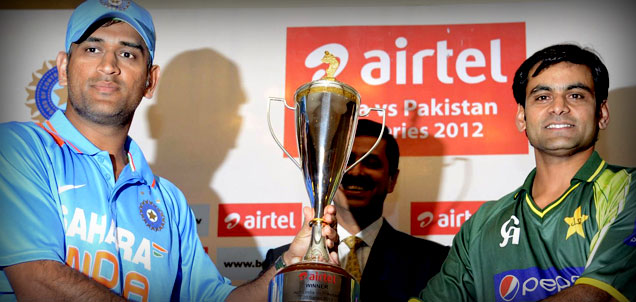
Star India has taken a new step in sports viewing on digital, with the launch of starsports.com to give Indian cricket fans a personalized audio-visual experience. Flagging off with the Pakistan tour of India, the website will present a video experience for cricket fans that includes high-definition video streaming, an advanced player that can be individually controlled, and the ability to catch up on the game through both a video scorecard and a video timeline that marks the key moments of the game.
Uday Shankar
Commenting on the launch, Star India CEO Uday Shankar said, “At Star, we have always focused on dramatically enhancing the overall consumer experience. Smart technology, combined with powerful content, can be disruptive and we are excited about offering Indian fans an entirely new way of experiencing their favourite game.”
Starsports.com includes a video timeline for cricket that marks key moments of a match, while it happens, allowing users to go back, relive the moment and jump back into the action in real time. The commentary section has also been reinvented. It not only focuses on explaining the action ball by ball but also pulls in real-time conversations on social media while the match is on. A video scorecard brings statistics to life with video clips of key moments supported by detailed analytics and graphics. Fans can also catch up on games through replays and highlights.
Tensions of other sorts are usually forgotten when India and Pakistan meet on the cricket pitch. This time it is a battle of one-upmanship as the two countries are clashing after a gap of five years.
While the Indo-Pak series of three ODIs and two T20s is a short tour, it is creating enough ripples among cricket-crazy fans. What makes it more enthralling is the fact that India had beaten Pakistan in both formats of the game the last time they landed here during the 2007-08 tour. Of the three Tests that the two played against each other, India won the series 1-0, having drawn the remaining two. As for the ODIs, it was a 3-2 victory in favour of India that did the country proud.
While it was Saurav Ganguly who was at his superlative best in the Test series that enabled India to take the lead, it was the young Yuvraj Singh who shone with the bat in the ODI format, making him earn the prestigious man-of-the-series award.
Going by speculation doing the rounds, for broadcaster ESPN-Star the tournament was a success even before it took off. According to some reports, the channel has managed to sell out maximum inventory at two to three times (totalling more than Rs 1.5 billion) the rate compared to the just concluded India-England series. This augurs well for the network given that it has to pay Rs 322.5 million per match for the five match series.
Sanjay Kailash
To a query from MxMIndia, Sanjay Kailash, EVP, ESPN Software India Pvt Ltd, said, “We are delighted with the response from advertisers to the India-Pakistan series. India-Pakistan is always extremely sought after and the series therefore was sold at a premium. We have monetised India-Pakistan ODIs at a rate which is double as compared to the historical industry average. Even rates for India-Pakistan T20 are double than the most sought after T20 tournament in the country.”
Anilkumar Sathiraju
Sharing his excitement about the series, Anilkumar Sathiraju, AVP & Head, DDB MudraMax, Media, said that on the ratings front he expects the series to be a big hit. “It will be quite good. I am expecting it to be a positive and a good series. Ratings will definitely see a spike as it is India-Pakistan at the end of the day. The fact that a few advertisers are quite gung-ho about it makes it more exciting.”
Divya Gupta
Divya Gupta, CEO, Dentsu Media, too had some words of praise for the series irrespective of the fact that India had put up a drab performance in the recent past. She said,“An India-Pakistan series is in a realm of its own; evokes emotions, fervour and fever like none else. It doesn’t matter whatever Team India has achieved /not achieved in the recent past. It is a marquee game, event, media property that viewers and marketers and broadcasters are betting on; and deliver it will.”
Anita Nayyar
Giving a more detailed outlook on the series, Anita Nayyar, CEO, Havas Media India & South Asia, said the fact that the series is taking place after many years is in itself a great pull. “From a viewing perspective three of the five matches are scheduled on holidays which will help the cause of viewing. Also the ODIs start at 8pm-primetime making viewers more available. In fact, most India-Pakistan matches have delivered ratings in the range of 5-6. This series should do similar numbers; however, with TAM data not being available the deliveries will be guess estimates.”
Ms Nayyar’s summation of the series is probably what will matter at the end of this historical sporting tie-up. “Ratings or no ratings, the competition between India and Pakistan has always generated huge interest for both viewers and advertisers, and is considered a safe investment. It is a good way to bid adieu to a tough year and a fine beginning to a new one.”
If the first T20 encounter between the India and Pakistan in Bengaluru last evening (Dec 25) was any indication, the contest on field is going to be tough. While every match going down to the wire may not be good news for weak hearts, it’s sure to see ratings soar. And advertisers and broadcasters happy.
The India-England cricket series that kicks off from November 15, 2012 is being billed as a revenge or payback series by most scribes who follow the sport closely. Be it the media, analysts, critics or even players/commentators, virtually all are going gaga about how the current series would be the one to watch out for as India will be fighting to prove its mettle as being the best in the business. The fact that the men in blue were thrashed badly by the Englishmen the last time they played each other makes the cause even more compelling. But is the prevailing sentiment as positive as is being made out to be, or will it be a tough ask for the channel as it begins its quest to draw in more audiences? And, more importantly, what is the response that can be solicited from the advertisers who of late are opting to stay aloof from their association with the sport?
To begin with, the good news is that the tournament begins at a time when most of India is in the mood for celebration what with the festival season already underway. So while partying, visiting relatives and relaxing would be top of mind for most it would also mean being able to sit at home and watch Sachin Tendulkar or Virendra Sehwag get India off to a roaring start. And that’s what is leading everybody to believe that the Series will at least kick off on a high note.
Ayaz Memon
Anticipating a huge response, senior journalist, sportswriter and now commentator Ayaz Memon is hopeful that the current series will be a success. As Hindi commentator for the current series, Mr Memon sounded positive: “I feel the pressure is more on India as they have to prove a point on the home turf. The fact is that India hasn’t lost a home series since 2004, and also the record since the last 12 months hasn’t been good so the pressure is squarely on the Indian team. Also the team is not in peak form as can be inferred from their recent performances across other tournaments. So one can expect the Indian team to put up a compelling fight, to say the least.”
Backing up his claim, Mr Memon said that the channel has been doing a good job promoting the series. “I will be doing commentary for Star in Hindi and I can tell you that they have done a good job in building up the tournament and promotion-led activities. Even on the print platform the exposure has been pretty good. But we will have to wait and see how it pans out over the next few weeks. But I am sure that the viewership will be higher than the previous Test matches. The fact that you have Sachin Tendulkar playing in the series along with Yuvraj, Harbhajan and also Kevin Pietersen from England etc, I think it will be a marquee series.”
Balakrishna
Backing Mr Memon’s optimism is PM Balakrishna, COO, Allied Media, who said, “From a cricket and sentiment point of view, I feel people are looking forward to the series. It is being touted as the Grudge Series going by the promotional activities that are being carried out by the broadcaster. The audience really wants to see India thrash the English. So based on the hype, I expect to see more crowds at the stadium and also more ratings for the broadcaster.”
But while the initial sentiment seems bright it is definitely not easy predicting results before the start of the tournament. The prediction becomes even more difficult when the series begins with a Test match and not ODIs or T20 that can guarantee some decent TVRs. When asked about the possible ratings that can be expected, Mr Balakrishna said, “Test matches have never been about ratings like ODIs or T20. But maybe because of the fact that this is a long holiday week, one can expect high ratings at least from the initial match itself. While it would be difficult to hazard a guess, I would be happy to go with an average TVR of 2-3.”
Kartik Sharma
Kartik Sharma, Managing Partner, Maxus India was more forthright, saying, “Any cricket tournament involving India is always unpredictable but exciting. As Indians, we obviously want our country to win but a sport like cricket is always difficult to predict. If you ask me, the sentiments are purely driven by the results of the first few matches. And going by our ability to digest defeat, we Indians don’t really fare well in that department. By that I mean that if we lose a match or two, we tend to divert our attention to other sports or television properties. But then again, this being a festival/holiday season I expect at least the first few matches to have a decent viewership as people will be at home and thus would be able to watch the matches. By nature, Test matches anyway do not draw in more audiences compared to what the T20 or ODI matches do. So I am expecting an average TVR of 2+ for Test matches and an average TVR of 4+ for ODIs.”
Mahesh Ranka
Presenting another factor that could guarantee ratings or dismiss them, Mahesh Ranka, CEO, Indus Sports asserted that it may even depend on the opponent playing against India: “If it is Australia or even England, there could be some decent ratings expected, as these teams are ranked higher compared to what a Bangladesh or Zimbabwe series would draw. The thing about England is that we lost to them badly when we went there so hopefully, we can look forward to avenging that result through the current series. And if India happens to win the first match, you could expect more audiences (in the range of 20-30 percent more on the base figure) who will come in for the second match, and so on.”
But in the overall analysis, Mr Ranka is of the opinion that the current series will not have anything great to offer in terms of viewership, at least as far as the Test matches go. “The ratings that Test matches have thrown up in the recent past kind of puts everything under the scanner. Though people (particularly media) tend to hype any tournament, Test matches have never really managed to draw in the audience (viewership). That’s because people have their own mindset behind watching any match and advertisers will always have to move along taking into account the risk of losing out on viewership.”
On the interest shown by advertisers, Mr Ranka said, “From an advertiser’s perspective, one has to always look at why cricket is typically watched: it is brought for reach. There are two things to that. Firstly it is the festival season where advertisers have monies to spend and whether it is cricket or no, they will eventually spend at this time of the year. The rates that could be expected for Test matches in the current series would be in the range of Rs 50,000 to 1 lakh for ten seconds.”
Taking a diplomatic stand Mr Sharma said, “The advertiser sentiment depends on the packages that are being offered by the broadcaster and there are various deals in store. But I wouldn’t be able to comment if the rates are more or less compared to the previous tournaments.”
Presenting a bullish outlook, Mr Balakrishna said that from the advertiser’s standpoint, the sentiment seems pretty positive. “Against the backdrop of digitization, one genre that is the least affected always is cricket, as the sport is not always about being CPRP-led but also about hype and other such factors. So I do see a positive resonance to the whole series from an advertiser standpoint. Also, I am sure that the channel would have factored in the tough economic scenario and therefore would have come up with a competitive package for the advertisers, making it a win-win for both of them.”
So whether it will be a winner or a dampener, what the India-England Series is managing to do is turn the spotlight back to cricket. Which is a good move considering that the recently held Champions League tourney didn’t go down too well with audiences. The icing on the cake would be if India manages to whitewash the team from England. TVCs have been saying that India “Angrezon ki band bajaayega” – that is, will thrash the English. Music to our ears or hitting the wrong notes? The game will tell.
 The rapid escalation of the Covid-19 crisis in India has dominated headlines over the last week in particular. The ‘second wave’ has pushed the health infrastructure to its limits, and beyond. Mixed messaging from the governments, both at the Centre and in the various states, is not helping the cause. Instead of talking about vaccination and masking, our leaders are busy managing elections and overseeing religious events. It doesn’t make any sense. But that’s how it is.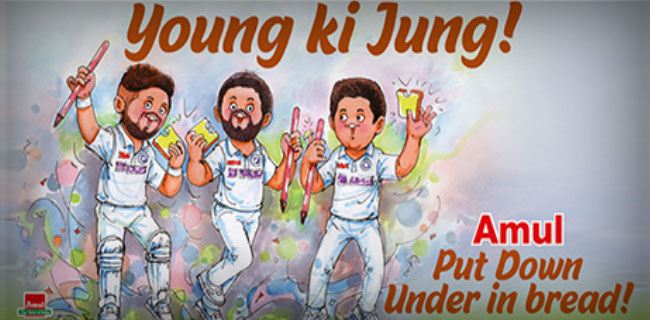








 The twelfth edition of IPL is scheduled for kick off 10 days from today, i.e., on March 23, 2020. In the wake of the escalating Covid-19 situation across the world, ‘non-essential’ travel and community gatherings are being restricted, both by the administration and the private sector. Sporting events tick both these boxes. They are non-essential, and they involve community gatherings in stadia. And it’s only natural that they should be considered for postponement.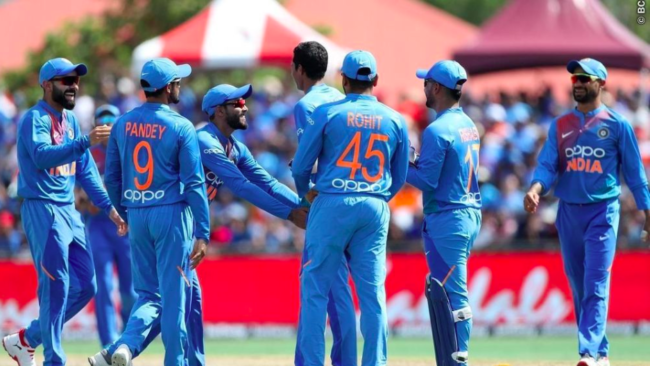
 By George Abraham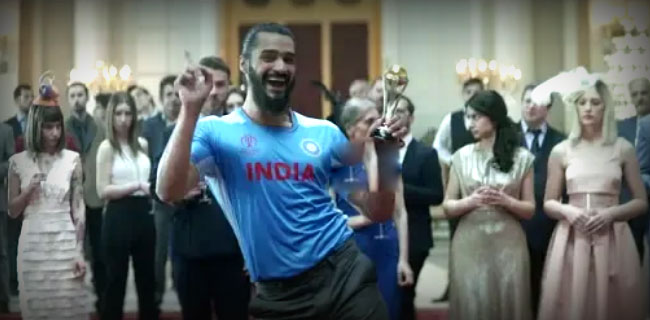
 ‘Mauka Mauka’ was an iconic communication engaging and entertaining cricket lovers 2015 to 2018. So, it is natural for the reference to come up in May 2019.

 P Balakrishna, COOÂ -Â Allied Media
 Mona Jain, CEO, Vivaki Exchange
 Hemant Kenkre, PR Professional and cricket columnist
 Ayaz Memon, editor, veteran cricket writer & commentator
 By Anil Thakraney