Tag: Covid

  • Shruti Pushkarna: Does disability make social engagements less gratifying?

    By Shruti Pushkarna


    Shruti PushkarnaI personally love the winter season in Delhi. December and January are my favourite months, as long as the sun keeps shining. I enjoy stepping out after layering up adequately. But winter rain can be a downer.  Moist and gray outside, chilly inside, it’s hard to feel anything but gloom.


    Needless to say, it’s even more discomfiting to be locked in because of the rampant virus. The lack of choice, of going out to work, shop or meet someone, puts us under stress, unconsciously.


    In such harsh times, the idea of catching up with a friend over a steaming cup of tea or cocoa is exhilarating.  It’s the easiest, most casual thing for us to do. Call a pal, sibling or cousin, pick a café and chill. I have a list of catch ups planned once the Covid numbers start abating.


    Social engagements are intrinsic to human beings. A sonorous fact of the post Covid times. When we speak of inclusion, whether it’s gender, caste or disability, the conversations are mostly centred around empowerment through employment.


    We (organisations, governments, individuals) often underscore the need for social integration. Apart from the sense of dignity that comes with economic self-reliance, persons with disabilities (just like you and me) aspire for societal acceptance.


    Let’s take five commonplace scenarios which offer some form of gratification or liberation to us. And then picture if the 2.68 crore disabled population and 13.8 crore elderly (who may live with temporary disability or limitations in mobility, reading et cetera) feel the same way.


    1. As a woman and a working professional, driving gives me a sense of freedom. The fact that I don’t have to depend on anyone to shuttle me back and forth, or worry about hailing a taxi and contracting the virulent Omicron, is liberating. You can argue that disabled people cannot drive with their physical limitations. True. But there are ample solutions in the market. Here’s a picture of a paraplegic who drives himself around in a modified hand-controlled car.


    2. Catching the latest releases in a theatre nearby. And topping up the screening experience with popcorn and soda. How many wheelchair users have you encountered in a cinema hall? Even though some theatres have special access to a few seats. Did you know that a blind person relies on audio description to follow the visual narrative? A lot of OTT content on popular platforms like Amazon and Netflix now have audio described productions. Even if the disabled chap were to make it to the movies, can she or he really make an independent trip to the snack bar?


    3. Going out on a lunch date involves picking your favourite cuisine and the right ambience. Not so easy for someone with a disability, which often prevents them from even planning one. They have to ensure if the place is physically accessible for a wheelchair or a crutch or a walker. This includes entry/exit points, washrooms and seating area. Have you had to worry about a braille menu or a sign language interpreter for your meals?


    4. Shopping for clothes, shoes, bags or household stuff can be cathartic. But picking up something for yourself or a loved one is not easy if the shopping plaza isn’t accessible. Again, access is not defined in terms of physical navigation alone. The entire shopping experience has to be disabled friendly, including human assistance, secure transactions, quiet spaces for someone on the autism spectrum, and so on. Icing on the cake would be clothes and accessories designed for persons with disabilities. Online shopping does take care of some of these issues, except it’s not as delightful for those who enjoy the old school touch and feel version. A couple of years ago, Future Group’s Big Bazaar took a step towards making shopping inclusive and accessible.


    5. What better way of winding down in bed with an enjoyable book. I restrain myself from entering bookshops because of the urge to buy every interesting title. But if I want it, I can simply pick it off the shelf and start reading. Books have a way of expanding our imagination by transporting us into different settings. Can visually impaired people get a taste of something they will never see, by just reading about it? Yes of course. Except they access books in audio formats. Incidentally, India was the first nation to ratify the Marrakesh Treaty, an international legal instrument which makes it easier for blind and other print disabled people to access works protected by copyright. Yet, I know so many who struggle to find accessible books for their reading pleasure.


    In the last few years, I have made a lot of new friends who live with some form of disability. They share my urge to eat out, travel, gossip and splurge. Basic social engagements reiterate the ‘normal’, giving a chance to form connections without prejudice.


    Unfortunately, media portrayals hardly focus on the scope of collective light-hearted human indulgences, irrespective of (dis)abilities. Either disability is ridiculed, or treated too gravely, making it abnormal in some way.
     

  • Shruti Pushkarna: ‘Coupling’ with Covid: One hell of a roller coaster ride

    Shruti PushkarnaBy Shruti Pushkarna


    As promised, here is a personal account of my three months’ absence, when I couldn’t put pen to paper and furnish my otherwise extremely regular fortnightly column. If you are wondering what’s this got to do with the theme of disability, the answer is probably nothing. Except maybe it articulates a similar sense of helplessness and frustration, experienced by the disabled folk on varied levels 24×7. A first for me, it was truly novel and intense.


    The start of a new financial year, April 2021 saw a sudden explosion of Covid cases in the country. Delhi and NCR were badly hit. As I took my marital vows (in a close family setting), Chief Minister Arvind Kejriwal announced a curfew with immediate effect. En route to my new abode, we were stopped and questioned by cops for disregarding the latest notification. Caught off-guard, we requested the trail of cars be allowed to pass the barricade.


    Oblivious to the alarming crisis building outside, we chuckled and chatted, celebrating our conjugal beginnings. But in two days, things changed drastically. One after the other, the whole family tested positive for Covid-19. With each phone call, the tally went up, everyone reporting cases from their circle of family and friends.


    Initial symptoms of fever and cough didn’t seem so bad. It was the messaging going around that instilled fear, forcing one to imagine the worst scenarios. ICU videos of patients struggling to breathe, accounts of people dying from the lack of oxygen on their way to the hospital, shortage of beds and oxygen, hoarding of drugs, news and social media was full of it. Not to miss the emphatic promotions of oxygen concentrators, oxymeters (not made in China), homeopathy medicines and what not. Everyone and their uncle was an expert on coronavirus!


    Grappling with isolation and new relationship dynamics, best decisions weren’t easy to come by.  Starting with doctors.


    What do you do when you first start to show symptoms? Who do you call? Most physicians you’ve known all your life have no experience with Covid, so whose opinion do you trust? And to top it all, various Covid treatment guidelines floating around add to the imbroglio.


    For a week, we diligently followed the usual course of antibiotics, vitamins and breathing exercises. Things didn’t improve, in fact went downhill. The viral videos came to life, as my husband struggled to breathe and I made endless calls to arrange for a concentrator. We were lucky, the machine finally arrived, but as both of us tried to make the contraption work, things took a risky turn. We had to rush to a nearby hospital.


    I helped my husband into an ambulance and loaded my car with the oxygen backup (since the hospital wasn’t equipped), clothes and some essentials. As I got behind the wheel, my own O2 levels dipped.


    It seemed surreal, but it was all happening in real time and space.


    Picture this. My husband on one bed, breathing with the oxygen tube jutting into his nostrils, his O2 numbers fluctuating, causing the machine to beep incessantly. I lay on the bed next to him, with a cannula in my wrist, injecting steroids and antibiotics into my body. Sometimes, I tried to look out the window, for a ray of hope. But all I saw was the backyard of another hospital where new patients and dead bodies lined up daily. The beeping from the machine and the siren from the ambulance became my staple aural diet.


    Even so, there was no room to express any anxiety. In there, I had only one mission, to get us out of there. To make sure we got the right treatment. Thanks to my mother’s chronic illness, I have reasonable amount of experience with caretaking and dealing with doctors. I have learnt not to depend on nurses or hospital staff for adequate patient care. Services are shoddy, often due to low compensation and dearth of human resources. Given the dire circumstances and the volume of cases at the time, one could hardly blame the health workers.


    I saw other Covid patients on the same floor, battling alone, as no family member wanted to enter the infected zone. I wondered how many of them got proper attention. Those who weren’t medically aware or aggressive enough simply relied on whatever the staff handed out to them.


    It’s amazing how most citizens don’t question the treatment administered to them. Not just in Covid, doctors don’t like patients or their caretakers seeking clarification on the prescribed course of action. Bedside manners and hospital management don’t seem to feature in medical school curricula.


    So why am I indulging you in this elaborate excruciating extravaganza?


    With the scare of a third wave brewing, one can’t help worrying about what will happen if people act as recklessly as they did the last time around. I want to share some do’s and don’ts that can help.


    Don’t read the news.

    It never helps. Every case is different and there is no point in drawing parallels. Just focus on your body and its recovery. Also, the prime motive of coverage seems fear mongering to garner eyeballs.


    Don’t engage in medical updates and futile conversations.

    Limit your communication to what helps your case. Reiterations of your physical state will only exhaust you emotionally. Stick to speaking with those who ‘really’ care.


    Trust your doctor.

    As tempted as you might be to follow multiple medical advisories, don’t. Have faith in your doctor’s expertise and let her/him help you come out of it.


    Stay positive.

    The only thing that pulls you out of any tough situation is a healthy mind. No matter how bad your physical condition, remind yourself constantly, that you can overcome. Our mental state impacts our physiology, so use it to heal from within.


    Focus on disease management.

    Covid is all about proper management, starting from Day 1 at home. Ensure you are in touch with a good doctor from the start. Follow the advice diligently and keep an eye on changing symptoms. Take an informed call (without worrying) on when to get hospital care. Arrange for oxygen backup and have a network of friends and family lined up for remote help. If you plan and manage it well, the likelihood of recovery is higher.


    Don’t lose patience.

    This virus takes a toll on your body and mind, in unfathomable ways. The disease has after-effects that can trouble you for months (I’m still suffering). It’s a test of your tolerance. It helps to accept the situation and wait for it to recede, of course with necessary treatment and precautions. It’s easy to get frustrated because it turns your world upside down, but you need to exercise patience.


    Save for a rainy day.

    If you have money in your bank, half your stress gets taken care of. The disease starting from testing, treatment, after care and logistics, makes you bleed. Throwing money at the problem eases some troubles for sure. But be watchful of obvious traps and treachery. I wasn’t and I regret it.


    I must confess that working with the disabled community has given me valuable insights into acceptance, threshold and grit. And firsthand trauma made me realise what it is to be up against odds every singly day of your life.


    It’s been a lesson in compassion, forbearance and gratitude.


    (Welcome back, Shruti – Ed)


    Shruti Pushkarna heads operations of the New Delhi-based Score Foundation where she works as Director-Programmes & Communications. She is a former journalist (part of the founding team of MxMIndia) who has moved full-time to the social sector. Shruti writes for MxMIndia every other Thursday. Her views here are personal. You can tweet your comments and suggestions to @shrutipushkarna

  • Prabhat Khabar goes on masking drive

    By Our Staff


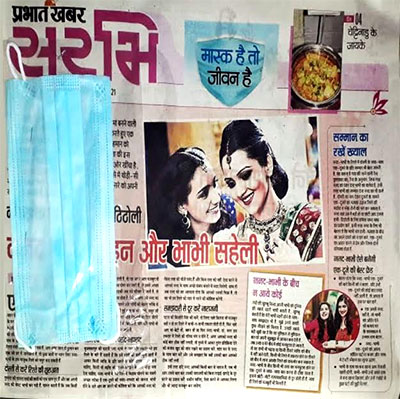
    Prabhat Khabar distributed over seven lakh face masks free to readers along with the June 22 edition across all editions in Bihar and across all editions in Jharkhand and Kolkata on June 27 in an attempt to educate readers the importance of face masks and Covid-appropriate behaviour.


    In addition, newspaper hawkers and their familes have been given free ration. All employees, hawkers and partners were provided with sanitisers. Notes a communique: “Oxygen concentrators were provided to government hospitals in Bihar and Jharkhand to overcome the shortage of oxygen across the country. In addition, the communique added, “periodic vaccination camps are being organised for readers, hawkers and partners and their family members.”


  • Covid Impact: A Fast-Drying Content Pipeline

    By Shailesh Kapoor


    The devastating second wave of Covid-19 in India has brought with it various lockdowns, being managed by the various state governments individually. A direct impact of lockdown-like restrictions is the inability to produce video content, such as TV shows and films. In any case, the fear of the second wave is real and palpable, and many actors and technicians are wary of being on sets. The much-touted IPL bio-bubble bursting last week does not inspire confidence either.

     

    We are hence staring into an inevitable situation of a hugely-constricted content pipeline. This time, the problem is worse than 2020, because the reluctance to venture out is not just law-enforced but a result of caution being exercised at an individual level too. Since one cannot shoot in Maharashtra, many TV shows have shifted their base to other states, e.g., Gujarat, where the lockdown is partial in nature. But the caution is evident when you notice that despite IPL season being indefinitely suspended, launch promos of not a single new Hindi GEC programme have gone on air. Channels are just about managing their existing line-ups, and would rather not have more on their plates right now.


    The situation gets a lot more complex when it comes to films and OTT content. Outdoor shoots are a given in most projects in these categories, and that involves extensive travel, even if one limits the crew size to the minimum possible number. As a result, there is hardly any film or OTT content being shot currently, in Hindi at least, as a result.


    Even when the second wave subsides over the next month or two, complications related to vaccine shortfall and the inevitable third wave will continue to disrupt life. One cannot expect things to return to even late 2020 levels till a sizeable population in India is vaccinated. And that’s some time away.


    We can, hence, expect a huge content shortfall, especially in theatrical and OTT genres. The signs are already evident. Over the last two months, there have hardly been any big-ticket OTT properties that have gone online, despite a large section of the core OTT audience being locked down at their homes. What is coming out is largely the second line of content. A lot of big-ticket content is semi-produced, and will need at least a few more weeks of work before it’s out for public consumption.


    2020 was OTT’s breakout year in India, with a huge surge in subscriber bases and watch-time across platforms. 2021 looks far less so. The theatrical business was just about beginning to get back on its feet, before the second, more debilitating blow came its way.


    Good old linear TV may end up being the saviour after all. But even that will take some doing. It may be time to go retro with your content consumption once again, but this time out of no choice.

  • Numbed by the Second Wave


    By Sanjeev Kotnala


    Sanjeev KotnalaAs I sit to write this, the fingers refuse to move on the keyboard. The mind no longer asks the fingers to keep pace with my thoughts. I am numbed with the pain surrounding us. Corona is far too close for comfort. The second wave of Covid-19 has touched and pained almost all I know. Nearer home, we have had the second casualties and a promising young man lost the battle. And there are more than 20 in close family who have tested positive and quartantined at home. All you read and hear is upsetting. It’s a terrible scene out there.
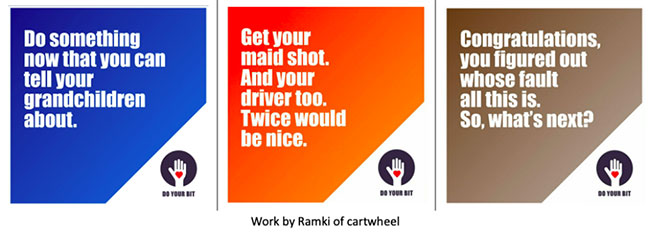
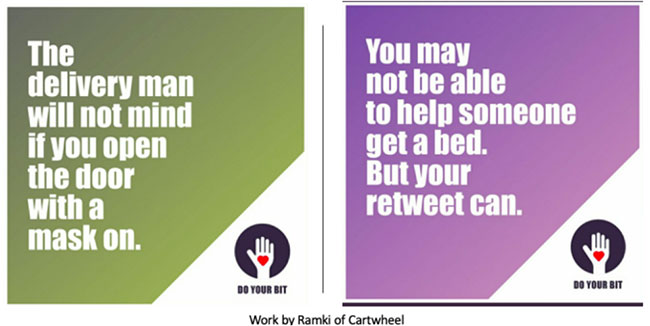

     

    I am not sure what I should do and what I could do. 

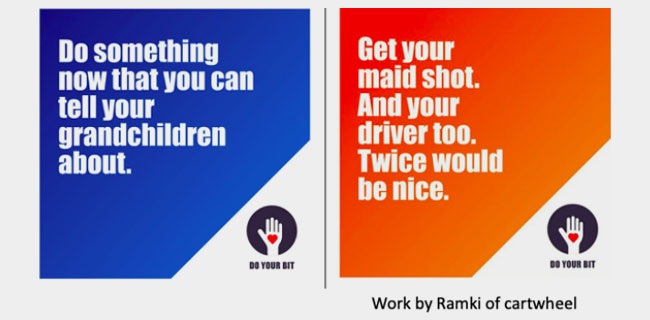
    Do I rejoice on the election results? Do I appreciate and see a silver lining in the self-less put-in by the next generation? Do I sit back and share the pains of people who have lost their near ones during the ongoing Covid-19 second wave? Do I focus on helping those currently fighting for life? Do I just cocoon myself and protect my family? Or do I redefine the term family that I belong to? Or do I, like Ramki (Cartwheel), who has created the post you see in this article, find how to contribute with my skillsets?

    Who do I blame? And what will blame gain? Maybe it will force people responsible to finally act decisively? Perhaps they will now try to better manage the situation? So, you and I must raise our voice till we are heard, and some effective action is taken.


    MANAGEABLE Vs PREVENTABLE.

    Let us not fool ourselves; our existence could not have managed this scale of the pandemic and the Covid-19 second wave. However, better planning, implementation, and a dedicated, focussed unrelenting approach would have definitely eased the pain- maybe a bit. The infrastructure and the essential services like medicine, oxygen, and beds be better managed and not stretched at the seams. Everyone understands this is unprecedented. Everyone knows we could have lessened the pain a bit, and that would have counted.


    SOCIAL MEDIA A BOON.

    Yes, thank god for social media and mobile technology, the apps, and the internet. In the absence, many cries for support during the Covid-19 second wave would have gone unanswered. Strangers across geographics were working in tandem. The nation is a bit more united and secular—no one asking for caste, religion, region or language while stretching to help.

    However, everything is not right.

    People are sharing forwarding half-baked and, many times, fake information. The visuals shared can scar you for life. The right intending advice not always right.

    Some medical scams are already running. Exorbitant rates being charging for medical supplies and support services. Some middlemen brokering treatment. And here, too, social media and the internet is playing their role.

    I will live with all this if only the Government acts and we have some order of managed pandemic. I, like others, am confused.


    CONFUSION.

    I don’t know much. And what I know, I cannot be sure of its authenticity. Everything is suspect. The situation is anxiety-creating, and the relationships are getting strained.

    I don’t know when to take the second vaccine dose. Initially, I was told to take it after four weeks. When I got the first dose, I was told to come after six weeks. Now, they are saying 8-12 weeks. However, the Aarogya Setu app is asking me to schedule an appointment now, immediately after four weeks. It is a different thing that there are no centres to schedule.

    No one knows if the INR 10 steroid works or it has to be Remdesivir.

    When should one home quarantine and when to get admitted?

    At what oxygen level should one start looking for the bed, the cylinder, the concentrator?

    Is it Covaxin or Covishield, or should one look at Sputnik?

    The confusion entropy keeps increasing with every new post and video on social media. With every call among family members at different locations. The early ring of mobile feels like a telegram and for a change- No News is really Good News.


    COMMUNICATION.

    I still feel that the government  messed up communication big-time when it started and during the Covid-19 second wave. As a result, everyone is short on knowledge and information. Everyone is an undisputed expert. Each one busy playing fastest finger first to forward whatever they get. Everyone is a video star and interested in the next sensational share about the Pandemic.

    Could this Central Government and state governments not use every possible media time and space to ensure clarity and transparency to answer most basic queries and FAQs.

    There is so much confusion even after one year of living with the virus. Simple things like symptoms, vaccination, process, self-help, home isolation, treatment, and initial care are still confusing.

    During illness, what to measure and what to monitor? What are the new early symptoms?


    NEED ACTION

    I expected a lot more from this government that was comfortable taking unpopular decisions. But, for Corona, they seem to be hibernating.

    Why not blank unauthorised advice being shared on social media instead of taking offense to some post criticizing the inactivity or questioning the status.

    In a media-centric world, how have we forgotten the power of effective, transparent communication for critical information? Why be the pigeon in before the cat? Why live in denial?

    Why can there not be centralised bed allotment and control? Possible! Could have been possible! I was thinking just like multi-level parking with franchised at multiple locations and central control.

    Why not strongly act against black-marketers and hoarders of essential goods and medicines? The government could make an unregistered unauthorised stock of oxygen cylinder medicine a crime. Give people a day to declare online and then on a war footing seize what is unauthorised and unregistered. Or are we better with people being atmanirbhar in arranging for them?

    Why should one need to come to the vaccine centre? Why not carpet-cover the cities and towns and villages with the vaccination team moving to locations? Why should the person have an option to be vaccinated or not?


    ATMANIRBHAR

    I don’t know anything, but I do know that I want to know. I know that I will never have all the answers, and I am okay with it and continue questioning.

    There is no debate. The government has failed the citizen of the country during this pandemic and more so during the Covid-19 second wave..

    This gives rise to a few questions.  my dear friend Peter Suresh is anguished when he asks- What were the citizens doing? Why did they go and attend the rallies? Why did they go to Khumb mela? What stopped them from observing the essential sanitisation, handwash, and social distancing? Why they still not wear the mask? Why blame the politicians? Did we vote them to power? At least remember and make the right choices next time.

    And, I say: Blame Ourselves. We are the ones who are the cause of wave intensifying.  When it’s a lockdown, we do side business. We are hoarding oxygen cylinders and damaging the refiling cycle. We are willingly promoting middleman and kalabazari? When we are asked to remain at home, we venture out to see how serious the government is about it.

    And thus we continue to fail our fellow countrymen. instead of one for all and all for one- the cry of Atmanirbhar seems to have been misunderstood by many as u everyone for themselves.


    TIME TO ACT.

    There is still time to do something and contribute to the containment Covid-19 second wave..

    Follow precautions.

    Remember, we are as strong as the weakest link, and individually we are the smallest social unit.

    Do help out if you can.

    Donate and volunteer with known names and setups to ensure your contribution is well utilised. Remember- Everything does not require you to step out of the home.


  • Television News: An Acid Test Awaits


    By Shailesh Kapoor


    Shailesh KapoorLast one week has seen deepening of the Covid crisis in India, with a virtual collapse of the health infrastructure under the weight of escalating cases, and enabled in no small measure by the absence of a coherent strategy to fight the pandemic and its inevitable second wave.


    I was too young at the time of the Emergency in the 70s to have any memories of it whatsoever. And I gather, from what a generation older than me has narrated, that there was no major impact of the Emergency on the daily life of a large section of India’s working class. The Emergency remains one of the most problematic events in India’s post-Independence history because of it is rooted in constitutional subversion, and the resultant impact, for example on the freedom of the press, does not sit well in history at all.


    In my 45 years of living, I do not remember any public-centric issue in India that’s as serious as the current crisis the country face. Unlike wars, elections, political assassinations and other types of challenges India has faced, this one is impacting ordinary citizens in large numbers, which by now we know are much larger than those being officially reported.


    The next fortnight will be a crucial one. By all estimates, we are still two weeks (if not more) away from the national peak of the second wave. Which means that the healthcare crisis may escalate further, even take a new shape and form as it develops. We are on the edge, and we don’t know what’s in store next.


    It will also be the period of an acid test for our news channels. Over the last few years, most news channels have notoriously towed political lines, and it has been left to digital news platforms to ask the real, hard questions. But in a moment of extreme crisis, existing ‘rules’ of political engagement may not apply anymore. For something as close-to-home as this, the lens the viewer uses to look at news is bound to be different.


    As recently as last night, some news channels continue to peddle India-Pakistan stories in the primetime, an unimaginable thing to do in the current situation. Come May 2, you can expect many to shift all attention to the West Bengal elections. None of that surprises us anymore, because we are now immune, no pun intended, to seeing our news channels shirk their social responsibility for way too long.


    But times of extreme crisis are also opportunities to change the discourse. Can some of these channels rise above political lines and report, what is essentially, a human crisis the way it should be reported? It will not be easy, because the political pressure will act like headwinds (for example, there is talk of editors being told to go easy on crematorium visuals).


    The ethic of media owners and editors will be tested. The question is: Do they have it in them? A couple of weeks from now, we will know the answer.


  • Shailesh Kapoor: IPL 2021: Cricket without Controversy

    By Shailesh Kapoor


    Shailesh KapoorThe rapid escalation of the Covid-19 crisis in India has dominated headlines over the last week in particular. The ‘second wave’ has pushed the health infrastructure to its limits, and beyond. Mixed messaging from the governments, both at the Centre and in the various states, is not helping the cause. Instead of talking about vaccination and masking, our leaders are busy managing elections and overseeing religious events. It doesn’t make any sense. But that’s how it is.

    A medical emergency, when combined with political apathy, can make for a grim picture. And lockdowns and economic disruptions don’t help either. In this atmosphere, a very unlikely candidate that emerged as a mood-uplifter: The Indian Premier League!

    IPL has been ridden with endless controversies over the years. The league has been badgered, often justifiably so, for being obscenely commercial. Fixing, corruption, legal battles… IPL has seen it all. It’s hugely popular, but not unblemished by any stretch of anyone’s imagination.

    Last year, BCCI managed to pull off a season in the UAE about six months after the scheduled season was canceled, which led us to a unique scenario of two IPL seasons within six months. Earlier this year, when England toured India and the Narendra Modi Stadium in Ahmedabad was inaugurated with much fanfare, spectators were allowed in. Images of 65,000 spectators packed in that stadium in a T20 International, with no social distancing at all, became a huge talking point on social media, even at a time when our Covid situation didn’t seem like a crisis.

    The decision to hold matches to empty stadia may have come in too late in that series, but there has been no such indiscretion with IPL 2021. Well before the current Covid wave came in, BCCI was clear that this IPL season will be held without in-stadia spectators, and with minimal team travel.

    Absence of in-stadia spectators makes the IPL come across as highly Covid-appropriate. Coming from a league not always known to be mature and sensible in the past, this has turned out a mightily wise move. Home stadia and gate money are key components of the sports franchise model, and any compromise on them is hard on the league and the franchise owners. Thankfully, such commercial temptations have not coloured sound judgment this time.

    So, we are in the middle of the most controversy-free IPL season of all time, it seems. With more people at home and the possibility of disruption in prime-time content on GECs because of shooting restrictions, it is likely to be one of the most-watched seasons too. Now let’s hope BCCI does not do something silly between now and the end of the IPL.

  • Shruti Pushkarna | Lessons from 2020: Time to think mainstream solutions for all

    Shruti PushkarnaBy Shruti Pushkarna


    2020 is finally coming to an end. We all agree on what a waste this year was, considering how our plans were reversed, lives disrupted and holidays canceled. As for work, we found new ways of functioning and remaining productive amidst a global pandemic. Truth is we survived this terrible year and the next one is just round the corner.


    Typically, in December, people think of resolutions, goals, budgets, but our lives are still shrouded in uncertainty. When will the vaccine be rolled out? Will it be effective? How long before we build herd immunity so that we can go back to normalcy just like in the pre-Covid days?


    No easy answers there. How about ending 2020 by acknowledging things that SARS COV-2 helped us discover, as individuals and as a society?


    The most important thing I have learnt especially while working with persons with disabilities is, the key to surviving (and thriving) is ‘acceptance’. When Covid struck, people were frustrated. The government called for a nationwide lockdown leaving us with no choice but to accept our situation. When we accept, we stop fighting with the problem and start channelizing our energy into finding possible solutions.


    Operating from home is a case in point. In the absence of physical spaces to work, study, exercise, hang out or play, we found alternatives within our residential confines. We modified our living situations to make room for daily routines that were conducted outside earlier.


    Acceptance leads to possibilities. Yet another learning.


    There are always alternatives, a different line of thinking and a new way of processing limitations. The disabled world knows it well. For persons with disabilities, the only real barrier is a negative attitude. Responses like ‘no, can’t do’, ‘not possible’, ‘not equipped’, ‘can’t happen’, exclude them from majority of mainstream activities.


    The past year may have helped the ableist society realise some such truths. Thanks to Covid, now we know that possibilities are only limited by our (collective) imagination. When able bodied people like you and me were denied access to our regular environment, we created a close replica in the form of a virtual universe.


    Barrier-free access is something persons with disabilities across the world have been fighting for, over decades. Attending school or college, getting a job in an office, watching a movie, reading a book, traveling, dining, sightseeing, even accessing social media or other digital services, poses serious challenges to the disabled. But we have never thought of mainstream solutions to these problems because their impairment has been grounds for an almost legit exclusion.


    We are all intrinsically selfish, is also a lesson learnt, though this one’s hardly exclusive to 2020.


    If the society accepts differences in abilities rather than typecasting people as ‘incapable’ or labeling them as ‘invalid’, we can start building an inclusive environment for all. Innovation in technology and increased internet penetration makes it easier to allow access to a larger, heterogeneous group.


    Let me state some obvious examples from the current scenario. Disabled students are attending online classes with the help of smartphones and computers along with able-bodied peers. Similarly, jobs are being carried out remotely, irrespective of physical impairments. OTT platforms have a wider share of the content viewing pie and their audience includes persons with different types of disabilities. Banking and other financial transactions are taking place online, albeit certain access issues. And the list goes on.


    When Covid-19 rendered us helpless despite all our defence mechanisms, we didn’t give up. We simply started safeguarding afresh. Among those who have survived the virus, some have experienced temporary disabilities, and there are others who have developed chronic illnesses due to partial respiratory or renal failure. But we are not blaming their karma for the medical outcome, are we?


    Why can’t we see the disabled people without the stigmatised lens too? If there is hope for a better tomorrow, then why shouldn’t similar optimism be extended to someone with a hearing, speech, visual or locomotor impairment?


    It’s time we acknowledged that the differences we see in people and situations, first emanate in our minds. What we actually choose to see outside is a mere reflection of that mindset.


    Here is an idea to carry forward to 2021. Let’s never forget what a person is capable of, given appropriate environment and aids. Let’s stop walling off people with problems presumably different from our own.


    Shruti Pushkarna heads operations of the New Delhi-based Score Foundation where she works as Director-Programmes & Communications. She is a former journalist (part of the founding team of MxMIndia) who has moved full-time to the social sector. Shruti writes for MxMIndia every other Thursday. Her views here are personal. She can be reached via Twitter at @shrutipushkarna


  • The Great Shift, Given Covid


    By Brian Wieser

    The Covid pandemic, as it has with nearly every other business around the world, has completely upended the way we perceive the limitations on ways business can be conducted, and the way marketers can interact with their audiences. The use of virtual sales channels and other digital transformation strategies have undergone remarkable acceleration.


    All of these changes have forced marketing to rapidly transform itself, all without the aid of any playbook or standard operating procedure.


    This publication serves as a guide for how Covid has shifted the landscape for four major sectors (Auto, CPG & E-comm, Telecom and Financial Services) and another (Entertainment) where the industry has gone through significant change and, as a result, we must alter the way we think of them as sources of inventory. Each section ends with some critical takeaways for marketers.


    Some key takeaways:

    :: Auto has rebounded from 40-45% declines at the low point in April to current levels of flat or better.

    > Car manufacturers have shifted to direct online relationships with consumers.

    > As a result, it will be vital for them to invest heavily in consumer insights to integrate new desired experience from customers in the buying process.


    :: CPG manufacturers experienced a significant transition in how their products are sold, leading to a 277% increase in retail sales via e-commerce channels for food & beverage and health & personal care companies in 2Q20.

    > Manufacturers relying primarily on third parties like Amazon or other online retailer.com-like sites will find tremendous opportunities in prioritising investments in DTC initiatives since consumers are more primed than ever to buy online.


    :: Telecommunications consumers have exponentially increased internet usage – telco has responded with faster, more robust broadband services to support working or schooling from home and streaming service growth to telehealth needs, e-commerce and contact tracing systems.

    > IoT connectivity is more favourable for mobile carriers because network improvements like 5G will enable wireless communications companies to offer today’s home-based services on a more equal footing.

    > Reliability, ease of use, access to additional services, etc., will become even more important as those get reinforced by ongoing consumer interactions.


    :: Financial Services has fared well during the pandemic, aided by liquidity from central banks from around the world paired with new government-backed loan programs and stimulus payments made to consumers.

    > Banks have served as a digital role model for other industries with more digitally focused services into their product portfolios, if only because most of what banks offer, including trustworthiness and perceptions of durability and, are mostly virtual.

    > Banks will need to sustain their investment in branding to reinforce trust, as well as heavy investment in data-related infrastructure


    :: Entertainment, particularly streaming services, soared in large part because spending on content packaged by streaming services has been growing much more rapidly than spending on content packaged by incumbents.

    > Going forward, studio owners will need to invest heavily in capabilities to aggregate and analyse data to understand consumers’ content and platform preferences, optimising assets accordingly.


    Brian Wieser is Global President, Business Intelligence, GroupM. Republished from https://www.groupm.com/the-great-shift/

  • At a Theatre near you… A Film will Eventually Release!


    By Shailesh Kapoor


    As we enter the ninth month since the start of the Covid-induced lockdown and the various unlocks that have followed, most sectors, including those in the entertainment business, have started their journey back to recovery. But there’s one sector whose journey is still waiting to kickstart: The theatrical business.


    It’s been over a month since theatres started opening in the country. Being a state subject, it was left to the discretion of the various state governments to allow theatres to open or not, within the broad guidelines set by the Centre. Eventually, most states have given the nod, and multiplexes have started to open.


    But there is no audience yet. Except a couple of festive weeks in West Bengal and a few footfalls in the South where some niche films have started to release, the audience have not gone back yet. It could be easy to see this as a measure of audience’s sentiment regarding the perceived Covid threat in a theatre visit. But that’s not a valid argument. Not for now, at least.


    Audience in large parts of the country have not gone back simply because there’s no new content to go to. The first 3-4 weeks saw reruns of old Hindi films. It was understandable that with Maharashtra theatres still closed, no new Hindi films will release. But now, that’s not the case, and all major states have allowed theatres to re-open. A lot of single screens have chosen not to open yet, because unless they get new content, the running operational cost would far exceed the ticket sales from rerun content.


    It’s the classic Catch-22. ‘What comes first: The audience or the content?’ The Hindi film industry is hoping the answer is ‘the audience’. But that’s wishful thinking. We saw that this week with the first proper Hindi release since March. It was brave to see Zee taking the plunge and releasing its film Suraj Pe Mangal Bhari on November 15. The film didn’t get much traction, but it may have struggled even during normal times. The film simply lacks the scale that’s needed to get the audience back.


    The only practical answer to the question above is “the content”. And some content needs to announce its arrival soon. We are entering the sixth week of theatre re-opening, and there’s no announcement on the release date of Sooryavanshi or 83 (both Reliance films that were ready for release pre-Covid). Christopher Nolan’s Tenet has released in all the major countries worldwide, but awaits a specific date for its India release. It may end up being the first major release of a Hindi or Hollywood film since March. Wonder Woman 1984 is scheduled for a Christmas release, but given the escalating Covid situation in the US, that date may not be met.


    In this tentativeness-laden scenario, single screens and smaller multiplex chains in India wait eagerly for some announcement. When theatres were closed, announcements regarding films releasing on OTT platforms came in thick and fast. But the same level of urgency is evidently absent when it comes to theatrical announcements. Tamil and Telugu industries have been more proactive in putting out some teasers and dates, but there’s been complete silence from their Hindi counterparts.


    While one can understand the scepticism regarding the potential loss of business a big film can suffer if it releases “too early”, someone has to simply take the plunge for the larger good of the industry. Otherwise, the case for smaller theatres to permanently shut down will become stronger by the week. And that damage may last years, not months.


    There’s enough research to indicate that the audience is willing to come back, but also to indicate that they will not all come back on Day 1. It will be a slow process over a few weeks, over three-four major national releases, flanked by key regional ones. But we need a brave soul to set the ball rolling by locking a date and put it out in the public. Or at least announce clearly what their plans are, and the rationale behind those choices.


    Inaction can be worse than imperfect action. I hope the Hindi film industry doesn’t have to pay a huge price for its current state of indecisiveness.


  • MxM Live with Ajay Gupte


    By A Correspondent


    Wavemaker India celebrates its third anniversary on Monday, November 9, and we speak with Ajay Gupte, CEO – South Asia, Wavemaker, on the occasion.


    Gupte took charge in January 2020, and we know of the tumultuous times across the world after that. A coincidence of course. The marketing services business was badly hit given the events and advertising spends going south post that.


    But in this period, Wavemaker – part of WPP’s GroupM network – has managed to reinvent itself and forge ahead, says Gupte. There is a beefing up of the top deck. Some noteworthy work. And development of analytical tools that are now adopted within Wavemaker global framework.


    In a freewheeling interview with MxMIndia Founder and Editor-in-Chief Pradyuman Maheshwari, Ajay Gupte speaks on a cross-section of issues around the business, around Wavemaker, his settling back into the country, the job, Gurugram versus Mumbai, the rivalry with sibling Mindshare. And more.


    Watch. Enjoy. Like.


  • Post-Lockdown Blues for Hindi GECs

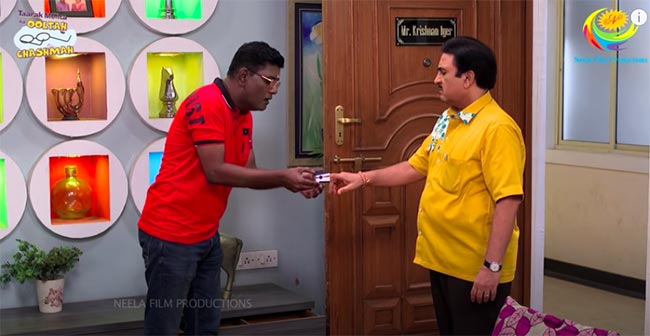
    Oximeter Check: Screengrab from a recent episode of Taarak Mehta…


    By Shailesh Kapoor


    It’s been a month since original episodes of Hindi GEC shows started airing again. The genre that survived primarily on mythology during the lockdown is now moving back to its old staple fare.


    The results of the first four weeks have not been very encouraging. Given that there are Covid-related restrictions still in place in large parts of India, and the overall TV viewing time is higher than pre-Covid, the Hindi GEC category (pay channels) has lost about 10% of its pre-Covid viewership levels despite the return of original episodes. Drop in the ratings of the top shows is particularly striking. Except Taarak Mehta Ka Ooltah Chashmah (TMKOC), which opened at pre-Covid levels upon its return, most other top shows have struggled, with some being less than 60% of their pre-Covid numbers. Long-running shows like Kundali Bhagya, Kumkum Bhagya and Yeh Rishta Kya Kehlata Hai have not got a section of their audience back, who were probably continuing only because of habit. Star Plus’ recent launch Anupamaa has emerged as the joint category leader in Urban HSM, along with TMKOC.


    The signs were ominous. During the lockdown, Ormax Media’s data suggested that only 42% of regular Hindi GEC audience are missing their favourite shows “a lot”. The category will soon face severe headwinds with IPL in the next quarter, and will have to look upto reality shows like KBC and Bigg Boss to uplift it from the precarious position it finds itself in.


    Having said that, the early success of Anupamaa is a positive development. It shows that the category discontent is not so high that a well-crafted new show that’s relevant and authentic will not find an audience. But we need more Anupamaas, and some of the upcoming launches look promising too. But the category urgently needs to shed its flab. Channels’ obsession with long-running family dramas that have long outlived their purpose is still a major villain in the 2020 Hindi GEC story.


    The other element of curiosity was to see how fiction shows integrate (or ignore) Covid in their plots. It’s been a mixed bag so far. While some shows have stayed completely clear of it, others have used token references, and a few have integrated Covid into the running plot, though not always in a way that’s sensible. To give an example (and there are a few), earlier this week, a plot point in Star Plus’ Yeh Hai Chaahatein involved the female antagonists plotting to get the protagonist out of the housing society by proving that she’s high-risk for a Covid infection. The society’s management committee comes to the protagonist’s house to insist she’s taken to a hospital or a quarantine centre. In this highly charged Covid discussion with half a dozen people, not one is wearing a face mask, making a potentially topical scene come across as fake, if not bizarre. It is this half-hearted attempt at depicting reality that creates emotional disconnect with many Hindi GEC shows.


    In sharp contrast, TMKOC has integrated Covid masterfully. For a show rooted in topicality and social reality, not recognising the Covid reality would have been a definite compromise. But it’s easier said than done. If they would have based the entire show in a Covid world, there would be limitations, related to society gatherings, functions, festivals, shop scenes, etc.


    What the makers have achieved is a fine balance, through a tried and tested device: Protagonist Jethalal’s dreams. In the three weeks on air so far, he has had two dreams (cumulative play-out of about five episodes) which tell a free-from-Covid story, while the rest of the episodes consciously recognise Covid and create genuine entertainment around it. This is how it should be done!


    With all its problems and a few silver linings, the Hindi GEC category is at a crucial phase. Something tells me the next six months may shape its future decisively.