Tag: Coronavirus

  • Das ka Dum with Dr Bhaskar Das: How are you planning to spend the 14 hours of the Janata Curfew on March 22?

    Bhaskar DasSo we asked Dr Bhaskar Das on how he plans to spend the 14 hours on Janata Curfew day on March 22. Here’s his response in todays edition of Das Ka Dum. Read on…

     

    If you wish to access the archives, please go to the Das Ka Dum tab on the website’s top navigation bar.


    Q. Given a chance, we all love to stay indoors on a Sunday. But now that we’ve been asked to, we wonder how we’ll do it. So how are you planning to spend the 14 hours of the Janata Curfew on March 22?


    A. It’s not just about been asked to voluntarily participate in the Janata Curfew on March 22. I think it’s a way of symbolising the concept of social distancing at this grave juncture of human existence. Am I hyperbolic? I don’t think so. If we don’t collectively believe the implications of this pandemic virus and work for looking after ourselves and others, we can face unsavoury consequences, specially given the size of our country.


    Janata Curfew is a larger metaphor for that. Coming to your specific query about how to spend the day, there are so many ways. Sometime in the rush of life, we forget to appreciate the finer things of life starting with one’s own family. Obviously each individual will have their predilections and choose what they love. So far as I am concerned, I love reading a wide range of subjects, love to listen to my favourite songs… I will get time to stand and stare, play with my dog. Finally, the key lesson has been imparted by Jeremy Bentham: “It is the greatest happiness of the greatest number that is the measure of right and wrong.” Or United we Stand, Divided we Fall. The relevance of these axioms have never been more pertinent. We have to live now with this conviction.

    My advice to you and others:

    1. Do an online course to upskill oneself (so that one can face economic headwinds)

    and

    2. Love oneself and do some daily physical exercise.

    Both the suggestions are beyond Sunday to equip oneself with the unfolding medico-economic tsunami.

  • Grappling with Coronavirus Concerns


    By Brian Wieser


    Global concerns around coronavirus escalated meaningfully in the past week. Despite some encouraging signs in parts of Asia, the announcement of travel suspension between and the United States for a 30-day period and some country-wide lock-downs, much of the world was faced with the stark reality of the potential consequences of a widening human, societal and economic problem, one that might be prolonged by the actions and inactions of government policies


    Capital markets are now better incorporating the pandemic into their expectations. The announcement of part of the US-Europe travel ban policy amplified a stock market downturn already underway.  It occurred as the world’s largest financial markets were beginning more fully incorporate the potential impact of the virus in the near-term, including the likelihood of an economic downturn that may persist beyond the time of the virus’ spread, the limited capabilities of the U.S. Federal Reserve, and further knock-on effects.


    For example, the decreased demand for manufacturing and global travel has resulted in a decreased demand for oil. This leads to an oil production and price war between low-cost producers Russia and Saudi Arabia, which leads to less oil production in the United States, a net exporter of oil. This increases the likelihood of economic weakness in oil producing regions of the U.S. and the country more broadly.


    Turmoil in the capital markets will have several potential implications for marketers to consider for their businesses and their industries:


    • Changing costs of capital and liquidity for different companies can lead to consolidation. Weak stock prices and cheap capital mean companies that are cash-rich are well positioned to make acquisitions of companies that are particularly depressed. Also, early stage companies that were planning on becoming publicly traded hold off on their IPOs rather than doing so under depressed conditions. Although transactions are not typical in times of great uncertainty —or at least great volatility—in certain instances some companies could be at risk of a takeover. However, transactions are not very likely in the early stages of a stock market correction, but as markets recover unevenly and the outlook for businesses become clearer, they can become more likely. Marketers in categories already prone to consolidation will want to be mindful of the potential for M&A— not only transformational combinations, but “tuck-in” transactions (larger companies buying smaller ones) that follow from stock price disruptions.


    •  Commodity price changes can alter operating cost structures. Lower commodity prices are obviously negative for producers and the countries that host them.  On the other hand, users of those commodities and the countries in which they live clearly benefit, at least to the extent they still need those commodities. Marketers whose product categories are highly dependent on input costs can fare relatively better than others, especially if they are able to stockpile those goods or lock in prices.


    •  Currency changes can make different countries relatively more or less attractive for marketers to invest in. Weak currencies are often driven by the aforementioned commodity price declines, by “flights to safety” and/or changes in interest rates in other countries. This leads to further disruptions, such as higher costs for consumers buying imported goods but lower costs for consumers in other countries buying exports. The impact of such disruptions can vary widely by country. For marketers, these changes can make different countries differently attractive to deploy or withdraw resources to better support short- and long-term growth opportunities on a global basis.


    In tangible terms, marketers in much of the world are only beginning to assess how to address evolving circumstances. Some markets have had more time to adapt and marketers have adapted within them. For example, conditions in China have gradually improved or, put differently, have stopped getting worse. Spending declines, however, are still likely as media owners have indicated in their guidance. Other territories in the region are adapting to their “new normal” with business and leisure travel, retail, food and beverage and entertainment all hurt by the absence of travel, people working from home and consumers avoiding crowded places.


    While Italy has been hit hardest so far among European markets, this is primarily because it was hit earliest. The impact on media is so far unclear: as Mediaset, Italy’s largest media owner, described matters on its earnings call last week “the advertising trend…is a week-by-week situation. So just to give you the idea, we had the first breakthrough situation on the 22nd of February…the last week of February, 23 to 29 was really, really negligible,” adding that until March 6, “we were in a situation with a moderate impact. Of course, the new restriction rules approved by the government on (March 8 and March 9) change the situation…. we are not able to assess the overall impact on March (yet).”  The company’s management went on to state that advertisers “are obsessed by a key thing, business continuity…and communication is a key leverage in ensuring this business continuity. This is a key leverage now during these days, this week, to stay in touch with consumers, and they are fully aware that will be even more strategic.”


    As we wrote previously, it is important to note that the changes impacting societies around the world do not necessarily mean that individual marketers should alter their media strategies. Marketers need to be mindful of long-time horizons during crises and make decisions on this basis. We emphasise that marketers should continually assess the relevance of a given medium for a given marketing strategy and creative message.


    They can also continually look for ways to add value to the consumers they service, the media owners they buy from and the societies in which they operate. A crisis like this will have many unfortunate consequences, but the changes in behaviours that will follow could create new opportunities for marketers to engage with all relevant stakeholders.


    With luck, governments and societies who have not already done so will quickly identify and embrace best practices for managing the crisis.  This will include aggressive moves to encourage or mandate appropriate social distancing and preparing medical infrastructure that anticipates worst-case scenarios for the crisis. Where this occurs, countries and markets may face only weeks rather than months of significant societal disruptions, with casualties minimised. Either way, normalcy will eventually return, and if the choices marketers make during this period resonate, they and the world will hopefully come through all of this better positioned to thrive in the future.


    Brian Wieser is Global President, Business Intelligence GroupM. Republished from https://www.groupm.com/news/coronavirus-update-march-16-2020. An earlier version of this article appeared on https://www.mxmindia.com/2020/03/cornoavirus-scare-considerations-for-marketers/


  • Godrej Protekt urges citizens to join #ProtektIndiaMovement

    By A Correspondent


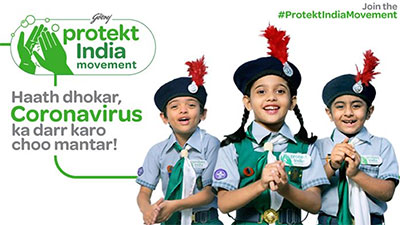
    Considering the severity of the Covid-19 outbreak, Godrej Protekt has embarked on an initiative called #ProtektIndiaMovement. It aims at building awareness amongst people by keeping them informed about the preventive measures to ensure protection against the coronavirus. The brand kickstarted this initiative with a digital anthem highlighting the importance of regular handwashing, featuring children as the messengers in order to create more awareness about hand hygiene.
     

    Conceptualised by Creativeland Asia, Godrej Protekt’s digital anthem is developed with the understanding that although coronavirus is a pandemic that can potentially affect anyone, it can be prevented by simply washing hands at the right times.


    Commenting on the initiative, Sunil Kataria CEO India and SAARC, Godrej Consumer Products Limited (GCPL), said: “GCPL always pioneered programmes against diseases posing grave threat to public health. With #ProtektIndiaMovement and this anthem, we want to make sure that the message of washing hands regularly and correctly is conveyed to every Indian.”


  • Free, Fast & Factless


    By Ranjona Banerji


    My Whatsapp this morning is full of the most wondrous information thanks to the coronavirus, Covid 19. It ranges from blowing a hairdryer up your nose to kill the virus to 119 people quarantined in a brothel in Spain to residents in an apartment block in self-isolation in Italy all singing the songs of the Tamil composer Illiaraja. I think the brothel thing is true or maybe not!


    Plus all those endless bits of advice: don’t touch milk bags, elevator buttons, newspapers (I think some news sites and new channels are responsible for this one!), car doors after you have washed them and more. The virus can exist between contact for five hours, six hours, seven hours, nine hours. Sneezes are dangerous. Sneezes are not. The virus is the same as flu. The virus is not.

    In India, we have our own obsessions with excreta, unlike the western world which is paranoid about running out of loo paper. So various BJP leaders have declaimed that cow urine and cow dung can cure the virus. And one former editor and journalist declared on Twitter that faecal microbiota transplant should not be scoffed at by ‘Lutyens minds” as a presumable defence for the cow dung cure.

    The trouble is that none of these claims come with any substantiation and that they spread panic and hope just the same. What should the average person do? Believe all of it? None of it? “News” and “information” about the latest virus spreads so fast and free, that it is impossible to sift fact from lies. I believed the one about footballer Christiano Ronaldo paying for all medical treatment in Portugal until the kind people of Twitter quickly told me it was fake.

    The battle against fake news is not new but it has never been more important. Because never has fake news been as dangerous. The World Health Organisation has declared Covid 19 a pandemic. (I just get all my info from the WHO site now.) What we do know is that governments across the world are not ready. Bombastic claims by world leaders are not being adequately challenged by the media, which itself suffers from an information overload.

    However, there is no doubt that even with the overload, traditional and mainstream media are not doing enough to dispel the rumours. A small example is the travel advisory which the Ministry of Health put out. It said that no “passengers” will be allowed into India from March 18 and airlines should inform passengers of this from the first port of departure. Now does this mean only visitors or does it mean passengers including those returning home?

    Journalists seemed more confused than anyone else because when I asked the question, I got both answers from other journalists!

    Latest reports – from doctors – tell us that India is not doing enough testing. But several news stories informed us that India was the best because the virus had not spread. Prime Minister Modi announced that India had started testing at airports in mid-January itself and that is why numbers in India are low. This was a blatant lie. But was Mr Modi questioned by the media? Several government claims have been fed to the public – including various “cures” and preventives from the Ayush ministry – without any supporting evidence or questioning. The public has been left to fend for itself.

    This headless chicken response is not limited to the Indian media. The British media for instance has not done enough, for my money, to combat the Boris Johnson government’s “herd immunity” idea as a preventive. Like the Indian media, the onus has been put on experts writing on the opinion pages to set the record straight. You and I both know that opinion pages are the least read in any paper. What happened to good old reportage to the set the foundation on which opinion can be raised?

    The media’s negligence is criminal. I know that initial days of any crises are difficult. But that excuse works only for the first couple of days. After that, if you haven’t got your act together, you are no better than some idiot on Whatsapp spreading another sort of virus.


    Ranjona Banerji is a senior journalist and commentator. She is also Consulting Editor, MxMIndia. Her views here are personal


  • Given Covid-19, must the IPL show still go on?


    An update: BCCI has announced the postponement of IPL 2020 to April 15, 2020. This column was written much before the announcement was made.

    By Shailesh Kapoor


    The twelfth edition of IPL is scheduled for kick off 10 days from today, i.e., on March 23, 2020. In the wake of the escalating Covid-19 situation across the world, ‘non-essential’ travel and community gatherings are being restricted, both by the administration and the private sector. Sporting events tick both these boxes. They are non-essential, and they involve community gatherings in stadia. And it’s only natural that they should be considered for postponement.

     

    While several sporting events have been canceled or postponed over the last two weeks, the big news came in yesterday with the suspension of NBA, after player Rudy Gobert tested positive. Gobert incidentally mocked the Covid-19 situation by touching the mikes at a presser, just two days before he was diagnosed.


    Should IPL go on, then? Till about a week ago, BCCI was cautious, but keen on going ahead with the league anyway. But much has changed since then. The ‘best-case’ scenario of BCCI today stands at an IPL played in empty stadia, to eliminate the community-gathering risk. Television and digital media are the revenue drivers for IPL, and while empty stadia may take some of the zing away, the economics of the big-ticket event will be impacted only marginally.


    However, one could question the desperation to go ahead with the tournament at any cost. IPL is clearly non-essential, and the marathon length of the event would mean that players and officials are exposed to multiple people during the course of the league. Over the last few days, high-profile cases ranging from heads of state to ministers to actors have emerged from across the globe. In no uncertain measure, it tells us that public life puts you to more risk than an average citizen. Sportspersons fall in this category, and there’s the additional complication of overseas players, who may have traveled to different countries in the lead up to IPL.


    But a lot of cricket is going on worldwide. Among that, India is playing South Africa at home, where the remaining two matches will be held to empty stadia. The Ranji Trophy final is being played too, even as I write this. The veterans’ tournament, promoting road safety, was called off yesterday after five days of cricket. But in general, cricket across the world seems somewhat immune to the hazard at hand. Then why should IPL take all the blame?


    But that’s how IPL’s imagery is. There’s an intrinsic association between IPL and greed, built as a public perception over the years. Because there’s so much money involved, all IPL-related decisions can come across as material and insensitive.


    The players, especially the young talent, would really want to play. They may not get this once-in-a-lifetime opportunity again. But this should not be a decision governed by advertisers, franchises or players. It should be based on larger considerations of a situation that’s evolving rapidly with each passing day.


    IPL can surely wait another year (it’s impossible to reschedule it later in the year given the cricket calendar). And BCCI could be fighting many perception battles, with the media and the administration, if they decide to stick to the schedule.


  • Prabhakar Mundkur: Coronavirus capitalised on by Opportunistic Marketers

    By Prabhakar Mundkur


    Some of the tech firms have really shown the way during the Coronavirus to make life better for people the world over.  They have done this by locking down their offices, making people work from home and Google has gone to the extent of blocking ads that are capitalising on the Coronavirus.

    On the other hand, opportunistic FMCG marketers are working in quite a different way. Some of them have decided to capitalise on the Coronavirus scare to promote their handwash and other products.  I personally think it is unethical to cash in on a major pandemic that is threatening the entire world, and look at it as an opportunity to market your products. While spreading the correct information is helpful, couching a product message slyly into that information somehow is very opportunistic.


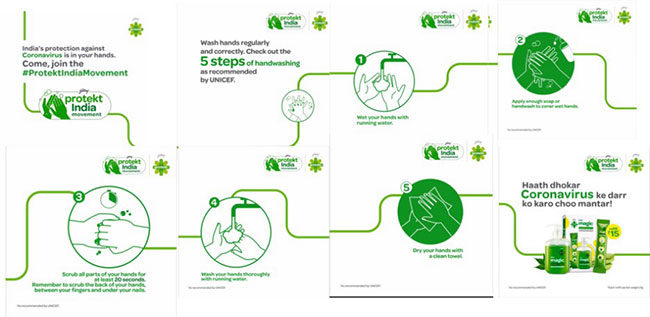
    One such example was a social media message from Godrej, a company that I greatly admire and has a good reputation as a trusted and honest company. The message played a film which went through the steps of washing hands correctly.  While this was going on, one couldn’t miss the Protekt India branding in the corner of the frame.  It all seemed like a good humanitarian effort to help everyone given the Coronavirus scare which you were about to applaud, when the disappointment hit you like a sock in your solar plexus.  It was just another product ad for Mr Magic, its new hand wash introduced a year ago.  The end-frame looked like this.


    It says ‘Haath dhokar Coronovirus ke darr ko karo choo mantar’.  Nice weasel. While the product message seems to say allay the fear of the Coronavirus, one can’t mistake how the product has been cleverly woven in with the dreaded disease.


    Then there was another ad for a product that I am not very familiar with called  Campure, a camphor-based product that claims to reduce the risk of Coronavirus. The 100% organic tag, might seem like it is a safe product. While no doubt the benefits of camphor are many, one wonders how it reduces the risk of Coronavirus which is a very specific claim.


    I thought the most responsible ad was by Lifebuoy. It was very clearly a matter of fact, public service message and it did not draw any direct inference to Coronavirus. Well done, Hindustan Unilever. One would have expected no less from a globally reputed company.


    One wonders how the Ministry of Health and the Ministry of Consumer Affairs is going to react to this kind of advertising from marketers. Are they going to patiently wait for innocent consumers to complain, or are they going to raise a suo moto complaint on their own?


    The world biggest tech firms like Google on the other hand have taken a stance to protect the citizens of the world from mis-information.


    Sundar Pichai for example in a statement said:

    “Protecting people from misinformation

    Our Trust and Safety team has been working around the clock and across the globe to safeguard our users from phishing, conspiracy theories, malware and misinformation, and we are constantly on the lookout for new threats. On YouTube, we are working to quickly remove any content that claims to prevent the coronavirus in place of seeking medical treatment. On Google Ads we are blocking all ads capitalizing on the coronavirus, and we’ve blocked tens of thousands of ads over the last six weeks. We are also helping WHO and government organizations run PSA ads. Google Play also prohibits developers from capitalizing on sensitive events, and our long-standing content policies strictly prohibit apps that feature medical or health-related content or functionalities that are misleading or potentially harmful.”


    Now that is a statement from a responsible world citizen.


    Prabhakar Mundkur is an ad industry veteran and a prolific writer and commentator. He writes frequently on MxMIndia


  • Shailesh Kapoor: Coronavirus Impact on the Indian M&E Sector

    By Shailesh Kapoor


    Coronavirus has taken over the world. That reads like the first half of the logline of a Hollywood film (remember Contagion?), except that it is for real this time. It’s been some time since the outbreak in China and the subsequent spread to select countries like South Korea, Iran and Italy. But it’s only over the last two-three weeks that the rest of the world has started feeling the impact. The medical community is on its toes, the economy on its feet, and WhatsApp on fire.

    It’s also in this time that the Indian media has started covering Coronavirus as mainstream news. When the initial cases came up in Kerala, there was minimal reportage in the national media. But with Delhi in the spotlight, the media has gone into overdrive. Coronavirus is on the front page of all newspapers every day this week. While several English news channels continue to debate meaningless politics and the relevance of Rahul Gandhi (still!), Hindi news channels have got Coronavirus updates and prevention tips on the top of their agenda. One can expect news viewership to show a significant spike in this week’s ratings. And judging by how the panic is building, this could even end up being the (unexpected) news event of the year.

    The television industry was already facing the brunt of an economic slowdown, with abysmal ad revenue numbers over the last six months. The global dip because of Coronavirus will only complicate matters further.

    The other significant impact will be felt on the theatrical business. MGM and Universal announced a seven-month postponement of their James Bond film No Time To Die. China is a huge theatrical market for Hollywood films, and this decision may spark off a chain of film postponements.

    Closer home, three big Hindi films are lined up for release in the next five weeks. Baaghi 3 releases today, Rohit Shetty’s Sooryavanshi later this month, and Kabir Khan’s 83 on Good Friday in April. Delhi is an important theatrical market, and if Baaghi 3’s collections are impacted today because of the Coronavirus threat, you can expect panic and rescheduling of several other films too. This could potentially throw the entire release calendar off.

    Then, there is also the impact of several foreign shoots, for films and television, being stalled. And with the fear of being in a public place peaking, even local shoots may be hard to pull off. Streaming services are in the safest position, relying neither on ad sales nor on communal viewing.

    The silver lining here is the comforting thought that the entire world is together in it. It tells us that the world is eventually one place, even if some people speak of building walls or of Brexit. Now that could be a story idea for Contagion 2.


  • Coronavirus Scare: Considerations for Marketers


    By Brian Wieser

    The outbreak of Coronavirus in countries around the world is a widening tragedy. Many aspects of life and business will be altered in many countries around the world with the possibility of a recession realistic for many countries, at least on a short-term basis. Shifts in media consumption and other behaviours are important to monitor, and marketers need to be mindful of opportunities to service consumers that may follow along with the media owners they buy from and the societies in which they operate.

    Coronavirus is a widening tragedy. The widening spread of Coronavirus is first and foremost a human tragedy given the lives that have been and likely will be lost. It is secondarily a potentially pivotal societal matter given the implications that appear to have followed so far in China, especially with respect to their engagement with technology (i.e. e-commerce, streaming services, etc.). It may also have political consequences which could play out in different countries around the world. There will also be tangible economic consequences for much of the world to contemplate and manage through. This leads to significant considerations for every marketer and media owner to consider as they look to manage their businesses in the near-term.

    China may show us the path forward. As a starting point, it is important to continue to emphasize all of the uncertainties about how widely and rapidly the virus will spread and how specifically people, groups of people and governments will and will not react. Now that the spread is slowing in China and gradual signs of a resumption of normalcy are resuming, we do have a sense of how this could play out elsewhere.

    With restricted movements in heavily impacted regions, closures of offices, factories and stores alongside cancellations of environments where public gatherings took place, everyday life was severely impacted. Travel was curtailed. Public hygiene practices were altered. Professionals worked from home where they could, and families stayed home as well. They consumed more media and refrained from going out to shop. Marketers often cut spending because of uncertainties around consumers buying products, if those products could even be made available: e-commerce-based delivery was often challenged because of limited availability of drivers and supply chain issues that impacted all forms of manufacturing and retail sales. From Alibaba we heard in mid-February that “some of our businesses that rely on physical means of production on supply side would even show negative revenue growth for the (current) quarter such as China retail marketplace and local consumer services”. This translated into a ~-30%+ change in growth rate relative to the growth that was observed during the fourth quarter of 2019.

    But as the pace of new infections began to decelerate, stores and factories began to re-open. As we heard during the last week of February from Baidu “in the past 2 weeks, however, business activities have started to pick up as people returned to work. At Baidu, our employees are gradually returning to the office applying strict safety measures. We assume businesses across China will do the same in that our marketing services will pick up at a faster pace into quarter end.” With all of the appropriate caveats around the uncertainties of the situation, the company guided towards a change in ad revenue growth that was roughly 20% different vs. the growth rate observed during the fourth quarter, similar to guidance provided by Weibo two days earlier. In short, there appears to be a basis for optimism around a resumption of normalcy – or at least a “new normal” – in the coming months.

    Unfortunately, much of the rest of the world is only now going through what China has gone through over the prior two months. This means that we likely have yet to see the worst play out.

    Many aspects of life and business will be altered in many countries around the world. As we have seen in China we would expect to see less travel, less manufacturing, reduced retail sales and cancellations of many forms of public entertainment. Media consumption at home will likely rise as will e-commerce sales, although because so much of the world relies so heavily on China to manufacture finished goods or components of goods, supply chains will likely be compromised.

    Other elements of society will face new spotlights: For example, the quality and variation of health care within countries will be amplified, which could lead to changes on that front. The contribution of economic activity to environmental conditions may be another dimension that faces scrutiny, especially in countries where activities leading to immediately tangible volumes of pollution are curtailed.

    The possibility of a recession is realistic for many countries, at least on a short-term basis. More generally, there is a realistic chance that countries which were otherwise growing are pushed into recessions because of reduced economic activity. Some countries have deeper integration with the global economy than others and are therefore more exposed to restrictions on cross-border activity and supply chain disruptions. Consumers in different countries may take a more or less conservative approach to spending than in others, although these tendencies will largely be impacted by their ability to buy (and receive) products. And at the same time, governments of different countries may take different approaches to stimulating their economies.

    In the near-term, how much a recession may impact advertising spending in any given country is difficult to anticipate – not least because economic activity is not tangibly correlated with ad spending in every country – although it is highly likely that the impact will be negative, with growth in some countries softening, others going flat and others declining. While it is far too early to anticipate outcomes with any precision, the implied double-digit declines in ad spending within China for the first quarter could play out elsewhere, with reduced declines in subsequent quarters and an eventual reversion back to growth as we have seen following other recessions. Of course, marketers able to avoid making cuts will generally fare better given what will likely be relatively favorable pricing and reduced competition for consumer attention. Longer-term brand-building will benefit from a sustained media presence, albeit with appropriately modified messaging.

    Ad spending might fall, but it also may shift. Given the absence of near-term sales to be realized, advertiser willingness to spend may fall despite higher audience levels for some media (which, as we have noted previously are not generally correlated with ad spending within media). However, if the volume of available budgets for spending on advertising weakens in any given country, it is difficult to anticipate which specific media will be most impacted. It does seem safe to say that the aforementioned supply chain issues with China – and the timing with which Chinese manufacturing returns back to normal – will disproportionately impact global media owners whose ad revenues depend on Chinese manufacturers. Traditional television could fare relatively better because of the likely improvements in audience levels, while outdoor advertising may be worse off with lower levels of foot traffic in many places. At the same, time we emphasize that spending on paid media will not necessarily correlate with spending by marketers on services, such as those provided by agencies.

    The Olympics may still go forward, but also illustrate the importance in making back-up plans. One tangible issue which will be top of mind for many marketers will relate to the upcoming Olympic games. While the games are still moving forward at the present time, because so many marketers build substantial campaigns centered around the Olympics, it will be particularly critical for those marketers to establish potential back-up plans in the event the Olympics do not occur. This point dovetails with a broader point we have also made previously: as a general rule, marketers should generally try to prepare credible alternatives as they develop any given marketing strategy. Towards those ends, the identification of alternative options may prove to be a useful planning exercise which could lead to new ideas for significant campaigns to be used in the future if the Olympics do move forward as intended.

    Shifts in media consumption and other behaviors are important to monitor, and marketers need to be mindful of opportunities that may follow. It is important to note that just because aggregated shifts are likely to occur, it does not mean that individual marketers should necessarily alter their media strategies. Marketers need to be mindful of long-time horizons during crises and make decisions on this basis. We emphasize that marketers should continually assess the relevance of a given medium for a given marketing strategy and creative message. They can also continually look for ways to add value to the consumers they service, the media owners they buy from and the societies in which they operate. A crisis such as this one will have many unfortunate consequences, but the changes in behaviors that will follow from it could create new opportunities for marketers to engage with all relevant stakeholders. If the choices they make resonate while the world works through the current environment, they and the world will hopefully come through it better positioned to thrive in the future.


    Brian Wieser is Global President, Business Intelligence GroupM. Republished from https://www.groupm.com/news/coronavirus-considerations-marketers