Cadbury Fuse, the Mondelez India brand, launched its latest campaign ‘Bhookhe Pet Na Ho Payega’ with a film ‘Fuse Doli’.
Said Nitin Saini, Vice President Marketing, Mondelez India: “Nourishing a tradition of combining goodness with an irresistible taste, Cadbury Fuse has been a steadfast companion for satisfying those little hunger pangs on-the-go. Our latest TVC campaign portrays how choosing Cadbury Fuse ensures you’re always fully present and takes a humorous spin on India’s cultural belief: ‘Pehle pet pooja, baaki kaam duja.”
Added Kainaz Karmakar and Harshad Rajadhyaksha, Chief Creative Officers, Ogilvy India: “Fuse has always been about exploring different insights around hunger. This film taps into a very cool insight – Bhooke Pet Na Ho Paayega. The story endearingly exaggerates this by showing a young guy dragging a Doli procession into a supermarket to satisfy his hunger. The humour in the story is brought to life beautifully by the director, Abhinav Pratiman, Early Man Films. If exaggerations have their roots in an undeniable truth, they end up making the point very well. According to us, this film does that. The little touches in the detailing of the screenplay will make it watchable again and again. The ECD, Ram Hariharan and his team have conceived this campaign and we hope people enjoy it as much as we do.”
This Valentine’s Day, Cadbury Dairy Milk Silk from Mondelez India, plays cupid once again to highlight some “unforgettable” love stories around us.
The brand has joined forces with filmmaker Zoya Akhtar who brings in her expertise to help couples craft their cherished moments into beautiful memoirs.
Speaking about this, Nitin Saini, VP- Marketing, Mondelez India, said: ” Cadbury Dairy Milk Silk continues to reign as the ultimate curator of Valentine’s Day celebrations. We believe the priceless romantic moments are not always the expensive ones, therefore with this campaign, we wanted to celebrate the everyday magic of a deeper and meaningful love and create a platform for couples to express their unique stories in a truly personal and heartwarming way. The idea was to create an experience that couples could revel in by watching a movie on them, by them and gush over the cute moments that are a testament of their love. The collaboration with Zoya Akhtar adds an extra layer of creativity, ensuring this campaign will be an unforgettable celebration of the diverse and beautiful stories that make each love story unique. Combined with the power of technology, this collaboration will bring love stories to life that is bound to touch hearts.”
Added Kainaz Karmakar and Harshad Rajadhyaksha, CCOs, Ogilvy India: “Where there’s love, there’s a story. And there can’t be a better gift than your story made into your own AI movie. When Akshay Seth came to us with the ‘Story of Us’ we instantly loved it, but the execution was a challenge. It involved a partnership between Cadbury Silk x Zoya Akhtar x AI x Disney+Hotstar x Millions of personal stories! Since this is the first time customized AI video generation at scale is being attempted, it took a lot for all the moving parts to come together but they finally have. The interface, with Zoya Akhtar as your guide nudges you to dig into your story and pull out the best nuggets. Then AI will turn that into a mini movie featuring Avatars of the two of you. The best stories will feature as an anthology on the streaming platform Disney+Hotstar.”
The Global Best of the Best Awards 2023 has announced Ogilvy India (with Wavemaker India) as the winner of the Global Grand Effie in Experiential Marketing for Cadbury Celebrations – Shah Rukh Khan My ad. After bagging the coveted Cannes Titanium last year and an Effie APAC this year, Ogilvy India has now added the Global Grand Effie to its roster of awards for for the Shah Rukh Khan My Ad campaign.
The Global Best of the Best Effie Awards crown the most effective campaigns from all the Grand and Gold Effie winners across the globe in the fray.
Said Ganapathy Balagopalan, Deputy Chief Strategy Officer, Ogilvy India: “Christmas has arrived early for Ogilvy India, and we are delighted. It’s taken a village to pull this campaign off and we are happy it has made the impact and difference we hoped for.”
Links to campaign:
Case Study: https://www.youtube.com/watch?v=_Swn7OF8bvQ
As the excitement surrounding the upcoming ICC Men’s Cricket World Cup 2023 begins, Cadbury Dairy Milk has unveiled a campaign titled #SitTogether.
Said Nitin Saini, Vice President of Marketing at Mondelez India said: “We are excited to launch our campaign #SitTogether ahead of the World Cup, inspiring people to experience the joy of cricket together and foster a sense of togetherness and shared happiness. We truly believe that the excitement of big match days is universal, regardless of people’s backgrounds or jobs. With this campaign, we urge consumers to join us and make this year’s match viewing moments truly inclusive and meetha (sweet) for all.”
Added Sukesh Nayak, Chief Creative Officer, Ogilvy India: “The love for cricket unites us all, when we are down, we pray together, when we win, we celebrate together. So then, why not watch it together too? Building on our generosity platform, we are very excited to have created #SitTogether, a digital platform to enable people to watch the match from the stadium with a member of their staff. This is a human idea that will help foster a true sense of togetherness and happiness this Cricket World Cup.”
Cadbury Celebrations rolls out campaign for this Raksha Bandhan with a hashtag #BrothersWhoCare. The campaign brings the time-tested bond back into focus by inviting brothers across the country to show their appreciation for their sisters in a unique and heartwarming way.
Speaking on the campaign, Nitin Saini, VP- Marketing, Mondelez India, said: “Romantic relationships often take the spotlight away from other deep relationships, such as that between siblings. Built on a lifetime of shared memory, mutual growth, support, and love, these bonds form the foundations of who we are and deserve their own moments where care and appreciation are expressed through mindful gestures. With the #BrothersWhoCare campaign, we want to encourage brothers to express their affection for their sisters just as they do in their romantic relationships. With Raksha Bandhan approaching, it is an opportunity to remind every brother the moments they share with their sisters are just as precious and invite them to rekindle the timeless connection they share with their siblings through quality time spent together. This Rakhi, we aim to redefine sibling love – where strength meets sentiment, and caring knows no bounds.”
Sukesh Nayak, Chief Creative Officer, Ogilvy India, added: “Our starting point was to put the spotlight on the reality of the brother-sister dynamic that plays out during Rakhi. Every brother loves his sisters but unfortunately this love doesn’t translate into effort in making her feel special on a day that is meant to celebrate this special bond. But the same brothers leave no stone unturned with their wives, fiancées and their girlfriends. Our attempt was to nudge boyfriends, fiancés, husbands who are also brothers to plan a day with their sisters by putting equal effort as they would for their partners on Valentine’s day. We conceived and built the #BrothersWhoCare platform that will help remind the brothers to make time for sisters and celebrate this special bond in most magical manner.”
Shekhar Banerjee Chief Client Officer & Office Head, North, West and East, Wavemaker India, said: “Our strategy is to disrupt how brothers behave. For all the grand gestures men make for the women in their life, they often reduce the gesture to an envelope with cash for their sisters during Rakhi. With this unconventional route we reminded brothers to plan something special for their sisters. Every time someone sets out to plan a romantic gesture for their loved ones, our campaign is designed to remind them about the gift they need to plan for their sisters.”
For the multichannel campaign, Cadbury Celebrations has activated multiple touchpoints to encourage siblings to spend more quality time with each other. Working on the concept of #BrothersWho Care , the campaign’s TV thematic, scheduled to run for three weeks, reinforces the brand message of ‘Iss Rakhi, Kuch Accha Ho Jaaye, Kuch Meetha Ho Jaaye’. This will be followed by multiple digital brand films which subvert the established romantic tropes by highlighting the role played by sisters behind the scenes during the highs and lows of their brothers’ love stories. The brand will also enable brothers to plan a day for their sisters. On scanning the QR code on the Cadbury Celebrations pack, users will be lead to a microsite www.cadburybrotherswhocare.com where they can plan a movie day with their sisters in select PVRs in select cities.
I finished playing around with the lyrics and genre of the birthday song for a friend at https://cadburymybirthdaysong.com and am more than happy with the result. I am not surprised at this new initiative by Cadbury Celebrations with its partners Ogilvy and Wavemaker to get Artificial Intelligence (AI) to work for the masses and create a personalised ‘Happy Birthday’ song. They have done this in the past. The personalised greeting, the Diwali selling and more.
In effect, the last few initiatives are as different as one Bond movie from another. There is a pattern, and strategic thinking helps keep the result in sight.
It must be effortless, effective, and efficient for the user.
It must use technology that is easily affordable, accessible, and available.
It must be easy. Maybe just the fingertips and mobile should do the magic.
It must awe the audience and create an appreciable debate.
It should be something the audience would really desire, and that would delimit their constraints in more ways than one.
#MyBirthdaySong is just such a campaign.
Now no longer, the birthday song will be the same. Anyone can create a customised birthday song. Making the recipient feel more wanted, adored and special. Think if the person is not aware of this tool created by Cadbury, how impressed the person would be. As one would not understand and imagine the labour, time and effort that would go into creating anything remotely similar without AI.
The persons who made and gifted it to the birthday person feels positive about themselves. See themselves as creative and contributing. A memory of a different type. If not to the party, this person surely carries a Cadbury Celebration pack in mind. The brand association and engagement through such a device are ideal and long-term. Maybe ere performance marketing meets the brand-building efforts.
The song is unique as it allows you to harness the power of AI and generate lyrics, choose the music style, and bingo have a unique birthday song served in no time.
I must ask you to go to https://cadburymybirthdaysong.com and playfully try the same. Don’t worry if the birthday is not near or already gone. Its downloadable output that one can proudly send, display, or sing along at the event making that occasion memorable as it should be. I usually do not refer to the contributing parties, but this one must get the credits. After the details have been placed, lyrics are created by Uberduck’s Generative AI engine and sung by GanAI custom-created vocal models – mixed and mastered with Uberduck’s AI-generated music that makes the song unique.
In the past, Cadbury has been at the forefront of pathbreaking work. The ‘SRK Support Local retailer’ sale, ‘Not just a Cadbury ad’ and the ‘Support the Hawker nearby’ were on similar lines, based on scalability and ease of use of technology.
Net-Net
Brands have a tremendous opportunity to access and leverage new-age technology to take that additional steps to connect and work with the audience. Brand-building can happen with performance marketing. I must also remind you to watch the HP ad ‘Thodi Si Jagh bana lo’ – which also showed how to easily use technology with a human face for a technology company.
Ogilvy India Chief Creative Officers Kainaz Karmakar, Harshad Rajadhyaksha, and Sukesh Nayak with Piyush Pandey and some representatives of Mondelez
By Our Staff
The year: 2023.
The date: June 23.
The tally of metals so far: 23.
Just a coincidence on twenty-three, no significance.
But the big breaking news is that Ogilvy has bagged a Grand Prix.
Now we now that a Grand Prix is one of the biggest accolades an entrant can get at Cannes Lions.
But it’s also in the category that is valued most. Creative Effectiveness. Which means an a creative (as in an ad) which has bee found to be effective for an advertiser.
So it’s not for a creativity that’s just a cool ad, but also a creative that has helped the business of the client.
It’s the Shah Rukh Khan-My-Ad campaign made for Mondelez’s Cadbury Celebrations. Notes a communique on the Ogilvy website: “It was created in the wake of the pandemic, as local businesses in India struggled to fight back from economic hardship compared to big brands with deep pockets. Together, Ogilvy Mumbai and Cadbury Celebrations helped make Shah Rukh Khan – the world’s biggest movie star – a brand ambassador for thousands of small businesses, using machine learning to recreate the real-world Bollywood celebrity’s face and voice to use in ads for local shops, bringing more power to the people.”
This is what Ogilvy India Chief Creative Officers Kainaz Karmakar, Harshad Rajadhyaksha, and Sukesh Nayak have said: “We are overjoyed and humbled to be given the Grand Prix for Creative Effectiveness for “Shah Rukh Khan-My-Ad.” This is a result of the dedication and effort of our fabulous teams at Ogilvy and Mondelez. We also thank Rephrase and Wavemaker for their valuable role in making our idea a reality. This Lion is the biggest acknowledgment of how this campaign has helped over 200,000 small stores across India through a tough time. This is personalisation at scale and more importantly, generosity at scale.”
Btw, we didn’t miss the line: for their valuable role in making our idea a reality. So clearly, the folks at Ogilvy have said that it’s their idea. Of course sibling Wavemaker (both O and W are owned by WPP).
Meanwhile, we asked the Ogilvy to send us a list of the various awards it has won for the SRK add, and here’s a list. And, mind you, this is not exhaustive. There are a few YouTube awards that aren’t a part of the list. Note Ogilvy doesn’t participate in the Abby awards. It does of course participate in the Effie.
YEAR 2021
SMARTIES APAC AWARD 2021
Gold- Cadbury Celebrations ‘Not Just A Cadbury Ad’ in the ‘Location Targeting’ category
Bronze – Cadbury Celebrations ‘Not Just A Cadbury Ad’ in the ‘Video Advertising’ category
LONDON INTERNATIONAL AWARDS 2021
Silver – Creative Use of Data – Data-Led Targeting for Cadbury Celebrations titled ‘#NotJustACadburyAd’
Bronze – Creative Use of Data – Real-Time Data for Cadbury Celebrations titled ‘#NotJustACadburyAd’
Bronze – Evolution – Best Use of Real Time Advertising for Cadbury Celebrations titled ‘#NotJustACadburyAd’
EFFIE AWARDS INDIA 2021 – WINS 4 AWARDS
Gold – Cadbury Celebrations – Not Just A Cadbury Ad in Interactive Marketing Category
Gold – Cadbury Celebrations – Not Just A Cadbury Ad in Experiential Marketing/ Brand Experience: Product Category
Gold – Cadbury Celebrations – Not Just A Cadbury Ad in The Disruptive Differentiators Award: Product Category
Silver: Cadbury Celebrations – Not Just A Cadbury Ad in Food Category
I-COM DATA CREATIVITY AWARDS 2021
Ogilvy’s ‘Not Just a Cadbury Ad’ was a winner in the ‘Overall’ and ‘Location Based Category’
WARC AWARDS FOR ASIAN STRATEGY 2021
Ogilvy India wins Grand Prix + The E-Commerce Excellence Award + The Early Adopter Award for Cadbury Celebrations ‘Not Just A Cadbury Ad’
APAC EFFIE AWARDS 2021
Bronze – Mondelez’s ‘Not Just A Cadbury Ad’ wins a in Crisis Response / Critical Pivot – Products category
AD STARS 2021
Bronze – Mondelez – Not Just A Cadbury – Data Insights category
Bronze – Mondelez – Not Just A Cadbury – Mobile category
Crystal – Bronze – Mondelez – Not Just A Cadbury – Direct category
YOUTUBE WORKS AWARDS 2021
Mondelez along with Wavemaker & DeltaX and Ogilvy India, bag the Grand Prix for its ‘Not Just A Cadbury Ad’
Mondelez along with Wavemaker & DeltaX and Ogilvy India, bag the Ruby for its ‘Not Just A Cadbury Ad’
CANNES LIONS 2021
Bronze in Creative Data Lions category – #NotJustACadburyAd for Mondelez under Data-driven Targeting sub-category
KYOORIUS AWARDS 2021
Black Elephant: Best Of Show – #NotJustACadburyAd – Cadbury Celebrations
Blue Elephants: Kyoorius Advertising Awards – Direct – Digital & Online – #NotJustACadburyAd – Cadbury Celebrations
Blue Elephants: Direct – Targeted Video – #NotJustACadburyAd – Cadbury Celebrations
Blue Elephants: Topical Advertising – Digital Media – #NotJustACadburyAd – Cadbury Celebrations
Photo source: Tweet by Neeraj Ghaywan (@ghaywan) at https://twitter.com/ghaywan/status/1666667224273403908?s=20
By Hamsini Shivakumar & Prabhjot Singh Gambhir
Hamsini ShivakumarPrabhjot Singh Gambhir
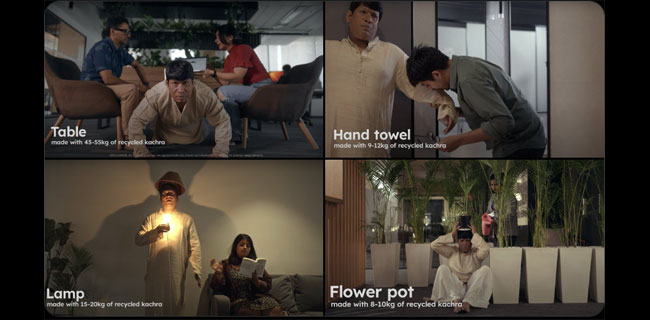
Zomato’s recent campaign aimed to raise awareness about recycling waste on World Environment Day. However, the use of the character ‘Kachra’ from the movie Lagaan inadvertently reinforced stereotypes and perpetuates the devaluation of people from a specific class. Although the brand intended to employ wordplay in the video, the end-result appears culturally out of sync. The humour in the video appears to be mocking the already marginalised rather than challenging those in positions of power. The video received a lot of backlash on social media, which eventually led to Zomato deleting the video itself from all platforms.
When faced with these social class divides, brands and their creative agencies are confronted with a unique challenge. Traditionally, marketing has approached class divisions as issues of affordability and accessibility for consumers. The solution typically involves offering products and services at various price points to cater to different segments of the market.
Think of shampoo sachets, and phone recharges priced at Rs 10. Market segmentation based on affordability addresses the problem of access, ensuring that every consumer can afford and desire products within their price range, whether at the lower end or luxury segment of the market.
However, addressing the social class divide as a brand in brand communication presents a distinct challenge, as it raises questions about portrayal and representation. It forces brands to examine their vantage point and ideological stance. If a brand aims to project itself as embracing progressive values, how should it navigate the complex issue of social class and class divides?
This is particularly relevant when it comes to the portrayal of domestic help and their treatment in advertising, especially for brands selling household cleaning products and related items. How should they depict domestic help? Should they merely reflect reality as it is, or should they encourage consumers to adopt more progressive behaviours?
To effectively navigate the intersection of brand communication and the social class divide, brands can draw valuable lessons from previous campaigns that approached similar subjects with sensitivity. Let’s take a look at some examples of how some brands have approached this issue in the past:
Ghadi Detergent:
In Indian popular culture, domestic help is often portrayed as solely responsible for the cleanliness and maintenance of households, perpetuating the notion that it is their sole duty while family members contribute little. Such stereotypes create a power imbalance between domestic help and the families they serve, with the latter holding all decision-making authority.
Ghadi Detergent’s campaign, #SaareMaelDhoDaalo, deviates from this stereotype. Instead, it encourages individuals to recognise the importance of every task, no matter how small, and to treat domestic help with respect. The campaign depicts a young boy with a callous attitude towards the work performed by the house help. To rectify his behaviour, his mother decides to teach him a lesson by having him clean the house under the false pretence that the house help is on leave. In the end, he learns to appreciate the domestic help’s contribution and even pays him extra to celebrate the festivities.
Women’s Day 2019 #YourSecondHome : An initiative by PregaNews
Similarly, PregaNews launched its Women’s Day 2019 campaign, #YourSecondHome, which highlights the importance of domestic helpers and their contributions to households.
The content begins with a woman scolding her domestic help and asking her not to perform her usual tasks. It appears that the domestic help’s job is at risk. However, as the narrative unfolds, we discover that the woman is actually reducing the workload of the domestic help due to her pregnancy and invites another domestic worker to assist. The campaign challenges initial perceptions by portraying the employer as caring and considerate, much like a family member would be.
The messaging of the campaign promotes progressive ideals, advocating for empathy towards domestic workers and providing them with benefits such as maternity leave or reduced workload during pregnancy, similar to practices in the organised sector. The brand, PregaNews, seamlessly integrates into the narrative of the ad.
Cadbury Dairy Milk – Driver
The work features a boss driving his driver to his child’s school so that he could attend the parent-teacher meeting. While the content is only 45 seconds long, it is quite impactful. We immediately get to understand the dynamics between the employee and the employer and how this is a routine activity. We understand how his boss is being kind and patient towards him and goes out of his way to help him.
The video shows how a small gesture of kindness towards one’s driver/staff can make a significant difference in their life. The brand integration of Cadbury Dairy Milk is also quite seamless, as it plays on the factor of the boss ‘being sweet’ and sweetness is associated with the chocolate in question.
Oswal Refined Soyabean oil
Oswal Refined Soyabean oil’s campaign portrays a positive image of domestic helpers by showcasing the relationship between the wife and her employee. While the husband is upset that the domestic help always leaves early to attend to her children, the wife, on the other hand, is accommodating as she knows that she works well and efficiently. One day, when the wife is out of the city, the maid bakes a cake for the husband and stays late at night just to celebrate his birthday so that he does not feel isolated on his special day.
The video emphasises that domestic help is not just the staff of the house, but a part of the family, and employers should be accommodating to their requirements.
However, while the ad’s story has a nice recall value, the brand takes a backseat here. The brand integration of Oswal is not quite as seamless because the story is not built around refined soybean oil. Even a slight mention of it in the narrative would’ve helped the brand integration.
Facebook | More Together – Pooja Didi
Facebook’s campaign, More Together – Pooja Didi, is a heart-warming portrayal of support staff. The content initiative can almost be categorised as a mini-short film, as it is about seven minutes long. It highlights the problem of unemployment during the pandemic and how the protagonist – Pooja, starts hiring people in large numbers to provide them with gainful employment solely out of her altruistic intentions.
However, when she cannot pay the salaries and bills to the people she does business with, she is in a state of crisis. That is when the hired staff of her sweet shop utilises the power of social media to narrate the story of Pooja’s altruistic actions, which end up attracting customers to the shop, thus enabling her to pay all her bills.
Conclusion
All the brands seem to take the high power distance between employers and domestic help for granted as a given in Indian society and thus mirror existing realities. They don’t show the possibility of a different future for domestic help (except the Cadbury ad to some extent) in which they can be empowered and assertive of their rights vis-a-vis their employers.
The convergence of brand communication and the social class divide poses both challenges and opportunities for brands. By being mindful of the implications of their messaging, brands can strive to create advertisements that promote empathy, understanding, and equality. Actively working to dismantle stereotypes and biases, brands can contribute to positive social change.
HamsiniShivakumar is a long-time culture-watcher, semiotician, brand consultant and co-founder of Leapfrog Strategy as well as Semiofest, the global unconference for applied semiotics.Prabhjot Singh Gambhir has done his Masters in Film Studies and is passionate about stand-up comedy. He has now turned his observant eye to cultural discourse and its intersection with brands.The views expressed here are their own.
Cadbury Dairy Milk, in association with Anandabazar Patrika and The Telegraph is back with the third season of Cadbury Dairy Milk Gaane Mishti that highlights folk fusion songs sung by the leading artists of Bengal.
Notes a communique: “In an initiative to recognise their efforts, the platform will be also seen appreciating the karigars (creators) of the mishtis under the coinage – Humans of Mishti. Working with passion for years, these karigars and their family members have been instrumental in the process of creation of a variety of mishtis. Humans of Mishti will recognise their contribution to the trade and award them with a token of appreciation. The six-week programme will culminate with a two-day Mishti Mela (Carnival) around the first weekend of April where the artists associated with the campaign will perform live for the audiences on both days. Along with the performances, the consumers would also get a chance to indulge in savouring mishtis from the participating brands.”
I believe in using multiple creatives to reiterate the message. It not only keeps the interest alive but also strongly makes the point. Multiple creatives are more effective when there is continuity, they are linked with a character or strong slogan, take the story forward or are humour based.
In my last week’s article, I suggested using multiple creatives by banks and payment platforms to collectively address the issue of safe digital payments – an industry problem.
Many brands have used multiple creatives to their advantage. A few examples are Rajasthan Tourism – Musicsthan, Janesthan and other series, Coca-Cola- Thanda Matlab Coca Cola, Amazon- Chonkpur ke cheetah, Aapni Dukhaan, Dinshaw’s- Wakao series, Voltas AC- Murthy series, Cred – celebrity series, Policy Bazar – 1 cr ka life insurance, AajTak- the black and white series- Sabse Tez, Tata Sky – Chota recharge.
In recent times, with the attention span of the audience dropping fast and the brands focussing on digital media more and more, the need for such linked multiple creatives (the shorter the better) reiterating the same message gets enhanced. As they depict different scenarios, the chances of them hitting home with relevant audience sub-segments are much higher. One finds humour-based multiple creatives to work better. As they are more engaging and involving.
Amazon – Aaj kya Khareeda? #aajkyakhareeda
Amazon uses Multiple Creatives in the campaign Toh Aaj Kya Khareeda. There are different product categories and relationships under play.
Brother-sister– where the sister buys a deo for the brother and asks him to stop using her personal care product. Grandfather and Grandson– where the grandfather has purchased just batteries at Amazon. The neighbour – where the housewife shares the everyday items she ordered and even states the everyday things expected in the next delivery. Husband-wife – where the wife playfully suggests that she had ordered stuff for her husband.
The creative strongly drives home the message: Whatever you need, from personal care to stationery, groceries to utensils, you get everything on Amazon! Roz ka samaan Amazon par. And there is a subliminal message that people use Amazon for the most minor things. Moreover, people are buying something daily that simultaneously speaks of trust and ease.
I wish the brand went a bit quirkier and even showed things people don’t think they will get and buy on Amazon or things that amazon has now made easier to buy.
CADBURY- KISI AUR KI KHUSHI
As a brand, Cadbury has used Multiple Creatives to powerfully deliver a message and establish the brand’s Goodness, sharing, caring, and love elements. It even stands for saying Thank you – and now in participating in someone else’s happiness. The brand has multiple creatives exploring various situations. The newspaper Hawker and his client in house 302 test riding his new cycle. The employee gets an increment, and everyone celebrates. The lady opening a new parlour and the madam of the parlour where she used to work comes in as her first client to mark the occasion. And the one that I liked the most- the liftman video getting 10,000 views making him a social media star– and so the residents of the building comes to congratulate him. And the brand has also taken it to ground activation- celebrating the house help birthdays. The creatives are simple, dubbed into regional languages, and work equally well.
TATA CAPITAL – QUICK PERSONAL HOME/BUSINESS AND LOANS AGAINST SECURITIES
Tata, across brands, seems to acknowledge that you need to press a different nerve to tap different segments. To create relevance and impact, the segment must have a slice-of-life situation to relate to. And with the added touch of humour, the message could be delivered efficiently. Be it Tata Sky or Tata Tea, or Tata Capital, the format of a relatable problem is resolved efficiently and with a smile. In the case of Tata capital – QUICK LOAN is the message, and the promise of quickness is delivered digitally in situations with a smile. Be it for marriage, home, personal, education or business loan against securities.
PIRAMAL FINANCE. HUM KAGAZ SE JYADA NEYAT DEKTEY HAI.
An unbelievable promise in the loan market, but it had to be communicated well. Here are the two decent attempts- but I think they need to explore more and show different scenarios- strata- a business that can benefit from it. Including the family members and the actual situations is a nice touch for the Lohaar and the Home Loan ads. Though in this case, the ads are not that short but are short enough to keep the interest alive and engaged.
NET-NET
In the era of a short attention span, a series of Multiple creatives (the shorter, the better) reiterating the message can be more effective. It allows one to address different nuances of the same issue, thus making it more relevant to a broader audience. Try it out.
It does not in any way suggest that a single communication exposed with the desired frequency will not work. As the choice will always be determined by the message and the category. I always suggest investing more in the creative process, even at the cost of compromising a bit of media weight. And in the current media scenario and audience interaction with media, I think multiple short creatives can deliver better results.
Diwali, IPL and World Cup cricket are the times when Indian marketers unveil new campaigns and this year the T20 World Cup coinciding with the Diwali season meant that a deluge of new campaigns could be expected. But now there is also technology into play and this means that the communication is well targeted and not necessarily mass. To this mix, throw in the long videos which advertisers hope will go viral through social media and it becomes more difficult to keep track of such new campaigns.
This is also the time when brands attempt feel-good campaigns. Family bonding, celebrations, helping the needy, are the themes that become norm de rigueur. And many brands flaunt brand purpose at this time. Something which I highlighted in my last post (Festival Videos Article)
It’s definitely a plus for the brands to leave one with a lump in the throat or a tear in the eye with such videos. But a greater impact can be created when brands actually do something which can make a difference in real life. Coke always has an interesting communication around getting together, family values etc. But they would not really do anything to highlight the same. On the other hand, I have seen HP actually do stuff like creating space for local artisans in HP stores to display their talent, bring alive the purpose of helping those who struggled to find space for display (HP Diwali).
Predictably, Coke released an ad which was about not just wishing but meeting people for Diwali. Iss baar gale milke kaho Happy Diwali (say happy Diwali by hugging) was the thought. Watch it here Nice, cute and I thought that was it. So, imagine my surprise when I came across two more versions of the same thought but these used technology to make people actually meet up. Specially locked Coke bottles, which could be ordered using a QR code and unlocked only when the people met, with a code (Watch).
It’s not that Coke has not done something similar in the past. I remember some Open Happiness videos of Coke in various countries where Coke installed phone booths to help migrant workers in the middle east connect back home or the valentine’s day free coke can if one kisses your partner in front of the specially designed vending machine in Europe; this was to me a very good example of taking a festival thought not just as a tagline of an ad but actually making it happen. The most important thing for me was the use of technology.
In marketing and marketing communication, technology was all about either a product improvement or a media innovation. What Coke has achieved is significant as it has transcended the feel-good factor into actually making people experience the feel-good factor. It’s not just preaching about hugging people but enabling them to do so.
And that brings me to the bigger issue. When the first murmurs of brand purpose broke out with the ex-Unilever CEO Paul Polman suggesting brand purpose as mandatory for all Unilever brands, there was lot of hue and cry and pessimism from investors. It exists today also with some pundits asking what could be the brand purpose for Walls Ice cream or Lux Soap. The same argument could be extended to a carbonated sweet drink like Coke. I am not suggesting that Coke has discovered brand purpose but it has shown that using technology any brand can make its promise come alive. To me that’s as close to brand purpose than anything else.
Till now most of the Diwali or festival ads were woke advertising. But Coke has demonstrated that using technology, one can take the leap to make the emotion come alive. I have no clue how many people actually got the locked Coke bottles and were the bottles easy available. To be honest, I did try to get a locked bottle by scanning the QR code but the message I got was that they have run out of bottles. This could well mean that the locked bottles were a sell out or maybe Coke did a very modest run of the locked bottles. Whatever, this is proof that using technology, brands can make their emotions, if not exactly the purpose, come alive. And that is sure to make the brands more attractive to its potential customers.
Indeed, the brand which has been a pioneer in this field, at least in India has been Cadbury. More than two decades ago the brand came in with a gifting pack called Celebrations. It would be available during Diwali time and with deft and emotional communication the brand took off. Over the last two decades, the brand has become synonymous with gifting and is available through the year. I dare say, today the idea has actually become outdated as every tom dick and harry in confectionary or even Indian namkeens has a gift pack.
Therefore, when Cadbury Celebrations used technology to promote small neighbourhood retailers by using pincodes and geo-location to highlight the name of the retailers in the particular pincode where the ad was played, it was a great breakthrough. This was 2020 when all small local retailers had taken a hit due to pandemic induced lockdowns. The brand reinvented itself by having a strong purpose of helping local retailers and brought its tagline of Kuch meetha ho jaye, kuch achha ho jaye (Have a sweet. Do some good) alive in real terms.
In 2021 the brand went one step further. It used Artificial Intelligence and any retailer, through a website could get its own name endorsed in an ad by Shah Rukh Khan. The ad was then sent by Whatsapp to the retailer who could use it as he desired. And all this happened in almost real time. I helped a neighbourhood retailer in my city to download his personalised ad and he forwarded it to his customers. Many came in just out of curiosity to know how could he get SRK to endorse him.
This year, the brand with QR code on the pack is helping hawkers to put their merchandising on a website and one can find a hawker in the neighbourhood through pincode (Cadbury 2022).
We all talk about technology being an enabler. These examples are showing that in communication too, technology can be an active enabler. For brands which spend money on advertising or brand videos during festival season, the time has come to put the horse before the cart. Be clear on your purpose or on your promise. Decide what will the brand do on ground to make the promise come alive. Then think of the communication. The idea of the activity has to be bigger than the idea of the communication. And tap technology, both for the activity and also for the communication.
The more brands use technology to bring alive its promise, the stronger will the emotional connect of the brand be. I see more such technology induced activities and communication during the festive season in the near future.
Festive times are the times to celebrate. Time to understand and appreciate the positivity of rituals and practices. Time for inclusive togetherness and not the time to point figures.
There are enough issues, problems, and opportunities relevant to the brand category and promises that can be exploited. There is no need for brands to look at religious rituals and practices to question. This year we have seen fewer brands opting to question religious rituals and practices. It seems brands have understood that it does not make strategic sense to risk business for some fancy agenda of change.
Some brands understand the subtle need and nuances to strengthen their positive connect with their audiences. They have a purpose, maybe even a real purpose. They remain sensitive to their ecosystem and do it the right way. Here are some examples.
CADBURY
Cadbury has used festival time and Diwali, in particular, to add freshness and smiles to people. The efforts are enormous, and the impact is measurable. They address real problems and provide real-time solutions within festival mood and ethos. There is a genuineness in creating inclusiveness in business and a consistency in approach through the years. The purpose here seems genuine. This year’s effort- Jinki Dukan Nahin Hoti– for people with no fixed place to set the shop is brilliant.
DHARA.
Dhara’s new ad in the series Khane Pe Kehna’ celebrates the festival. Dhara does not ask the audience to change; it asks them to return to the original ritual and practice of sharing and distributing handcrafted, homemade sweets. The family gets together and shares responsibility. In the process, the tradition and the art of making sweets get transferred through the generation.
Maybe the older generation will remember it more. The current generation is happy sharing and delivering e-commerce goodies. The line ‘Tyohaar Ke Rivaj mai Zara Sa Badlav lana Hai. Apno Ko Ane Haath Se Khilana Hai’ is apt and well-presented in the ad. In fact, the way the daughter places the suggestion is full of grace and respect.
SABHYATA DIWALI
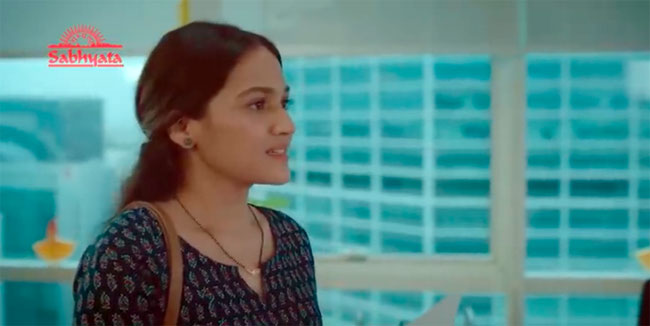
Sabhyata’s Diwali ad is a simple story. It demonstrates an understanding of the new-age women’s aspirations and issues. And there is a different hiring ritual – that’s it. The leisurely build-up aligns with how it wants to steal your attention. Sabhyata, the ethnic wear brand, as something to wear to the interview connects. Though there are a few questions, is the message to hide the pregnancy the right message? Is that empowering, or is that re-instating the fear?
I believe sometimes we should stop being too critical and stop debating every frame from a logical point of view. The communication must be seen in its totality. The only issue is that the advertisement may only work with people aware of the brand. The product does not really stand out and speaks to the potential future consumers- which it could have done to expand its base.
Sabhyata has challenged the expected stereotype and practices in past. Here is another ad from the brand where mother-in-law and daughter-in-law team together to trap the husband into making tea.
DABUR RED TOOTHPASTE
Indian dental care market has seen everything. The concept of ingredients that help dental care has come a complete circle. People understand the Indian brand’s formulation and benefit outweighed the MNC-created products. The MNCs, which once denied and rejected Indian understanding of dental products, now outshout each other in telling the consumer they have it all, from Salt to charcoal.
Dabur Lal Dant Manjan is one such product. The contemporised format Dabur Red Toothpaste promises the same results and uses modern-day science’s power to extract the best of Ayurveda.
So, you have Amitabh Bachchan presenting the logical part of communication. And there is a song and dance version made on the 80th birthday. It uses the famed AB song- Ek Rahe Bir … They bring in three ‘gora’ and their dental issues while AB continues enjoying the fruits of strong teeth. It works. The song, ‘Eer Bir Phatte’ remade for Dabur Red Paste, nicely presents the story and the product benefit- maintaining problem-free healthy oral care.
HP WORLD STORE.
HP World Stores’ #ThodiSiJagahBanaLo (make a little space) calls for supporting the local Indian artisans to showcase their art and scale it up. It is a simple story but powerfully presented. The brand has taken the thought to the street with HP WORLD STORE across some cities bringing alive the idea in real life.
REAL ‘ME’ DIWALI
Primed with tradition and the meaning of the festival is the Real ‘ME’ Diwali advertisement. An overload of emotions and a story that may resonate with the new generation is a meaningful brand expression.
And then there is BharatMatrimony I discussed in the last blog, and Tasva– the Naya Nazariya– which was nothing new.
NET NET
The above are rich examples of change. They do not question religious practices but operate within the gamut of collective togetherness and the spirit of festivities celebrating the possibilities. The brands are sensitive to the business ecosystem, and the communication is powerful and relevant to the category.
There are enough issues, problems, and opportunities relevant to the brand category and promises to be exploited impactfully. There is no need for brands to look at religious rituals and practices to question, and maybe the brands will understand it.
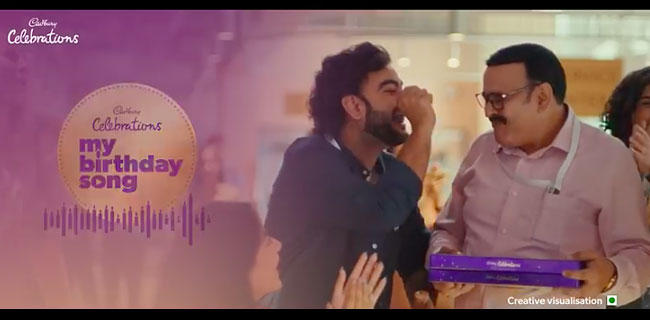
 I finished playing around with the lyrics and genre of the birthday song for a friend at https://cadburymybirthdaysong.com and am more than happy with the result. I am not surprised at this new initiative by Cadbury Celebrations with its partners Ogilvy and Wavemaker to get Artificial Intelligence (AI) to work for the masses and create a personalised ‘Happy Birthday’ song. They have done this in the past. The personalised greeting, the Diwali selling and more.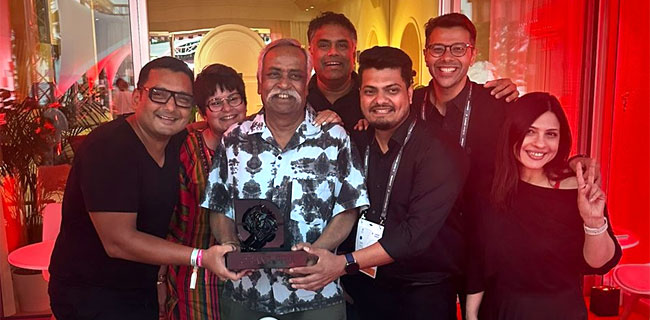



 Diwali, IPL and World Cup cricket are the times when Indian marketers unveil new campaigns and this year the T20 World Cup coinciding with the Diwali season meant that a deluge of new campaigns could be expected. But now there is also technology into play and this means that the communication is well targeted and not necessarily mass. To this mix, throw in the long videos which advertisers hope will go viral through social media and it becomes more difficult to keep track of such new campaigns.