Tag: Broadcast Audience Research Council

  • Sumit Chowdhury appointed Technical Advisor at BARC

    By A Correspondent


    Broadcast Audience Research Council (BARC) India has appointed Dr. Sumit Chowdhury as Technical Advisor to the organisation. This is a move to align and streamline technology processes since almost 76 per cent of BARC India spends are on technology. As BARC India moves closer to launch,Dr. Sumit Chowdhury’smandate is to measure and automate all critical processes and to create a mission-critical infrastructure that scales to the requirements of the industry. Sumit will also contribute to the creation of other information products from the vast amount of data collected by BARC India.


    DrSumit D Chowdhury is the Founder of Gaia Smart Cities, an M2M/IOT company focused on telecom and ICT solutions for smart cities. Until recently, he was a President of Reliance Jio where he was initially the CIO and then establishing their Enterprise business. Prior to Jio, he was a Vice President of IBM, CIO of Reliance Communications and Partner with KPMG. He is an authority on Telecom, Media, Entertainment and Information Technology. He is an undergraduate from IIT Kanpur and MS and Ph.D. from Carnegie Mellon University, where he is an adjunct faculty teaching various aspects of industrial automation, telecom and Smart Cities.


    Partho Dasgupta

    Partho Dasgupta, BARC India CEO, said, “As we are gearing up for launch, Sumit’sexcellent background and experience in telecom, media entertainment and other industrieswill ensure all systems scale and are in sync and automated for the big data factory that we would be running.”


  • Exclusive! BARC in talks to buy TAM?


    By A Correspondent


    Entertainment television is all about twists and turn in the fictional serials. Cricket, as you would’ve heard several times over, is a game of glorious uncertainties. So why then should there be surprise over the possibility of BARC buying up TAM.

    Okay, let’s cut the tease. Broadcast Audience Research Council (BARC) has indeed been in discussions to buy the television audience measurement business of TAM, the firm jointly owned by WPP’s Kantar Media Research and Nielsen. And, yes, it’s March 12 today, not April 1.

    According to reasonably reliable sources, there have been a detailed dialogue between the joint industry body-managed BARC and TAM owners Kantar and Nielsen. The talks haven’t concluded yet and the mid-point formula that was suggested by a WPP representative has been reportedly rejected by BARC bosses.

    Both BARC and TAM were unavailable for comment, but from what one learns, BARC was seriously considering the buy.

    So why gobble up TAM when the audience research measurement activity of the measurement body was under question? Well, even as doubts were being raised, there is no denying that broadcasters, advertisers and media agency use TAM as the currency for their buying decisions. Also, as industry analyst told us, TAM comes with a ready 12,000-odd panel, established processes and teams and archival data.

    And from TAM’s point of view, why sell out to BARC? Given that all stakeholders have contributed to the BARC kitty, it’s evident that sooner or later all TAM subscribers will exit the system or want to renegotiate. Given this, it’s best to sell the existing well-oiled measurement machinery to BARC which would find it of use, said the analyst we spoke to earlier.

    TAM has already made it known to subscribers (and the media) that it will continue operations even as there is a significant number (in billings at least) of subscribers who have said they would like to unsubscribe. If TAM continues to exist, there will be several comparisons made with the new measurement system, and those subscribers who may be rated poorly by the BARC system vis-a-vis TAM may quote the latter. This could even lead to advertisers questioning the BARC data and hence cause a confusion in the marketplace.

    As reported on MxMIndia earlier, the ghost of the Indian Readership Survey has raised anxiety levels in the industry. For, MRUC and RSCI, the bodies running IRS are jointly run and owned by various stakeholders in the industry. And despite it being an industry association, print players are up in arms against the new IRS.

    BARC, meanwhile, is said to be only in the discussion with the television audience measurement business of TAM. Other divisions such as the Strategy or S Group which offers advisory service on measurement, AdEx India, RAM for radio audience measurement, Eikona for measurement of earned media and PR activity and TAM Sports, which offers special analysis of sports ROI will not be part of the deal if it goes through.

    So where do things stand now? At the time of writing, the talks have been suspended. But as the date approaches for the launch of the system, and the stakes for both BARC and TAM grow higher, the deal could well be inked. Like on television, be ready for the climax.


  • Ghost of IRS mess may force BARC & TAM to co-exist


    By A Correspondent


    The ghost of the Indian Readership Survey released last year is seeing its impact on the new television audience measurement regime of the Broadcast Audience Research Council. IRS is still in a state of disarray even though stakeholder associations have okayed it.


    Although we are told that the next round of numbers is to be out soon, the industry is still waiting.


    MxMIndia spoke to a variety of folks in broadcast and in media agencies.  While none of them were ready to go on record on the sensitive issue, they are worried about the outcome of the BARC study. And the reason:  the proposed BARC study is dramatically different from what TAM does. So it’s not that the same sample is being studied, also the BARC’s panel is twice that of TAM. “The goalpost has moved. It’s as if the game was being played on clay and now on astro-turf.”


    A senior media planner told MxM that one must remember it’s a statistical exercise and not a census. When asked as to how does one explain the shockingly low readership figures for some publications like BusinessLine or Hitavada in IRS 2013, the planner told us: “It’s a sample survey. The sample was selected scientifically. It’s a matter of chance that those selected didn’t read these two publications. So you can’t fault IRS for this.”


    Hmmm. The third-party revalidation process conducted by veteran researcher Praveen Tripathi and adopted by the IRS determined that the process followed by IRS was okay.  “The problem with audience research is never the process. It’s the fieldwork,” said a senior executive of a research firm which has had some experience in audience measurement.  “Media companies are known to influence these in order to get favourable numbers. This is more easily done with print readership and tougher with television. When you are dealing with human beings and human intervention, you can never say. The problem is compounded because the trade associations refuse to act against erring media entities.”


    So where is the anxiety on BARC?


    The big channels needn’t worry. One hears that the BARC validation process will ensure that if there’s anything astray from the existing, it will be looked into. However, with the number of people sampled having leapfrogged, there is bound to be some change from what TAM dishes out every week presently. The unease amongst broadcasters is whether the change will be as significant as it was in the IRS results? “Yes, be ready for a few surprises. Logically, there should be no validation, because if the process is right and the industry is mature, there is no need for being alarmed. “


    So are we saying that the media industry isn’t mature? “Perhaps,” said the senior planner we spoke to earlier. “The stakes are too high, and in the case of the IRS there was an unfortunate charge that one newspaper group had influenced the field work.” But there is also a view that the MRUC and RSCI, the people associated with the IRS, did not handle the IRS mess-up too well. “You can’t be behaving like cowboys when you are dealing with sensitive stuff like audience measurement. The existence of a media brand is in question with an incorrect survey,” a media-owner had told this writer a few months back. “ MxMIndia is awaiting  a response from the MRUC chairman to a few questions.


    After this report was filed, our attention was drawn to a report in The Economic Times as well as on IndianTelevision.com on the same issue. The ET story indicated that there could be a blackout period post February until BARC ratings start since subscribers may pull the plug on TAM. The IndianTelevision report quotes Zee MD and CEO Punit Goenka saying that IBF has taken no decision to pull out of TAM. The statement assumes significance as Mr Goenka is also BARC chairman and one of the most powerful members of the IBF.


    But what puts the lid on the discussion is an emphatic assertion from TAM (to MxM) that it will not discontinue ratings even after BARC starts transmitting its data.


    “Will you’ll stop when BARC starts,” we asked. “No, we won’t,” the TAM spokesperson told us. The question of course is not of TAM continuing to publish its data, but how many agencies and broadcasters will subscribe to it.


    There have been industry rumours that GroupM, the largest media agency conglomerate in the country, which is owned by WPP which in turn is 50 percent owner of TAM via Kantar Media may still be in favour of TAM’s continuance. Although the FAQs released by BARC have clearly stated that GroupM has committed itself to BARC by investing in monies, there is a belief that the media services conglomerate will maintain a hawk’s eye on BARC.


    The good thing for BARC is that all those leading it are doing it with pragmatism and are wise enough to know where they need to exercise more caution. Also, data has already started flowing in and being assessed by BARC bosses.


    Watch this space for more.


  • Romil Ramgarhia joins BARC as Chief Business Officer

    By A Correspondent


    Broadcast Audience Research Council (BARC) India has appointed Romil Ramgarhia as Chief Business Officer of the organisation. This is a move to strengthen its core management team as BARC moves closer to the launch of its services. In his new role, Mr Ramgarhia will report into BARC CEO Partho Dasgupta.


    In his last role, Mr Ramgarhia was Chief Commercial Officer at ZEEL. Before joining ZEEL, he was also associated with Viacom18, Bharti Airtel, Asian Paints and ACC, in different capacities. However, he has been associated with BARC for a while and was spotted at the announcement of Mediametrie as the technology partner.


    Said Punit Goenka, MD and CEO, ZEEL and chairman, BARC: “Romil has played a key role during his limited assignment at ZEEL. It is unfortunate that he has quit ZEEL however I am confident that his rich experience will bring greater value to BARC India. As he now moves on to a new challenge in a new role and domain, I wish him luck for his continued success.”


    Added Mr Dasgupta: “BARC India is moving closer to launch. Romil has an excellent background in broadcast, in telecom and in other industries. He was already associated with BARC India as part of its Commercial Committee and hence is well initiated in the processes. With his great business acumen, he will further strengthen the organization.”


    Talking about his appointment, Mr Ramgarhia said, “My assignment with ZEEL and Viacom18 has been one of my most challenging as well as gratifying periods of my professional career. It is great to be a part of a start-up which is  slated to be the biggest audience measurement system across the world.”


  • BARC appoints Dutch firm Civolution for watermarking tech

    By A Correspondent


    Amidst issuing requests for proposals and advanced-level testing, the joint industry body of broadcast stakeholders BARC (short for Broadcast Audience Research Council) has contracted Dutch tech firm Civolution to provide the watermarking technology for its proposed measurement platform. The decision comes weeks after the announcement of Médiamétrie as its key technology vendor.


    Partho Dasgupta

    “India has one of the largest TV audiences in the world so it was critical for us to create an audience measurement system that is gold standard,” said Partho Dasgupta, CEO, BARC. “By leveraging Civolution and Médiamétrie’s expertise in audience tracking, technology and analytics we can now study viewers’ TV habits in precise detail, enabling broadcasters and advertisers to implement efficient strategies to reach their target audience.”


    According to a communiqué, the audience measurement system – which has already successfully been deployed by Médiamétrie in a few TV markets – relies on Civolution’s audio watermarking coding technology for automated content identification and integrates seamlessly into Médiamétrie’s TV meter system for panellists’ equipment and data processing.  It provides broadcasters with a detailed analysis of their exposure to the public, whether by the number of households tuning in to the programme or the amount of time spent watching each piece of content.


    Gwilherm Nicolas, Head of International Business Development at Médiamétrie added: ”We are very enthusiastic to embark on this project with Civolution and its watermarking technology, which is definitely the most powerful and error-free content detection technique available for TV audience measurement.  This means we are future-proofed in the fast-changing world of TV.  Médiamétrie has relied on Civolution’s technology for many years”.


    ”With so many new ways of watching TV content in this multi-screen universe, precise audience measurement has become increasingly complex. Audience measurement services must now report more accurately and reliably, from a larger number of channels, delivered through a fast-changing and diverse mix of broadcast platforms, and consumed either in real time or time-shifted” said Alex Terpstra, CEO, Civolution.


    Civolution’s audio watermark is embedded in the TV’s sound track prior to broadcast. Upon airing, the content is then identified by Médiamétrie’s TV meter, in real-time. In addition to granular measurement of the content being watched, the solution features support for catch-up TV. The technology provides cross-platform audience measurement and will enable mobile device measurement, triggering the creation of new services  and the reduction of operating costs. In parallel, the same watermark infrastructure deployed by Indian broadcasters could be used to synchronize with great accuracy their own interactive second screen applications.


    ”Through our close collaboration with Médiamétrie, we have devised a powerful solution that provides accurate and reliable audience data that will allow BARC to help broadcasters plan, entertain and monetize their TV audiences,” added Jean Michel Masson, SVP Watermarking Solutions, Civolution.


  • BARC close to final decision on measurement vendor

    By A Correspondent


    The Indian media industry’s Broadcast Audience Research Council (BARC) is now close to the award of the contract of television viewership measurement in the country.


    The BARC board met on Friday and a spokesperson issued a press release saying it was recognized that “BARC has the opportunity to change the paradigm and the solution should last for the next 15 to 20 years.”


    Added the communiqué: “The Board agrees that there is a quantum jump in technology that is being envisaged. Considerable progress has been made in identifying suitable cutting edge technologies available for measurement of present and future Broadcast distribution platforms. The Board decided to authorize the BARC Technical Committee and the Management to initiate pilots with these solutions to assess the suitability in Indian conditions.”


    It is learnt that BARC has asked three vendors to initiate these technology feasibility pilots, and one among these three will finally be awarded the contract.


  • Government concerned about TAM data: Ambika Soni

    By Vijaya Rathore


    The government has been concerned about the discrepancies in TAM Media Research’s TV viewership data for a while now, and has even questioned their methodology and transparency, Union information & broadcasting minister Ambika Soni said on Wednesday.


    In an exclusive interview to ET, Ms Soni said that she always had issues with the number of boxes put up by TAM, as it (such a small number) was not enough to gauge the mood of a diverse nation like India.  “I have asked questions about the methodology of TAM. I knew that they were not being transparent. When it came to the number of boxes, rural areas were not covered. Very populated states such as UP and Bihar were not covered.


    So, I felt that 7,000 boxes could hardly be indicative. How can you put boxes as conveniently as you want to and not cover more than half of the country?” the minister asked.


    Following NDTV’s lawsuit against Nielsen and Kantar Media – the co-owners of TAM Media Research – the I&B ministry has decided to support Prasar Bharati, the state broadcaster and the Directorate of Advertising and Visual Publicity (DAVP), the government’s media buying arm, to take legal action against TAM. Ms Soni said that the ministry is also open to support the broadcasters “provided they lodge a formal complaint with the government against TAM.”


    NDTV has filed a lawsuit against the companies in a New York court alleging TAM fudged TV viewership data to favour a few broadcasters for a bribe. Both NDTV and TAM have refused to comment on the issue.


    Concerned by the developments, broadcasters and advertisers are now asking TAM to stop publishing its data, and have been meeting the government on the issue.


    “Today everybody is talking about TAM… why didn’t we talk about it all this while? The issue was raised by the ministry and me several times in the past. I am glad that this issue is now coming out in the open, as this clearly shows that there is need for competition,” Ms Soni said.


    According to the minister, lack of transparency in TAM’s system does not only concern broadcasters, advertisers and media agencies, but also Prasar Bharati that operates Doordarshan and All India Radio.


    “Prasar Bharati is collecting facts and the figures and finally even they decide to put up a lawyer. We will have to allocate resources for which permissions have to be taken. If Prasar Bharati and DAVP feel that they have to take a legal action (against TAM), they will do so in consultation with the I&B ministry and the law ministry,” she said. In 2011-12, DAVP’s advertising spend was Rs 618 crore.


    Ms Soni said that there is a need to have an alternative to TAM, which is why Broadcast Audience Research Council (BARC) is underway: “We have had several meetings with the Indian Broadcasting Federation on BARC. I have had four meetings (from 2010-12).”


    Asked if she thought a tighter regulatory mechanism needs to be evolved to check such discrepancies in future, the minister said, “There have been  suggestions for setting up regulatory bodies for content, and to censor realty shows, but the government is against any strong regulatory mechanism and we are for self-regulation.”


    Source: The Economic Times

    Copyright © 2012, Bennett, Coleman & Co. Ltd. All Rights Reserved


  • Anil Thakraney: TV research needs BARC. And bite

    By Anil Thakraney


    I am aware the debate on television ratings studies must be pouring through your eyes and ears. More thoughts have been expressed on this issue than there are metered households in India, hehe. Anyway, I just want to make a couple of quick points. So bear with me.


    There are two things that need to happen, now that most constituents accept that the current measurement system has failed. (And not just failed, the process is ridden with ugly controversies.) What the industry needs to do is to go back to square one and start the process all over again. If BARC (Broadcast Audience Research Council) is going to be looking into this, so be it. But they need to hire personnel who are respected for their integrity and intellect, and they need to make the process totally transparent. The NDTV court case should be used as an opportunity to show the whole world how TV viewing data can be collected honestly and effectively. There are enough brains in the Indian media to make this possible.


    The other issue concerns funding. When I met Lodestar’s Shashi Sinha earlier this year, we discussed the problems associated with TV research. This is what he said, and I quote: “Someone has to put money on the table, it’s as simple as that. The solutions are all known, I know very bright and talented people in research, what needs to be fixed is known. The problem is: No one is wiling to invest. Today, if television measurement costs Rs20 crores, what if Rs100 crores was spent on it? So it’s nothing but lack of funds.”


    Sinha is a veteran in the world of media buying, so we have to listen to him. And he makes sense. If the industry wants lakhs of households to be metered (as against the current figure of a few laughable thousands) so that the viewing pattern of a nation of billion plus is adequately recorded, the industry needs to get ready to loosen its purse strings. Clients, agencies, media houses… everyone needs to contribute generously. Carping from the sidelines is going to be of no use.


    Because without adequate funding, there will be BARC but no bite.


    * * *


    PS: A compelling ad by PETA. If this doesn’t motivate you to switch to a veggie diet, nothing will. Bring out the mooli, the lauki, the baingan and the sprouts, I say!


  • Government mulls probe against TAM after complaints

    By A Correspondent


    The government is planning to launch a probe into the alleged fudging of television viewership data by TAM Media Research after several complaints from broadcasters.


    A top official in the Union information and broadcasting ministry, who did not want to be identified, said the government has received a lot of complaints about TAM in the past. “A lot of people have been raising concerns because of which we are looking at TAM very carefully. We will soon take some action,” he added.


    Broadcaster New Delhi Television Ltd (NDTV) sued The Nielsen Co, a global research and information firm, and Kantar Media Research, equal partners in

    TAM Media, for tampering with TV viewership data to favour broadcasters who allegedly bribed executives in their Indian JV.


    NDTV, which owns the news channels NDTV 24X7 and NDTV India, filed the suit in the New York State Supreme Court seeking damages of around $1.4 billion for negligence and fraud, and hundreds of millions more for interference and breach of fiduciary duty.


    Advertisers and media agencies in India depend on TAM data – the only available measurement for TV viewership – to negotiate ad rates. Any discrepancy in the data would have resulted in losses for several broadcasters, advertisers and ad agencies.


    News of NDTV’s lawsuit has created ripples in the media industry, with several broadcasting firms and advertising agencies saying this has only established what has been an “open secret” in the industry for a while, but this could be an opportunity to set things right.


    “I have always been saying that the TAM data is all wrong, fudged. And I have not changed my views on this,” said Subhash Chandra, chairman of Essel Group, which runs several TV channels under the Zee banner.


    “The allegations, which NDTV has made against TAM, are very serious in nature. It is a matter of concern for the broadcast industry. The industry in the past has raised issues like small sample size used by TAM. Even as a company, we have several times taken up issues with them.


    For example, we questioned them on this year’s IPL ratings. Given the large crowd in the stadiums we had imagined the ratings to be much more than what were released by TAM,” said Manjit Singh, CEO of MSM India, which runs the Sony and Max channels.


    Mr Singh added that MSM has taken up the issue with TAM. “They do come back with explanations but they may not always be satisfactory,” he said.


    In its 194-page lawsuit, NDTV claims that it had confronted Nielsen with evidence of data manipulation, including taped meetings with TAM India employees, which showed that they were willing to tamper data for bribes. Nielsen, according to NDTV, admitted in meetings and through emails that its data was being manipulated and that it was willing to address the issue by July 1, 2012.


    NDTV says that Nielsen continued to publish these ratings despite repeated demands to stop distribution of TAM TV ratings until the sample size was increased and a proper security mechanism was put in place.


    Another broadcaster told ET that it has taken up with TAM the issue of aberrations appearing in the time spent per viewer (TSV) numbers derived from TAM data several times.


    “We have raised concerns about skewed TSV patterns in select markets. It could be because of discrepancy at the ground level. But there has been no action from TAM,” a top executive at the broadcaster said.


    “We are totally disappointed at the lack of responsibility shown by TAM in dealing with this issue,” another broadcaster said, adding he has lodged a complaint with the I&B ministry about the fudged data.


    Most of the discrepancy is due to the small sample size, say experts and industry insiders. The current system is highly susceptible to manipulation. It is easy to manipulate the findings to distort the eventual numbers published by TAM, said one person.


    “I cannot say for sure if bribes are involved. But numbers are distorted without any logic and go unexplained. And it is easy to distort the numbers to favour someone,” he added.


    A media planner who did not wish to be identified said this is a chance to revive the Broadcast Audience Research Council (BARC) that was proposed by the Indian Broadcasting Foundation a few years ago. The government should also implement the Amit Mitra committee recommendations that talked about irregularities in the current measurement system.


    Source: The Economic Times

    Copyright © 2012, Bennett, Coleman & Co. Ltd. All Rights Reserved


  • Paritosh Joshi: How to make a really spectacular mistake

    By Paritosh Joshi


    In all our lives, there are tales of misadventure that we bury away deep and try our darndest to forget all about. Today it’s time to ferret out just such a story from the not so distant past and see if there’s something, anything, we might learn from it.


    The year was 2007. Private Television broadcasters were trapped in a financial vice. Costs were on a tear as good content: entertainment, sports or news, commanded big premia. Revenues crawled as new entrants into every genre constantly expanded advertising inventory and made price increases difficult. While advertising revenues were still growing, a lot of the increase was attributable to ever-laxer controls by broadcasters on advertising duration leading to flat, or even declining, yields. As an advertising sales person myself, back then, I asked for an analysis of Average Spot Rates (ASR), a very commonly used and easy to compute yield metric, across key genres and channels for the previous three years. My hypothesis, which proved agonizingly right, was that the bulk of revenue growth for channels was coming from selling more inventory and little or none from better ASR. Obviously, I wasn’t the only one seeking such analyses and soon the issue began to dominate all conversations between broadcasters.


    Here was what the broadcasters were seeing:

    • Television penetration was galloping along, adding up to 10 million new homes, up to 45 million viewers of age 4 and above, every year.
    • Cable penetration was growing by almost an identical figure, having moved up from under 30 million homes in 2005 to over 47 million in 2007.
    • GDP was up 9 per cent for 2007 over 2006 and maintaining healthy buoyancy.
    • Distribution revenues were not a source of any joy as platforms had begun to seek carriage fees to monetize the chronic scarcity of capacity on a decrepit analog network. In the meanwhile, TRAI was binding broadcasters hand and foot where it came to wholesale pricing of their content to platform operators.
    • Media agencies were relentlessly using the dreaded CPRP (Cost Per Rating Point) to pummel advertising prices down. Even category leading broadcasters were unable to exercise pricing power in the face of CPRP maths.
    • While more broadcasters constantly entered the market, the demand side represented by the media buying agencies was getting ever more consolidated. Already, the top two agencies controlled very nearly two-thirds of the advertising spend on TV between them. They had achieved this, primarily, on the back of their ability to extort low prices using their virtual oligopoly combined with the willingness to drop commission rates to low single digit percentages. While the standard terms of trade indicated a 15 per cent agency commission on TV advertising, the media majors were actually working on less than 5 per cent, passing on the spread as additional discount to the advertisers.


    It was clear to broadcasters that the situation could no longer be permitted to drift but what were they to do and how? A team of planners from across broadcasting organisations was asked to develop a recommendation. Everything had to be done with considerable secrecy, lest word get out and the project be stillborn. The plan was in. Voila! We would all, every last one of us, collectively impose a 25 per cent surcharge.


    Needless to add, the plan asked for way more resilience from broadcasters, particularly the small and vulnerable ones, than they could muster and in a classic predator-prey drama, they were arm-twisted on the pain of the death-of-a-thousand-cuts by M-this and M-that into abject capitulation. The plan unwound within 72 hours leaving a lot of us with unpleasantly puce visages. An awful mistake had been made. I could tell you the whole ugly story of who shafted whom, when and where but sadly, in a reversal of the trope, if I told you, someone would have to kill me.


    Now here is the really terrible story. Most everything that made the revenue story look grim in 2007 for broadcasters still looks exactly the same in 2012. Indeed worse in many cases, like for the anæmically bloated Hindi News genre for instance.


    What is the broadcast industry doing about it? Can something be done about it at all?


    First, until TV advertising is valued based on a relative, rather than absolute currency, pricing power will remain solidly with the buyers. Until we shift from the iniquitous CPRP to the universally accepted and economically fair CPT (Cost per Thousand contacts), this will not happen.


    Second, all stakeholders in the BARC (Broadcast Audience Research Council) process would be well advised to apply their might to moving it from idea to execution.


    Hmm. Someone will have to kill me after all.


  • By Invitation | Atul Phadnis: Will TV measurement in India finally get its logical direction?

    By Atul Phadnis


    In March this year, three industry associations that have a significant say in television broadcast and TV advertising jointly announced a new chapter in the TV Ratings Measurement initiative. Broadcast audience Research Council (BARC) is the joint venture that has been in discussion, for the longest time, between the three stakeholder associations – Indian Broadcasting Foundation (IBF), Indian Society of advertisers (ISA) and the advertising agencies association of India (AAAI) to measure nationwide TV audience viewership. BARC has taken birth where a lot of earlier industry initiatives have failed to take off – hence, a lot of folks (including me) are watching these events very closely and curiously.


    Yes. There are cynics who doubt whether the BARC initiative will be able to streamline the industry ambitions for a wider and robust TV audience measurement thereby recasting/enhancing the offerings of the current ratings provider – TAM Media Research (a joint venture between Nielsen and Kantar-WPP).


    The genuine fear is that the industry initiative will again slow down or worse – get delayed due to lack of clarity or infighting amongst the associations/players. It’s a legitimate concern based on what we have seen in the past. In fact, the recent announcement has been possible only when a formula for compromise was reached after months of stalemate on the BARC shareholding and composition of its board.


    The genesis of the industry initiative that has now taken birth as BARC has in its vision the Rs329 billion TV industry that to a large extent depends on ratings and viewership information for key decisions, growth and business. So what are the key expectations of the industry that should get addressed if BARC is the answer to the TV industry’s call on TV Ratings?


    1. The Burden of Transparency

    For years now, TAM has been criticized, publicly and privately, for alleged opaque policies relating to aspects such as third-party audits, pricing, technology R&D results and panel performance KPIs. as is the case with any competitive industry bustling with cut-throat competition, rumor mills and conflicting agendas of different players, the transparency burden had been conveniently dumped on TAM. after all, we do see from time-to-time the so-called ‘open letters’ that certain channels would send out to TAM asking for explanations on why their blockbuster programs did not do well in terms of TRPs. Irrespective of where the answers for failure lie, these occasions, nonetheless, cast all sorts of aspersions on the trading currency and are hardly constructive. I haven’t seen a single such instance over the last decade produce any positive reaction – either in providing more answers on causality nor a bettering of the ratings system. and these instances surely can’t be healthy for the industry that has dependencies on advertising that in turn needs TV measurement.


    It’s high time the industry associations, perhaps via BARC, put their necks on the block and take frontal onus and responsibilities on transparency elements that will boost confidence on TV Ratings. Not only will this sharing of burden save the industry the blushes in front of the advertisers, it will also have a correctional effect with the routine debates being laid to rest. Hopefully, BARC is able to bring in transparency by defining deliverables and quality parameters clearly to the Ratings vendor(s) in the new scheme of things.


    2. Evolving data reporting policies

    Transparency in KPIs will also have an effect on how TV ratings data should be reported in our industry. There are a host of mature markets, in particular theUK, that have a threshold viewership criteria for TV program ratings to meet; if those numbers have to be reported in the weekly data. This ensures that viewership estimates for very small channels and very niche programs inside very small market groups are not reported. However, in our market, if the 700th channel gets launched tomorrow, TV ratings for that channel for very small markets and microscopic audience definitions will be available. Lack of industry understanding and consensus has stopped from any policy to take shape and solidify in this specific issue. This, in turn, has led to a sad saga of inexplicable rating fluctuations for specialist channel genres in small markets/ audiences. With the BARC coming in, certain wise old men (and women) can roll out this policy of releasing viewership numbers of only those channels and programs that are in the permissible and acceptable error level range.


    3. Structural changes in panel construction

    The methodology for TV Ratings in India- especially the way panel homes are selected from a neighborhood has remained largely the same. The criteria is defined through Primary Control Variables, a system to carve out quotas of what sort of homes should be selected to enter the panel. However, the dramatic changes that have occurred in the last 5 years – that of DTH now forming a large part of the TV universe – requires the Primary Control Variables to reflect an acceptance of that new reality. Earlier, say 8-10 years ago, cable monopolies in a neighborhood within an area, city or town ensured homogeneity of received signals in spite of the heterogeneity of viewing. That signal homogeneity within the neighborhoods would ensure that thousands of homes within that area would receive the same input from their cablewallah into their TV sets. Today that cable structure lies shattered wherein one single neighborhood would have the cablewallah’s analogue signal in certain homes, his digital (CAS) box in certain households as well as scores of homes with DTH connections from 7 DTH providers.


    Now layer this information on the specific channels or channel packs subscribed by DTH or Digital Cable viewers – and you have a distribution complexity that snarls into existence, dramatically affecting TV viewership. This distribution factor needs to be well modeled inside the Primary Control Variables to construct the panel. It is not there at the moment and neither has there been an active industry debate on how to bring newer factors such as these into the panel construction/ panel design exercise.


    4. Critical Measurement/ Panel Decisions (including R&D, Technology)

    Consumer patterns of TV consumption are dramatically changing with the advent of set-top-boxes, recorders, mobile TV, and so on. Viewing is also happening when people are on the move rather than only in-home TV viewing. In India, ratings are reported only for in-home TV viewing. TV consumption on mobiles, tablets, IPTV, computers or outside-of-home is unmeasured. If these new patterns need to be measured, a significant emphasis would be needed on R&D. This R&D and Trial Panels have to be budgeted by a vibrant industry determined to capture every viewing instance so as to analyse and eventually monetize those audiences. It would be a disappointment and a terrible waste if BARC did not have this early in its agenda.


    5. TV Measurement Vision

    It might seem unbelievable but it is true – the largest customers and users of TV ratings info today do not have a common goal or vision for the future of TV measurement in our market. Issues such as Rural versus Urban, increase coverage vis-a-vis better representation, upscale versus mass-market – would find distinctly different views within the industry. In the absence of a common vision, the strategy to expand, enhance, improve the measurement system is clearly not going to be very effective. With a forum like BARC, the attempt should be to collectively define the vision as well as the timelines and path to attaining that goal by mobilizing opinion and the industry war-chest. This is, perhaps, the most crucial aspect of the success or failure of BARC, the failure of which would risk reducing this initiative into a rudderless and spineless wonder.


    6. CPM versus CPRP

    In the last few years, broadcasters have tried, albeit unsuccessfully, to correct a long standing trading currency aberration in our industry. While the world uses CPMs (Cost per thousand ad impressions) to price benchmark TV ad inventory, our market has erroneously got locked into CPRPs (Cost Per Rating Points) – thanks to the myopic vision of media agency AORs of the 90s. While the entire industry (including media agency heads who publicly oppose change but privately admit its fairness) wants transition to the correct trading currency, the longstanding question has been who will do it first on both ends – advertisers and channels. Perhaps with BARC, the opportunity is in planning that roll-out as a coordinated industry action.


    7. Redressal Forum

    One of the biggest opportunities for BARC is to streamline the custom arguments, debates and requirements that individual players have on TV ratings into an ever evolving bucket of policies. In the current scheme of things, individual players have their differences with the TV ratings company, but not really have an escalation route to get their views heard. These issues range from pricing (dis)parity to use of raw data to choice of ratings software to conflicting TAM’s policy of not selling their data to certain client categories. Perhaps the most common arguments relate to unexplained fluctuations and peaks-troughs in the ratings data.


    BARC would be better served to pursue an approach built on open, transparent debates and a clever commercial policy in such instances that might see lesser open issues but greater revenues into the industry kitty.


    Summing up…

    The above piece is my attempt to get a constructive dialogue out in the open on a matter that deeply concerns TV Media professionals cutting across organizational lines. I personally have tremendous respect for professionals in this stream including those within the TAM Executive team as well as the industry folks driving the BARC initiative. It is my sincere hope that a constructive dialogue followed by clear and rapid forward actions by stakeholders leads to the World’s finest and biggest TV measurement initiative! amen…


    Atul Phadnis is Chief Executive, WHAT’S-ON-INDIA


  • Counting on digital to be M&E’s trailblazer


    @FF12: Day 1: Digital attracts ‘desirable’ status
    on Day1
    @FF12: Day 2: Seamless blending with traditional mediums – a big want!
    @FF12: Day 3: Industry expects thoughts to lead to pertinent actions
    @FF12: Takeaways: Digitization rules the roost @FICCI Frames 2012

    By A Correspondent


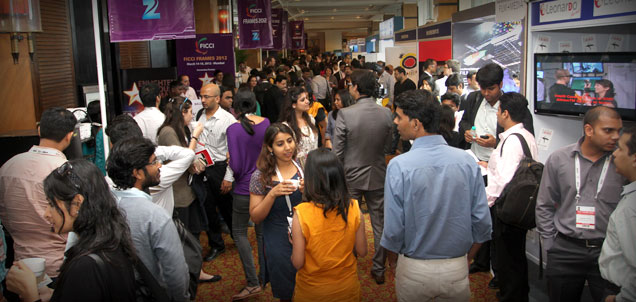
    Those familiar with the going-ons at FICCI Frames would testify how an infatuation gets displayed by delegates at the event each year so as to summarise the mood of the convention even before it broadly takes off across the three days that it is entitled to. But probably, the setting was a bit different this time around when the delegates – joined in unison by the media – were running ballroom to ballroom trying to ingest giveaways that were being thrown up abundantly across several sessions. May be, it was a year where each day had something new to offer to the delegates that kept them at tenterhooks throughout the 3-day event. And going by the loud decibels that were being emanated across every nook and corner of the venue, it was evidently clear that there was some motivating factor that was driving the gathering to go on an overdrive spree.


    The organisers of FICCI Frames 2012 have every right to take credit for coming up with a theme around a medium that attracted the attention of one and all. Having kept it on the sidelines till last year, digital was finally given its due at the convention as experts, authorities and enthusiastic youngsters came face to face to deliberate and come up with outcomes that would redefine the way the consumers consume the medium. From television to print to films and even radio, digitisation and the benefits and effects it would cast on these sectors were discussed in length at the venue. In fact Star India CEO Uday Shankar in his keynote address didn’t hesitate in thanking the FICCI committee for putting across a theme that would go on to redefine the way the industry functions in the future.


    What was apparently clear through the various sessions at the convention is that with the nearing of date for total digitisation across key metros by June 30 2012, and then across the country by 2014, broadcasters had to relook their distribution and content provision models so as to keep the consumer at the heart of every shift that will transpire in the future. Emphasising on the current digitisation scenario in the country, Mr Shankar said, “Most of the discussions that I have participated in are still around whether digitization will happen and if it indeed were to go through, how chaotic it would be. But all these are meaningless discussions triggered by a bunch of retrograde interests who are living in denial.” According to Mr Shankar, digitisation of distribution is a big reality and the 40-45 million homes that have bought DTH boxes at some point or the other are a conclusive evidence of that.


    Shooting back at critics who had doubted whether the makeover to digital would ever be a reality, Mr Shankar said, “To the critics and the cynics who are still wondering whether digitization would happen, my answer is: Look around, it is already happening and the rest of it is bound to happen because even in this country it would be difficult to undo such a momentous shift. To those who wonder how chaotic it would be, my response is that there would be some chaos, but chaos is not necessarily bad if the alternative is status quo or regression. When a transition at such a scale is happening that affects the illegitimate but strong vested interest in certain pockets, then there is an incentive to put up with chaos in the interest of the larger social objectives.”


    A broader outlook was provided by a few panellists who said that digitization will come in as a relief for broadcasters who will be benefitted from additional subscription revenue, relaxation on paying heavy carriage fees, and of course providing viewers with a superior content experience – MSOs and cable operators have to quickly respond to the digitization mandate by investing in set-top boxes – the cost that is only possible to recover after four years.


    Sounding off the challenges that digitisation would present for the broadcast sector, Tarun Katial, CEO of Reliance Broadcast Network Ltd said that, “For television, it will be a combination of content as well as marketing. The old model which was a combination of carriage and product, as it stands today, won’t work. The business plan which currently has a very high rate of carriage will obviously see the content taking precedence.” And as for content, it will be niche content that will call the shots for broadcasters as according to experts at the convention, niche isn’t niche any more as all niche channels put together command a share that is equivalent to the share of Hindi GECs and the mass channels, so to say.


    Perhaps the many advantages that digitisation will have on several mediums was rounded off by Vikram Sakhuja, CEO, South Asia, Group M who said, “The inherent power that digital brings along with it is interactivity and its ability to link multiple devices. Also the ability to enhance real-time consumption of content; linked to that is the entire thing about going mobile.” On the roadmap for the industry, Mr Sakhuja said, “I think integrated media is the best way forward. Today when people think of multimedia planning, they do a separate TV plan, print plan, radio plan, internet plan and so on. I believe that if you actually look at media agnostically and at common metrics of each cost per thousand impressions, these are the ways in which you can construct a media agnostic plan. What it does is, it suddenly gets more money into digital, and when more money can come into digital, that’s when focus is going to come in.”


    While digitisation was the mainstay of every discussion, the all-important issue of regulation too was taken up by panellists who chose to have the government respond to the many queries surrounding the topic. Uday K Varma, I&B Secretary, said that “if people at large seem to be happy with self regulation, I think the government would have no problem in legitimizing them. But I think the self regulation mechanism which has been set up by both the news broadcasters and the entertainment broadcasters, they’ll have to really prove it, not to the government but to the people at large.” He was joined in his cause by Prithviraj Chavan, Chief Minister ofMaharashtrawho said that the challenge would be to adopt the regulatory framework to new technology and ensure that over regulation doesn’t kill a good thing. The Chief Minister emphasised on the need for regulation and suggested that instead of the state regulating the media, the medium should look at regulating itself.


    The other important announcements that came up at the venue included the soon-to-be-passed Copyright Amendment Bill, the roll-out of the imminent phase 3 radio policy that would steer the growth of the medium and increased government aid for the film & entertainment sector.


    New ventures @ FICCI


    BARC takes wings

    In between the many promises and hopes that were being doled out at the sessions came the news of the Indian Broadcasting Foundation (IBF), the Indian Society of Advertisers (ISA) and Advertising Agencies Association of India (AAAI) announcing the official formation of a nationwide audience research joint body — Broadcast Audience Research Council (BARC).

    While IBF will have 60 per cent stake in BARC, ISA and AAAI will each hold 20 per cent stake. The Board of the council will have 10 members, six members from the IBF and two members each from the ISA and AAAI.


    Discovery Kids to flag off ops in April

    Another important announcement was made by President & CEO of Discovery Networks International, Mark Hollinger who announced the launch of its new network for children inIndia, ‘Discovery Kids’. Mr Hollinger said, “Launching in April, the network will initially be available in three languages – Hindi, English and Tamil. The channel will offer children a fun and entertaining way to satisfy their natural curiosity with stimulating and imaginative programming,” he said. The company plans to roll out the channel inPhilippinesandIndonesialater this year.


    Ten Golf tees off

    Taj Television India Pvt Ltd announced the launch of Ten Golf, a dedicated 24-hour golf channel. Ten Golf is the fifth channel from Taj Television India Pvt Ltd and began transmission on March 15, 2012. The dedicated golf channel will showcase a mix of live, non-live and feature programming. The channel will also broadcast live, high quality Golf action from around the world.

    Ten Golf has acquired rights for European Tour and Asian Tour till 2016, and has also entered into partnership with PGTI for three years to telecast the Indian Tour. Further, Ten Golf will be telecasting 400 hrs of golf programming in association with NBC.