
Tag: Broadcast Audience Research Council

  • Will BARC’s new policy for news ratings clear the mess?


    By Indrani Sen


    Indrani SenThe announcement was long overdue. Finally on last Thursday, the advertising and media industry was glued to the release of TV news channels’ ratings which was released by Broadcast Audience Research Council (BARC) after 17 months starting with Week 10, 2022.


    BARC announced that an Augmented Data Reporting Standards for news and special Interest genres has been developed and tested over some weeks before releasing the ratings to the industry. The revised approved standards prescribes that the audience estimates for these genres will be released every week based on a rolling average of ratings of 4-weeks to meet with the industry’s needs. BARC briefed their shareholders in details about the new method through webinar and Q&A sessions.


    The release of the ratings for week 10, 2022 was followed by the release of the past data for the previous 13 weeks from Week 49, 2021 to Week 9, 2022 though the ratings were not available from week 40, 2020 to week 9, 2021. It is to be noted that the channels within the news and special interest genre subscribing for BARC ratings were given an option to opt out form getting the details of the past data and consequently they have been clubbed together as “other channels” in the reports of the past 13 weeks.


    The renewal of reporting of the ratings of the news channels has come at a time when most of the annual deals for TV channels across different genres are planned and negotiated. Lately the free to air news channels have been up in arms against BARC accusing them of delaying tactics by not releasing the ratings of the news channels before the crucial period when decisions about annual distribution of TV ad revenues are made. BARC defended themselves with the argument that data processing as per the new methods and testing of the data had to be given adequate time.


    The document on ‘Policy for Augmented Data Reporting Standards for News & Special Interest Genres’ is available on the website of BARC India and clarifies the definitions of

    1. Genre-Language Classification of Channels and

    2. Definition of News and Special Interest Genres


    It also details out Augmented Data Reporting Standards which has been developed “In order to preserve data security and integrity and keep the cadence of advertisement planning consistent for all channels” (Source: https://www.barcindia.co.in/policy-updates/barc-india-policy-for-augmented-data-reporting-standards.pdf)


    Every week, BARC will release two databases of which the currency data will be a “4-week rolling average channel level audience estimates for the News and Special Interest genres and regular daily unrolled audience estimates for all other genres/channels.” This currency data will be available to all subscribers in the YUMI software and will be used for all transactions including rate negotiations. The second database will be weekly unrolled data and will be released only to broadcasters having one or more channels in the news and special interest category through a separate YUMI database and license. The broadcasters will only get to see the unrolled data for their own channels and not for their competitive channels. This unrolled data cannot be used for transactional purpose, but only for analysis of performance of own channels and future planning for the same. Many features of the currency data will not be available for the unrolled data. Respondent Level Data (RLD) audience estimate will be available for the news channels only on a rolling average of 4 weeks basis and under currency data and will not be given under unrolled data.


    The new policy has provision for Customized Event Reports (CER) with well defined target groups for different genres. It also provides Currency Data Usage Guidelines to the news and special interest genres. Finally, it has provisions for News Query Resolution for Current & Past Data with rules and regulations applicable for the same.


    On the whole, it seems that BARC India has come up with a technology driven solution for taking care of the issues of high variance and bounce found earlier in the audience estimates of News and Special Interest genre channels. The problem was largely related to low sample size tuned to these channels and their specific target audiences. Let us hope that this new policy would satisfy the channels in the News and Special Interest genre and will end their grievances against BARC India.


  • Partho Dasgupta gets bail. Finally

    By Our Staff


    Partho DasguptaMatter is listed for tomorrow. No 2. That was a terse message which we received last evening.

    And then this morning, a little after 11am, our mobile beeped: Bail is allowed.

    Save some corridors of power – in the media and perhaps elsewhere, there was a sense of relief. For, by targeting Partho Dasgupta, they were actually hitting out at Arnab Goswami, their real nishana. And that worked, but only to an extent.

    Notes a report on LiveLaw website: “The Bombay High Court on Tuesday granted bail to Partho Dasgupta, former CEO of Broadcast Audience Research Council(BARC), Partho Dasgupta, in the case registered by the Mumbai police over the alleged manipulation of Target Rating Points(TRPs) of news channels to give undue favours to Republic TV.

    We suggest going to this link for a more first-hand report on what happened in the courtroom:
    https://www.livelaw.in/top-stories/partho-dasgupta-trp-scam-bombay-high-court-barc-republic-170571?infinitescroll=1

    The former BARC CEO and President of the Advertising Club should be back home soon, we hope. He will also get the right medical attention, that he must get.

    Much relief for his family and friends, some of who in the media world had deserted him. Worried that they may get targeted by the law-enforcers.

    Having said that, the former BARC boss needs to do a lot of explaining. To everyone. And earn back the confidence of all.

    The time right now for him is to recover well to be able to come clean on his not-too-distant past.

  • In Lockdown Year, Non-Primetime Viewership Leapfrogs


    By Our Staff


    Television audience measurement company BARC India (short for Broadcast Audience Research Council, India) launched the third edition of its annual Yearbook titled The Year After Two Thousand & Nineteen.


    Here are some of the highlights from the volume:

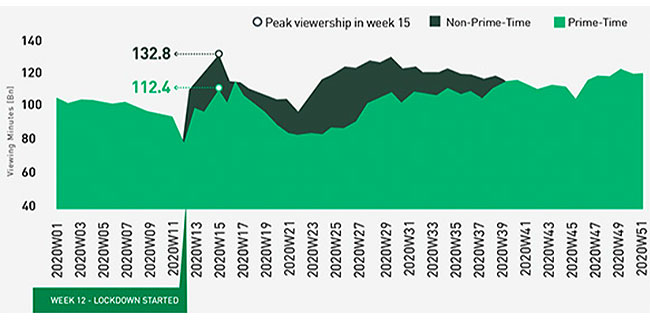
    · Non-Prime Time (NPT) Viewership for General Entertainment Channels (GEC), News and Kids, grew by 16%, 26% and 31% respectively in 2020 compared to 2019.

    > Ad Volumes grew by 34% in 2nd half of 2020 compared to 1st half of 2020.

    > Top 10 Advertising sectors contributed 80% to Total Ad Volumes in 2020

    > Communication by the Government was on an upsurge during lockdown. Ad Volumes for Govt. messaging grew by 184% (2.7 times) during Apr-June 2020 compared to same period in 2019.

    · Mythological Classics like Ramayan & Mahabharat made a comeback on our TV screens, Week 13, 2020 onwards. Ramayana now holds the record of the most watched TV program in the world!

    · Driven by the classics, advertisers placed their bets on DD’s GECs during lockdown. Ad Volumes for DD’s GECs grew by 62% in Apr-June quarter of 2020 compared to the same period in 2019.

    · IPL-13 viewership grew by 23% compared to IPL-12 with 400 Bn Total Viewing Minutes.

    · The Opening match between Mumbai Indians and Chennai Super Kings at Abu Dhabi, was the most viewed with 11.2 Billion Viewing Minutes.


    Said Sunil Lulla, Chief Executive Officer, BARC India: Commenting on the launch of the Yearbook: “The year was a consolidation and reaffirmation year for television in India. It was marked by a substantial increase in TV viewership with total TV growing by 9% and Ad Volumes experiencing a staggering growth of 34% in the second half. 2020 reaffirmed the strength of television as a medium in India amongst both viewers and advertisers, proving TV is indeed the screen of choice for the household. TV continues to grow with regional markets gaining prominence. BARC India will continue to work towards our vision, to always be the trusted source of authentic measurement and reporting of “What India Watches’”.


    Added a communique: “TV played a significant role in keeping people connected with the outside world during the lockdown. Consequently, TV Viewership witnessed a growth of 23% during Mid-March to June (Week 11-26) as compared to the January to early March period (Week 1-10).”


  • BARC issues statement. Effort on to “combat infiltration”. Committed to “generate ratings that subscribers rely on”

    By A Correspondent


    Measurement body Broadcast Audience Research Council has issued a statement today (Saturday, October 17). Here goes:

    Over the last several days, there have been various news reports as regard to Television Ratings and Broadcast Audience Research Council (BARC India). BARC India as an Industry body has representation from bodies that represent Broadcasters, Advertisers, and Advertising and Media Agencies. BARC India owns and manages a transparent, accurate and inclusive TV audience measurement system.

    BARC is providing the necessary assistance to the ongoing investigation by law enforcement agency and this should be seen in the light of larger stability of the panel and in the interests of self-regulation, rather than in isolated cases of particular channels which leads to a distortion of facts.

    Our efforts on combating infiltration are focused on the individual(s) responsible for these activities and we firmly believe that television channels are committed to maintaining a clean and transparent ecosystem.

    BARCs management team works with full confidence and support of Board and the various Committees. BARC continues to be driven by only one goal: to generate ratings that its subscribers rely on which are deeply rooted in science, report with the greatest sense of responsibility and truly reflect ‘What India Watches’.

  • Peace or Perish!


    [updated with India Today Group quote & Republic TV statement]

    By Pradyuman Maheshwari


    Ask present and past TV audience measurement professionals who or what is pulling down the reputation of their business, the response would be an emphatic: news channels.


    TAM, a joint venture of Nielsen and Kantar (then owned by WPP and now majority owned by Bain), lost its measurement contracts from broadcasters, advertisers and agencies thanks essentially to news channels warring against it. Premier news network NDTV took TAM to court over allegations of faulty data, and this hastened the effort to set up the joint industry owned body Broadcast Audience Research Council (BARC). Eventually TAM sold its measurement business to BARC.


    Like TAM in the past, the BARC team faced turbulent times from the news channels, and in a letter to the BARC chairman Punit Goenka, the News Broadcasters Association (NBA) is said to have expressed its reservations about the BARC leadership of the past.


    There are murmurs that BARC CEO Sunil Lulla too has experienced some angst from news channels.


    The problem is always with ratings. That some of the channels have deep political connections makes matters worse. So every time there is a peeve, news channels flock to the I&B minister for intervention. In the past, matters have also gone to Parliament and there have been committees set up to examine nuances of the business. And if it’s not the law-makers who assert themselves, it’s regulator Telecom Regulatory Authority of India (TRAI) which intervenes.


    Frankly, the government ought not to have role in the business of news television. Except for running its own Doordarshan news channels, its publicity department DAVP which doles out advertising and monitoring objectionable content and addressing the media on issues and make announcements.


    But by running to the government often, channel owners have invited the ministers and bureaucracy to step into a territory which they shouldn’t be treading on.


    For instance, BARC’s weekly viewership data ensures that advertisers and the agencies make wise media buying decisions. It also helps broadcasters and content-makers better their content, sales and marketing act.


    But the ecosystem dominated by broadcasters inflicted on itself the government’s intervention (or interference?) and got BARC to be governed by a set of rules and regulations.


    There’s nothing new with what happened on Thursday. It occurred when TAM was around and it’s taken place under the BARC regime. There has been pilferage of information on the placement of set-top boxes, but the machinery is well-oiled to issue alerts when necessary.


    That’s what happened when Hansa Research, one of BARC’s vendors on engagement with panel homes, alerted the police about a mess up.


    Was Republic named in any written complaint? We don’t know. An FIR shared with MxM has a mention made of the India Today channel. Both Republic and India Today (by way of a report on the site) have presented their points of view.


    What we did find last night was various channels shaming Republic TV and founder, editor-in-chief and managing director Arnab Goswami. Newspaper reports today – owned by media companies which also run news channels as well as a few others – have also named Republic and Goswami prominently. The reference to other channels and India Today has been understated or is missing.


    So when did it all start? The war of words and ratings began even when Goswami was with Times Now. The channel was doing exceedingly well, on the back of the heated debates that it would air.


    But when Goswami quit the Times Network to start Republic, the daggers were pulled out from all directions. All sides are to blame. Times Now had its issues with Goswami for quitting, hiring some ex-staffers and making no bones of the fact that he was taking on his former employer. The others got on to the act the moment Republic shot to #1 in the ratings roster. ‘News without Noise’, became India Today’s credo.


    Various attempts were made to isolate Republic, including the rest of the news channels pulling out their watermarks so as to boycott BARC. On its part, Republic too countered the others – and compared its ratings with that of the others. Nothing wrong with it, except that the comparison was accompanied by much bombast. Surefire formula to rile others.


    But the war took on a new turn when Goswami launched Republic Bharat. While English news channels are influential and earn fair monies, the real bucks is in Hindi news. Aaj Tak, ABP News, Zee News have been raking in the moolah over the years. While Bharat made its presence felt, it didn’t create much of a dent until the Covid-19 pandemic-led lockdown happened and the Arnab Goswami brand of hyper-aggressive, right of centre journalism took over.


    And then came the controversy around actor Sushant Singh Rajput’s death. The line that Republic Bharat took on the controversy ensured it was numero uno. And not just for one week, but for now many weeks.


    Advertisement buying decisions are not taken in a hurry, but buoyed by its success, Republic Bharat has hiked its ad rates.


    On Thursday evening, the Mumbai police commissioner named Republic TV based on what appear to be unverified complaints and allegations. Later, on its primetime bulletin, Republic TV showed scans of the FIR naming India Today. The joint commissioner of police is reported on the India Today website stating that while India Today was named in the FIR, neither the accused nor the witnesses supported the claim. “On the contrary, the accused and witnesses are specifically mentioning the names of Republic TV…”


    The India Today Group issued a statement late on Friday: “There is a malicious campaign on right now by a few vested interests to drag the name of the India Today Group into the TRP scandal that broke out on October 8, 2020,” adding: “We welcome any probe the police may wish to conduct and are fully confident that we will come out unscathed as we have not acted in any inappropriate manner. What we have right now is nothing but malicious, unsubstantiated allegations by a vested party.”


    Republic TV has taken on the Maharashtra government and Police Commssioner Param Bir Singh over the last few months in Sushant Singh Rajput case. Meanwhile, Goswami has threatened to sue Singh.


    So what next on this? The news channels business in India is a divided house. There is the News Broadcasters Association (NBA) which comprises most of the big players operating nationally and there’s News Broadcasters Federation (NBF) which is spearheaded by Goswami and Republic. Recently TV9 pulled out of the NBA with the association lodging a complaint with BARC saying that the network had used unfair means to forge ahead on the ratings roster. The network is now back as its member.


    Singh was quoted on a channel saying that advertisers may also be called for interrogation. So will Amul managing director R S Sodhi have to make the rounds of the commissioner’s office? Perhaps he will be. Will media agency network bosses Prasanth Kumar of GroupM and Shashi Sinha of IPG Mediabrands also be questioned by the cops? If Sodhi is, surely Kumar and Sinha will be called in.


    It suits the government perfectly well to have channels warring each other. But if the police summons advertisers and agency bosses for questioning, there could be trouble. Large, pedigreed advertisers would prefer to stay away from the murky world of news television. Channel owners would do well to smoke the piece pipe.


    If warring countries and corporates can get together, surely Arnab Goswami and Rajdeep Sardesai can.


    Updates:


    Media agency bosses Sam Balsara, Shashi Sinha and Prasanth Kumar have been called to the police station for seeking information. So these may not be summons, but a request from the cops is never for a chat about the weather. There are rumours that names of certain advertisers have also been handed over to the police.


    The Republic Media Network has issued a press release: https://www.republicworld.com/india-news/general-news/full-news-release-from-republic-media-network.html. “The Republic Media Network has approached the Honourable Supreme Court of India. We have served notices of our legal action to the Maharashtra Government as well. While we will follow the law, we are determined to seek a legal remedy against this atrocious witchhunt,” the release says.


    Although Pradyuman Maheshwari is Editor-in-Chief and CEO of MxMIndia, the views here are personal and are not necessarily that of MxMIndia. He can be reached via Twitter at @pmahesh. A version of this has also appeared on The Wire at The ‘TRP Scam’ Could Open the Doors for the Government to Enter the Picture


  • Reminiscing the BARC set-up days

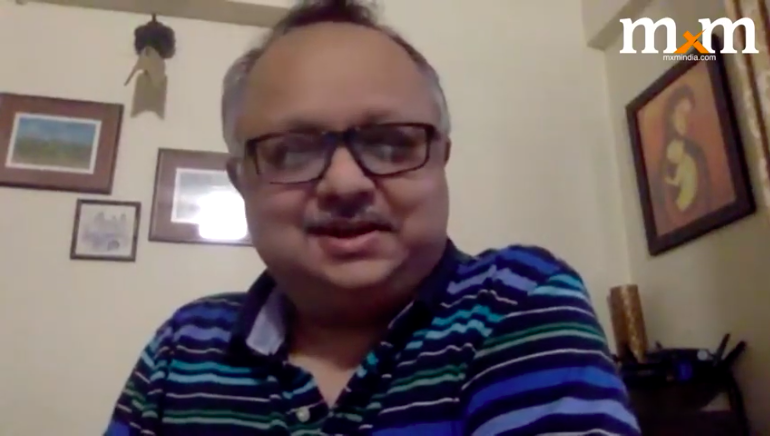
    Partho Dasgupta: Screengrab from Video


    By A Correspondent


    Over the last five-odd years MxMIndia would’ve done over a hundred-odd stories on television audience measurement and central to all of them was Partho Dasgupta, former CEO of BARC India.


    Dasgupta joined BARC in June 2013 and in November last year handed over operations to his friend and former colleague, Sunil Lulla.


    He is now using his experience and learnings to various places in the world, setting up BARC-like entities as an expert. He is also consulting broadcast and new media companies as a management consultant. And overseeing performance management. He of course continues to be President of the Advertising Club.


    Earlier this week, we interviewed Sunil Lulla, CEO, BARC India on the eve of its fifth anniversary. We now speak with Partho Dasgupta, the former CEO of BARC India and get him to reminisce the days before operations began on April 29, 2015.


  • Five years of BARC. Looking Back. Looking Forward


    The Broadcast Audience Research Council (BARC) celebrates five years of operations today (April 29, 2020).


    Many of us know the circumstances in which BARC was envisaged and established, and given that audience measurement doesn’t come cheap, it was indeed wise to have a joint industry body doing the exercise.


    With BARB from the United Kingdom as inspiration, BARC was incorporated in 2010. Operations though took off only after some five years and the first set of data was published on April 29, 2015. In the very year of launch, it also announced rural audience measurement and now measures 185,000 individuals over 44,000 homes, and that number is set to grow to 55,000. Well it was scheduled to, if Covid-19 hadn’t happened.


    Viewership, as measured by BARC, grew 38% till 2019 and a total of 48.4 trillion viewing minutes were consumed in 2019 alone. BARC currently measures 634 channels. The future is bright given that 100 million homes still to get a TV set.


    It’s unfortunate that the celebrations are dampened by an ill-placed recommendations from the Telecom Regulatory Authority of India (TRAI)


    Sunil Lulla, a veteran mediaperson who has worked across the M&E spectrum, took charge at BARC in October 2019. With broadcast – entertainment, news, with advertising and with a large production house. He has also spent some quality with a large digital venture. He spoke with Pradyuman Maheshwari, Editor-in-Chief, MxMIndia on a wide range of issues. Check out the video. It’s nearly 30 minutes. So pull out the popcorn or whatever. And enjoy.


  • On eve of BARC’s 5th birthday (of ops), TRAI issues recommendations on TV audience measurement

    By A Correspondent


    On April 29 (that’s tomorrow), television audience measurement body BARC India (short for Broadcast Audience Research Council) celebrates its fifth anniversary of operations. And before we could sing Happy Birthday and bring out the bubbly, the Telecom Regulatory Authority of India (TRAI) has issued recommendations on the way television audience measurement should happen in India in the form of   “Review of Television Audience Measurement and Rating System in India”.


    Notes a press release: “Several concerns relating to neutrality and reliability of the existing rating system have been raised  by  stakeholders,  which  necessitated  a  need to review of existing Television Audience Measurement arid Rating system in India. A consultation paper was issued in December 2018 seeking comments from all stakeholders.


    After considering all comments received from stakeholders during consultation process and further analysis of the issues, the Authority has finalised its  recommendations.  The  salient  features  of  the recommendations are given below:

    1. Structural reforms are required in the Governance structure of BARC to mitigate the potential risk of conflict of interest, improve credibility, and bring transparency, and  instill confidence of all stakeholders in the TRP measurement system

    2. The composition of the Board of BARC India should be changed as part of the proposed structural reforms.

    3. The Board should have at least fifty percent  independent members which should include one member as a measurement technology expert, one statistician of national  repute  from among the top institution s) of the country and two representatives from the Governments Regulator.

    4. Restructured Board of BARC India should provide for equal representation of the three constituent lndustry Associations, namely, AAAI, ISA and IBF and with equal voting rights irrespective of their proportion of equity holding

    5. Tenure of the members of the board shall be for two years.

    6. Active participation of representatives of the Advertisers and the advertising agency will bring more accuracy, transparency, credibility, arid neutrality in  the  system,  due  to  their  inherent need of advertisers to reach viewers accurately.

    7. The constituent industry associations shall be entitled to nominate their representatives to the board membershlp subject to the condition  that  a  cooling  period  of  4  years  shall  be applicable between two consecutive tenures, for any such nominee member.

    8. Tenure of the Chairman of the Board should not be more than two years. Chairmanship of the Board shall  be  rotated  among the constituent industry associations in every two years.

    9. Number of members in the technical committee should be increased to 5 with addition of two external technical experts

    10. An Oversight Committee should be formed to guide BARC India in the areas of research, design and analysis,  constantly  improving the rating system

    11. The Oversight Committee should have representation from the National Council of Applied Economic Research, IIM, IIT, media research expert and demography  expert,  nominee  from  the Ministry of Information & Broadcasting, and TRAI.

    12. The   Committee   should   also   be    responsible    for nomination/ appointment of independent members  of  the Board as well as to give policy direction to BARC India, if it is so required.

    13. To create credible and accurate collection of data, multiple data collection agencies need to be encouraged.

    14. Competition and multiple agencies for data collection and processing would bring in new technologies, new research methodologies, new methods in  analysis,  new and  better  ways to ensure better data quality.

    15. BARC should be at an arm’s length from its own subsidiary, Meterology Data Pvt Ltd., which is the sole data collecting  agency for BARC, as of now; so that the entire process of measurement is carried out independently to ensure inherent checks in data inconsistency.

    16. Efforts may be made to withhold the  identity  of  the  channel’s name and number while collecting and  processing  the data from the field, to bring more transparency in the complete process.

    17. BARC should also separate its functions in two units (a) one unit should be responsible for prescribing methodology  of ratings/ validation of data, publishing the data and audit mechanism and (b) the other unit for processing the data, watermarkirig or any other such technical work including management of data collection agencies.

    18. Once multiple agencies come forward for rating, BARC should limit its role to publishing the ratings, and framing methodology and audit mechanism for the rating  agencies,  so  that  the number of agencies can develop multiple rating system  leveraging new technologies.

    19. The  rating  agency  should  be  mandated  to  increase  the  sample size from the existing 44,000 to 60,000 by the end of 2020, and 100,000 by the end of 2022 using the existing technology.

    20. BARC shall immediately  conduct a study in collaboration  with   the Indian Statistical Institute or  any  other institute  of  repute,  to estimate the appropriate sample size, and to get the correct representation of the viewership including regional and niche channels. Sample size once increased; i1 will make the data tampering an arduous exercise. On the basis of the study conducted, BARC should reach the target of  reaching  the  sample size in a time-bound manner.

    21. There  should  be  some  financial  disincentives  prescribed   as penal provisions including the cancellation of registration, if the specified target is not met by BARC .

    22. MIB should amend the DTH License and MSO registration so as to mandate STBs capable of transferring viewership data and adoption of RPD technology.  This transfer  of data can be done by establishing a return path / connection from MTB to the remote servers of the Audience Measurement agency

    23. Anonymised viewership data should be transferred electronically to the Audience Measurement agency for statistical analysis and Television Rating purpose. No data from any STB should be transferred to Rating agency without explicit consent from the subscribers

    24. DPOs should be allowed to mutually negotiate the terms and conditions for sharing the data with Measurement Rating  agency within the overall framework prescribed by TRAI from time to time. Such framework shall be prescribed by TRAI once these recommendations are accepted by MIB.

    25. BARC should keep all relevant data such as original data (meter-level data) arising out of the household panel, the data de1eted/ ignored/ not considered for ratings and the resultant processed data for TRP rating at least for one year in the same format and pattern as in the final ratings, declared to the subscribers including Broadcasters, advertising agencies, and advertisers.

    26. BARC should review / frame its outlier policy based on scientific study and market survey conducted from time to  time.  BARC should automate data processing in such  a  manner  that  no  manual intervention is required before the final TRP rating is released. Any type of manual intervention in the meter level / raw data arising out of household panel  must  be  avoided. Manual intervention,  if  any,  in  abnormal  circumstances  should be reported and informed to the auditors also.

    27. Adequate framework for grievance  redressal  may  be  made  having nodal officers and Appellate body.

    28. BARC should get annual audit conducted  by  an  independent agency to ensure conformance with TRP rating methodology-, Sample size, and grievance redressal methodology and  publish audit report on their website after board approval within three months after end of the financial year.

    29. The full text of recommendations is available on TRAI’s website (www.traigov.in)

    Meanwhile, when asked for a statement, a BARC India spokesperson said: BARC India spokesperson. “The TRAI recommendations have only just been received. BARC India is reviewing the same in consultation with its Board and stakeholders.. All Stakeholders from the Industry and the Government and related bodies are aware of the scientific, statistical and technical robustness of the data collated and released by BARC. BARC truly represents all facets of the Industry comprising Advertisers, Agencies and Broadcasters regardless of size, as the Currency of What India Watches. We do not wish to comment at this very early stage.”


  • Covid-19 sees TV & Smartphone grow


    By A Correspondent


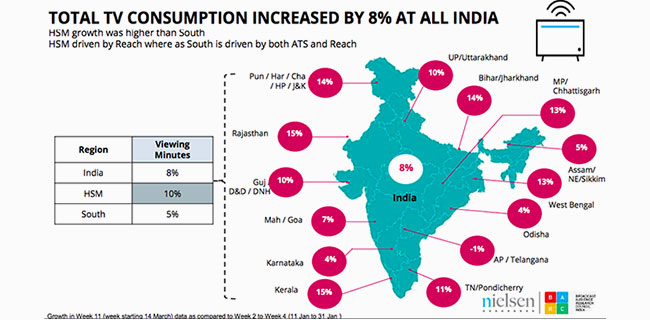
    Broadcast Audience Research Council (BARC India) went a step further on its attempt to offer a combined measurement of television and digital consumption. TV viewing minutes and Smartphone usage went up 8% and 6.2% respectively as BARC India and Nielsen unveil report on the impact of Covid-19


    BARC and Nielsen put together a report to understand the changes in consumption behaviour of television and smartphones given the extraordinary situation surrounding the COVID pandemic and its fallout.


    Sharing her views on the current surge in smartphone usage, Dolly Jha, Country Leader Nielsen Global Media, South Asia said, “We are living through unprecedented times! Physical Social Distancing seems to have led to a phenomenal growth in Virtual Social Togetherness with an almost 20% increase in time spent per user on Chats, Social Media and News in the last one week. And we anticipate this to grow further.”


    Elaborating on the topic, Sunil Lulla, Chief Executive Officer, BARC India said: “These are unfortunate and unprecedented times. Working closely with Nielsen, we bring for our customers and stake-holders, this very significant and important update, on change in content and advertising consumption behaviour, with a significant population at home. We will report soon enough, the impact of total lockdown. Our respective brave teams are working (WFH) round the clock to ensure the TV measurement currency, continues uninterrupted.”


    Highlights of the report:

    1. The Covid-19 disruption period has seen an increase in television viewership – 6% increase in TV reach and 8% increase in TV viewing minutes /week. The time spent on TV / viewer has seen a jump by 2%. The PM’s address to the nation on complete lockdown on March 24 garnered unprecedented viewership of 197 million watching it across the country.


    2. When we look at smartphone behaviour the time spent on smartphones per user has gone up by 6.2%. The time spent/user/week on VOD apps has also seen an increase of 3%. If we look at the increase in the time spent/user/week over that of the previous week (to take away the impact of Cricket viewing in the PRE COVID period considered), we can see a jump of 5%.


    3. Kids’ schools being shut and the stress of exams off their shoulders has resulted an increase in television viewing (+20%). With corporate India getting into Work from Home mode, NCCS A showed an 11% increase in viewership. Even on smartphone usage, the increase in driven NCCS A (+7.7%) and 35-44-year-olds (+10.7%).


    4. People staying at home led to watching TV throughout the day and hence the growth in TV viewing is coming from Non-Prime Time slots (8am – 5 pm).


    5. The need for continuous updates expectedly has led to a huge increase in news consumption on Television (57% increase in Impressions), while spending more time as a family together could be leading to the Movies genre and the Kids genre also showing significant increases.


    6. This behaviour is seen in digital consumption as well with News and Gaming showing huge increases. News apps saw 8% more users per week with an increase of 17% in time spent/user/week. This growth was led by non-English News apps (+87%). Gaming apps saw an increase of 2% in users/week and with a 11% increase in time spent/user/week.


    7. With a lot of uncertainty around what is happening, people have increased their time spent on Chatting (+23%) and Social Networking (+25%) apps.  Almost all social networking apps –  Facebook, Instagram and TikTok have seen significant increases not only in time spent /user/week but also in the sessions/ user/ week.


    8. Shopping apps, Travel apps and Food Apps have seen a huge drop in both users/ week and time spent/user/week.


    9. It’s not just TV viewership that has seen an increase –advertising FCT on TV has increased by 13%.


    Measurement considerations:

      BARC Nielsen Smartphone Panel
    Coverage All India (Urban + Rural) All India (Urban 1 Lakh plus)
    TG ALL NCCS 2+ years NCCS ABC 15-44 years

    Android Smartphone Users

    Time Period PRE COVID  – 11th Jan 2020- 31st Jan 2020 PRE COVID –  13th Jan 2020 – 2nd Feb 2020
    COVID DISRUPTION – 14th March 2020 to 20th March 2020 COVID DISRUPTION – 16th March 2020 to 22nd March 2020
    Week definition Saturday to Friday Monday to Sunday


  • BARC India appoints Mahendra Upadhyay as Chief Information Officer

    By A Correspondent


    Television audience measurement joint industry body Broadcast Audience Research Council (BARC India) has appointed the appointment of Mahendra Upadhyay as Chief Information Officer.


    Upadhyay has 18 years of experience in telecom, banking, retail and media & advertising industries with expertise in data value chain i.e. Ingestion-Insights-Analytics-Auto AI. He has expertise in end-to-end consumer life cycle management using advanced analytics and marketing interventions.


    Said Sunil Lulla, Chief Executive Officer, BARC India: “We are happy to welcome Mahendra on board as the Chief Information Officer, BARC India. With his mix of leadership roles across Industries, he brings a diverse cross-industry perspective that we will be able to leverage immensely for the benefit of our clients and for the industry,”


    Commenting on his new role, Upadhyay added: “I am absolutely delighted about joining the world’s best television measurement company BARC India as Chief Information Officer. Looking forward to my new role and taking company to next level along with my team.”


  • Comment: TRAI barks at BARC, incorrectly

    By Your Editor


    So telecom-and-broadcast regulator has pulled up measurement body BARC India (short for Broadcast Audience Research Council) for non-publication of ratings and viewership data. Which we believe is incorrect because BARC has only not been publishing the data on the website. All subscribers – broadcasters, adverisers and ad agencies – are still getting the data, though part-owner Indian Society of Advertisers has advised its members not to use the data for making decision on buying advertising. The IBF, representing the interests of its members, has been troubled that the transition has hampered the viewership numbers of a large number of channels.


    According to a report released on wire agency PTI, the TRAI has asked BARC to comply or face action. This is grossly unfair, a BARC subscriber told MxMIndia requesting for anonymity, adding that the TRAI has not been able to administer an effective transition to the new tariff regime and a large number of subscribers still don’t get all channels. “The delay of the last date to March 31 has only extended our miseries,” the subscriber averred.


    The PTI report can be accessed here: https://www.dailypioneer.com/2019/business/trai-directs-barc-india-to-publish-rating.html

  • Naysayers silenced. BARC to go rural from next week

    By A Correspondent


    Stability is a bad word to use in the Broadcast Audience Research Council (BARC) office. You may well get barked at. As one top media agency honcho discovered at an event when s/he tried to raise it with a BARC official.


    The decision to publish rural ratings didn’t happen with ease, we are told. There was at least one influential player who aggressively opposed it. There were some others who simply wondered: Shouldn’t we wait for the ratings to settle down?


    The Board members were convinced on Tuesday evening that all will be well. The #1 channel will not tumble and turn #5. Yes, some free-to-air re-run channels will gain a bit, but, heck, if that’s what India watches, what can BARC do about it. A presentation was made in a Board meeting, and the decision was taken.


    With this, BARC India, which currently reports about 55 million households representing C&S universe of 1 Lac+, will expand its reach to 153.5 million TV households, representing All India and all modes of signal. Of this 77.5 million are urban TV households and 76 million are rural TV households.


    BARC India, which had recently announced a joint venture with TAM Media to form a meter management company, is working on the dynamics of it and will soon announce its integration plan.


    “With the board giving us the go ahead to release the rural data, one will see ‘What India Watches’” said BARC India CEO Partho Dasgupta.


    According to an analyst, the big beneficiaries of this would be broadcasters who have worked on their reach to the hinterland, and have traditionally been strong. The dynamics are dramatically different for urban and rural India. Among these channels, Zee TV will be a big gainer, we are told as will be the free-to-air re-run channels of the key networks. Doordarshan officials are also reported to be jubilant about the rural numbers coming in, as that, they feel, will help highlight their popularity vis-à-vis others.