Tag: brands

  • The Anchor: The top 5 things we can expect from IPL 5

    By Rajneesh Chaturvedi


    #1 Watch out for new sponsors:

    Look out for and identify new brands that will be using IPL in their marketing communication, all for the first time.


    #2 New campaigns and Innovations:

    Watch out for new and innovative campaigns in IPL this year. Traditionally Vodafone has always launched new campaigns around IPL year on year, and every year we see some or the other innovative advertisements on the ground and on air. This year too we can expect new and innovative campaigns during IPL.


    #3 What’s new from Max this year:

    It would be interesting to see what Max has to offer, considering that the advertising and media fraternity is slightly apprehensive of the ratings this year.


    #4 New on-ground experience for viewers:

    What are the new things viewers can expect – the entertainment, the opening ceremony, all this is related to the experience a person gets in the stadium across the 12 venues.


    #5 New IPL winner?

    Last but not the least – are we looking for a new IPL winner this year? Last two IPL seasons, we had the same winner – Chennai Super Kings. Will we have a new winner in season 5?


    Rajneesh Chaturvedi is the National Director, MEC Access.


  • 12 ‘must-do’s when engaging a celeb for your brand

    By Anujita Jain


    #1 First, the key is to identify the need for a brand ambassador ­ whether it is to get noticed, or to catapult to a leadership position, or to change image or create demand, or other.


    #2 Think of a brand endorsement as a mid to long term investment. Quick successes or failures of endorsements are not representative. Riding on the equity of a known personality is a strategic call. By itself, the decision cannot guarantee success, it needs correct usage. For instance, an endorser doesn’t come at the cost of a good creative.


    #3 Go with a mindset to alter the script or storyline of a advertising creative if required, while approaching an endorser. While the communication strategy is brand objective dependent, the storyline may need to be re-thought with the chosen endorse in mind. Neither should the endorser be ideally selected with just one script in mind. The investment on an endorser often deserves and asks for that.


    #4 Match endorser motivations with your brand motivations, to get more out of the endorsement than what the contract promises. This may not just yield in the celebrity commitment to brand but also in the ripple effect the communication may create.


    #5 If as a brand manager, you are looking for a deal or a quick bargains, the only way is not in going for smaller names, but may also be about bigger names who are looking for new dimensions in their own stated personality. Match that need, and you may have a deal! While top end luxury brands have always had this advantage from even A-lister celebrities, this is often true for many other brands with respect to some potential endorsers.


    #6 Plan out how you will use the endorser days thoroughly, so that you don’t end up with expensive days you struggle to use within the year, a common issue with the bulk of endorsement deals. The first few days are often easily utilised through shoots etc., but the balance 2-3 days end up being hurriedly utilised for sub-optimal activation that doesn’t get the right ROI for the day cost.


    #7 Always have alternatives in mind while approaching endorsers. Options not only in the same grade of celebrities, but also pan grades and genres. This not only allows more creative thought for utilisation of the celebrity days, but also results in smarter value-benefit deals.


    #8 Unless you have 4X budget for media and magnification, don’t put more than X for the endorser.  If amplification is the chief reason for using the endorser, it defeats the purpose to cut corners in the resources put behind it.


    #9 Modern-day endorsements are best approached not only in terms of day count, but also digital or equity usage rights.  This again means a clear strategy of endorser usage, clear ideas of utilization of celebrity equity beyond just his/her days, and a strong plan


    #10 If the brand works its communication around the endorser, the likelihood of the endorser working their schedules around the brand is that much more. An endorser, being a human brand, is highly likely to value good planning by the brand, and go that extra mile to deliver.


    #11 Sharper the brand focus versus the category, the better the endorser choice.  So think of the brand positioning and attributes that define brand image, and then create your endorser consideration set. Often brands approach endorsers from the point of view of their category, failing to then translate an edge in their communication, resulting in a diluted or under-utilised endorsement.


    #12 Often, especially for mid-segment brands, considering a set of niche endorsers may bring more value than going for a single mid-range endorser. This de-risks the brand, at the same time allowing them to ride on to a cluster of icons that have a deep and strong, albeit smaller follower base. Today, there is a whole new breed of such celebrities, who have a die-hard loyal following in their chosen fields, who work as strongly as special interest channels do versus a general entertainment one, for the relevant brands.


    Anujita Jain is Founder & COO, Alchemist Talent Solutions.


  • The Anchor: 6 reasons why brands can’t ignore digital

    By Vineet Gupta


    #1 Digital is no more youth-centric or an urban phenomenon. It cuts across various age groups and touches a cross-section of society. For a brand it becomes imperative to be present in a medium that cut across geographies and age groups.


    #2 Digital is not an advertising medium but a medium of engagement. If earlier, it was brands that were sending out information to the consumers, now it’s a reversal of that game. Consumers seek information and are proactively engaging with brands on the digital platform, thus giving brands immense opportunity to engage with their consumers in a much more meaningful way.


    #3 Today, it is about mobility and being connected on the move. The consumer is engaging on a real-time basis with brands while being on the move. Access is via multiple screens and it doesn’t really matter where and how the consumer is connecting – but it’s important that he or she wants to be connected at all times with the brand.


    #4 The early adopters of the digital medium were brands that were looking for lead generation. Now many brands have gone beyond that and built an entire eco-system around the digital platform, including building communities or developing e-commerce platforms. This is the way forward for brands.


    #5 The future belongs to brands that have understood this medium and are using it not just for a brand building exercise. One has to realize that digital plays an important role in the purchase decision. Therefore there is a need to understand that it is much more than a marketing medium and all aspects like information, consumer feedback, sales and distribution should be built on this medium.


    #6 Lastly, digital is an important medium in the purchase funnel. Whether it is seeking information, desire to purchase or the action of purchasing, all can be done on this medium. Brands have to look at digital beyond just advertising.


    Vineet Gupta is the Managing Partner of 22feet.


  • 50 Brands @ 50 % off sale back in town

    By A Correspondent
    Oberoi Mall, one of Mumbai’s leading retail malls, will be hosting the second ‘50 Brands @ 50 % off’ sale on January 18. This sale will have over 60 leading national and international luxury brands offering flat 50 per cent off for one day.

    The brands participating in the sale are Accessorize, Nike, Adidas, Reebok, United Colors of Benetton, Chemistry, FIFA, Kazo, Levi’s, Cream Center, Allen Solly, Biba, Forever New and other leading lifestyle and food brands.


    Oberoi Mall is the first mall in the country to come up with a unique sale format like this, the first season of which was held in July last year. Similar trends are prevalent in the Dubaishopping festival and malls in Hong Kong.

    Commenting on this, Nirzar Jain, vice president – Oberoi Mall said: “After the success of the first ever 50 Brands @ 50 % sale, we are extremely happy to present the second season. Oberoi Mall has always striven to offer its patrons an enhanced shopping experience and this season we have more than 60 leading brands on flat 50% flat discount for one day. Our retailers too are looking forward to this event as the last 50:50 sale saw the overall sales figures shoot up by 300 per cent and foot falls increasing by almost 200 per cent on a weekday. In fact few brands like Central, Bombay High and FIFA did the highest ever sales in the city in a single day.”

    The 50 Brands @ 50 % sale has been clubbed up with ‘Women’s Wednesday’, which is Oberoi Mall’s existing property exclusively for women, making it a double bonanza for shoppers.


  • The Anchor: 6 things an agency must keep in mind when pitching for a brand

    By Mahesh Chauhan


    #1 Individual(s): You do not pitch for a business! You pitch to win over an individual or a group of individuals. How much we know about them is as important as how much we know about their business.


    #2 Pitch presentation: Nothing, not even #1 will help you if you do not understand and deliver well on the brief. Read the briefing doc till every word is understood. And every delivery point covered.


    #3 Time-planning: Drawing up a daily plan leading up to the pitch presentation. It has to be exhaustive, inclusive and clearly assign responsibilities. Also adhered to religiously. Remember how during exams, we used to do ‘dil kada kijiye aur panna palatiye’. So if you are not ready to meet a deadline, so be it. Don’t kill the deadline!


    #4 The presentation: No democracy. Only as many people as required. Let the best presenter present. Let the best dancer select his best act and his accomplices. Devotees might kill me but Bob Dylan’s lyrics were the music to our ears, not his singing.


    #5 Till the fat lady sings: Most of us think the process gets over once the PPT is done. Well, it only gets started then. If you haven’t done well, seek ways to redress. If you have done well, kill it! As we all know, cricket is a game of glorious uncertainties, commentary and Shastri excluded!


    #6 Most importantly, it is not about coming first in class. It’s about being the best and the most loved in the batch!


    Mahesh Chauhan is co-founder of Salt Brand Solutions.


  • Brands get a designer touch


    By Tuhina Anand


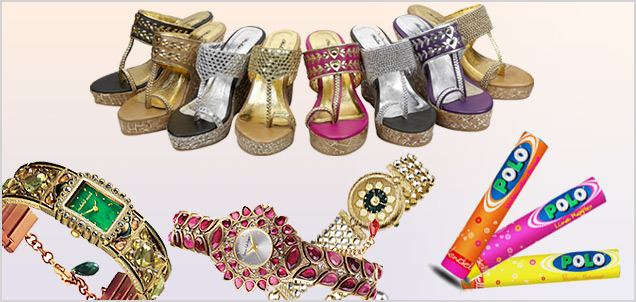
    Wendell Rodricks for Polo, Malini Ramani for Bata, Tarun Tahiliani for Timex… Some of the top Indian fashion designers have moved from their familiar territory of creating haute couture to creating new lines for popular brands.


    Wendell Rodricks has designed four new flavours called the Polo Fashion Flavours for Nestle’s Polo and has even given a funky new look to the staid-looking green and blue packaging of the mint.


    Malini Ramani, who is known for her bohemian style, has associated with Bata to come out with a new collection of footwear called Malini Ramani for Bata.


    Tarun Tahiliani has designed a special collection for Timex to help the brand break away from the sporty image it is associated with.


    Giving his views on this trend, Harish Bijoor, brand expert and CEO of Harish Bijoor Consults Inc. said: “I would call it bringing bizarre into branding. Fashion designers have no connect with the (product) category and it’s a stretch to think of them designing footwear or a designer mint. This is done to just get eyeballs and media share, and not necessarily about gaining market share.”


    For brands, it may be an effort to garner eyeballs, especially now, when they jostle with numerous others to grab the consumers’ attention.


    For Bata the association came at a time when they were looking at opportunities at designer footwear market inIndia. This, in fact, is the first time that Bata India has roped in a designer to design a special collection for them.


    On the reason behind associating with a fashion designer, Rajeev Gopalakrishnan, Group Managing Director, Bata India Limited, said: “The designer market is unique and full of innovations and Bata, as a brand, believes in constant innovations to bring forth the best for their customers. Therefore, we decided to rope in Malini Ramani, who is one of the most coveted designers in the country.”


    The footwear major has had a positive feedback of its association with Malini Ramani and hopes to further strengthen this association and even look for similar opportunities with other designers in future.


    Mr Gopalakrishnan added: “With the increasing demand for footwear in the Indian market, it is essential for any brand to introduce various designs and variety often. BataIndiaoffers various footwear ranges in every category. We bring out new designs for our customers as per the global trends and standards every month. The entire collection is changed every quarter to cater to the changing needs of Indian consumer.”


    Besides the Malini Ramani collection, BataIndiahas genuine leather casual collection for men under Bata and North Star Collection for the young customers. For customers with an active lifestyle, Bata launched a new collection under the Weinbrenner brand with personalized branding. It has Marie Claire collection for women, Power brand for the sports enthusiasts and variety of designs in attractive colours for children under Bubblegummers and Baby Bubbles, besides school shoes for children.


    For Timex the association with Tarun Tahiliani was to give break to the stereotype image that the brand has been associated with. VD Wadhwa, MD & CEO of Timex Group India, said: “Timex has been perceived as a sporty and outdoorsy brand since its inception and we want to move beyond that image. To strengthen our connect with the women costumers; we associated with ace designer Tarun Tahiliani. The aim of this association was to establish credibility amongst the women customers at comparatively higher price points and cash in on the wedding and festive season.”


    Mr Wadhwa stated that the response has been tremendous as far the collection is concerned. In fact, many costumers have come back asking for more options in this line. Though Timex doesn’t have any plans to add to this collection with other designers.


    “Marketers are increasingly leaning on homegrown designers for business associations to launch signature or limited edition lines. All this is done to attract the young and ambitious Indian consumers who would happily pay a premium price to stand out in the crowd. Indian designers are the best bet, since each one of them has a specific style and can fuse Indian and international designs brilliantly to develop an aspirational product,” said Mr Wadhwa.


    Fashion designer Manish Malhotra has also been featured in La Opala Diva ads and there is a possibility that he may design for the crockery brand, though the plan has not been finalized yet.


    One may even recall that few years ago, Sabyasachi had designed Bombay Dyeing’s new bed and bath range. It is clear that the marketers have started tapping the designers to give a fresh appeal to their products.


    It could be to create an aspirational value or tap consumers that have remained away from the brands and lure them in. In a cluttered market, this may be the way to at least garner eyeballs and somewhere succeed in getting an increase in sales too.


    Polo image: Nestle.in, other images: courtesy company spokespersons

  • [LOOKBACK 2011] Filmwallahs dominate endorsements

    By Ritu Midha


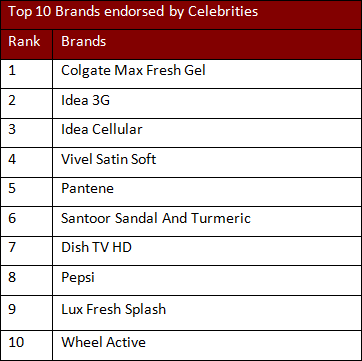
    Debate on the extent to which celebrities contribute to enhancement of a brand’s image continues. The scale, however, seems to be tilted in the favour of celebrities with a number of big brands and organizations continuing to use them – to the extent that on occasion the same brand, at the same time is using multiple celebrities: Katrina Kaif, Shilpa Shetty, Sonakshi Sinha and Bipasha Basu in one Pantene ad is the first example that comes to mind.


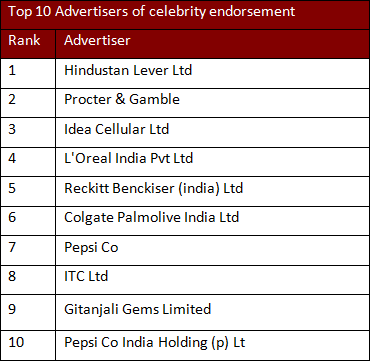
    The percentage of film stars endorsing brands has gone down this year, and that of sports personalities has increased. However, in the top 10 brands using celebrities for endorsement, Pepsi is the only brand that uses sports celebrities extensively.  A look at the top 10 advertisers using celebrities also tells a similar story:


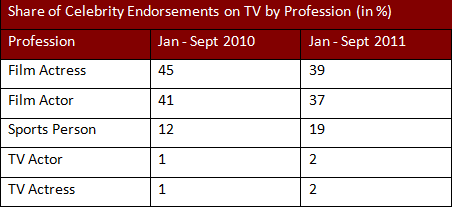
    The absence of sports personalities from these brands’ ads might be due to the category they belong to. However, as compared to same period last year, Jan- Sept 2011 has seen a 7 per cent jump in endorsements by sports personalities. TV actors and actresses endorsing brands has also increased by 1 per cent each – though it does not amount to much, considering the miniscule number of television actors that really do endorsements. Interestingly, 76 per cent endorsements are still done by film stars despite a 10 per cent dip over the previous year.


    The table below lists the share of the pie endorsed by film, sports and TV personalities.


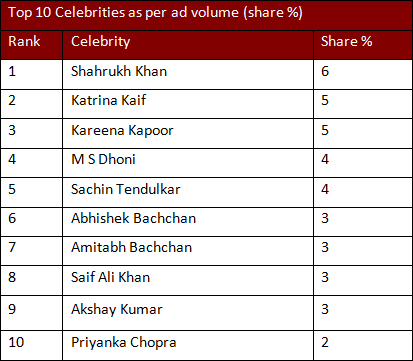
    Moving now to individual celebrities, Shahrukh Khan’s movies may have not really broken box office records of late – but it has by no means undermined his position as the leading celebrity endorser/brand ambassador (as can be seen in the table below). He is closely followed by Katrina Kaif and Kareena Kapoor. The only two non-film personalities in the top 10 are (yes, guessed it right) MS Dhoni and Sachin Tendulkar.


    Data source:

    TAM AdEx

    Media: TV

    Period: Jan- Sept 2011

    *Figures based on ad volumes (secs)

    *Advertising during commercial time (Promos are excluded)

    *Base: Celebrities(Actor/Actress) from Hindi – Movies & TV Industry and Sports personality considered.

  • After TVCs, the next best thing


    By Shubhangi Mehta


    Commercial advertisers often seek to generate increased consumption of their products or services through “Branding”, which involves the repetition of an image or product name in an effort to associate certain qualities with the brand in consumers’ minds.


    The marketing mix has been the key concept in advertising. Suggested by Professor E Jerome McCarthy in the 1960s, the marketing mix consists of four basic elements, famously called the Four Ps. They are Product; Price, representing the process of determining the value of a product; Place representing the variables of getting the product to the consumer like distribution channels, market coverage and movement organization; and Promotion, the process of reaching the target market and convincing them to go out and buy the product.


    There is a plethora of ways to do this. The modes of advertising include television, radio, online, OOH and then these further have various categories in them.


    Television is generally the first choice for most of advertisers, but what about radio, digital and OOH?


    Prasoon Joshi
    Abraham Allapatt

    Prasoon Joshi, Executive Chairman, McCann Worldgroup, commented, “It’s all about the requirement of a brand, it depends on a particular brand as to what marketing mix is to be used. There might be a brand for which I may not even use television, but might go in for a local newspaper etc. Hence it is not possible to choose a particular medium over others across the board.”


    Abraham Allapatt, Head – Brand & Corporate Communication, Future Generali India Life Insurance Company Limited, said, “Frankly, one cannot definitively state that one of these mediums is the best (after TV) simply because each of them has pros and cons. Radio is good if one wants to reach out to young/upwardly mobile urban customer prospects with a limited budget – especially if you have a powerful/simple message and creative to deliver, but it’s limited in terms of reach.


    “Similarily when we talk about print, it can target specific audience and is quick in reach but again it is a little expensive as compared to other media (cost per reach) and it is relatively limited in terms of reach at an overall level versus TV.


    “OOH is a powerful reminder medium for topical messages but is a relatively disorganised sector/medium. There is no science to measure impact/effectiveness. Large agencies use some tools to add some science to measurement, but it is still not too dependable.


    “Digital is focused down to the individual and is measurable accurately and instantly. It is very good for reaching young, urban, upmarket segments, plus it is cost-effective and an image driver. The only issue is that it is still limited in reach to large cities/income segments.”


    Apurva Purohit

    Apurva Purohit, CEO, Radio City 91.1 FM, said, “Radio as a medium has the ability to impact millions of Indians due to its wide coverage. And that’s just one of the multiple benefits of the medium! It enjoys a deep personal connect with listeners, allows marketers to create customized and local communication for pocketed audiences, and offers extensive on-ground engagement prospects to supplement advertising campaigns. Such offerings make the medium superiorly effective and attractive for marketers.


    “Radio has an edge over other media due to the local relevance that the medium offers. Advertisers seek to maximize efficiency of their marketing spends by looking at micro targeting communication to consumers in focus markets. Radio serves as a key medium to fulfil this need with its ability to create customized and local communication for the relevant target audience.


    “Another important feature that gives radio a one-up is that it’s an anytime access medium. Hence, advertisers can reach their consumers anywhere, anytime. Different sets of people tune into radio at different points of time and therefore the medium is consumed across the day. This is unlike print which is mainly consumed in the morning and TV which is mainly consumed at night.


    “Of course, the medium’s cost-effectiveness is unquestionable. Radio is far more inexpensive than print. If you need a local media plan you will pay six times on print, while at one-sixth you will get the same kind of reach and frequency on Radio.”
     

    Sanjay Tripathy

    Sanjay Tripathy , Executive Vice President – Head Marketing and Direct Channels at HDFC Life, said, “Choosing a medium will always be the prerogative of a brand marketer depending on his/her key objectives. While Television is the most preferred medium for marketers because of the kind of reach and opportunity for quality of communication it provides, Print comes a close second because of its ability to provide detailed information about the product/ service. This medium is also hugely preferred because the circulation and readership numbers are measurable unlike Radio and OOH, which are usually used for local, last mile reach. Contrary to popular perception, in a highly populous country like India, print still has a lot of scope for growth in the interiors where literacy is still catching up. Print provides flexibility in terms of customisation as per the regional target audience. However, the characteristics of the target audience influence hugely in terms of ‘where’ would the marketer best capture their attention, leaving a lot of scope for exploring different media channels. Especially in case of digital – the new-age innovative medium, which is my personal favourite and which, I believe, has a lot of potential over all the other media. Going forward, as most people are spending more and more time online and on social media, these will emerge as preferred media for brand engagement.


    Kalyan Kumar, CMO Games 24×7.com, said, “Being an e-commerce company, our vote will definitely go to digital. Digital is growing rapidly and has a great future scope. If there was a medium to be chosen after television, then hands down, my vote goes to digital.”


    Ranjeev Vij, Vice President, Head – Proximity, said, “We cannot isolate and say that digital is the only preferred choice. It works best when used in tandem with traditional media. For example look at “Quaker Mission to Make India Heart Healthy Campaign” done by BBDO/Proximity India in 2009 where TV and print ads were linked to the website (www.goodmorningheart.com) and the website led people to social media sites, which helped create buzz, conversations and relationships between consumers and the brand. What digital does brilliantly over other medium is that it helps build relationships and brings customers close to brands by enhancing user experience. Digital is best used to ‘amplify’ everything we do to the power of millions.


    “For marketers Digital provides real-time access to data and analytics, instant feedback on campaigns, product/service quality, etc. along with better understanding of consumer journey and behaviours. This data if mapped properly can help brands massively multiply the results of their marketing initiatives.”


    News paper image: Nuttakit

  • Brand Kingfisher in the red


    By Tuhina Anand


    The King of Good Times is battling bad times, and all eyes are waiting to see how much the whole bailout issue will cost Brand Kingfisher. Right now, the airline business of Kingfisher is under deep scrutiny and the media focus has only heightened the negative atmosphere. Public memory, of course, is short and all ‘bailout’, ‘bleeding’ and ‘those who die must die’ phrases will be forgotten once Vijay Mallya is able to arrange the corpus to manage the airline’s functioning. Remember, Jet Airways employees’ protests against job cuts some years ago didn’t do much harm to the brand in the long run.


    Kingfisher, known primarily for its beer, is unlikely to be affected. The brand has been there for a long time and people vouch for it. Even in this scenario, it’s the airline business that is under the scanner. The airline business is diversification of the core business, hence the impact on Kingfisher the brand would not be much. But when it comes to Kingfisher Airlines, people – especially frequent flyers and privileged guests wooed with the airline’s promise of an extraordinary experience – would stay away, considering flight cancellations and the consequent inconvenience.


    Expressing his view, Harish Bijoor, brand expert and CEO of Harish Bijoor Consults Inc, said, “Kingfisher is a dominant brand in the Indian context. The brand for a start is a beer. And from there on has developed the brand equity of brand Kingfisher Airlines. To that extent, the recent sets of issues in aviation tends to hurt the equity of Kingfisher Airlines more than the beer. The airline is a service brand that touches the lives of hundreds of people. The beer is a product brand. To that extent there is less of an issue there.”


    “The negative publicity that hits Kingfisher airlines is really about the pains of the traveller more than anything else. A traveller faced with flight cancellations at the last minute is impacted the most. This is where the biggest pain point of Kingfisher Airlines’ brand equity vests,” added Bijoor.


    So at one level where the crisis has hit most is the frequent travellers, but that is more of a short-term problem. In fact, the brand has taken a beating but not as much. Even V Balasubramanium, Director at RainMan Consulting, is of the opinion that the brand would have been affected if the issues were that involving ethics or credibility but something like a ‘bailout’ and being cash-strapped will not impact it long-term as people already know that the airline industry is bleeding and the same goes for Kingfisher Airlines. So while the issue has not come as a surprise, it’s true that the rumours about large-scale layoffs or the airline shutting operations don’t exactly help Mr Mallya’s case.


    One view that also emerges is that whenever UB has tried to diversify and move away from its core business of alcoholic drinks, they haven’t really succeeded. Ramanujam Sridhar, CEO, Brand-Comm said, “The next two to three months will be critical for Kingfisher, and how they manage to emerge out of this crisis and do damage control. There will be close scrutiny and overcoming this will be a challenge. There is a negative undercurrent especially among those who have raised eyebrows over the extravagant lifestyle and now the financial mess. I think it’s a wait and watch policy and the next couple of months will be make-or-break as far as the Kingfisher Airlines brand goes.”


    As it stands, the Kingfisher brand which is primarily associated with liquor will not be impacted in any case, as it will have its loyal followers, but for the airline business, which is actually a brand extension, it’s time to be cautious and move carefully. “Kingfisher needs to get off the pedestal and talk and emote with its users and those sitting on the fence with reference to its usage. It’s important to be transparent and admit folly where folly lies. In reality nothing succeeds like success. I do believe this is a temporary blip in the brand equity fortunes of Kingfisher Airlines. With some degree of fund infusion, it will be business as usual,” concludes Bijoor.


    Image: Grab from Kingfisher Airline TVC

  • The Anchor: Shouvik Roy’s 6 pointers for a brand to change/refresh its corporate identity

    Three points pre-change/refresh

    #1 ‘Change’ or ‘refresh’? Both are different worlds. Change is radical while refresh may not be. So, if it is ‘refresh’, then be clear about the parts that need to be refreshed; you may or may not want to fix what is not broken.

    #2 Logo change is not the identity makeover – Logo is just one part of the visual identity – not the ‘change’. The first step is to articulate you corporate brand identity verbally. Use simple formats that are understood well and easily by all key custodians. Make sure you have defined the brand essence well and all key stakeholders agree. This will help evaluate the creative work that follows.

    #3 Researching before rebranding is a good idea – you may think you know all the reasons why your existing corporate identity does not work. Prepare to be surprised by what others have to say. Even a small scale research among multiple stakeholders of your brands – customers, influencers, employees, partners etc – will give you a better handle on how and what should change.


    Three points post-change/refresh

    #1 Involve all your employees – they are your key brand evangelists and custodians of your brand. Before you proclaim change to the world outside – make sure everyone at ‘home’ is clear and excited about this. Do not start telling the world at large if your employees are still asking ‘what is this all about?’

    #2 Implement it well across your brand portfolio – most relevant for corporates that have a complex architecture of co- and sub-brands. Make sure that the corporate identity refresh reflects well across your portfolio and the implementation is simultaneous. Often enough, this is where the focus is wanting. Everyone loves big-picture – this is the fine print.

    #3 It is a good time to celebrate – get your teams, partners, supporters, influencers, customers in together and tell them why they should celebrate the change. Every new journey needs a starting gun, or there is never much zest to race to the milestones you’ve set.


    Shouvik Roy is Director, Elephant, Delhi

  • In your Facebook, in your brand?


    By Ritu Midha


    Though there have been, and are other social networking sites, none match Facebook – whose growth has been phenomenal – in terms of usage and the buzz around it. Brands, keen to be where their target audience is, seek it out and in spite of issues like low internet penetration, power cuts and low literacy levels, social media and more specifically Facebook is seeing exponential growth in India.

    A study by Experian India released in September 2011 indicates that Facebook, YouTube and Orkut are the top three social networking websites in the country.

    As per the study, search engines continue to be number one in terms of visit share in the month of August 2011 with 17.25 percent visit share, while social networking and forums are at number two with 13.99 percent.

    The study also indicates that social networking sites are amongst the top three sources of traffic for these industry categories: Automotive, Community, Computers & Internet, Education, Entertainment, Food & Beverages, Health & Medical, Lifestyle, Music, News & Media, Shopping & Classifieds, Sports and Travel.

    When it comes to specific social media sites Facebook is at number one with a 52.47 percent visits share, while YouTube is a distant second with 20.34 percent share (July 2011). And when one looks at percentage change this August vis-a-vis August 2010, Facebook has seen a whopping 88.46 percent growth from 27.85 percent to 52.49 percent.

    And as per a global Cisco study, within certain countries, including India, updating Facebook was ranked as the highest priority, even more than hanging out with friends. Of all the countries surveyed in the study India ranked highest in the frequency of Facebook interaction, with 92 percent of students and 98 percent of employees checking it daily.


    Facebook, thus, has arrived in India, and if the growth rate is any indication it is not a storm in the frying pan. However, one wonders if Indian brands have really begun to value the impact of social media, or is being on social media just a feel-good factor for them? Says Mr Ashok Lalla, President – Digital, Euro RSCG, “There certainly is a lot of enthusiasm among Indian brands to get onto the social media bandwagon. Unfortunately, most get on thinking that a fan page, or an app or a Twitter handle is all that it takes to crack the social media code. However, we are also seeing some brands take a more mature view of social media, and these also better integrate social marketing with the rest of the marketing and communications mix.”

    Mr Alok Kejriwal, CEO and Co-Founder, Games2win, too agrees that brands are at different stages of evolution as far as social media goes. He remarked, “Some of them use social media well, some of them are learning and some of them are completely ignorant. The brands who get it are those who have young CEOs and managers rather than the ‘Silver Foxes’ who run the companies that run the brands who live on the dark side of the moon. Think Vodafone vs Air India.”

    Talking specifically of Facebook, where most of the consumer action is at the moment, while a few brands are working on specific Facebook strategies, others just want to fit it in. Mr Lalla said, “I’m not sure if brands have reworked their overall communication strategies, but they certainly have recast and extended them to include social media. Facebook clearly is the first and most popular part of most social media plans. That’s not surprising, since it’s got the largest number of social media-active people in India.”

    Interestingly, one notices that brands look at gaining as many ‘likes’ as possible – a ‘like’ on a page can get a fan Rs 1,000 off on a luxury cosmetics brand – while a few others believe that the ultimate is to make the customers win a contest, and give away an expensive handset. These mostly work as tactics for the moment. As soon as the contests and discounts are over – so is the people’s interest in that specific page.

    What, then, would be an ideal Facebook strategy for a brand? Kejriwal explains, “Listening and not marketing. Brands and their decision-makers need to listen to the whispers on social media – their ears should be on the railway tracks picking up tremors and the train before it arrives in their face. Facebook is a reactive and conversational media for brands rather than a pro-active and defensive media.”

    It effectively means that ‘likes’ are not a good enough benchmark for a brand page on Facebook. Mr Kejriwal declared, “No way! Likes are silly. It’s like saying that the number of units sold of a sachet is the sign of the success of a brand! Less Is More on Facebook for a brand. The quality of conversation – not the quantity – is important.”

    “The real impact comes when brands look at ‘Life beyond the Like’. And focus on identifying and nurturing the ‘fans’ that have real brand love, and the potential to turn into brand advocates,” added Mr Lalla.

    Social media, and more specifically Facebook, opens doors for two-way communication between the brand and its audiences – and it is that conversation that brings the biggest value to a brand. Mr Lalla elucidates, “Today a brand is no longer about what marketers tell consumers it is, but it is what consumers tell other consumers it is. In this context, it makes immense sense for a brand to be receptive and responsive to its audience. That’s where a two-way communication (conversation) helps.”
    It is largely youth brands looking at a presence of Facebook – an effect of the perception that it is largely young and happening who spend time of Facebook. However as per Mr Lalla, the fastest growing demographic on Facebook worldwide is the over-50s. So, used right, social marketing via Facebook can make a difference for more than just youth brands. Brands, perhaps, are waiting, to witness a few big success stories before taking Facebook more seriously. In times to come it will become even more intrinsic to marketing, and brands will gradually learn to appreciate the influence it can create on their audiences.

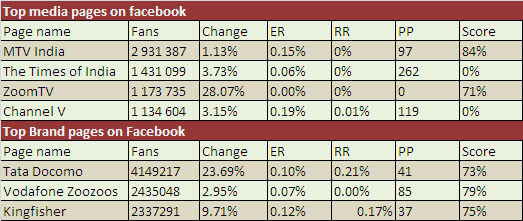
    ER = Engagement Rate, average number of total interactions to the pages posts divided by the number of fans in the last 30 days
    RR = Response Rate, the pages response rate to the user questions posted on the wall in the last 30 days
    PP = Page Posts, the number of the posts by the page in the last 30 days
    Score = The score of the Facebook page, a Socialbakers only metric that we create out of 30 different parameters

    Source:

    http://www.socialbakers.com/facebook-pages/brands/india/
    http://www.socialbakers.com/facebook-pages/media/india/