Tag: brands

  • PoV by Pallavi Mathur Lal: It’s time for brands to bring sustainability conversation to consumers

    By Pallavi Mathur Lal


    Sustainability is a complex encompassing term that refers to the ability to maintain resources for use but also for future generations. While it is often associated with natural resources, it includes societal and economic resources. As Sustainability or ESG (Environmental, Societal, Governance) movement gathers steam all over the world, we see many ‘push’ factors for businesses and companies.


    In India, we see many actions of global companies as they follow their global directives as part of the UN Global Compact (2000), to adopt sustainable and socially responsible policies and practices. We see many corporates and businesses, both in public and private sectors, refer to the SDGs (17 UN Sustainable Development Goals formed in 2015) as informing their wider sustainability strategies.


    While Governments, NGOs, and businesses have sustainability mandates, the consumer sphere is still lacking this new infusion of sustainability as a critical focus.


    Sustainability, however, is not easily sold to consumers: In a global survey conducted by Ipsos on consumer attitudes toward sustainability issues, it was found that consumers hold companies and governments responsible for sustainability. They are willing to act but feel that their impact as individuals is limited. This is true if you look at the stats – the responsibility for 71% of global emissions lies with the top 100 companies!

    Brands and businesses, hence, have a crucial role to play in promoting sustainability, as they are major drivers of consumption and resource use. Brands have the window with consumers to communicate directly about their values and benefits. India, however, as a market is not as mature as the Western, more developed markets and so the questions for us are: Are consumers ready for this? Will it help brands to strengthen their relationship with consumers, ultimately moving towards consumers considering, buying, and advocating their brands?

    As per the Ipsos Global Trends survey 2023, in India, 60% of consumers strongly agree that we are headed for environmental disaster unless we change our habits quickly. Even with this realization, we know that sustainability is not an easy sell to consumers – the say-do gap is real. From another BCG Global study we know that while 80% consumers in 8 countries (including India) were concerned about the environment, only 1-7% have paid a premium for sustainable purchases.

    Seeing this hesitation in consumers, brands are also holding back talking about the sustainability benefits for the fear of being perceived as being more expensive and losing consumer approval (and demand). However, in this circle of communication and action, brands need to bring more progressive messaging toward the environment and even the societal action that they take. In this way, they build more value around sustainability.


    What brands can do to establish the right connection?: This is like the chicken and egg situation: Should the brands start talking sustainability first (even when the consumers seem unwilling) or should the consumers start demanding it first and then the brands get into action. Sustainability will come into the conversation sooner than later. There will be some brands which would have started building the connect early and benefiting from it, while other brands will be slower and more reactive.

    In addition, for brands to talk about sustainability and use the right messaging is tricky. Unless brands have sustainability built into their core, into their strategic priority, the messaging can backfire. Consumers are wary of, and call out greenwashing, which can end up harming the reputation of the brand, and examples of Volkswagen in 2015, and of H&M more recently in 2022 are before us.


    So, what can a brand do to establish this right connection with their consumers? Here are some research-backed pointers:

    1. Communicate the Co-Benefit: Sustainability as the key benefit, with a higher price is not going to go down well with the majority. All said and done, we have seen that the mass consumer is not going to pay extra for just a sustainable claim or benefit. Consumers still need to see any product performing well on its functional aspects or cater to them emotionally, with sustainability at best being a co-benefit.

    2. The ‘Push’ doesn’t work: Any ask/ call-to-action that requires a change in set behaviour patterns or a habit is going to be difficult for consumers to adopt. Hence, marketers are looking for ways to make changes in their products and packaging which do not alter or modify the performance of the product, nor does it expect consumers to make substantial changes.

    3. Create the ‘Pull’: An Ipsos meta-analysishas shown that it is important to focus on people, and their problems, rather than just the brand which is providing the sustainability message. No surprises here – consumer-centricity is already a mantra we follow, but this means that we need to dig even deeper into concerns, behaviours, and problems to see how we first highlight the key problem that the consumers are facing. After establishing this, and showing the current non-sustainable practices, a more sustainable solution can be offered by the product or brand.


    Use authentic cues and messaging – Dipping into our cultural heritage, and sustainable practices: The way awareness about the climate crisis is increasing and sustainability conversations are making their way into many aspects of our lives, brands will have no choice but to directly or indirectly cue that they support sustainability, promote some cause, or propagate good practices to stay connected to consumers. Fortunately, we have some particularly good practices in India, from our heritage and cultural roots, that brands can leverage to cue their sustainability leanings.

    :: Living in harmony with nature: Our traditional ways are nature and animal friendly and about peaceful coexistence with them. Some of our religions have us worshipping plants like tulsiand using plants for medicinal purposes and for cooking and flavoring. We also have in our mythology, animals as avatars of gods and goddesses or as mounts, making us sensitive and protective about animals.

    :: Frugal, low wastage, savings ethos: In India, we have an ethos of wasting very little material or food and conserving our resources. Traditionally, we have always saved money for the future. Food wastage is also not in our nature. Worshipping Annapoorna Devi, the goddess of food and nourishment, ensures that we have a respectful relationship with food and food sources.


    Frugality, to some extent, is getting replaced by ‘living life to the fullest’, ‘living for the moment’, YOLO and what have you. However, the frugal mindset does exist in our collective recent memories and can be rekindled by showing the positives associated with the larger good.

    :: Sustainable materials: Our everyday utensils are made of stainless steel and traditionally of brass or copper – unbreakable and non-disposable. This ensures long-lastingness and a one-time investment that pays off for years. Traditionally we have also used banana leaves which can be discarded, are biodegradable, and avoid the use of any cleaning materials. Till even three decades ago, plastic had not made such inroads into our daily lives. We used sustainable materials like paper to wrap things and carry bags. Cloth bags were carried when we left home for shopping and used for bringing back groceries and vegetables. Using earthenware to keep our water cool, was another sustainable way – with refrigerators and ACs being a relatively recent phenomenon.

    :: Sustainable practices: Till some years ago, new clotheswere bought only on birthdays or festivals. Maintaining one’s clothes or other objects around the house (like furniture or upholstery) was a matter of pride and care was taken to preserve them for years. We wore hand-me-downs not only from our own siblings but also cousins and neighbours’ older children. We also had their toys and books. In fact, the ‘pre-loved’ clothing trend is a hark back to the same philosophy. Bathing was from a bucket and not from water-wasting showers.


    With all this context, it seems that brands need to start the conversation on sustainability with consumers already. Consumers understand and are concerned about the Climate, about the environment. The increased conversation – cued directly or indirectly – will help highlight the criticality and will increase the value of a sustainability benefit to the consumers. There are consumers who will appreciate a brand for its progressive portrayals and messaging regarding sustainability, consumers who will bond with brands who start these conversations with honesty and transparency, and consumers who are looking for brands that fit with their own values and ethics.

    Brands also need to look at ways in which their sustainability claims and benefits make the most sense to consumers, by viewing them from a consumer problem-solving perspective. Our recent foray into globalisation and our memories of sustainable practices that we followed not too long ago can become part of these brand-consumer conversations – making them more realistic and relevant to the consumers.


    Pallavi Mathur Lal is Senior Director and Head of the Knowledge Initiative at Ipsos India

     

  • Indian consumers spend up to 187% more on brands they follow online: Waggener Edstrom

    By A Correspondent

    Integrated communications agency Waggener Edstrom Communications (WE) released a proprietary research report “Content Matters: The Impact of Brand Storytelling Online in 2014”.

     The study surveyed over 2,200 consumers between the ages of 15 and 60 across 10 Asia Pacific markets including India, to look at the impact of brand storytelling online ondriving key consumer behaviours such as brand advocacy, spending, and engagement across six business categories.

     “Communications professionals across Asia find themselves under increasing pressure to prove the ROI of their investments in digital content. The study revealsa clear relationship between brand storytelling online and increased consumer spending, referrals, and engagement,” said , Vice President of Digital at Waggener Edstrom’s Studio D in Asia-Pacific. 

     Respondents were asked a series of questions related to how they interact with brands across different business sectors, including Travel & Tourism, Mobile Devices, Consumer Electronics and Appliances (excluding Mobile Devices), Food & Beverage products, Personal Care products, and Healthcare.

    “Across all markets and business sectors, we found that consumers who are exposed to brand content regularly through social channels spend more on products and services than those that don’t. Indian consumers who engage with their favourite healthcare brands online spend 187% more than those that don’t,” said Stephen Tracy, APAC Lead at Waggener Edstrom’s Insight & Analytics (I&A) practice.

     A staggering 97% of the Indian respondents surveyed follow their favourite brands on social channels. Of this, while mobile devices, consumer electronics, and food & beverage products are among the top three sectors, it is interesting to note that 72% of the Indian consumers surveyed follow their favourite healthcare brand on social channels, which is even higher than the Asia-Pacific average for the healthcare sector at 48% and even ahead of the Indian travel and tourism sector at 68%.

    “As social media adoption and usage is flourishing in India with the second largest Facebook population worldwide, the study shows that in 2014 multi-channel brand storytelling is central for brands to be rewarded with larger spends, engagement rates, and higher levels of brand advocacy,” said Madhuri Sen, Managing Director – India at Waggener Edstrom.

     “While India has the second lowest rate of smartphone penetration across all markets covered, it is notable to witness the significant growth of mobile IM platforms such as WeChat and Line as these platforms have become more like social networks rather than just instant messengers. The study shows WeChat and Line as the third and fifth most frequently used platform after Facebook and Twitter among the Indian consumers surveyed,” Ms Sen added.

    The complete study from Waggener Edstrom can be downloaded from http://apac.waggeneredstrom.com .

  • Is negative publicity a positive for brands?


    By Meghna Sharma and Ananya Saha


    The Indian Premier League had more than its share of negative publicity this season. Did the brands associated with IPL get affected too? And is it possible for brands associated with an event to avoid negative publicity around the event? Or is any publicity good publicity? MxMIndia spoke to industry professionals to find out what brands can do in such a negative scenario.


    Harish Bijoor, Marketing & Brand strategy specialist and CEO, Harish Bijoor Consults Inc

    Brands are like human beings; they are born, they live, they thrive and then they die. In this entire life-cycle, if a brand has a slur cast onto it, this slur lasts as long or as short as the memory of the brand-audience. A controversy is both good and bad for the brand. It is good as it keeps the brand in public mindsets longer, it is bad because it is a canker that affects the image of the brand at large.


    Brands that are active, dynamic, have large mind-shares and market shares alike, cannot really stay away from controversy. The silver lining is the fact that public memory is proverbially short. Very short. Irreverent brands love all kinds of publicity. Possibly IPL is on the cusp of being an irreverent brand. All controversy is good for such brands.


    Vandana Das, President, DDB Mudra Group, Delhi

    I do not think that any brand associated with IPL got affected with the recent controversies. Brands have their own long-standing equity. Controversy is the pivot, but not necessarily everything in the periphery will get affected. What is important to note is that controversies are short-lived and brands have a longer life than a controversy. While one can say that IPL is in trouble, one cannot say that the brands are in trouble. It is not that the brands knowingly get into controversy. Brands do not have the control or have influence over such controversies. The brands tend to tide over it. At that particular moment, controversies seem big but brands tide over it.


    But this in no way means that any publicity is good publicity. At the end of the day, even short-lived negative publicity can affect a brand. And if a brand is not strong enough, it can even dilute its equity. Just like people, brands also need to avoid any negative publicity around them.


    Sachin Kapur, Chief Marketing Officer, Groupon India

    I particularly do not think that brands associated with IPL will get affected by negative publicity, primarily because it is not in the brand’s or brand manager’s hands. Yes, there are brands riding on the popularity of the event, the association is more to do with individual team or player. The overall interest in the IPL might go down, and while brands might have associated with the event to gain from it, it is still a long shot to say that it might have affect on the brands.


    Today, with active social media, even one negative blog post or tweet spreads like wildfire. It will reach your customer.


    There are times when there are situations, negative situations, surround a brand. These are times that challenges or reactions from the brand do not go down well with the consumer or audience. But no brand, whether six-sigma complaint or not, can stay down for long. The strategy of every brand should be to focus on customer.


    Amitabh Khona, Communication Consultant

    Today, crisis management is very important. Everyone knows about the Cadbury and Coke controversies, but have people stopped eating or drinking them? No. It depends on how a brand strikes back. For instance, Cadbury changed its packaging after worms were found in one batch. Also, another factor is the short memory of people. We will talk about something for a few days or months, but forget about all of it later and move on with our lives. Same can be said about IPL, although the recent events are all over the news channels and newspapers, people haven’t stopped watching the matches.


    Also, today where there are too many brands, one can say that any publicity is good publicity. No one will go out of business because of negative publicity or controversies. Such things keep happening and will continue to happen, everywhere in the world.


  • The Anchor: 5 errors brands made on social media in 2012

    By Rajiv Dingra


    #1 The brands assumed that everything that works offline also works online. Just because you might have a sexy campaign offline, does not imply that it will remain sexy on social media.


    #2 Purely looking at marketing, and not looking at social media as a customer-relationship medium.


    #3 Focusing more on content more than communication. There is too much focus on gifts, contests and participation, with very little focus on what message is being passed through.


    #4 Inability to differentiate between customers and users. There are people who come to your fan page and ask serious queries about products. But we are chasing numbers of fans instead of individually replying to those customers.


    #5 Larger number of fans or spread of platforms does not mean presence on social media. Social media is as good as your last update, or campaign, or how it engages the fans. Social media is an ongoing daily effort to be responsive, interactive. Presence on platforms does not imply that you are doing social media.


    Constant innovation, and constant upgradation, is the need of the hour.


    Rajiv Dingra is CEO of WATConsult.com


  • The Anchor & Young Track by Samyak Chakrabarty: 5 brands that appeal most to urban youngsters

    What’s a 23-year-old writing a column on a site where the average age of columnists is… ? Ok, ok, we won’t reveal that number, but like it or not the youth constitute a majority of India’s population. Since the last few years, young Samyak Chakrabarty has been in and around media events and offices with his vision of how the youth can be targeted.


    In this period, he has organized a few conferences, participated in several of them in India and abroad, and works as Chief Youth Marketer with the DDB Mudra group. He’s organized a TedX youth conference in Mumbai, was invited to meet Hillary Clinton when she visited India and has co-authored a book ‘Generation Einstein 3.0 – India version’.


    Samyak’s column appears on Wednesdays and as the title suggests, it tracks the young – specifically keeping in mind the advertising, media and marketing fraternity – Ed


    My team and I recently conducted a brand tracker to check as to which brands enjoy maximum top-of-mind recall these days. This of course has nothing to do with actual purchase decisions due to other factors such as price, availability etc. This survey is themed on the effectiveness of campaigns, presence at which touch points, core message and the overall aura. (This is not in any numerical order.)


    Airtel


    Specific campaign: Har Ek Friend Zaroori Hota Hai


    Why it worked:


    1. Use of normal everyday students (as models) in all the visuals made it more relatable as well as appealing.


    2. The sound track was easy to understand, fun to repeat.


    3. It conveyed that as a brand, Airtel understands what the average youngsters needs from a mobile provider and will strive to deliver it.


    Redbull


    Specific Campaign: College sampling (continuous)


    Why it worked:  1. Use of good looking promoters and well designed creative collaterals.


    2. Presence outside colleges at strategic times such as after exams, during college events or late evenings when students are tired and about to leave.


    3. The TG gets to experience the product right where they are without having to go anywhere.


    Bindass


    Specific campaign: Be Restless – Do More


    Why it worked:


    1. Shows like Emotional Atyachaar and Super Dude and their promotional activations keep the TG engaged – everybody watches it even if it is to make fun of it.


    2. Their association with marquee music festivals like NH7 or David Guetta give an impression that the brand is an enabler of all cool things youngsters like.


    3. The very tag line captures what youngsters are all about today and hence develops an easy appeal.


    Pepsi


    Specific campaign: Change the Game


    Why it worked:


    1. Football is slowly becoming a ‘cool’ sport to be associated with and hence the brand becoming an early adopter earned them a lot of brownie points especially when it been forever known to be only associated with cricket.


    2. Like it or not, Ranbir Kapoor does have a considerable influence on guys as well as girls when it comes to brand endorsements.


    3. Perfect timing in sync with the football cup which was being sponsored by coke. Yet – pepsi enjoyed more association to that sport amongst average youngsters (who may not be football fans but still think of it to be cool).


    Anna Hazare (Shocked to see this name come up myself – but proves to be an interesting case study on Youth Marketing)


    Specific Campaign: Anti Corruption Movement


    Why it worked:


    1. Anna is no longer one person, it personifies a mass demand for transparency and good governance. Youngsters no longer want to live in a world of economic uncertainty and populist democracy – hence this movement gave voice to what they wanted.


    2. Inclusion of youngsters in the strategy and implementation of the entire movement. In marketing terms, youth became custodians of “brand anna”.


    3. Effective and optimum use of social media. Rather than encouraging Facebook activism alone, they use the network as a mere tool to excite and ignite.


  • Need to monetize radio-social media connect (+Vdo)

    By Robin Thomas (Videos: Insiyah Rangwala)


    Social media has, more or less, become a necessity for every organization today because the consumers are out there and no brand can afford to not be interacting with them. Moreover, social media can also help  brands know their consumers’ thoughts, behaviour, likes and dislikes. It also allows brands to have a two-way communication with their consumers, and thus provides high level of interaction and engagement. And it is not just brands but other media like radio stations which are coming out with innovative ways to connect with their listeners through social media.


    At the sidelines of the India Radio Forum (IRF) 2012 industry veterans from the advertising fraternity discussed the importance of social media for radio.


    Mr Premjeet Sodhi, COO, Lintas Media Group said: “Social media is certainly important for not only the radio industry today, but also for every other medium. In the long run we will see more integration taking place between social media and radio.”


    Mr Raj Nayak, CEO, Colors- Viacom 18 explained: “Social media is growing by the day. Today almost 65 per cent of the people in India are below the age of 35 and 50 per cent are below 25 years of age. I believe this is the fastest growing medium, therefore, it is a very important medium and those that have not got onto social media, must get on before it is too late.”


    Mr Suman Srivastava, Founder and Innovation Artist, Marketing Unplugged said: “Social media is important for radio at two levels. One is to connect with the listeners and therefore, get much larger engagement which might even result in an increase in the reach. On the other hand, it is a fantastic medium for radio channels to build their own brands as well as the brands of their advertisers. In the future, I believe, we will see a lot more advertisers using radio and social media together along with, perhaps, ground activations to create events which could have a multiplier effect for those advertisers.”


    Speaking on the need for radio to partner with clients, Mr Vinay Bhatia, Customer Care Associate and Senior VP- Marketing, Shoppers Stop said: “The real big partnership for radio and their clients is in the digital space. Digital and radio have to come together and ally in such a way that they deliver joint value to the client, and I don’t think any of this is happening today. Radio is an out of home medium and we are increasingly seeing out of home consumption for digital. I think these two medium can go very well together and brands like ours which have large Facebook pages need content, we need engagement and I think radio channels that provide us that.”


    Mr Harshad Jain, Business Head – Radio and Entertainment, HT Media said: “Radio is a medium which is free of cost, it is the cheapest form of entertainment in the country, and if there are issues that can be interlinked with social media, it could call for a good integration. Having said that, it is still early days because radio as a medium still has to catch up big time before it starts integrating with social media.”


    While there are calls for integration between radio and social media, the radio industry must also find ways to monetize the radio-social media connect. Mr Sodhi pointed out that while social media can make radio activations richer, it is vital for radio stations to find newer ways to monetize this activation.


    Agreeing with Mr Sodhi, Mr Raj Nayak said that no business will work if there is no monetization. He added: “One of the biggest disservice broadcasters have done is that they have not woken up to the digital media.”


    So while radio and social media will see more integration in the long run, there is also another school of thought that believes that radio is still at a nascent stage and has a long way to go before it can get into integration with social media. However, monetization is the key for survival of any business and radio stations must find ways to monetize its social media activations.


  • Authenticity and engagement is what brands must give consumers: MTV youth summit

    By A Correspondent


    Brands today need to listen, learn and begin to engage with the youth; they need to be authentic as young people today are willing to speak positively about the brand they trust. These were some of the points discussed at the ‘MTV Power of One’- Youth Marketing Forum 2012.


    Ms Angela Barkan, Senior Director, Marketing and Publicity, Sony Music Entertainment; Mr Chetan Bhagat, Author of five blockbuster novels; Mr Andrew Ridley, Executive Director and Co-Founder, Earth Hour; Mr Henri Holm, Senior Vice President, Rovio Entertainment, the creators of Angry Birds; Simon Smith, European Digital Director at Interbrand were some of the speakers at the Youth Marketing Forum which saw presentations and a panel discussion on ways to engage the youth in the digital media era.


    Aditya Swamy

    The MTV Youth Marketing Forum 2012 kick-started with Mr Aditya Swamy, EVP and Business Head, MTV India sharing some of the findings from the MTV’s study on the Indian youth. The study titled ‘Power of One’ was unveiled on Friday, April 27. Mr Swamy said that over 5,000 youth were interviewed across the Country and an overwhelming 76 per cent said that they are happy with their life. According to the findings, for today’s youth family is more important than their friends, as a lot of young people see their parents as their role model.


    The survey also says that 97 per cent of the youth believe that they can bring about change and that social media has given them a voice, thus making them feel empowered. “Single screen engagements are not going to work, today web and mobile are required to engage the youth. Today the youth do not need inspirations but engagement, so there needs to be a two way conversation. If brands learn to keep the promises they make to their consumers, it will see more people, particularly youngsters flocking towards their brands” Mr Swamy added.


    Andrew Ridley

    A good idea needs good platform:

    Mr Andrew Ridley, Executive Director and Co-Founder, Earth Hour spoke about how the movement first started in one city -Sydney, before it became a global movement. He spoke about how every individual has the power to change the world they live in and how social media strengthens that power and provides a vehicle to take action. Citing the example of how Earth Hour was designed to build reach and increase its reach to billions of people around the world, Mr Ridley was of the view that a good idea needs a good platform in order to reap rich benefits. “I believe that for the first time we have the power to connect. We are still at the initial stage of creating a big change, but if our core idea is relevant and connected to the young people in particular, it will lead to a huge change in the world” said Mr Ridley.


    Henri Holm

    It’s all about communication…

    Speaking on the success story of Angry Birds, Mr Henri Holm, Senior Vice President, Rovio Entertainment, said that it took the company nearly eight years to be where it is today. He also spoke about how to engage the younger generation with the powerful concept and the characters and also how the distribution channels were also chosen carefully to reach out to the millions and to be of service to the fans. Since youth is the core TG, Rovio Entertainment hopes to stay relevant, connected and constantly find new ways to engage the youth.


    Besides the online experience, Angry Birds also gave the audience offline experience of the game, thus not only engaging its TG but even getting newer audience. “One of the reasons for the success of Angry Birds is its simplicity. We put a lot of weight on communication and feedback from our audience, therefore for us it is all about building business with fans and not features. Angry Birds is a permanent part of the youth culture and our aim is to further service the youth efficiently in the years to come.”


    Chetan Bhagat

    Reaching out through social media

    Author of five blockbuster novels, Mr Chetan Bhagat, also known as the marketing guru gave his insights on marketing. He said that social media is a good way to execute the power of one: “Social media has become very popular today and one must know what a Facebook or a Twitter is. As far as I am concerned social media is a great platform, my goal is to reach out to maximum number of people and social media is one of the ways to reach out.”


    He said that one of the reasons why his books worked was because the plots were tight, they were unputdownable, the language was simple, and the characters were relatable. Mr Bhagat also gave some insights into the mind of the youth. He said that the youth today has the ‘hunger’ to do well in life, to gain respect and make money; that they want an education that could provide them skills that would help them make money. Besides the love for their careers and seeking out their love, youth today deeply care for their country and are willing to clean up the system.


    Simon Smith

    The power of one

    Mr Simon Smith, European Digital Director, Interbrand spoke about the power of conformity, and the willingness to conform publicly in order to attain social rewards. We need to understand the power of one and how powerful it is. The power of one, I believe, is simply about being human. One must not move with the crowd but, remain an individual he or she is supposed to be. “Fundamentally, as humans, we haven’t changed much, but our expressions to our needs have dramatically changed with technology, society and changing power structure. The relation between brand and consumer has fundamentally changed, so if a brand makes a promise to its consumers, it better deliver on those promises or the consumer will never trust the brand and influence others to rebuke the brand too.”


    Angela Barkan

    Authenticity and the art of listening to the youth

    Ms Angela Barkan of Sony Music International spoke about millennials, youngsters aged between 12 to 30 years. She was of the view that millenials are multi-taskers and optimists, that they expect brands to be authentic and have two way communications with them. She also said that this is a group which loves to share and that they define themselves by what they share. She also said that this unusual group is found mostly online. “Collaborations and interactions are very important when talking about music as it results in lifelong fans. However, there is a need for brands to be authentic because if a brand is authentic, then millenials are willing to speak positively about the brand they trust.”


    Reaching out to the youth

    A panel discussion which included eminent panelists like Mr Avinash Pant, Marketing Head, Nike India; Mr Sumeet Pahwa, DGM – Marketing, TATA Docomo; Mr Vikram Malhotra, COO Viacom 18 Motion Pictures; Mr Bejoy Nambiar, Director and Screen Writer; and Mr Ayushman Khurana, VJ turned Actor and was moderated by Mr Nikhil Chinappa, VJ and Founder, Summer Sunburn Festival spoke about the difficulties of marketing to the young generation and the possible ways of reaching out the youth. They also spoke on the role of social media marketing and whether social media is actually an effective tool to reach out to the youth.


    Mr Pahwa spoke about how the social media is a big platform to engage the youth citing the example of how it helped Tata Docomo successfully engage the youth by having a two way conversation with them.


    According to Mr Malhotra, “Brands need to listen a lot more, even to criticisms, and problems must be solved as and when brought by the consumers. The attitudes of the youth are fast changing, today they trust their family and friends more than the brands, hence brands need to listen, learn and begin to engage with the youth.”


    Mr Pant was of the view that the youth today are looking for innovation: “Things are moving so fast today that our conventional thought process itself needs to change drastically. We have to think a lot more digital.”


    Ayushman Khurana pointed out that the youth do not have the patience to listen, but they do have a strong opinion about films or any other product or brand. So one needs to understand its audience and find ways to connect with the audience and have a two way communication with them.


    Be authentic, have a two way communication, listen a lot more to your consumers, respond to criticisms and fix problems because young people are willing to be advocates of brands on social networking sites as long as they trust it otherwise brands must be ready for a backlash. These are some of the lessons to be learnt from the MTV Youth Marketing Forum 2012.


  • The Anchor: Sanjeev Singhai on 6 reasons how brands benefit by specific ad solutions

    By Sanjeev Singhai


    1) Advertising informs and educates

    Advertising delivers news around the brand to consumer. explains how brand is the best fit around taste, value for money or lifestyle that the consumer is looking at, thus making it easy for consumer to make the purchase decision. It can also be used to explain complex product feature or clarify consumer doubts around the brand or raise awareness among consumers about the new variety or categories of products and services that the brand has to offer.


    2) Advertising differentiates

    With advertising, brands can rationally differentiate themselves by highlighting their unique selling points which makes it stand different from other brands, making it easier for a consumer to make a purchase decision.  It also stimulates competition in the marketplace and allows space for the category to grow.


    3) Advertising persuades to purchase

    Advertising aims at persuading the potential customers, impacting their intention to purchase the product. Advertising attracts attention towards a product, and by sharing its unique features, advantage and benefits, creates desire to have the same and finally induces consumers to visit the market and purchase the same. Advertising has psychological impact on consumers. It influences the buying decisions of consumers.


    4) Advertising drives sales

    Advertising not only creates an emotional connect between consumer and the brand but can also be used to support the sales promotion efforts of the brand, allowing it to make positive contribution in sales promotion. Thus advertising help brand contribute to company’s growth and profitability.


    5) Advertising creates demand (drives trial)

    Advertising spreads information and encourages consumers to ‘try’ new products. Such advertising leads to product trials, thereby leading to creation of new demand. Various promotions are offered to consumers in the initial period giving them an inertia to try the new product and generate positive response which helps in creating new demand from non-users and build a relationship with brands.


    6) Advertising helps brand reinforcement

    Advertising helps in reinforcing brand’s name and image to the public, which can be part of a long-term marketing strategy. For example, when Nestle produces an ad for Aata Maggie, it is not only telling the benefits of that product but is also keeping the Maggie brand live in the minds of consumers, which can also help the sales of its other products. Advertising help build brand image with distinct personality of the product. Advertising builds brand image and this develops consumer loyalty towards a specific brand.


    Sanjeev Singhai is Business Director – Indian Sub Continent, Buchanan GroupIndia


  • The Anchor: Anita Nayyar on 6 things she has learnt from being in the media business

    It seems like a lifetime that one has been in the media business. One learns from every profession but it’s a different learning if one has had a dramatic shift in professions. From being a Microbiologist & Pathologist to the business of Media has been a long and interesting journey.


     

    Passion pays:

    Passion pays tremendously. Inspite of a dramatic shift in profession I realize that it was/is my passion to excel in whatever I do, has paid off in my career.


    Adapt as you progress:

    Key to success is to be always ready to adapt oneself especially in the fast moving and evolving industry like media. From full service to media brands, from implementation to strategy and planning, from traditional media solutions to integrated solutions, from media to communications, from media planning to communication planning.


    Eye for detail:

    As they say “God lies in the details”. In the fast paced, unorganized world of media and advertising unplanned and non implement-able big ideas fail to make impact of any kinds.


    Hardwork & Dedication:

    There is no shortcut to success. Hardwork and dedication are the key ingredients to a good professional recipe. Especially when you don’t have any mentors. Get known by your work.


    Multiple solutions:

    It is important to always have multiple solutions; it reduces the chances of failure.

    Alternates are keys to media solutions.


    Never repeat mistakes:

    In media you are allowed to make a mistake only once hence, never ever repeat a mistake, it costs.


    Anita Nayyar is the CEO, India & South Asia at Havas Media


  • Who’s better for brands – mascots or celebs?


    By Shubhangi Mehta


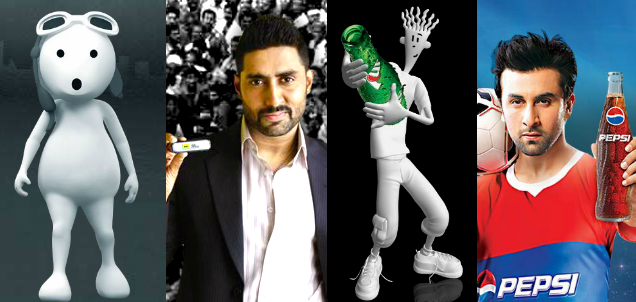
    Mascots can be regarded as the face of a brand. Be it the ‘Amul Girl’ who is a part of every household since 1967, ‘Chintamani’, 2005, the common man ‘RK Laxman’, 1954, ‘Maharaja’ 1946 or the latest ‘ZooZoo’. Mascots provide an identity to a brand which is equivalent to the brand itself.


    It was in the late ’90s when the advertising industry gained pace with more and more brands wanting to endorse themselves to reach out to the consumer is when the brands started associating with celebrities to create a mass appeal.  With Sachin Tendulkar, Amitabh Bachchan, Shahrukh Khan and every other celebrity promoting not one but half a dozen brands.


    So what does a consumer gets hooked to Sachin’s Pepsi commercial or Fido’s 7UP? Abhishek Bachchan for Idea or Zoozoos for Vodafone?


    Sameer Satpathy

    Says Sameer Satpathy, EVP & head, Marketing, Marico Ltd, “Choosing a celebrity or a mascot depends on your brand strategy. Both are a legitimate way to communicate your message.  The celebrity route has higher risk as you get both the positives & the negatives of your brand ambassador, but you can get results quicker as it only depends on the ability of your brand to leverage the equity of the celeb. The mascot needs to be built, invested into and in time can become a powerful and exclusive property. Also, certain categories lend themselves better to brand ambassadors like beauty brands and some categories to mascots for example brands targeted at children. For me the most memorable celebrity for a campaign would be Tiger Woods! J But for the wrong reasons.”


    Abhijit Avasthi

    According to Abhijit Avasthi, NCD, Ogilvy &Mather, “There is never a set rule whether a brand should go with a celebrity or a mascot. It mainly depends on the nature of the campaign. A well known celebrity face has its respective positives and so does a mascot. Though there is a great chance of a brand being lost in the clutter while using a celebrity. Mahendra Singh Dhoni is presently endorsing over 20-25 brands but when it comes to recalling a brand I can only think of 5-6 of those. Hence it is very important that the celebrity, if used, is used perfectly. For me the ‘Amul Girl’ and ‘Zoozoo’ are two of the most memorable mascots. When it comes to celebrities, I think Titan and Coke have used Amir Khan perfectly and so has Pepsi used Sachin.”


    It may be noted that a mascot is created by keeping in mind the brand whilst a celebrity being a mortal, may be a perfect choice to endorse a brand at a particular time but with time the image of the celebrity may change, which in return may or may not fit with the brand image.


    Ajay Kakar

    Says Ajay Kakar,CMO – Financial Services,Aditya Birla Group,, “It is true that a brand can ‘own’ a mascot. While a celebrity is an asset shared by many brands. But I do believe that both these mnemonics or devices are not necessarily interchangeable. Both of them have a unique role that they can play in the life of a brand. Now it depends on the specific brand, as to what is the desired role.


    “A celebrity can definitely create a more immediate pull for a brand, because the celebrity is already well known and has a fan following. On the other hand, a mascot may take time to ‘grow’ on its target audience. Similarly, a celebrity can help create a more emotional or personal connect, due to the ‘human’ factor. So, it is a question of horses for courses.


    “The Amul girl is a ‘mascot’ that immediately comes to mind. It has withstood the test of time, across ‘generations’. “As far as a celebrity-brand partnership is concerned, regrettably, today’s celebrities tend to take-on one too many brand associations, so it is difficult to associate them with any single brand. The two exceptions that do come to mind are Abhishek Bachchan and idea. And Yuvraj Singh and Birla Sun Life Insurance.”

    The fact also remains that a celebrity can give instant boost to a brand whereas a mascot needs time investment before it becomes a household name. At times a mascot may not click with the audience but the ‘non-click’ risk remains minimal in the case of a celebrity.


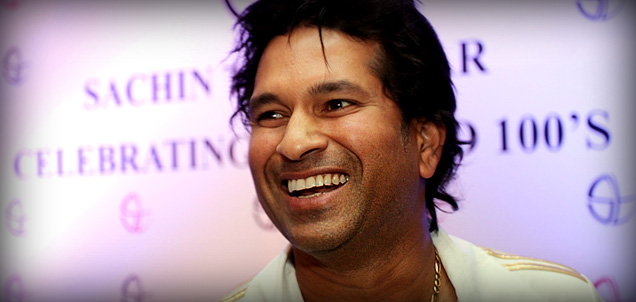
  • Is Sachin’s brand aura on the wane?


    By Binoy Prabhakar


    Even if you are cricket’s greatest overachiever, there is no escaping pressure. When Sachin Tendulkar recently collected his latest superlative – a century of centuries – the deed helped banish the pressure of ‘when’ that had been building up for a year. No sooner did he say “phew!” than a new pressure took the earlier one’s place: his retirement.


    The answer from the man himself, though “in a not Tendulkar-like way”, according to Mr Suresh Menon, editor, Wisden India Almanack, was: “When I retire is something I will decide…” Mr Menon broached the subject in a rather unflattering article earlier this week. “… the pressure on Tendulkar now is to keep playing so his minders can squeeze the last drop out of his huge commercial value,” he wrote.


    Mr Menon called this the “flip side of the millions”. “High earning sportsmen make a Faustian deal with the money devil; they are paid sums beyond the dreams of avarice for a decade or two… the devil demands his part of the bargain. Keep playing. Keep bringing in the money,” he wrote.


    Brands Tendulkar Endorses…All the deals are pre-existing, no new deals since the ‘Century of Centuries’Aviva, Adidas, Amit Enterprises, Audemars Piguet, Boost, Coca-Cola, Canon, Castrol, Sach (private label Kishore Biyani’s Future Consumer Products Ltd has created with Tendulkar), ITC Sunfeast, Jaypee Cement, Kaspersky, Luminous, RBS, Reynolds, S Kumars, Tohsiba

    Moot Question

    It still does not the answer the critical question: when will Tendulkar call it a day? But if endorsements were the deciding factor, as Mr Menon suggests, the answer would be 2014. All the 17 endorsement contracts in Tendulkar’s kitty run until then, according to his managers, World Sport Group (India) Pvt Ltd. Tendulkar remains among the highest-earning sportsmen in the country, second only to India captain MS Dhoni. But at least for now, there is no prospect of brands prolonging his career beyond 2014. No company has signed him up since his last milestone, belying the widely held expectation in the advertising fraternity.


    The only marketing event commemorating his achievement has come from beverages major Coca-Cola, which announced a rollout of 7.2 lakh cans featuring the cricketer. Sportswear major Adidas is preparing to launch a new marketing campaign featuring him in the first week of April. But both are existing sponsors of Tendulkar.


    Is it still early to rule out new sponsors, given that Tendulkar’s feat came about only on March 16? Advertising executives don’t think so. The buzz in the industry is that many companies were in talks with Tendulkar’s managers to make the most of his 100th century. Mr Harish Krishnamachar, senior vice-president and country head of World Sport Group (India) had said the feat will not have any impact on Tendulkar’s valuation. But no name has arrived on the scene.


    That’s because Tendulkar has always been selective about his endorsements, according to Mr Krishnamachar. “And we have never seen a milestone as a short-term opportunity given that our focus has been on creating a sustained long-term value for him,” he says.


    Tendulkar, says Mr Krishnamachar, has been very categorical about what categories he will be associated with and what he will not. “We have a very good assessment of what he is comfortable with and we have stayed true to that.” The brands that Tendulkar has said he will not endorse are tobacco and alcohol, says Krishnamachar. Tendulkar is said to have turned down a multi-crore deal with liquor baron Mr Vijay Mallya’s UB Group two years ago.


    …And Those That Haven’t RenewedContractsPepsi, Action Shoes, MRF, Britannia, Fiat, TVS, Airtel, G-Hanz, Colgate-Palmolive, Philips, VIsa, Ujala Techno Bright

    No New Deals

    Mr Krishnamachar says as far as any other category is concerned, it is something they “will consider as the opportunities present themselves”. But for now at least, there are few on the horizon.


    And all the existing contracts are many years old, even as much as 20 years in the case of Boost. The ‘newest’, if one can call that, is a deal with Coca-Cola signed in early 2011. Tendulkar’s last deals of note too were signed around then – a Rs 9-crore contract with Pune developer Amit Enterprises and another with apparel maker S Kumars for Rs 13 crore.


    Mr Prashant Singh, director of Octagon India, a sports and entertainment marketing company, says it is true that there has been no frenzy over Tendulkar’s latest feat. “There won’t be any until companies realise what his [retirement] plans are,” he says. Mr Singh says in one sense, Tendulkar, who turns 39 next month, is restricted by his own persona. “He has become the grand old man of Indian cricket… a la elder statesman than a player. That restricts more brands coming.”


    Mr Singh says what is keeping new brands away could also be the sheer number of endorsements. “He is endorsing 17; where is the scope for more?”


    Yet, many brands have not renewed contracts (see adjoining chart) with Tendulkar. He also now has few brands that cater to the young, except Coca-Cola and Adidas, an important segment for marketers. This is the upshot, says Mr Krishnamachar, of changing his portfolio of brands to reflect maturity and high-value categories.


    What about his brand value? Mr Santosh Desai, MD and CEO of Futurebrands India, says it isn’t what it was a few years ago. “Clearly, Tendulkar is in the evening of his career.” Mr Desai says the cricketer’s performance of late has been below par and because his century took a long time coming, there was fatigue associated with his feat. Taken together, it explains why Sachin hasn’t received new deals, he says.


    Whether Tendulkar wins new deals depends on how he evolves as a brand ambassador, says Mr Desai. “We have to wait and see… there is no clue from his current endorsements.”


    Source:The Economic Times

    Copyright © 2012, Bennett, Coleman & Co. Ltd. All Rights Reserved


    Photograph: Fotocorp


  • The Anchor: 5 ways a brand can stay relevant

    By Alpana Parida


    #1 Rejuvenate

    An old brand like Pepsi has remained relevant for Gen X in the ’80s and now Gen Y as it has constantly rejuvenated itself. If a brand never changes the way it appears – it atrophies and dies. It must constantly rejuvenate itself to infuse freshness and youth into the brand.


    #2 Reinvent

    Environment keeps changing and brands need to reinvent the brand proposition to create relevance. Amul Ghee was slowly losing relevance even in homes where ghee was loved. A dry roti was becoming the norm. At DY Works, we realized that the consumer needed a nudge in reassuring them that there was enough according to Ayurveda that said one spoon a day was good for you.


    #3 Repurpose

    No amount of logo rejuvenation can keep a brand from dying if it does not repurpose its core deliverables in a changing environment. By not taking the threat of digital cameras seriously and in a timely manner, Kodak joined the brand graveyard which is littered with examples of giants who did not read the writing on the wall.


    #4 Retract

    Flexibility is key. Admitting mistakes is greatness. Wrong decisions get taken but brand leaders, like great generals, know when to retreat. Coca-Cola became an American Classic when it quickly retracted its New Coke formulation.


    #5 Restore

    As I was passing by Metro Cinema in Mumbai the other day, I was struck by how little interest there is in restoring its glory. Metro Cinema (1938) is an example of our Art Deco heritage. Today it is a multiplex movie theatre in Mumbai. It was built and originally run by Metro-Goldwyn-Mayer (MGM), the Hollywood studio. This has the ability to become a destination landmark and the equivalent of the Kodak Theater in LA for Bollywood. Sometimes, all that great brands really need is a little restoration.


    Alpana Parida is President, DY Works.