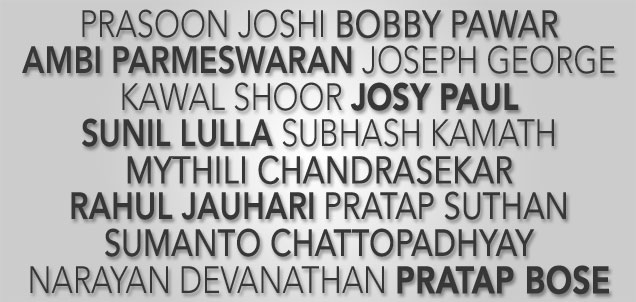
Tag: Bobby Pawar

  • Publicis imparts education on Mutual Funds for HDFC

    By A Correspondent


    The penetration of Mutual Funds in the country is very low and one of the biggest reasons for that is the low awareness of the products and the benefits of investing in them. With the objective of demystifying mutual fund investment, Publicis leverages storytelling to achieve their goal in a very simple yet profound manner. The creative shop has crafted a series of TVCs for HDFC Mutual Fund capturing distinctive situations that interestingly inform people about investing in mutual funds through simple life analogies that are seen through the lens of a little girl.


    In one of the commercials, we see a girl wearing a saree confidently. But later we find that she’s made a mess of it as she doesn’t really know how to wear it and looks up to her mother for help thereby highlighting the importance of taking expert advice before investing in mutual funds. In another commercial, we see the girl swimming like a fish while an older lady hesitates to even put one foot in the pool, which goes on to explain the benefit of starting early when it comes to investing in mutual funds. In yet another commercial, we see the same girl greeting an angry old uncle everyday who eventually melts and reciprocates her actions which further goes on to explain the benefit of regular investments. There are a couple more films on the same line that will run on the digital medium.


    Commenting on the uniqueness of the campaign, Bobby Pawar, Managing Director, CCO, Publicis South Asia says “Most people are scared of thinking about investments, because they feel it is way too complicated for them to understand. So the problem was how do you get them to listen and more importantly learn? We turned to a technique that great teachers employ i.e. make the lesson interesting and fun. From here, we drew parallels between the things life teaches us as we are growing up and the principles of investing in mutual funds. To underscore that these lessons are simple, we told stories through the experiences of a little girl.”


  • Publicis communicates “Always Fresh, Always On” proposition for Park Avenue Deos

    By A Correspondent


    Featuring Farhan Akhtar, Publicis conceptualized a fresh TVC for Park Avenue’s new range of deodorants, which breaks the monotony of passé deodorant ads featuring scantily-clad women getting fascinated with the guy who uses these deodorants. Park Avenue decided to swerve away from the much-exploited ‘get the girls swooning’ plot and, instead in its new campaign, focuses on the benefit of Park Avenues new deo range- ‘Freshness Lock Technology’ which overpowers body odour, thus ensuring fragrance to last longer.


    The commercial shows two young office pals, full of enthusiasm, making ambitious plans, in the morning, to watch a cricket match at the stadium after they get off work. By the time it’s 6 p.m., we see that these youngsters have turned into drooping, depleted old men and have compromised their plans to instead watch the match on TV at home. At this point, Farhan interjects to talk about the benefit of Park Avenue deos offering daylong freshness that enables the user to continue to stay fresh and enjoy the day beyond the work hours. The commercial ends with Farhan himself enjoying the match at the stadium.


    Bobby Pawar

    Commenting on the campaign Bobby Pawar, Managing Director, CCO, Publicis South Asia said “The ‘Shaam ka budhaapa’ idea springs from what happens to a person and his deo; they start the day full of zest but become ‘thakela’ come evening. It is a fresh take in a category that is littered with chicks and wannabe chick magnets. And it will start a new conversation about long lasting freshness. That said, what I liked most about it, when Jigar Fernandes and his team shared it with me, is its potential to create engaging social content and conversation.”


    Raja Chakraborty, Marketing Head, J. K. Helen Curtis, said “The deodorant category is struggling for relevance in consumers mind as a daily wear product. Role of brands is to introduce consumers to newer roles of the same category and back it up with perceptible product performance. That’s the journey we have undertaken with the new campaign for PARK AVENUE. Publicis have played a key role in developing life insights that has gone into the communication. We are quite confident that this communication should generate new trials for the brand”


    The film portrays the reality and irony of daily life – we begin our day full of freshness, but in the evening, when we have time, there’s no freshness / life left in us. An all-day freshness of Park Avenue deo ensures that you have the freshness whenever you need it, which is not only through the day but also in the evening.


  • Big Nite for the Datawallahs!


    By A Correspondent


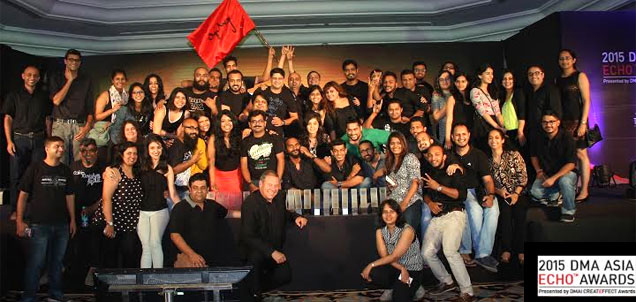
    What’s one awards nite where many of the Big Pros of the A&M-land assembled and, no, it wasn’t the Abby, the Effies, the Emvies or Kyoorius? We’re talking of names like Piyush Pandey, D Shivakumar, Madhukar Kamath, Nagesh Alai, KV Sridhar, Bobby Pawar, Manish Bhatt, Damodar Mall, Tarun Katial and many, many others?  It was the DMA Asia Echo Awards, held last Friday (Aug 6) in Mumbai.


    Fast Facts:

    Entries from 542 participants, 75 agencies, 175 Brands


    Entries from 8 countries – India, Singapore, Hong Kong, Malaysia, Phillipines, China, Japan, Thailand.


    Awards presented:

    4 Overall

    1 Best of Show

    1 Diamond

    142 Metals

    29 Golds

    26 Leaders


    Unilever was adjudged Client of the Year, while OgilvyOne Worldwide was Agency of the Year. Ogilvy & Mather was Network of the Year and WPP the Holding Company of the Year. The Best of Show for Creativity was awarded to Visa India for Visa Sarees and the Diamond for Effectiveness was taken away by OgilvyOne Worldwide Philipines.


    The International Echo Awards are the most prestigious awards in the data-driven marketing and advertising world. This year, DMAi, the Indian association which has been in existence since 1992, was accepted entries from across 17 countries in Asia for both the awards – the 2015 DMA Asia Echo Awards and The DMA International Echo Awards 2015.


    Underscoring the importance of the Echo awards, Rakhshin Patel, Managing Director, Pi Communications & Grand Jury Chairperson, said:  “For an athlete, the Olympics are the ultimate stage. Data-driven marketers share the same feeling about the Echo programme. There is indeed no bigger stage to showcase ideas and work that have yielded measurable, tangible, real results.”


    There were 15 Effectiveness categories and 3 Creative Effectiveness categories each headed by a biggie – Piyush Pandey, D Shivakumar, Madhukar Kamath, Geetu Verma, Nagesh Alai, Jasmin Sohrabji, Anupriya Acharya, Agnello Dias, Pratap Bose, Bobby Pawar, KV Sridhar, Tarun Katial, Manish Bhatt, Nishi Vasudeva, Damodar Mall, Susana Tsui, Anant Rangaswami  and Rajesh Kumar.


    Said Vatsal Asher, CEO & Shelly Singh, COO, DMAi: “We are honoured to be hosting and managing the Asia Echo Awards. Campaigns got judged with the best in the Region. We had a fantastic panel of Jury Presidents and 194 online judges this year. We hope to see an increase the list of Asian winners at the International Echo 2015 awards in the US where all Asian winners will fasttrack to Round 2.”


    As an apex, not for profit DMAi, since 1992, brings about collective action for advancing & protecting responsible Data Driven Marketing and Advertising. The DMAi is run on a day-to-day basis by Vatsal Asher (CEO) and Shelly Singh (COO) and the awards have been championed by Rakshin Patel (Grand Jury Chairperson) and Ajay Chandwani, (Chairman Emeritus).


  • Bobby Pawar & Partha Sinha appointed Managing Directors, Publicis South Asia

    By A Correspondent


    Publicis Worldwide South Asia has announced the promotion of Bobby Pawar and Partha Sinha to Managing Directors. This moves comes as the India agency consolidates following a period of sustained growth that has seen it double its size in the past two years.


    In their new roles, Pawar and Sinha will continue to report to Nakul Chopra CEO of Publicis Worldwide South Asia as they will take on larger responsibilities to partner him in managing all business units in the region. A key focus will be to elevate the agency’s effectiveness in communication that helps lead the change for clients.


    As Managing Director and Chief Strategy Officer, Sinha will lead all strategic development. He will take additional responsibility for the P&L of the Consulting, Design and Digital services in South Asia. Meanwhile, Pawar will be Managing Director and Chief Creative Officer. He will lead creative development and ensure the increasing infusion of digital channels for all Publicis Worldwide entities in the region.


    According to Chopra, the promotions were clear recognition of the positive impact and leadership both executives had demonstrated in leading their agency teams and client relationships, adding: “Both Bobby and Partha have played pivotal roles in delivering the expectations of our clients and in vastly improving our product. They have worked very closely with me and taken the lead in helping Publicis grow at a very rapid rate. These promotions not only recognise their past achievements but also focus on the future where we have high expectations for the continual transformation of our business.”


    In a statement, the new MDs said, “Publicis is on a fast growth track and is increasingly becoming a significant power in partnering clients in the new age environment. Our objective is to become the most significant partner available in this market for brands to navigate and lead the change in society, culture and the marketplace. We are on our way there.”


    Added Loris Nold, CEO for Publicis Worldwide, APAC and Emerging Markets: “Publicis South Asia without doubt has a world-class management team and have achieved great results in the past few years. With Partha and Bobby taking a bigger role, I am very confident that we are best positioned to help our clients in their marketing transformation.”


  • Are we making too much of our dismal showing at Cannes?


    India’s performance at the Cannes Lions this year left much to be desired. Being dubbed the worst ever – with just 13 metals in our kitty – the dismal showing has sparked debates about whether the advertising industry really has quality talent, or should we not make too much of deal of events like the Lions? Three creative gurus weigh in what might have gone wrong and whether we should care at all.


    Bobby Pawar

    Director and Chief Creative Officer – South Asia, Publicis Worldwide


    Frankly Cannes doesn’t matter. Not to our creativity. Certainly not to our business. Why? Our clients don’t care much about it. Our consumers, not at all. So the question is why we should we give a rat’s derriere? Why are we acting like our momma died and beating our chests in loud mourning? Cannes is a pissing contest and we pissed shorter. Today’s India doesn’t like that. And we shouldn’t. Many have argued that our limp performance was because our work isn’t creative enough. Maybe. But I venture we stepped onto the field pads, gloves and carrying a bat, when the world was playing soccer. The game has changed. If you take a look at our entries, I’ll smack my face with a cold pomfret if most of them weren’t in print, outdoor, design and craft. Old world categories, where the old world still plays a stronger game. (Don’t think so? How many Grand Prix’s has India won in them? There.)


    Now, should we change because we want to win awards? That’d be stupid. But the reality is we must, before clients and consumers force us to. If that means we win big at Cannes, great. If not, so be it.


    Prathap Suthan

    Managing Partner and Chief Creative Officer at Bang In The Middle


    There are a couple of reasons why I think we fell short. And I don’t think it an upsetting issue. There are things that we need to consider. The winning countries and the entries operate in spaces that are perhaps very difficult for us to match. The markets require a whole new wedge to drive noticeability, and at least for regular mainstream work, we operate below par. Those are media media-saturated markets, and more importantly creative saturated audiences. It’s a norm for them to do work and expect work that breaks a whole lot of glass ceilings. Our markets and audiences are still tottering around the mofussil of average communication. We don’t need to be creative for the sake of creative. No one has the extra moolah to ply and try to see if completely lateral ideas deliver market efficiency. We are still dealing with entertaining narratives and well crafted advertising pieces. Besides, the tech quotient at play is very far ahead in those competitive markets. There are specialised shops that drive tech ideas and integrate them backwards into communication and creative ideas. It’s a whole new dynamic and our industry infrastructure is not equipped to think or even deliver those solutions or ideas. This gulch is only going to widen. I would rather we focus on what we know best, and work in areas that we can hone to surpass existing levels. And thankfully, there are a lot of categories where we can truly dominate. We need to look our strengths and desist from getting into waters that we can’t cross. It is also important to calibrate the calibre of creative buyers. Truly how of our clients at the senior senior-most levels will push agencies to break every mould. And honestly how many them really know how to evaluate ideas and open up budgets for the greater glory of creative at global festivals?


    Abhijit Avasthi

    Founder, Sideways (ex-NCD, Ogilvy)


    I believe India’s showing at Cannes this year is a temporary blip in a long good run. It is also a reflection and a consequence of a few issues, which can be debated. In certain categories like print/design/promo/digital etc our work is not as cutting edge as the rest of the world. On the one hand, we can try and push that, but then it cannot be at the expense of compromising on its relevance to our markets. That’s a double-edged sword. When it comes to categories like film and radio, where I believe our best work is done, we do have an unfortunate handicap – a lack of awareness and appreciation of our culture, language, social structures and such. No matter how well somebody translates these, the magic of the nuances is lost on the international jurors. As a parallel example, imagine somebody trying to explain the impact of ‘Kitney aadmi they?’ to a film jury? On paper it sounds like the most pedestrian dialogue ever written. There is no way on earth any jury will consider that dialogue a masterpiece. C’est la vie. Our celebrities are not known, our relationships are different…just too many such gaps.


    So the way I look at it…if a piece of work wins at Cannes it is surely world class but if it doesn’t…that does not mean it is not. So we should not get overly dejected by this year’s show.


    Let’s all just focus on doing exceptional, original work for the man on the street in India.


  • Is Bobby Pawar quitting Publicis to join Pratap Bose?

    By Pritha Mitra Dasgupta


    The startup bug has bitten the Indian advertising industry and Bobby Pawar, chief creative officer at Publicis Worldwide, is set to join a growing list of high-profile professionals walking out of their jobs to run their own business.


    Over the past six months, at least 10 senior advertising professionals have left, or are leaving, their top-dollar jobs to launch startups, hoping that the expected revival in the economy under a pro-reforms government and increasing importance of digital and social media will present huge opportunities for specialised and niche service providers. And their number is rising.


    Two top industry executives said Pawar will soon quit Publicis to become a creative and equity partner in a new agency being set up by former DDB Mudra COO Pratap Bose.


    Pawar and Mandeep Malhotra, who recently quit as president of DDB MudraMax, will be in the top management of Bose’s new venture, they said.


    “From business strategy to investors to the branding of the new company, Bobby Pawar is hands on with most of the aspects of the new company and Bose consults him on everything,” one of the executives said. Both Pawar and Bose denied it.


    “There is no truth to it. We are just very good friends,” said Bose. Pawar said, “I’m not joining Pratap Bose, therefore I won’t have any stake in his company and my profile in his company will be that of a well-wisher and occasional cheerleader (minus the skirts and pom-poms).” He also denied any plans to quit Publicis in the near future.


    Two industry veterans aware of Pawar’s plans said that even if he quits Publicis, he would have to honour a short-term non-compete clause in his contract. “He can formally join Bose once that ends,” one of them said.


    The trend of top talent breaking away to start their own venture started last year when O&M’s national creative director Abhijit Avasthi quit along with his colleague Sonali Sehgal to launch an independent agency.


    More recently, Kawal Shoor and Navin Talreja quit Ogilvy & Mather to launch an independent venture. Two senior advertising professionals said the surge in entrepreneurship has picked up after the Narendra Modi government came into power with a clear majority, promising growth and development.


    “The current economic environment is most conducive for startups,” one of the professionals said. “There is a lot of hope and optimism and that is what is driving the investor community.”


    Bose, who quit DDB Mudra last year, is floating his own agency. Several top officials in the know also said that Bose is acquiring some equity in Shoor and Talreja’s agency, and, in turn, he is offering them a stake in his company. Talreja and Bose denied it. “Absolutely not,” Talreja said when asked about the equity partnership with Bose.


    While Bose will launch his agency by June 15, Talreja and Shoor will launch theirs by end of June. An industry insider said Talreja and Shoor have already bagged the creative duties of Milton and that Cadbury has given them a project work. “Currently they are on a hiring spree. They have hired two senior creative people from Contract,” the person said.


    Talreja denied that too. “We’re still in the process of incorporating our company. So talks about clients are very premature. And specifically on Milton and Cadbury, the news is untrue,” he said.


    Top industry officials also said Bose has raised around Rs 40 crore from a group of private investors in Bengaluru.


    Bose confirmed that he has raised money but declined disclose the names of investors or the amount he raised. Last week, we wrote about Bose’s new venture, which is being positioned as a communications conglomerate. At least 45-50 of his former colleagues are speculated to have quit DDB Mudra to join his firm.


    Sandeep Goyal, who sold his 26% stake in Dentsu India in 2011 and stayed away from the advertising business for five years owing to a non-compete clause, is also set to return to advertising by the year-end. He has started meeting ad industry executives and some are likely to join with equity, industry insiders said.


    Bobby Pawar was in the news in 2013 when a series scam advertisements — or, ads created by agencies or individuals solely for the purpose of awards and not approved by clients — became highly controversial for its sexually offensive content.


    One of the ads showed Italy’s former prime minister Silvio Berlusconi driving a Ford Figo flashing victory sign as three scantily clad women lie tied up in the trunk. Pawar, who was then JWT India’s chief creative officer and managing partner, and Vijay Simha Vellanki, creative director at Blue Hive, a WPP unit dedicated to managing the Ford business, resigned following an uproar.


    Source:The Economic Times

    Copyright © 2015, Bennett, Coleman & Co. Ltd. All Rights Reserved

    Licensed to republish


  • Bobby Pawar: Awards – 2. Awards Business – 4

    By Bobby Pawar


    The gamification of awards has perverted the very reason why advertising awards were birthed.


    The first award shows came about when some of the finest practitioners of the craft came together to cherry-pick the best work. It was put on stage so we could all celebrate it, learn from it, and hopefully, be inspired to beat it. That was a noble purpose.


    Yes, it was still a contest. But it was a field where one idea jousted with another. The biggest ones won the day, and their creators bathed in the applause of their peers. Careers were made in those moments, not just of the people who held aloft the shining statuettes of their creativity, but also of those in the audience who were fired up to do work that was great enough to get them there, one day. Almost all of today’s creative legends, even those who now bemoan the awards, became what they are because their shelves glitter with gold.


    It was all good, till it wasn’t. What happened? When did awards lose their innocence?


    My theory is that the wheels came off when statistics slipped a roofie in our creative cocktail. Agencies stopped merely celebrating great ideas and started counting the awards that they won. The thing is when you start keeping score, what you are doing becomes a game. Everyone knows the objective of a game is to win. When that became a corporate imperative, and let’s not fool ourselves it has, the objective became to win at all cost.


    Awards were supposed to put a spotlight on what’s best about our business, now they have become a for-profit business. Every award show has become a festival and the people who attend have gone from being fans of great work to delegates. Duck me with a fork and call me Daisy.


    Now you may call me a regressivist, a naïve fool or simply a fool, but the question still remains are we better off now than we were all those years ago?


    Bobby Pawar is Director and Chief Creative Officer – South Asia, Publicis Worldwide. The views here are his own. A slightly shorter version of this appeared in ‘dna of brands’ dated April 13, 2015


  • Top creative honchos judge for Goafest Abby Jury


    The Goafest Creative Abby Judging has been on in Mumbai with Juries being appointed in different verticals. The Jury Chairs were announced to the media by the Goafest Creative Abby Award Governing Council.


    Santosh Padhi of Taproot is chairing the Abby Print and Print Craft Jury this year. Bobby Pawar of Publicis returns after a gap of 5 years to head the Abby Film Jury. Ashish Chakravarty of Contract India is Jury Chair of Radio and Radio Craft Abby while Prashant Godbole of ideasatwork is heading the Out of Home and Ambient Abby Jury. Manish Bhatt of Scarecrow is heading the Integrated Abby Jury.


    Chairing the Creative Abby Direct Jury this year is Rakhshin Patel of Pi Communications. Prashant Kanyalkar of KA advertising and design is the Jury Chair in Design Vertical of Creative Abby. Carlton D’Silva of Hungama is the Jury Chair for Digital  Abby while Namita Roy Ghose of White Light Moving Picture is heading the Film Craft Abby Jury.


    Aneil Deepak of DDB Mudra is the Jury Chair in Brand Activation & Promotion Abby Jury. Anita Kaul Basu of Big Synergy is Jury Chair in Branded Content Abby.


    Paresh Chaudhry of Madison PR headed the Public Relations Abby Jury. Avinash Kaul of Network18 led the Broadcasters Abby Jury while Shailesh Amonkar of Sakal is Jury Chair of Publishers Abby.


    Pratap Bose,President of Ad Club said, “Our heartfelt thanks to the Jury members who gave their time and passion debating the selection of winners.”


    Commented Ajay Chandwani Abby Awards Governing Council Member in charge of Jury appointments and Judging,” We are very fortunate to have the time and cooperation of very high powered juries in each of the verticals. Many of our jury chairs and judges have been judging at major international festivals over the years. An award derives its prestige from the standards set by juries and Abby has indeed retained its leading status in India.”


  • Soon Consumers will be Regulators…


    By Labonita Ghosh


    A few years ago, global consumer goods giant Unilever found itself in a sticky situation. A new advertisement for its margarine Flora, had sparked a huge row. The ad showed a bullet going straight for a human heart made of china. The bullet, fashioned by the words “Uhh dad, I’m gay”, was followed by Flora’s tagline, “You need a strong heart today”. Amid largescale protests against the clearly homophobic nature of the ad, Unilever first distanced itself from the campaign, saying it had been produced by an agency in South Africa and had not been approved by the company. Then, as the protests refused to die down, the company pulled the campaign altogether. “The ad seemed to indicate that finding out your son was homosexual, was like taking a bullet to the heart. It was a very uncomfortable situation for us,” said Marc Mathieu, global SVP marketing for Unilever, who was in Mumbai last week, speaking at an event organised by the Advertising Standards Council of India (ASCI), on responsible advertising.


    ASCI has been pushing for self-regulation in the advertising world to ensure ethical and responsible handling of campaigns, and also for punitive measures against companies and agencies that put out misleading ads. Earlier in the week, the Department of Consumer Affairs announced it had set up a website called GAMA (Grievances Against Misleading Advertisements) and was partnering with ASCI to take action on the complaints filed online and penalise offenders. The prevalent idea, however, is that there may be no need for action if the industry decides for itself to toe the line.


    One oft-repeated grouse by the industry is that too many guidelines curb creativity. “The assumption often is that rules are a barrier to creativity,” said Shantanu Khosla. Managing director, P&G India at the event. “But we should not think of regulation as a constraint. It comes from the same source as my fundamental consumer insight, ie society. The people we serve, write the rules, and no one else.” Indeed, it is from these rules, added Khosla, that companies can also build leverage and trust for their brands with consumers.


    In fact, sometimes thinking out of the box can lead to some great advertising, felt John Hegarty, founder of BBH. He cited the example of how, since the socio-cultural conditions of various markets differ, there are some regulations that – literally — come with the territory. And trying to find (legitimate) ways around this, can often lead to innovative solutions. Like a hair care commercial that was prepared for the Malaysian market. “How do you advertise for women’s hair care product in a country where women wear headscarves and are not allowed to leave their head exposed?” Hegarty said. “The agency found a way around it.” The ad focuses on a comb instead, first with strands of hair on it, and later without, to show how the product could stop hair fall.


    Unilever’s Mathieu felt that understanding people is what unites the marketing and advertising agencies. “Insights into certain human truths are the most important thing,” he said. “So companies need to ask themselves what is the human truth that I can use for my campaign that will resonate with people?” Making campaigns more people-centric and creating more purposeful brands, will automatically yield ads that are less offensive and more acceptable to consumers.


    Experts, however, feel consumers themselves are the best regulators. “Self-regulation is our job, yours and mine, and not ASCI’s,” said Paritosh Joshi, head of media and communications consultancy unit Provocateur Advisory. “The more everyone believes they are a part of this, the more they will believe that enforcing truthfulness and honesty is a collective responsibility. Self-regulation is not about curtailing creativity, but about establishing a framework of rules that one might have for, say, golf or cricket or boxing. If you’re not allowed to punch below the belt, you’re not allowed to punch below the belt. There are good reasons for this, and we should all be aware of them.” When that awareness comes, there may not be a need for a watchdog at all.


    Sanjeeb Chaudhuri, CMO and global head of brand at Standard Chartered agreed. “Increasingly, the response of the consumer, will be driven by the consumer,” he says. “This consumer’s choice will, in turn, drive the choices that advertisers and agencies will have to make. They will find that they can’t go against the grain [of the consumer].”


    Santosh Desai, MD and CEO of Future Brands, saw things a tad differently. “I think the issue of self-regulation will only become more contentious till such time that business can see itself as an intrinsic part of society,” he said. “Considerations [about regulation] should not stem from things like the consumer becoming more empowered and taking to Twitter to complain. These will always be half-solutions. It will happen only when corporations begin to believe that they don’t have immunity from society.” Indeed, it should be impossible to separate the consumer from the business. “The business of business is people,” said Bobby Pawar, director and chief creative officer at Publicis Worldwide. “Just as products have consumer benefits, companies should too. They must also benefit society in some way. The thing to keep in mind is that if you are a person with a conscience, you should also try to develop one for your brand, and stay true to it at all times.” A tough ask, perhaps, but certainly doable.


  • What ad veterans have learnt from the younger lot


    By Delshad Irani


    At work, like in any human tribe, there are two kinds of people – the Elders and the Young. The latter, of course, are eager to conquer the world. The elders, who have been there and done it all (or so they’d like to think) remind the impatient youth, Rome wasn’t built in a day.


    ‘No schnitzel, Sherlock!’ is the response, generally. While it’s not the elders’ job to shatter the young’s exaggerated sense of self-belief, it is however their duty to voluntarily impart pearls of wisdom and teach a lesson or twelve. That is if the children aren’t of the know-all variety with brains like sieves.


    However, at no other point in history has there been such a high premium on youth and the mad dash to make everything from buttocks to board rooms look younger is testimony to that fact.


    Yet, rarely are inhabitants of corner offices conscious of the learnings they’ve gathered from the younger tribe. It might not seem so but there are some important lessons to learn. And we’re not talking about teaching grandma to text and abbreviate every word known to man here.


    In advertising agencies, there are endless corridors of hormone-fields. It’s one of the youngest industries, where millennial minions slave day and night to create ads for unrelenting and often unreasonable clients so their award-winning bosses can scale the Palais in June, every year.


    So whoever said the millennial is fickle or needs constant validation and expects “Look maa, I drew within the line!” to be followed by a treat and a cuddle or that they are as loyal as a mercenary is nucking futs.


    Well, there are exceptions. But amid the myriad of contradictions, millennials have come to represent quite effectively, the new generation of adwallahs. They too have priceless wisdom to share with the generations that preceded them, even if they aren’t quite aware of this yet.


    In an attempt to bring these to light, Brand Equity asked advertising’s “seniors” about the valuable lessons they’ve learnt from their juniors.


    Striking the right work life balance, not being averse to risk and cultivating a very low embarrassment threshold, are just some of the beautiful learnings but let’s not get ahead of ourselves.


    Read on to see the lessons advertising’s heads have learnt from the legs that prop them up.

     

    Prasoon Joshi, Chairman Asia Pacific & CEO of McCann Worldgroup India

    What I have learned from the younger generation, is the work life balance. My generation (or at least speaking for myself) were very extremist, single minded and did too much work. We’d go to Cannes and it was like a project: go and return.


    The younger lot tie it up with travel and exploration. With youngsters, right from the start, there’s a more holistic approach to life. They believe it’s good to take breaks, even short ones. And so to someone like me, with a crusader mentality, I’ve learned a lot.

    Moral of the story: Take as many breaks as HR will allow.



    Bobby Pawar, Director and Chief Creative Officer, South Asia, Publicis

    The lessons I’ve gathered from my youngest colleagues? Holy-moly, where do I begin? Tenacity. Irrational passion. Being curious of the changing world. Trusting my instincts as much as my experience. Experiment. When to step in. When to sit on the sidelines and applaud. Rediscovering that this business is supposed to be fun. Patience. The list grows almost every day.


    I believe, if you aren’t learning from the people you are with, you have the wrong people, or more likely you have the wrong attitude. One day at work we were discussing ideas. It was a big brand, big brief, big budget, big stakes. This kid had an idea that sounded cool, but it was pretty much out there. And I said, I don’t think we can take a chance like this on a billion dollar brand. The kid looked bummed. He remained quiet for a bit, while we chatted.


    Then he said, “Bobby, failure is temporary, success is permanent.” I said, “Getting fired is temporary too, but it stings.” Everybody laughed. What he said haunted me. The next day I caught up with him and we spent time trying to make his idea work. Let go of your professional prejudices. A new marketing order is coming and it will be shaped by those willing to shape it and be shaped by it.

    Moral of the story: Don’t save your precious aphorisms for Twitter, try it in conference. Even if it sounds dumb. Never stop being bold and curious. Christopher Columbus wouldn’t have gotten far if he weren’t a nosy fella.



    Ambi Parmeswaran, Executive Director and CEO, FCB Ulka

    The youngsters taught me how use technology to solve problems. Sometimes what looks difficult is really a piece of cake.


    The younger lot have innovative skills that they bring to the table. It’s great interacting with trainees from management and creative. They are supposed to make a 20 minute presentation to us at the end of their stint, and I remember a boy making a video presentation in the form of a daily diary to his mom. It was great because of the ‘We haven’t seen this before’ feeling.


    Their approach to work is very different, which we often criticise, but there are plenty of takeaways. I remember the time when an employee was moving on from our agency, and I asked him to give me a call in case he wasn’t happy at the new place. I told him there was nothing to be embarrassed about and we could definitely work something out for him if he decided to return. “Why would I be embarrassed?” he asked me. And he was back in six months.

    Moral of the story: Never criticise before thinking. And if one is ever in need of a smashing presentation, commission the millennials in your employ.


    Joseph George, CEO, Lowe Lintas

    Their belief in the spirit of “moving on”, it allows you to not get stuck with any issue (good or bad) for too long. It allows you to accomplish a lot more. And it makes you a lot less emotional and more objective. It also allows you to stay focussed in meetings and conversations instead of the hangovers of an earlier issue or a previous meeting still clouding your head.


    Many times, we seem to dismiss and brand this trait of the youth as being fickle and superficial. Or even accuse them of being disinterested. It took me a long time to realise that those were erroneous and lazy conclusions. I was interviewing this young planner ( I personally interview all planners coming into Lowe Lintas ), and as we concluded with me saying that HR will get back to him, he said in a matter of fact way “to not let his youth come in the way of his salary or indeed his designation!” There are three brand lines that sum them up “Move on”, “Impossible is nothing” and “Poochne mein kya jaata hai”?

    Moral of the story: Life’s too short to cry over yesterday’s headlines, delusion of grandeur is a millennial condition and there is no such thing as a stupid question



    Josy Paul, Chairman, BBDO India

    One of the greatest things that my youngest colleagues have taught me is to be more authentic. They value that in themselves and they seek that from me. It helps me relax in their company and be who I am. It brings out the best in all of us. I feel the younger generation is a reminder medium of who we once were. They remind me of the strengths that I had, and have now forgotten. They revive and rejuvenate my authentic side. They point out things I once told them when I was a visiting faculty in their colleges. And they don’t let me forget. It’s a great source of energy.


    “We work differently from how you work. You guys work really hard and are obsessed with excellence about work. But excellence for us is how we manage both work and life. We need more breaks, more away-time. That’s how we create excellence at work. For you work is everything. We work for life” – Hemant Shringy, senior creative director, BBDO Ashram, age 29. It’s an insightful jolt and a beautiful truth, and I have accepted it. It is important to me. Which is why I remember it. Reverse internship, osmosis and learning are part of my world. I spend at least two hours a week speaking at colleges. The best thing that an experienced generation of marketers can learn from millennial marketers is to let go! The best way to contribute is to get out of the way.

    Moral of the story: Be real and weekends are not just Saturday to Sunday.


    Kawal Shoor, National Planning Director, Ogilvy & Mather

    I like their naivete and candour the most. I especially love their language, as yet un-corrupted by the dreaded ad lingo. And fresh language is often a window to new thoughts. No ‘target audience’, no ‘strategy’, no ‘360 degrees’ no bullshit. When they talk formally, they are pretty predictable and ordinary ; maybe they say what they think they’re expected to say, but when they let go, when they just chat with you, when they talk about how people are, and why they are the way they are, is when they can really say interesting things.


    The biggest life lesson is that there are no rules. Yes, there are a few rules on how you anchor a thought f o r clients to feel comfortable with them, but for creation of new thoughts and ideas, there are absolutely no rules. I also think today’s young are a lot more confident, sometimes even before they’re able.


    Exactly the opposite of how I was, or still am. And then I have a 14 year old at home who’s my anti-aging insurance. There’s a daily crash course I get on staying young. There are times I fail, times I pass, but I can’t say life’s boring.

    Moral of the story: Speak without thinking.



    Sunil Lulla, Chairman and Managing Director, Grey Worldwide India

    “I work harder.” It was a simple statement made to me by a fresher at JWT in the late 80s. It expressed the strength of the individual and the difference one can make to one’s success. i.e. Work Harder, than anyone else, until success is yours. He was working really late hours and was undertaking very simple and humble tasks. It was late and I asked him to stop working and go home and complete it the next day. This response, “I work harder”, got me to agree, smile and adopt this attitude.

    Moral of the story: Forget what was said about frequent getaways, work your backside off.



    Subhash Kamath, Managing Partner, BBH

    There are many lessons I’ve learnt from some of my young colleagues. Most importantly, I’ve realised that their youth is very different from how mine was. They’re growing up in a very different society, they’re far more optimistic and daring, far more capable of taking risks and exploring newer things than I was. And thanks to the digital age, they seem far more connected and have much better access to information than I did.


    Sure, it’s much more competitive now than it was in the 80s, but I think today’s youngsters are upto it. Our generation was taught to play safe, hold on to our jobs, save for a rainy day etc. Today’s youngsters have grown up in a more plentiful society. They have many more options to choose from, more entrepreneurial opportunities.


    Talent and ideas get rewarded more easily today than it did in my time. So the same values and priorities that I had don’t necessarily work for them. The one anecdote I remember very vividly that would perhaps illustrate this change was when, some years ago, I was doing an exit interview of a young star who’d decided to leave the agency. She had been doing extremely well, her colleagues and clients loved her, and she’d just been promoted with a hefty increment. But a month later, she put in her papers. I was completely taken aback. When I asked why, she said the job was keeping her too busy and that she was not getting any chance to spend time with her family and friends.


    Trying to give her some sagely advice, I explained that even I had to go through this phase in life. That it was important to give it one’s all at this early learning stage to build a long term career. That one day she’ll be able to balance it having come on top of this service business.


    To which she coolly looked me in the eye and said “But what makes you think I want to lead the same life as you did? I want to do it differently and enjoy both work and play now, not later.” I honestly had no answer to that. Just the strong realisation that things have indeed changed. This generation looks at things very differently. And the worst thing a senior person like me could do was to think of my own upbringing and youth in evaluating today’s generation.

    Moral of the story: Don’t evaluate the world through the prism of your life. It’s not that great a life, after all, if a millennial doesn’t want it.



    Rahul Jauhari, National Creative Director, Everest Brand Solutions

    I guess the number one lesson is that these kids don’t take shit for too long. They are not as tied down by stuff like loyalty to boss/agency as we used to be. So if they don’t get a good deal (monetary or opportunity) they move on. They have innumerable options – advertising copywriting is not bigger or smaller than content writing or opening a wedding ideas shop with friends or something else.


    I guess fundamentally, they are experimenting more than we did, they take less load than we did/do. Long ago, after I finished seeing a complete fresher kid’s folio, he asked to see mine. I kicked his butt for not doing his homework, but loved the attitude. We are in a people’s business.

    Moral of the story: You can’t take designations and dignity to the bank.


    Mythili Chandrasekar, SVP & National Planning Director, JWT India

    The youngsters absorb so much from the world around at a blistering pace, and are intuitive culture and technology experts. They challenge conventional wisdom and it is good to be constantly tested. Free flowing and lateral thinking is something we can learn. Some very young colleagues have stunned me with their depth of work and speed of learning.


    While one cannot generalise, I do find disrespect for dress codes, time and casualness in tonality ends up working against youngsters being taken seriously. They certainly seem to have better work life balance, and are able to switch off far more easily – too late to learn that! After a point it’s not about age, but character. Those who are tenacious, unrelenting, passionate, bold, and thorough are those who stun you and teach you every time.

    Moral of the story: Study hard, study fast. Dress for comfort, but save the ‘Frankie Says Relax’ t-shirt for under the comforter.


    Pratap Suthan, Managing Partner and Chief Creative Officer, Bang In The Middle

    This was when I was a CD in Grey Delhi in about 1999. I had a trainee for about six months – he was really good at his job and had a lot of spunk. I wanted to hire him as a junior writer, but apparently we didn’t have the budgets. I kept delaying telling him because I wanted him on board, till the time he asked me what the status was.


    When he realised that the branch head couldn’t bring him on board, he walked into his office, gave him a piece of his mind and got out, only to start his own agency. That boy is Sidharth Rao of Webchutney. That day I learned that if you are convinced about something, you should stand by it no matter what anyone says. All it takes is belief and some spine.

    Moral of the story: Never listen to your branch head. And go with the gut every time. (At your own risk.)



    Sumanto Chattopadhyay, ECD – South Asia, Ogilvy India

    The most obvious fact is that the young colleagues are digital natives and we are digital dinosaurs. That is one area I have learnt everything from my juniors; I harass them and pick up a lot of internet and socialmedia related things from them. I can now ideate on digital campaigns today, and the only reason I can is because I had juniors who were complete whizzes at this. They’re born into it and have been using technology since the time they were in school.


    Another thing that is amazing is their comfort level with all kinds of apps and software to get things done. They find ways to easily put together a little film for a presentation, for instance. These little things seemed so difficult but they’re not; they helped me break that barrier. We belong to the doctor-lawyer-professor-bano generation, where we were told to pursue our passions only after first securing an academic degree and a steady job.


    Our mentality was to stick it out whether or not you’re enjoying your job. While there are good and bad sides to this way of thinking, I am going to say that the changes in the world and economy give youngsters the option to not waste their time at a place they aren’t having fun. The flipside is that they decide in three months that they don’t like advertising and quit. Three months! At least give it a year?


    Sure, go ahead and explore if you like something or not, but three months is too short a time. Some people are too hasty in deciding if something is working for them. They just need to find their happy medium. I like that they explore and have the confidence, but just take your time.

    Moral of the story: It’s never too late to learn.



    Narayan Devanathan, Executive Vice President and National Planning Director, Dentsu India Group

    The natural ease with which they carry themselves, knowing their place in the world (at the centre). Their ability to keep me grounded with an “Ae, kidhar ja raha hai, pehle good morning toh bol de.” Knowing how to be wrong with complete confidence, and most of the times, with a good idea of what failure looks like. Being completely comfortable with uncertainty, with “maybe” as a valid life choice.


    Work hard, party harder (I haven’t been able to apply this as effectively as them though.) But time and again, the young ones have taught and reinforced to me the idea of embracing uncertainty. “We’re dating currently, but he’s at IIM Ahmedabad and I’m here in Delhi, and I’m not sure if we’ll be in the same city after he finishes. I might find somebody else by the time he comes back. Or he might. Ya, I know we’ve been together for five years, but who knows what will happen tomorrow? I’d like to marry him, but that’s too far away.”


    This was a 20-year-old intern who worked with me several years back. I have no idea who she is with right now, but I don’t think she’s worrying about it. The value of persistence: A girl applied for a position in a previous job of mine, and after I met her, I was pretty sure I wanted to be on the same team. Except we didn’t have the budget to hire her then. So I told her, “Listen, I’m pretty bad at keeping in touch. But call me regularly. And if I don’t answer, message me. And if I don’t respond even then, email me.” She did all three for three weeks continuously.


    I managed to wrangle a budget out of the management to get her on board after that. I hope I apply these lessons regularly. But those who work with me will probably be able to better speak about the impact. In life, I definitely am more actively trying to embrace the uncomfortable, the uncertain. As I said elsewhere sometime back, I’m discovering the joys of confusion. Clarity is overrated, if you ask me.

    Moral of the story: Don’t date anyone at IIM-A. Embrace uncertainty and confusion every morning and there’s no shame in being stalkerishly persistent. However, try and stop short of a restraining order.



    Pratap Bose, former COO, DDB Mudra Group

    I remember once going through my worst crisis ever on the IBM account, and by the end of the evening it looked like we would lose the account through a horrible mishandling which had the worldwide IBM CEO and CMO threatening hell and high water.


    At 9 o’clock in the evening, when I was in the depths of despair and totally at my wits’ end, a young colleague came over and said to me, “Sir, why don’t you go home and sleep on it? It never seems so bad in the morning after you wake up.” To this day, I follow that advice I learnt from my younger colleague. In life, no matter how disastrous or how enormous the problem, it always seems smaller after you have slept on it.

    Moral of the story: Snoozes, not weekend getaways are the pillars of success.


    (With Inputs from Ravi Balakrishnan, Amit Bapna, Shephali Bhatt, Mukta Lad & Priyanka Nair.)


    Source:The Economic Times

    Copyright © 2015, Bennett, Coleman & Co. Ltd.

    All Rights Reserved, Licensed to republish


  • Publicis takes the hunger route for Maggi in new campaign

    By A Correspondent


    MAGGI Noodles, Nestle India’s flagship brand has launched its new brand campaign for Masala Noodles. The campaign celebrates the age old bond between mother and child with a new-age twist.


    Partha Sinha, Director and Chief Strategy Officer, Publicis said “With years, the work on MAGGI is becoming more and more fundamental. We were looking for one such fundamental truth and we figured that ‘Hunger’ probably is the most primal bond between a mother and a child.”


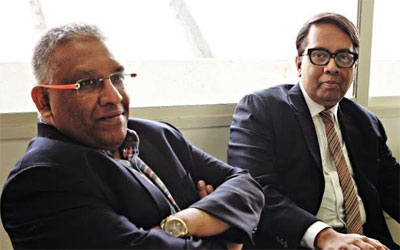
    Left – Bobby Pawar, Right – Partha Sinha

    Since the last 30 years Maggi has been creating a stronger bond between a mother and a child their insight locates the brand in a more primal and fundamental space.


    Bobby Pawar, Director and Chief Creative Officer, Publicis adds “Once we had a powerful fundamental insight, the job of the creative was to tell a story contexted in current cultural shift. We came up with two stories that demonstrates the power of hunger bond.” The context is always modern, the content is always universal. That’s MAGGI for you”.


    The communication has taken off well with the campaign crossing 1.5 million views in just two days.


  • The Most Annoying Buzzwords of 2014


    We asked the industry’s finest for buzzwords they grew heartily sick off in 2014. Big Data and Viral were the big losers. Read on for the rest:


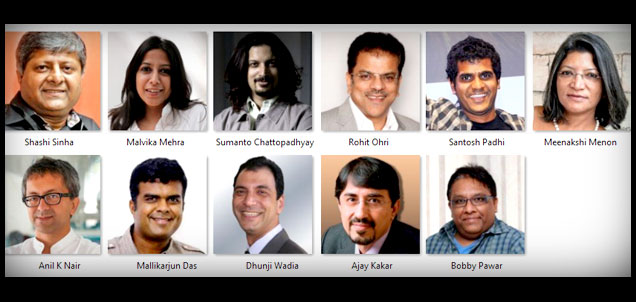
    Shashi Sinha, CEO, IPG Mediabrands

    1. Talent

    2. Compensation

    3. Digital

    4. Television measurement and

    5. Analytics were annoying as the more people spoke, the less they did anything about these things.


    For 2015, for starters, I have high hopes from the new TV measurement which Barc will put out, media agencies getting into content production, collaboration between all constituents of the ad ecosystem, budgets which will hopefully be at landmark levels and the World Cup which we should win again.


    HALL OF SHAME 

    Viral – Most of the time it is just an ad that runs way too long. Get some scissors, people


    Big Data – The ultimate Brahma Astra for the advertising charlatan


    The only viral I know of is the one that requires the intervention of a doctor

    Perhaps the most, abused & misused terminology in the year. Runs the danger of being called ‘Pig Data’.

    It’s just analytics. People have been doing this ever since humankind stepped on this planet.


    Malvika Mehra, National Creative Director and Executive Vice President, Grey

    The 5 most oft used words in 2014 were 1. Guys 2. Let’s 3. Make 4. A 5. Viral.


    Also ‘Take your time (4-5 minutes is great), but please don’t take my money. No budgets this year. And while you are at it, make it so stunning that it is ‘organic’ (unpaid distribution)’. Ji Sirji. ‘But ultimately make me a TVC. And I want a ‘BIG, LAUNCHY’ feel for our product in 30 seconds or less. Chal, paanch second aur le lo’. Ji sirji.


    The Pitch Bitch: ‘Of course we love you guys! We are just opening it up to 10 other agencies to inject some freshness into the brand (and test how much lower will they drop their price vis a vis yours for the same or more amount of work)’. Par Sirji?


    Femvertising: From soap brands, to makers of shampoos, sanitary towels, watches to home appliances and mobile network providers, everybody suddenly wanted to ’empower the woman’. I get the noble intent, but wish the brands would really ‘walk the talk’. Else it’s just a ‘token’ gesture. And consumers see through that inauthenticity.


    Interactive Pre-rolls: With stern warnings of ‘If you skip this ad, I will have to kill not only Jack and Jill and Mary and her little lamb, but also Old MacDonald along with all the cute animals on his farm’.


    Research: Gut instinct is officially dead. It got replaced by the R word. Heard about ‘No guts. No glory’? Not lately.


    Sumanto Chattopadhyay, Executive Creative Director, South Asia, Ogilvy & Mather

    Native Advertising: I imagine people wearing grass skirts and clapper boards singing jingles.


    Vlog: At times we Bengalis mix up our Vs and Bs. That’s what I thought this was all about!


    Content: As in, ads vs. content, content marketing. Like ‘traditional’ advertising has no content? I’m content to pass on this one.


    Social: Yeah, why not? Let’s party. And get paid for it! That’s what I say.


    Seamless: Every element has to seamlessly work with everything else. Imagine if our clothes were like that too! Now that would be some fashion trend.


    Santosh Padhi, Co-founder and Chief Creative Officer, Taproot India

    Pitch: If you do not respect yourself nobody will.


    Research: Like sex determination, it should be banned


    Low Budget: Instead of 300 insertions can we do 280 and improve the quality of the creative?


    Urgent: Premature babies forcefully welcomed will always run a risk


    Celebrity: They are the super highly paid creative directors, why do you need one more creative agency?


    Rohit Ohri, Executive Chairman, Dentsu India and CEO, Dentsu Asia Pacific (South)

    Integrated: Integration is the process, co-creation is the magic.


    360: 360 degree campaigns are consumer conversations in bursts, 365 is everyday relevance.


    Alignment: Alignment is passionless, belief runs deep.


    Structure: Structure constrains, open source liberates.


    Procurement: Vegetables are procured, ideas are partnered.


    Meenakshi Menon, Chairman, Spatial Access

    Big Data: That has to be on the top of my list. It’s just analytics. People have been doing this ever since humankind stepped on this planet.


    Twitterati: Everybody has become an instant expert on Twitter. I’d replace the term with ‘scum.’


    ISIS: ‘Isis’ is supposed to be the goddess worshipped as ideal mother and wife. Our vocabulary keeps evolving, sometimes not in the right direction. I’d call the group as a distortion than assigning them the name of a goddess.


    Homechef: Where mothers cooking for their families had some dignity to it, now we have a whole new concept of women cooking for complete strangers that they invite at home. The food is charged, of course. It’s just a little pretentious a term. Just call them plain old cook, maybe?


    Climate Change: It only gets talked about. Never acted upon. Perhaps replace it with – learn to breathe under water? Or ‘Grow gills?’


    Anil Nair, CEO and Managing Partner, L&K Saatchi & Saatchi

    Integration: The term liberally used when you don’t have a clue of what to do with your brand. It’s been institutionalised now. We will have Chief Integration Officers everywhere in no time. Put an end to this painful word. Replace it with ‘We need to have an idea,’ Sirjee.


    Social Listening: It’s something that our good old researchers have been doing for ages. It’s nothing more than trend analytics, only instead of taking a dictaphone out to record voices, you’re recording them off Facebook and Twitter. Just call it ‘consumer understanding’ and do not make an unnecessary tool out of it, please?


    Viral: The only viral I know of is the one that requires the intervention of a doctor and loads of medicine to go away. I don’t care where this term came from, it needs to disappear. It’s an epidemic that needs an antidote.


    SEO, SEM: Why are we making a mountain out of a molehill? Can we not get caught up in the process and its terminology and revert to a simple non-jargonised world?


    Big Data: For God’s sake, the database just got bigger. But it always existed. The most successful political campaign of this year was based on pure emotional advertising and not big data. Let’s stop jargonising information. Call it what it is (read: information).


    Mallikarjun Das, CEO, Starcom MediaVest Group (India)

    Big Data: A phrase bandied too easily and too much, especially by those who pay scant regard to rationality. The ultimate Brahma Astra for the advertising charlatan.


    Programmatics: A term used in context with media buying, especially on digital, when what they are doing is just using the optimiser.


    Fragmentation: The only problem with using the said buzzword is that it’s often used in a wrong way to strike some sort of terror in a client.


    Storytelling: Need I say more?


    360 degree: This term is like that sugarcane that’s passed through the machine 300 times. There’s no juice left in it and yet it’s being rolled one last time.


    Dhunji Wadia, President, Rediffusion Y&R

    Big Data: Perhaps the most, used, abused and misused terminology of the year. It runs the danger of being called ‘Pig Data’. There are questions regarding the implications of the approach and also the way it is currently done. It needs to look at data holistically – Total Information.


    Digital Evangelists: Don’t need them as you cannot preach to the converted.


    The ‘Selfie’ Contest/Promotion: Replace it with better imagination.


    E-commerce ‘Discount for the Day’: That runs for years together.


    Free App Download: With more and more retailers and brands reaching for e- and m-commerce, there is an explosion of apps to be downloaded. Begs the question, ‘Why would anyone pay to download such an app?’


    Ajay Kakar, CMO, Aditya Birla Group – Financial Services

    “Isse viral kar do!”: Which is what every client says. It’s content, not viral, please.


    “Facebook has 50 million visitors!”: So what? VT station has more people visiting, does that mean we put all our ads there?


    New media: Let’s just say ‘customer’ as opposed to new, old, traditional, or any other kind of media. Creative awards: Awards should be for creatives that work.


    Pitches: Here a pitch, there a pitch, everywhere clients flirting. Serial pitching must end. Let’s call them ‘Brand Custodians’ and not pitchers, shall we? Clients and agencies must stop playing the blame game. If one is the crutch to your success there’s no way one should let go.


    Bobby Pawar, Director and Chief Creative Officer, Publicis Worldwide

    Viral: For the love of likes, it’s just a video until lots of people see and share it. Most of the time it is just an ad that runs way too long. Get some scissors, people.


    ATL/BTL: It implies a caste system of ideas. The good ones go above, the so-called ‘hard working’ ones slide under. It shouldn’t matter where the idea lives, it must be good enough to move your audience. People don’t care, therefore you must.


    But: This is phaasi ka phanda for ideas. It is crueler that a blunt ‘no’. Why? Because it is preceded by some waffling words that give hope to the creative, then ‘but’ shows up and yanks the handle.


    Deadline: Nothing induces a creative butt-clenching moment like this word. Yes sir, three bags full sir, our work is time bound, but does it have to sound so, erm, deadly?


    Purchase: It’s the leading cause of hair-loss among agency CEOs.


    Source:The Economic Times

    Copyright © 2015, Bennett, Coleman & Co. Ltd. All Rights Reserved

    Licensed to republish