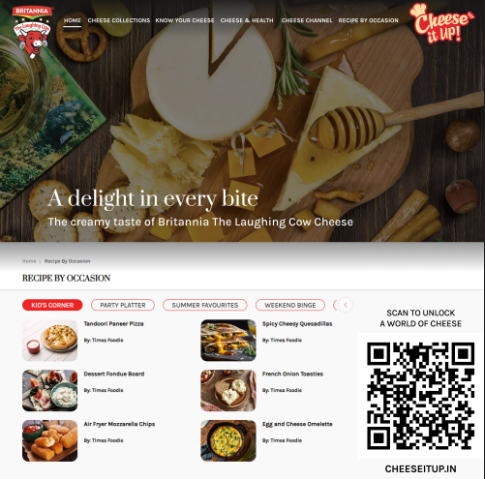
Times Network has partnered with Britannia The Laughing Cow Cheese and Mindshare to launch ‘Cheeseitup.in’, a content destination to enhance cheese awareness in India and provide culinary inspiration.
Said Abhishek Sinha, CEO Britannia Bel Foods, and CBO Britannia Dairy: “CheeseItUp.in is Britannia The Laughing Cow Cheese’s effort for all cheese enthusiasts and novices who are constantly looking for gathering knowledge about the product category. After the joint venture between Britannia and Bel group, we began the journey of creating awareness about the category benefits, with borrowed learnings and expertise from the French conglomerate. We realised that as a nascent category in India, the awareness about cheese, its benefits, and usage is still limited and fragmented. We took up this challenge with our partners – Times Network and Mindshare to build an inclusive platform which could cater to this gap for all Indians.”
Commenting on the partnership, Rohit Gopakumar, CEO- ZENL & BCCL(TV Division) added: “Our endeavour is always to provide a balanced platform for both our audience and clients. The satisfaction of achieving brand objectives through targeted content offerings excites our team. Britannia has consistently led the way in creating cutting-edge communication ideas for its various products. This partnership between Britannia The Laughing Cow Cheese and Times Network Digital platforms will undoubtedly break new ground in the cheese category. Collaborating with Britannia and Mindshare to introduce a new and innovative concept that marries content with brand thought leadership is the way forward for deep audience engagement. It’s time to CHEESEITUP!”
Speaking on the partnership, Rohit Chadda, President & COO – Digital, Times Network said: “Content-driven commerce strategically integrates content into the shopping process to provide customers with the highest quality experience. Times Network Digital has the largest base of premium, influential audience in the country across news & lifestyle categories. Our brand TimesFoodie.com, an industry-leading platform in food content, is the perfect partner to create such a food destination for Britannia. The idea of ‘CheeseItUp.in’ is to instil product knowledge and usage, while also taking an innovative approach to ecommerce that directly drives revenue for the brand.”
Said Amin Lakhani, CEO, Mindshare: “CheeseItUp.in isn’t just a platform, it’s your fun and flavourful culinary playground! We want to make cheese a delicious and healthy part of everyday meal planning. We use real consumer data to craft healthy and inspiring recipes with Britannia The Laughing Cow cheese. It’s connected commerce powered by content. Mindshare has architected a partnership between Britannia Bel Foods and Times News Network. Get ready to experience a whole new world of cheese-based creations! We are excited to see how this platform will revolutionise the way people enjoy Britannia The Laughing Cow cheese in their daily lives.”
The photograph doing the rounds of brothers Samir and Vineet Jain signing on the dotted line on the terms of dividing the vast media empire had three gentlemen in the background. One of them was a silver-haired bespectacled gentlemen with his wrists bearing a near-new red holy thread who is, as they say, is Samir Jain’s blue-eyed boy.
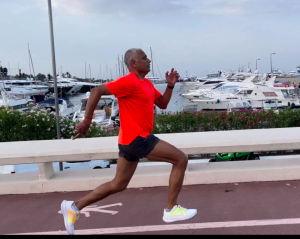
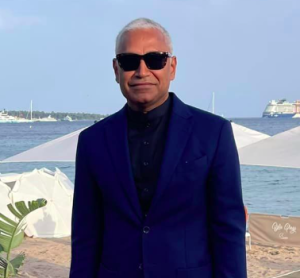
Sivakumar Sundaram at his morning run at Cannes. Photograph source: Facebook
Boy, well, a 55-year-old one. Delhiwallah, from Vijayawada in Andhra Pradesh. Non-MBA, but a Chartered and Cost Accountant, he joined Bennett, Coleman and Company Ltd (BCCL) in 1990 as a Management Trainee – an Assistant Manager in the accounts department, to be precise. Spiritually inclined, he’s an early riser and loves the run. Even at Cannes in France, where is attending an international advertising festival, he was spotted in his running shoes. Proof: Check his Facebook page.
His credo, as per a LinkedIn post: “There are no right or wrong decisions in life. Any decision taken in compliance to one’s own values is the right decision. Be reliable and invest in yourself because success is the by- product of the well-being of body, mind, and soul.”
We’re referring to Sivakumar Sundaram, the newly appointed Chief Executive Officer – Publishing. This is after being Chairman of the Executive Committee of Bennett Coleman & Company (BCCL) and a member of the BCCL Board as Executive Director. May appear to be comedown but CEO – Publishing is of course a key executive role, and he naturally becomes decidedly the most powerful professional in print and digital news in the country.
As per his profile on LinkedIn (LI), Siva, as he is known in the fraternity, has worked across various corporate functions including finance, taxation, M&A, group strategy and innovation, response (BCCL’s sales department) and Brand Capital, the group’s ads-against-equity investment arm.
Reads the LI note: “During this period, hehas been closely involved in the setting up of every new business of the group – from Times Internet to radio to TV and partnerships/joint ventures with international media houses,” and it continues: “In his immediate prior role, Siva was President – Revenue, responsible for leading response and Brand Capital, which generated nearly 85 percent of BCCL’s revenues. He was instrumental in setting up Brand Capital in 2005, a significant innovation in the global media industry, which now has assets under management of nearly US$ 2 billion and an ecosystem of 800-plus clients. The 1800-plus sales team of Response manages relationships with over 50,000 advertisers in India and abroad.”
An article in a CA journal notes Sundaram last made his CV in 1994. No-brainer that. He had no reason to. He is Vice-Chairman Samir Jain’s eyes and ears in the organisation. And more.
Sundaram runs marathons, not just a jog around Lodhi Garden or Shivaji Park. Which needs careful planning, long-term thinking and strong execution. And most importantly: Ironman-like endurance.
Which Jain (VC, as he’s called) knows Siva has in plenty.
Hence: the decision to appoint him as incharge of the publishing business was natural.
The Boss. Sivakumar Sundaram at Cannes. Photograph source: Facebook
Sundaram though has quite a job ahead of him. At first a shrinking readership, and circulation numbers. The post-1990-born prefers tracking news via notifications, Instagram reels or at most Twitter. Newspaper these days are used more to line cupboard shelves or ripen papayas and mangoes.
There is a fair amount of mediocrity that has set in and circulation numbers have fallen. The numbers for even Tier-2 cities like Pune where the edition was very strong have gone south. In Goa, the edition is a distant #3. Overall, while the advertising revenues are bright enough for company seniors to go to Cannes, the buzz that the paper once had has diminished.
And if there’s anyone to blame for this, it’s the leadership at many levels.
Sundaram knows that. Since he is a numbers person, he knows that they tell a story like a few other things can. He knows where there exists a wastage. And what needs to be propped up.
Remember, an accounts job can also entail creative thinking.
The road ahead could be like one of those potholed roads of Mumbai after that first major downpour.
We spoke with at least a dozen former and current Times of India staffers to get a view on Sundaram’s ascent. And the tasks ahead of him. While most of them spoke with us off the record, there was only one person we spoke with who was willing to be quoted.
Jaisurya Das
Said Jaisurya Das (JD), a senior industry person, advisor and commentator (also a former MxMIndia columnist): “Sivakumar does have a tough mile to walk and I do hope he will as always start with a due diligence of the core departments. This may just be what will make the difference!”
But we are being naughty. We’ve used a quote from JD to suit our story.
This is what Das said before: “To be honest, I think this was long overdue and am truly happy to see these changes! The true ‘stars’ all figure in these movements and each one of them are the kind who can do immense justice to their new roles. For me, a clear indication of Samir Jain in the saddle.”
And he continued: “As for Sivakumar as the CEO, it comes as no surprise since there really is no one better. He is an astute professional whose razor-sharp financial acumen, inclusive management style and unquestionable loyalty to purpose is well-established in the industry, be it BCCL or beyond. And yes, contrary to what anyone may assume, I do not curry favour. This is what it is and no one can refute it, no matter what they think.”
Das knows BCCL like few others. As not only has he worked in key functions, his brothers Monu (MD Nalapat) and Chinnen have been BCCL veterans.
As Sivakumar Sundaram returns to India from Southern France, he will certainly set things in motion. Some changes in the top deck have been effected. Some more are likely to happen. Some souls who have been under-performing or misbehaving will see the wrath of Siva’s Third Eye.
Watch this space. The times, as they say, are surely a-changin’
Mirchi, the city-centric music and entertainment company, has announced the appointment of Yatish Mehrishi as Chief Executive Officer.
Mehrishi was last with Arvind Fashions as Chief Revenue Officer.
Commenting on the appointment, Vineet Jain, Managing Director, BCCL said: “Over the past 20 years, Mirchi has evolved into a multi-platform, multi-format brand that has a presence across FM, LIVE and digital realms. In line with Mirchi’s new transformational journey, I am confident that Yatish’s return to ENIL will help accelerate our journey of being a digital-first brand. “
Commenting on the new role, Mehrishi added: “I am super excited to be back with ENIL. Mirchi has been the consumers’ go-to for music and entertainment with dominating the audio industry for years and now with its new app Mirchi Plus, it is set to redefine the audio entertainment industry further. With the recent shift in consumer behaviour towards digital, I am looking forward to championing Mirchi’s digital journey and replicating our radio journey’s success.”
The Times of India has launched a video with Sivakumar Sundaram, Chairman Executive Committee of BCCL in collaboration with Brut India, a digital video publisher, that takes the viewer through a tour of TOI’s Mumbai office, its newsrooms, and the editorial meetings and then gives a glance into the printing press of the Times Group.
Informs a communique: “The video continues with Sivakumar surprising and delighting readers by getting onto a bicycle and distributing TOI to their houses. He then sits down to discuss some of the challenges and future of TOI and how TOI is trying to address the need of its readers in this era of fake news. He talks about the credibility and authenticity of the news as well as the power of the printed word in the age of fake news. He also emphasised how TOI delivers curated news that can be consumed in 30 minutes every morning rather than scrolling through a deluge of digital news and information that may or may not be accurate.”
Said Sivakumar Sundaram, Chairman Executive Committee, BCCL: “It is understanding the whole magic in this– the back story of how so many people at clockwork precision come together every single day to make your morning paper come alive and prepare you for the day ahead. Because print is the final word on the most authentic and credible news.”
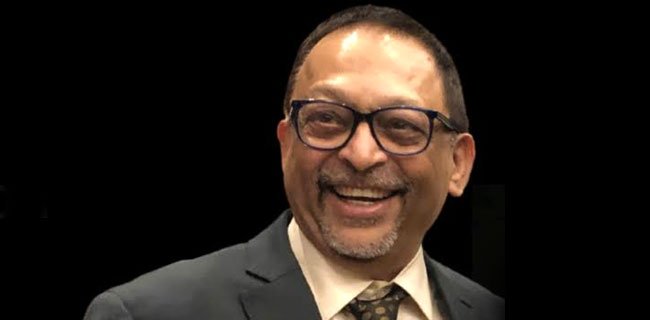
Pradeep Guha would have been 70 today, had he not passed away last year on August 21 after a short battle with cancer which unfortunately was detected at the last stage. As I was not aware about his disease, the news of his death was a big shocker for me. The MxMIndia editor asked me then if I would like to do a piece on Pradeep and I declined.
I met Pradeep Guha in Mumbai in 1976, when I was a rookie media planner in Ulka Advertising and he, a fresh graduate from St Xavier’s College, Mumbai, was a trainee in media sales with TOI. Pradeep was a few years younger than me, but we hit it off very well from our first meeting. He had been a left-leaning student leader in his college days and I had been actively involved with leftist student politics during my college and university days in Kolkata, yet both of us were disillusioned with the state of left politics in India. In our own ways both of us we were eager to explore the roles media can play in advertising and marketing industry. We had a lot to share and much to discuss. Gradually we became sounding boards for reviewing each other’s ideas.
We discussed about how to use readership research more effectively for media planning and selling; we debated the scope of value additions and innovations in newspapers and speculated about the possibility of rate negotiations when the word was a taboo in the industry. Pradeep had an ability to think laterally ahead of his time and never failed to amaze me with his zest for new and innovative ideas and his energy for planning and executing their implementations. These inborn traits, which I found in him in his mid-twenties, later helped him to excel in his career and become a larger-than-life personality.
I still recall visiting the Colaba office of ‘Centre of Education & Documentation’, Pradeep’s dream project where he had started to build a library, a resource and research centre based on clippings from published news and articles. He firmly believed that reports in print media had the latest information which published books did not have. Before the internet age, Pradeep was able to think out of the box and visualize the importance of having latest information at the fingertips. After Larry Page and Sergey Brin conceived Google in a dorm of the Stanford University and subsequently marketed Google Search in 1998, I recalled about Pradeep’s CED which had the same seed of idea minus the new media technology.
In 1982, Sameer Jain took charge of BCCL and Pradeep Guha became one of his trusted lieutenants. During the eighties and nineties, Pradeep continued with BCCL was responsible for executing the vision of Sameer Jain and transformed the Times media sales department to Times Response, he mentored a formidable salesforce well trained in concepts of media planning, advertising and marketing. Under his guidance the rate cards for BCCL publications morphed to “Mastermind” encouraging advertisers and agencies to buy space in various newer/ smaller editions along with the main editions at reasonable prices ensuring no loss to the marginal editions. The concept of “Invitation Pricing” was also Pradeep’s brain child. He literally gave a new lease of life to the print media industry of India. He was the real architect behind the “Samir Jain Years” (ref Indian Media Business by Vanita Kohli Khanderkar) in print media.
It is difficult to decide if Pradeep’s contribution was greater in space marketing or in brand building. He changed TOI and other BCCL publications to well defined brands supported by multiple branded properties. The Bombay Times Annual Party, Filmfare Awards, Femina Miss India, Femina Look of the Year, the Economic Times Entrepreneurship Awards all were turned from mere events into branding properties by Pradeep which built the brands individually and collectively built the group. He was also credited with conceptualizing the Page 3 Culture through TOI’s metro editions.
Pradeep’s efforts behind lifting up the standard of the Femina Miss India show led to India’s successes at Miss World and Miss Universe. These branding properties built by him in turn accelerated the growth of other industries like beauty, modelling and Bollywood. Driven by his passion for advertising, he was responsible for associating BCCL with Cannes Lions and creating India’s visibility at Cannes Lions Festival. He was its first Country Representative from India and held that position for 10 consecutive years at Cannes. I became an ardent admirer of Pradeep as I watched his exponential growth over three decades in BCCL. I salute his other friends and admirers who took the initiative to name the lane before the Times of India building in Mumbai as “Pradeep Guha Chowk” earlier this year. A fleeting tribute to his monumental leadership.
Meanwhile, I had come back to Kolkata for family reasons in mid-eighties. Pradeep was heading the Kolkata office of BCCL at that time, but he returned to Mumbai shortly to take charge of Times Response. Till mid-nineties I had opportunities to meet and catch up with Pradeep during either his visits to Times Kolkata office or my official trips to Mumbai. In 1996, Pradeep helped me to pull off a media coup when he agreed to publish and distribute the Official Handbook of Wills World Cup with TOI’s Mumbai and Delhi editions free of cost against the right of selling ad space in the handbooks. It was a copy book case of a win-win negotiation.
After nearly 30 years, Pradeep left BCCL when he was President of the Times of India Group and a member of the Board of Directors to join as CEO of Zee Entertainment and launched the English daily DNA in 2005. However, he left Zee after a short stint of 3 years and became an entrepreneur by purchasing 10% stake in 9X Media (where he remained as the MD till his last days) and launching his own consultancy firm. Pradeep had produced two films earlier, Fiza in 2000 and Tehzeeb in 2002; his third production Phir Kabhi was released in 2009 after his exit from the Zee Group.
There were lot of speculation in the industry about his exit from BCCL and many predicted that Pradeep Guha’s best years were over. His critics were blissfully unaware that he continued to support our Ad Industry at large by dawning various hats during his tenure with BCCL as well as after his exit from BCCL. He was the President of the Advertising Club Bombay, President of the Indian Newspaper Society, Chairman of the National Readership Studies Council, Chairman of Ad Asia (Jaipur), Chairman of the Asian Federation of Advertising Associations (AFAA), the Vice President and Area Director of the International Advertising Association (IAA), Asia Pacific region and the first Chairman of the Broadcast Audience Research Council (BARC) which was launched in 2014 and started reporting TV ratings from 2015. Pradeep Guha was the Chairman of the Steering Committee of the successful World Congress of the International Advertising Association held in India for the first time in February 2019 at Kochi. At the time of his death in 2021, he was affiliated to the Board of Directors of Raymond Ltd, Pritish Nandy Communications Ltd and Whistling Woods International. The Ad Industry had never before seen such a versatile leader who always delivered the desired result and many times exceeded the expectations!
After the nineties, Pradeep and I had gradually drifted apart, meeting only in certain big industry dos where Pradeep used to be super busy with organising the shows. Whenever I could manage to snatch a few minutes with him for a chat, he was always the same old Pradeep with the same twinkle in his eyes and the same warmth in his smile. His wife Papia Guha recently requested me to write a few lines on him for inclusion in the coffee table book on him. However, in the small write up, I could not express all my thoughts, so here is my tribute to my old friend Pradeep Guha, an extraordinary man who walked tall during his life time and left a long tail of unforgettable impressions on many other men and women who were fortunate enough to come in contact with him.
We are four months into 2022, and the year has not been short of action on the Indian M&E front. The month of April itself has been full of big announcements, of new companies being formed, of big companies getting new owners, and of new collaborations on the creative front. It’s also been a month where a film that has delivered some astonishing box office numbers, i.e., K.G.F: Chapter 2. Bollywood is facing an identity crisis, of its own making, as cinema from the South of India makes heavy inroads into the Hindi market. Some streaming platforms are finding it hard to grow subscribers in a post-pandemic scenario, but others continue to scale up their offering. News television ratings are back. All this while the IPL goes on, and we begin to build up to the suspense around the renewal of IPL’s broadcast rights.
Can you spot a pattern in these key events? They are all trade developments. They are B2B events or announcements that the average consumer, who’s not invested in a media business, has no interest in. An IPL fan will watch IPL wherever it is available. Streamers will choose their content and subscriptions according to their taste. The viewing of news does not depend on whether it is being measured or not. The box office of a film does not make it any less or more likeable for someone who chooses to watch it. Most audience of television and streaming content do not care about who the owners or shareholders of the channel or the platform they are watching are.
The B2C narrative has been marginalised. This has been a growing trend over the last few years. Why should this happen, I often wonder. In the older days too, there was always enough action on the B2B front. But the general narrative was always about content and marketing. There will be articles and interviews around shows, films, ad campaigns, the works. You would want to know more about a series you follow, or about the making of a movie that you loved. But these topics are not easy to find even on social media, forget the mainstream. Everyone wants to talk trade. Box office, ratings and subscriber bases have seeped into B2C terminology.
My hypothesis is that this is an outcome of a paid media economy created over the years. The Times of India introduced its ‘advertorial’ service Medianet more two decades ago. Since then, the term ‘Medianet’ has become a generic for all paid plug-ins across publications, including those online, and those not owned by BCCL. For some curious reason, a large share of such ‘advertorials’ comes from M&E companies, who possibly see paid PR as a good way to reach their target audience. For some reason, such communication tends to be business-centric at times, talking box-office and viewership, to lure audience to watch a particular show or film.
Over two decades of doing this, the lines have blurred. B2B PR is the new B2C PR. The consumer did not care initially, but now, it’s so mainstream that they have learnt to embrace it all… with the jargon and the half knowledge.
I miss the old days, when you could read a meandering, long-form piece on a film you had liked. Today, one looks for blogs and vlogs that still try and keep that culture intact, with little or no funding backing them. But it’s never the same as reading or watching on linear television.
Bennett, Coleman and Company Limited chairperson Indu Jain passed away late on Thursday evening after a Covid-related situation. She was 84. Ms Jain will be best remembered in the Indian media for her contribution to ensure that one of the largest and most successful media organisations in the country that she owned and spearheaded with her two sons – Samir and Vineet – also had a purpose. She is widely regarded as the conscience-keeper of the media empire, and helped mainstream spirituality and world peace into the newspapers her group ran. Our deepest condolences to the Sahu Jain family, specifically her sons, and the large number of people -—in the media and outside of it — whose lives she touched, and impacted.
We invited Mr Sunil Lulla, CEO, BARC India, who has spent nearly a decade with BCCL and had a strong linkages with Ms Jain, to share a short tribute.
Spiritual Angel, Ms Indu Jain. A Tribute
Sunil Lulla
My life is privileged to be touched by the Spiritual Angel , whom we called Mataji and sometimes Chairperson – Ms Indu Jain. I was a latecomer to the Times group, where most have spent a few decades mastering the craft Times teaches so well.
She was very enthusiastic in supporting the new/ to-be-started television network with the rapid acquisition and build out of a generous studio space, in Mumbai. Her passion has always been to spread positivity messaging, be it in news or via music to the youth. She understood the business compulsions and marketplace needs. In balance, she actively encouraged and facilitated by inviting her wise associates Sri Sri Ravishankar and Sadhguru Jaggi Vasudev to spread their contemporary and positive message of well-being to millions of viewers.
She bought balance to the space of heated debate and pulsating music in her own sagacious and peaceful way. When she learnt the architects had not followed the right protocol in the construction of the studio and office, she wisely suggested changes. As she stated, the right light, the right direction, sets the tone of success. I have always believed her action gave wings to the success of the Times Television Network.
She will remain Mataji – forever. May her soul rest in peace.
The Mumbai Press Club issued a statement on the announcement by the Times of India group management on the closure of Mumbai Mirror as a daily and the closure of Pune Mirror.
Here is the statement:
“The Mumbai Press Club, representing over 2,000 journalists of the metropolis, is shocked and dismayed at the closure announcement of the popular city daily ‘Mirror’ by Bennett, Coleman and Co (The Times Group). A statement circulated by the company on Saturday said the ‘Pune Mirror’ will be entirely shut, while the ‘Mumbai Mirror’ will be converted into a ‘weekly’. There is no indication in the statement on the future of the employees, and we fear the closure announcement will adversely affect more than 150 journalist and non-journalist jobs in Mumbai and Pune.
“‘Mirror’, launched 15 years ago, filled the niche vacated by an earlier Times Group paper ‘Evening News of India’. In a few years it became part of the urban landscape covering Mumbai’s and Pune’s city-centric angst and problems, as well as its celebrities and entertainment hotspots. Mirror’s popularity made it a big brand; and the advertising it brought in proved its worth in terms of the profit it reaped for the company.
“Among the reasons given for the closure of the newspapers by BCCL is the economic downturn that has come with the Covid-19 pandemic and the rise in newsprint prices. The BCCL is the largest and most profitable media house in the country with annual revenues of $1.5 billion, and an average of over 30% returns on investment (ROI) in previous years. All businesses have their ups and downs. If you have made good profits, then there are times when you must ride out the losses too. With the easing of the pandemic, one can see the economy and businesses looking up. For a small saving, it is not correct for the company to sacrifice such a powerful city brand and the jobs of so many employees. We urge BCCL to review its decision of closure and keep a good thing going.
“The Mumbai Press Club also expresses its deep concern at the violation of the law, and the jobs that are at stake with the closure of these publications. Sections 25(O) and 25(F) of the Industrial Disputes Act, 1947 require prior permission of the government before departments and companies are closed, and employees retrenched. No such permission has been sought or taken. Moreover, ‘Mirror’ is a sister concern of the BCCL, and we demand that all the employees of these publications be accommodated in jobs and positions within the organization on the same terms.”
“This is not the time to put employees on the street, and the BCCL must show its leadership by doing business with a human face. To reiterate our demands:
1. Review the decision to shut ‘Mirror’ as a daily newspaper and ensure continuation of the big city brand.
2. Ensure there is no retrenchment and all jobs of journalists and non-journalists are safeguarded.
3. In case of any rationalization, employees must be accommodated in similar positions in other departments on the same terms of employment.
Pune readers woke up to an 84-pager of Maharashtra Times, Dassera special on October 25. And this was followed up with a 54-pager festive issue today (Nov 6).
Said Kaustuv Chatterjee, Senior Vice President – NPI and Languages at BCCL: “Our unbiased credentials and quality of editorial have helped Maharashtra Times emerge as the ‘best in class’ in brand-track reader surveys over the years. This has attracted the most discerning of readers, making Maharashtra Times the No. 1 in affluent, educated, NCCS A readers across Maharashtra as revealed in IRS surveys over the years. We are happy to say that nearly 70 percent of our readers are NCCS A, which means we are able to offer our advertisers the most relevant TG with purchasing power for their brands.”
Added Sameer Sainani, Director Response, The Times Group: “The two special back to back bumper editions of Maharashtra Times, Pune are historic. These mega specials for Maharashtra Times have been carried across Pune and the PCMC region. This is a demonstration of the faith our advertisers have in the print media, especially in Maharashtra Times, Pune. While the pandemic impacted business in the first half of the year, we are witnessing strong demand from local advertisers in our language publication that cater to affluent NCCS A audiences in the city. We have always partnered with our advertisers and created strong festival/ business solutions for advertisers in Pune across all our publications, be it Maharashtra Times, TOI, Mirror or ET and have been the preferred partner for all our clients helping them maximize the festive business. This overwhelming response from advertisers across verticals is a big encouragement and will encourage us to plan more such initiatives for advertisers and help bring the businesses and economy back on track ”
After appointing Amit Tripathi as the network’s Chief Revenue Officer, TV9 has further beefed up its top deck with the appointment of Manish Seth as Executive Vice President. Seth will head key clients nationally for the Network and will be responsible for revenue from the North branch.
With over two decades in the business – with BCCL and Zee Media Ltd in his previous stints, Seth was last with ZMCL as Executive Cluster Sales Head and was looking after national sales of a number of channels, including Zee News.
Welcoming Seth to TV9 Network, CRO Amit Tripathi said: “Manish is a key industry resource and has seen the revenue function evolving in the media domain over the last two decades. His vast experience and network will enrich the revenue vertical here at TV9 Network. We are happy to bring him on board.”
Added Seth: “TV9 Network, in a very short span, has established itself as a leading player in the news genre. I am thrilled to join the team and look forward to creating industry-first benchmarks in revenue generation for the group,”
So on Saturday, August 15, The Times of India had a blockbuster of an edition across many centres. Mumbai, Delhi, Gurugram, Kolkata, Chennai and Hyderabad and perhaps a few others. We thought it was a good time to pitch for an interview with Partha Sinha, President – Response at Bennett, Coleman & Co Ltd (BCCL), better known as The Times of India group.
Sinha had joined BCCL with much fanfare in March this year, just a few days before the Lockdown was effected. We had wanted to interview him on the day we first heard of the news – sometime in late Jan or early Feb, but guess it had to be under wraps. And then the Lockdown happened, and we didn’t think it right to stress him.
When we learnt from his team about the super-thick editions, we thought it would the right time to pitch. They agreed. And so did he.
So without further ado, here’s the interview. Free, frank and freewheeling. The interview talks about the blockbuster edition but delves into his views on the print business. Heck, why are we telling you this. Watch. Enjoy. Like.
(PS: if you’d like to share, here’s a short link: bit.ly/MxMParthaSinha)
Sivakumar Sundaram will take charge as Chairman, Executive Committee (CEC) at leading media conglomerate Bennett, Coleman & Co Ltd (BCCL). Raj Jain, who is CEO of BCCL, will be concluding his tenure with the media group today (March 31, 2020) after a tenure of five years.
Sundaram will take charge on April 1. In the new role, all functions of the company will report to him as CEC (word used in office advisory was not report to, but relate with). In addition, the RMD (short for Research & Market Development) team will relate with Mohit Jain who in turn will relate with Sundaram.
According to an office advice, both Sundaram and Jain will join the Board of BCCL as Executive Directors.
Sundaram has spent some 30 years with BCCL, across various roles. He incubated and grew Brand Capital after which he was elevated as President – Revenue. As has been reported, leading advertising captain, Partha Sinha, is scheduled to join BCCL in Sundaram’s position from tomorrow (April 1).
 Times Network has partnered with Britannia The Laughing Cow Cheese and Mindshare to launch ‘Cheeseitup.in’, a content destination to enhance cheese awareness in India and provide culinary inspiration.

 Pradeep Guha would have been 70 today, had he not passed away last year on August 21 after a short battle with cancer which unfortunately was detected at the last stage. As I was not aware about his disease, the news of his death was a big shocker for me. The MxMIndia editor asked me then if I would like to do a piece on Pradeep and I declined.
 We are four months into 2022, and the year has not been short of action on the Indian M&E front. The month of April itself has been full of big announcements, of new companies being formed, of big companies getting new owners, and of new collaborations on the creative front. It’s also been a month where a film that has delivered some astonishing box office numbers, i.e., K.G.F: Chapter 2. Bollywood is facing an identity crisis, of its own making, as cinema from the South of India makes heavy inroads into the Hindi market. Some streaming platforms are finding it hard to grow subscribers in a post-pandemic scenario, but others continue to scale up their offering. News television ratings are back. All this while the IPL goes on, and we begin to build up to the suspense around the renewal of IPL’s broadcast rights.

 Said Kaustuv Chatterjee, Senior Vice President – NPI and Languages at BCCL: “Our unbiased credentials and quality of editorial have helped Maharashtra Times emerge as the ‘best in class’ in brand-track reader surveys over the years. This has attracted the most discerning of readers, making Maharashtra Times the No. 1 in affluent, educated, NCCS A readers across Maharashtra as revealed in IRS surveys over the years. We are happy to say that nearly 70 percent of our readers are NCCS A, which means we are able to offer our advertisers the most relevant TG with purchasing power for their brands.”