
Tag: BBDO India

  • ‘Watch for Nepal’ shortlisted at Clio Awards 2015

    By A Correspondent


    McCann, BBDO India, DDB Mudra and Miami Ad School Mumbai with a total of 10 shortlists in their respective categories have put India on the Clio Awards 2015 map.


    Along with the Indian advertising giants, a group of three students – Himanish Ashar, Rushad Patel and Sonica Baptist from Miami Ad School Mumbai have been shortlisted in the Student Innovative category with ‘Watch for Nepal’. Watch for Nepal is an action on YouTube. The idea is that when the button “Skip Ad” appears, also appears a button “Watch to donate”, which enables a user to contribute $0.01 to help Nepal every time an ad is watched.


    “It is an incredible achievement for Miami Ad School Mumbai and we are extremely proud of our students for raising the bar and setting standard for innovation and creativity. The nomination is a source of great pride and shows our commitment to creating the best possible intersection of education and real world experience for students. I wish them all the best,” said Sunitha Suresh, Dean, Miami Ad School Mumbai.


    Winners of the Clio Awards will be announced in the week of September 14th


  • How Whisper sent a loud message via ‘Touch the Pickle’


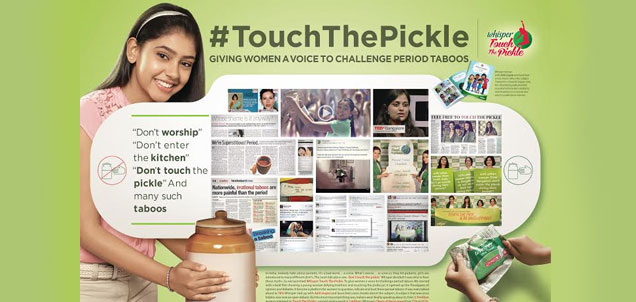
    Whisper’s curiously-titled but hard-hitting campaign was awarded the Grand Prix in the newly-created Glass Lion category at Cannes Lions this year. The awards went to creative agency BBDO India. Spokespersons from the brand’s parent company, Procter & Gamble, responded to questions from Dyanne Coelho on why the movement, which aims to eradicate the taboos and age-old myths around menstruation, received an overwhelming response both at the international festival as well as back in India.


    How did the idea behind Whisper’s ‘Touch the Pickle’ campaign come about?

    Whisper’s brand purpose is to advocate for, and empower, women, to reach their fullest potential. The Touch the Pickle movement was conceived when we realised that a majority of Indian women feel restricted from achieving their dreams because of irrational taboos around menstruation. We believe women should not feel restricted on their period days, and an overwhelming number of women across the country responded to our campaign with their own stories of breaking taboos. A survey by market research firm Ipsos on understanding these taboos revealed that among urban women, 59 per cent still don’t touch pickle, and more than half prefer not to venture out of their homes, during their periods. In light of these findings, Whisper embarked upon the journey to launch a nationwide movement — across not just TV but also PR and digital. ‘Touch the Pickle’ was one of the most irrational taboos and was an apt metaphor for all the other irrational taboos that hold women back.


    Many argue that these so-called taboos have been passed down over years because they are healthy practices women should adhere to, during menstruation. And that it is only now that these practices are being labelled taboos. How would you respond to that?

    There are two kinds of taboos that Indian women follow. Irrational taboos, like not washing their hair, not touching the pickle, sleeping in areas away from the house, have no relevance to menstruation today and are age-old myths imposed by families that considered periods as impure. The other set, like not wearing whites, not leaving the house and not exercising, started at a time when good sanitary protection did not exist and women had to use cloth, rags or even sand or ash during periods. Today, when there is superior technology in terms of sanitary pads, women shouldn’t worry about following such unreasonable practices. About 99 per cent of gynaecologists believe sanitary napkins are the best form of protection during menstruation as per a national study by the Feminine and Infant Hygiene Association and Ipsos. In the 21st century, when there is a solution, there is no need for women to restrict themselves.


    Was the impact to the campaign different in Tier II and III cities from the metros?

    An eyeopener for us during the research conducted by Ipsos is that even in urban towns, most of these taboos are still observed. For example, 65 per cent of women from urban India perceive periods as an obstacle in achieving their full potential and some 54 per cent are not allowed to water plants at this time. Our focus has been to drive awareness of the irrelevance of these taboos and encourage consumers to help change the social behaviour and gender inequality that restricts them. We’ve done this in different ways via TV, PR and digital, but we’ve also focused on educating young women and their communities on menstrual hygiene. We’ve also pledged to educate 15 million girls by 2017 on menstrual hygiene, and saw this impact in the sudden surge of conversations, discussions and debates women across India were having around menstruation, where many of them were questioning the myths that were holding them back.


    The campaign received positive publicity elsewhere in the world, more than in India. What do you think the reason for that is?

    Touch the Pickle was an integrated movement not restricted only to television. Women Achievers like Aditi Gupta (founder of Menstrupedia), Ishita Malviya (India’s first female surfer), Nungshi and Tashi (the first twins to scale Mt Everest), anthropologist Suneela Garg and film personalities like Parineeti Chopra, Kalki Koechlin and Shradha Kapoor, all came together to support this movement to eradicate taboos. The winds of change are blowing through India and the world, and insights regarding taboos around menstruation resonated with global audiences because taboos related to periods are not an Indian phenomenon only.


    There are some who believe that while this campaign had a positive impact on many in India, it also paints a socially-regressive view of our society, when that is not the case.

    Although 65 per cent of Indian urban women observed these taboos, 82 per cent wanted to break free of them. Interestingly observing irrational taboos is not just an Indian thing. Across the world, women hide their sanitary pads. You will find it heartening to know that in the last year, a surge of Indian women have expressed how normal menstruation is, and how important it is to eradicate these taboos — whether it is the Jamia Millia university [campaign], the Rupi Kaur Instagram incident or even the Menstrupedia comic (which we partnered with) which educates women on menstruation. This means Indian women are empowered and unstoppable in leading this movement.


    Has the campaign resulted in a growth in sales for Whisper? If so, by how much?

    Touch the Pickle was an integrated movement across touchpoints, including PR, TV and digital, where the central idea was the consumers’ need to be empowered and lead this change. Consumers rewarded us by choosing Whisper, and we have seen our business grow in the last year.


    After the overwhelming response it got, are you thinking of running the campaign again?

    We are thankful to Cannes Lions International Festival of Creativity and Lean In for instituting this much-deserved award category, the Glass Lion, and awarding us a Grand Prix. We have our partner agencies BBDO, Madison PR, Mediacom, Quasar and Encompass to thank. This is an important movement and we’ll continue to stand for empowering women.


  • BBDO India, Taproot get shortlisted in Film Lions on Day 5 at #CannesLions2015

    By Shephali Bhatt


    Only two days for the Cannes Lions festival to come to a close and still no sight of Indian admen, barring a few, anywhere close to the seminar halls. One would conclude the only Indians who are here to attend sessions are the Young Lions. Except we heard one of them say ‘Young Lions’ is just another way of getting an entry to the fest.


    Nothing is sacred anymore, we guess. But guess who arrived without notice right in the middle of the day to collect a Grand Prix Lion — BBDO India’s chairman and creative chief Josy Paul and chief executive Ajai Jhala.


    “We told Chris (Thomas) there’s no need to courier our Lions, the courier boys are here now,” he said. It’d seem that Paul got off the right side of the plane in the morning because BBDO India’s video for iCONGO titled ‘The World Wants More of A Good Thing’ got a shortlist in Film Lions.


    Also shortlisted is Taproot Dentsu’s film for Mumbai Mirror. The BBDO entry is particularly ironic though, considering its premise is to question the fake entries that win at global festivals such as Cannes.


    The video is addressed to Terry Savage, chairman of Cannes Lions, in fact. On hearing the news, Jeroninio Almeida, founder of iCONGO said: “I am sure very soon people in award ceremonies will also get conscientious about tracking the veracity of social campaigns created by advertising agencies. The process for change has begun and I am sure we will see impact on a bigger scale very soon. Though it’s ironic I am glad that people who had put in their efforts to help us raise this issue are getting their due recognition.”


    Source:The Economic Times

    Copyright © 2015, Bennett, Coleman & Co. Ltd. All Rights Reserved

    Licensed to republish


  • No metals for Indian agencies on Day 4 of #CannesLions2015

    By Shephali Bhatt


    After winning 11 Lions and a Grand Prix, India had a gong-less night at the awards on the fourth day of Cannes Lions. Hungover from the Times of India party the previous night, Indian admen were seen entering the Palais well past lunch time.


    Some opted for a compensatory off from the fest for a day, remaining to the confines of their hotel rooms overlooking the magnificent and sparkling Promenade de la Croissette.


    After BBDO India’s clean sweep at the Glass Lions, a section of the Indian contingent busied itself in deducing how ‘Touch the Pickle’ campaign for P&G’s Whisper sanitary napkins — a piece that wasn’t too popular within the subcontinent — fetched a Grand Prix. While some concluded with the cliché about Cannes wins being “unpredictable”, the less charitable types claimed it was due to the South American lobbying skills of a prominent ad man from BBDO’s global network who was on the jury.


    We don’t know whether to be flattered or disappointed that no credit or blame was laid at the door of Tista Sen, national creative director at JWT who was the sole Indian on the Glass Lions jury. Clients emerged the happiest out of the whole episode with Dabur winning a silver metal. Given the FMCG major’s feeble enthusiasm for domestic awards, this counted as a big deal.


    On Creativeland Asia bagging a silver metal in Outdoor Lions, Sukhleen Aneja, category head at Durex India, said, “This outdoor campaign is a step in that direction and we are thrilled that it has been recognised as one of the best pieces of communication in the world at the Oscars of advertising.”


    Source:The Economic Times

    Copyright © 2015, Bennett, Coleman & Co. Ltd. All Rights Reserved

    Licensed to republish


  • Hip, Hip, Hurray! BBDO India bags first Grand Prix in six years on Day 3 at #CannesLions2015

    By Shephali Bhatt


    India bagged its first Grand Prix in six years with BBDO picking up the top honours in the newly-launched Glass Lion category for its ‘Touch the Pickle’ campaign for Whisper sanitary napkins. At the 62nd Cannes Lions International Festival of Creativity, the agency’s ‘Share The Load’ campaign for Ariel detergent also bagged a trophy in the Glass Lion category that focuses on work that implicitly or explicitly addresses issues of gender inequality or prejudice.


    While ‘Share the Load’ started a debate on how laundry was just not a woman’s job, ‘Touch the Pickle’ focused on breaking taboos — traditional and modern — that are imposed on a woman during her period. India’s last Grand Prix winner was Lead India for The Times of India which won in 2008.


    “What gives us immense joy is these are movement ideas that had a transformational impact on both brands. These ideas embraced socio-cultural tension points and found creative ways to resolve issues. They changed behaviour and drove a significant increase in sales. For us, this represents where advertising is going. We’ve got to really thank our clients who took risks every step of the way,” Josy Paul, chairman and chief creative officer, BBDO, said.


    The senior management of BBDO India gave the festival a miss and wasn’t available to collect the trophy — a rarity when it comes to Grand Prix. The win elated the Indian contingent at Cannes. Ashish Chakravarty, national creative director of Contract said: “It feels great to know our country has won a Grand Prix. Moreover, I’ve seen the work and know it’s real. It’s always better when a prestigious award is won on ‘real’ work.”


    There were murmurs about how the commercial was tackily made. To this Marcello Serpa, co-CEO and creative director at Almap/BBDO Brazil said the category wasn’t about craft.


    “There are several other categories to award that part of your work. This was purely about an idea whose execution led to a fundamental socio-cultural change.”


    McCann Worldgroup won 2 Silver Lions for its Dish TV campaign while Creativeland Asia won a silver metal for Reckitt Benckiser campaign. The category also yielded a Bronze gong each to Grey, DDB Mudra and Ogilvy & Mather for their work on DHL, Volkswagen and Puffin, respectively.


    In Media Lions, BBDO fetched India a bronze for ‘Touch The Pickle’ campaign. Meanwhile, Hindustan’s Unilever’s Kan Khajura Tesan won a bronze in Creative Effectiveness category. India’s performance is rounded out by a solitary shortlist in Design for McCann Worldgroup’s work on Dabur Gastrina.


    India failed to make even the first cut in Cyber, Product Design and Radio categories. Agencies had huge expectations of bagging a few Lions in Radio, but the results disappointed. “They weren’t good enough. Agencies need to stop entering their TVC’s audio tracks, to start with,” said Riya Mukherjee, radio and music consultant and one of the jurors in the category.


    Source:The Economic Times

    Copyright © 2015, Bennett, Coleman & Co. Ltd. All Rights Reserved

    Licensed to republish


  • 7UP hinges on ‘Body ka Top UP’ proposition in new TVC

    By A Correspondent


    7UP Revive has unveiled a new campaign “Body Ka Top UP”. The commercial highlights the importance of hydration when one is out and about in the sun.


    The film begins with group of youngsters enjoying a game of beach-volleyball on a sunny day. However, they soon feel thirsty and sweaty from this out and about activity and opt for a break. In the next frame they are seen at a shack asking for a ‘top up’, the shack owner responds by saying that they will find the mobile shop in the main market. The group grins and says that they are not looking for a mobile top up but ‘Body ka top UP’, the protagonist then reaches out for a bottle of 7UP Revive.


    Talking about the TVC, Vidur Vyas, Senior Director- Marketing at PepsiCo India said, “Our objective is to educate consumers and create a new category of products starting from 7UP Revive. The film is simple, it talks about how with the goodness of vitamins B3, B6 and B12 and electrolyte like Sodium and Potassium, 7UP Revive helps to re-energize and replace the fluids the body needs.”


    Commenting on the creative, Sandipan Bhattacharyya, Executive Creative Director, BBDO India said, “Habit often stems from relevance and this idea attempts to give consumers a relevant metaphor for replenishing what the body loses in the sun. The film kicks off a surround campaign that will see ‘Body ka top UP’ find even more relevance across various consumer touch points.”


  • New Visa campaign seeks to empower Tier 2, 3 consumers

    By A Correspondent


    Visa, the global leader in payments, has launched a new marketing campaign to give consumers the confidence to make purchases online with their Visa Debit card. The new campaign has been created by BBDO and is targeted towards Visa Debit cardholders in Tier 2 and 3 cities, who are helping to drive the significant growth of e-commerce in India – as they now have access to goods and services that earlier were not available in their town.


    Uttam Nayak, Global Head of Emerging Markets Digital and Group Country Manager India & South Asia, Visa said, Over the last few years there has been a positive change in consumer perception, approach and purchasing behaviour towards online shopping. More and more people are now shopping online, which has resulted in offering equal opportunity to everybody, irrespective of where they belong. Visa works with millions of merchants both within and outside the country, to ensure that shopping with a Visa Debit card, is safe and secure.”


    The campaign demonstrates the “initial hesitation or nervousness” of doing something for the first time and shopping online; each payoff as being the joy of accomplishment in new unfamiliar situations, thanks to the reliability of a trusted, innovative brand such as Visa. In each story, the protagonist is shown accomplishing an activity out of their comfort zone paired with using their Visa Debit to make an online transaction. The films also highlights the Verified by Visa process, one of many Visa’s advanced security features that keep consumers online transactions safe and secure. In line with our target audience’s sensibilities, the creative is light-hearted, humorous and showcases real people.


    Josy Paul

    Elaborating on the campaign, Josy Paul, Chairman and Chief Creative Officer BBDO India commented: “Through this campaign we are trying to empower more and more Indians to be where they want to be by using the power of the internet and their Visa Debit cards. As new towns and corners of India embrace eCommerce with first time purchases, it creates fresh enjoyable moments that are filled with innocence and joy. The possibilities are endless.”


    The new campaign will be showcased across TV, digital and social media channels to target consumers along their online path to purchase. The first commercial in the series, “Surprise Gift”, has received more than two million YouTube views within the first 10 days of its release.


  • 1 Gold, 1 Silver & 5 Bronzes on Day 4


    By Delshad Irani


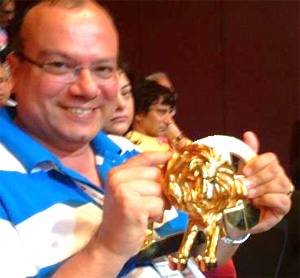
    DDB Mudra Chief Operations Officer Pratap Bose put up this picture with the Design Gold on his Facebook page

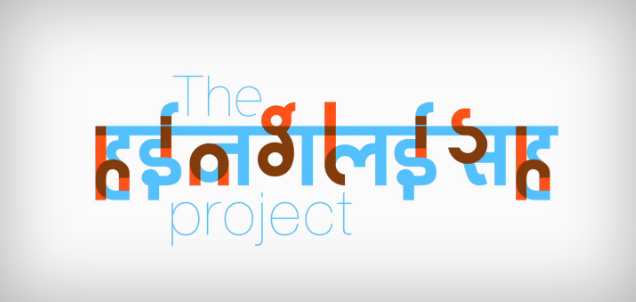
    Cannes on Day 4 won more gold for India, taking its tally to two. ‘The Hinglish Project’ from DDB Mudra Group took home a gold Lion in design.


    The design entry is part of the ministry of tourism’s Incredible India campaign. Abhijit Bansod, jury member and principal designer and creative head, Studio ABD, said this is perhaps a new beginning for hybrid typographic design work that combines cultures.


    “It really stood out amongst the typographic work we saw during the judging process,” he adds. India had a total of eight entries on the shortlist with three originating in DDB Mudra Group, including a campaign for Volkswagen India.


    ‘The Hinglish Project’ has been awarded a bronze Lion, too. A total of four categories were judged on the day. Press, a traditional favourite with Indian entrants, kept India’s ad engine chugging along. There is one silver Lion in Press for Leo Burnett’s work for Bajaj Electricals.


    Ogilvy took home two bronze Lions in the same category for its work for Perfetti Van Melle and Mattel Toys’ Hot Wheels brand. And, BBDO India has one bronze Lion, courtesy its work for White Collar Creatives.


    The Grand Prix winner in Press is United Colors of Benetton’s Unhate campaign that cooked up a storm in many places around the world and got it the much-coveted top prize at the Cannes Lions.


    In radio there’s a lone win, another bronze Lion for India as well as Leo Burnett. Titled ‘Punishment’, the work interestingly was written entirely in Hindi. The work for Mumbai-based book store Strand Book Stall is in the form of a conversation between Mahatma Gandhi and a little boy.


    According to Rob McLellan, executive creative director, Network BBDO South Africa, and Radio Lions’ jury president: “It is a heart-warming piece of work. India is very similar to South Africa in many ways. Radio is still the most popular medium and sometimes the only way to reach people. I think the piece is a worthy winner.”


    This brings us to Cyber category, a disappointment of digital proportions. Out of the 27 entrants, not one made the shortlist. About India’s non-existent presence in this category Anita Varma, jury member and director of Digital Driftwood, said it’s a shame because we are great storytellers but falter on how best to use the technology at our disposal.


    Source: The Economic Times

    Copyright © 2012, Bennett, Coleman & Co. Ltd. All Rights Reserved


  • Heading high towards Cannes 2012


    By Shubhangi Mehta


    In its 59th year, the Cannes Lions International Festival of Creativity, which will take place from June 17 till 23, is considered the largest worldwide gathering of advertising professionals, designers, digital innovators and marketers.


    Every year in June, around 9,000 registered delegates from 90 countries visit the fest to celebrate the best of creativity in brand communication, discuss industry issues and network with one another. Thousands of ads from all over the world are showcased and judged.


    Inspired by the International Film Festival, staged in Cannes since the late 1940s; a group of cinema screen advertising contractors from the Screen Advertising World Association (Sawa) felt that the makers of advertising films should be recognised similarly. They established the International Advertising Film Festival, the first of which took place in Venice in September 1954, with 187 entries from 14 countries. The lion of the Piazza San Marco in Venice was the inspiration for the Lion trophy.


    Cannes Lions juries are drawn from experts in each field from around the world. Each jury is headed by a jury president. They judge submissions in Film, Film Craft, Media, Press, Outdoor, Cyber, Promo & Activation, Direct, Design, Radio, PR, Creative Effectiveness and Titanium and Integrated.


    Inspiring creativity is at the heart of Cannes Lions. The Festival is where creative professionals come to debate, learn and be inspired; where the greatest industry honours are bestowed; where those pushing creative communications forward are celebrated. Amongst the featured agencies this year are names such as BBDO India, Leo Burnett India, DDB Mudra, TBWA India, JWT India, BBH India, Taproot India, Publicis India, Contract Advertising, Grey India , Happy Creative Service and Ogilvy India.


    Since the past couple of years, India has been doing fairly well at Cannes due to which the expectations are increasing with each passing year. Hence MxM India tried to find out what the experts think are India’s chances in the run for metals at Cannes Lions this year.

     

    Russel Barret
    Ashish Khazaanchi
    Kartik Iyer
    KV Sridhar
    Rajiv Rao
    Senthil Kumar
    Jishnu Sen
    Josy Paul

    Russel Barret, Managing Partner, BBH India, said: “India matches up to any other country when it comes to creativity. What we lack is the space between ideas and execution. The factors that affect it are probably budget and time. I am really hopeful that we will win just like any other agency which sends their work. Though out of all the Indian work that I have seen, the Tide (print) by Leo Burnett India and OOH Iconic poster by Mudra are my favourite works.


    Ashish Khazaanchi, NCD, Publicis Ambience was optimistic: “Our country has had some good and some not so good years at Cannes, but there has never been an extremely dreadful year for our country. India is amongst the countries having ‘great creative talent’ and the proof is the Grand Prix in the past. Our agency has done wonderfully at Cannes, but this year our focus was mostly on agency growth. My preferred work for this year would be Fox Crime ad and Gandhi booklet by Leo Burnett.


    Karthik Iyer, Owner, Happy Creative Service felt awesome: “Any agency would, to get recognition from the world’s best creative leaders on a global scale. India never lacked ideas, for sure. But I think more attention can be paid to craft. That’s an area we always get beaten, either because of the lack of time, budget or both. When it comes to my favourite work, there are so many it would be unfair to point a few. But a few that come to mind – Coke Studio Entry of the music from Coke bottles DM, I absolutely love that piece, Fox Crime should pick up something, Bajaj Exhaust fans and Sour Marbels to name a few.


    KV Sridhar aka Pops, NCD, Leo Burnett, India maintained: “The only place where our country lacks is exploring the new medium ideas such as digital. We focus more on the conventional mediums rather than the non-conventional ones, unlike countries in Latin America. The chances of India collecting metals at Cannes Lions are more in the categories like design, photography and sound design. For me the magic creators are Killer Jeans, Tide and Bajaj. I feel this will be a good year and we might get close to 20 odd metals, but we cannot regard it as a record breaking year. I’m hoping for the best for Leo – especially for properties like Tide, Coke Studio, a couple of Radio spots and Thums Up for branded content.


    Rajiv Rao, NCD, Ogilvy India said: “I think Indian work is absolutely fantastic, hence it does so well in the Indian market. The scenario in our country is such that we need to do a specific kind of work to appeal to our consumers, hence we do not appeal to the global jury at times. But that is not because of the quality of our work. All we need is to bridge our work in such a way that we appeal to the local masses as well as the international juries.”


    Senthil Kumar, National Creative Director JWT India was of the belief that they can only do their best and hope for God and the jury to do the rest: “Sure we have the potential but until the jury agrees, we won’t be striking heavy metal there. I have always believed that Indians are the most creative people on earth. We have to be more unabashedly Indian in our ideas and even in our ‘God is in the details’ execution. If only we’d stop aping the West and strive to unleash something very Indian every time, we’d have better chance at hunting down Gold Lions. This year, our creative hopes would ride on the following ideas: The Times of India Kerala Launch, RIN Eraser, Lifestyle’s Baddie bags, Nokia Recycle Films, and some other ideas that may just surprise the audience.


    From a potential point of view, these ads are the ones that could hunt down a few Lions for India this year: Google Chrome Tanjore, Mumbai Mirror, The Times of India Kerala Film & IPL 5 Carnival in Film Craft, The FOX Crime Series in Digital, the Nokia Recycle Viral Films, the Coffee House print work, the 3D Audi Website…


    Jishnu Sen, chief operating officer, Grey India, put forth his view: “The reason that the metal tally for India isn’t as high as some Latin American country is because of the international jury. Our work is always great and creative. Grey has done some great work this year with Killer Jeans and Cupid Condom. We are hoping to pick up some metals.”


    Josy Paul, Chairman and NCD, BBDO India felt: “India is a late entrant at Cannes, and taking that in consideration, we are doing fairly well and growing year by year. I am expecting the Gold and Silver winners from Abbys to do well at Cannes as well. As for my agency, Cannes is like a lottery, last year we did not expect to do so well, but we did. This year too, we are hoping our Gillette campaign would do well.”


    Main image: www.CannesLions.com
     

  • Jury meets to select winners of the 9th Mirchi KAAN Awards

    By A Correspondent


    The ninth edition of the Mirchi Kaan Awards had an unprecedented response when the Ad gurus met to select the best radio ads of 2011. There were a record 300 entries, a 50 per cent jump over last year. The number of participating agencies doubled to 33 agencies. And the number of entries for the Best Use of Radio as a Medium saw a tripling of entries to a record 31. Entries were spread across 15 categories, ranging from food to cosmetics.


    The winners will be felicitated at a gala event hosted by Cyrus Broacha on April 17 at Comedy Store, Phoenix Mills. The Mirchi KAAN Awards was introduced in 2004 to celebrate creativity in the challenging and evolving field of radio advertising. Over the years it has recognised and honoured ground-breaking and original radio campaigns.


    Speaking about the ninth Mirchi KAAN Awards, GG Jayanta, National Marketing Head, Radio Mirchi, said: “Every year the stakes get higher. In our 9th edition, the entries and the number of participating agencies have doubled. This is a testament to the prestige that winning a KAAN award gives. I thank the jury for having taken the time out of their busy schedule and selecting the winning entries.”


    The eminent jury included stalwarts like Pratap Suthan, Priti Nair, Amit Akali, Malvika Mehra, Manohar Nayak, Josy Paul, Rekha Nigam, Deepa Krishnan, Ramanuj Shastry, Tista Sen, Sonal Dabral and Ravi Deshpande.


    Sharing his thoughts about the quality of entries received this year, Josy Paul, Chairman and National Creative Director- BBDO India, said:  “Radio is a very personal and one to one medium. Hence good execution is of utmost importance. There has been resurgence in lot of fresh ideas this year which has lead to more freshness in programming.”


    Sonal Dabral, Chairman and Chief Creative Officer, DDB Mudra Group, said: “I am on the Mirchi KAAN Jury for the very first time this year and I am quite excited to be a part of this process. Radio as a medium has a lot of potential. Unlike earlier, a lot of brands have now started including and demanding for Radio advertisements to be included in the overall marketing campaign.”


    Ravi Deshpande, Chairman and Chief Creative Officer, Contract Advertising, said: “Advertising is always evolving, and especially radio advertising has seen tremendous amount of growth. Interesting trends of conversations are always happening and it’s nice to see them getting adapted to the medium of radio”.


    Ramanuj Shastry, Chief Creative Officer, Saatchi & Saatchi, said: “It’s fun to be a part of the Mirchi KAAN Awards. New writers are coming in, innovative projects are being showcased. As a jury member it is a pleasant experience to watch this fantastic trend”.


    Amit Akali, National Creative Director, Grey Worldwide, said: “The Tony Hertz workshop for these aspirants as a run-up to the main KAAN Awards is a commendable initiative by Radio Mirchi. The workshop will help the listeners to learn the nuances of radio advertising and improve the quality”.


    This year the theme of the Mirchi KAAN Awards’ ‘Listen, Learn, Shine’ focuses solely on the quality of work in the developing industry of radio advertising. Celebrated and renowned ad guru, Tony Hertz, will conduct a seminar on the art and craft of radio advertising for the aspirants from various ad agencies on April 17 as a build up to the Awards night. ET Now is the television partner and Afaqs.com is the digital partner of the ninth Mirchi KAAN Awards.