By Ranjona Banerji
 The only news that some journalists think is worthy of discussion is politics. That is, the various internal shenanigans of political parties. Which is fine in its own way. However all too often their “sources” provide innocuous titbits, and the rest is conjecture and kite-flying. Very little that emerges is salacious or interesting or scary. And specifically in these times, many are fed party propaganda which they happily regurgitate.
So if everything is politics, and that’s all people are interested in (apart from sport and celebrities and both of them together of course), let’s look at the politics of the climate. Okay, okay, I confess I lured you in and now I’ve lost you.
But I will persevere.
Across the globe, we are now in the midst of extremes. Massive heat waves and devastating rain. Enter here, the tired, experienced journalist who goes: it has all happened before. If you wait long enough, this is a truism you cannot possibly contest. Everything has happened before. In fact, our daily lives run on the same tracks, day after day. We wake up, we sleep and we do all the rest in between.
The job of a journalist however is to present the present, and if possible, provide context between the past and the future. If you start by affirming that “it’s happened before”, you’ve done yourself out of a living.
Somethings that happen again and again need not happen in the same way, and that is what we need to see discussed. I looked at a few headlines in the newspaper today. The weather was there, front and centre. Great. But it was reports about the weather – heavy rain warnings, landslides, destruction caused by rain. More interesting, were the throwaway lines. In one story about a bridge collapse, there was one sentence about villagers who complained about illegal mining on river beds.
This in fact is a big story. If you work on it, you get — woohoo! – politics, possibly corruption, illicit favours, and who knows what else.
Luckily, where the mainstream media does not goa s far as it could, we still have smaller independent journalism which does not rest on propaganda or on the dictum of “it’s all happened before”.
The Reporters’ Collective has dug deep into the role of the state in allowing illegal mining on river beds in Uttarakhand.
https://www.reporters-collective.in/trc/as-cm-lobbied-centre-went-against-rules-courts-to-allow-river-mining-in-uttarakhand
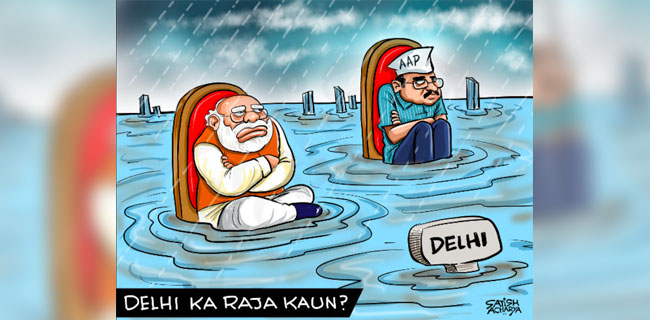
Together with Himachal Pradesh, Uttarakhand has seen massive landslides, destruction of infrastructure and natural devastation this monsoon. But mainstream journalism has not focused on the politics of climate change, on the politics of infrastructure decisions and the politics of human suffering. It is exciting politics when a prominent member of the BJP points fingers at Delhi chief minister Arvind Kejriwal for attending a political meeting while Delhi is flooded. This is much reported by television.
That the Prime Minister of India travels the world while Manipur still burns is not a matter of interest for the same TV channels.
There’s politics and politics.
Even within the flooding of the national capital region, there is a story of politics, of uncontrolled development, bad infrastructure and climate change itself. Delhi did not get a lot of rain. But heavy rainfall elsewhere caused the Yamuna to break its banks. There is politics in the destruction of natural floodplains. There is politics in water management in neighbouring states, and the lack of coordination and cooperation between the two. There is politics in refusing to understand or probe the sheer evil stupidity in ignoring environmental and geological reports.
It’s just that this politics requires legwork. It requires diligence. It requires editors who look at more than the next dinner party. Or award. Or a chance at a selfie.
Across India, rampant development without taking natural terrain or local requirements into consideration will have major consequences in the future. On the planetary level, India talks big about its commitment to the environment and climate change. At the local level, the opposite goes on with official sanction and blessings.
If we’re still around when things get even worse, maybe those journalists who did nothing because of some possible reward, or sat back and consoled themselves that it’s all happened before, will have meet some sort of reckoning.
It’s unlikely. But still. I can dream.
Ranjona Banerji is a senior journalist and commentator. She writes on MxMIndia on Tuesdays and Fridays. Her views here are personal.

 By Shruti Pushkarna
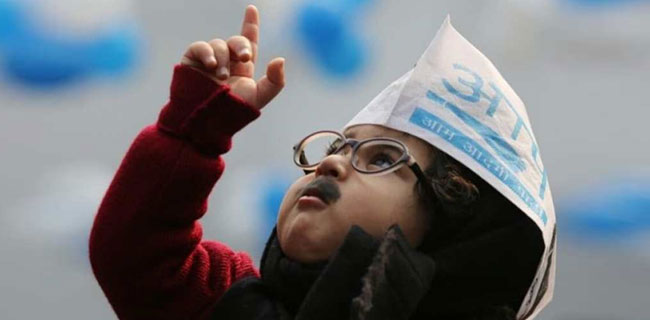
 In February 2015, I had done a piece for MxMIndia titled on Brand AAP on the occasion of Delhi waking up to the 67-03 mandate. Last night, my friend Pradyuman helped me refresh my memories of the same as I sat down to pen my thoughts on Delhi waking up to the 62-08 reality!
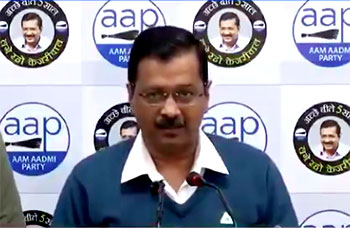 That the core purpose remains the same.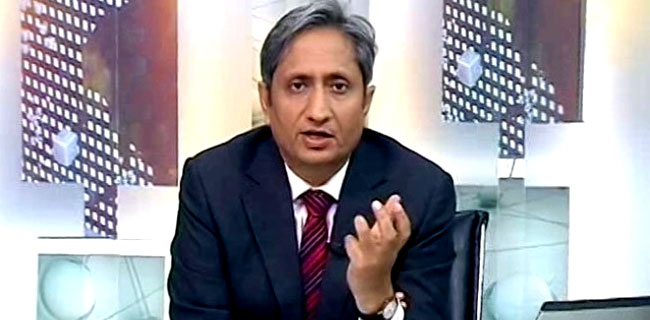
 By Ranjona Banerji
 By Shripad Kulkarni