Tag: Anil Nair

  • Rajeev Rakshit appointed President (North) at L&K Saatchi & Saatchi

    By A Correspondent


    Law & Kenneth Saatchi & Saatchi has appointed Rajeev Rakshit as President (North) based out of the Delhi Office. Rajeev has 25 years of experience and has previously worked with HMV Saregama, Orchard (Leo Burnett), Everest Y&R, Publicis, Euro RSCG, McCann, Bates Clarion, etc.


    Rajeev has a wide range of experience working on strategy and business development across clients such as Nestle – Maggi, HP, Intel, Dell, General Motors, Nescafe, Dell, Nokia, Reebok, Perfetti, DS Group, Dabur, Ford, Dish TV, Air Deccan, MetLife, SAB Miller, JK Tyres, Acer, Peter England etc.


    Anil Nair, CEO & Managing Partner, Law & Kenneth Saatchi & Saatchi says, “Rajeev’s appointment is a part of the organizations restructuring that we have undertaken in Delhi for explosive growth that we intend to achieve in the near future. Rajeev will focus on growing the branch and organically exploring growth opportunity with our key clients. Sanjeev Gauba who was our Sr. Vice President of Delhi operations is going to focus more on consolidation with our largest businesses in Delhi and has been promoted to Executive Vice President. With these two senior resources spearheading Delhi I’m sure Law & Kenneth Saatchi & Saatchi Delhi will be the fastest growing agency in the market.”


    Rajeev Rakshit, President (North), Law & Kenneth Saatchi & Saatchi commented, “With Delhi as a focus, the organisation has prioritised the office to be a key growth engine. With ambitious plans, I am looking forward to the challenges ahead. Also, with an extremely talented and motivated team already in place, this is a tremendous opportunity to manoeuvre it to greater success.”


  • Hamdard assigns creative duties to L&K Saatchi & Saatchi

    By A Correspondent


    Keeping pace with the changing times and market needs, Hamdard Laboratories Company invited various agencies for a pitch and were reviewed on the relevant work credentials, understanding the brief and task in hand, strategic approach and creative route presented.


    L&K Saatchi & Saatchi won the account in a multi-agency pitch on the strength of its strategic and creative approach and was awarded the creative duties for brands like Roghan Badam Shirin (almond oil), Traditional medicines, Cinkara, Naunehal Gripe Syrup and Corporate Communication duties.


    Speaking on the development, Mansoor Ali, Chief Marketing Officer, Hamdard Laboratories said, “Hamdard is a iconic brand which has a rich legacy of over 100 years enjoying a huge consumer base in India and abroad. Leveraging its heritage and catering to modern day consumers, Hamdard is now geared to expand and innovate keeping wide product offerings and modern day consumers in mind. Hence a fresh approach and a strategic direction from our creative partner was critical for our brands. After a detailed evaluation, we finalised L&K Saatchi & Saatchi as our creative partner who we felt understands and shares the same passion with us.”


    Anil Nair- CEO and Managing Partner, L&K Saatchi & Saatchi said, “We see immense opportunities in working on these categories. Hamdard’s exciting product mix is indeed a challenge and delight to work on. Keeping a fine blend of traditional with modernity, old with new, young with old, Hamdard as a brand gives our creative thoughts a new dimension that is very satisfying.  And hence our creative strategy is completely in sync with Hamdard reoriented marketing strategy which we hope should culminate into great results in the market.”


    Sanjeev Gauba – Sr. VP and Branch Head L&K Saatchi & Saatchi Delhi said, “Today’s markets needs very precise solutions, across mediums, to engage well with the consumer. Our passion was visible in our strategic and creative work. We are thrilled and honoured to be associated with these iconic brands and see a great long term partnership emerging with Hamdard.”


  • Tihar Jail & Save Aarey creatives win big at KDY15


    By A Correspondent


    If you thought a conference in Goa would just be an excuse to celebrate, then Kyoorius Designyatra (KDY) was the wrong place to be. For, it’s certainly not an event where people go to spend time in the lobby, drink away at the bar or head to the beach. Designers, creatives and a mix of marketers and brand practitioners, flock here for their annual dose of gyaan and stand-out creative thinking.


    In-book: Work that stands out above the rest and meets the three judging criteria, ie 1) An original and inspiring idea, 2) Well-executed, and 3) Relevant to its context. Among the best pieces of work in the year, In-book winners are the nominees for Blue Elephants.


    Blue Elephant: Checks off all three criteria and reaches the Kyoorius Awards benchmark of creative excellence. Recognised as a symbol of the very highest creative achievement.


    Black Elephant: Best of Show. The ultimate prize. Work that is truly ground-breaking among all the judged work.


    For ad industry honchos Ravi Deshpande (Whyness) and Anil Nair (L&K Saatchi & Saatchi), a visit to Designyatra is like an annual pilgrimage. Well, almost. Both underscore the great attention paid to the content of the conference. And what they may not say in so many words is that the stuff dished out elsewhere doesn’t raise the bar and that perhaps a comparison of KDY with Goafest is incorrect given that that their target groups are different, even though both celebrated their 10th anniversary this year.


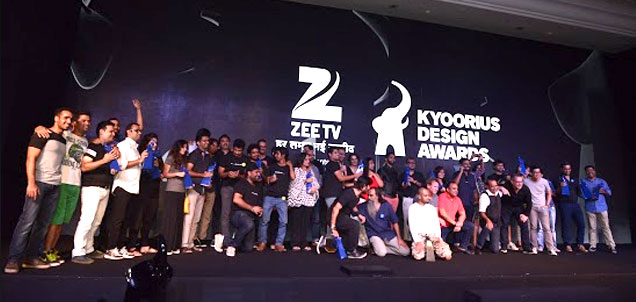
    The interesting news for Indian adland is that its constituents have done rather well at the third D&AD-governed Kyoorius Design Awards. Of the 29 Blue Elephants and two Black Elephants awarded, eight were won by Ogilvy, and three each by JWT and Alok Nanda Company. But the biggest awards of the night – the Black Elephants, and there were two of them awarded – were bagged by TBWA\India and the Delhi-based Guerilla Art & Design.


    A total of 488 entries were submitted across 10 categories: Branding & Identity, Design for Packaging, Design for Communication, Design for Space, Design for Books, Design for Editorial, Design Craft, Writing for Design, Product Design and Design for Good. The 29 Blue Elephant winners included Thought Blurb, Out of the Box, Sisterconcern, Open Strategy and Design, J. Walter Thompson, Ogilvy & Mather, Landor, MuseLab, Studio Lotus, TBWA/India, TenArt Private Limited, Star India Pvt. Ltd, Godrej Properties, Open Strategy and Design, Guerilla Art and Design and Ek Type.


    Guerilla Art and Design’s Black Elephant-winning work ‘Tihar Jail’ had the design firm working with local sign painters to illustrate an emotional poem written by one of the inmates, on the four walls of the prison.


    TBWA/India was awarded a Black Elephant for ‘Rakhis from Aarey’, where the agency created letters on behalf of the trees and rakhis made from discarded material of the same trees, which were sent out to 2,000 influencers.


    Said Rajesh Kejriwal, Founder CEO of Kyoorius, on the awards: “Our winners can confidently stand up against some of the best international work, thanks to the rigorous standards and judging criteria laid down by D&AD and Kyoorius. We are committed to nurturing and stimulating Indian creative talent through the awards, which help to fund our educational initiatives.”


    About the three-day conference, Kejriwal was ecstatic. “We were blown away by the creativity, passion and dedication on display,” he said. In a session entitled ‘10 Years of Designyatra, 10 years of Design’, that followed, Designyatra regular Harsh Purohit of Cognito, did a survey of 10 years touching on the things that have changed and those that have stayed the same.


    There were several speakers who were standout on the three days. Nick Law of R/GA, Lydia Winters (Mojang/Minecraft), Satya Raghavan (YouTube) and John McHale (SapientNitro) on Day 1; Jon Wilkins (Karmarama and, earlier, Naked), Morihiro Harano (Mori), Dave Trott (Author), Armin Vit (Underconsideration) and Max Weisel (innovator) on Day 2, and Jessica Walsh (Sagmeister & Walsh, who has done the new Frooti identity) and Neville Brody (Brody Associates) on the last day.


    Meanwhile, work has already begun on the 11th edition of KDY. Planning ahead and with uncompromising rigour with regard to curating content, are the key to Kejriwal’s success with Designyatra. Indeed.


    A shorter version of this report first appeared in dna of brands dated September 14, 2015


  • The Most Annoying Buzzwords of 2014


    We asked the industry’s finest for buzzwords they grew heartily sick off in 2014. Big Data and Viral were the big losers. Read on for the rest:


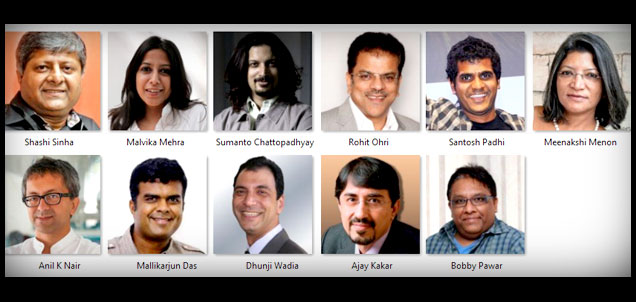
    Shashi Sinha, CEO, IPG Mediabrands

    1. Talent

    2. Compensation

    3. Digital

    4. Television measurement and

    5. Analytics were annoying as the more people spoke, the less they did anything about these things.


    For 2015, for starters, I have high hopes from the new TV measurement which Barc will put out, media agencies getting into content production, collaboration between all constituents of the ad ecosystem, budgets which will hopefully be at landmark levels and the World Cup which we should win again.


    HALL OF SHAME 

    Viral – Most of the time it is just an ad that runs way too long. Get some scissors, people


    Big Data – The ultimate Brahma Astra for the advertising charlatan


    The only viral I know of is the one that requires the intervention of a doctor

    Perhaps the most, abused & misused terminology in the year. Runs the danger of being called ‘Pig Data’.

    It’s just analytics. People have been doing this ever since humankind stepped on this planet.


    Malvika Mehra, National Creative Director and Executive Vice President, Grey

    The 5 most oft used words in 2014 were 1. Guys 2. Let’s 3. Make 4. A 5. Viral.


    Also ‘Take your time (4-5 minutes is great), but please don’t take my money. No budgets this year. And while you are at it, make it so stunning that it is ‘organic’ (unpaid distribution)’. Ji Sirji. ‘But ultimately make me a TVC. And I want a ‘BIG, LAUNCHY’ feel for our product in 30 seconds or less. Chal, paanch second aur le lo’. Ji sirji.


    The Pitch Bitch: ‘Of course we love you guys! We are just opening it up to 10 other agencies to inject some freshness into the brand (and test how much lower will they drop their price vis a vis yours for the same or more amount of work)’. Par Sirji?


    Femvertising: From soap brands, to makers of shampoos, sanitary towels, watches to home appliances and mobile network providers, everybody suddenly wanted to ’empower the woman’. I get the noble intent, but wish the brands would really ‘walk the talk’. Else it’s just a ‘token’ gesture. And consumers see through that inauthenticity.


    Interactive Pre-rolls: With stern warnings of ‘If you skip this ad, I will have to kill not only Jack and Jill and Mary and her little lamb, but also Old MacDonald along with all the cute animals on his farm’.


    Research: Gut instinct is officially dead. It got replaced by the R word. Heard about ‘No guts. No glory’? Not lately.


    Sumanto Chattopadhyay, Executive Creative Director, South Asia, Ogilvy & Mather

    Native Advertising: I imagine people wearing grass skirts and clapper boards singing jingles.


    Vlog: At times we Bengalis mix up our Vs and Bs. That’s what I thought this was all about!


    Content: As in, ads vs. content, content marketing. Like ‘traditional’ advertising has no content? I’m content to pass on this one.


    Social: Yeah, why not? Let’s party. And get paid for it! That’s what I say.


    Seamless: Every element has to seamlessly work with everything else. Imagine if our clothes were like that too! Now that would be some fashion trend.


    Santosh Padhi, Co-founder and Chief Creative Officer, Taproot India

    Pitch: If you do not respect yourself nobody will.


    Research: Like sex determination, it should be banned


    Low Budget: Instead of 300 insertions can we do 280 and improve the quality of the creative?


    Urgent: Premature babies forcefully welcomed will always run a risk


    Celebrity: They are the super highly paid creative directors, why do you need one more creative agency?


    Rohit Ohri, Executive Chairman, Dentsu India and CEO, Dentsu Asia Pacific (South)

    Integrated: Integration is the process, co-creation is the magic.


    360: 360 degree campaigns are consumer conversations in bursts, 365 is everyday relevance.


    Alignment: Alignment is passionless, belief runs deep.


    Structure: Structure constrains, open source liberates.


    Procurement: Vegetables are procured, ideas are partnered.


    Meenakshi Menon, Chairman, Spatial Access

    Big Data: That has to be on the top of my list. It’s just analytics. People have been doing this ever since humankind stepped on this planet.


    Twitterati: Everybody has become an instant expert on Twitter. I’d replace the term with ‘scum.’


    ISIS: ‘Isis’ is supposed to be the goddess worshipped as ideal mother and wife. Our vocabulary keeps evolving, sometimes not in the right direction. I’d call the group as a distortion than assigning them the name of a goddess.


    Homechef: Where mothers cooking for their families had some dignity to it, now we have a whole new concept of women cooking for complete strangers that they invite at home. The food is charged, of course. It’s just a little pretentious a term. Just call them plain old cook, maybe?


    Climate Change: It only gets talked about. Never acted upon. Perhaps replace it with – learn to breathe under water? Or ‘Grow gills?’


    Anil Nair, CEO and Managing Partner, L&K Saatchi & Saatchi

    Integration: The term liberally used when you don’t have a clue of what to do with your brand. It’s been institutionalised now. We will have Chief Integration Officers everywhere in no time. Put an end to this painful word. Replace it with ‘We need to have an idea,’ Sirjee.


    Social Listening: It’s something that our good old researchers have been doing for ages. It’s nothing more than trend analytics, only instead of taking a dictaphone out to record voices, you’re recording them off Facebook and Twitter. Just call it ‘consumer understanding’ and do not make an unnecessary tool out of it, please?


    Viral: The only viral I know of is the one that requires the intervention of a doctor and loads of medicine to go away. I don’t care where this term came from, it needs to disappear. It’s an epidemic that needs an antidote.


    SEO, SEM: Why are we making a mountain out of a molehill? Can we not get caught up in the process and its terminology and revert to a simple non-jargonised world?


    Big Data: For God’s sake, the database just got bigger. But it always existed. The most successful political campaign of this year was based on pure emotional advertising and not big data. Let’s stop jargonising information. Call it what it is (read: information).


    Mallikarjun Das, CEO, Starcom MediaVest Group (India)

    Big Data: A phrase bandied too easily and too much, especially by those who pay scant regard to rationality. The ultimate Brahma Astra for the advertising charlatan.


    Programmatics: A term used in context with media buying, especially on digital, when what they are doing is just using the optimiser.


    Fragmentation: The only problem with using the said buzzword is that it’s often used in a wrong way to strike some sort of terror in a client.


    Storytelling: Need I say more?


    360 degree: This term is like that sugarcane that’s passed through the machine 300 times. There’s no juice left in it and yet it’s being rolled one last time.


    Dhunji Wadia, President, Rediffusion Y&R

    Big Data: Perhaps the most, used, abused and misused terminology of the year. It runs the danger of being called ‘Pig Data’. There are questions regarding the implications of the approach and also the way it is currently done. It needs to look at data holistically – Total Information.


    Digital Evangelists: Don’t need them as you cannot preach to the converted.


    The ‘Selfie’ Contest/Promotion: Replace it with better imagination.


    E-commerce ‘Discount for the Day’: That runs for years together.


    Free App Download: With more and more retailers and brands reaching for e- and m-commerce, there is an explosion of apps to be downloaded. Begs the question, ‘Why would anyone pay to download such an app?’


    Ajay Kakar, CMO, Aditya Birla Group – Financial Services

    “Isse viral kar do!”: Which is what every client says. It’s content, not viral, please.


    “Facebook has 50 million visitors!”: So what? VT station has more people visiting, does that mean we put all our ads there?


    New media: Let’s just say ‘customer’ as opposed to new, old, traditional, or any other kind of media. Creative awards: Awards should be for creatives that work.


    Pitches: Here a pitch, there a pitch, everywhere clients flirting. Serial pitching must end. Let’s call them ‘Brand Custodians’ and not pitchers, shall we? Clients and agencies must stop playing the blame game. If one is the crutch to your success there’s no way one should let go.


    Bobby Pawar, Director and Chief Creative Officer, Publicis Worldwide

    Viral: For the love of likes, it’s just a video until lots of people see and share it. Most of the time it is just an ad that runs way too long. Get some scissors, people.


    ATL/BTL: It implies a caste system of ideas. The good ones go above, the so-called ‘hard working’ ones slide under. It shouldn’t matter where the idea lives, it must be good enough to move your audience. People don’t care, therefore you must.


    But: This is phaasi ka phanda for ideas. It is crueler that a blunt ‘no’. Why? Because it is preceded by some waffling words that give hope to the creative, then ‘but’ shows up and yanks the handle.


    Deadline: Nothing induces a creative butt-clenching moment like this word. Yes sir, three bags full sir, our work is time bound, but does it have to sound so, erm, deadly?


    Purchase: It’s the leading cause of hair-loss among agency CEOs.


    Source:The Economic Times

    Copyright © 2015, Bennett, Coleman & Co. Ltd. All Rights Reserved

    Licensed to republish


  • Why do Indian agencies turn a blind idea to Idea Thiefs?


    By Shephali Bhatt


    Caution:The tone of this article is slightly harsh. In our defence, if you are in advertising you had it coming.


    Under ordinary circumstances, you empathise with a victim. Not with the Indian advertising industry, at least not this time. Why not? Because for the longest while now, agencies who claim to be problem solvers haven’t figured out how to prevent a basic issue that mars their existence: the theft of ideas at pitches.


    A few weeks ago, we had an anonymous senior adman pen a much discussed column about idea theft. It’s this convenient thing clients do as agencies present their most ‘groundbreaking’ work. They adopt (read: steal) ideas that catch their fancy without so much as a by your leave.


    The Legalese Simplified

    – Ideas cannot be protected under any law pertaining to intellectual property rights (IPR).

    – Copyrights protect expression of an idea. Patents protect inventions.

    – But, an agency can enter into an agreement with a client whereby he’d be bound to keep information given at the time of pitching confidential.

    – While industries like cinema, music, photography have strong unions safeguarding the creative folks rights, ideas are not protected under IPR anywhere. Only its embodiment in a tangible form can be protected.

    – The best way forward for a creative in any field is to be wise about their sales pitch.

    – If you’re a lyricist, share a stanza; a musician, share a tune; a scriptwriter, share a chapter.

    – And if you’re an adman, show your past work to the client or sign an NDA before showing speculative work.

    – If you are desperate, God save you.


    Inputs by Rahul Chaudhry, managing partner at Lall Lahiri & Salhotra, an Intellectual Property law firm)


    Some other agency gets to work on the campaign and soon Agency No 1 is staring at a YouTube video, now gone viral, that keeps clocking like after like. Leaving its staffers seething in impotent rage and the desire to scrawl ‘Hey, this was my idea’ in the comments thread.


    If this sounds distressingly familiar, look no further than the mirror while trying to find people to blame. First, agencies don’t do their homework. All clients aren’t cut from the same righteous cloth.


    There are Bermuda Triangles of the marketing world, who have a reputation for idea shopping. It was something a large Indian conglomerate was frequently accused off especially given its close ties with a particular agency. But typically, such clients opt for whoever quotes the lowest. And yet, pitch after pitch, ad shops go in all guns blazing, their finest creative minds working overtime, effectively delivering their best ideas free of charge.


    Mostly, the idea gets mutated by the time it comes to fruition so the original agency often finds its ownership hard to prove. To quote a few instances, the preorder strategy, a digital queue for the launch of a fast food chain in India was supposedly presented by an agency that didn’t get the account.


    A knit-wear brand is notorious for idea shopping. A creative head remembers writing a campaign for the Ministry of Tourism once. He didn’t win the account but one of his lines showed up in the final campaign. 8 out of 10 creative directors have been on the receiving end of this unabashed thievery of ideas.


    On the other hand, there are the rare cases of magnanimous clients like VIP who compensated an agency for using a modified version of its brand name suggestion for a new line of women’s bags – Caprese.


    Idea theft, like many advertising grievances, isn’t confined to India. Remember the #ShareACoke campaign? A veteran adwallah told us that when the original idea (by O&M, Sydney) was adapted by another agency in a different market, the Australian network agency created a mini uproar and got compensated. Good for them if that’s what actually happened. And what do their Indian counterparts do? Nothing. Actually, they discuss it grudgingly over a pint or few of beer.


    So, next to nothing would be more like it. The conversation brings about life-altering thoughts like – If the client can make us sign an NDA (non-disclosure agreement), why can’t we do the same? Legally, they can. But with agencies shying away from asking for a meagre fee hike, the chances of them demanding an NDA are slim to none.


    With undercutting and declining margins, agencies are under so much pressure to achieve topline, they can’t afford to say no to any fresh stream of revenue or upset a marketer by bringing up the NDA. The last thing anyone wants is the reputation of being a difficult agency.


    “The irony of it all is that despite being the biggest supplier of ideas, we have no command over our own product,” laments Anil Nair, CEO and managing partner of L&K Saatchi & Saatchi. The client knows agencies are desperate for new business. If he is unscrupulous, he will take advantage of the situation. It’s a sign of a shortsighted client though, says Ajay Kakar, CMO, Aditya Birla Group – financial services, to relinquish Lord Krishna for his army. We know how that panned out.


    Nonetheless, it’s the agency network that should boycott such clients. So, why haven’t the doyens of this industry done anything to check these defaulters? “It’s because most of our senior leaders are on extension and they don’t give a damn about where this industry is headed,” says Satbir Singh, managing partner and CCO of Havas Worldwide India.


    You have people who should’ve retired two years ago, getting paid a crore annually. Why would they risk anything? Rather why do they need to risk it for something that in most cases doesn’t even concern them? Celebrated creatives are typically insulated from this phenomenon; it’s mainly the mid-level creative who often ends up feeling violated. Ideas are likely to build his career and the stuff histories are made of.


    The agency ecosystem needs to safeguard these or run the risk of losing talent to another industry (a fad plaguing advertising but that’s for another edition). The AAAI (Advertising Agencies Association of India) says it’s working towards protecting ideas.


    While the call for a pitch fee went nowhere – rumour has it that agencies keen to pitch coughed up the fee themselves – in the last few years; they are looking to revisit pitch guidelines along with the ISA (Indian Society of Advertisers), shares MG Parameswaran, the association’s president and the advisor to FCB Ulka.


    The NDA clause will be a part of the revised guidelines, we’re told. So, when do we get this revised charter, we ask? In about three to four months, says Nagesh Alai, chairman of the legal wing. Until then, and maybe even after then, it’s open season on ideas.


  • Exide aims at building customer confidence through new campaign

    By A Correspondent


    Following the positive launch of its new brand identity earlier this year, Exide Life Insurance has launched its second advertisement campaign, that brings alive the brand promise of ‘Helping you prepare financially for a long and happy life.’ The campaign which went recently across broadcast and digital is a progression to the launch phase and re-emphasizes the role of Exide Life Insurance in the life of its customers, in a heartwarming way.


    Exide Life Insurance is an over 13 year old, established and profitable life insurance company that serves over 10 lakh customers in over 200 cities across India.


    The heart of the campaign lies in the simple truth that today Indians are living longer and aspire to live a life full of hopes and dreams. Advancements in the economy and health care have ensured that the average life expectancy has gone up from 32 years to 68 years since independence. The objective of the campaign is to communicate how timely financial planning can pave the way for a beautiful tomorrow, with Exide Life Insurance helping you plan and prepare for a beautiful, happy life.


    Talking about this second phase of communication, Mohit Goel, Executive Vice President – Marketing of Exide Life Insurance, said, “Considering that the Exide Life Insurance Brand was recently launched, the communication highlights the core essence of who am I as a company. Stemming from the truth that our lifespan is getting longer and we need to plan well for the years ahead, the objective was to make Exide Life Insurance relevant during the course of our lives. This campaign has been designed around the beautiful possibility of a well-planned life. And Protection, Savings and Investments solutions from Exide Life Insurance can help you prepare financially so that your long life is a happier one. We believe that this new brand campaign will definitely resonate well with our customers and keep them intrigued, excited, informed and involved.”


    Anil Nair

    Explaining the rationale behind the campaign, Anil Nair, CEO, L & K Saatchi and Saatchi, stated, “We have conceptualized this campaign, keeping in mind the core brand ethos of a long standing, trusted companion in the journey of life. The creative concept clearly highlights benefits of planning for a long life, and captures the spirit of time in the life of a newly married couple. The TVC illustrates the various milestones every couple hopes to achieve during their entire lifetime and the seriousness of the concept is balanced well by the playful banter between the couple.”


    The campaign has been released in six Indian languages, spread over a period of three weeks.


  • L&K Saatchi & Saatchi bags HSBC Premier biz

    HSBC has awarded its communication mandate to L&K Saatchi & Saatchi for the re-launch of its Premier offering in India. HSBC Premier is the group’s premium financial services product, offering exclusive banking services to High Net Worth Individuals. The agency will be taking forward the globally integrated campaign for the re-launch of Premier. The agency’s Mumbai office will handle the account. The new positioning for HSBC Premier is ‘Personal support, for your Personal Economy.’


    Anil Nair

    Commenting on the win, Anil Nair- CEO and Managing Partner L&K Saatchi & Saatchi said, “We are extremely pleased to work with HSBC in India. HSBC has given us the mandate on the ‘premier’ business which is very challenging and exciting. We look forward to creating interesting work in collaboration with the HSBC team in India.”


    The campaign took an inside-out approach for the re-launch, starting with HSBC’s own relationship managers to better understand the real challenges that their clients face.


    Extensive research, consultation and interviews with both Relationship Managers and clients revealed the insight that high net worth individuals across the world have one major characteristic in common: they each have their own individual, highly personal economy. Interconnected to all aspects of their lives – whether home, family, work, experiences or passions – their personal economies are always with them, always changing and needing care and attention in order to grow.


    The re-launched offering gives clients a suite of wealth management products, including investment advice and portfolio management, protection, retirement and education investment.”


  • Utterly Butterly Everlasticious!


    By Tuhina Anand


    Sylvester da Cunha

    You just cannot ignore the impish Amul girl with her chubby cheeks and red-polka dot dress. Don’t go by her diminutive form as the li’l one has a take on everything that is going around her. Being created in 1966, the Amul girl is still going strong after more than four decades. It is the perfect example for all those following advertising how a simple idea and even simpler words can catch the fancy of a nation. Not to forget that the Amul ads are not a critique of a nation but also a masterpiece in advertising for people across the globe to study and understand.


    It all started in 1966 when Sylvester da Cunha was entrusted with the responsibility of working on Amul and they came up with the Amul girl which actually was in answer to the rival brand’s mascot. When it started, Amul hoardings which grace the skyline of many cities today were intelligent play of words that got the people intrigued and wait for the next hoardings. However, slowly these ads changed and morphed into being mouthpiece of a nation and bringing a take on happenings not just in India but across.


    When asked if he ever expected that what he was creating in 1966 would become an advertising icon and continue for so long, Mr da Cunha says: “I think in 1966, we knew that we had created something special in both the Amul girl as well as the tag line, Utterly Butterly Delicious – but a good creative product requires inspired clients to believe in it – Dr Kurien believed in this campaign in 1966, and Mr RS Sodhi believes in this campaign in 2012. That’s why this campaign has lasted as long as 47 years!”


    So what is it that when in today’s advertising people are always bringing in new faces even if the message remains the same but the Amul girl never seems dated.”I think the Amul Girl, has never seemed dated, because we invest time and creativity in her,” reasons Mr da Cunha. “Plus we can see what a universally loved cartoon character she is. We strive every single day, to keep her young and relevant.”


    Rahul da Cunha

    Rahul da Cunha, the Managing Director and Creative Head, daCunha Communications who has taken over from his father Sylvester and has been working on Amul advertising for a while added, “No, I don’t think the Amul girl will be dated as long as we keep her contemporary and keep the topics covered relevant. One thing I’ve learnt, you are only as good as your last creative.”


    The launch of Amul’s India


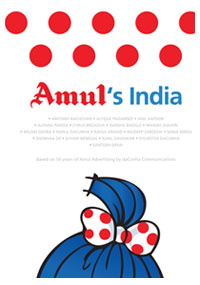
    The Amul ads are no less than a study on modern day India thus DY Works and Harper Collins along with daCunha Communications has come out with the Amul book titled Amul’s India which is an anthology of Amul advertising plus eminent people giving their take of the advertising.


    Says Rahul da Cunha on the reason behind coming up with the book, “As an agency we’ve been wanting to bring out book tracking this amazing campaign, its history, controversies, anecdotes  and the rest associated with the book. Attempts with several publishers failed and then DY Works and Harper Collins came along, and the fit seemed right.”


    The book took about a year to take shape and be published. The objective is to track the amazing history of the Amul outdoor campaign from its inception to its present avatar thereby tracking the history of India


    Alpana Parida, President, DY Works commenting on the design aspects that were kept in mind while working on this book, said, “The book had to be accessible to a large number of readers and thus we had to keep it a paperback. But we were clear that we needed a unique design element that would hold the diverse essays from different personalities on various topics together. The polka dots were a clear winner as a continuity device - as they are unique to the Amul girl. You do not see another brand in India using these red dots. The design had to do justice to the hoardings and not over power them. Eventually, we believe the design has enhanced the content of the book greatly.”


    She added that for her the chasing up all the celebrity contributors was the toughest part. She said, “There were many who refused as there was no remuneration for the writers. There were many who were so difficult to get hold of. We would have loved to get Aamir Khan, SRK, Ratan Tata and Rahul Gandhi - but our attempts to reach them were unsuccessful. To our utter delight, Amitabh Bachchan was the easiest to get hold of - and he agreed to contribute to the book immediately. Rajdeep Sardesai wrote a beautiful piece with a personal memory about an obituary to his dad. Harsha Bhogle was all over the map and it was hard to pin him down - but he graciously obliged somewhere between London and Australia. And there were many days spent with Santosh Desai to shape the definitive content for the essay that would be central to the book. Without doubt - the book had more moving parts than pages! We pulled it off eventually.”


    The book will be officially launched on June 11 in Mumbai and June 13 in Delhi.

    While Amul advertising is being continued for decades has there been a change in the way the advertising is being done today? Mr Sylvester da Cunha points out that there are two main differences that he can clearly see. One is that the hoardings are being created at a much faster pace. In the ’70s there was one hoarding every month or so and now they are done almost daily for some city or the other. Another is that as we live in rougher, edgier, more controversial times, the hoardings and the messages too are reflecting these times.


    Adds Mr Rahul da Cunha, “I think two things have changed one definitely is our speed of response to an event has become faster. And the tone of our hoardings has become edgier. We are not scared to take on an issue however controversial. We are careful however not to be malicious.”


    On the periodicity, he says, “Actually it’s not every week, it’s now almost every two days. So much is now happening in our crazy country – be it politics, sport, Bollywood, popular culture and we’d like to comment on all of it. So one new hoarding leaves the agency almost every day.”


    Recalling one of the recent incident that happened, Mr Sylvester da Cunha says, “The funniest incident was in 2009, when we ran a hoarding criticising Satyam for the terrible scam it had wreaked on the Indian public, to the tune of Rs 7000 crore. We said ‘Satyam Sharam Scandalam’ and we got a letter from the Satyam board, telling us how ‘wounded’ they were, and if we didn’t withdraw the hoarding, they would advise all Satyam employees to stop using Amul products! We were at a loss of words.”


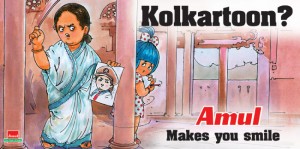
    Mr Rahul da Cunha picks up his three favorite Amul ads which include ‘Victoria Termianted” when VT got renamed, the obituary we did recently for cartoonist Mario Miranda and the one done recently on Mamata Banerjee’s response to the controversial cartoon ‘KOLKARTOON!”


    Giving her take on Amul ads, Priti Nair of Curry-Nation, says, “I feel they take a nice lopsided view of the mess we face day in and day out. They at least put a smile on hopeless situations because quite frankly there is nothing you can do but feel angry and frustrated by the stupidity you fall prey to. Their potshots at least lighten you up most times.”


    “Also as advertisers we know if Amul picks on a topic it is the hot topic or for instance if they pick on your ad you feel quite happy. I know we felt damn good when they did a spoof on Balbir Pasha and Manjula. That’s the power of the communication medium they have chosen and stuck to for years,” adds Ms Nair.


    Says Anil Nair, CEO and Managing Partner, Law & Kenneth India, “Amul is the only brand which has truly done what many brands have preached about, ‘connecting with consumers life beyond making transactions’. Advertising is applied anthropology and hence (should) reflect the society as it evolves. Amul hoardings have done that for years, consistently. Amul hoardings bring huge credibility and pride to an otherwise frowned upon industry. Am a fan… No, am an eternal fan.”


    Prathap Suthan, Founding Member of Bang in the Middle, believes Amul manages to always come up with a perspective that brightens up the subject. “There is an innocence that is welcome no matter the event or subject. A spot of optimism that works like charm, and often disarms the audience,” Mr Suthan says. “With its almost topical and quick changes, it adds to the daily relevance that butter is all about. So much so, like the butter it sells, its advertising has grown to become almost a habit for India.”

    Well said.


  • Law & Kenneth bags eBay’s creative pitch

    By Shubhangi Mehta


    Law & Kenneth has bagged the eBay India business. The online shopping and auctions portal had called for a pitch a few weeks back and several agencies participated in the process. Mr Anil Nair, CEO and managing partner, Law & Kenneth while acknowledging the news to MxM said: “We at Law & Kenneth are super excited to have been chosen to work with eBay, which is a pioneer in the global e-com market.” A source close to the development indicated that the annual media spends for the year would be around Rs35 crore.


    In the past, Wieden + Kennedy had handled the creative mandate for this account. The agency had won the business in September 2009. Though the company has utilised the traditional media route to expand its market in the past, it has taken to online marketing from 2010.


    It remains to be seen how Law & Kenneth will take eBay’s communication forward in 2012 across traditional and new media platforms.


  • Independents rule adland in 2011


    By Shubhangi Mehta


    Looking at 2011 and how well the independent agencies have performed this year, it can be said that this has been the year of independence for the independents who have managed to attract some big ticket clients.


    Law & Kenneth has excelled this year in terms of business wins, Anil Nair, CEO and Managing Partner, Law & Kenneth, said: “As an independent agency, we have everything and give appropriate solutions to our brand. Our services are not restricted to just creative campaigns for a brand. We can offer all that a bigger agency can do. The advantage that we have over them is that we focus on the task in hand without any bias. Bigger agencies need larger income, hence the client has to spend big. For us honesty and integrity are high currencies, hence we have the courage to call a spade, spade.”


    Most of the independent agencies these days let their work talk for them. Ideas@work won the creative mandates for Big Rock, Gelusil, Rustomji and managed seven awards at Goafest.


    Saints & Warriors and Scarecrow have done equally well and bagged some good businesses. Ditto with Creativeland Asia which has excelled.


    Mahesh Chauhan, Salt Brand Solutions, said: “In my opinion 2011 can actually be known as the year of independence for smaller agencies. Larger agencies offer infrastructure, whereas we, as independents, go to a client and say we’ll work for them, which a bigger agency cannot do. We partner with our clients and this has motivated the transition. As for me, working as a founder of an independent agency means being a player of the team and not the captain.”


    SALT has won the creative mandates for Kaya Skin Clinic, BSE and Big RTL this year.


    Early this year ‘Hum mein hai hero’ came across as a clutter breaker. Similarly Pepsi ‘Change the Game’ and the Airtel’s latest ‘Har friend Zaroori hota hai’ have made one feel that there is a change in the thought process of the client as well.


    Happy Creative, a creative boutique, managed to cull out a name for itself in terms of awards and has done some great work for Flipkart.


    Rahul Kansal, CMO, Bennett & Coleman, said: “As a client, we are looking for less of strategy and more of creative input, hence we want to deal directly with the creative person who is more readily available in smaller/independent agencies. We no longer want to work with middlemen. Second, if we are comfortable working with a particular individual, then we prefer working with him, it doesn’t really matter if it his own startup.”


    Agnello Dias, Taproot India said: “This year has been reasonably good for independent agencies. Clients are looking for a fresher take, hence they are moving towards agencies who can give them personalised service as they have lesser work.”


    It can be said that when we sell something, even if it is an idea, there has to be a personal touch. And that’s exactly what these boutique agencies are offering to their client. Right from suggesting a brand name to designing and packaging, a lot of these agencies are providing services beyond the creation of a brand communication for a brand.


    Sandeep Bomble, founder director, Palasa said: “The business we won this year was Iball mobile phones, Housefull Furniture and Rawwar Fashion. We also won 3 Goafest awards last year for different categories like Best Packaging, Best Art Direction and Best Direct Marketing Event. One-to-one client interaction, cost effective and lesser process driven are the primary reasons for survival of independent agencies. The people working in the agencies will come and go, but in a small set up, the head that drives remains forever. Which is why, a client enjoys personalised attention without losing out on quality in the long run”.


    The bigger agencies have always been big, but it is a striking fad to see that creativity more than anything is getting the utmost importance in India, just like it is in other countries.


    What we can figure out from the views of the experts is that in the end, it isn’t about being big or small, instead it’s more about being ingenious and impeccable.


  • The Anchor: 6 things to remember when hiring mid-levels in an agency

    By Anil Nair


    I believe that these qualities are required at any level in our profession. While at senior level one would look at few more qualities and at junior there would be some less expectation, but largely these qualities are what I look for in an advertising professional.


    #1 Imagination: There has to be an ability to look beyond the obvious. Imagination is not just required for creatives but it’s a requirement for the industry. Our job poses challenges every day and if one is content to follow the prescribed method then there can be no growth. One has to have a rich and interesting imagination to build compelling communication.


    #2 Hunger: It is not just hunger to scale to the next level in the hierarchy. There has to be hunger for knowledge, insight and for better work. When a person believes that his appetite is satiated, that’s practically the end of his career. There has to be hunger to take things to the next level in all aspects of life.


    #3 Perspective: This is a rare quality among many people today. There is a tendency to follow things as they are given. Being perceptive helps in thinking beyond the obvious which is a requirement for everyone, be it creative, servicing or planning. This will be an important tool to help in growing the business.


    #4 Clarity: Whatever the point of view, if one has coherence in thought it will take a mid-level person to greater strengths. They are involved in building a communication platform for the client and there is a need to have logic and clarity in thinking to help the clients do better.


    #5 Emotional stability: By this I mean there has to be strength of character and ability to handle situation under duress. There is pressure from the person you report to, people whom you look up to and people who report in to you. I have seen many people crack under pressure and many times good talent become an emotional wreck. Again this is a rare quality and difficult to find in today’s times.


    #6 Anticipation skill: In this profession, if you do things now it will only lead to crushing you. You need to keep an eye on the ‘next’ and this can be developed by way of knowledge and interactivity with the industry. This is a complex world with cut-throat competition and the need is for the ability to anticipate and be prepared to face it.


    Anil Nair is the Chief Executive Officer and Managing Partner of Law & Kenneth.