
Tag: Amith Prabhu

  • Amith Prabhu: Brand Maggi – 20 years to build, 2 minutes to get destroyed!

    By Amith Prabhu


    I complete two years of writing this weekly column. I think this is now easily the longest running weekly column in India on Public Relations. Thank you for reading it and supporting me with feedback. No better way to start the third year of writing than with the focus on the ongoing crisis to have hit one of India’s most loved brands.


    I don’t think there is anyone who grew up in urban or semi urban India, now in their 20s, 30s and 40s and did not savour Maggi in its myriad forms. Maggi was part of every kitchen and has been a leader in the instant noodles category. The last few weeks have been dreadful for this much loved brand.


    Most of the damage has happened because the brand failed to communicate. There has been a ‘Promoted’ tweet that has been floating but nothing much else. And to think of it the real problem began in Barabanki 15 months ago which was resurrected recently.


    I wrote a column in December when Uber faced a crisis and the simple steps apply even to this crisis. What starts as a risk turns into an issue and then emerges as a crisis before becoming a disaster. The type of crisis Maggi is facing has been experienced by leaders in the past – Cadburys with worms and Pepsi and Coke with pesticides.


    The straightforward approach is to Be Alert, Admit the mistake, Apologise genuinely, Act fair, shun Arrogance, Advertise remedies, Accept criticism, Allow questions. Maggi’s silence has been deafening and confusing. Not sure if it is ignorance of crisis management principles, high confidence in the product and therefore arrogance or both.


    But this has hit the brand and the corporate parent very hard. No one ever died because of Maggi. But this episode makes it feel as if Maggi is a silent killer. There are various angles including conspiracy theories that competition may have played a trick or two. All that talk will keep happening until Nestle India takes control of the message and does a few things.


    The CEO needs to put out a two part video. One part where he is having a Maggi meal at home with family and at office with colleagues. The other part where he is talking about the confidence the company has in the product and its safety.


    The company needs to bring out front-page advertisements because the opportunity to enjoy earned media has gone away. These ads should run for a week educating consumers about the action being taken and the goodness of the product. With the kind of market share Maggi enjoyed and the revenues it brought in it would not be a bad idea for the global CEO to fly down and meet the authorities.


    It needs to use social media to interact smartly and there are several recent examples of cases where the brand custodians have defended products vigorously on the online medium. None of this is rocket science and it is surprising that Nestle has not taken the basic steps during a crisis. Maggi is a good example of how a brand takes twenty years to build and just two minutes to get destroyed.


    As I was writing this column over the weekend there was news that Nestle had hired a communications firm to help it in these days of crisis. It may be too little too late. Fortunately, Indians have a weak memory and easily forgive brands. There are groups already planning Maggi meet-ups to show solidarity to the instant nodle they grew up on. Time will tell what becomes of this iconic brand. In the meantime, other FMCG brands may do well in pulling their socks.
     

  • SCoRe gets PRCAI endorsement, both to collaborate

    By A Correspondent


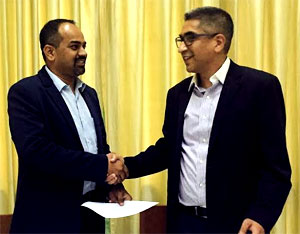
    The Indian School of COmmunications and REputation (SCoRe), India’s first school of Strategic Communications located in Gurgaon and the Public Relations Consultants Association of India (PRCAI) formally announced a collaboration. By way of the collaboration, PRCAI has formally endorsed the programme offered by SCoRe making it the only Public Relations programme in the country endorsed by the association. The association will also promote SCoRe among its members, other stakeholders and public at large.


    Nitin Mantri, President, Public Relations Consultants Association of India said “I am very excited to announce our partnership with India’s first school dedicated to Public Relations. The launch of a Public Relations school was the need of the hour for the industry, as there is a huge scarcity for young and well-rounded talent in our profession. We hope that SCoRe will fill this gap and the communications profession will be able to benefit from this initiative in the long run.”


    As a part of the collaboration, the PRCAI President will be the ex-officio member of the Advisory Board. At least four representatives from PRCAI member firms will be part of the Academic Council. There will be two PRCAI scholarships, where the seats are offered at half the fee.


    Amith Prabhu

    Amith Prabhu, Founding Dean, SCoRe said, “It is great to be supported by the only Public Relations Association of India that represents consulting firms. As the first post-graduate school of Public Relations we have a responsibility to offer a high quality programme. We are fortunate to have the backing of PRCAI. We hope this collaboration stands the test of time and we are able to deliver best in class talent in the coming years.”


    SCoRe was launched earlier this year and will commence its first batch in July. Admissions to the 10 month full-time programme are open. The school will have a focus on corporate communications and political communications. The school is governed by an advisory board and an academic council.


    PRCAI is the association of the leading PR consultancies in India. It consists of various chapters and has over 20 member firms.


  • Amith Prabhu: 10 on 10 for the Modi govt on PR, but…

    By Amith Prabhu


    The central government completed one year last week. The past 12 months have seen much fanfare around several schemes announced periodically. We have seen announcement of Clean India, Digital India and several other schemes. However, 12 months is 20% of the time the government gets as part of the mandate and the heavy lifting needs to be done during this period.


    However, in the 52 weeks gone by I am personally yet to experience any difference from this regime in a positive way. The attacks on churches, the ban on beef, and the careless utterances by politicians of the ruling party are the only thing I can remember. A great project such as Clean India could have been implemented within six months after it was announced with three basic steps.


    Hiring cleanliness marshalls or Swachh Brigade in a hundred Assembly constituencies in the first phase, deploy dustbins (there are hundreds of corporates who will be willing to sponsor these) and install awareness messages to create a mega-cleanliness drive. I live in Gurgaon which has a BJP municipal corporation, a BJP MLA and a BJP MP who is also a Union Minister. Even if the pilot was started in a city like Gurgaon the Government would have walked the talk because it has everything going for it in this part of the world.


    Let me take another promise made by the government. This one is about setting a system that eliminates corruption. Even the basics on this one are not in place and 1/5th of the term has ended. If the system worked then the government should challenge citizens to experience a corruption-free system which is unlikely given that the government has done nothing on the black money issue based on its electoral promises.


    Well, this column is completely based on the Public relations premise of the government which is outstanding given the way it has connected with stakeholders, created content and catalyzed moments. No other government in history has used communications tools available at its disposal to reach out. Most of the time citizens are not bothered whether promises are fulfilled as long as the one who made the promise is communicating.


    The Prime Minister has used owned media – radio, television and social networks to their full potential. He has ensured his figurative Number 2. Arun Jaitley to write periodical blogs on Facebook. He has set the agenda for private news channels every single day. He has created a feeling of fear among those whom he does not consider his voters.


    So as a Public Relations deployment this government gets 10 on 10. However. Public Relations can be sustainable for the doers. And doers show in the first 100 to 200 days. A lot of tall talk has taken place. It is possible that the government will keep the best for last and maybe unleash its potential in the last 110 to 200 days. In that case we will need to wait and watch.


    I’m neither hopeful nor hopeless because if a government does its basics and gets corruption in check, creates more jobs and ensures law and order we will be in good shape. But until these happen we will have to wait with our fingers crossed. There could be someone else who looks at this government that has achieved a great deal in the past one year. But one look at the manifesto will say otherwise.


  • Amith Prabhu: If Public Relations cannot be measured, then what can be?

    By Amith Prabhu


    In my column last week I wrote about how Public Relations should be looked at by understanding the definition of religion. One cannot measure Public Relations efforts. Public Relations covers four spheres and specific activities within the four spheres can be measured. The four spheres I wrote about are: Content creation, Connecting stakeholders, Crisis management and Counseling leadership.


    Almost every activity that is linked to Public Relations will fall under one of these four spheres. Let us look at these four spheres individually and list various aspects that fall under each. That will then give us a sense of what can be measured and what cannot.


    Content creation includes and is not limited to drafting and collating information that goes into the website, on social networks, into annual reports, into media releases, into briefing documents, employee emails, internal branding material and any written word, image – moving or still, musical rendition that represents the organisation or department. These have to always be of high quality which means good grammar, zero typos and fairly well composed. A document can be rated on certain parameters but seldom can it be measured.


    Connecting stakeholders covers all connections the company or the brand makes internally and externally starting with employees, investors, shareholders, community, customers, past and future employees and customers and specifically relevant members of the media who are both a stakeholder as well as a medium to reach stakeholders through the media outlets. The quality of these relationships can be measured in various ways. With internal stakeholders by evaluating a survey or through the outcome of low attrition and higher supply of talent. With external stakeholders by top of mind recall surveys as an output or increase of sales as an outcome. With media specifically when a specific activity is undertaken it is imperative to have a written brief that clearly indicates goals. And the output for a media release and a media conference should be measured based on targeted conversion, tonality and key messages being present. For other media activities like an interview or a story that appears inorganically the same measure of tonality and key message should be considered.


    With the advent of digital media and social in particular anything can be said by anyone at any time. There is the owned and earned media aspect. Not much can be within one’s control for the latter. However, two things are imperative: a) To advise management to constantly do the right things with a playbook that describes the outcomes of a wrong move. And b) To be responsive and be able to respond with facts and figures when there are stray comments in the online world. There are limits to what can be measured.


    Finally, with regard to crisis management and counselling leadership these are similar to what a legal counsel would do in an organisation. Constantly evaluating risks and mapping potential issues with a crisis management plan always in place. These again, cannot be measured unless there are specific metrics for a lengthy crisis management programme that are again specific to activities that are linked to a crisis.


    That leaves very little to be measured in Public Relations. But the billion rupee question on measuring Public Relations which is a non-question to start with persists. Next time someone asks you how you measure Public Relations it would be prudent to educate them that Public Relations cannot be measured but specific activities within the ambit of can be measured and each activity has its own set of measurement parameters and differs from brief to brief.


  • Amith Prabhu: To understand PR better, learn the definition of a religion

    By Amith Prabhu


    People would call me a fundamentalist or would call my writing blasphemous after reading my second paragraph. I have been hesitating to write about this for a while and pushing this thought for later. But two incidents last week have prompted me to share a thought I have been nursing for a while.


    A religion is an organised collection of beliefs, cultural systems, and world views that relate humanity to an order of existence. If I were to compare the concept of Public Relations to a religion it would be no different. Public Relations is a collection of beliefs, it has inherent cultural systems and certainly a world view that relates humanity to an order of existence.


    Well, the point I’m trying to make is that several journalists over the years, who are largely influencers, have equated Public relations with Media Relations. Those who got into Public Relations or Corporate Communications after a stint in journalism have carried forward that belief. This has caused irreparable damage to the profession and to the term – Public relations though all is not lost.


    Last week at two different forums, I heard two very senior professionals refer to Public Relations as Media Relations and I began to cringe. I thought it was time for this column. First, Public Relations cannot be measured in the same way Religion cannot be measured. It is a way of life. Second, we have to appreciate that specific activities that fall under Public Relations can be measured if there are three conditions in place. This does not mean some activities that do not fulfill some or all of the three conditions cannot be measured.


    The three conditions are: a written brief that includes goals of an activity and ways to measure the achievements of those goals; the occurrence of the activity largely as per plan within the specific place and time; and lastly an activity completion report which lists out output and outcomes specific to the goal. This sounds very academic but our problem is that we do not document activities the way other disciplines do. The problem starts there. Moreover, we only end up measuring media output without linking it to business outcomes.


    Public Relations is the umbrella under which different outreach to stakeholders takes place. This can be both external affairs or communications and internal affairs or communications. Companies where the remit falls under the watch of the CEO call it Corporate Communications which largely involves media outreach and when it includes government relations it is called Government or Public or Corporate Affairs. In cases where the requirement for communications management is high within product or brand marketing the reference point is Brand or Marketing communications. The bottomline is that they are all part of the same family.


    Broadly, professionals undertake activities in four spheres: Content Creation, Connecting Stakeholders, Crisis Management and Counselling Leadership. While quality and quantity of content and connections can be measured, a crisis can never be measured because there are always risks, some turn into issues and some issues turn into crises – crisis preparedness needs to be in place and a crisis ends up as a disaster or ends up as a problem solved. Counselling the leadership also can never be measured easily or correctly as it is subjective because it is an ongoing task.


    So all in all, certain activities and sub activities can be measured. But most often the sub-activity under Connecting with Stakeholders which is Media Outreach that takes place in the form of organic and inorganic media output is measured in incorrect ways and the entire exercise is referred to as Public Relations. This is not necessarily an ongoing debate. If we start looking at Public Relations more holistically lie we look at the definition of religion this will be easier to fathom.


  • Amith Prabhu: Three men who made news in interesting ways last week

    By Amith Prabhu


    If you are a news junkie there is no way you would have missed news on Rahul Yadav, Salman Khan and David Cameron. The first two in the news for not-so-pleasant reasons and the third for winning against all odds in the UK elections. All three masters of the art of Public Relations.


    Let us examine each of them briefly starting with Rahul. The 26-year-old IIT drop-out is CEO of Housing.com. He has made several outbursts in the past few weeks taking on big daddies of the game and ensuring he hogs the limelight both in Twitterverse and in the print media. He has done the unimaginable which most old school corporate types have rubbished as mindless arrogance. But in the process what he has achieved is capturing mindspace, attracting eyeballs and more bang for the buck on his crazy outdoor campaign. No one can tell whether all this is planned or ad hoc. But Rahul Yadav has ensured that in a bland category he has got noticed and four of five serious home buyers I spoke to consider his portal as a player to reckon with despite his tantrum-laced behaviour.


    Next we have Salman Khan whose 12-year-old hit-and-run case made news last week when he was convicted by a Sessions Court, later released on interim bail by the high court. His foundation Being Human which he created in the past few years was used by the defence lawyers to highlight his good work. So also the role he played of a cop, a good Samaritan and a role model in some of his recent movies, which in hindsight were carefully chosen roles in order to offer perceptions to people that would look at him in a new light. He has won the Public Relations game largely and gotten away with a very tiny wrap on his knuckles for now.

    Lastly, we come to David Cameron, the British Prime Minister who won a second term when everyone had predicted a hung Parliament. It may be important to note here that he is one of the few world leaders who was formerly a Public Relations executive as Head of Corporate Communications at Carlton Communications. He understands reputation management better than most of his rivals and used that smartly during his campaign similar to how his counterpart in India did a year ago. He was the first British to visit a Gurudwara. He used a catchphrase in Hindi to capture the imagination of South Asian voters and put up several candidates of Indian origin to run for office.

    It will be interesting to see how they live up to the news they have made in the coming weeks. For now they have become more famous than they already were. The reasons may not be right, atleast for the two Indians. It may not be the best way to be in the news but sometimes being in the news in smart ways that do not break the rules is better than not being in the news. My reference to not breaking the rules in Salman’s case is how he used very popular characters and how he created a foundation to offer a new perspective.


  • Amith Prabhu: Independent PR Firms are no different from holding company-owned firms

    By Amith Prabhu


    I fail to understand the big deal independent firm owners make about holding company-owned firms and vice versa. We are a people business and a PR firm is only as good as the talent it acquires and retains. I have worked at two independent firms in India and abroad.


    I have also worked at an independent firm that was acquired by a global firm and closely been associated with couple of others in both the leagues. I have honestly seen no difference. And I’m hoping there is a real difference that gets talked about.


    The context of the column is the conversations I have been part of where one league tries to do a one-upmanship on the other when there is no scope for such comparison. Then there is the dichotomy of one independent buying another independent. Does the smaller independent still remain an independent?


    Also, all these terms are media creations and mainly done to slice and dice content and create avenues for revenue in terms of separate content and forums to target two sets that are one and the same. Yes, independent firms are concerned about being acquired and losing the independence. But that is an area of concern and has been proven wrong by the world’s largest PR firm which not only has resisted all attempts to get acquired and in the process created a holding entity for itself.


    Recently, India’s largest firm, also an independent acquired a smaller firm to beef up some of its core offerings and grow in a particular geography. So, independence is really a state of mind. And I don’t think one should worry about independent versus holding company owned.


    What one should worry about is local versus international and that is a key differentiator. And this is what will be the deal breaker of the future. The only edge a local firm will have over its international counterpart is in terms of culture and freedom to be creative. Even on these the international firms are getting their act together.


    However, I was amazed to spend an hour at the office of an Indian PR firm last week which is not only young and independent but growing rapidly. That firm also has a team of trendspotters who are only focused on spotting trends. In a future column I will write about some of the up-start Indian firms which are raring to go.


    At a global level from a management standpoint, there could be couple of differentiators but at a national level, there are none. Today’s independent firm can get acquired tomorrow and the cosmetic change is the addition of another name as a suffix or prefix. Some clients will be won or lost because of global alignments and life goes on.


    But the bottomline is there is no big difference between the independent firms and holding company owned. If there is a real difference, it is between the international players and the local players. We are only as good as the people we invest in.


  • Amith Prabhu: Our biggest PR campaign would be a display of discipline

    By Amith Prabhu


    We are a country of countries. We are uniquely placed in comparison to other large Asian or American countries. The singular reason for our unique placement is that we have at least 15 states out of 28 that have their own language and several more among the tribes that inhabit various regions especially the north east. Hence, every piece of brand or political communications needs to be translated into multiple languages in order to create national awareness.


    This along with our extremely unfavourable climatic conditions makes India a difficult place to operate in when compared to economies like China, Japan, Germany or the United States which are world leaders. The Prime Minister launched several campaigns as soon as he took charge but there has been no campaign to discipline Indians. A much-needed exercise to make the nation the best place to Make in. (my obvious reference to the much hyped Make in India campaign).


    Our diversity is great but the one thing we are united by as a nation, is our indiscipline. Being late to meetings, not scheduling appointments using online resources, a dislike for queues, an utter lack of respect to pedestrians when we are driving and pedestrians having no disregard for traffic signals are just some of the examples. This is a touchy topic but in our weakness lies an opportunity.


    If Make in India and Clean India have to become successes they have to be backed by a great deal of civic sense, respect for fellow citizens and a new found love for discipline. Unless this campaign is driven from the top it will not find favour. A campaign of this kind may never see the light of day at a national level but can we start small as key players in the organisations we work at. Can PR professionals, both in-house and in consultancies be known as the one category of professionals who are sticklers for discipline and catalysts of punctuality? Can PR professionals unite to create a campaign for discipline?


    To start with we can do the following three things –

    a. To formalise the time we spend talking to our connections outside our organisations about our professional growth and career concerns. There is now an option to sign up at www.karmacircles.com/IndiaPR using our linkedin profiles  and with no commercial exchange one can seek and find mentors and plan dedicated time for a conversation


    b. To use the calendar in MS Outlook to schedule meetings and stick to them. I know several professionals who like to fix meetings randomly and claim that it works for them


    c. To dedicate time on a weekly basis to either write a regular blog or read one book relevant to the profession and write a review at the end of it that will benefit a generation of professionals getting into the PR business.


  • Amith Prabhu: Why PR is never going to get its due for a long time?

    By Amith Prabhu


    I posted a tweet last week in the backdrop of the Net Neutrality discussion gripping urban India, stating “Good advice to the management by the new PR head. @Flipkart pulls out of Airtel Zero Rating. Now we can go back to shopping on Flipkart.”


    There were two objectives to posting this tweet. First, I was in the know of a new hire Flipkart had made and I knew the person was of a stature who could play the role of a counselor with the Bansal Boys to let better sense prevail. I also had read the news that Flipkart was relenting and supporting Net Neutrality (an issue that had led to lakhs of voices lending support to the issue). And I got to know from two people familiar with what transpired that the person indeed played a key role of advisor in a decision the promoters and investors had taken. Second, I am big believer that PR should get its due and we rarely give credit to this management function because of the crab mentality in the system. Hence, I was just saying what I did based on factual knowledge.


    Seconds after I posted the above tweet, two ‘veteran’ communications professionals who have been connected in the past with the company and the executive respectively, responded to the question. The first asked a question about how I knew that the person advised the management and the second said that I was dabbling in guess work. Well, this background is important for those who missed the twitter conversation. Because the larger points that were being missed was that – the PR function certainly had a role to play, something I was aware of and I was calling it out based on conversations I had with people familiar with the internal decision. In the midst of this, a senior journalist who neither knows who the executive is nor knows the promoters of the company personally decides to throw in his two bits and take the conversation to a different tangent taking away the credit being given to the new PR executive.


    Well, the two ‘veteran’ professionals have every right to say what they want to but in the process they were missing the opportunity to give PR its due. This is a regular feature where we do not go out of the way to participate in giving credit to a function that plays a strategic role in business. Why does this happen? That is a million rupee question. When will PR professionals learn to praise an achievement so that the profession gets the recognition it ought to get? This does not amount to mutual admiration. But peer recognition and there is a difference.


    Well, the same maybe the case with lawyers, advertising folks and management consultants but the PR consulting business is such a small world that everyone seems to know everyone. Yet, we do not see the bigger picture of giving fellow professionals the due. This maybe old school and a new generation of professionals is emerging which may change the outlook to each other. As an observer of the rapid changes taking place around and creating some of them myself, I’m positive that someday PR will get its due.


    I wanted to share this thought in today’s column because the background to all this is that in the past couple of weeks we have seen one of the biggest Public Relations campaigns which may never be referred to as a PR campaign. This is a campaign planned, executed and managed by ordinary citizens like you and me. The campaign has led to several business decisions of large corporates being impacted. It may not be like the Arab Rising event but has certainly had all the ingredients of a good campaign. People have put a lot at stake to take on large corporates in the fight for Net Neutrality. The battle is ongoing and on the look of it Public Relations is winning. But it will be referred to as citizen activism. Same thing by a different name.


  • Amith Prabhu: Which are the good PR firms?

    By Amith Prabhu


    I get at least five calls each month from friends and professional acquaintances asking me to recommend a PR firm and more often than not I’m confused. Confused because I know and like the leaders of several PR firms. But I’m not so sure about the talent on the ground who will deliver campaigns and run programmes. In a consulting service business, a firm is only as good as its people. And that too the young work force that executes ideas.


    While there are a few bright sparks that enter the profession every year a large number of entrants lack basic understanding of the business. I am writing this after the experience of having interacted and mentored quite a few over the last couple of years.


    Today’s untrained and non-mentored junior executives become tomorrow’s managers and then later go on to become leaders in no time because of the attrition leading to a poor crop of professionals. We lack a few qualities compared to our counterparts in the west. We lack the ability to organise the willingness to be disciplined and the capacity to be knowledgeable. All essential commodities to be great Public Relations professionals.


    This problem may be solved if people come together. If not there is a bleak future staring at us. That brings me back to the point I make in the headline by asking a question – Who are the good PR firms? One of the reasons I get asked this question is because the word going around is that there are a handful of consultants in each firm who are really good and clients are worried that, if their business does not go to the hands of these outstanding consultants they are doomed.


    So how do we solve this problem? One option is to create a review site where consultants put themselves up for a scrutiny where their clients, peers and bosses review them. These consultants will carry a premium and be in great demand. More importantly this would be at the most 20% of the total number of professionals. Because those not sure of getting good reviews will not opt in. We need a rating system to collectively take the quality of the professional community to the next level.


    As time passes an increasing number of professionals will want to be reviewed publicly. This happens to doctors, chefs and several other professionals all the time. Maybe time for a Zomato for the PR firms. Then answering “Who are the good PR firms” will not be difficult.


  • Amith Prabhu: The Aam Aadmi Party just did business

    By Amith Prabhu


    I have been getting calls from friends with a common interest in politics to understand my reading of the new kid on the block. The Aam Aadmi Party (AAP) was written off until December, then positioned as the challenger in January, became the victor in February and went through its worst ever internal squabble in March. Now, its voters hope it delivers on its poll promises starting April.


    As I write this column, it has just delivered on its election assurance of launching a corruption helpline. One needs to understand that AAP is different from most other parties. For instance, it was not founded by breakaway factions or a regional satrap of an existing party, though it is bound to have the usual ups and downs any other party goes through.


    With this in mind, let us look at the fiasco and ouster of two party stalwarts, if I may call them so. Yogendra Yadav and Prashant Bhushan were part of the troika led by Arvind Kejriwal. If Arvind was its face and limbs, Yogendra and Prashant were the brains trust and would have ideally been frontrunners for two of the three Rajya Sabha seats that the party would be entitled to in couple of years.


    That is where the problem starts. During the Lok Sabha elections in 2014, Kejriwal went ballistic about letting over 400 individuals contest across the country against the wishes of the brains trust who are a combination of bundlers, legal expertise and psephology. The two leaders felt the party was spreading itself too wide for a bad fall, which did end up happening. Besides casting the net wide, the party supremo did a few other things that did not go down well. He put all his resources into the Varanasi basket, he was keen to get back to the seat of power in the Delhi assembly to avoid an existential crisis and he did not want to focus on Haryana state elections which the party had felt was a sitting duck a few months before the October election.


    Most importantly, he felt he was offering an alternative to those disgruntled with the INC and the BJP and wants to occupy the space left behind by the Congress and counter BJP without ever being seen close to either one of the party, especially the BJP for obvious reasons. In the midst of all this clever posturing, Shanti Bhushan (Prashant’s father and one of the first big donors of the party) decided to warm up to the BJP and its CM candidate which was the nail in the coffin. Once the election results were declared, the daggers were out.


    This was waiting to happen and they did it in style with effortless execution skills that even well-established parties were put to shame. In my opinion, the core AAP voter base does not care about intra-party fights as long as the party they voted for delivers on its promises which the governments has got down to do. When Delhi goes to the hustings in 2020 another Lok Sabha election would have been fought, even if half of the 67 legislators get their act together in the next five years and get voted again, AAP will be in for a second term with a simple majority.


    These were well-calculated moves which were delayed from last summer to ensure the perception of the party was not tarnished until the historic mandate was won. Key takeaways for Public Relations: a) Even as you go about putting your house in order don’t stop from delivering on the core b) Stakeholder memory is short and the last event is remembered, so go about offering some great experiences to the larger base, and c) If you can achieve what you have set out to do your reputation will take care of itself


  • Amith Prabhu: Freedom of Speech and its implications

    By Amith Prabhu


    This column is about two stories on Freedom of Speech and its implications on reputation. Since Section 66A of the Information Technology Act is hot news one could not resist writing on a related note. One is from a media perspective and the other from a brand outlook.


    Last Monday, a senior business journalist vented out on Twitter by calling a PR firm by name and asking them to get its act together. I have always believed a service company is only as good as its people are. However good 99 out of 100 are, it takes one person to negate all the good the rest try and do.


    In journalism too, however good 99 journalists are, it takes one journalist to slip up and bring a bad name to journalism. But rarely do PR professionals call out the name of the journalist in public. This could be because of the belief some have, that PR professionals need journalists more than journalists need PR people.


    He also had some other advice few days prior to this angry outburst. While he is outspoken, many choose other ways to address the concern. While I have great regard for this senior journalist I think there are better ways to handle these situations.


    If someone tweeted to you, then give it back on Twitter. But if someone called you, then call their office and ask for the head of the branch or the Indian operation and register a formal complaint. If there is no respite, then resorting to any other method is valid. I admit I have not checked with him to understand whether he did that.  Some may say that it is none of his business to do that and they may be right. However, I’m assuming that he did not do that before tweeting.


    As per the advice he had on March 18 via tweets, he said, “PR juniors shouldn’t deal much with clients. Seniors should deal with client briefs & teach juniors how to deal with journos”. Well, may be a point to ponder on. He also tweeted “Why are PR consultancy seniors so lazy? Don’t/can’t they tell their junior staff who to deal with and how? Wondering whether to name consultancies” and “PR juniors often tend to be in 3 categories (1) Overzealous (2) Servile (3) Clueless.”


    The second story is shorter and about my hunt for a product that I use, which I shall not name here. In the last two months, over a dozen shops I went to looking for this product by brand name have not had it in stock. I almost tweeted about my angst and then realized a friend (who is vocal about brands), works in a senior position for the company that markets the product, and I should check with her. It so happens that we communicate often on Twitter and I checked with her in a reply tweet as to why this product was unavailable. She immediately called to request me to delete the tweet lest questions get asked. I had no problem taking down the tweet to save her the trouble of handling the issue. But my questions are as follows:


    Could the brand have not had better ways to communicate to the outlets about the stop of supply of this product, so customers are not hassled? Could the brand have not had a section on their website or on social media indicating that the product has been temporarily shelved? And lastly, because the executive knew me and saw the tweet mentioning the brand name, she could call me. How is the brand dealing with other customers who are questioning the product’s absence in shop shelves, given that people in a particular profession are still recommending the product?


    With no offence meant to anyone, all I can say is we are a society which does not understand how to enjoy freedom of speech.