Tag: Amer Jaleel

  • Starry night for creatives


    By Shobhana Nair


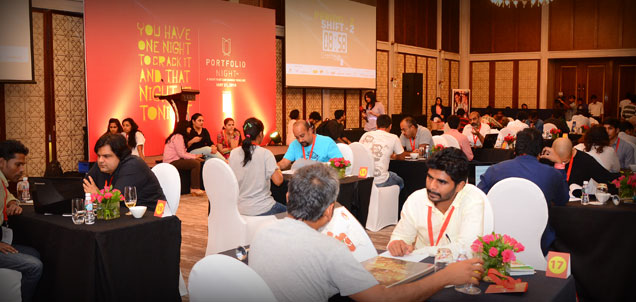
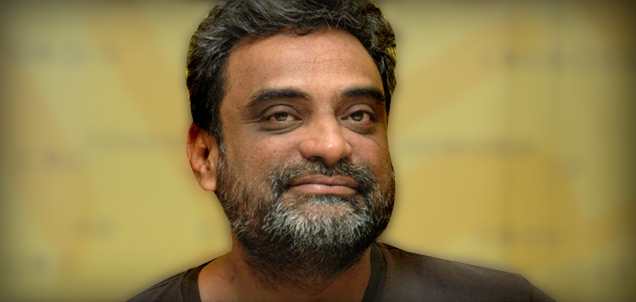
    Okay, so the chief host was missing. So deep is his commitment to projects he takes on, that R Balki, Chief Creative Officer and Chairman, Lowe Lintas and Partners stayed away from the starry Portfolio Night that his agency was hosting this year.


    Portfolio Night is a global event where, as the event’s website notes, aspiring young advertising copywriters, art directors and designers meet with several renowned advertising creative directors in a fast-paced evening of advice, networking and recruitment. “While the evening has been jokingly called “speed-dating for creatives”, it’s really much more than that. In the eleven years since its inception, Portfolio Night has grown to a global event, reaching creative hubs in every continent in an evening where the best of the present meets the best of the years to come.”


    In its 12th year, Portfolio Night brings together thousands of young minds on a single night at various top cities across the world. This year, Portfolio Night 12 was held in Mumbai’s Four Seasons Hotel, and Lowe Lintas was the host. Last year, Portfolio Night 11 was hosted in Mumbai and Delhi. While the Mumbai edition was hosted JWT, Leo Burnett got the act together in the capital. This year’s edition saw 13000 participants in what’s often also dubbed as one the world’s biggest “Job Mela”. The work is reviewed on the basis of geniality, creativity and execution.


    Apart from the obvious nervous energy in the crowd, the host had put together a fun video on the star judges and their predictable reactions after hearing a creative idea which evoked a great amount of laughter from the audience. Bobby Pawar, Chief Creative Officer, Publicis reacted to the video on him by saying, “I loved it. It’s hilarious and they had a great material to play with.”


    Talking about the quality of work expected at the Portfolio Night, advertising veteran and Executive Chairman and Creative Director South Asia, Ogilvy & Mather Piyush Pandey said, “It’s not about wrong. It’s about picking up little nuggets and encouraging them.” Amer Jaleel, National Creative Director, Lowe Lintas and Partners, who’s also the host, was seen in despair and wished he had this kind of platform when he had started out. “These 15 minutes are a big deal and it’s not about advertising but about an experience.”


    K S Chakravarty (Chax), National Creative Director, FCB Ulka, known as Chax was however not very lucky as the participants who he met were clueless about advertising in the first place. He explains, “You meet all kinds of people. It’s always luck of draw. Out of this entire lot, the chances are that only 5 participants will be really good and not necessary that I meet the brighter lot.”


    Arun Iyer, National Creative Director, Lowe Lintas and Partners shares that the team did miss R.Balki who was at that moment shooting for his movie but kept a close track on what’s happening. He further added, “It’s a fun evening. Of course, a responsibility but not a burden. Portfolio Night is a great platform for everyone and its getting evolved over the years.”


    “I feel like a celebrity,” exclaimed Deepanjali Singh, after being announced as All Star Nominee. Deepanjali was among those 75 participants who got a lifetime’s opportunity to present their portfolio in front of the biggies of the business.


    Bengaluru-based Mayank Bhayana was adjudged Portfolio Night – All Star from India. “I am still soaking in the news. It’s a terrific feeling indeed,” he said, adding: “And let’s not call it an award. It’s rather recognition that I can do a lot better than that.” The winner of Portfolio Night gets a chance to fly down to New York to take part in a week-long creative challenge on a specific brief.


    Hmmmm.


  • Online classifieds site OLX selects Lowe Lintas as creative agency

    By A Correspondent


    After some memorable advertising creative by Saatchi & Saatchi, OLX had moved its mandate to ITSA even as it was rumoured to be looking at an all-new creative agency.


     

    Now, the online classifieds site has announced the selection of Lowe Lintas & Partners to build on its brand communication and strengthen its position in the digital space.


    In a communique, Amarjit Singh Batra, CEO, OLX India, said, “The initial TV ads and messaging of ‘Sab Kuch Bikta Hai’ and ‘OLX pe bech de’ has witnessed positive mass appeal resulting in immense brand recall and a clear user preference for the brand. Building up from here, we want to take this notion a step further to fortify OLX’s brand equity and humanize the brand. Having weighed all the proposals and looking at the best fit, we chose Lowe Lintas for their ‘Populist’ creativity, their focus on business results and their understanding of our brand.”


    Commenting on the win, Amer Jaleel, National Creative Director, Lowe Lintas said: “OLX is an extremely dynamic and exciting brand. The most interesting thing is that it’s a completely new category with challenges of changing human behaviour. There will be opportunities to crack new insights, and therefore the brand would allow us to introduce absolutely fresh communication.”


  • Being on Cannes jury is no mean task


    By Tuhina Anand


    Being on the jury of Cannes Lions means serious business – being shut in a room for endless hours and going through thousands of entries to make a case for the piece you like. Undeniably, despite the work involved, the experience of being a jury at Cannes is a learning experience in many ways.


    Ryan Menezes

    As Ryan Menezes who was invited to be on the Cyber Lions jury in 2011 puts: “I thought, cool, after winning India’s first ever gold lion in 1996, I now get to judge the most cutting edge category of all. I was looking forward to a week of sun, sand and schmoozing. Yeah, right! It was cyber boot camp from start to finish.”


    Giving a peek into the work, Mr Menezes explained that first there’s a preliminary voting to determine the shortlist, which takes place online. This is even before you set foot in Cannes. He added: “Once you’re there, barely recovered from the seven course welcome dinner, you plunge into this seemingly bottomless pit of entries where you see some of the world’s best work, and some of the world’s best case studies for mediocre work. You quickly learn to check out the work first and skim through the somewhat exaggerated case studies, but with around 500 entries to be judged over 6 days, you’re looking at around 9 hours a day of sitting in front of a computer, with headphones. By the end of the day, you’re too drained to do anything more than crawl back to your fantastic Hollywood themed suite at the Palais Stephanie and pass out.”


    But wait, there are good parts too: “You get to hobnob with some of the best minds in the world, you get a peek into what’s going to happen in the future in the digital category in India, as we are light years behind. You learn stuff that can help you win pitches when you return (I have used this to great effect in two successful pitches this year) and you learn that craft is not dead, it has been resurrected and is alive and kicking serious butt in cyberspace. You get VIP entrances to the gala functions, reserved seats at the award ceremony, invites to the hottest parties, but you’re too dead so you take off to Paris or Amsterdam or Monte Carlo for some peace and quiet. And to sum up, what made the experience really worthwhile was the flawless orchestration of everything by the organizers from start to finish. And, of course, the jury members were fair – there was no lobbying, no camps and no crab mentality. Just a desire to give great work it’s due. And that’s what makes Cannes, well, Cannes.”


    Amer Jaleel

    Amer Jaleel, NCD, LoweLintas who was invited to judge the Press Lions in 2011 agreed with Mr Menezes. It was his first experience of judging at any festival and after his experience he feels that coming out with great creative work is difficult but judging so many good works is even more difficult: “While people come and congratulate you on being on the jury and then take off to enjoy the French Riviera, you have to get back to some serious work looking at endless entries. However, besides seeing the best works, what I enjoyed was interacting with the mindset behind those works.”


    “The debating that goes behind each piece of work and when you knock your head against somebody else’s work is the enjoyable part of being on the jury. The questioning, the conviction behind the works helps in validating your beliefs, assurance and creative thinking. It also gives you a peek into human behaviour as you see few pushing for some works with vested interest,” Mr Jaleel added.


    Shashi Sinha

    Shashi Sinha, CEO, Lodestar UM, who judged media Lions in 2008 feels that the experience at Cannes was of superior quality: “The screening process is intense and it’s time consuming. What I remember is that one got to see an amalgamation of digital and activation at Cannes which one is now beginning to see in India. This was four years back!”


    Being actively involved in the organizing of advertising industry awards in India, Mr Sinha pointed that a large jury at Cannes for each category works in favour of minimizing the biases. He also points that the entire process being digitized adds to making it a tighter procedure of judging.


    Priti Nair

    For the experience of being on the jury, Priti Nair of Curry-Nation who had judged the print category said: “It was a fascinating experience. First and foremost you feel enormously good and they make you feel enormously important as a judge! I was judging print and there were some 7000 entries. You get to meet and interact and have lunch with people whose names you have only read and whose work you have truly admired. What strikes is the smoothness with which the whole thing moves. It is thought through to the last detail in terms of how do you divide, how you score and how you make sure it does not feel unfair. Apart from this, you actually get to see work that you would never ever see anywhere. It is work sent from all over the world.”


    These could be lessons that Indian awards committee could also emulate here.


    While everyone praises the well-oiled jury process, the chance to see works from across the world and even interact with great minds in advertising, some are also of the view that being on such a platform makes you realize the drawbacks in Indian advertising and people practicing advertising itself.


    KV Sridhar

    KV Sridhar aka Pops, who was on 2010 Press Lions jury, pointed that the Cannes jury is different from any other international fest as there is representation from different countries. If there are 22 jury members they will be from 22 different countries. He said:, “There would be silent Japanese who will make an apt observation and there will be vocal Indians or South American jury. However, the Indian jury becomes a lone member as representation from South Asia is not so strong. So they fail to gang up and explain the nuances of advertising coming from their part of the world as compared to those from Latin American countries who do make a case of work coming from their part of the world.”


    He added: “I have seen is that jury members from other countries are well versed with works not just coming from their agency but also from their country. So they really put a strong case for their works. It’s like putting their country first and then the network. One is not saying that be blindly patriotic but one must stand and fight for a good piece of work from their country and explain the various cultural nuances which will help the jury in better understanding of the work. Also, the jury should share their inputs with the industry so that for the next time one is prepared well when sending entries for festivals like Cannes. There should be a platform created to share their learnings.”


    Pops categorically said that one should be familiar with the works coming from their own country: “Fight for the creative you like, it doesn’t matter which country it belongs to. Double tick if you like a work, as in Cannes if you blink you will miss the entries!  Ensure that the works you like makes to the next level and that will only happen if you fight for that work and lastly be honest to yourself.”


    Ravi Kiran

    Ravi Kiran, who judged the media Lions in 2010, makes a valid point when he says that while Cannes is for celebrating work, there should be focus on learning too. While few make it to Cannes, there should be means to make the entries available to people who work behind these entries, but are not at Cannes. He also noted that when it came to countries, jury came with a certain mindset, like in the case of India one would always look at scale, given its vast population. So anything on a small scale in certain categories where it applies would not impress juries for Indian works: “While we have heard that how you package the work matters at Cannes, I did feel that many entries coming from our country lacked substance. Packaging is important, but you can’t bluff the jury with poor substance in the garb of good packaging. Also there were many videos that went with the entries and I particularly felt that one should ensure that these videos are not too long, as no jury has the patience when going through 70-80 entries. In fact, the videos should be similar to 30 second ads that we make.”


  • Awards have no relevance to advtertising: Balki


    By Anil Thakraney


    It’s always fun meeting the big boss of Lowe Lintas. Since we have worked together before and since Balki is always forthright and politically incorrect, one is assured of an exciting but meaningful exchange. Here is he, speaking his mind on various issues. Movies, advertising, the challenges facing the industry, the kind of people he’d like to hire, and yes, about his continuing allergy to advertising awards.


    You have to respect the man for the wonderful work he’s been doing on both, the small and the large screen. And more so for being that rare individual in the ad world who has the balls to stand up for something he believes in.


    Still around in advertising? Shouldn’t you be busy making big films with Big B?

    I am making a movie a day, it’s the same thing. An idea is an idea whether it’s three hours or thirty seconds. The day I stop tripping on getting the high when one gets an idea, that’s the day I will stop. In fact, I haven’t done a film in the last two years, I have been caught up with Lowe Lintas. I do have an idea for a film which I will work on towards the end of this year.


    And it will back to Bachchan, I suppose.

    Not back to, WITH Bachchan. I haven’t gone away from him.


    What’s with the Bachchan fetish?

    When you work with the ultimate guy it becomes difficult to work with somebody else. He’s phenomenal. Such hunger and greed for performing at the age of 70… it’s truly inspirational. I can keep on making films with him for the rest of my life.


    Are you a fan of Abhishek Bachchan too? His career isn’t going anywhere.

    Actually I found his performance in ‘Paa’ the best. It was the most difficult role. I think his problem is more the choice of films rather than the quality of his acting. He’s got his niche, he’s very good at certain things. He’s also a good friend.


    So that’s why you keep using him in the IDEA commercials, often when he’s not even needed.

    He’s a better friend of IDEA than he’s of mine. I didn’t choose him, IDEA chose Abhishek.


    What are the learnings from movies you’ve taken to advertising?

    The biggest thing that happens when you come back from cinema to advertising is that you are even more impatient. Because cinema takes so much time to execute, you want to make the ads even faster. That’s the reason I like making ads. You make them fast and you move on. There’s an idea a day, and that’s an addiction which is difficult to escape.


    Your wife’s directing ‘English Vinglish’. Are you the producer? And what’s it about?

    Rakesh Jhunjhunwala has co-produced it with me, along with another investor. It’s about the insecurities of a middle class woman who doesn’t know English in today’s context. It’s about how she overcomes the fear of English. It’s a very relevant issue to a lot of people in this country. In India, it’s money, fame and (knowledge of) English which determine the class and quality of a person.


    Let’s cut to Lowe. Are you still as hands-on as ever?

    I am. There’s so much of work, yaar. Today, Arun (Iyer) and Amer (Jaleel) have taken on a hell of a lot, they handle 50 percent of the business. My travel has come down but my ideation hasn’t. So yes, I am still involved in major things, I know what’s happening. This is not a profession where internal structures and motivations of the agency can dictate solutions for a client. The client comes to an agency for a solution and we have to get it, by hook or by crook. Gone are the days when creative directors would sit on a revolving chair and give motivational advice to people on how to crack things.


    Piyush Pandey said to me the reason he isn’t making movies is because he’s not bored of advertising.

    It’s about the number of things you can do, it has nothing to do with being bored of advertising. So maybe some people are capable of doing a lot more and some people are not.


    Significant changes you’ve observed in the ad world in recent times.

    It’s the same, in so far as it’s still a problem/solution business. What I find is that the clients today are hungrier for more interesting solutions. I find that clients don’t want to waste an idea. And because of the complexities of the marketing issues, the problem articulation is no longer simple. You can no longer say this is small, this is big or that is cheap. It’s about understanding the complexities and simplifying them. And I find that fewer and fewer people are able to do this. Therefore far more is expected of a creative person today than it ever was. The creative person is now seen as the solutions provider. Planning is now playing a big role in the articulation of the problem. Planners are now working more for the clients than for the agency. This shift is something I don’t quite agree with, but it’s happening. This situation requires more discipline, rigour and understanding from a creative person than ever before.


    And I guess this impacts your hiring policies.

    It impacts that hugely. The three Cannes Gold winners don’t make sense any more. Today a lot of senior creative people have to grow within the current system. So you hire junior people who are clever and intelligent and then groom them into the system of understanding problems. It’s very dangerous hiring very senior people from the outside. We went through a phase in advertising where we said we are losing our respect as an industry. That’s changed. Today the clients respect the advertising agency for providing solutions.


    Both, Prasoon Joshi and Piyush Pandey told me that the industry is losing talent. There seems to be too much pressure from clients, they no longer pamper creative people. And opportunities have opened up for agency personnel in other industries.

    I don’t agree with this. I actually think there’s never been a better time to be in advertising. You are no longer respected for your whacky ideas, being a maverick won’t get you any special respect. The problem isn’t that the industry is losing talent, the problem is it’s not attracting talent. It’s damn difficult to find talent to address today’s problems. In fact, today there are a lot of people in marketing who want to join advertising. Where we are not attracting the right talent is at the junior level. We as an industry haven’t been able to articulate what is the kind of people we want.


    As an old-world creative director, do you find yourself struggling with the new media?

    No. Clients want you do virals in the new media, but it’s still film. The video will never die, though the medium for broadcasting it may have changed. The production methodologies may also have changed. But the idea is the key to it all.


    You are not even on Twitter and Facebook. How will you ever understand the digital world?

    The reason I am not on it is that I don’t want the world to know what the fuck I am doing. That’s a personal choice, it has nothing to do with the new media. In fact, today if I am on Facebook, I am a fuddy duddy cock.


    The problem, Balki, is that all you uncles are obsessed with the TV commercial.

    I approach a problem very simply. There is a solution, and there is an idea. And if the solution demands a certain kind of medium, you use that. Nobody knew how to make films before or how to make a digital programme. So it’s all about expression. And you go into that particular medium and do it. I didn’t know how to shoot a film earlier, so I went to the experts to do it for me. I don’t watch television at all, but that doesn’t mean I am fuddy duddy on television.


    Small shops are springing up. People like Aggie are doing very well. Does that worry you?

    It’s always been happening. What do you think Mohammed Khan and Ravi Gupta did? If Ogilvy and JWT don’t worry me, then why should they? They are all competition. In fact, the more the merrier, it means more people are doing better ads, and that’s fantastic for the ad industry.


    Why are so many creative directors branching out on their own?

    In some cases they believe their talent is far superior to what a large agency can harness. The other reason is there are only so many people who can grow to a point in an agency. So it could be the frustration of not being able to grow beyond a point. They have to start their own thing to be what they want to be. The third thing of course is money. Some people want to be richer than what they are.


    Words of wisdom for young creative people.

    I think if you like sport, you should come to advertising. There is a hurdle to be crossed every day, there is a goal to be scored, there is a wicket to be taken, there are problems that come your way. It is like a game. The moment you start taking it too seriously, it’s very difficult to function in this business. A lot of things don’t make sense out here.


    Shashi Sinha tells me he’s cleaned up the GoaFest judging process. All the scams have been dealt with. But you still won’t take part.

    I believe the advertising industry needs credible awards. But how do you judge advertising? You say, ‘Haha, this is so funny! Oh, what a technique in this one!’ And based on that you award some ads. And two months later the agency loses the business. So obviously it doesn’t work. What the fuck are we doing in advertising? We are supposed to solve a problem interestingly. You are supposed to state the problem and the judges are supposed to ask if that ad could have solved that problem. I judged at Cannes once, and I refused to judge after that. I’ll give you an example of what happens: Those Coke print ads, where someone is sleeping under the shadow of Coca Cola bottles, has been hailed as the greatest piece of creativity. And then you have those great TVCs of Coke with Aamir Khan, which the nation loved, but which they (the Cannes jury) didn’t understand! This kind of judging has no relevance to what the purpose of advertising is. Basically the award show is a game and you play it. So it’s not about cleaning it up, I don’t value what you award.


    And you also have a problem with your peers doing the judging.

    Some of them I respect and some I don’t.


    So what sort of jury will satisfy you?

    Having some respected marketers on the jury would help. And some very good advertising people. Right now they ask anybody who’s free to come and judge, and that’s not the way to do it. You can’t choose people just because you want representation from various agencies. Thing is, before I give you a piece of work to be evaluated, before I give you the right to say if I am good or bad, I need to be assured you are a person who’s capable of telling me that. We need to first judge the judges.


    What disappoints you about the ad world?

    What pains me is the amount we try to market the barometers which decide who’s good and who’s bad in the Indian industry. The Gunn report, the Asian awards, etc, they tom-tom the barometers rather than the advertising itself. And all this has absolutely no relevance to what we do here. It’s time we found a barometer or an evaluation process that tells India which is a good agency. A method through which clients can credibly choose agencies beyond just the surveys and the awards. And this lack of a proper barometer has led to personality driven agencies. This propels a lot of false media management. PR for advertising people happens because of this.


    Why don’t YOU work on that barometer?

    Piyush Pandey and I have had many whiskies discussing this, but we only walk away promising that we should drink some more, and that’s about it. (Laughs.)


    Click here to view all Goafest 2012 stories