Tag: Amazon Prime Video

  • Amazon Prime Video inks partnership for NBA for India, elsewhere

    Amazon Prime Video and the NBA hav announced an 11-year media rights agreement, beginning with the 2025-26 NBA season. As part of the deal, Prime Video will present exclusive global coverage of 66 regular-season NBA games, including an opening week doubleheader, a new Black Friday NBA game, and all games from the Knockout Rounds of the Emirates NBA Cup, including the in-season tournament’s Semifinals and Finals. This partnership footprint includes India.

    Prime Video also acquires rights to exclusive coverage of every game of the postseason SoFi NBA Play-In Tournament, first and second-round playoff games, and Conference Finals in six of the 11 years of the deal. Prime Video will distribute its package of games in the U.S. and internationally, with an expanded package of games in select territories, including Mexico, Brazil, France, Italy, Spain, Germany, the United Kingdom and Ireland. This expanded package includes a minimum of 20 additional primetime regular season games each year, a Conference Finals series each year, and the NBA Finals in six of the 11 years.

    “The digital opportunities with Amazon align perfectly with the global interest in the NBA,” said NBA Commissioner Adam Silver.  “And Prime Video’s massive subscriber base will dramatically expand our ability to reach our fans in new and innovative ways,” adding:  “We are proud to be the first exclusive streaming partner for the NBA, bringing Prime members across the globe one of the most exciting and most popular sports in the world. With 66 regular season games, the NBA Cup, the Play-In Tournament, more than 20 playoff games every year, and NBA League Pass, we’re giving basketball fans around the world more ways than ever to watch the action,” said Jay Marine, Global Head of Sports, Prime Video. “Over the past few years, we have worked hard to bring the very best of sports to Prime Video and to continue to innovate on the viewing experience. We’re thrilled to now add the NBA to our growing sports lineup, including the NFL, UEFA Champions League, NASCAR, NHL, WNBA, NWSL, Wimbledon, and more. We are grateful to partner with the NBA, and can’t wait to tip-off in 2025.”

  • Farzi: The Real Thing


    By Shailesh Kapoor


    Shailesh KapoorIt’s not a major talking point yet, but the OTT Hindi fiction space may just have entered its second innings. Farzi, Amazon Prime Video’s recent launch, has amassed huge viewership numbers, and is almost certain to become the most-watched SVOD show in India across platforms by the end of next week, based on Ormax Media’s viewership estimates for OTT originals in India.


    The success of Farzi marks the end of a lean period that started in mid-2022. The first half of that year saw a good mix of launches: Panchayat S2 proved to be a worthy successor to the delightful first season; Rudra received mixed audience response, but went on to get huge viewership, thanks to Disney+Hotstar’s sizeable subscription base and Ajay Devgn’s star value; Rocket Boys received immense appreciation, and was Sony LIV’s tentpole property for the year; Gehraiyaan delivered some solid numbers in the first week despite mixed to negative audience feedback; starting off as a low-profile film, A Thursday went on to become the most-watched direct-to-OTT film of the year; Human, The Great Indian Murder, Gullak S3 and Mai were fairly successful as well, especially for shows of their scale.


    But then started a drought of sorts. The second half of 2022 just didn’t have enough firepower. Criminal Justice: Adhura Sach managed to build good viewership, perhaps aided by a staggered episode drop, but scored below the show’s previous (second) season on audience likeability. The same can be said for Delhi Crime S2, which lacked the relevance of the first season that focused on the landmark Nirbhaya case. Films like Monica, O My Darling and Darlings good positive reception, but the viewership levels were only moderate.


    The lull continued till the launch of Farzi on Feb 9 this year. The show recorded a peak ‘Buzz’ of 45% on Ormax Stream Track, the highest since The Family Man S2 in June 2021, incidentally another show by Raj-DK, the creators of Farzi.


    There were more than 150 SVOD originals that launched in Hindi in 2022. But clutter generally comes with its share of issues. In a year where the conversation moved back to theatrical content, the absence of truly marquee shows on streaming made one wonder if the honeymoon period that the streamers enjoyed, especially during the two pandemic year, is over.


    Farzi can be called the start of a new phase in the Indian OTT originals market. The category is more mature and stable now, and one hopes that, like theatrical, it finds its equivalent of an “event film”. Six-eight “event shows” in a year will keep the category running strong. Farzi is 2023’s first, and one hopes the next one is round the corner.


  • Prime Video releases a new session of ‘Maitri: Female First Collective’

    By Our Staff


    Amazon Prime Video has released a new session of Maitri: Female First Collective. The collective is an endeavour to help build a community for women from media and entertainment where they can come together to discuss their experiences, challenges and successes, and offer their perspective and advice on how to bring about a positive shift.


    Moderated by the creator and curator of Maitri, Smriti Kiran, the participants comprised Aparna Purohit, Creator – Maitri and Head of India Originals, Prime Video; Indhu VS, Writer & Director; Ratheena Plathottathil, Writer, Director & Producer; Elahe Hiptoola, Creator & Producer; Parvathy Thiruvothu, Actor & Director; Rima Kallingal, Actor, Producer & Performing Artist; Shreya Dev Dube, Filmmaker & Cinematographer and Neha Parti Matiyani, Cinematographer.


    Said Aparna Purohit, head of India originals, Prime Video: “With the new session of Maitri, we wanted to take stock of where we stand with respect to diversity, equity and inclusion, understand the challenges ahead, and collaborate to find the right solutions. We are very heartened by the encouragement and support we have received for Maitri: Female First Collective so far. While it is a gradual journey, I am happy to see some change already coming through. To hear things like ‘we have women writers in our writers’ rooms’, or ‘our women characters have agency’ and ‘our content will definitely pass the Bechdel test’, in conversations with creators, for me, is a major step in the right direction. At Prime Video, we remain deeply committed to DEI. As the next step, we want to strive to have at least 30% women HODs across all our productions.”


  • Prime Video announces immersive cricket experience for India-NZ tour

    By Our Staff


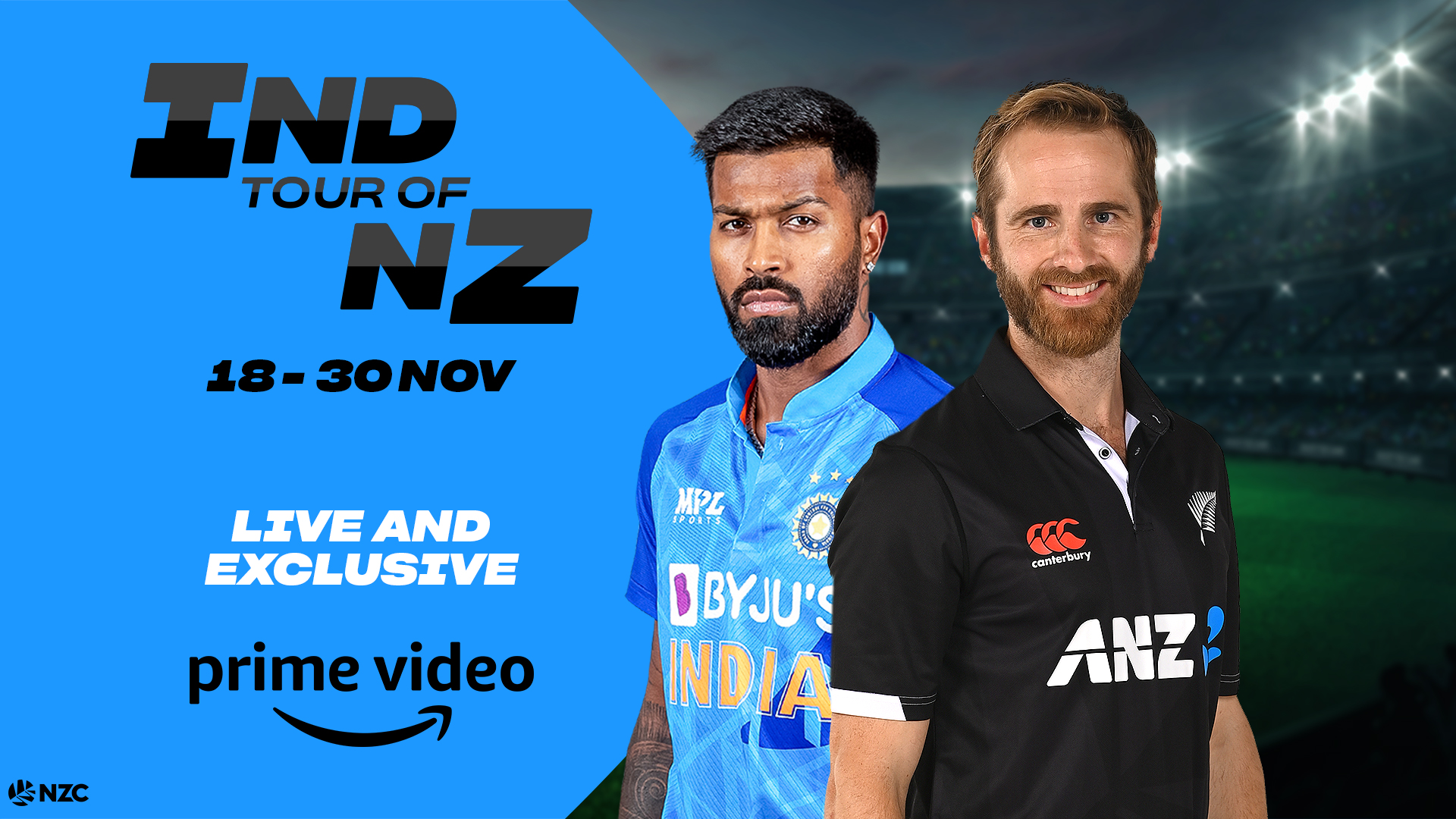
    Amazon Prime Video, or Prime Video, has announced special programming for the India-New Zealand men’s cricket series starting November 18. As a part of a multi-year partnership, international men’s and women’s cricket matches played in New Zealand across all formats – will be available exclusively on Prime Video India.


    Talking about the upcoming series, Sushant Sreeram, director – SVOD business, Prime Video, India said: “There are many things that are heterogeneous about the delightfully diverse India when it comes to entertainment – be it choice of language, genres of shows and movies, devices that customers prefer watching their favourite entertainment on, and so much more. But there is one absolute unifier that everyone across the country is unanimously passionate about, and that’s cricket! With our slate of compelling shows and movies over the last 6 years, we have strived to super-serve our customers, and they have emphatically picked Prime Video as their most loved entertainment destination. Now with live cricket, made immersive and accessible with multi-language feeds, fantastic studio programming and a superb set of commentators to take us through the series, we are confident we are not just going to deliver on a superior experience for the legions of cricket fans in the country, but make Prime Video that much more exciting, delightful and the first choice of entertainment for everyone.”


  • 2022 So Far: The Best of Indian Streaming


    By Shailesh Kapoor


    Shailesh Kapoor2022 is more than halfway through, and even as the pandemic lurks around, the year has a semblance of normalcy to it, something we have not felt since 2019. The entertainment narrative in the pandemic years was largely centered around streaming (direct-to-OTT) content. This year, the conversation has shifted significantly to theatrical films, with the release of some big blockbusters, especially in Telugu, Tamil and Kannada languages.


    But streaming content continues to build a wider audience base, and is now a flourishing parallel industry that’s hard to not take notice of. The first half of the year has seen its fair share of hits and misses on the streaming front. Here’s my choice of five Indian streaming originals that made a mark in Jan-Jun 2022:


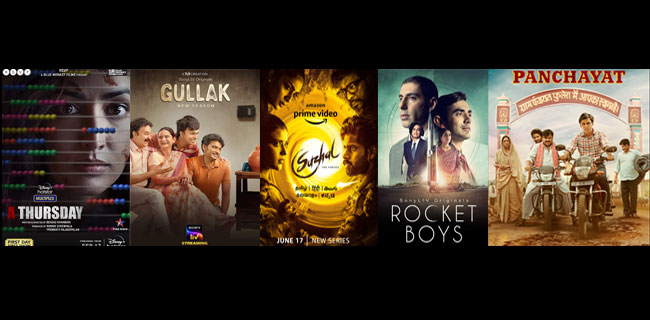
    5. A Thursday (Disney+ Hotstar)

    There haven’t been too many direct-to-OTT films that have made a mark this year, as the best content has been released theatrically first. But the Feb 2022 Hotstar thriller A Thursday, headlined by Yami Gautam Dhar, got the audience attention like no other film could. With an estimated viewership of 25.5 Mn, it is the most-watched streaming original film in India this year, ahead of the more-hyped Gehraiyaan. The thriller, with a very relevant message in the last act, may end up being the biggest direct-to-OTT film of the year too, given that streamers are now shifting their focus firmly to series than films.


    4. Gullak S3 (Sony LIV)

    Gullak is a partnership between a platform (Sony LIV) and a producer (TVF) who are both recognized for some excellent work in the streaming space over the last few years. The show revels in its simplicity and the ‘aam aadmi’ connect, making it stand out in a category that’s still driven by a predominantly cosmopolitan outlook. There has been amazing consistency across the three seasons of the show, in terms of character portrayal, the quality of humor, and the overall tonality of the show itself. One hopes the fourth season is round the corner, because the show’s growing fanbase is eagerly anticipating it.


    3. Suzhal: The Vortex (Amazon Prime Video)

    Created by Pushkar-Gayathri, of Vikram Vedha fame, crime thriller Suzhal has managed to find an audience outside its native (Tamil) market, despite the setting of the story setting being rooted in the local culture. The streaming category has made the language barrier a lesser factor over the last two years, and we can expect more shows like Suzhal to break through in the Hindi market in the coming months.


    2. Rocket Boys (Sony LIV)

    Rocket Boys, a biopic that traces the life of Homi Bhabha and Vikram Sarabhai, is a masterful recreation of an important chapter in modern Indian history. But it’s not the historical significance that makes the show so delightful to watch. Rocket Boys, created by Abhay Pannu, has an irresistible vibe, as it seamlessly blends humor with drama, romance with history, and irreverence with a sense of responsibility. Imaginative casting is one of the show’s strengths, and Jim Sarbh as Bhabha is particularly outstanding.


    1. Panchayat S2 (Amazon Prime Video)

    Panchayat is the second TVF show on this list. TVF’s strong presence on any Indian streaming list is a given, given the consistency of their offering over a few years now. Unlike Gullak, which has a more homely and next-door vibe, Panchayat has a certain cinematic quality to it, despite its simple, almost innocent, imagery. You can sense that this show is going to only get bigger and more ambitious with each season, because it’s uniquely wry style of giving social commentary is some sort of an acquired taste.


  • Gehraiyaan indeed: GEC Perception in a Deep Hole


    By Shailesh Kapoor


    Shailesh KapoorEarlier this month, the Deepika Padukone starrer Gehraiyaan released on Amazon Prime Video. Over the last two weeks, the film has been incessantly analysed, intellectualised and dissected by the critics and the audience alike. It’s a subject of social media posts, memes, op-eds, the works. The film has found such attention largely because of the stardom of its female lead. The same film with a lesser star would have only got as much notice as any of the more than 100 Hindi films that have released direct-to-OTT in India since early 2021.


    At an estimated audience (Ormax tracking) of 6.5 million on its first weekend in India, Gehraiyaan is by far the biggest Hindi film on Amazon Prime Video. In its first 10 days, the film has been watched (at least 30 minutes) by 13.6 million people in India alone. It may only amount to about 1% of India’s population, but it is a sizeable number from a streaming (paid) perspective.


    But here’s the thing: this number is less than the number of people who watch any of the Top 10 Hindi GEC shows everyday. Yet, there is no interest and conversation around the fiction content on Indian television anymore. There are fan clubs on social media alright, but outside of that, the general media chatter on GEC fiction is close to nothing.


    While Bollywood was always a media favourite because of the larger-than-life stardom it offers, there’s no such evident lure in the streaming category. Yet, even mid-range streaming shows, with no saleable faces, are being critiqued and discussed like mainstream content. But new GEC launches enjoy no such privileges. When did you last see a fiction GEC show trending on a social media platform?


    Conversations around the imminent demise of linear television continue. While these conversations borrow principles from the West, and have little grounding in India’s social reality, not getting any press at all is a genuine concern Indian television must deal with today. GECs still rely heavily on advertising revenues, and even as TV continues to deliver big viewership numbers, media trading conversations are shifting to digital with every passing quarter. TV channels cannot afford to be out of the news altogether. Even in the industry trade websites, much of TV conversations over the last couple of years have been about NTO and news ratings. Most such stories don’t have a positive ring to them.


    So, Indian television is not suffering from a viewership problem (at least not so far), but it definitely has a huge perception problem to deal with. Flaunting viewership numbers can help them circumvent this problem, but only till a certain point. It’s only human nature that brand managers and media planners like to associate with content and media they consume themselves, or see others around them consuming and talking about. The consumption had stopped many years ago, and now, even the conversation is dying.


    Can mass television come out of this hole? Or it must surrender to the ways of the digital age? The next few years will give us the answer.


  • Leo Burnett launches  ‘What’s your mood?’ campaign for Amazon Prime Video

    By A Correspondent


    Amazon Prime Video has unveiled a new marketing campaign ‘What’s your mood’, a three-film integrated approach to showcase a vast repertoire of content available on the service.  The campaign has been conceptualised and created by Leo Burnett India.


    Speaking about the campaign Rajdeepak Das, Managing Director – India & Chief Creative Officer, South Asia, Leo Burnett said: “Amazon Prime Video has one of the most extensive content libraries and exciting range of titles. We wanted to connect with the audiences and talk about  its varied content which will appeal across all age groups and genre preferences. We realised most of the times people decide what to watch basis their moods, which is a combination of need, states and occasions, and our latest campaign reflect this with a light-hearted and fun films which we are sure will connect with our consumers. How you showcase the range in every film genre was the challenge. But I think the team did a great job in executing the creative ideas in an entertaining way.”


  • Tata Tea Gold leverages OTT & Ecommerce

    By A Correspondent


    Tata Tea Gold has collaborated with with Amazon Prime Video and Amazon.in to be the beverage partner of the Shakuntala Devi film, being released tomorrow (July 31) on Prime Video.


    Speaking about the association, Puneet Das, Vice President Marketing, Beverages- India, Tata Consumer Products, said: “Tata Tea Gold has been bringing alive it’s ‘Dil ko naa kahoge to pacchtaoge’ positioning through pop culture stories of people who have listened to their hearts and pursued their own passion. The movie will bring alive Shakuntla Devi’s journey to the audience and her story will not only help in propagating the proposition of ‘Dil ki Suno’ but will hopefully inspire several others to tap into their inner voice and pursue their own dreams. Hence, there is a great resonance and synergy between the brand and the movie.:


    Added Kishan Kumar M S, Vice President, Wavemaker India: “As an agency partner of Tata Tea Gold, we are always on the lookout for opportunities that can bring alive the brand story to grow the business. If that opportunity comes on the back of two of the latest trends — the surge in Ecommerce and OTT — it makes it even more exciting!”


  • The Most Successful OTT Brands of the Decade


    This is the third in a series of six decade-ender lists in this column by Shailesh Kapoor. The previous lists:

    The most-defining Hindi TV shows of the decade

    The most-defining Hindi films of the decade


    By Shailesh Kapoor

     

    The OTT category in India saw a major boost in the latter half of the decade, especially 2017 onwards. From a handful of originals and OTT platforms that you could count in single digits, the category took off with the arrival of Netflix and Amazon Prime Video in India. In 2019, more than 100 original OTT shows launched in Hindi language alone. Add regional content, sports, movies, animation etc. to it, and you know that the end of the decade belonged to OTT.

    Ranking “successful” brands in an emerging category can be tricky. This list is based on impact created in the Indian market, both from a content and a marketing perspective. Social media brands have not been considered, and special mentions are due to regional players like Hoichoi, and niche players like FilmCompanion and Ullu, for managing to find a strong need gap and catering to it.


    5. ALT Balaji

    Balaji’s entry into OTT category in 2017 made it one of the earlier entrants. It took ALT Balaji some time to get going, and it can be argued that the launch of the more premium services like Netflix actually helped ALT Balaji position itself as “mass” and more mainstream, especially for the non-metro markets in India. The platform has relied on quantity, launching shows every other week, and Gandii Baat, which explores the erotic genre from the small-town/ rural lens, is arguably its most successful show till date. When compared to other platforms that didn’t make it to this Top 5 list, like Zee5, Voot and Sony LIV, ALT Balaji’s run is impressive, particularly because it did not have much GEC catch-up content to provide an early cushion.


    4. Netflix

    It’s difficult to split Amazon Prime Video and Netflix on rank. Netflix is clearly the more niche of the two, operating as a standalone content service at a much higher price-point than Amazon. When Netflix launched, its price-point was seen as prohibitive by many. It took some time for Netflix to customise, and the launch of the Rs 199 mobile-only service in 2019 was a sign that they are willing to adapt to the unique rules that the Indian market can demand from global players. Netflix’s content strategy has been to focus on less but high-quality content, though some of their 2019 India shows, such as Sacred Games 2 and Bard Of Blood, fall short of that high standard. The platform’s imagery, however, remains strongly associated with high-quality international content, and that’s a sub-genre in which it’s a clear leader.


    3. Amazon Prime Video

    Amazon Prime Video’s launch in India was in line with its global strategy to create content to fuel the retail business through content engagement. Compared to its competitor Netflix, Amazon’s OTT strategy in India relies on higher number of big-ticket launches and more aggressive film acquisitions. Through Mirzapur last year and The Family Man this year, the platform has managed to create top-end Indian content, which puts it in a very credible space as we enter a new decade.


    2. TVF

    TVF (The Viral Fever) is the only content creator in this list of OTT platforms. Being the early innovators (remember Permanent Roommates and Pitchers), TVF had its OTT moments much before the big players came. Some argued that TVF would fizzle out as big budgets come into play, but the platform continues to be amazingly consistent with its quality, and this year’s Kota Factory is the latest testimony to that. Having addressed a definitive segment of the urban Indian youth, especially men, TVF is in a rock-solid position to be the most-sought-after content creator in the new decade.


    1. Hotstar

    Hotstar came before everyone else, in early 2015. And with each passing year, the Star-owned platform has managed to stay ahead of the OTT evolution curve, especially in the area of marketing. Taking IPL digital rights, even before Star had the broadcasting rights, was a clear indication that Star meant business with Hotstar, and this year has seen a lot more action to support that line of thought, with the launch of the VIP service and Hotstar Originals. In the new decade, Hotstar will have to do a bit more to more away from its image of being primarily a catch-up TV and digital sports platform. But that work has already started, it seems.


  • The Big OTT Growth Story: Chapter 3


    This is the third in a series of columns on the OTT Growth Story in India.

    Links to previous chapters: Chapter 1, Chapter 2

    By Shailesh Kapoor

    76.5 Million. That’s the all-important number to look at from The Ormax OTT Audience Report: 2019. The recently-concluded research, designed to size and profile the OTT audience market in India, took up the task of first measuring the number of ‘regular’ OTT audience that exist in the country currently.

    The definition of ‘regular’ can be subjective. Based on our category experience and market feedback, we defined it as: Audience who watch online videos for at least two hours every week, and use at least one OTT platform/ app, apart from YouTube and social media, to watch videos.

    The study covered 15+ audiences, and hence, does not include kids. It emerged that 76.5 Million, or 7.65 Crore, is the size of this market in India currently. The next track in 2020 will establish the growth rate. The question is: How small or big is this number?

    Comparing to TV universe can make the number look very small at this early stage of the OTT category. But a more obvious comparison can be made to the theatrical universe. The Bollywood regular theatre-goers universe stands at 33.3 Million, or 3.33 Crore. Add the unduplicated components of regional universes, especially the bigger ones in Tamil and Telugu, and the overall regular theatre-goers universe in India touches the 6 Crore mark.

    Let that sink in. The regular OTT audience universe in India is already bigger than the regular theatre-goers universe in India. And the former is growing in top gear, while the latter has flattened out for almost a decade now. This gap will only get wider.

    Only 15% of the regular OTT universe belongs to the top 6 metros in India. There’s a healthy longtail, created because of falling data costs and the penetration of Jio into small towns and villages in the last 2-3 years. But there’s enough scope for growth across markets. Mumbai and Delhi, the top 2 cities, have about 3.0 Million regular OTT audience each, which is nowhere close to saturation, given the huge adult population of these big metros. The equivalent theatre universe size in these metros is 3.2 Million (Mumbai) and 2.8 Million (Delhi). Hence, the two biggest cities have similar OTT and theatrical universe sizes. It’s beyond the metros, where theatre penetration, content relevance and ticket pricing remain key issues, that theatre-going habit loses out to OTT, a scenario that would have seemed quite unlikely till three years ago.

    The recent trend of films going directly to OTT (read here) is another sign of how OTT has emerged as a robust option for entertainment, and the price factor, which would have earlier been a big discussion point (“Indians are not used to paying for ‘television’ content”) is slowly becoming a lesser factor, with most OTT platforms coming up with rationalized pricing packages for the Indian market.

    As an aside, Amazon Prime Video’s The Family Man has emerged as the big show of the year, scoring an Advocacy Rating of 80, just a point below Sacred Games S1, to become the second most-liked India OTT show ever. A few more such winners and the OTT universe will continue to flourish.

    125 Million by 2020?


  • The Big OTT Growth Story: Chapter 2


    This is the second in a series of columns by Shailesh Kapoor on the OTT Growth Story in India. Click here for Chapter 1.


    By Shailesh Kapoor


    It’s raining OTT show launches. Over the last few weeks, about two-three major and another five-six minor OTT shows have been launching every week. At this rate, the number of OTT shows that launch in 2019 will be higher than the Hindi GEC shows launched over a five-year period (2015-19). And you may not be wrong in believing that this is just the start, and things can only get more exciting from here.

    While the launch rate has accelerated significantly in 2019, it has been accompanied by a parallel improvement in the quality of content too. Till last year, among the many OTT shows that launched, only a couple would pass muster on quality. Most of the shows that won audience appreciation were from the TVF stable. ‘Quantity over quality’ seemed to be the OTT mantra.

    While that mantra continues to hold true for the second line of OTT players in 2019, there has been a significant jump in the quality of the top shows in 2019. If we look at the Ormax Advocacy Score (a measure out of 100 on how well-appreciated a show was among the audience who watched it), 2019 has some strong candidates in the reckoning.

    November 2018’s launch Mirzapur (Amazon Prime Video) continued to get audience appreciation early this year. Then came the deliciously compelling Delhi Crime (Netflix), which continues to grow its audience base till date, six months since it launched in March.

    The big success of the year, however, is a somewhat low-profile show Kota Factory (TVF). Presented in Black & White, this funny and insightful series on the student life in the education hub Kota has received widespread acclaim from young audiences, become the third-most liked Indian OTT show till date on the Ormax Advocacy scale, after Sacred Games (Season 1) and TVF Pitchers.

    Another potential top-end show dropped last night: Amazon Prime Video’s The Family Man. The unusually-textured spy thriller cum family drama stands apart from the dark and gritty world that shows like Sacred Games and Mirzapur espouse.

    However, all good things come with a word of caution. Almost 80% of OTT shows that have launched still have an Advocacy Score below 50, symptomatic of active audience dislike, even rejection. Many of these have been actively promoted by the respective platforms, indicating that the platform sensed good potential in them. So, even though the top-end has become stronger, the success rate may still be a mere 15-20%, or even lesser. Quantity may still be prevailing over quality after all.

    The Top 10 Hindi films of 2019 based on audience advocacy (word-of-mouth) average at a staggering Advocacy Score of 73. The equivalent number for the OTT category in 2019 is only 60, which is only a notch higher than the Hindi GEC category average of the year. And the Hindi GEC category has not exactly been in the pink of its health in recent times.

    A long tail of flop shows will continue to be churned out in a category where everyone wants a share of the pie. 2019 has been good so far in providing a strong top layer of quality content. This layer now needs to expand from three to four shows to 10-15 shows a year. And 2020 may just be the year to achieve that.


  • Will Skinny Bundles work in India?


    By Indrani Sen


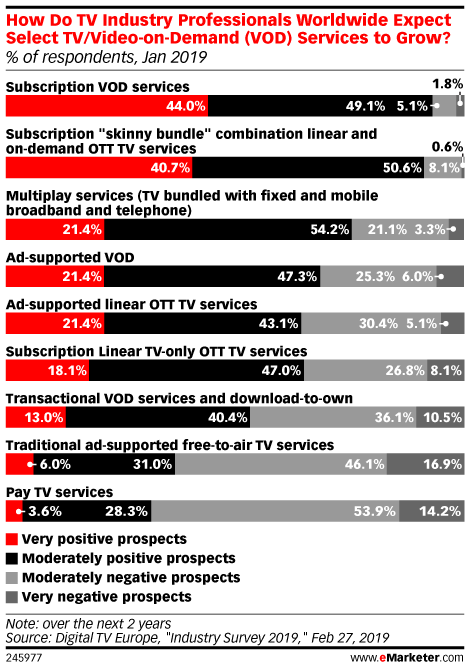
    I recently read an interesting article “TV Industry Eyes Hybrid Linear, On Demand OTT services” in www.emarketer.com based on the findings of Digital TV Europe’s “Industry Survey 2019.” According to the survey, nine in 10 industry professionals worldwide had positive outlooks on the two-year growth of “skinny bundles,” or subscriptions that offer both linear and on-demand OTT services as against subscription of only SOVD services like Netflix and Amazon Prime Video.


    The term “skinny bundle” was first coined to describe pared-down cable TV packages in the United States. In recent times, the concept of ‘skinny bundle’ has been introduced into the digital video sphere with an aim to describe either linear OTT services that offer customizable channel packages or a service that combines linear and on-demand content, as defined in the Digital TV Europe’s survey. As the article explains “The latter definition alludes to linear OTT services like Sling TV and fuboTV, which now have subscriptions that offer additional access to premium, on-demand content from services like HBO and Showtime. But it also represents SVOD services like Hulu, which bolstered its offerings with Hulu with Live TV, a linear service. (Source: https://www.emarketer.com/content/tv-industry-eyes-hybrid-linear-on-demand-ott-services?ecid=NL1001)


    In the US and other European countries, there is a growing trend of “cord-cutters” every year, referring to the consumers who are cancelling their subscription to cable and opting for other digital services. There are also a significant number of “cord-nevers” among younger generation (those who have never subscribed to traditional cable). It would be interesting to wait and watch what impact the growth of mobile internet in India has in the next few years on the cable TV and Dish TV subscribers.


    This model of skinny bundles can be adopted easily to suit the Indian TV industry, against our unique scenario of rapidly growing access to internet through mobile phones. Among the various options of skinny bundles shown in the above chart borrowed from the article, the option of Multiplay services (TV bundled with fixed and mobile broadband and telephone) looks like an ideal solution for Indian TV industry in near future.


    To sum up, it is going to be an exciting time for Indian TV industry from 2020 onwards with constant changes and innovations in the way of doing business. Needless to mention that the TV channels who were early adopters of OTT platforms will enjoy a distinct advantage.