Tag: Ajay Kakar

  • 465 entries, 214 judges… it’s Effie time!


    By Ajay Kakar


    It has now been 24 years since I joined Ogilvy and Mather. And a decade since I left the agency. And yet, while writing this article I remember something I heard during my Ogilvy stint – the spirit David Ogilvy believed in – the spirit of Divine Discontent.


    Now how’s that for “effectiveness”!


    Effie 2014 in Numbers

    14th Year of Effies in India

    465 Entries

    60 Participating Agencies

    214 Judges

    Rs 25,900 Entry Fee


    Today, I write this article not only as a client, but as the chairman and custodian of Effie India. And I do believe that the spirit of Divine Discontent best describes the journey and jihaad undertaken by The Advertising Club‎, to promote the cause of effectiveness in Indian marketing.


    As you may well know, Effie 2014 will be the 14th year ‎of our hosting this unique recognition, in India. Effie is a worldwide franchise.  It is the only award that recognises and rewards work that works in the market place. Effie is the only award that recognises and rewards both the client and agency. Effie is the only award in India judged by clients and agency representatives; not the creative leaders, but the thought leaders and business leaders.


    We celebrated Effie 2013 with great pomp and glory, in the presence of over 1,200 members of the advertising, media and marketing fraternity. We had received an all-time high number of entries, 419, from 52 participating agencies.


    And just when we thought that we have reached the peak, the response this year has overwhelmed us even further. We have received 465 entries, representing work from over 60 agencies. And the number of entries must be seen in the context of the Rs 25,900 entry fee, which is higher than the fee charged last year ie Rs 23,000.


    It is so gratifying to see the industry’s growing interest and commitment to effectiveness. Guess the Effies are a response to the now famous quote‎, “I know that 50% of my advertising works. But the problem is that I don’t know which 50%”.


    Our Effie judging process is worthy a mention. It is entirely paperless. And is conducted in Mumbai and Delhi, across two rounds. With such large number of entries, we like to ensure that each entry gets its due time and attention. I remember the days ‎when each jury member had to wade through 80-odd entries. And now we try to cap it at less than half that number. We aim to have at least 10 jury members go through every entry, comprising of at least 50 per cent clients.


    To give a sense of the magnitude, the Round 1 judging in Mumbai, this year, witnessed approx 63 judges, divided in 6 groups, screening 240-odd entries. While 52 judges did the same in Delhi, for 170-odd entries.


    So what differentiated this year’s Effie from the years gone by? A lot of the new facets were introduced to bring Effie India closer to the norms of the worldwide Effie franchise:

    – the campaign period for which entrie‎s were accepted, was increased to 15 months, to make it similar to that of Effie APAC

    – in keeping with recent trends in campaign creation, the provision to attribute entries to a Primary Agency and a Secondary Agency was introduced

    – this year, recognition will not only be given in the form of metals; Gold, Silver or Bronze, but also Finalists ie. those entries that move to Round 2, but do not win a metal


    On the eve of the 2014 Awards night, I look back with joy and pride. We do seem to have come a long way! So, is this the peak? The end of the road?


    The spirit of Divine Discontent assures me that the best has yet to come. Yes, it is true that the Effie is a marquee event from The Advertising Club of India. It has become the gold standard of awards in India. It has become the most credible and sought after award. Supported and respected by clients and agencies‎.


    But looking ahead, I am confident that the need and hunger for effectiveness will keep propelling this property‎ to greater highs, year after year. Budgets are scarce. And as against the spray and pray approach of the past, it is the sniper approach that we now look out for, where every bullet counts. And every bullet is expected to hit the bull’s eye, no less. Creativity is good. But creatives and campaigns that work, well that’s where any marketer will always prefer to put his buck.


    Ajay Kakar is CMO – Financial Services, Aditya Birla Group


  • The Most Annoying Buzzwords of 2014


    We asked the industry’s finest for buzzwords they grew heartily sick off in 2014. Big Data and Viral were the big losers. Read on for the rest:


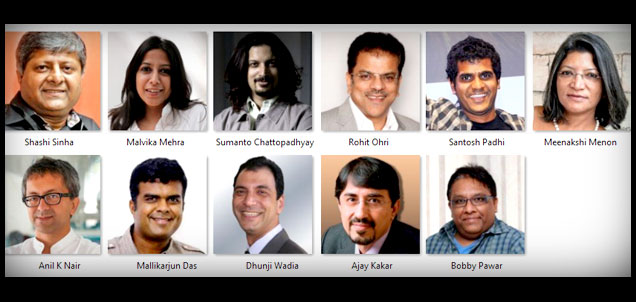
    Shashi Sinha, CEO, IPG Mediabrands

    1. Talent

    2. Compensation

    3. Digital

    4. Television measurement and

    5. Analytics were annoying as the more people spoke, the less they did anything about these things.


    For 2015, for starters, I have high hopes from the new TV measurement which Barc will put out, media agencies getting into content production, collaboration between all constituents of the ad ecosystem, budgets which will hopefully be at landmark levels and the World Cup which we should win again.


    HALL OF SHAME 

    Viral – Most of the time it is just an ad that runs way too long. Get some scissors, people


    Big Data – The ultimate Brahma Astra for the advertising charlatan


    The only viral I know of is the one that requires the intervention of a doctor

    Perhaps the most, abused & misused terminology in the year. Runs the danger of being called ‘Pig Data’.

    It’s just analytics. People have been doing this ever since humankind stepped on this planet.


    Malvika Mehra, National Creative Director and Executive Vice President, Grey

    The 5 most oft used words in 2014 were 1. Guys 2. Let’s 3. Make 4. A 5. Viral.


    Also ‘Take your time (4-5 minutes is great), but please don’t take my money. No budgets this year. And while you are at it, make it so stunning that it is ‘organic’ (unpaid distribution)’. Ji Sirji. ‘But ultimately make me a TVC. And I want a ‘BIG, LAUNCHY’ feel for our product in 30 seconds or less. Chal, paanch second aur le lo’. Ji sirji.


    The Pitch Bitch: ‘Of course we love you guys! We are just opening it up to 10 other agencies to inject some freshness into the brand (and test how much lower will they drop their price vis a vis yours for the same or more amount of work)’. Par Sirji?


    Femvertising: From soap brands, to makers of shampoos, sanitary towels, watches to home appliances and mobile network providers, everybody suddenly wanted to ’empower the woman’. I get the noble intent, but wish the brands would really ‘walk the talk’. Else it’s just a ‘token’ gesture. And consumers see through that inauthenticity.


    Interactive Pre-rolls: With stern warnings of ‘If you skip this ad, I will have to kill not only Jack and Jill and Mary and her little lamb, but also Old MacDonald along with all the cute animals on his farm’.


    Research: Gut instinct is officially dead. It got replaced by the R word. Heard about ‘No guts. No glory’? Not lately.


    Sumanto Chattopadhyay, Executive Creative Director, South Asia, Ogilvy & Mather

    Native Advertising: I imagine people wearing grass skirts and clapper boards singing jingles.


    Vlog: At times we Bengalis mix up our Vs and Bs. That’s what I thought this was all about!


    Content: As in, ads vs. content, content marketing. Like ‘traditional’ advertising has no content? I’m content to pass on this one.


    Social: Yeah, why not? Let’s party. And get paid for it! That’s what I say.


    Seamless: Every element has to seamlessly work with everything else. Imagine if our clothes were like that too! Now that would be some fashion trend.


    Santosh Padhi, Co-founder and Chief Creative Officer, Taproot India

    Pitch: If you do not respect yourself nobody will.


    Research: Like sex determination, it should be banned


    Low Budget: Instead of 300 insertions can we do 280 and improve the quality of the creative?


    Urgent: Premature babies forcefully welcomed will always run a risk


    Celebrity: They are the super highly paid creative directors, why do you need one more creative agency?


    Rohit Ohri, Executive Chairman, Dentsu India and CEO, Dentsu Asia Pacific (South)

    Integrated: Integration is the process, co-creation is the magic.


    360: 360 degree campaigns are consumer conversations in bursts, 365 is everyday relevance.


    Alignment: Alignment is passionless, belief runs deep.


    Structure: Structure constrains, open source liberates.


    Procurement: Vegetables are procured, ideas are partnered.


    Meenakshi Menon, Chairman, Spatial Access

    Big Data: That has to be on the top of my list. It’s just analytics. People have been doing this ever since humankind stepped on this planet.


    Twitterati: Everybody has become an instant expert on Twitter. I’d replace the term with ‘scum.’


    ISIS: ‘Isis’ is supposed to be the goddess worshipped as ideal mother and wife. Our vocabulary keeps evolving, sometimes not in the right direction. I’d call the group as a distortion than assigning them the name of a goddess.


    Homechef: Where mothers cooking for their families had some dignity to it, now we have a whole new concept of women cooking for complete strangers that they invite at home. The food is charged, of course. It’s just a little pretentious a term. Just call them plain old cook, maybe?


    Climate Change: It only gets talked about. Never acted upon. Perhaps replace it with – learn to breathe under water? Or ‘Grow gills?’


    Anil Nair, CEO and Managing Partner, L&K Saatchi & Saatchi

    Integration: The term liberally used when you don’t have a clue of what to do with your brand. It’s been institutionalised now. We will have Chief Integration Officers everywhere in no time. Put an end to this painful word. Replace it with ‘We need to have an idea,’ Sirjee.


    Social Listening: It’s something that our good old researchers have been doing for ages. It’s nothing more than trend analytics, only instead of taking a dictaphone out to record voices, you’re recording them off Facebook and Twitter. Just call it ‘consumer understanding’ and do not make an unnecessary tool out of it, please?


    Viral: The only viral I know of is the one that requires the intervention of a doctor and loads of medicine to go away. I don’t care where this term came from, it needs to disappear. It’s an epidemic that needs an antidote.


    SEO, SEM: Why are we making a mountain out of a molehill? Can we not get caught up in the process and its terminology and revert to a simple non-jargonised world?


    Big Data: For God’s sake, the database just got bigger. But it always existed. The most successful political campaign of this year was based on pure emotional advertising and not big data. Let’s stop jargonising information. Call it what it is (read: information).


    Mallikarjun Das, CEO, Starcom MediaVest Group (India)

    Big Data: A phrase bandied too easily and too much, especially by those who pay scant regard to rationality. The ultimate Brahma Astra for the advertising charlatan.


    Programmatics: A term used in context with media buying, especially on digital, when what they are doing is just using the optimiser.


    Fragmentation: The only problem with using the said buzzword is that it’s often used in a wrong way to strike some sort of terror in a client.


    Storytelling: Need I say more?


    360 degree: This term is like that sugarcane that’s passed through the machine 300 times. There’s no juice left in it and yet it’s being rolled one last time.


    Dhunji Wadia, President, Rediffusion Y&R

    Big Data: Perhaps the most, used, abused and misused terminology of the year. It runs the danger of being called ‘Pig Data’. There are questions regarding the implications of the approach and also the way it is currently done. It needs to look at data holistically – Total Information.


    Digital Evangelists: Don’t need them as you cannot preach to the converted.


    The ‘Selfie’ Contest/Promotion: Replace it with better imagination.


    E-commerce ‘Discount for the Day’: That runs for years together.


    Free App Download: With more and more retailers and brands reaching for e- and m-commerce, there is an explosion of apps to be downloaded. Begs the question, ‘Why would anyone pay to download such an app?’


    Ajay Kakar, CMO, Aditya Birla Group – Financial Services

    “Isse viral kar do!”: Which is what every client says. It’s content, not viral, please.


    “Facebook has 50 million visitors!”: So what? VT station has more people visiting, does that mean we put all our ads there?


    New media: Let’s just say ‘customer’ as opposed to new, old, traditional, or any other kind of media. Creative awards: Awards should be for creatives that work.


    Pitches: Here a pitch, there a pitch, everywhere clients flirting. Serial pitching must end. Let’s call them ‘Brand Custodians’ and not pitchers, shall we? Clients and agencies must stop playing the blame game. If one is the crutch to your success there’s no way one should let go.


    Bobby Pawar, Director and Chief Creative Officer, Publicis Worldwide

    Viral: For the love of likes, it’s just a video until lots of people see and share it. Most of the time it is just an ad that runs way too long. Get some scissors, people.


    ATL/BTL: It implies a caste system of ideas. The good ones go above, the so-called ‘hard working’ ones slide under. It shouldn’t matter where the idea lives, it must be good enough to move your audience. People don’t care, therefore you must.


    But: This is phaasi ka phanda for ideas. It is crueler that a blunt ‘no’. Why? Because it is preceded by some waffling words that give hope to the creative, then ‘but’ shows up and yanks the handle.


    Deadline: Nothing induces a creative butt-clenching moment like this word. Yes sir, three bags full sir, our work is time bound, but does it have to sound so, erm, deadly?


    Purchase: It’s the leading cause of hair-loss among agency CEOs.


    Source:The Economic Times

    Copyright © 2015, Bennett, Coleman & Co. Ltd. All Rights Reserved

    Licensed to republish



  • Why do Indian agencies turn a blind idea to Idea Thiefs?


    By Shephali Bhatt


    Caution:The tone of this article is slightly harsh. In our defence, if you are in advertising you had it coming.


    Under ordinary circumstances, you empathise with a victim. Not with the Indian advertising industry, at least not this time. Why not? Because for the longest while now, agencies who claim to be problem solvers haven’t figured out how to prevent a basic issue that mars their existence: the theft of ideas at pitches.


    A few weeks ago, we had an anonymous senior adman pen a much discussed column about idea theft. It’s this convenient thing clients do as agencies present their most ‘groundbreaking’ work. They adopt (read: steal) ideas that catch their fancy without so much as a by your leave.


    The Legalese Simplified

    – Ideas cannot be protected under any law pertaining to intellectual property rights (IPR).

    – Copyrights protect expression of an idea. Patents protect inventions.

    – But, an agency can enter into an agreement with a client whereby he’d be bound to keep information given at the time of pitching confidential.

    – While industries like cinema, music, photography have strong unions safeguarding the creative folks rights, ideas are not protected under IPR anywhere. Only its embodiment in a tangible form can be protected.

    – The best way forward for a creative in any field is to be wise about their sales pitch.

    – If you’re a lyricist, share a stanza; a musician, share a tune; a scriptwriter, share a chapter.

    – And if you’re an adman, show your past work to the client or sign an NDA before showing speculative work.

    – If you are desperate, God save you.


    Inputs by Rahul Chaudhry, managing partner at Lall Lahiri & Salhotra, an Intellectual Property law firm)


    Some other agency gets to work on the campaign and soon Agency No 1 is staring at a YouTube video, now gone viral, that keeps clocking like after like. Leaving its staffers seething in impotent rage and the desire to scrawl ‘Hey, this was my idea’ in the comments thread.


    If this sounds distressingly familiar, look no further than the mirror while trying to find people to blame. First, agencies don’t do their homework. All clients aren’t cut from the same righteous cloth.


    There are Bermuda Triangles of the marketing world, who have a reputation for idea shopping. It was something a large Indian conglomerate was frequently accused off especially given its close ties with a particular agency. But typically, such clients opt for whoever quotes the lowest. And yet, pitch after pitch, ad shops go in all guns blazing, their finest creative minds working overtime, effectively delivering their best ideas free of charge.


    Mostly, the idea gets mutated by the time it comes to fruition so the original agency often finds its ownership hard to prove. To quote a few instances, the preorder strategy, a digital queue for the launch of a fast food chain in India was supposedly presented by an agency that didn’t get the account.


    A knit-wear brand is notorious for idea shopping. A creative head remembers writing a campaign for the Ministry of Tourism once. He didn’t win the account but one of his lines showed up in the final campaign. 8 out of 10 creative directors have been on the receiving end of this unabashed thievery of ideas.


    On the other hand, there are the rare cases of magnanimous clients like VIP who compensated an agency for using a modified version of its brand name suggestion for a new line of women’s bags – Caprese.


    Idea theft, like many advertising grievances, isn’t confined to India. Remember the #ShareACoke campaign? A veteran adwallah told us that when the original idea (by O&M, Sydney) was adapted by another agency in a different market, the Australian network agency created a mini uproar and got compensated. Good for them if that’s what actually happened. And what do their Indian counterparts do? Nothing. Actually, they discuss it grudgingly over a pint or few of beer.


    So, next to nothing would be more like it. The conversation brings about life-altering thoughts like – If the client can make us sign an NDA (non-disclosure agreement), why can’t we do the same? Legally, they can. But with agencies shying away from asking for a meagre fee hike, the chances of them demanding an NDA are slim to none.


    With undercutting and declining margins, agencies are under so much pressure to achieve topline, they can’t afford to say no to any fresh stream of revenue or upset a marketer by bringing up the NDA. The last thing anyone wants is the reputation of being a difficult agency.


    “The irony of it all is that despite being the biggest supplier of ideas, we have no command over our own product,” laments Anil Nair, CEO and managing partner of L&K Saatchi & Saatchi. The client knows agencies are desperate for new business. If he is unscrupulous, he will take advantage of the situation. It’s a sign of a shortsighted client though, says Ajay Kakar, CMO, Aditya Birla Group – financial services, to relinquish Lord Krishna for his army. We know how that panned out.


    Nonetheless, it’s the agency network that should boycott such clients. So, why haven’t the doyens of this industry done anything to check these defaulters? “It’s because most of our senior leaders are on extension and they don’t give a damn about where this industry is headed,” says Satbir Singh, managing partner and CCO of Havas Worldwide India.


    You have people who should’ve retired two years ago, getting paid a crore annually. Why would they risk anything? Rather why do they need to risk it for something that in most cases doesn’t even concern them? Celebrated creatives are typically insulated from this phenomenon; it’s mainly the mid-level creative who often ends up feeling violated. Ideas are likely to build his career and the stuff histories are made of.


    The agency ecosystem needs to safeguard these or run the risk of losing talent to another industry (a fad plaguing advertising but that’s for another edition). The AAAI (Advertising Agencies Association of India) says it’s working towards protecting ideas.


    While the call for a pitch fee went nowhere – rumour has it that agencies keen to pitch coughed up the fee themselves – in the last few years; they are looking to revisit pitch guidelines along with the ISA (Indian Society of Advertisers), shares MG Parameswaran, the association’s president and the advisor to FCB Ulka.


    The NDA clause will be a part of the revised guidelines, we’re told. So, when do we get this revised charter, we ask? In about three to four months, says Nagesh Alai, chairman of the legal wing. Until then, and maybe even after then, it’s open season on ideas.


  • Phase 3 of Birla Sun Life Mutual Fund campaign takes off

    By A Correspondent


    Jaanoge Tabhi Toh Maanoge (JTTM) – the uniquely executed Investor Education Initiative from Birla Sun Life Asset Management Company Limited, a part of Aditya Birla Financial Services Group, and investment manager for Birla Sun Life Mutual Fund (BSLMF), entered Phase III with the launch of its third TV commercial which has broken across national television. Directed by Shimit Amin, the TVC is created by Taproot, Mumbai. The effort at this stage lies in showcasing the suitability of equity mutual funds as the asset class for wealth creation over the long term.


    Ajay Kakar

    Commenting on the choice of theme, Ajay Kakar, Chief Marketing Officer – Financial Services, Aditya Birla Group said, “As subject matter experts, we know the opportunity Indian equity mutual funds present to investors. The investor experience however seems to be marked either by their fear of volatility or expectation for short-term gain. Our objective this time around is to try point out how patience and long-term duration of investment can be key to fruitful returns in equity mutual funds.”


    Chief Executive Officer, A. Balasubramanian, Birla Sun Life Asset Management Company added, “It is the need of every citizen to plan his financial goals for a better tomorrow. Our endeavour is to make investors realize that equity mutual fund is an asset class that demands investment discipline and long-term commitment so that they may make the most of this asset class to achieve their long-term aspirations.”


    The objective of the latest campaign from Birla Sun Life Mutual Fund is to empower the viewers to self-realize the opportunity of investing in equity mutual funds. This has been brought about by addressing the investor’s anxiety over equity mutual funds by highlighting the fact that in the long run, equities have given better returns when given enough time.


    Speaking about the campaign Pallavi Chakravarti, Creative Director, Taproot India said, “The Jaanoge Toh Maanoge initiative has always drawn parallels between mutual funds and real life. This time we needed investors to understand the merits of staying invested in equity mutual funds for a long period of time, because good returns are not an overnight phenomenon; which led us to the all-too-real life analogy of anxious parents. The kinds we see all around us, who expect miraculous things from their kids in very little time. Hopefully the film will tell parents and investors alike, in a light-hearted yet insightful way, that good results take time.”


    The campaign stresses how investors need to be patient with equity mutual fund investments. The latest television commercial subtly mimics the unrealistic, short-term expectation of the investor by projecting a dedicated parent who expects a reputed Tuition Center to make his son a topper overnight. In doing so, the brand slips in the message how ‘Good Results Take Time’ by reiterating that spending time staying invested (letting your money grow over time) is much more important than timing the market (Entering and exiting the market to make a windfall)


  • How effective are Focus Groups?


    By Rahul Sachitanand, Shephali Bhatt, Amit Bapna & Ravi Balakrishnan


    “It’s really hard to design products by focus groups. A lot of times, people don’t know what they want until you show it to them.” That was Steve Jobs, back in 1998, just before Apple launched the hugely successful iPod. If Jobs’ statement had a touch of swagger to it – much like everything Apple – his words were prescient. A decade-and-a-half later, creatives and marketers are coming face-to-face with the decline of one of the most preferred qualitative measurement tools. As consumers get smarter and more connected, companies find it harder to keep focus groups honest. A tool first used in the 1940s at The Bureau of Applied Social Research at Columbia University to study the then revolutionary medium head – radio – is now struggling for a sense of purpose.


    THE DUBIOUS WISDOM OF CROWDS

    Focus groups may be the most popular mode of qualitative research, but things can get hilariously out of hand


    KV Sridhar, CCO, LEO BURNETT

    “Focus groups are sometimes like award jury members: if one dumb guy doesn’t get it the entire group gets muddled. Once we tested an ad where someone attempts suicide and from the time of him jumping off a building till he falls there is a courier company that delivers a safety net. It was trying to demonstrate the criticality and speed in a hyperbolic way. They never got the connect. They said “Woh toh mar jata tha.” (He would’ve died.) The van was painted in brand colours and they said it should’ve been an ambulance to help the guy.”


    Sarang Panchal, CO-FOUNDER, MRSS INDIA

    “A focus group in Egypt we once conducted bombed because of one incident. A group of female smokers included some non-smokers (of course, a wrong recruitment). We ended up asking all the women to smoke. The non smokers were also made to carry a pack of 10 with lighters. The moment we asked them to smoke, a nonsmoker actually held the cigarette the wrong way – filter ahead and tobacco end in mouth and started praying! “I am sorry Allah to commit this crime, I know it is haram.” We cancelled the whole group before she could light up. In the end, all we got were a few belly laughs at her expense.


    Ambi G Parameswaran, ADVISOR, FCB ULKA

    “The same set of women attends a focus group every day. At a group in Delhi, we overheard the women remarking “Kal ke group mein snacks better the.” (The snacks were a lot better in yesterday’s group).


    Prasoon Joshi, PRESIDENT – SOUTH ASIA, MCCANN WORLDGROUP

    “This was in 2002. We were working on creating a campaign to spread the word about HIV for NACO. Researchers were asking men from men Tier-2, Tier-3 towns if they were inclined to wear a condom. One respondent told them that he wears a condom everyday but added that it gets loose by the evening. He didn’t know a condom is to be worn during sexual intercourse and was wearing it as an accessory that he believed was magically helping prevent STDs like AIDS. It was a great insight to create a campaign.”


    Ajay Kakar CMO – FINANCIAL SERVICES, ADITYA BIRLA GROUP

    “Hum to sab jaante hain. Hum ko koi bewaqoof nahin bana sakta” (We know everything and cannot be fooled) is a very common refrain, capturing the macho attitude of Indian males. If you are knowledgable and sitting on the marketer side, you soon realise such a person has nothing but confidence.”


    Focus groups use a set of people to test what they are thinking about specific new products or solutions. For example, Café Coffee Day may put together a team to tentatively consider additions or subtractions to its menu and overhauling the ambience of its stores. HDFC Bank has used these groups as a sounding board for new products such as offers for the Solitaire credit card specifically targeted at women. They helped Godrej Tyson Foods build a market for its packaged chicken. “In 2002, consumers were not exposed to fresh packaged chicken,” recounts Sushil Sawant, associate vice president with the firm. “Findings culled out from focus groups were used to position and communicate our strategy,” he adds. Companies such as Britannia have even avoided missteps: putting an Indian sweet – Kaaju Katli – as a filling between biscuits, got an emphatic thumbs-down.


    Despite their uses, focus groups are under sustained fire. Saji Abraham, EVP – planning, Lowe Lintas is dismissive: “They are a misnomer,” he argues. “They usually ramble all over the place, trying to pass superficial observations off as insights.” Focus groups are under siege because of the lack of depth and limited interpretation of the data provided, he adds. “Directly asking a question or keeping it thinly disguised through projection techniques is useless, as it alerts the consumer and influences the answer.”


    The madness, it appears, is in the method. For most marketers, the biggest concern is the quality of the audience. Ajay Kakar, CMO – financial services, Aditya Birla Group likens it to visiting the filthy kitchen of a dhaba reputed to serve excellent food. A provider of men’s grooming products discovered the perils of the technique on putting together a small group to try to explore the nuances of men’s fairness creams. Soon after they assembled, not only were the guys reduced to monosyllables; previously talkative men spent their time examining their shoelaces. It turns out even the vainest men preen only in front of their mirrors and not before complete strangers. Instead of getting nuanced insights, the company ended with a bunch of stilted, predictable reactions.


    A bigger problem is when companies and agencies discover their audience is, if anything, a little too much “on message”, or as an agency head cheekily puts it “have lost their research virginity.” Rajesh Mehta, the former marketing head for Western Union and founder of marketing consultancy Agora recounts: “I have seen agencies and field work where recruiting agents have the same respondents across categories.” He adds, “Sometimes the agents are housewives who hold groups at home and reach out only to acquaintances, family and friends. Maybe 20 or 30 people rotate across groups.” Agrees marketing consultant Suvodeep Das, “Unfortunately, there is a widespread incidence of ‘professional respondents’. Seasoned researchers can easily identify them – they are usually asked to leave within a few minutes.” However there are cases where they aren’t and these appear to be on the rise according to most of the people we talked to. Suave respondents with studied and deliberate answers are of no use to anybody – especially not a company trying to extrapolate their opinions to a larger set. And then there are the bullies; the superficially knowledgeable assertive types who speak for the group, not letting anyone else get a word in edgeways. To the point where several agencies and marketers are thinking of alternative routes to consumer insights.


    Research agencies say companies give them little notice and then expect miracles. “They can give us as little as three days,” says Rohini Abraham, senior vice president, IMRB. In this time, she argues, it is challenging to assemble a strong group, a moderator who can guide attendees through questions and then expect cogent findings. Research agencies offer options to standard focus groups. Sarang Panchal, co-founder of MRSS India, suggests “A better use of say conflict groups or jury groups helps meet the client’s marketing objective, compared to a plain vanilla discussion.” In the former, brand advocates face off against a neutral set of consumers. However, most companies are yet to evolve, since they prefer using ordinary groups to meet their needs.


    Of course it’s unfair blaming just the research agencies. In ad agencies too, research and consumer outreach are low on the totem pole. Leo Burnett’s CCO KV Sridhar says wryly, “Everyone wants to come for a shoot with Amitabh Bachchan. But try getting them to show up for discussion on the same film in a small town and they’ll immediately talk about how there are no direct flights and only poor accommodation options.”


    For too many clients, the group is a box that needs to be ticked. It becomes less about uncovering insights and more about playing safe, claiming a course of action was ratified by research. And so, in this as in so many other industry issues, marketers and agencies are their worst enemies. This time around though, there’s a convenient scapegoat.


    Source:The Economic Times

    Copyright © 2014, Bennett, Coleman & Co. Ltd. All Rights Reserved

    Licensed to republish



  • 12 Indian entries shortlisted for 2014 APAC Effies

    By a correspondent


    The APAC Effie Awards has announced a total of 99 finalists for the 2014 edition. The outcome was a result of two rounds of intense judging by the jury consisting of industry professionals and senior level executives from agencies and clients across the region.


    The Jury for 2014 is led by Connie Chan as the 2014 Judging and Awards Chairman, and four Heads of Jury, namely i) Ajay Kakar, Chief Marketing Officer – Financial Services, Aditya Birla Group, ii) Ben Lightfoot, CEO, McCann Worldgroup Singapore, iii) Nicky Lim, Regional Director, ASEAN, Geometry Global, and iv) Pully Chau, Advertising and Effie veteran.


    The finalists span across 25 single market and multi-market categories and represent works from agencies from 16 countries, with China, Australia and New Zealand being the top 3 countries with the highest number of finalist entries.


    Winners will be announced at the Awards Gala taking place on April 3, 2014 at The Conrad Centennial, Singapore. Special awards – Agency of the Year Award and Agency Network of the Year Award will also be presented at the awards gala.


    APAC Effie Awards 2014 – Finalists

  • Clients want works that work: Ajay Kakar


    A quick chat with Ajay Kakar, Chief Marketing Officer – Financial Services, Aditya Birla Group who is also Chairperson of Effie 2013 on the eve of the annual advertising effectiveness awards. Effie 2013, which is is scheduled to take place tomorrow, Friday, January 17 at the Taj Lands End, received 419 entries, a 20 percent hike from last year. Excerpts from an interview with MxMIndia…


    We’ve had a tough 2013 for marketing and adspends given the slowdown. So did that have an impact on the entries for Effie this year?

    Well, whether the times are good or bad, marketers always wish to have more budgets. The pressure on budgets is always there. And therefore the demand and the need for measurable results that work for either the brand or the business will stay high. In current times, where there is a cautious optimism, people will want to know what they can expect for their rupee. Therefore, going forward, effectiveness is going to be the primary measure of success for an agency.


    But for a creative agency, the ultimate high continues to be a creative award.

    So that’s why I said for agencies tomorrow and for marketers and brands today. A creative agency loves to do creative work. A client wants works that work. The ideal from a brand perspective is creativity that works in the marketplace.


    Given that we’ve had problems with the Creative Abby last year, what is it that seems to be happening right at the Effie and not so at the Abby?

    I can’t comment on what’s not happening at the Abby, but there are two clear distinctions with the Effie. This is the only award that recognizes work that works in the marketplace. Two, it recognizes both the client and the agency.


    According to me, clients are very keen to be aligned to the need for effectiveness. And when you have a client who’s aligned, the agency alignment becomes much easier. So I can see that Effie has a common alignment of clients and agencies. Both are agreed that effectiveness is good. Or effectiveness should be good. Creativity, by clients at large, is yet seen as an indulgence of the advertising fraternity but effectiveness is something clients expect, demand, appreciate and therefore agencies are becoming more and more proud that they have campaigns that are working in the marketplace. For the key agencies will soon say my work works in creativity and in effectiveness.


    Also, in the case of the Effie, you don’t have cases of proactive work or plagiarism, right?

    First, as I said, it’s a common agenda. Second, we have clients, planners and the numbers guys judging. Three, yes you’re right, the “scams/ plagiarism/done-for-the-sake-of-an-award” entries aren’t possible drivers of this award. Also, if you look at the constitution of the jury, we aspire to have a 70-30 ratio in favour of clients and within agencies we’ve brought in creative and media agencies. We’ve brought in business heads or planning heads and we have electronic voting.


    And…

    Before you ask the next question, I must also say that we announced the shortlists only a day after the final judging was done. We were being overcautious, and didn’t want people allege that there was any influencing. In fact when the jury came in for the second round of juding, they didn’t know entries they would be required to look at.


    You also have Lowe Lintas and Ogilvy participating!

    We have 50 agencies participating and the excitement isn’t just restricted to the big agencies. All agencies want to do effective work for all their clients. We’ve had a 20 percent increase in entries with as many as 419 entries this year. The entry fee is Rs 21,000 so it’s not like a free thing or a case of ‘jeetega toh jeetega, haarega toh harega’. Every entry and client sends is the best of the best. They are backing it with money.


    Any changes from last year?

    Every year we have a meeting of all the thought leaders of the industry for feedback and improvements that need to be taken. So that’s how I think we refined the awards this year. For example, people said that we should sharpen our definition for the ‘David versus Goliath’ category. Similary for CSR etc.


    Last year, we saw Mindshare shortlisted. This year, only creative agencies appear and only few others appear to be in the final shortlist.

    Yes, that’s a coincidence, but the fact is that anyone is allowed to enter. It’s not just creative agencies. You can even have clients entering, and they did. For example, there is a Marico entry from its agency and there’s something, the company entered directly.


    One final question: why such a delay in holding the Effie this year. In 2008, you had it on November 26, the day the terror strike happened. And this time, it’s on Jan 17, with a last-minute change in the date… all well?

    The delay happened because of the holidays that came in. We had one round of judging – in Delhi, before the holidays, and the second after that. Also, on the last-minute change in the date and venue, it happened because of a problem with the venue and the contract they had. In fact we are lucky, we got the Taj Lands End.


    Even luck is favouring effectiveness!

    (Laughs)


  • Ajay Kakar is Head of Jury at APAC Effie Awards 2014

    By A Correspondent


    Ajay Kakar, Chief Marketing Officer – Financial Services, Aditya Birla Group and head of Effie India has been appointed as Head of Jury at the Asia Pacific Effie.


    The APAC Effie has announced the first two of the four heads of jury who will form the Judging Committee for its 2014 Awards. Mr Kakar and Ben Lightfoot, CEO, McCann Worldgroup Singapore are the two names announced.


    On his appointment as a Head of Jury, Mr Kakar said: “Having chaired the Effie India Awards for the last three years, I am indeed honored to now be invited as a Head of Jury for the APAC awards. In recent years, the need and demand for work that works in the market place, have given the Effie award a pride of place on the shelves of both agencies and marketers. As a Head of Jury I do look forward to the exciting opportunity to review the most insightful and impactful campaigns from across the region.”


    Said Mr Lightfood, who also helms the role of a committee member of the APAC Effie and is Chiarman of Effie Singapore: “We have seen so much great work come out of our region, both in terms of creativity as well as effectiveness. I am really excited to see how the strategies developed led to innovative integrated creative solutions. Strategies unique for Asia Pacific, that broke away from category norms and delivered exceptional results.”


    Commenting on the appointments, Connie Chan, 2014 Awards Chairman said: “We’re delighted to welcome the Heads of Jury on board the Judging Committee. The rich experience and expertise of these heads make up a powerful composition for the judging committee, with a good mix of industry leaders from different backgrounds across APAC. We look forward to the great dynamics arising from the interaction and tapping on their perspectives in the judging sessions.”


    Finalists will be announced in end of February 2014, with the Awards Gala set to take place in Singapore in April 2014. More info at www.apaceffie.com.


  • Ad Club receives 419 entries for Effies 2013

    By A Correspondent


    The annual Effie 2013 Awards organized in India by the Advertising Club has received 419 entries, a significantly higher number than the 357 of last year.


    Ajay Kakar

    Said Ajay Kakar, Chairperson, Effie 2013 Committee, “A growth of about 20% in the number of entries and participation of over 50 agencies shows the growing importance of ‘effectiveness’ of a marketing campaign and its direct impact on a business. In recent years, this has also been one of the key requirements of businesses from marketers and agencies. I am sure that this year we will witness a wide range of ideas that has created a lasting impact on brands across diverse categories.” The Effies judging is being in Delhi as well as Mumbai. Colors is the presenting sponsr, with Zee Media Corporation as the Associate Sponsor. Lenovo is the Technology Sponsor.


    The awards event will be held on Wednesday, January 15, 2014 at the Turf Club, Mumbai at 6.30pm.


  • Birla Sun Life MF gets Indigo to develop jaanotohmaano.com

    By A Correspondent


    Leading mutual fund company Birla Sun Life Mutual Fund (BSLMF) retained Indigo Consulting for developing a platform for its recently launched investor education and awareness programme Jaanoge Tabhi Toh Maanoge. Indigo Consulting, a full-service interactive marketing and technology agency from the Publicis Groupe, developed the www.jaanotohmaano.com website that is an integral part of the BSLMF initiative.


    Ajay Kakar

    Speaking about the website Ajay Kakar, Chief Marketing Officer, Financial Services – Aditya Birla Group said, “Jaanoge Tabhi Toh Maanoge is not just a mere campaign. It is a platform that we can own through time here after. The JTTM website which captures facets of mutual funds now becomes the hub that we will continue to enrich with a lot of informative nuggets, life facts and trivia to make it sticky with viewers.”


    Vikas Tandon, Managing Director, Indigo Consulting added, “Most content around this topic is perceived to be fairly technical. The biggest task for us was to offset this notion and present mutual fund concepts in a manner that is high on simplicity and visual appeal.”


  • Birla Sun Life-Big FM get together to help kids live their real passion in radio

    By A Correspondent


    As Children’s Day draws closer, almost every media brand manager (and his uncle and aunt) dreams up something to target kids. Tokenism of this nature is commonplace. Even MxMIndia does it 🙂


    But sometimes brands  come up with winner ideas. Like this one from the Aditya Birla group’s Birla Sun Life Insurance which has got us humming that famous Aamir Khan song from his 1988 film Qayamat Se Qayamat Tak – Papa Kehte Hain Bada Naam Karega, Beta Humaara Aisa Kaam karega. And as it continues: Magar yeh toh koi na jaane, kee meri manzil hai kahaan.


    Birla Sun Life Insurance (BSLI) has established a ‘Not Just Jobs But Passion’ initiative and as part of this, Children’s Day 2013 will see Reliance Broadcast’s part-retro radio network 92.7 Big FM being run by children.


    The initiative aims to  generate conversations between parents and kids to identify the child’s real passion and helps support the child financially and emotionally in this endeavour. Talented kids with real passion in various aspects of radio programming will be given holistic hands-on training on the running of a radio station. Children will take charge of operating all aspects of Big FM’s radio station in Mumbai, Delhi, Kolkata and Chennai


    Ajay Kakar

    Commenting on this initiative Ajay Kakar, Chief Marketing Officer, Financial Services – Aditya Birla Group said, “Today, children are exposed to a variety of options that tempt them to independently explore their interests. Not every child finds their real passion right away. Identifying and cultivating real passion needs parental support and encouragement. Parents are undoubtedly a child’s biggest cheerleader and passion partner. To further this quest in search of real passion, on the occasion of Children’s Day, in partnership with Big FM we offer a unique opportunity to interact, train and learn from experts who run the radio station.”


    Ashwin Padmanabhan

    Said Ashwin Padmanabhan, Business Head, 92.7 Big FM, “As an initiative that’s fresh and exciting, ‘Birla Sun Life Insurance Not Jobs But Passion’ endeavours to encourage parents to introduce little ones to an art that might one day become their strength and vocation. This is another initiative that lives on our tagline Suno Sunao, Life Banao. We thank Birla Sun Life Insurance for coming on board as our partners.”


  • The Importance of Being Vikram Sakhuja


    By Johnson Napier

    With inputs from Ananya Saha


    It may be the calling of a lifetime but as Vikram Sakhuja gets ready to shoulder new responsibilities as Global CEO of Maxus, he leaves behind a legacy at Group M that’s not going to be easy to match. Apart from influencing the team and colleagues to take on bigger challenges at the workplace, Mr Sakhuja has ensured that that the four media agencies under Group M umbrella continue to dish out excellence in whatever manner possible. The results are for all to see as the Group collectively has soared to great heights over the past few years and has become a hot favourite with several clients as well.


    On the eve of a farewell the team at Group M is hosting for him, MxMIndia spoke to a few industry captains who have worked or interacted closely with Mr Sakhuja maverick to gather their perspective on his contribution to Group M and towards the industry.


    CLIENT:

    Ajay Kakar, Chief Marketing Officer, Aditya Birla Group – Financial Services

    What does one say about Vikram? He is an omnipresent shadow. And what i mean by omnipresent is that he is there all the time but in his perfect humility and understated personality. He is not overpowering or overbearing but always there wherever you need him, wherever you need him. So as a client, i can say he is an omnipresent shadow, a very reassuring person to have to have access to and he will be there.


    As an industryperson, he is a very rounded person because he has the rare experience of agency, client and media. He is not a theoretical preacher but he has been on all sides and knows the practical side of clients and clients’ business. It gives him an unparalleled edge. The biggest thing i have noticed about him that he has managed to create culture at Group M, which reflects his personality of understated people who just do their best. Typically, advertising is about talking about your own self and talking about your own work. Here, his personality is of being understated and letting his work speak for himself and he has managed to permeate that culture across all Group M companies. Today, if you look at the Group M leadership belt, you find the same welcome personality across the agencies and people.


    What he has achieved is unparalleled  Look at the way Group M agencies are ruling not on size but on recognition also. On one end it is Mindshare and at the other, it is Maxus. Whichever horse won the race, it was Group M or Vikram.


    COMPETITION:

    Sam Balsara, Chairman & Managing Director, Madison World

    I’ve known Vikram Sakhuja for quite some time now first as a client at P&G and Coca Cola and then at Star India and later Group M. I see Vikram as a true-blue professional with high professional integrity and commitment to do a good, objective and honest job at hand. Also, he has performed well as a leader at Group M and his promotion is richly deserved. His promotion in fact is a cause of pride for all of us in the media industry and also India Inc. because he is an outstanding example of someone from within our industry who has been chosen to be a global head and that too operate out of India.


    Ambika Srivastava, Chairperson, VivaKi Exchange India

    I’ve known Vikram Sakhuja since his brand management days when he was with Coca Cola. He was very sharp and clear and was always able to ask the right questions. It’s a fundamental want but some people do not ask the right questions especially at forums. What I’ve noticed with Vikram is that he is always focused and asks the right questions. That is what enables him to articulate and address issues in the right manner.


    As for his stint at Group M, I personally feel that he has done a great job especially during the last 2-3 years when the economy was going through a tough phase. His appointment as global CEO of Maxus is indeed an achievement; he would be a great role model for the younger generation. I am indeed pleased that Indian talent has been recognised; it was indeed waiting to happen.


    MEDIA HOUSE:

    Bhaskar Das, Group CEO, Zee News (cluster)

    From what I’ve seen of Vikram Sakhuja, he is truly an inspirational leader as he is known to lead by example whether on the intellectual or managerial front. Of the many qualities that he possesses the one I think he is good at is keeping his eye on the future and seeking out cutting-edge development in the business and media space. He has a good understanding of business theories and the way it needs to undergo constant evolution for its own betterment. Our industry is such that it is undergoing continuous evolution due to acceleration in technological development and global practices. For a media buying house to be successful needs to have a good thought leadership in place and that is what Vikram Sakhuja has excelled in abundantly.


    During his stint, I think Group M has achieved greater heights and much of that has been possible due to his dynamic thought leadership skills. He has even created leaders out of his organisation in the time that he was at Group M. It is a matter of pride that an Indian has managed to get a global mandate, which signifies the importance being paid to Indian talent and also India being the epicentre of intellectual and managerial ability.


    (Dr Bhaskar Das was until recently President, Bennett Coleman and Company Ltd)


    COLLEAGUE:

    Ajit Varghese, Managing Director South Asia – Maxus and Motivator

    Vikram has been a client, a boss and great leader for me in the last decade. His biggest strength is depth of knowledge, ability to dig deep into issues and ability to focus on issue in hand than the people involved. To me his biggest contribution to GroupM is his ability to choreograph the strengths of 15-17 units heads and not letting competition have anything easy.