Tag: Advertising Agencies Association of India

  • What next for TAM?


    By Pradyuman Maheshwari [updated]


    Is it a cul de sac for TAM? Was the cabinet approval for the TRAI guidelines the final nail on TAM’s 15-year-plus existence?


    Created by a decision of the Joint Industry Body way back in 1998 with stakeholders Indian Society of Advertisers (ISA), Indian Broadcasting Foundation (IBF) and the Advertising Agencies Association of India (AAAI) agreeing to back the body. For a while, there was an alternative in the form of aMap, but that fizzled out thanks to a lack of patronage.


    Had aMap existed today, one wouldn’t be sure of its future because it always quoted a consortium of unnamed investors as its primary owner.


    Policy Guidelines for Television Rating Agencies in India


    The Union Cabinet today approved the proposal of the Ministry of Information and Broadcasting for bringing out a comprehensive regulatory framework in the form of guidelines for Television Rating Agencies in India. These guidelines cover detailed procedures for registration of rating agencies, eligibility norms, terms and conditions of registration, cross-holdings, methodology for audience measurement, a complaint redressal mechanism, sale and use of ratings, audit, disclosure, reporting requirements and action on non-compliance of guidelines etc. The proposal is based on recommendations made by the Telecom Regulatory Authority of India (TRAI) on “Guidelines for Television Rating Agencies” dated 11th September, 2013.


    Based on the recommendations of TRAI, comprehensive policy guidelines for television rating agencies have been formulated.


    Salient features of these guidelines are as follows:

    • All rating agencies including the existing rating agencies shall obtain registration from the Ministry of Information and Broadcasting.


    • Detailed registration procedure, eligibility norms, terms and conditions, cross-holding norms, period of registration, security conditions and other obligations have been delineated.


    • No single company / legal entity either directly or through its associates or interconnect undertakings shall have substantial equity holding that is, 10 percent or more of paid up equity in both rating agencies and broadcasters/advertisers/advertising agencies.


    • Ratings ought to be technology neutral and shall capture data across multiple viewing platforms viz. cable TV, Direct-to- Home (DTH), Terrestrial TV etc.


    • Panel homes for audience measurement shall be drawn from the pool of households selected through an establishment survey. A minimum panel size of 20,000 to be implemented within six months of the guidelines coming into force. Thereafter the panel size shall be increased by 10,000 every year until it reaches the figure of 50,000.


    • Secrecy and privacy of the panel homes must be maintained. 25 percent of panel homes shall be rotated every year.


    • The rating agency shall submit the detailed methodology to the Government and also publish it on its website.


    • The rating agency shall set up an effective complaint redressal system with a toll free number.


    • The rating agency shall set up an internal audit mechanism to get its entire methodology/processes audited internally on quarterly basis and through an independent auditor annually. All audit reports to be put on the website of the rating agency. Government and TRAI reserve the right to audit the systems /procedures/mechanisms of the rating agency.


    • Non-compliance of guidelines on cross-holding, methodology, secrecy, privacy, audit, public disclosure and reporting requirements shall lead to forfeiture of two bank guarantees worth Rs. one crore furnished by the company in the first instance, and, in the second instance shall lead to cancellation of registration. For violation of other provisions of the guidelines, the action shall be forfeiture of bank guarantee of Rs. 25 lakh for the first instance of non-compliance, forfeiture of bank guarantee of Rs.75 lakh for the second instance of non compliance and for the third instance, cancellation of registration.


    • 30 days time would be given to the existing rating agency to comply with the guidelines.


    • The guidelines would come into effect immediately from the date of notification.


    The Guidelines for Television Rating Agencies in India are designed to address aberrations in the existing television rating system. These guidelines are aimed at making television ratings transparent, credible and accountable. The agencies operating in this field have to comply with directions relating to public disclosure, third party audit of their mechanisms and transparency in the methodologies adopted. This would help make rating agencies accountable to stakeholders such as the Government, broadcasters, advertisers, advertising agencies and above all the people.


    Background:

    Television Rating Points (TRPs) have been a much debated issue in India since the present system of TRPs is riddled with several maladies such as small sample size which is not representative, lack of transparency, lack of reliability and credibility of data etc. Shortcomings in the present rating system have been highlighted by key stakeholders that include individuals, consumer groups, government, broadcasters, advertisers, and advertising agencies etc. Members of Standing Committee on Information Technology had also expressed concern over the shortcomings.


    In 2008, the Ministry of Information & Broadcasting (MIB) had sought recommendations of TRAI on various issues relating to TRPs and policy guidelines to be adopted for rating agencies. TRAI, in its recommendations in August 2008, had amongst other things recommended the approach of self-regulation through the establishment of an industry-led body, that is the Broadcast Audience Research Council (BARC).


    The Ministry had constituted a Committee under the Chairmanship of Dr. Amit Mitra, the then Secretary General FICCI, in 2010 to review the existing TRP system In India. The committee also recommended that self-regulation of TRPs by the industry was the best way forward.


    Since, the BARC could not operationalise the TRP generating mechanism, the Ministry of Information & Broadcasting sought recommendations of TRAI in September 2013 on comprehensive guidelines/accreditation mechanism for television rating agencies in India to ensure fair competition, better standards and quality of services by television rating agencies. TRAI recommendations on Guideline for Television Rating Agencies were received in September 2013. While supporting self-regulation of television ratings through an industry-led body like BARC, TRAI recommended that television rating agencies shall be regulated through a framework in the form of guidelines to be notified by MIB. It also recommended that all rating agencies, including the existing rating agency, shall require registration with MIB in accordance with the terms and conditions prescribed under the guidelines.


    Source: Press Information Bureau website – pib.nic.in


    The problem with the TRAI guidelines for TAM is its ownership – TAM is a 50-50 jv between Nielsen and Kantar Media Research. The third point on the cabinet approved TRAI guidelines is very clear on the ownership issue. “No single company / legal entity either directly or through its associates or interconnect undertakings shall have substantial equity holding that is, 10 percent or more of paid up equity in both rating agencies and broadcasters/advertisers/advertising agencies,” it says.


    With Kantar being owned by WPP which in turns owns Group M, Ogilvy, JWT and a host of advertising and marketing services firms in India, there’s little that TAM can do.


    Perhaps not. For, as they say in India, for every law, there’s a mother-in-law, brother-in-law, and son-in-law. So Kantar can retain a 9.9 percent stake and the rest of the 40.1% can be bought by one or multiple entities, who can then have some longwinded alliance or consulting arrangement with one of the many WPP group entities.


    For instance, MxMIndia could own the 40.1 percent stake and then MxM can retain Ogilvy, or JWT or whatever for creative services. Or the 40.1 percent stake could be owned by a Trust… TAM could seek inspiration from the ownership of other similar moves made in the past.


    What’s happened though is unfortunate. By giving the government a handle to police it, the broadcast ecosystem has had it. The development also shows that the broadcasters may seem more powerful but can’t keep off the government from interfering in its affairs. It may be remembered that until last year, the print readership study was undertaken by Hansa, which is owned by the RK Swamy BBDO and Hansa group. This group also has interests in advertising and runs a media agency, but no one raised a question on the issue of ownership. Or even if people did, it wasn’t public and certainly didn’t call for a government intervention.


    Logically, the government ought to have no business to police the TV measurement business. An intervention should be necessary only if there’s a fraud and then the law enforcers – the courts and the cops can get into the picture.


    It will be interesting to see if an agency like Group M – which is owned by WPP – decides to say that it will have its own system of measuring TV audiences. It’s unlikely that it will do it as Hindustan Unilever, one of its main clients, is a key member of the ISA and a senior HUL executive is a member of the BARC technical committee for the new audience measurement system. Also, an HUL may not want to take on the government for its own business reasons.


    The clock may be ticking for TAM, but the next step in this drama is the notification of the guidelines. TAM could of course take the government to Court. In the event that the notification happens and TAM doesn’t take the government to court, it will need to do something about its ownership. And increase boxes from 9450 to 20,000 etc etc.


    There’s of course another all-important factor. From the reports we receive at MxMIndia, BARC has kind-of decided on awarding the critical tech contract to Mediametrie, the French industry body and a couple of other vendors. The deal may not have been signed, but it’s just a matter of tam, er, time. Nielsen had also made a fresh pitch at a lower cost, but the informal industry view was to think long-term and give the contract to Mediametrie.


    In that event, it may well be a cul de sac for the way TAM is today. Perhaps, like in the Hindi movies, it will need to be reborn as something else. Or wait for divine intervention.

    In the meantime, we hear of a pressure building within the industry of how the notification could impact broadcasting. The earliest the BARC-approved measurement system will come up is the second quarter of 2014. It will take a quarter or two for it to find stability and earn the confidence of the fraternity. Advertisers and broadcasters (and media agencies) can ill-afford a period of no measurement.

    That perhaps would do more harm to the industry than any other move to shore up the media ecosystem.

     

  • AAAI, ISA to meet TAM on Aug 16 as MIB, Prasar Bharti mull probe

    By A Correspondent


    The ministry of information & broadcasting and Prasar Bharati will jointly investigate allegations of fudging of television viewership by TAM Media Research. The two have also sought an explanation from TAM on this issue.


    Prasar Bharati, which believes that the TAM data completely under-represents terrestrial and rural reach of Doordarshan – the state broadcaster, is holding consultation with the ministry and contemplating appropriate action against TAM, a senior government official, who asked not to be named, said.


    “It is high time transparency and fairness came into the system,” the Information & Broadcasting ministry official said. The ministry has written to TAM asking for an explanation. “Within this week, we are also sending out reference letters to TRAI, the telecom regulator, and Competition Commission of India,” the official added.


    The Prasar Bharati board has already given in-principle approval to collate facts, seek legal opinion and hold consultations with the ministry on the issue of misrepresentation and under-reporting of data for Doordarshan by TAM.


    “Prasar Bharati also feels that TAM data completely under-represents terrestrial and rural reach of Doordarshan. We always felt that this has caused immense losses to the state broadcaster,” said the person.


    TAM Media Research India’s chief executive officer, LV Krishnan, said he has no comments to offer on the issue.


    New Delhi Television Ltd (NDTV) has sued The Nielsen Company, a global research and information firm, and its partner Kantar Media Research in a New York court for tampering with TV viewership data to favour broadcasters who allegedly bribed executives in its Indian JV, TAM.


    NDTV has filed a suit in the New York State Supreme Court seeking damages of around $1.4 billion for negligence and fraud and hundreds of millions more for interference and breach of fiduciary duty. Advertisers and media agencies depend on TAM data-the only available measurement for TV viewership – to negotiate ad rates.


    Meanwhile, concerned by NDTV’s allegations on TAM, the Advertising Agencies Association of India (AAAI) has called for a meeting with TAM officials later this week. “We are meeting the TAM officials to get the facts rights and understand the issue in the right perspective,” said Arvind Sharma, president, AAAI. The Indian Society of Advertisers (ISA) would be attending the meeting, which has been scheduled for August 16, 2012.


    “Since advertising agencies are involved in media planning and buying, which is dependent on TAM ratings, we need to know if there is anything to be concerned about,” said Mr Sharma.


    Advertisers also say that it was time for media buying agencies to stop relying only on TAM. “Our media buying agencies depend on the ratings provided by TAM. The onus is on marketers to demand from the agencies basis at which they have been spending the advertisers’ money. There have been issues like TAM’s sample size, but over a period of time lethargy had set in,” said Salil Kapoor, chief operating officer, Dish TV.


    Source: The Economic Times

    Copyright © 2012, Bennett, Coleman & Co. Ltd. All Rights Reserved


  • By Invitation | Atul Phadnis: Will TV measurement in India finally get its logical direction?

    By Atul Phadnis


    In March this year, three industry associations that have a significant say in television broadcast and TV advertising jointly announced a new chapter in the TV Ratings Measurement initiative. Broadcast audience Research Council (BARC) is the joint venture that has been in discussion, for the longest time, between the three stakeholder associations – Indian Broadcasting Foundation (IBF), Indian Society of advertisers (ISA) and the advertising agencies association of India (AAAI) to measure nationwide TV audience viewership. BARC has taken birth where a lot of earlier industry initiatives have failed to take off – hence, a lot of folks (including me) are watching these events very closely and curiously.


    Yes. There are cynics who doubt whether the BARC initiative will be able to streamline the industry ambitions for a wider and robust TV audience measurement thereby recasting/enhancing the offerings of the current ratings provider – TAM Media Research (a joint venture between Nielsen and Kantar-WPP).


    The genuine fear is that the industry initiative will again slow down or worse – get delayed due to lack of clarity or infighting amongst the associations/players. It’s a legitimate concern based on what we have seen in the past. In fact, the recent announcement has been possible only when a formula for compromise was reached after months of stalemate on the BARC shareholding and composition of its board.


    The genesis of the industry initiative that has now taken birth as BARC has in its vision the Rs329 billion TV industry that to a large extent depends on ratings and viewership information for key decisions, growth and business. So what are the key expectations of the industry that should get addressed if BARC is the answer to the TV industry’s call on TV Ratings?


    1. The Burden of Transparency

    For years now, TAM has been criticized, publicly and privately, for alleged opaque policies relating to aspects such as third-party audits, pricing, technology R&D results and panel performance KPIs. as is the case with any competitive industry bustling with cut-throat competition, rumor mills and conflicting agendas of different players, the transparency burden had been conveniently dumped on TAM. after all, we do see from time-to-time the so-called ‘open letters’ that certain channels would send out to TAM asking for explanations on why their blockbuster programs did not do well in terms of TRPs. Irrespective of where the answers for failure lie, these occasions, nonetheless, cast all sorts of aspersions on the trading currency and are hardly constructive. I haven’t seen a single such instance over the last decade produce any positive reaction – either in providing more answers on causality nor a bettering of the ratings system. and these instances surely can’t be healthy for the industry that has dependencies on advertising that in turn needs TV measurement.


    It’s high time the industry associations, perhaps via BARC, put their necks on the block and take frontal onus and responsibilities on transparency elements that will boost confidence on TV Ratings. Not only will this sharing of burden save the industry the blushes in front of the advertisers, it will also have a correctional effect with the routine debates being laid to rest. Hopefully, BARC is able to bring in transparency by defining deliverables and quality parameters clearly to the Ratings vendor(s) in the new scheme of things.


    2. Evolving data reporting policies

    Transparency in KPIs will also have an effect on how TV ratings data should be reported in our industry. There are a host of mature markets, in particular theUK, that have a threshold viewership criteria for TV program ratings to meet; if those numbers have to be reported in the weekly data. This ensures that viewership estimates for very small channels and very niche programs inside very small market groups are not reported. However, in our market, if the 700th channel gets launched tomorrow, TV ratings for that channel for very small markets and microscopic audience definitions will be available. Lack of industry understanding and consensus has stopped from any policy to take shape and solidify in this specific issue. This, in turn, has led to a sad saga of inexplicable rating fluctuations for specialist channel genres in small markets/ audiences. With the BARC coming in, certain wise old men (and women) can roll out this policy of releasing viewership numbers of only those channels and programs that are in the permissible and acceptable error level range.


    3. Structural changes in panel construction

    The methodology for TV Ratings in India- especially the way panel homes are selected from a neighborhood has remained largely the same. The criteria is defined through Primary Control Variables, a system to carve out quotas of what sort of homes should be selected to enter the panel. However, the dramatic changes that have occurred in the last 5 years – that of DTH now forming a large part of the TV universe – requires the Primary Control Variables to reflect an acceptance of that new reality. Earlier, say 8-10 years ago, cable monopolies in a neighborhood within an area, city or town ensured homogeneity of received signals in spite of the heterogeneity of viewing. That signal homogeneity within the neighborhoods would ensure that thousands of homes within that area would receive the same input from their cablewallah into their TV sets. Today that cable structure lies shattered wherein one single neighborhood would have the cablewallah’s analogue signal in certain homes, his digital (CAS) box in certain households as well as scores of homes with DTH connections from 7 DTH providers.


    Now layer this information on the specific channels or channel packs subscribed by DTH or Digital Cable viewers – and you have a distribution complexity that snarls into existence, dramatically affecting TV viewership. This distribution factor needs to be well modeled inside the Primary Control Variables to construct the panel. It is not there at the moment and neither has there been an active industry debate on how to bring newer factors such as these into the panel construction/ panel design exercise.


    4. Critical Measurement/ Panel Decisions (including R&D, Technology)

    Consumer patterns of TV consumption are dramatically changing with the advent of set-top-boxes, recorders, mobile TV, and so on. Viewing is also happening when people are on the move rather than only in-home TV viewing. In India, ratings are reported only for in-home TV viewing. TV consumption on mobiles, tablets, IPTV, computers or outside-of-home is unmeasured. If these new patterns need to be measured, a significant emphasis would be needed on R&D. This R&D and Trial Panels have to be budgeted by a vibrant industry determined to capture every viewing instance so as to analyse and eventually monetize those audiences. It would be a disappointment and a terrible waste if BARC did not have this early in its agenda.


    5. TV Measurement Vision

    It might seem unbelievable but it is true – the largest customers and users of TV ratings info today do not have a common goal or vision for the future of TV measurement in our market. Issues such as Rural versus Urban, increase coverage vis-a-vis better representation, upscale versus mass-market – would find distinctly different views within the industry. In the absence of a common vision, the strategy to expand, enhance, improve the measurement system is clearly not going to be very effective. With a forum like BARC, the attempt should be to collectively define the vision as well as the timelines and path to attaining that goal by mobilizing opinion and the industry war-chest. This is, perhaps, the most crucial aspect of the success or failure of BARC, the failure of which would risk reducing this initiative into a rudderless and spineless wonder.


    6. CPM versus CPRP

    In the last few years, broadcasters have tried, albeit unsuccessfully, to correct a long standing trading currency aberration in our industry. While the world uses CPMs (Cost per thousand ad impressions) to price benchmark TV ad inventory, our market has erroneously got locked into CPRPs (Cost Per Rating Points) – thanks to the myopic vision of media agency AORs of the 90s. While the entire industry (including media agency heads who publicly oppose change but privately admit its fairness) wants transition to the correct trading currency, the longstanding question has been who will do it first on both ends – advertisers and channels. Perhaps with BARC, the opportunity is in planning that roll-out as a coordinated industry action.


    7. Redressal Forum

    One of the biggest opportunities for BARC is to streamline the custom arguments, debates and requirements that individual players have on TV ratings into an ever evolving bucket of policies. In the current scheme of things, individual players have their differences with the TV ratings company, but not really have an escalation route to get their views heard. These issues range from pricing (dis)parity to use of raw data to choice of ratings software to conflicting TAM’s policy of not selling their data to certain client categories. Perhaps the most common arguments relate to unexplained fluctuations and peaks-troughs in the ratings data.


    BARC would be better served to pursue an approach built on open, transparent debates and a clever commercial policy in such instances that might see lesser open issues but greater revenues into the industry kitty.


    Summing up…

    The above piece is my attempt to get a constructive dialogue out in the open on a matter that deeply concerns TV Media professionals cutting across organizational lines. I personally have tremendous respect for professionals in this stream including those within the TAM Executive team as well as the industry folks driving the BARC initiative. It is my sincere hope that a constructive dialogue followed by clear and rapid forward actions by stakeholders leads to the World’s finest and biggest TV measurement initiative! amen…


    Atul Phadnis is Chief Executive, WHAT’S-ON-INDIA


  • Counting on digital to be M&E’s trailblazer


    @FF12: Day 1: Digital attracts ‘desirable’ status
    on Day1
    @FF12: Day 2: Seamless blending with traditional mediums – a big want!
    @FF12: Day 3: Industry expects thoughts to lead to pertinent actions
    @FF12: Takeaways: Digitization rules the roost @FICCI Frames 2012

    By A Correspondent


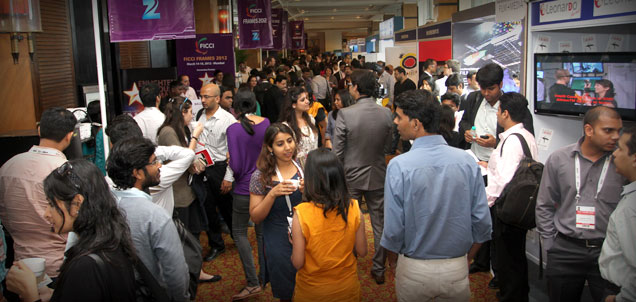
    Those familiar with the going-ons at FICCI Frames would testify how an infatuation gets displayed by delegates at the event each year so as to summarise the mood of the convention even before it broadly takes off across the three days that it is entitled to. But probably, the setting was a bit different this time around when the delegates – joined in unison by the media – were running ballroom to ballroom trying to ingest giveaways that were being thrown up abundantly across several sessions. May be, it was a year where each day had something new to offer to the delegates that kept them at tenterhooks throughout the 3-day event. And going by the loud decibels that were being emanated across every nook and corner of the venue, it was evidently clear that there was some motivating factor that was driving the gathering to go on an overdrive spree.


    The organisers of FICCI Frames 2012 have every right to take credit for coming up with a theme around a medium that attracted the attention of one and all. Having kept it on the sidelines till last year, digital was finally given its due at the convention as experts, authorities and enthusiastic youngsters came face to face to deliberate and come up with outcomes that would redefine the way the consumers consume the medium. From television to print to films and even radio, digitisation and the benefits and effects it would cast on these sectors were discussed in length at the venue. In fact Star India CEO Uday Shankar in his keynote address didn’t hesitate in thanking the FICCI committee for putting across a theme that would go on to redefine the way the industry functions in the future.


    What was apparently clear through the various sessions at the convention is that with the nearing of date for total digitisation across key metros by June 30 2012, and then across the country by 2014, broadcasters had to relook their distribution and content provision models so as to keep the consumer at the heart of every shift that will transpire in the future. Emphasising on the current digitisation scenario in the country, Mr Shankar said, “Most of the discussions that I have participated in are still around whether digitization will happen and if it indeed were to go through, how chaotic it would be. But all these are meaningless discussions triggered by a bunch of retrograde interests who are living in denial.” According to Mr Shankar, digitisation of distribution is a big reality and the 40-45 million homes that have bought DTH boxes at some point or the other are a conclusive evidence of that.


    Shooting back at critics who had doubted whether the makeover to digital would ever be a reality, Mr Shankar said, “To the critics and the cynics who are still wondering whether digitization would happen, my answer is: Look around, it is already happening and the rest of it is bound to happen because even in this country it would be difficult to undo such a momentous shift. To those who wonder how chaotic it would be, my response is that there would be some chaos, but chaos is not necessarily bad if the alternative is status quo or regression. When a transition at such a scale is happening that affects the illegitimate but strong vested interest in certain pockets, then there is an incentive to put up with chaos in the interest of the larger social objectives.”


    A broader outlook was provided by a few panellists who said that digitization will come in as a relief for broadcasters who will be benefitted from additional subscription revenue, relaxation on paying heavy carriage fees, and of course providing viewers with a superior content experience – MSOs and cable operators have to quickly respond to the digitization mandate by investing in set-top boxes – the cost that is only possible to recover after four years.


    Sounding off the challenges that digitisation would present for the broadcast sector, Tarun Katial, CEO of Reliance Broadcast Network Ltd said that, “For television, it will be a combination of content as well as marketing. The old model which was a combination of carriage and product, as it stands today, won’t work. The business plan which currently has a very high rate of carriage will obviously see the content taking precedence.” And as for content, it will be niche content that will call the shots for broadcasters as according to experts at the convention, niche isn’t niche any more as all niche channels put together command a share that is equivalent to the share of Hindi GECs and the mass channels, so to say.


    Perhaps the many advantages that digitisation will have on several mediums was rounded off by Vikram Sakhuja, CEO, South Asia, Group M who said, “The inherent power that digital brings along with it is interactivity and its ability to link multiple devices. Also the ability to enhance real-time consumption of content; linked to that is the entire thing about going mobile.” On the roadmap for the industry, Mr Sakhuja said, “I think integrated media is the best way forward. Today when people think of multimedia planning, they do a separate TV plan, print plan, radio plan, internet plan and so on. I believe that if you actually look at media agnostically and at common metrics of each cost per thousand impressions, these are the ways in which you can construct a media agnostic plan. What it does is, it suddenly gets more money into digital, and when more money can come into digital, that’s when focus is going to come in.”


    While digitisation was the mainstay of every discussion, the all-important issue of regulation too was taken up by panellists who chose to have the government respond to the many queries surrounding the topic. Uday K Varma, I&B Secretary, said that “if people at large seem to be happy with self regulation, I think the government would have no problem in legitimizing them. But I think the self regulation mechanism which has been set up by both the news broadcasters and the entertainment broadcasters, they’ll have to really prove it, not to the government but to the people at large.” He was joined in his cause by Prithviraj Chavan, Chief Minister ofMaharashtrawho said that the challenge would be to adopt the regulatory framework to new technology and ensure that over regulation doesn’t kill a good thing. The Chief Minister emphasised on the need for regulation and suggested that instead of the state regulating the media, the medium should look at regulating itself.


    The other important announcements that came up at the venue included the soon-to-be-passed Copyright Amendment Bill, the roll-out of the imminent phase 3 radio policy that would steer the growth of the medium and increased government aid for the film & entertainment sector.


    New ventures @ FICCI


    BARC takes wings

    In between the many promises and hopes that were being doled out at the sessions came the news of the Indian Broadcasting Foundation (IBF), the Indian Society of Advertisers (ISA) and Advertising Agencies Association of India (AAAI) announcing the official formation of a nationwide audience research joint body — Broadcast Audience Research Council (BARC).

    While IBF will have 60 per cent stake in BARC, ISA and AAAI will each hold 20 per cent stake. The Board of the council will have 10 members, six members from the IBF and two members each from the ISA and AAAI.


    Discovery Kids to flag off ops in April

    Another important announcement was made by President & CEO of Discovery Networks International, Mark Hollinger who announced the launch of its new network for children inIndia, ‘Discovery Kids’. Mr Hollinger said, “Launching in April, the network will initially be available in three languages – Hindi, English and Tamil. The channel will offer children a fun and entertaining way to satisfy their natural curiosity with stimulating and imaginative programming,” he said. The company plans to roll out the channel inPhilippinesandIndonesialater this year.


    Ten Golf tees off

    Taj Television India Pvt Ltd announced the launch of Ten Golf, a dedicated 24-hour golf channel. Ten Golf is the fifth channel from Taj Television India Pvt Ltd and began transmission on March 15, 2012. The dedicated golf channel will showcase a mix of live, non-live and feature programming. The channel will also broadcast live, high quality Golf action from around the world.

    Ten Golf has acquired rights for European Tour and Asian Tour till 2016, and has also entered into partnership with PGTI for three years to telecast the Indian Tour. Further, Ten Golf will be telecasting 400 hrs of golf programming in association with NBC.